This post may contain affiliate links: read full affiliate disclosure.
A ceiling light doesn’t have to be boring or expensive to look good. If you’re stuck with a plain bulb or an outdated fixture.
From soft, fabric-based designs to modern sculptural covers, these ideas focus on easy materials and creative shapes that add style while diffusing light better.
Whether you’re decorating a rental, updating one room, or experimenting with handmade decor, these. DIY ceiling light cover ideas help you transform overhead lighting in a practical, budget-friendly way.
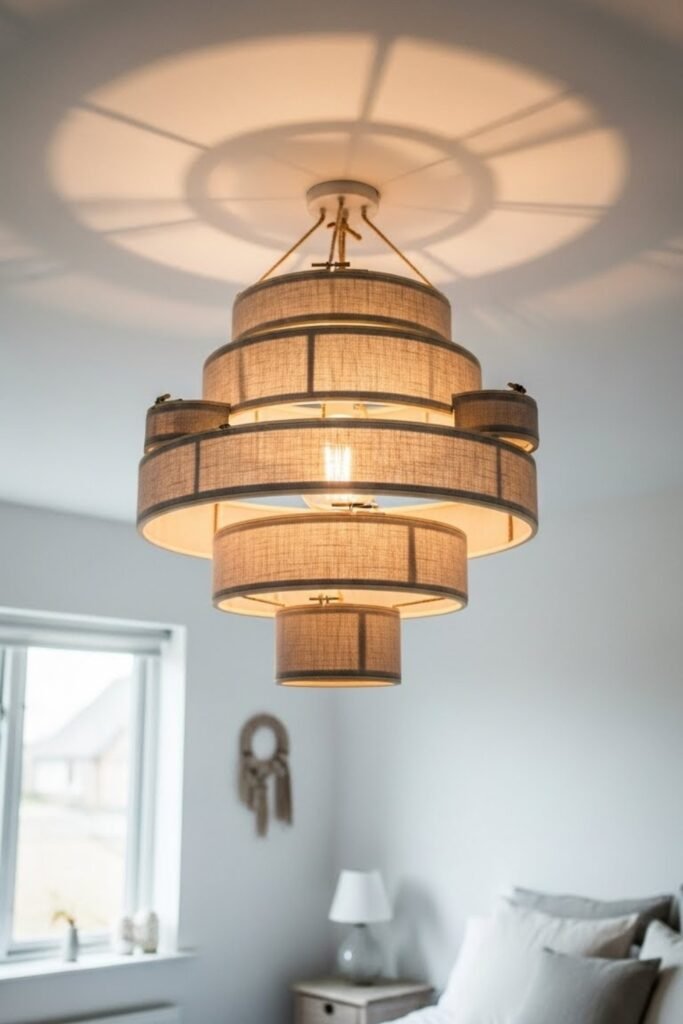
Fabric Hoop
This DIY ceiling light cover uses embroidery hoops and fabric to soften harsh lighting instantly. Stretch patterned or neutral fabric tightly over the hoops, then layer or stack them beneath the bulb.
It works especially well in bedrooms or nurseries where you want gentle light diffusion without heavy fixtures. You can easily swap fabrics later for seasonal updates.
Rattan Tray
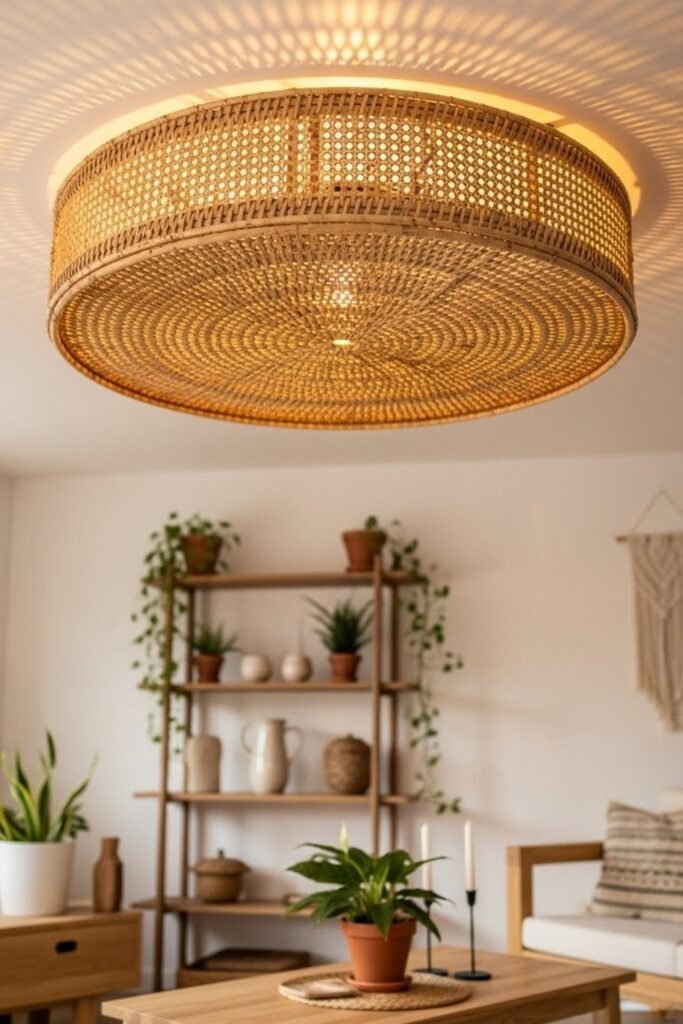
Turn a lightweight rattan serving tray into a warm, boho ceiling light cover. Flip it upside down and secure it around the bulb opening.
The woven texture filters light naturally, creating soft shadows across the ceiling. This idea suits living rooms, dining areas, or entryways where you want texture without installing a full light fixture.
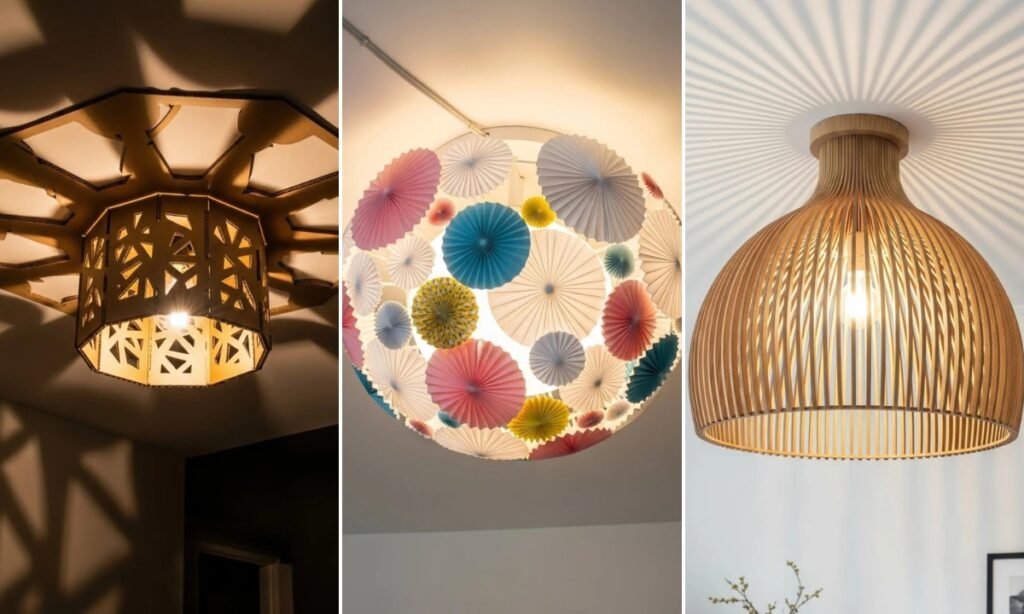
Cardboard Cutout
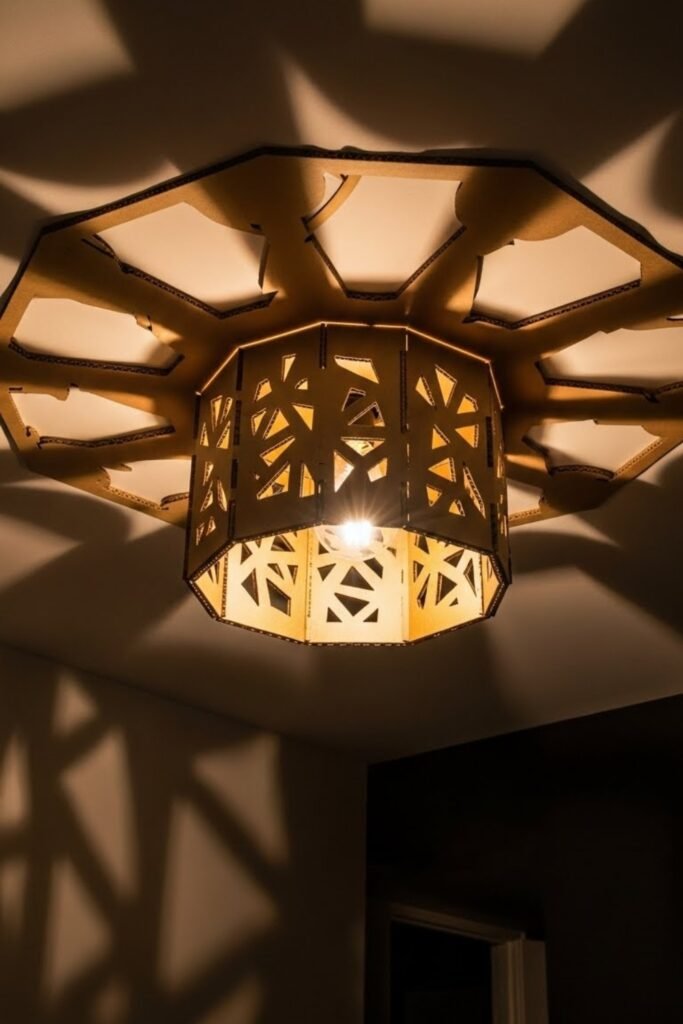
A cardboard cutout ceiling cover adds visual interest through shadow play. Use thick cardboard and cut geometric or floral patterns, then shape it into a dome or cylinder.
When the light is on, the patterns project across the ceiling and walls. It’s budget-friendly, lightweight, and perfect for creative rooms or rentals.
Wood Slats
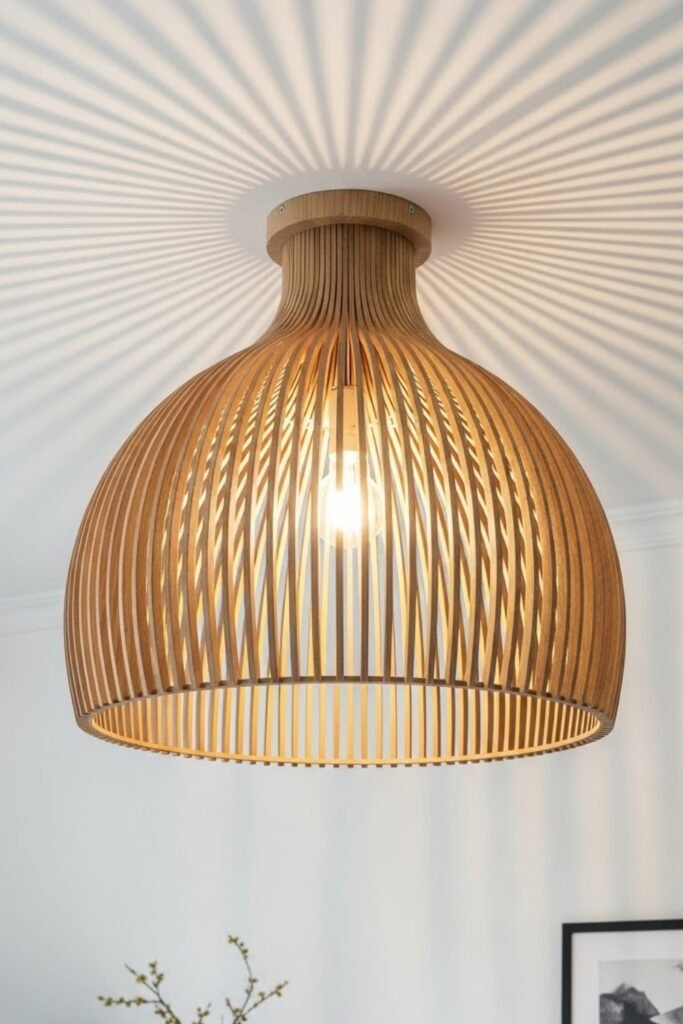
This ceiling light cover uses thin wooden slats arranged into a dome or globe shape. The spacing allows light to escape evenly while adding architectural detail overhead.
It works well in modern, Scandinavian, or minimalist interiors. Light wood keeps the fixture airy, while darker stains create a stronger visual statement.
Paper Fans
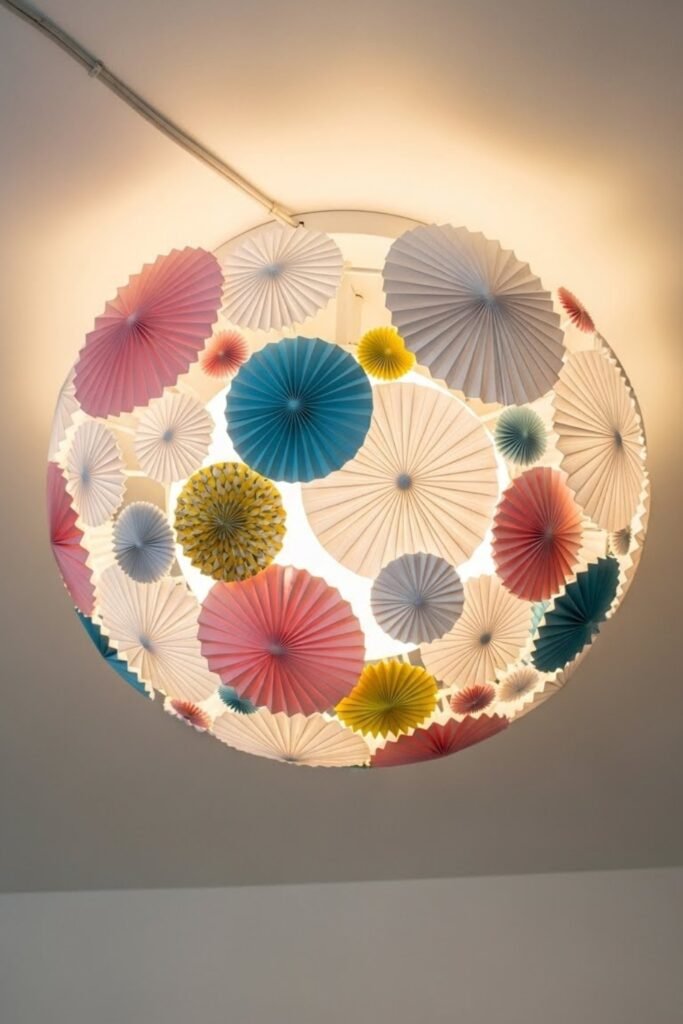
This DIY ceiling light cover uses folded paper fans arranged around the bulb base. The layered fan shapes add movement and turn a plain ceiling light into a statement piece.
It works well in craft rooms, kids’ rooms, or party-style spaces. You can use white paper for a clean look or patterned paper to add color and personality.
Macramé Ring
A macramé ring ceiling cover brings texture and softness to overhead lighting. Wrap cotton cord around a metal ring using simple knots, then hang it beneath the bulb.
The open design lets light pass through while adding visual interest. This idea fits boho bedrooms, relaxed living spaces, or any room that needs warmth without heavy decor.

Book Pages
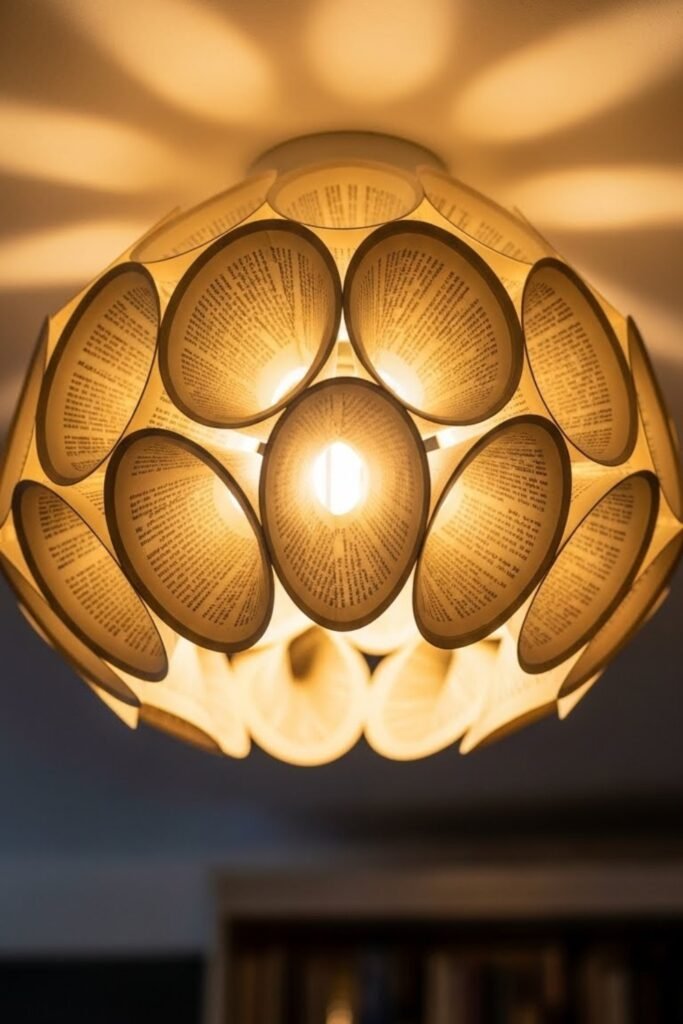
This ceiling light cover uses rolled or layered vintage book pages to create a unique shade. Shape the pages into petals or tubes and attach them around a lightweight frame.
The paper diffuses light gently, making the space feel cozy. It’s perfect for reading corners, home offices, or creative studios where character matters.
Bamboo Skewers
Bamboo skewers can be arranged in a radiating or vertical pattern to form a sculptural ceiling light cover. Glue them onto a simple ring or frame, spacing them evenly.
The natural material adds warmth while allowing light to escape between gaps. This works well in modern, Japandi, or nature-inspired interiors.

Metal Colander
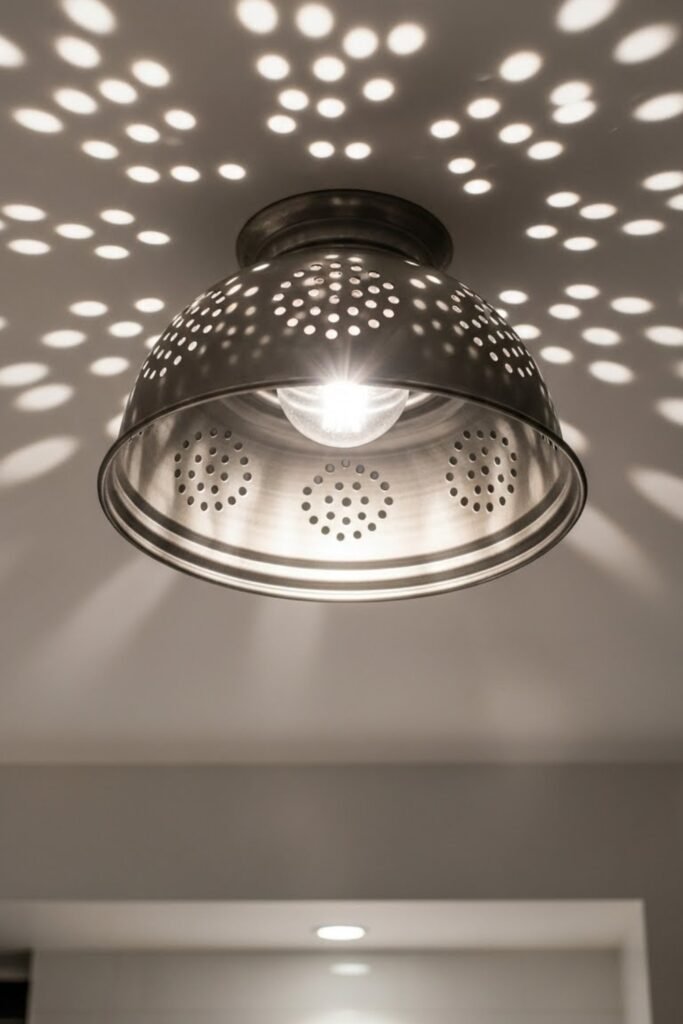
A metal colander makes a bold, industrial-style ceiling light cover. Flip it upside down and mount it over the bulb. The small holes create dramatic light patterns across the ceiling and walls.
This idea works well in kitchens, garages, or loft-style spaces where you want a functional look with a creative twist.
Felt Petals
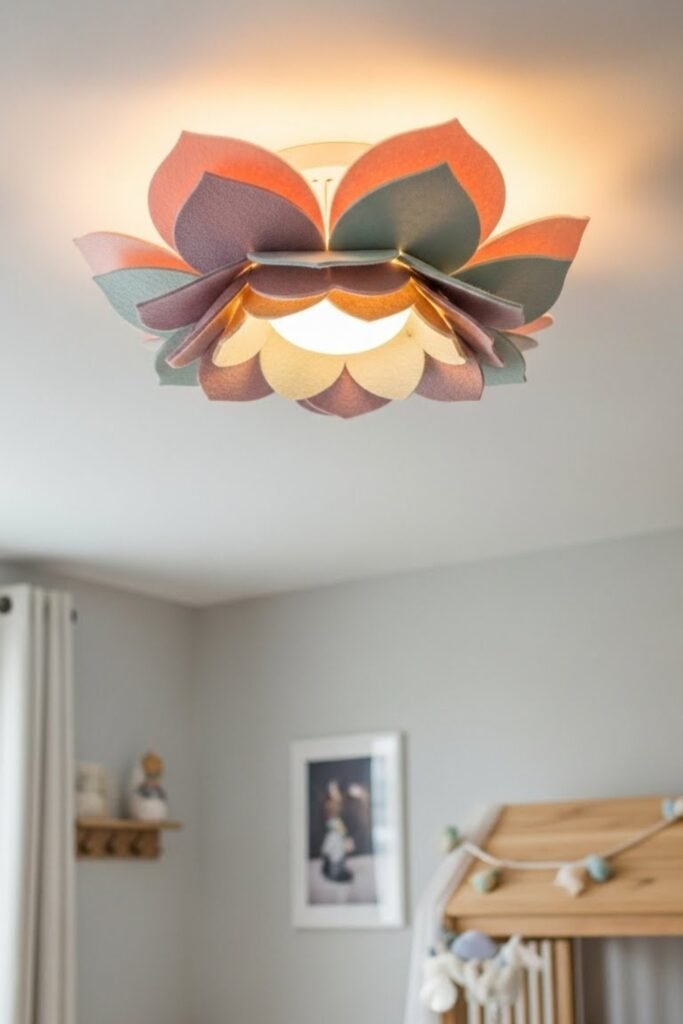
This ceiling light cover uses felt cut into petal shapes and layered around a simple frame. The soft material diffuses light gently and adds a decorative, handmade feel.
It’s a great option for bedrooms or nurseries where harsh lighting feels uncomfortable. You can customize the color to match the room’s theme.
Wire Basket
A wire basket turned upside down creates a minimalist ceiling light cover with an airy feel. The open structure allows plenty of light while adding subtle texture overhead.
It fits modern, industrial, or utility spaces where you want something simple but intentional. Choose black wire for contrast or white for a cleaner look.
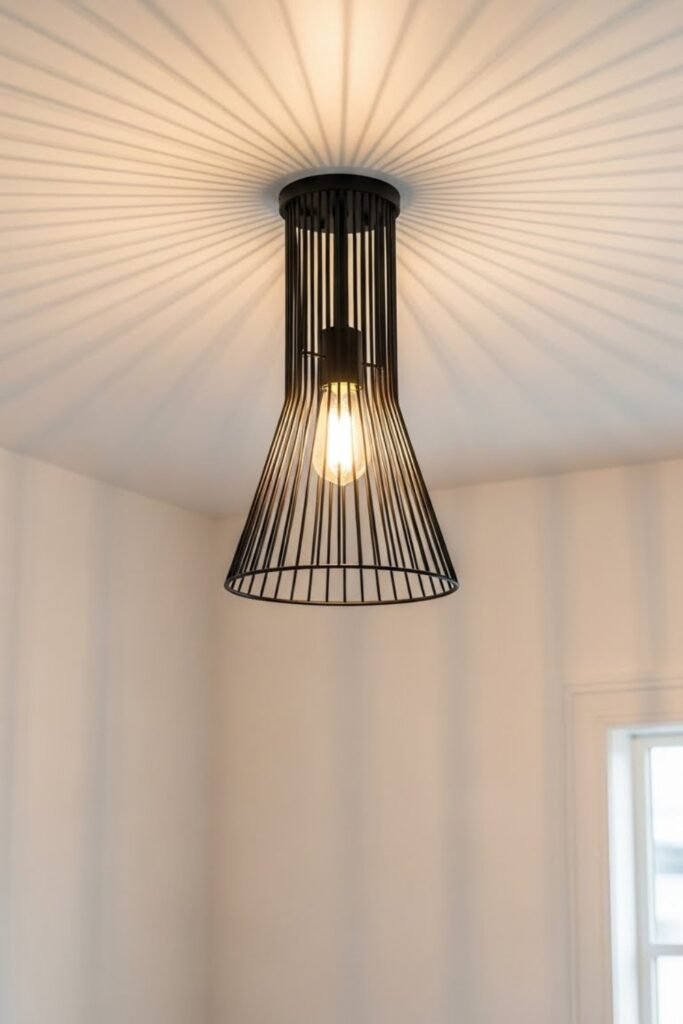
Beaded Curtain
This DIY ceiling light cover uses hanging beads to form a loose, flowing shade. String wooden or acrylic beads vertically around a circular frame above the bulb.
The beads catch and soften light while adding movement. It works beautifully in bedrooms or creative spaces where you want something decorative without blocking light.
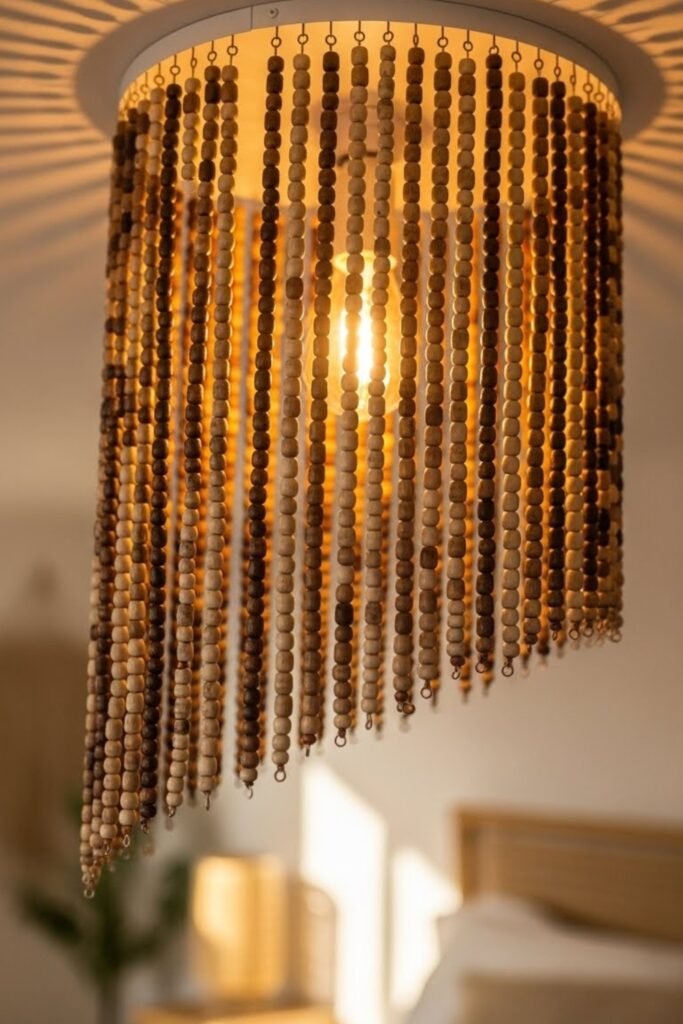
Plaster Mold
This ceiling light cover uses plaster cloth shaped over a balloon or bowl mold. Once dry, remove the mold to reveal an organic, sculptural shade.
The uneven texture adds an artistic feel while softly diffusing light. It works well in modern or minimalist rooms where you want the ceiling light to feel like a design feature.
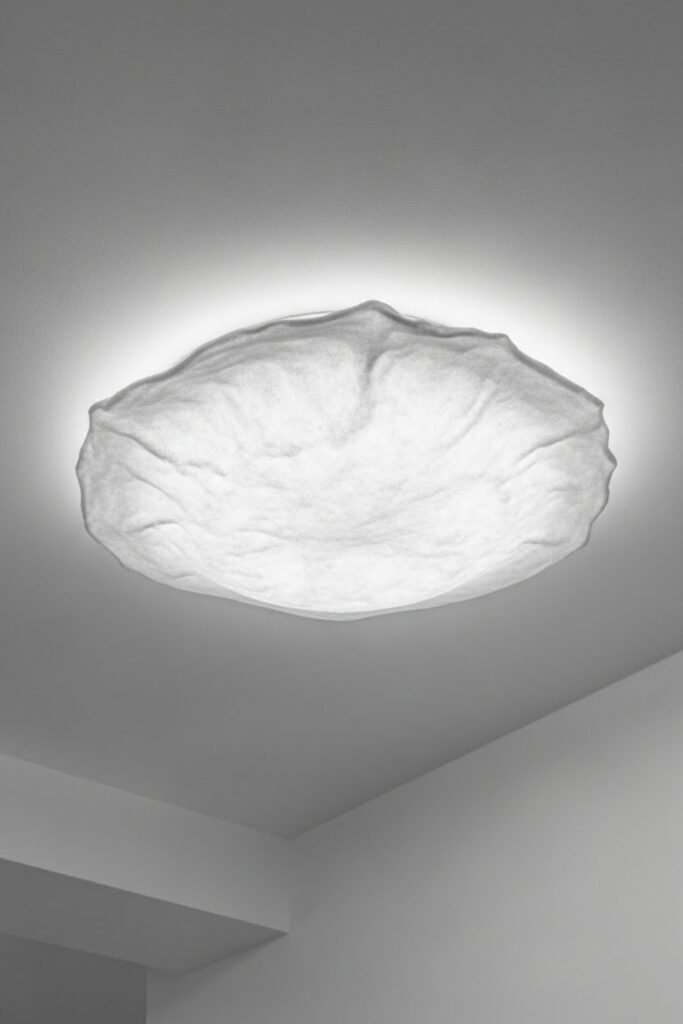
PVC Rings
PVC pipe cut into thin rings can be stacked or staggered to form a modern ceiling light cover. Attach the rings to a simple frame, leaving small gaps for light to escape.
This idea adds architectural interest without feeling heavy. It fits contemporary spaces, home offices, or areas where clean lines matter.
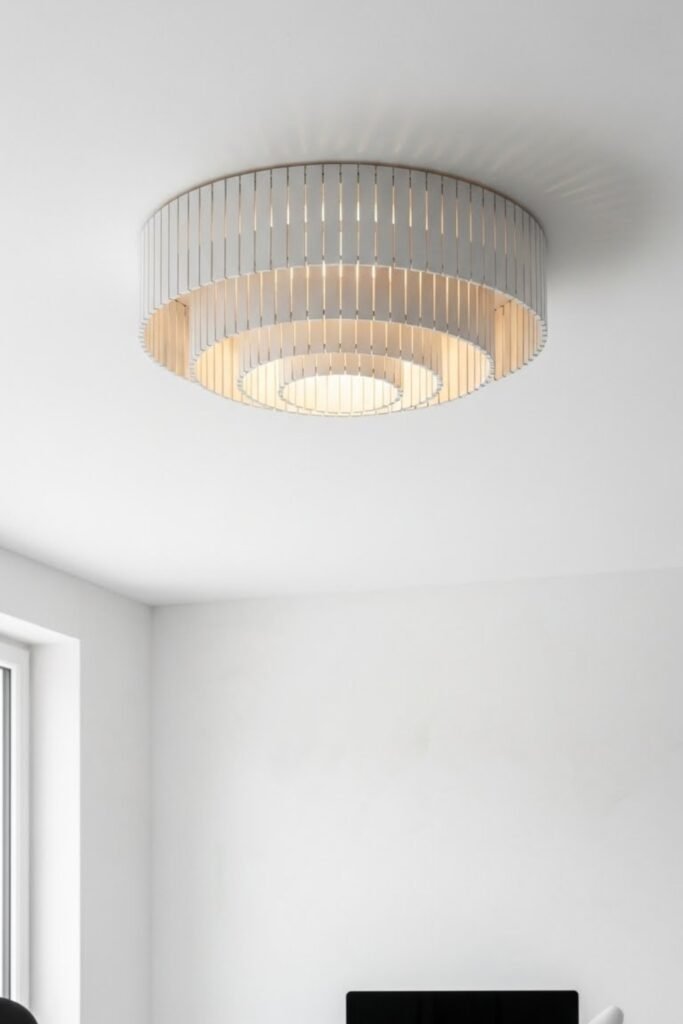
Leaf Resin
This DIY ceiling light cover uses pressed leaves sealed inside clear resin panels. Arrange the panels around a lightweight frame to create a nature-inspired shade.
The translucent resin allows light to pass through while highlighting leaf details. It’s perfect for sunrooms, bedrooms, or spaces where you want a calm, organic atmosphere.


Hi, my name is Ali Mehmood! I’m a passionate writer and DIY enthusiast who loves turning creative ideas into practical, hands-on projects.
I created this website to share inspiring, budget-friendly ideas that you can do yourself – whether it’s organizing your home, crafting something unique, or creating fun projects for kids and pets.
I believe DIY isn’t just a hobby – it’s a smart way to save money, reduce waste, and enjoy the satisfaction of making things with your own hands.
I’m excited to have you as part of this growing community, and I’ll continue bringing you helpful, realistic, and fun DIY ideas you can actually use.