This post may contain affiliate links: read full affiliate disclosure.
DIY stepping stones for kids sound like an easy garden craft, but most parents run into the same questions before they start.
What material should you use? Will the stone crack after a few weeks? Is cement safe around kids? How do you let children decorate it without turning the whole project into a messy, stressful job?
A good kid-friendly stepping stone should feel fun to make, safe to handle, and strong enough to sit in a garden path, play corner, or backyard walkway.
Kids can press handprints, add colorful tiles, place shells, spell their names, or create small patterns that make the stone feel personal.
In this article, you will find practical DIY stepping stone ideas for kids that focus on creativity, simple materials, and outdoor use.
Let’s jump in!
Make It Personal
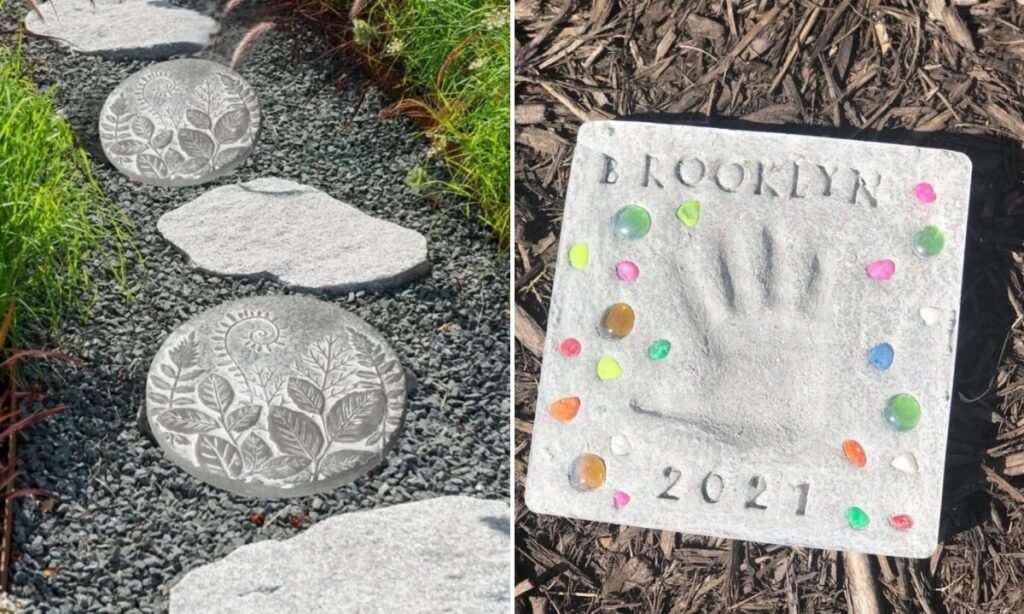
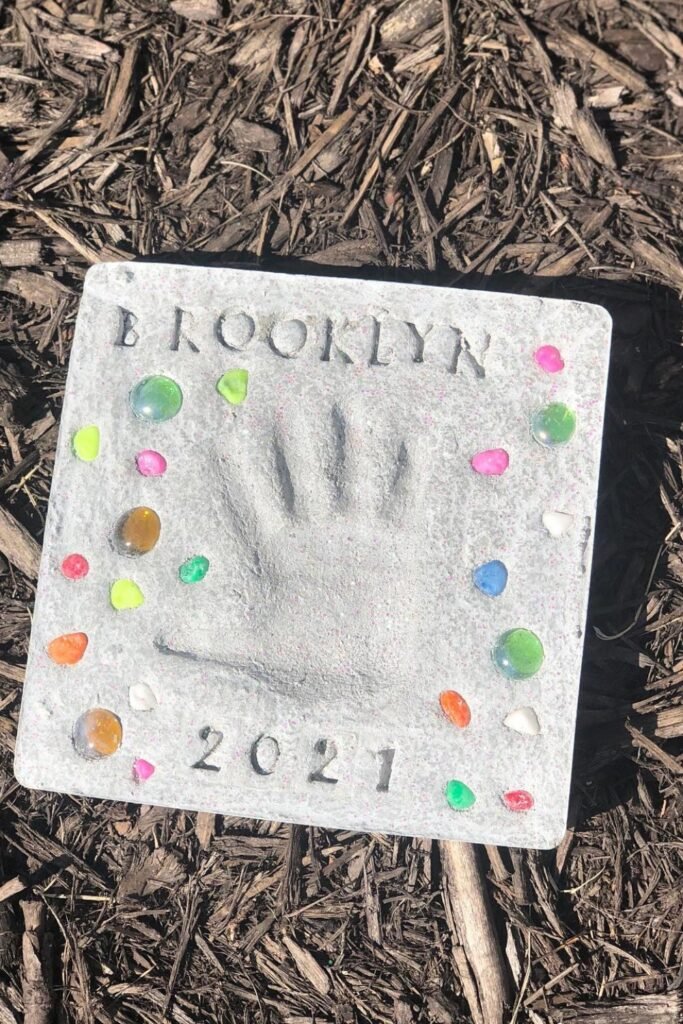
Few projects feel more meaningful than a stepping stone that captures your child’s handprint forever. Add their name and the year to create a garden keepsake worth saving.
Bright glass gems around the border make the design feel playful without much extra work. Place it beside a flower bed where family members can notice it often.
Years from now, your child will love comparing their growing hands to the tiny imprint. That simple detail turns an ordinary stepping stone into a memory.
Press Garden Leaves
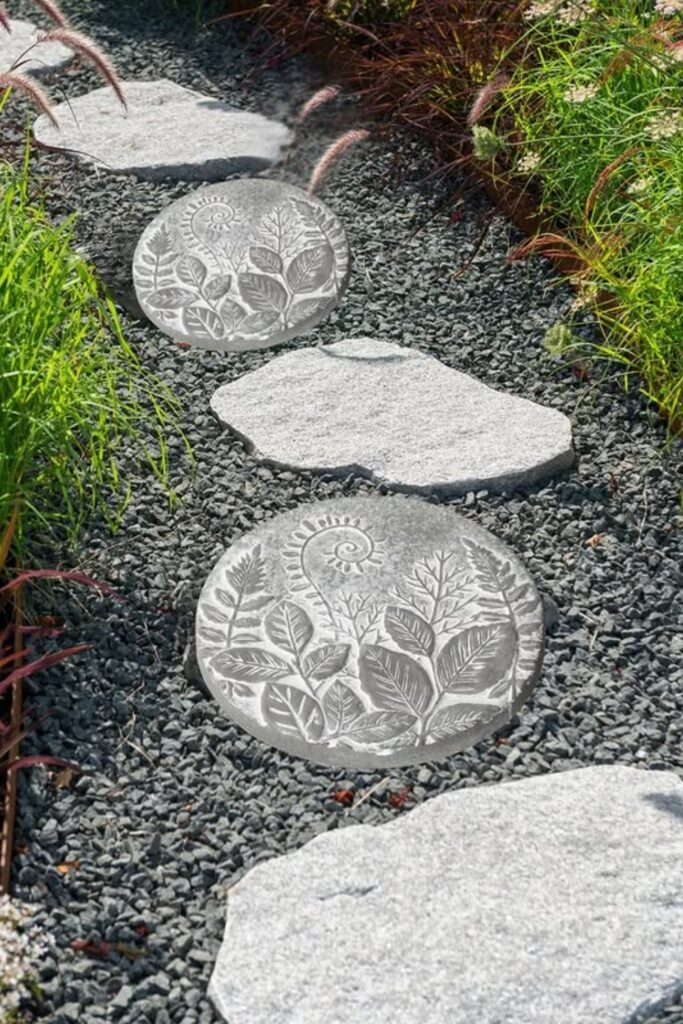
Nature already provides plenty of beautiful patterns if you know where to look. Let kids collect interesting leaves and press them directly into wet concrete.
The impressions create detailed textures that look far more expensive than they actually are. Ferns, large hosta leaves, and herbs often leave especially clear prints.
A leaf-themed stone blends naturally into garden paths and planting beds. It also gives children a chance to explore plants while creating something useful outdoors.
Shape Your Path
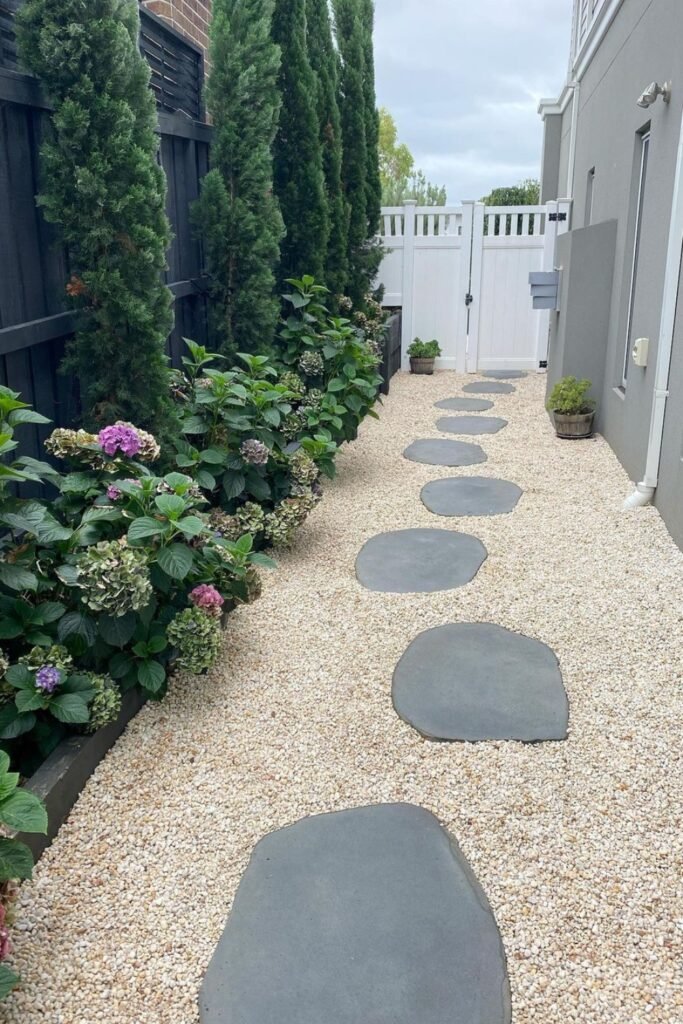
Large organic stepping stones can make a simple side yard feel much more inviting. Instead of perfect circles, try irregular shapes that resemble natural stone.
Kids often enjoy helping outline the shapes before the concrete sets completely. The finished path feels playful while still looking neat and intentional.
Use gravel between the stones to improve drainage and reduce muddy areas. That combination creates a walkway children can comfortably use throughout the year.
Create A Trail
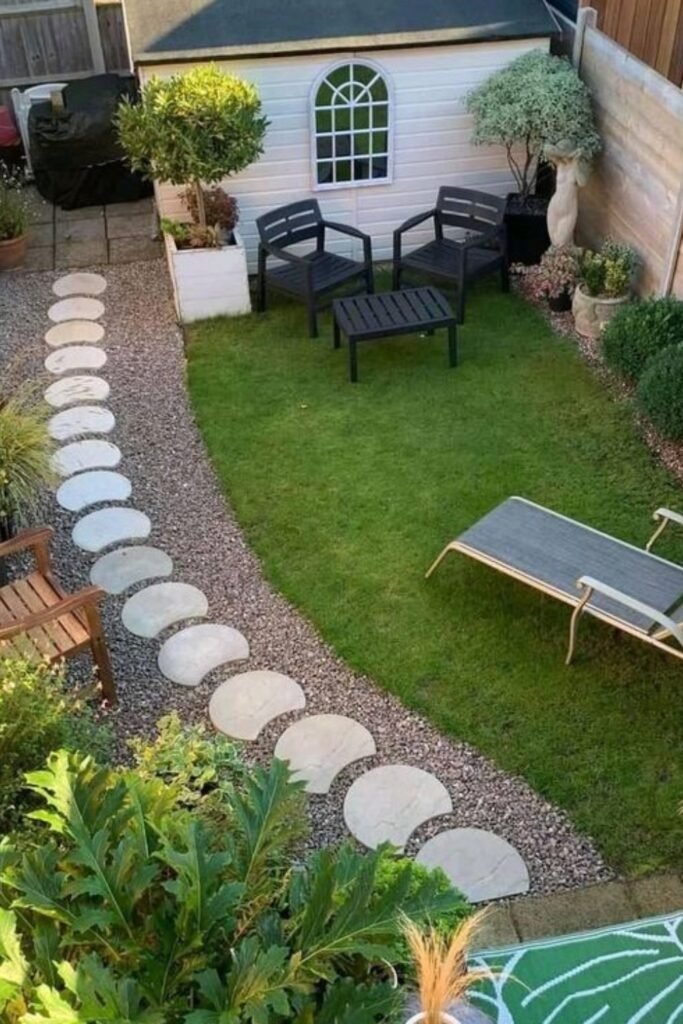
A winding stepping stone trail instantly adds a sense of adventure to the backyard. Children naturally want to follow the path to discover where it leads.
Round stones spaced evenly apart encourage hopping, balancing, and active outdoor play. That makes the walkway useful for more than simply getting around.
This layout works especially well in smaller gardens where every feature matters. The curved design adds movement and makes the space feel larger than it is.
Add Lawn Squares
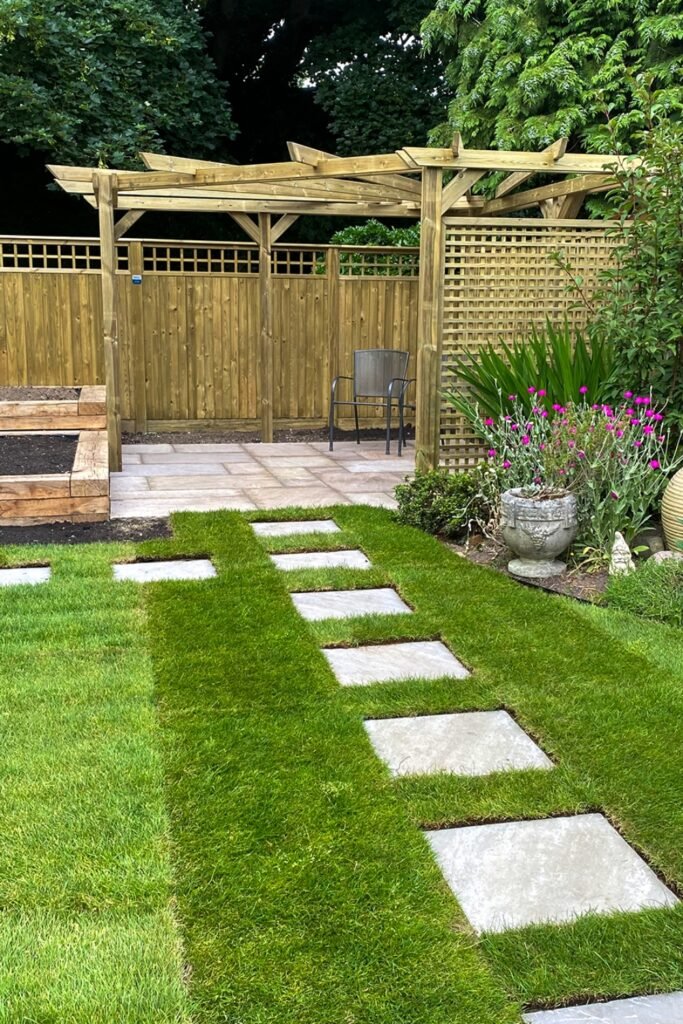
If your kids run through the yard every day, square stepping stones are easier to walk on than smaller decorative shapes. The larger surface gives better footing.
Leave a narrow strip of grass between each stone so the path blends naturally into the lawn. That simple spacing keeps everything looking neat.
This approach works especially well when a stepping stone path leads toward a play area, pergola, or garden corner that children visit often.
Follow A Curve
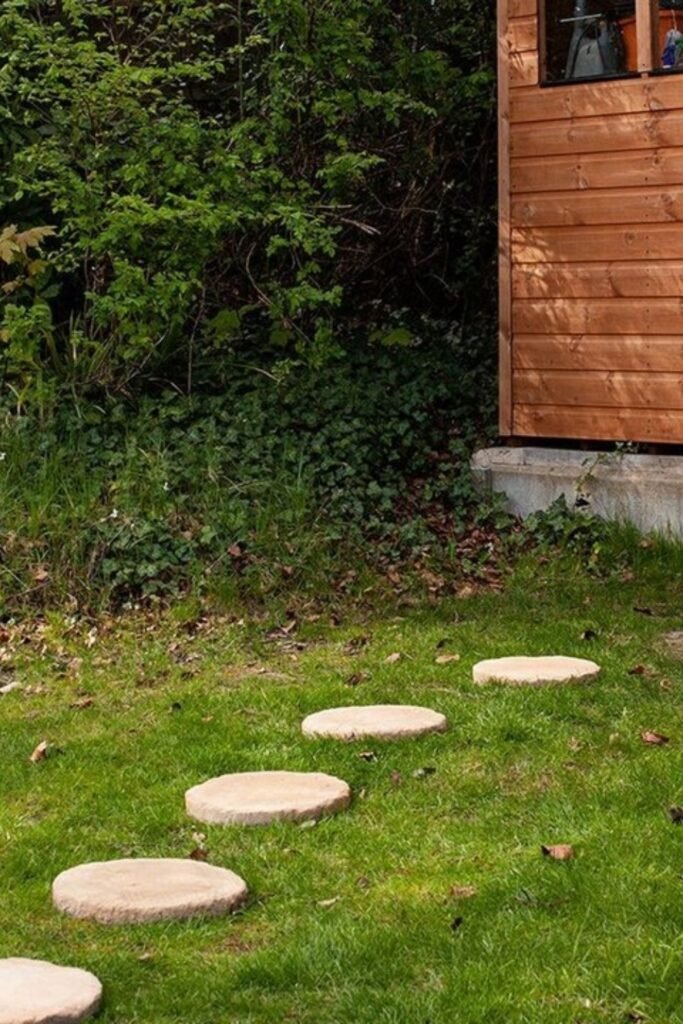
Straight paths can feel a little boring in a family garden. A gentle curve encourages kids to follow the route while making the landscape feel larger.
Round stepping stones are one of the easiest shapes for beginners to create. Their simple form works well even if every stone turns out slightly different.
Place them with comfortable gaps so children can move naturally across the lawn. The result feels playful without looking messy or overcrowded.
Try Mosaic Designs
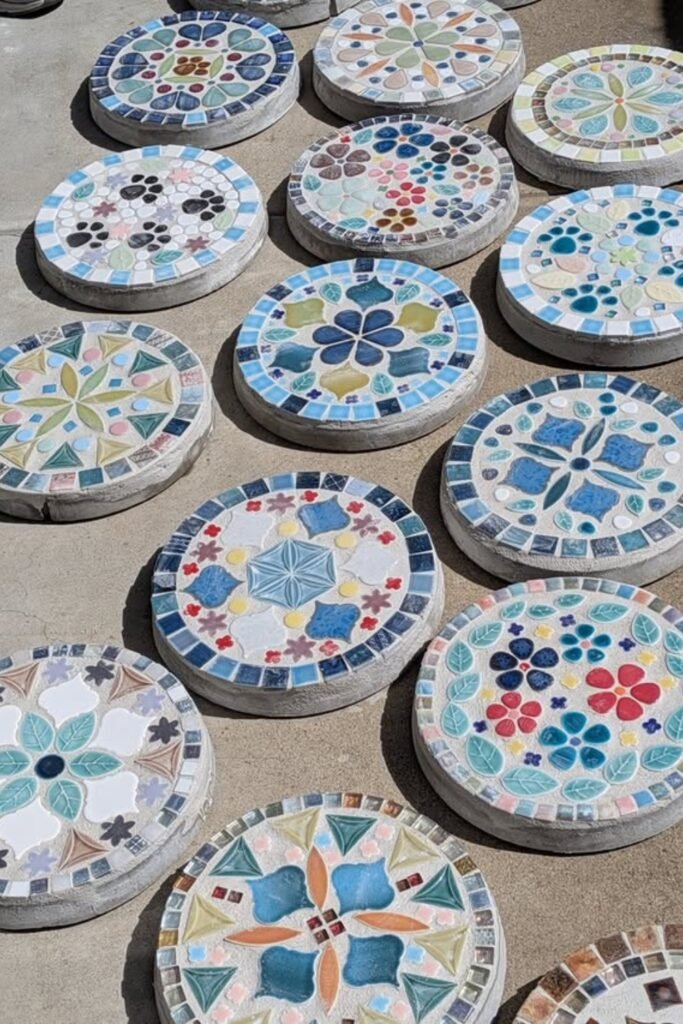
Colorful mosaic stepping stones give older kids a chance to create something truly unique. Small tiles, glass pieces, and decorative shapes can form endless patterns.
Instead of copying one design repeatedly, let each stone tell its own story. Different colors and layouts make the finished path feel more personal.
These decorative stones work best as focal points rather than a full walkway. A few scattered through a garden create plenty of visual interest.
Make Paw Prints
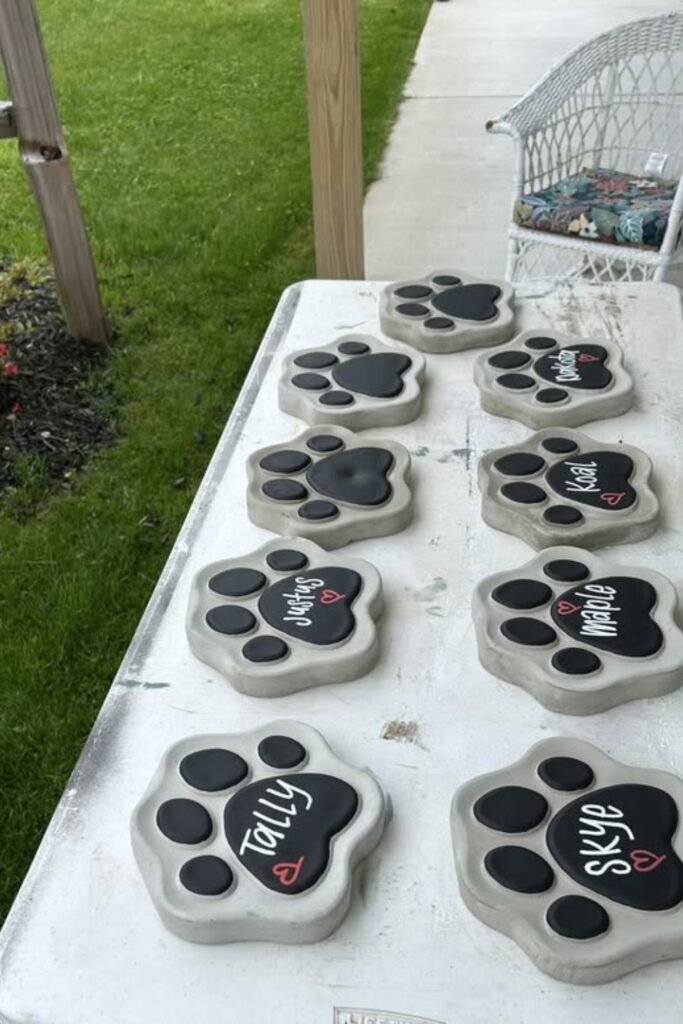
Animal-shaped stepping stones are perfect for families with pets or kids who love animals. The paw design instantly adds personality to a garden path.
Write names inside each paw print to create a meaningful tribute that feels special. Children often enjoy helping choose placements and lettering styles.
A series of paw stones can even become a fun trail through the yard. That small detail turns a walkway into an interactive feature.
Lead To A Swing
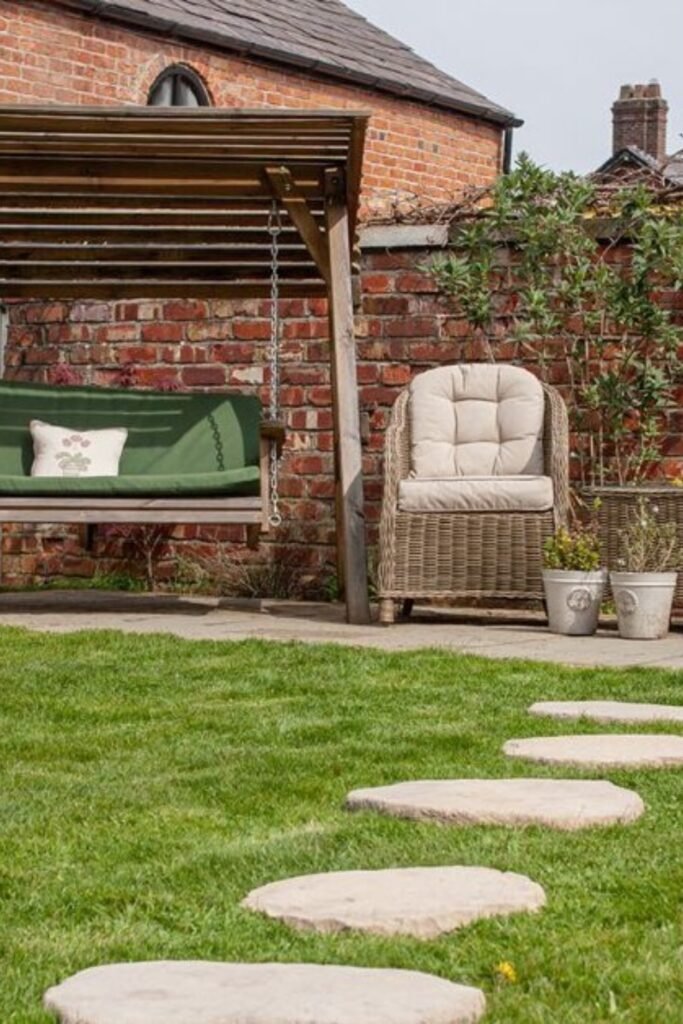
A stepping stone path feels much more exciting when it leads somewhere children already love spending time. A garden swing instantly gives the walkway a clear destination.
Large round stones work well for this type of route because they create comfortable footing across the lawn. The simple shape also keeps the project beginner-friendly.
Try spacing the stones at natural walking distances instead of placing them too close together. That small adjustment makes the path feel relaxed and inviting.
Turn Numbers Into Play
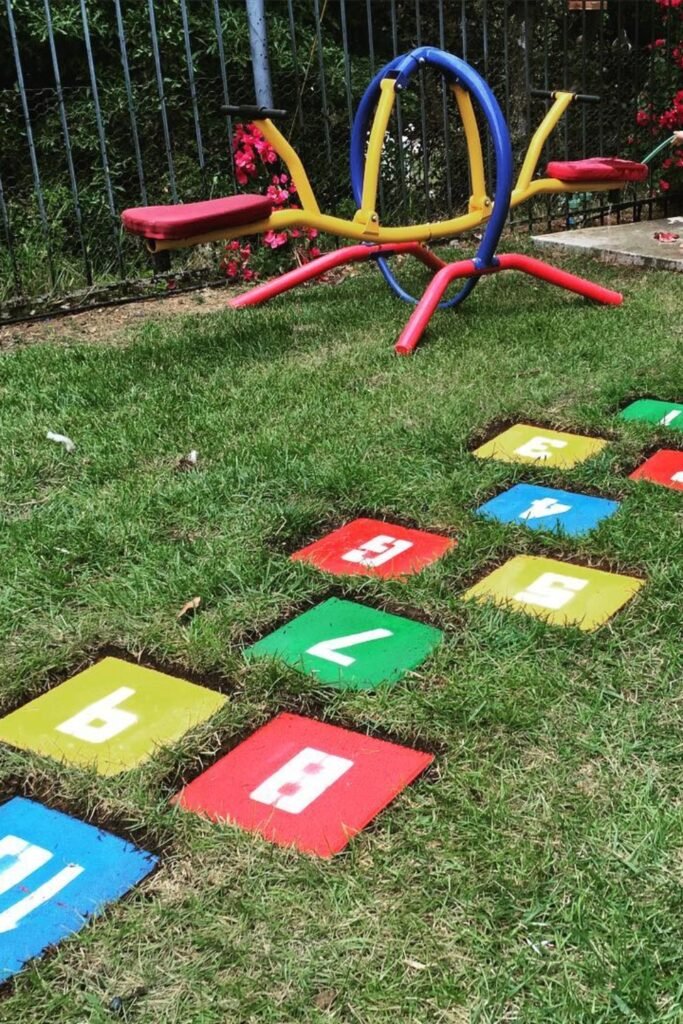
Why stop at a regular path when the stepping stones can double as a game? Paint numbers on each stone so kids can hop, count, and learn outdoors.
Bright colors make the path easier to follow and instantly catch a child’s attention. You can even create simple challenges using odd numbers or counting sequences.
This idea works especially well near play equipment where children already spend time. The walkway becomes part of the fun instead of just a path.
Create A Treasure Trail
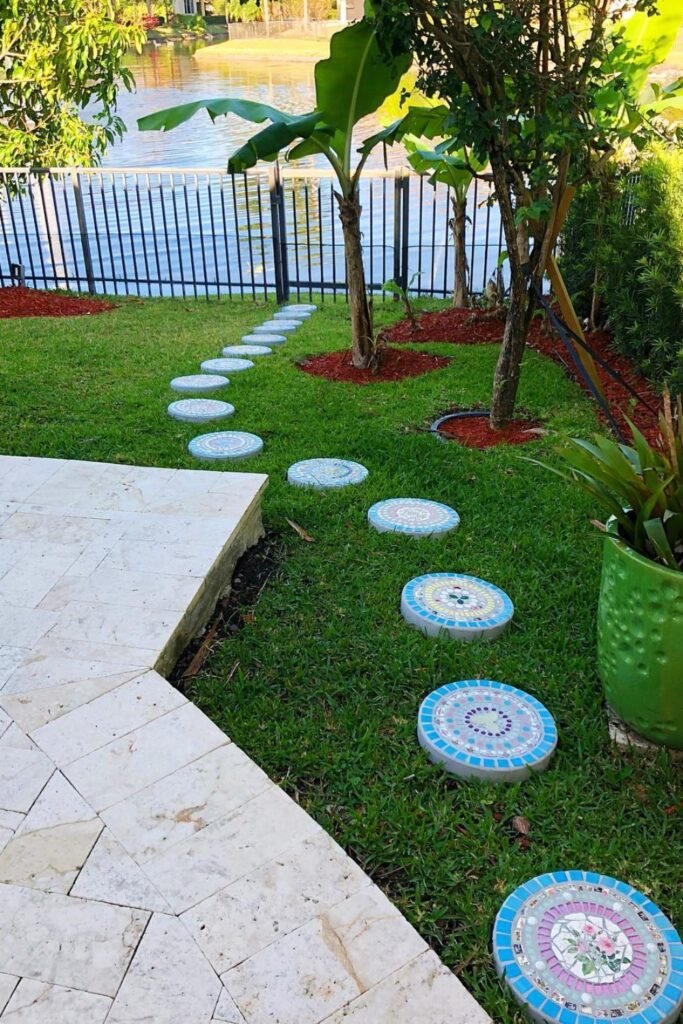
A winding line of decorative stepping stones can make the backyard feel like an adventure zone. Kids naturally want to follow the trail to see where it ends.
Using matching mosaic patterns keeps the design connected while still adding color. The repeating look helps the pathway feel intentional and polished.
Try leading the stones toward a favorite play area, tree, or garden feature. A destination gives children a reason to keep exploring.
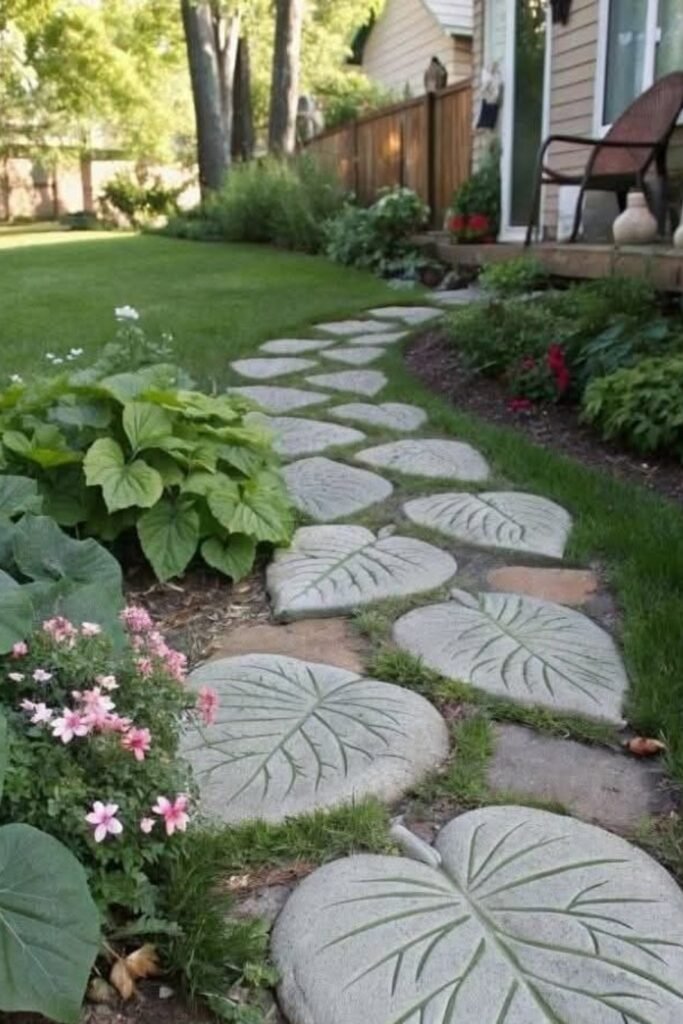
Use Giant Leaves
Large leaf-shaped stepping stones blend beautifully into gardens filled with plants and flowers. The natural shape helps the path feel like part of the landscape.
Press real leaves into wet concrete to create detailed vein patterns across the surface. The texture adds interest without needing extra decorations.
This style works best in garden borders where the stones can sit among greenery. The finished path feels whimsical without looking overly decorative.
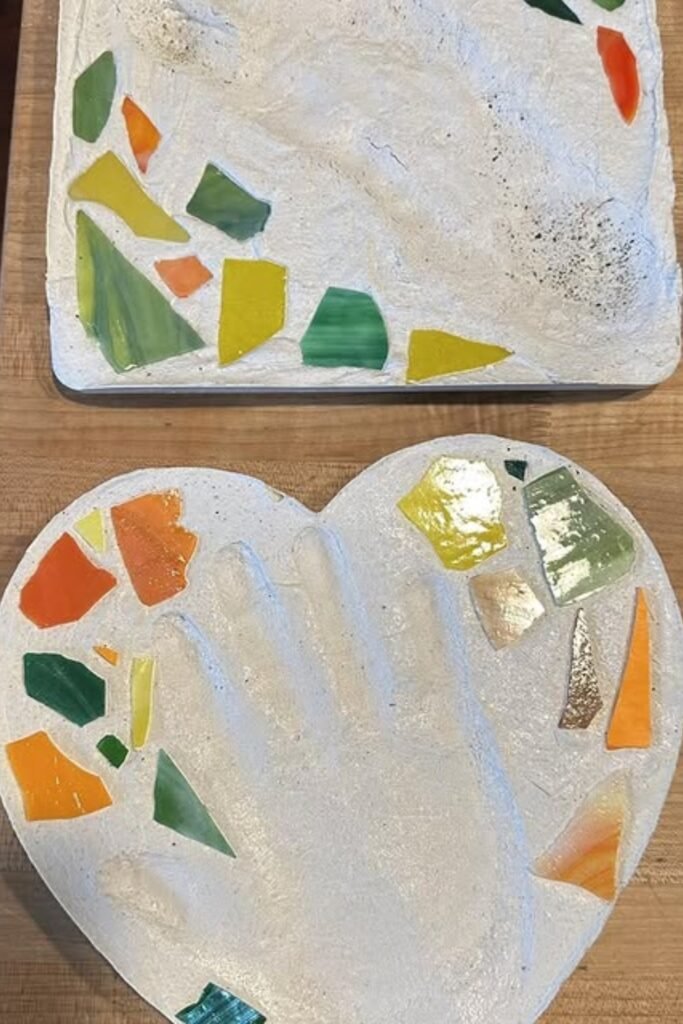
Frame A Handprint
A handprint alone already feels special, but colorful glass pieces around the edges make it stand out even more. The added color brings life to plain concrete.
Let children choose the glass colors themselves so every stone feels unique. Small differences make the finished keepsake more meaningful over time.
Place these memory stones near patios, flower beds, or garden entrances. They create a personal touch that visitors notice right away.
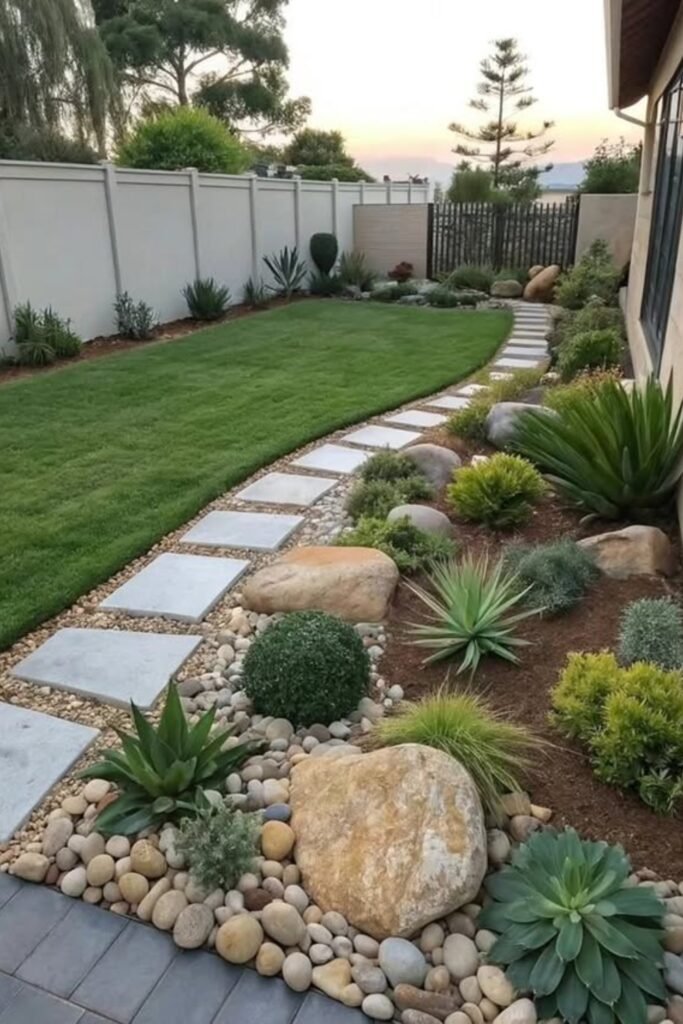
Border A Garden Path
A stepping stone path does not have to sit in the middle of the lawn. Running it alongside planting beds helps guide movement without taking attention away from the garden.
Square stones create a clean, organized look that works especially well in modern landscapes. The straight edges also make spacing much easier during installation.
Kids can use the path to move through the yard without stepping into mulch or garden beds. That simple feature helps protect both plants and muddy shoes.
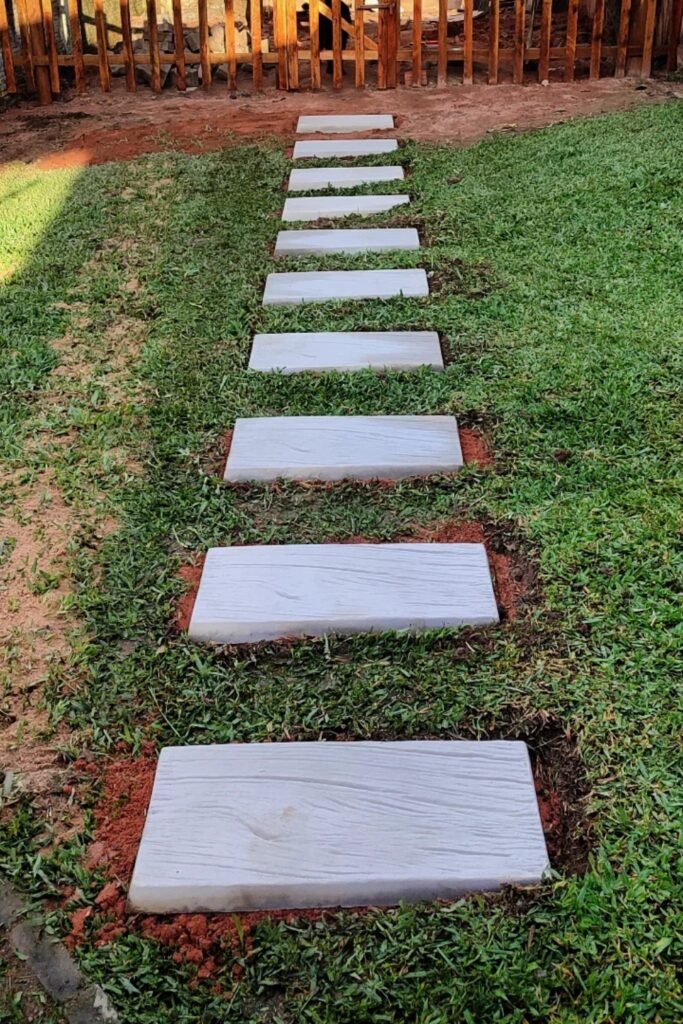
Mimic Wood Planks
Wood-look stepping stones offer the charm of timber without the maintenance problems. They bring warmth to a garden path while standing up better to weather.
This style works well when you want something different from traditional round stones. The rectangular shape naturally guides people from one point to another.
Keep equal spacing between each piece to create a comfortable walking rhythm. A consistent layout always looks more polished than random placement.
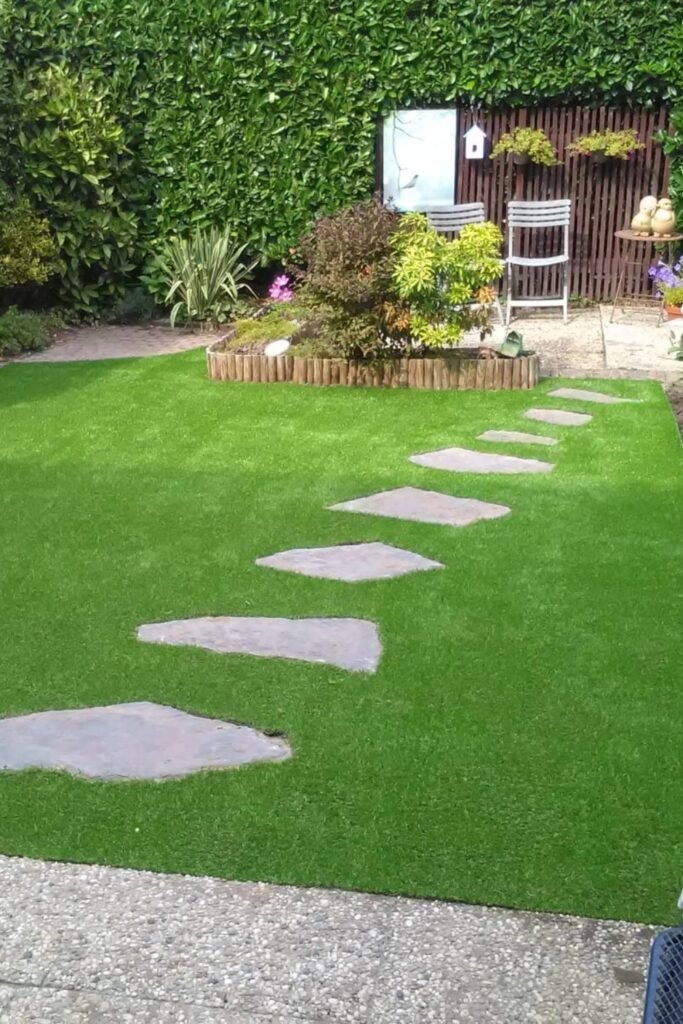
Let The Path Wander
Not every stepping stone path needs a perfectly straight line across the yard. A gentle curve makes the garden feel more relaxed and inviting.
Irregular stone shapes help the walkway blend naturally into the lawn. The uneven edges soften the look and make the path feel less formal.
This layout encourages children to follow the route as they move through the space. Even a small backyard can feel more interesting with a winding design.
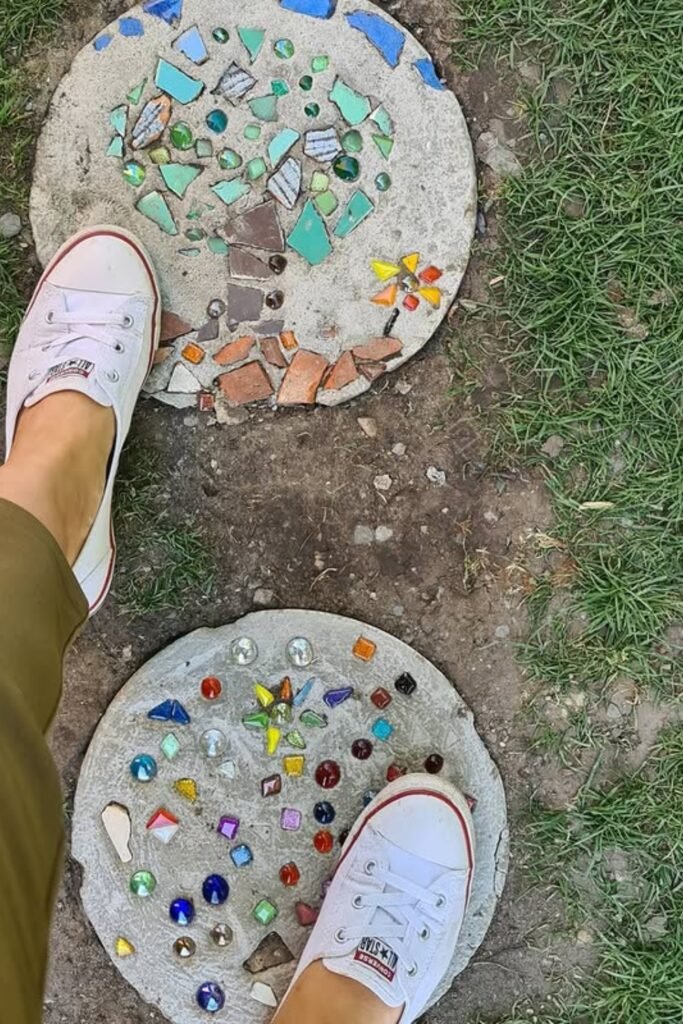
Decorate With Treasures
Broken tiles, colorful gems, and glass pieces can turn ordinary concrete into something memorable. Kids often enjoy collecting and arranging the decorations before they set.
There is no need to follow a perfect pattern for this type of project. A mix of shapes and colors usually creates the most playful result.
Use smooth pieces whenever possible so the finished surface stays comfortable underfoot. Safety matters just as much as creativity in kid-friendly stepping stones.
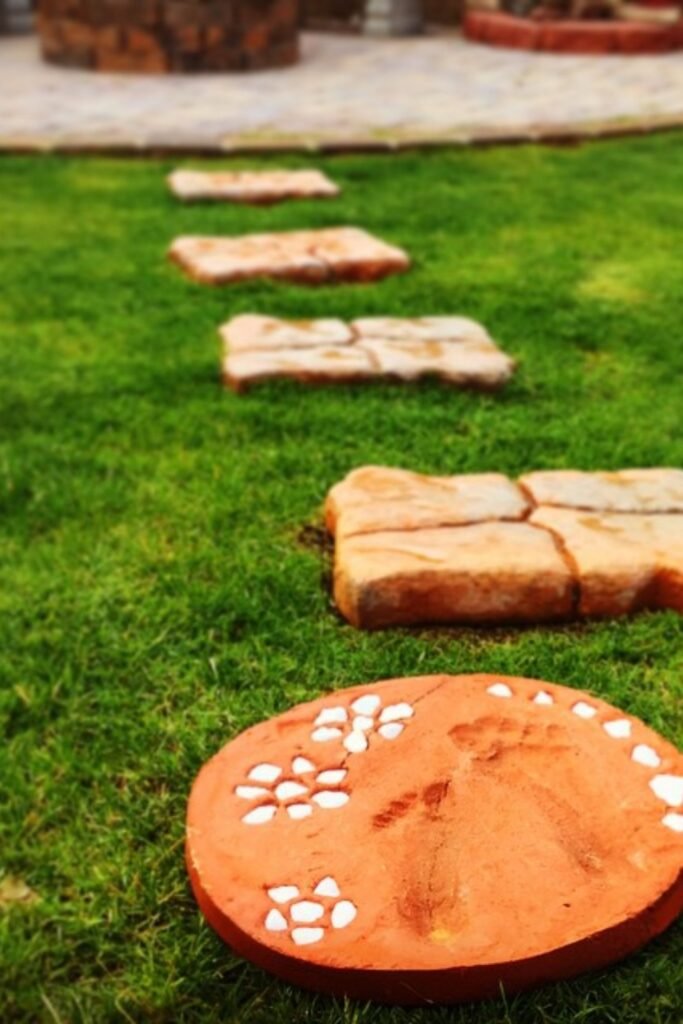
Preserve Tiny Footprints
Little footprints capture a moment that disappears far too quickly. Press your child’s foot into wet concrete, then add small decorative accents around the edge.
Simple flower shapes, pebbles, or shells help frame the print without taking attention away from it. The footprint should remain the star of the design.
Place these memory stones along a garden path where family members can enjoy them often. They become more meaningful with every passing year.
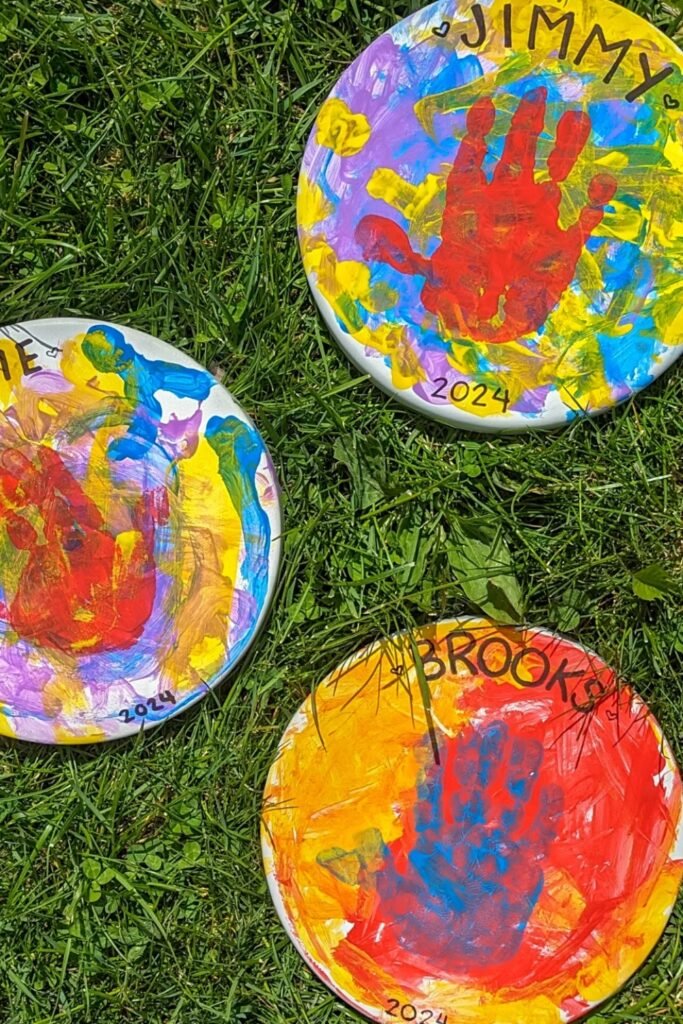
Splash On Color
Sometimes the best stepping stone project is the messiest one. Let kids paint bright colors across the surface and add their handprint right in the center.
Writing names and dates directly on the stone makes each piece easy to remember later. Every child gets a design that feels completely their own.
These colorful stones work especially well in play areas where creativity matters more than perfection. The goal is fun, not flawless artwork.
Tell Their Story
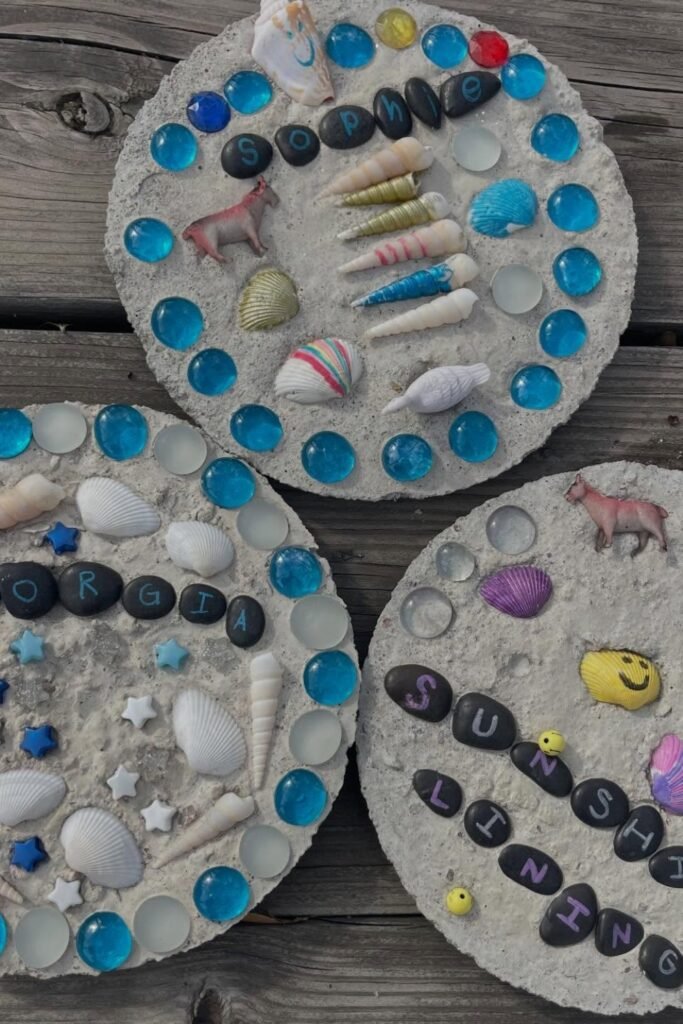
A stepping stone can become a mini time capsule when children fill it with favorite objects. Shells, glass gems, toy figures, and names add personality.
Instead of following a strict design, encourage kids to choose items that represent things they love. The finished result feels far more personal.
Years later, these details often become the most memorable part of the project. Small treasures can tell surprisingly big stories.
Practice Balance Skills
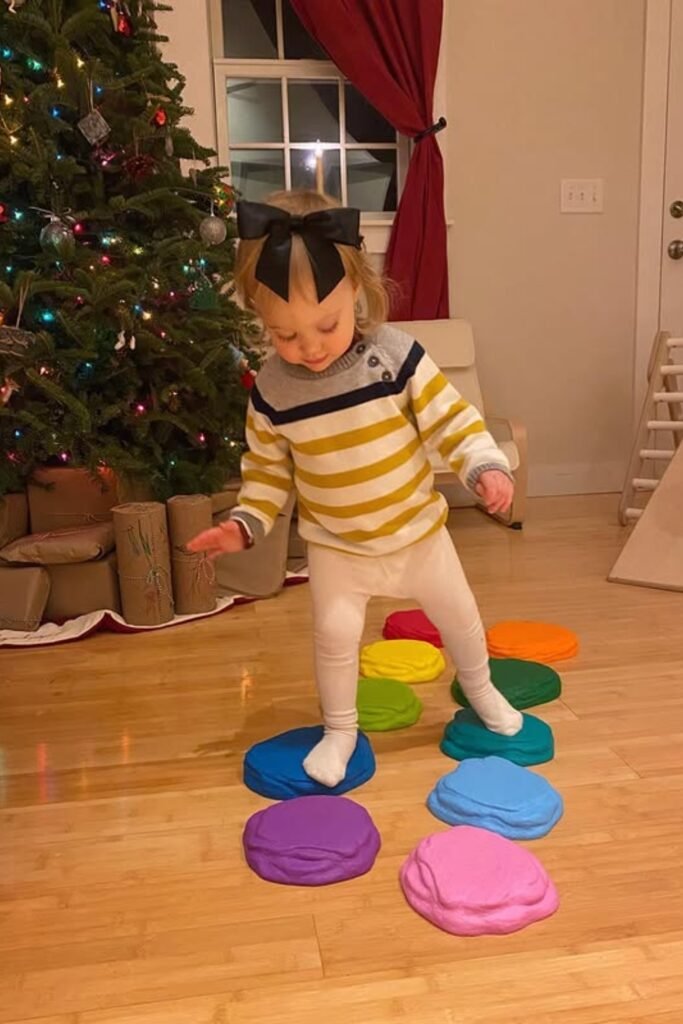
Stepping stones are not just decorations when kids can actively use them. A simple row of colorful stones creates an indoor or outdoor balance activity.
Different colors make it easy to invent games involving matching, hopping, or following patterns. Learning and movement happen at the same time.
This idea works particularly well for younger children who enjoy active play. The stones become part craft project and part play equipment.
Surround A Footprint
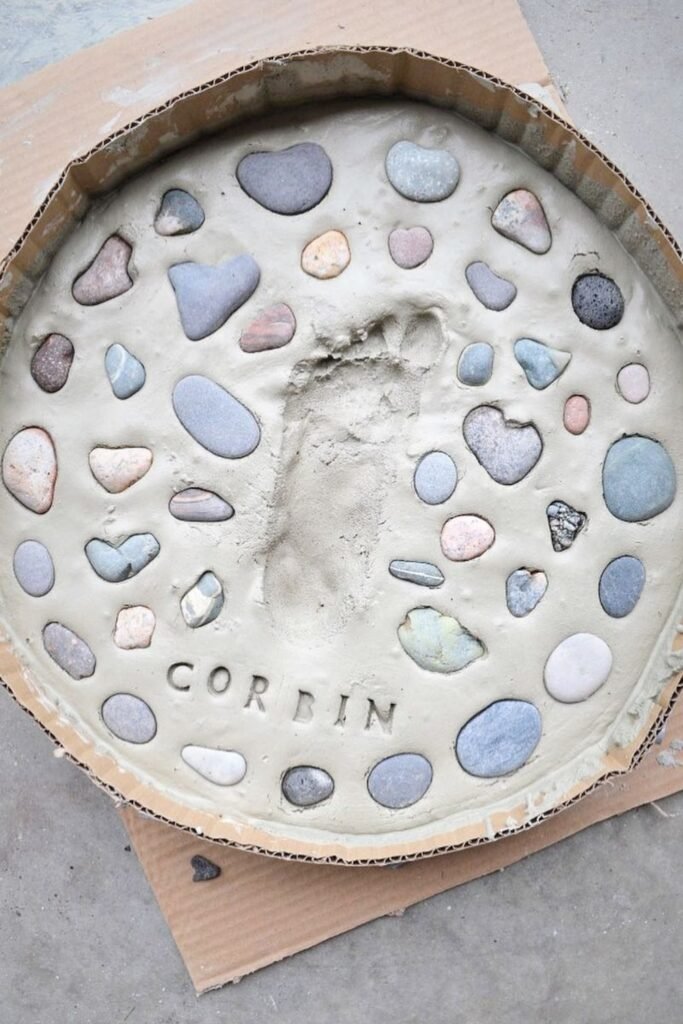
Smooth river rocks create a softer look than bright glass decorations. Their natural colors help the stepping stone blend beautifully into outdoor spaces.
Arrange the stones around a footprint before the concrete sets completely. The border adds texture while keeping the center focused on the print.
This style feels timeless and works well in almost any garden setting. It is simple enough for beginners but still looks thoughtfully designed.
FAQs
What can kids put in DIY stepping stones?
Kids can decorate stepping stones with colorful glass gems, pebbles, shells, mosaic tiles, marbles, leaf prints, handprints, footprints, or even their names and the year.
The best decorations are items with smooth edges that can safely sit inside the concrete.
Letting children choose the decorations themselves makes each stepping stone feel more personal and memorable.
How do you make DIY stepping stones last longer outdoors?
A strong stepping stone starts with the right concrete mix and enough thickness to handle regular use.
Allow the stone to cure completely before placing it in the garden, and avoid making it too thin.
Proper curing and sturdy construction help prevent cracks and keep the stepping stones looking good for years.

Hi, my name is Ali Mehmood! I’m a passionate writer and DIY enthusiast who loves turning creative ideas into practical, hands-on projects.
I created this website to share inspiring, budget-friendly ideas that you can do yourself – whether it’s organizing your home, crafting something unique, or creating fun projects for kids and pets.
I believe DIY isn’t just a hobby – it’s a smart way to save money, reduce waste, and enjoy the satisfaction of making things with your own hands.
I’m excited to have you as part of this growing community, and I’ll continue bringing you helpful, realistic, and fun DIY ideas you can actually use.