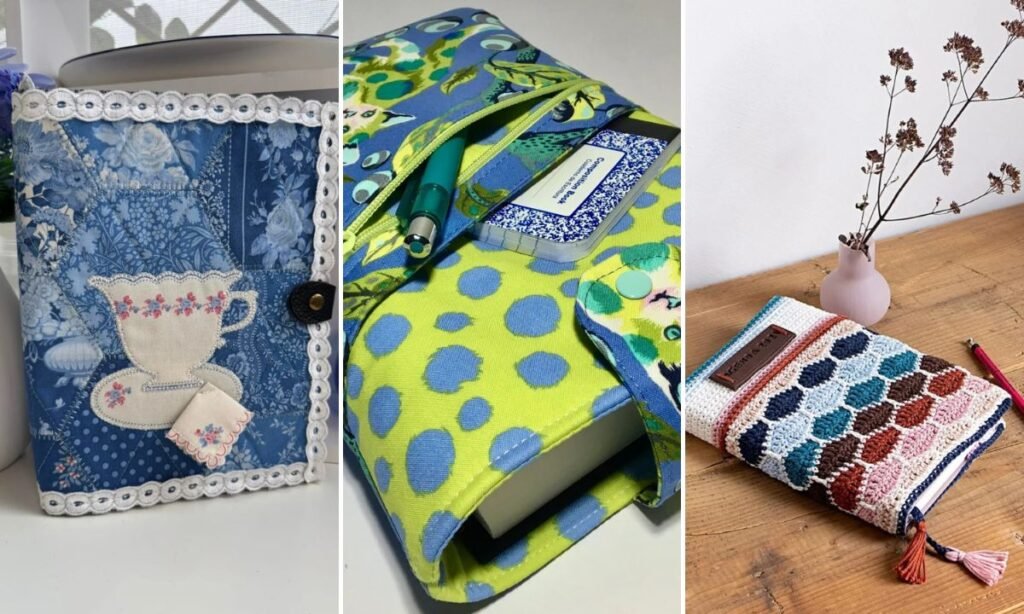
This post may contain affiliate links: read full affiliate disclosure.
The paper wrinkles around the spine, fabric ends up too tight, corners look bulky, or the beautiful design you planned suddenly doesn’t fit where you wanted it.
And if you’re covering a textbook, borrowed book, or favorite novel, you probably don’t want glue and tape damaging the original cover either.
The good news is that a handmade book cover doesn’t need complicated supplies or perfect crafting skills to look neat and hold up well.
You just need the right material, a little extra room around the spine, and a design that works with the way you use your book.
In this article, you’ll find DIY book cover ideas using paper, fabric, recycled materials, decorative details, and other creative approaches you can adapt at home.
Crochet Granny Squares
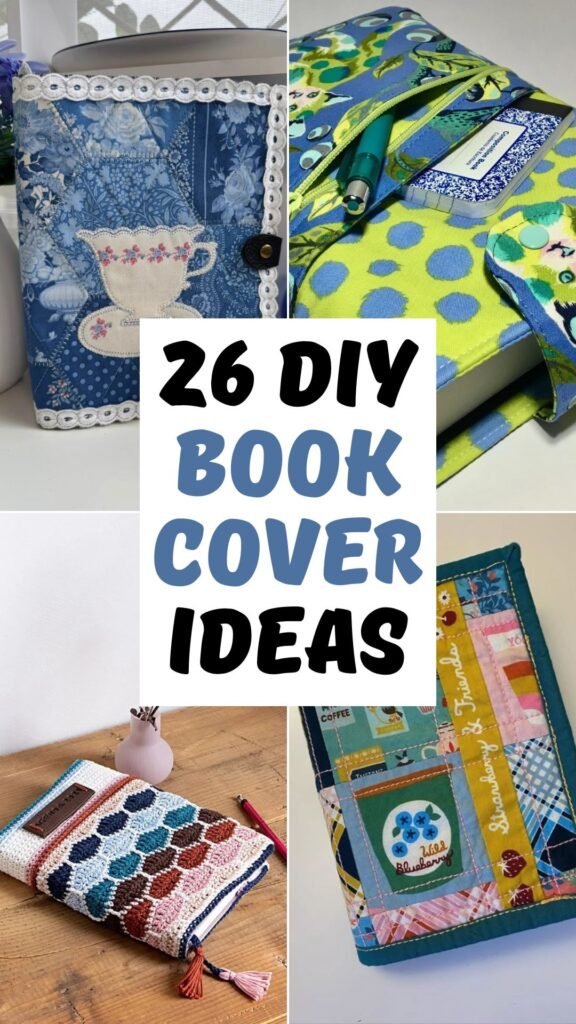
Crochet squares turn a plain book into something wonderfully tactile, and joining smaller motifs makes sizing easier than crocheting one complicated panel.
Leave a little flexibility around the spine when joining your squares, so the handmade cover bends naturally whenever you open the book.
Finish with a coordinating border and yarn bookmark for a polished result that feels intentional while keeping those charming handmade details visible.
Patchwork Tea Cover
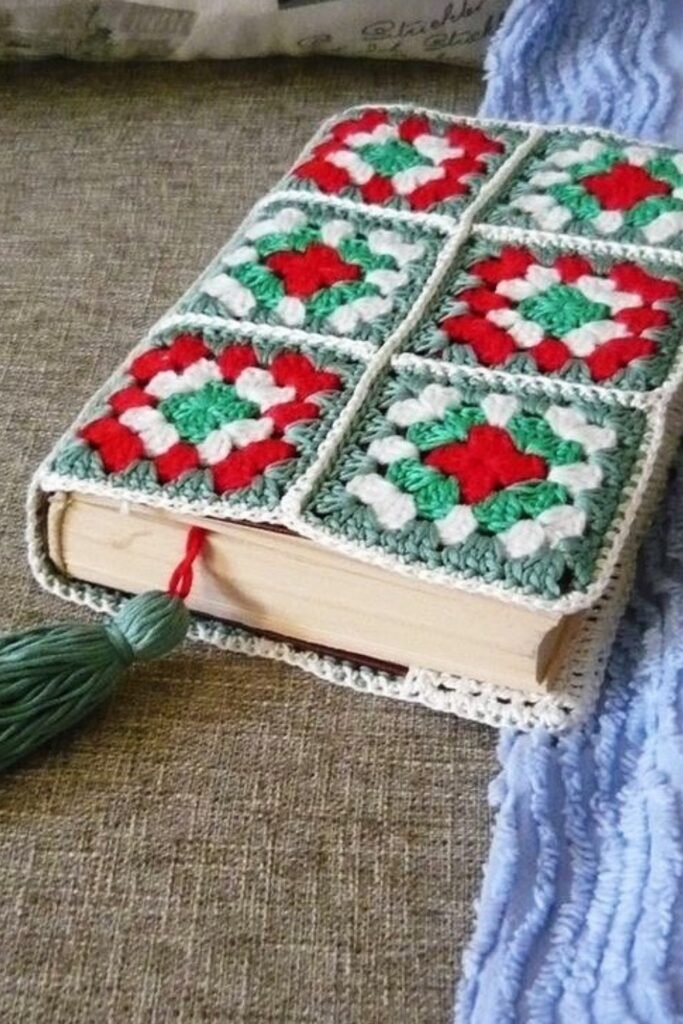
Fabric scraps become much more interesting when you combine related prints, while decorative stitching helps separate patterns without making everything feel visually busy.
Try adding one appliqué motif as your focal point, then let quieter patchwork pieces create enough contrast for that detail to stand out.
A lace border can hide slightly uneven fabric edges beautifully, giving beginners an easy finishing trick without demanding perfectly matched patchwork seams everywhere.
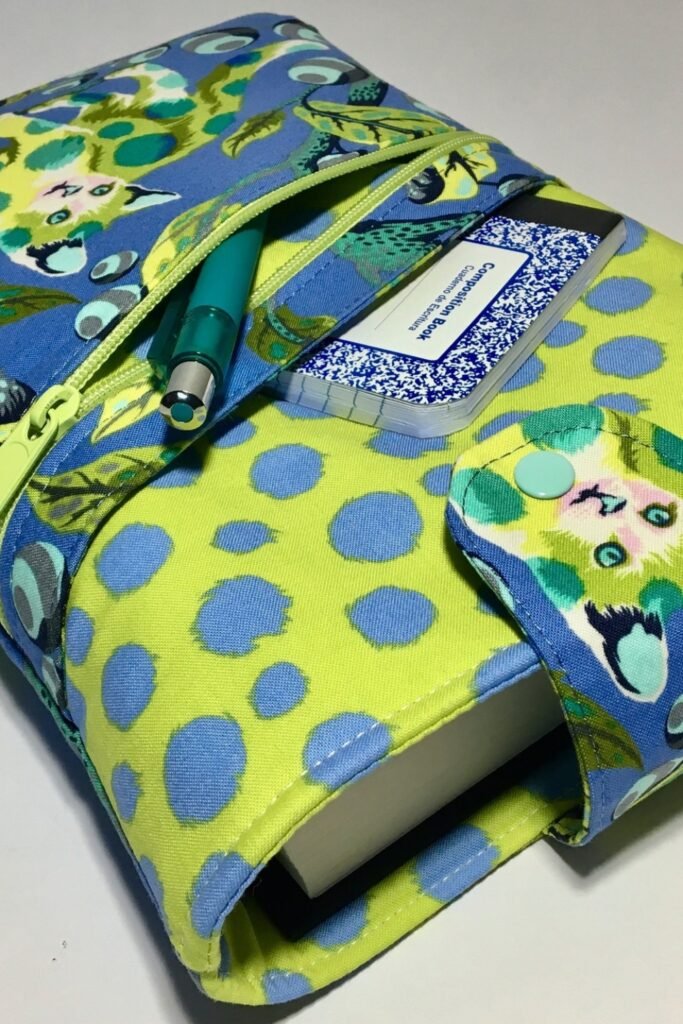
Pocket Book Cover
A book you carry regularly can work harder by adding a zippered pocket for pens, notes, cards, or other small essentials.
Position that pocket away from the book’s folding edge, because bulky contents near the spine can make opening and closing uncomfortable over time.
Mix coordinating fabrics instead of using one print everywhere, then repeat one pattern on the closure strap to pull the whole design together.
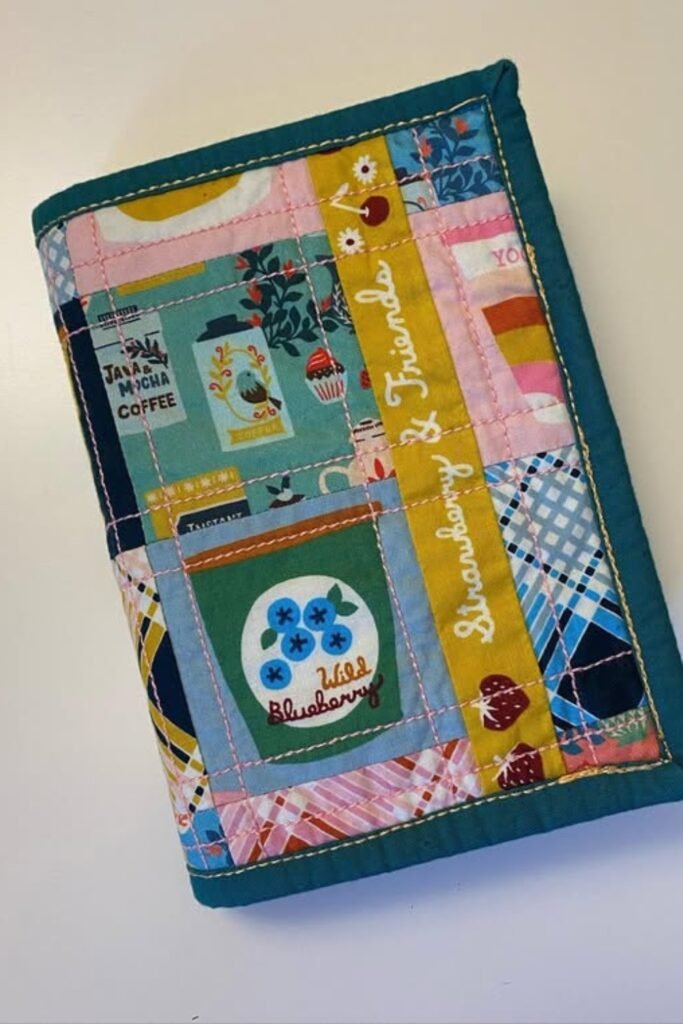
Scrap Quilt Cover
Those tiny fabric leftovers are worth keeping because a book cover needs surprisingly little material, making patchwork an ideal scrap-busting project.
Arrange contrasting pieces before stitching anything permanently, balancing busy prints with simpler sections so the finished surface feels playful rather than randomly crowded.
Bind the outer edges with one solid fabric to frame all those different scraps and give the cover a cleaner, sturdier finished shape.
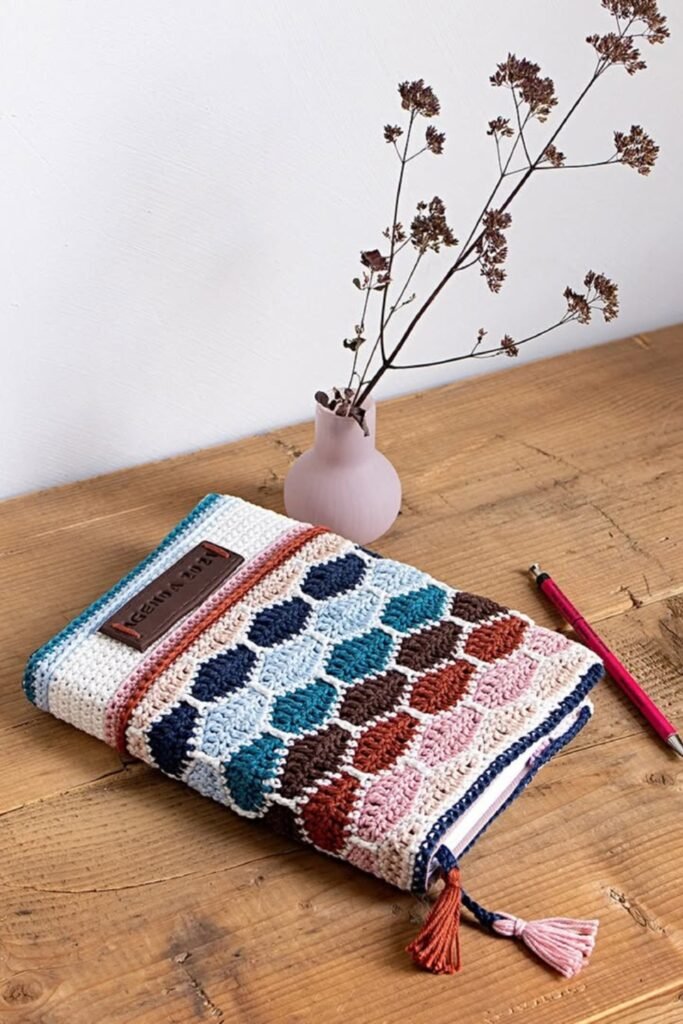
Scalloped Crochet Cover
A repeating scallop stitch gives crochet covers plenty of character without extra embellishments, especially when you alternate a few earthy, contrasting yarn colors.
Keep the spine section slightly simpler and more flexible than the front, allowing thicker textured stitches to move comfortably as pages open.
Small tassels attached near the bottom can double as bookmarks, bringing leftover yarn into the design instead of adding another separate accessory.
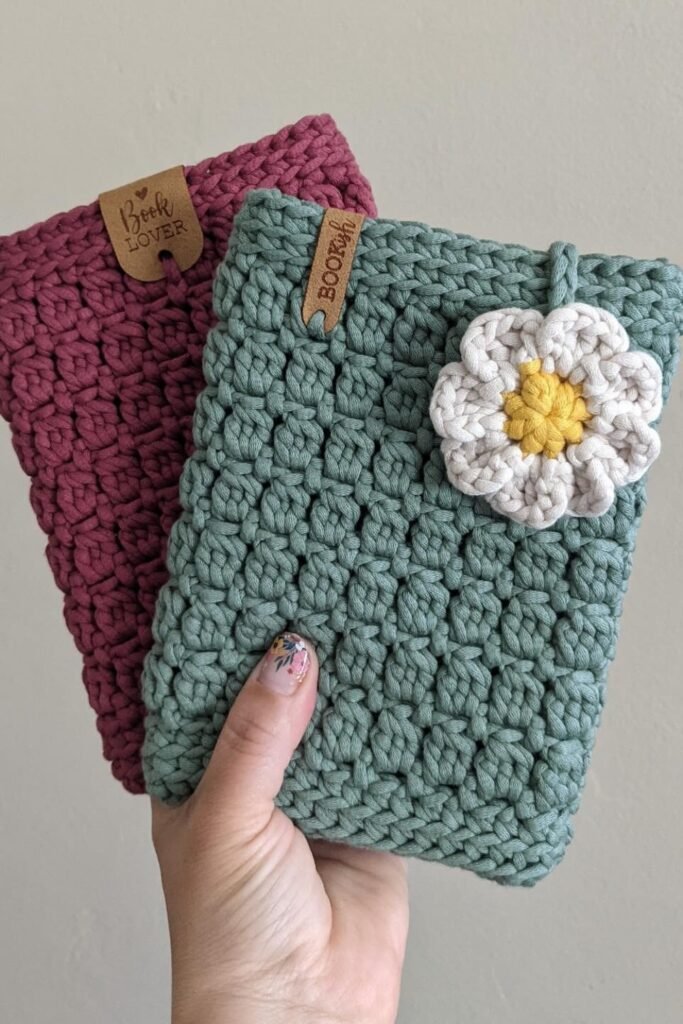
Chunky Crochet Wrap
Chunky yarn is a smart shortcut when you want noticeable texture without spending hours working tiny stitches across an entire book cover.
Choose a snug stitch pattern that holds its shape, but check the fit frequently so the thick yarn never squeezes the book.
One crocheted flower or small handmade label provides enough personality here, letting that beautiful chunky texture remain the main feature instead of competing.
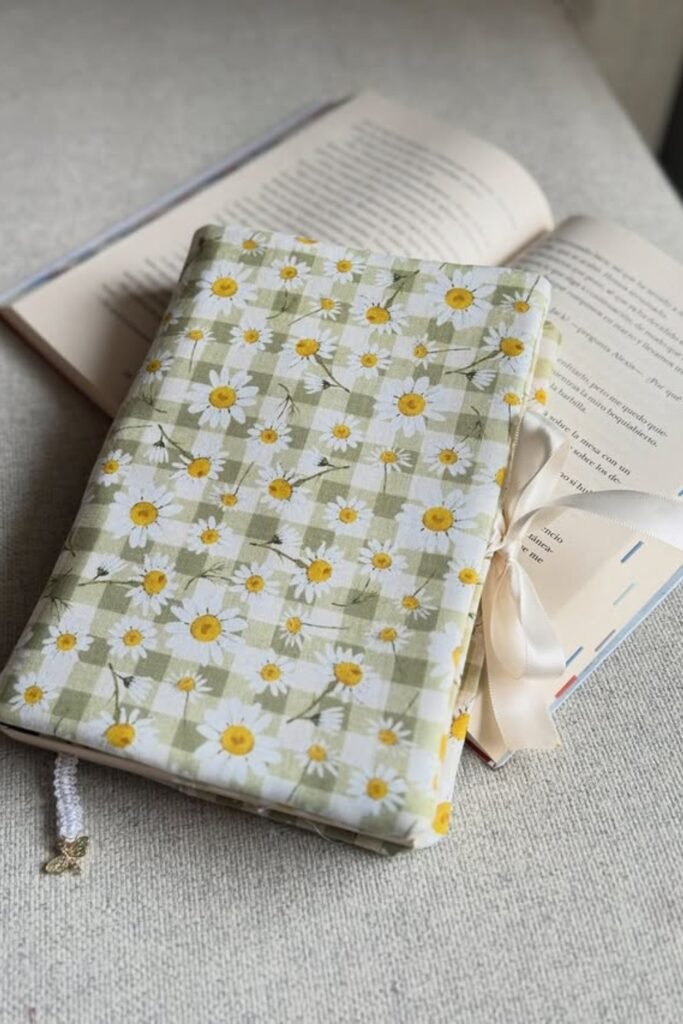
Daisy Fabric Cover
A cheerful printed fabric can carry the whole design, so there is no need to pile extra decorations onto an already charming pattern.
Before cutting, position the fabric over your book first and check where larger flowers land, especially around the spine and folded edges.
Add a ribbon closure when you want pages held securely during travel, choosing a soft ribbon that ties easily without creating unnecessary bulk.
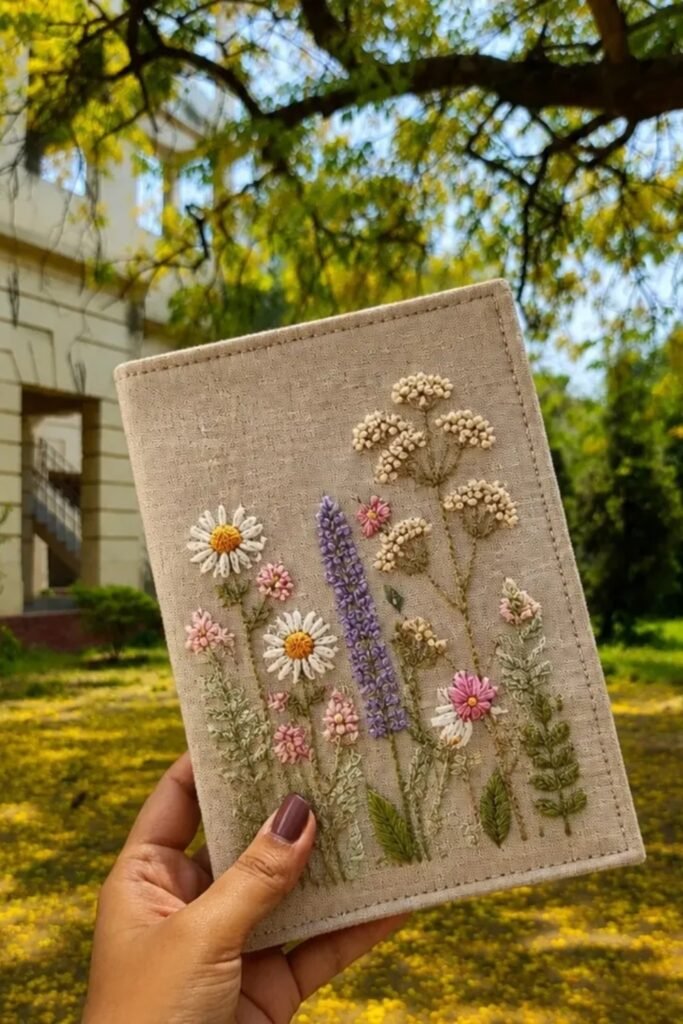
Embroidered Garden Cover
Plain linen becomes a beautiful canvas for embroidery, letting you personalize a cover without relying on patterned fabric or lots of added decorations.
Sketch your floral arrangement lightly before stitching, keeping taller stems toward the center and smaller blooms around them for natural visual balance.
Complete the embroidery before assembling your cover, since stitching through a finished book wrap is harder and can leave the inside looking untidy.
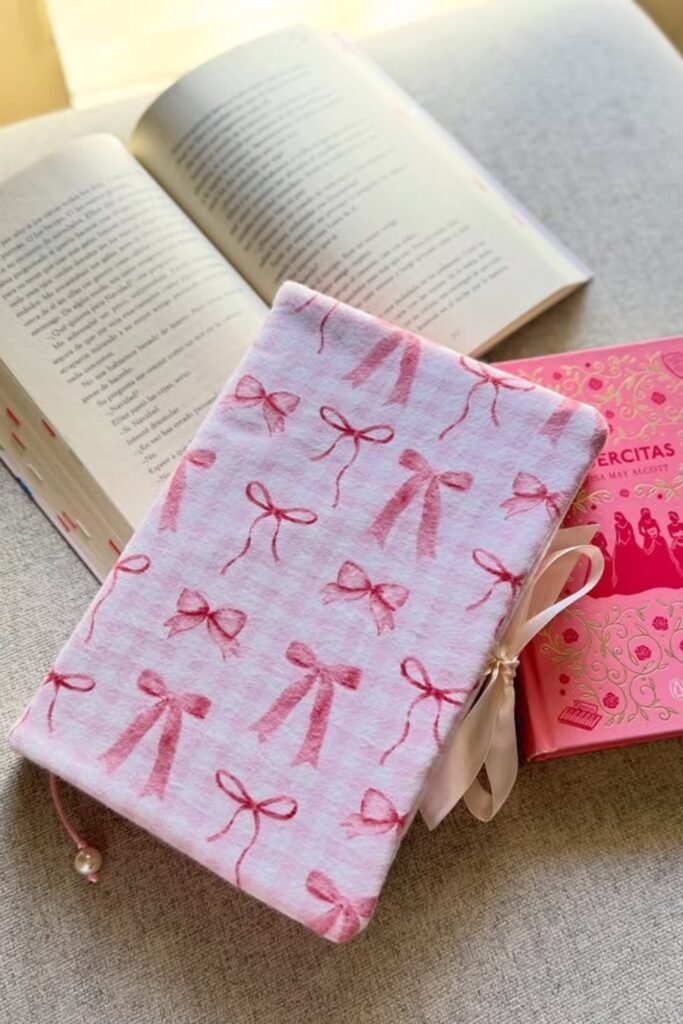
Bow Print Cover
A soft bow print brings personality without complicated embellishments, making simple cotton fabric an easy choice when you want a charming handmade finish.
Wrap the fabric smoothly around each edge before securing it, because even a delicate pattern looks better when corners stay crisp and flat.
Finish with narrow ribbon ties at the opening, giving the cover a practical closure that complements the bows without overwhelming the design.
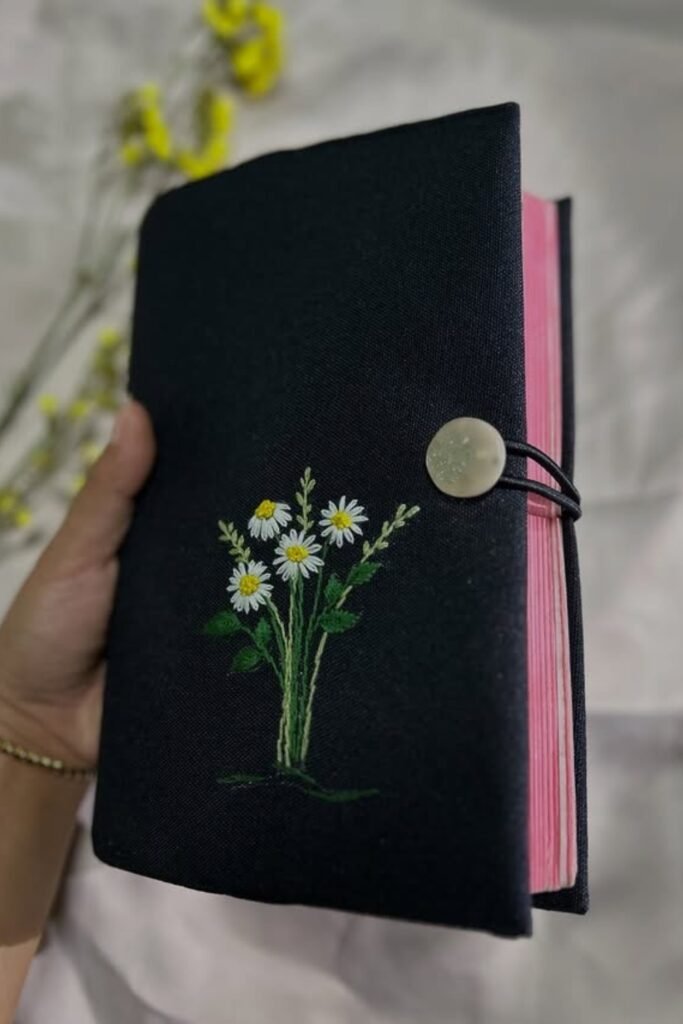
Minimal Floral Cover
Dark fabric makes small embroidery details feel surprisingly striking, so you can create something special without covering the entire surface in decorative stitching.
Place one small floral motif slightly off center, leaving plenty of open fabric around it for a cleaner and more refined appearance.
A button-and-loop closure adds function without distracting from the embroidery, especially when you choose hardware that blends quietly with the fabric itself.
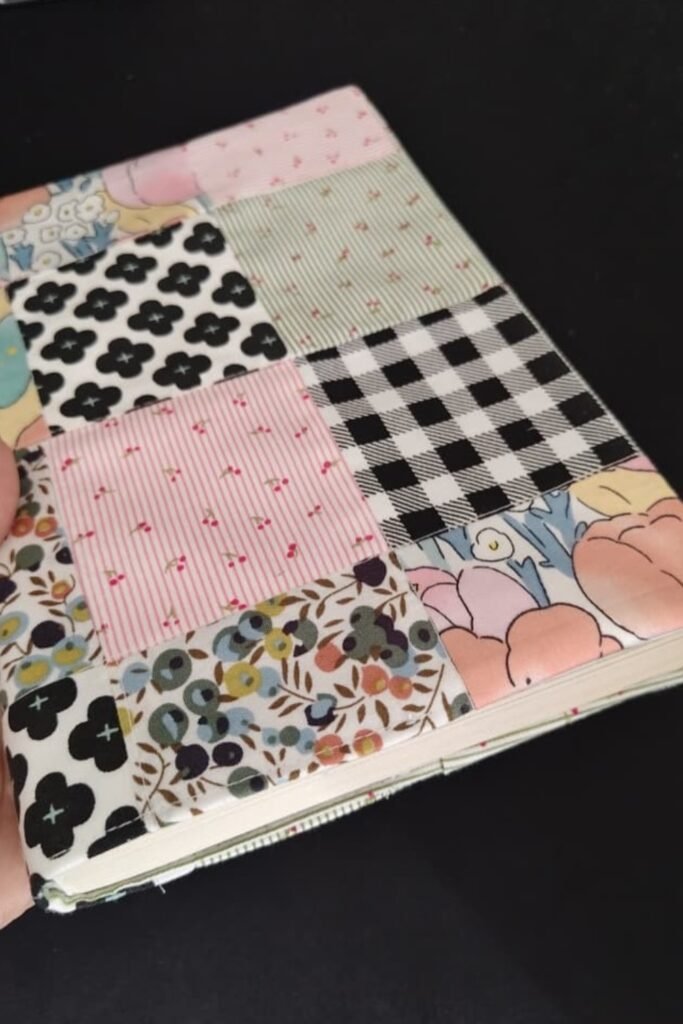
Mixed Print Patchwork
Patchwork becomes easier to balance when every fabric does something different, combining florals, checks, stripes, and tiny prints instead of repeating patterns.
Lay your squares together before sewing, moving darker pieces around until the colors feel evenly distributed rather than clustered in one area.
Keep the patch sizes fairly consistent for a tidy finish, letting the variety of prints provide all the playful character your cover needs.
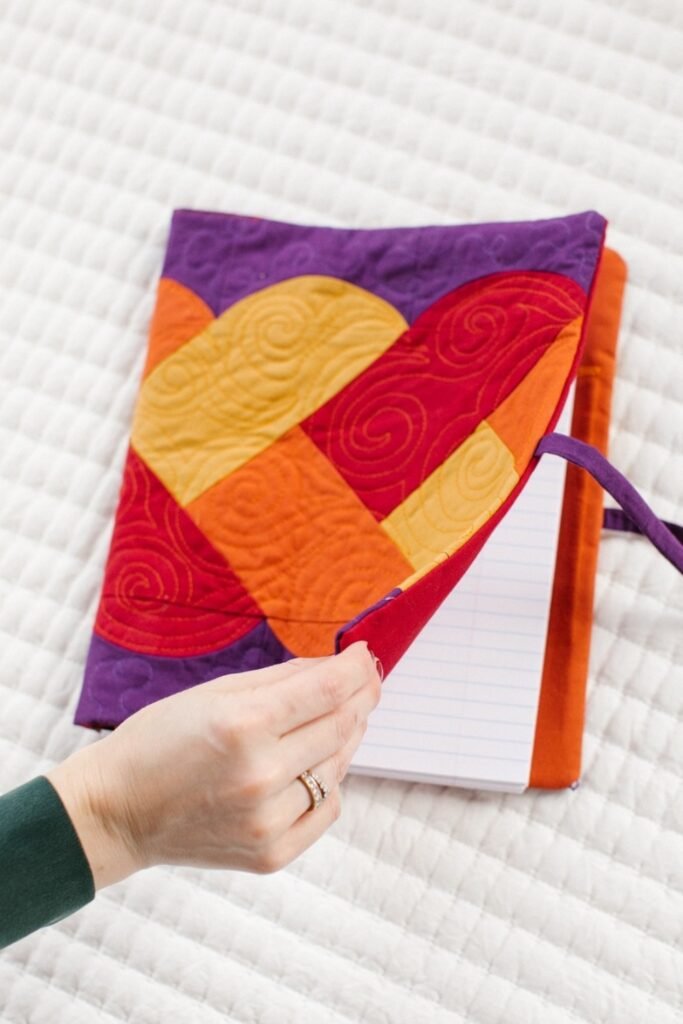
Quilted Heart Cover
A bold appliqué shape can transform leftover fabric into a meaningful cover, especially when simple quilting adds texture without requiring complicated decorative techniques.
Build the heart from curved fabric sections first, then stitch it onto a contrasting background before assembling the cover around your book.
Use light quilting across each section to strengthen the layers, helping the cover feel cushioned while keeping the colorful heart clearly defined.
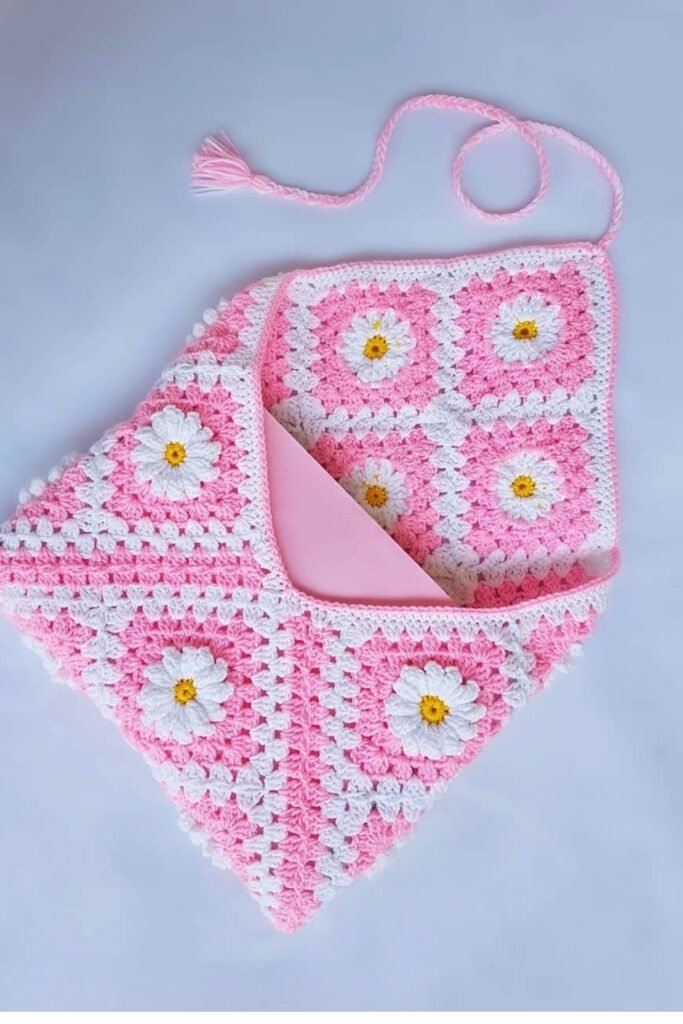
Daisy Crochet Wrap
Granny squares work especially well for book covers because you can build the exact width gradually instead of guessing one large crochet panel.
Keep your flower centers consistent while alternating surrounding colors, creating a repeating design that feels coordinated without making every square completely identical.
A braided yarn tie makes an easy closure for a thicker crochet, holding everything together without adding buttons that might press against nearby books.
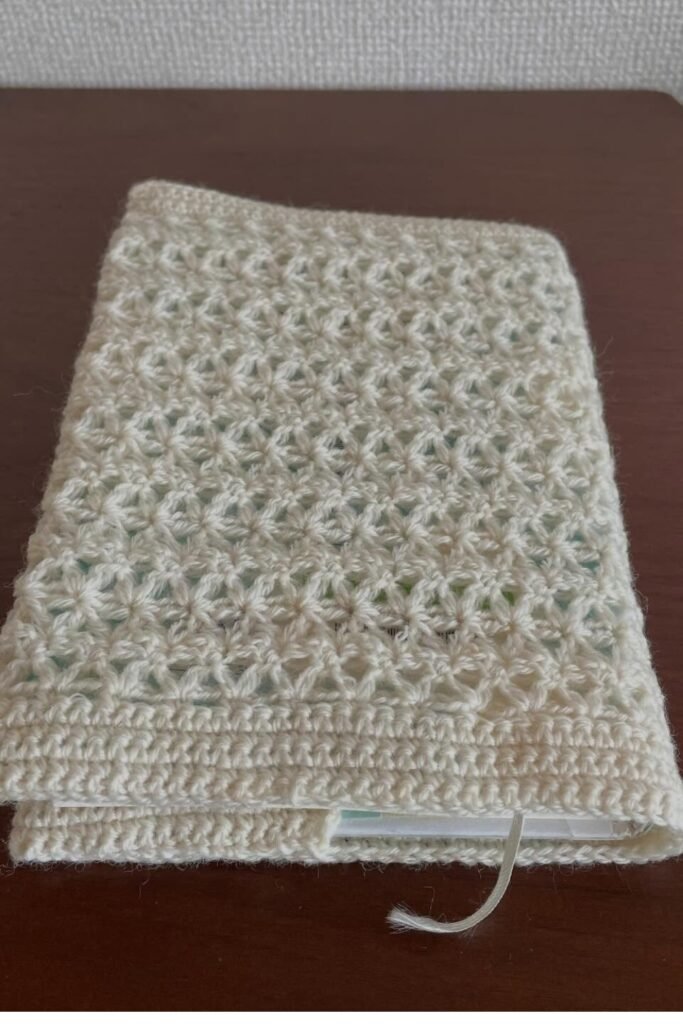
Lacy Crochet Cover
Open crochet stitches are a clever choice when you want handmade texture without creating a heavy cover that feels bulky around smaller books.
Use tighter rows along the edges and spine, giving those hardworking areas extra structure while leaving the main panel lighter and more flexible.
Neutral yarn keeps intricate stitchwork easy to notice, so let the pattern provide the decoration instead of adding unnecessary appliqués or contrasting trims.
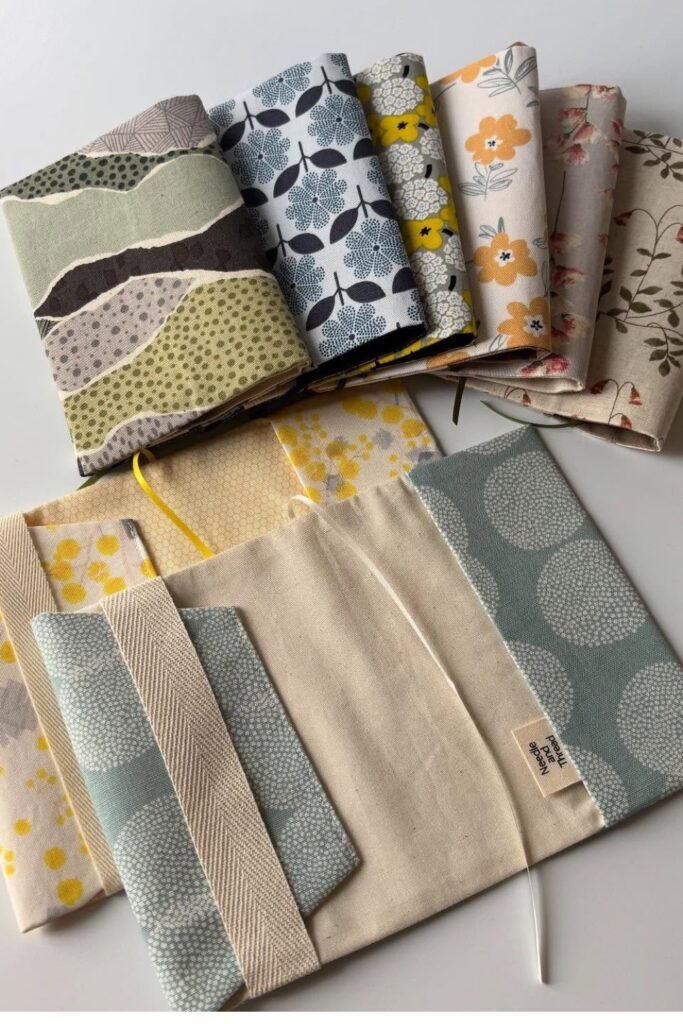
Reusable Fabric Wrap
Making removable fabric covers in several prints lets you change a book’s look whenever you want without permanently altering the original binding.
Sew deep inner flaps rather than attaching fabric directly, giving the covers enough grip to stay secure while remaining completely reusable between books.
Choose medium-weight cotton that folds cleanly and washes easily, especially when making everyday covers for novels, planners, journals, or frequently handled notebooks.
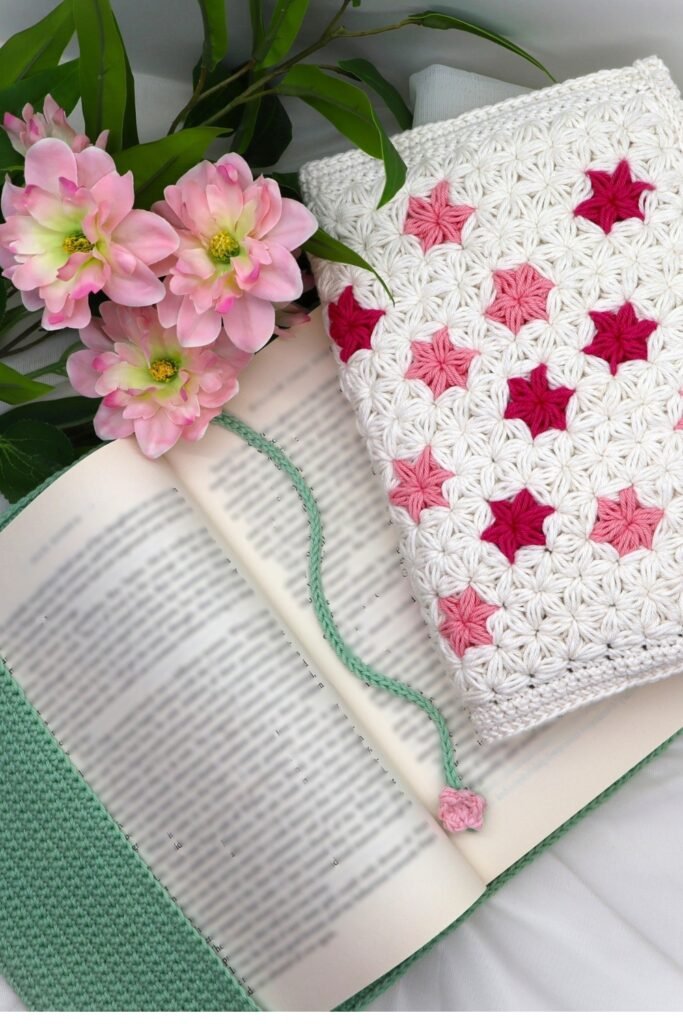
Star Crochet Cover
Small contrasting motifs can make a simple crochet background feel playful, and scattered stars avoid the rigid appearance of perfectly repeated rows.
Work the main cover in one light shade first, then introduce two related accent colors so those tiny stars become the clear focus.
Measure after completing several rows because crochet can stretch differently between stitches, helping you adjust early before the finished cover becomes too loose.
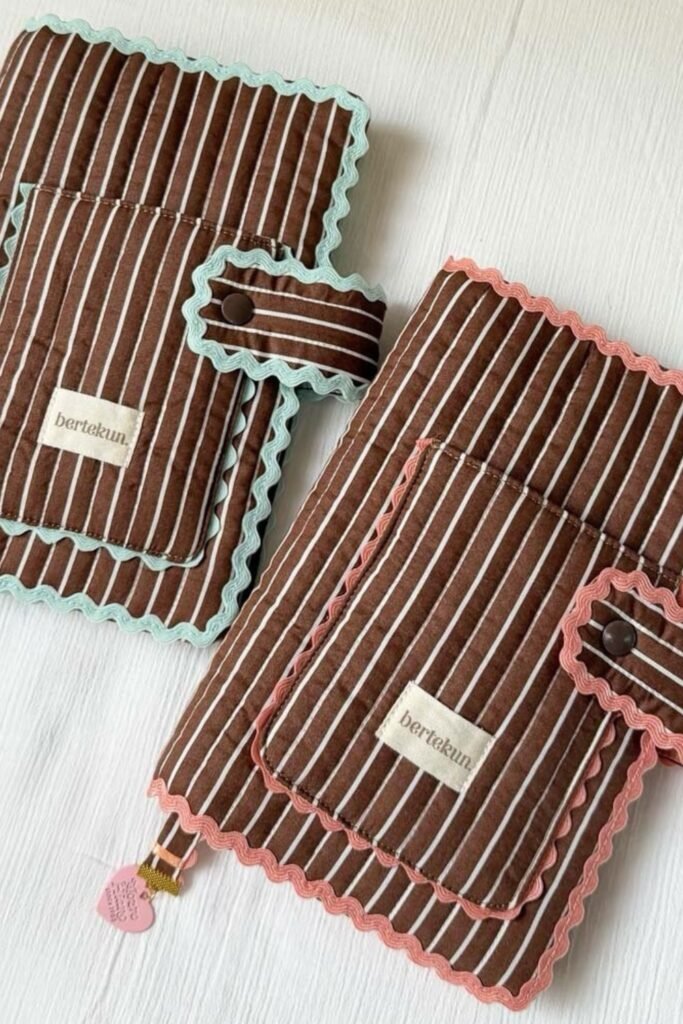
Striped Pocket Cover
A front pocket instantly makes a fabric cover more useful, giving you somewhere convenient to keep notes, bookmarks, or reading essentials nearby.
Outline striped fabric with contrasting ric-rac trim to soften straight edges, while using the same trim around the pocket keeps everything visually connected.
Add a snap closure across the opening when carrying your book around, preventing the cover from slipping while adding another neat handmade detail.
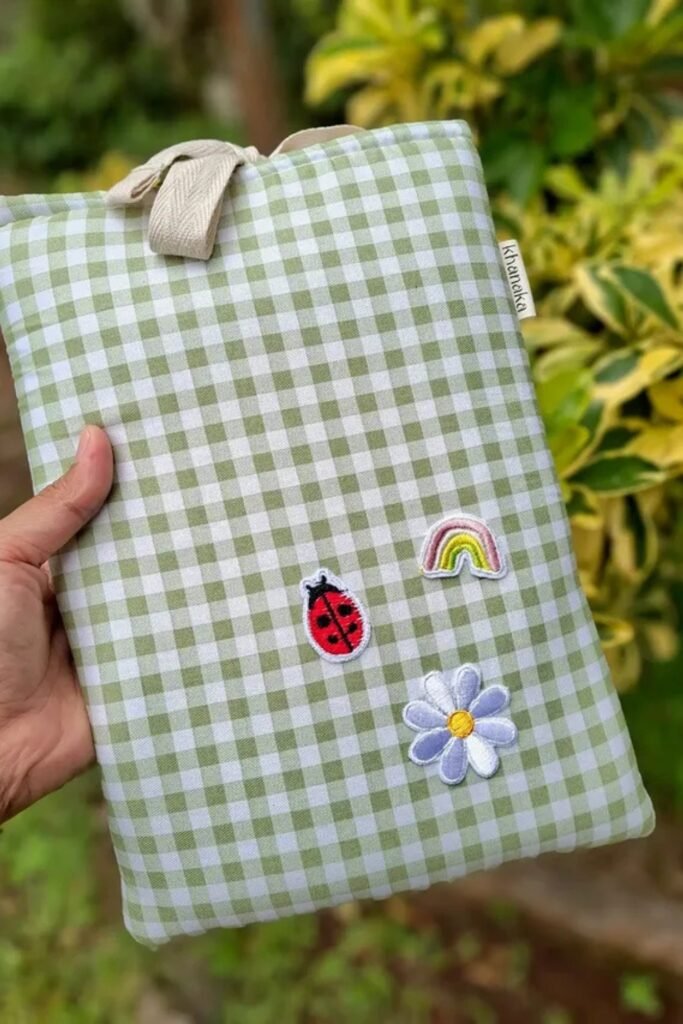
Gingham Patch Cover
Simple gingham becomes much more personal with a few tiny embroidered patches, letting you customize the cover without learning complicated stitching techniques.
Space your patches apart rather than clustering them together, allowing the checked background to remain visible and keeping each playful motif easy to notice.
A small fabric loop at the top can hold a pen or bookmark, adding everyday function without disturbing the clean front design.
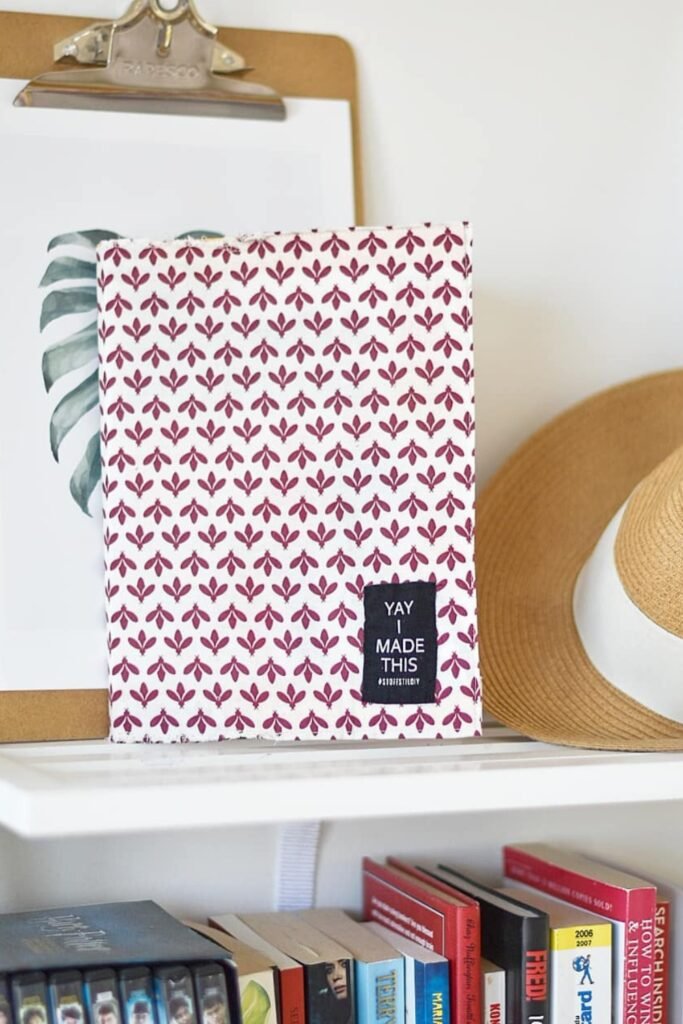
Simple Printed Cover
Sometimes the fabric deserves to do all the decorating, especially when a small repeating print already gives your cover plenty of visual interest.
Cut the fabric with the pattern running straight across the book, since slightly crooked repeats become surprisingly noticeable once wrapped around clean edges.
Finish with a small handmade label near one corner, giving the project a personal signature without competing against that carefully chosen print.
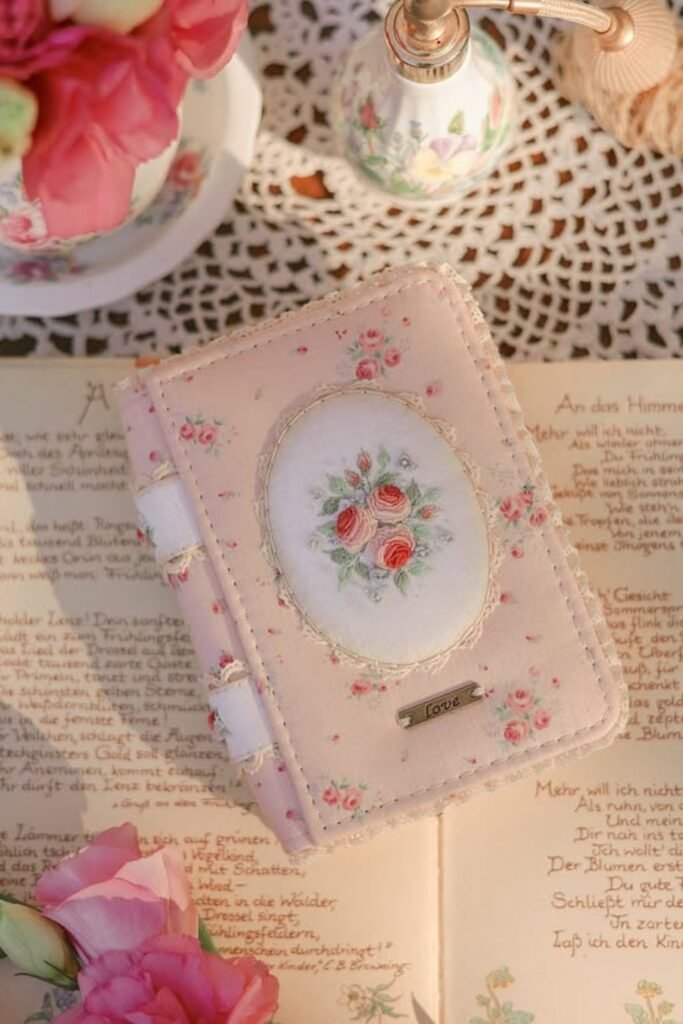
Vintage Rose Cover
For a romantic finish, start with softly printed fabric and reserve the center for one detailed floral motif rather than decorating everywhere.
Frame an embroidered rose panel with delicate trim to create a focal point, making even a small piece of special needlework feel important.
Soft padding underneath can give the cover a keepsake feel, but keep it thin enough that the book still opens comfortably.
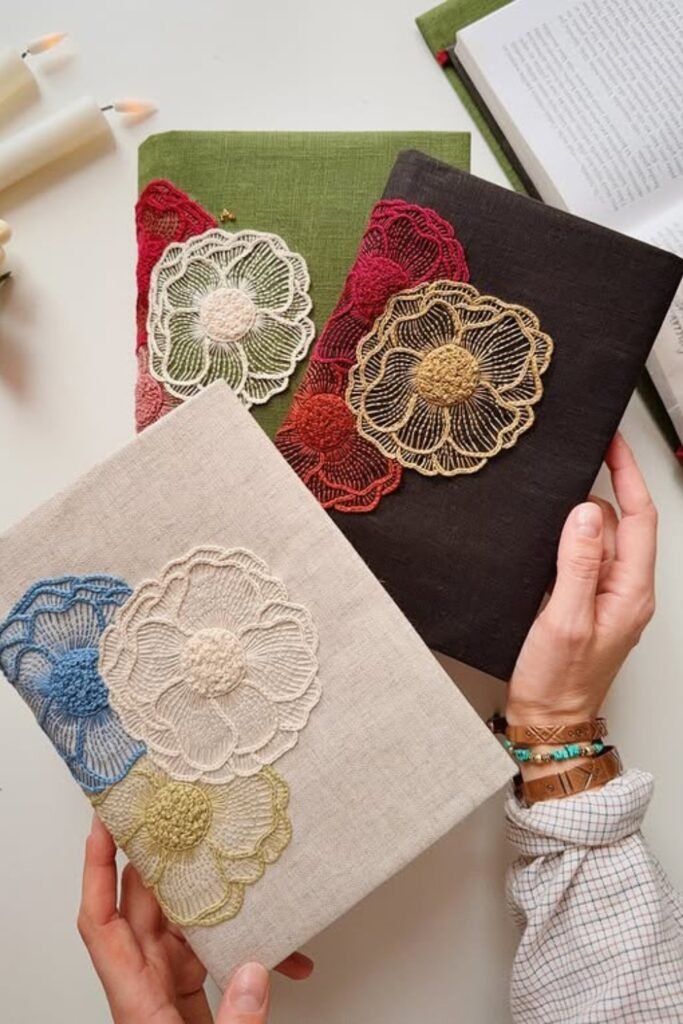
Lace Flower Cover
Large lace flowers can become the entire focal point, especially when you place them over plain linen instead of starting with busy fabric.
Layer two or three motifs along one side, varying their sizes and colors so the arrangement feels organic rather than perfectly symmetrical.
Secure every lace edge carefully before wrapping the book, preventing delicate petals from catching while still preserving their beautiful raised texture.
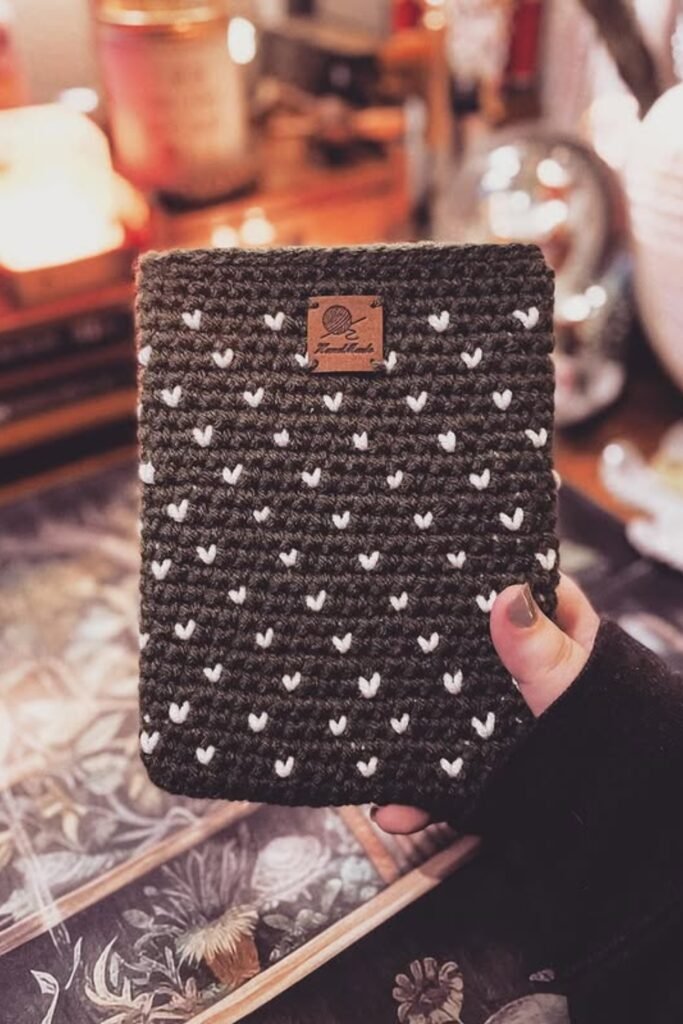
Tiny Heart Crochet
A dark crochet base makes tiny light stitches pop, proving that even a very simple repeated detail can completely change the finished cover.
Scatter small heart stitches evenly as you crochet rather than attaching decorations afterward, which keeps the surface flatter for everyday reading and storage.
Finish with a small leather or fabric label near the top, adding a handmade signature without interrupting the sweet repeating heart pattern.
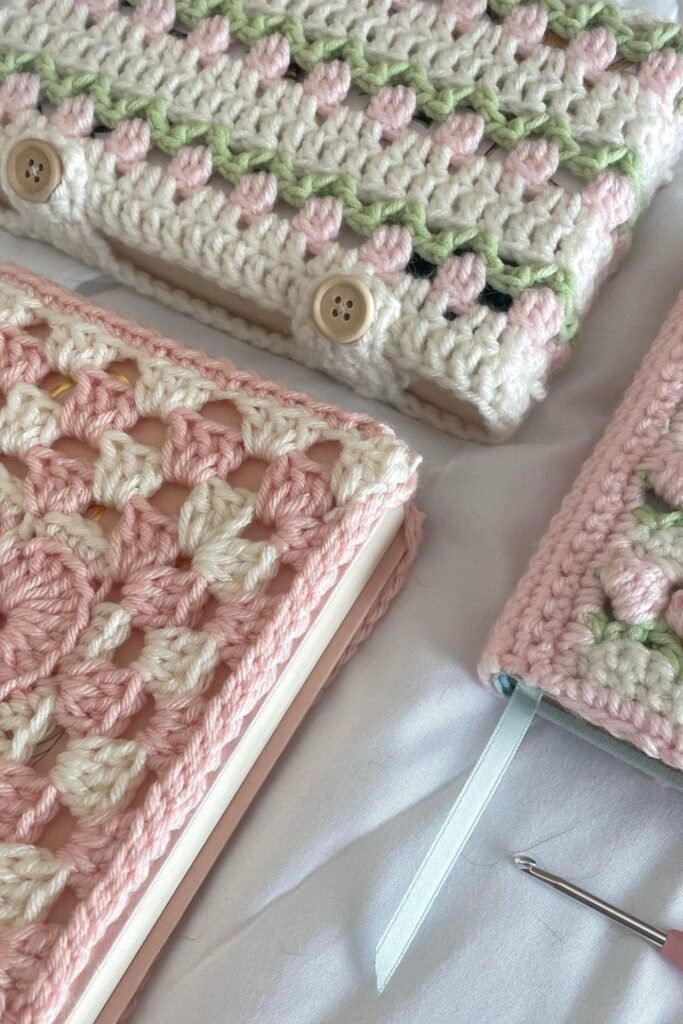
Textured Crochet Flowers
Crochet covers become especially charming when the stitches themselves create flowers, giving you dimension without sewing separate appliqués across the entire surface.
Combine soft pink, cream, and green yarn sparingly, letting each color define petals and stems while keeping the overall palette gentle and coordinated.
For thicker floral stitches, allow slightly more room around the book so raised details stay comfortable instead of pulling tightly across the cover.
Ribbon Embroidery Cover
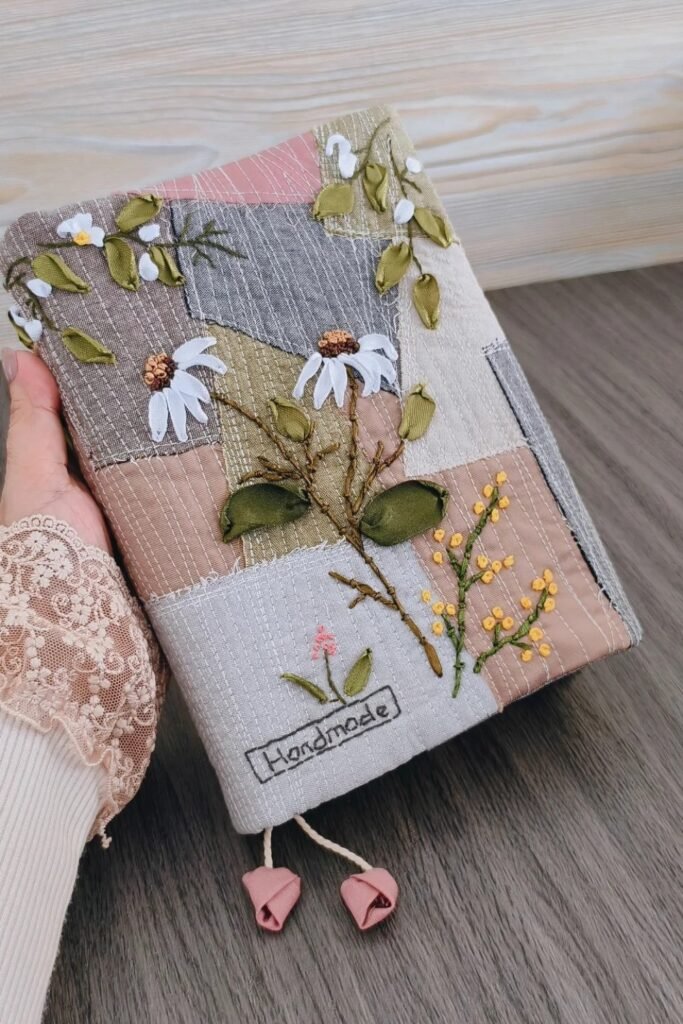
Ribbon embroidery is perfect when ordinary thread feels too delicate, because wider ribbon creates dimensional petals and leaves with relatively few stitches.
Build the fabric background from muted patchwork pieces first, then embroider across selected seams so the flowers visually connect those separate sections.
Keep the largest flowers around the center and use smaller buds near edges, preventing bulky ribbon details from interfering with the cover’s handling.
Stitched Paper Cover
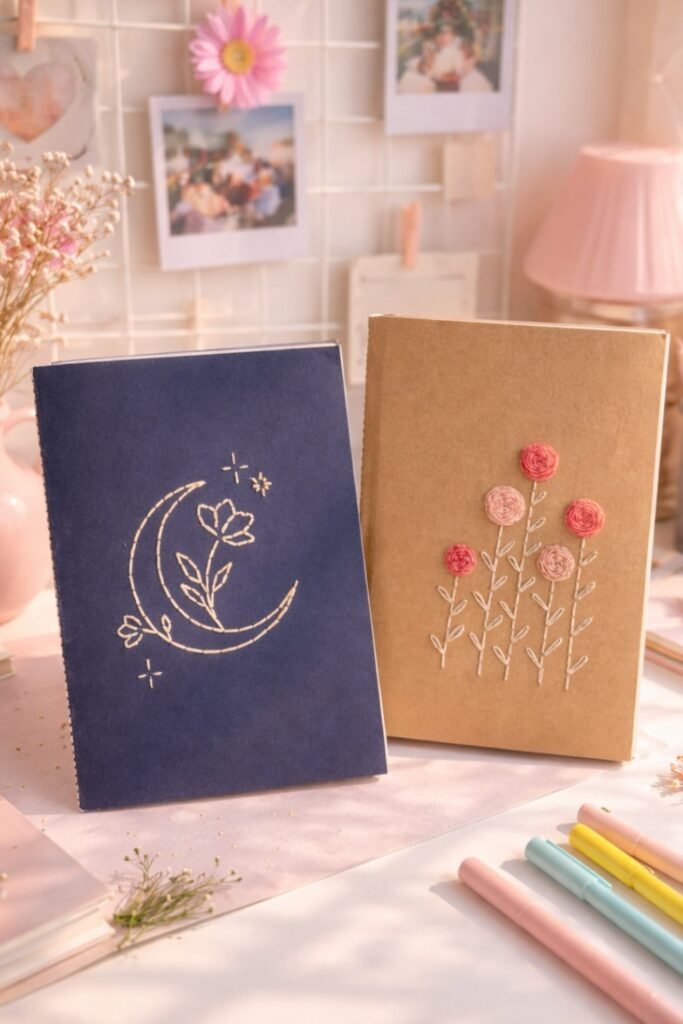
Plain cardstock becomes surprisingly special with simple hand stitching, making this a great option when fabric covers feel more complicated than needed.
Punch your stitch holes before threading, keeping them evenly spaced so curved flowers, moons, or stems look clean instead of accidentally jagged.
Use thicker embroidery thread for raised details and limit yourself to a few colors, letting the simple paper background keep everything balanced.
Bow Tie Cover
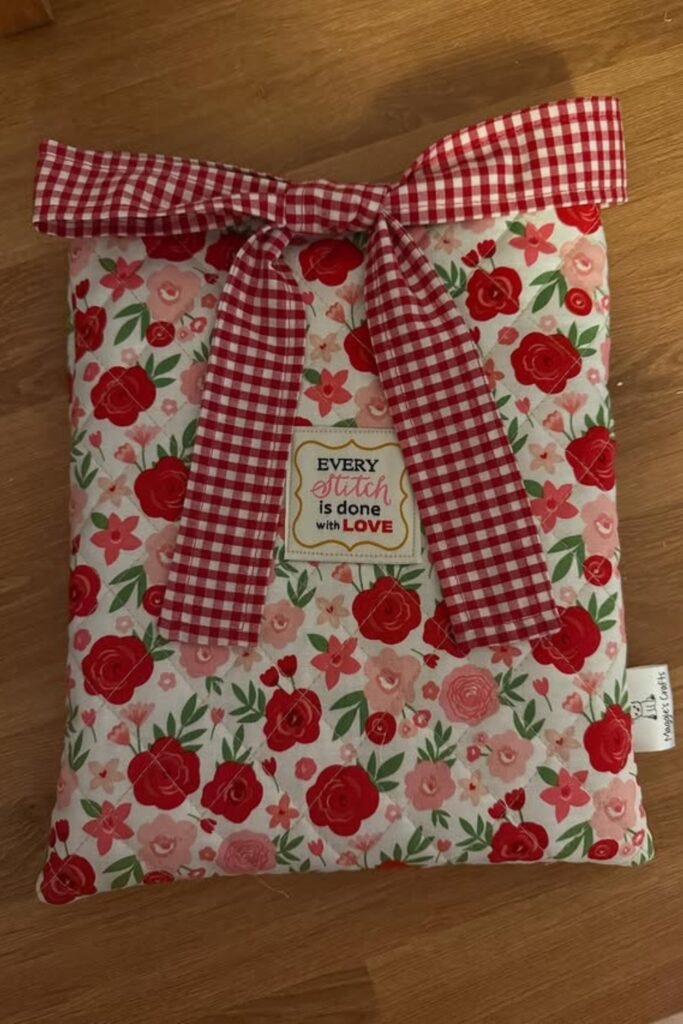
A large fabric bow can double as decoration and closure, turning an ordinary floral cover into something playful while keeping pages securely tucked.
Choose one contrasting print for the bow rather than matching the floral base, giving the finished cover stronger definition and intentional visual layering.
Attach the tie near the upper edge where it stays decorative without creating uncomfortable bulk underneath your hands while holding the book.
FAQs
What Is the Best Material for a DIY Book Cover?
It depends on how you use the book. Cotton fabric works well for reusable everyday covers, while kraft paper is affordable and easy for beginners.
For borrowed or rented books, choose a removable cover rather than attaching glue, tape, or decoration directly to the original binding.
How Do I Make a DIY Book Cover Fit Properly?
Measure the book while it is closed, including the front, back, spine, and enough extra material for inner flaps.
Avoid pulling fabric or crochet tightly across the spine because the book still needs room to open comfortably.
Before sewing, gluing, or adding decorations, temporarily wrap your material around the book and test the fit first.

Hi, my name is Ali Mehmood! I’m a passionate writer and DIY enthusiast who loves turning creative ideas into practical, hands-on projects.
I created this website to share inspiring, budget-friendly ideas that you can do yourself – whether it’s organizing your home, crafting something unique, or creating fun projects for kids and pets.
I believe DIY isn’t just a hobby – it’s a smart way to save money, reduce waste, and enjoy the satisfaction of making things with your own hands.
I’m excited to have you as part of this growing community, and I’ll continue bringing you helpful, realistic, and fun DIY ideas you can actually use.