This post may contain affiliate links: read full affiliate disclosure.
An ugly downspout can spoil a garden corner, but replacing it with something decorative raises another problem: will it actually handle the rain?
I know a DIY rain chain can look beautiful, yet poor spacing, weak materials, or the wrong landing spot can leave you dealing with splashing water.
The good news is that you can create one that adds character while guiding roof runoff where you want it to go.
In this article, you’ll find practical DIY rain chain ideas, discover which materials and setups work best.
Copper Funnels
Bring stronger water control to an exposed gutter corner by using deep copper funnels instead of simple open links.
Space each funnel directly beneath the previous opening, helping runoff cascade downward without losing its path between sections.
Let the copper weather naturally over time, while a stone-filled base below helps soften splashing around the landing area.

Hanging Bowls
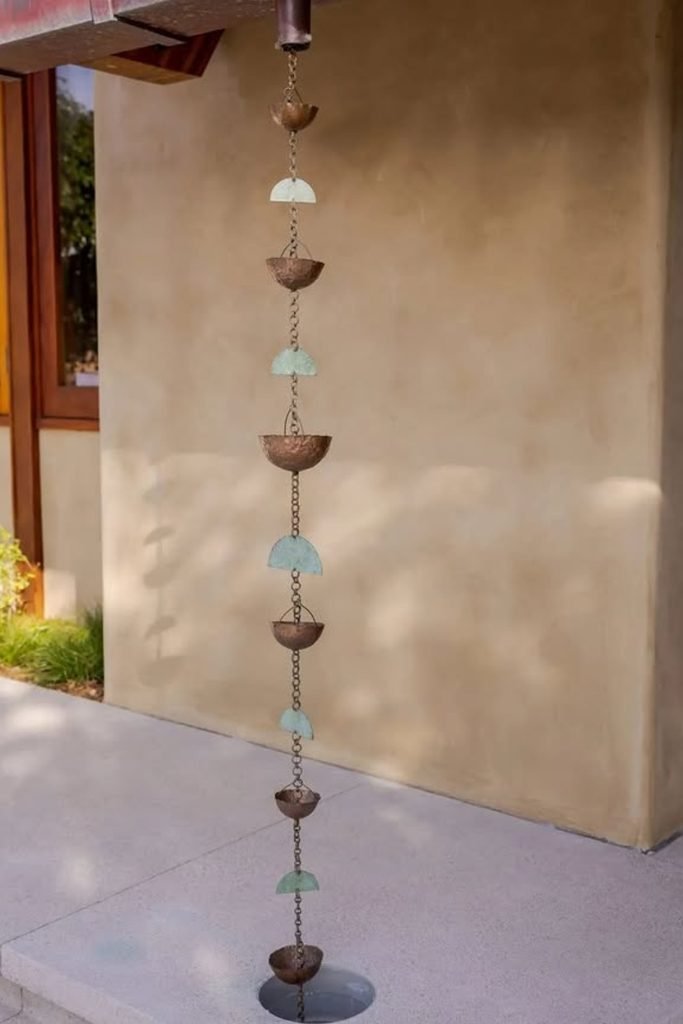
Turn smaller roof runoff into a gentle cascade by alternating shallow metal bowls with decorative half-circle pieces along the chain.
Keep the bowls level and vertically aligned, so each one catches water before passing it toward the section below.
A weighted base works especially well beside a patio, keeping the narrow chain steadier when wind moves through.
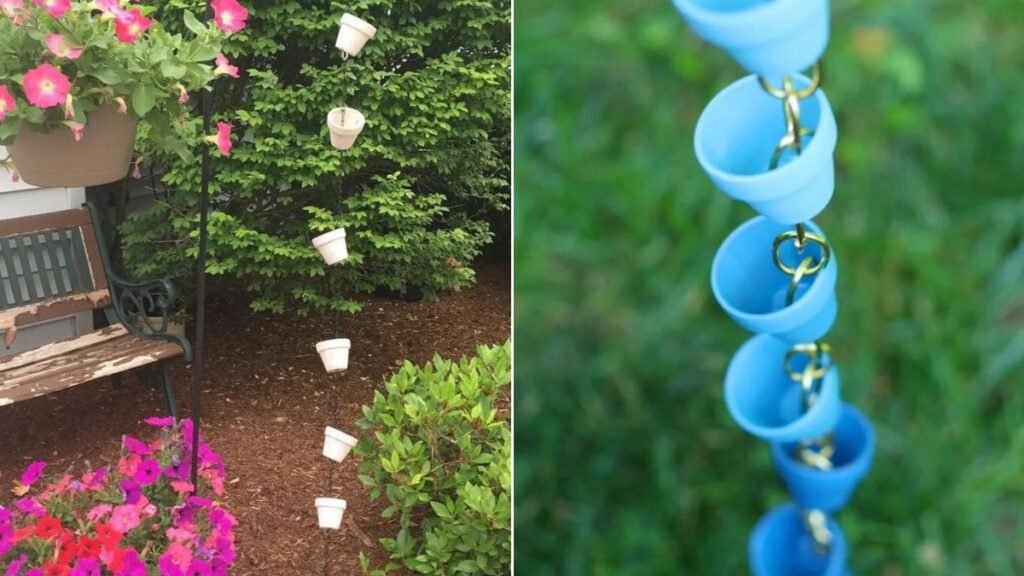
Tiny Pots
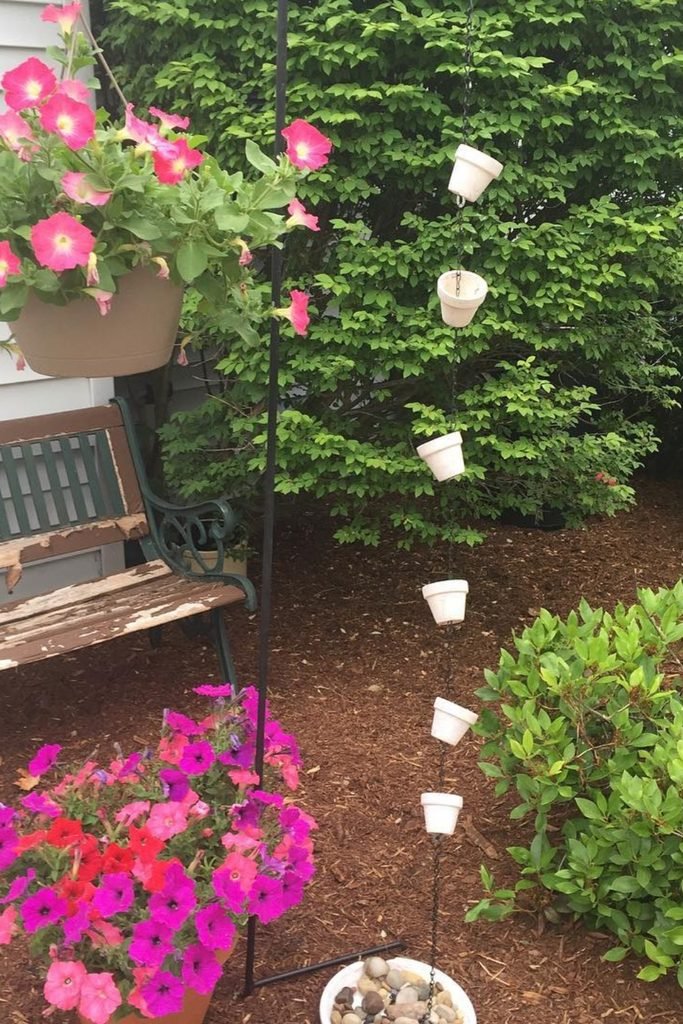
Put spare miniature pots to work by threading them along a sturdy chain for a playful garden-friendly rain feature.
Tilt each pot slightly toward the next one, allowing runoff to spill naturally rather than simply dropping straight through.
Finish over a rock-filled container near flower beds, where the stones can reduce muddy splashes around surrounding plants.
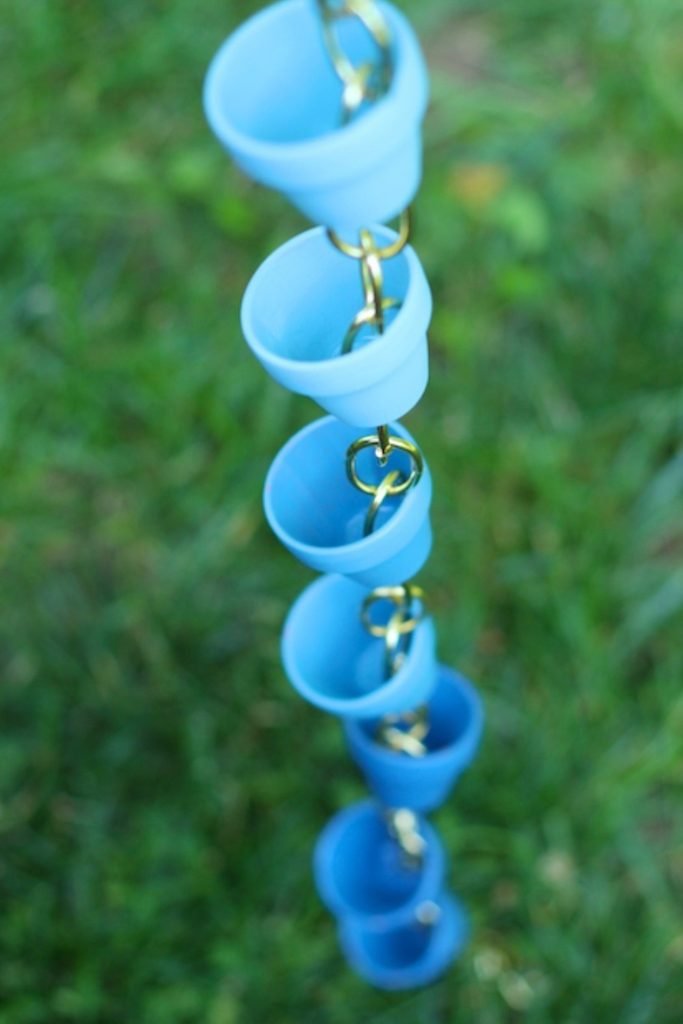
Blue Cups
Add noticeable color without complicated metalwork by connecting lightweight blue cups with rings through their drainage openings.
Keep the cups fairly close together so falling water reaches the next opening instead of blowing sideways during breezy rain.
Use this lighter design in a sheltered garden spot, and secure the bottom firmly to prevent excessive swinging outdoors
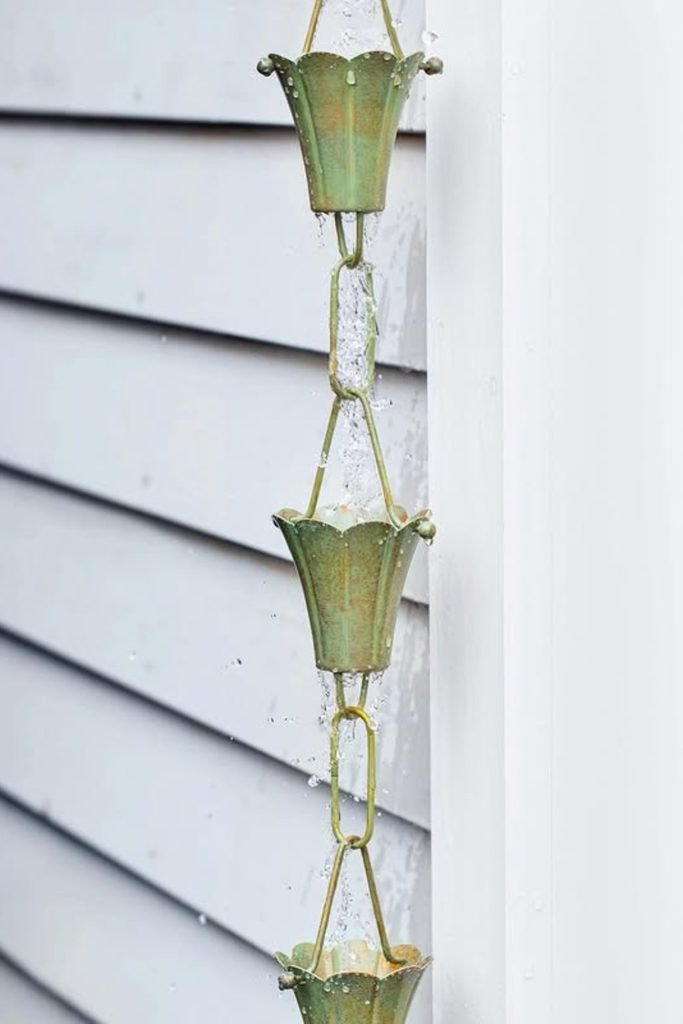
Flower Cups
Bring a softer garden detail to your gutter by choosing scalloped metal cups that resemble small open flowers.
Link each cup with sturdy hooks, leaving enough space for water to spill cleanly into the opening below.
Allow the weathered finish to develop naturally, giving the chain more character beside traditional siding or cottage-style landscaping.
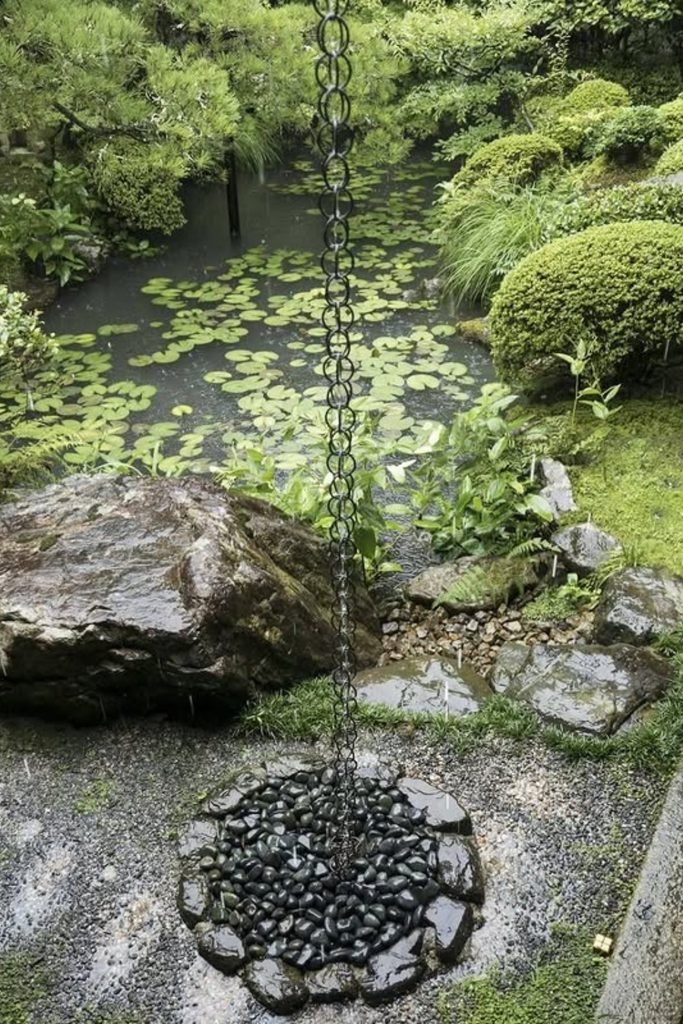
Ring Cascade
Keep the construction wonderfully simple with overlapping metal rings, especially when you want water movement without decorative cups.
Connect rings tightly enough to create a continuous surface that encourages runoff to travel downward instead of falling freely.
End the chain above smooth black stones, where the dark rock bed can soften splashes and define its landing point.
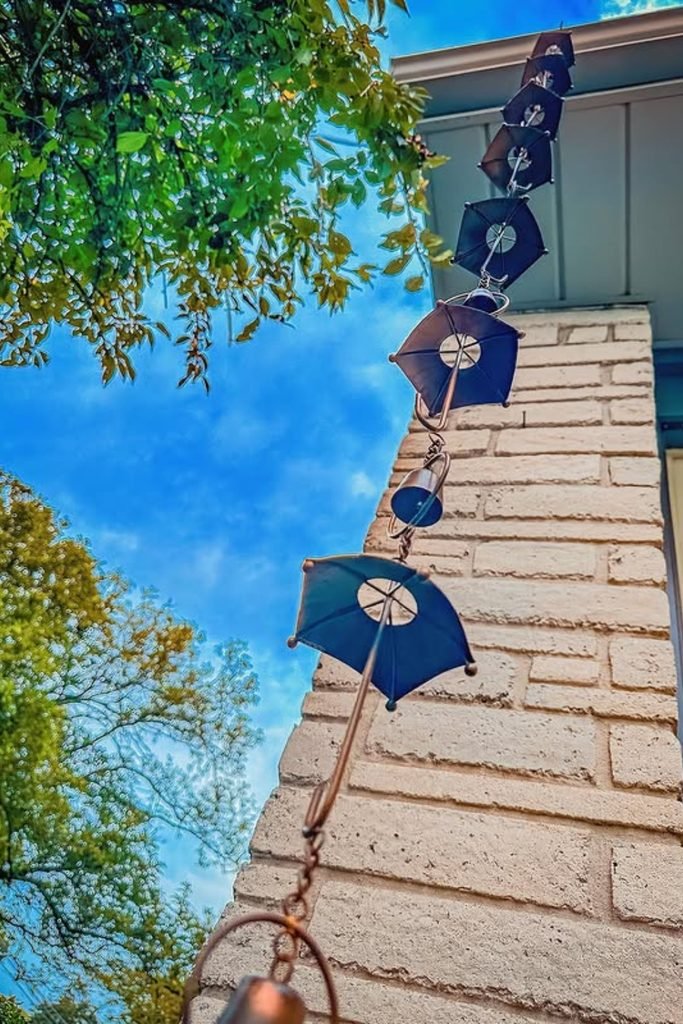
Umbrella Chain
Give your rain chain a playful twist by turning miniature metal umbrellas upside down to catch water from above.
Thread wire through each umbrella center and maintain consistent spacing, helping the runoff travel neatly from canopy to canopy.
Try this whimsical version near a porch or garden corner where its sculptural shapes remain noticeable even between rainstorms.
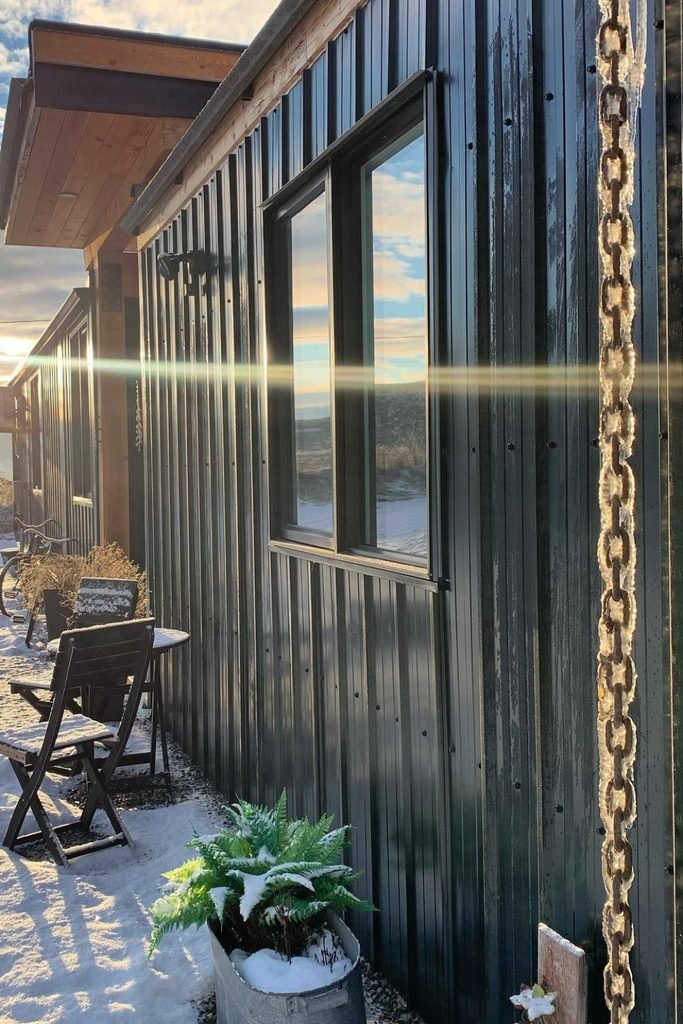
Winter Links
Cold-weather climates call for extra attention because water freezing around exposed chain links can add considerable weight outdoors.
Choose strong metal links and secure gutter hardware if you plan to leave your DIY rain chain hanging through winter.
Inspect the attachment after icy weather, since repeated freezing and thawing can place additional stress on the supporting connection.
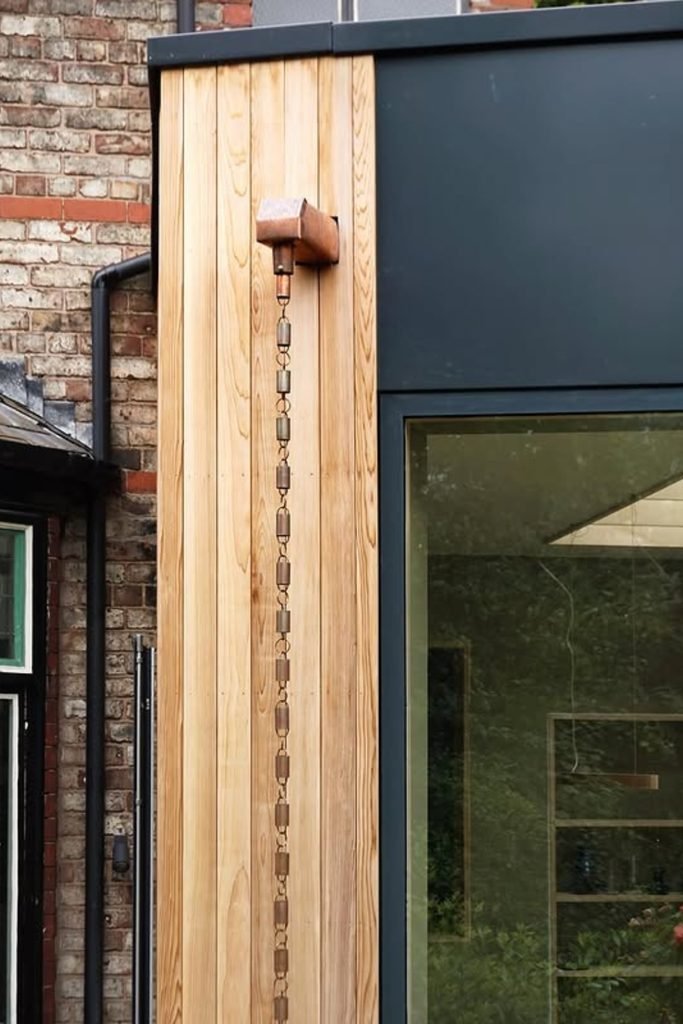
Block Links
For a cleaner architectural look, build the chain with small rectangular metal blocks joined by simple circular connectors.
Keep every section vertically aligned beneath the outlet, so runoff follows the repeated links without wandering toward nearby cladding.
Match this streamlined design with modern extensions, where copper-toned metal can soften sharp timber, brick, and dark-framed finishes.
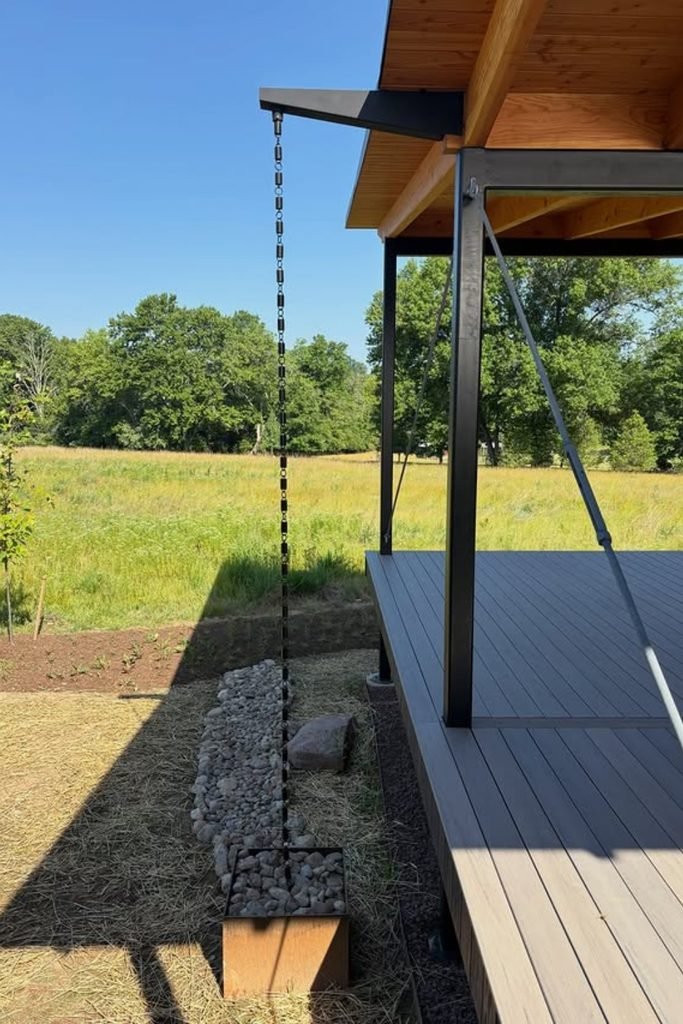
Drainage Channel
Solve the landing-point problem by running a long linked chain directly into a narrow stone-filled drainage channel below.
Let smooth rocks receive the runoff and reduce soil splash, while the recessed channel carries excess water beyond the porch.
This approach suits modern homes especially well because the drainage becomes part of the landscaping instead of looking added afterward.
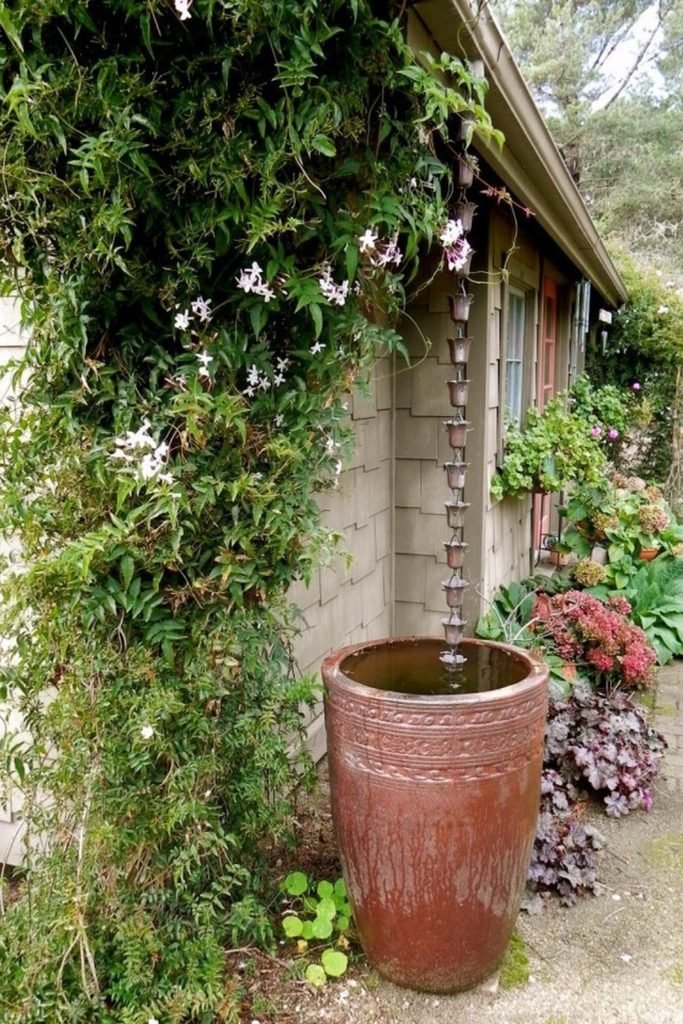
Barrel Catchment
Make your rain chain work harder by directing its cascading cups straight into a large water-catching vessel below.
Set the container directly beneath the final cup, ensuring runoff lands inside rather than soaking the surrounding garden edge.
For stored rainwater, add a secure cover or screened opening where practical to keep debris and mosquitoes from getting inside.
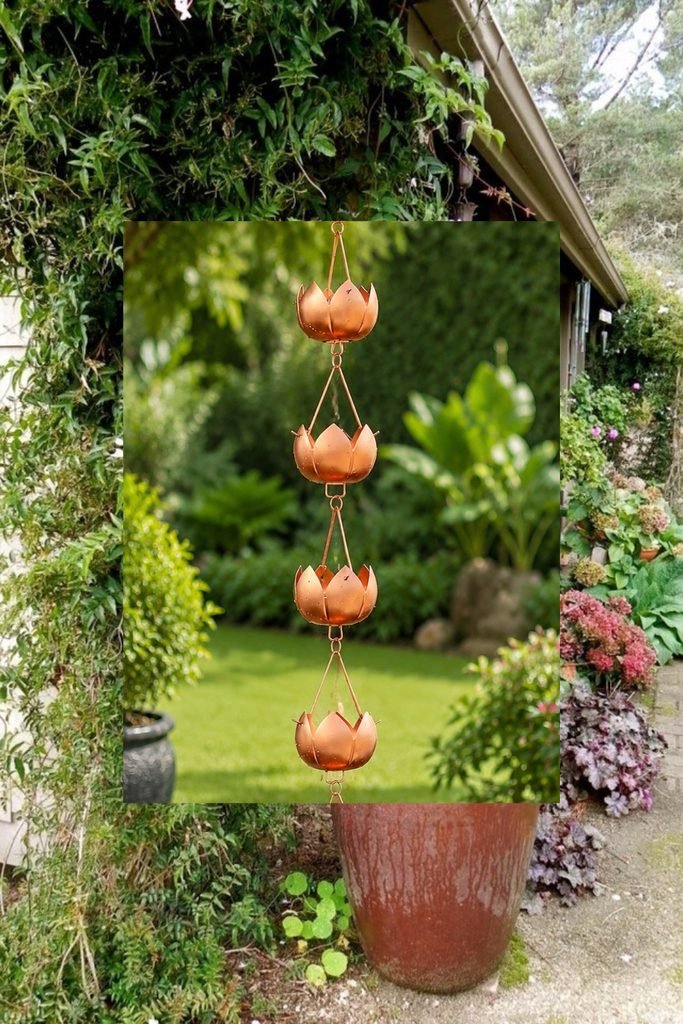
Lotus Cups
Turn functional drainage into garden art with wide copper lotus cups that provide generous surfaces for catching falling runoff.
Position each flower directly beneath the last, letting the broad petals collect water before guiding it through the center.
Copper makes this design especially rewarding outdoors because natural weathering gradually adds character without hiding the sculptural flower shapes.
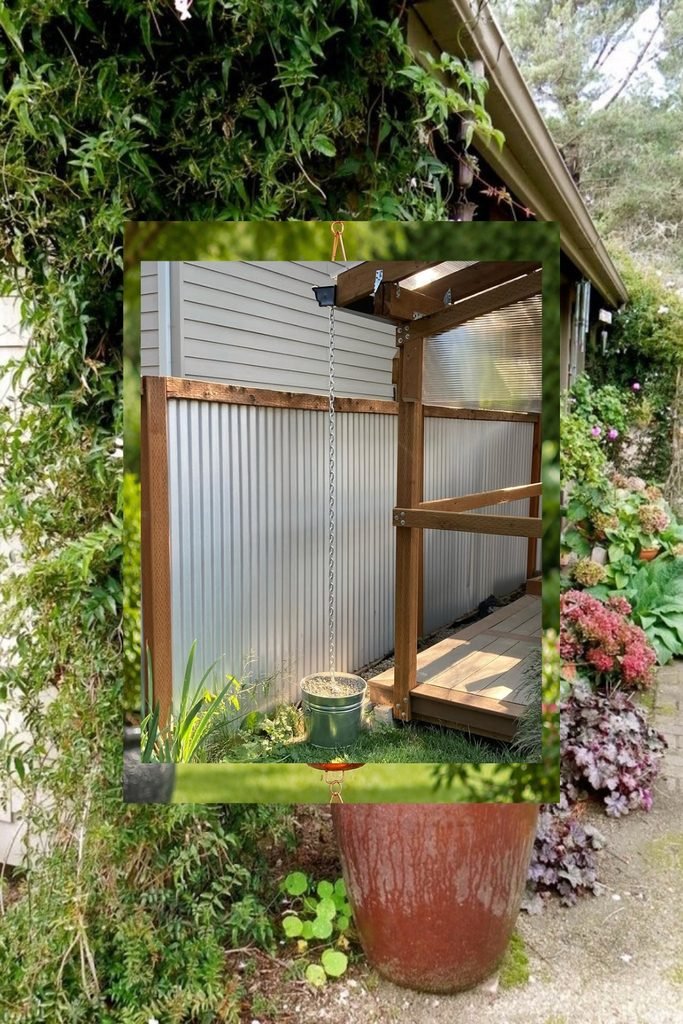
Bucket Anchor
Keep a basic chain from swinging freely by dropping its lower end into a heavy gravel-filled metal bucket.
Position this setup beside a pergola or shed, where simple galvanized links suit practical structures without demanding decorative hardware.
Fill the container with enough stone to steady the chain while still letting incoming rainwater drain between the gravel.
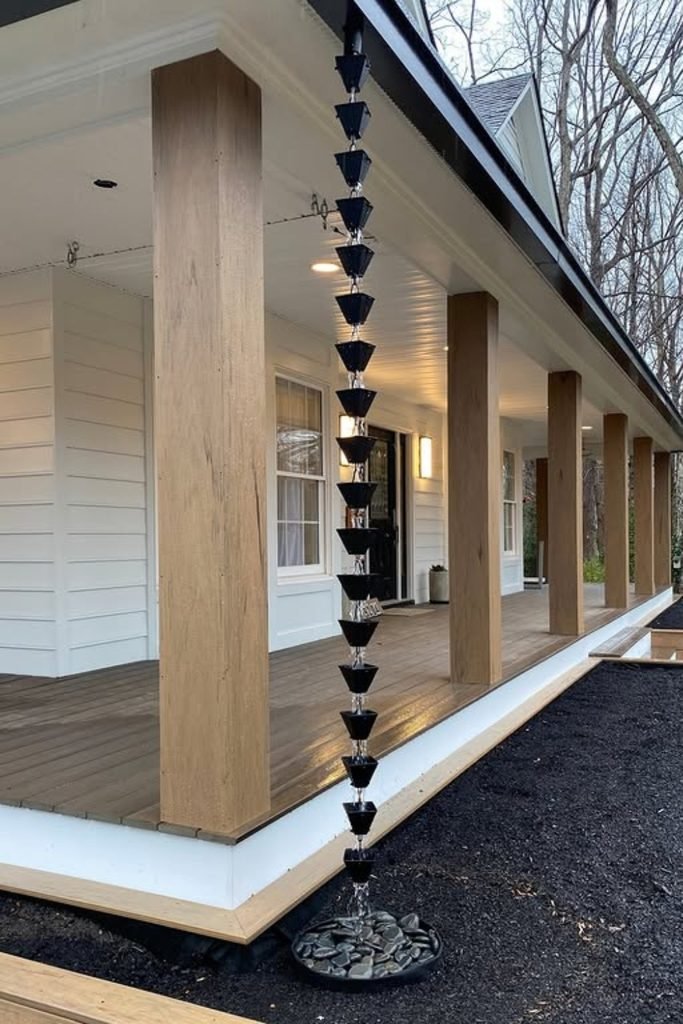
Black Funnels
Create a bold porch feature with stacked black funnel cups, especially when your exterior already uses dark architectural accents.
Align every funnel carefully beneath the gutter opening, allowing each deep cup to catch runoff before releasing it downward.
Finish with a shallow stone basin, which gives the long chain a defined endpoint while helping control splash near walkways.
Copper Fountain
Make the landing area part of the design by pairing sculpted copper cups with a tall matching catch basin.
Let each fluted cup slow the falling water before it reaches the vessel, creating a more controlled fountain-like cascade.
Place this arrangement beside lush planting, where aged copper tones naturally complement foliage, wood siding, and damp garden textures.

Garden Funnels
Use compact dark funnels when you need a narrow rain chain that stays visually quiet among dense backyard planting.
Keep their openings centered and spacing consistent, so water transfers from cup to cup instead of escaping between sections.
Anchor the bottom near a planted drainage area, allowing the simple vertical form to blend naturally into surrounding greenery.
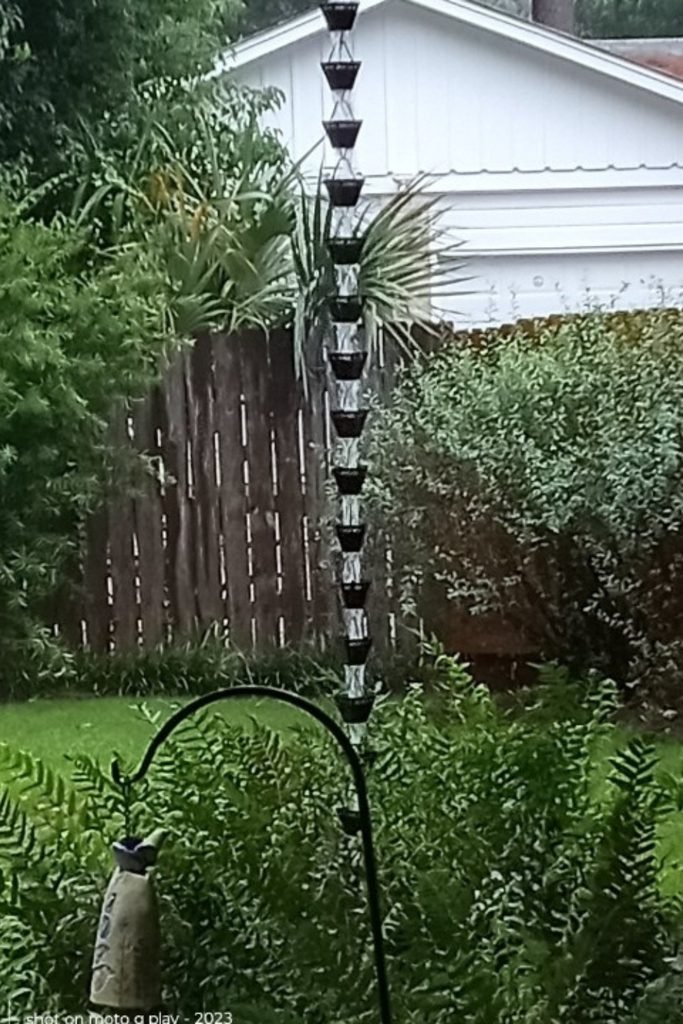
Stone Basin
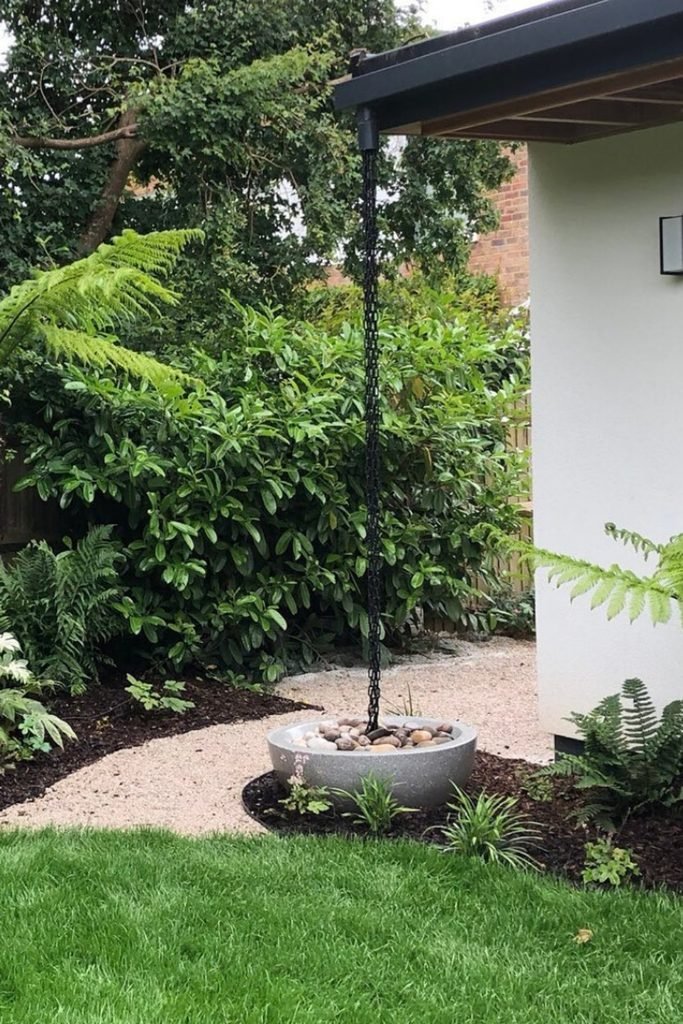
Give a plain black chain more purpose by finishing it inside a wide stone basin filled with smooth pebbles.
Let the rocks break up falling water before it reaches surrounding soil, helping reduce splash around nearby planting.
Use this combination in modern garden corners where the simple basin can double as a clean landscape feature.
Butterfly Chain
Bring a little personality to a covered porch by linking small metal butterflies and flower shapes vertically.
Keep decorative pieces fairly close together, so water has connected surfaces to follow instead of making long uncontrolled drops.
Choose weather-resistant wire for the joins, especially where the chain remains exposed to repeated moisture throughout rainy months.
Watering Catchment
Turn collected runoff into something useful by directing hanging metal cups toward a large galvanized container below.
Stagger the cups carefully so each catches the previous stream, while the deep container receives whatever reaches the bottom.
Set this rustic combination near thirsty garden beds, but keep stored water covered or screened if it remains standing.
Pebble Anchor
Instead of hiding the chain endpoint, make it part of your landscaping with a shallow bowl of pale stones.
Secure the lower links beneath heavier pebbles to limit swinging while still allowing rainwater to spread through the basin.
Keep the surrounding ground graded for drainage, because decorative stones control splash but cannot safely manage overflowing runoff alone.
Ceramic Pebbles
Move beyond ordinary metal by threading smooth glazed ceramic pieces vertically for a rain chain with handmade character.
Keep each piece close enough for runoff to follow the connected surfaces, especially beneath smaller roofs with gentler flow.
Hang this artistic option around sheltered courtyards, where earthy greens and browns can complement timber, stone, and surrounding foliage.
Glass Blocks
Brighten a sunny gutter corner with colorful glass pieces linked together, turning the chain into decoration between rainstorms.
Secure every piece with corrosion-resistant wire, since loose connections become risky when glass moves repeatedly in the wind.
Reserve this delicate approach for sheltered areas with lighter runoff, where strong storms are less likely to cause excessive swinging.
Creek Landing
Guide copper flower cups toward a pebble-lined dry creek when you want runoff to continue naturally through the garden.
Build the channel with rounded stones and defined edges, giving excess water a route instead of letting it puddle nearby.
This pairing works beautifully through planted beds, where the copper chain becomes the starting point for a purposeful drainage feature.
Planter Base
Skip a separate splash bowl by letting a tall cup chain finish inside a large pebble-filled outdoor planter.
Fill the top with stones to soften falling water, then make sure the container has drainage rather than trapping runoff.
Try this solution in a sunny courtyard, where matching pots can make functional roof drainage feel connected to surrounding decor.
FAQs
Can a DIY Rain Chain Replace a Regular Downspout?
A rain chain can replace a downspout where roof runoff is moderate and you have a safe drainage area below.
I recommend directing the bottom toward gravel, a basin, rain barrel, or rain garden so water does not collect beside your foundation.
How Do I Keep My DIY Rain Chain From Swinging?
If your rain chain keeps moving in windy weather, secure the bottom instead of leaving it freely suspended.
You can anchor it inside a heavy stone-filled basin, attach it to a ground stake, or connect it securely to a rain barrel.

Hi, my name is Ali Mehmood! I’m a passionate writer and DIY enthusiast who loves turning creative ideas into practical, hands-on projects.
I created this website to share inspiring, budget-friendly ideas that you can do yourself – whether it’s organizing your home, crafting something unique, or creating fun projects for kids and pets.
I believe DIY isn’t just a hobby – it’s a smart way to save money, reduce waste, and enjoy the satisfaction of making things with your own hands.
I’m excited to have you as part of this growing community, and I’ll continue bringing you helpful, realistic, and fun DIY ideas you can actually use.