This post may contain affiliate links: read full affiliate disclosure.
Your garage can get messy surprisingly fast when storage bins crowd the floor, tools disappear behind boxes, and bikes or garden gear have nowhere to go.
Even when you have enough space, finding what you need can become frustrating when everything ends up piled together.
Instead of adding more bulky storage, a few smart DIY projects can help you use empty walls, awkward corners, and overlooked overhead space more effectively.
In this article, you’ll discover practical DIY garage organization ideas to clear the floor, organize everyday gear, and make tools easier to reach.
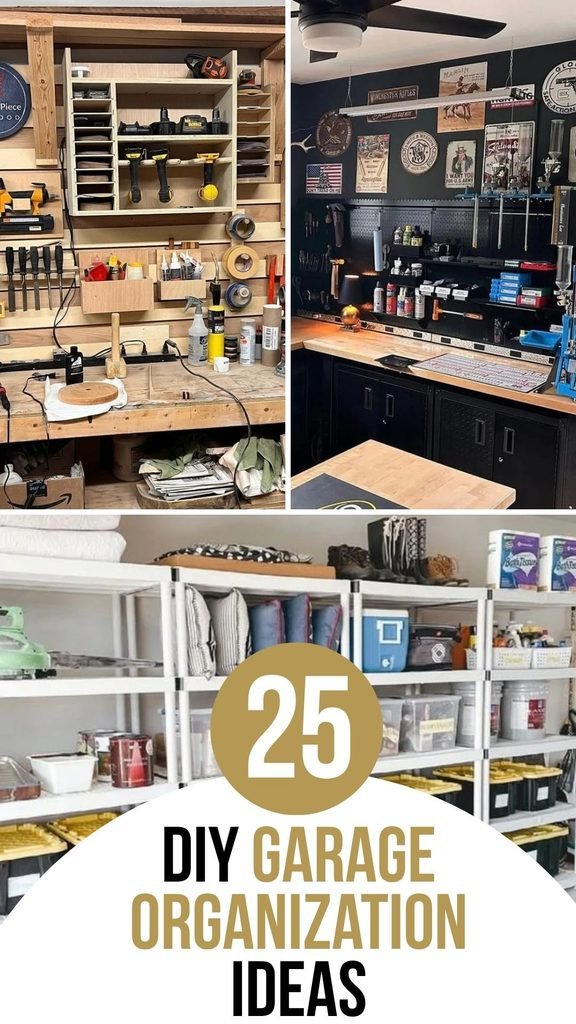
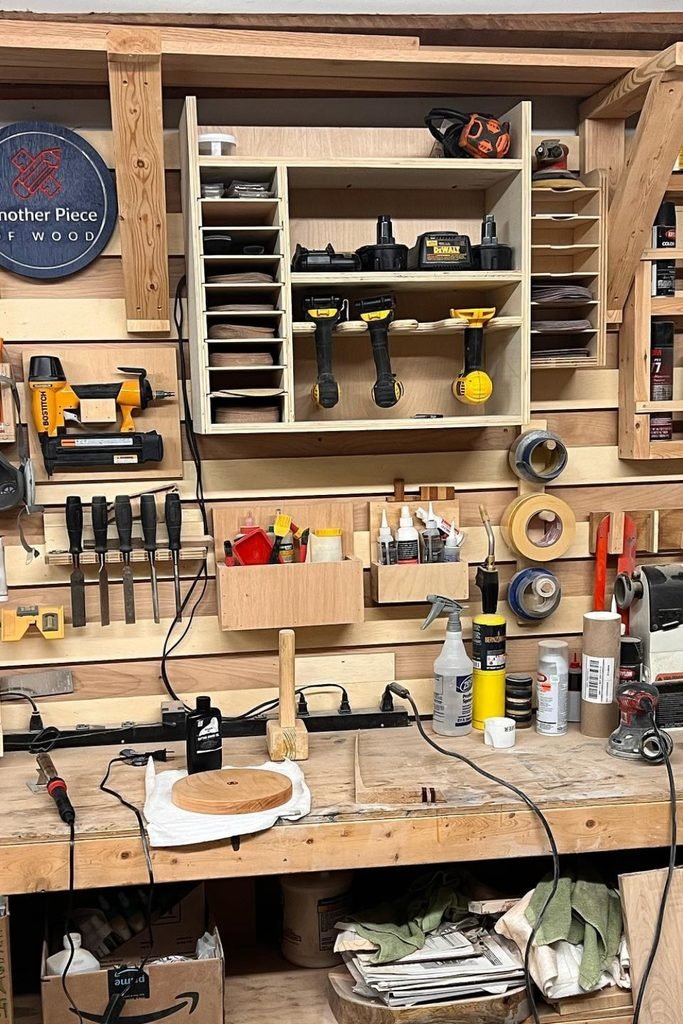
Workshop Wall
When your workbench keeps disappearing under tools, move the everyday essentials onto a wall-mounted organizer directly above it.
Build separate holders for drills, files, tape, adhesives, and sanding supplies so each category has an obvious home.
Keeping frequently used pieces between waist and eye level makes projects quicker and leaves your actual work surface usable.
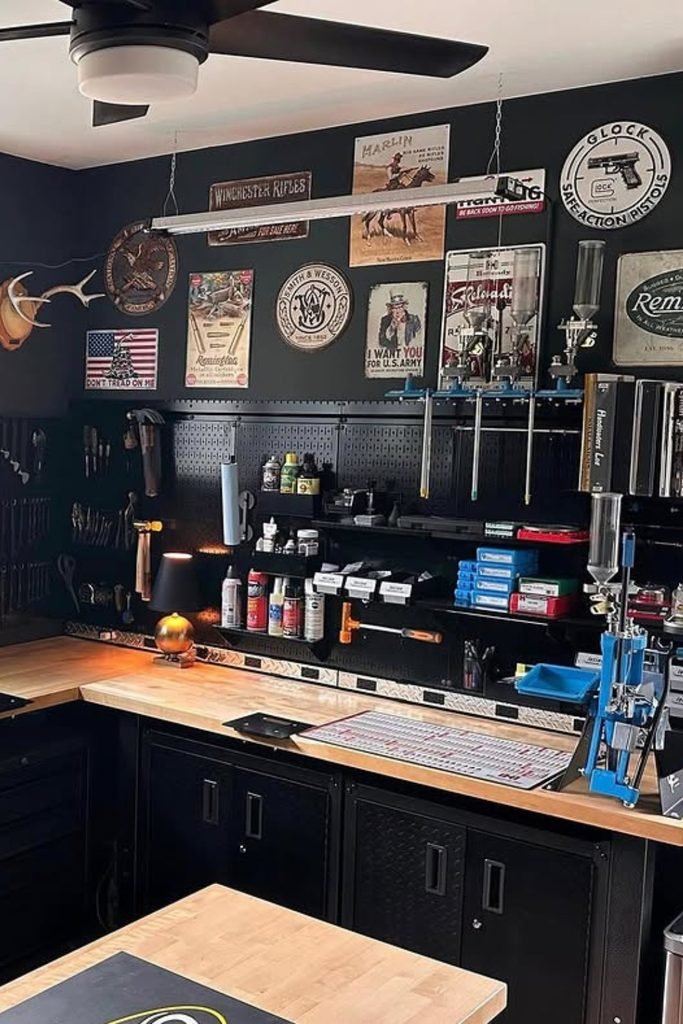
Workbench Zone
If garage projects involve lots of small tools and supplies, give one corner a dedicated workshop zone instead of spreading outward.
Pair base cabinets with open wall storage so bulky gear stays hidden while frequently grabbed items remain visible and close.
An L-shaped counter also gives you more working room without forcing separate benches to compete for valuable garage floor space.
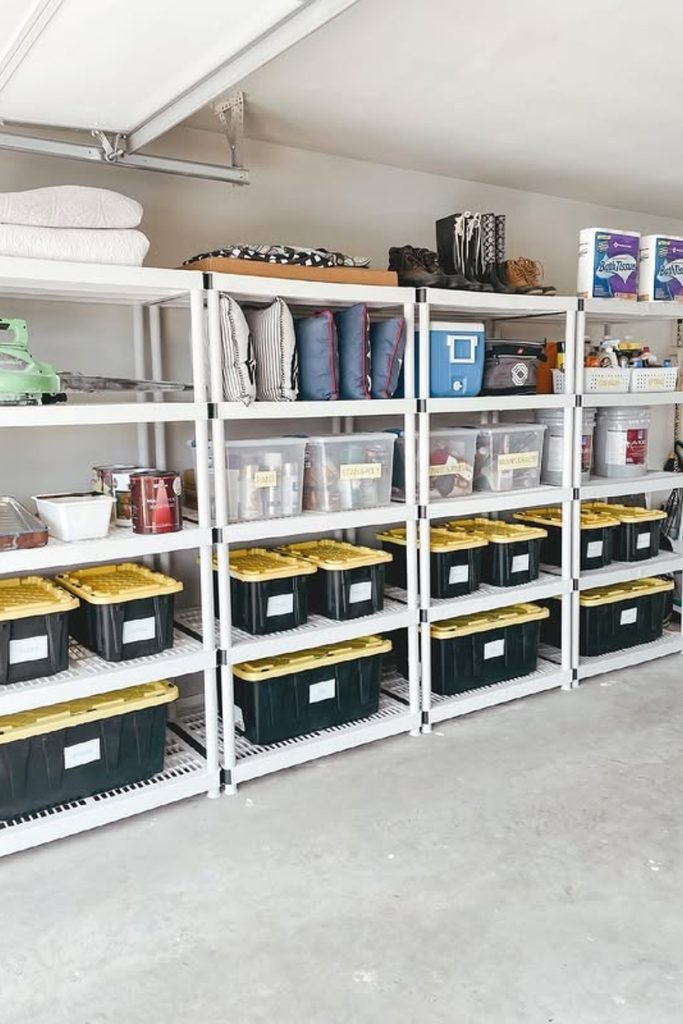
Bin Shelving
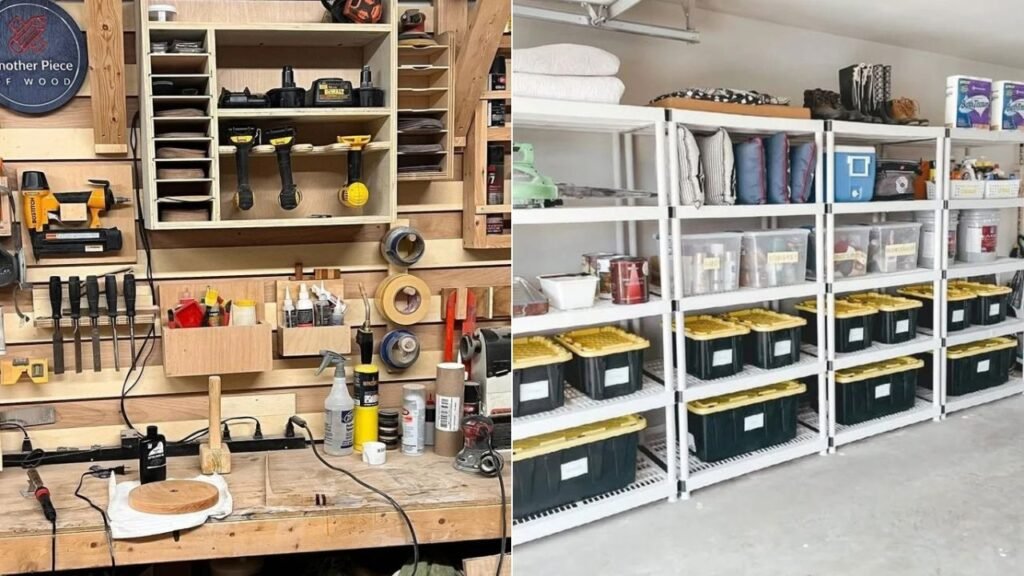
Rows of loose totes become much easier to manage when one long shelving run turns them into clearly defined storage.
Choose shelf spacing around the bins you already own, then group related supplies together and label containers before loading them.
Reserve lower shelves for heavier or regularly opened bins, while lighter seasonal supplies can occupy the less convenient upper levels.
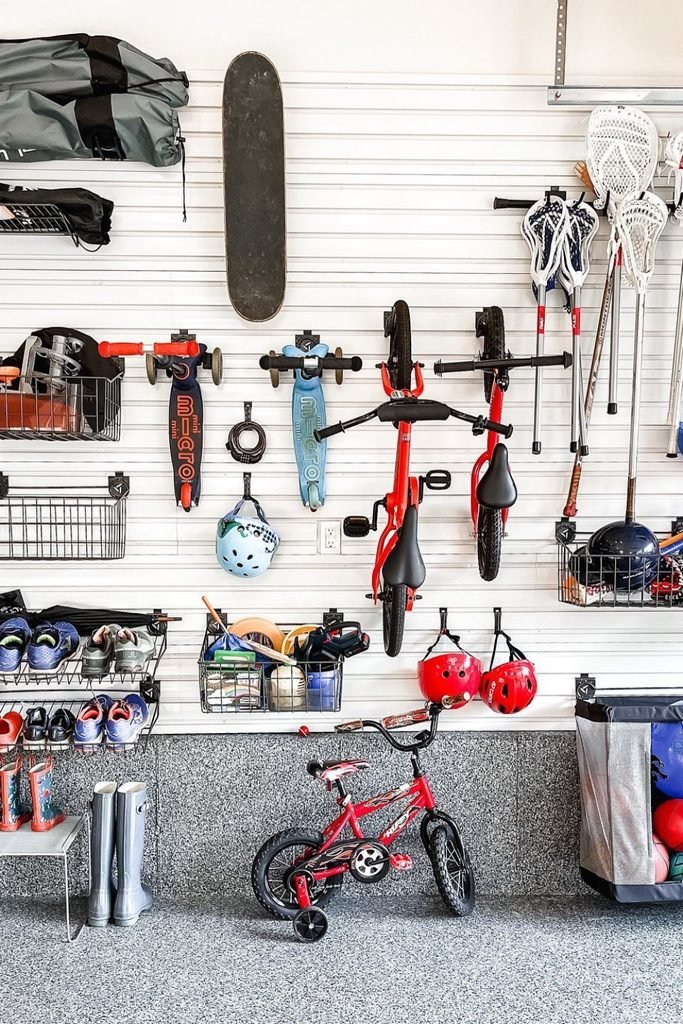
Sports Wall
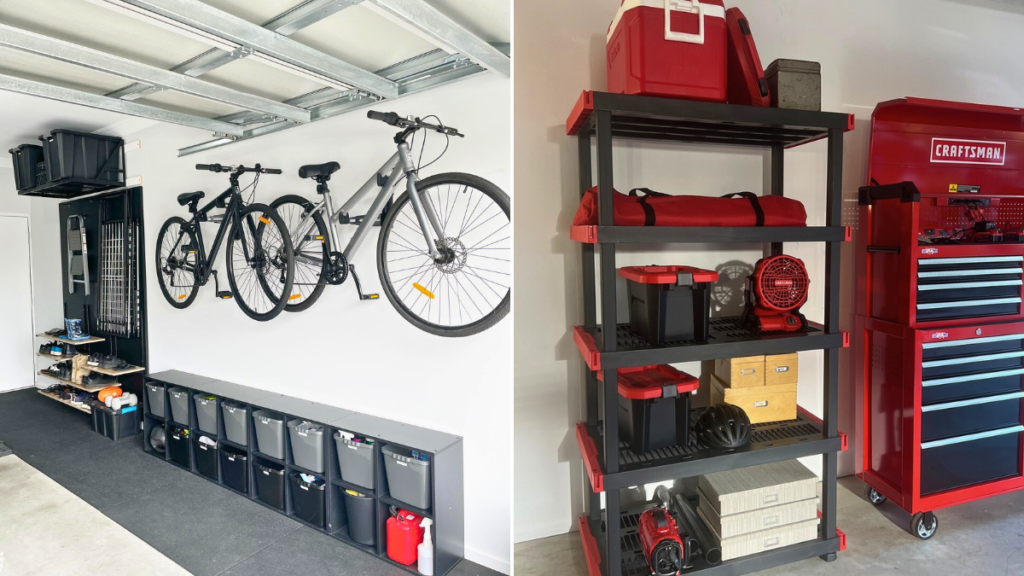
Kids’ bikes, scooters, helmets, balls, and rackets can swallow floor space unless you give the whole collection one wall.
Use adjustable hooks and baskets at different heights, keeping helmets and balls reachable while lifting larger gear away from walkways.
Leave the lowest section simple for children’s everyday equipment, so putting everything back never becomes harder than taking it out.
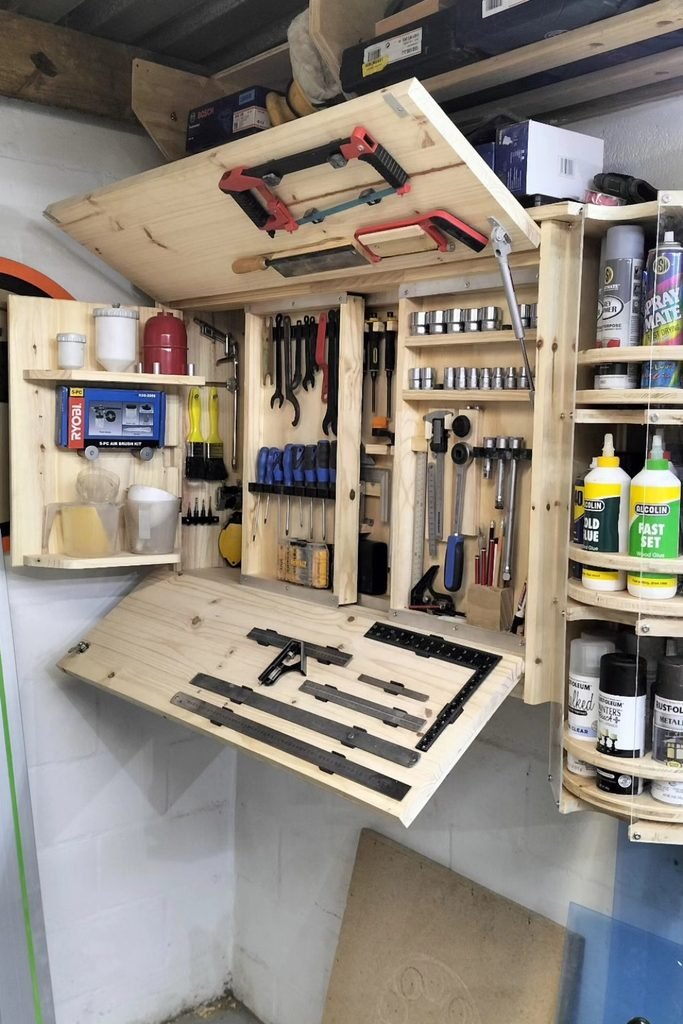
Fold-Down Station
Short on workshop space? A wall cabinet with a fold-down surface gives you tool storage and a temporary bench together.
Fit shallow compartments inside for measuring tools, screwdrivers, adhesives, and small supplies you regularly reach for during quick projects.
Once the job is finished, folding the panel upward clears valuable floor space while keeping the entire workstation neatly contained.
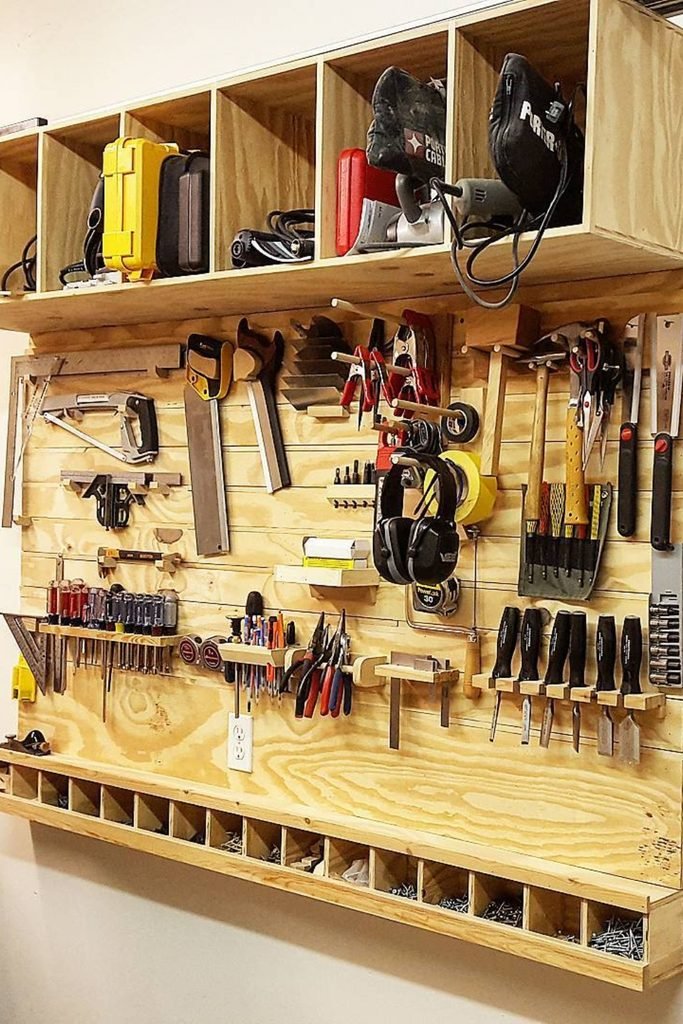
Tool Cubbies
Power tools become easier to grab when each one has a dedicated cubby instead of sharing one crowded shelf.
Build upper compartments for larger tools, then add smaller holders below for screwdrivers, pliers, bits, and loose hardware.
Leaving the center wall open keeps frequently used hand tools visible, so you can spot what you need without digging.
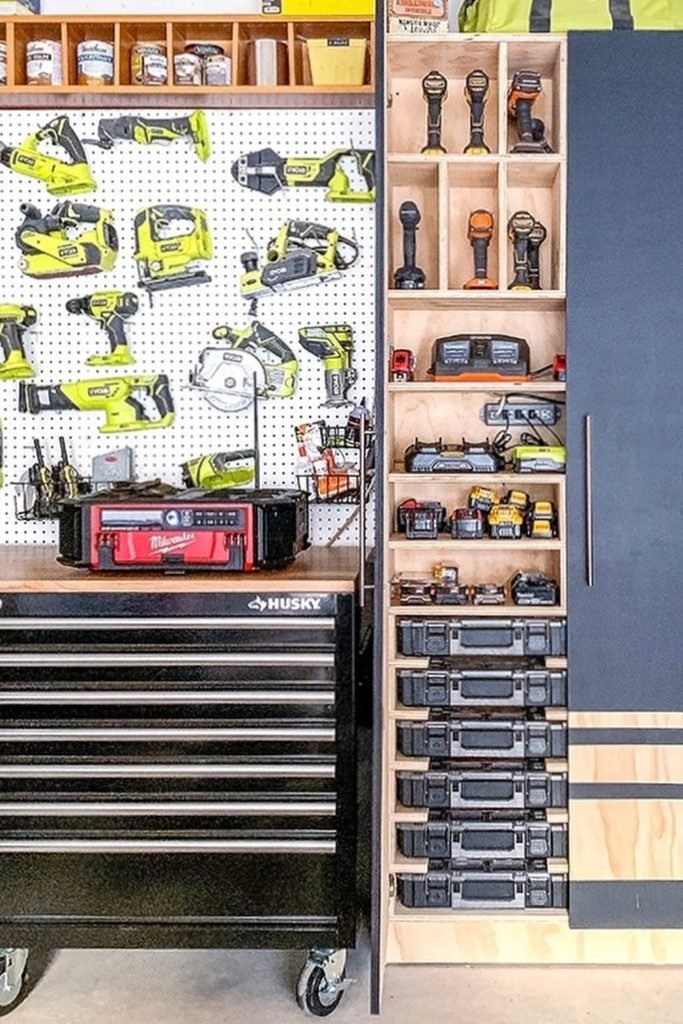
Power Tool Wall
When cordless tools keep piling onto your bench, divide one wall into hanging storage, battery shelves, and fitted tool cubbies.
Pegboard hooks handle irregular tools nicely, while narrow wooden compartments keep drills, chargers, batteries, and cases from getting mixed together.
Place charging equipment near suitable outlets and follow manufacturer guidance, keeping the most frequently used tools around comfortable reaching height.
Labeled Storage
Stop wondering which bin holds electrical parts or leftover fasteners by giving broad garage categories their own clearly labeled containers.
Open shelving keeps those bins easy to pull forward, while a nearby pegboard can handle tools you reach for constantly.
Group related supplies before labeling everything, because simple categories are much easier to maintain than dozens of overly specific ones.
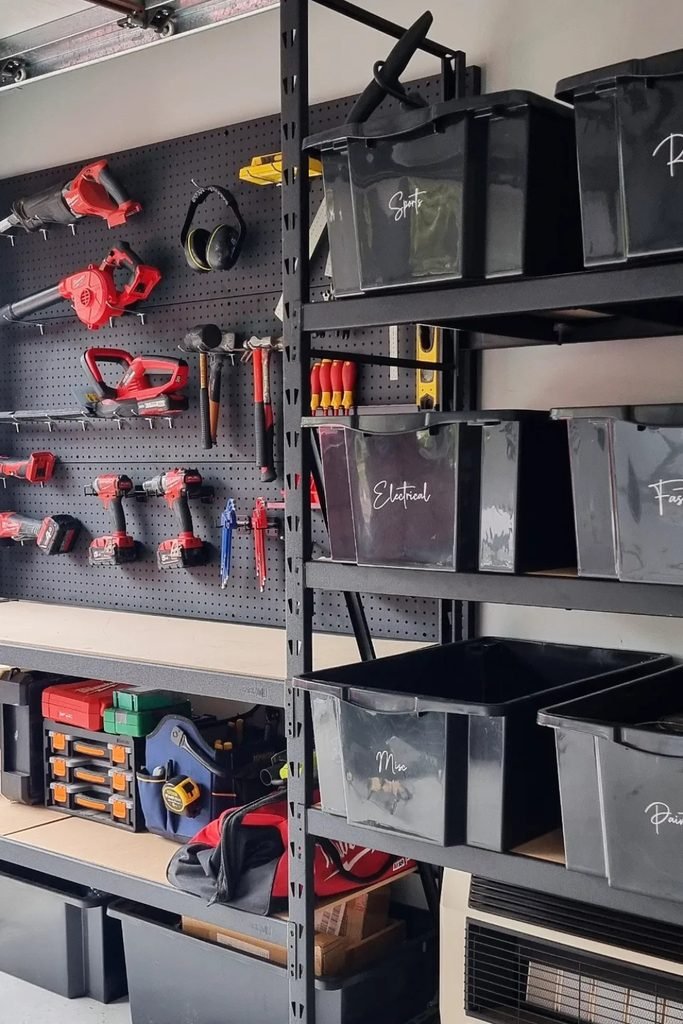
Bench Storage
A long workbench works harder when drawers, lower shelves, pegboard, and upper storage all share the same compact footprint.
Keep hand tools hanging above the counter, while drawers handle smaller pieces that would otherwise clutter your working surface.
Use lower and upper shelves for bulkier gear, leaving the center comfortably open whenever you need room for hands-on projects.
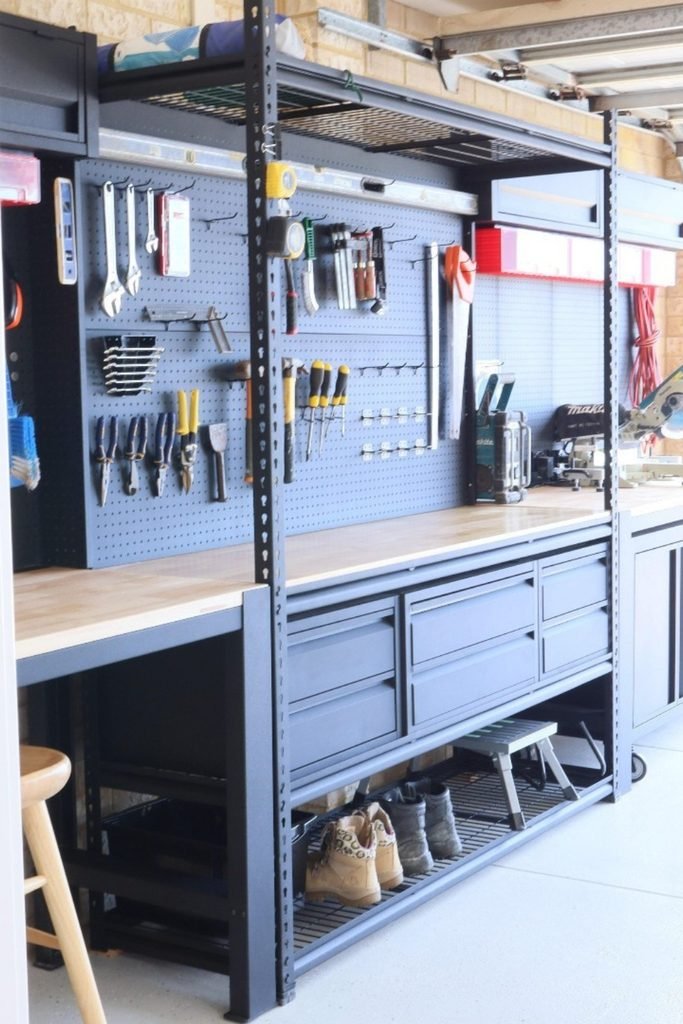
Pegboard Tools
For a smaller tool collection, one framed pegboard can turn an empty wall section into an efficient grab-and-return station.
Arrange wrenches, screwdrivers, hammers, levels, and power tools by type, leaving enough gaps for additions as your collection grows.
Keep heavier pieces on properly rated supports, while the tools you reach for most often stay around comfortable chest height.
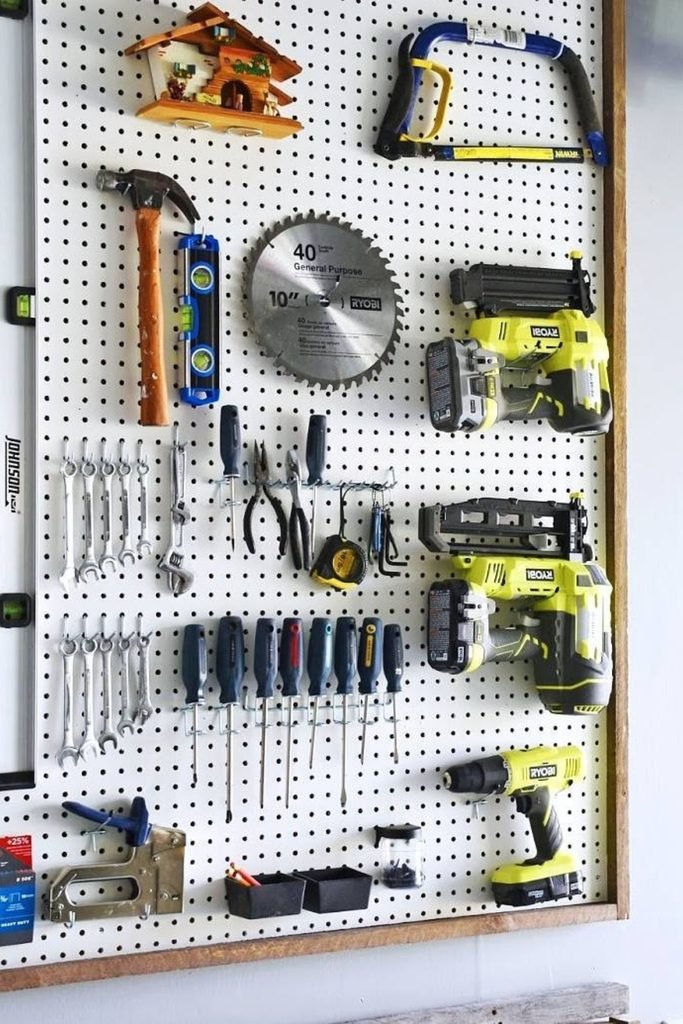
Drawer Workbench
Tiny parts stop taking over your garage when deep storage drawers handle hardware while the wall keeps larger tools visible.
Set a sturdy worktop between the two storage areas, giving yourself one clear surface for repairs, measuring, and assembly jobs.
Use nearby open shelving for project supplies you grab regularly, rather than filling those valuable drawers with bulky containers.
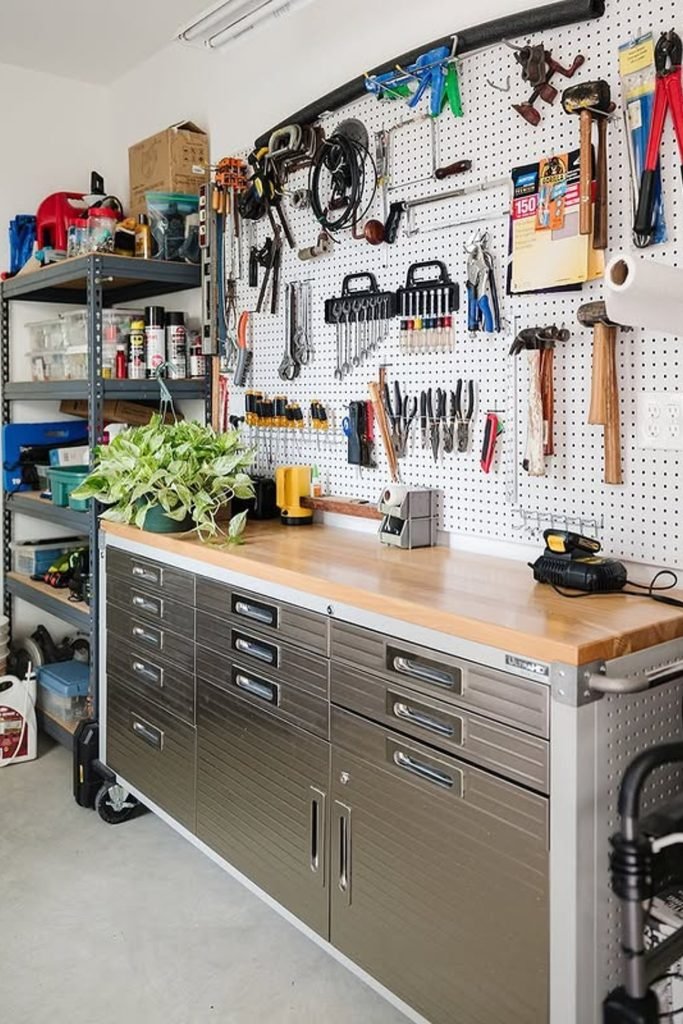
Full Garage Workshop
Got an entire wall available? Turn it into one continuous workshop instead of scattering cabinets, tools, and supplies around the garage.
Combine a long DIY bench with a pegboard, tool chests, and open lower bays so every type of equipment has somewhere logical.
Keeping the middle workspace open gives you room to sit comfortably, while heavier cases and equipment stay safely down below.
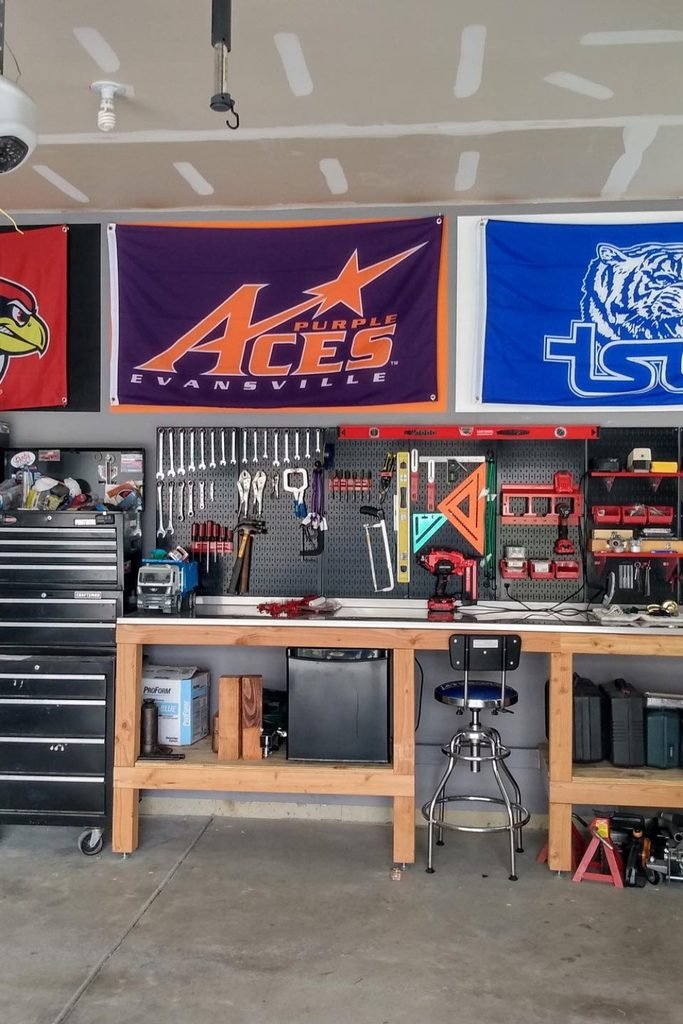
Family Gear Wall
When strollers, bikes, and outdoor toys start blocking your path, dedicate one long wall to the whole family’s everyday gear.
Hang bulky folding items higher, then use baskets and low fabric bins for toys children can grab without asking for help.
Keeping related gear together also makes cleanup quicker, because everyone knows exactly which section their belongings return to afterward.
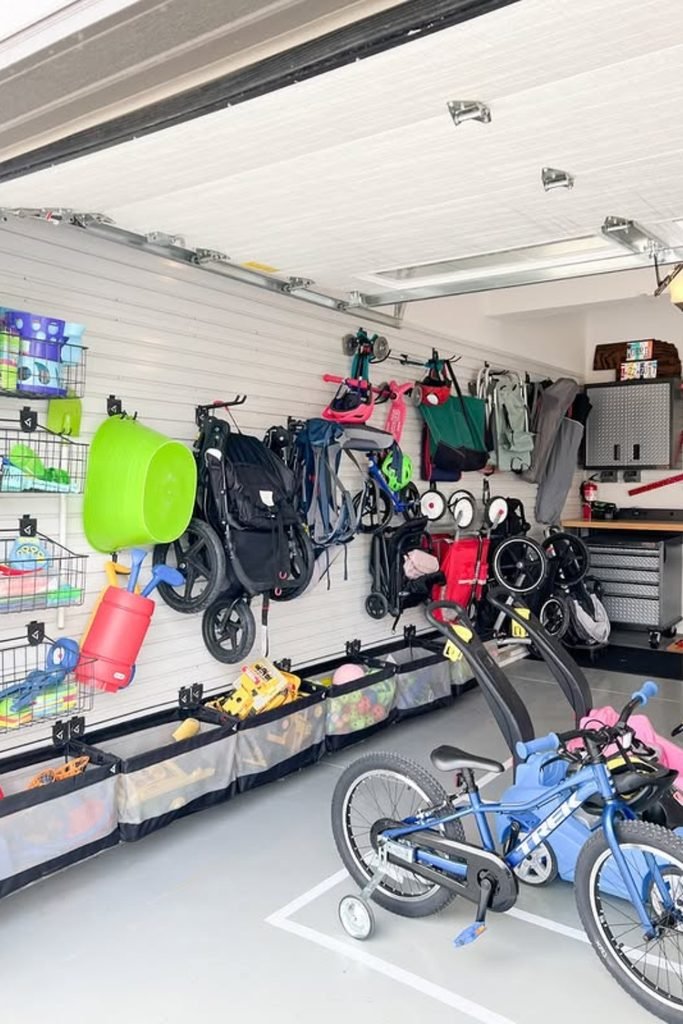
Adventure Gear
Bulky recreational equipment deserves wall space of its own, especially when kayaks, bikes, rackets, and balls rarely fit ordinary shelving.
Mount larger pieces securely higher up, while smaller sports equipment can sit in baskets and holders closer to comfortable reaching height.
Planning storage around each item’s shape prevents awkward stacking and leaves more open floor space for parking or moving around.
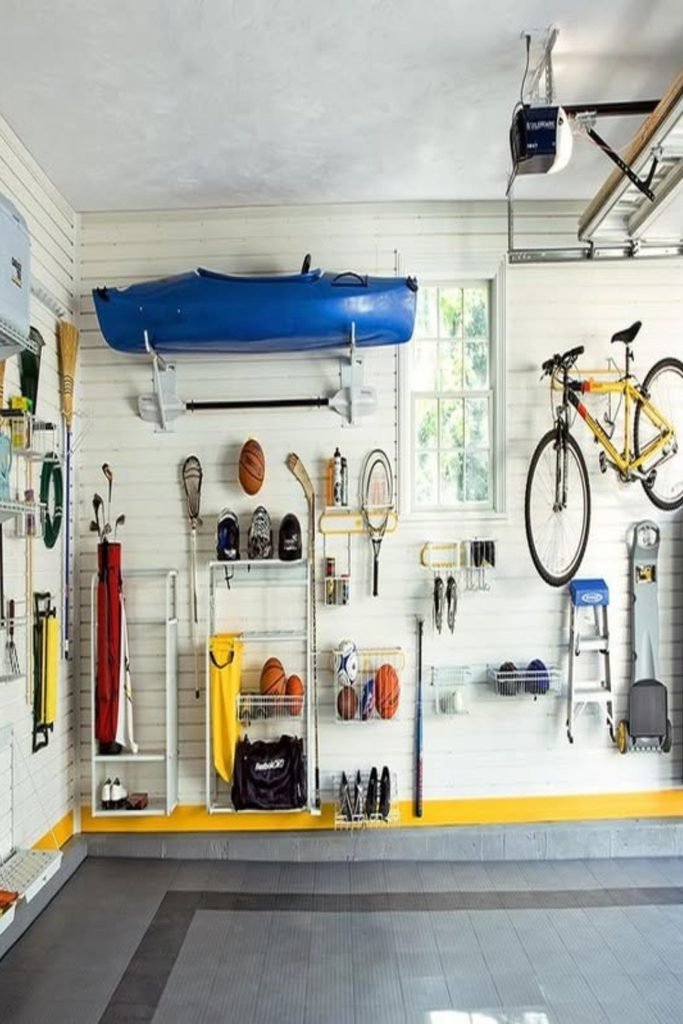
High Storage
Look above eye level when floor space feels limited, because long upper shelves can handle lighter belongings you rarely need.
Pair those shelves with wall hooks below for ladders, cleaning tools, children’s bikes, and other awkward pieces that normally lean around.
Keep frequently used items lower and confirm every mounted shelf or hook is properly supported before loading bulky garage gear.
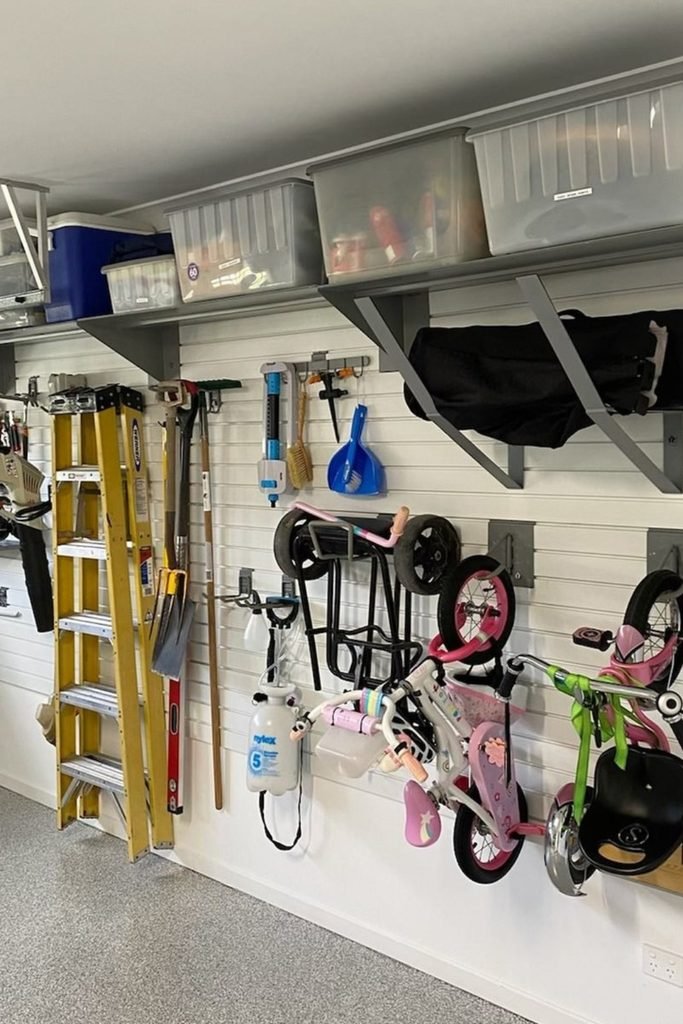
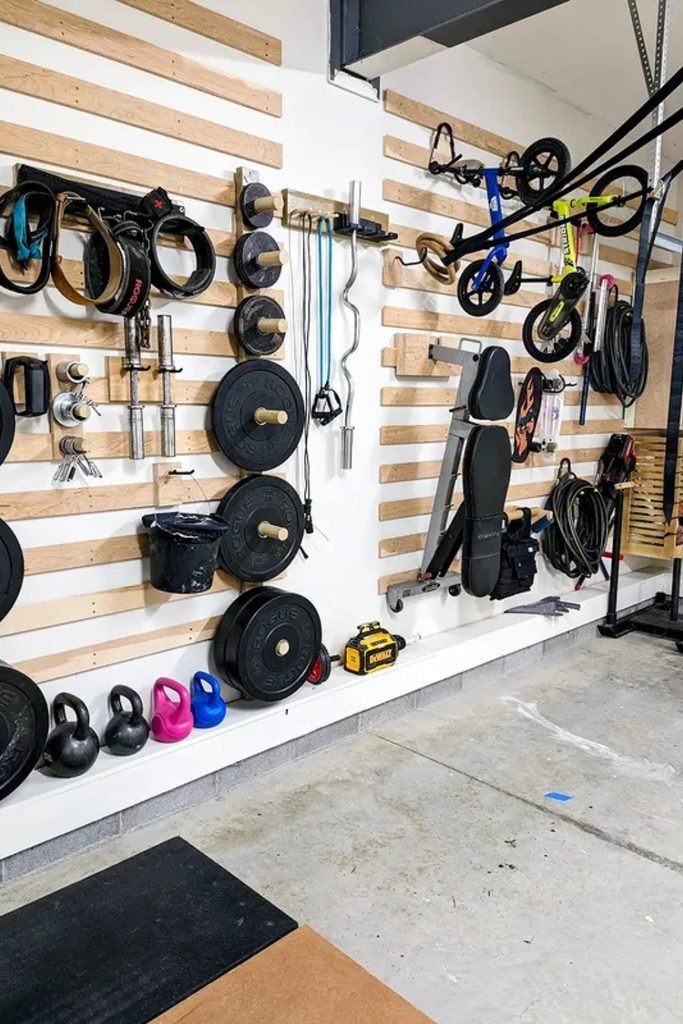
Home Gym Wall
Workout equipment quickly becomes floor clutter, so use sturdy wall-mounted holders to organize plates, bars, bands, ropes, and accessories.
Give heavier weights secure storage at sensible heights, while lighter resistance bands and jump ropes can hang higher between sessions.
A dedicated fitness wall keeps the center open for workouts and makes returning equipment easier before the garage becomes cluttered again.
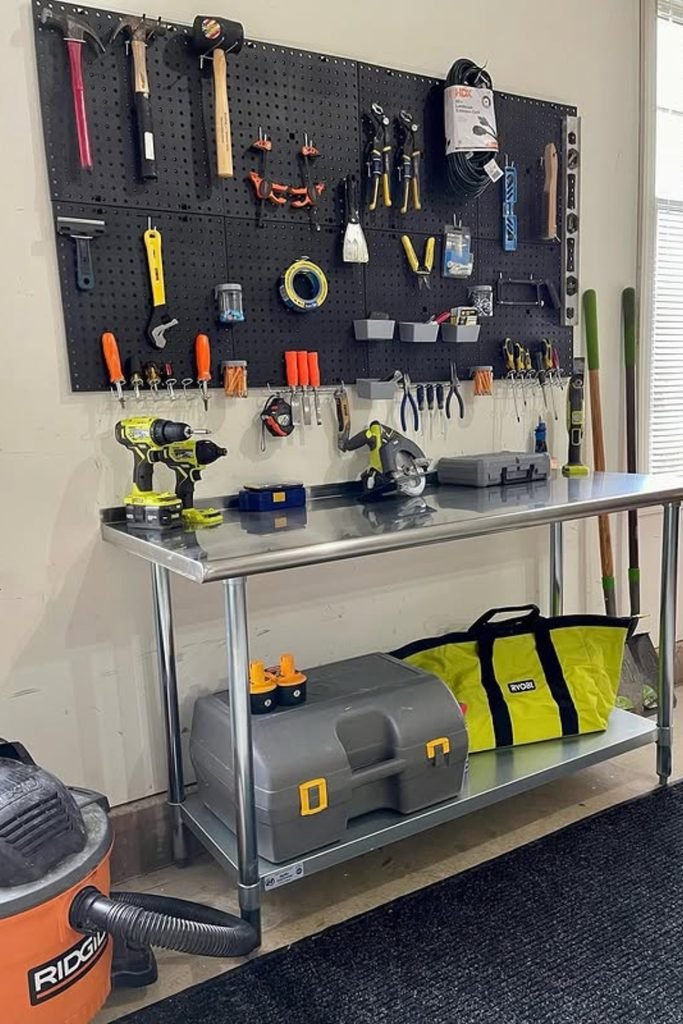
Quick Tool Bench
For occasional repairs, a simple metal bench and pegboard can give your loose hand tools a permanent landing spot.
Hang smaller tools by category above the surface, then reserve the lower shelf for toolboxes and larger portable equipment.
Keeping the tabletop mostly clear means you can start a quick repair without moving piles of garage clutter beforehand.
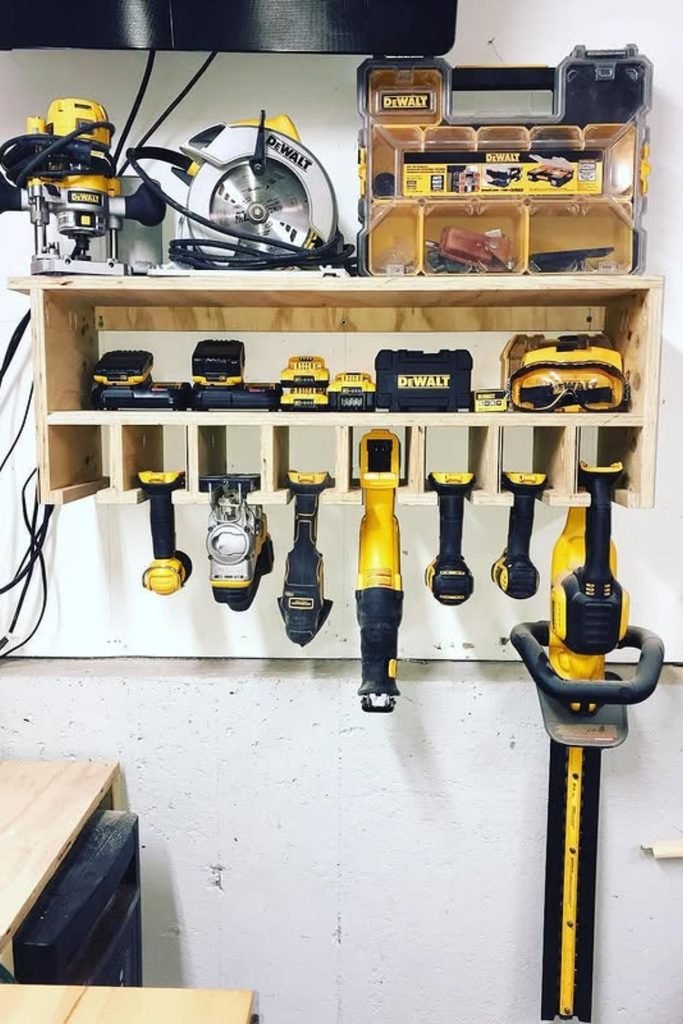
Cordless Tool Rack
Instead of stacking cordless tools inside cases, build a slotted wooden rack that lets each tool hang separately underneath.
Add a shelf above for batteries and accessories, keeping related pieces together without sacrificing another section of your workbench.
Size every slot around your own tool collection, and mount the rack securely where you can reach everything comfortably.
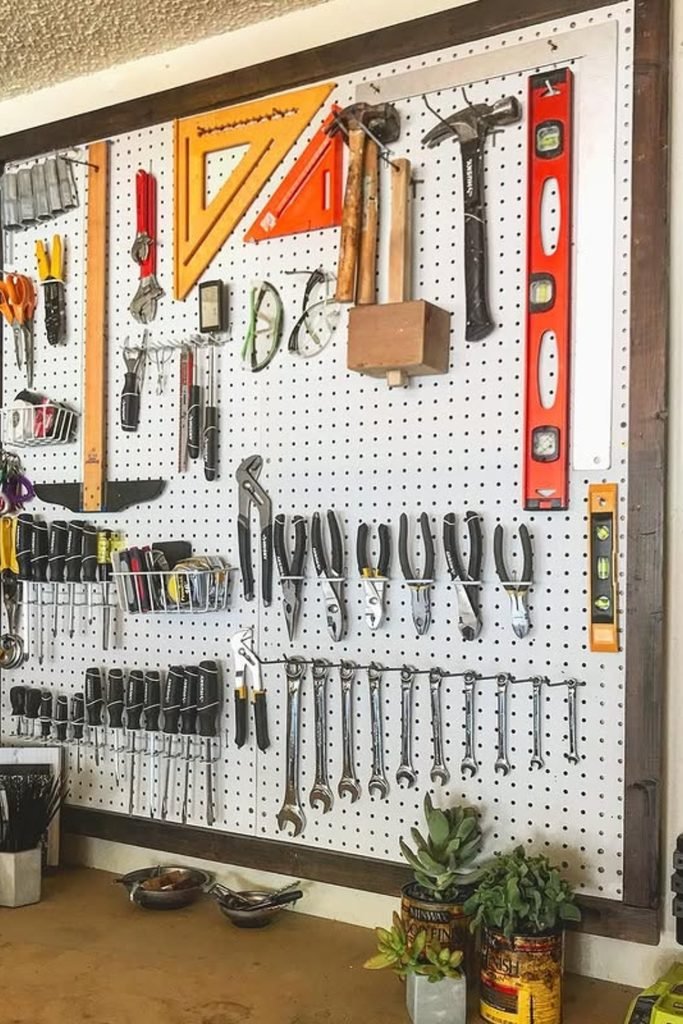
Framed Pegboard
One framed pegboard can organize an impressive mix of hand tools when drawers make you forget where everything went.
Give long levels and squares the outer edges, then group wrenches, pliers, screwdrivers, and hammers across the central area.
Leave a little unused space between groups, making future additions easier without forcing you to rearrange the entire board.
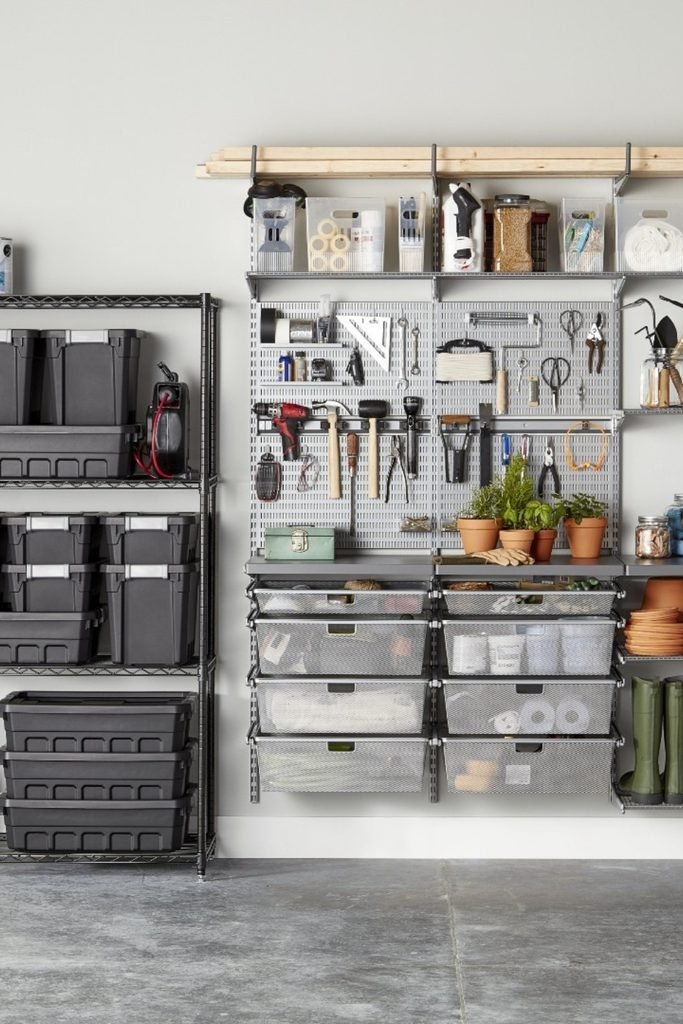
Garden Supply Zone
Gardening supplies are easier to manage when pots, hand tools, soil accessories, and larger equipment share one dedicated garage section.
Mix open shelves with mesh drawers and pegboard so bulky containers, loose supplies, and frequently used tools each store differently.
Use the highest rack for lightweight lumber or long materials, keeping heavier bins and everyday garden gear closer to the floor.
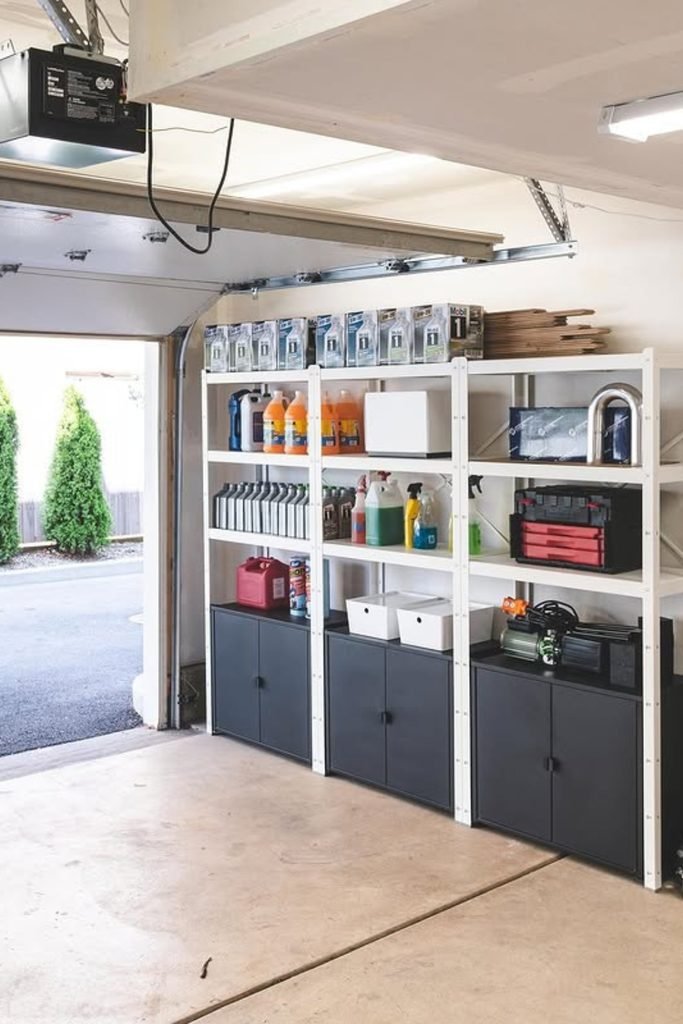
Open Garage Shelves
When you want storage without hiding everything behind doors, open shelving keeps larger supplies visible and easy to grab.
Divide each shelf by category, placing heavier toolboxes lower while lighter packaged supplies and occasional-use items can sit farther up.
Adding simple lower cabinets gives smaller clutter a concealed home without taking away the quick access open shelves provide.
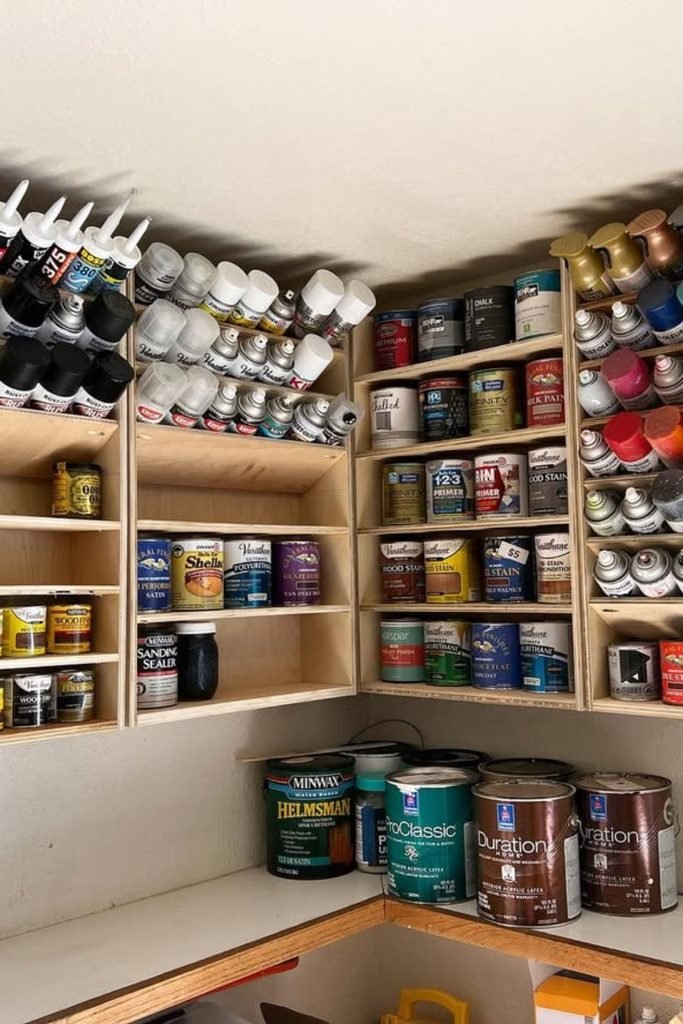
Paint Supply Rack
If painting supplies keep spreading across your workbench, shallow angled shelves can organize cans and tubes without wasting deep storage space.
Group finishes, stains, adhesives, and sprays by type so you can check what you already have before buying duplicates.
Only keep products here when garage temperatures meet their storage instructions, since temperature-sensitive finishes may need a more suitable location.
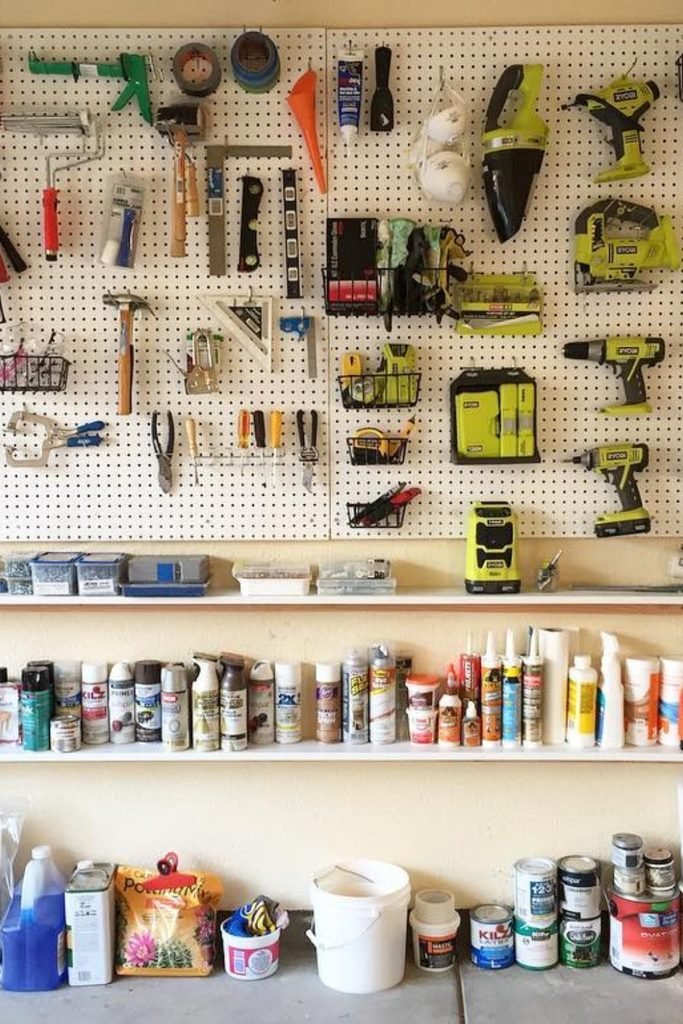
Project Supply Wall
Give tools and project supplies separate levels when one crowded pegboard starts trying to hold absolutely everything you own.
Hang everyday tools above, then use shallow shelves underneath for adhesives, finishes, fillers, and other frequently checked project supplies.
Keeping consumables visible makes it easier to spot low stock, while larger containers can stay lower where lifting feels more manageable.
Heavy-Duty Shelves
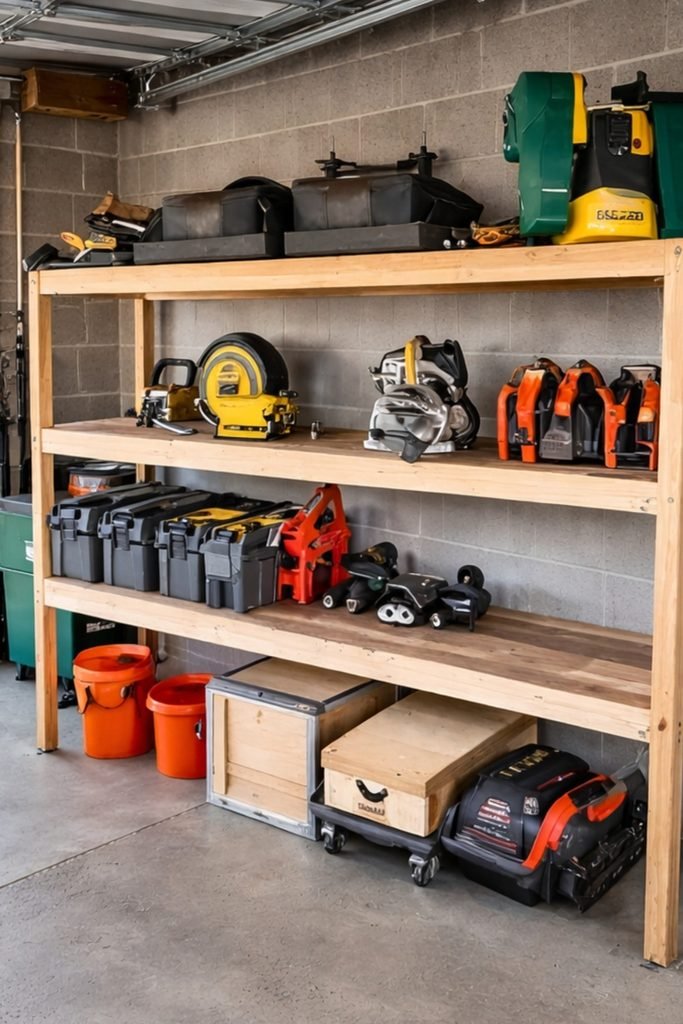
Big power tools need sturdy storage, and a simple wooden shelving unit can keep them organized without expensive built-in cabinetry.
Build generous shelf spacing around your largest equipment, reserving middle levels for frequently moved tools and lower areas for heavier pieces.
Keep related cases and accessories beside their matching tools, so starting a project does not turn into a garage-wide search.
Split Storage Zone
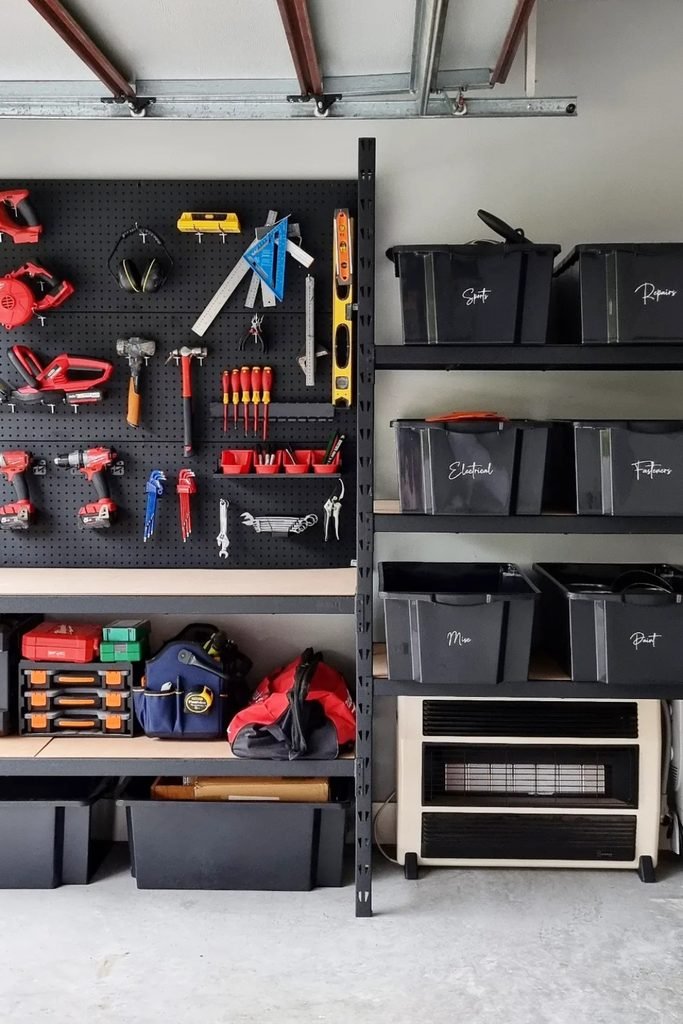
When tools and project supplies need different storage styles, split one garage wall between open pegboard and categorized bins.
Keep everyday tools visible on hooks, while labeled containers hold electrical parts, fasteners, repair supplies, and unfinished project materials.
This separation makes cleanup less confusing because loose supplies get broad categories without burying the tools you use most often.
FAQs
How Can I Organize My Garage Without Spending Much Money?
Scrap wood can become shelves, leftover plywood can hold tools, and simple hooks can move awkward gear off the floor.
Focus your budget on the areas causing the most clutter first, then add more DIY storage only when you know exactly what needs a home.
What Should I Keep Within Easy Reach in an Organized Garage?
Keep the things you use every week around comfortably reaching height, including hand tools, garden gear, sports equipment, and frequently opened bins.
Lighter seasonal belongings can move higher, while heavier items are generally easier to handle on lower shelves.

Hi, my name is Ali Mehmood! I’m a passionate writer and DIY enthusiast who loves turning creative ideas into practical, hands-on projects.
I created this website to share inspiring, budget-friendly ideas that you can do yourself – whether it’s organizing your home, crafting something unique, or creating fun projects for kids and pets.
I believe DIY isn’t just a hobby – it’s a smart way to save money, reduce waste, and enjoy the satisfaction of making things with your own hands.
I’m excited to have you as part of this growing community, and I’ll continue bringing you helpful, realistic, and fun DIY ideas you can actually use.