This post may contain affiliate links: read full affiliate disclosure.
If you’re serious about crafting, you’ve probably hit the same wall-no matter how much you clean, your supplies keep taking over the space.
Tools pile up, projects stay half-finished, and the table you’re using never seems to work with you or your workflow.
That frustration is usually what leads people to search for a DIY craft table with storage. They’re not looking for another pretty surface,
They want control, better organization, and a workspace designed around the way they actually craft.
This guide shows how to plan and build a craft table that solves real storage problems, fits your space, and makes creating feel easier instead of overwhelming.
What Is a diy Craft Table With Storage?
A DIY craft table with storage is more than just a flat surface to work on—it’s a purpose-built workspace designed to keep your tools, materials, and projects organized while you create.
Unlike a regular desk or folding table, this type of table is planned around storage first. Drawers hold small tools like scissors, blades, and pens.
Shelves or cubbies store bins, fabric, paper, or machines. Cabinets help hide clutter so the space stays usable even during messy projects.
The “DIY” part matters because every crafter works differently. Some need space for sewing machines, others for cutting fabric, paper crafts, or kids’ projects.
Building it yourself lets you control the size, height, and layout based on how you actually craft and how much room you have.
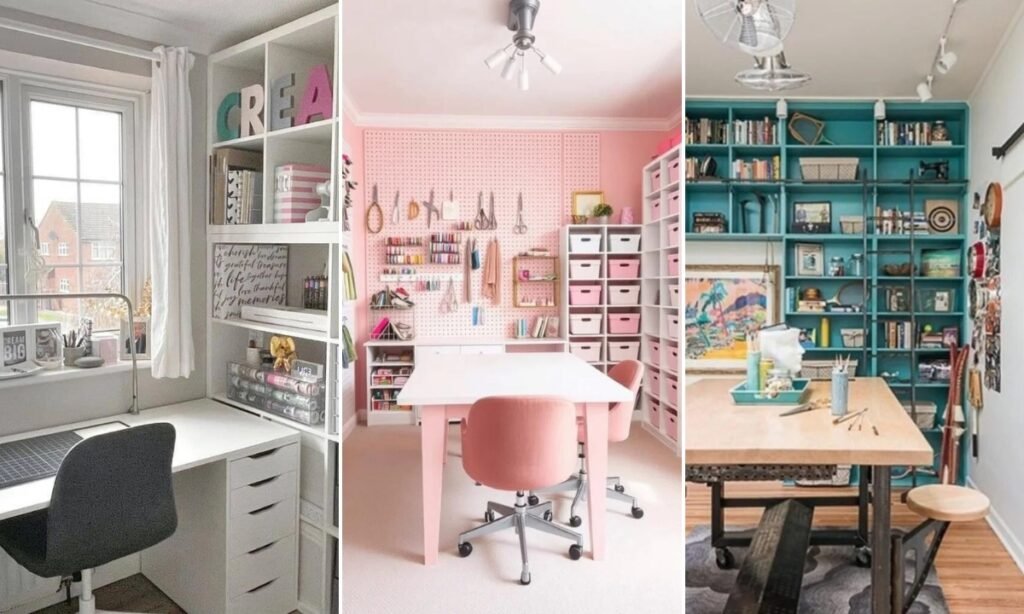
Pegboard-First Craft Zone
A pegboard wall turns tools into visible storage, keeping scissors, threads, and rulers reachable without crowding the tabletop.
This setup works best in dedicated craft rooms where wall space can replace bulky cabinets and keep supplies organized vertically.
Recreate it using a simple table, wall-mounted pegboard panels, hooks, and small shelves customized around your daily crafting tools.

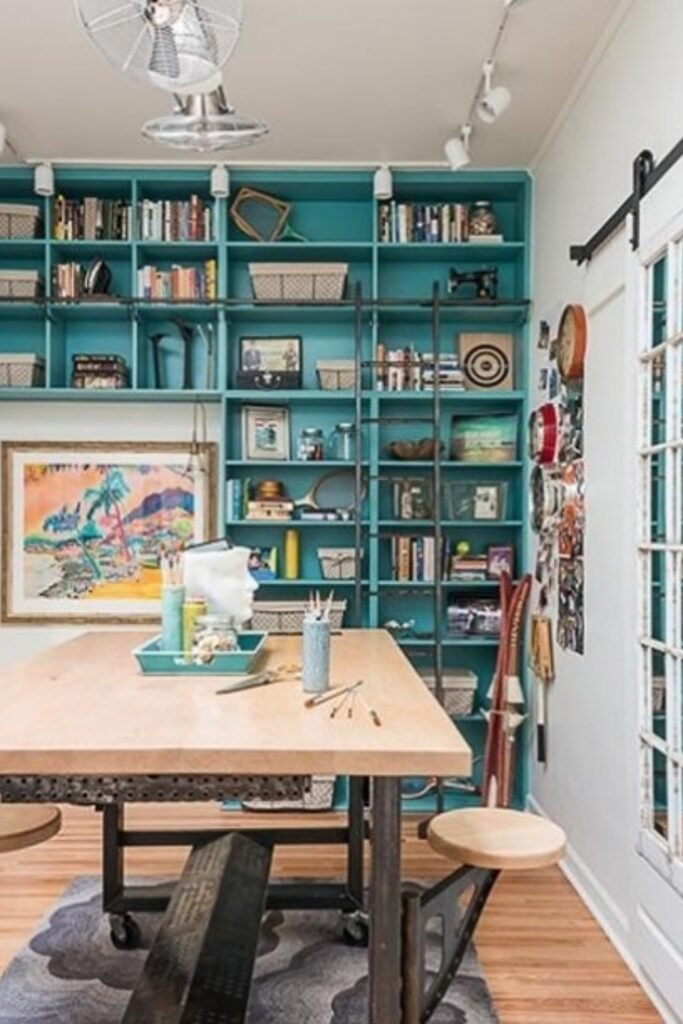
Library-Style Storage Wall
Floor-to-ceiling shelving transforms a craft table into part of a full storage system rather than a standalone workspace.
This idea fits long rooms or studios where one wall can handle books, baskets, and project materials together.
Build it by pairing a sturdy wood table with open shelves behind, leaving the center clear for spreading projects comfortably.
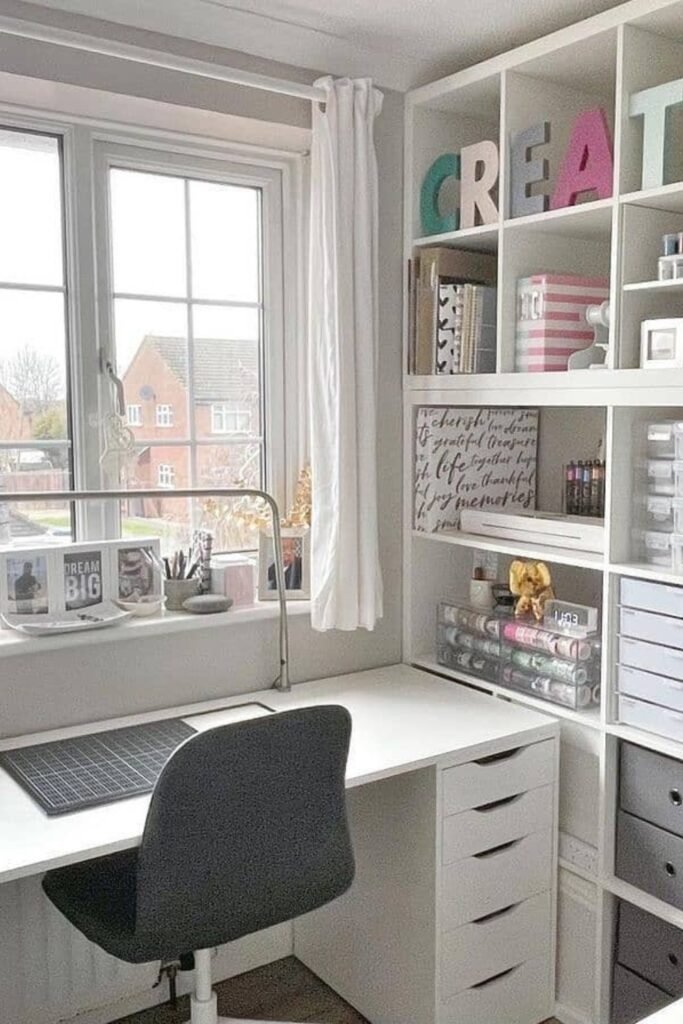
Window-Lit Workstation
Natural light becomes part of the setup when the craft table sits directly under a wide window.
This layout works especially well for paper crafts, journaling, or detailed work that benefits from daylight clarity.
Create it using a slim table, drawer units underneath, and surrounding cube storage to keep supplies accessible but controlled.
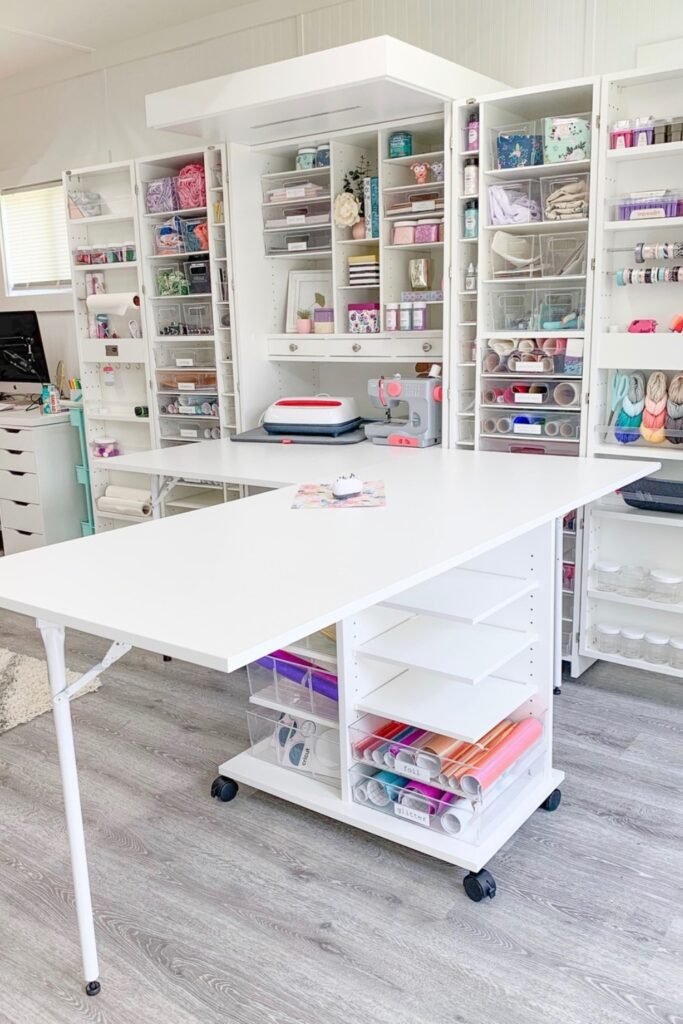
Large-Scale Cutting Hub
An oversized table anchors the room while surrounding cabinets handle serious craft storage needs.
This setup is ideal for sewing, vinyl cutting, or fabric projects that require wide, uninterrupted surfaces.
Rebuild it by combining a large tabletop with rolling storage bases and tall cabinets organized by material type.
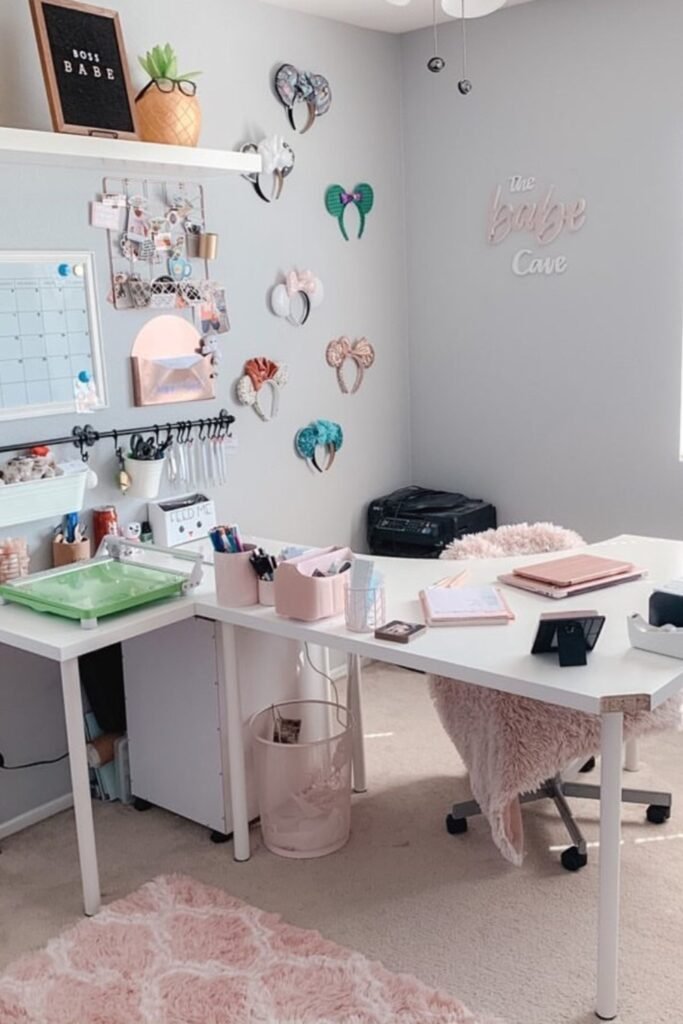
Kid-Friendly Craft Corner
Soft colors and accessible storage make this craft table suitable for shared or family craft spaces.
This works best in spare bedrooms where creativity and storage need to coexist without looking cluttered.
Set it up with simple tables, small drawer units, wall organizers, and labeled containers sized for everyday supplies.
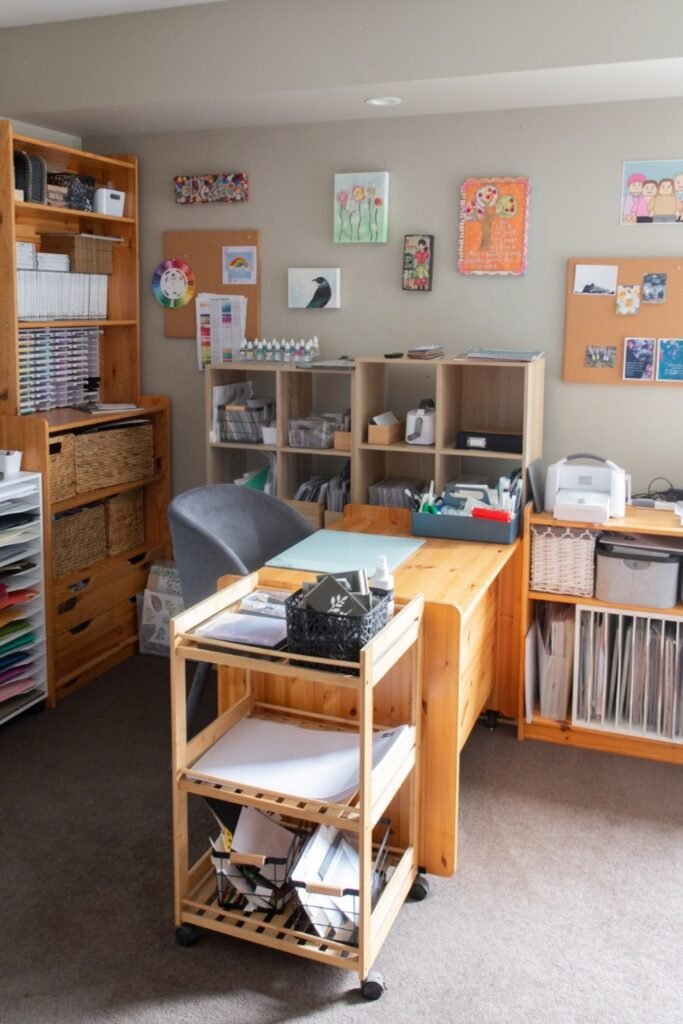
Mobile Storage Companion
A rolling cart beside the craft table keeps active supplies close without permanent built-in storage.
This idea suits flexible rooms where the table needs to stay clear or move between different crafting tasks.
Recreate it using a basic table and a wheeled organizer stocked with frequently used tools and in-progress materials.
Pegboard-Backed Desk
Pegboard-backed desks solve clutter fast by lifting tools upward while keeping the tabletop clear for active projects daily.
This approach fits bedrooms or apartments where floor storage is limited but vertical wall space remains unused often.
Build it using a simple tabletop, pegboard panels, hooks, and shallow shelves arranged around your most-used tools first.

Craft Island Table
Turning a dining-style table into a craft island adds hidden storage without sacrificing comfortable seating or style appeal.
This setup works best in shared rooms where crafting needs to blend seamlessly with everyday living areas nicely.
Recreate it by adding cube shelves beneath the tabletop and wall cabinets for sorted, visible supplies and labels.
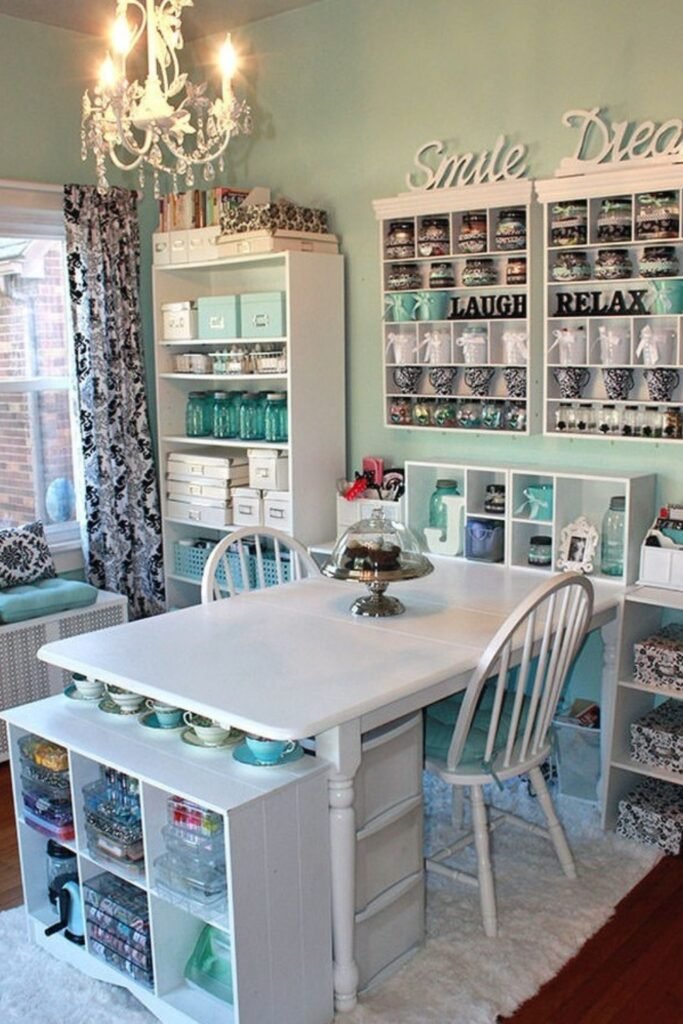
Double-Sided Sewing Table
A double-sided sewing table keeps machines stable while drawers underneath handle tools, patterns, and accessories with ease daily.
This layout shines in medium rooms where two people or multiple projects need equal working space comfortably together.
Use drawer units as the base, connect a solid top, and align seating heights carefully for ergonomic support.
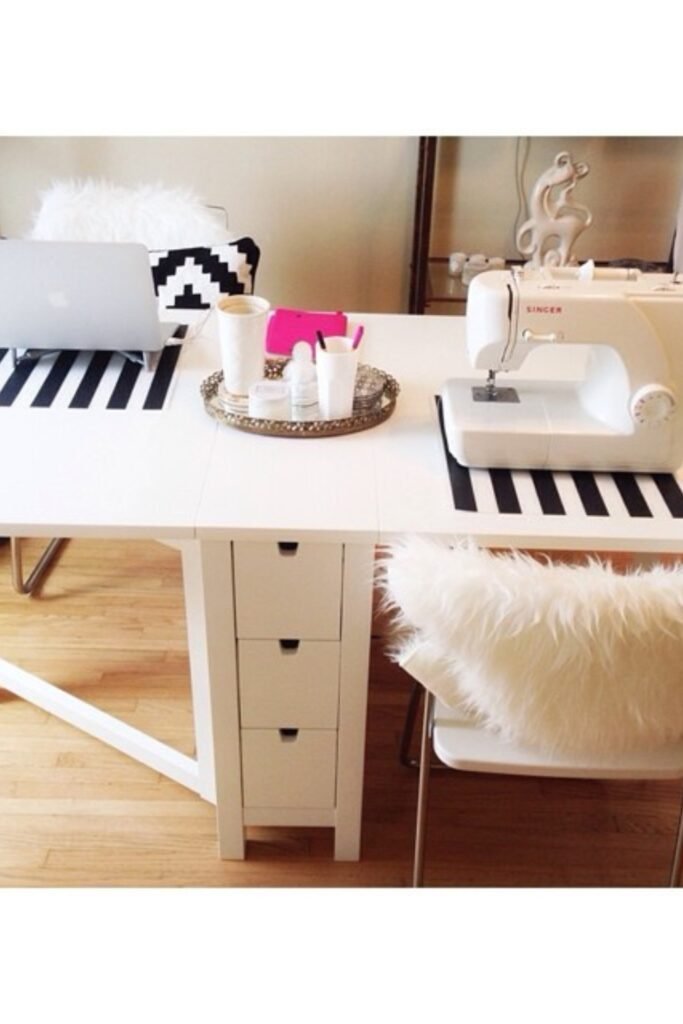
Wall-Spanning Work Desk
Long wall-spanning desks create balance by splitting storage on both sides while preserving generous legroom for daily use.
This works perfectly in craft rooms where symmetry keeps supplies organized and the workspace visually calm during projects.
Build it with drawer pedestals, a continuous tabletop, and matching shelving to frame the workspace cleanly and efficiently.

Cabinet-Integrated Craft Desk
Enclosed cabinets above a craft desk hide visual clutter while keeping frequently used materials arm’s reach during sessions.
This design suits serious crafters who prefer clean surfaces but still need high-capacity storage nearby for projects daily.
Recreate it using base drawers, open shelves below cabinets, and task lighting under upper units for precision work.
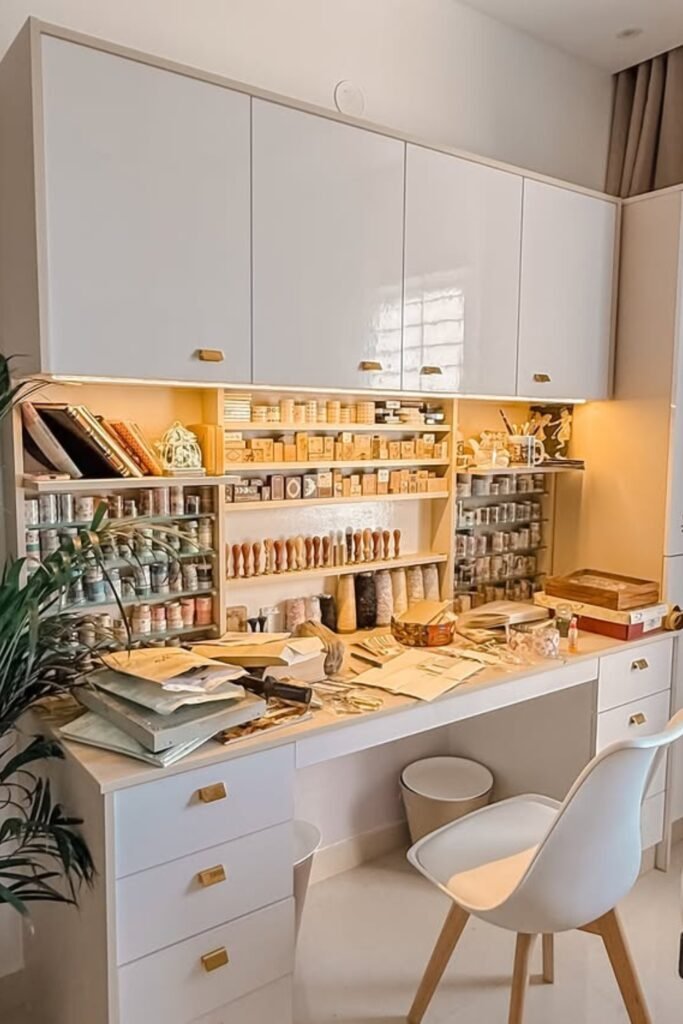
Colorful Fabric Station
Bright craft tables paired with vertical storage make busy supplies feel intentional instead of overwhelming during creative sessions.
This setup fits creative studios or kids’ craft rooms where color, access, and inspiration matter most every day.
Use tall drawer towers, open cubbies, and a simple table to sort fabrics and tools by category easily.

Craft Island Storage Table
A full craft island keeps projects spread out while baskets underneath quietly handle supplies without crowding surfaces daily.
This setup fits larger rooms where cutting, sewing, and group crafting need space to move comfortably together easily.
Build it using cube shelves as the base, a solid top, and labeled bins for fast access daily.

Wooden Bin Desk
Low wooden desks with pull-out bins make organizing kids crafts simple while keeping everything visible nearby daily always.
This design works best in playrooms or shared bedrooms where multiple activities happen throughout the day together smoothly.
Recreate it with basic lumber, identical storage bins, and clear labels to encourage easy cleanup habits daily naturally.
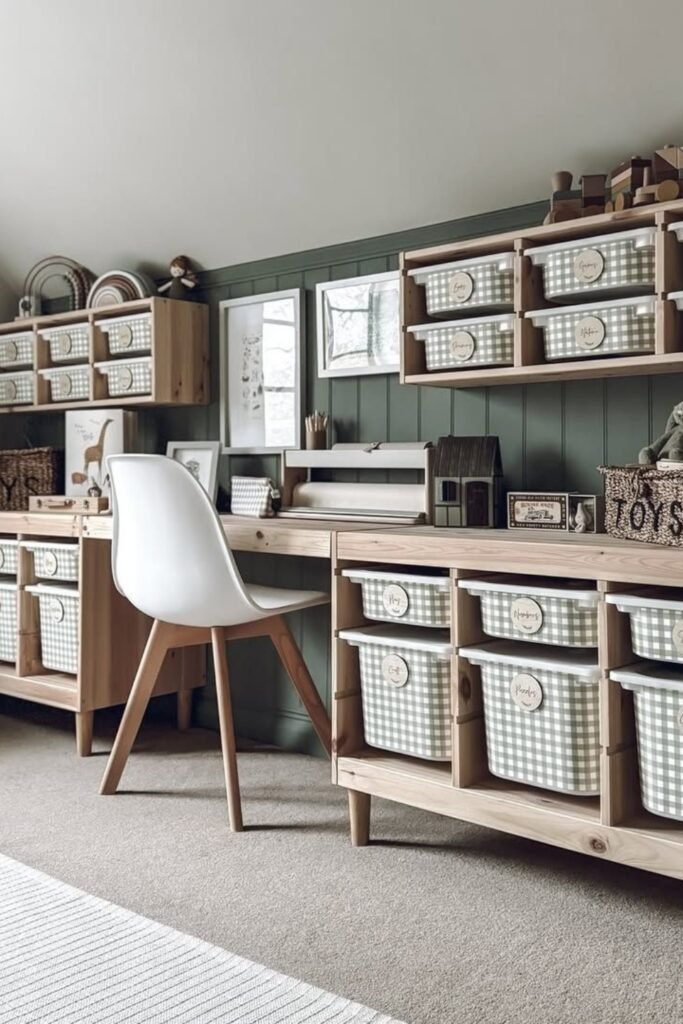
Cubby-Base Worktable
Open cubby bases turn a simple table into serious storage while keeping materials reachable from every side easily.
This layout suits sewing rooms or studios where fabric, books, and tools rotate constantly between projects during sessions.
Use cube organizers, a thick tabletop, and fabric bins to separate supplies by project type clearly daily use.
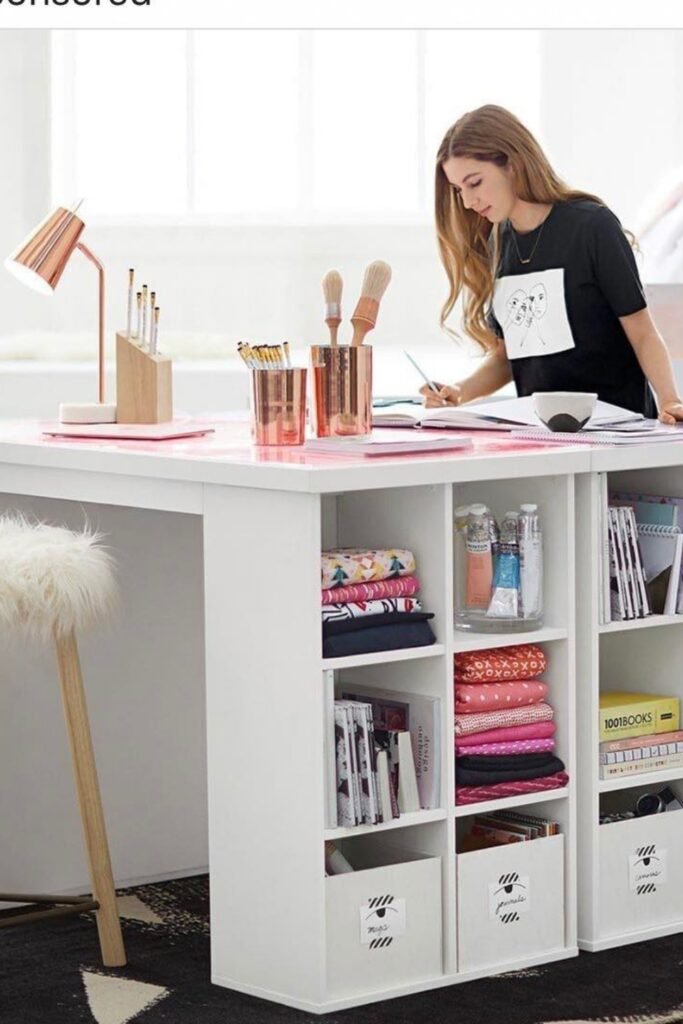
Family-Size Craft Table
A long shared craft table allows multiple people to work together without sacrificing individual storage needs daily easily.
This approach fits basements or bonus rooms where family projects and hobbies overlap often comfortably daily together smoothly.
Build storage into the base cabinets, keep chairs lightweight, and leave the center open for flexibility during projects.

Hi, my name is Ali Mehmood! I’m a passionate writer and DIY enthusiast who loves turning creative ideas into practical, hands-on projects.
I created this website to share inspiring, budget-friendly ideas that you can do yourself – whether it’s organizing your home, crafting something unique, or creating fun projects for kids and pets.
I believe DIY isn’t just a hobby – it’s a smart way to save money, reduce waste, and enjoy the satisfaction of making things with your own hands.
I’m excited to have you as part of this growing community, and I’ll continue bringing you helpful, realistic, and fun DIY ideas you can actually use.