This post may contain affiliate links: read full affiliate disclosure.
A DIY play kitchen is more than just a toy – it’s a space where kids imagine, create, and learn through everyday play.
The best part is that you don’t need expensive store-bought sets to make one. With simple materials and a little creativity, you can build a play kitchen that fits your space, budget, and child’s interests.
In this article, you’ll find 23 unique DIY play kitchen ideas that work for small rooms, outdoor areas, and everything in between, all designed to inspire hands-on fun at home.
Why Make a DIY Play Kitchen?
A DIY play kitchen lets you create a play space that fits your home and your child’s needs perfectly.
You can control the size, materials, and style while keeping costs low. It also allows you to reuse items you already have and design something that grows with your child.
Most importantly, a handmade play kitchen encourages imagination, role play, and everyday life skills through creative, open-ended play.
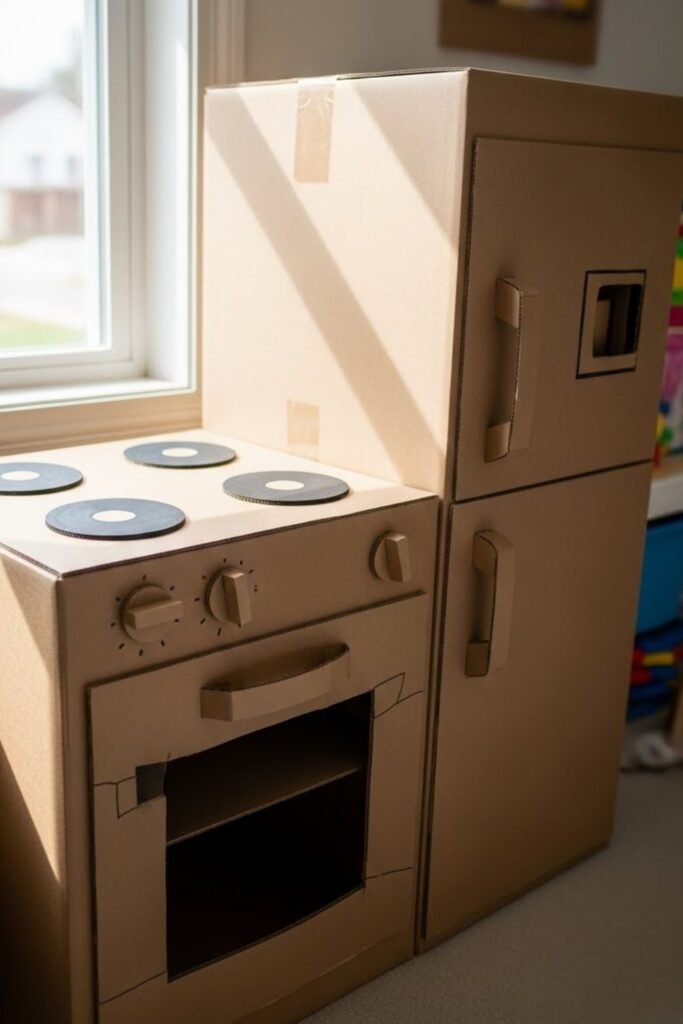
Cardboard Kitchen
Turn large cardboard boxes into a full play kitchen using simple cuts and paint. Cut openings for an oven and fridge, then draw burners and knobs with markers or paper circles.
This idea works best for quick builds, small spaces, or temporary setups. It’s lightweight, budget-friendly, and easy to customize with kids’ artwork or stickers.
Pallet Kitchen
Use one or two wooden pallets to build a sturdy play kitchen frame. Add shelves for storage and attach hooks for utensils. A pallet kitchen works well indoors or outdoors and gives a rustic, handmade look.
Sand the wood properly and use child-safe paint. This idea is great if you want something durable without buying new wood.

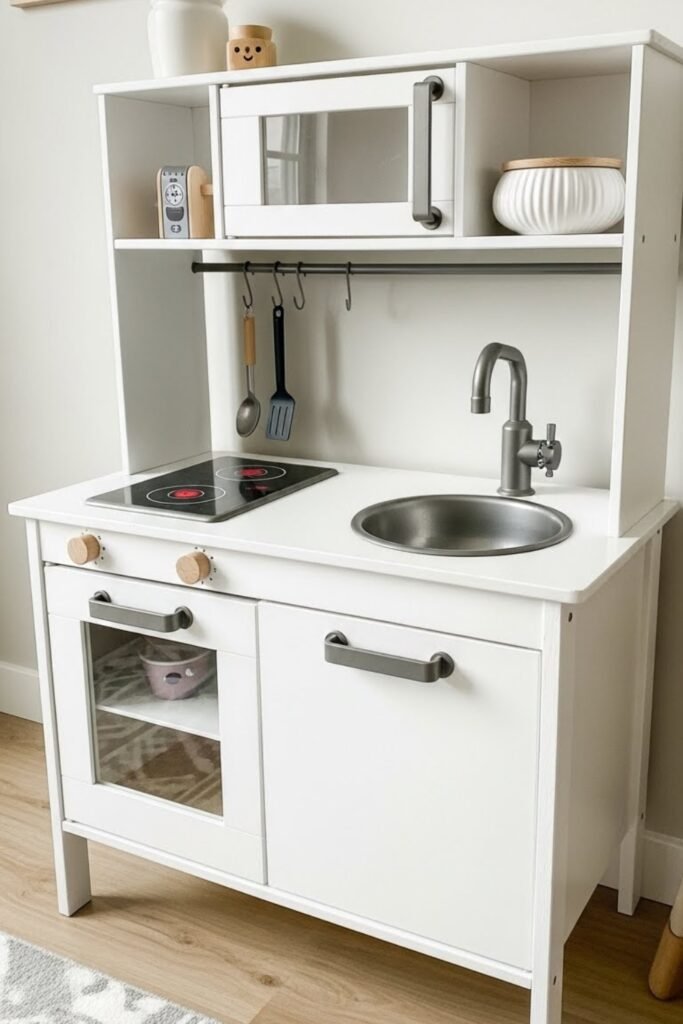
IKEA Hack
Hack a small IKEA shelf or cabinet into a modern play kitchen. Add vinyl stickers for burners, attach wooden knobs, and install a small bowl as a sink.
This setup fits nicely in apartments and blends with modern interiors. It’s ideal if you want a clean, polished look using ready-made furniture as the base.
Vintage Dresser
Repurpose an old dresser into a charming play kitchen by removing drawers and adding shelves. Use the top as a countertop and install knobs as stove controls.
This idea gives a classic, cozy feel and offers built-in storage. It’s perfect for thrifted furniture and works well in playrooms with a farmhouse or vintage theme.

Wall Kitchen
Create a wall-mounted play kitchen using a pegboard or slim wooden panel. Attach hooks for utensils, a small shelf for pretend food, and painted burners directly on the board.
This idea saves floor space and works well for small rooms or shared areas. Keep everything at kid height so children can play comfortably without bulky furniture.

Outdoor Kitchen
Build a simple play kitchen for the backyard using weather-treated wood or leftover decking boards. Add a countertop, open shelves, and metal bowls for pretend cooking.
This setup is great for messy play, water games, and mud cooking. Place it near a fence or wall for stability and easy cleanup after playtime.

Foldable Kitchen
Design a foldable play kitchen that can be packed away after use. Use hinged panels for the stove and sink sections so they collapse flat.
This idea is ideal for small apartments or multi-use rooms. When opened, it offers full play functionality, and when closed, it stores easily behind doors or under beds.
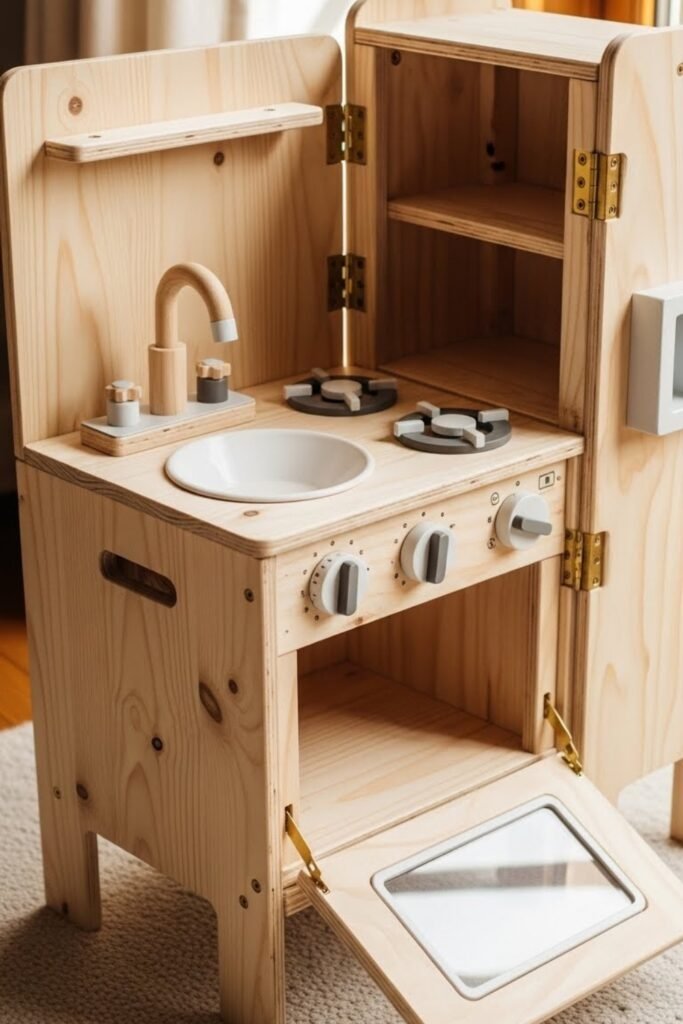
Corner Kitchen
Turn an unused corner into a compact play kitchen using two connected panels or shelves. Add an L-shaped counter to create realistic cooking zones.
This layout feels immersive while using minimal space. It works well in bedrooms or playrooms where straight-wall setups don’t fit, making the most of overlooked corners.

Travel Kitchen
Create a play kitchen that fits inside a suitcase or small storage box. Paint the inside with burners, add felt food, and use removable accessories.
This idea is perfect for families who travel or need portable toys. Everything packs away neatly, making it easy to carry between rooms or take along on trips.

Mini Mud
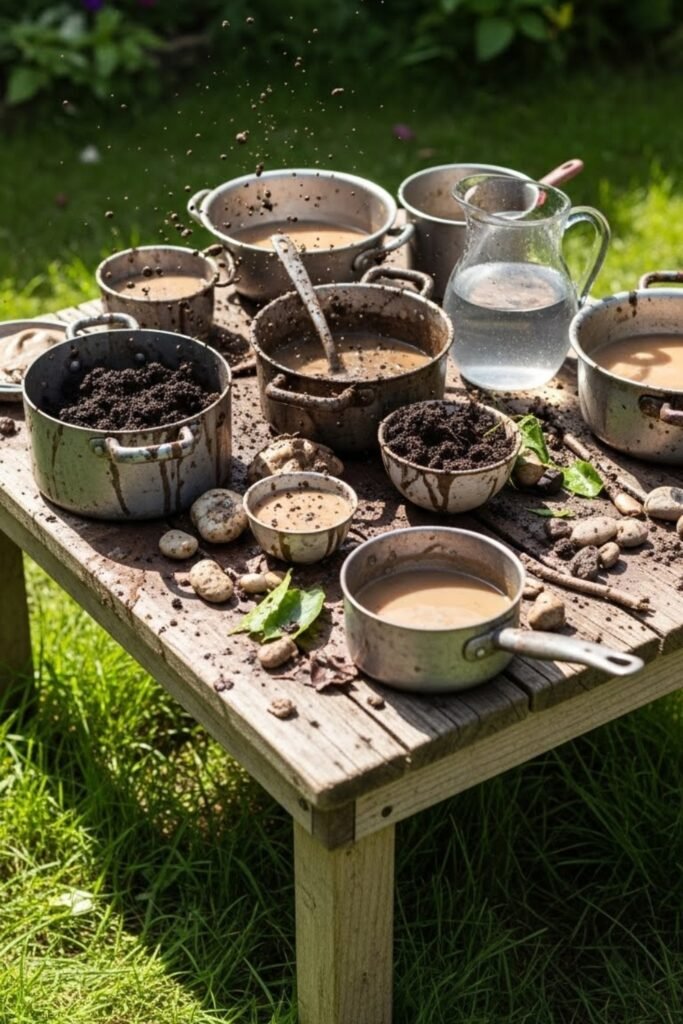
Set up a small mud-style play kitchen using buckets, old pots, and a low wooden table. Kids can mix soil, water, and leaves for sensory play.
This setup encourages outdoor creativity and hands-on learning. Keep it near a garden hose or water source for easy cleanup and frequent use.
Montessori Kitchen
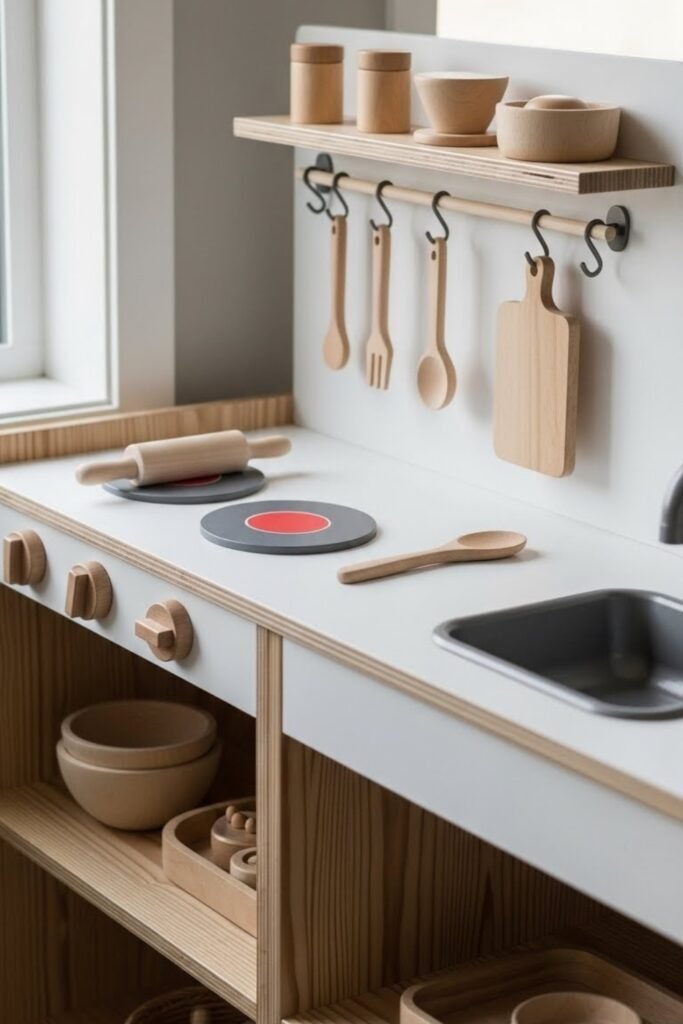
Build a low, open play kitchen that encourages independence. Use simple shelves, real-looking utensils, and neutral colors to keep the design calm and focused.
Everything should be easy for children to reach on their own. This idea supports self-guided play and works best in quiet play spaces or learning-focused homes.
Farmhouse Style
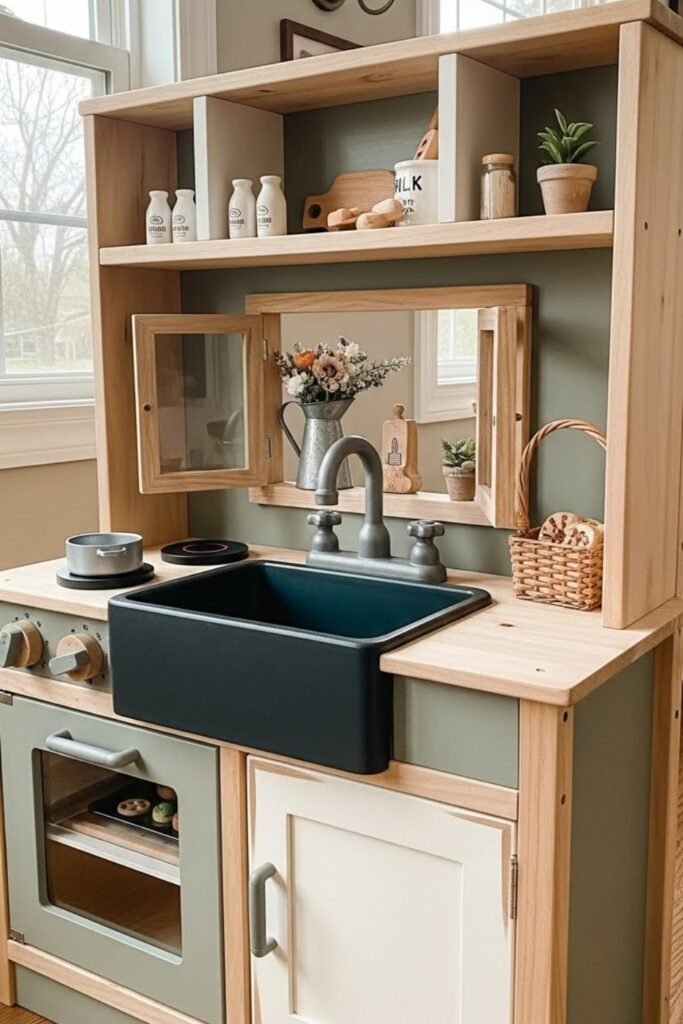
Design a farmhouse-inspired play kitchen using natural wood, muted colors, and simple hardware. Add a faux apron sink and open shelving for a cozy look.
This style blends well with home decor and feels less toy-like. It’s ideal if you want a play kitchen that visually fits into shared living spaces.
Modern White
Create a clean, modern play kitchen using white-painted wood and simple lines. Add black or wooden knobs for contrast and keep accessories minimal.
This style works well in modern homes where you want the play area to blend in instead of stand out. Use durable paint so it stays fresh despite daily play.
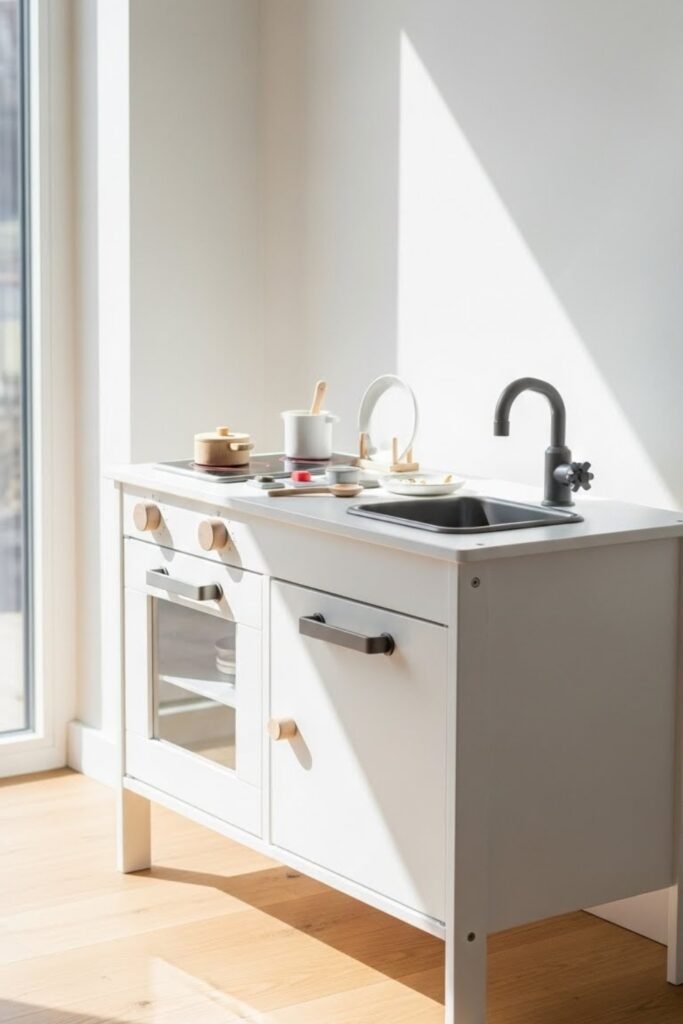
Retro Kitchen
Build a retro-style play kitchen using bold colors and rounded details. Paint appliances in pastel shades and add printed dials or labels for a vintage feel.
This idea adds personality and works well as a statement piece in a playroom. It’s perfect if you want something fun that feels different from standard designs.
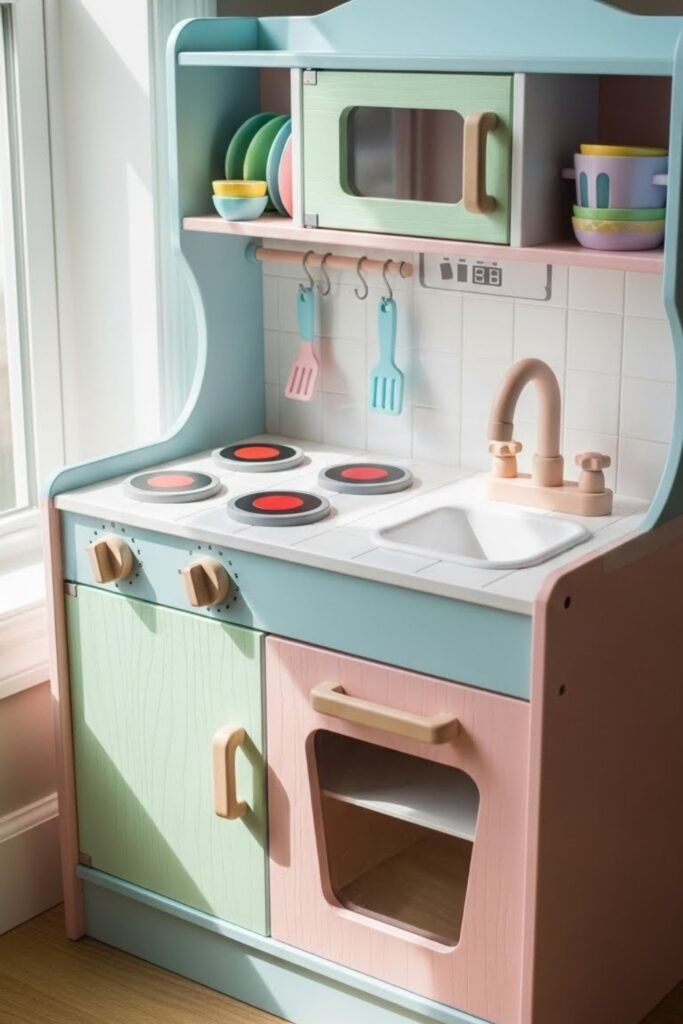
Chalkboard Kitchen
Turn the backsplash or cabinet doors into chalkboard surfaces. Kids can write menus, draw food, or label items while playing. This adds an interactive element without adding clutter.
It works especially well in small kitchens where space is limited but creativity is encouraged through drawing and pretend planning.
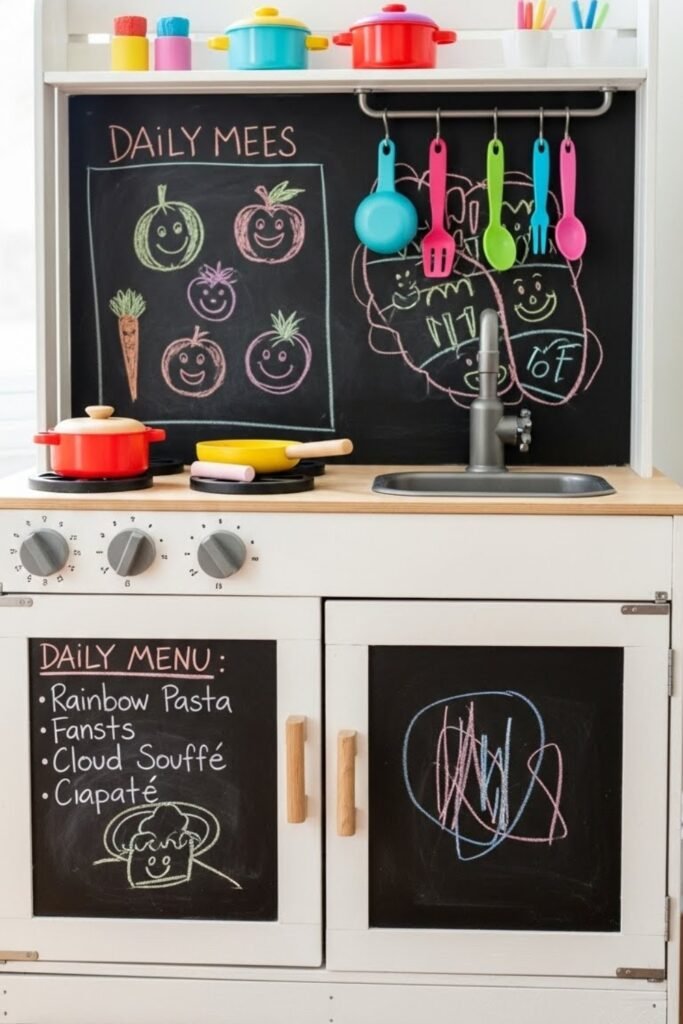
Low Shelf
Use a low bookshelf as the base for a simple play kitchen. Add painted burners on top and use baskets below for storage.
This idea is easy to build and perfect for toddlers. Everything stays within reach, encouraging independent play while keeping the setup simple and budget-friendly.
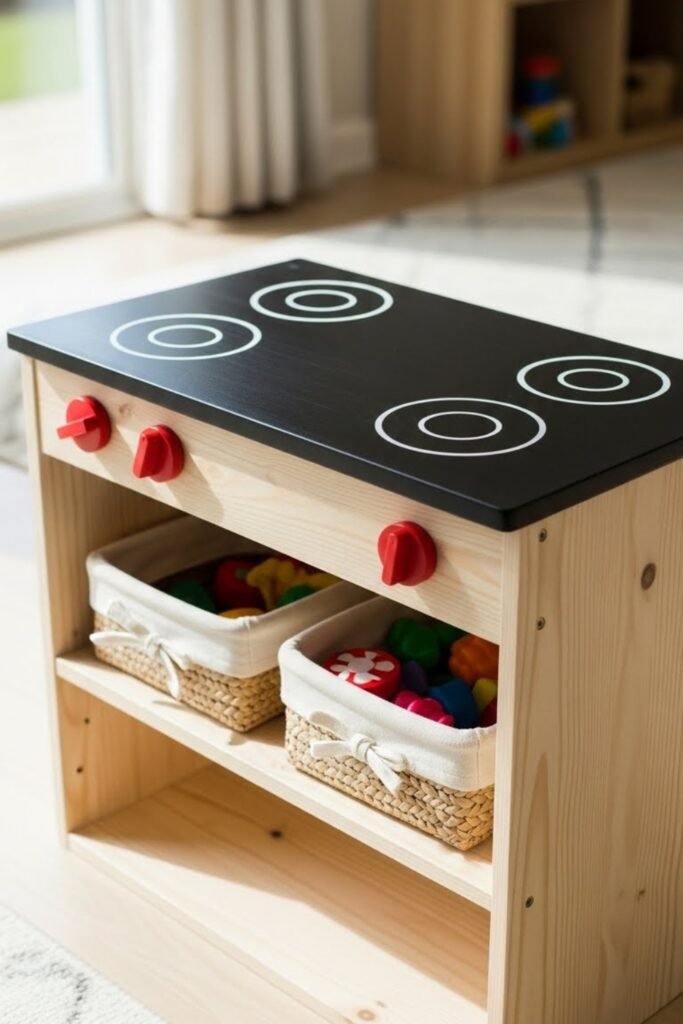
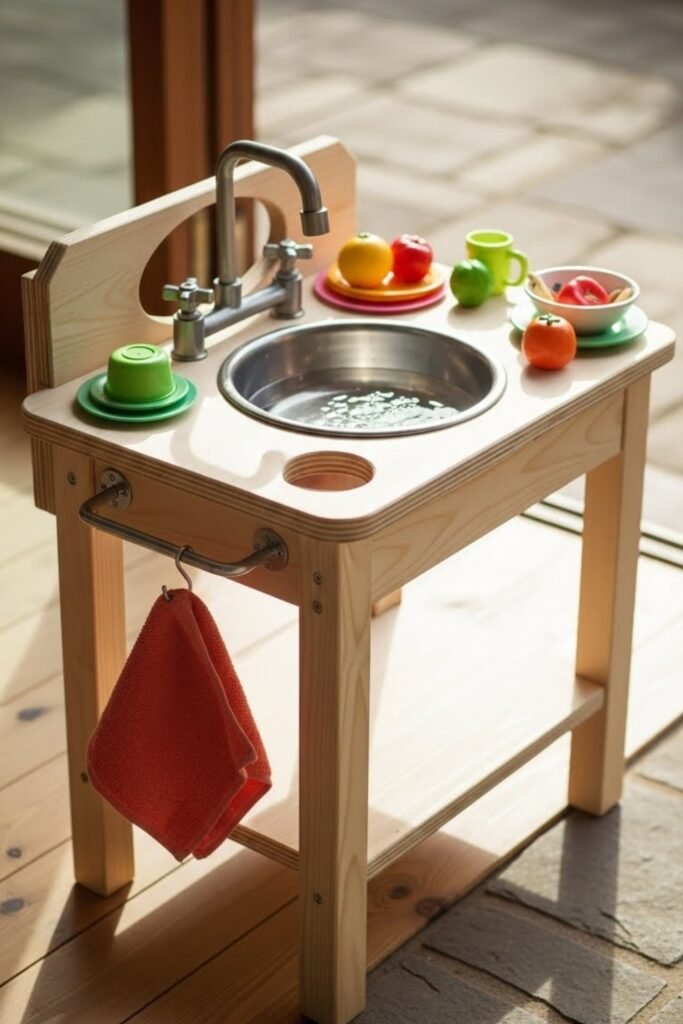
Sink Station
Create a dedicated sink-focused play kitchen using a small table and a removable bowl. Add a hand pump or pretend faucet for realistic play.
This setup is great for water-based activities and helps kids enjoy washing and cleaning games. Place a towel hook nearby to keep the area tidy and encourage responsibility.
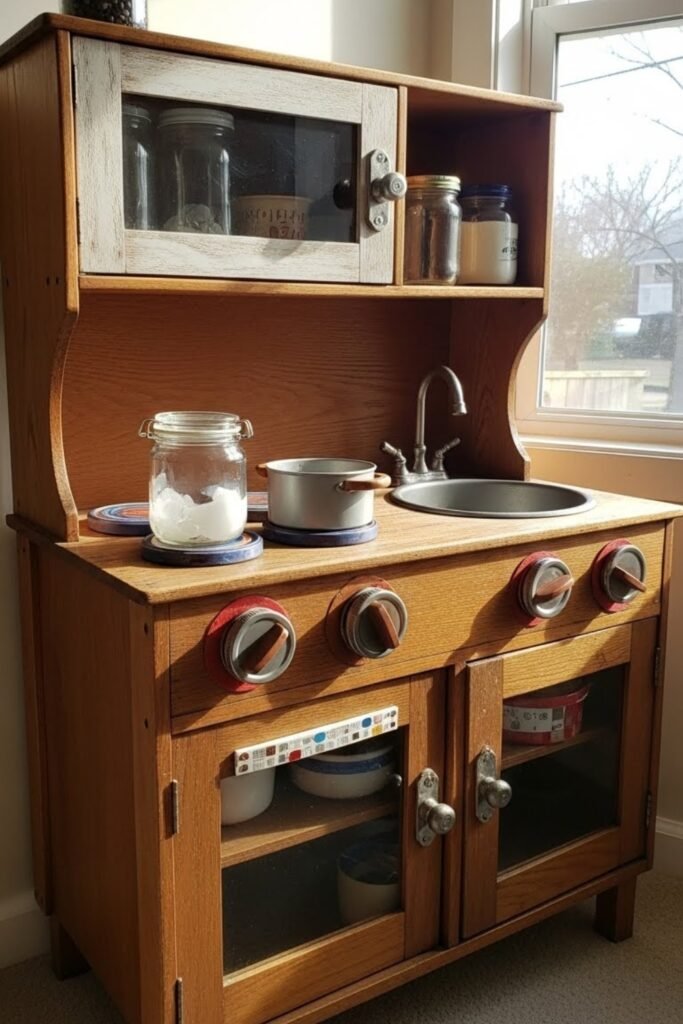
Recycled Kitchen
Build a play kitchen using recycled items like old cabinets, containers, and leftover wood. Turn jars into storage and lids into stove knobs.
This idea teaches kids about reuse while keeping costs low. It’s flexible, creative, and perfect for DIYers who enjoy repurposing everyday household materials.
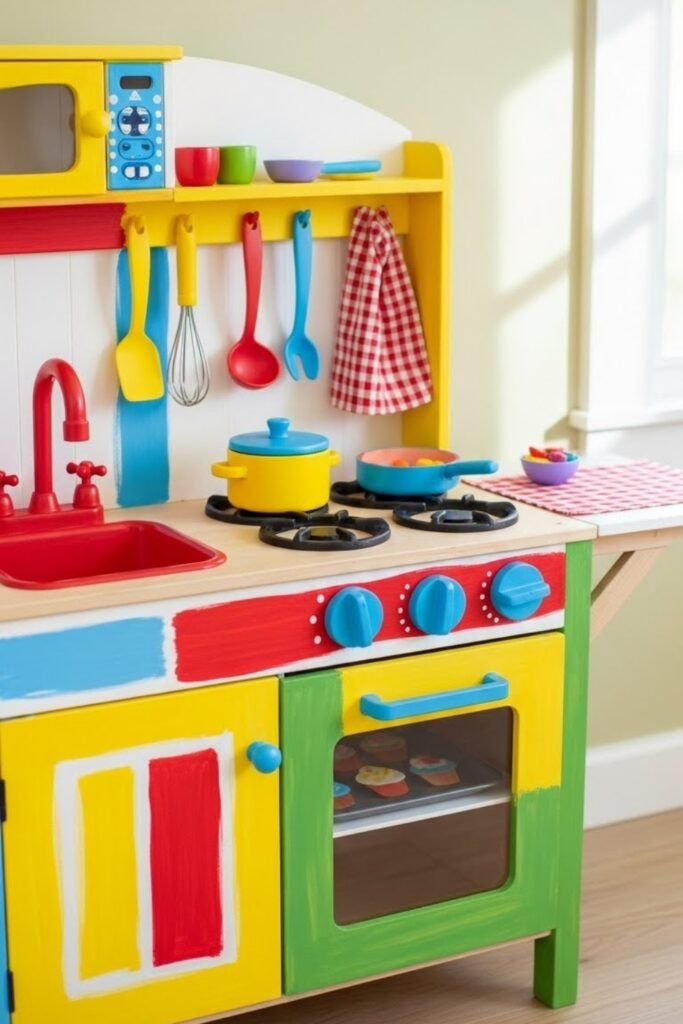
Colorful Kitchen
Design a bright play kitchen using multiple bold colors on cabinets and shelves. Each section can have its own shade to make the setup playful and fun.
This idea works well in energetic playrooms and helps spark imagination. Use child-safe paint and keep the layout simple to avoid visual clutter.
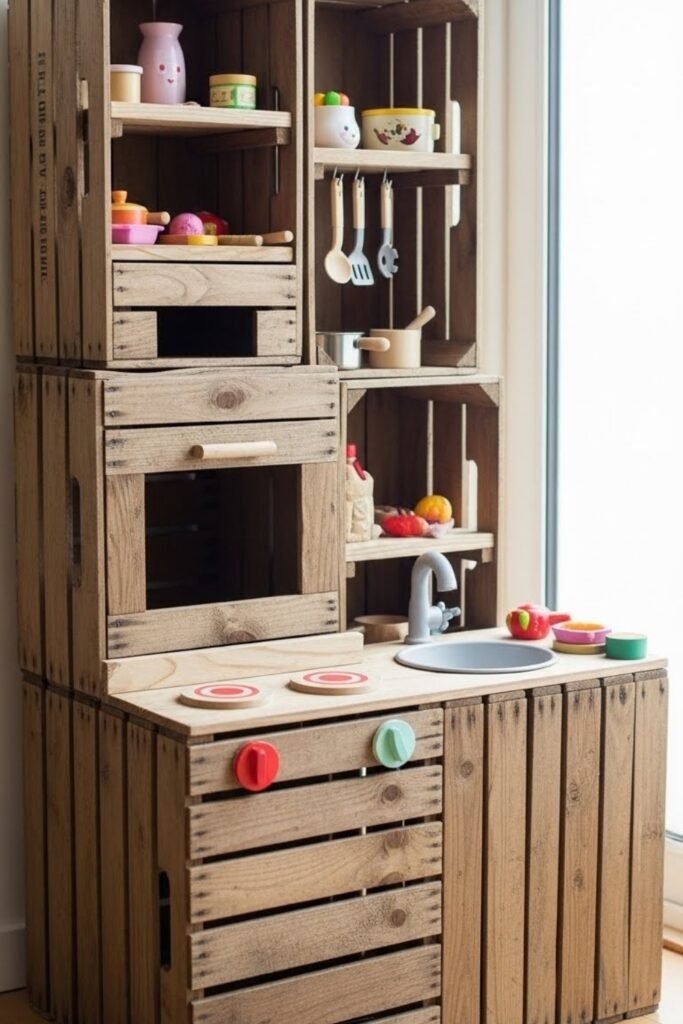
Wooden Crate
Stack wooden crates to form shelves, counters, and storage zones. Secure them together and add a flat top for cooking space.
This modular setup is easy to adjust as kids grow. It’s ideal if you want a flexible kitchen that can be rearranged or expanded over time.
Under Stairs
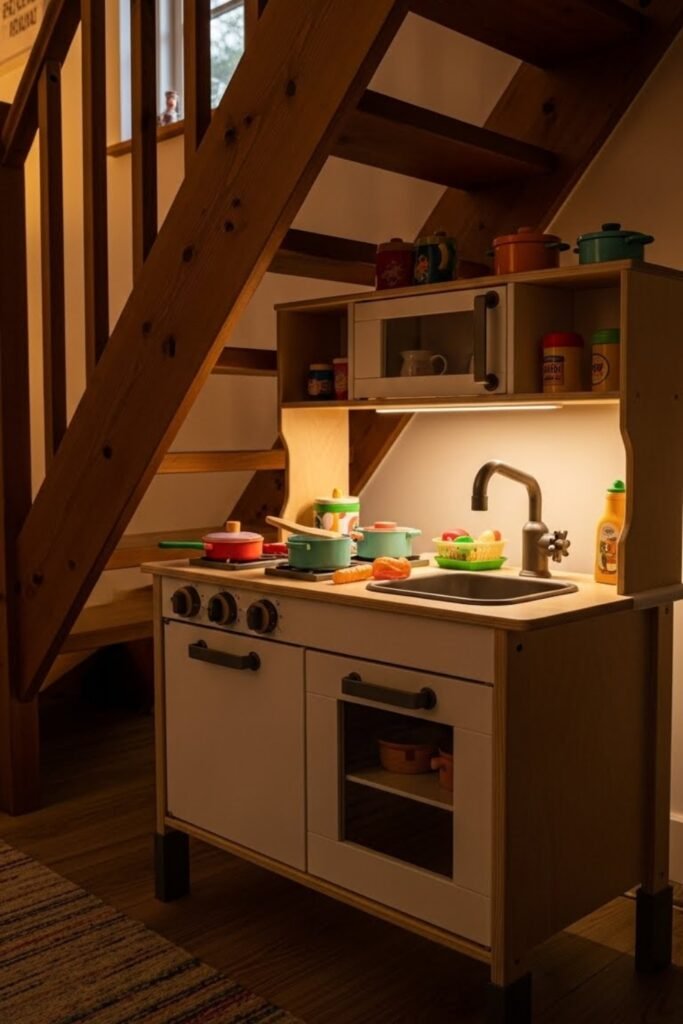
Use the unused space under a staircase to build a built-in play kitchen. Add shallow cabinets, a small counter, and open shelves sized for kids.
This setup feels custom and immersive without taking up extra room. It works especially well in homes where play areas need to stay contained and visually organized.
Portable Box
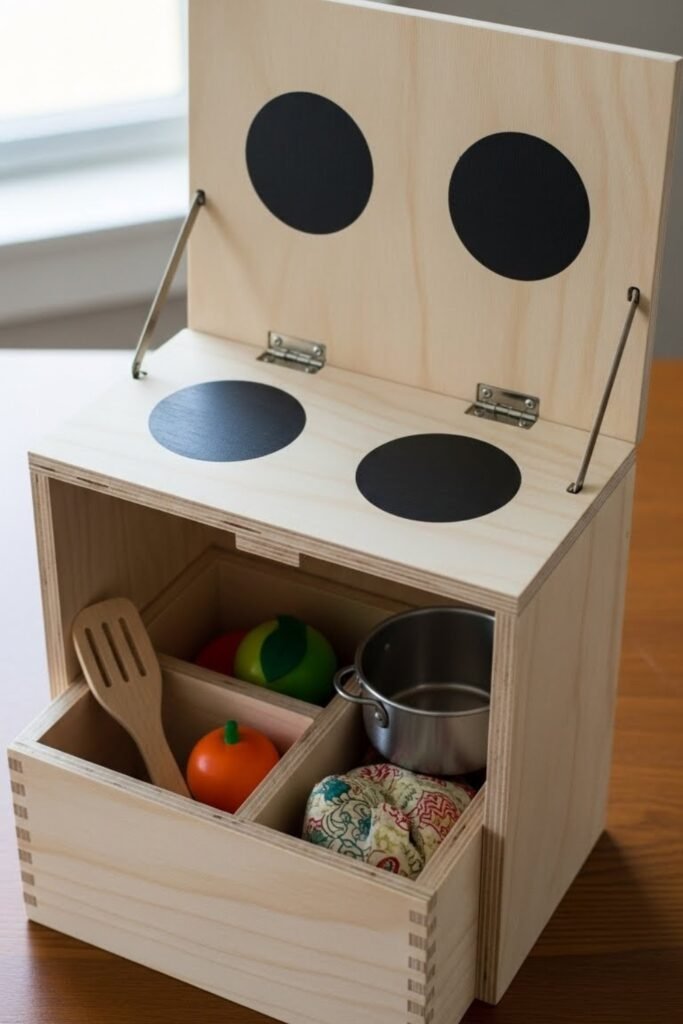
Create a play kitchen inside a sturdy wooden or plastic storage box. When opened, the lid becomes the stove or backsplash, and inside holds all accessories.
This idea is great for quick cleanup and easy storage. It’s perfect for shared rooms or homes where toys need to disappear fast.
Theme Kitchen
Design a play kitchen around a specific theme like bakery, café, or pizza shop. Use themed colors, labels, and pretend food to match the concept.
This approach keeps kids engaged longer by giving them a clear role. It’s ideal if your child enjoys role-playing and imaginative storytelling.


Hi, my name is Ali Mehmood! I’m a passionate writer and DIY enthusiast who loves turning creative ideas into practical, hands-on projects.
I created this website to share inspiring, budget-friendly ideas that you can do yourself – whether it’s organizing your home, crafting something unique, or creating fun projects for kids and pets.
I believe DIY isn’t just a hobby – it’s a smart way to save money, reduce waste, and enjoy the satisfaction of making things with your own hands.
I’m excited to have you as part of this growing community, and I’ll continue bringing you helpful, realistic, and fun DIY ideas you can actually use.