This post may contain affiliate links: read full affiliate disclosure.
DIY plant stands are an easy way to elevate your plants while adding style to your home or outdoor space.
Whether you live in a small apartment, have a sunny balcony, or want to organize plants in your garden, the right stand can make a big difference.
In this article, you’ll find 25 creative DIY plant stand ideas that use simple materials, save space, and work for different plant sizes.
Why Use DIY Plant Stands?
DIY plant stands help you organize plants while improving light exposure and saving floor space.
They allow you to customize height, size, and style based on your room or outdoor area.
Building your own stand also costs less than buying ready-made options and lets you reuse materials you already have.
With the right design, plant stands can protect floors, keep plants healthier, and turn any corner into a clean, eye-catching display.
Wooden Ladder
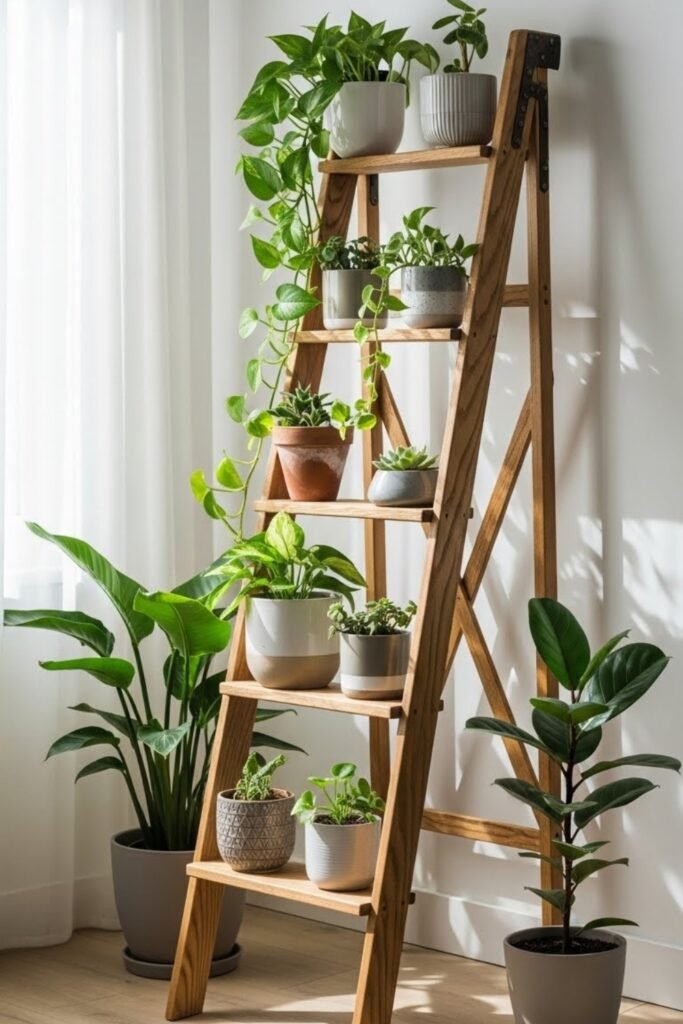
A wooden ladder plant stand works perfectly for vertical displays in small spaces. Use an old ladder or build a simple one from planks.
Each step can hold a different plant size, creating a layered look. It’s ideal for indoor corners, balconies, or patios and allows plenty of light to reach every plant.
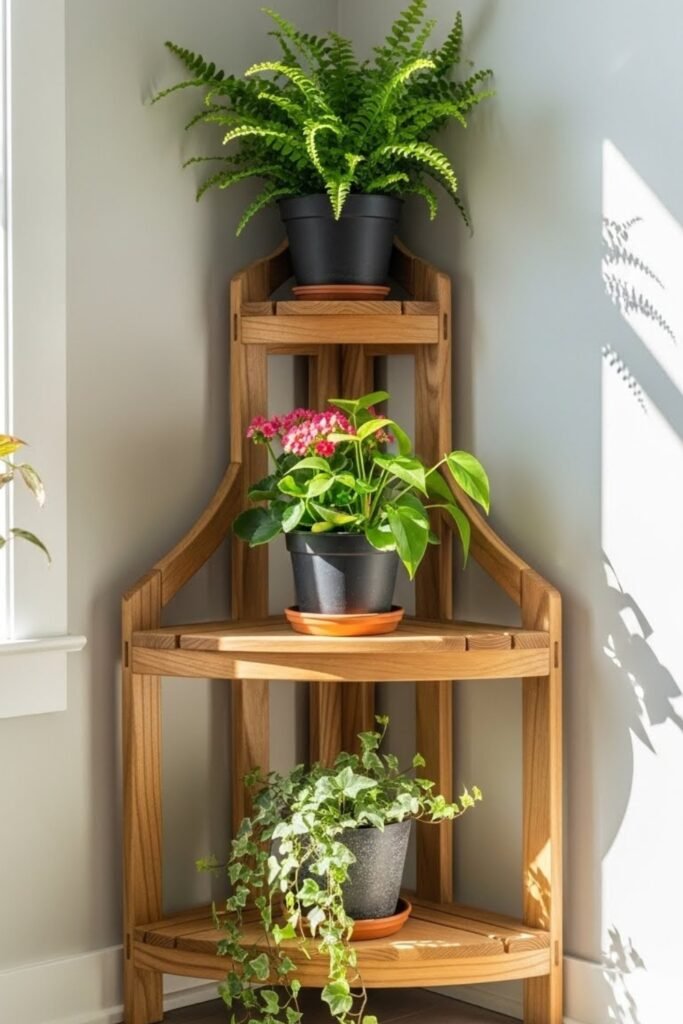
Corner Tier
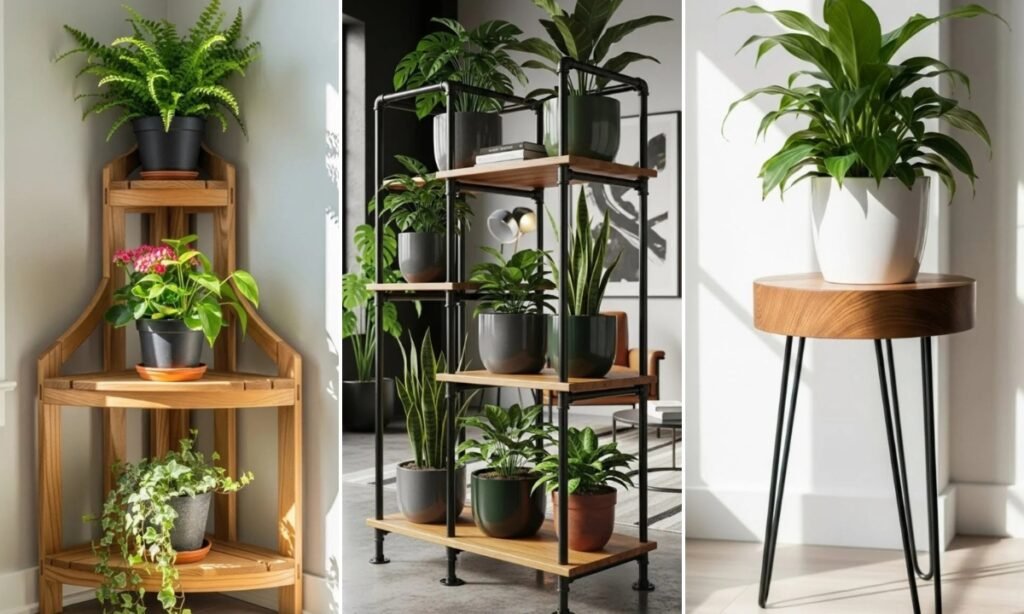
A corner tier plant stand is designed to fit snugly into unused corners. Build it with three or four levels using wood or metal brackets.
This stand maximizes space while keeping plants organized and visible. It works great in living rooms, sunrooms, or balconies where floor space is limited.
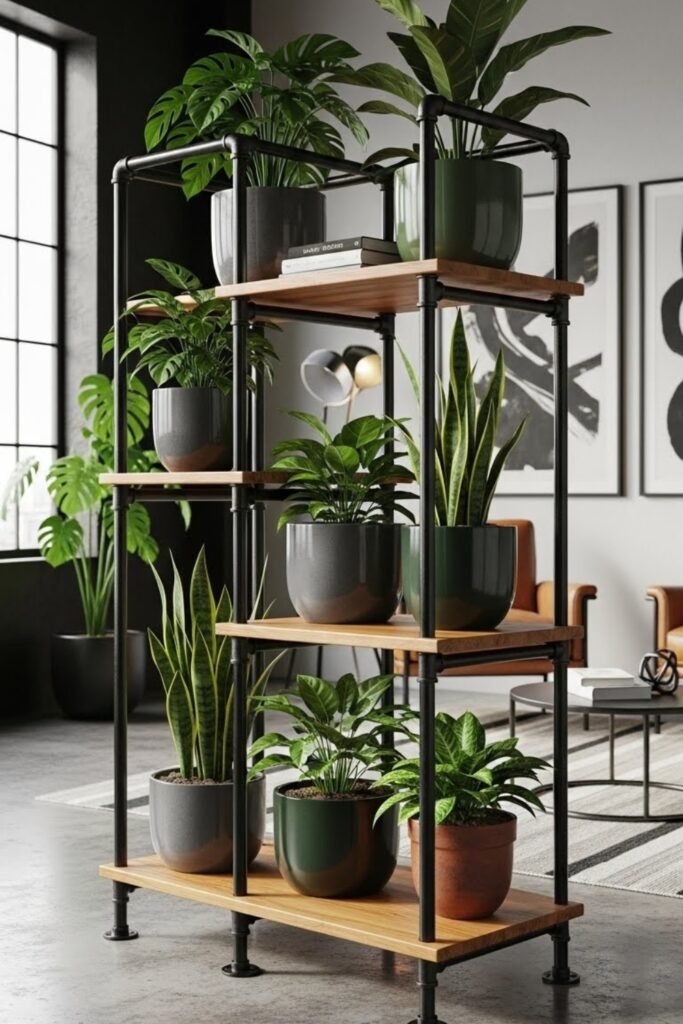
Pipe Frame
A pipe frame plant stand gives an industrial and sturdy look. Use metal pipes and wooden shelves to create a strong structure.
This design supports heavier pots and works well indoors or outdoors. It’s perfect for modern homes and adds a bold visual element while keeping plants elevated.
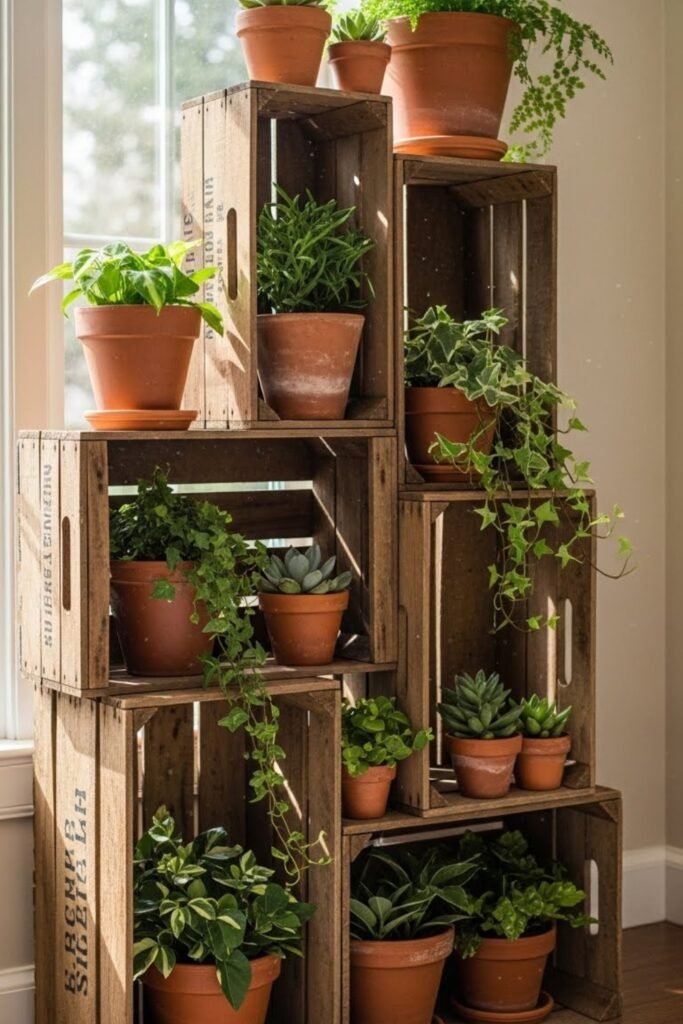
Crate Stack
A crate stack plant stand uses wooden crates arranged vertically or asymmetrically. Secure them together for stability and place pots inside each crate.
This idea is budget-friendly and customizable in height and shape. It works well for rustic, farmhouse, or casual garden spaces.
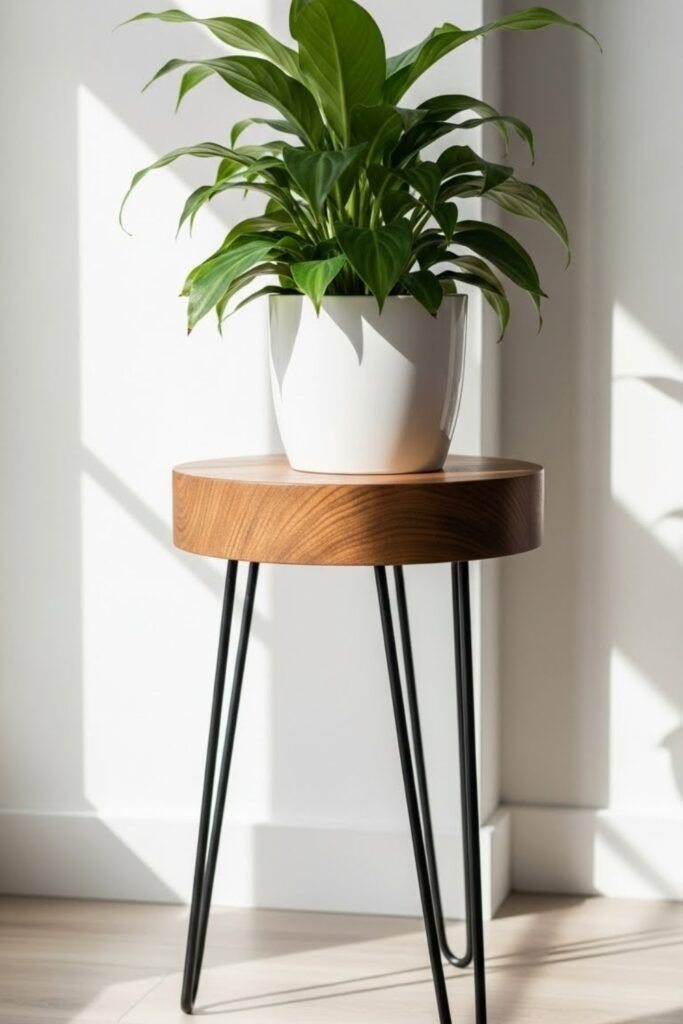
Hairpin Legs
A hairpin leg plant stand is simple to build and looks modern. Attach metal hairpin legs to a round or square wooden top.
This stand works best for indoor spaces like living rooms or bedrooms. It lifts plants slightly off the floor while keeping a clean, minimal look.
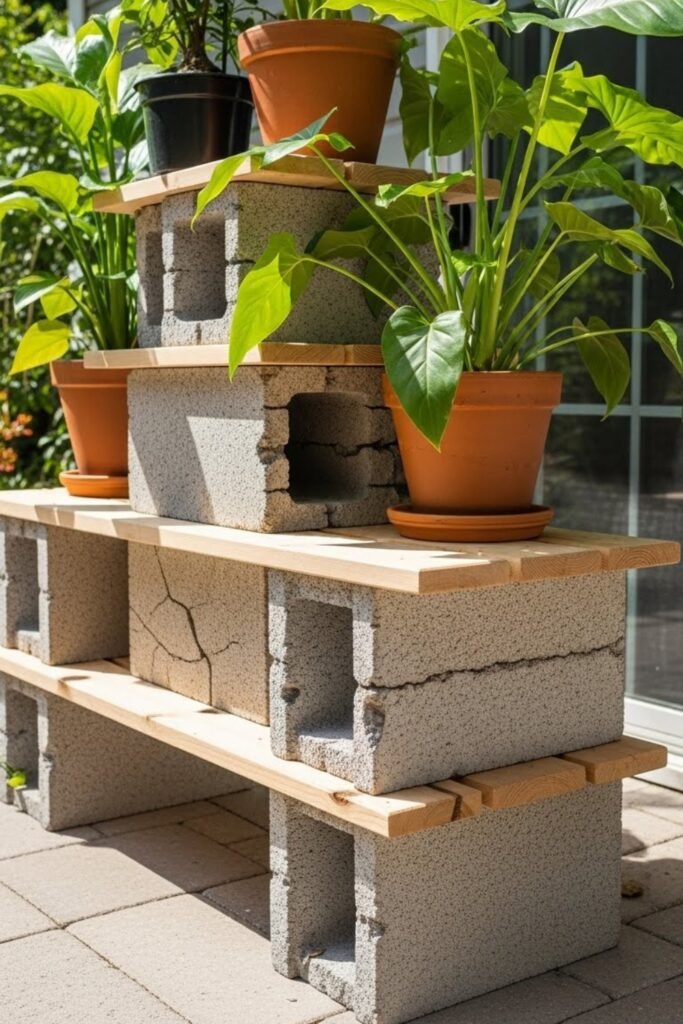
Cinder Blocks
A cinder block plant stand is sturdy and budget-friendly. Stack blocks horizontally or vertically and slide wooden planks through the openings.
This setup supports heavy pots and works well outdoors or on patios. You can rearrange the blocks easily to change the height or layout.
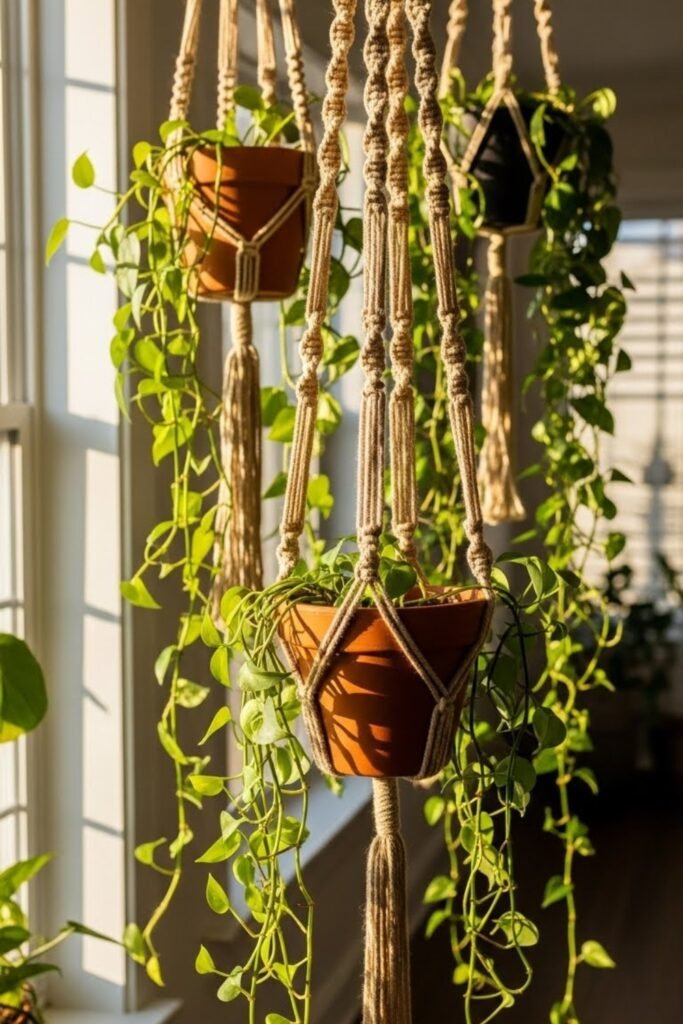
Rope Hanging
A rope hanging plant stand is perfect for saving floor space. Use thick rope to create loops that hold pots securely. Hang it from the ceiling, beam, or wall hook.
This idea works great for small apartments, balconies, or near windows where plants need more sunlight.
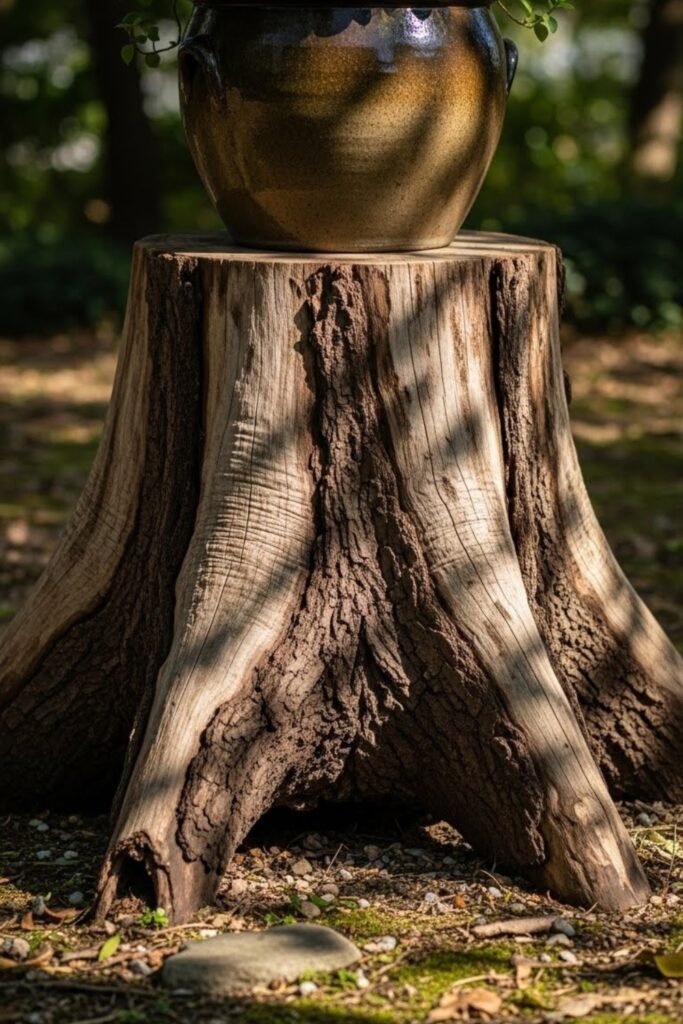
Tree Stump
A tree stump plant stand adds a natural and rustic touch. Use a cut and sanded tree stump as a base for one or more pots.
It works best outdoors, porches, or nature-inspired interiors. The solid base easily supports heavy planters and adds character to the space.
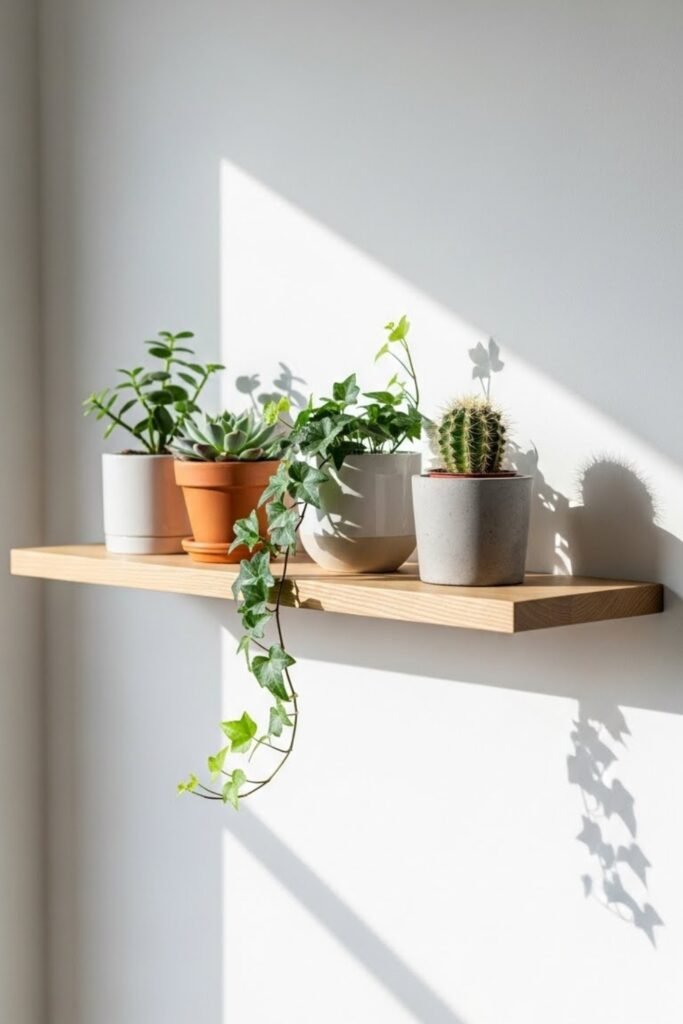
Floating Shelf
A floating shelf plant stand mounts directly onto the wall, keeping the floor clear. Install sturdy brackets or hidden supports to hold small to medium planters.
This idea works well for kitchens, living rooms, or near windows. It creates a clean, modern display while allowing plants to cascade naturally.
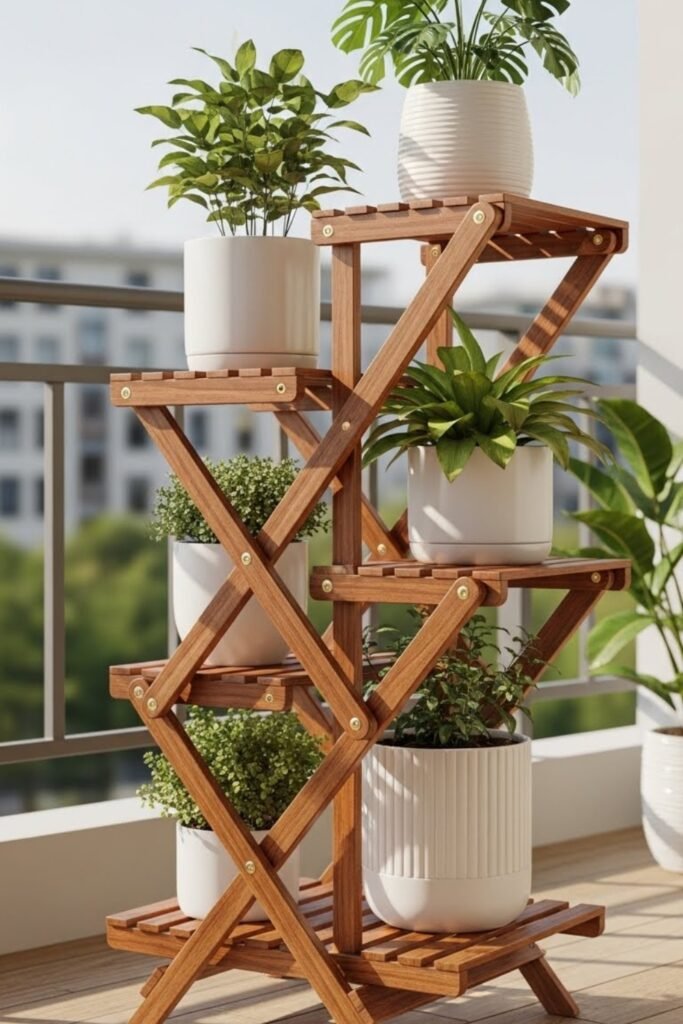
Foldable Stand
A foldable plant stand is ideal for flexible spaces. Build it with hinged wooden frames so it can open and close easily.
This stand works well for balconies, patios, or temporary indoor setups. When not in use, it folds flat for easy storage without taking up space.
Window Sill
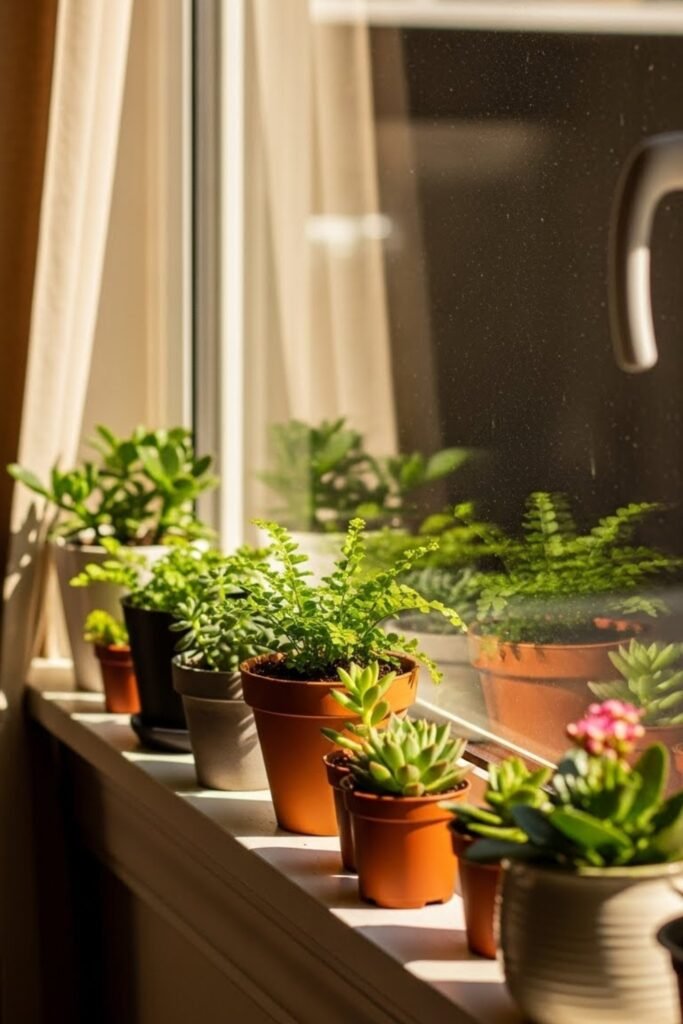
A window sill plant stand extends the planting area along your window. Use a narrow wooden or metal shelf secured across the sill.
It’s perfect for herbs or small pots that need sunlight. This setup keeps plants close to natural light while staying out of the way.
Bamboo Stand
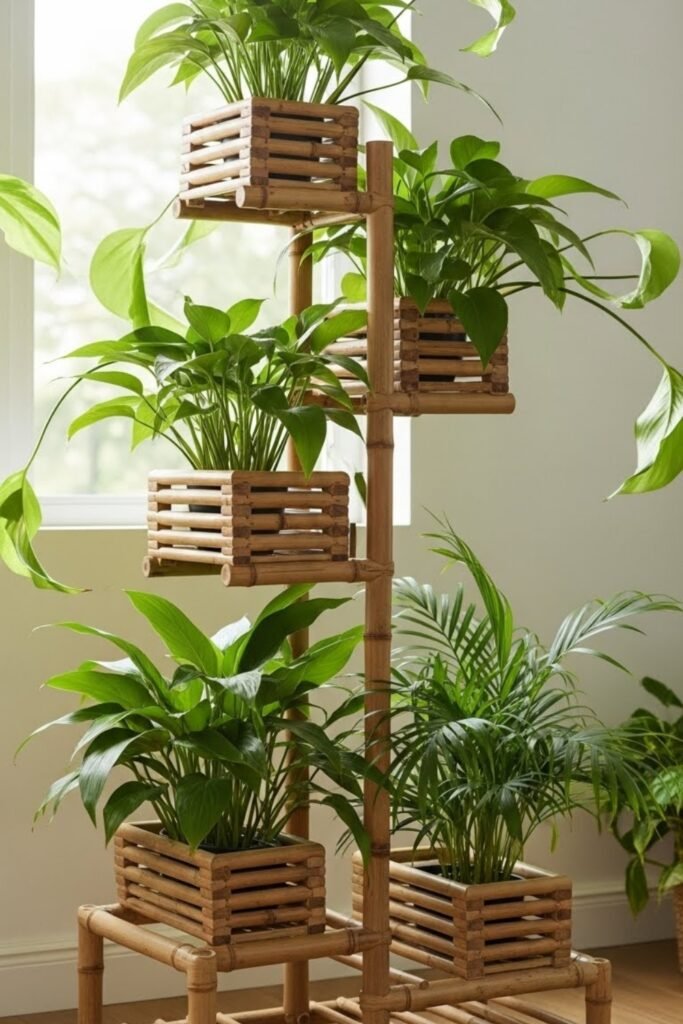
A bamboo plant stand offers a lightweight and eco-friendly option. Use bamboo poles to build a simple tiered frame.
This design works well indoors or outdoors and adds a natural, airy feel. It’s especially suitable for tropical plants or minimalist décor styles.
Grid Frame
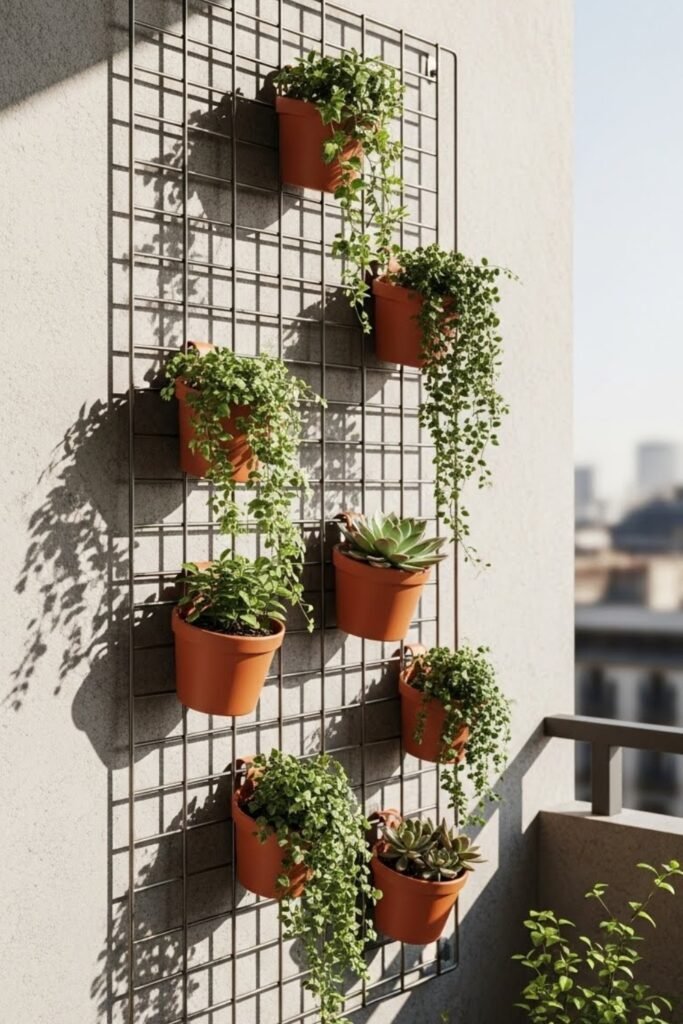
A grid frame plant stand uses a metal grid or wire panel as the main structure. Attach hooks or small shelves to hold pots at different heights. This stand works well against walls or in balconies.
It allows flexible arrangement and easy repositioning of plants without rebuilding the frame.
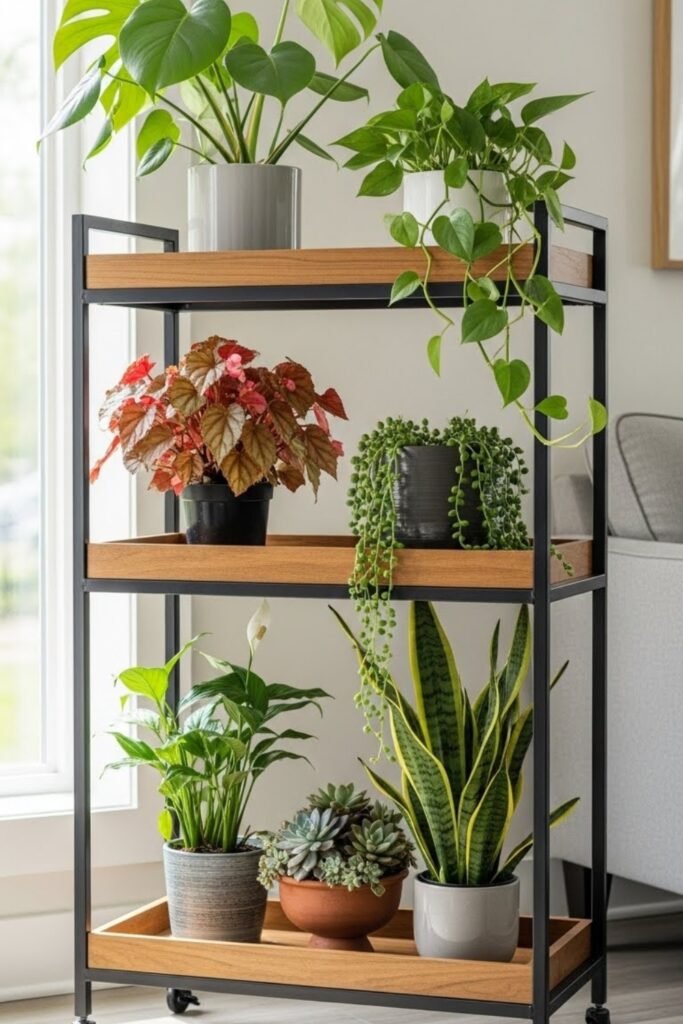
Rolling Cart
A rolling cart plant stand lets you move plants easily for sunlight or cleaning. Use a small utility cart or add caster wheels to a wooden frame.
This idea works well indoors or on patios. It’s especially useful for heavier pots that are difficult to lift.
A-Frame
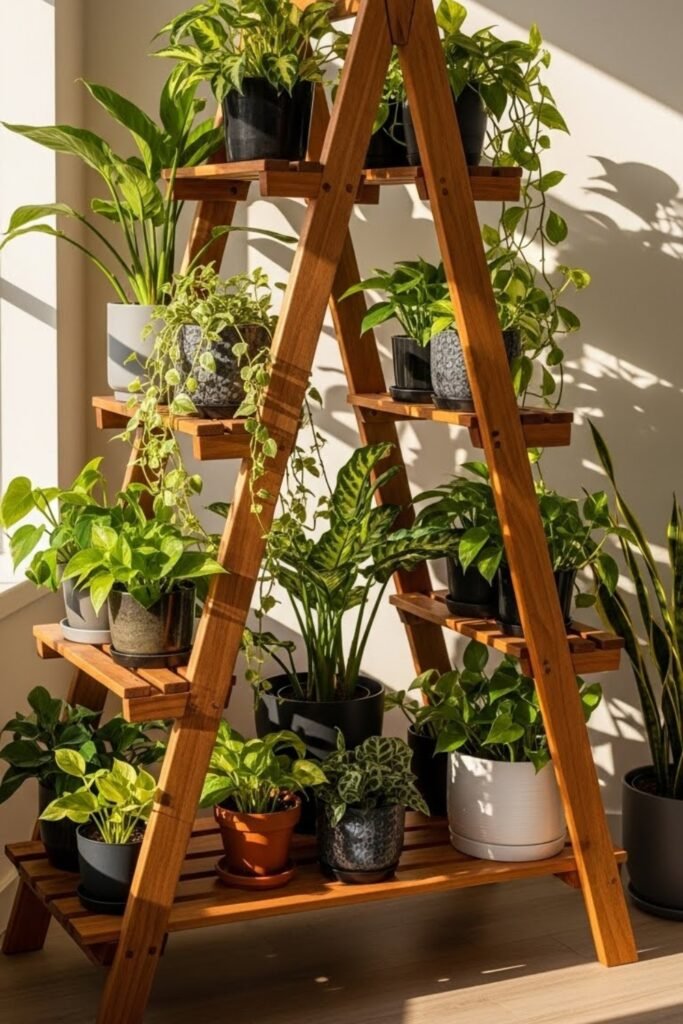
An A-frame plant stand has a triangular structure that provides strong support. Build it with wooden beams and add horizontal shelves across both sides.
This stand works well outdoors, on patios, or indoors near windows. The shape allows multiple plants while keeping the stand stable.
Wall Mounted
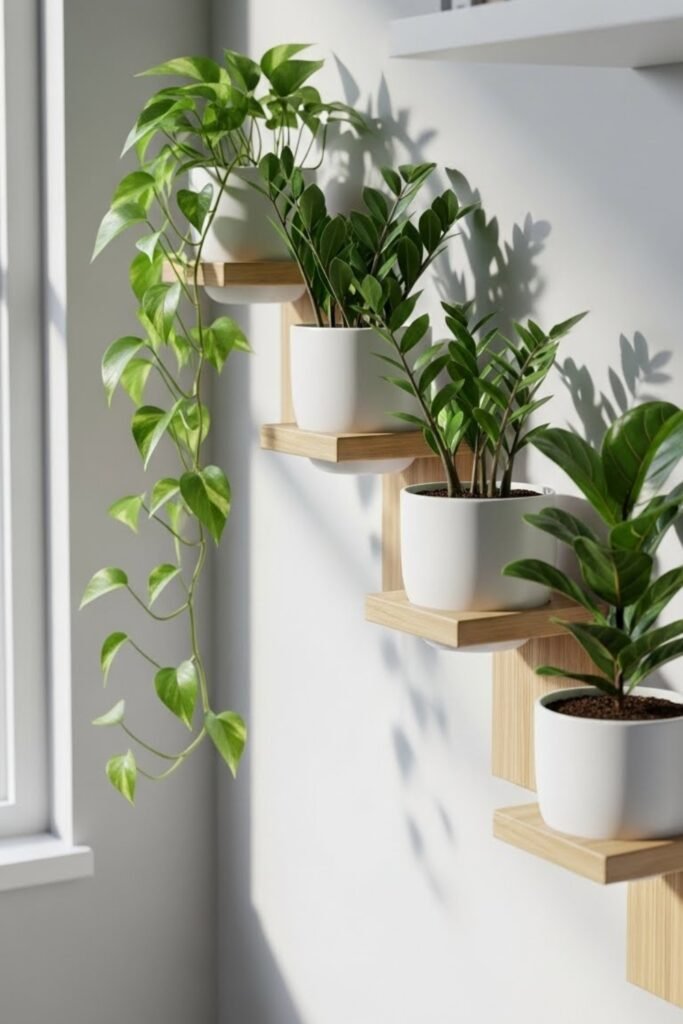
A wall mounted plant stand keeps plants off the floor and saves space. Use wooden shelves, metal brackets, or custom holders fixed to the wall.
This setup works well in small rooms or apartments. It also creates a decorative plant display at eye level.
Hexagon Frame
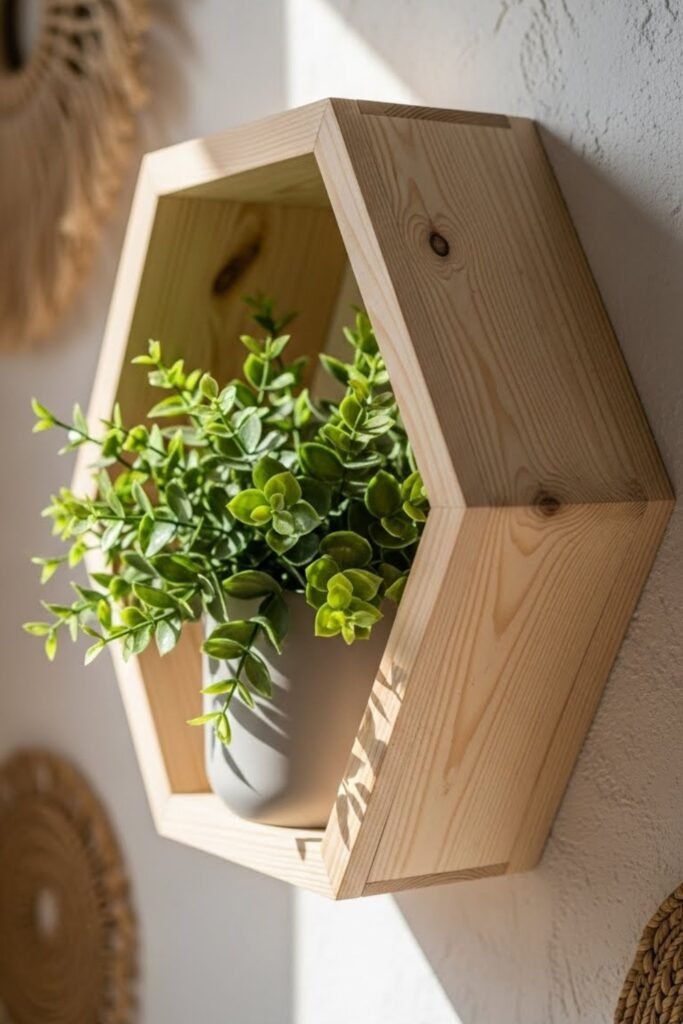
A hexagon frame plant stand adds a geometric look to your space. Build a hexagon using wooden strips or metal rods and add a small shelf inside.
It works well on walls or tabletops and suits modern or boho interiors. This stand is best for small to medium plants.
Pallet Stand
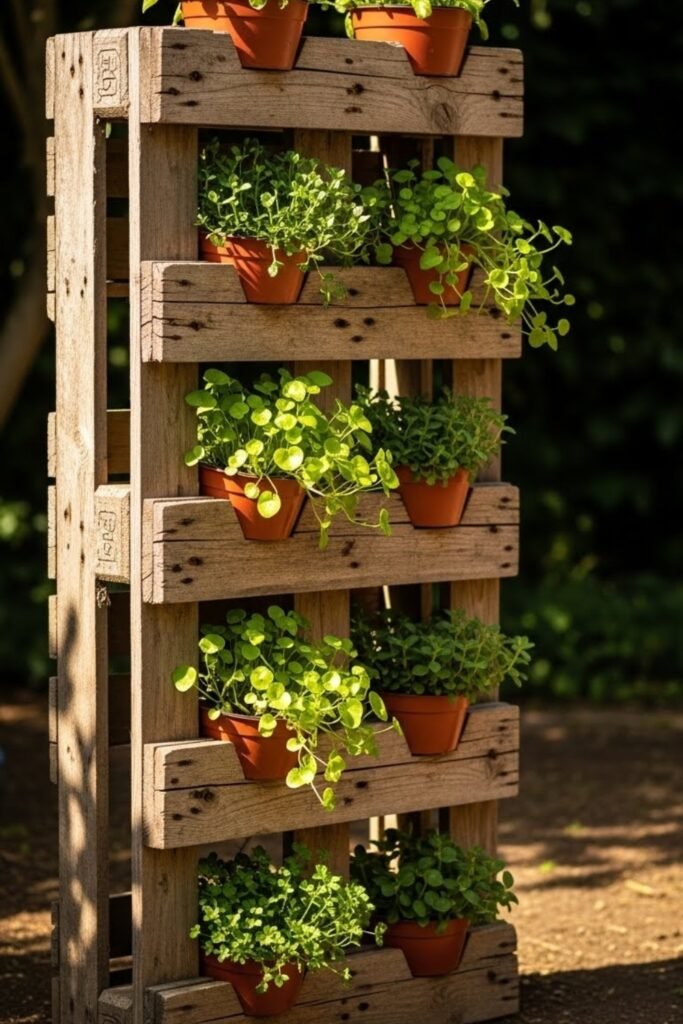
A pallet plant stand uses reclaimed wooden pallets to create tiered shelves. Cut and stack pallet sections vertically or horizontally for multiple plant levels.
This idea is affordable and works well outdoors, on patios, or in gardens. It’s ideal for displaying many plants in one place.
Concrete Pedestal
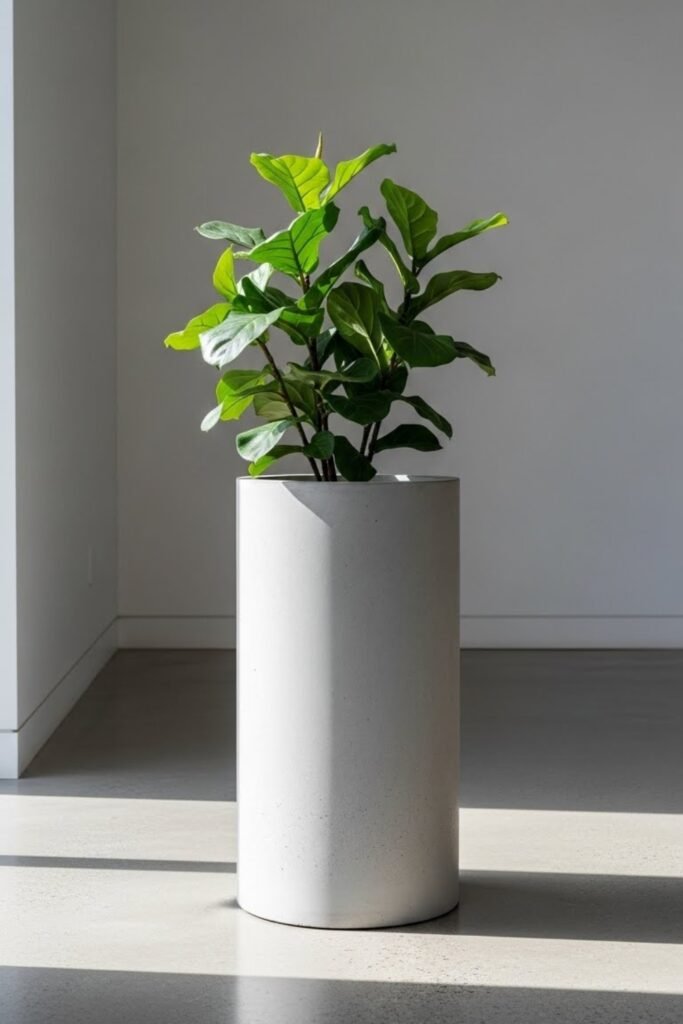
A concrete pedestal plant stand offers a strong and modern base. Cast concrete in a simple mold to create a tall block or column.
This stand supports heavy pots and works well indoors or outdoors. Its clean shape pairs nicely with minimalist or industrial décor.
Cube Stand
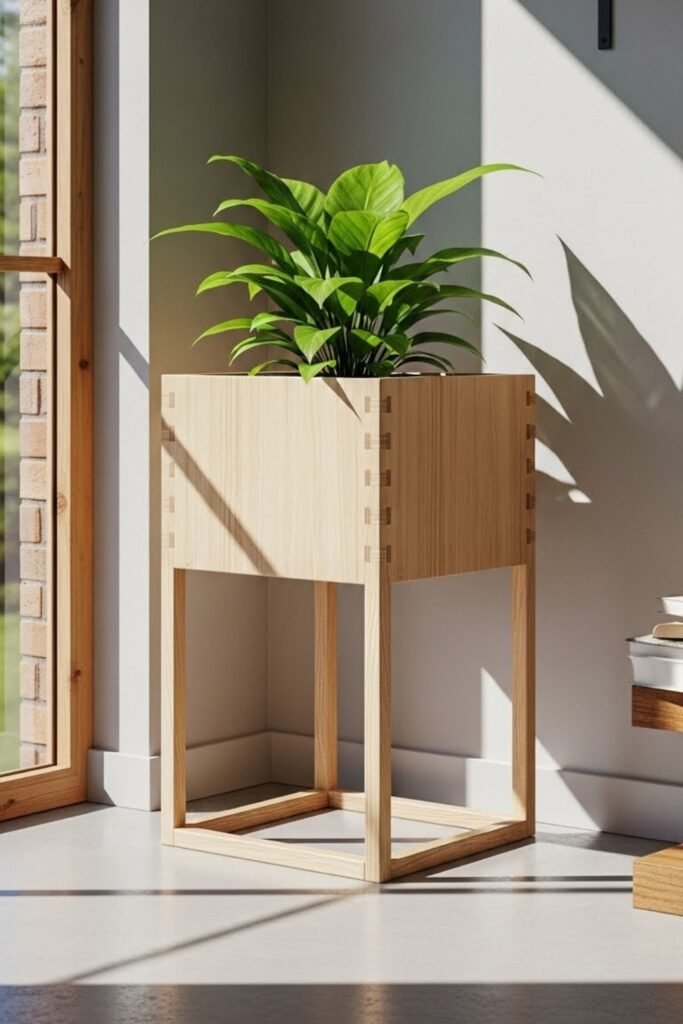
A cube plant stand uses square frames stacked or placed individually. Build cubes from wood or metal and position pots on top or inside.
This design works well for modern interiors and allows flexible arrangement. You can rearrange the cubes to change the display layout easily.
Macrame Holder
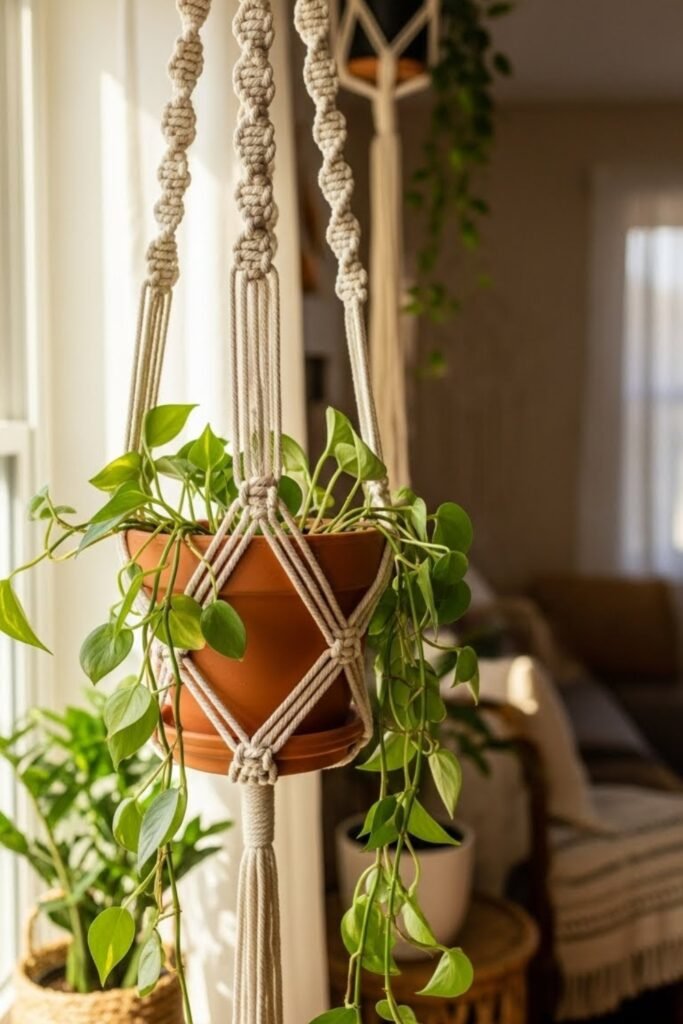
A macrame holder plant stand uses knotted rope to suspend pots neatly. Hang it from the ceiling or a wall hook to free up floor space.
This idea works best indoors near windows or on covered balconies. It adds a soft, handmade touch and works well with lightweight planters.
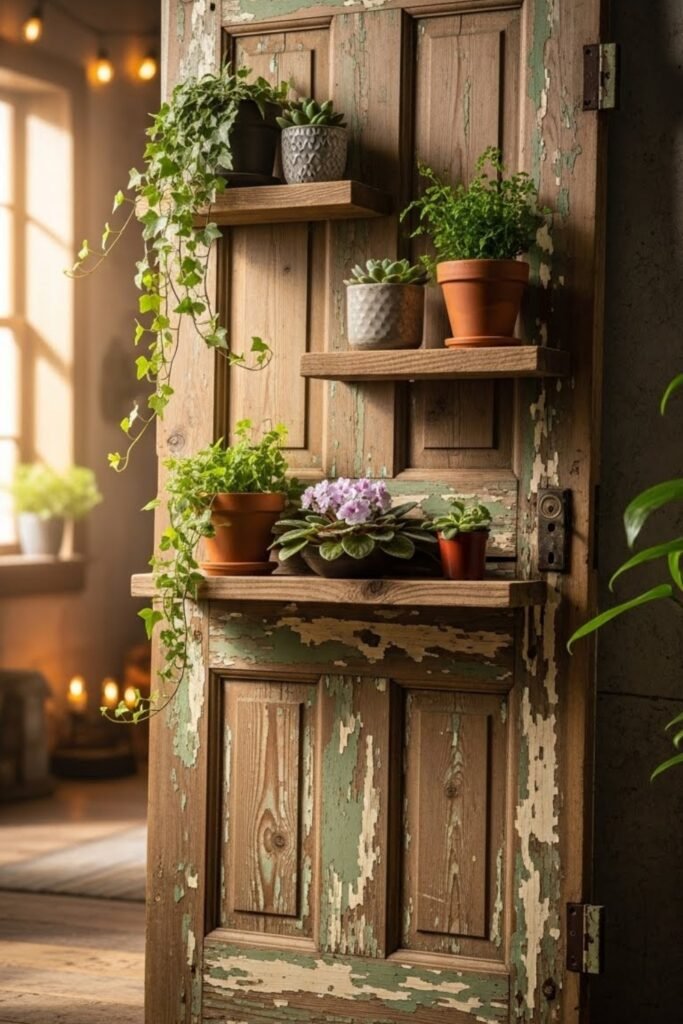
Door Reclaim
A reclaimed door plant stand turns an old door into a vertical display. Add small shelves or hooks along the door frame to hold pots.
Lean it against a wall or secure it upright. This idea works well for rustic or farmhouse-style spaces and uses materials you may already have.
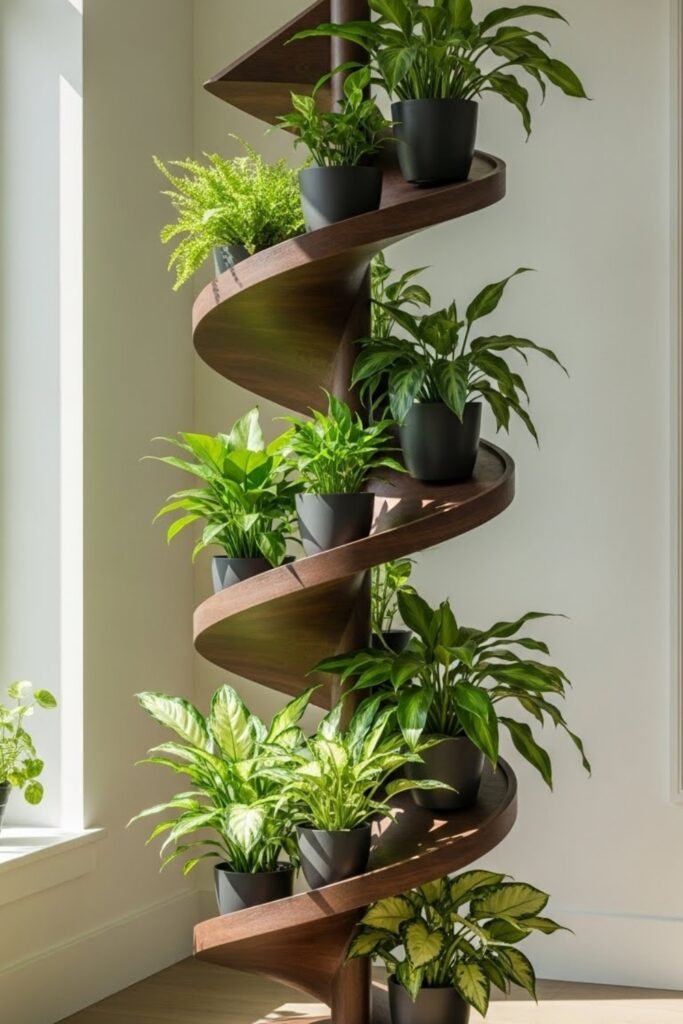
Spiral Stand
A spiral plant stand creates a flowing vertical display. Build it using bent metal rods or curved wooden supports with small platforms.
This design works well indoors or outdoors and allows each plant to receive light from different angles. It’s a statement piece that adds movement to the space.
Bench Base
A bench base plant stand uses a simple wooden bench to elevate multiple pots. Place plants along the seat or add a lower shelf underneath.
This stand works well on porches, patios, or entryways. It’s easy to build and ideal for grouping plants together neatly.
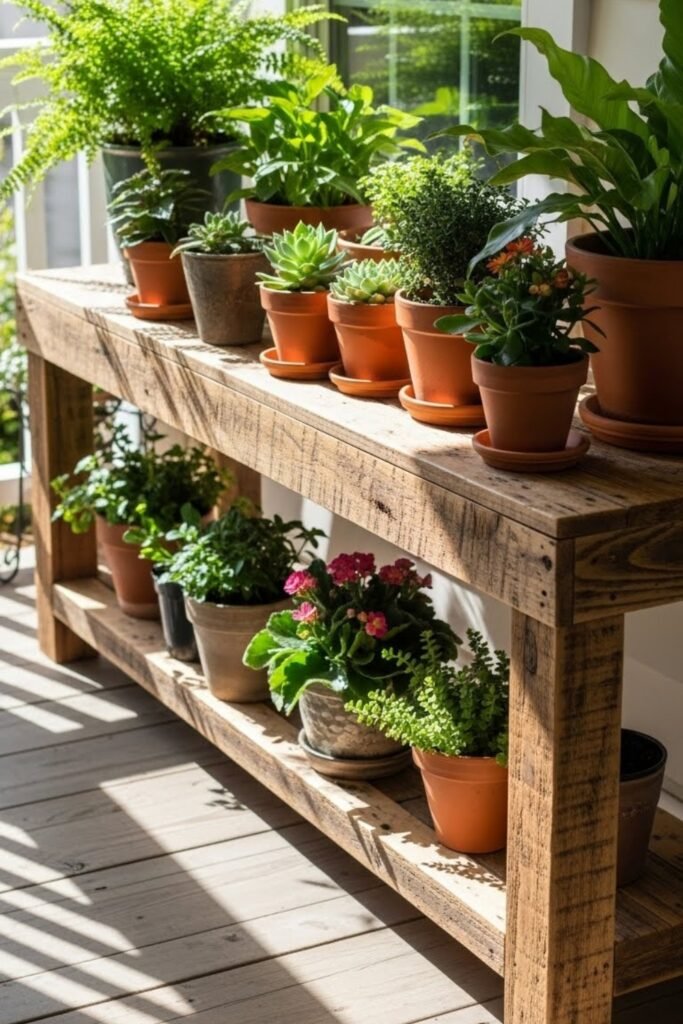
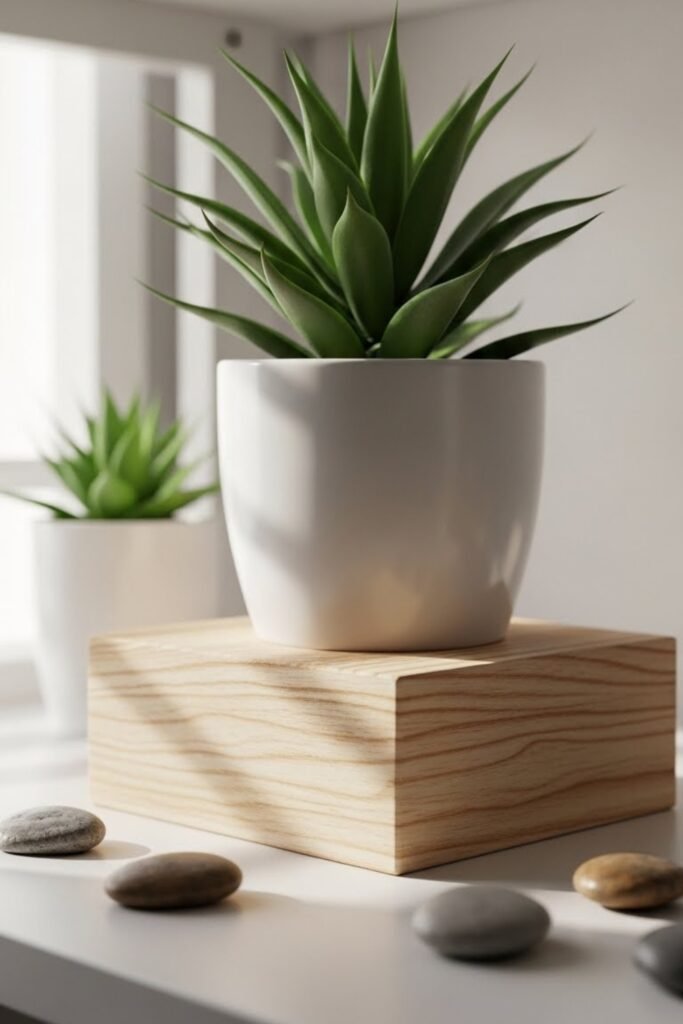
Table Riser
A table riser plant stand lifts pots slightly off surfaces to create height variation. Build it using small wooden blocks or a narrow platform with short legs.
This stand works well on shelves, tables, or countertops. It helps layer plants without taking up extra floor space.

Hi, my name is Ali Mehmood! I’m a passionate writer and DIY enthusiast who loves turning creative ideas into practical, hands-on projects.
I created this website to share inspiring, budget-friendly ideas that you can do yourself – whether it’s organizing your home, crafting something unique, or creating fun projects for kids and pets.
I believe DIY isn’t just a hobby – it’s a smart way to save money, reduce waste, and enjoy the satisfaction of making things with your own hands.
I’m excited to have you as part of this growing community, and I’ll continue bringing you helpful, realistic, and fun DIY ideas you can actually use.