This post may contain affiliate links: read full affiliate disclosure.
If you want to add character to a space without knocking down walls, a DIY barn door is one of the easiest upgrades you can tackle.
I like it because it solves real problems – tight spaces, awkward door swings, or rooms that need flexible separation.
You build it once, and every time you slide it open or closed, it feels intentional. Whether you want rustic charm, modern simplicity.
The ideas below are designed to help you choose a style that fits your home and your skill level, not just what looks good in photos.
Reclaimed Wood
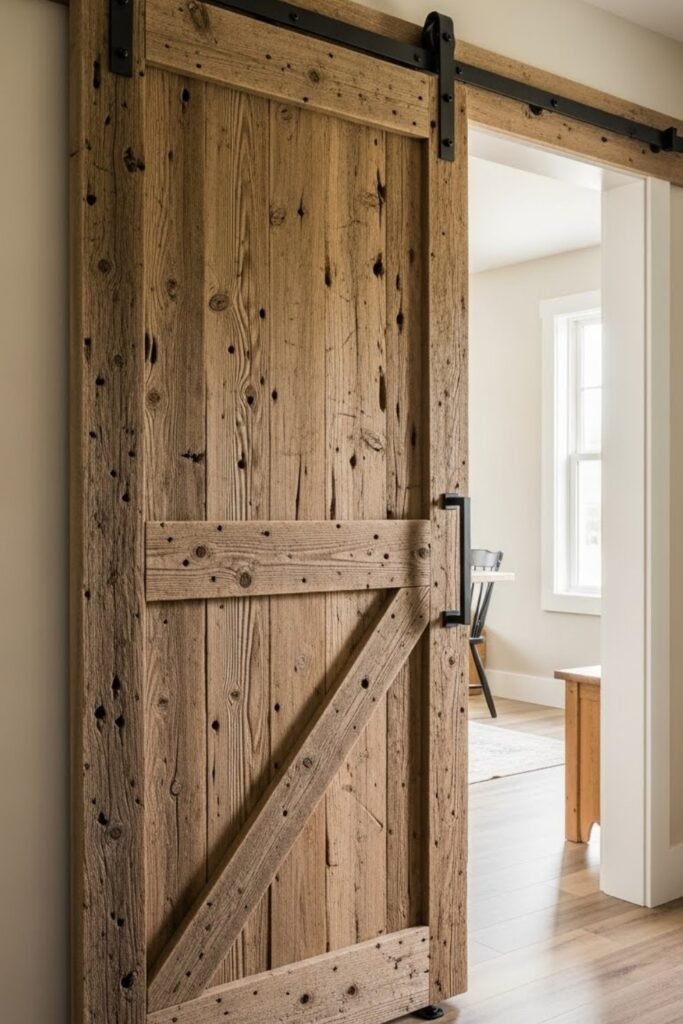
If you want a rustic barn door without forcing the look, reclaimed boards do the work naturally. Old fence planks or pallet wood already have texture and color variation.
Light sanding removes rough edges, then seals the surface instead of painting. This keeps knots, nail holes, and weathered grain visible while still making the door durable.
X-Brace
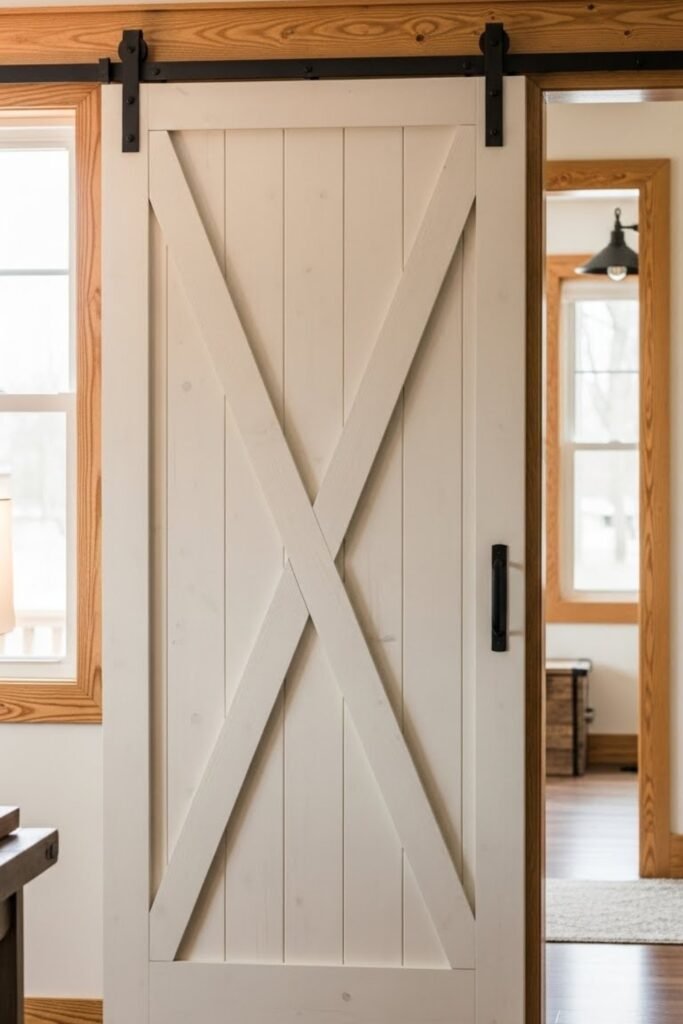
An X-brace barn door feels classic and sturdy at the same time. Start with a strong rectangular frame, then add diagonal braces crossing in the center.
These braces help reduce warping, not just decoration. Paint it white for farmhouse spaces or stain it dark if you want a more traditional barn-style finish.
Pantry Slider
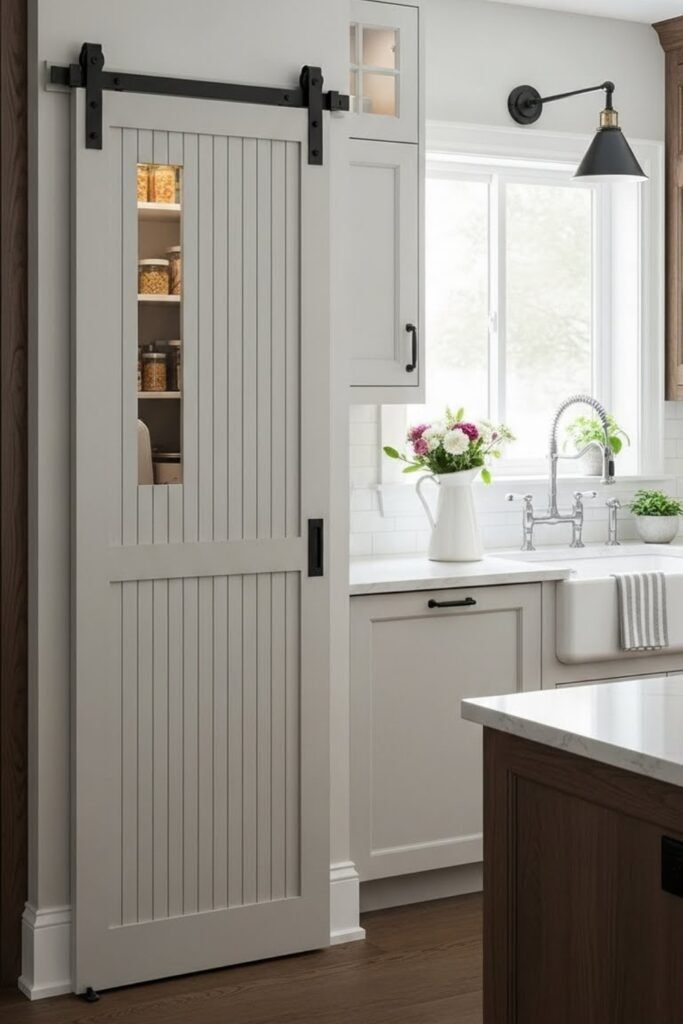
A pantry slider works best when space feels tight and a swinging door gets in the way. Use lightweight plywood or thin boards to keep the track smooth.
Vertical slats give a clean look that fits kitchens well. Match the color with your cabinets or choose a contrast shade to make the pantry stand out.
Mirror Front
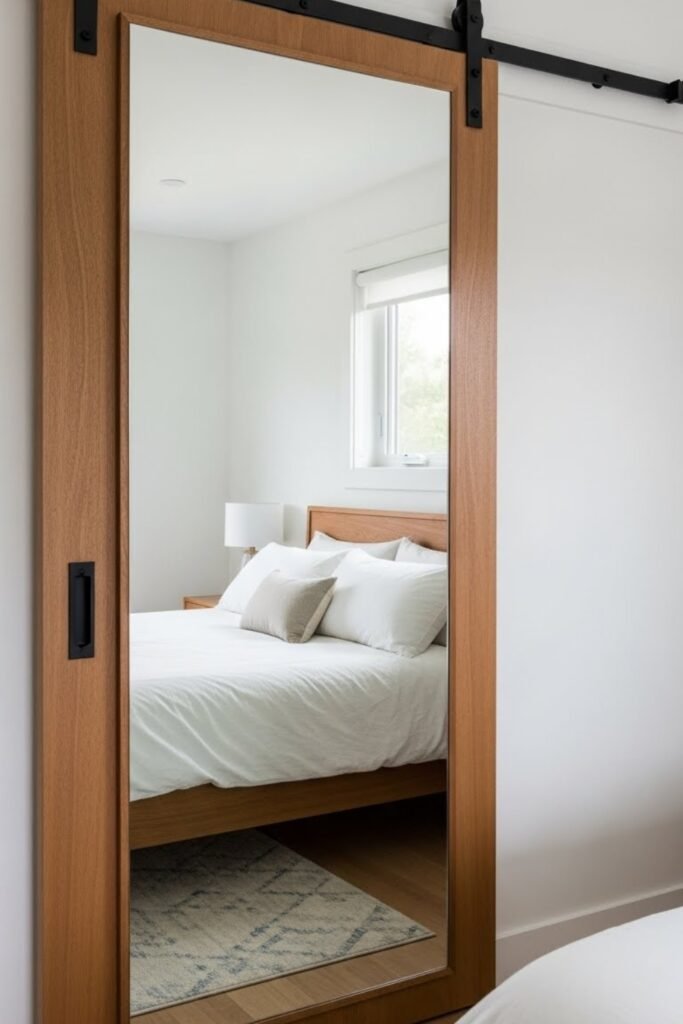
A mirror-front barn door adds function without adding clutter. Mount a full-length mirror onto a solid wood backing and reinforce the edges.
This works especially well in bedrooms or dressing areas. The sliding design saves floor space while the mirror reflects light, helping small rooms feel brighter and larger.
Glass Pane
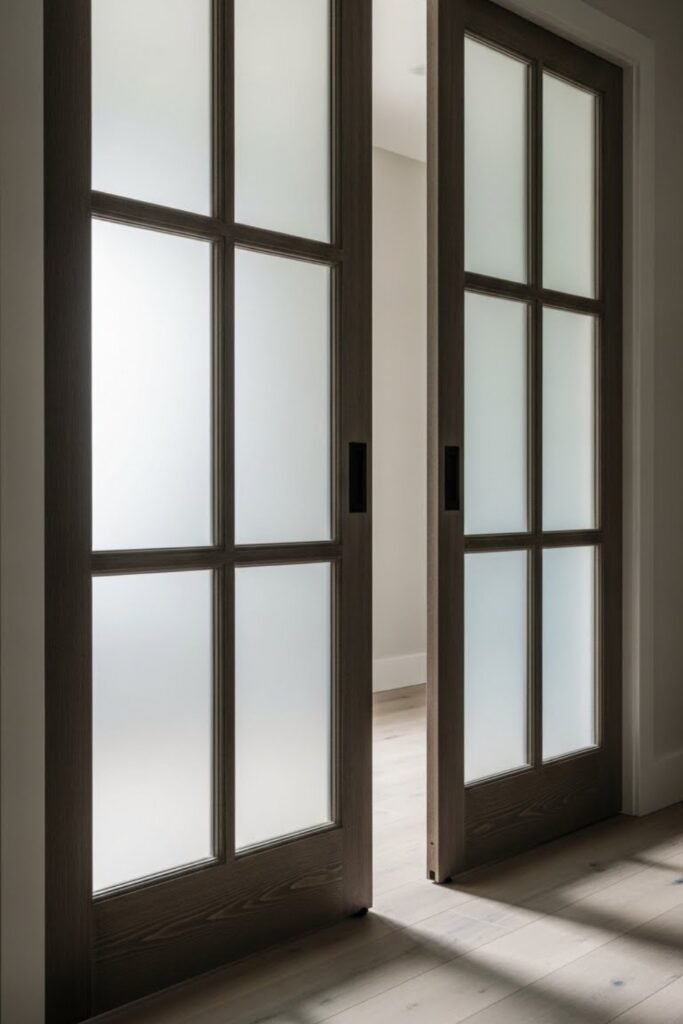
A glass pane barn door works well when you want separation without blocking light. Use tempered or frosted glass for safety and privacy.
Divide the glass into sections using thin wood trim for a classic look. This style fits offices, kitchens, or dining spaces where brightness matters but sound control is still needed.
Chevron Pattern
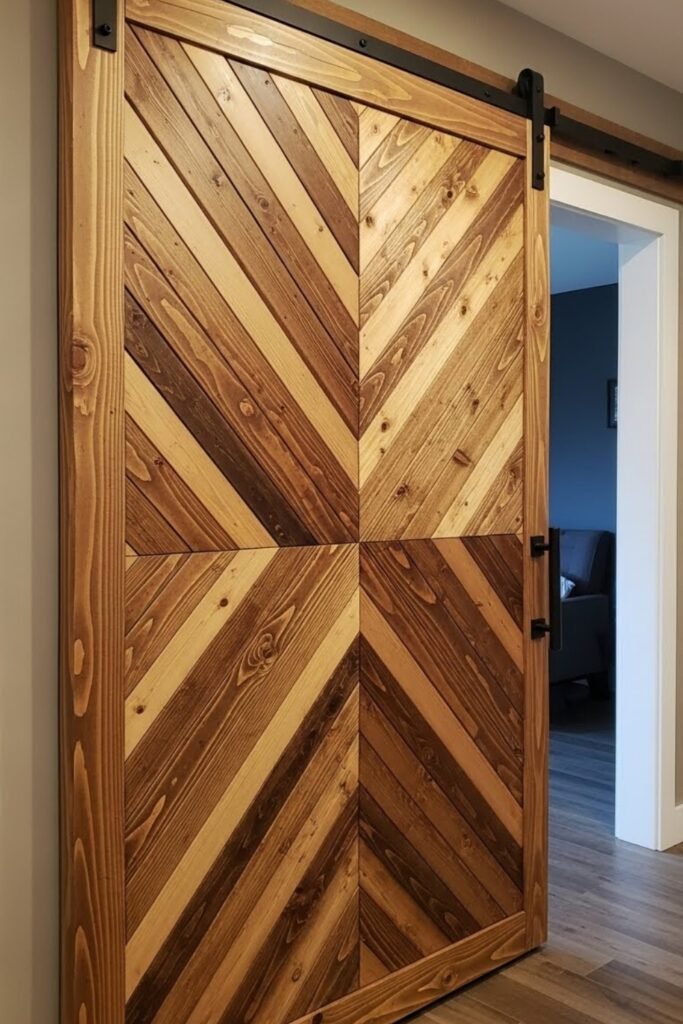
Chevron doors add visual movement without extra decor. Cut planks at matching angles and lay them in a V pattern across a solid backing.
This design works best with stain so the pattern stands out naturally. Keep the frame simple to avoid competing with the bold layout of the wood pieces.
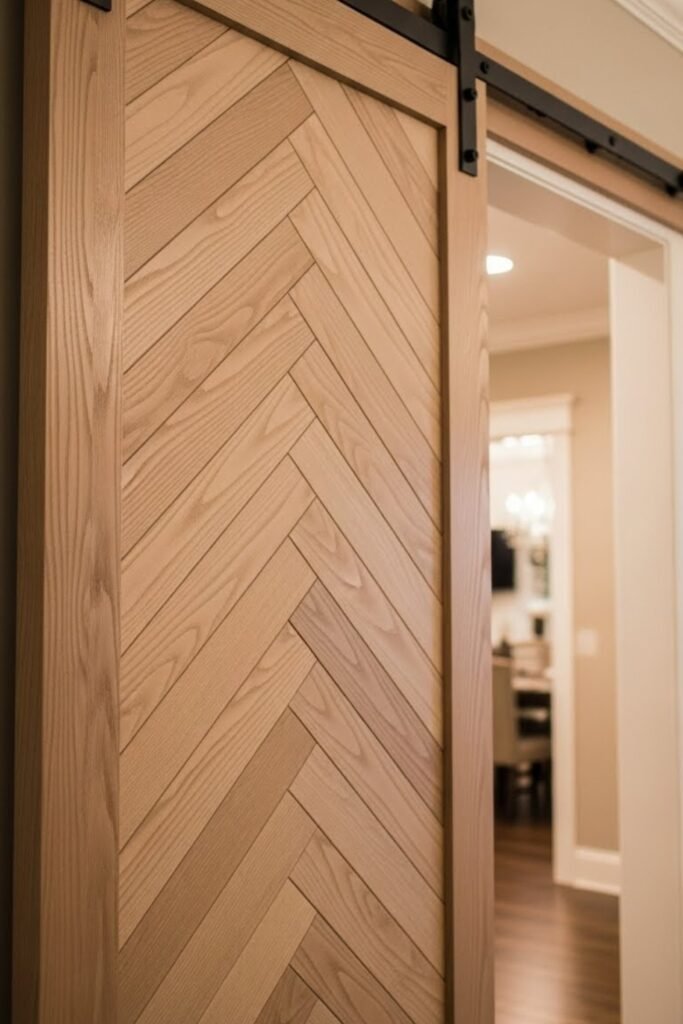
Herringbone
A herringbone barn door feels detailed and upscale without being flashy. Lay short wood planks in a staggered zigzag pattern, then secure them to a flat base.
This design hides small measuring mistakes, making it beginner-friendly. Neutral stains or soft paint colors help the pattern stay elegant, not busy.
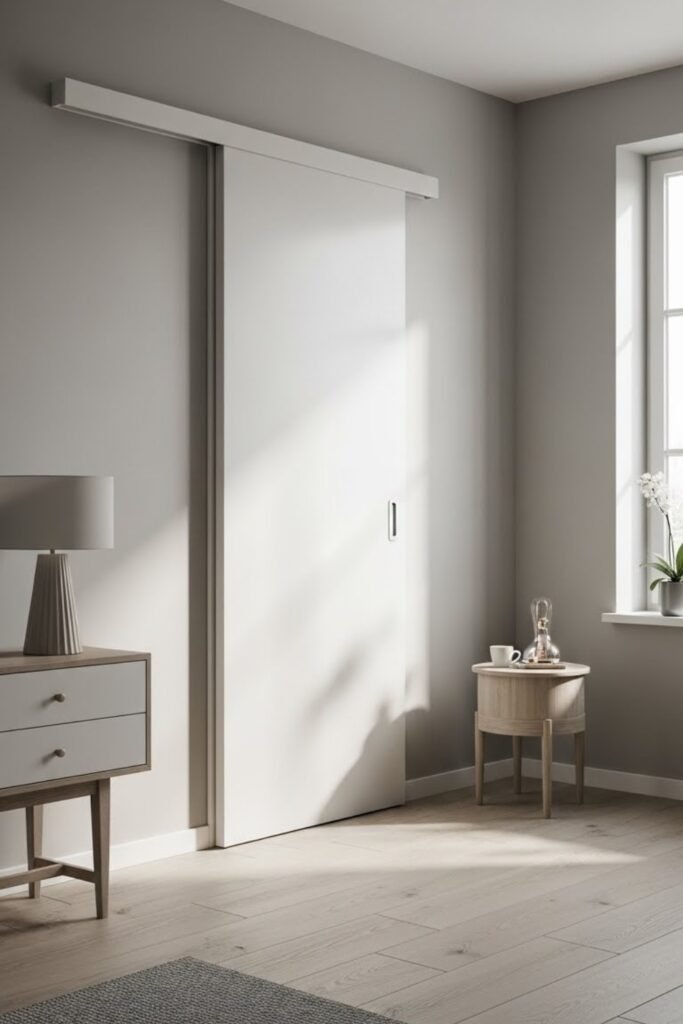
Minimal Flush
A minimal flush barn door fits modern and Scandinavian interiors. Use MDF or smooth plywood for a flat surface with no visible planks.
Conceal screws and fill seams for a seamless look. Paint it a solid neutral color so the door blends into the wall while still giving you the sliding barn-door function.
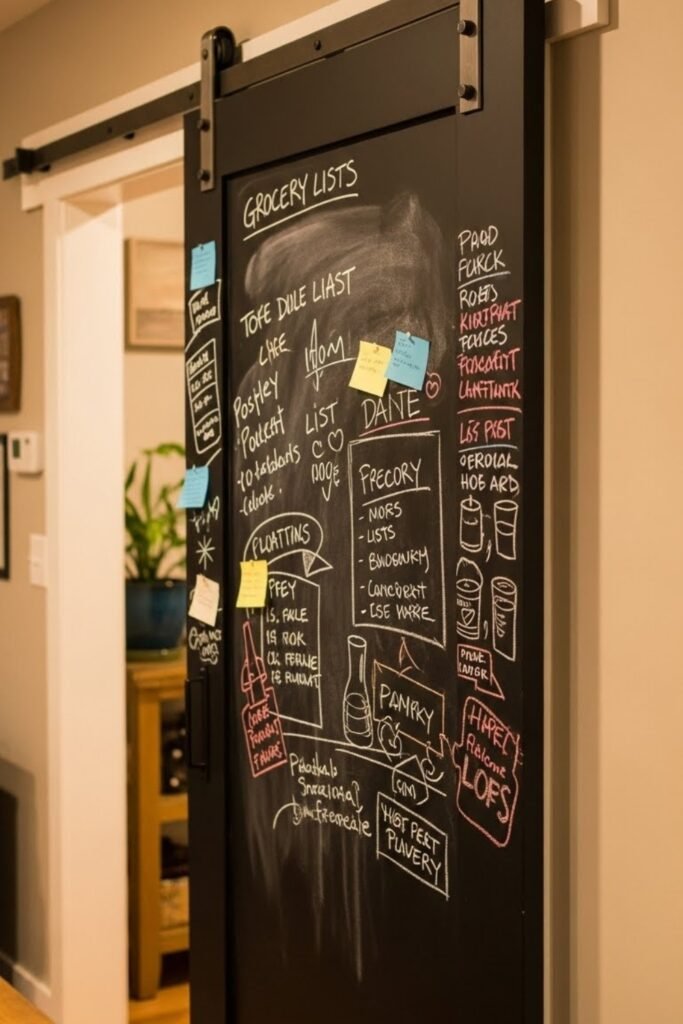
Chalkboard Door
A chalkboard barn door adds function and personality at the same time. Use chalkboard paint on a smooth wood surface so writing stays clear.
This works well for kitchens, offices, or kids’ areas. You can write grocery lists, reminders, or messages, then slide it closed when you want the space hidden.
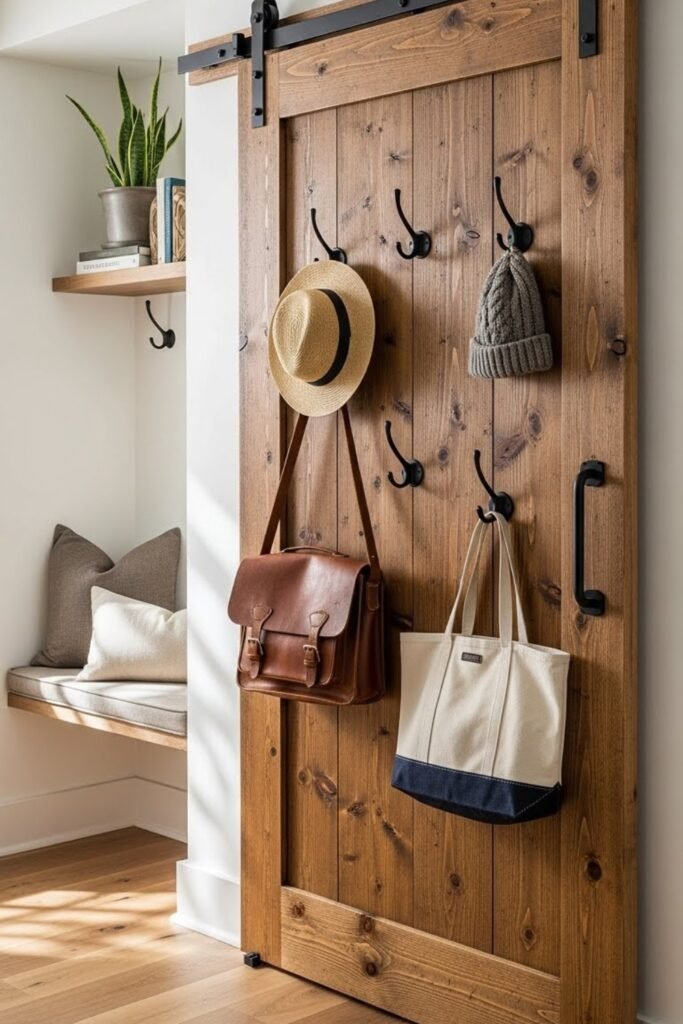
Hook Storage
This barn door doubles as storage for small spaces. Install sturdy hooks or a slim rail on one side of the door for bags, hats, or towels.
Keep the door lightweight so the added weight does not strain the track. This works especially well for closets, mudrooms, or entryways.
Pocket Slide
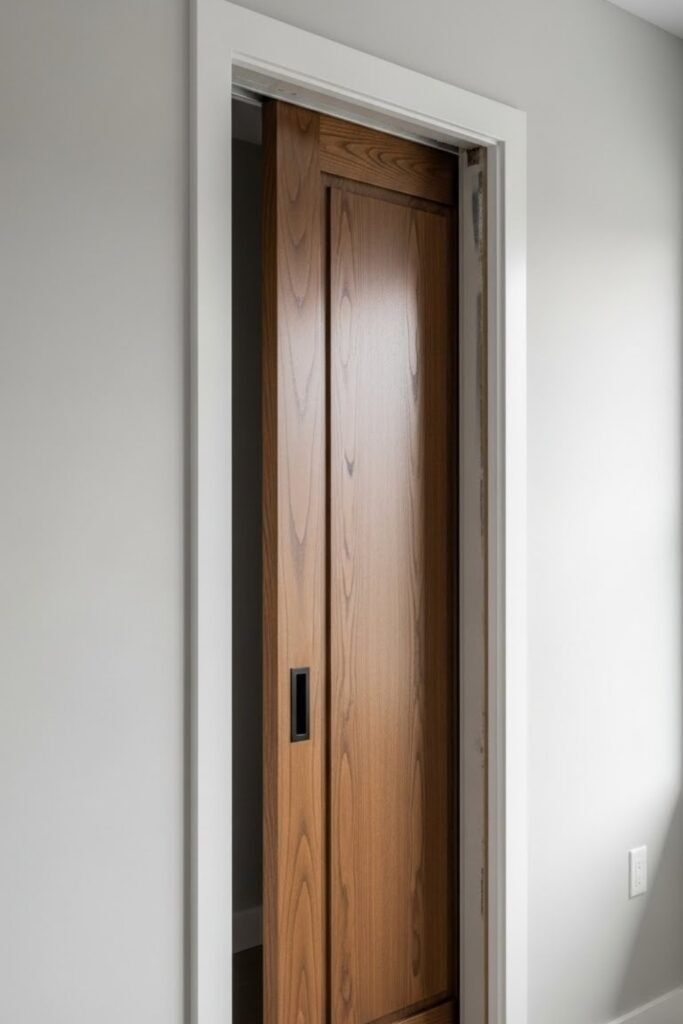
A pocket-style barn door gives you the sliding look without visible wall hardware. Build a wall cavity or use a pocket-door kit designed for barn doors.
This works best during renovations or new builds. It’s a smart choice if you want a clean wall surface while still saving space.
Double Slide
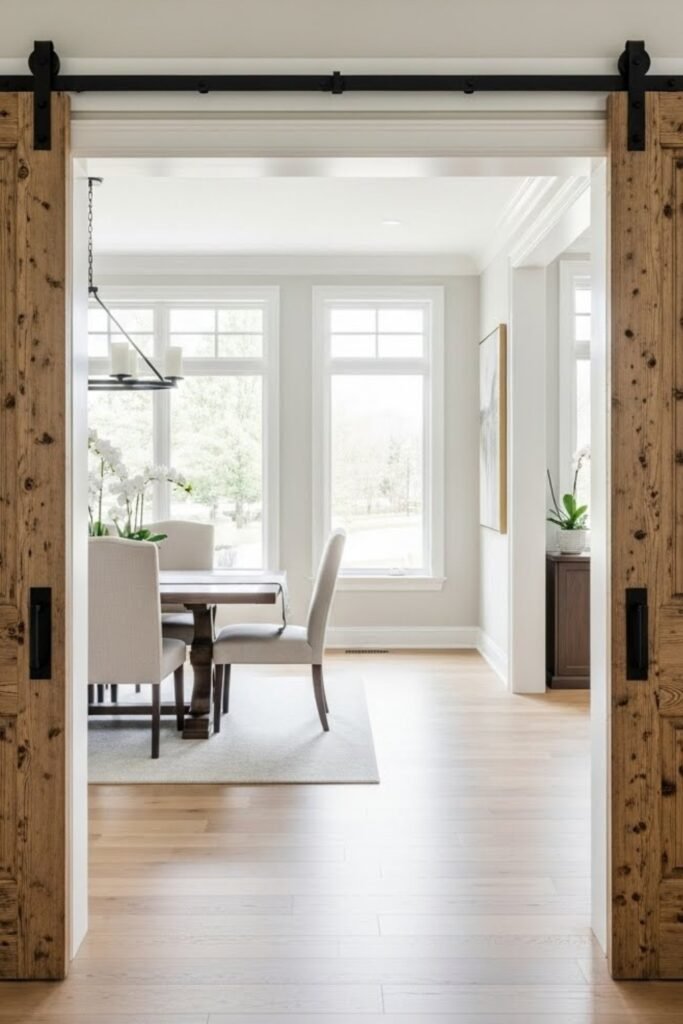
Double sliding barn doors work best for wide openings like dining rooms or large closets. Each door slides outward from the center, creating a balanced look.
Use matching panels and hardware to keep everything symmetrical. This setup makes large spaces feel intentional instead of like an oversized doorway.
Shiplap Style
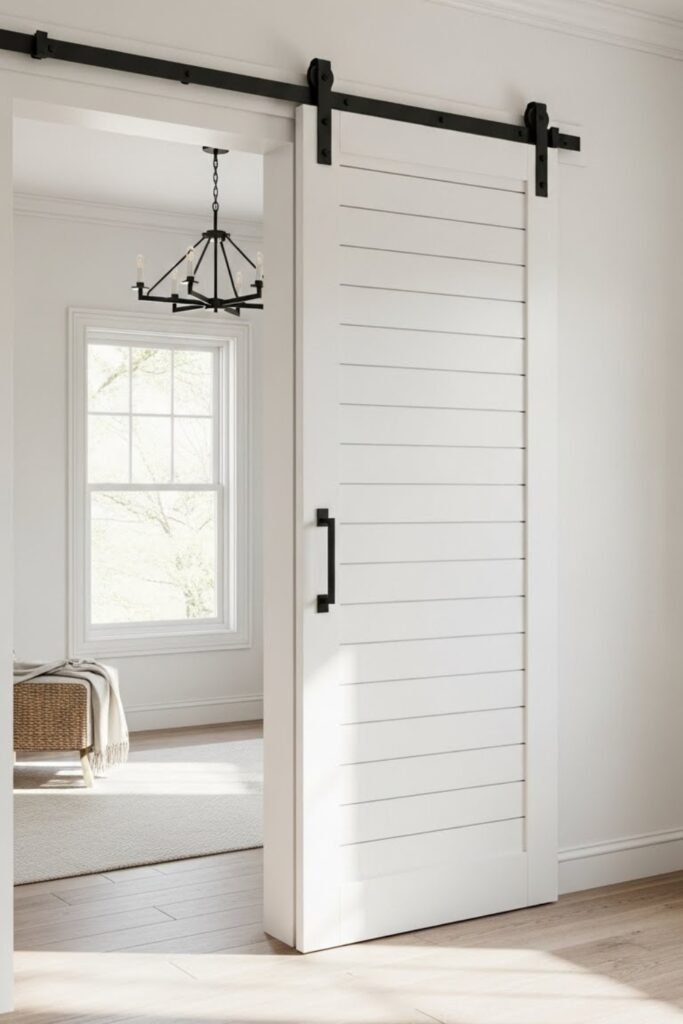
A shiplap barn door works well if you like clean lines with subtle texture. Use horizontal planks with tight spacing to create a smooth, layered look.
This style fits coastal, modern farmhouse, or cottage interiors. Paint it white for a classic feel or use soft neutrals to keep the space calm.
Metal Frame
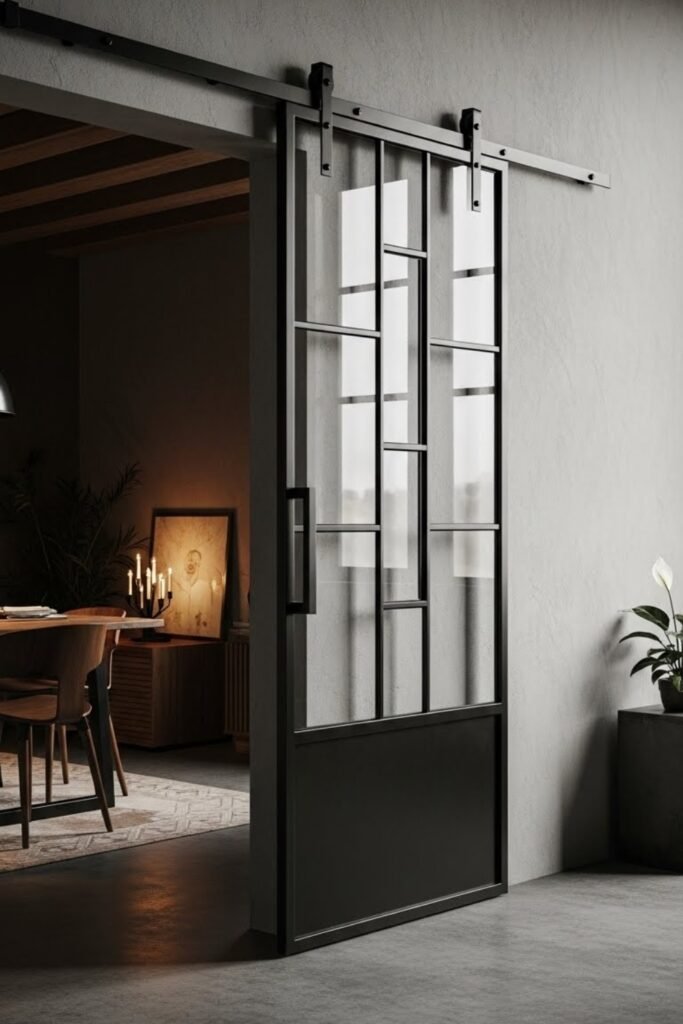
A metal frame barn door adds an industrial edge without feeling heavy. Use a steel or aluminum frame with wood or glass panels inside.
This design works well in lofts or modern homes. Keep the color black or dark gray so the frame feels bold but still neutral.
Faux Wood
Faux wood barn doors are perfect for areas with moisture or temperature changes. Use PVC boards or composite panels that resist warping.
This makes them ideal for bathrooms or laundry rooms. The lightweight material also puts less stress on the track while still giving the appearance of real wood.
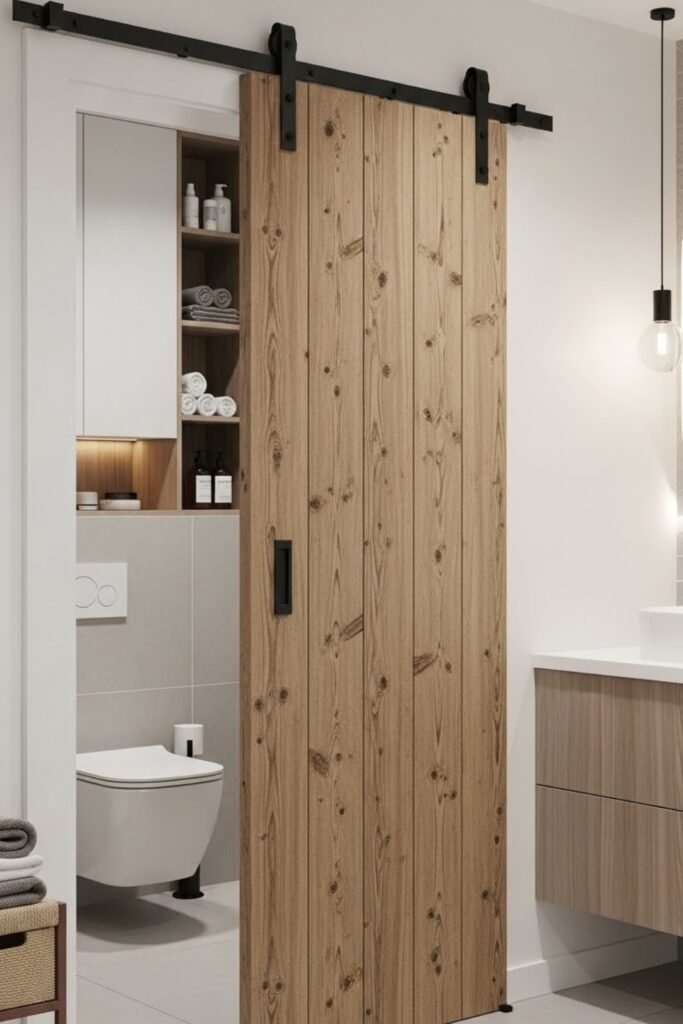
Stencil Design
A stenciled barn door lets you add personality without complex woodworking. Start with a smooth base and apply paint using a large stencil pattern.
Geometric or floral designs work well. This approach is great if you want a statement door but do not want to cut or arrange multiple wood pieces.
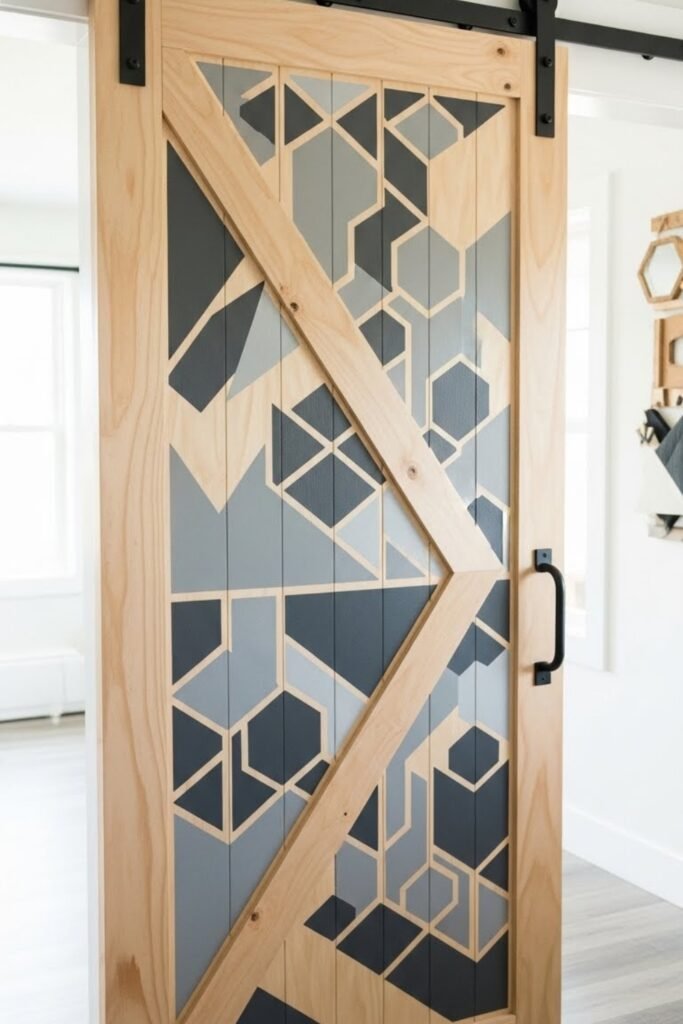
Bathroom Slide
A bathroom barn door needs extra planning for privacy and moisture. Use solid panels instead of gaps and add a bottom guide to prevent movement.
Seal the wood properly to handle humidity. Soft-close hardware works well here, helping the door shut quietly and smoothly without slamming.
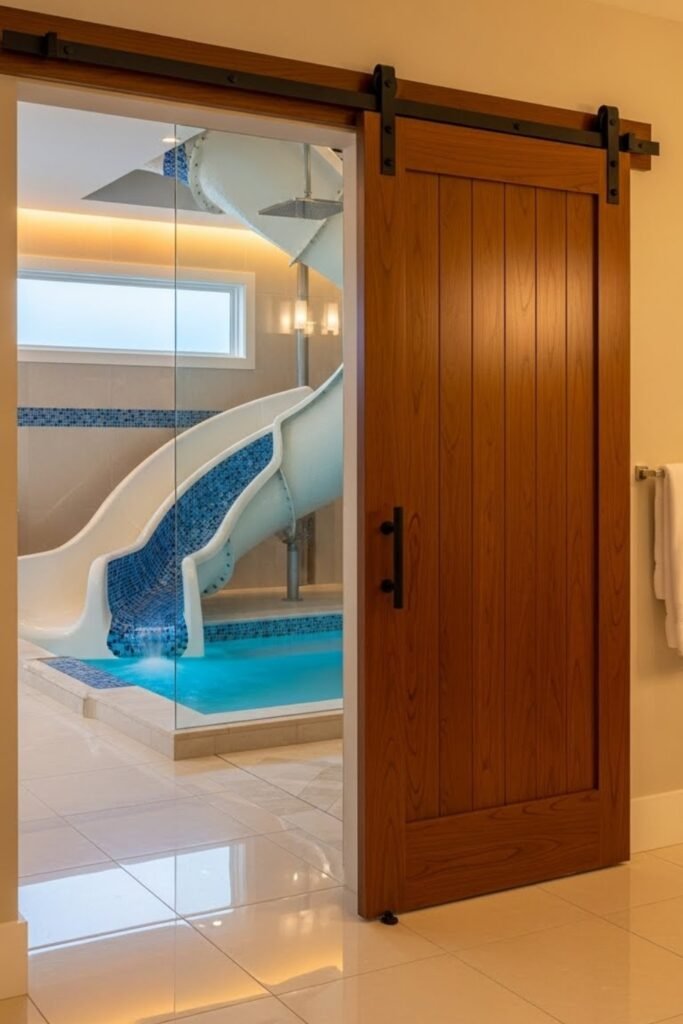
Room Divider
A barn door room divider works best in open layouts where you want flexibility. Build an oversized door that spans a wide opening.
This allows you to separate spaces when needed without permanent walls. Neutral colors keep the door from overpowering the room while still acting as a strong focal element.
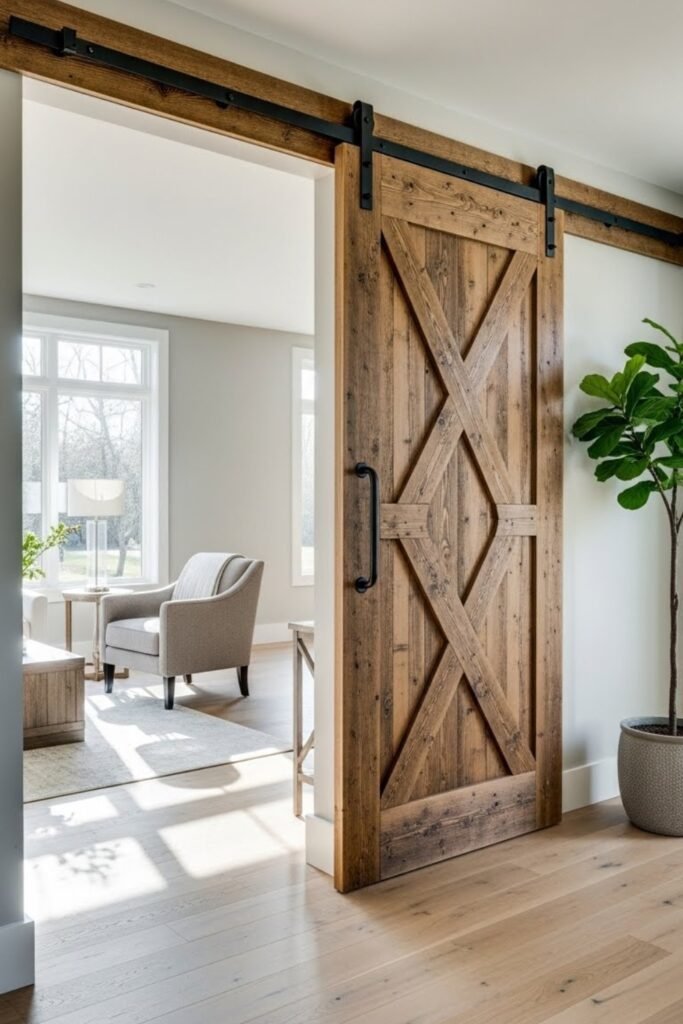
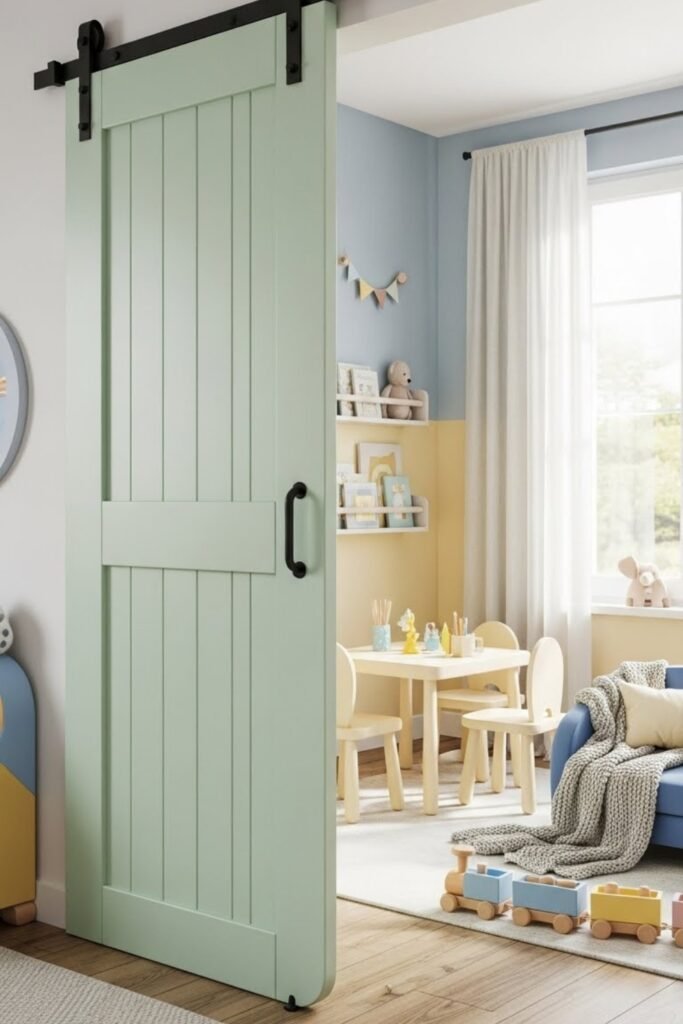
Kids Safe
A kid-friendly barn door focuses on safety first. Round the edges, avoid sharp metal corners, and use soft-close tracks.
Lightweight materials reduce risk while still looking stylish. This works well for playrooms or shared bedrooms where you want easy access without heavy doors swinging open.
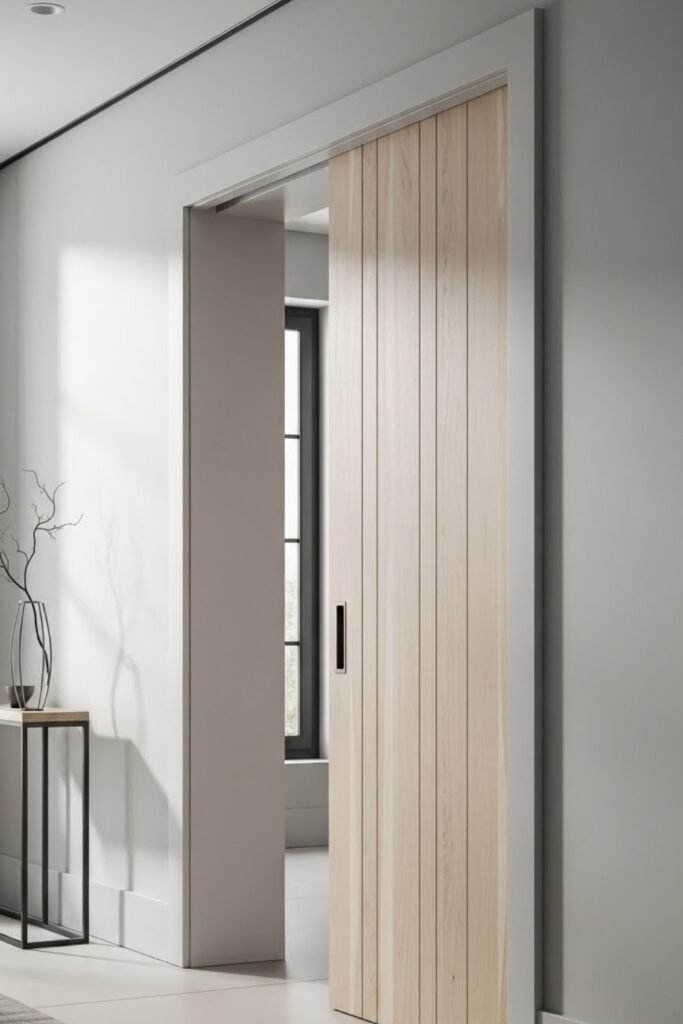
Hidden Track
A hidden track barn door keeps the focus on the door itself. Use a recessed or covered track system so hardware stays out of sight.
This works well in modern homes where clean lines matter. The door still slides smoothly, but the finished look feels more built-in and polished.
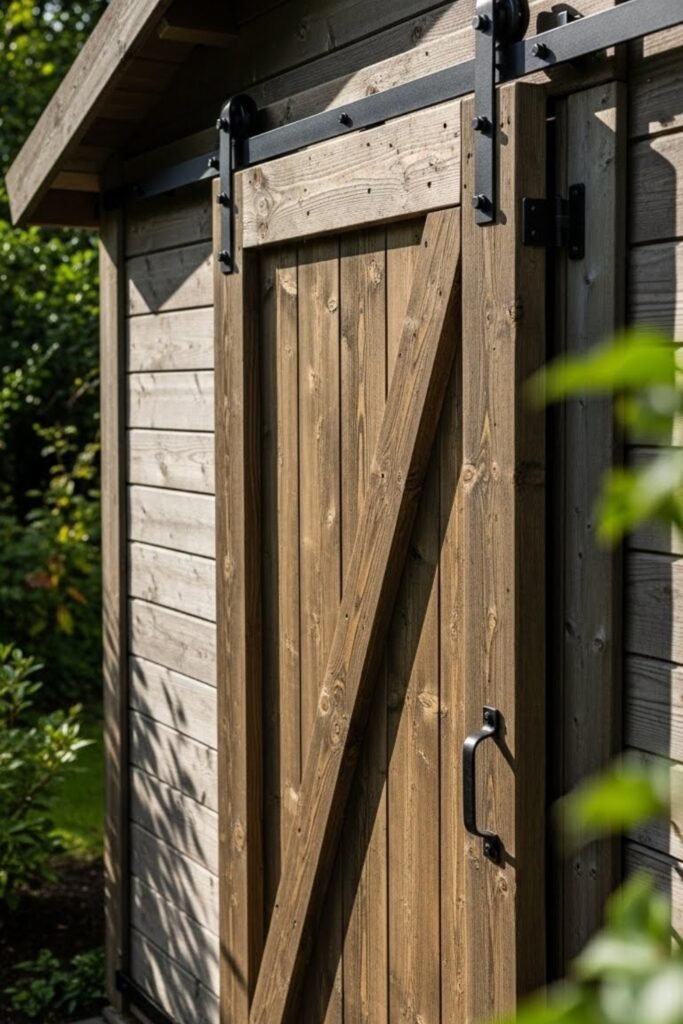
Shed Door
A shed barn door needs durability more than decoration. Use thicker boards and exterior-grade screws to handle weather exposure. Seal everything with outdoor paint or stain to prevent moisture damage.
Heavy-duty rollers keep the door moving smoothly even with added weight. This setup works great for garden sheds or workshops.
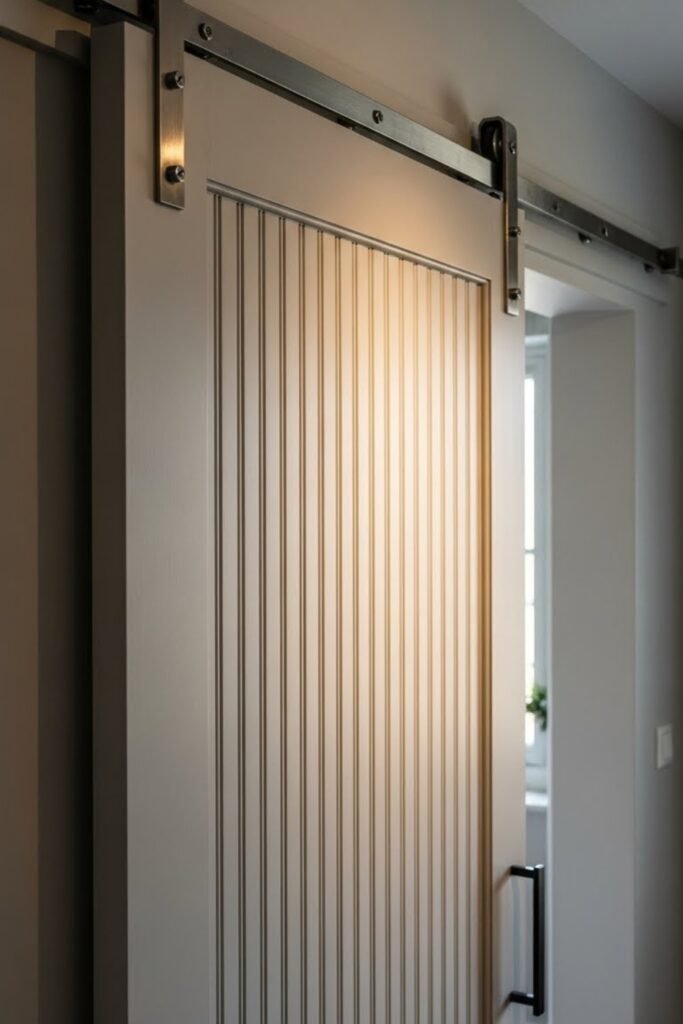
Textured Panel
A textured panel barn door adds depth without complicated framing. Use beadboard, fluted panels, or grooved plywood for interest.
This works well if you want detail but limited tools. Paint highlights the texture, while neutral colors keep it from feeling too busy in smaller rooms.
Office Slide
An office barn door helps create separation without closing off light completely. Use solid panels for sound control and a smooth track for quiet movement.
This design works well for work-from-home spaces where privacy matters but space feels limited. Neutral finishes help keep the room professional.
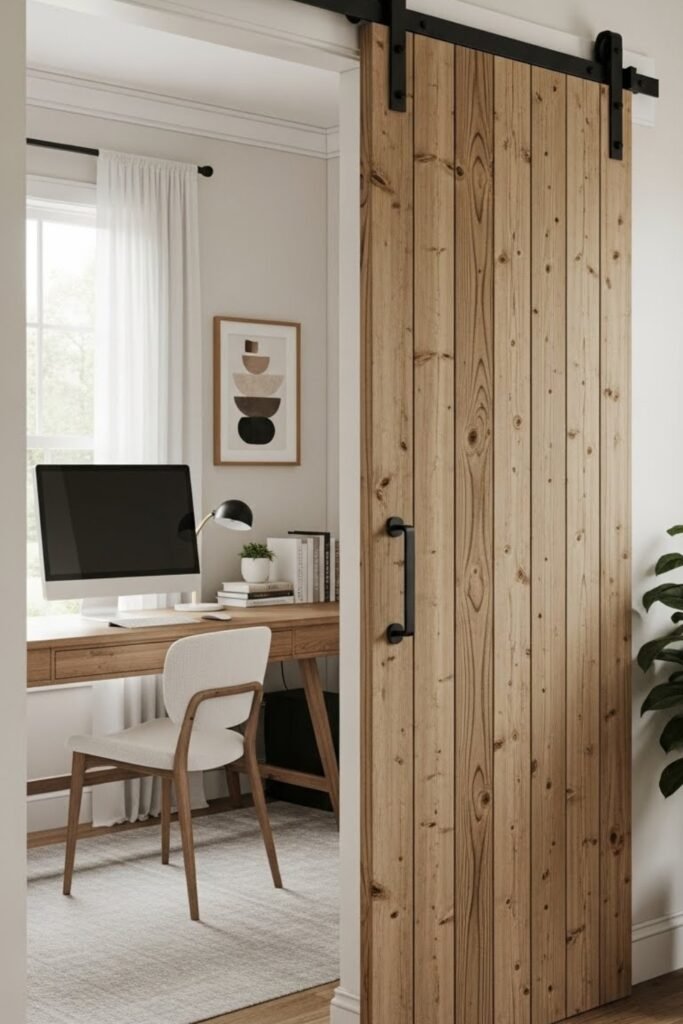
Color Block
A color block barn door brings modern style into simple spaces. Paint the door in two contrasting tones to define sections visually.
This approach works best on flat or lightly paneled doors. Keep the colors within the same palette so the door feels intentional instead of distracting.
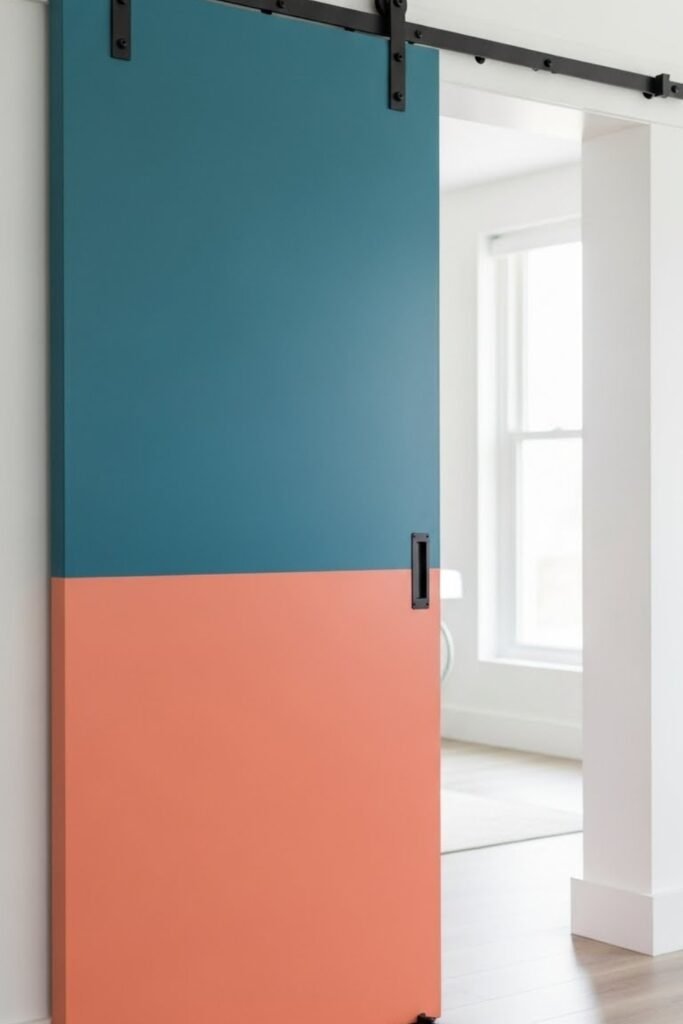
Door Conversion
A door conversion barn door repurposes an old interior or exterior door. Remove hinges, reinforce the back, and attach sliding hardware.
This saves money and keeps materials out of the landfill. It works well when you want a unique look without building a door completely from scratch.
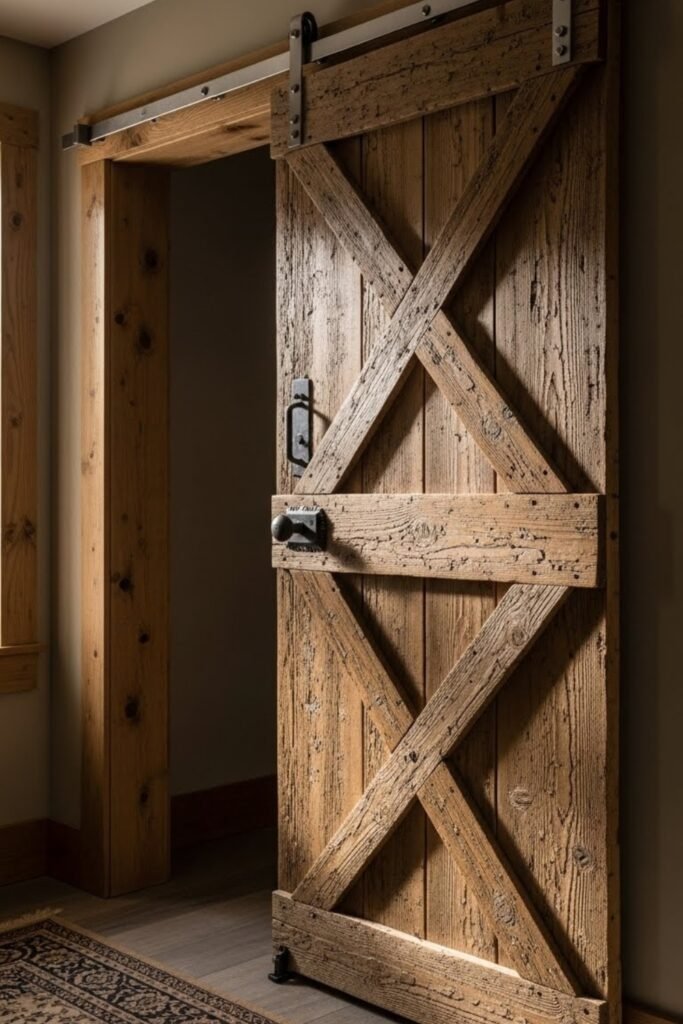

Hi, my name is Ali Mehmood! I’m a passionate writer and DIY enthusiast who loves turning creative ideas into practical, hands-on projects.
I created this website to share inspiring, budget-friendly ideas that you can do yourself – whether it’s organizing your home, crafting something unique, or creating fun projects for kids and pets.
I believe DIY isn’t just a hobby – it’s a smart way to save money, reduce waste, and enjoy the satisfaction of making things with your own hands.
I’m excited to have you as part of this growing community, and I’ll continue bringing you helpful, realistic, and fun DIY ideas you can actually use.