This post may contain affiliate links: read full affiliate disclosure.
Creating a coffee bar at home doesn’t require a big budget or extra space. Many homes already have unused corners,
Cabinets, or walls that can turn into a cozy coffee station with a little DIY effort.
A well-designed coffee bar keeps everything organized, saves counter space, and makes your daily routine feel more intentional.
In this article, you’ll find practical DIY coffee bar ideas that work for small kitchens, apartments, and larger homes-each easy to adapt to your space and style.
Why Build a DIY Coffee Bar at Home?
A DIY coffee bar gives you a dedicated place for your coffee routine without cluttering your kitchen counters.
It helps keep mugs, machines, and supplies organized while making mornings more efficient.
Whether you live in a small apartment or a larger home, a coffee bar can fit into unused corners, cabinets, or walls.
The best part is you can customize it to match your space, budget, and daily coffee habits.

Pallet Bar
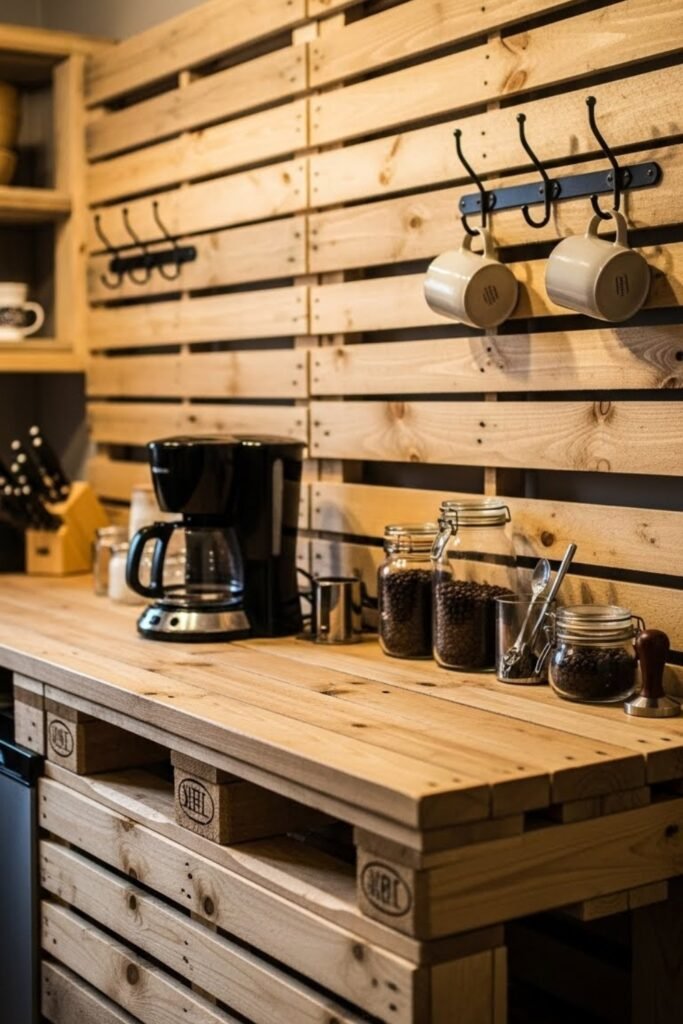
A pallet coffee bar works best if you want a rustic, budget-friendly setup. Use one or two sanded pallets, add a wood top, and mount simple hooks for mugs.
You can stain it dark for a cozy café feel or keep it light for farmhouse style. It fits perfectly in kitchens, dining corners, or even garages.
Rolling Cart
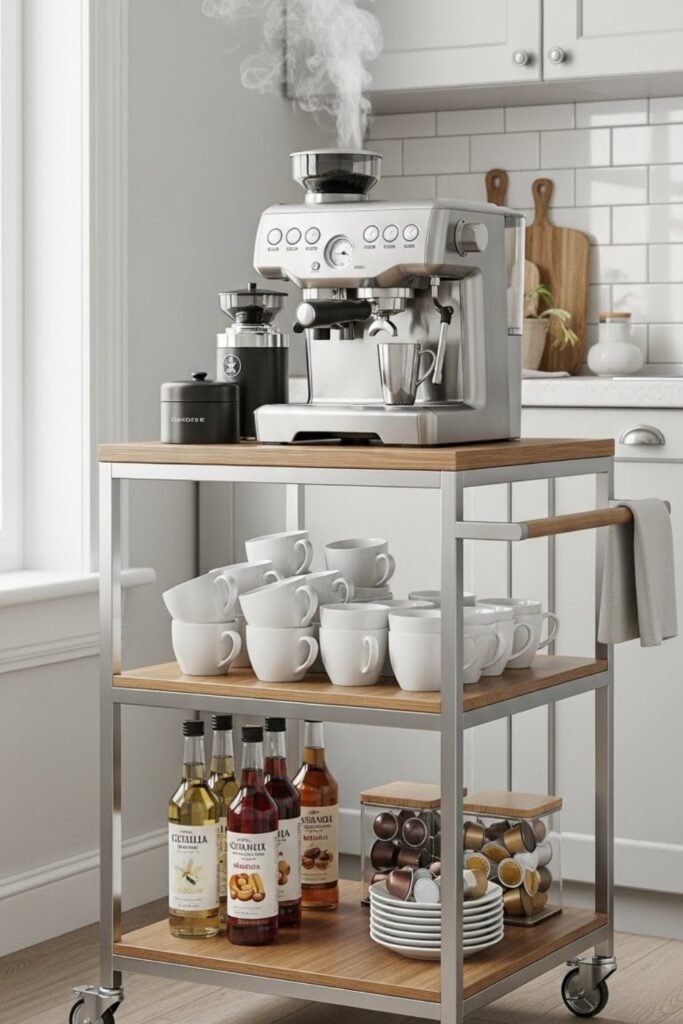
A rolling cart coffee bar is ideal for small homes or apartments. Use a metal or wood utility cart, place your coffee maker on top, and store mugs and syrups on lower shelves.
The wheels let you move it between rooms easily. It’s practical, flexible, and great if you don’t want to commit to a fixed coffee station.
Cabinet Nook
Turn an unused cabinet or pantry section into a hidden coffee bar. Remove the doors or keep them for a clean look. Add shelves for mugs, jars, and coffee tools.
This idea works best in kitchens where counter space feels crowded. Everything stays organized while your coffee station blends seamlessly into existing cabinetry.
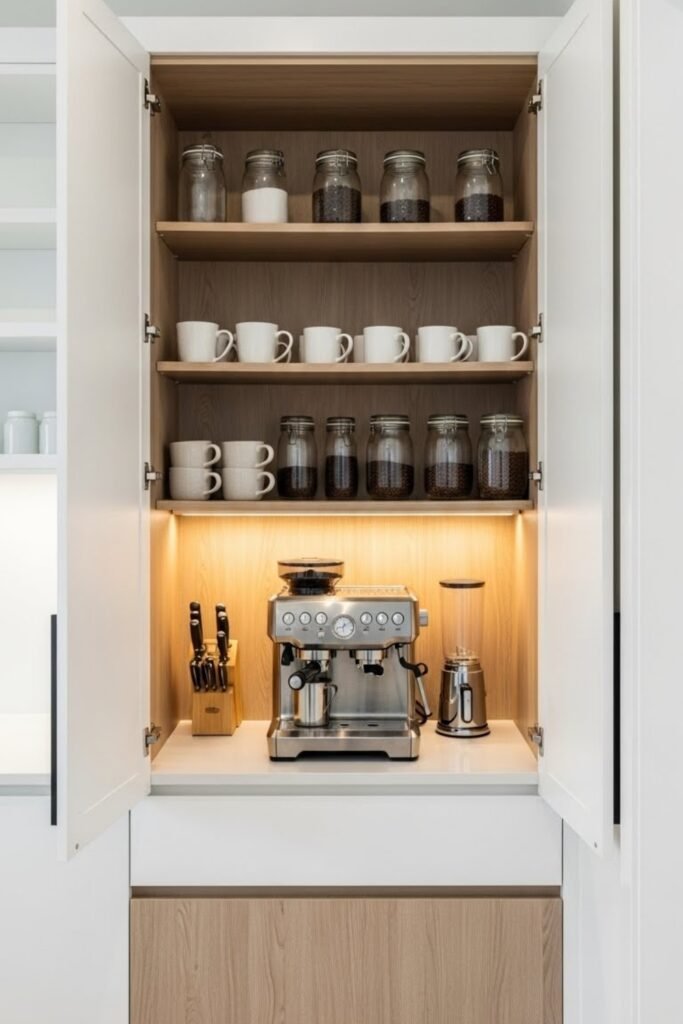
Shelf Bar
A floating shelf coffee bar saves floor space and looks clean. Mount two or three sturdy shelves on an empty wall, then place your coffee machine below on a small counter or console.
Use the shelves for mugs, beans, and decor. This setup works especially well in modern kitchens or minimal homes with limited space.
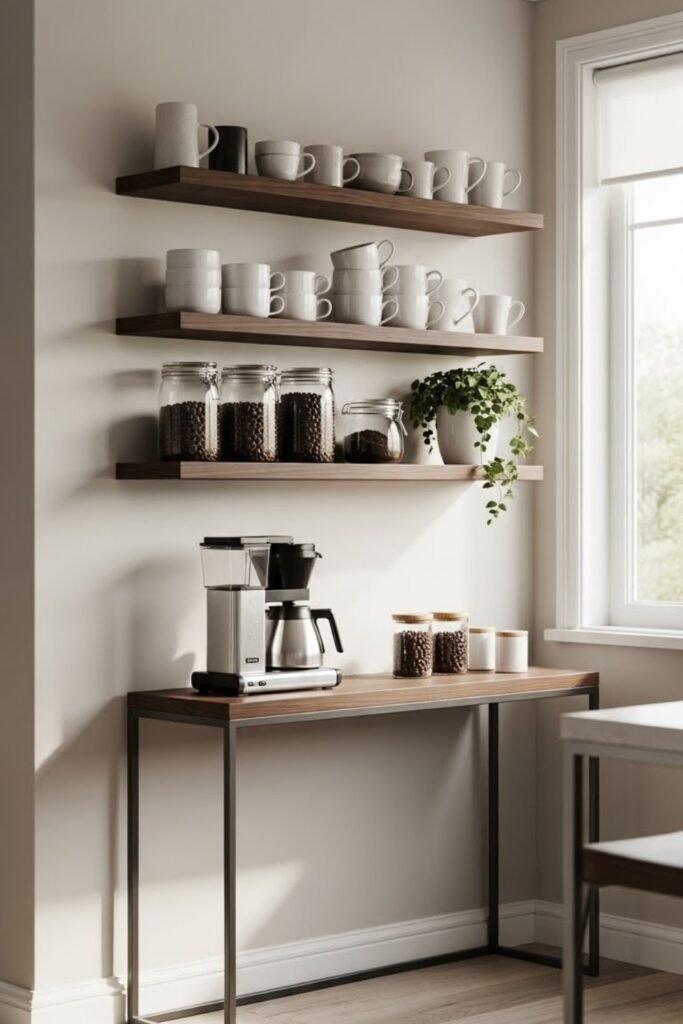
Ladder Bar
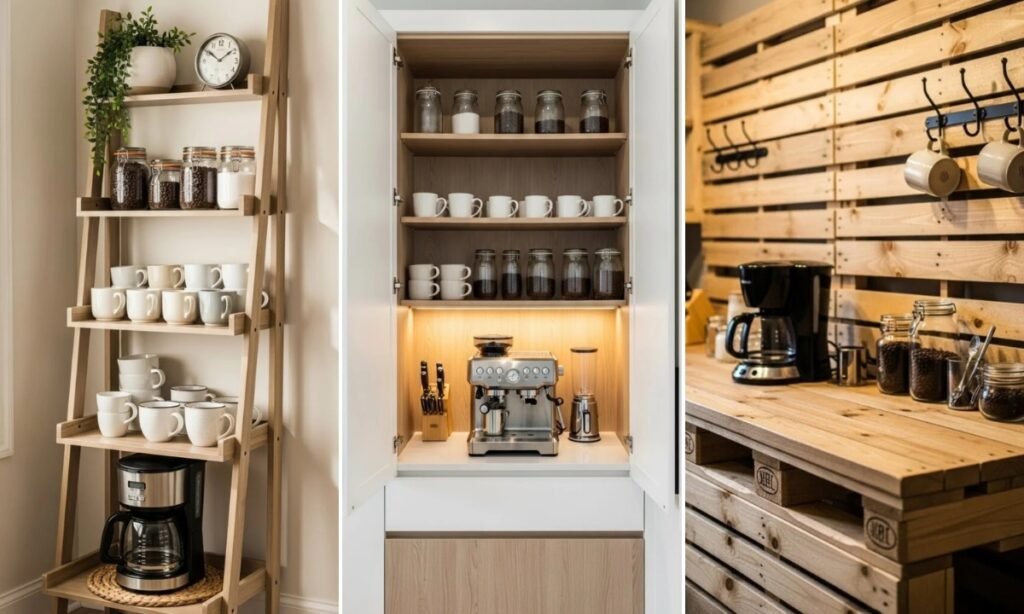
A ladder coffee bar uses a leaning ladder shelf to create vertical storage without heavy installation. Place your coffee maker on the bottom shelf and use upper shelves for mugs, jars, and decor.
This works well in apartments or rentals since it doesn’t require drilling many holes. It adds a relaxed, modern farmhouse feel to any corner.
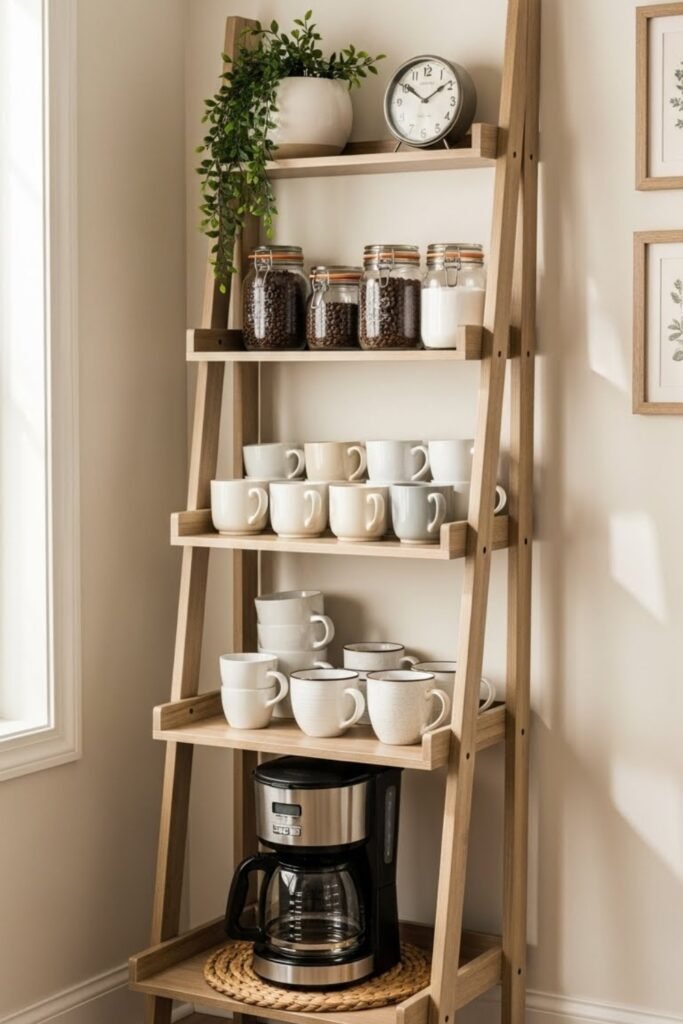
Dresser Bar
A vintage dresser coffee bar gives you deep storage and strong visual character. Remove the top drawers or use them to store pods, filters, and spoons.
The flat top easily holds a coffee machine and grinder. This idea works best in dining rooms or open kitchens where you want the coffee station to feel like furniture, not clutter.
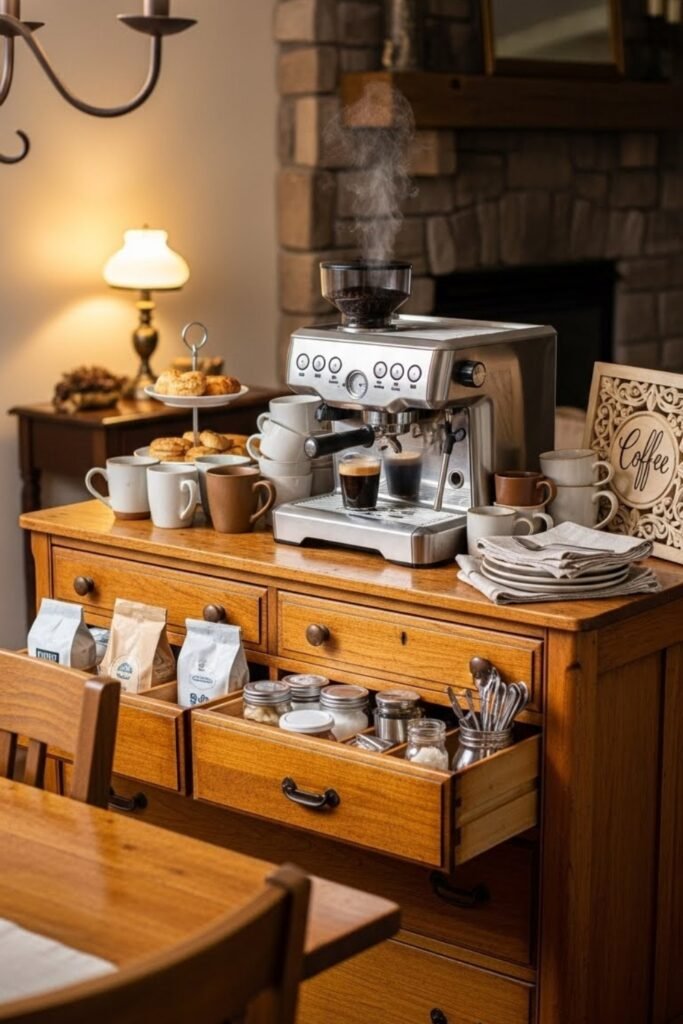
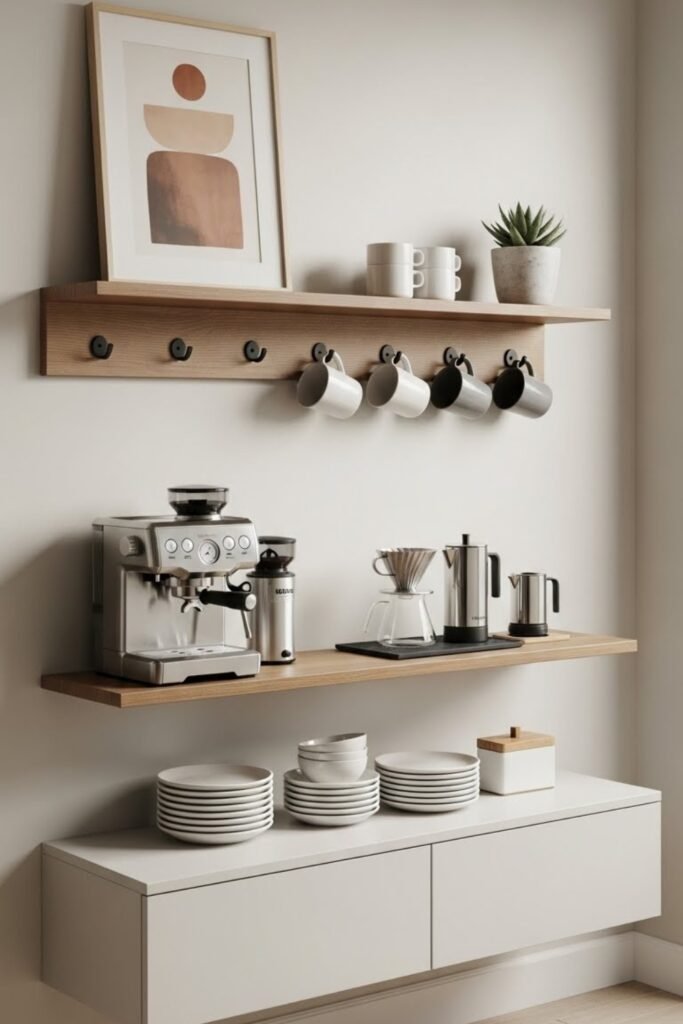
Wall Bar
A wall-mounted coffee bar keeps everything off the floor and counters. Install a narrow wall shelf or rail system, then add hooks for mugs underneath. Place a slim cabinet or console below for the coffee maker.
This setup is perfect for small kitchens, hallways, or unused wall sections where space feels wasted.
Hutch Bar
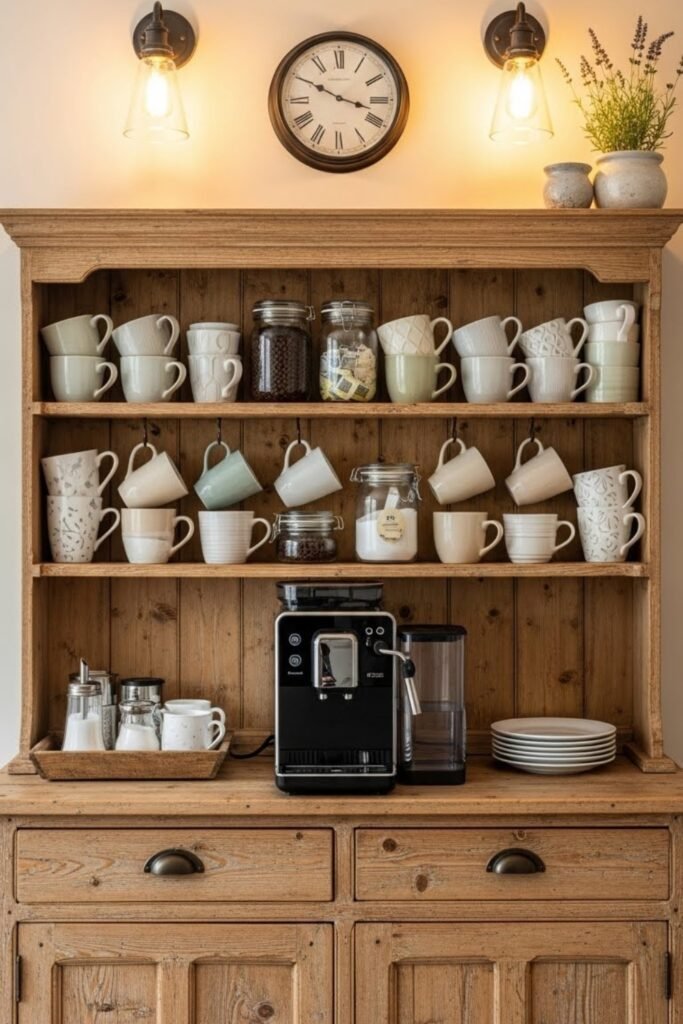
A hutch coffee bar offers built-in structure for mugs, jars, and coffee essentials. Use the upper shelves for display and the lower cabinet for storage.
This works best in farmhouses or traditional kitchens where you want the coffee station to feel permanent. Paint or refinish the hutch to match your kitchen for a cohesive look.
Counter Bar
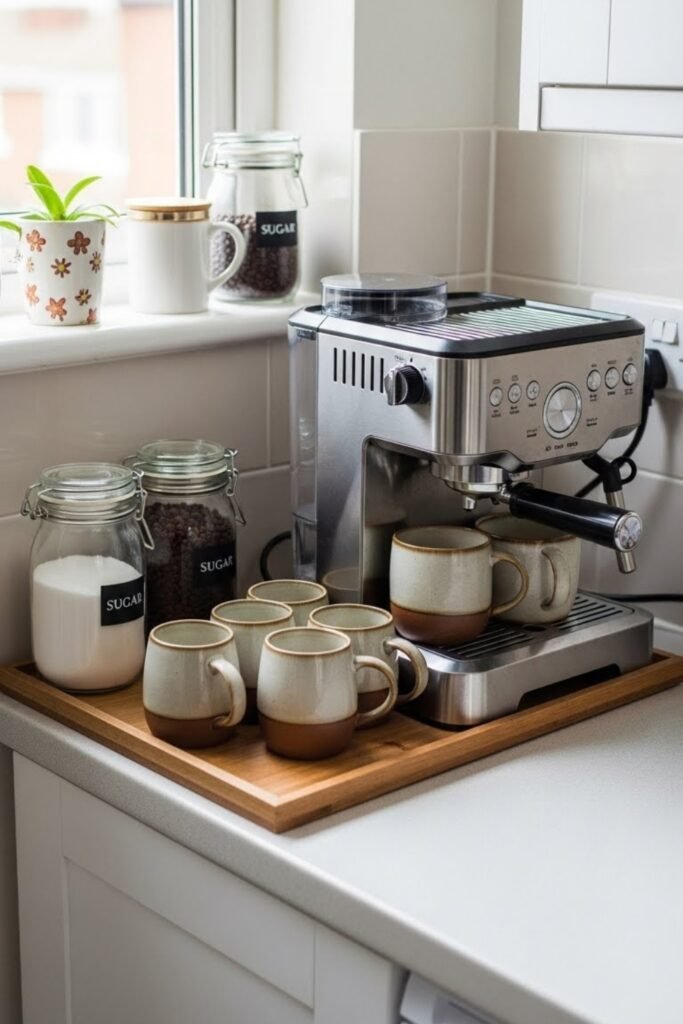
A counter coffee bar is perfect if you want something simple and low effort. Dedicate one section of your kitchen counter to coffee only.
Add a tray to group mugs, sugar, and syrups so it feels intentional. This idea works well in small kitchens where adding furniture isn’t possible but you still want a defined coffee spot.
Corner Bar
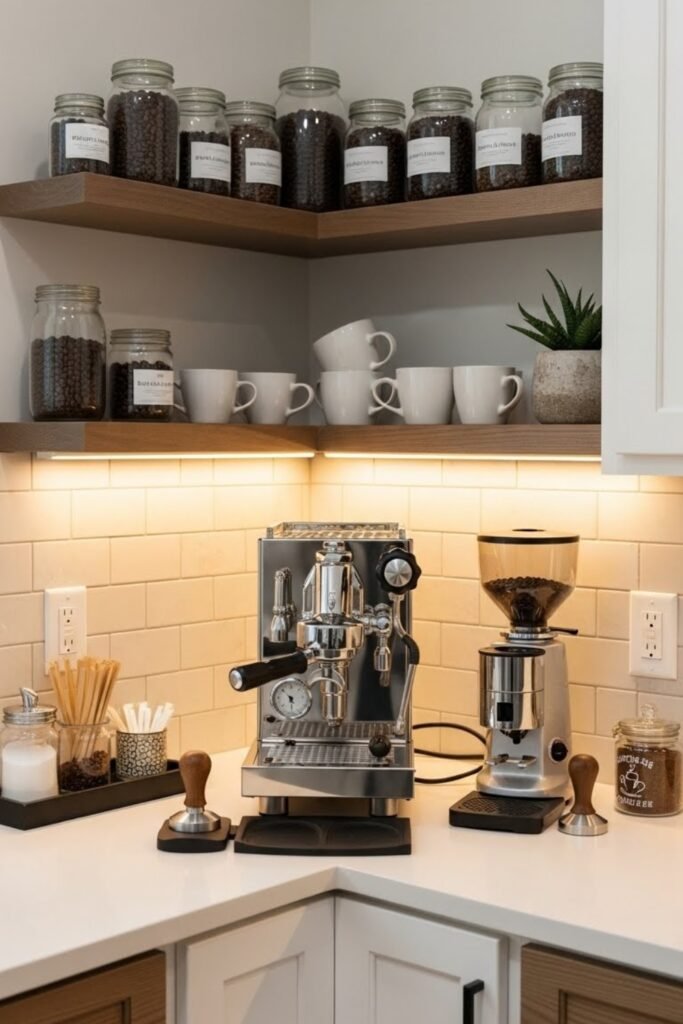
A corner coffee bar turns an awkward or empty corner into a functional station. Use a small cabinet or corner shelf to hold your machine and supplies.
This works great in kitchens or dining areas where wall space is limited. Adding floating shelves above helps maximize storage without making the area feel crowded.
Pipe Bar
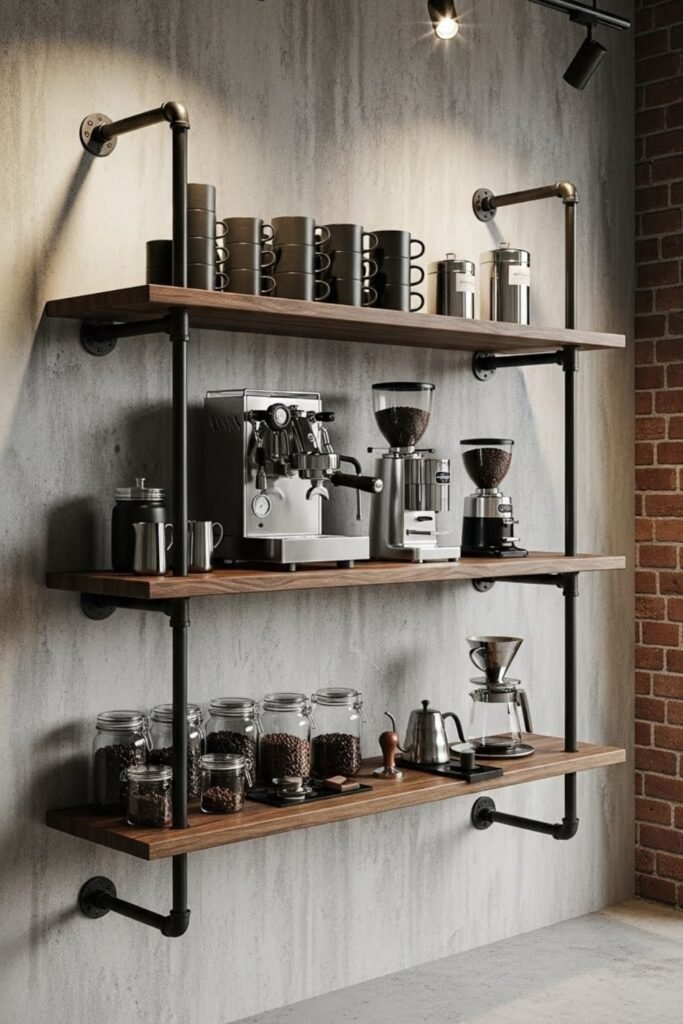
An industrial pipe coffee bar uses metal pipes and wood shelves for a bold, modern look. Mount the pipe frame to the wall and add wooden shelves for mugs and beans.
This style works best in lofts, modern homes, or garages. It’s sturdy, customizable, and gives your coffee station a strong design statement.
Console Bar
A console table coffee bar works well in dining rooms or open kitchens. Use the tabletop for your coffee maker and trays, and the lower shelf for baskets or extra supplies.
This setup feels more like furniture than storage, making it ideal if you want your coffee bar to blend naturally into your living space.

Drawer Bar
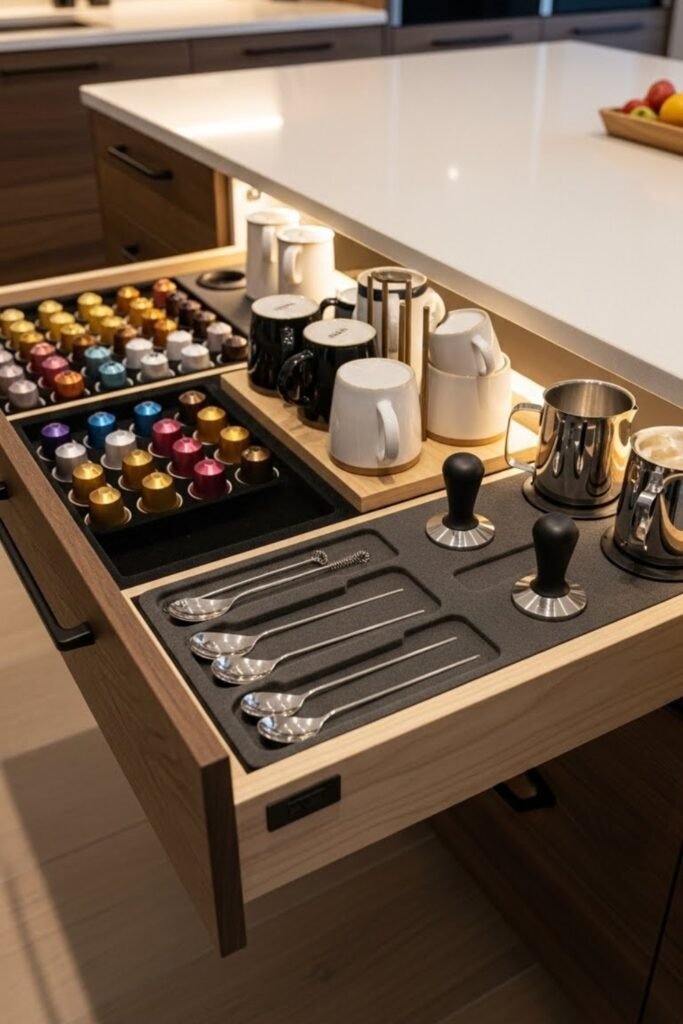
A drawer coffee bar hides everything neatly inside a large drawer. Store pods, filters, spoons, and even a small machine if space allows.
This works best in custom kitchens or islands with deep drawers. It keeps counters clear and is ideal if you want a clean look without visible coffee clutter.
Bookshelf Bar
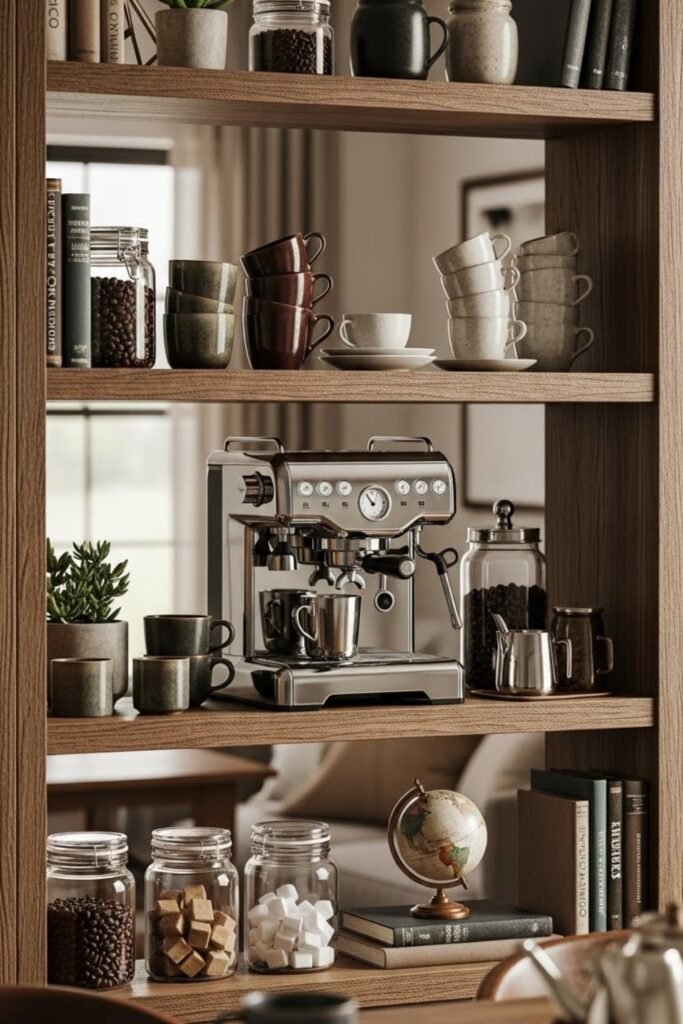
A bookshelf coffee bar turns open shelving into a functional station. Place your coffee maker on a middle shelf and use the others for mugs, jars, and decor.
This idea works well in living rooms or dining areas where you don’t want a traditional kitchen setup. It blends coffee storage with everyday decor.
Tray Bar
A tray coffee bar is the easiest DIY option. Use a large tray to group your coffee maker, mugs, and supplies in one spot.
This works perfectly for small kitchens, offices, or rental spaces. The tray creates visual boundaries, making the setup feel organized while staying easy to move or rearrange.

Stair Bar
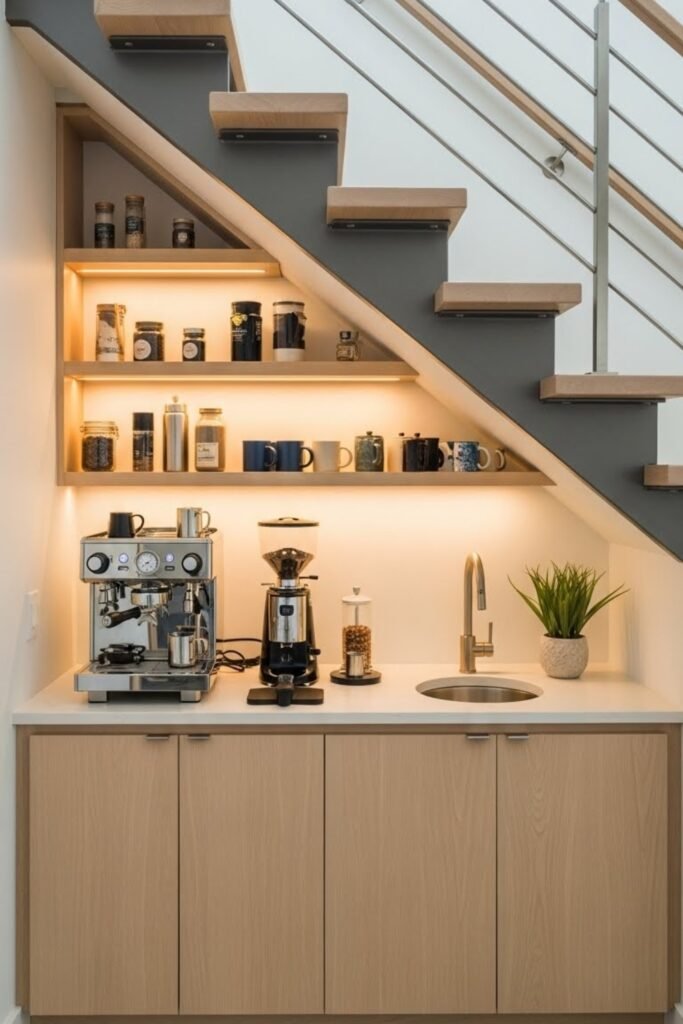
An under-stairs coffee bar uses hidden space creatively. Install a slim cabinet or shelves beneath the stairs and turn it into a cozy coffee station.
This works best in homes with open staircases. It adds function to an often unused area while keeping your main kitchen free from extra appliances.
Bar Cabinet
A bar cabinet coffee bar keeps everything closed and organized. Store mugs, pods, and tools inside, and open the doors only when making coffee.
This works well in dining rooms or living spaces where you want a clean look. Choose a cabinet with adjustable shelves so you can customize storage around your coffee machine.
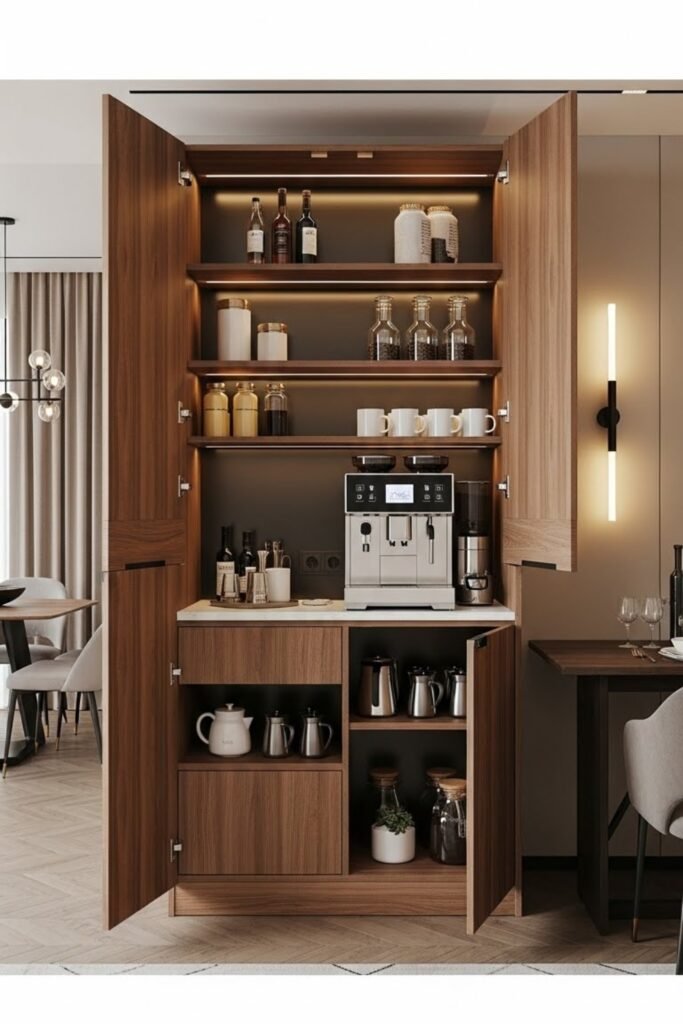
Coffee Cabinet
A dedicated coffee cabinet creates a permanent station without using counter space. Install shelves inside for mugs and supplies, and leave space for your coffee maker.
This idea works best in larger kitchens or pantries. It keeps your setup tidy while making coffee prep fast and easy every morning.
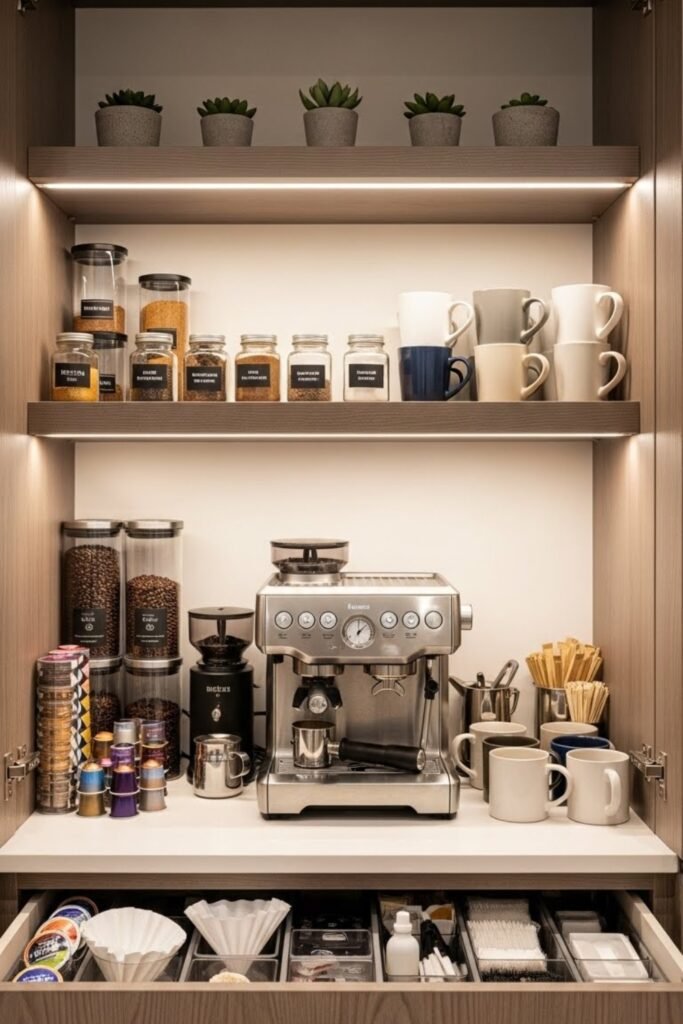
Pegboard Bar
A pegboard coffee bar adds flexible storage to a small wall. Hang mugs, shelves, and baskets to customize the layout. This works great in kitchens, offices, or garages where wall space is available.
You can rearrange hooks anytime, making it perfect if your coffee setup changes often or you add new tools.
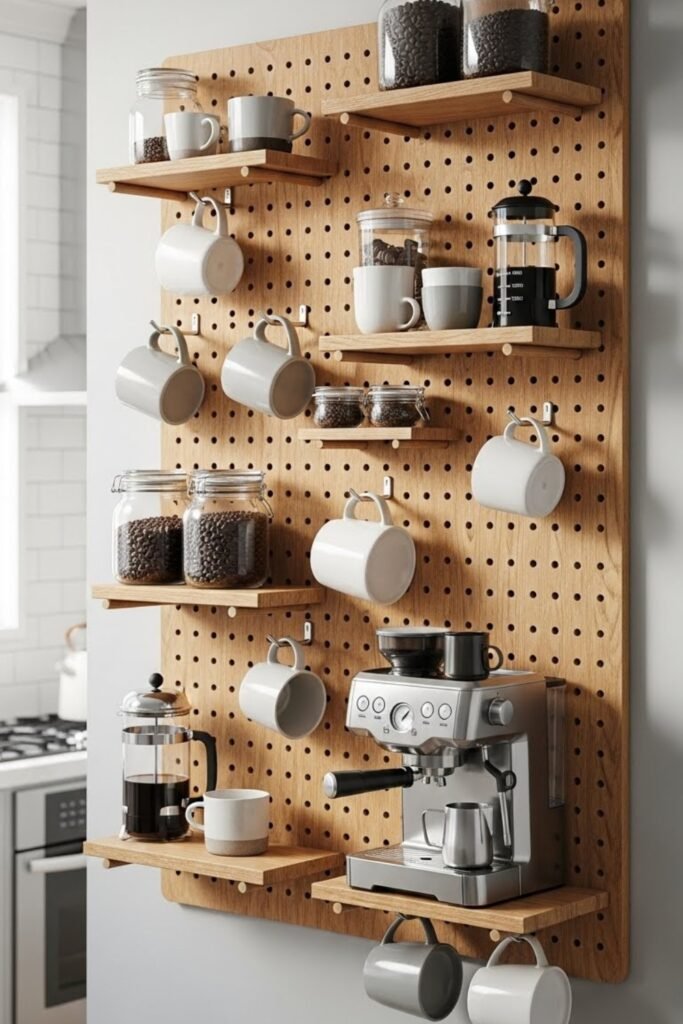
Crate Bar
A crate coffee bar uses wooden crates stacked or mounted together. Use the top crate for the coffee machine and others for mugs or jars.
This idea works well for rustic or farmhouse homes. It’s affordable, customizable, and easy to adjust if you want to change the height or layout later.
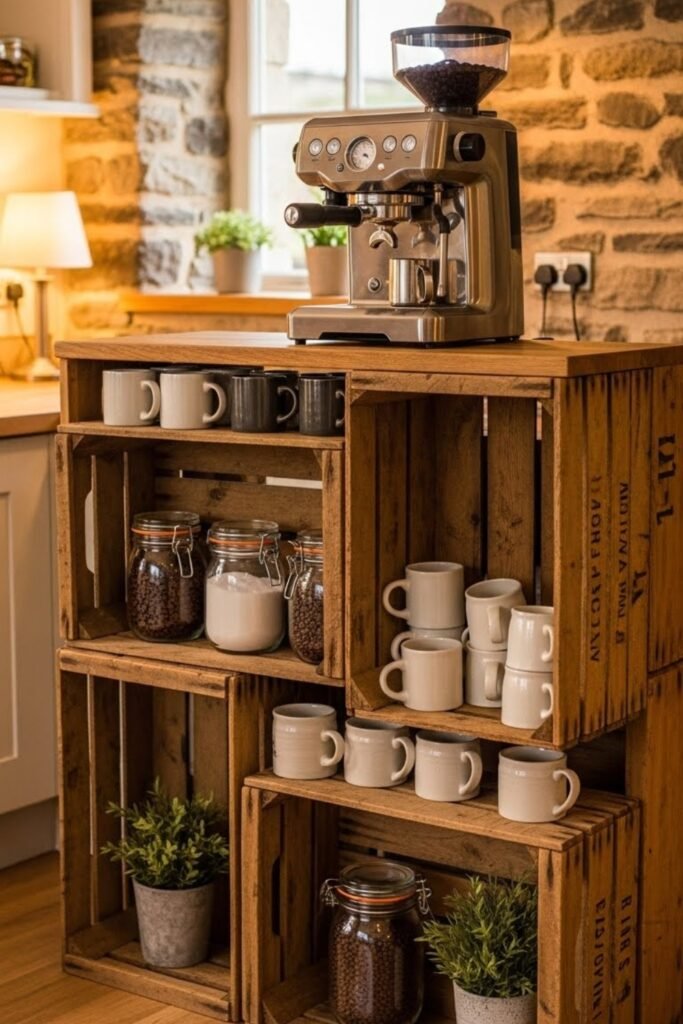
Window Bar
A window coffee bar uses the window sill or a narrow table placed in front of a window. Natural light makes the setup feel cozy and inviting.
This works best in kitchens or breakfast nooks with wide windows. Keep the setup minimal so it doesn’t block light, using trays or slim shelves for essentials.

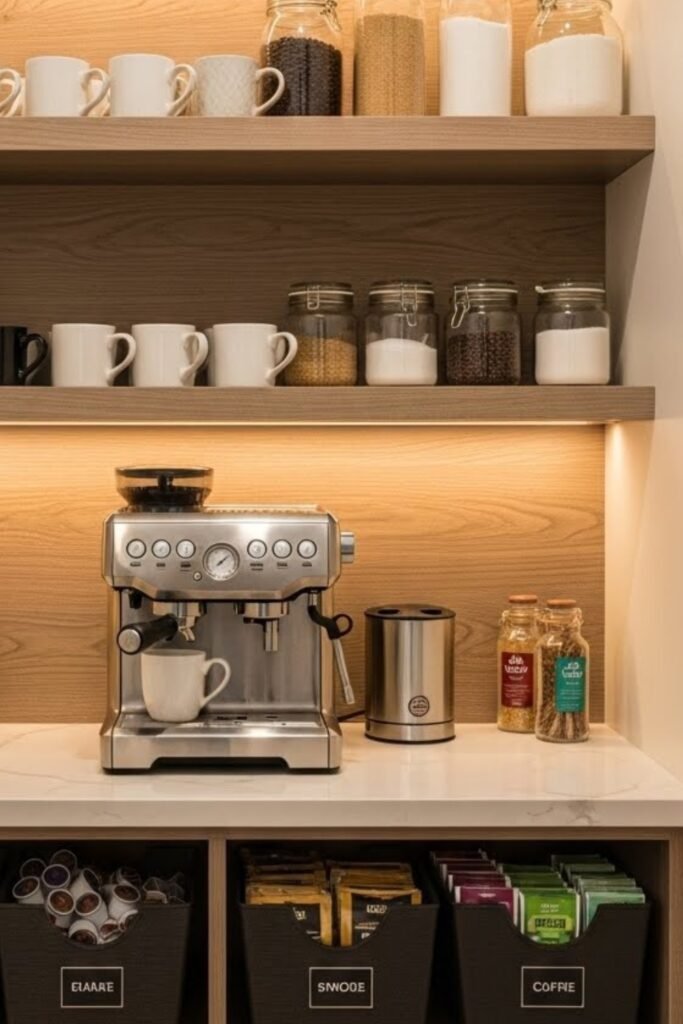
Pantry Bar
A pantry coffee bar keeps your coffee station hidden but accessible. Dedicate one pantry section to your coffee maker, mugs, and supplies.
Add shelves or bins to stay organized. This idea is perfect if you want clutter-free counters while still having a fully functional coffee station ready to use.

Hi, my name is Ali Mehmood! I’m a passionate writer and DIY enthusiast who loves turning creative ideas into practical, hands-on projects.
I created this website to share inspiring, budget-friendly ideas that you can do yourself – whether it’s organizing your home, crafting something unique, or creating fun projects for kids and pets.
I believe DIY isn’t just a hobby – it’s a smart way to save money, reduce waste, and enjoy the satisfaction of making things with your own hands.
I’m excited to have you as part of this growing community, and I’ll continue bringing you helpful, realistic, and fun DIY ideas you can actually use.