This post may contain affiliate links: read full affiliate disclosure.
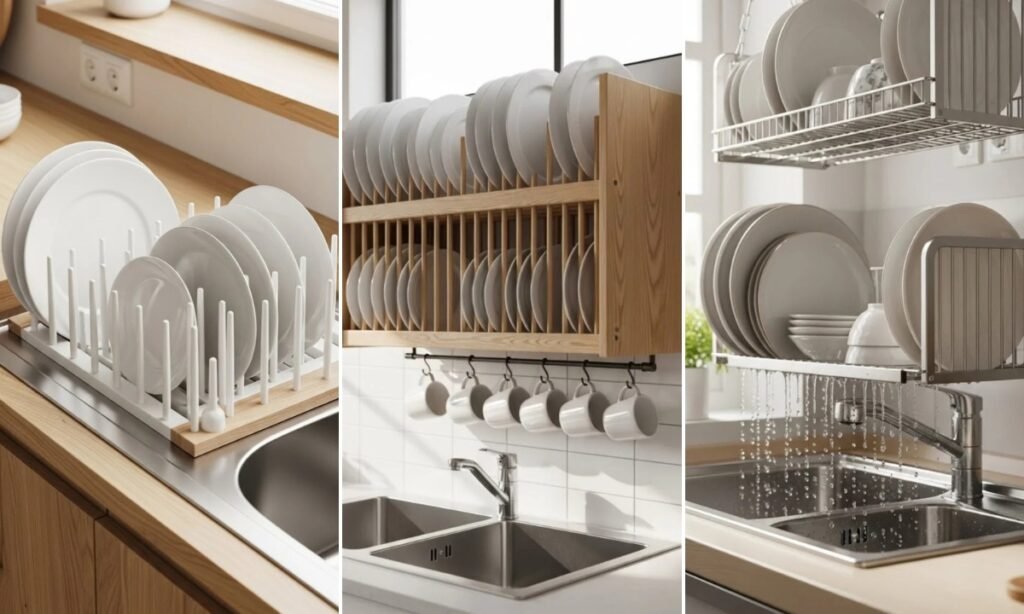
Drying dishes shouldn’t take over your counter or ruin the flow of your kitchen. Most store-bought racks are bulky, hard to clean, or simply don’t fit your space.
That’s where a DIY dish drying rack makes a real difference. With a few smart materials and the right layout, you can build something that fits your kitchen, saves space, and looks intentional.
In this article, you’ll find practical DIY dish drying rack ideas that work for small kitchens, modern homes, and everyday use.
Why Build a DIY Dish Drying Rack?
A DIY dish drying rack gives you control over size, style, and placement—something store-bought racks rarely offer.
You can design it to fit your sink, cabinet, or wall space exactly, while choosing materials that match your kitchen.
More importantly, a custom rack helps reduce counter clutter, improves airflow for faster drying, and turns a daily kitchen task into a cleaner, more organized routine.

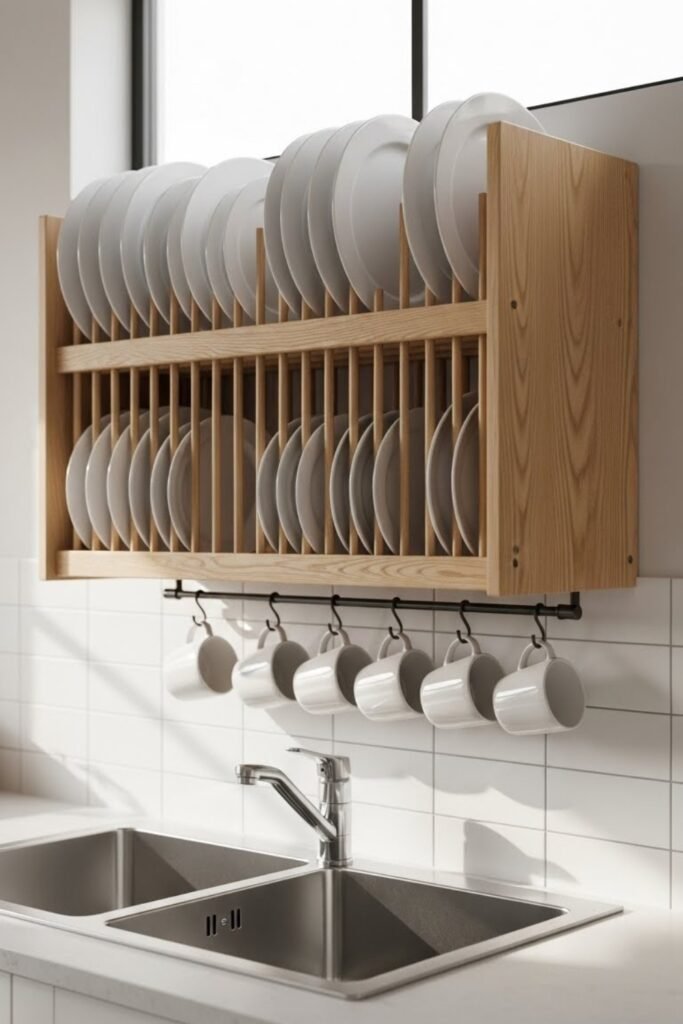
Wall Rack
This wall-mounted wooden rack installs above the sink, letting dishes dry naturally while water drips straight into the basin. Plates stand upright to save space, while hooks or dowels hold cups and bowls.
It works best in small kitchens where counter space feels tight and daily dishwashing needs a permanent, clutter-free solution.
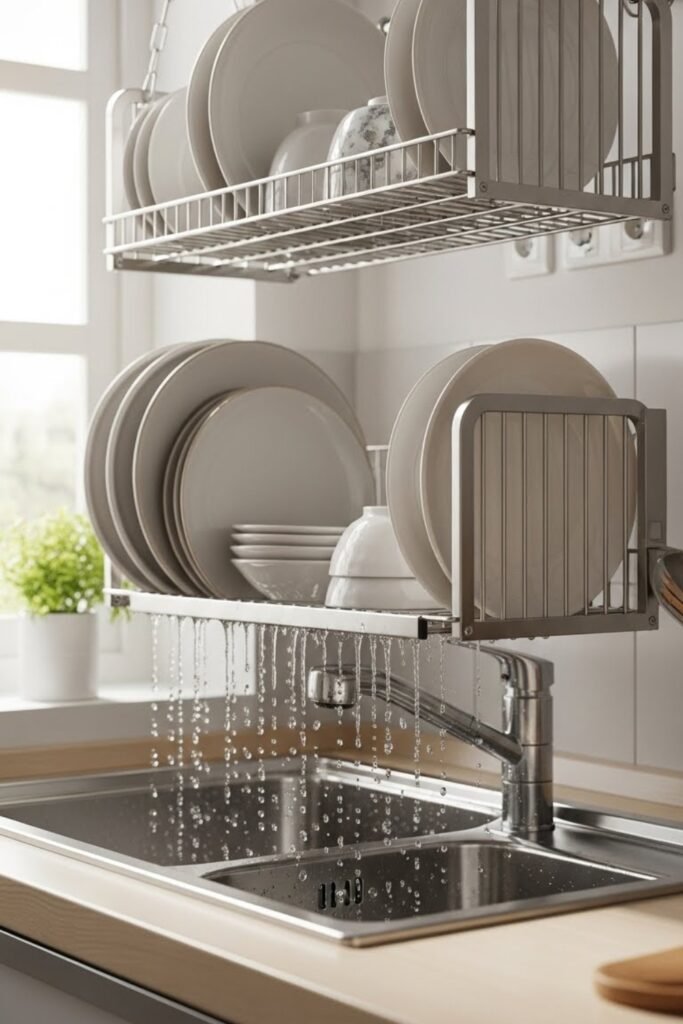
Hanging Rack
A hanging dish rack suspends above the sink using wall brackets or ceiling hooks. It keeps dishes completely off the counter and improves airflow for faster drying.
This setup works well in compact kitchens and rental spaces where vertical storage matters more than surface space.
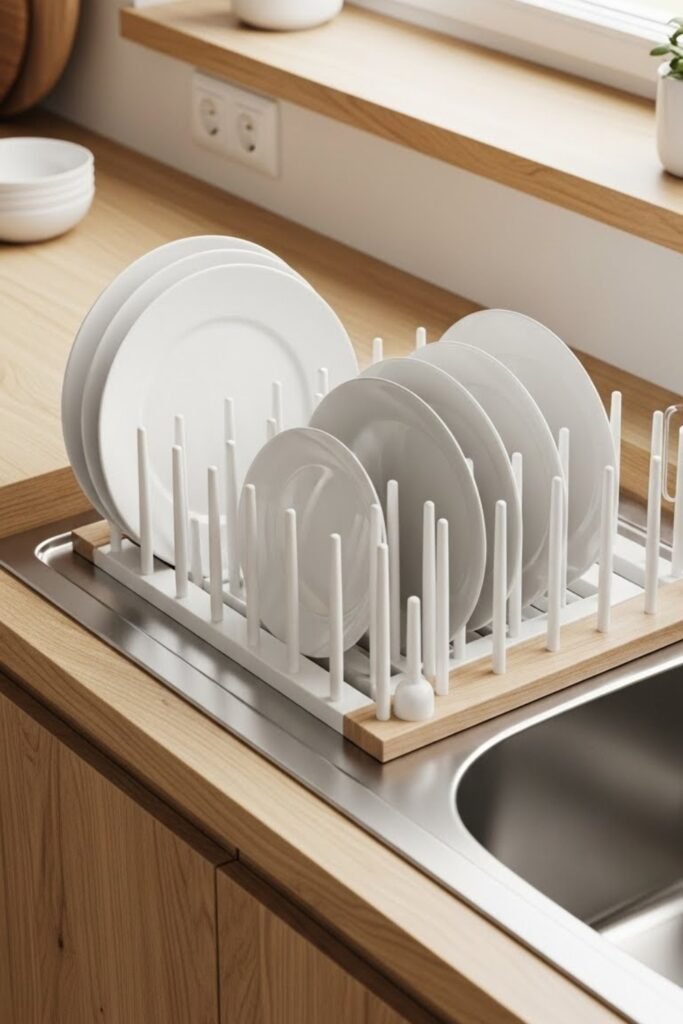
Drawer Rack
This DIY idea reuses an old dishwasher or cabinet dish insert as a drying rack. Place it above the sink or inside a cabinet so plates dry neatly without taking up counter room.
It’s a smart, low-cost solution that repurposes existing materials while keeping the kitchen organized.
Cabinet Rack
A cabinet-integrated drying rack sits inside an upper cabinet directly above the sink. Dishes dry hidden from view, and water drains below without mess.
This setup keeps countertops clear and works especially well in minimalist or modern kitchens where visible drying racks feel cluttered.
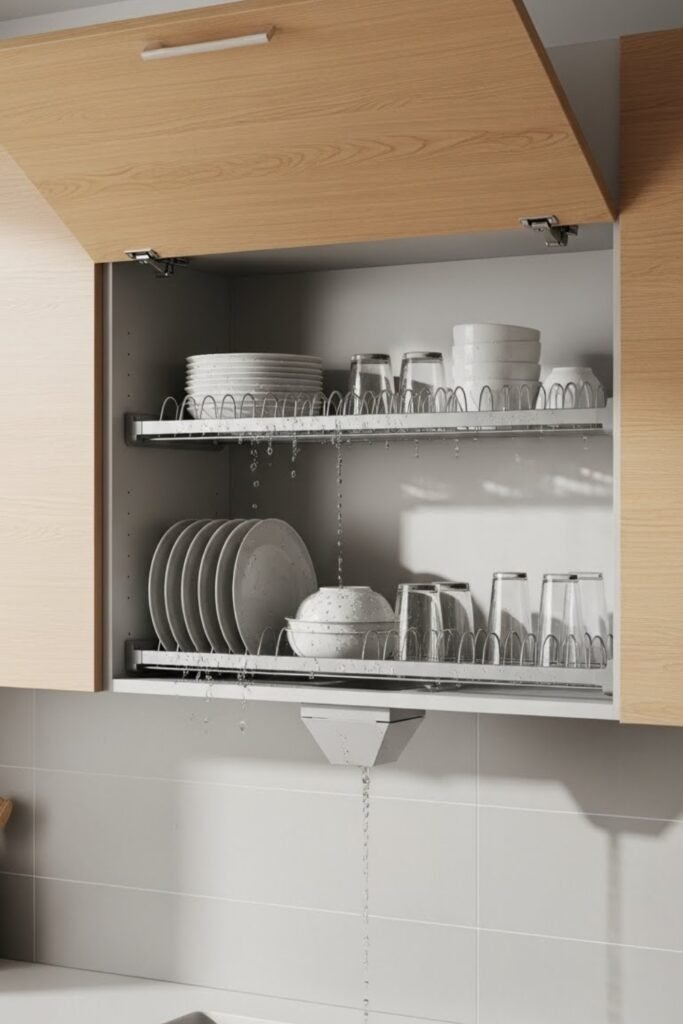
Fold Rack
This fold-down dish drying rack mounts on the wall and folds flat when not in use. When opened, it provides enough space for plates, bowls, and cups to air-dry above the sink.
It works best in small kitchens where flexibility matters and permanent racks would feel bulky or intrusive.
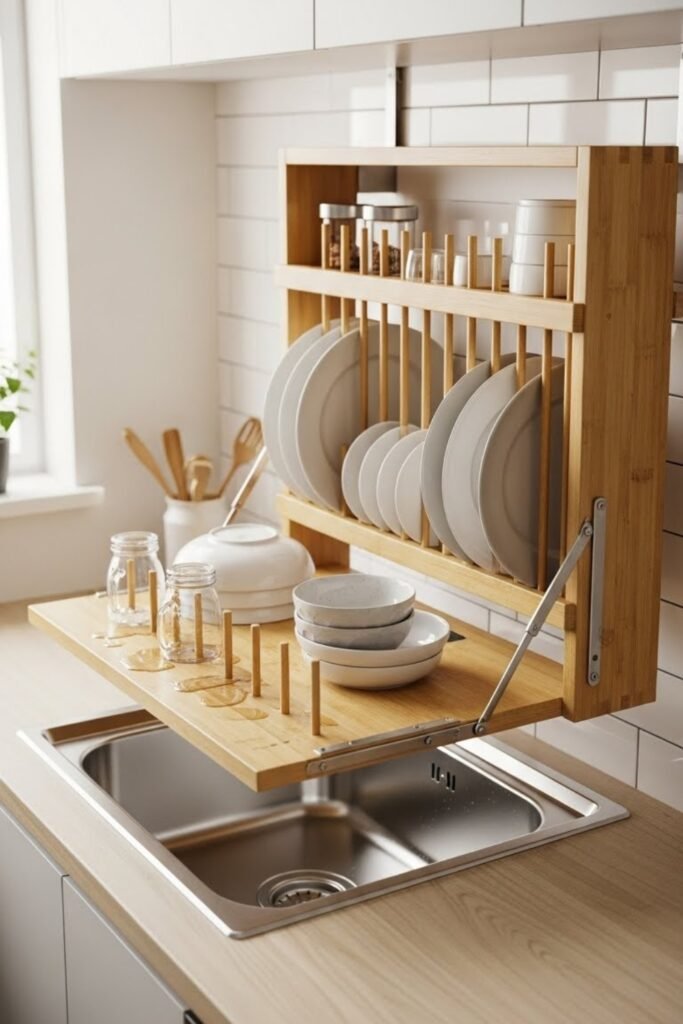
Pallet Rack
This rustic rack uses reclaimed pallet wood to hold plates vertically while smaller items rest on narrow shelves.
The open design allows water to drip freely, speeding up drying. It’s ideal for farmhouse or cottage-style kitchens and works well as both functional storage and decorative wall décor.
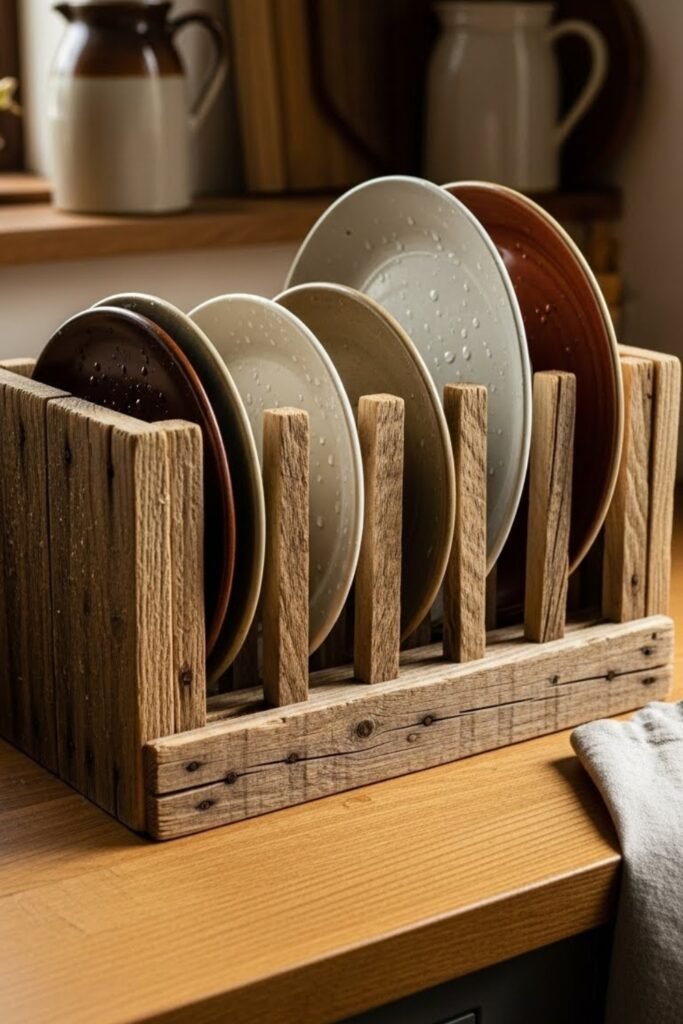
Pipe Rack
An industrial-style drying rack made from metal pipes and wire grids creates a sturdy, modern setup. Plates slide into slots while hooks hold mugs and utensils.
This rack suits modern or loft kitchens and handles heavier dishes without bending or warping over time.
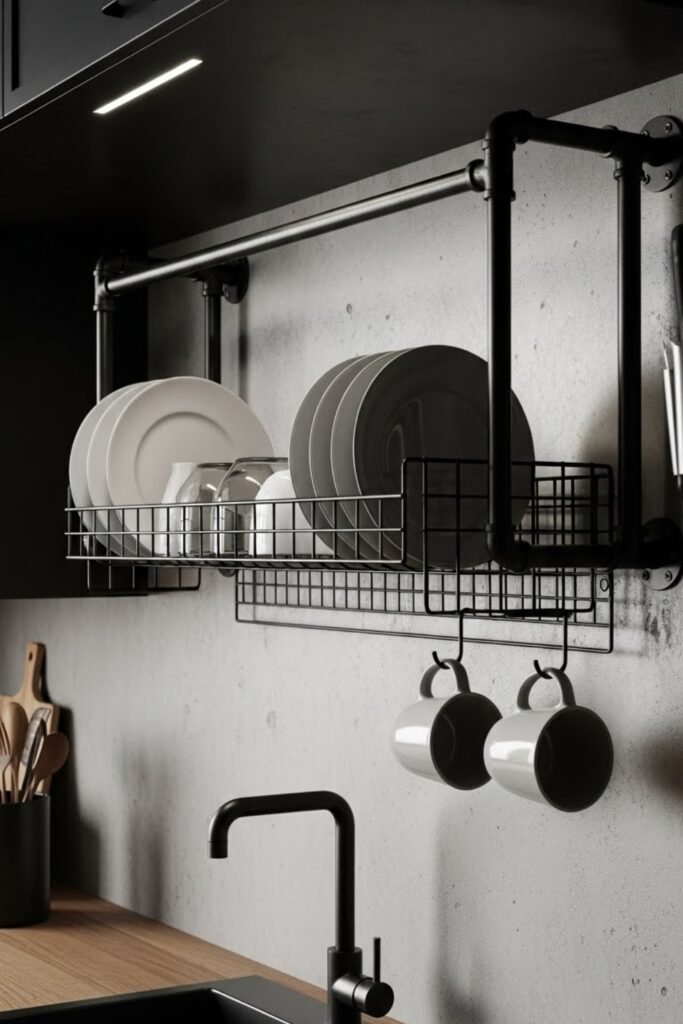
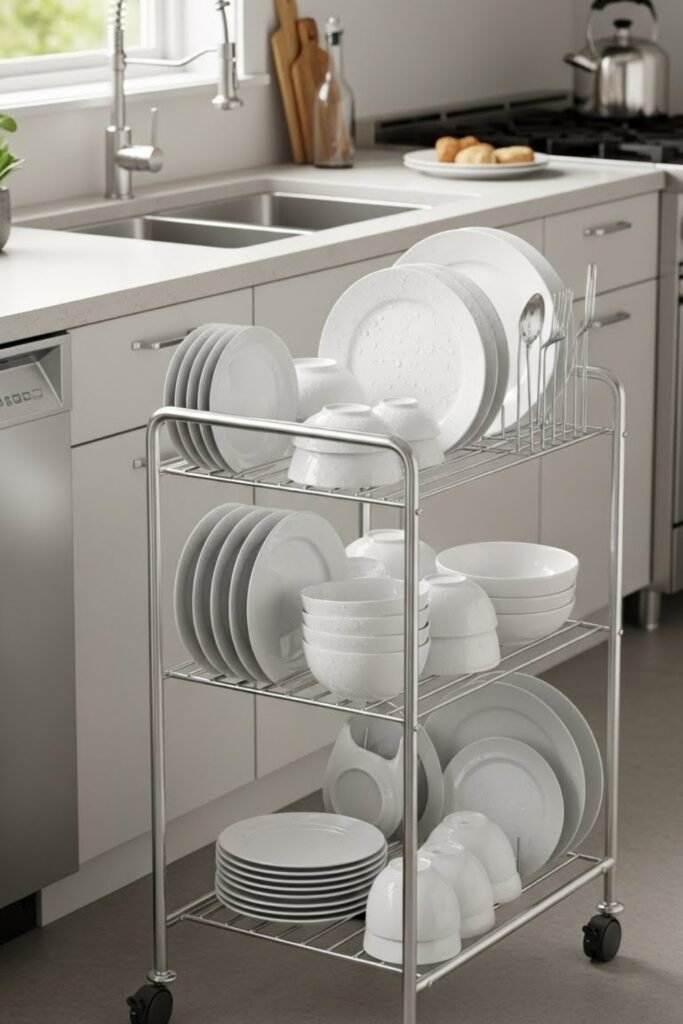
Cart Rack
A rolling cart dish rack turns a slim utility cart into a mobile drying station. Dishes dry on open shelves while airflow comes from all sides.
It’s useful in kitchens without wall space and can be rolled away once dishes are dry.
Slide Rack
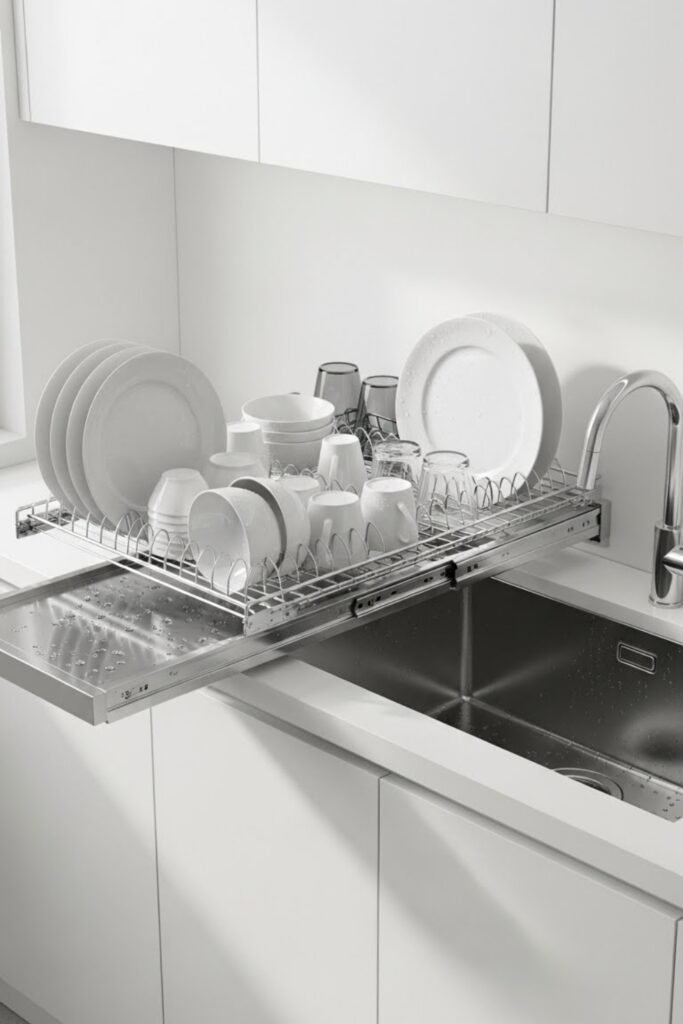
This pull-out dish drying rack installs above the sink or inside a cabinet. You slide it out while washing dishes and push it back when finished.
It keeps dishes organized, hidden, and off the counter, making it perfect for clean, clutter-free kitchens with limited space.
Peg Rack
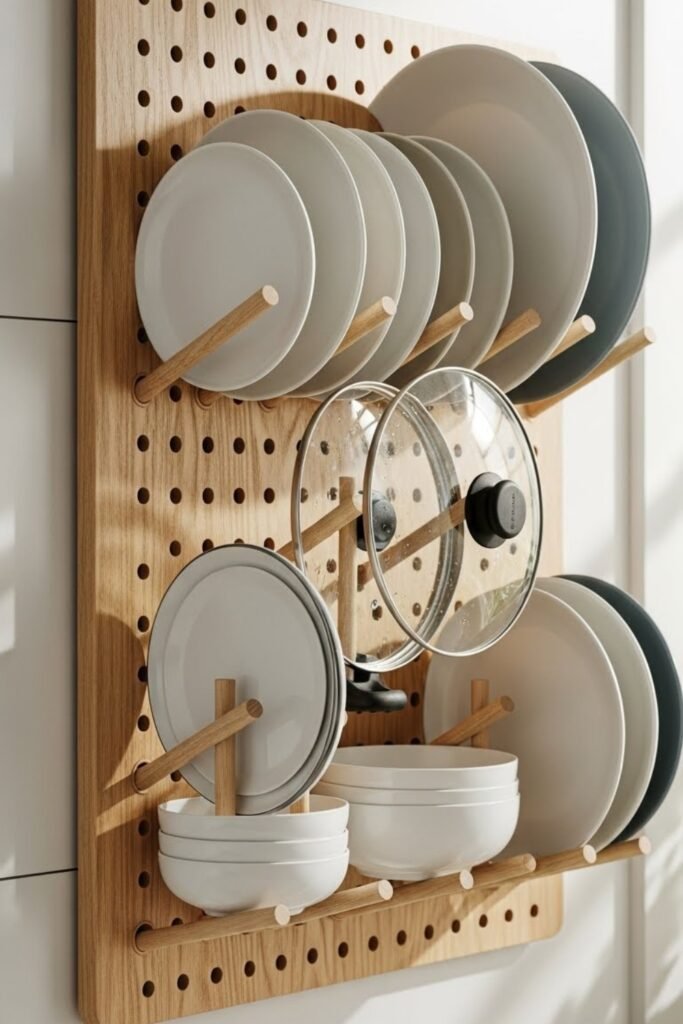
A pegboard dish drying rack uses adjustable wooden or metal pegs to hold plates, bowls, and lids upright.
The layout can change based on dish size, making it flexible for everyday use. It works best on blank walls near the sink where customization matters.
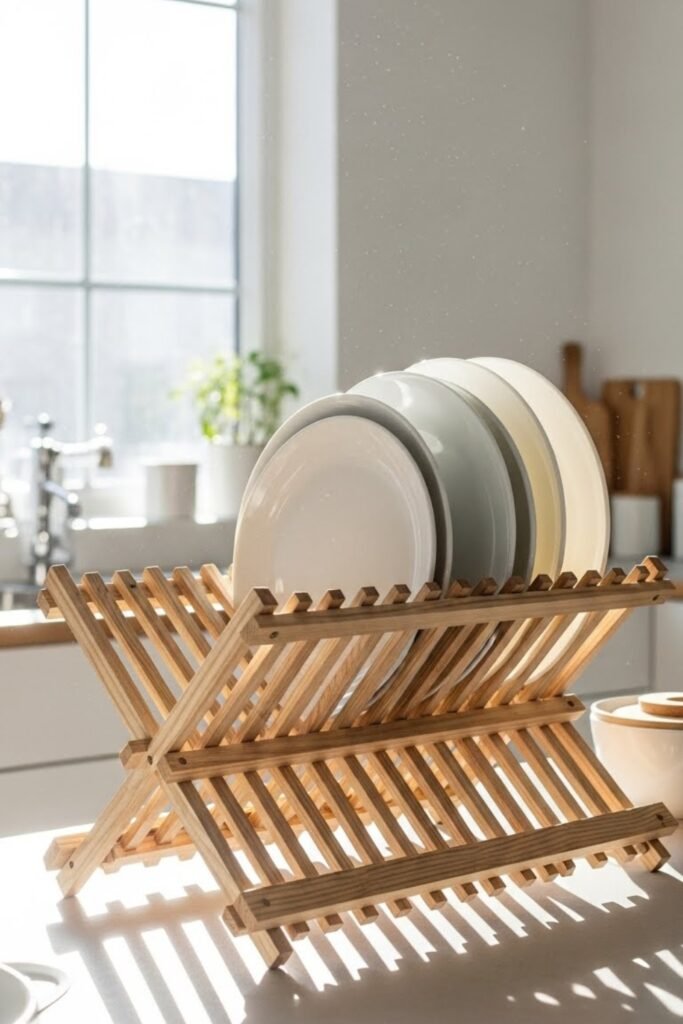
Bamboo Rack
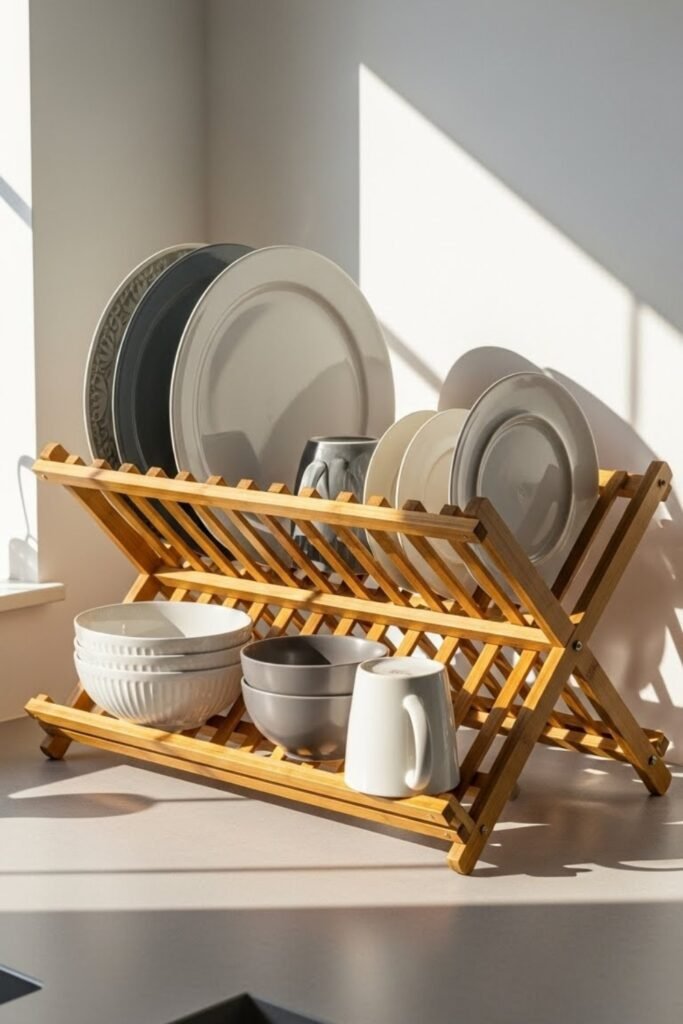
This DIY bamboo rack uses slatted pieces spaced apart to improve airflow and reduce moisture buildup.
Bamboo naturally resists water damage, making it ideal for kitchens. It sits neatly on the counter or above the sink and adds a warm, minimal look.
Basket Rack
A wall-mounted basket rack uses wire or mesh baskets to hold washed dishes while water drips away easily.
Plates lean inside baskets while cups dry upside down. This idea suits small kitchens and rental homes where easy installation and removal are important.
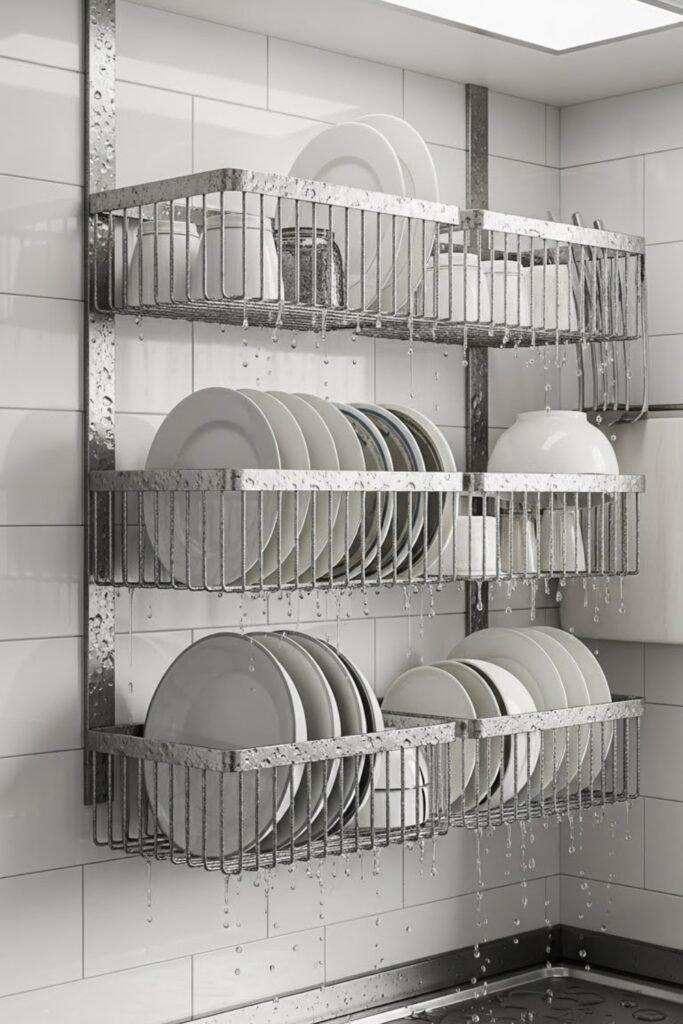
Corner Rack
This dish drying rack fits neatly into a sink or counter corner, turning unused space into a drying area. Plates stand upright while cups and bowls rest along the edges.
It’s ideal for small kitchens where every inch counts and traditional racks feel oversized.
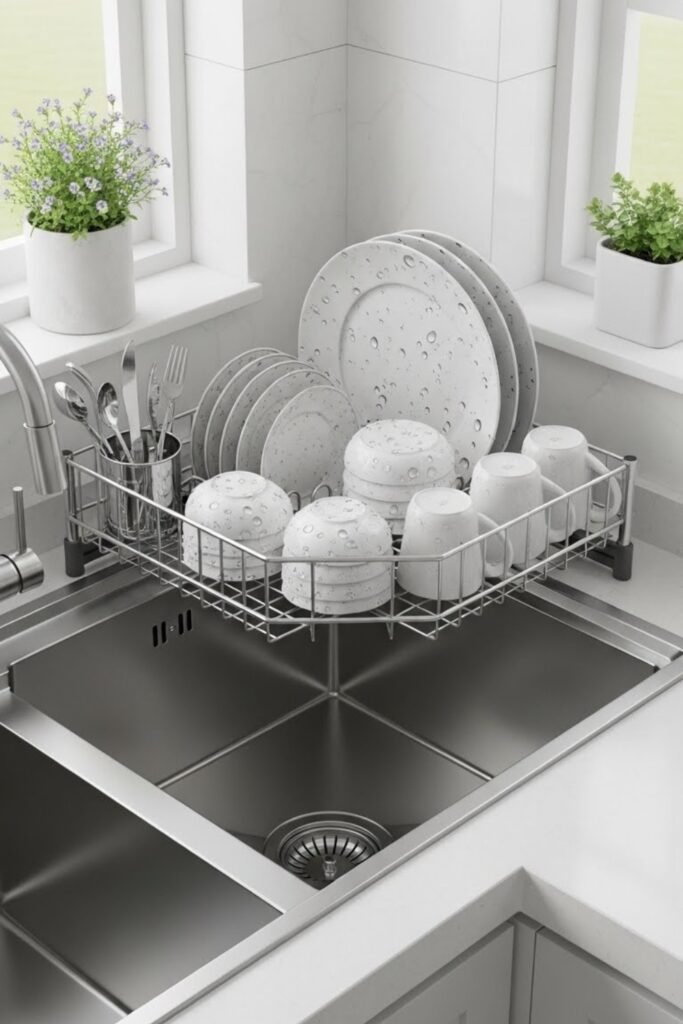
Tier Rack
A tiered drying rack uses two vertical levels so plates dry on top while cups and bowls sit below. This design maximizes vertical space and keeps different items separated.
It works well for families that wash many dishes at once but want a compact setup.
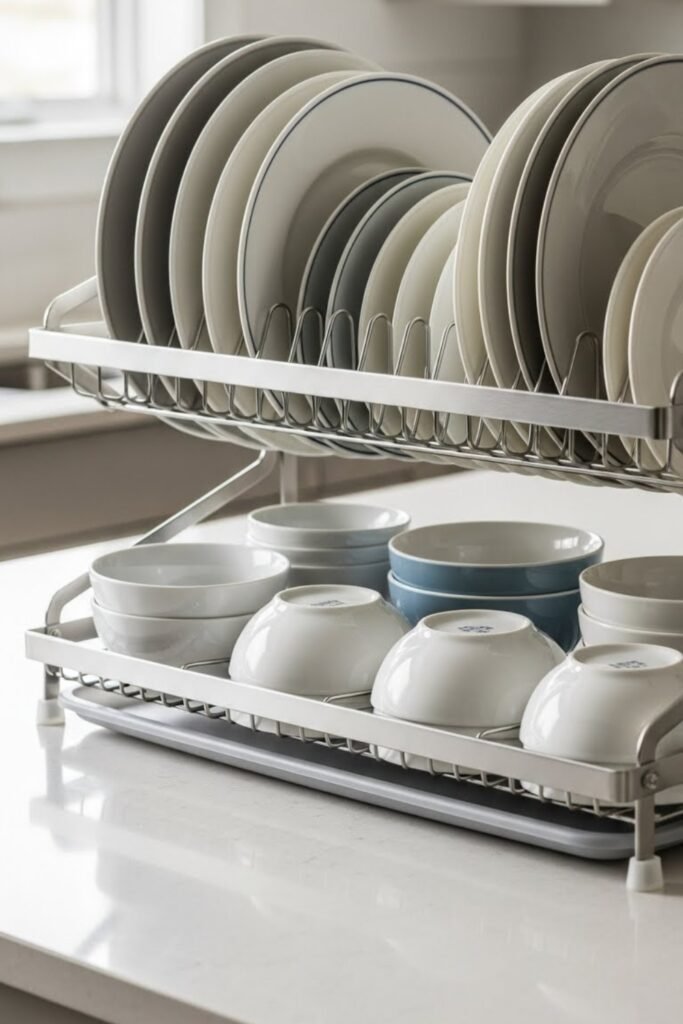
Magnetic Rack
This modern DIY rack uses hidden magnets or metal strips to hold plates upright against a backsplash or metal panel.
Dishes dry quickly due to open airflow and vertical positioning. It’s best for sleek kitchens where minimal design and clean lines matter.
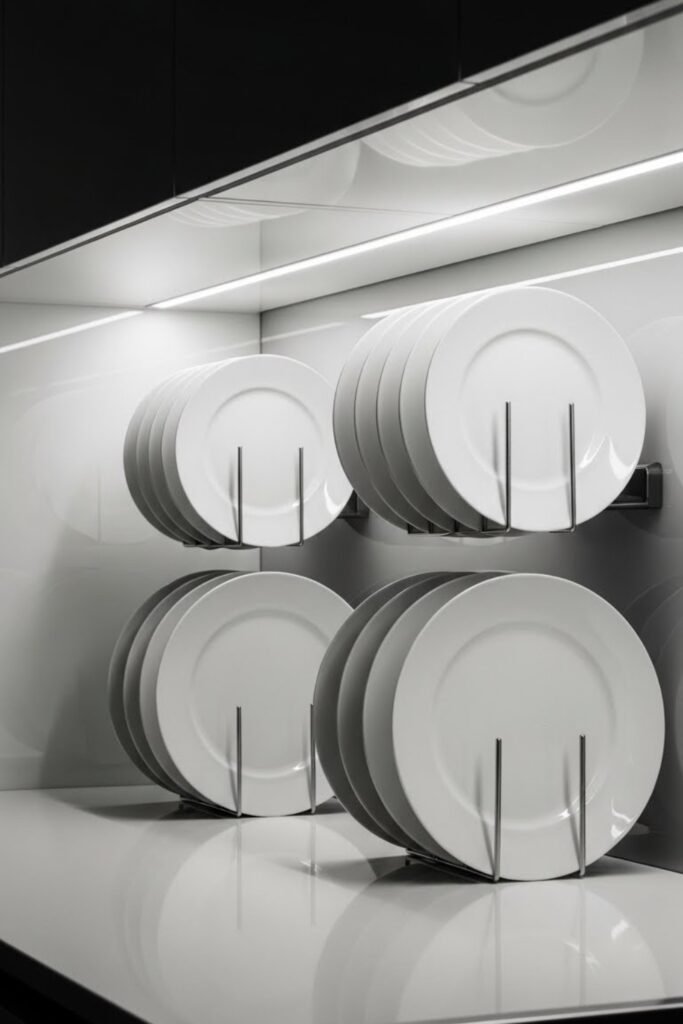
Slat Rack
Inspired by outdoor drying racks, this slatted design uses wide spacing to allow fast airflow and reduce moisture buildup.
Plates lean securely while water drains freely. It’s a practical choice for busy kitchens that need quick drying without enclosed storage.

Hi, my name is Ali Mehmood! I’m a passionate writer and DIY enthusiast who loves turning creative ideas into practical, hands-on projects.
I created this website to share inspiring, budget-friendly ideas that you can do yourself – whether it’s organizing your home, crafting something unique, or creating fun projects for kids and pets.
I believe DIY isn’t just a hobby – it’s a smart way to save money, reduce waste, and enjoy the satisfaction of making things with your own hands.
I’m excited to have you as part of this growing community, and I’ll continue bringing you helpful, realistic, and fun DIY ideas you can actually use.