This post may contain affiliate links: read full affiliate disclosure.
If your entryway turns into a mess the moment you walk in, you’re not alone. Shoes pile up, bags land on the floor, and there’s never a place to sit while putting footwear on.
Store-bought benches often make things worse – they’re too bulky, too expensive, or don’t fit your space at all.
Should it be built-in or freestanding? How tall should it be? Will it block the door? Do you even have the right tools?
This Article is here to clear that confusion. Before you build anything, you’ll learn how to choose the right type of DIY mudroom bench for your space.
Avoid common sizing and layout mistakes, and understand what actually works in real homes – especially small or awkward entryways.
Save this article for later!
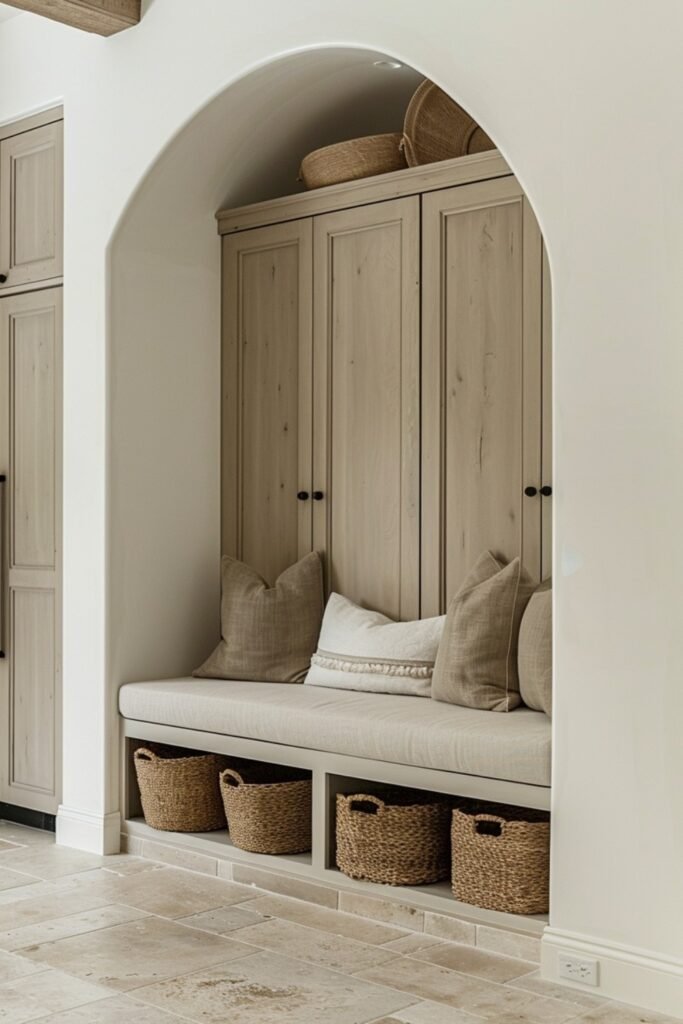
Arched Built-In Storage Bench
An arched wall niche turns unused architectural space into a functional bench without stealing extra floor area in entryways.
Build a simple base bench first, then frame cabinet boxes behind it to follow the arch shape.
This approach works best in custom homes or renovations where wall framing changes are planned carefully.
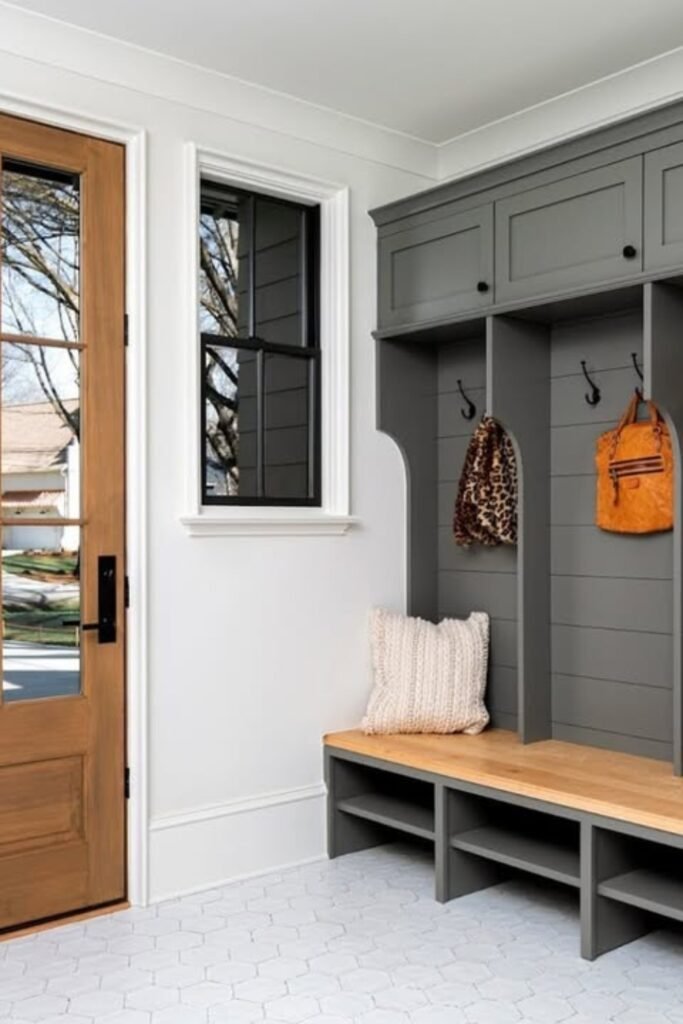
Locker-Style Mudroom Bench
When multiple family members share one entry, locker-style sections keep coats, bags, and shoes clearly separated daily.
Create vertical dividers from plywood, add hooks inside each bay, and anchor everything securely into wall studs.
Ideal for busy households where daily organization matters more than decorative styling or visual minimalism.
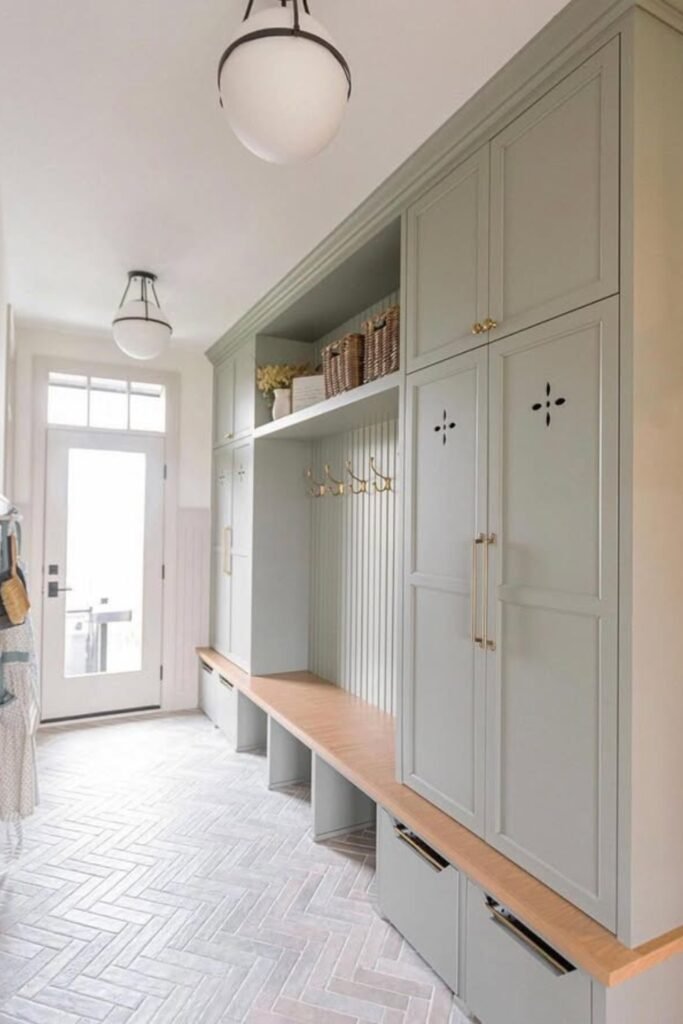
Full-Wall Storage Bench Run
A long bench paired with tall cabinets maximizes storage along narrow mudroom hallways without making the space feel cramped.
Install lower bench cabinets first, then stack full-height cabinets beside or above for seasonal storage needs.
Perfect for homes lacking a true mudroom but needing consistent storage along limited wall space.
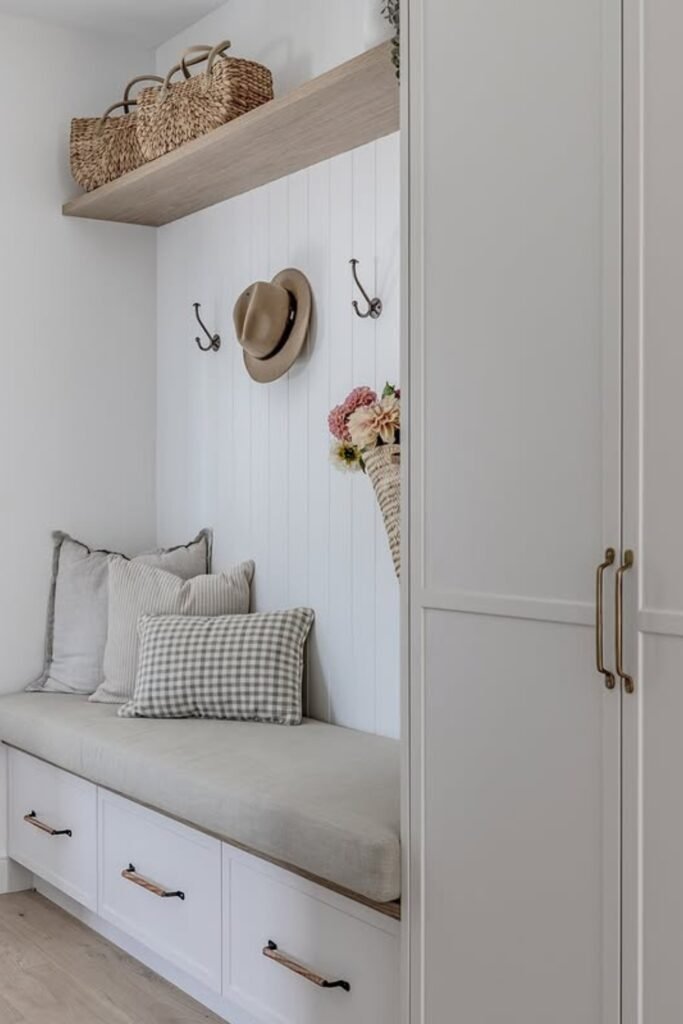
Drawer-Based Seating Bench
If you want hidden storage instead of open cubbies, drawers under the bench keep shoes and gear visually controlled.
Use standard cabinet drawers with heavy-duty slides, then top everything with a solid wood bench surface.
Best for clean, minimal entryways where visible clutter quickly makes the space feel smaller.
Sliding Door Mudroom Bench
Sliding barn doors help hide bench clutter while saving swing space in tight entryways or side mudrooms.
Build a recessed bench unit first, then mount a lightweight sliding door track above the opening.
Great for farmhouse or transitional homes needing flexible visual separation without blocking daily foot traffic.

Simple Hall Tree Bench
A straightforward bench with wall-mounted hooks handles everyday coats, backpacks, and boots without complex cabinetry builds.
Start with a sturdy bench base, then add a backboard panel and evenly spaced hooks above.
This setup works well for beginners upgrading basic entryways using simple tools and affordable materials.
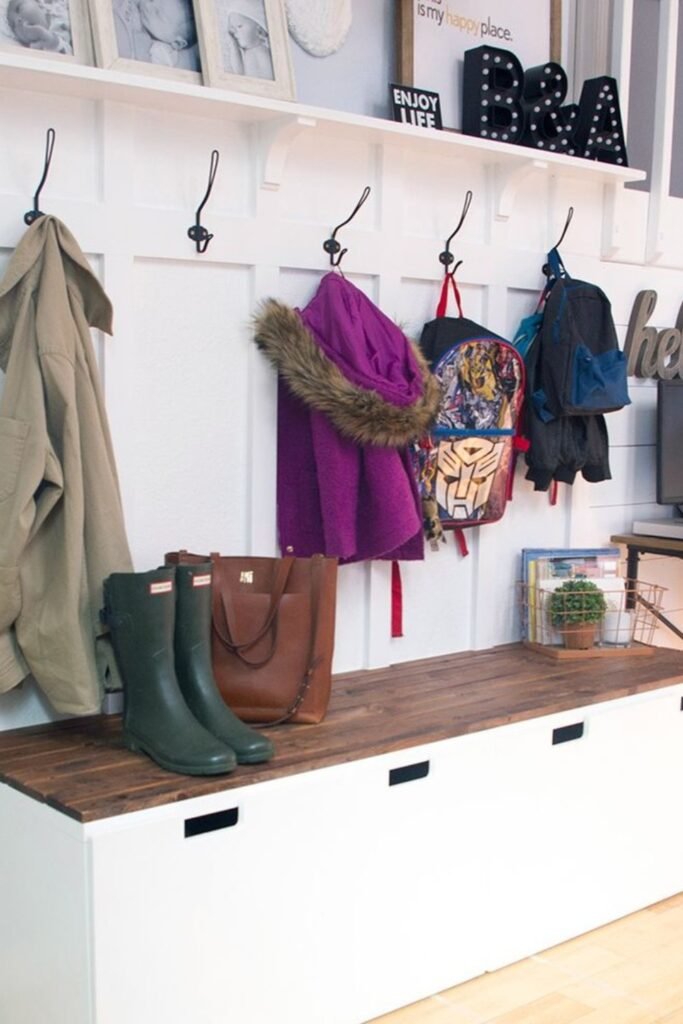
Drawer and Hook Combo Bench
Deep drawer storage keeps shoes hidden while the bench surface stays clean for daily entryway seating comfort use.
Build a cabinet-style base with full extension drawers, then add a hardwood top for durability and long wear.
This layout works best in compact mudrooms where open cubbies would visually clutter the wall space over time.
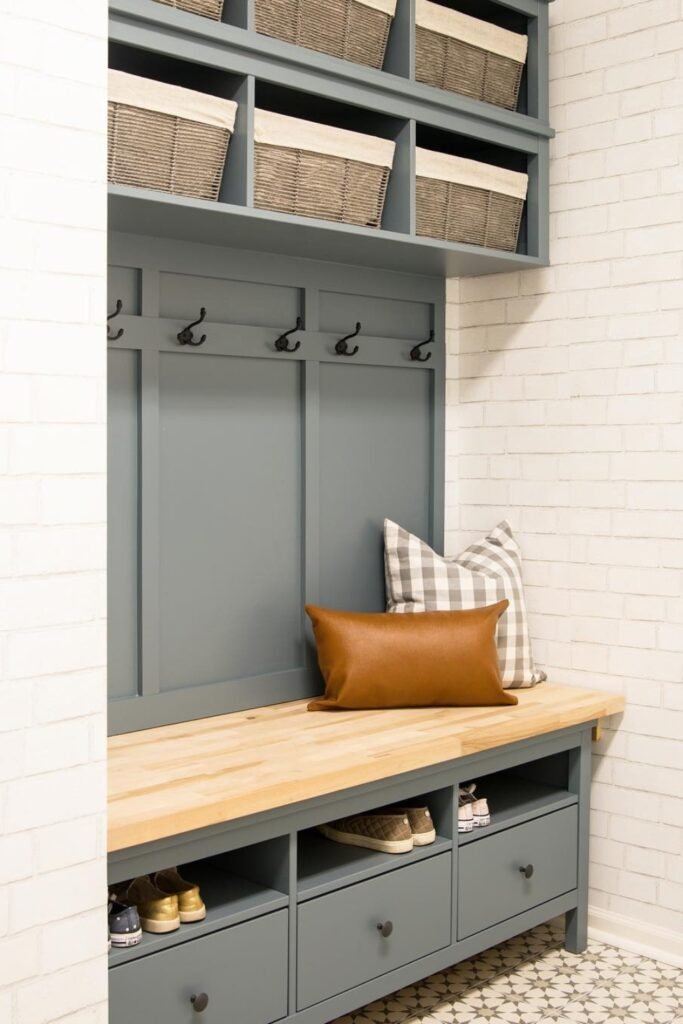
Cabinet-Framed Built-In Bench
Framing the bench between tall cabinets creates a built-in look without sacrificing surrounding storage capacity or floor space.
Install base cabinets first, secure them to studs, then span a solid wood seat across the full width.
Ideal for long walls where symmetry matters and the bench should feel intentionally permanent within the room’s layout.

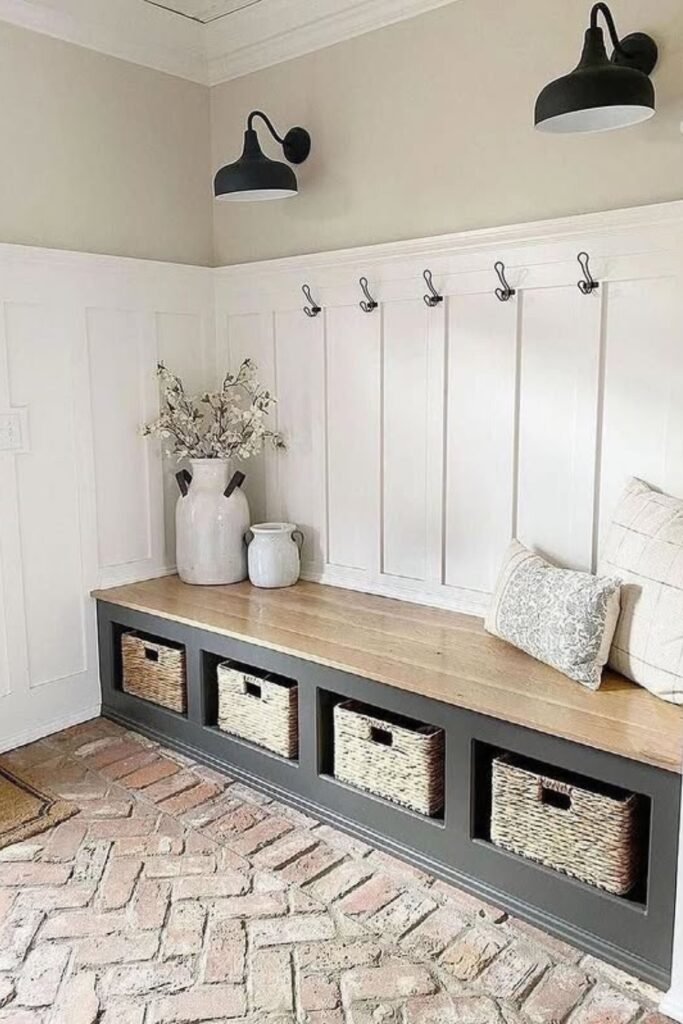
Wainscoted Basket Storage Bench
Wainscoting behind the bench protects walls from scuffs while adding subtle architectural texture to busy entryway seating zones.
Frame simple cubbies below, size baskets evenly, and top everything with a stained wood seat for warmth contrast.
This approach suits farmhouse or cottage entries needing durable finishes that still feel soft and welcoming daily use.
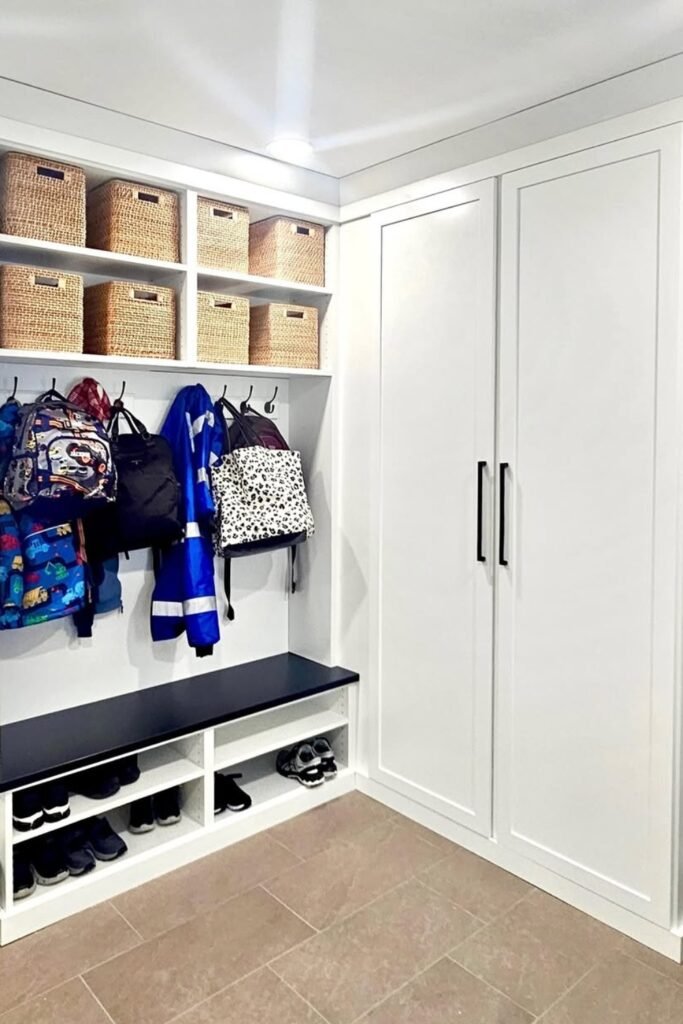
Family Drop-Zone Bench
Dedicated backpack hooks keep kids organized while the bench provides a quick drop zone after school hours daily.
Build open shoe cubbies underneath and add an upper shelf for labeled baskets storing seasonal gear neatly overhead.
Best for family homes where routines matter and storage needs change as kids grow over time naturally together.
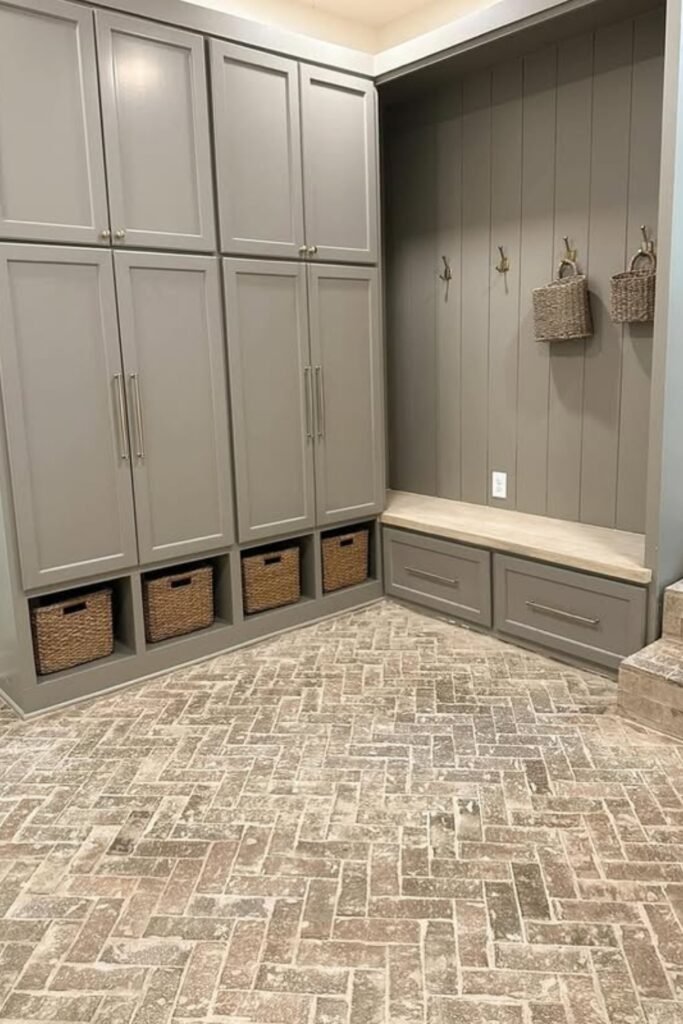
Corner-Fit Mudroom Bench
Corner bench layouts turn awkward entry angles into usable seating without blocking main walkways or door clearances nearby.
Construct an L-shaped base, add drawer storage, then finish with matching cabinetry above for balanced vertical storage flow.
This setup works well near garages or side doors where corners often go wasted in daily traffic areas.
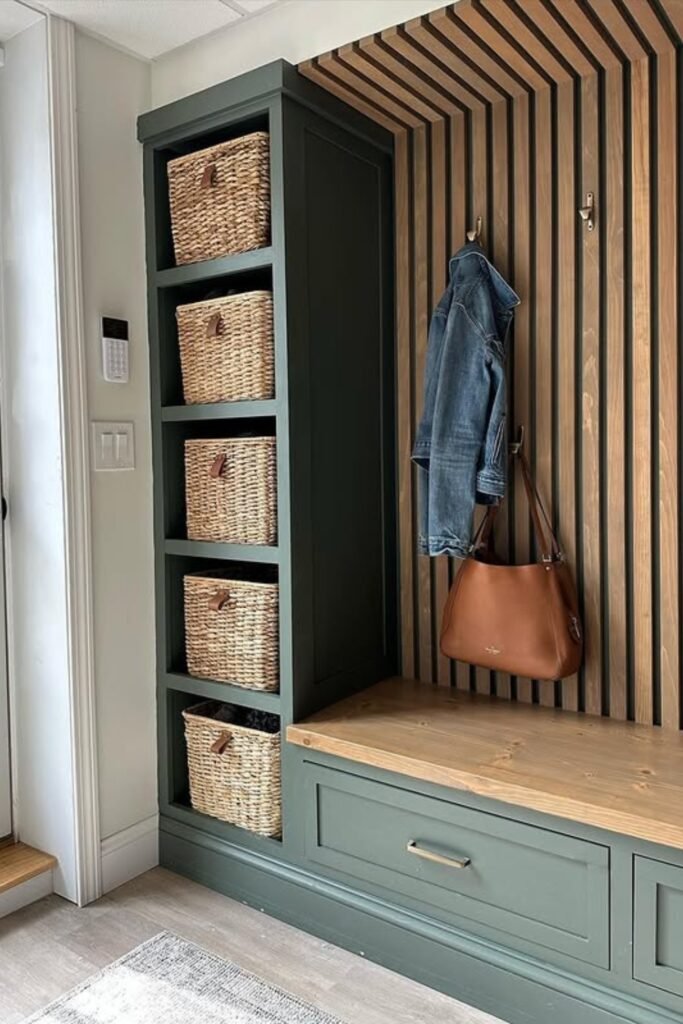
Slatted Back Panel Bench
Vertical slat backing adds ventilation and style while giving hooks a strong mounting surface for everyday coat use.
Attach wood slats over plywood, secure hooks through studs, then install a deep drawer bench below for storage.
Perfect for modern mudrooms where texture matters and storage needs stay intentionally minimal yet functional for daily routines.

Hi, my name is Ali Mehmood! I’m a passionate writer and DIY enthusiast who loves turning creative ideas into practical, hands-on projects.
I created this website to share inspiring, budget-friendly ideas that you can do yourself – whether it’s organizing your home, crafting something unique, or creating fun projects for kids and pets.
I believe DIY isn’t just a hobby – it’s a smart way to save money, reduce waste, and enjoy the satisfaction of making things with your own hands.
I’m excited to have you as part of this growing community, and I’ll continue bringing you helpful, realistic, and fun DIY ideas you can actually use.