This post may contain affiliate links: read full affiliate disclosure.
Most people try growing herbs in pots, and they fail for the same reasons – poor drainage, weak sunlight, and soil that dries out too fast.
A DIY raised herb garden removes all of those problems at once. It gives your herbs the space, airflow, and soil quality they actually need, without making gardening complicated.
This guide shows you the simplest way to build one, choose the right layout, and keep every herb thriving, even if you’ve struggled before.
Save this article for later!
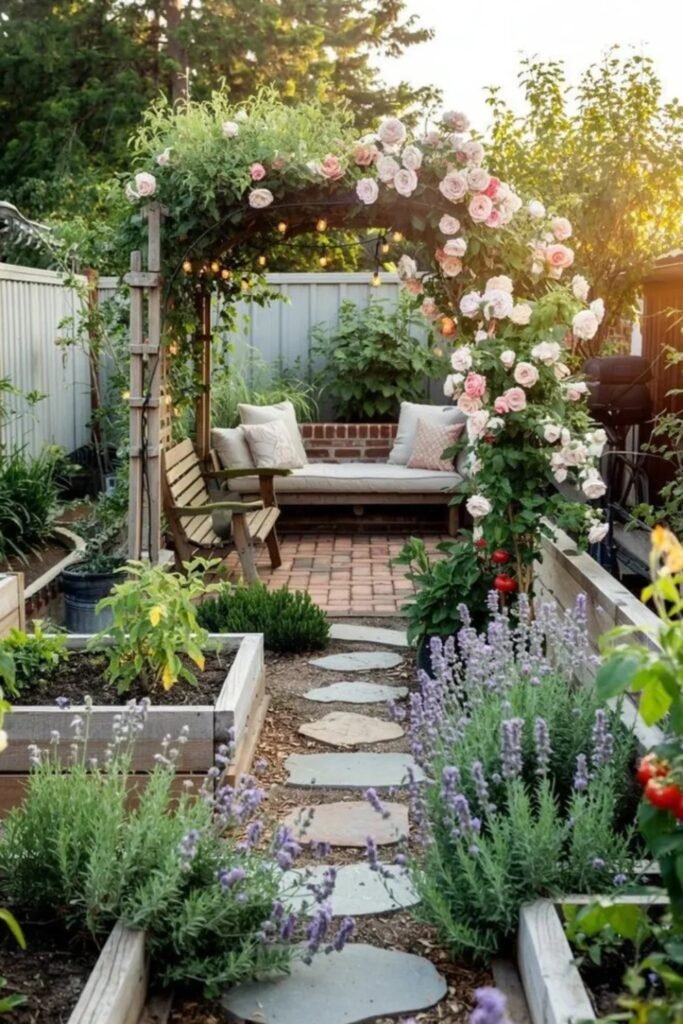
Archway Garden Path
A stone path helps you move through raised beds easily, keeping soil undisturbed while giving every herb enough space to stay healthy.
Place flat stones close together so you always have a steady walkway that handles daily steps without sinking or shifting around.
Use this idea in narrow gardens where a clear path makes harvesting simple and keeps plants protected from unwanted foot traffic.
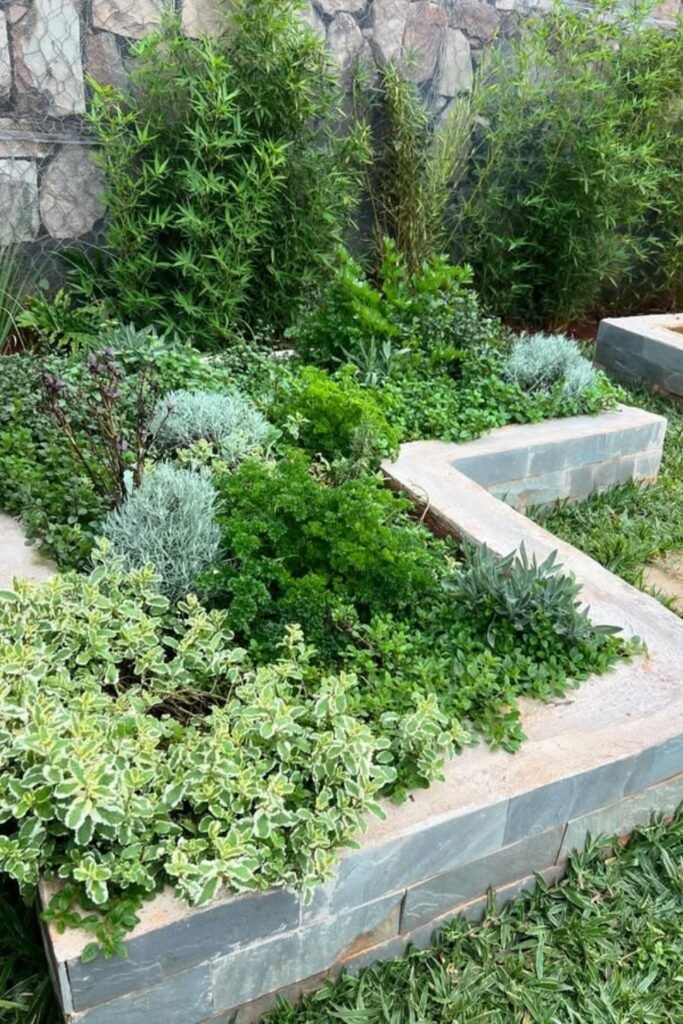
Stone-Framed Herb Bed
A stone frame keeps your herb bed strong and stable, helping soil stay cool and steady through hot days and sudden weather changes.
Stack wide flat stones tightly so the walls stay firm and require almost no maintenance once they settle into place properly.
Build this near a wall or fence where herbs enjoy extra warmth, gentle protection, and easy access for regular trimming or harvesting.
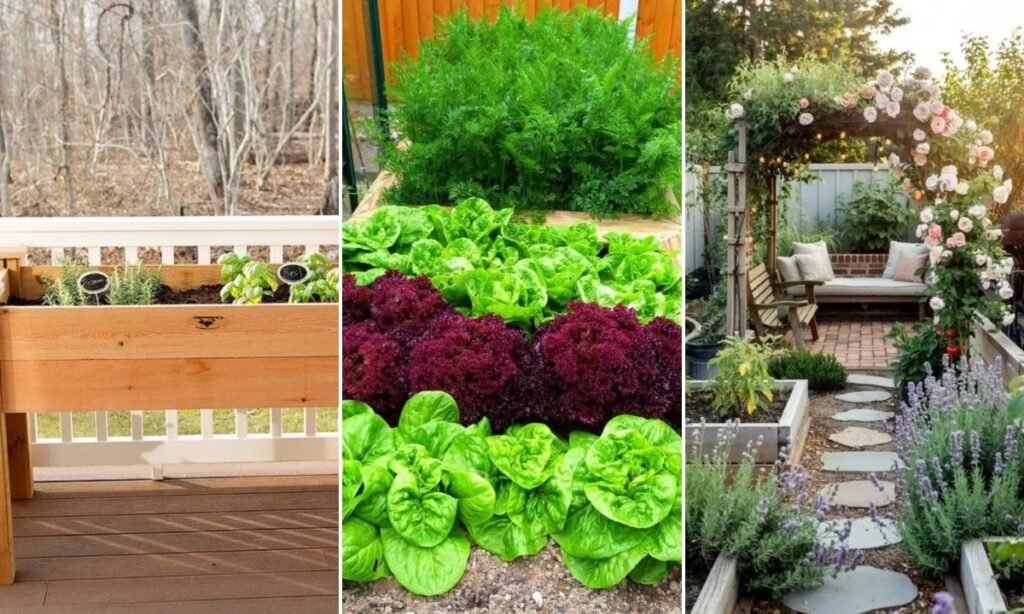
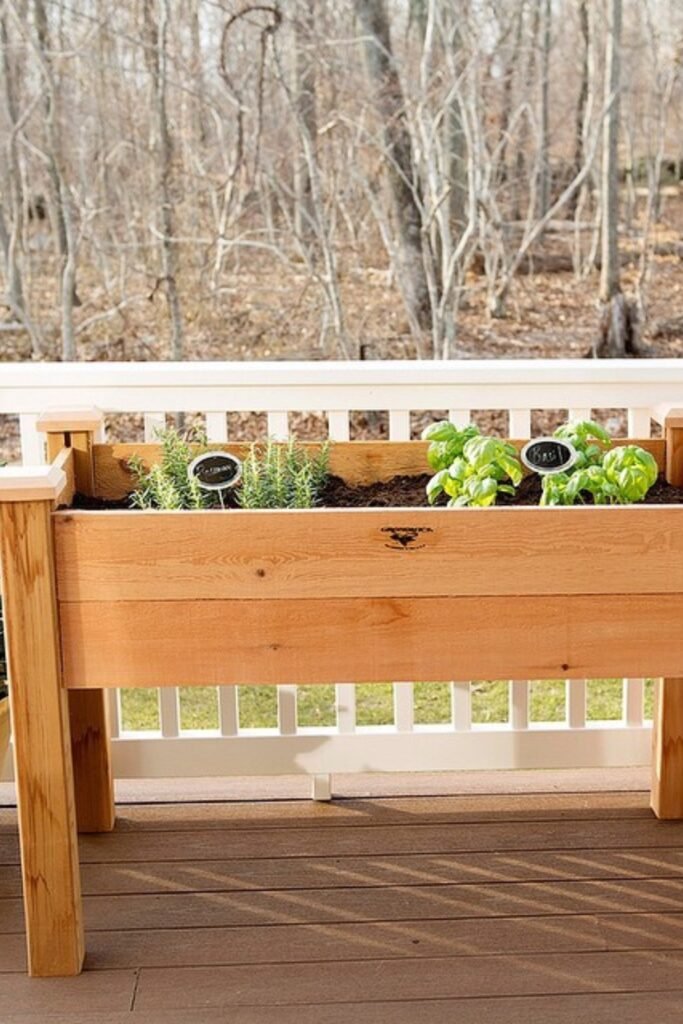
Elevated Cedar Planter
An elevated cedar planter keeps herbs at a comfortable height, making daily care easier for anyone who prefers garden work without bending.
Attach sturdy legs to a deep wooden box and secure all corners firmly so the planter stays steady through full-season growing.
Place this on porches or balconies where sunlight reaches well, giving you fresh herbs right beside your outdoor seating or kitchen door.
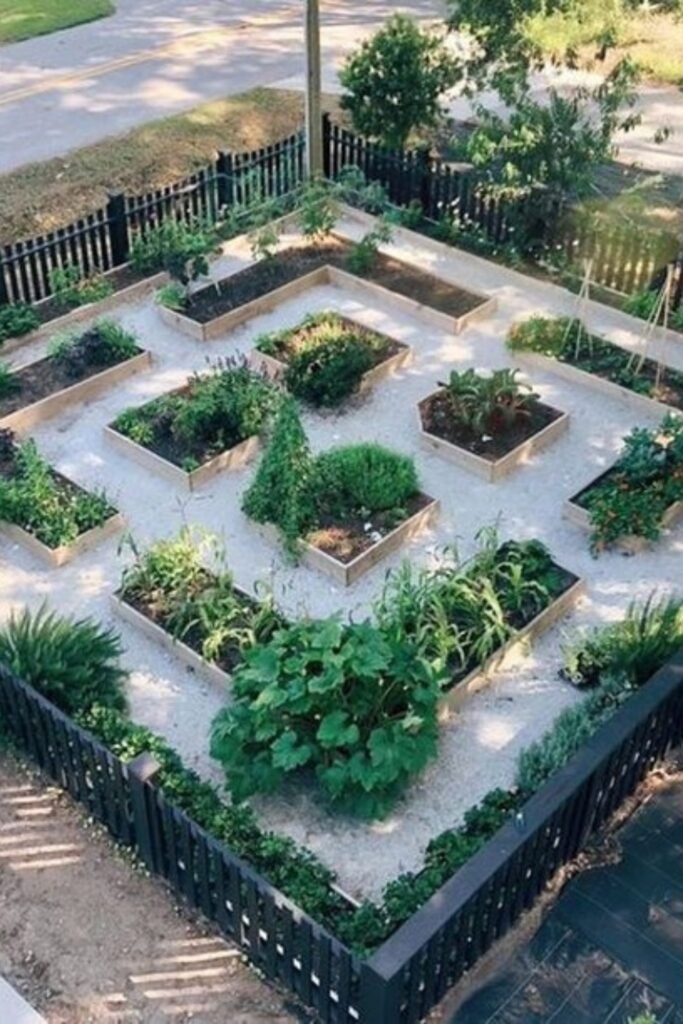
Geometric Grid Layout
A grid layout divides herbs into neat sections, helping you keep plants organized while giving every group enough room to grow well.
Build simple wooden boxes and arrange them with walking gaps so you can reach each area without stepping on soil.
Use this for larger yards where a clear structure makes watering, pruning, and harvesting easier throughout the growing season.
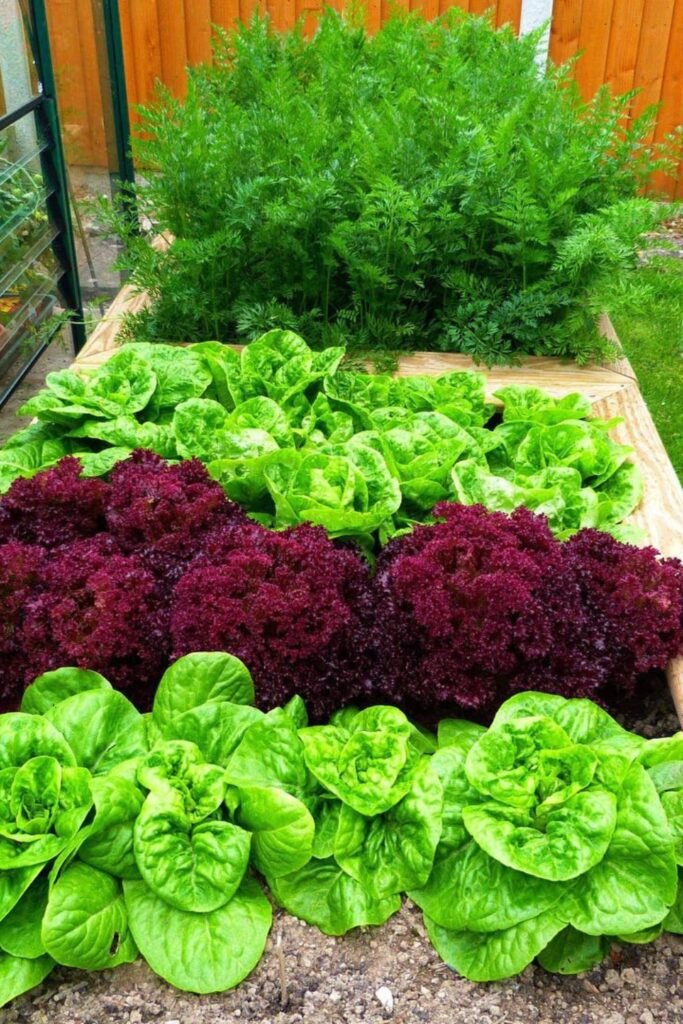
Layered Leafy Bed
A layered planting style gives leafy crops plenty of airflow, helping them stay crisp and healthy while filling the raised bed neatly.
Use rich loose soil and space each row evenly so every plant gets enough sunlight and room to spread naturally as it grows.
Try this layout for fast-growing greens you harvest often, keeping rows tidy so cutting and replanting stay simple and convenient.
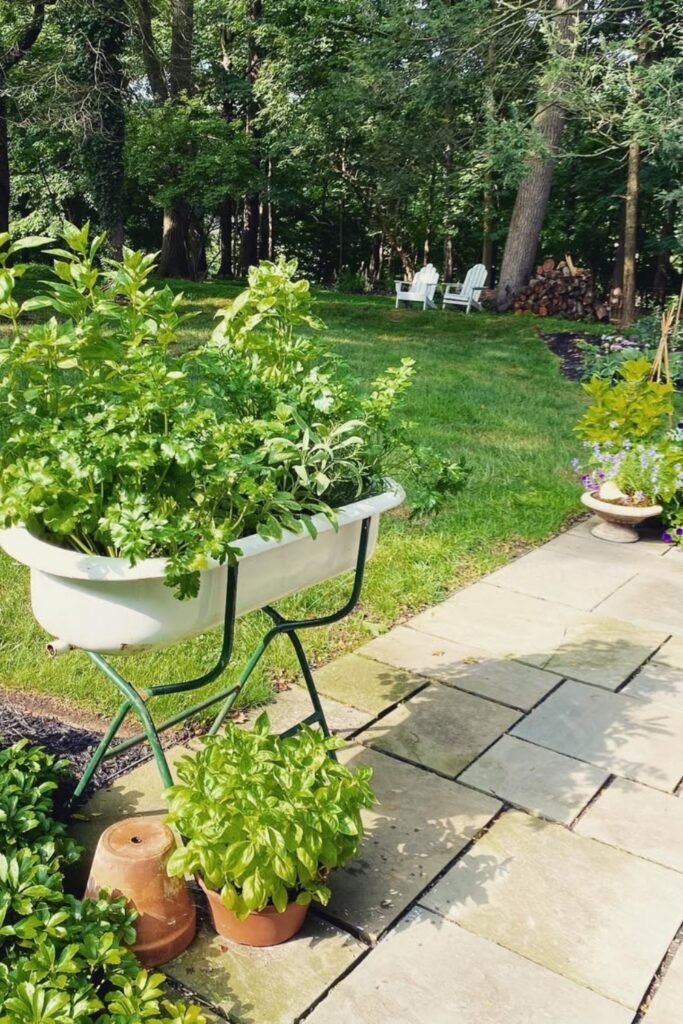
Upcycled Tub Planter
A reused metal tub becomes a simple raised herb planter, giving roots deep soil and keeping plants cool during warm summer days.
Drill drainage holes underneath, fill with light soil, and place the tub on a stable stand so water flows out easily.
Move this planter around your yard when sunlight changes, keeping herbs in bright spots that help them stay strong all season.
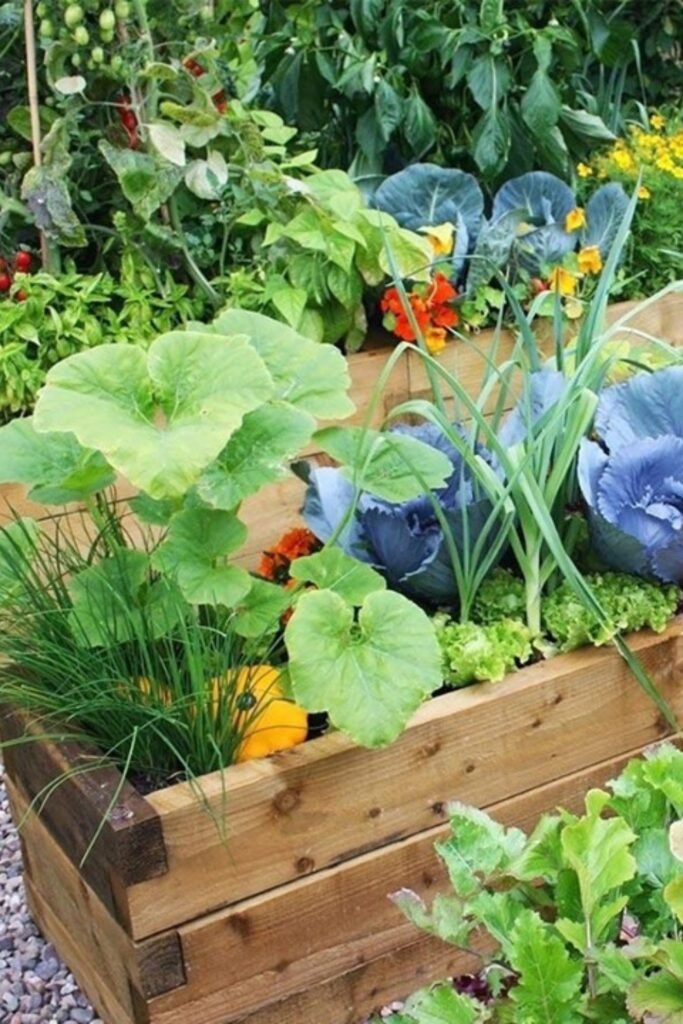
Mixed Crop Timber Bed
A timber bed lets herbs and vegetables grow together, helping each plant stay healthier by sharing space that encourages natural airflow.
Build the frame with stacked boards and fill it with rich soil that supports different crops without crowding them tightly.
Use this layout in sunny garden corners where mixed planting helps reduce pests and keeps harvests steady through the season.
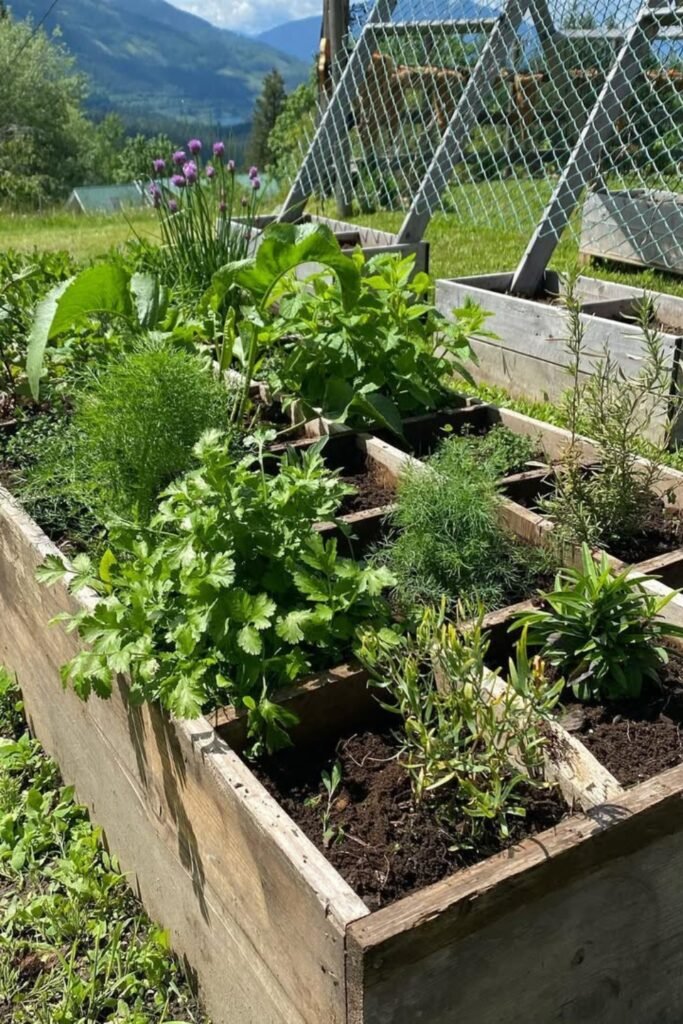
Wooden Grid Herb Box
A grid layout keeps every herb separated, giving each plant enough space to grow strongly without competing for soil or light.
Build the dividers from slim wood strips so the sections stay firm while helping you organize herbs by watering needs easily.
Use this layout in sunny yards where neat rows make harvesting simple and keep your planting area looking clean throughout the season.
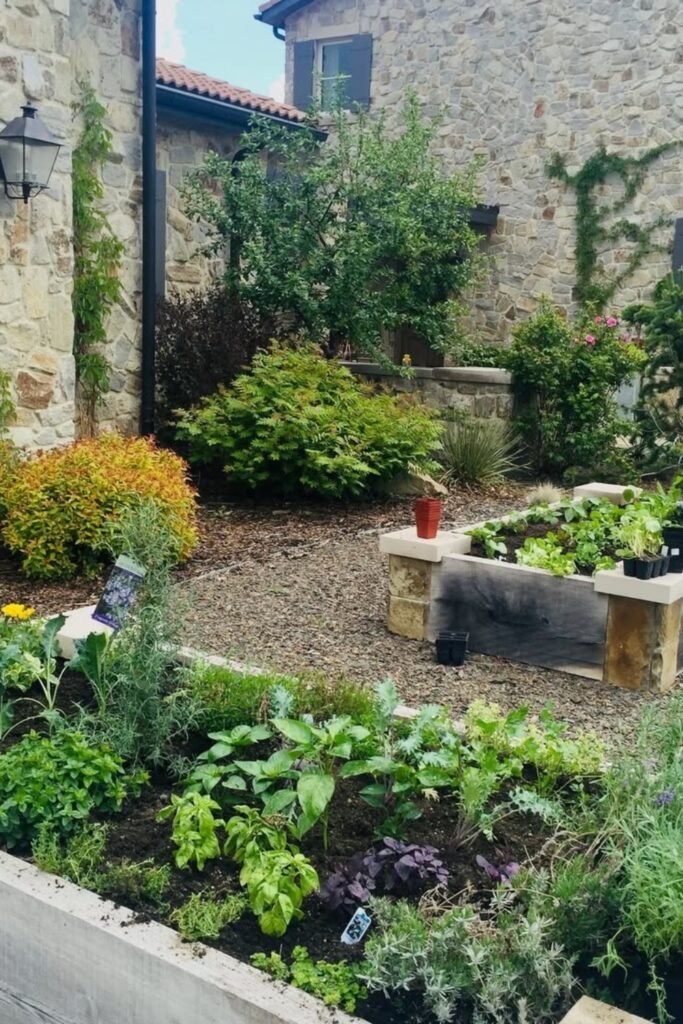
Courtyard Raised Bed
A raised bed in a courtyard space creates a focused planting zone, giving herbs steady warmth from surrounding stone walls.
Use deep soil and wide spacing so plants can develop strong roots even when the garden sits inside a tighter outdoor area.
Choose this idea for front-yard corners where a single bed provides easy access and keeps your herb garden visually welcoming.
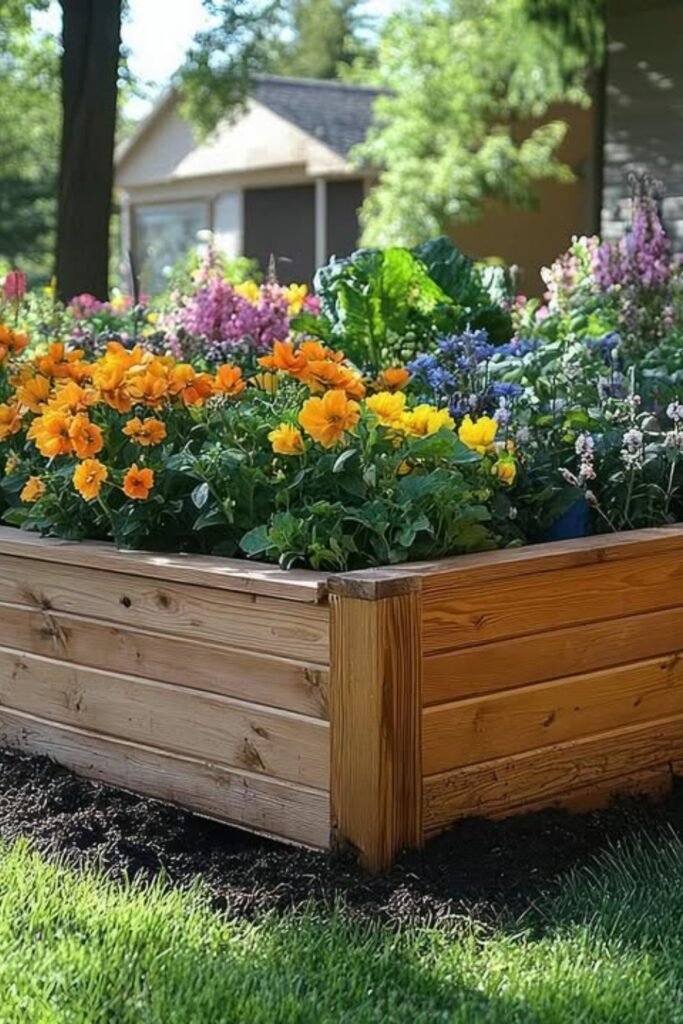
Bright Floral Bed
A wooden raised bed filled with colorful plants offers a lively focal point while giving herbs plenty of steady sunlight.
Build the structure using wide cedar boards to hold deep soil that keeps moisture balanced for both flowers and herbs.
Use this style in open lawns where a single large box becomes a bright, practical growing space with strong airflow.
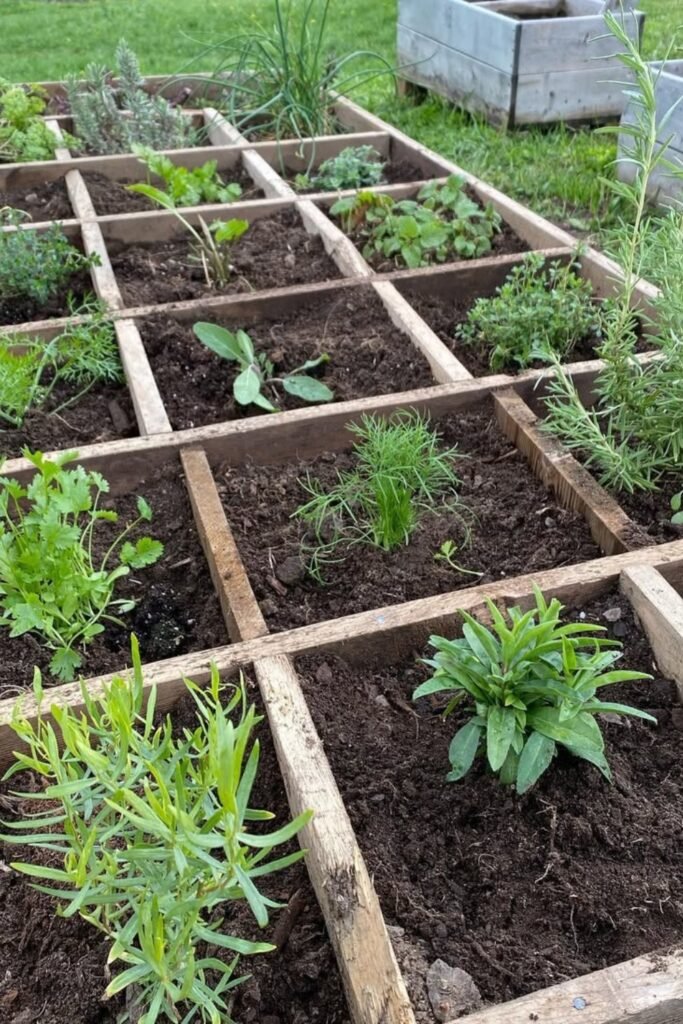
Square-Grid Planting Frame
A square-grid frame helps you plant herbs evenly, creating tidy rows that support airflow and reduce crowding during busy growth periods.
Cut slim wooden strips and attach them firmly so the squares stay stable when watering and weeding through the season.
Place this layout in open areas where structured spacing makes trimming easier and helps each herb maintain its natural shape.
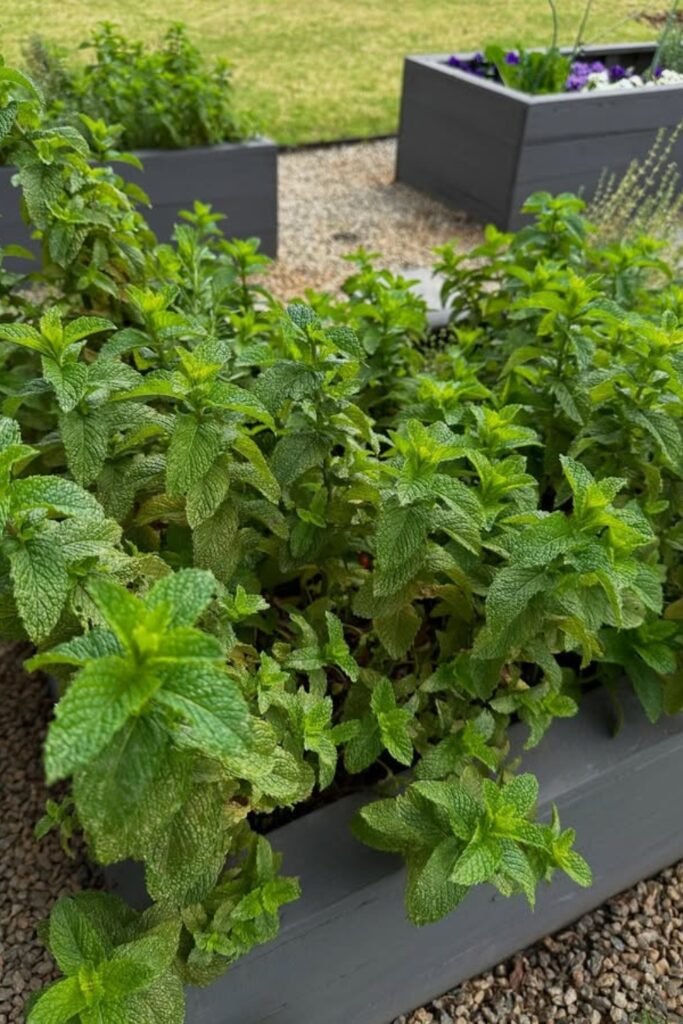
Deep Mint Planter
A deep planter keeps mint controlled, stopping roots from spreading into other beds while giving the plant plenty of growing room.
Fill the box with loose soil so moisture stays balanced, keeping mint leaves fresh and preventing the bed from drying quickly.
Use this approach anywhere mint grows aggressively, ensuring it stays contained while producing full, healthy stems all summer.
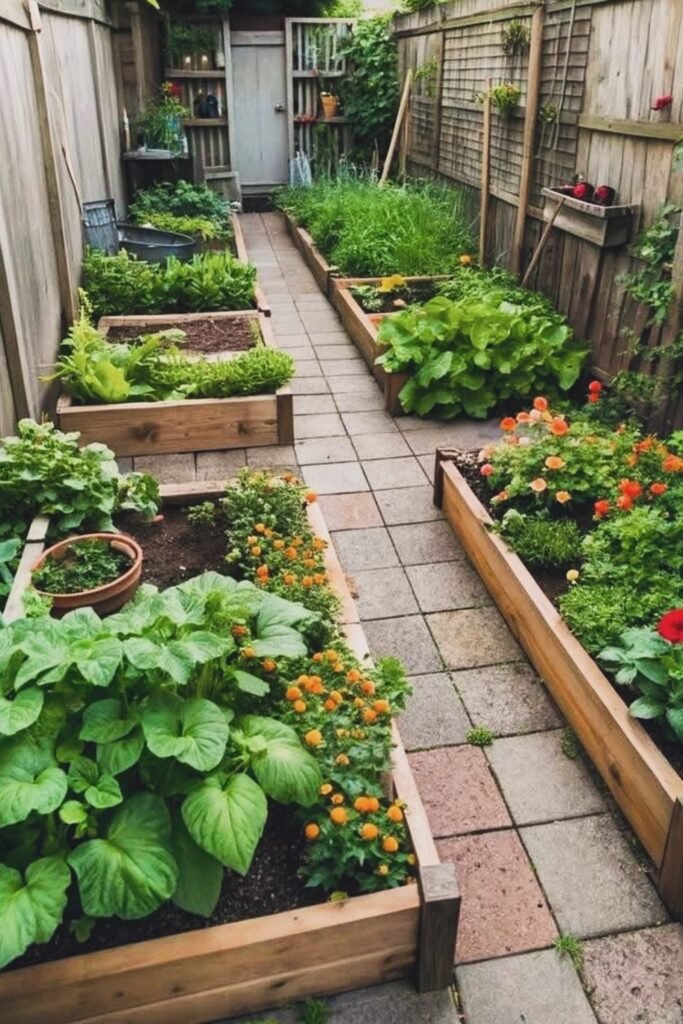
Narrow Side-Garden Beds
Raised beds along a narrow walkway create an efficient growing area, giving herbs strong sunlight while keeping the pathway clear for movement.
Build shallow wooden boxes to fit tight spaces, allowing plants to thrive even when the yard has limited open ground.
Use this idea for slim garden strips where organized rows make watering easy and give you steady access for daily harvesting.
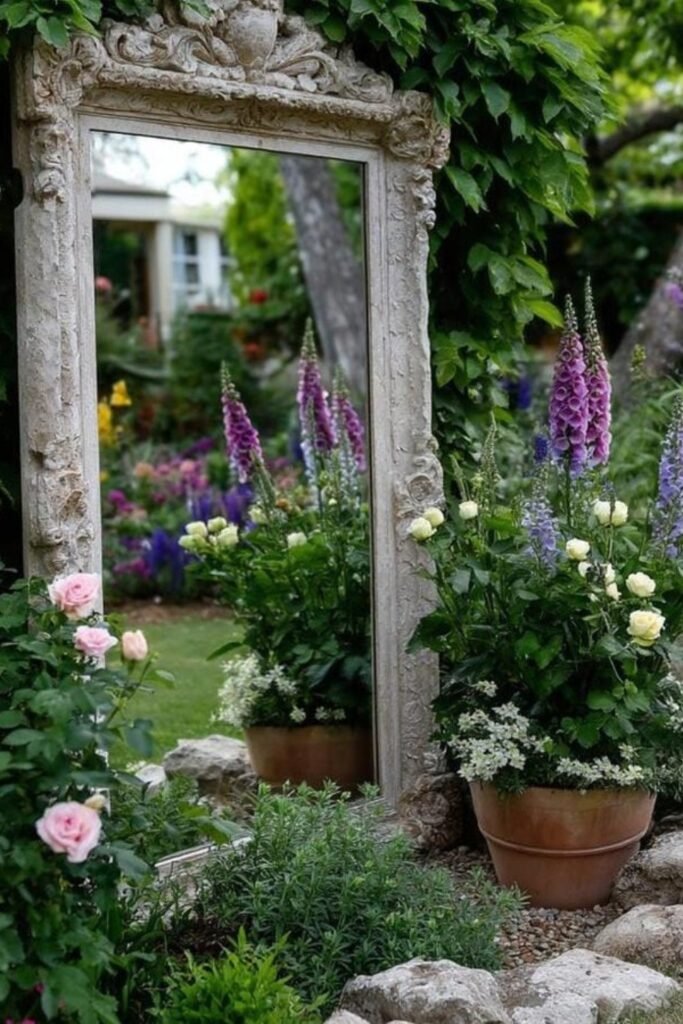
Mirror Garden Illusion
A tall outdoor mirror instantly doubles the look of your greenery, making small herb areas feel wider without changing layout.
Place terracotta pots in front so their height and colors reflect beautifully, adding depth while keeping every plant easily accessible.
Use this trick in tight corners where an open feel helps the garden breathe and gives herbs a lighter, brighter atmosphere.
Brick-Sided Herb Beds
Stacked bricks create sturdy raised beds that hold warmth, helping herbs grow faster while keeping soil from washing away.
Build shallow boxes along the wall so plants get support from reflected heat and steady sunlight throughout busy growing seasons.
Choose this setup beside fences where long, narrow spaces need structure and herbs benefit from a strong, grounded planting area.
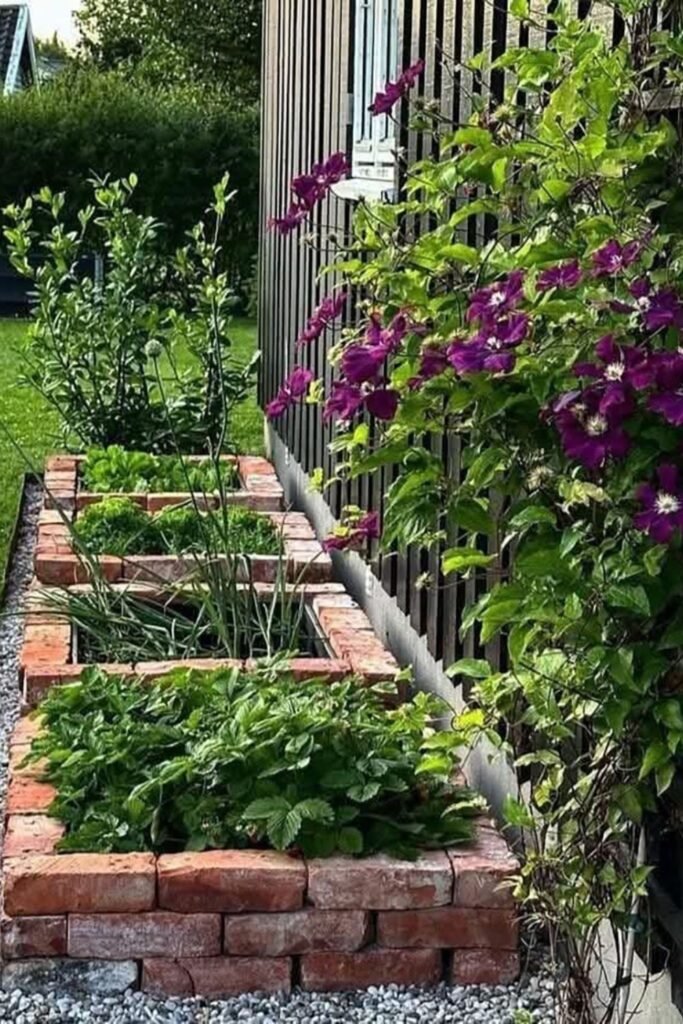
Tiered Vertical Planter
A stepped planter brings multiple growing levels into one spot, letting you raise herbs upward when ground space feels extremely limited.
Fill each tier with light soil so drainage stays steady, giving delicate herbs balanced moisture even during warm summer afternoons.
Use this design on patios where compact planting helps organize different herbs neatly while keeping harvesting simple and comfortable.
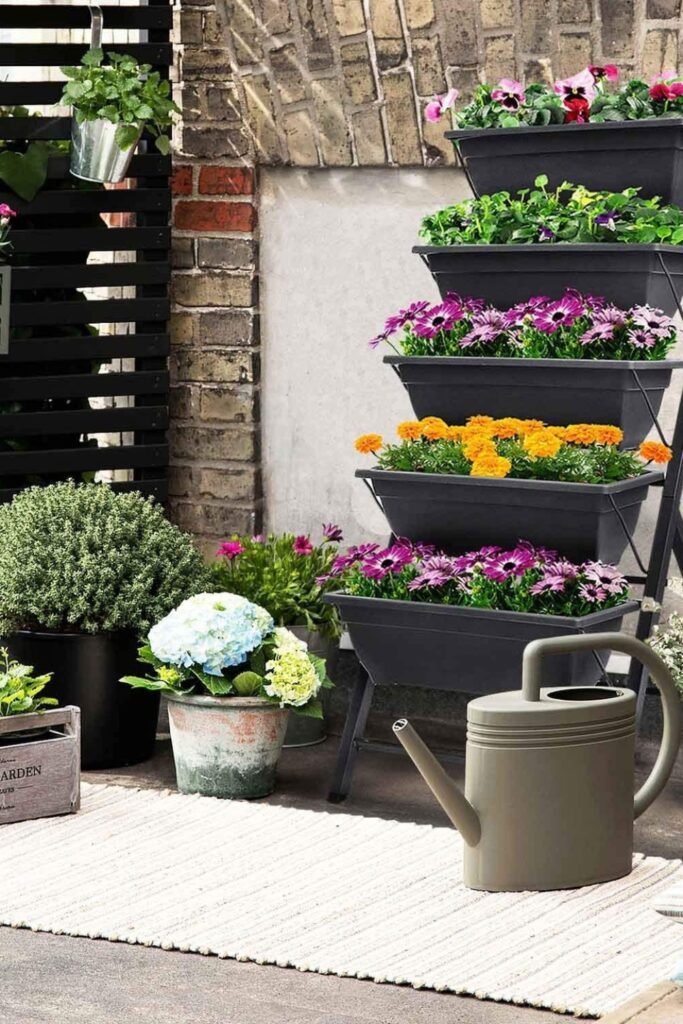
Morning-Sun Herb Rows
Wide wooden beds catch early sunlight, giving herbs the strong morning energy they need for fuller growth and healthy flavor.
Arrange beds in open rows so airflow stays clear, helping plants dry quickly and reducing moisture problems after heavy watering.
Place this layout in yards with long sunlight windows to keep herbs growing steadily without crowding or shadow competition.
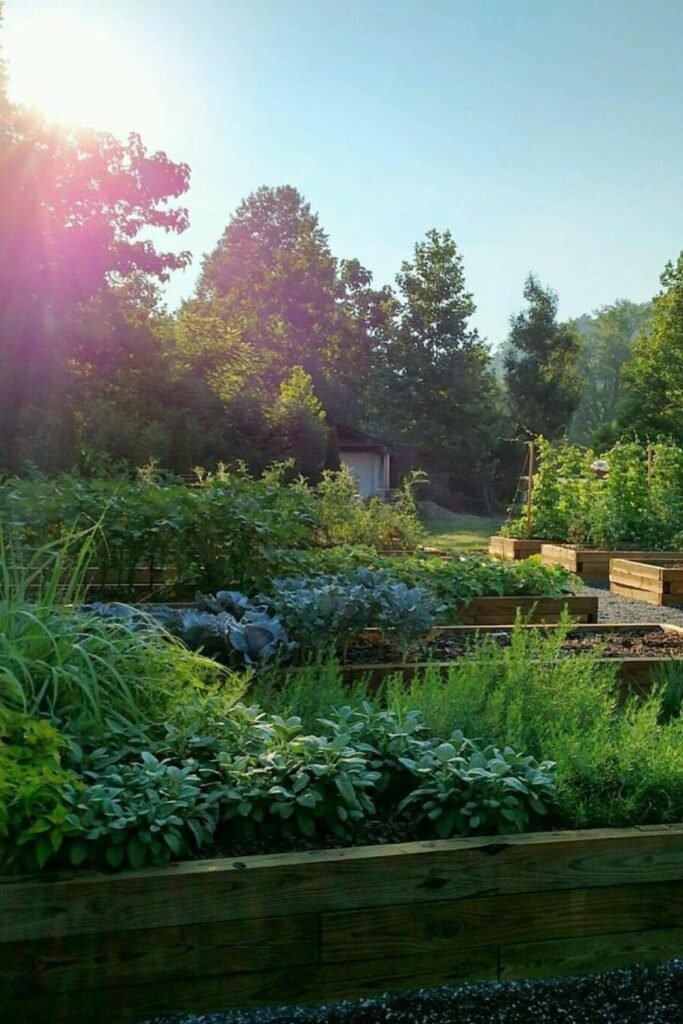
Porch-Height Planter Box
A raised porch planter lifts herbs closer to eye level, making watering easier while keeping leaves safe from ground pests.
Use slim legs and deep soil so the box stays stable, supporting strong roots even in narrow patio walkways and corners.
This works best on covered porches where shade protection helps herbs stay cool while still receiving gentle filtered sunlight.
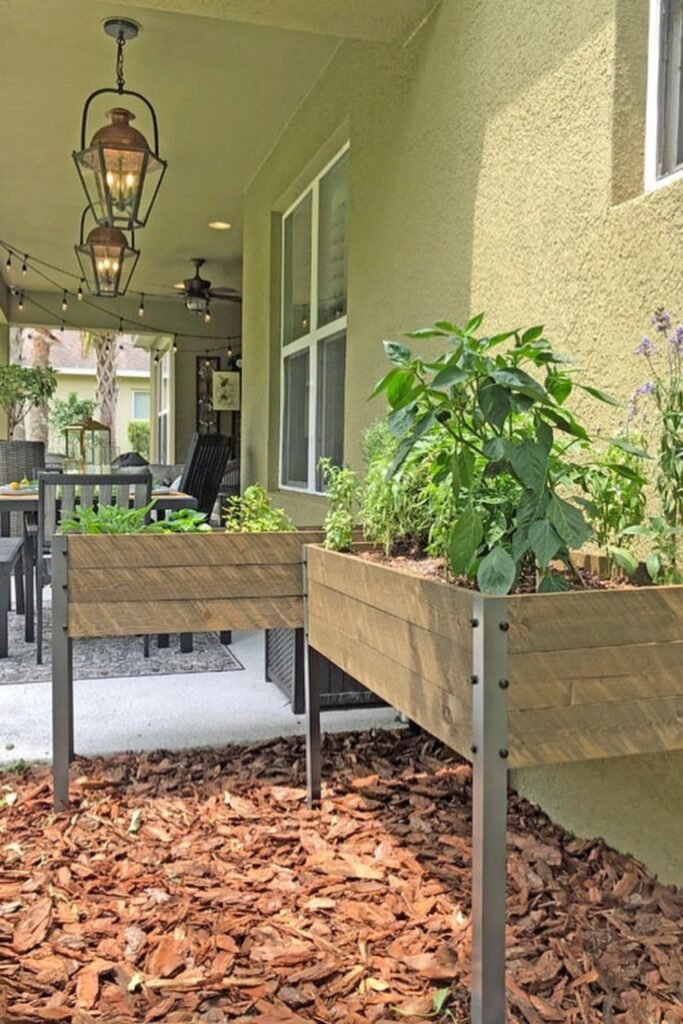
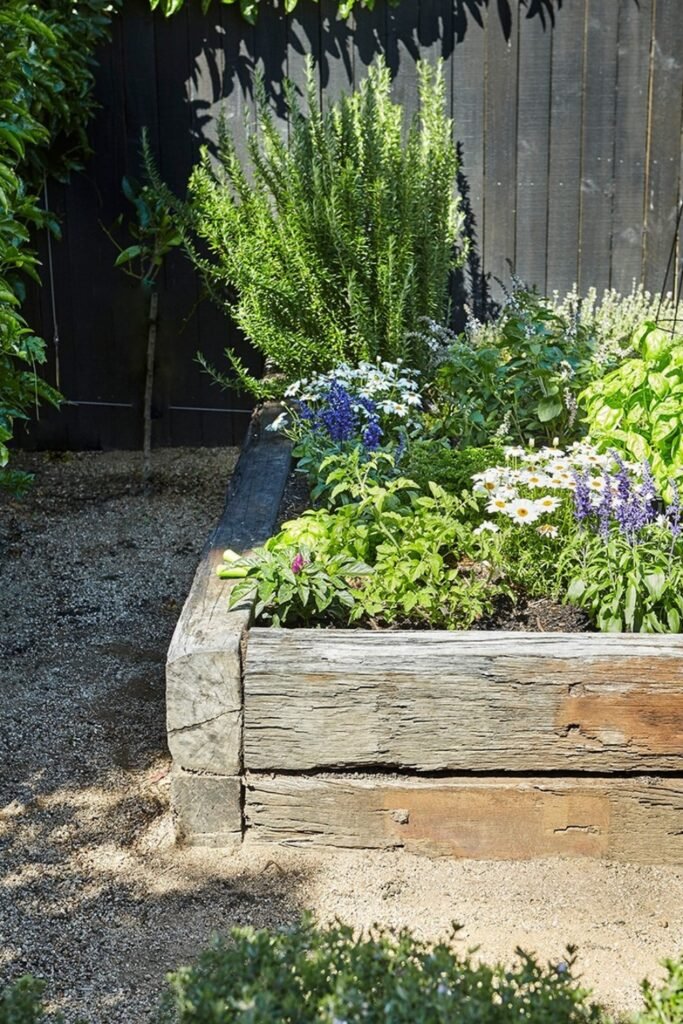
Rustic Timber Bed
Old timber beams create a strong, rustic raised bed that keeps herbs grounded while adding natural texture to quiet corners.
Line the inside with landscape fabric so soil stays contained and the wood structure lasts longer through different weather seasons.
Choose this style for shaded edges where a heavier frame blends into the landscape while giving herbs dependable growing space.

Hi, my name is Ali Mehmood! I’m a passionate writer and DIY enthusiast who loves turning creative ideas into practical, hands-on projects.
I created this website to share inspiring, budget-friendly ideas that you can do yourself – whether it’s organizing your home, crafting something unique, or creating fun projects for kids and pets.
I believe DIY isn’t just a hobby – it’s a smart way to save money, reduce waste, and enjoy the satisfaction of making things with your own hands.
I’m excited to have you as part of this growing community, and I’ll continue bringing you helpful, realistic, and fun DIY ideas you can actually use.