This post may contain affiliate links: read full affiliate disclosure.
Sensory bins are one of the easiest ways to support hands-on learning while keeping kids engaged through play.
With simple materials and a little creativity, you can create sensory activities that help improve fine motor skills, focus, and early learning at home.
In this article, I will show you 21 DIY sensory bin ideas that are easy to set up, budget-friendly, and fun for kids of different ages.
Why Sensory Bins Are Great for Kids?
Sensory bins give kids a hands-on way to explore textures, colors, sounds, and movement through play.
They help build fine motor skills, support early learning concepts, and encourage independent focus.
Sensory bins also promote creativity and problem-solving, making them a valuable activity for toddlers and young children at home, in classrooms, or during quiet playtime routines.

Rice Rainbow
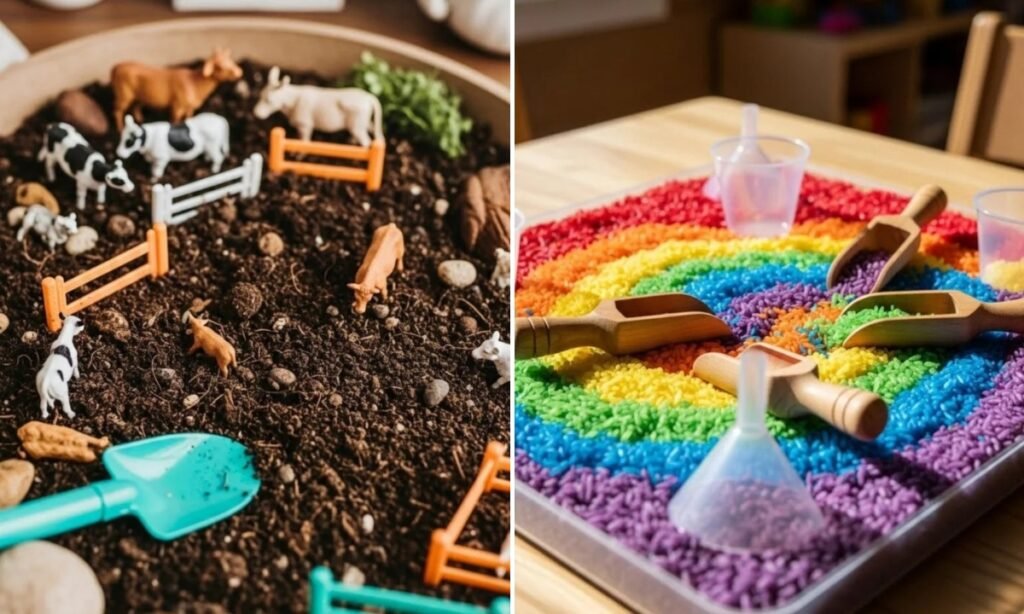
Fill a bin with rice dyed in bright rainbow colors. Add small cups, funnels, and scoops so kids can pour, mix, and sort colors.
This sensory bin helps build fine motor skills and color recognition. You can also hide small toys or letters inside the rice to turn it into a fun discovery activity.

Kinetic Sand
Use store-bought or homemade kinetic sand for a soft, moldable sensory experience. Add cookie cutters, small molds, and toy tools for shaping and digging.
This bin supports hand strength and creativity while staying mostly mess-free. It works well for calm play and helps kids focus through repetitive squeezing and building.

Water Beads
Soak water beads and place them in a clear sensory bin for a squishy, slippery texture. Add spoons, strainers, and small cups for scooping and transferring.
This bin offers strong sensory input and helps improve hand-eye coordination. Always supervise play, especially with younger children, since the beads are small.

Pasta Play
Fill the bin with dry pasta shapes like shells, penne, and spirals. Include bowls, scoops, and jars for sorting by size or shape.
This simple sensory bin encourages counting, sorting, and sound exploration as pasta moves around. You can dye the pasta for extra visual interest or keep it neutral for calm play.

Farm Soil
Fill the bin with clean soil or kinetic dirt. Add toy farm animals, fences, and small shovels for digging and pretend play. This sensory bin introduces earthy textures and encourages imaginative storytelling.
Kids can create farms, bury animals, and uncover them again, helping develop fine motor skills and early role-play abilities.

Ocean Bin
Use blue water beads or colored rice to create an ocean base. Add shells, toy sea animals, and small nets. This bin supports sensory exploration through different textures while introducing ocean themes.
Scooping, pouring, and searching for sea creatures helps improve coordination and keeps kids engaged for longer play sessions.

Construction Dirt
Fill the bin with sand, soil, or crushed cereal to mimic dirt. Add toy trucks, diggers, and small rocks. This sensory bin encourages heavy scooping and pushing, which builds hand strength.
Kids can load, dump, and dig repeatedly, making it perfect for energetic play and vehicle-loving children.

Pom Pom
Add colorful pom poms to a large bin along with tongs, cups, and muffin trays. Kids can sort by color, size, or texture.
This sensory bin focuses on fine motor control and color recognition. Using tongs strengthens finger muscles while keeping the activity simple, clean, and easy to reset.

Ice Excavation
Freeze small toys inside ice blocks and place them in a bin. Add droppers, warm water, and spoons so kids can melt and chip away the ice.
This sensory bin introduces temperature play and problem-solving. Kids stay focused as they experiment with melting, squeezing droppers, and rescuing hidden objects.

Nature Hunt
Fill the bin with leaves, twigs, pinecones, pebbles, and dried flowers. Add small magnifying glasses and cups for sorting. This sensory bin encourages natural texture exploration and observation skills.
Kids can classify items by size or shape while connecting playtime with outdoor learning and nature discovery.

Alphabet Rice
Use rice dyed with letters written or mixed with plastic alphabet pieces. Add small bowls and scoops for sorting. This sensory bin blends tactile play with early literacy practice.
Kids can search for letters, spell simple words, or match letters while improving fine motor coordination.

Moon Sand
Mix flour and oil to create soft moon sand. Add small containers, scoops, and molds for shaping. This sensory bin offers a silky texture that encourages squeezing and molding.
It supports calm, focused play and helps strengthen hands while allowing kids to explore creative construction.

Button Sort
Fill the bin with assorted buttons in different sizes and colors. Add small bowls or muffin trays for sorting. This sensory bin helps kids practice counting, color matching, and fine motor skills.
Handling small buttons improves finger control while turning simple sorting into a focused, hands-on activity.

Car Wash
Use a shallow bin with water, toy cars, sponges, and small brushes. Kids can scrub, rinse, and line up clean cars. This sensory bin supports pretend play and hand coordination.
Squeezing sponges and moving cars through water keeps children engaged while reinforcing everyday routines.

Color Sorting
Add colored objects like blocks, beads, or balls into one bin. Provide color-matched cups for sorting. This sensory bin strengthens visual discrimination and early learning skills.
Kids enjoy grouping items by color while improving focus, coordination, and decision-making through simple, repetitive actions.

Bug Dig
Fill the bin with soil or sand and hide plastic bugs inside. Add small shovels and brushes for digging. This sensory bin encourages exploration and pretend play.
Kids can uncover, count, and identify insects while building patience, hand strength, and curiosity about nature.are

Shaving Foam
Fill a bin with shaving foam and add plastic tools, spoons, or toy animals. Kids can swirl, spread, and draw shapes with their fingers.
This sensory bin offers rich tactile input and supports creative expression. It also helps children practice hand control while enjoying a soft, messy, but fun experience.

Magnetic Bin
Place magnetic letters, shapes, or small metal items in a bin. Add a magnetic wand for picking them up. This sensory bin introduces cause-and-effect learning and improves coordination.
Kids enjoy testing what sticks and what doesn’t while strengthening wrist and hand movements.

Cereal Scoops
Fill the bin with dry cereal and add scoops, cups, and containers. Kids can pour, measure, and transfer cereal between containers.
This sensory bin supports early math skills and fine motor development. The crunchy texture and sound make the activity engaging and easy to reset.

Fabric Texture
Add fabric scraps like felt, denim, cotton, and fleece to the bin. Include small boxes or rings for sorting.
This sensory bin helps kids explore different textures and softness levels. Touch-based play supports sensory awareness while encouraging calm, focused interaction.

Scented Rice
Use rice scented with cinnamon, vanilla, or citrus zest. Add jars, scoops, and lids for pouring and smelling.
This sensory bin introduces scent exploration along with tactile play. Kids can compare smells while strengthening fine motor skills through simple pouring and scooping actions.


Hi, my name is Ali Mehmood! I’m a passionate writer and DIY enthusiast who loves turning creative ideas into practical, hands-on projects.
I created this website to share inspiring, budget-friendly ideas that you can do yourself – whether it’s organizing your home, crafting something unique, or creating fun projects for kids and pets.
I believe DIY isn’t just a hobby – it’s a smart way to save money, reduce waste, and enjoy the satisfaction of making things with your own hands.
I’m excited to have you as part of this growing community, and I’ll continue bringing you helpful, realistic, and fun DIY ideas you can actually use.