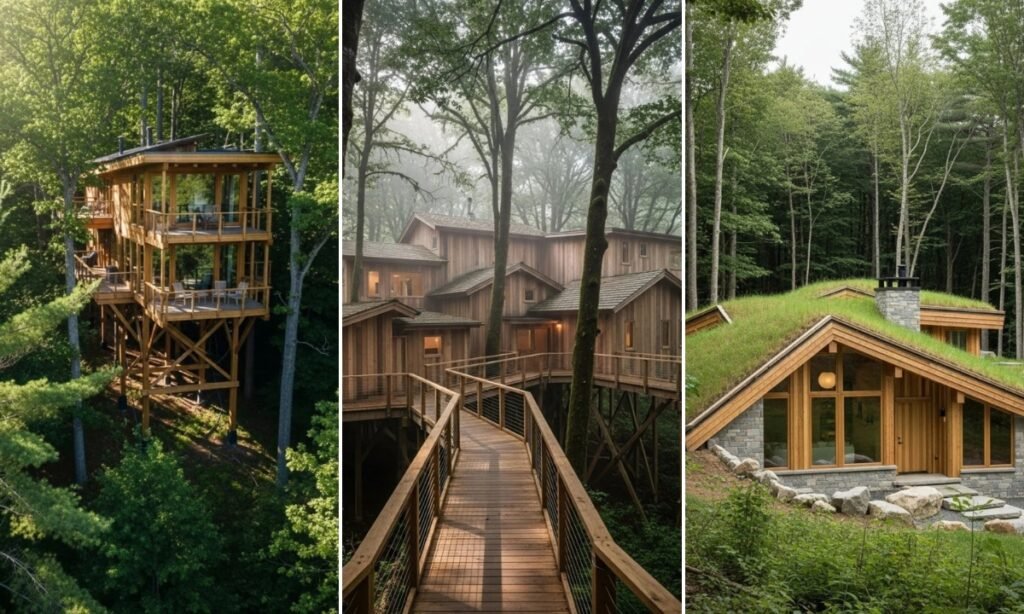
This post may contain affiliate links: read full affiliate disclosure.
Living in a forest isn’t just about a house surrounded by trees-it’s about designing a space that respects nature, privacy, and quiet.
I put together these forest house ideas to show how architecture can blend into woodland settings without overpowering them.
From subtle designs to bold structures, each idea helps you imagine a home that truly belongs in the forest.
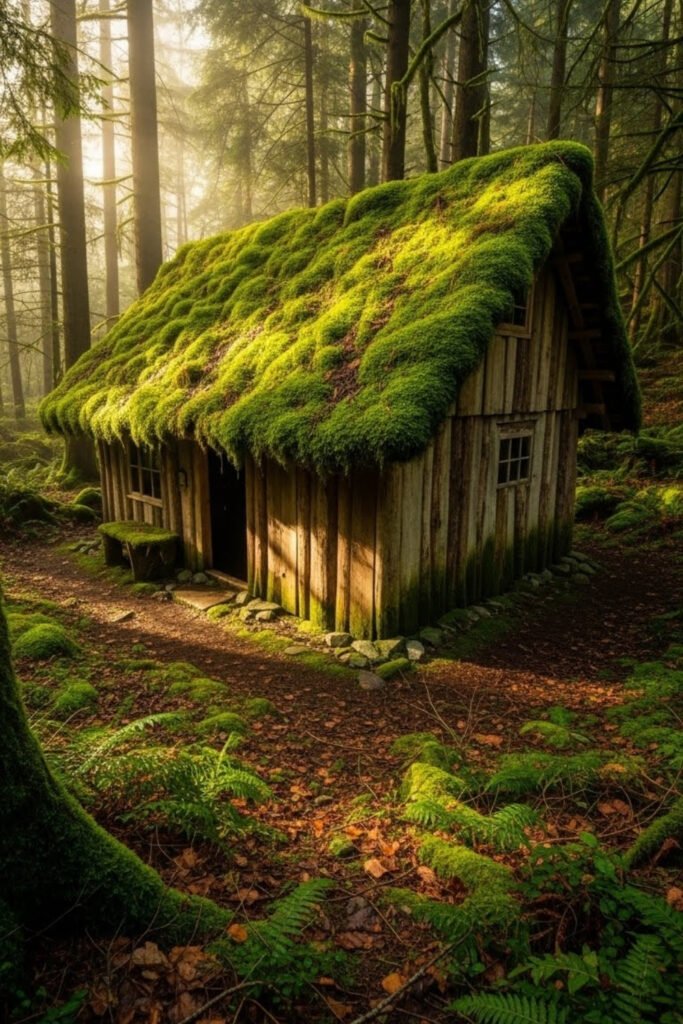
Moss Roof
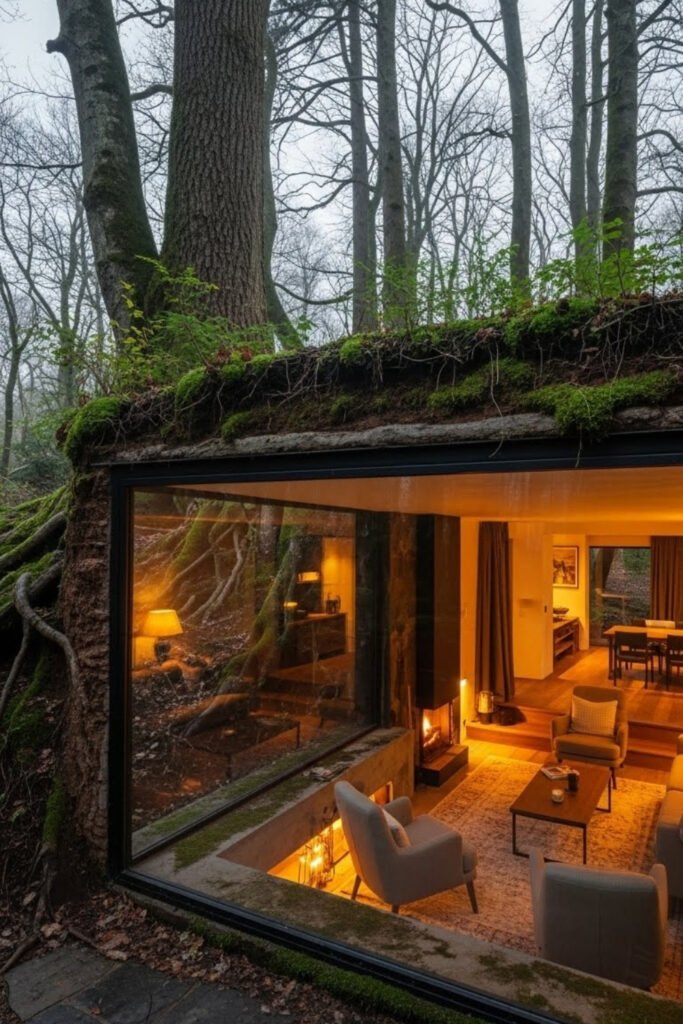
At first glance, this house almost disappears into the forest. A moss-covered roof helps the structure blend naturally with its surroundings while adding insulation and moisture control. This idea works best in damp woodland areas where moss grows easily.
From above, the home looks like part of the forest floor, creating a quiet, nature-first living experience.
Tree Canopy
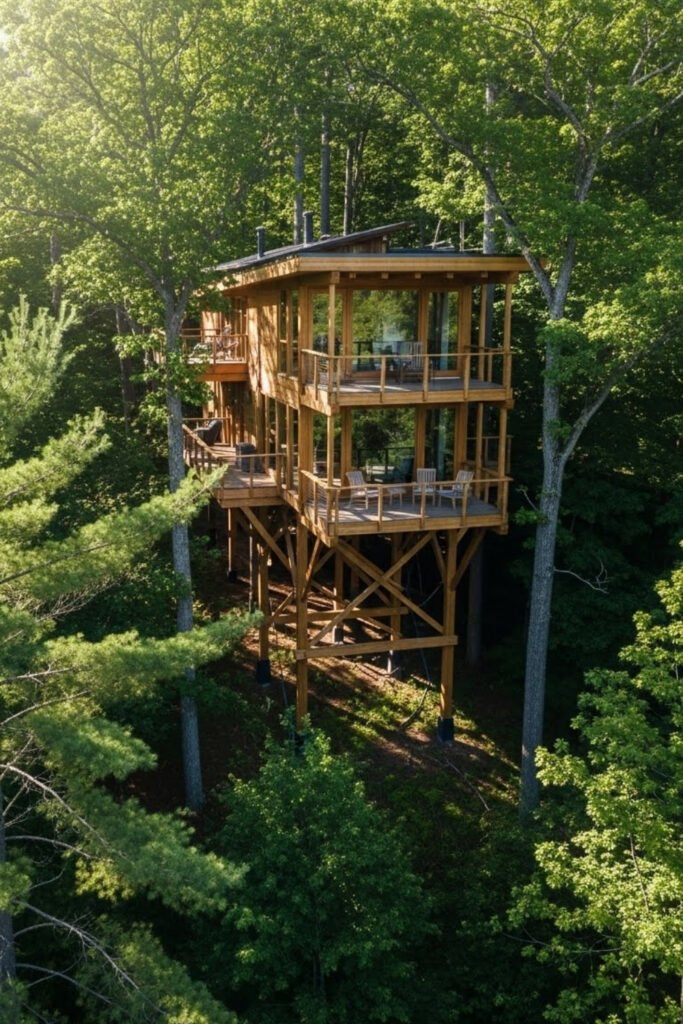
Instead of cutting through trees, this house rises gently into the canopy. Built on stilts or anchored platforms, it sits among branches without disturbing roots below.
The design maximizes views, airflow, and natural light while keeping the forest intact. It’s ideal for dense woods where ground space is limited but vertical space is abundant.
Glass Cube
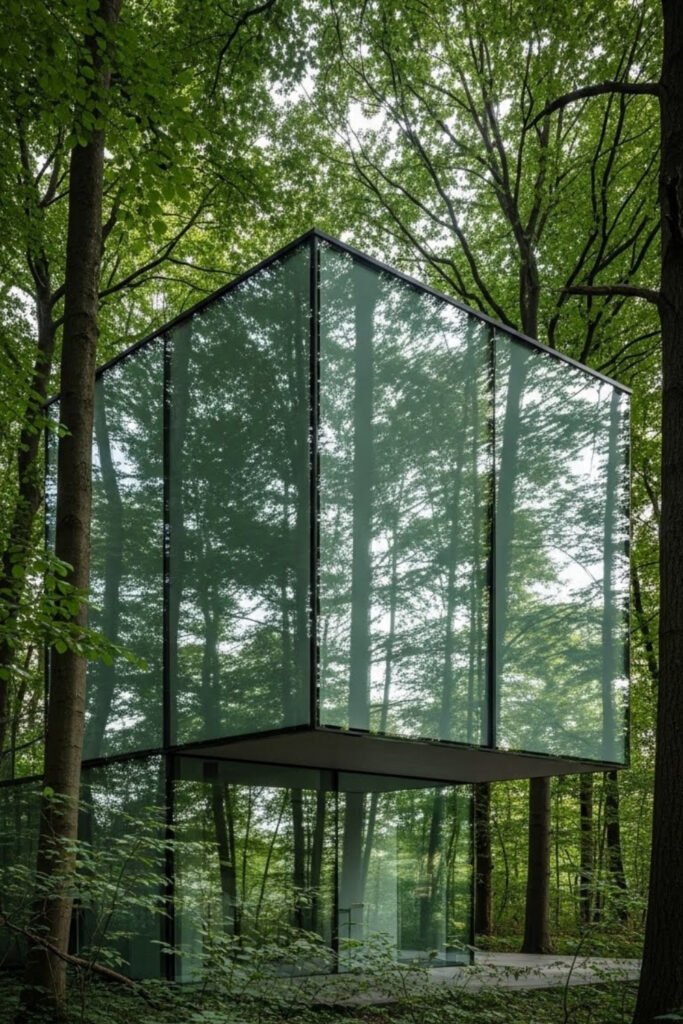
This design turns the forest into the home’s main feature. A clean glass cube structure allows uninterrupted views of trees from every angle. The exterior stays minimal so the forest dominates visually.
This idea suits quieter woodland plots where privacy comes from distance rather than walls, creating a peaceful, immersive living environment.
Walkway Home
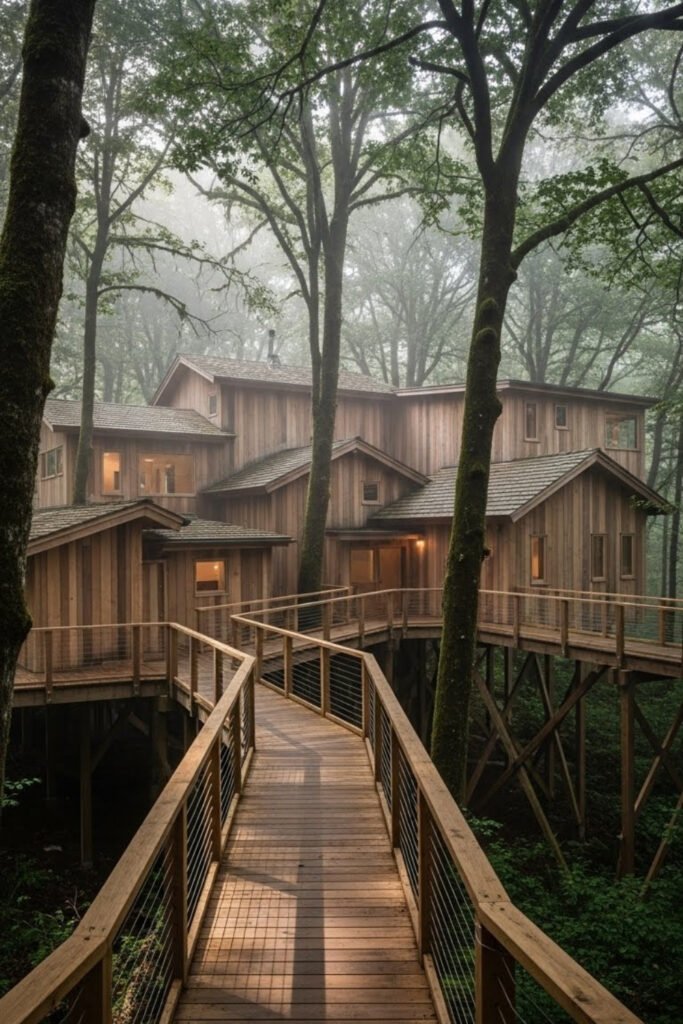
Rather than one solid structure, this forest house connects separate sections with elevated wooden walkways. Bedrooms, living areas, and kitchens sit apart, linked by open-air paths above the forest floor.
It reduces ground impact and makes movement feel like a daily forest walk. This layout works beautifully on uneven or root-heavy terrain
Earth Shelter
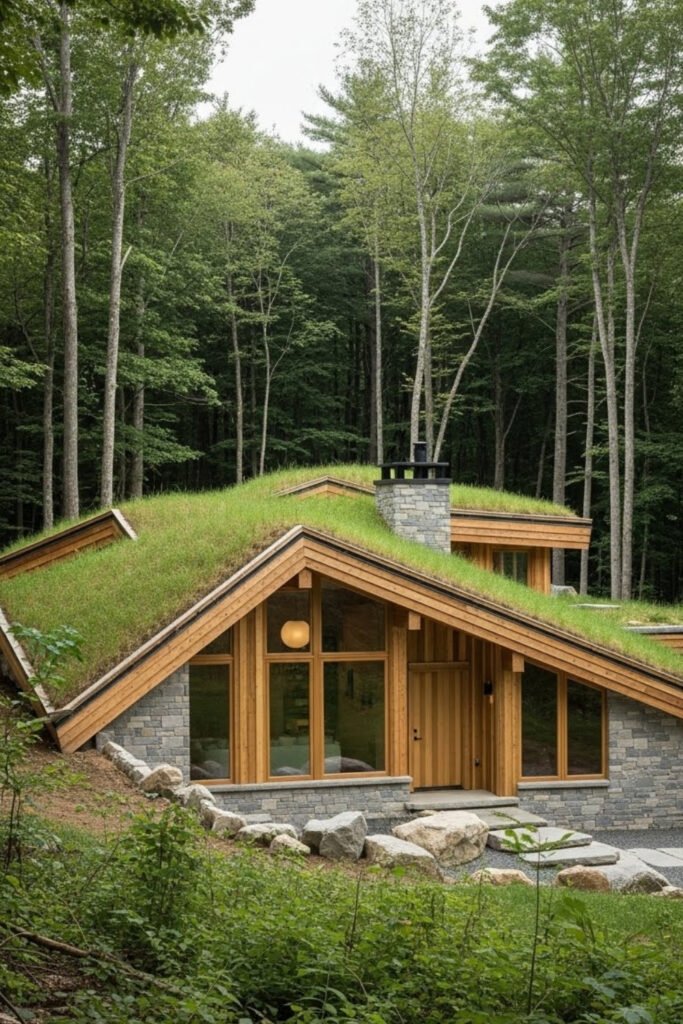
From the outside, this house feels carved into the forest itself. Built partially underground, it uses soil and stone for natural insulation and temperature control.
Only the front façade stays visible, often with wood and glass. This idea works best on sloped forest land and creates a quiet, protected living space that feels grounded and secure.
A-Frame
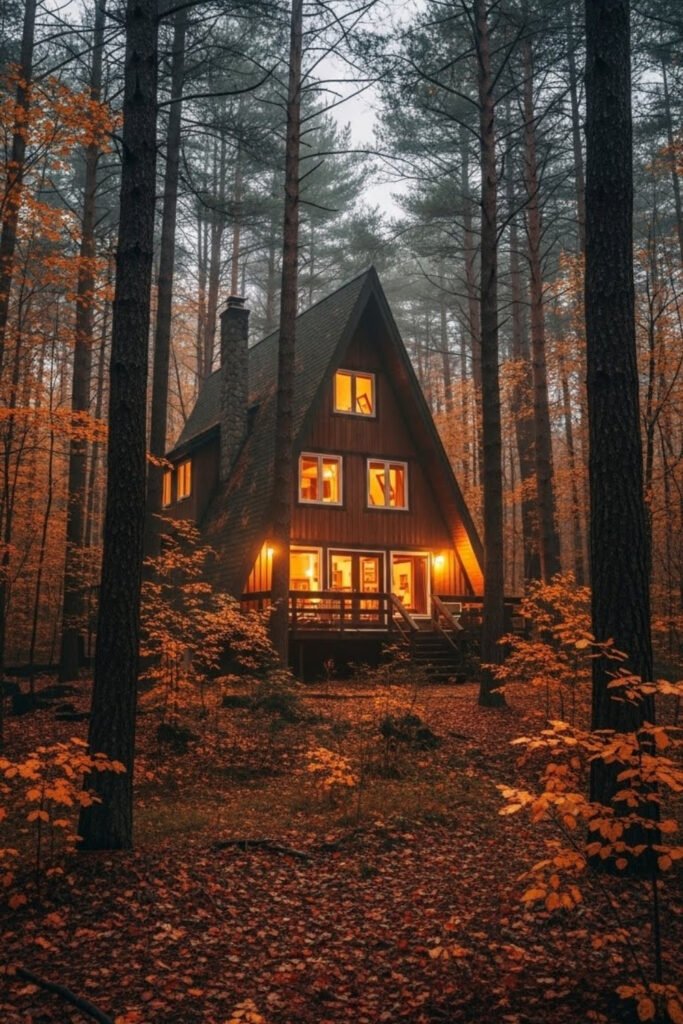
Sharp lines instantly stand out among tall trees. An A-frame forest house sheds rain and snow easily while keeping the footprint small. Its steep roof creates cozy loft spaces inside without complex construction.
This design fits dense forests where vertical height matters more than width and blends rustic charm with practical structure.
Stone Hollow
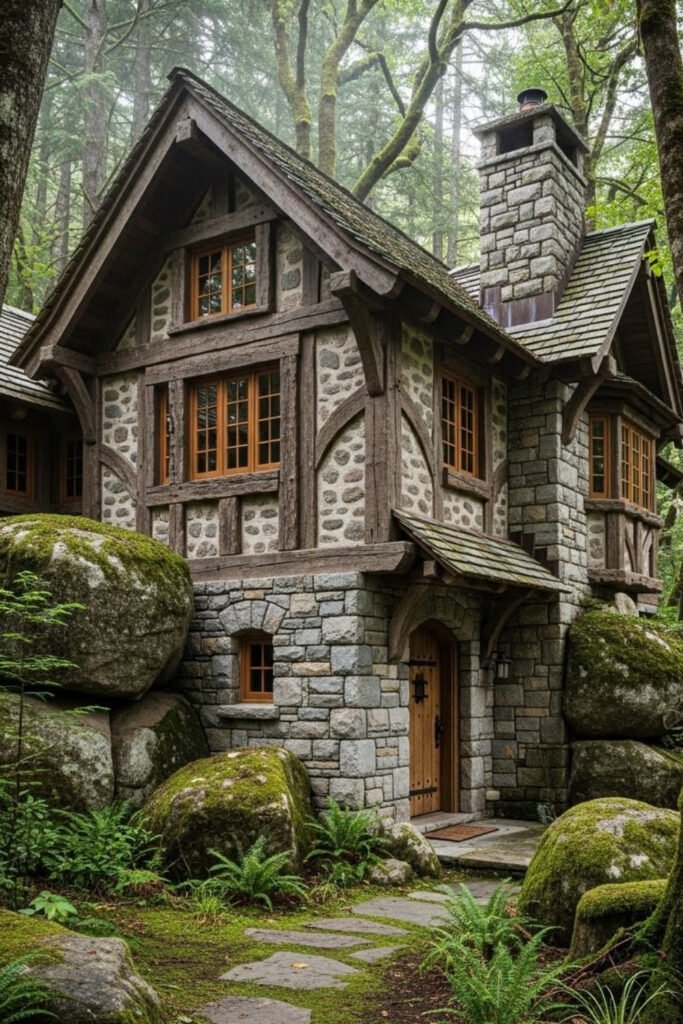
Instead of relying on wood alone, this home uses local stone as its main exterior material. Thick stone walls help regulate indoor temperature and add a timeless, earthy presence.
Paired with wooden beams and small openings, the house feels solid and protected. It’s ideal for forest areas with rocky terrain or natural stone access.
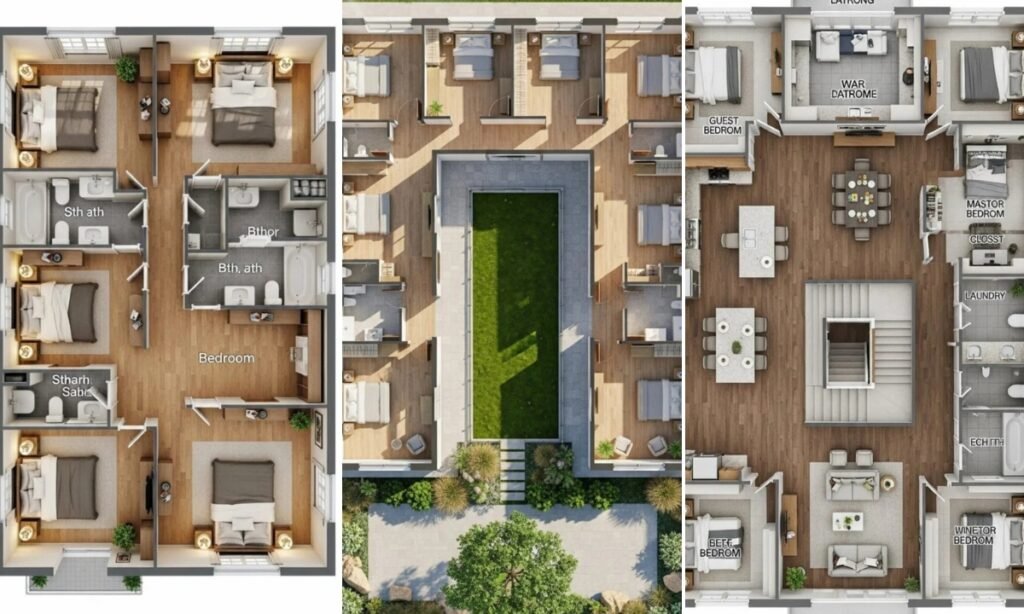
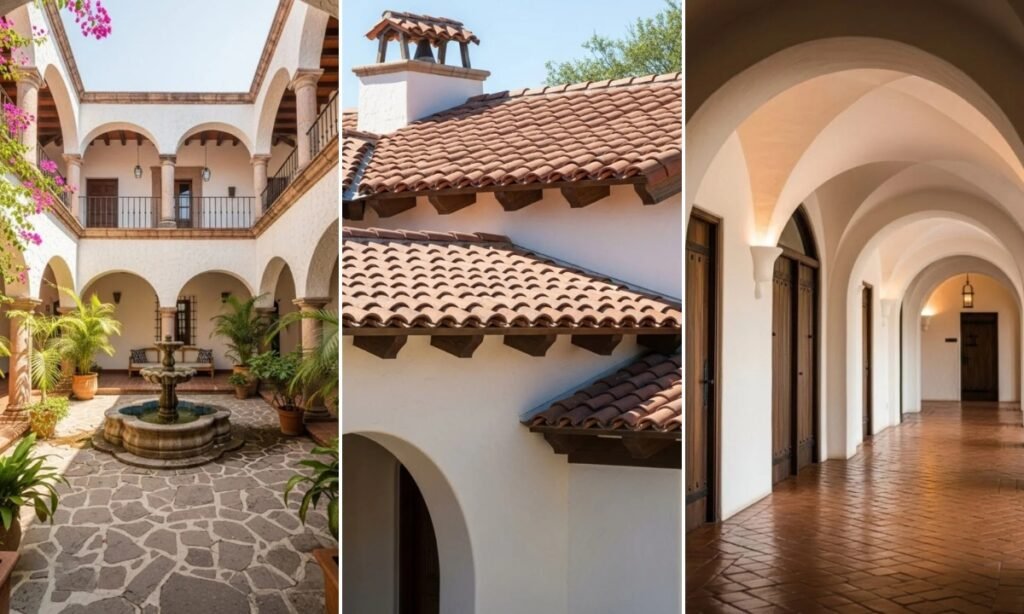
Forest Courtyard
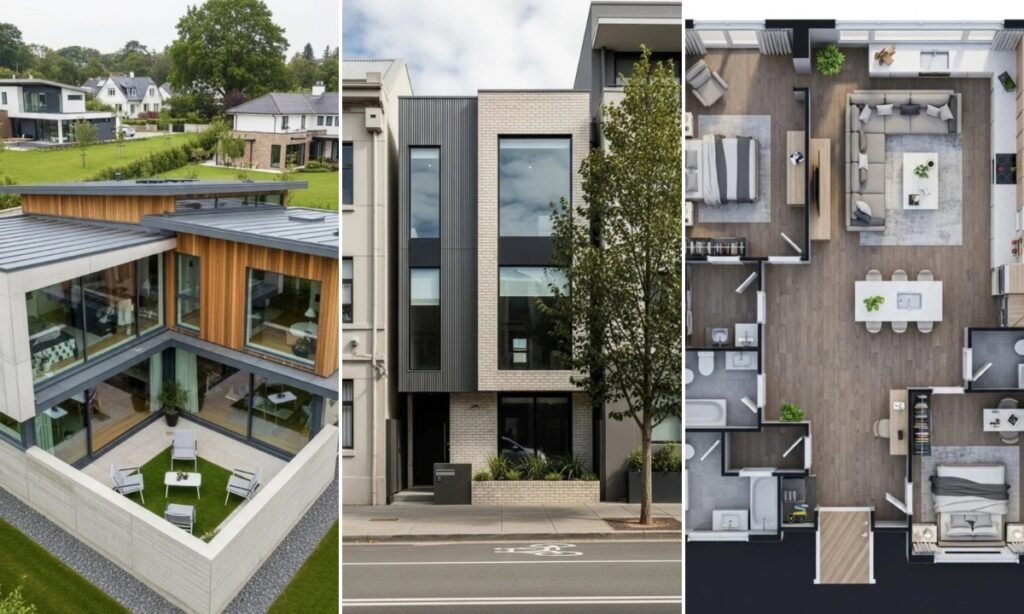
The layout turns inward rather than outward. Rooms surround a private open courtyard filled with trees, plants, or gravel paths.
This design brings light and airflow into the home while maintaining forest privacy. It’s perfect for wildlife-heavy areas where you want nature inside your space without fully exposing the interior.
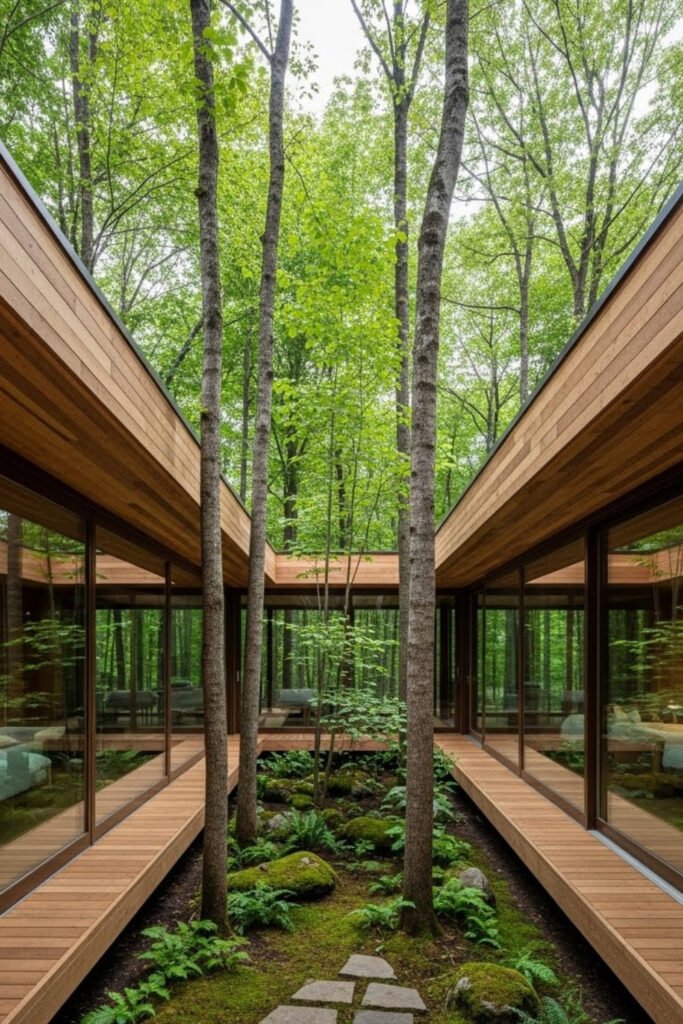
Suspended Timber
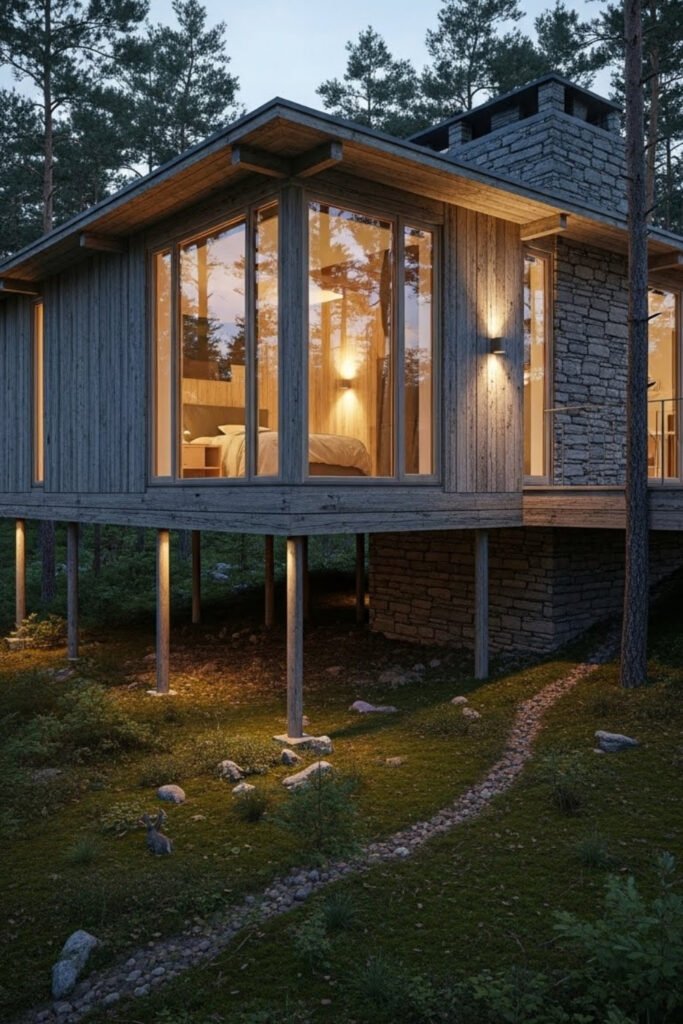
What makes this house special is how lightly it touches the ground. Thick timber beams lift the structure above the forest floor, protecting roots and improving airflow underneath.
The elevated design reduces moisture issues while offering a floating feeling inside. It’s a strong option for wet forests where ground contact can cause long-term damage.
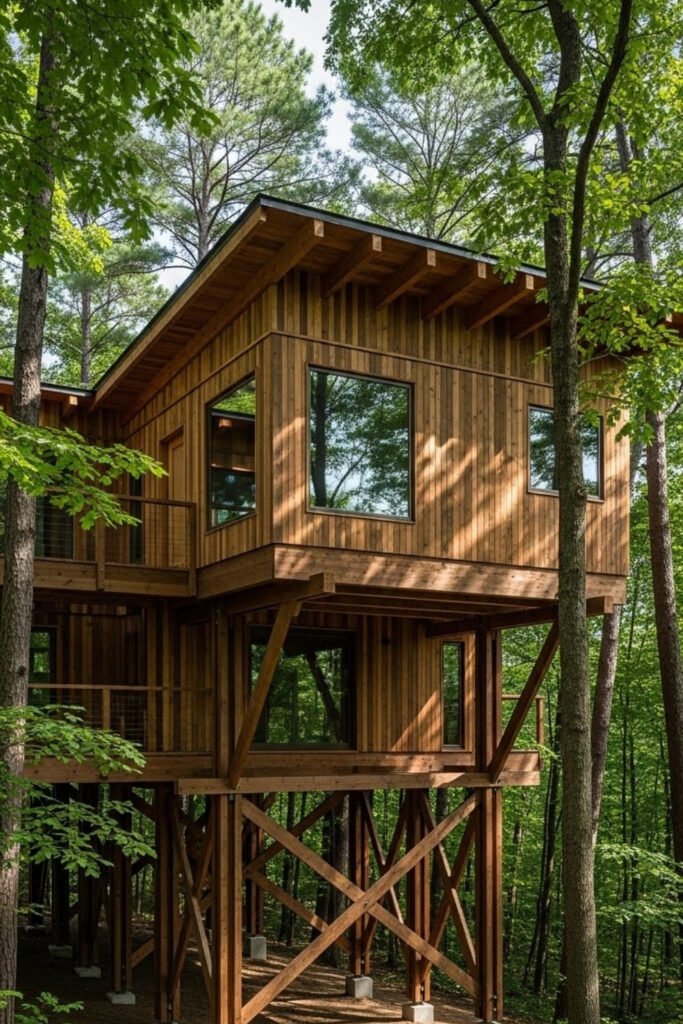
Fern Cottage
Soft edges define this forest home. Surrounded by ferns and low vegetation, the cottage uses rounded forms, natural wood, and muted colors to blend quietly into its setting.
This design feels intimate rather than grand, making it ideal for small forest clearings. It’s about harmony, not scale, and works beautifully for slow, simple living.
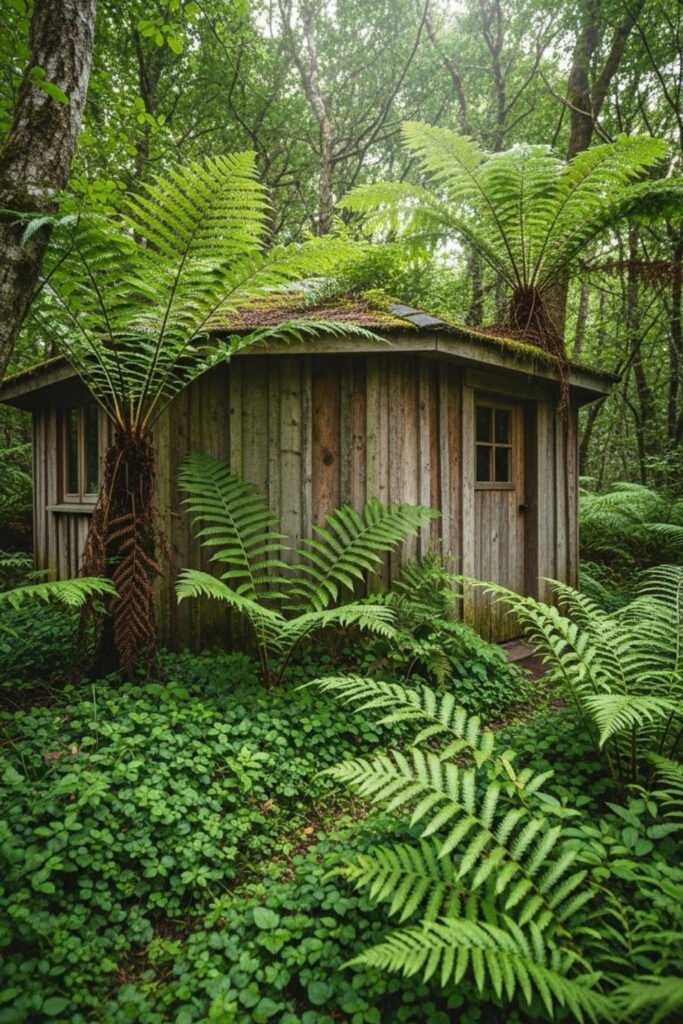
Cliffside
Positioned along a forest slope or rocky edge, this house takes advantage of dramatic elevation. Large windows face outward while the rear stays anchored into stone.
The structure feels secure yet open, with views stretching across the trees. This idea suits mountainous forests where flat land is limited but scenery is abundant.
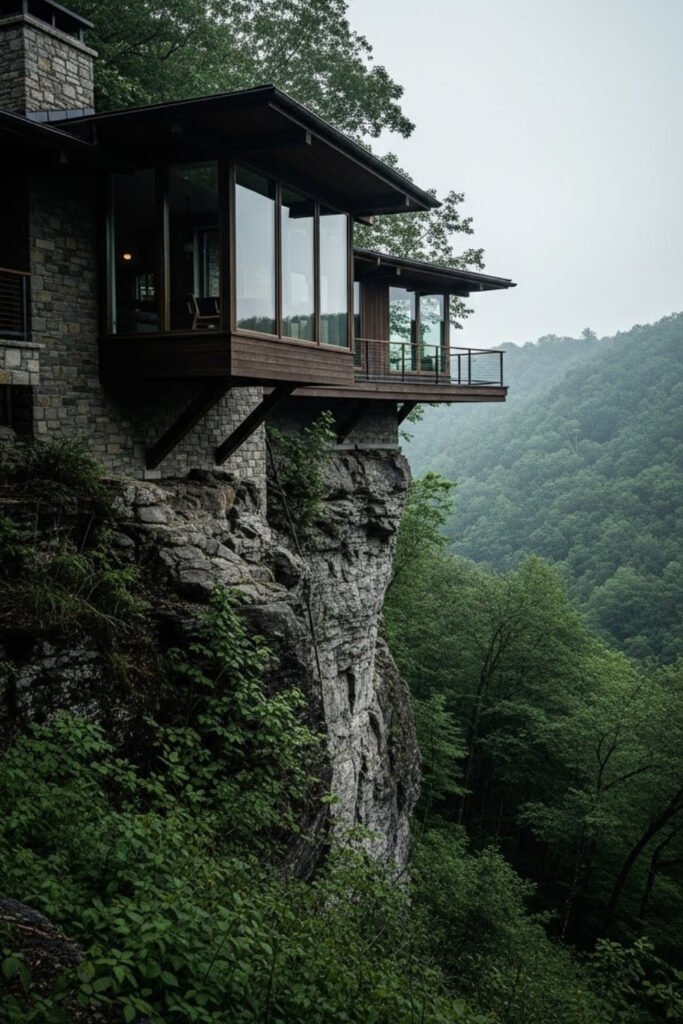
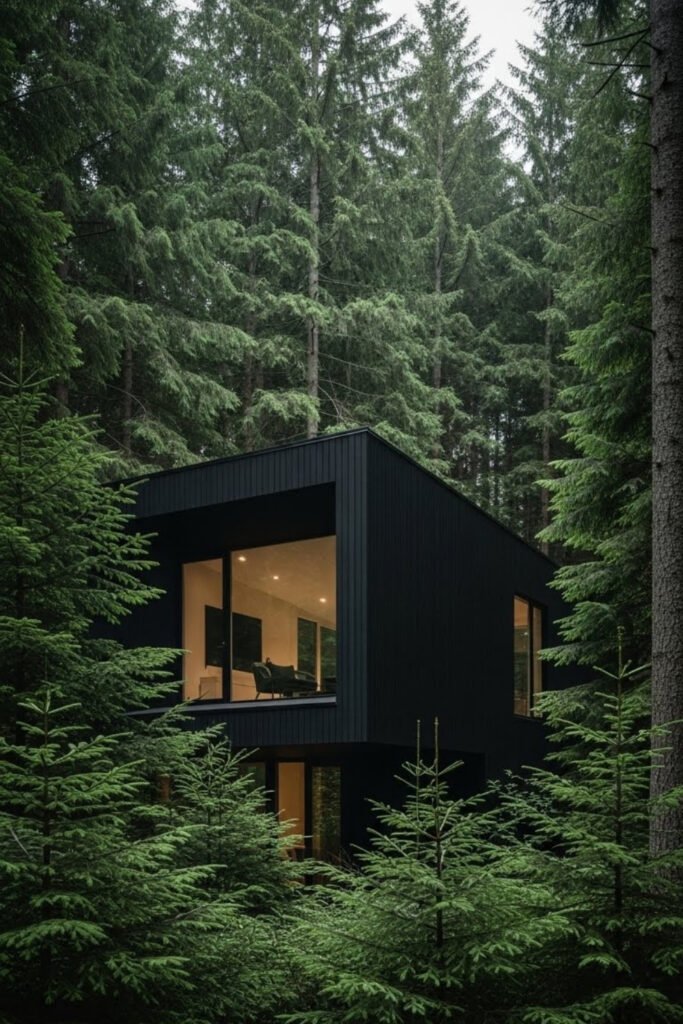
Black Cabin
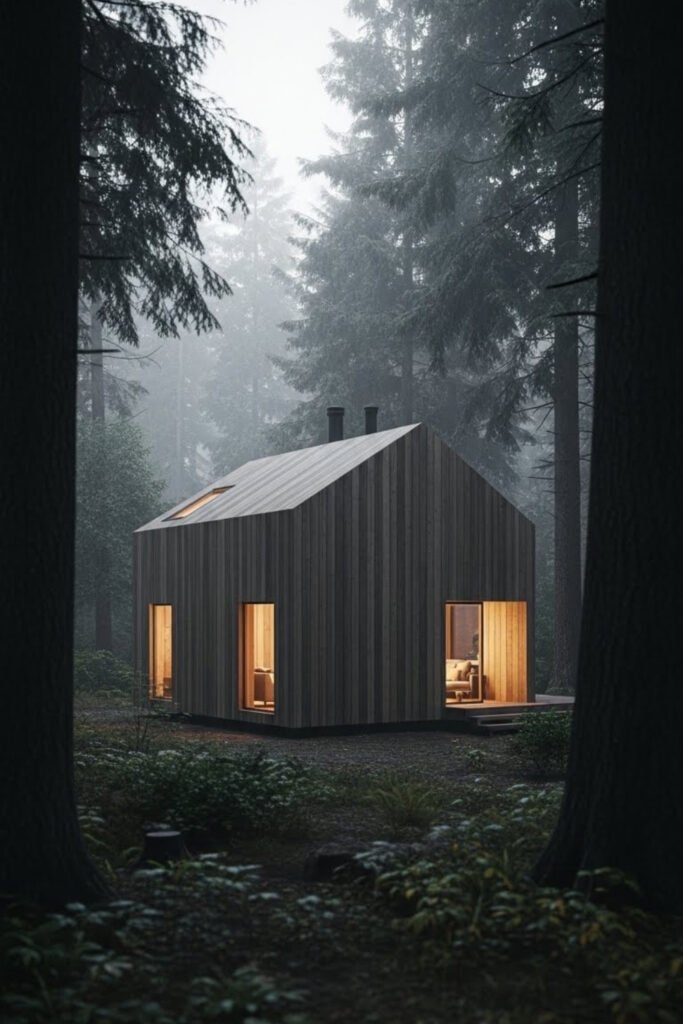
Dark exteriors help this house fade into shaded woods. Matte black or deep charcoal finishes reduce visual impact while adding a modern edge.
Inside, warm wood balances the exterior’s boldness. This design works well in dense forests where light shifts constantly, creating a striking contrast between shadowed trees and clean architecture.
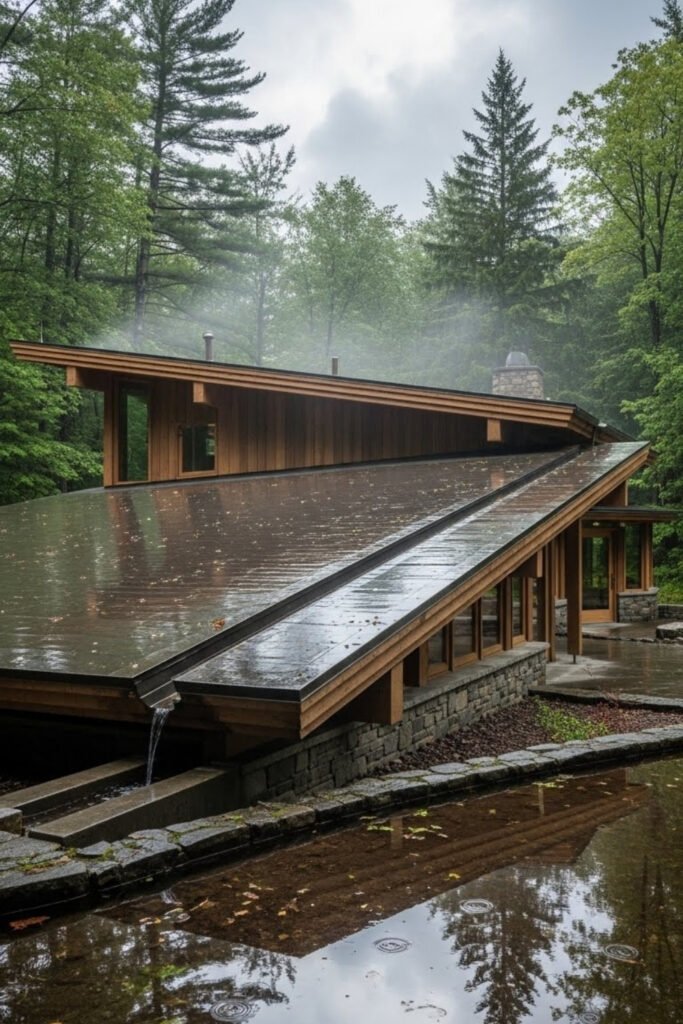
Rain Harvest
Rain becomes part of the design here. Sloped roofs and hidden channels guide water into storage tanks for reuse. The house feels purposeful and self-sustaining without looking industrial.
This idea suits rainy forest regions where water access is reliable and sustainability matters. The system stays subtle, blending clean design with practical living.
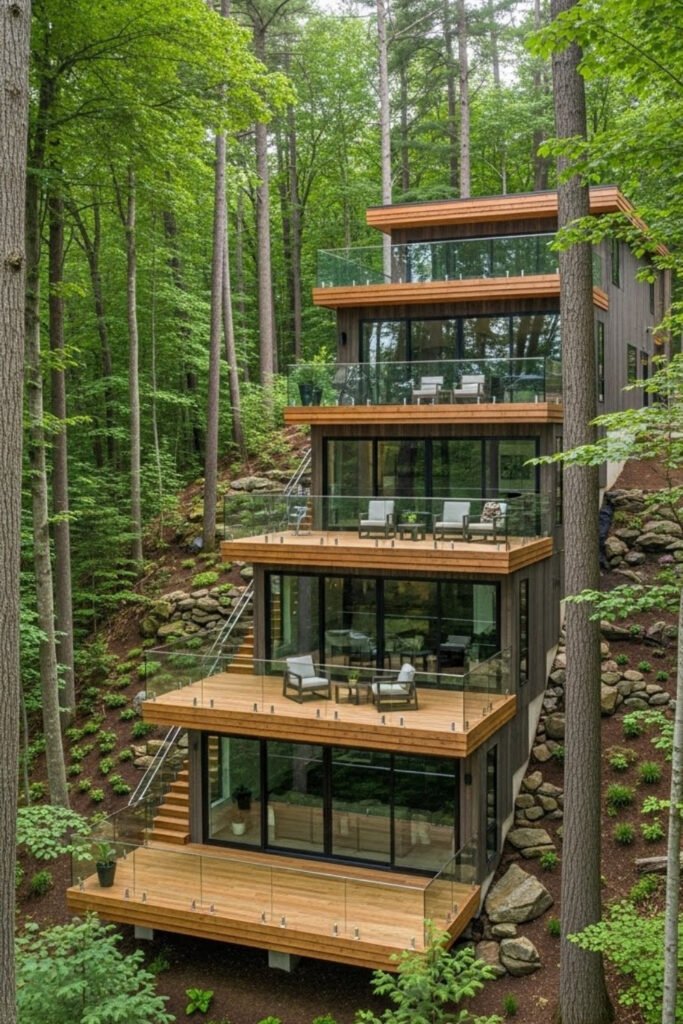
Split Level
Instead of flattening the land, this house steps with it. Each level follows the natural slope of the forest, reducing excavation and preserving roots.
Living spaces stack gently, connected by short stairs. This approach works well on uneven woodland terrain and creates a dynamic interior that feels connected to the surrounding landscape.
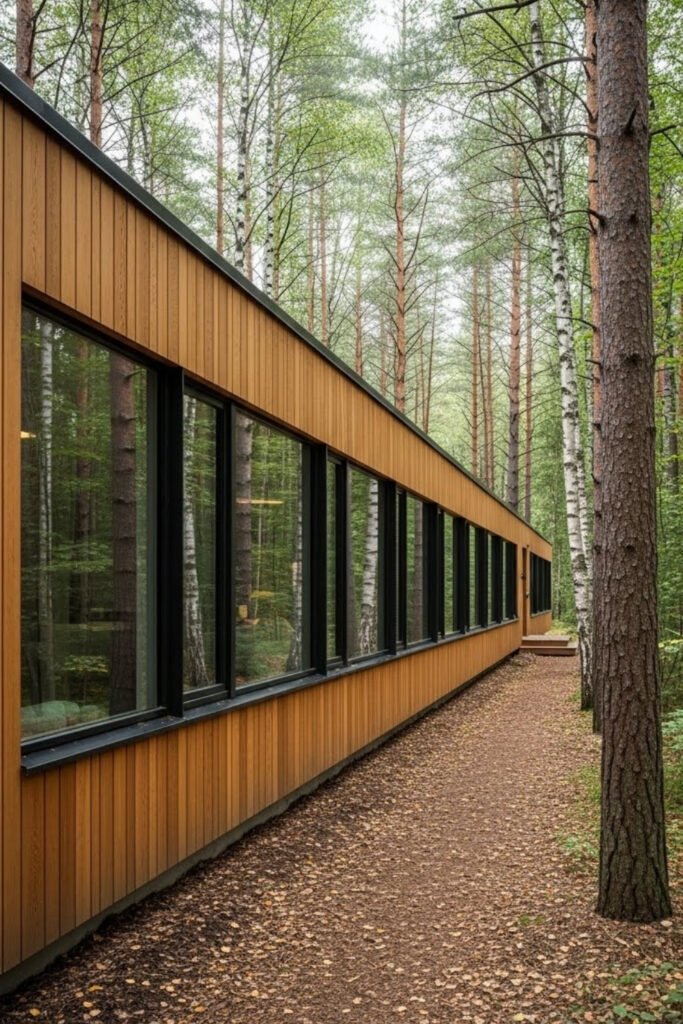
Longhouse
Length defines this forest home. A long, narrow structure stretches through the trees, minimizing width while maximizing views. Rooms line up in sequence, allowing light to flow from end to end.
This idea fits tight forest corridors and creates a calm, linear living experience that feels grounded and intentional.
Hidden Entry
Nothing about this house reveals itself immediately. The entrance tucks behind trees, stone walls, or a folded façade, making arrival feel intentional and private. Once inside, the space opens toward the forest.
This design works well for secluded woodland plots where privacy and surprise are part of the experience.
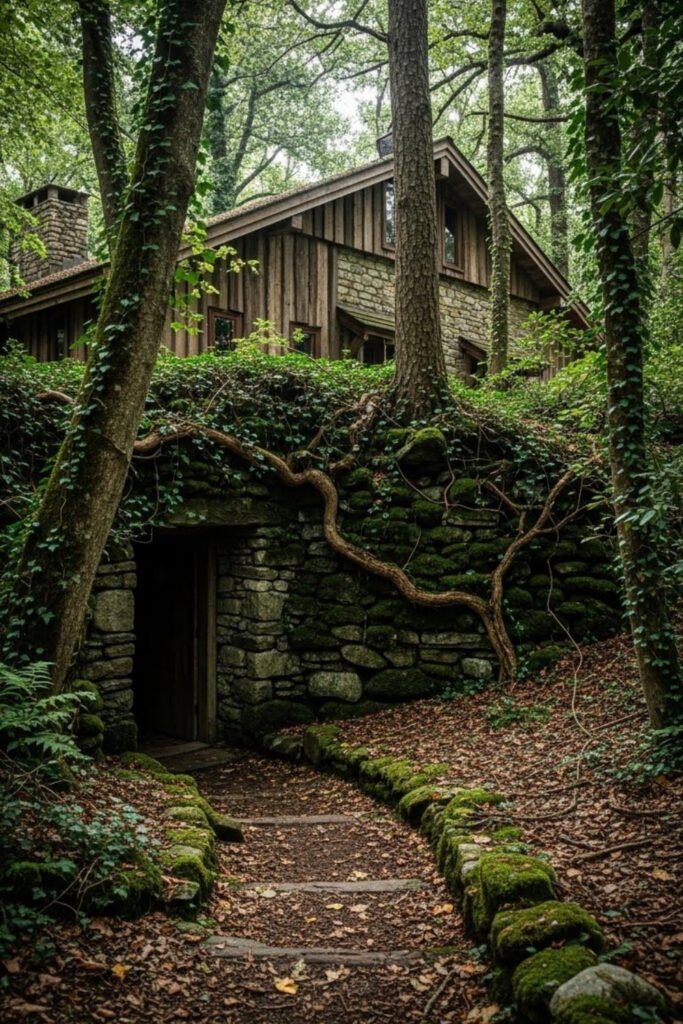
Forest Dome
The shape alone sets this house apart. A dome structure handles wind, rain, and snow with ease while reducing material use. Inside, the open plan feels expansive despite a compact footprint.
This idea works well in deep forests where durability matters and curved forms help the home feel organic rather than imposed.
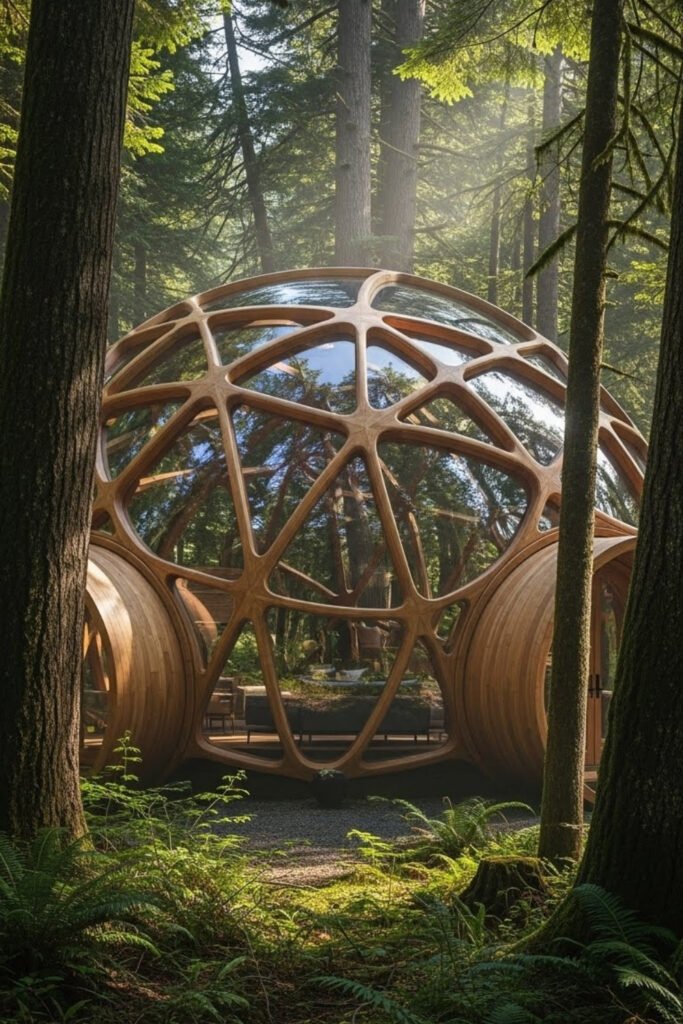
Creekside
Water becomes the soundtrack of daily life. Built near a gentle forest creek, this house uses raised foundations to avoid flooding.
Windows and decks face the water while keeping the structure protected. It’s ideal for wooded land with natural streams, offering calm views and constant connection to movement and sound.
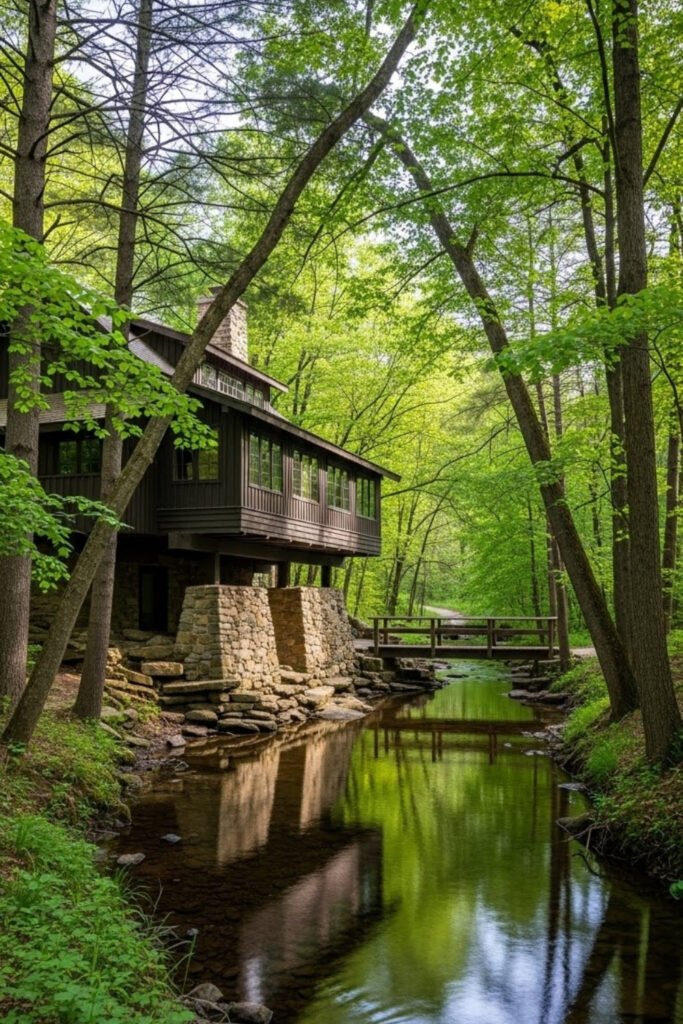
Off Grid
This house operates independently from public utilities. Solar panels, battery storage, and water systems stay carefully integrated into the design.
Nothing feels technical on the surface. It’s best for remote forest locations where access is limited, allowing comfortable living while maintaining complete independence from the outside world.
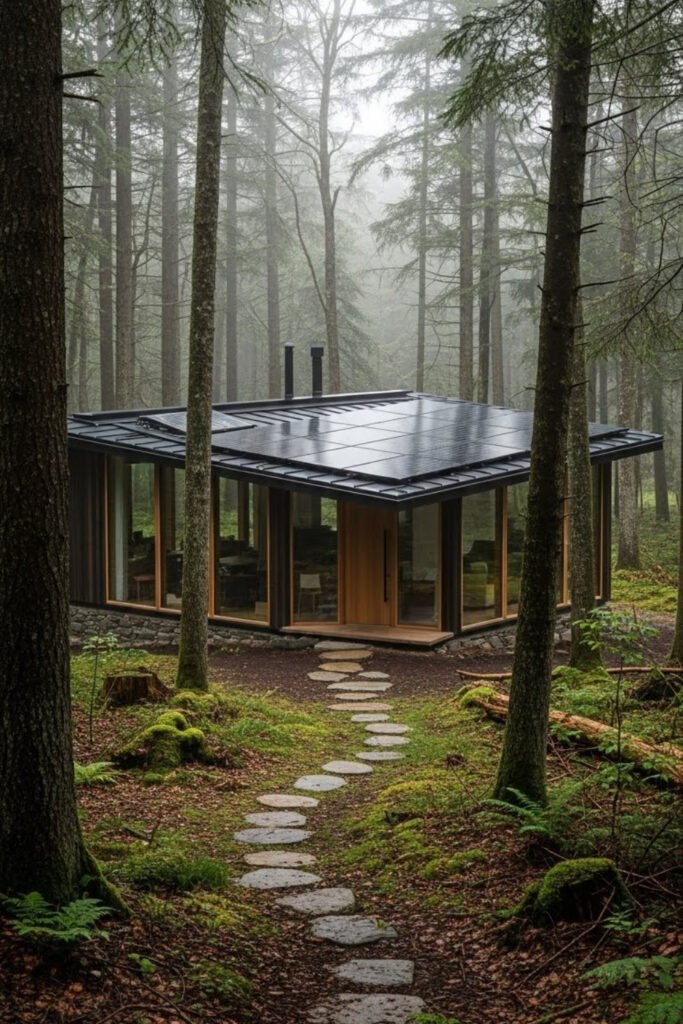
Vertical Forest
Rather than spreading outward, this home rises upward. Multiple levels stack efficiently, reducing ground disturbance. Balconies and terraces face different forest views at each height.
This idea works well on small forest plots where space is tight but height is available, creating a layered living experience among the trees.
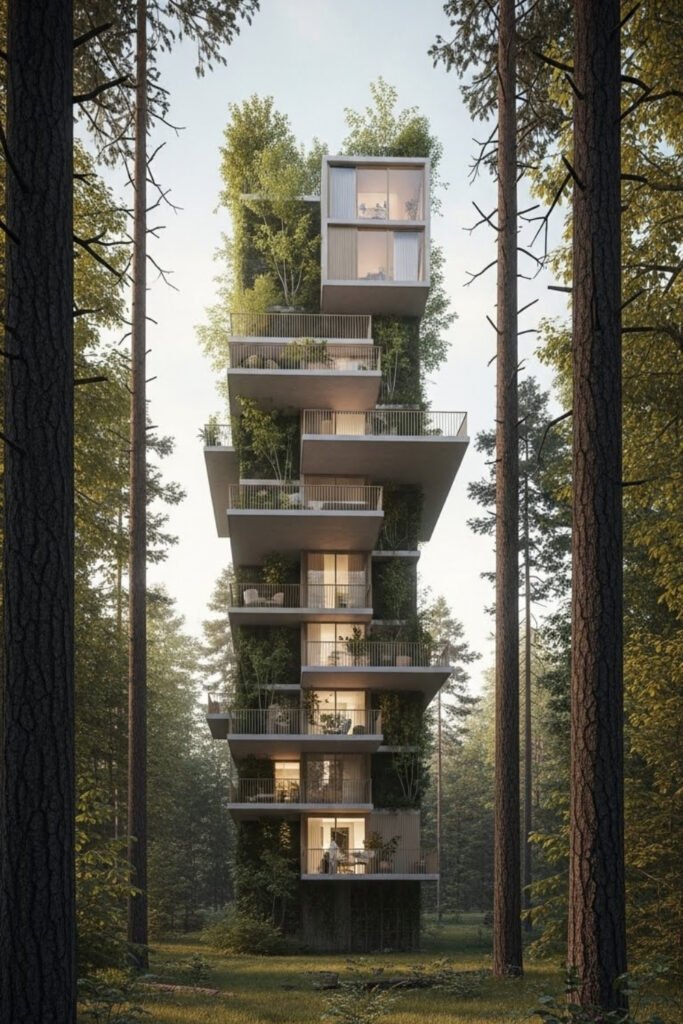
Firewatch
This design draws inspiration from classic forest fire lookout towers. Elevated living spaces provide wide views above the tree line while keeping a small footprint below. Large windows wrap the upper level, creating a sense of watchfulness and calm.
It works best in expansive forests where visibility and elevation enhance both safety and scenery.
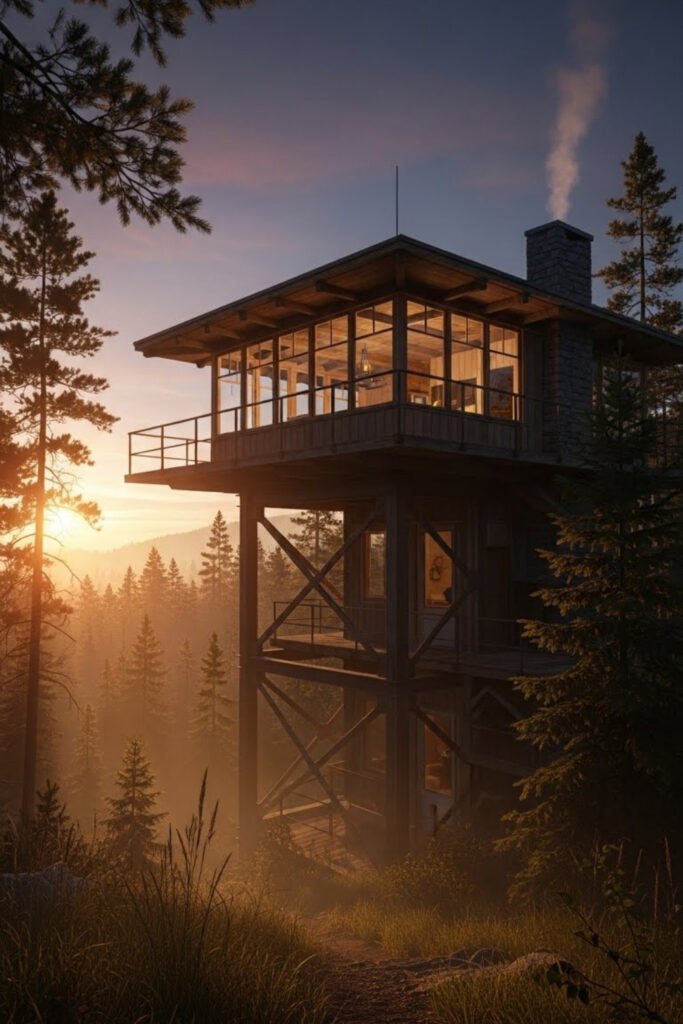
Forest Atrium
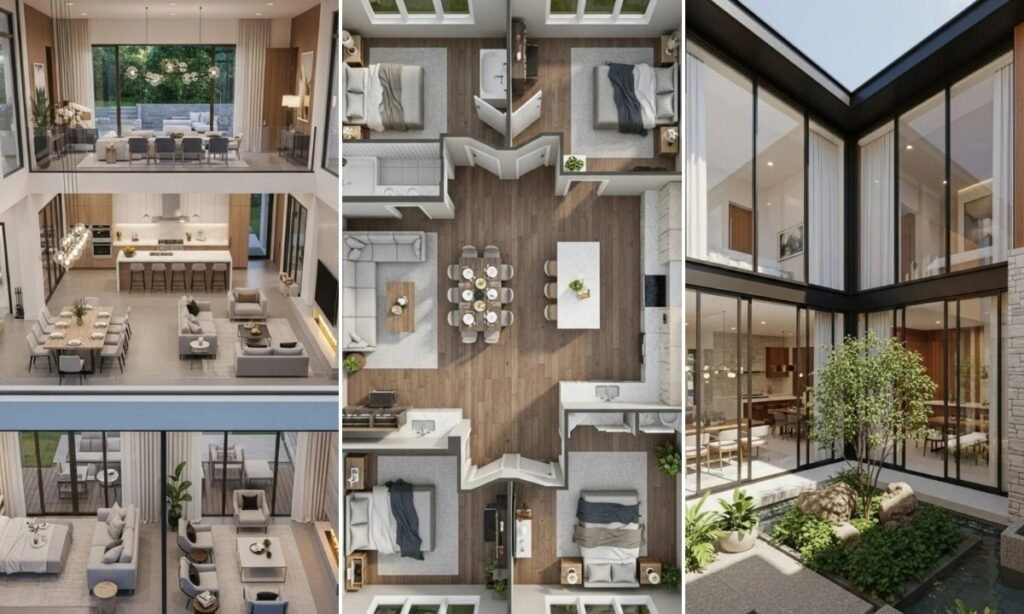
Nature enters the center of the home. An open atrium filled with trees or plants brings daylight deep inside while improving airflow.
Surrounding rooms stay connected to this green core. This idea suits forest homes where privacy is essential but natural light is limited, offering balance between enclosure and openness.
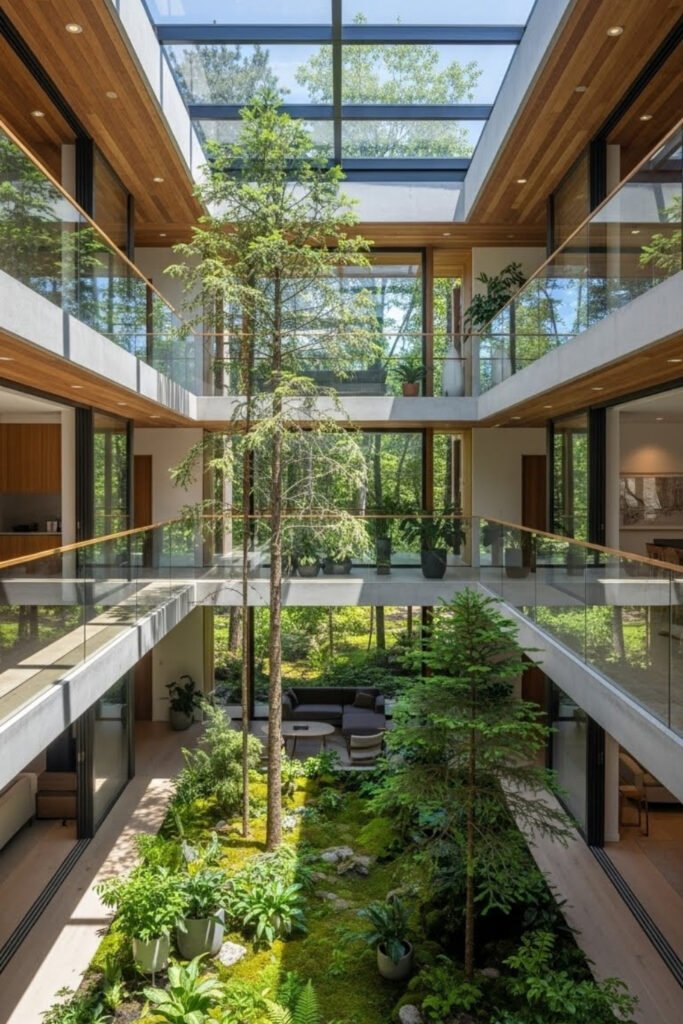
Bark Clad
Instead of polished finishes, this house embraces raw texture. Bark-inspired or reclaimed wood cladding helps the exterior blend into surrounding trees.
The surface ages naturally over time, enhancing the forest feel. This idea fits rustic woodland settings where subtle camouflage and material honesty matter more than sharp architectural lines.
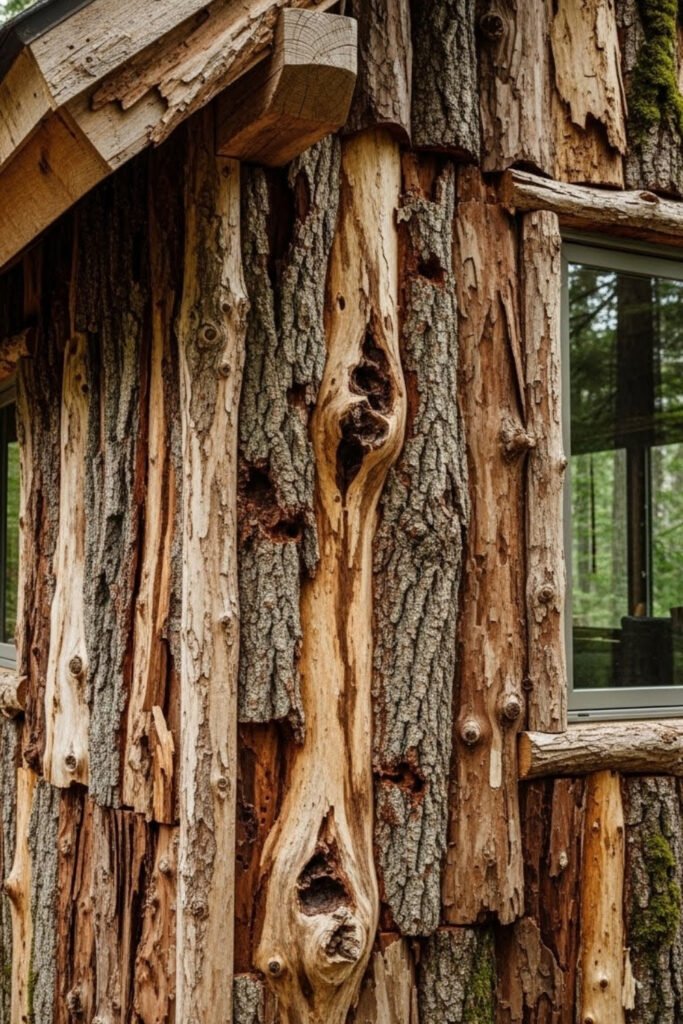
Sunken Living
The living area sits slightly below ground level, creating a cozy, sheltered feeling. Earth around the space adds insulation while lowering visual impact from outside.
Windows at eye level still capture forest views. This layout works well for cooler climates where warmth and intimacy improve everyday comfort.
Trunk Columns
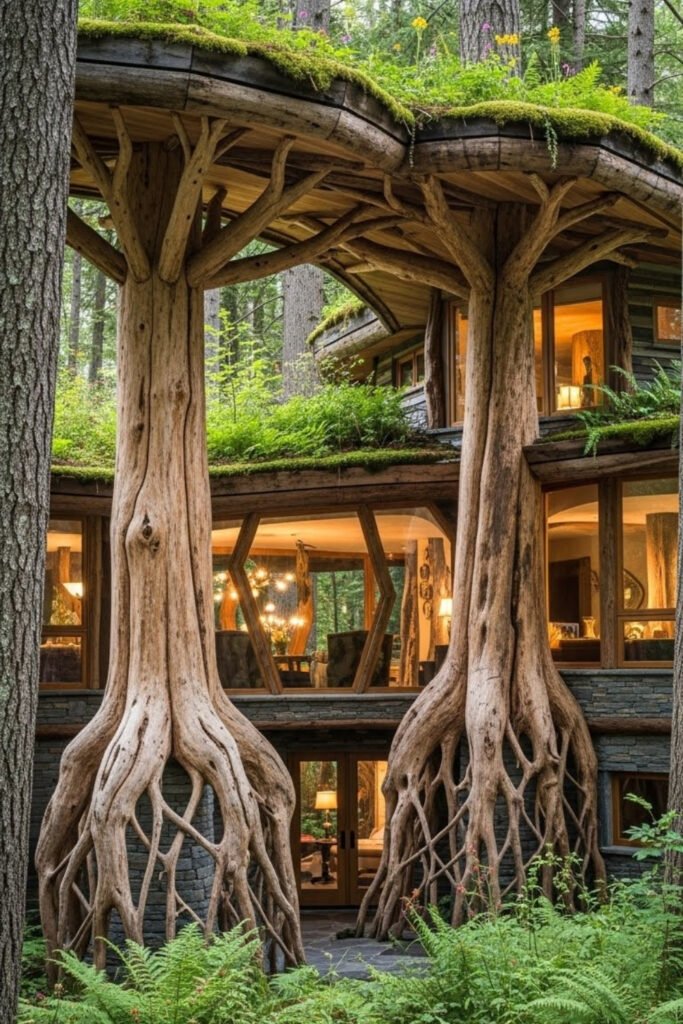
Instead of standard supports, this house uses sculpted, tree-trunk-style columns. The structure feels grown rather than built, visually tying the home to its surroundings.
These columns can be real reclaimed logs or shaped concrete. This idea works well for forest homes that want strong visual character while maintaining an organic, grounded appearance.
Fog View
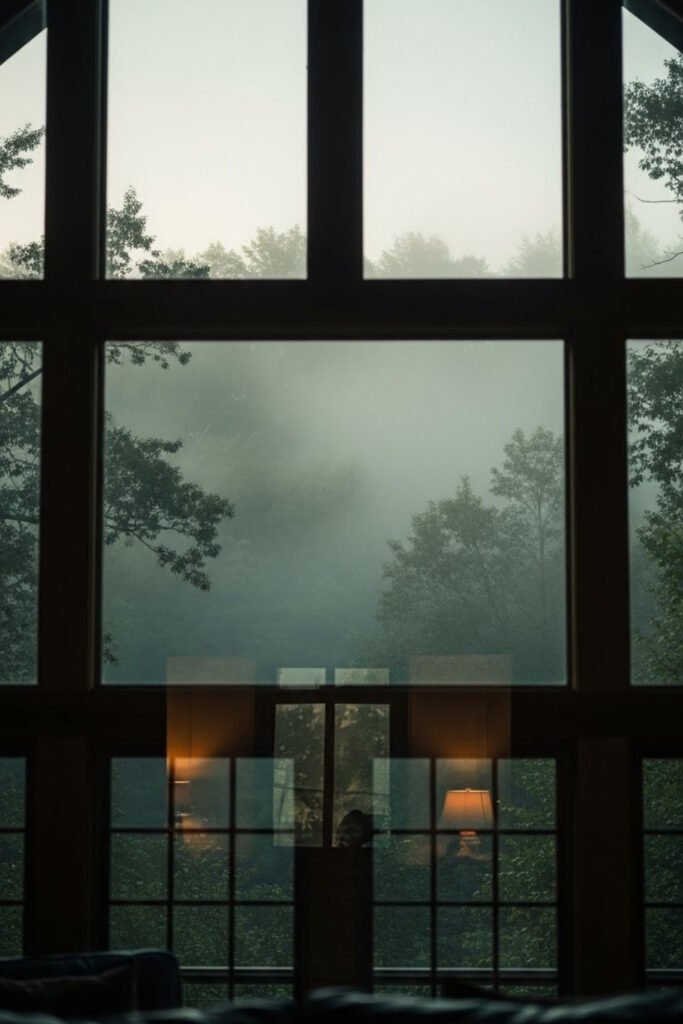
Designed for misty forest regions, this house frames fog as part of daily life. Large openings face valleys or dense trees where morning mist gathers.
Materials stay muted so changing light and fog remain the focus. It’s ideal for high-elevation forests where the atmosphere matters as much as the structure itself.
Mirror House
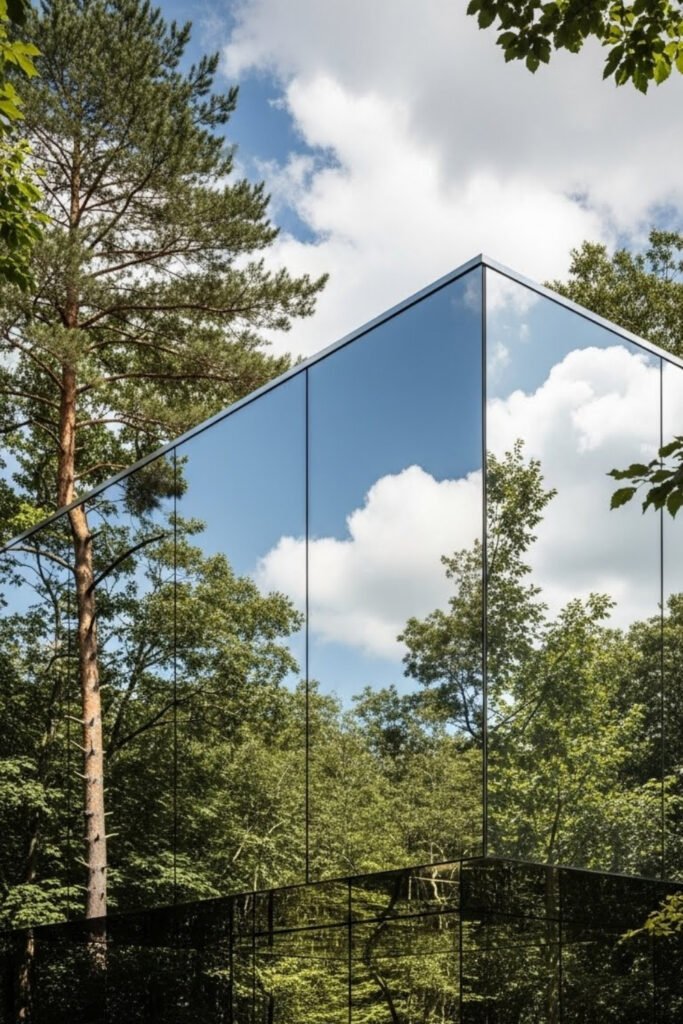
Reflection becomes camouflage. Mirrored exterior panels reflect surrounding trees, sky, and ground, making the house visually disappear from certain angles.
Inside, warm wood keeps the space inviting. This design suits quiet forest areas where minimal visual impact is a priority and the home should feel almost invisible.
Wildlife Friendly
This house design considers animals first. Raised foundations, quiet materials, and soft lighting reduce disruption to wildlife. Openings stay positioned away from animal paths.
It works well in protected forest zones where coexistence matters, allowing humans to live comfortably without disturbing the natural ecosystem around them.
Leaf Roof
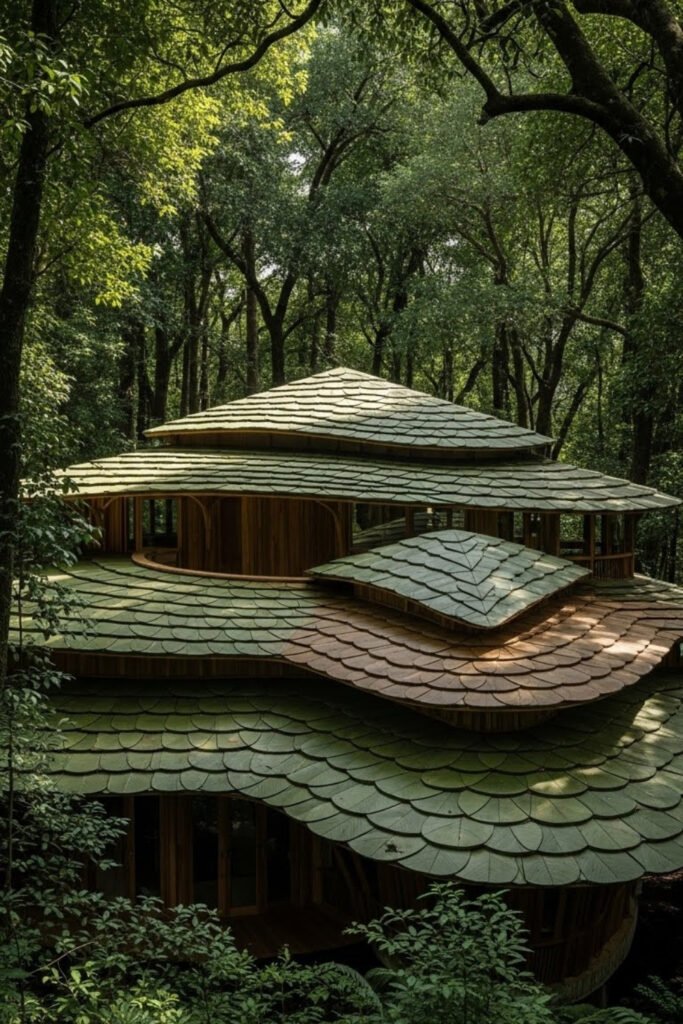
This house uses layered, leaf-inspired roofing that channels rain naturally while blending into the forest canopy. The overlapping design reduces noise from rainfall and improves insulation.
From above, the roof mimics natural leaf patterns, helping the home visually disappear into its surroundings. It works best in dense forests with heavy seasonal rainfall.
Seasonal Home
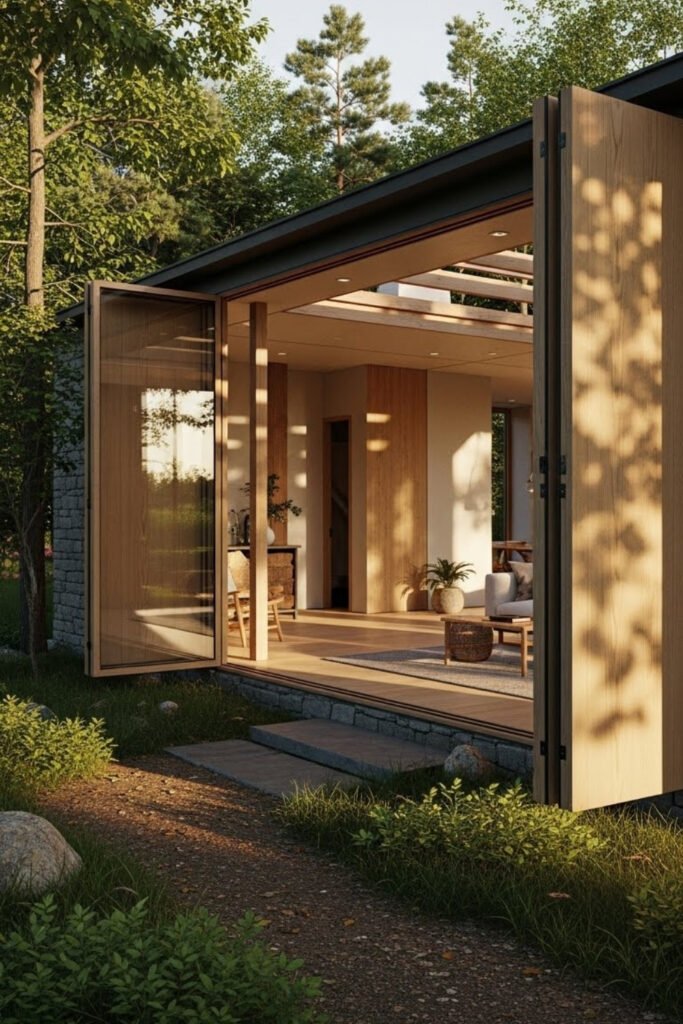
Built to change with the forest, this house adapts across seasons. Sliding walls, adjustable shading, and flexible insulation respond to heat, cold, and light shifts.
In summer, it opens wide; in winter, it seals tightly. This idea suits forests with strong seasonal changes, allowing comfort without heavy mechanical systems.
Silent Cabin
This design focuses on sound control. Thick walls, soft materials, and isolated placement reduce noise both inside and out. The result is a peaceful retreat where forest sounds feel intentional, not overwhelming.
It’s perfect for meditation, writing, or rest, especially in remote woodland areas where silence becomes part of the experience.

Hi, my name is Ali Mehmood! I’m a passionate writer and DIY enthusiast who loves turning creative ideas into practical, hands-on projects.
I created this website to share inspiring, budget-friendly ideas that you can do yourself – whether it’s organizing your home, crafting something unique, or creating fun projects for kids and pets.
I believe DIY isn’t just a hobby – it’s a smart way to save money, reduce waste, and enjoy the satisfaction of making things with your own hands.
I’m excited to have you as part of this growing community, and I’ll continue bringing you helpful, realistic, and fun DIY ideas you can actually use.