This post may contain affiliate links: read full affiliate disclosure.
Shipping container barns are changing the way farms and rural properties think about barn design.
Instead of relying on expensive traditional construction, many landowners now use shipping containers to build barns that are strong, flexible, and surprisingly affordable.
These steel structures work well for livestock, equipment storage, feed handling, and even mixed-use farm setups.
What makes shipping container barns stand out is their adaptability. You can stack them, move them, insulate them, or expand them over time as your needs change.
Horse Stable
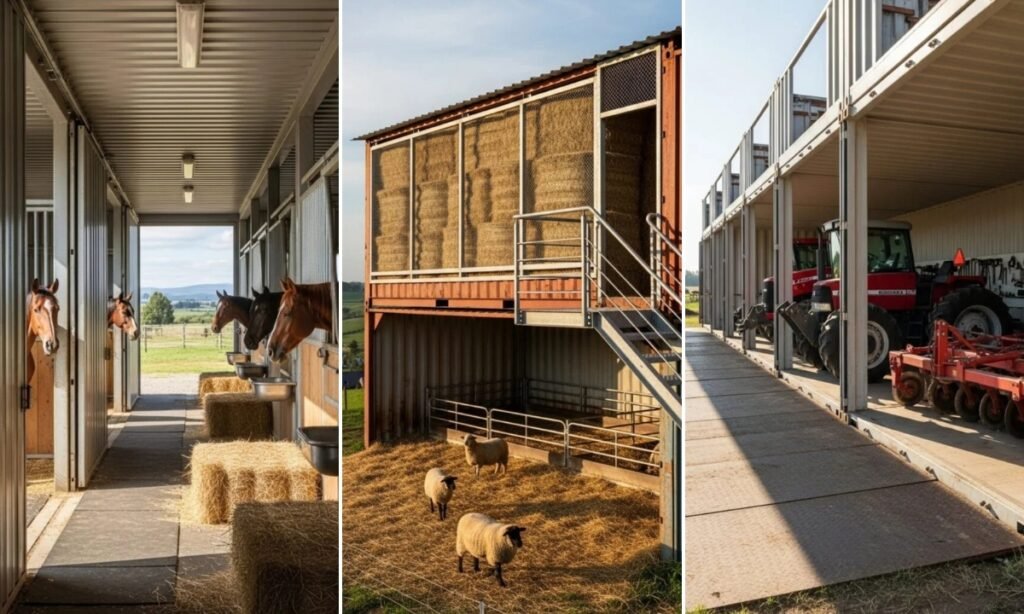
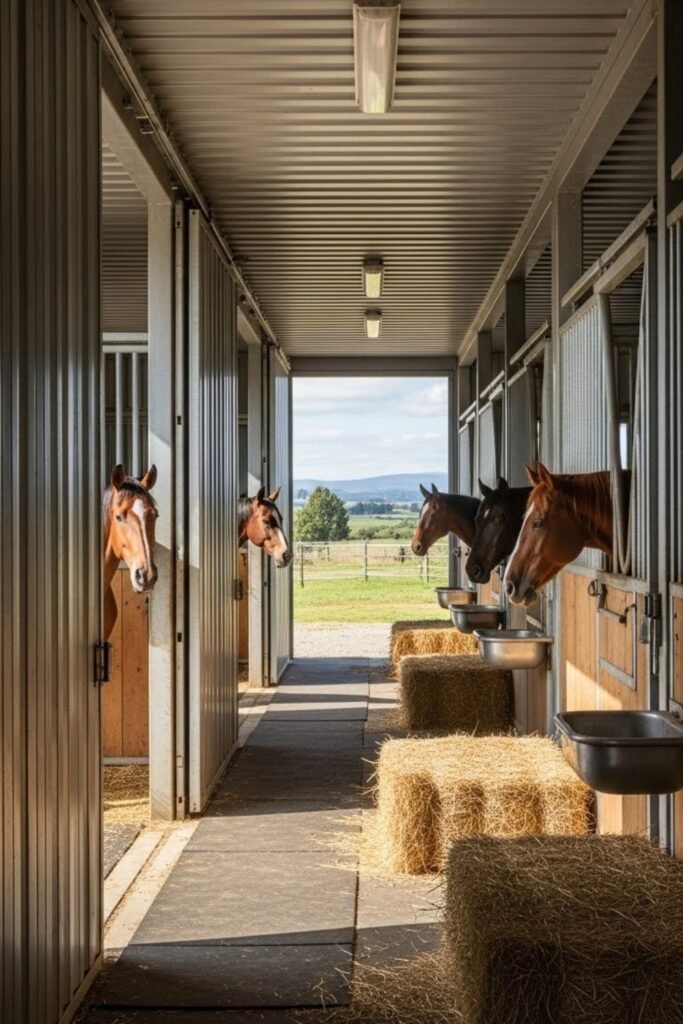
A shipping container barn for horses focuses on strength, airflow, and safety. Containers convert easily into individual stalls with steel frames, rubber flooring, and wide sliding doors.
The central aisle keeps feeding and cleaning simple, while the solid structure protects horses from wind, rain, and heat. This setup works well for small farms that want durability without high construction costs.
Equipment Storage
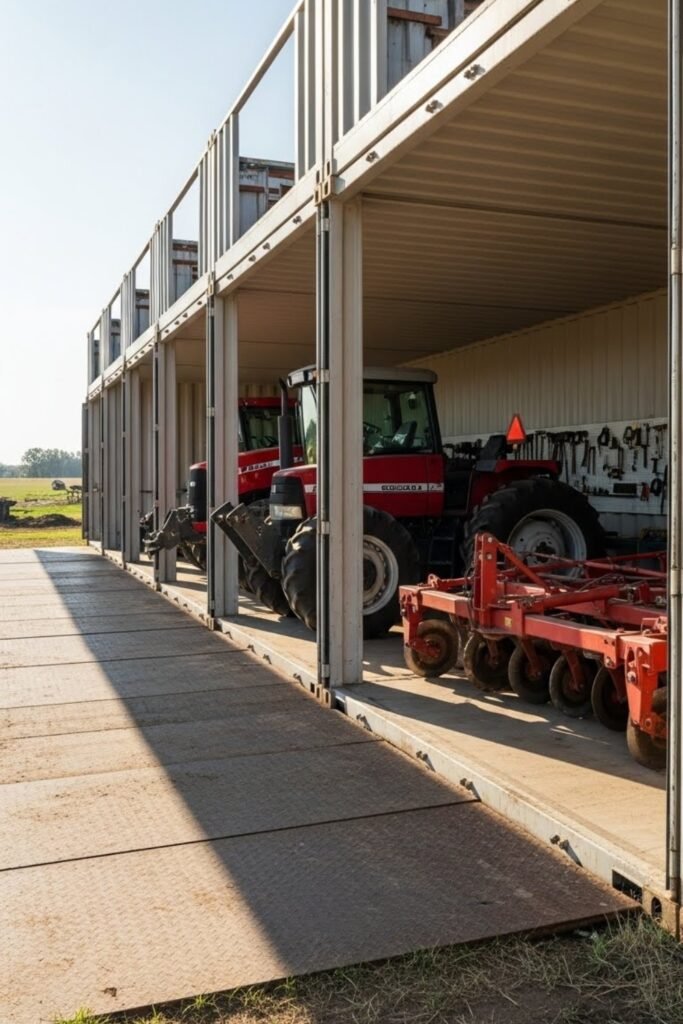
This container barn is ideal for storing tractors, plows, and heavy farm machinery. Large container doors allow easy access, while steel walls protect equipment from weather and theft.
Reinforced floors handle heavy loads, and interior racks keep tools organized. It’s a practical solution for farms that need secure, low-maintenance storage close to the fields.
Hay Loft
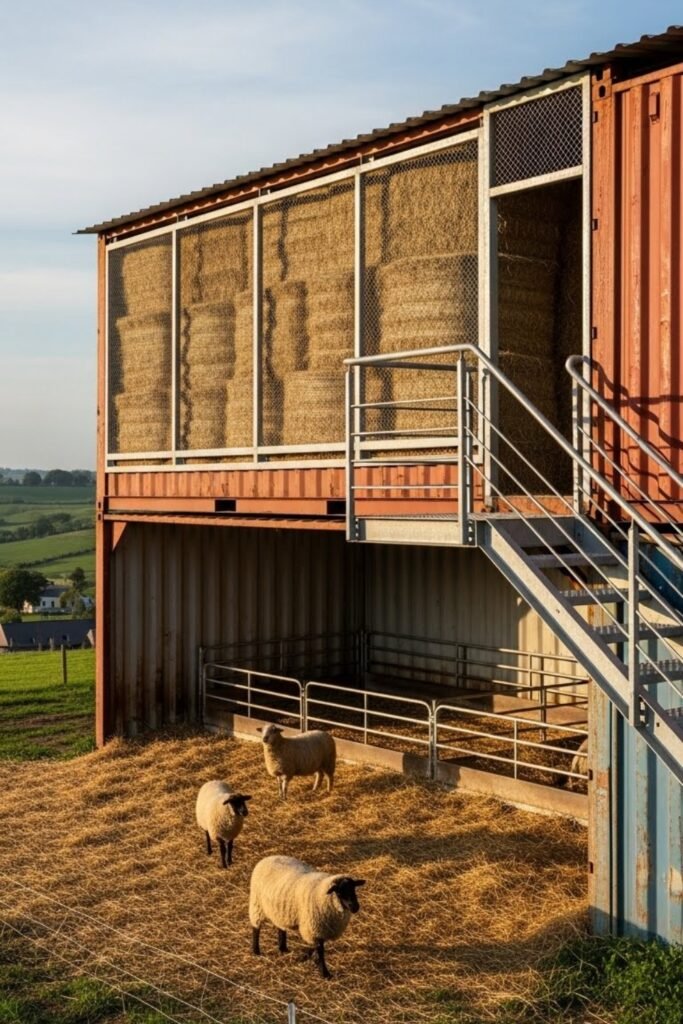
A hay loft container barn uses stacked containers to save space and improve storage. The lower level stays open for animals or equipment, while the upper container stores hay off the ground.
Elevated storage improves airflow, reduces moisture, and keeps hay safe from pests. This design is perfect for farms needing efficient vertical storage.
Dairy Milking
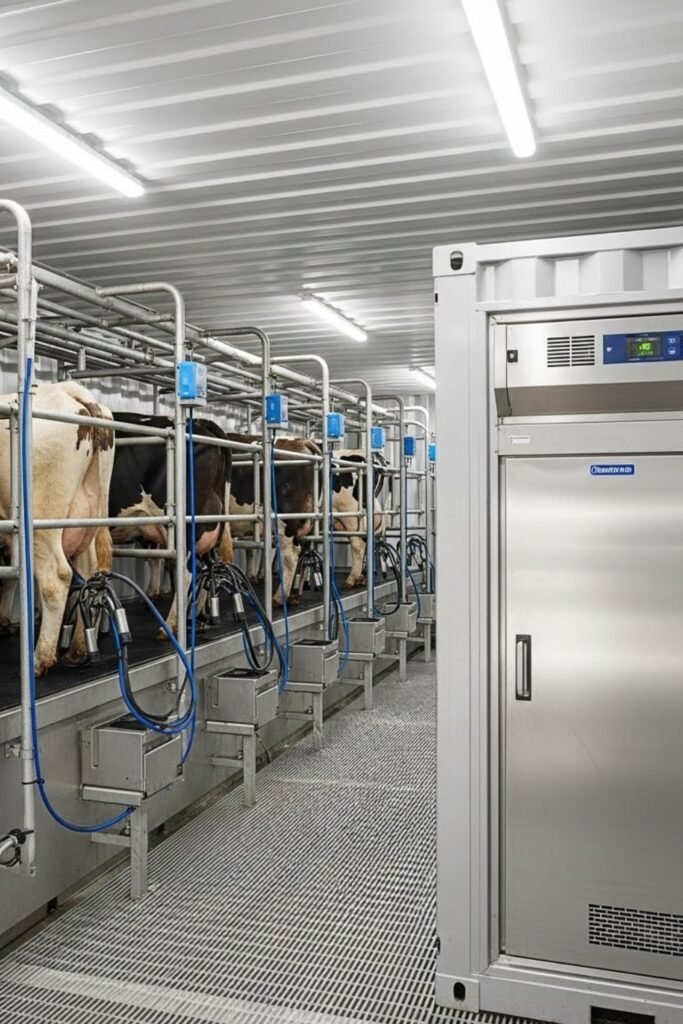
A dairy milking container barn is designed for hygiene and efficiency. Containers can hold milking stations, feed areas, and refrigerated milk storage in one compact layout.
Steel interiors are easy to clean, helping maintain sanitation standards. With insulation and proper drainage, this barn supports year-round dairy operations at a lower cost than traditional builds.
Livestock Pens
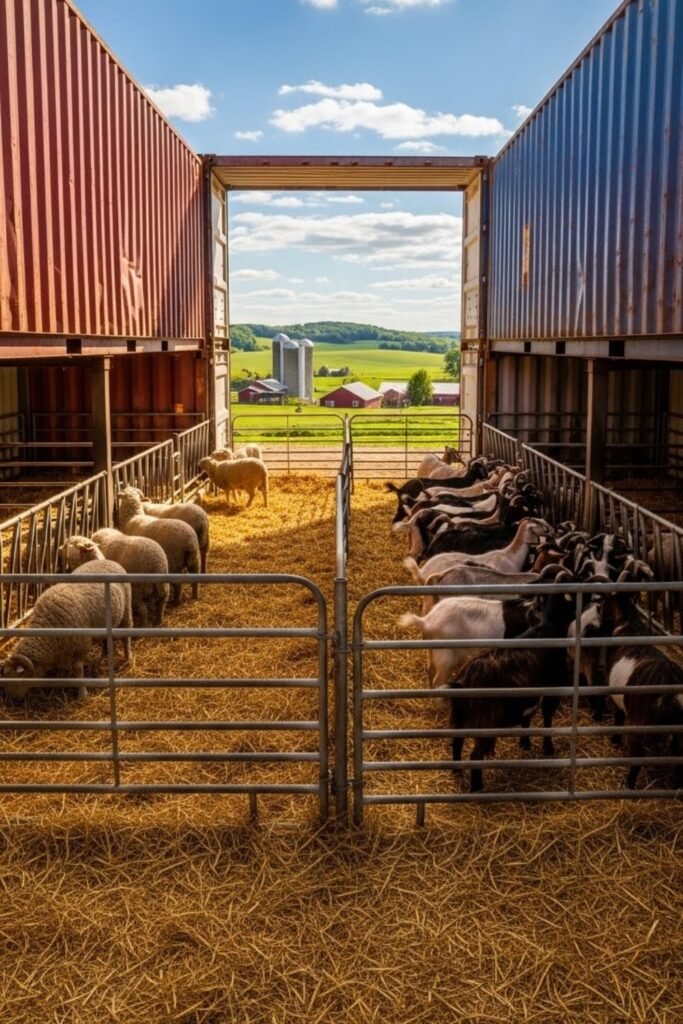
A shipping container barn can be divided into secure livestock pens for sheep, goats, or calves. Each container section works as a separate enclosure, making feeding and cleaning easier.
Steel walls prevent escapes and predator access, while open fronts or gated panels improve airflow. This design suits farms that need controlled animal separation without building multiple barns.
Workshop Barn
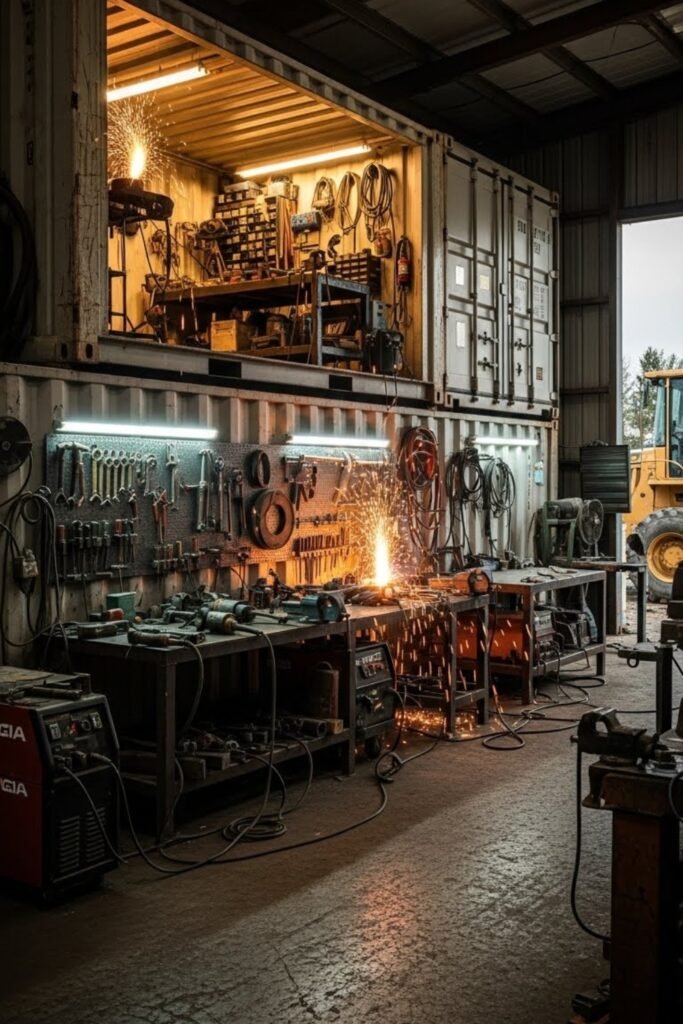
This container barn focuses on farm repairs and hands-on work. Containers can house welding areas, tool walls, and workbenches, while the center space stays open for larger projects.
Steel construction handles sparks, heavy tools, and daily wear. It’s ideal for farmers who want a dedicated workspace close to equipment and storage areas.
Hybrid Living
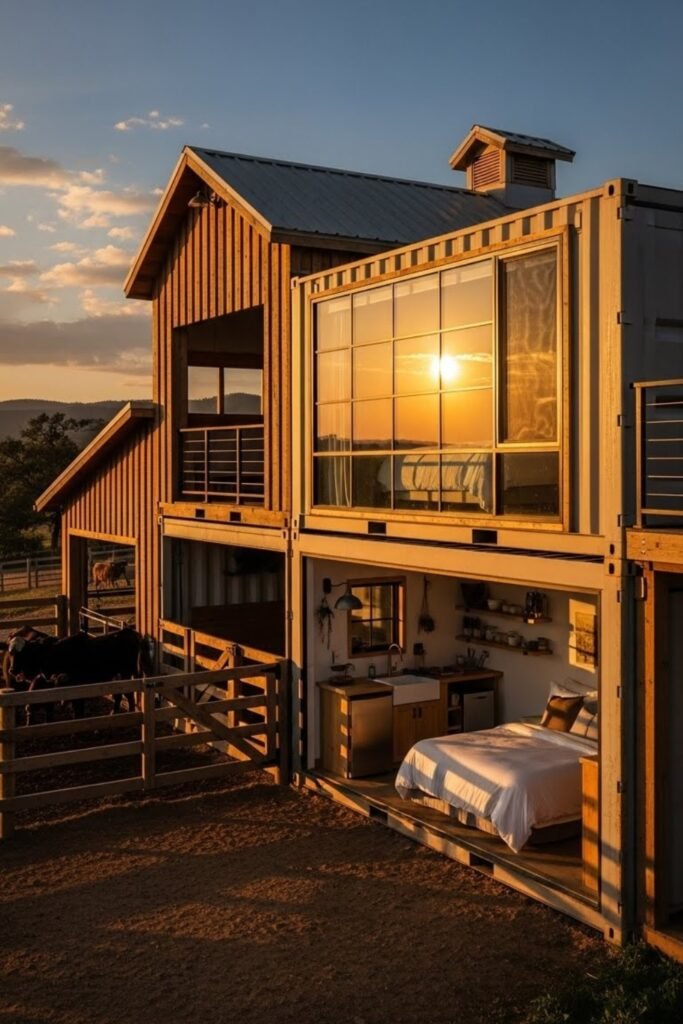
A hybrid living container barn combines animal space with small living quarters. One side holds stalls or storage, while another container includes a sleeping area, bathroom, and kitchenette.
This setup works well for ranch hands or seasonal farm stays. It reduces travel time and allows quick access to animals during early mornings or emergencies.
Open-Air
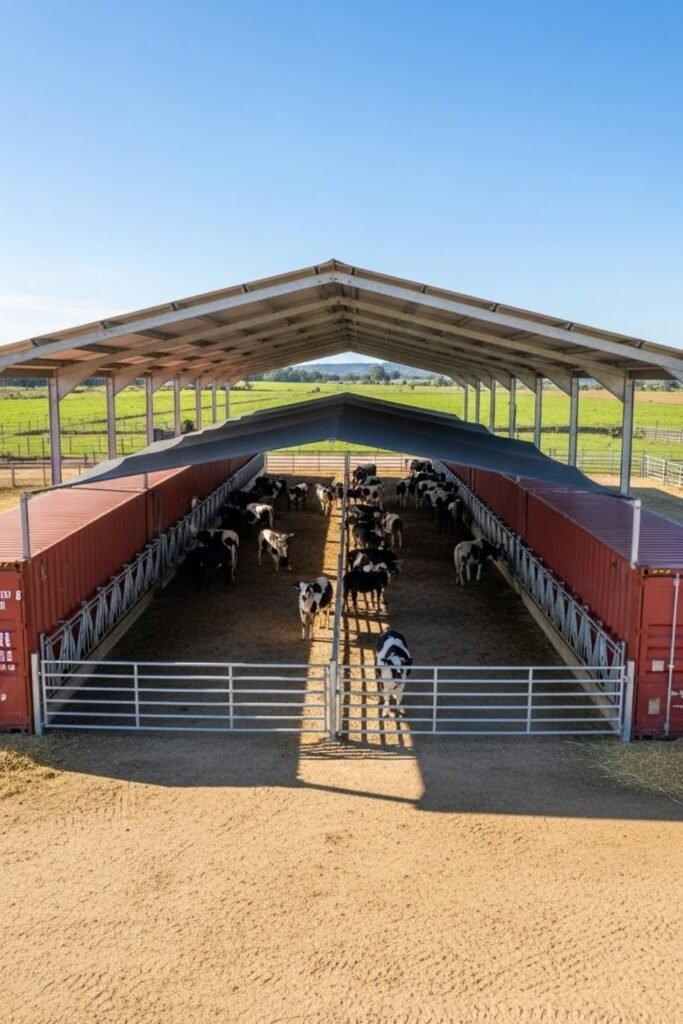
An open-air container barn uses containers arranged in a U or L shape with a covered center. The open middle area provides shaded space for animals while maintaining airflow.
Containers on the sides store feed, tools, or supplies. This design works especially well in warm climates where ventilation matters more than full enclosure.
Solar Barn
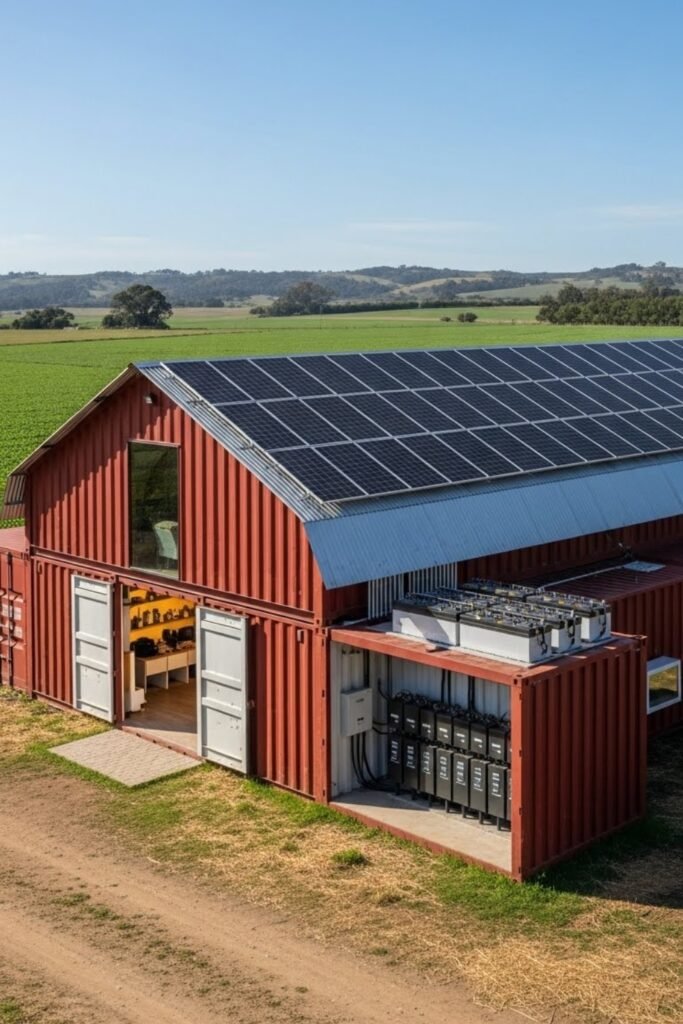
A solar-powered shipping container barn is designed for off-grid farms and remote land. Solar panels on the container roof provide electricity for lighting, fans, and small equipment.
Battery storage keeps the barn functional at night. This setup reduces energy costs and works well for sustainable farming operations in sunny regions.
Grain Storage
A grain storage container barn offers secure, climate-controlled space for harvested crops. Insulated containers help protect grain from moisture, pests, and temperature changes. Ventilation systems maintain airflow, reducing spoilage.
This barn type is ideal for farmers who want long-term storage without building large traditional silos.
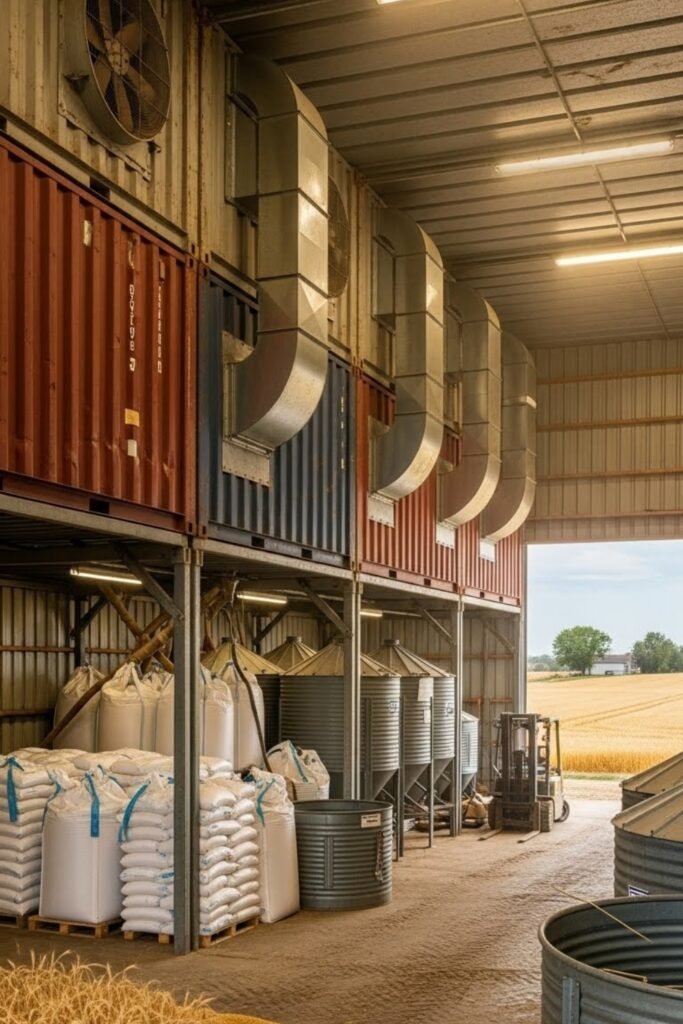
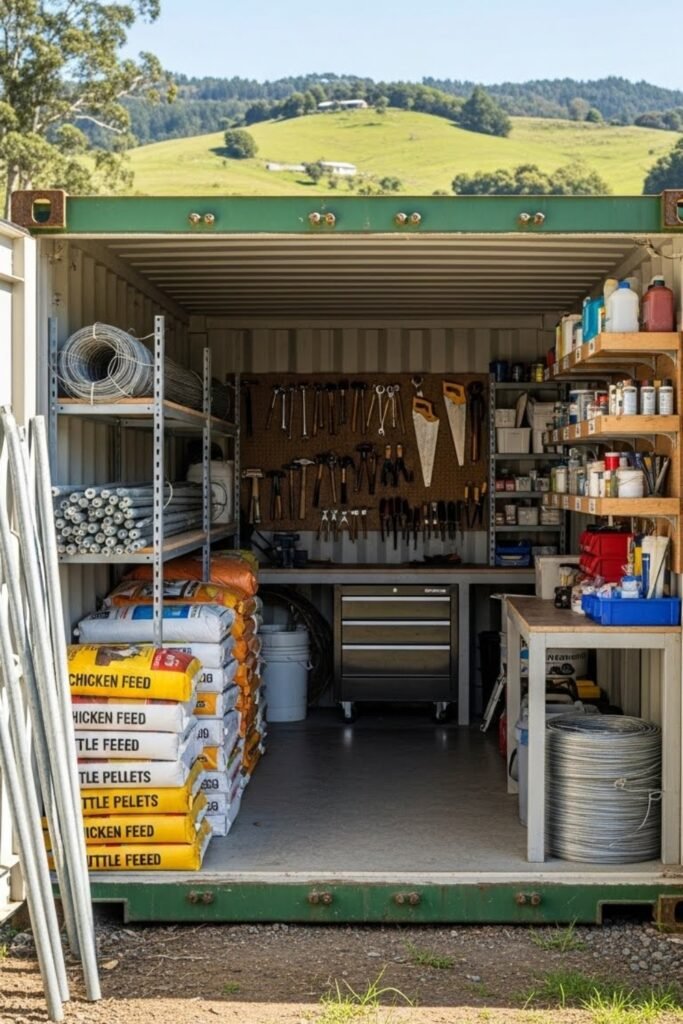
Supply Barn
A supply-focused container barn keeps farm essentials organized and easy to access. Containers store feed bags, fencing materials, tools, and seasonal equipment.
Interior shelving and labeled sections improve workflow. The steel structure protects supplies from weather damage and rodents, making it a dependable central storage hub for daily farm operations.
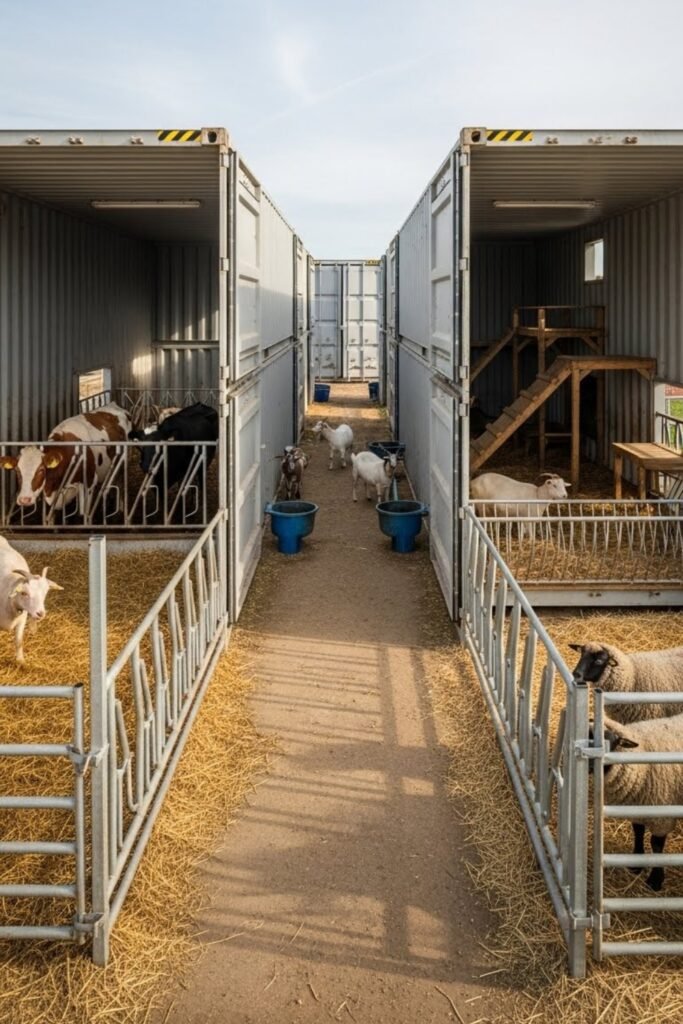
Multi-Animal
A multi-animal container barn allows different livestock to share one structure while staying separated. Each container zone houses a specific animal type, preventing cross-contamination.
Central walkways simplify feeding and care. This design works well for mixed farms that raise multiple animals but want one efficient barn layout.
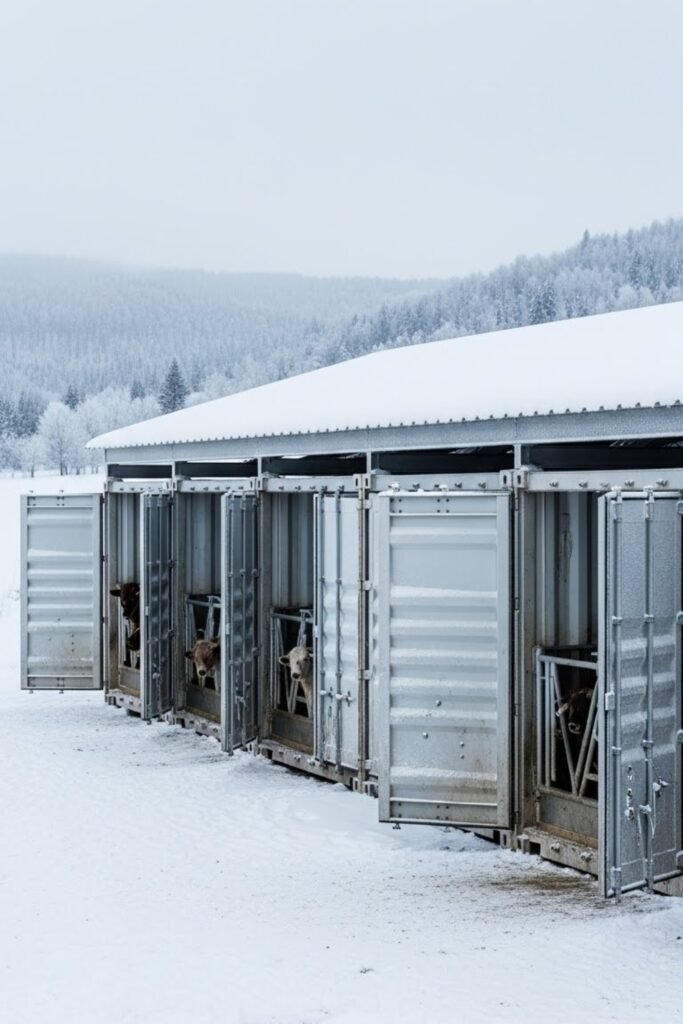
Cold Climate
A cold-climate shipping container barn is built for snowy and freezing regions. Heavy insulation, sealed joints, and reinforced doors help retain warmth inside. Containers can include heated water lines and protected feeding areas.
The steel structure handles heavy snow loads, making this barn reliable for year-round livestock care in harsh winter environments.
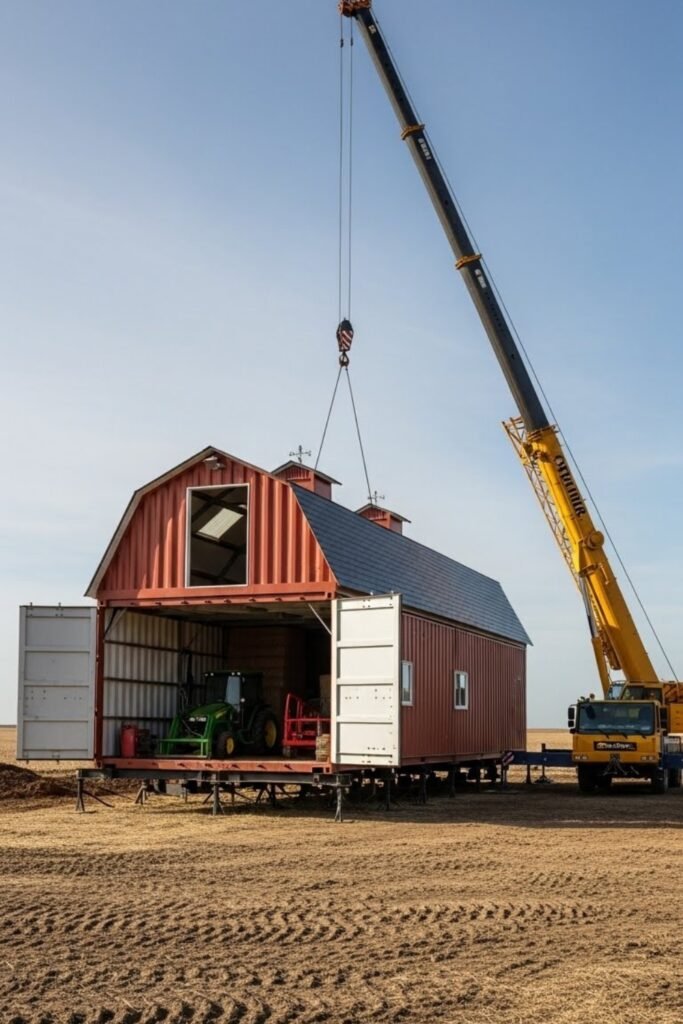
Portable Barn
A portable container barn is designed to move when farm layouts change. Containers remain mostly intact, allowing relocation using cranes or flatbed trucks.
This setup works well for expanding farms or leased land. Despite being movable, the barn still provides strong protection for animals, equipment, or feed storage.
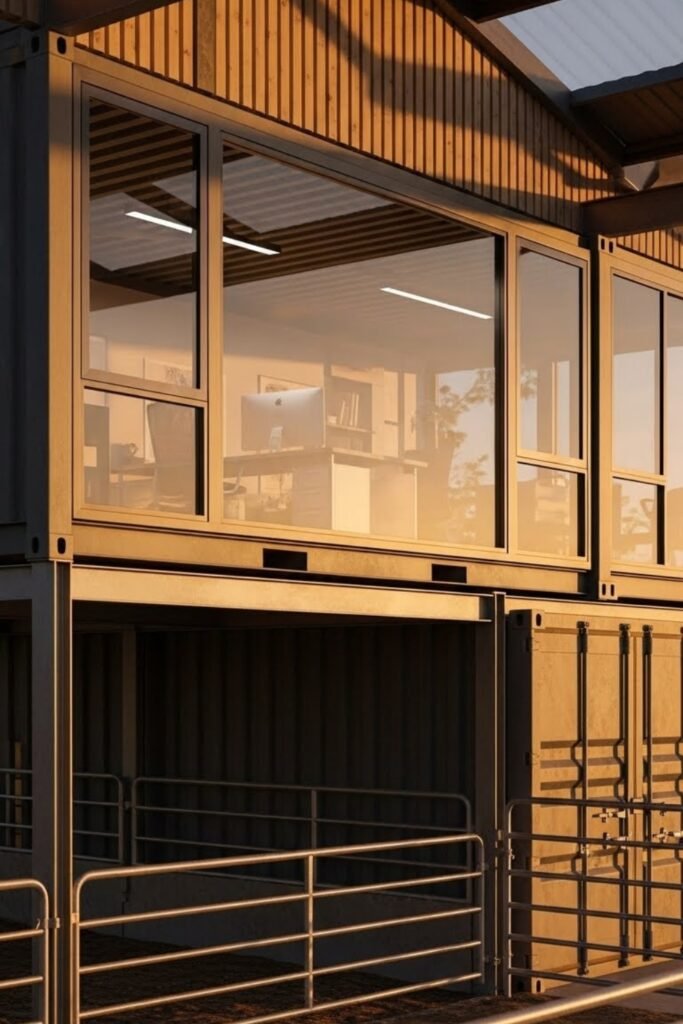
Loft Office
This container barn includes a small loft office above storage or animal areas. The upper container works as a workspace for farm planning, monitoring livestock, or paperwork.
Windows provide visibility over the barn floor. It’s ideal for farmers who want a quiet control area without building a separate structure.
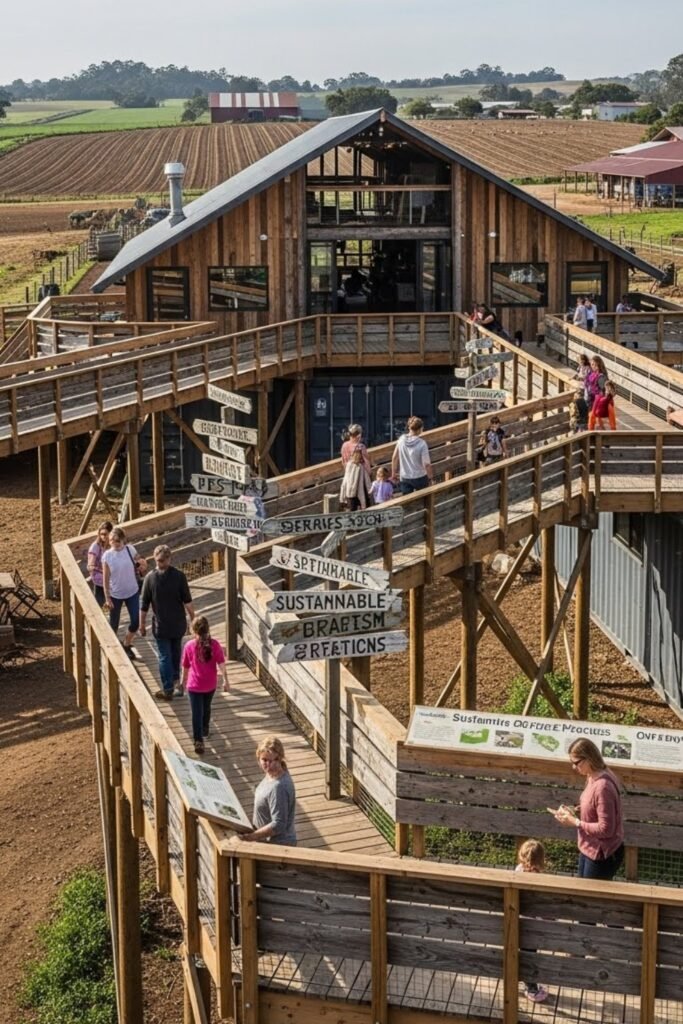
Agritourism
An agritourism container barn is designed to welcome visitors safely. Containers create shaded walkways, viewing areas, and small exhibit spaces while keeping animals secure.
The industrial look blends well with rustic farm settings. This barn style works for farms offering tours, workshops, or seasonal events.
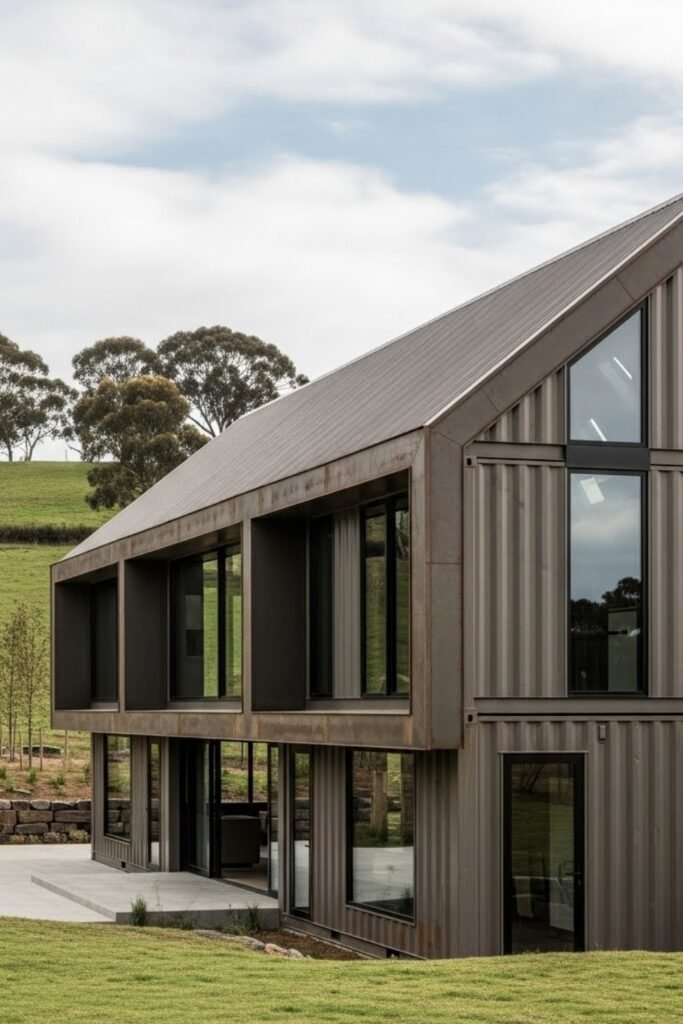
Modern Barn
A modern shipping container barn focuses on clean lines and a minimalist layout. Smooth steel surfaces, large openings, and neutral finishes give it a contemporary look.
This design works well for farms that want a polished appearance without sacrificing function. It blends storage, animal housing, and work areas into one sleek structure.
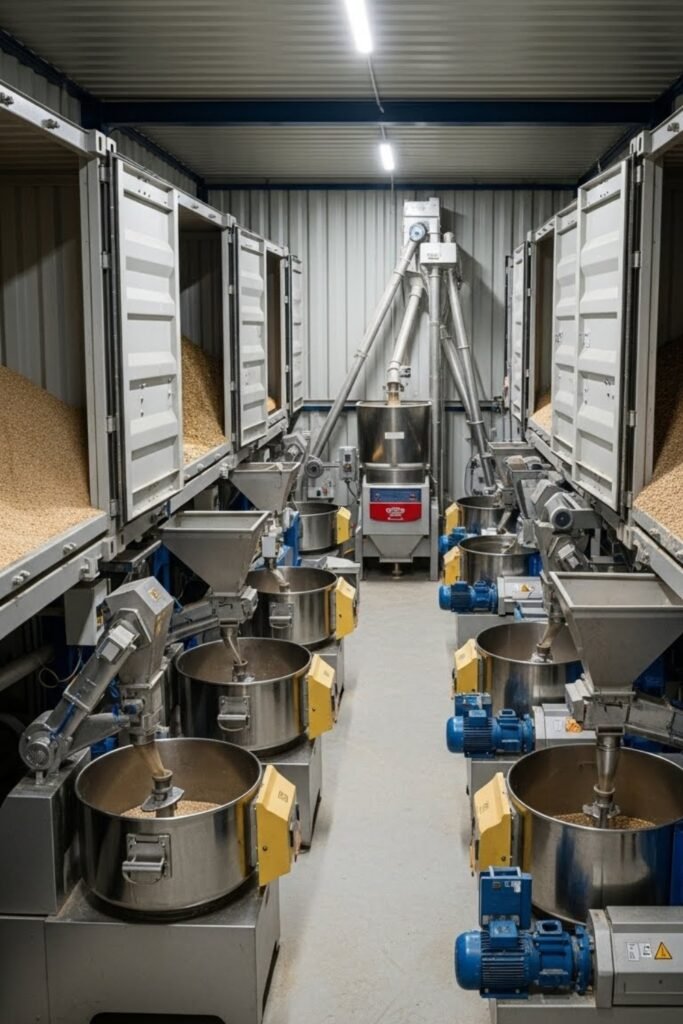
Feed Processing
A feed processing container barn is built for mixing, grinding, and preparing animal feed. Containers house equipment, ingredient storage, and work surfaces in a controlled environment.
Steel walls make cleanup easy and limit contamination. This setup improves efficiency for farms that prepare feed on-site instead of buying pre-mixed supplies.
Emergency Shelter
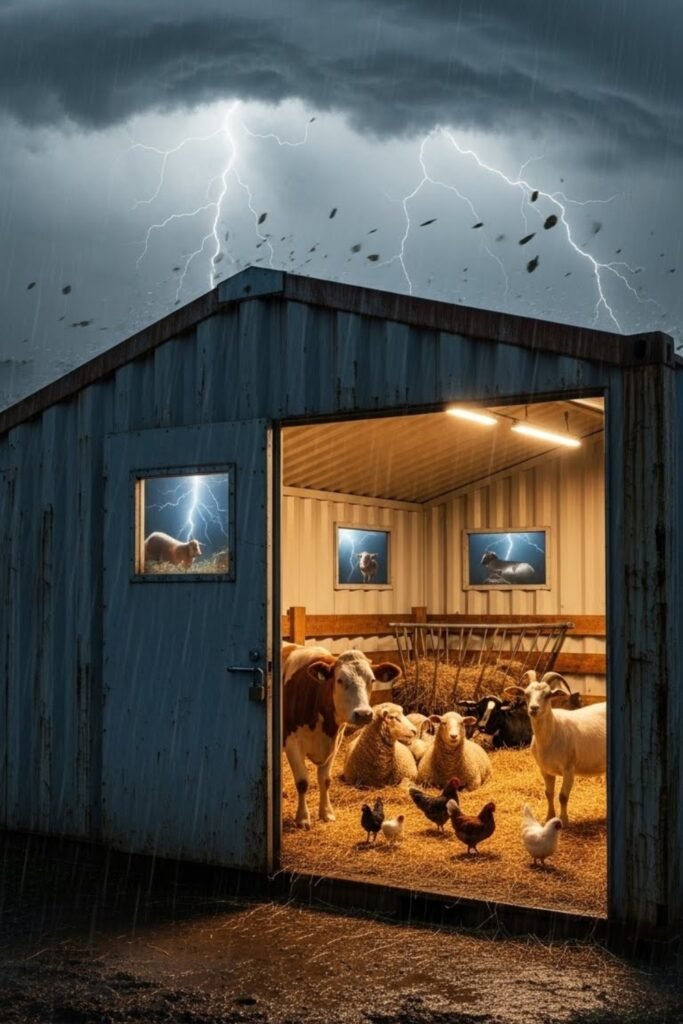
An emergency shelter container barn protects animals during storms, extreme heat, or high winds. Reinforced steel walls offer strong defense against debris and harsh weather.
Quick-access doors allow fast movement of animals inside when conditions change suddenly. This barn is valuable in regions prone to hurricanes, floods, or wildfires.
Training Barn
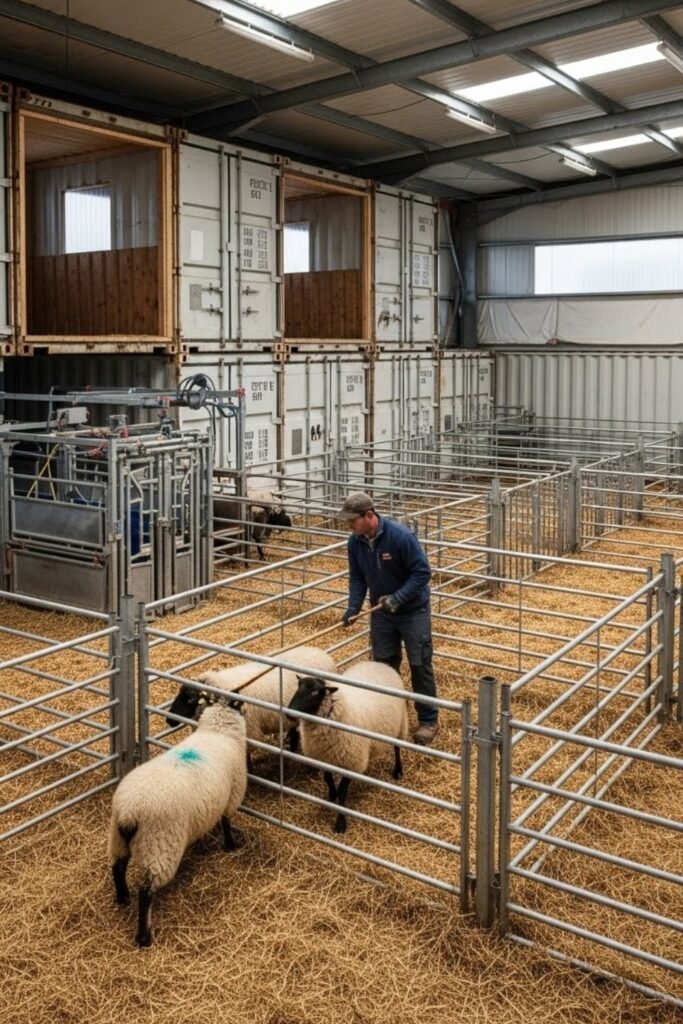
A training-focused container barn provides space for handling and working with animals safely. Containers form enclosed lanes, gates, and practice areas.
Controlled layouts help reduce stress during training sessions. This design is ideal for livestock handling, veterinary checks, or daily training routines on working farms.
Expandable System
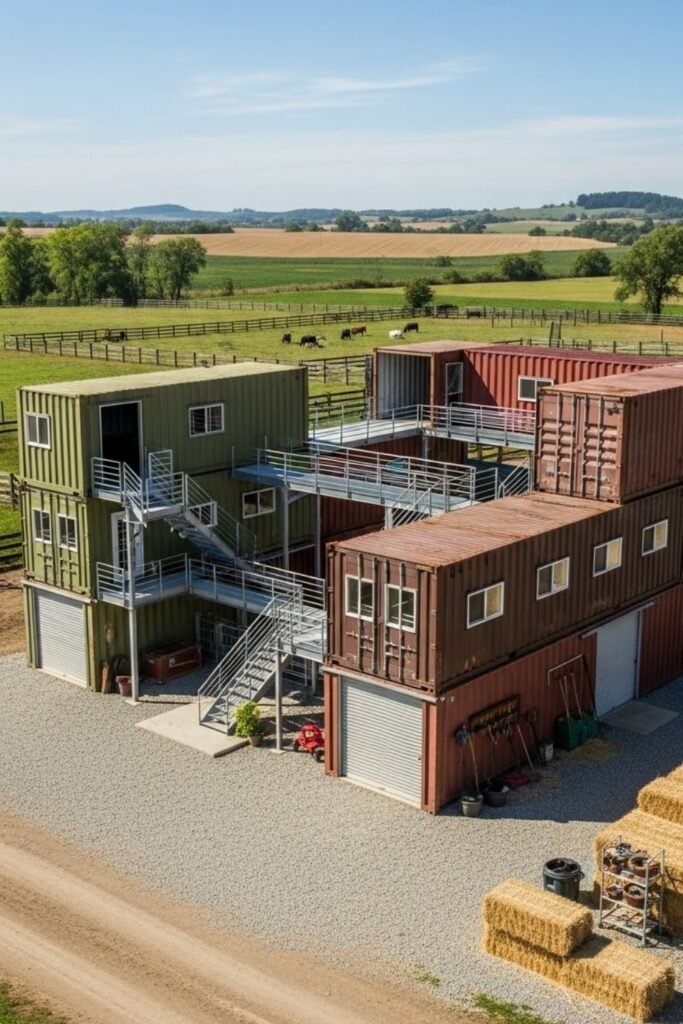
An expandable shipping container barn is designed to grow with your farm. Containers are arranged so new units can be added without rebuilding the entire structure.
This allows farmers to start small and expand storage, animal space, or work areas over time. It’s ideal for long-term planning and changing farm needs.

Hi, my name is Ali Mehmood! I’m a passionate writer and DIY enthusiast who loves turning creative ideas into practical, hands-on projects.
I created this website to share inspiring, budget-friendly ideas that you can do yourself – whether it’s organizing your home, crafting something unique, or creating fun projects for kids and pets.
I believe DIY isn’t just a hobby – it’s a smart way to save money, reduce waste, and enjoy the satisfaction of making things with your own hands.
I’m excited to have you as part of this growing community, and I’ll continue bringing you helpful, realistic, and fun DIY ideas you can actually use.