This post may contain affiliate links: read full affiliate disclosure.
Upcycling sounds exciting until you actually try it. That moment you pick up the scissors, every doubt hits at once – What if I ruin this?
What if it looks cheap? What if I don’t know how to fix mistakes? Most people stop right there, not because they lack creativity, but because they lack confidence.
This guide gives you that confidence. You’ll learn simple ways to flip old clothes, avoid common mistakes, and create pieces that look clean, modern, and wearable – even if you can’t sew.
No stress. No guesswork. Just clear steps that make upcycling feel easy and achievable.
Save this article for later!

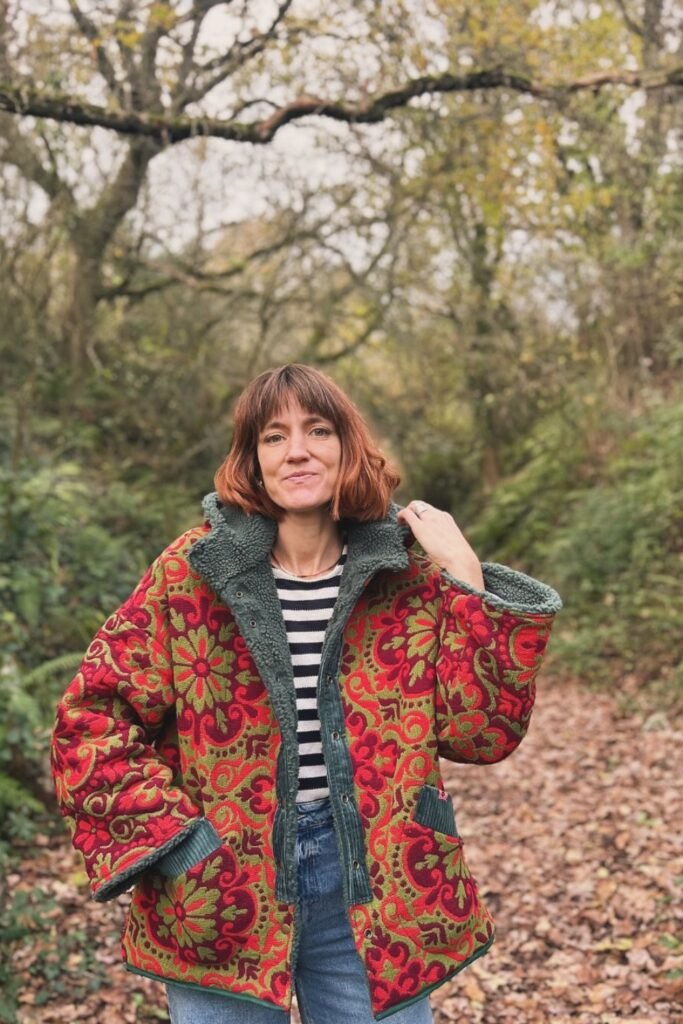
Tapestry Coat Reinforce
Sometimes a bold tapestry coat works best when you support its weight with steady inner stitching that strengthens every curved edge beautifully.
You can recreate this effect by adding firm binding around seams, letting decorative fabric hold structure without pulling or stretching awkwardly.
This method suits heavier woven textiles perfectly, especially when designing outerwear intended for cold walks where comfort and durability matter equally.
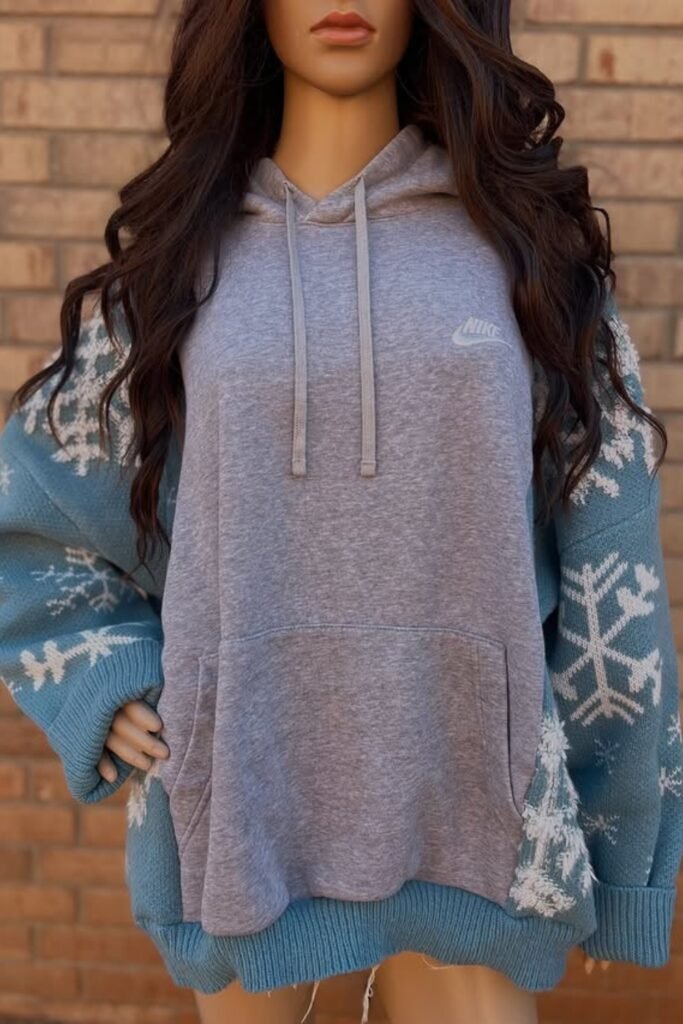
Sweater-Sleeve Merge
Blending sweater sleeves into a hoodie creates warmth instantly, especially when the knit fabric is secured with reinforced zigzag seams throughout.
You can rebuild similar sleeves by cutting along armholes carefully, matching stretch points before stitching each knitted section with slow precision.
This works beautifully for winter loungewear, giving everyday hoodies a softer shape that feels intentionally cozy while keeping movement relaxed comfortably.
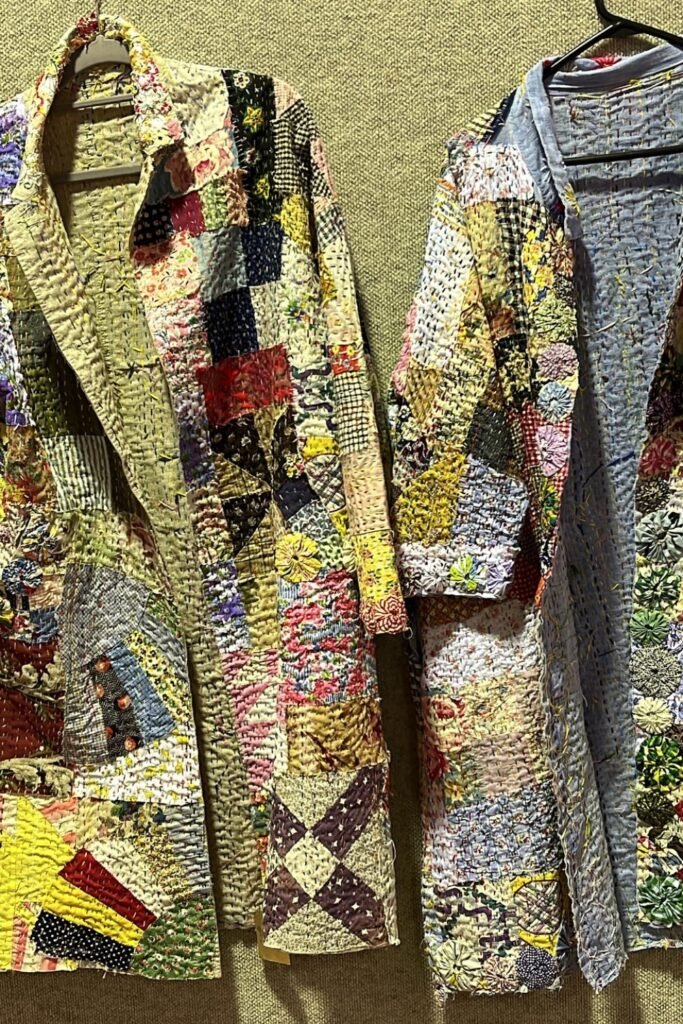
Quilt-Coat Hand Stitching
Hand-stitched quilting on coats shines when each scrap piece joins through visible running stitches that secure layers with gentle flexibility overall.
You can recreate this by pairing lightweight batting with mixed fabrics, letting slow stitching add movement while keeping panels naturally breathable.
This sewing style suits transitional weather pieces, giving repurposed quilts a wearable silhouette that feels artistic, warm, and entirely personal daily.
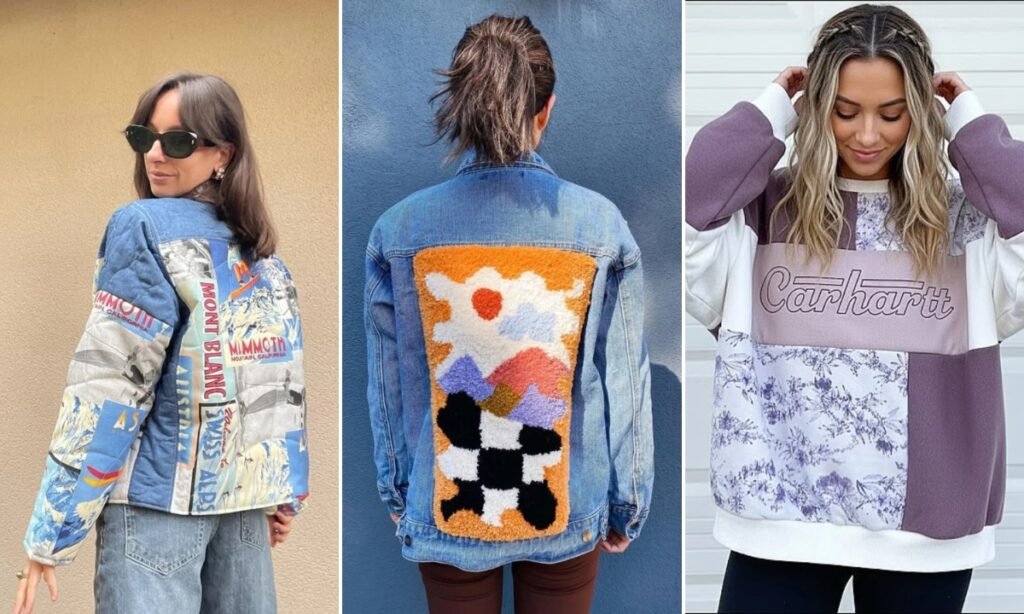
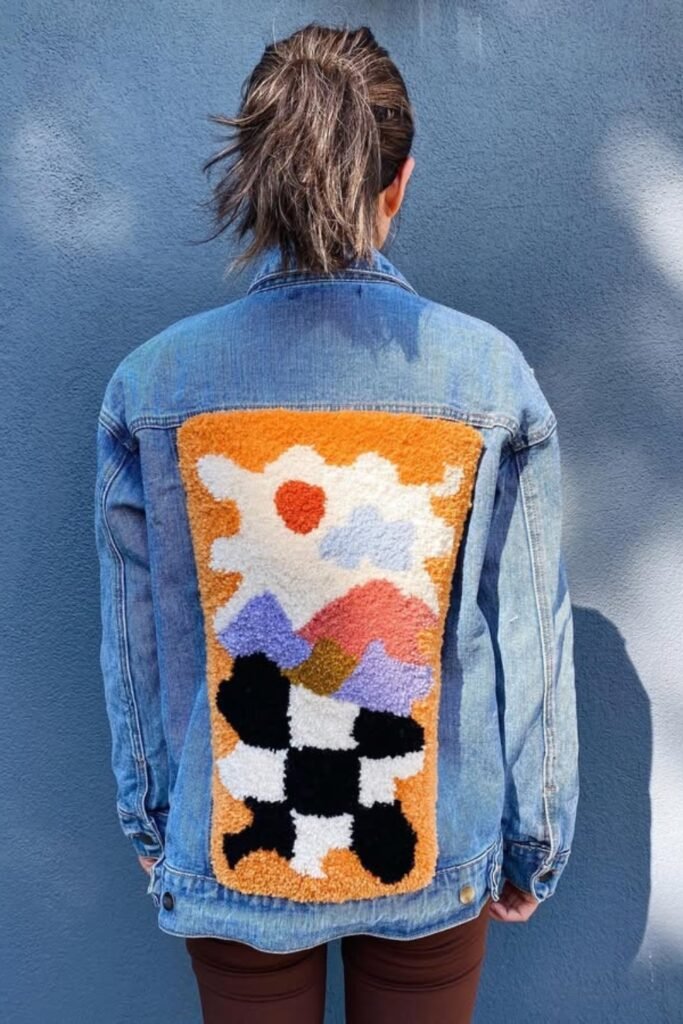
Tufted Patch Insert
A tufted wool panel thrives on a denim jacket when anchored tightly along the perimeter using dense securing stitches holding textured thickness.
Rebuilding this design works well when you frame the tufted panel first, then stitch around edges slowly to maintain clean alignment.
This idea suits casual jackets needing personality, adding tactile artwork that stands strong outdoors without sagging whenever the jacket moves actively.
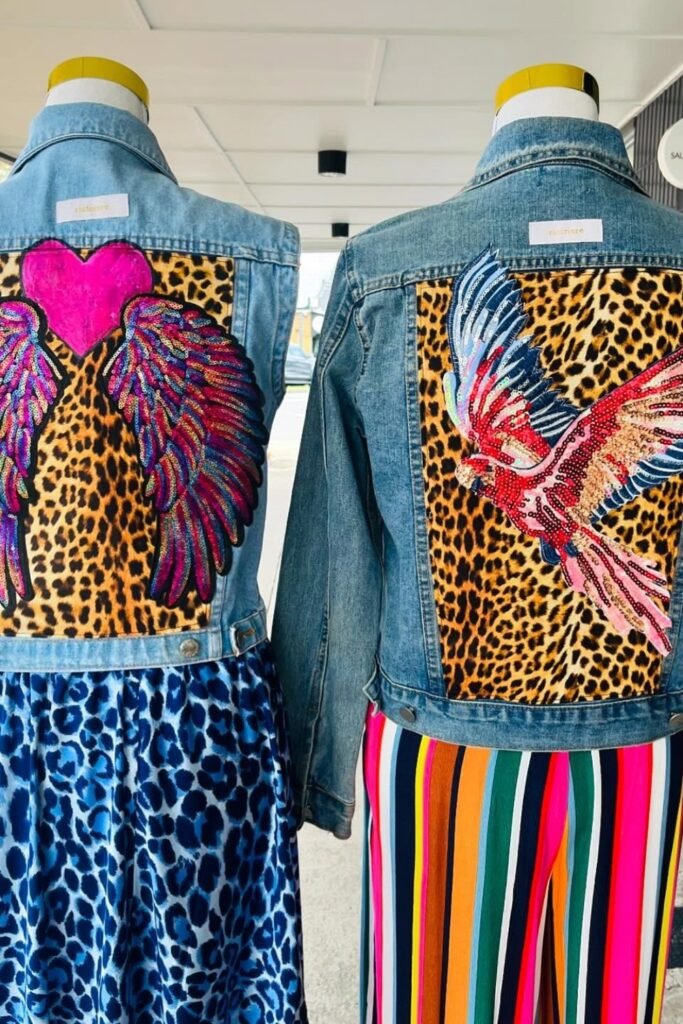
Embellished Back Patchwork
Statement back patches feel strongest when bold embroidery attaches onto firm backing fabric, then stitched onto denim with stable perimeter seams.
You can recreate this by fusing embroidered motifs onto sturdy prints, letting the backing prevent distortion before sewing everything confidently together.
This technique suits festival jackets or standout outfits, giving simple denim bright energy that holds shape even during busy days or movement-heavy events.
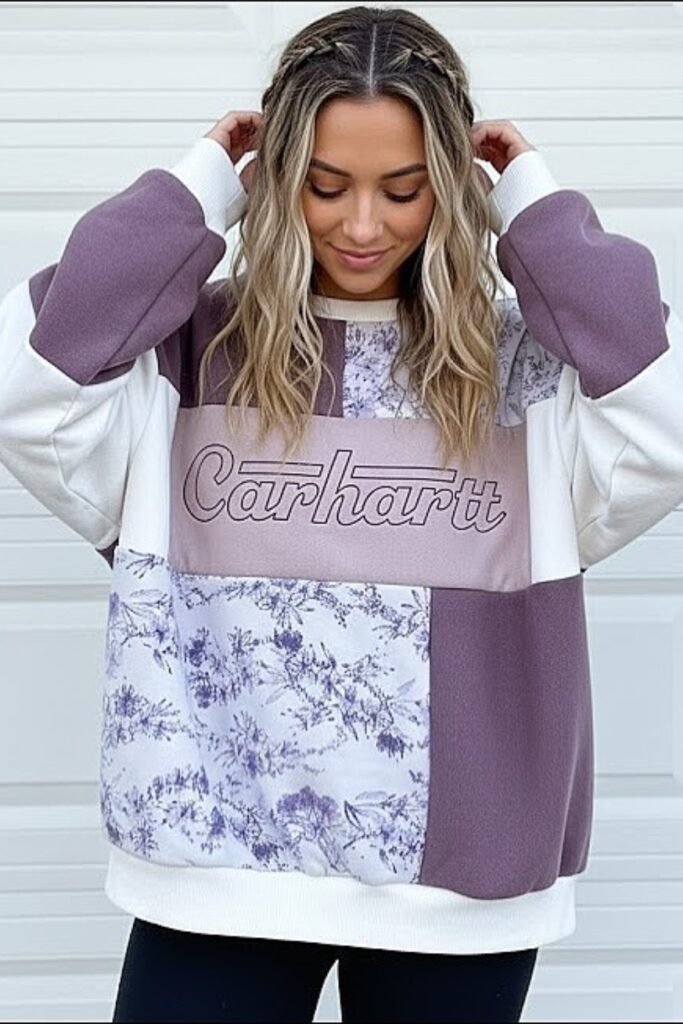
Panel-Piece Sweatshirt
Patchwork sweatshirts succeed when each fabric block aligns carefully through straight seams that balance weight and keep every section lying flat.
You can recreate this look by mixing stable knits, pressing seams open thoroughly, then topstitching lightly to prevent bulky intersections forming underneath.
This method suits casual everyday wear, giving worn sweatshirts renewed structure while letting soft fabrics combine into something comfortable, modern, and expressive.
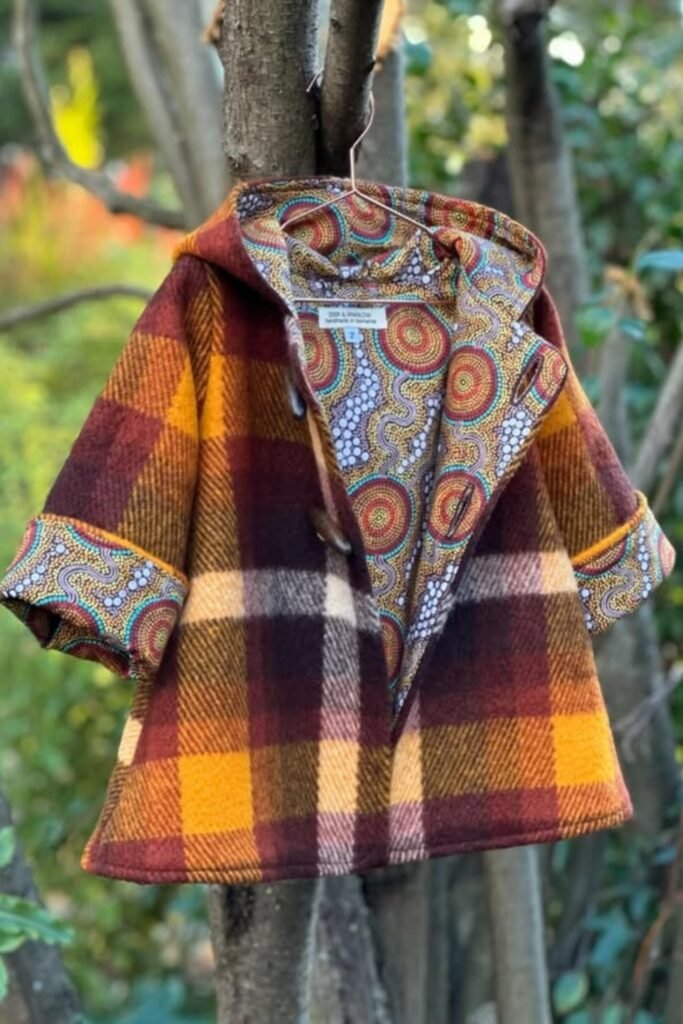
Patterned Lining Stitch
Unexpected patterned lining works well when secured with clean inner seams that hold heavier wool fabric securely without twisting awkwardly.
You can recreate this detail by matching lining curves carefully, pressing allowances open, then stitching slowly to control shifting across corners.
This method suits coats needing comfort inside, giving warm outerwear a softer feel with a bold contrast that elevates simple plaid instantly.
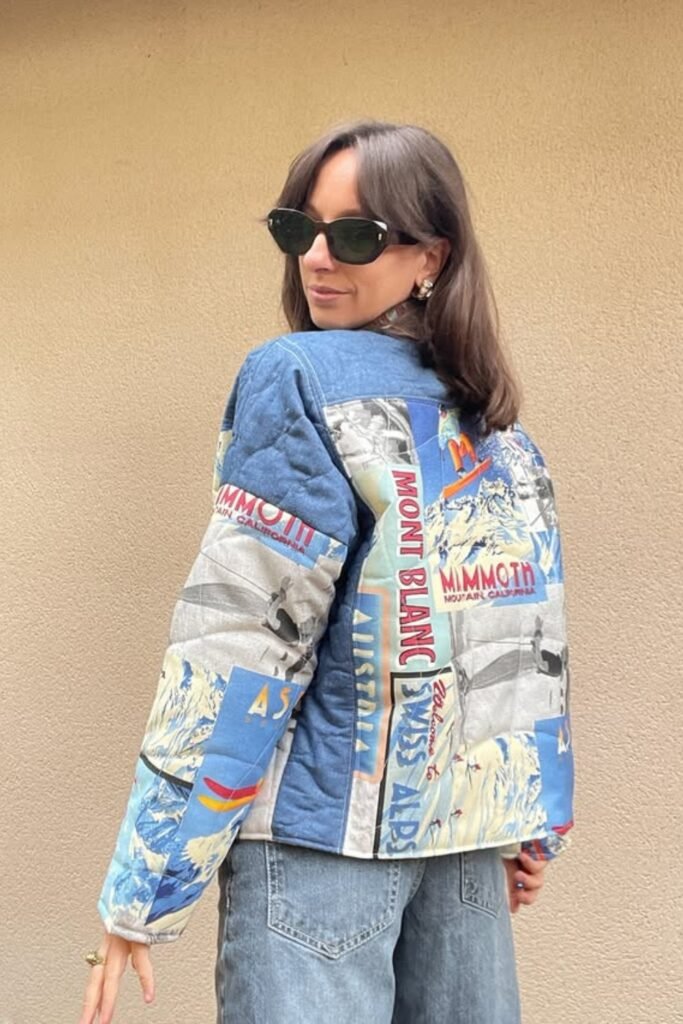
Print-Quilt Panels
Travel-print quilting shines when stitched into structured jacket panels, especially when each section joins through steady seams that keep imagery readable.
Recreating this effect works best when you stabilize vintage prints first, allowing every block to hold shape without stretching during topstitching.
This approach suits lightweight jackets designed for layering, giving casual denim outfits a statement back that feels personal, nostalgic, and wearable daily.
Lace-Back Appliqué
Adding lace beneath floral appliqué creates dimension naturally when secured with narrow stitches following every curve to prevent lifting edges.
You can rebuild this detail using leftover lace scraps, positioning floral motifs intentionally before stitching slowly to maintain clean outlines always.
This technique suits denim jackets meant for markets or creative events, giving rugged fabric a softer balance while keeping the overall structure strong.
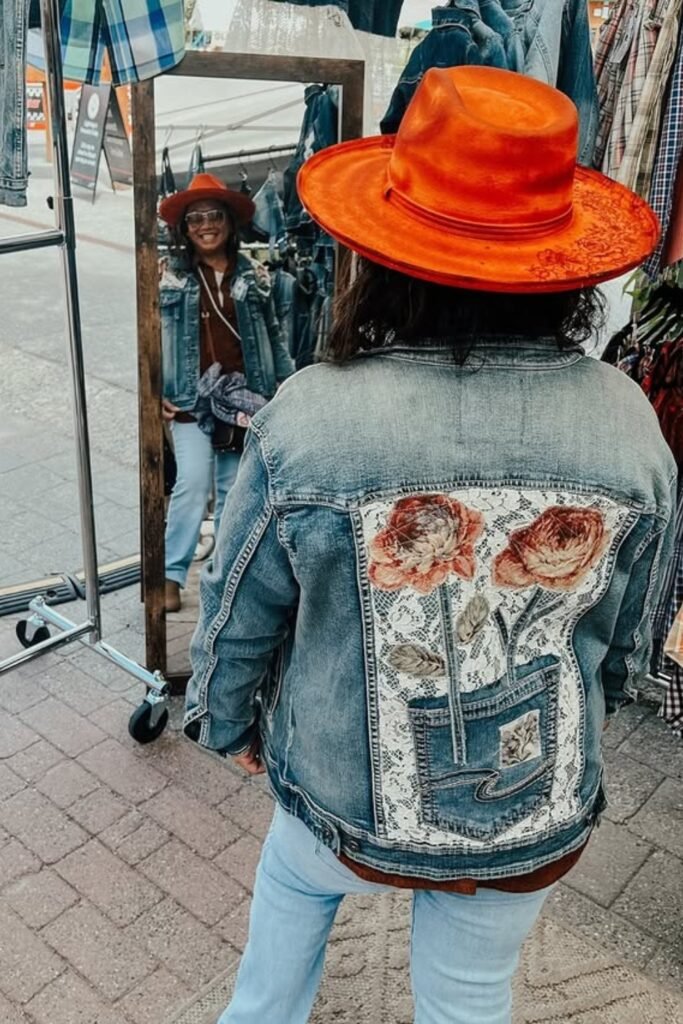
Character Patch Panel
Large character patches look smoother when fused first, then stitched around edges carefully to keep graphic fabric lying flat after washing.
Recreating this works well with lightweight fusible backing, helping playful panels remain crisp on denim without puckering or forming bulky seams.
This method suits fun weekend jackets, allowing childhood prints or themed artwork to transform thrifted denim into something expressive and confidently worn outside.
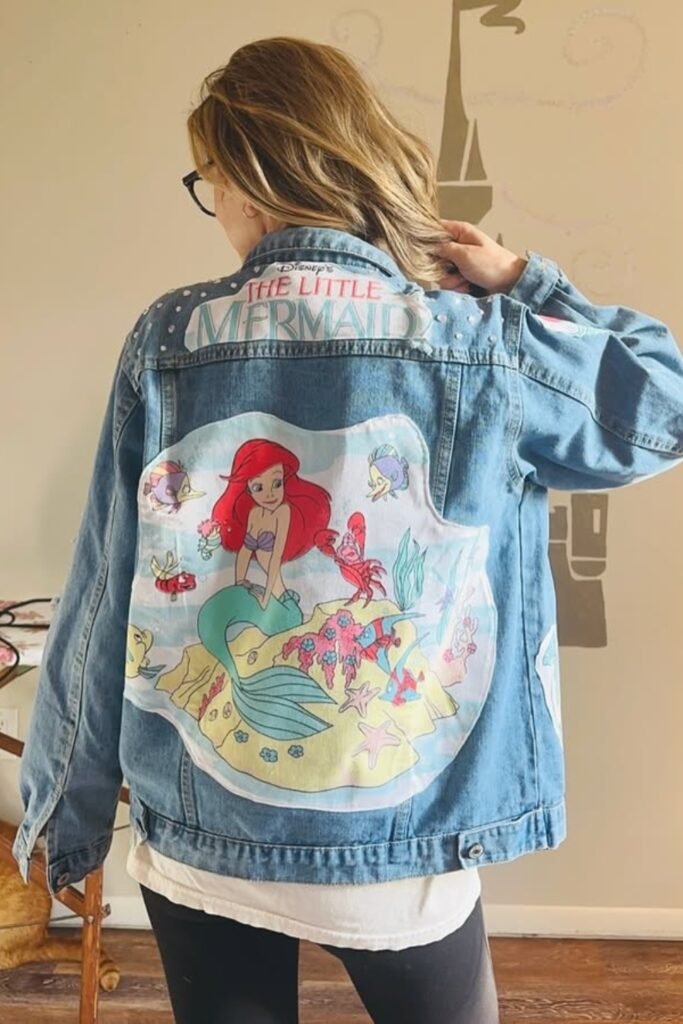
Denim-Remake Stitchwork
Transforming old jeans into relaxed tops works perfectly when existing seams guide new shapes supported by reinforcing stitches added along stress points.
You can recreate similar remakes by joining salvaged denim panels, pressing every intersection firmly, then stitching slowly to maintain steady fabric control.
This process suits everyday pieces built for durability, allowing worn denim to gain new life through simple construction that keeps comfort and style balanced.
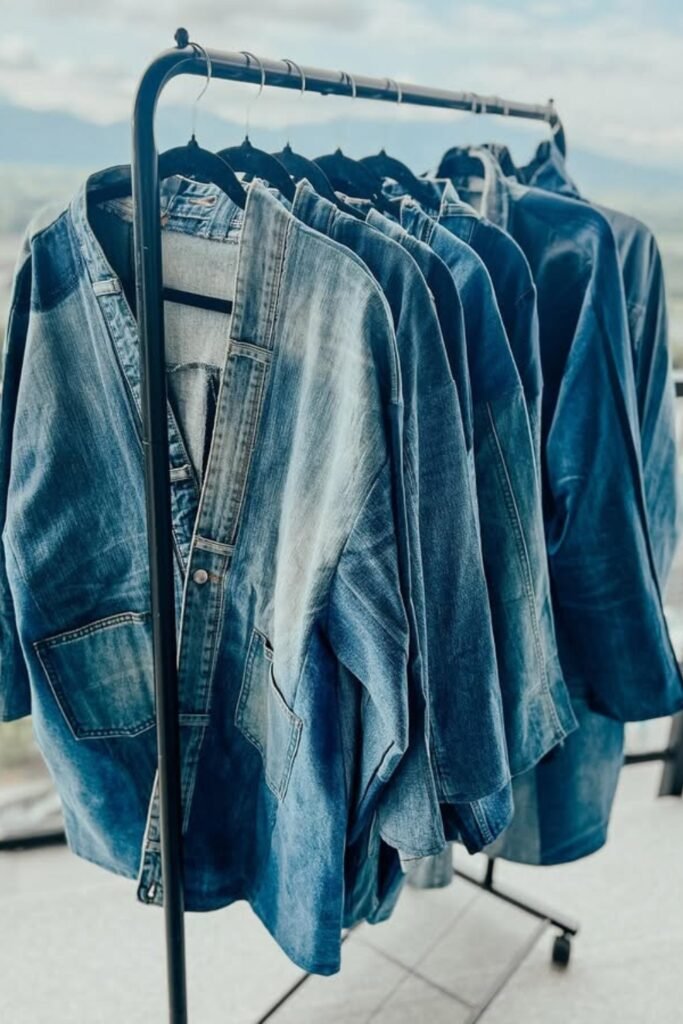
Mixed-Fabric Panelwork
Let bold florals sit beside solids when panels join through steady seams that balance weight while keeping every section visually grounded evenly.
Recreating this works best when you stabilize lightweight prints first, letting straight seams hold shape without letting delicate motifs distort unexpectedly.
This approach suits light jackets needing personality, offering structure through simple construction while blending leftover fabrics into something expressive and wearable daily.
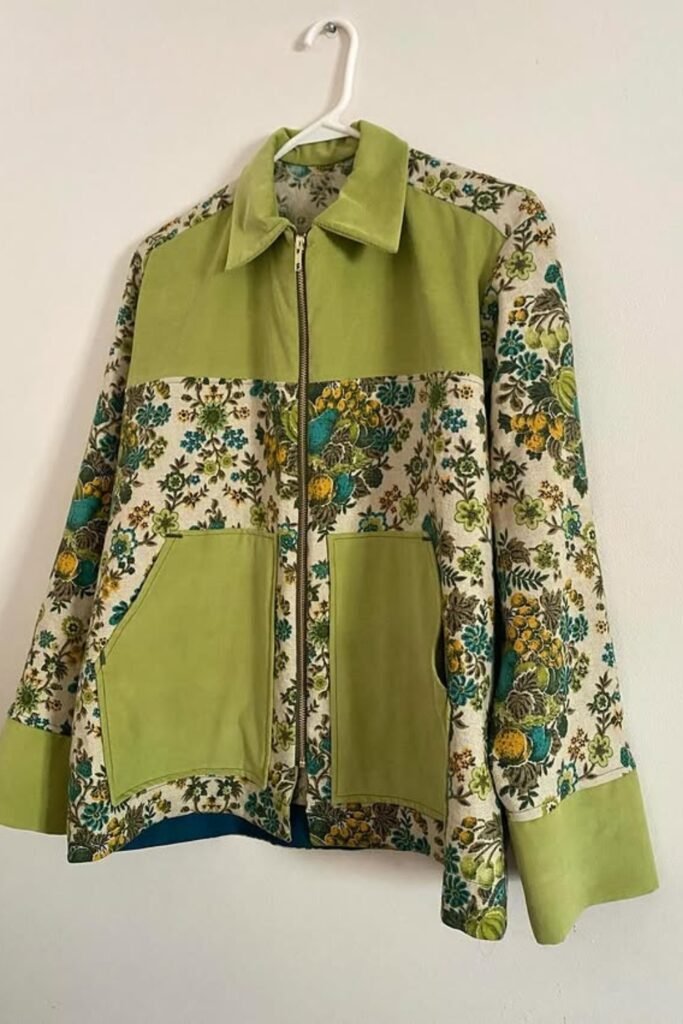
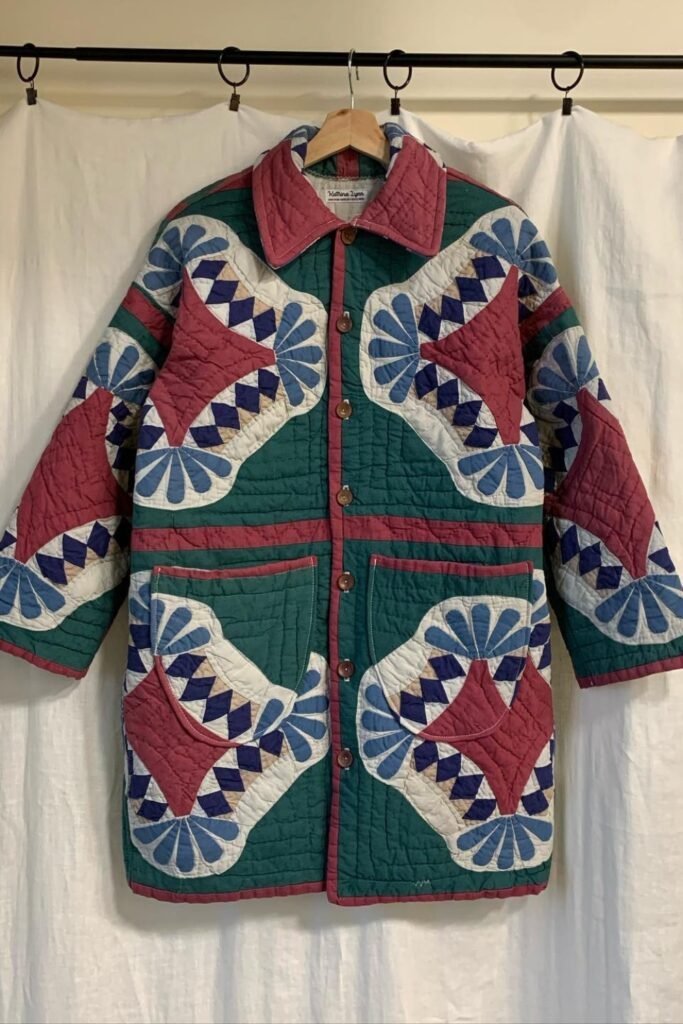
Quilt-Block Shaping
Large quilt motifs look intentional when cut carefully so each curve meets another through smooth seams that protect the pattern’s original symmetry beautifully.
You can rebuild similar coats by marking blocks before stitching, ensuring every triangle aligns well enough to preserve strong geometric visual impact.
This technique suits cold-weather layers, allowing recycled quilts to hold warmth while showcasing traditional handwork that feels modern once shaped into outerwear.
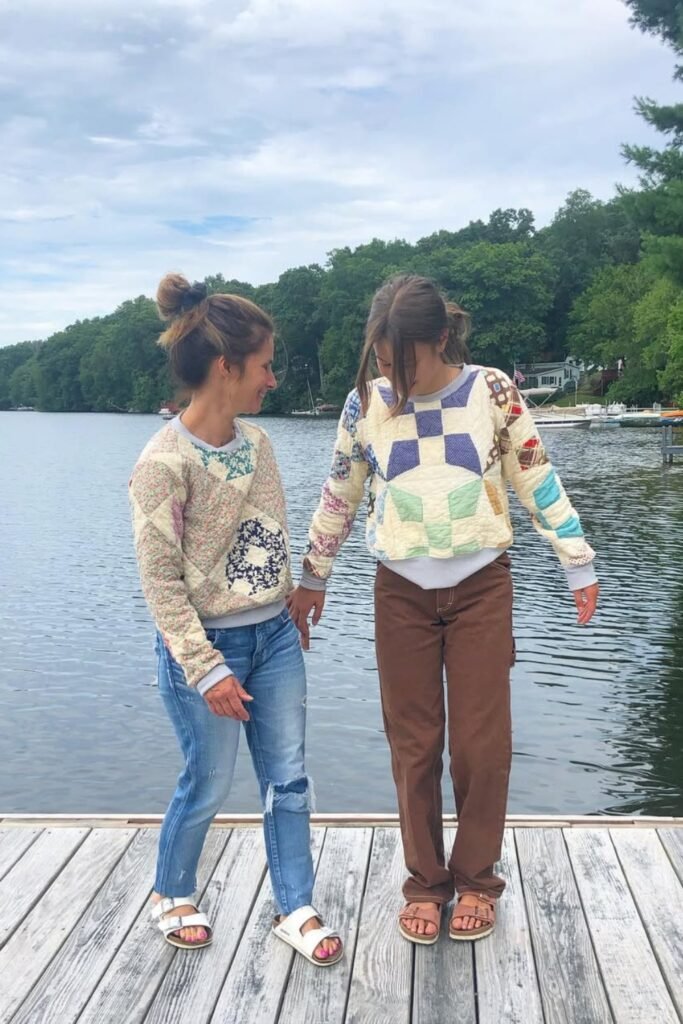
Patch-Sweatshirt Joining
Light quilting transforms sweatshirts naturally when patches meet along soft seams that keep movement relaxed yet support stitched patterns without pulling awkwardly.
You can recreate this by pairing pre-quilted pieces with cotton panels, joining edges gently so the garment maintains comfortable flexibility during everyday wear.
This sewing style suits transitional clothing, giving recycled quilts a chance to become cozy tops perfect for lakeside mornings or casual weekend afternoons.
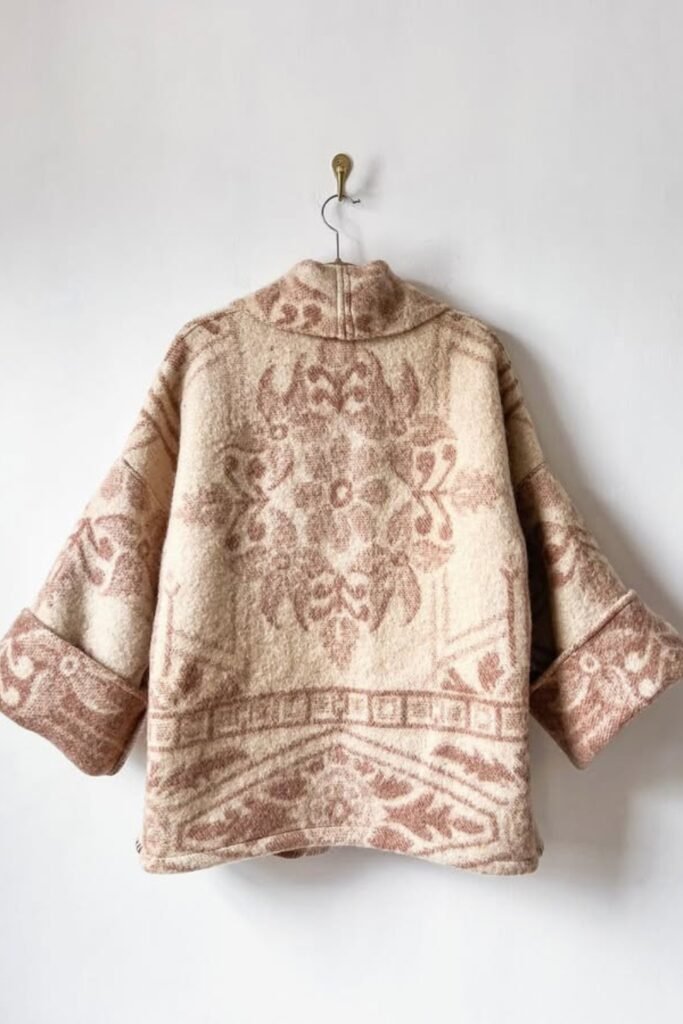
Blanket-Jacket Construction
Turning thick blankets into jackets works best when the original borders sit strategically, helping clean edges stabilize seams and prevent bulky corners developing.
You can rebuild this using straight-line sewing, pressing heavy seams open slowly to ensure the fabric keeps draping naturally despite its dense weight.
This idea suits relaxed silhouettes meant for comfort, giving old blankets new structure while preserving soft texture ideal for chilly indoor-to-outdoor transitions.
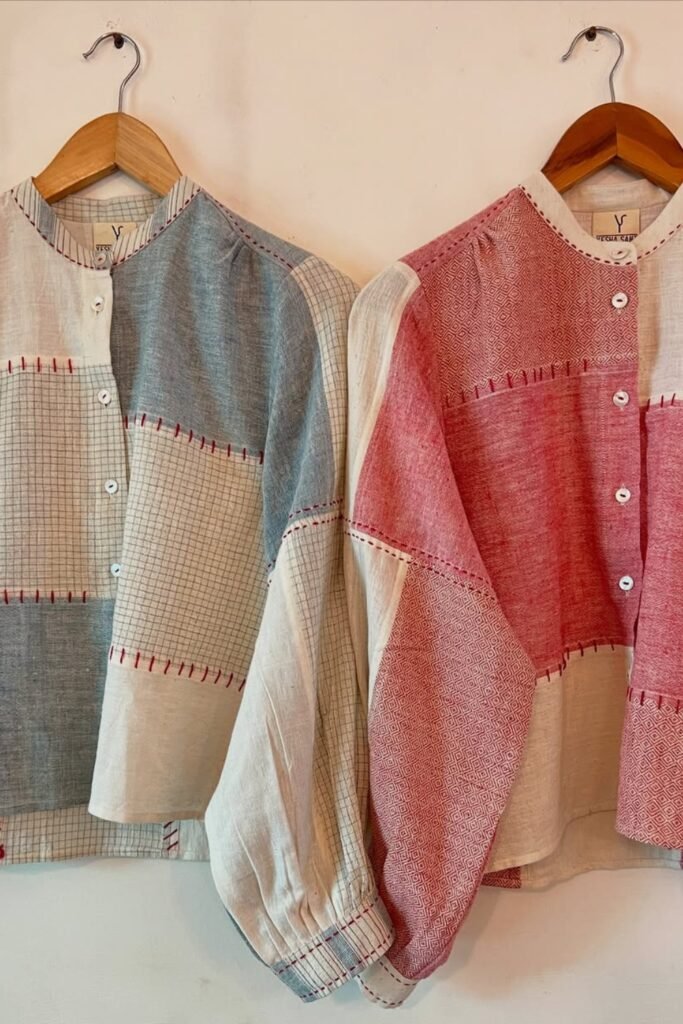
Hand-Stitched Patch Blouse
Hand stitching stands out beautifully when contrasting thread travels across seams, strengthening patch joins while giving simple blouses an unmistakably crafted personality overall.
You can recreate this detail by hand-marking seam allowances, guiding each stitch evenly so patterned fabric blends smoothly without overwhelming surrounding textures.
This method suits lightweight tops designed for layering, allowing scrap fabrics to form breathable garments that show careful sewing rather than machine-perfect uniformity.
Cozy Quilt Hoodie
Quilted hoodies stay comfortable when patchwork panels attach to soft knits through reinforced seams that prevent shifting while supporting added thickness around edges.
You can recreate this by joining quilt blocks first, then attaching textured knit sections carefully so the hood and pocket sit balanced naturally.
This approach suits cold mornings or relaxed home days, giving upcycled quilts a fresh purpose that feels warm, structured, and easy to move in.
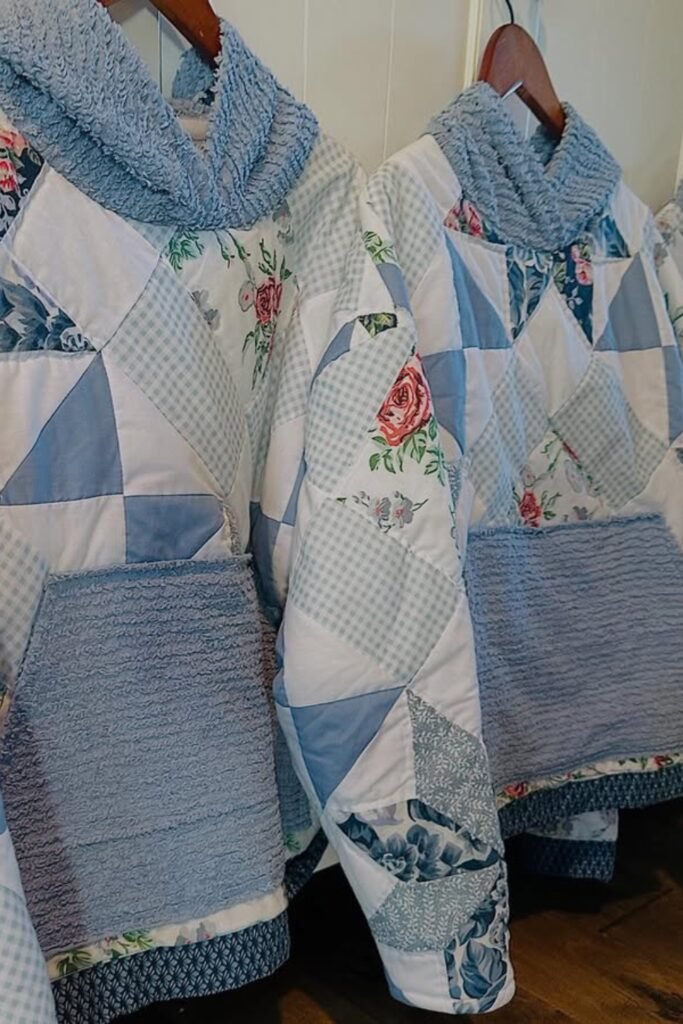
Patch-Hoodie Build
Soft quilt patches feel intentional when you piece balanced blocks, letting gentle seams support mixed prints without disturbing their relaxed drape significantly.
Recreate this hoodie by stabilizing thin sections, then attaching the hood carefully so every curve settles smoothly around the neckline naturally.
This method suits cozy winter layers, giving leftover quilts new usefulness while keeping the finished garment lightweight enough for daily indoor wear.
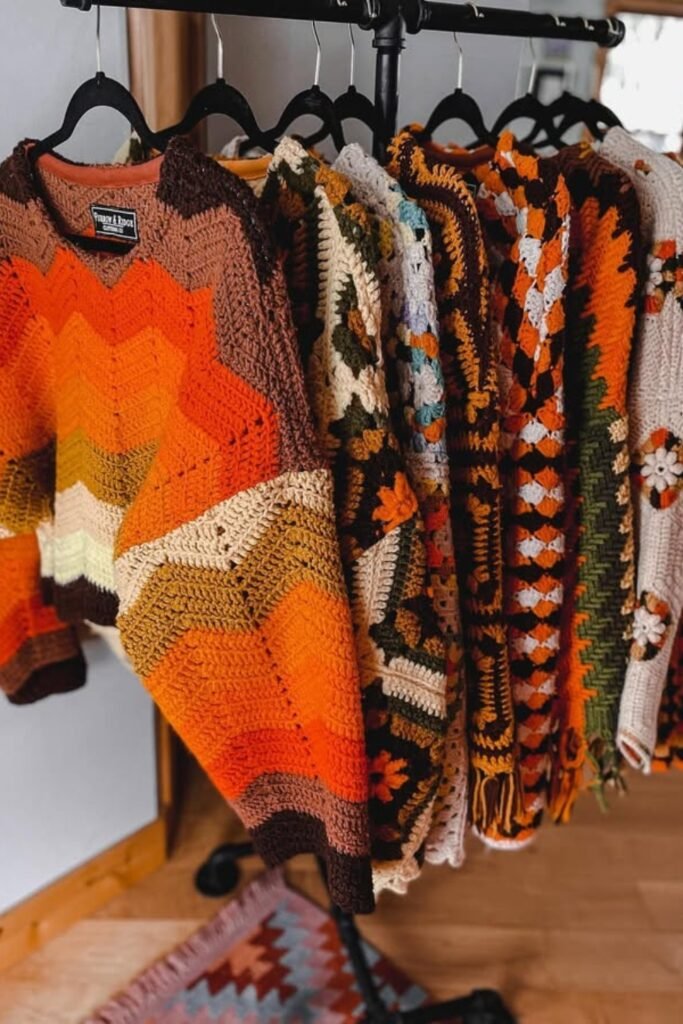
Denim-Quilt Fusion
Structured denim shapes quilt blocks effectively when sleeves attach firmly, helping every angle hold crisp form while contrasting textures elevate the jacket.
You can build this look by joining sturdy denim panels with quilted motifs, ensuring seams stay flat to avoid bulky intersections developing.
This approach works beautifully for casual outerwear, letting worn jeans become functional accents that increase durability and highlight strong patchwork silhouettes.
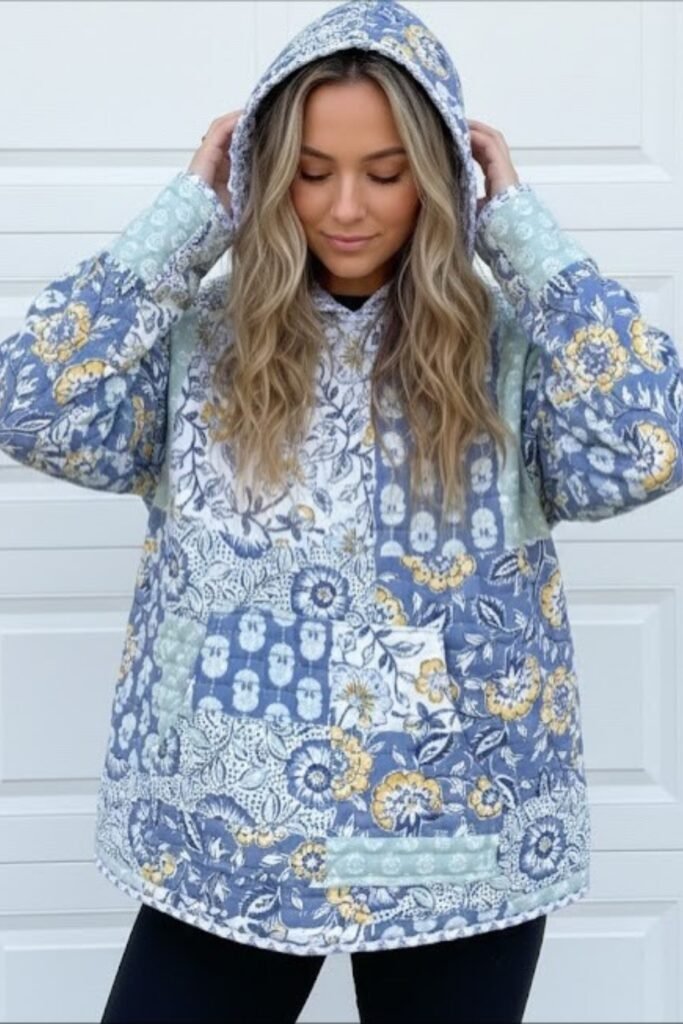
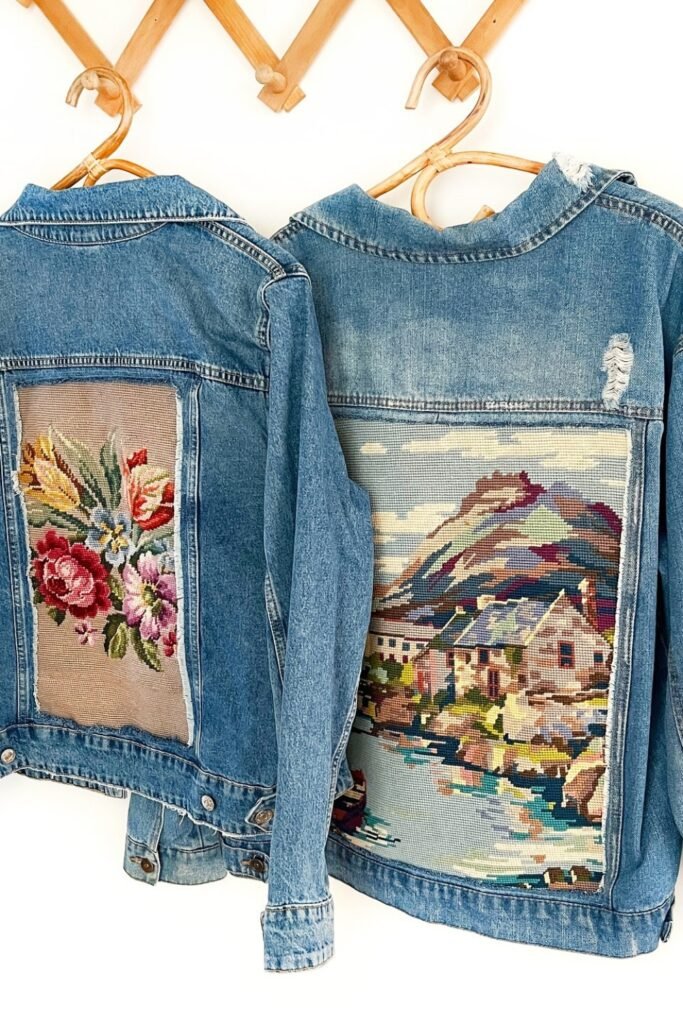
Tapestry-Back Jackets
Vintage needlework panels transform denim instantly when framed neatly, allowing decorative scenes to stay supported through reinforced stitching along every edge.
Recreate this by pressing tapestries thoroughly before sewing, keeping stitches tight enough to secure heavy fabric without causing puckering across corners.
This idea suits statement jackets, giving thrifted art new visibility while providing a stable backing that protects intricate embroidery during regular movement.
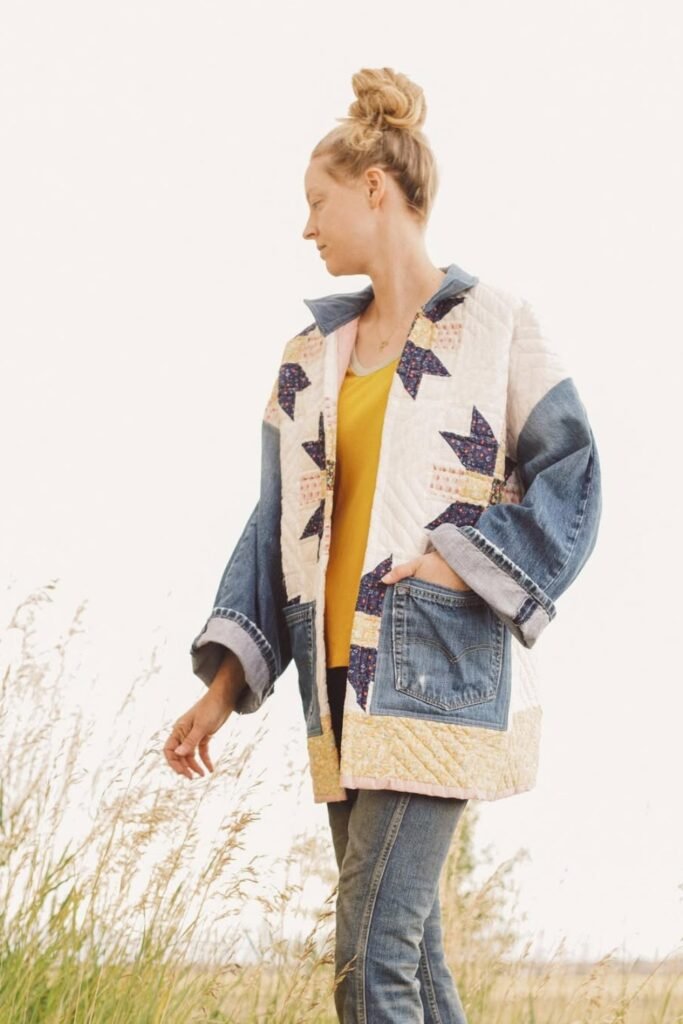
Tapestry Panel Upgrade
Bold stitched artwork shines when framed cleanly inside denim, staying supported through firm seams that hold heavy tapestry without stretching unevenly.
Recreate this effect by pressing the panel thoroughly, then top-stitching around every edge so the fabric remains flat against structured backing.
This method suits jackets needing personality, giving thrifted needlework new purpose while keeping the garment durable enough for constant everyday movement.

Hi, my name is Ali Mehmood! I’m a passionate writer and DIY enthusiast who loves turning creative ideas into practical, hands-on projects.
I created this website to share inspiring, budget-friendly ideas that you can do yourself – whether it’s organizing your home, crafting something unique, or creating fun projects for kids and pets.
I believe DIY isn’t just a hobby – it’s a smart way to save money, reduce waste, and enjoy the satisfaction of making things with your own hands.
I’m excited to have you as part of this growing community, and I’ll continue bringing you helpful, realistic, and fun DIY ideas you can actually use.