This post may contain affiliate links: read full affiliate disclosure.
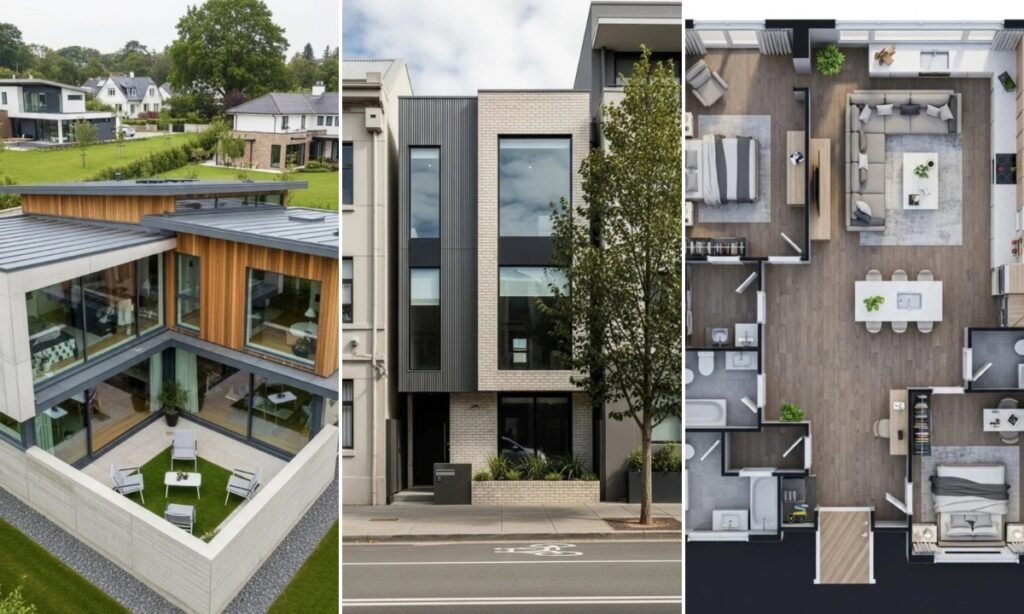
Minimalist house design is not about empty rooms or cold spaces – it’s about creating a home that feels calm, intentional, and easy to live in.
When every element has a purpose, your house starts to feel lighter, more organized, and more welcoming. From hidden storage and open layouts to soft textures and muted colors, minimalism focuses on quality over quantity.
In this article, you’ll discover 22 thoughtfully chosen minimalist house design ideas that help you build a timeless, clutter-free home without sacrificing comfort or personality.
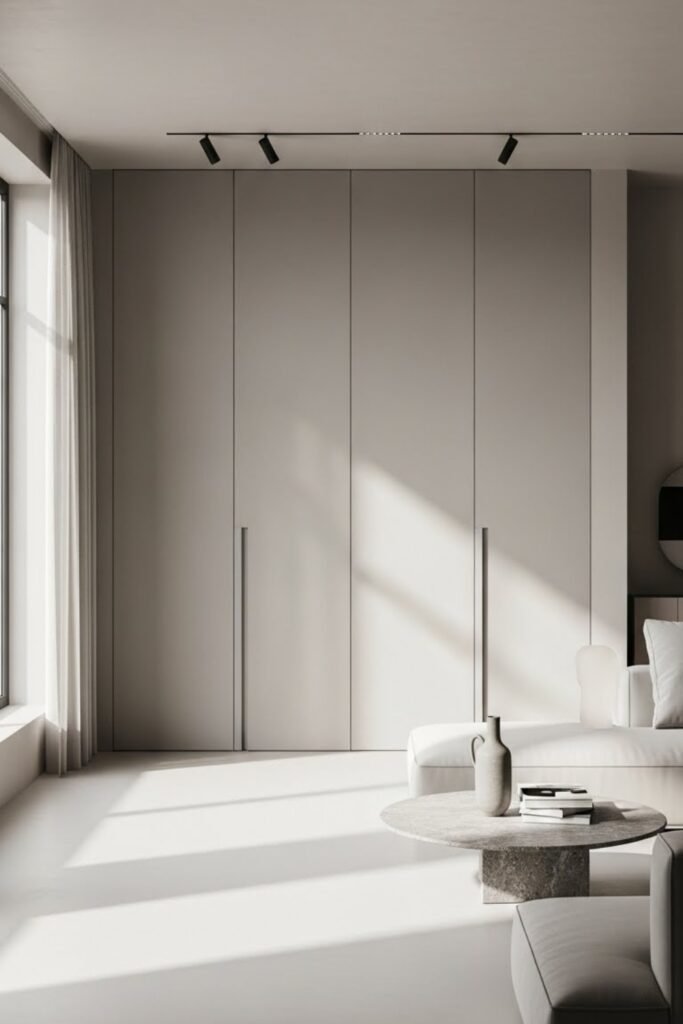
Hidden Storage
Hidden storage keeps minimalist homes calm by concealing cabinets, wardrobes, and shelves behind flat wall panels. With no handles or visible breaks, the walls look clean and uninterrupted.
This idea works especially well in living rooms and corridors where clutter quickly becomes visible. You gain functionality without sacrificing simplicity.
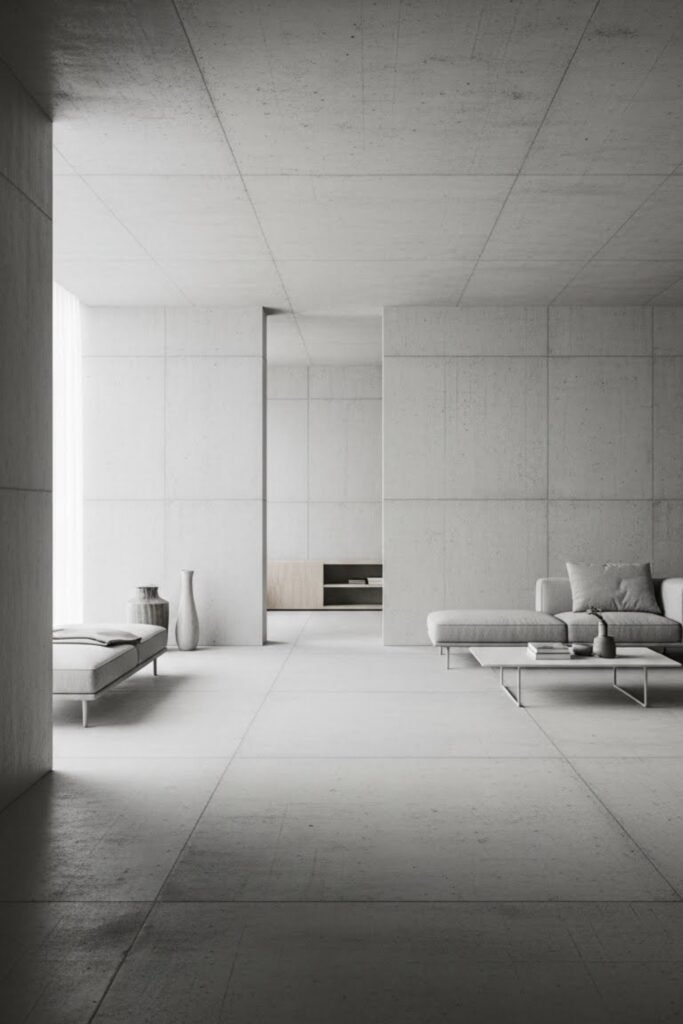
Single Material
Using one dominant material throughout the house creates a strong minimalist identity. Floors, walls, and even ceilings share the same finish, reducing visual noise.
Concrete, wood, or plaster works best for this approach. The result feels cohesive, intentional, and architectural rather than decorative or busy.
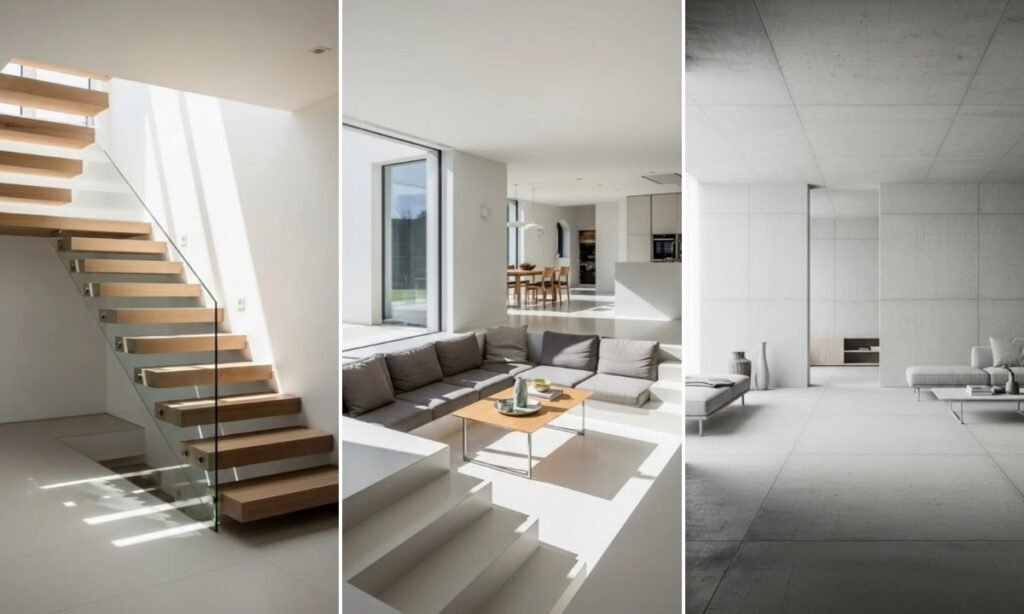
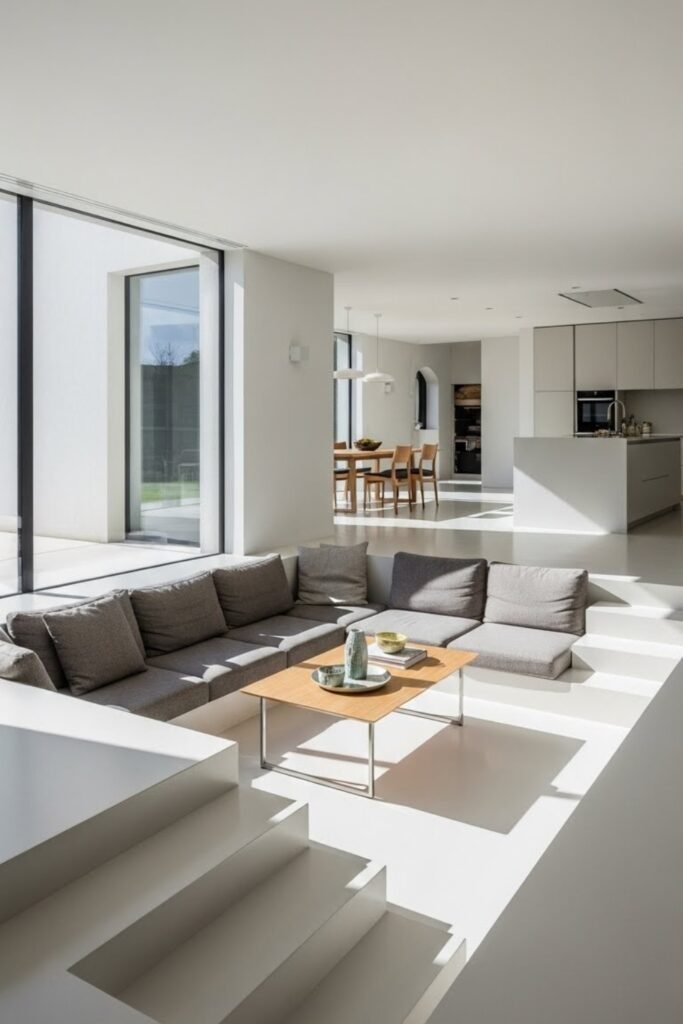
Sunken Living
A sunken living space defines the seating area without adding walls or furniture. The lowered floor naturally separates zones while keeping the layout open.
This subtle level change adds depth and interest without clutter. It’s ideal for minimalist homes that rely on structure instead of decoration.
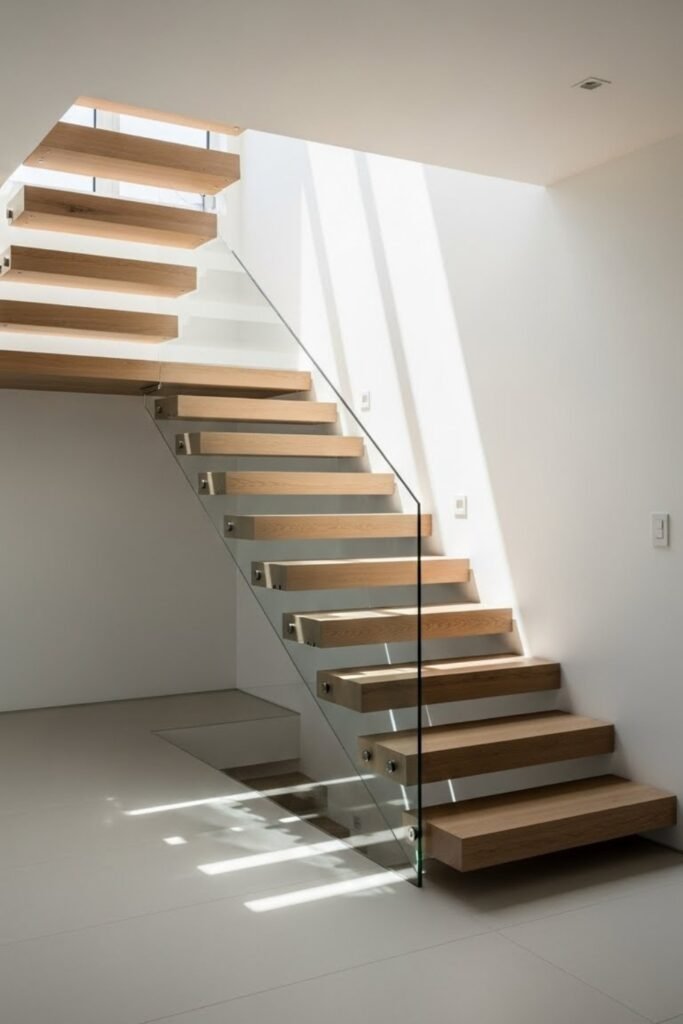
Floating Stairs
Floating stairs remove visual heaviness by using open risers and hidden supports. Light flows freely through the staircase, keeping the space open and airy.
This design turns stairs into a clean architectural feature rather than a bulky structure. It fits perfectly in modern minimalist homes.
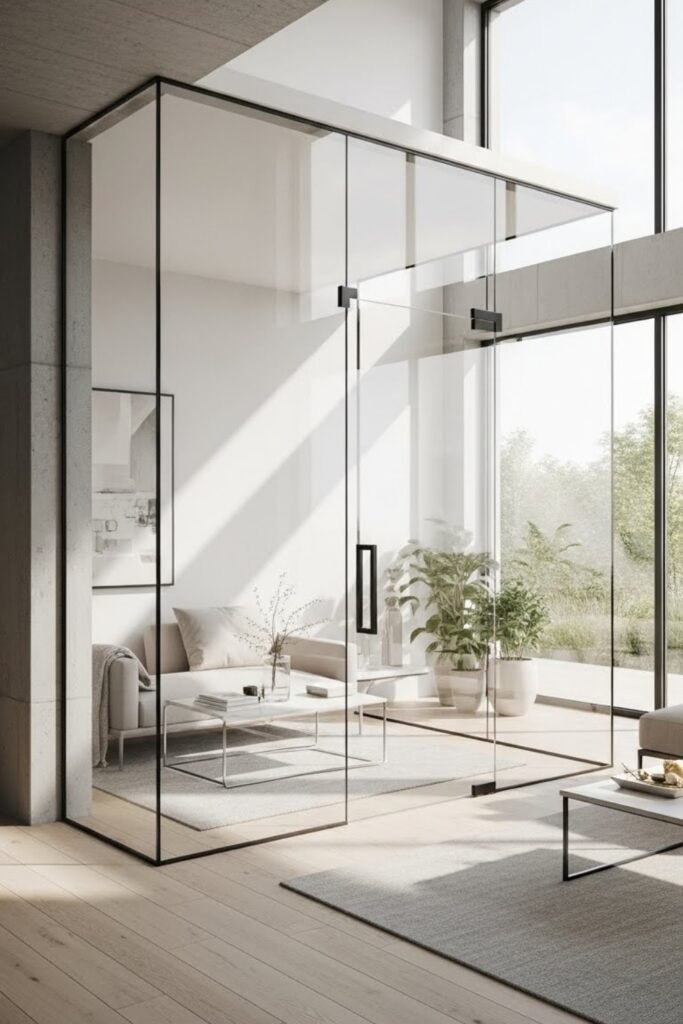
Glass Rooms
Glass-enclosed rooms separate spaces without blocking light or openness. Clear walls keep the house visually connected while still offering privacy when needed.
This works well for home offices, dining areas, or bedrooms in minimalist homes. The structure stays clean, modern, and uncluttered.
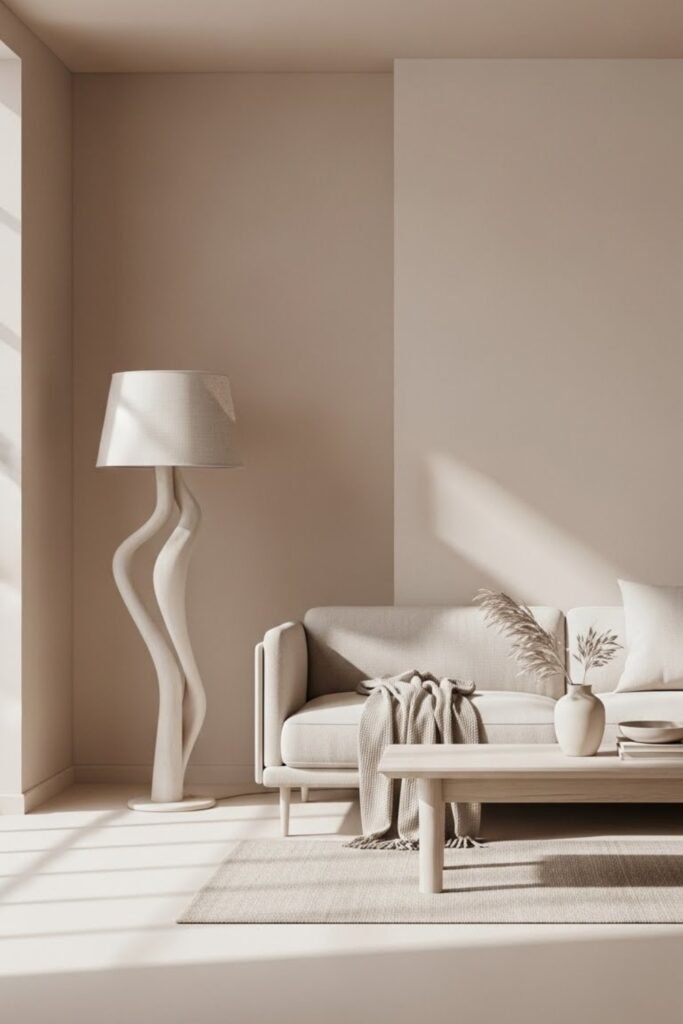
Mono Palette
A monochrome palette uses one color family throughout the house to maintain visual calm. Shades of white, beige, gray, or sand create depth without contrast.
This approach keeps the design timeless and prevents the space from feeling busy. Texture becomes more important than color.
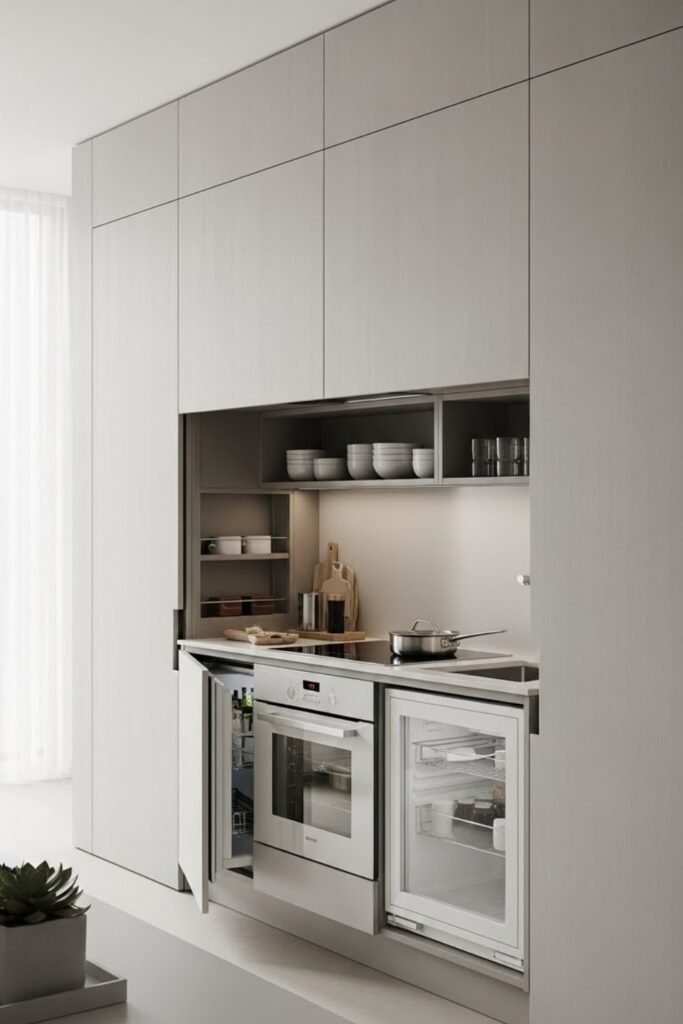
Hidden Kitchen
A hidden kitchen blends seamlessly into the surrounding walls using flat cabinetry and sliding panels. When closed, the space looks like part of the living area rather than a working zone.
This keeps open-plan homes clean and distraction-free while maintaining full kitchen functionality.
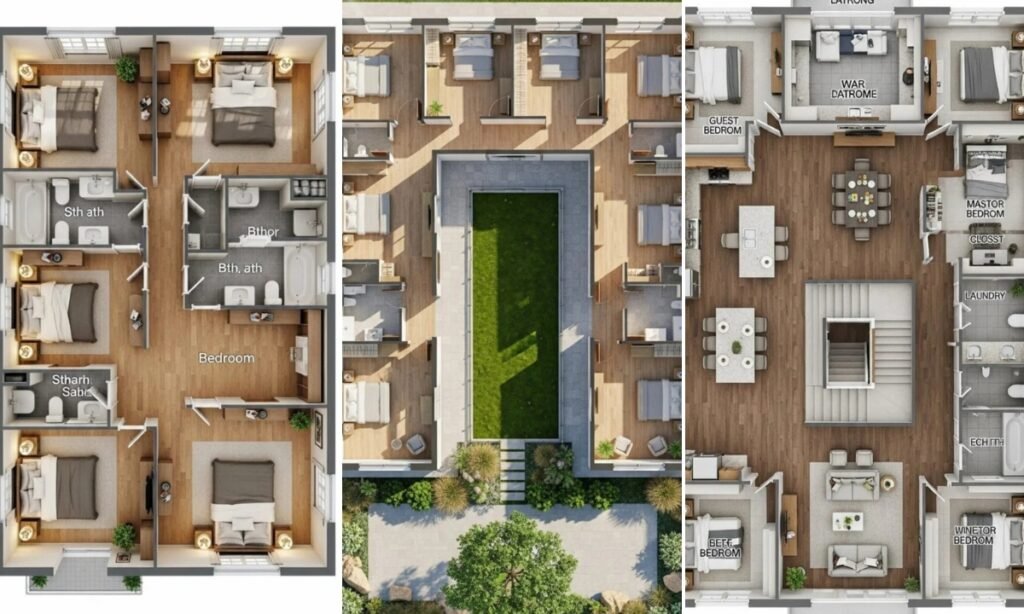
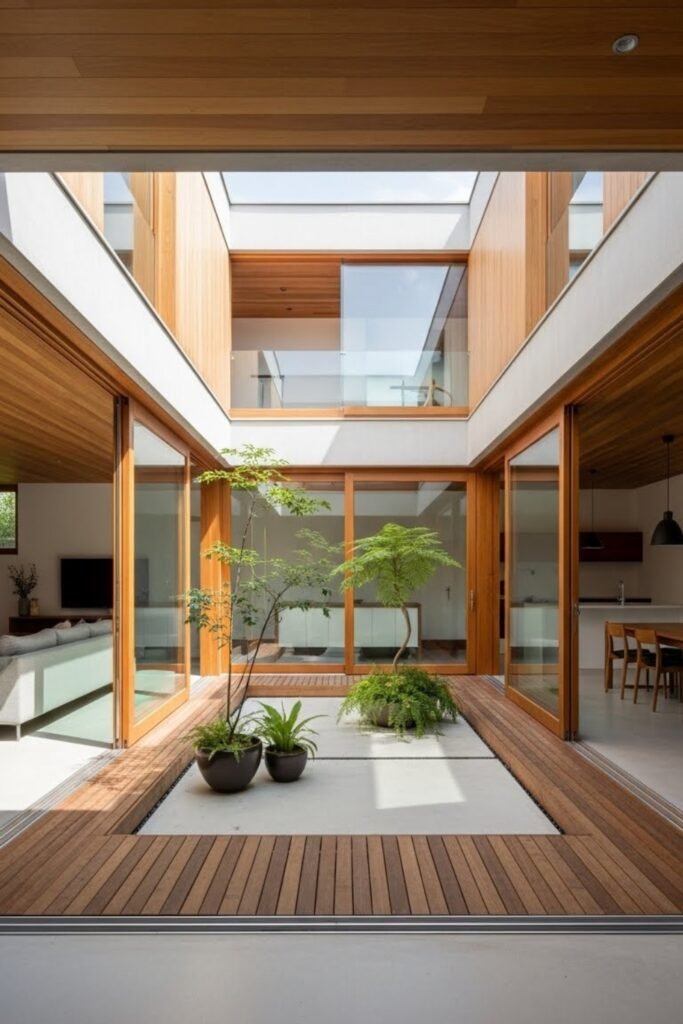
Central Courtyard
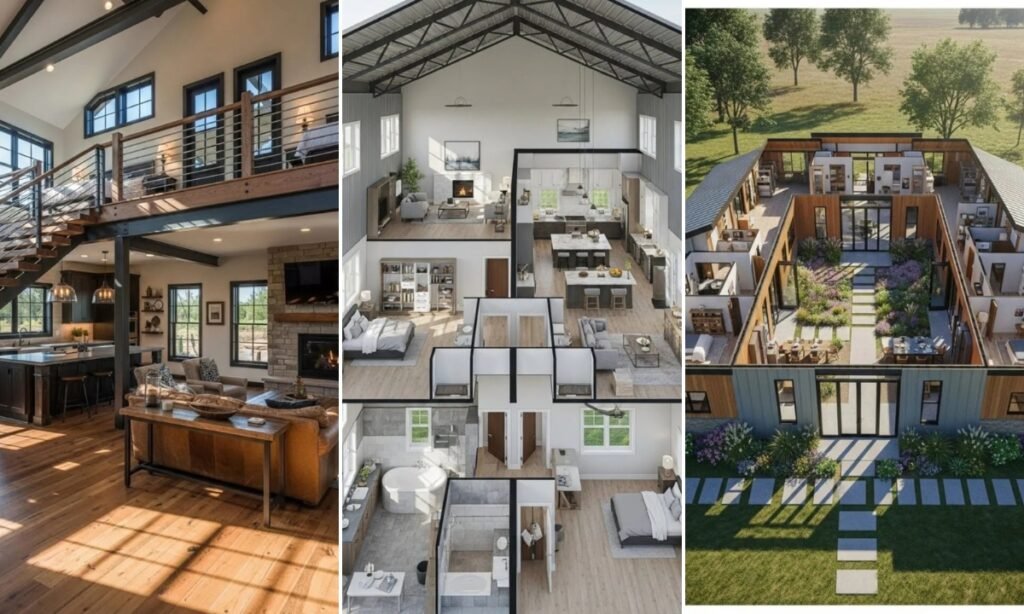
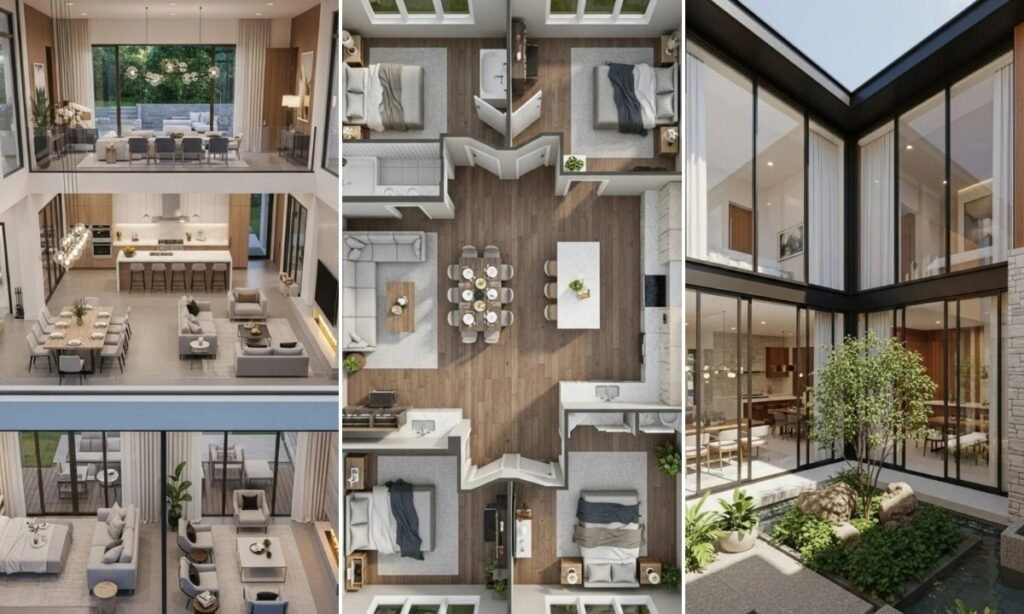
A central courtyard brings natural light and air into the heart of the home. Rooms open toward this calm, open space instead of outward walls.
It creates a strong connection to nature while keeping the design simple. This layout suits minimalist homes focused on balance and openness.
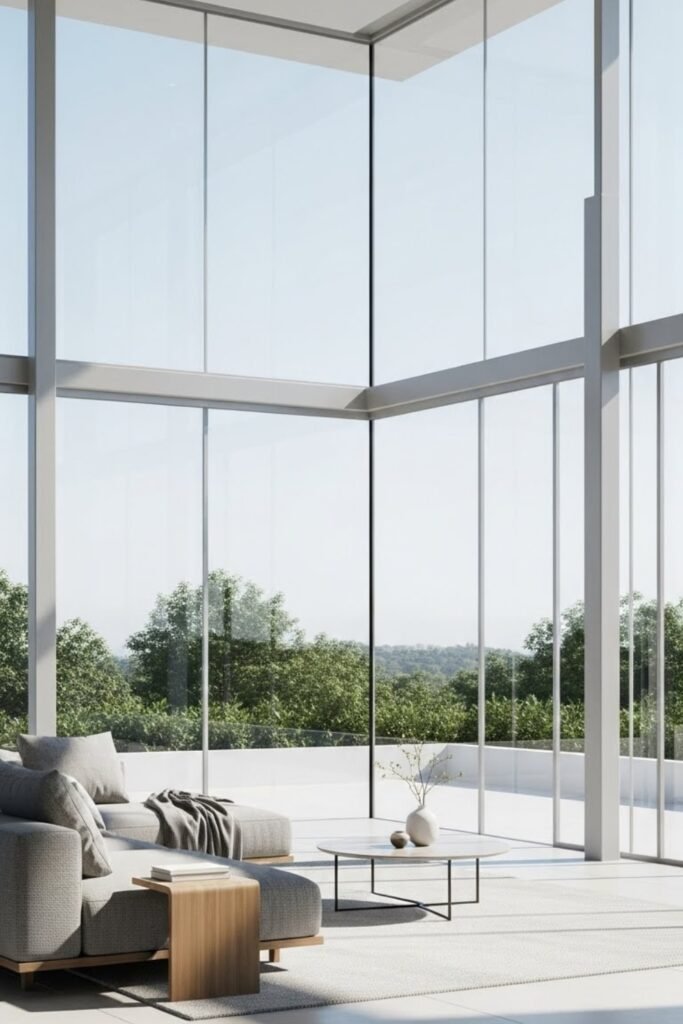
Tall Windows
Floor-to-ceiling windows flood the home with natural light and reduce the need for decorative elements.
Large glass panels keep the design open and connected to the outdoors. This approach makes minimalist spaces feel larger, brighter, and calmer without adding furniture or color.
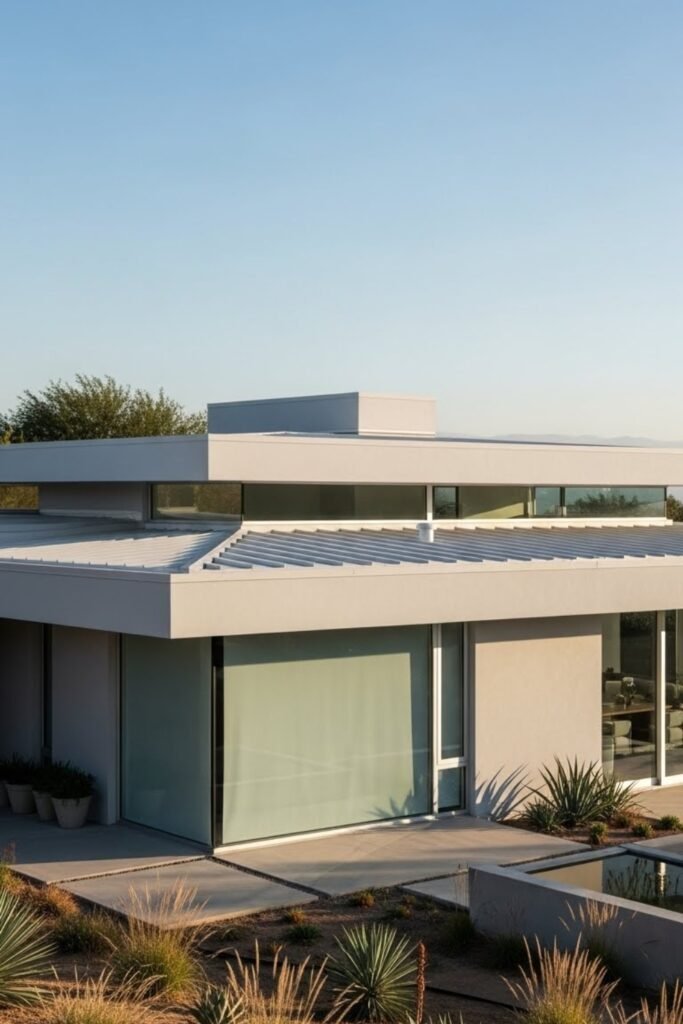
Clean Roof
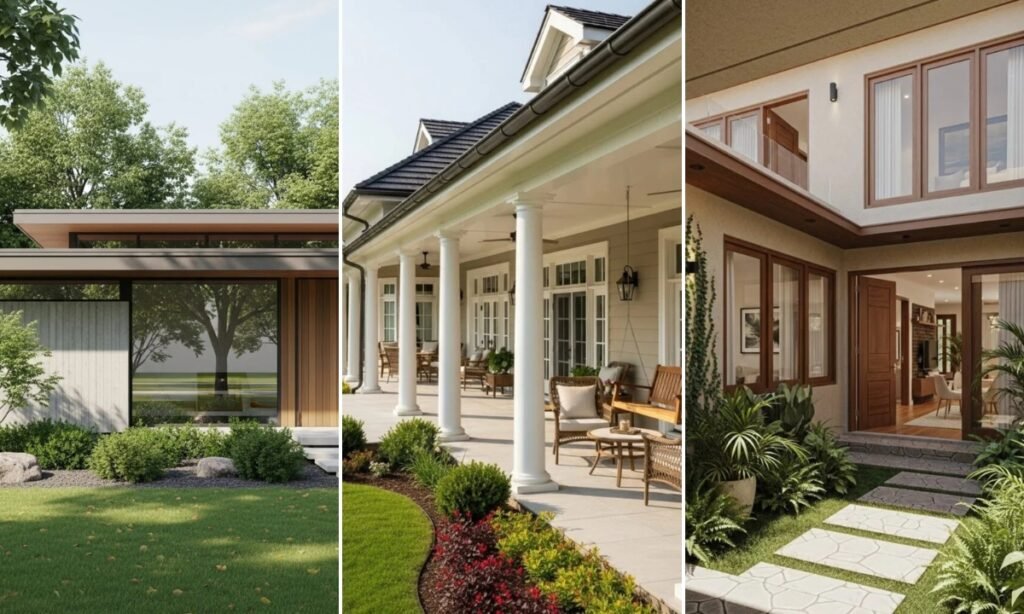
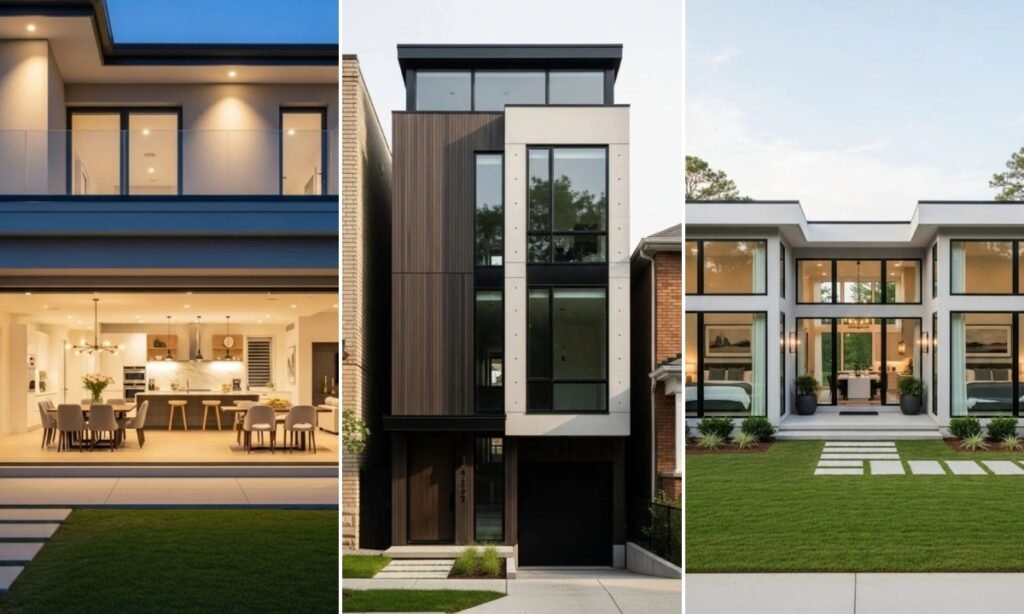
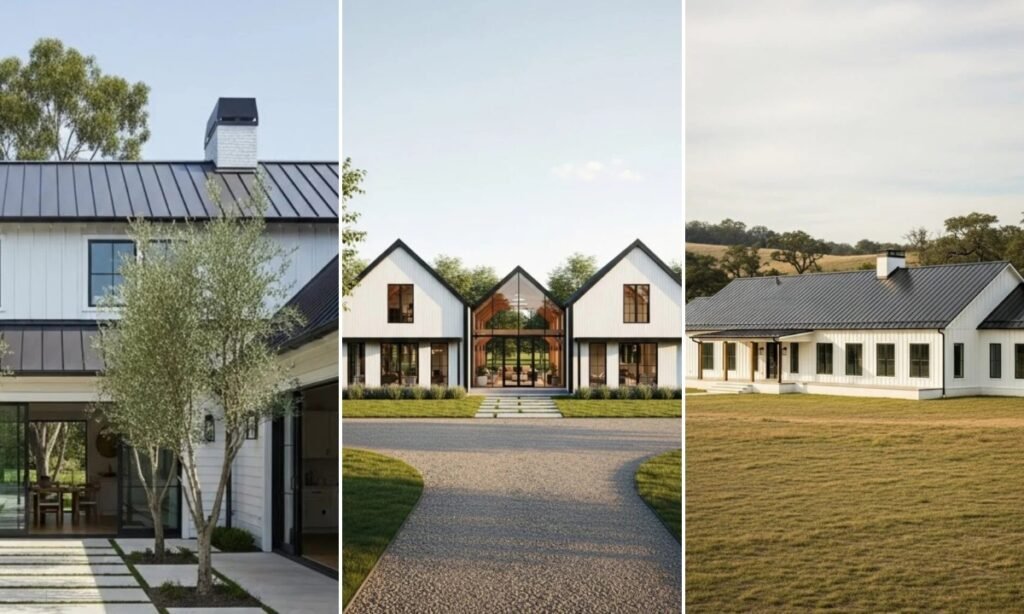
Minimalist homes benefit from simple rooflines with no decorative edges or complex shapes. Flat or single-slope roofs keep the exterior clean and modern.
This design choice supports the overall minimalist concept by focusing on structure instead of ornamentation.
Built-Ins
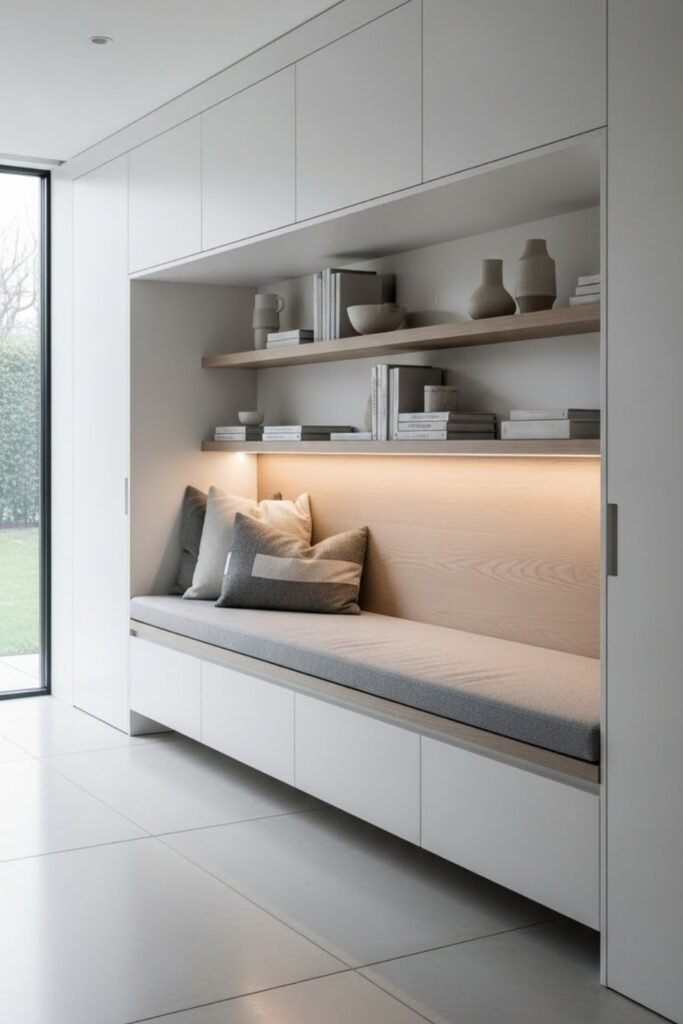
Built-in furniture replaces loose pieces to maintain order and flow. Seating, shelving, and beds are integrated directly into walls or platforms.
This reduces visual clutter and keeps spaces intentional. It’s ideal for minimalist homes where every element has a clear purpose
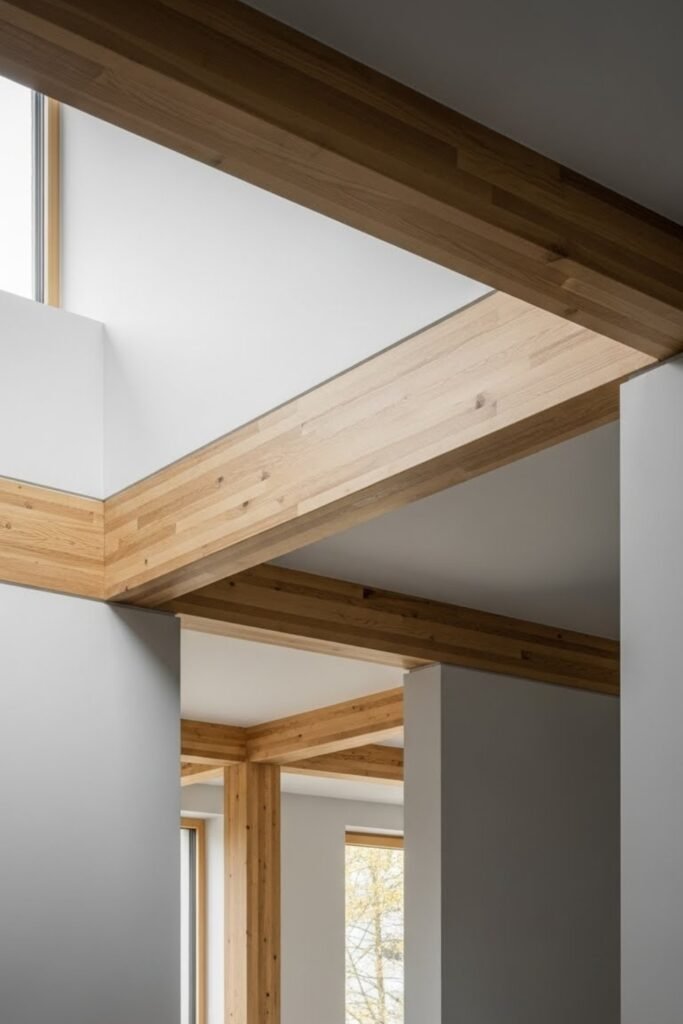
Open Beams
Exposed beams add structure without decoration when kept clean and simple. Straight lines and natural finishes help maintain a minimalist feel.
This idea works well in living areas and kitchens, where architectural details replace traditional design accents.
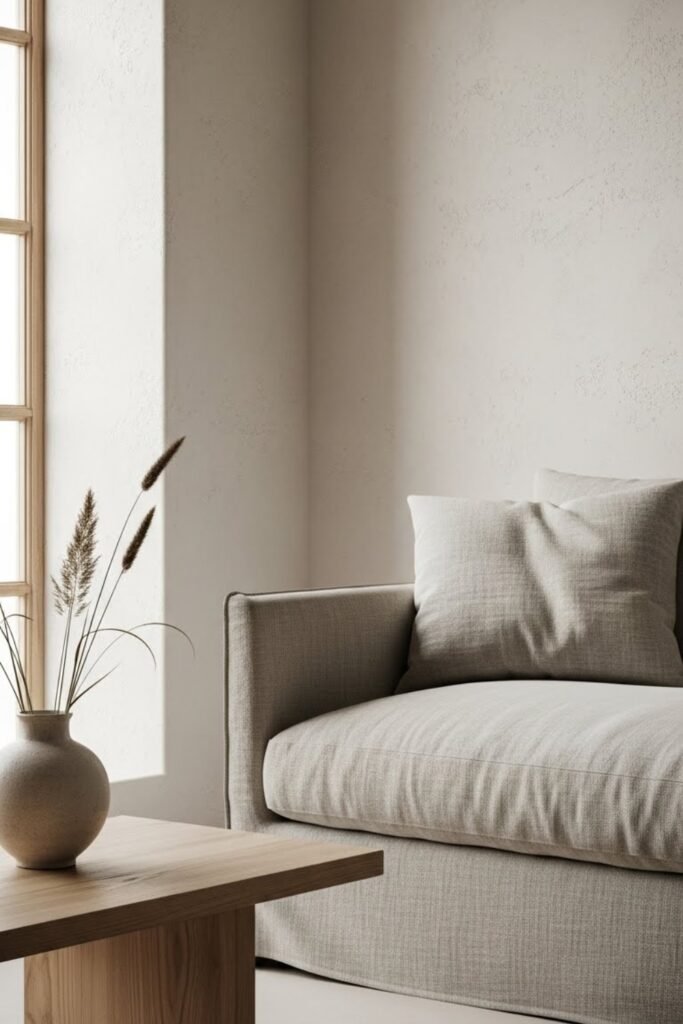
Soft Textures
Minimalist homes rely on texture instead of color for depth. Subtle materials like linen, plaster, stone, and raw wood add warmth without visual clutter.
This approach keeps the space calm while still feeling inviting. It works best when colors stay neutral and materials remain natural.
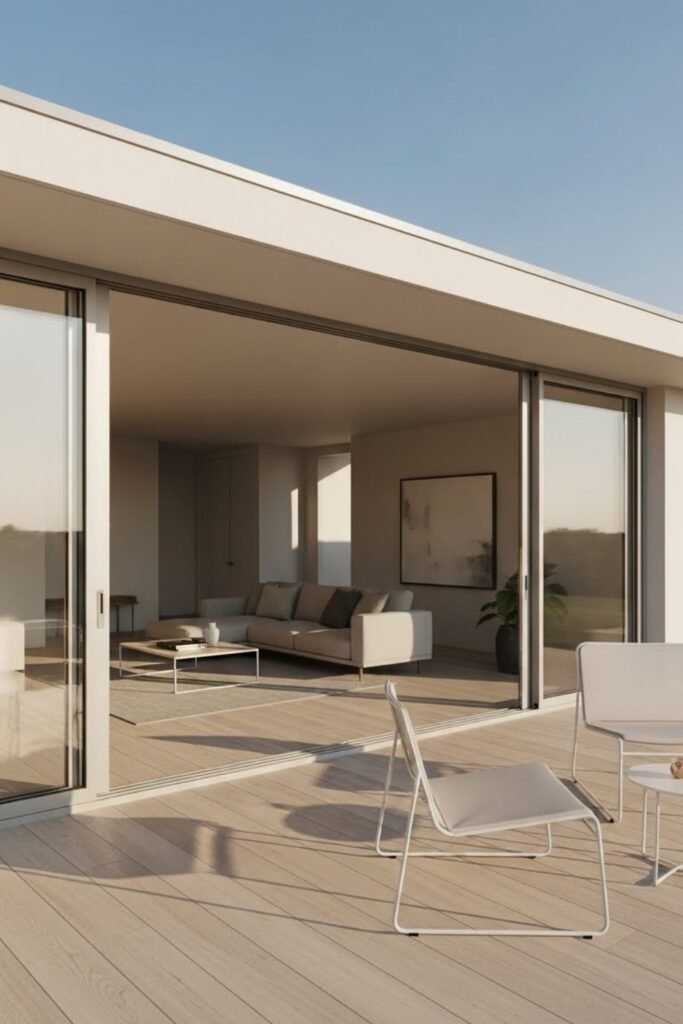
Indoor Flow
Seamless indoor-outdoor flow connects interior spaces directly to patios or gardens. Large sliding doors and matching floor levels remove boundaries.
This design keeps the home open and airy while maintaining simplicity. It’s ideal for minimalist houses that prioritize light and nature.
Low Living
Low-profile furniture keeps sightlines open and emphasizes horizontal space. Seating, beds, and tables stay close to the floor, creating a grounded and relaxed feel.
This idea supports minimalism by reducing visual height and making rooms feel wider and calmer.
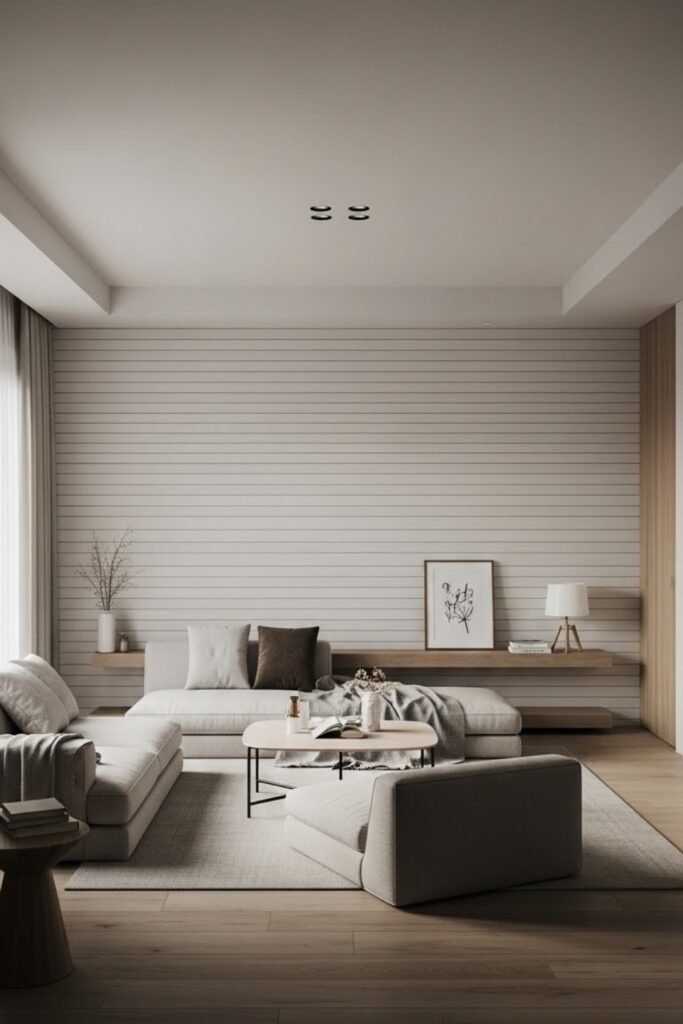
Hidden Lighting
Lighting is built into ceilings, walls, or floors instead of using visible fixtures. This keeps the design clean and distraction-free.
Soft, indirect light highlights architecture rather than objects. Hidden lighting works especially well in minimalist homes focused on simplicity and mood.
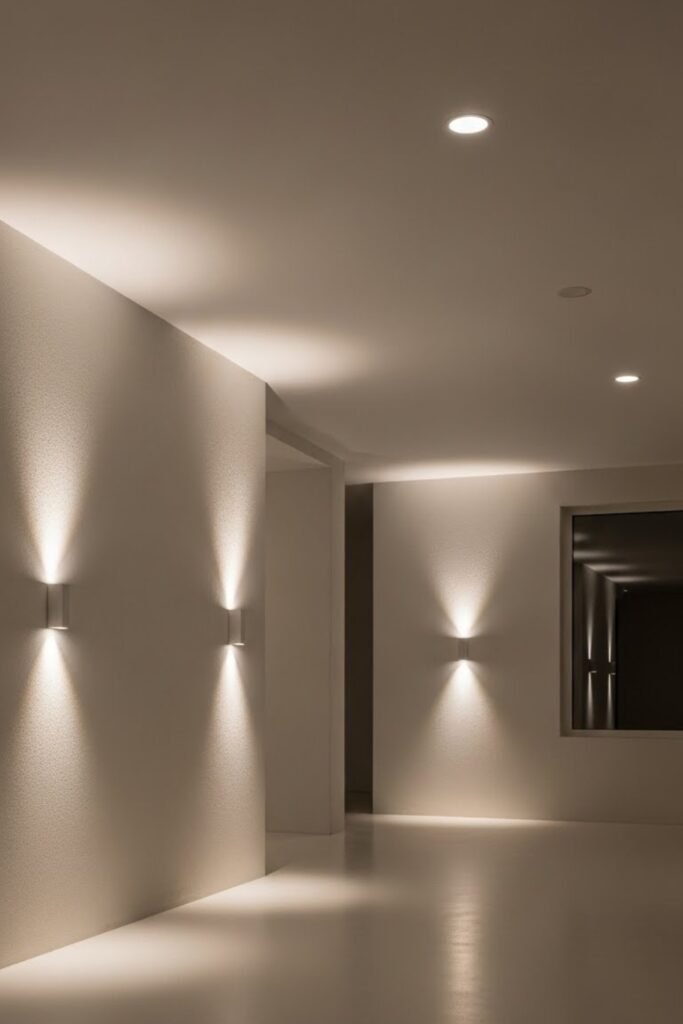
Open Core
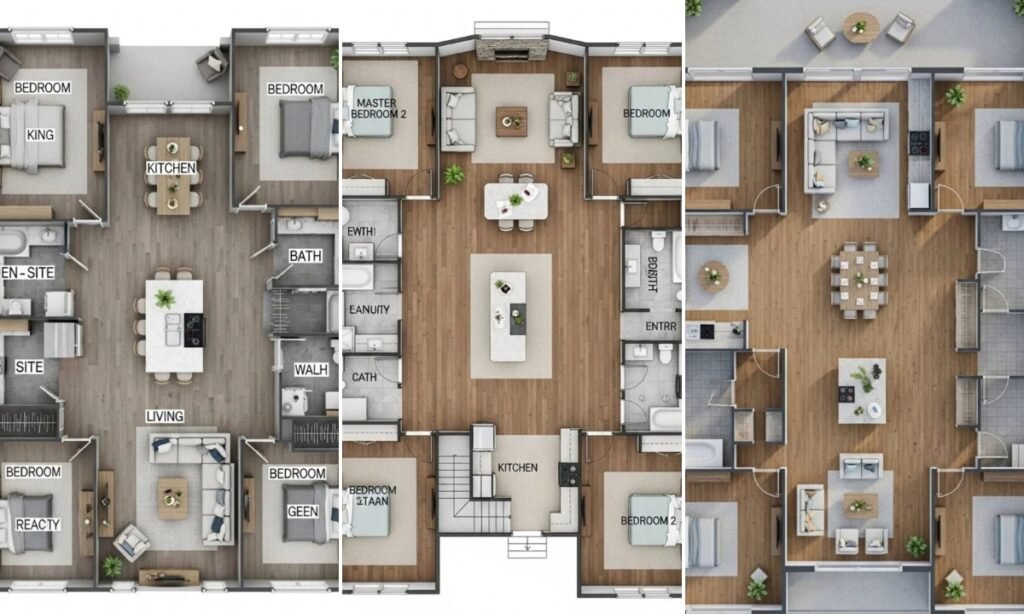
An open core layout places shared living spaces at the center of the home, with private rooms pushed to the edges. This creates a strong sense of flow and openness.
Walls are minimized, and movement feels natural. It’s ideal for minimalist houses that value space over separation.
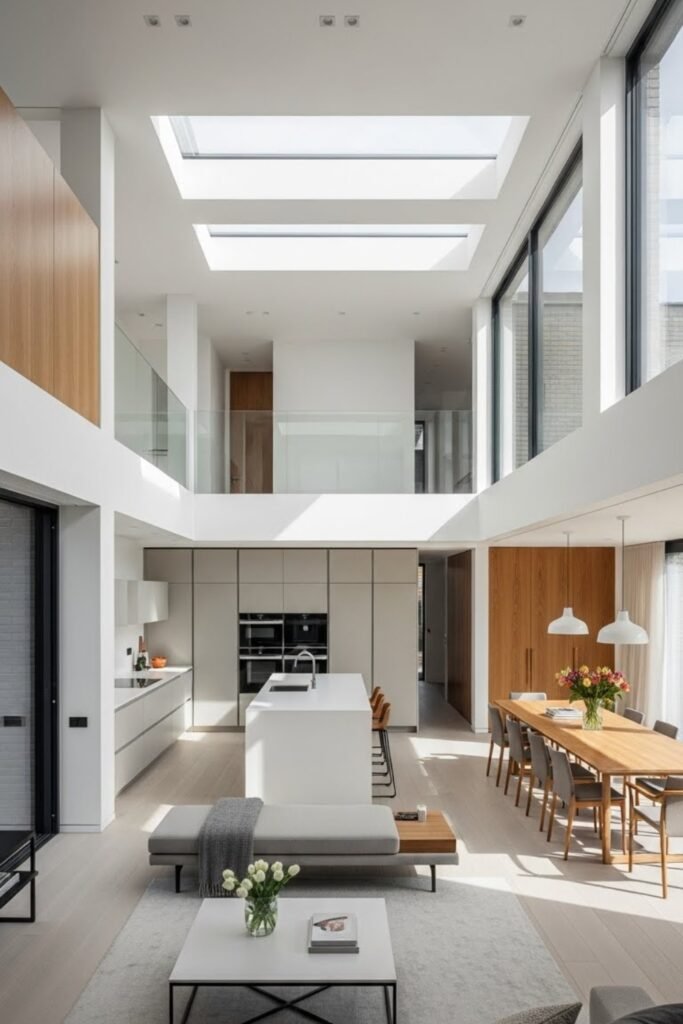
Warm Minimal
Warm minimalism softens clean lines with natural materials and gentle tones. Wood, soft fabrics, and warm neutrals prevent the space from feeling cold.
This approach keeps the design simple while adding comfort. It’s perfect for minimalist homes meant for everyday living.
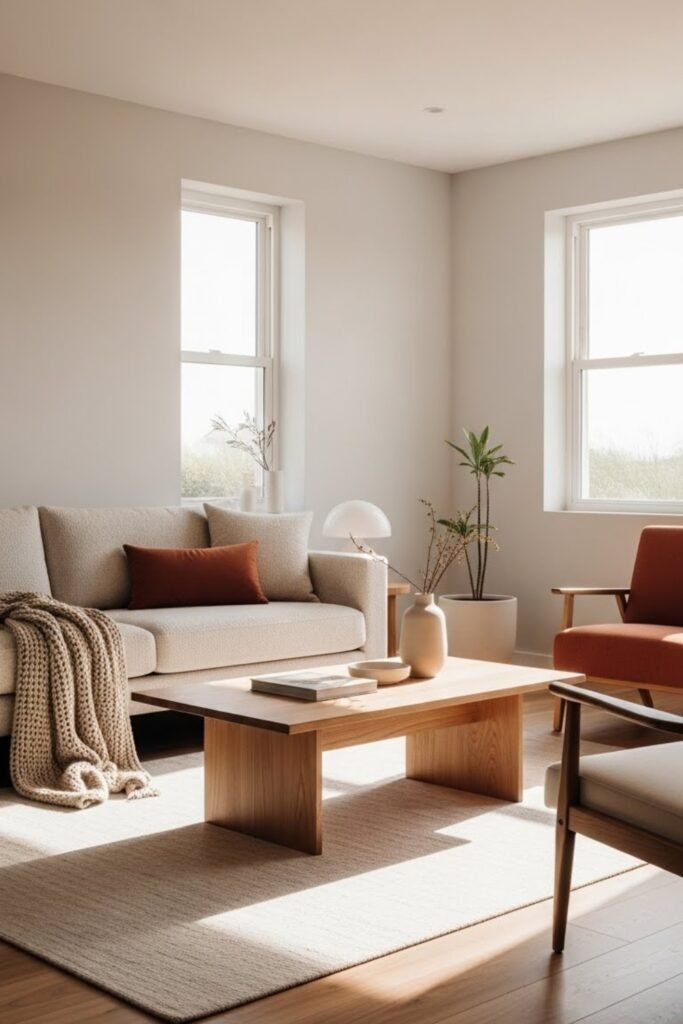
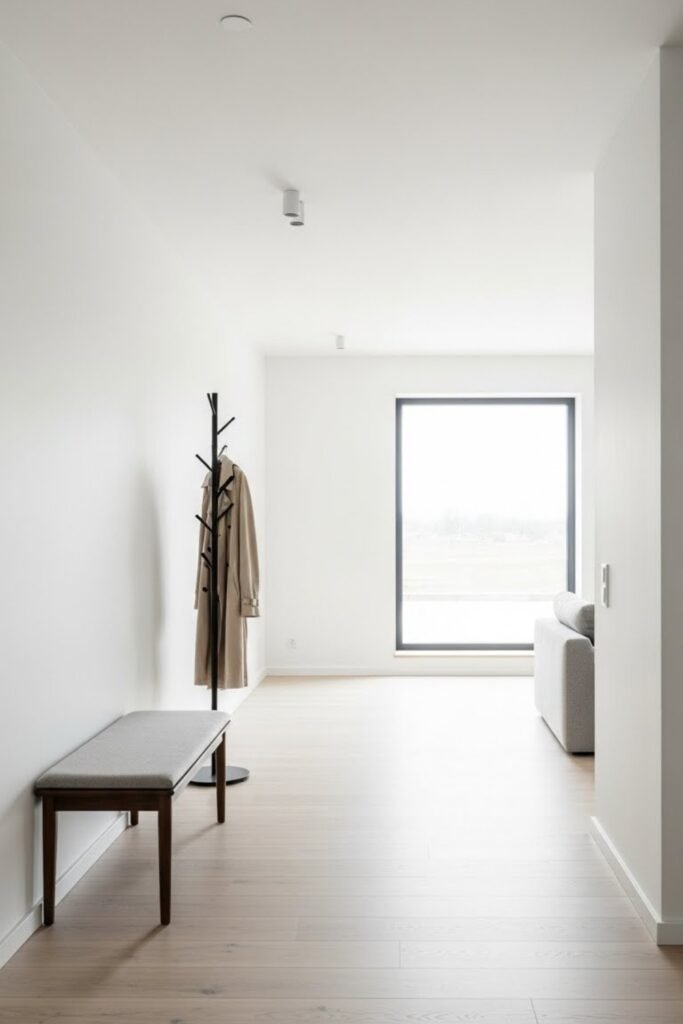
Simple Entry
A simple entry avoids decoration and focuses on space, light, and proportion. Clean walls, minimal furniture, and clear pathways set the tone for the rest of the house.
This creates a calm first impression and supports a clutter-free minimalist lifestyle.
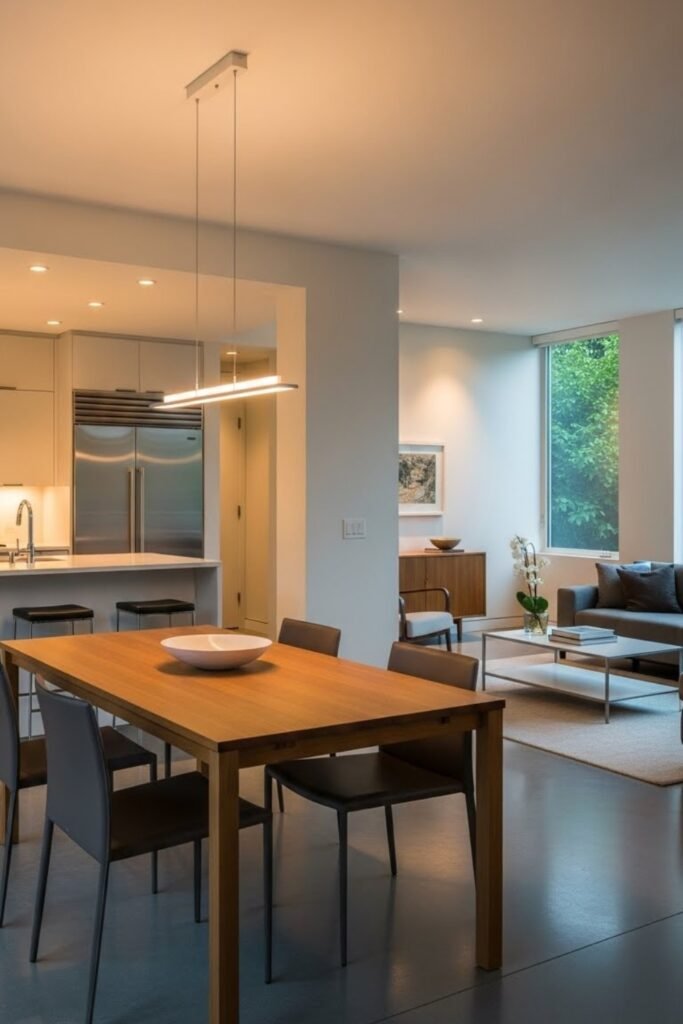
Wall-Free Dining
Wall-free dining areas rely on layout instead of partitions. The dining space flows naturally from the kitchen or living room, defined only by furniture placement or lighting.
This keeps the home open and visually light, aligning perfectly with minimalist design principles.
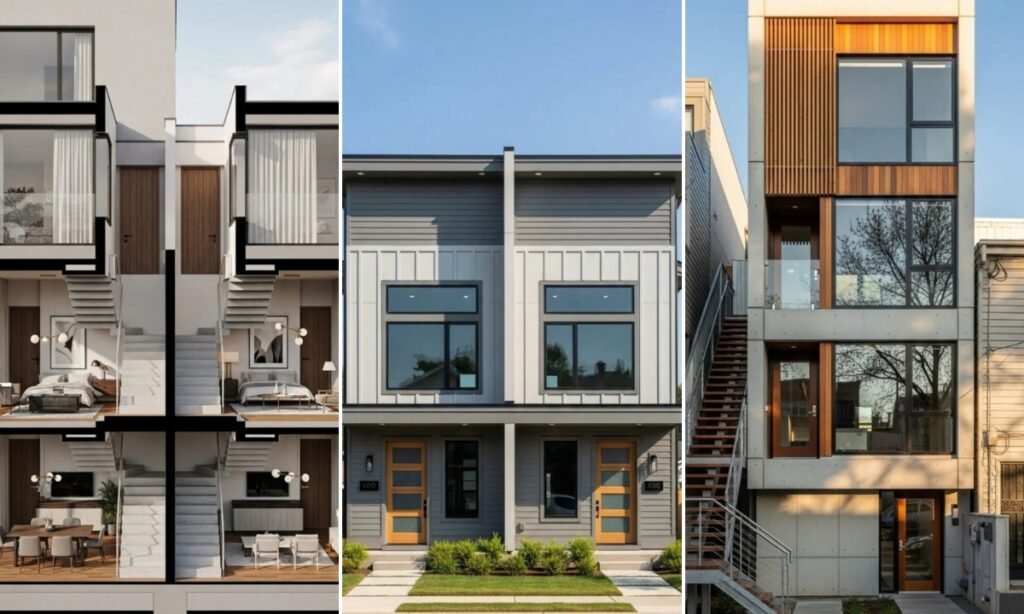
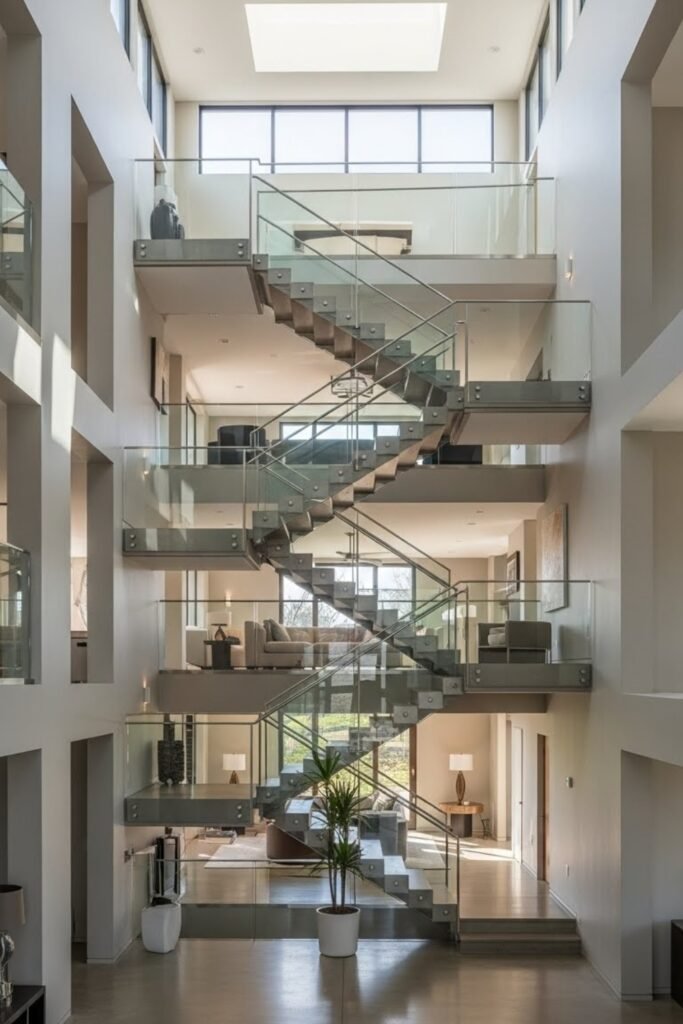
Vertical Living
Vertical living focuses on clean, upward movement in multi-story homes. Stair placement, double-height spaces, and aligned openings guide the eye naturally from floor to floor.
This keeps tall homes feeling open instead of crowded. The design stays minimalist by relying on structure rather than decoration.
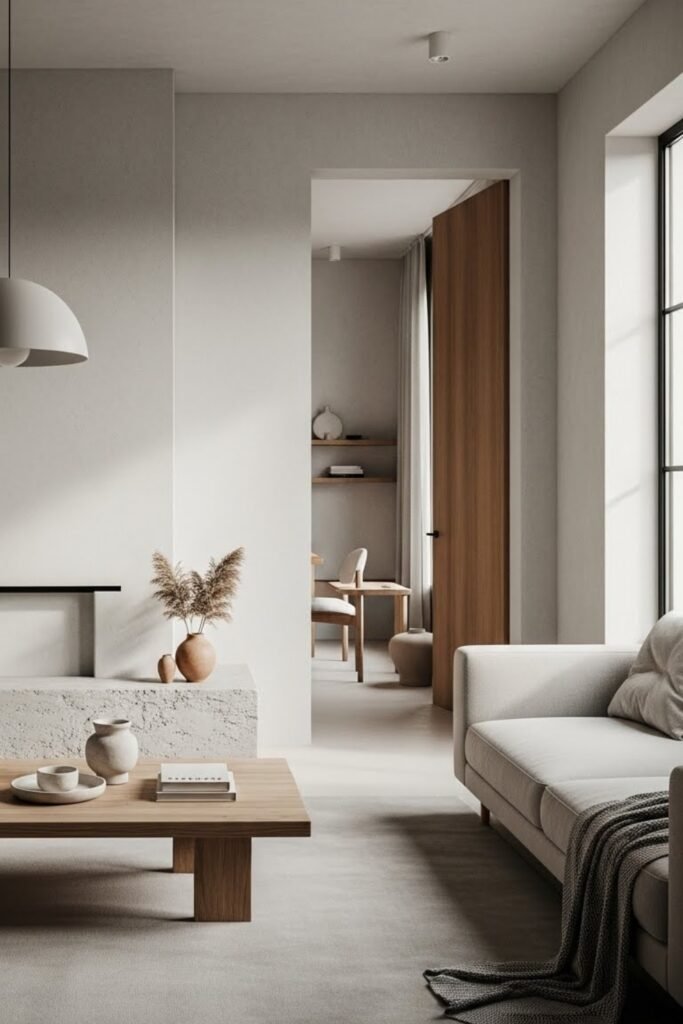
Muted Colors
Muted color palettes use soft, low-contrast tones like chalk white, stone gray, and warm sand. These shades reduce visual noise and help the architecture stand out.
This approach creates calm, timeless interiors and allows light, texture, and form to become the main design features.

Hi, my name is Ali Mehmood! I’m a passionate writer and DIY enthusiast who loves turning creative ideas into practical, hands-on projects.
I created this website to share inspiring, budget-friendly ideas that you can do yourself – whether it’s organizing your home, crafting something unique, or creating fun projects for kids and pets.
I believe DIY isn’t just a hobby – it’s a smart way to save money, reduce waste, and enjoy the satisfaction of making things with your own hands.
I’m excited to have you as part of this growing community, and I’ll continue bringing you helpful, realistic, and fun DIY ideas you can actually use.