This post may contain affiliate links: read full affiliate disclosure.
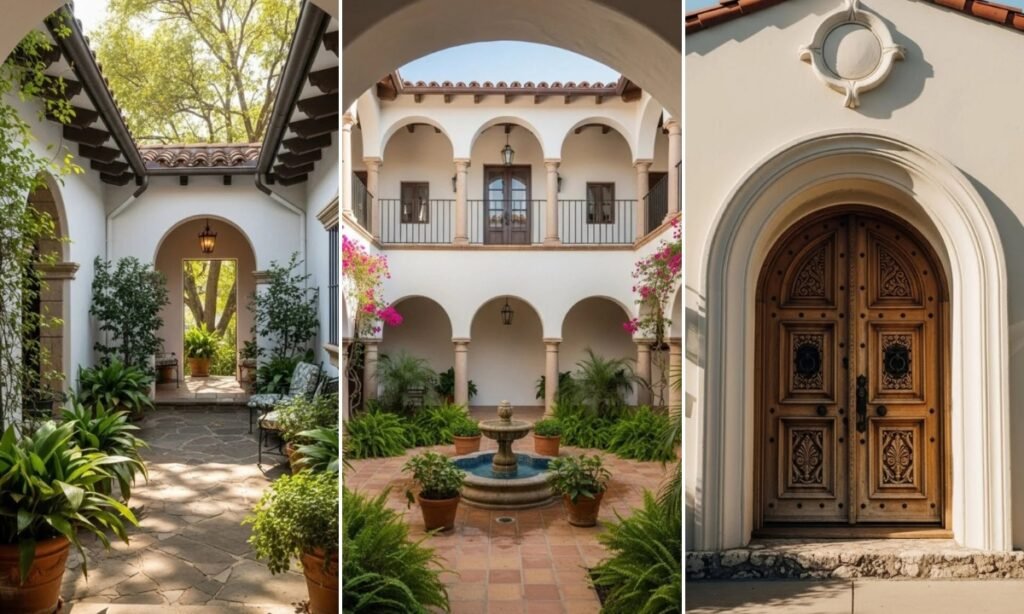
Spanish Colonial style homes are known for their warm character, timeless architecture, and strong connection to outdoor living.
Rooted in historic Spanish and Mediterranean influences, this style blends thick stucco walls, red tile roofs, and handcrafted details that feel both elegant and practical.
These homes are especially loved in warm climates because they focus on shade, airflow, and natural materials.
In this article, you’ll explore 27 unique Spanish Colonial style home ideas, each highlighting a different design.

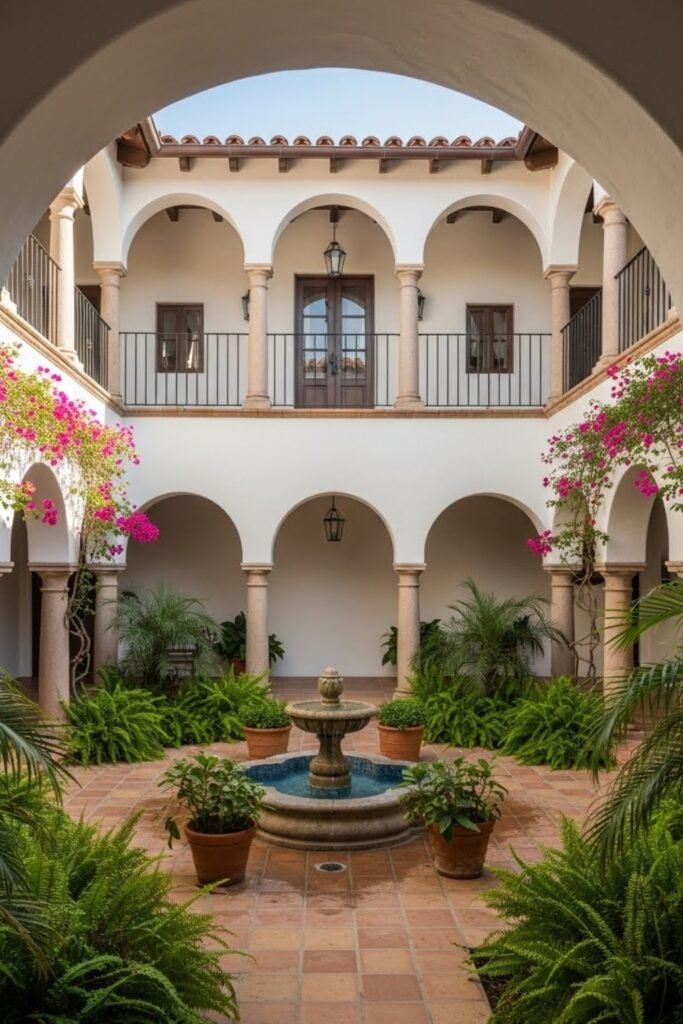
Central Courtyard
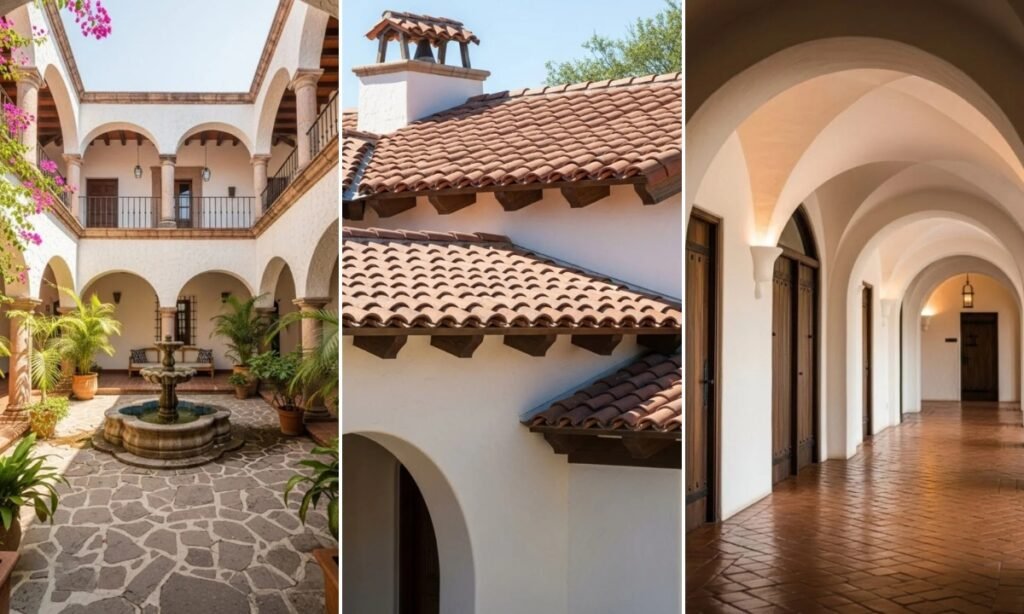
A central courtyard acts as the heart of a Spanish Colonial home. Living spaces open inward, creating privacy while allowing airflow and natural light.
This area often includes tiled flooring, plants, or a small fountain, turning it into a usable outdoor living space rather than just an architectural feature.
Stucco Walls
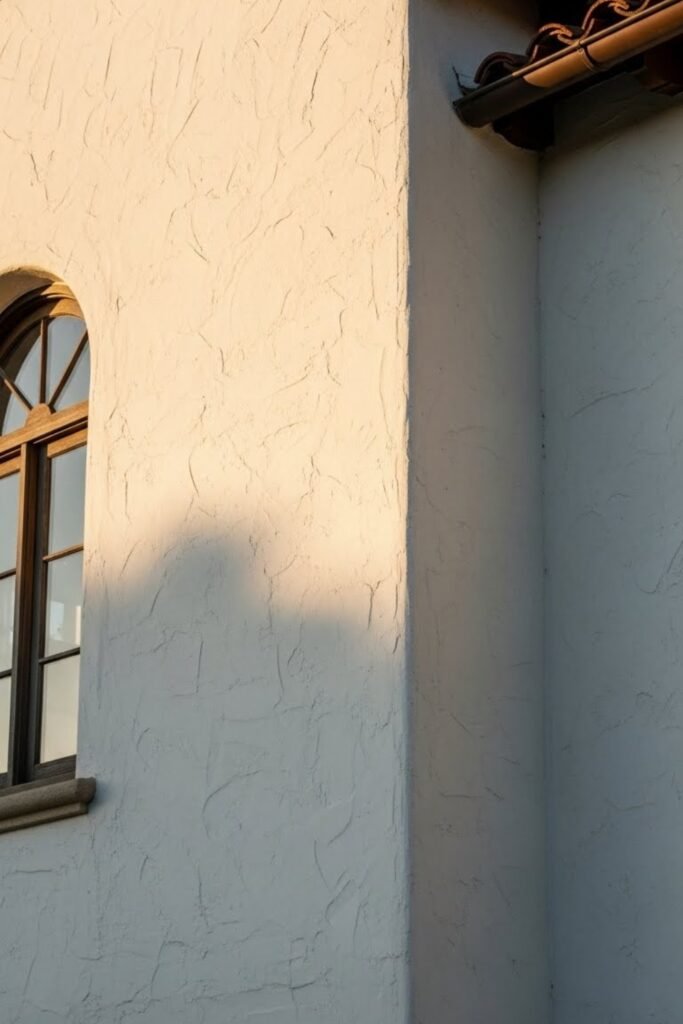
Thick stucco walls define Spanish Colonial architecture. They help regulate indoor temperatures by blocking heat during the day and retaining warmth at night.
The hand-applied plaster finish adds texture and depth, giving the home a solid, timeless look that feels rooted in traditional craftsmanship.
Tile Roof
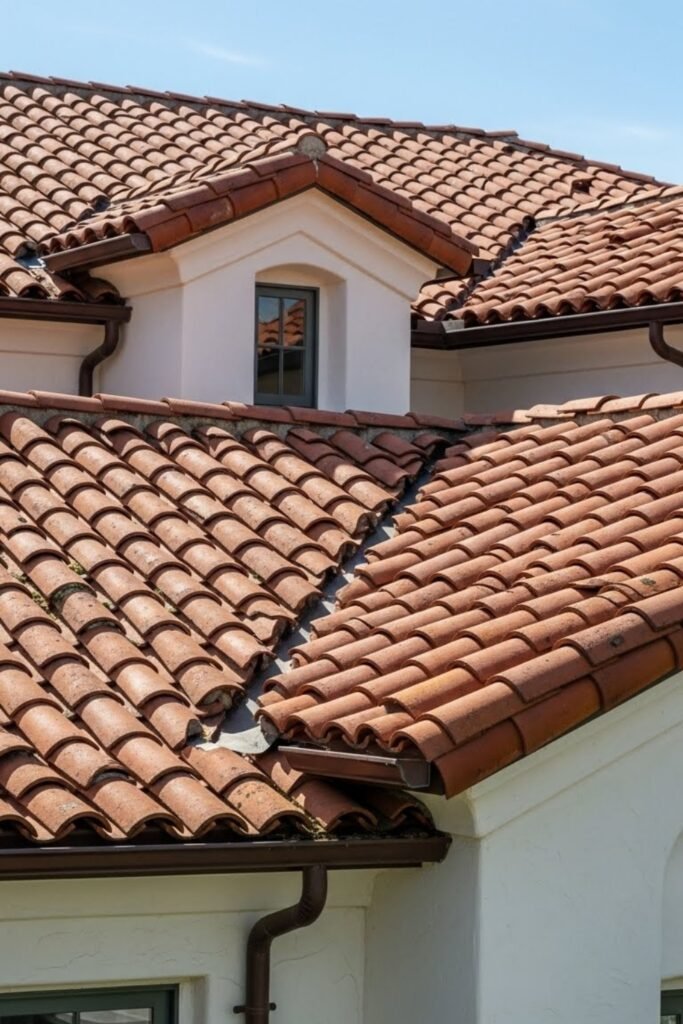
Clay tile roofs are a signature element of Spanish Colonial homes. Their curved shape helps shed rainwater while providing durability in warm climates.
The rich red tones add character, and as the tiles age, they enhance the home’s historic charm rather than detract from it.
Arched Entries
Arched entries replace sharp lines with smooth curves, creating a softer and more welcoming feel.
Common at doorways, patios, and hallways, these arches add architectural flow and connect interior and exterior spaces while staying true to classic Spanish Colonial design.
Iron Details
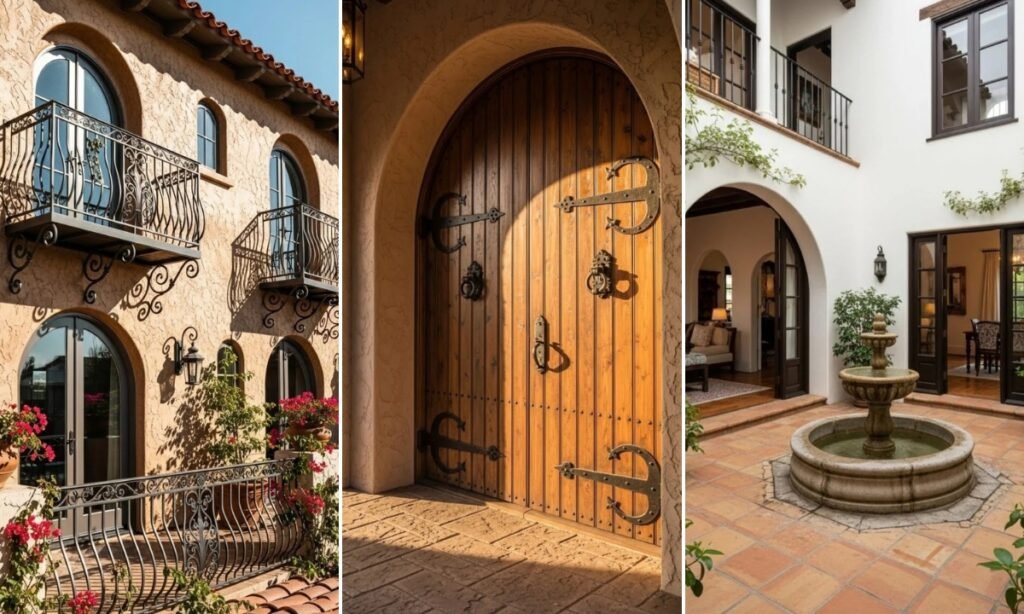
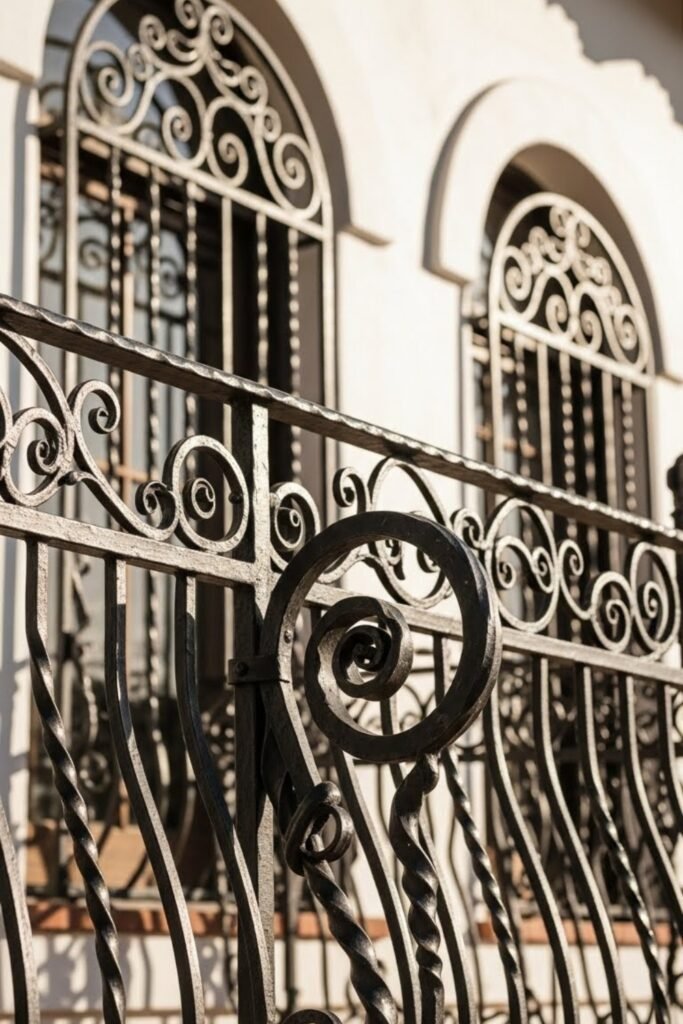
Wrought iron adds strength and artistry to Spanish Colonial homes. It is commonly used for window grilles, balcony rails, staircases, and light fixtures.
The dark metal contrasts beautifully with light stucco walls and brings a handcrafted, old-world feel that instantly elevates both interiors and exteriors.
Wood Beams
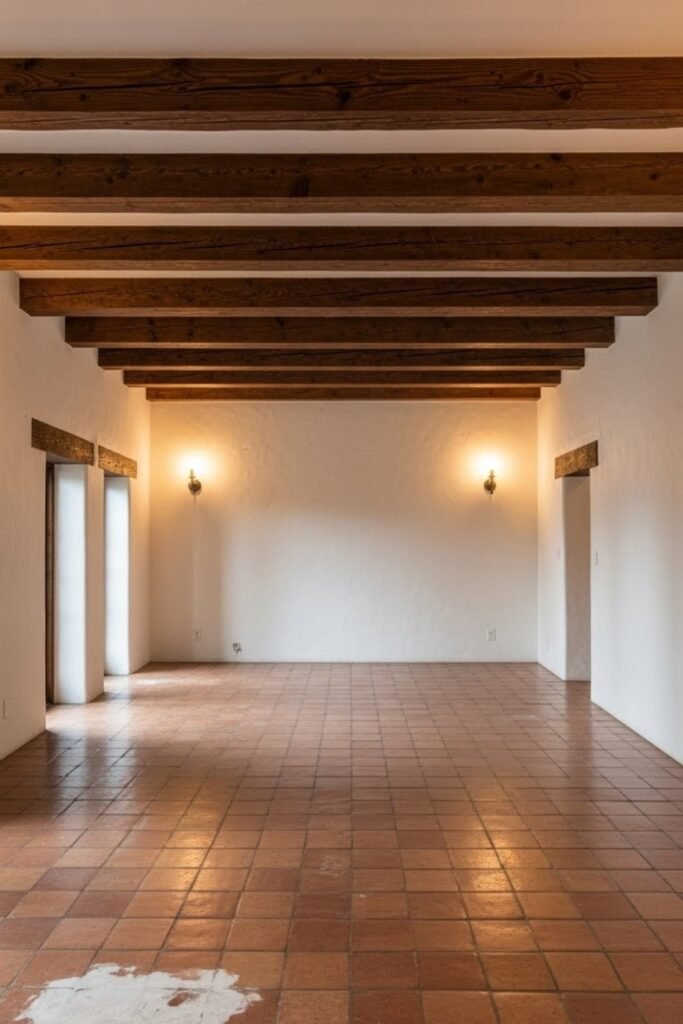
Exposed wooden beams bring warmth and history into Spanish Colonial interiors. Often left natural or lightly stained, these beams highlight the ceiling and add architectural interest.
They work especially well in living rooms and hallways, creating a grounded, rustic look that balances the smooth plaster walls.
Terracotta Floors
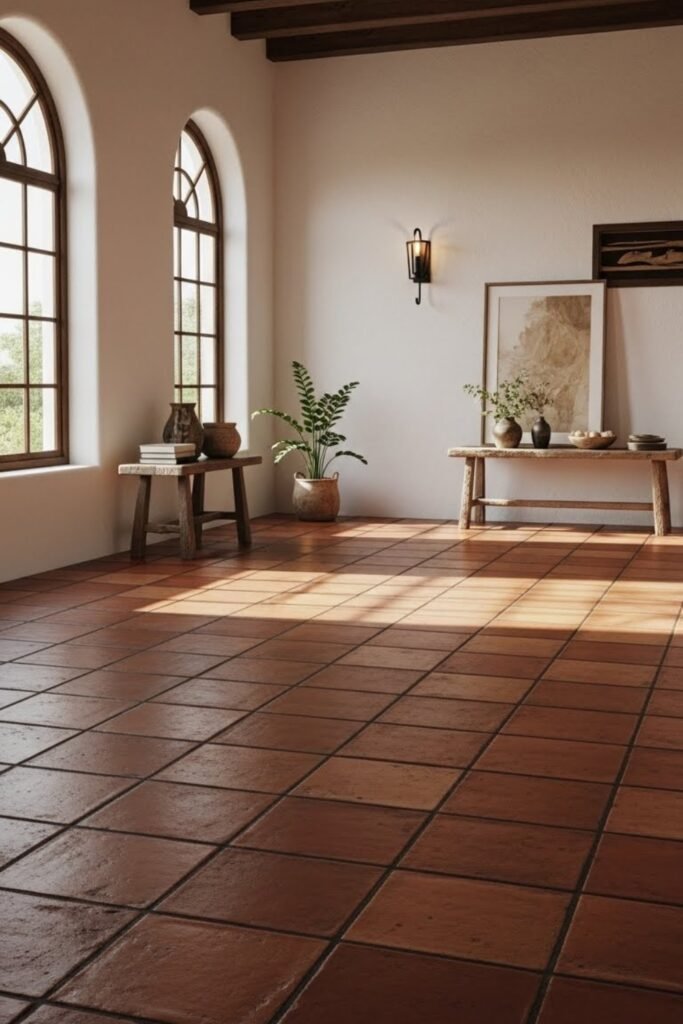
Terracotta floors are both practical and timeless in Spanish Colonial homes. Made from natural clay, these tiles stay cool underfoot and suit warm climates.
Their earthy tones add warmth to interiors, while slight imperfections give each tile character, making the space feel authentic rather than polished.
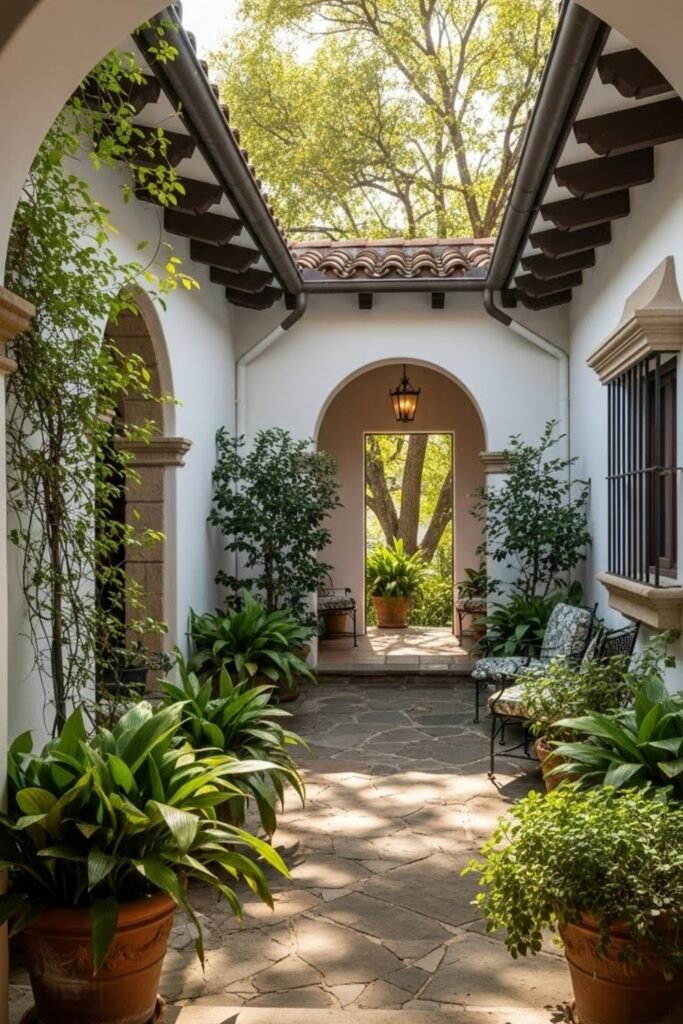
Garden Patio
An interior garden patio blends nature with architecture. This space often sits between rooms, featuring plants, stone flooring, and natural light.
It improves airflow, adds visual calm, and creates a private outdoor retreat that feels connected to the home rather than separate from it.
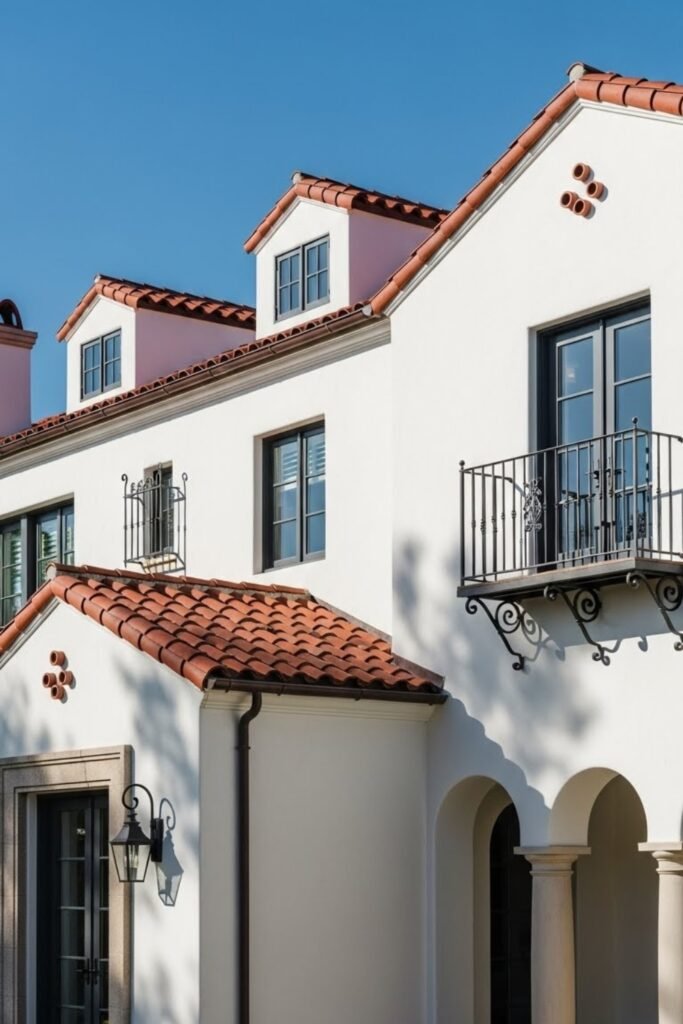
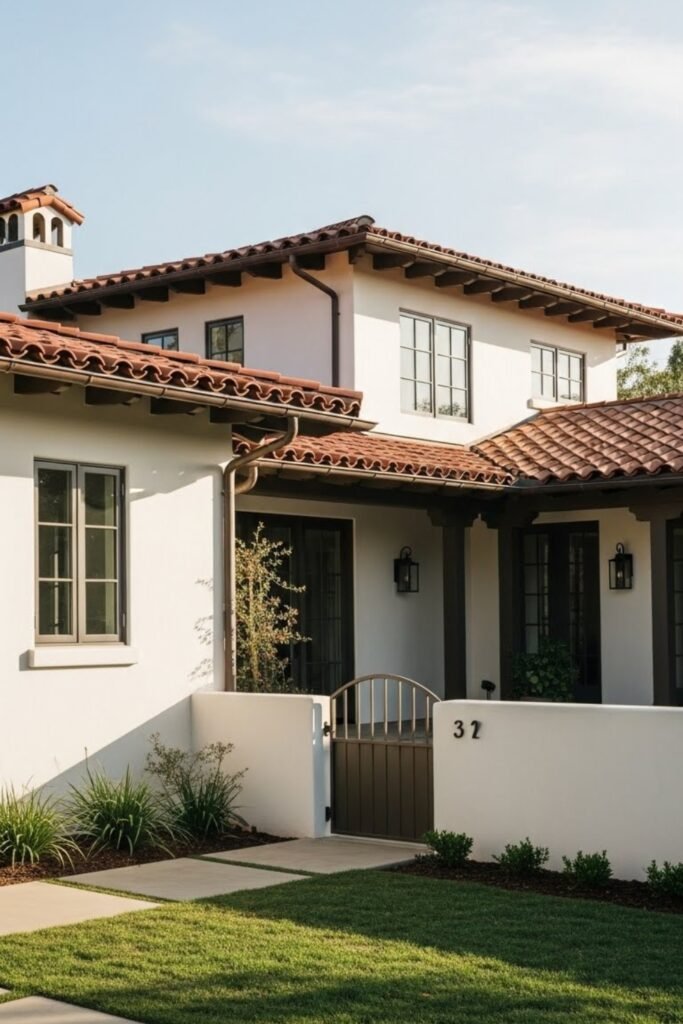
White Exteriors
White or light-toned stucco exteriors are common in Spanish Colonial homes. The bright finish reflects sunlight, helping keep interiors cooler in warm climates.
This clean backdrop also highlights architectural details like arches, ironwork, and roof tiles, allowing the design elements to stand out clearly.
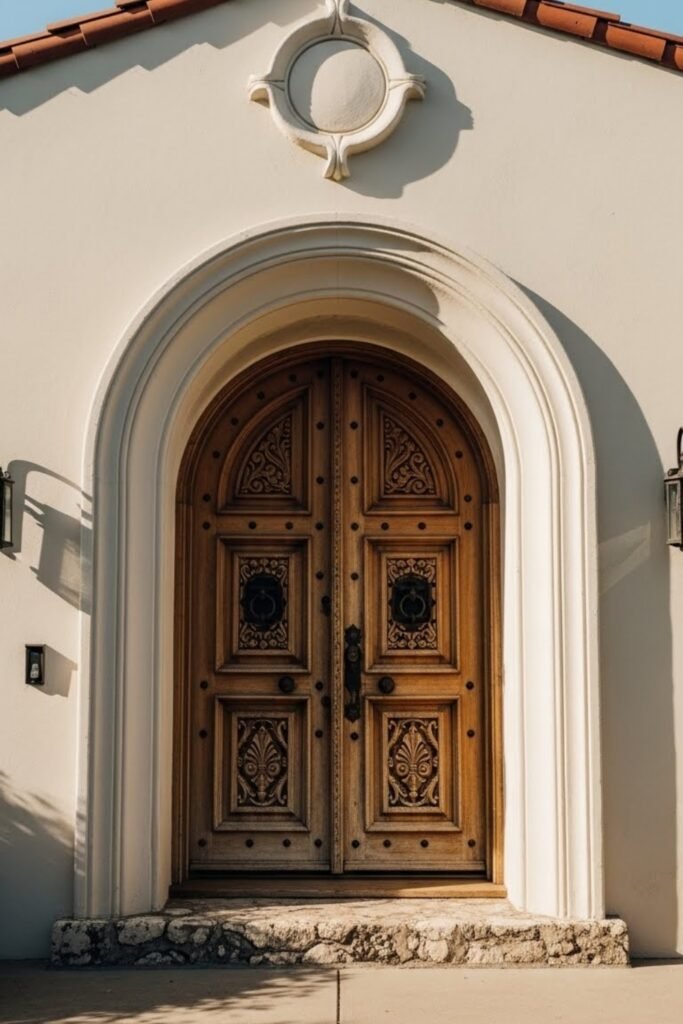
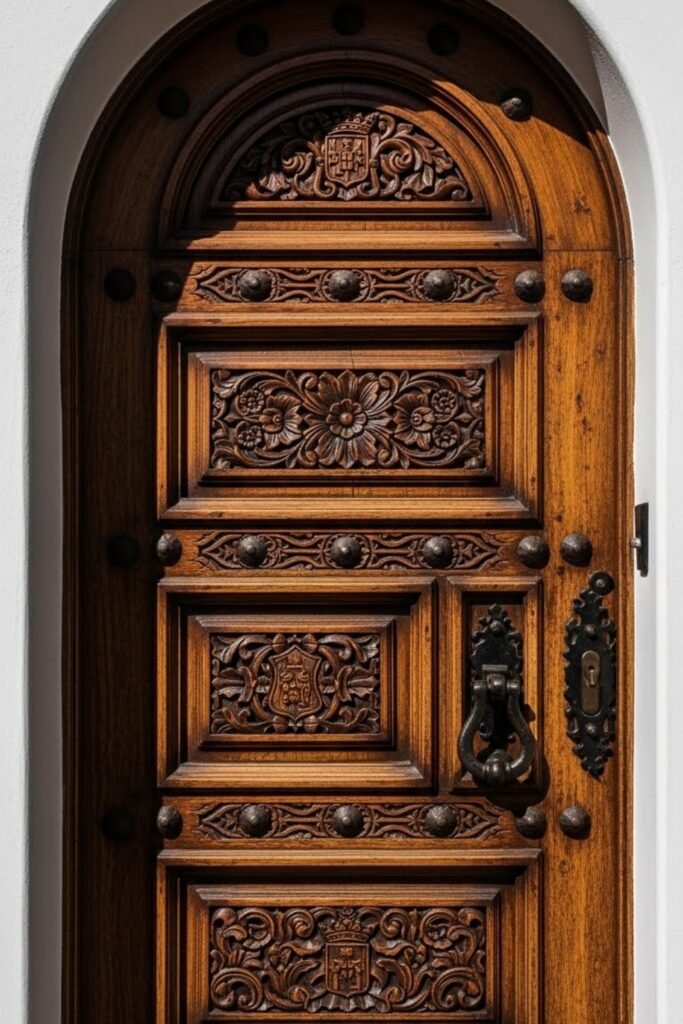
Carved Doors
Carved wooden doors serve as statement pieces in Spanish Colonial homes. Made from solid wood, they often feature decorative panels and iron hardware.
These doors add depth and craftsmanship to entrances, creating a strong first impression while reinforcing the home’s traditional and historic character.
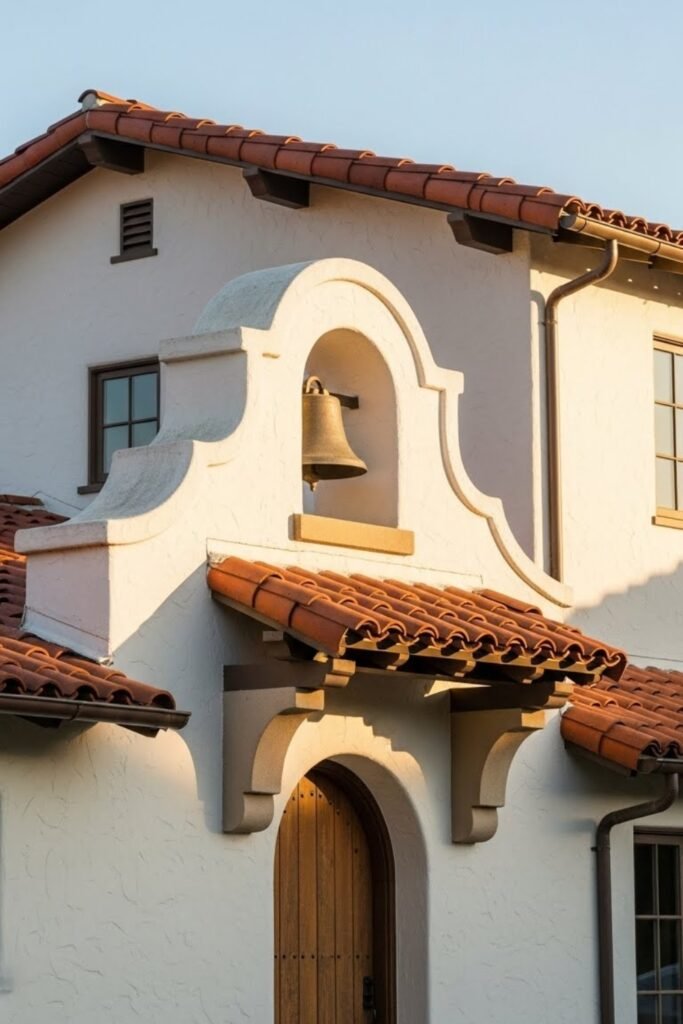
Bell Accents
Bell-shaped roof accents draw inspiration from Spanish mission architecture. Often placed above entrances or corners, they add vertical interest and a historic touch.
While mostly decorative today, these elements help reinforce the colonial heritage and create a recognizable silhouette from a distance.
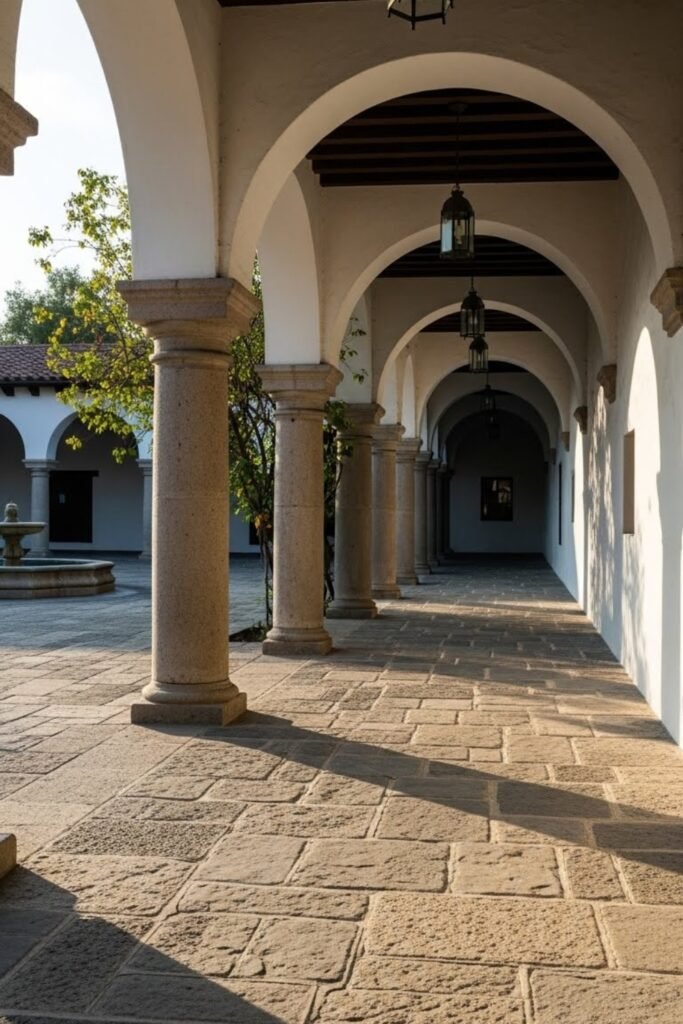
Shaded Arcades
Shaded arcades are covered walkways supported by arches. They protect outdoor paths from direct sun while maintaining airflow.
Common around courtyards and patios, arcades connect indoor and outdoor spaces smoothly, making them ideal for hot climates where shade and ventilation are essential.
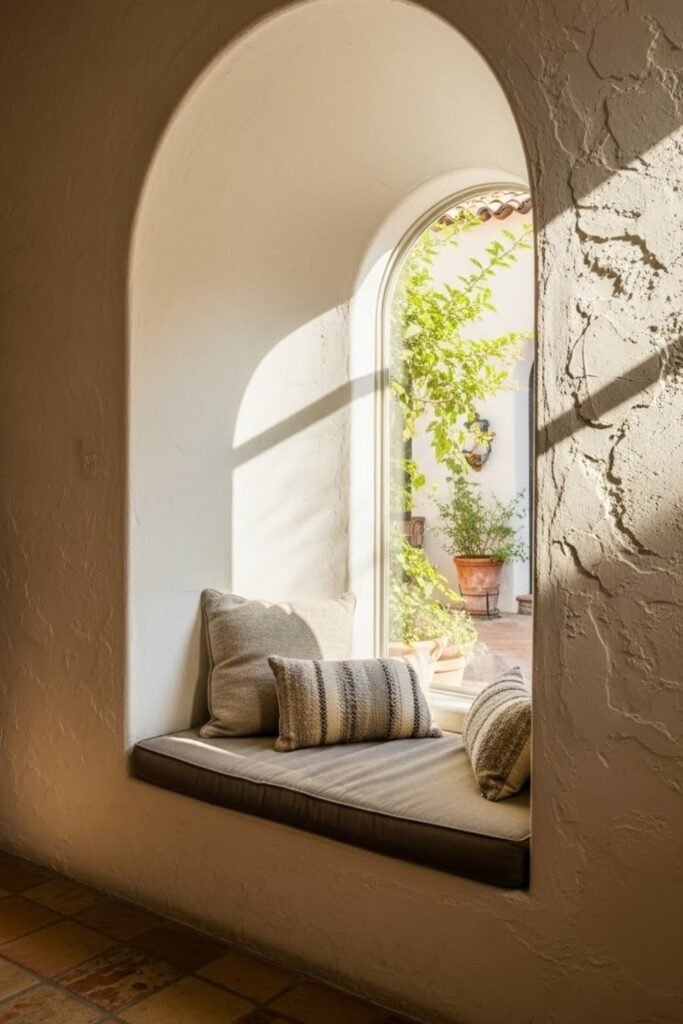
Window Seats
Deep window seats take advantage of thick Spanish Colonial walls. These built-in niches create cozy spots for sitting, reading, or relaxing while enjoying natural light.
They also add function without cluttering the room, making them a smart and charming architectural detail.
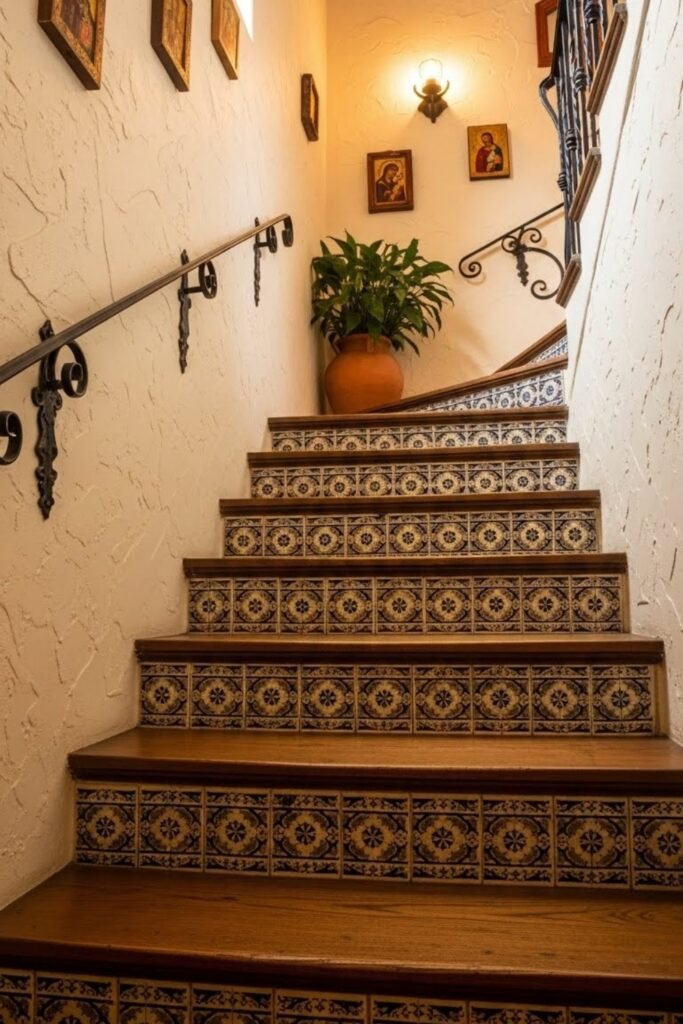
Tiled Stairs
Decorative tiles on stair risers add color and pattern to Spanish Colonial homes. Often hand-painted, these tiles break up solid surfaces and introduce visual interest.
This detail works well in entry staircases, turning a functional area into a standout design feature.
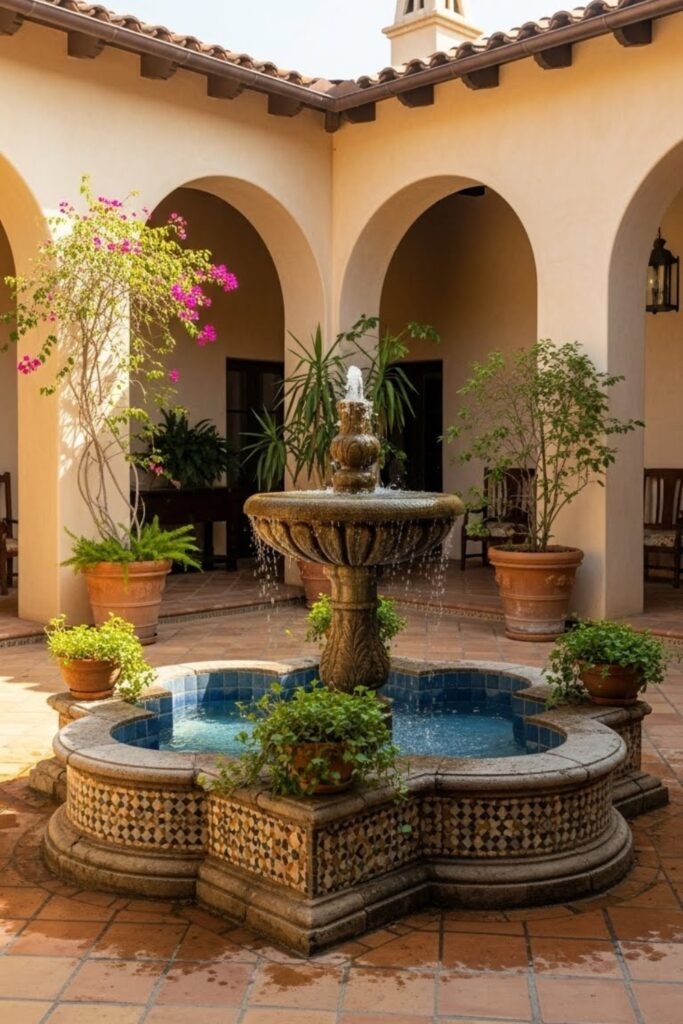
Courtyard Fountain
A courtyard fountain brings movement and calm into the home. The sound of flowing water cools the space and adds a peaceful atmosphere.
Positioned at the center of a courtyard or patio, fountains also serve as a visual focal point that enhances the traditional Spanish Colonial feel
Low Roofs
Low-sloped roofs are practical for warm climates and a key part of Spanish Colonial design.
They create a grounded appearance while allowing for wide overhangs that shade walls and windows. This roof style helps balance both aesthetics and comfort in hot regions.
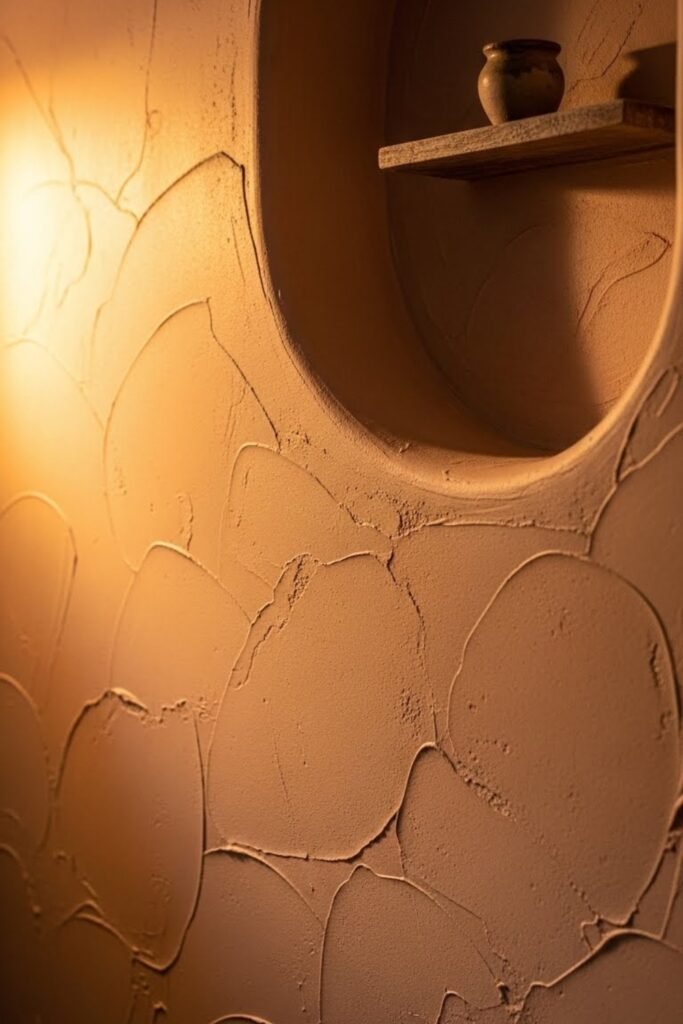
Plaster Walls
Textured plaster walls add depth and authenticity to Spanish Colonial homes. Applied by hand, the slightly uneven finish creates a warm, lived-in feel.
This surface reflects light softly and pairs well with wood beams, iron accents, and tile details, helping interiors feel cohesive and traditional.
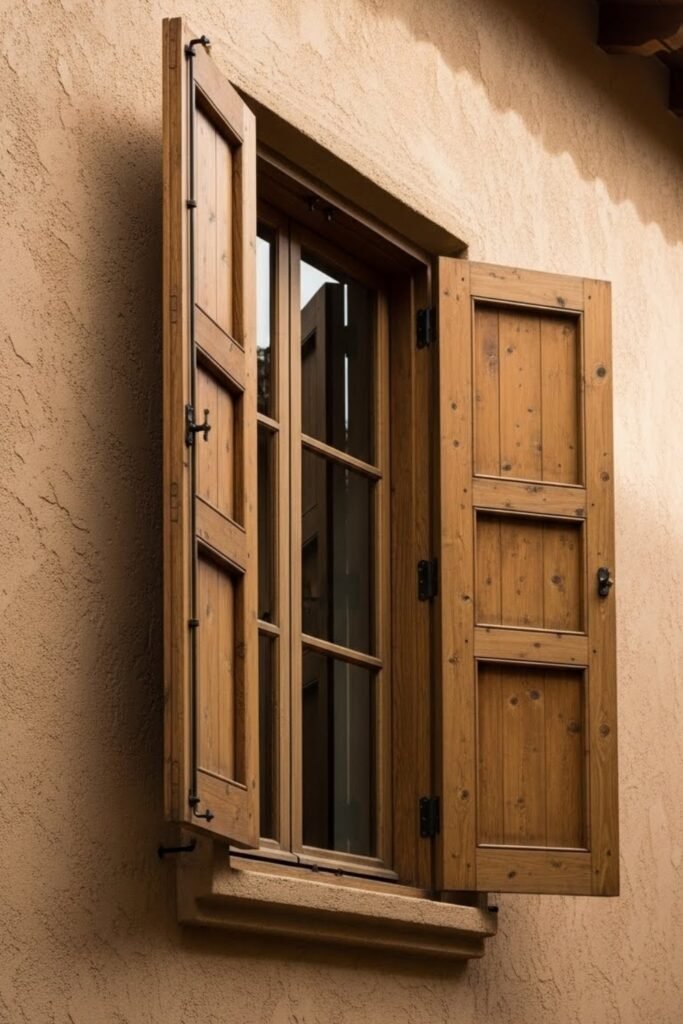
Wood Shutters
Recessed wooden shutters are both functional and decorative. Built into thick walls, they allow control over light and airflow while maintaining privacy.
When closed, they add visual weight to windows, reinforcing the sturdy, traditional construction typical of Spanish Colonial architecture.
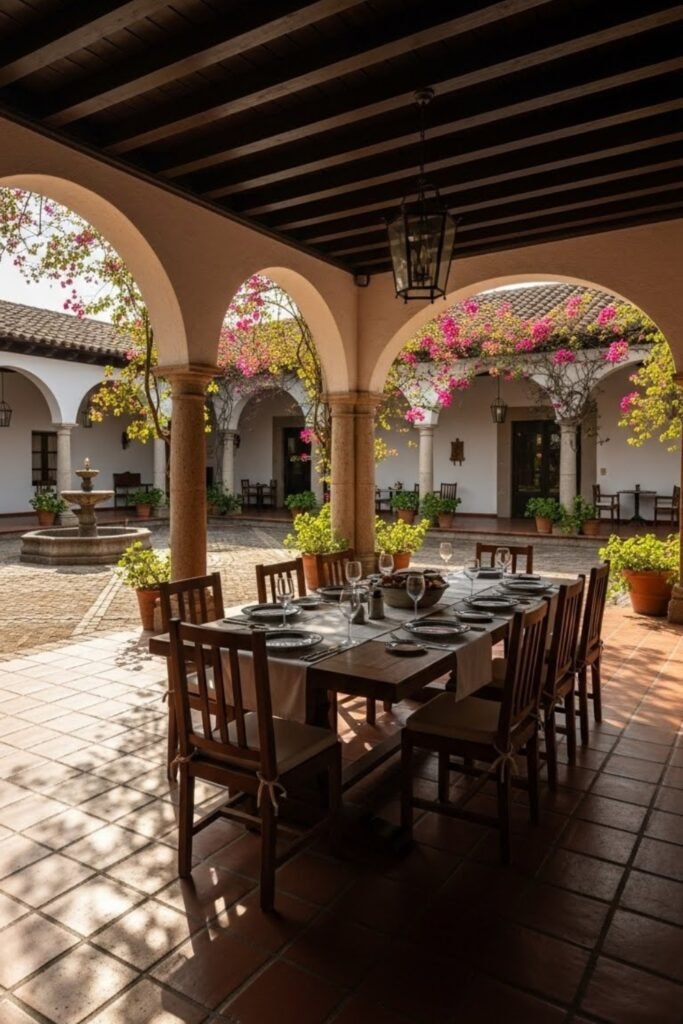
Dining Veranda
A dining veranda extends living space outdoors. Covered for shade, it connects directly to the courtyard or garden, making it ideal for warm climates.
This space encourages casual meals and gatherings while maintaining a strong indoor-outdoor connection.
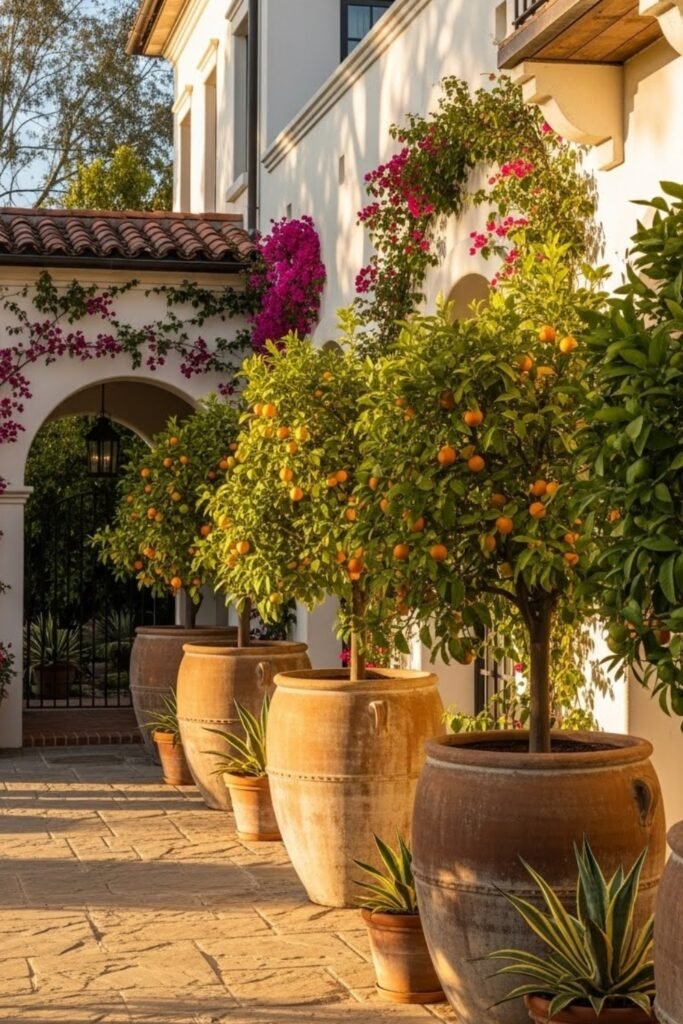
Clay Planters
Large clay planters filled with citrus trees or herbs enhance Spanish Colonial exteriors. Their earthy tones complement stucco walls and tile roofs while softening hard architectural lines.
These planters are often placed near entrances, patios, or courtyards to add life and texture.
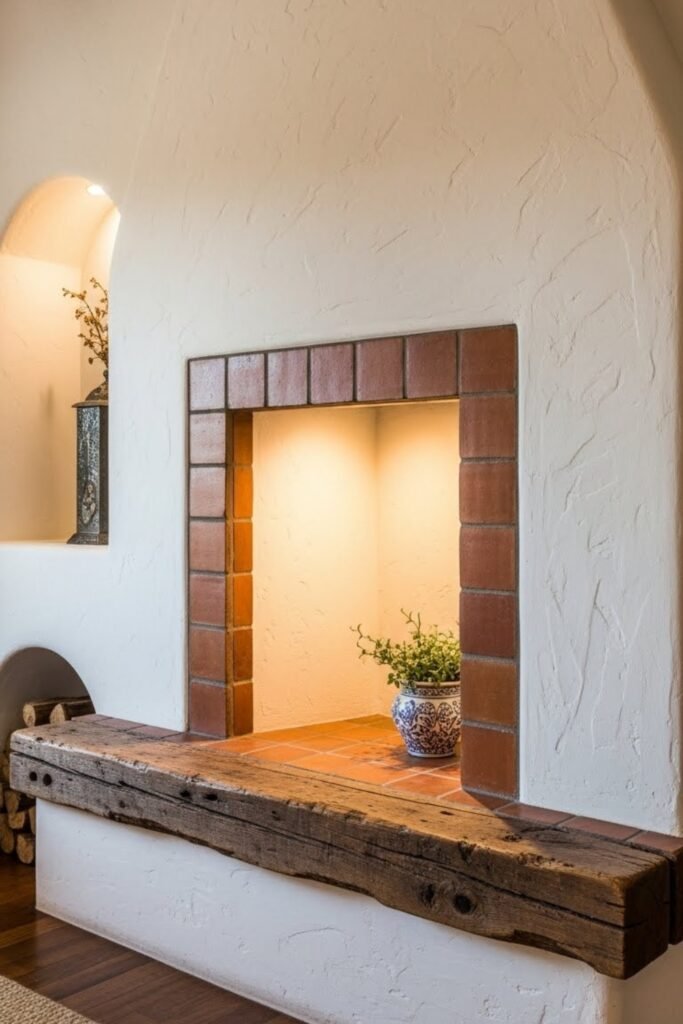
Fireplace Niche
Fireplace niches are built directly into plaster walls, creating a cozy focal point. Often framed with tile or simple molding, these fireplaces feel organic to the structure rather than added later.
They bring warmth and balance to living spaces while reinforcing traditional Spanish Colonial design.
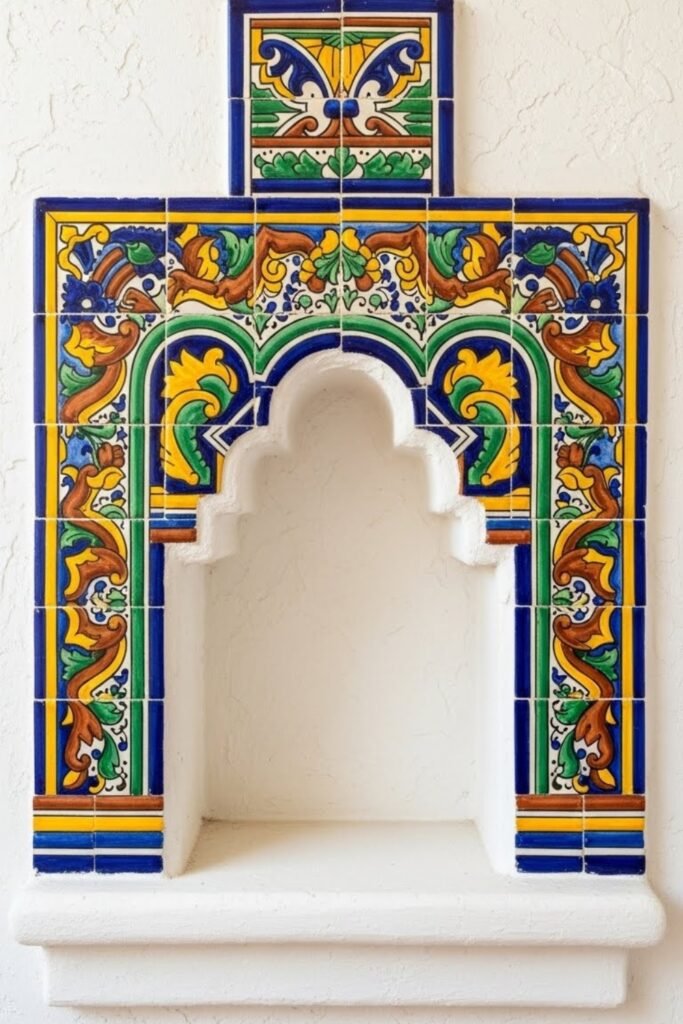
Tile Accents
Spanish tile accents add color and artistry without overwhelming the space. Used around door frames, fountains, or wall niches, these small details introduce pattern and contrast.
They are perfect for highlighting architectural features while keeping the overall design grounded and cohesive.
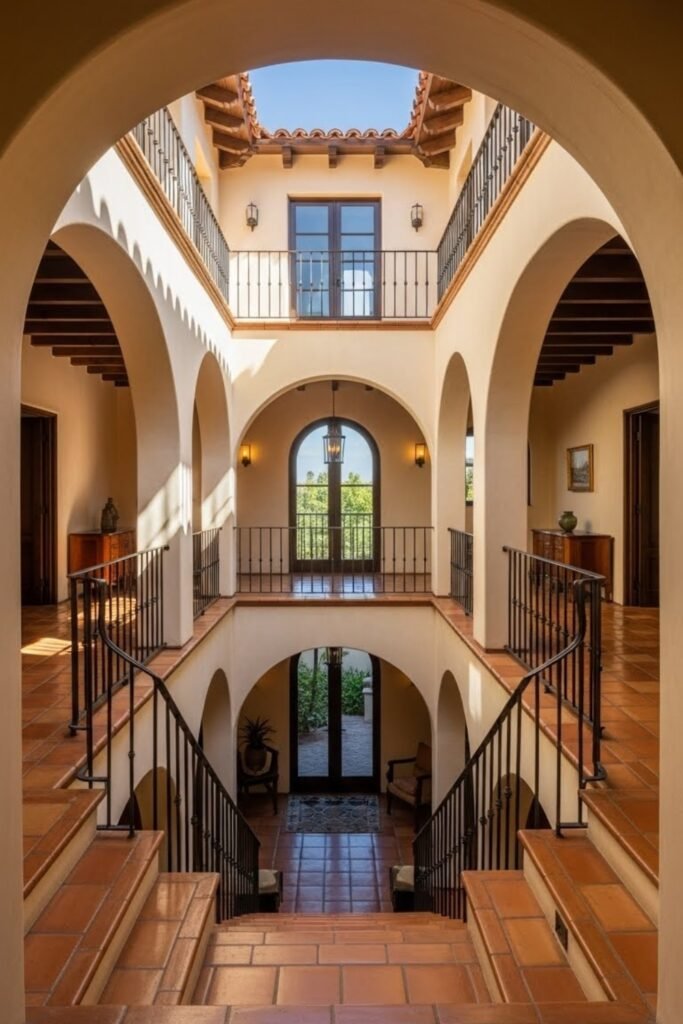
Split Levels
Split-level layouts adapt Spanish Colonial homes to sloped terrain. Different floor heights create natural separation between living areas while maintaining openness.
Courtyards often remain central, allowing light and airflow to reach multiple levels without breaking the home’s architectural flow.
Guest Casita
A guest casita is a small detached or semi-attached living space within the property. It offers privacy for visitors while maintaining visual harmony with the main house.
Casitas often mirror the same materials and finishes, reinforcing the Spanish Colonial style throughout the property.
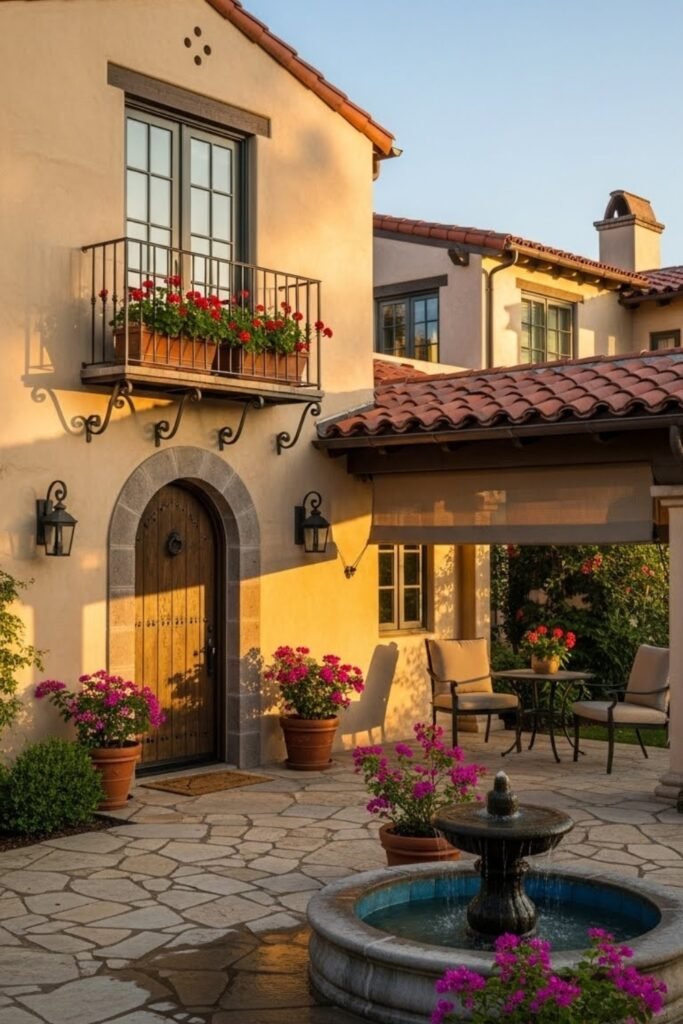
Stone Paths
Natural stone paths guide visitors toward the entrance while adding rustic charm. Irregular stones create an organic look that fits perfectly with Spanish Colonial homes.
These pathways soften the landscape, connect outdoor areas naturally, and age beautifully over time without looking worn.
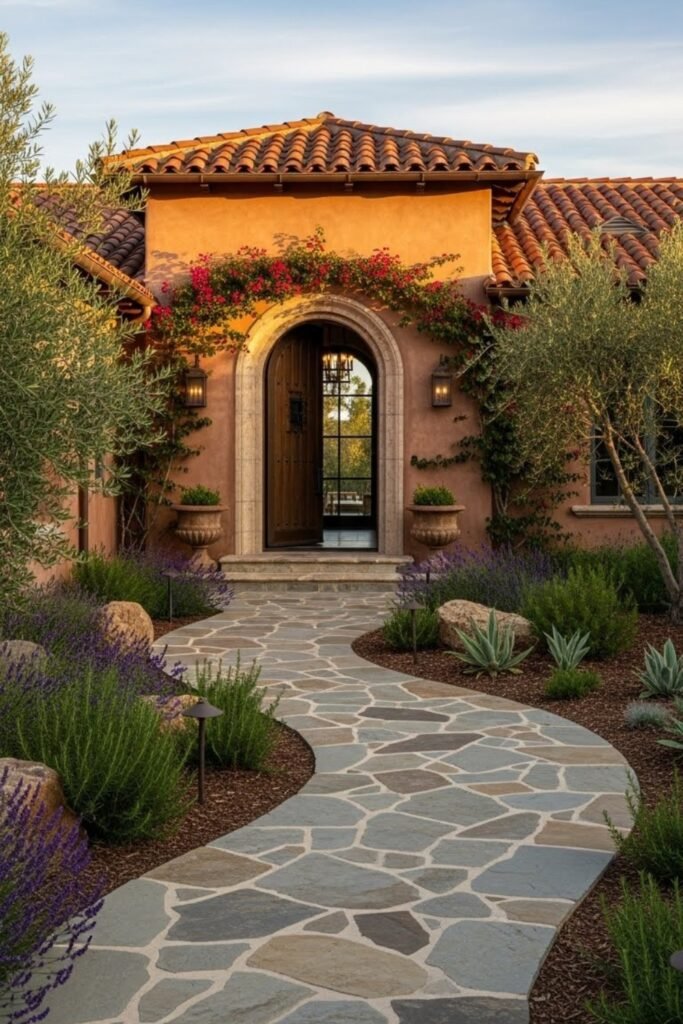
Iron Windows
Iron-framed windows are narrow and vertically oriented, reinforcing traditional Spanish Colonial proportions.
The dark metal contrasts with light stucco walls, adding strength and elegance. These windows allow light in while maintaining privacy and architectural authenticity.
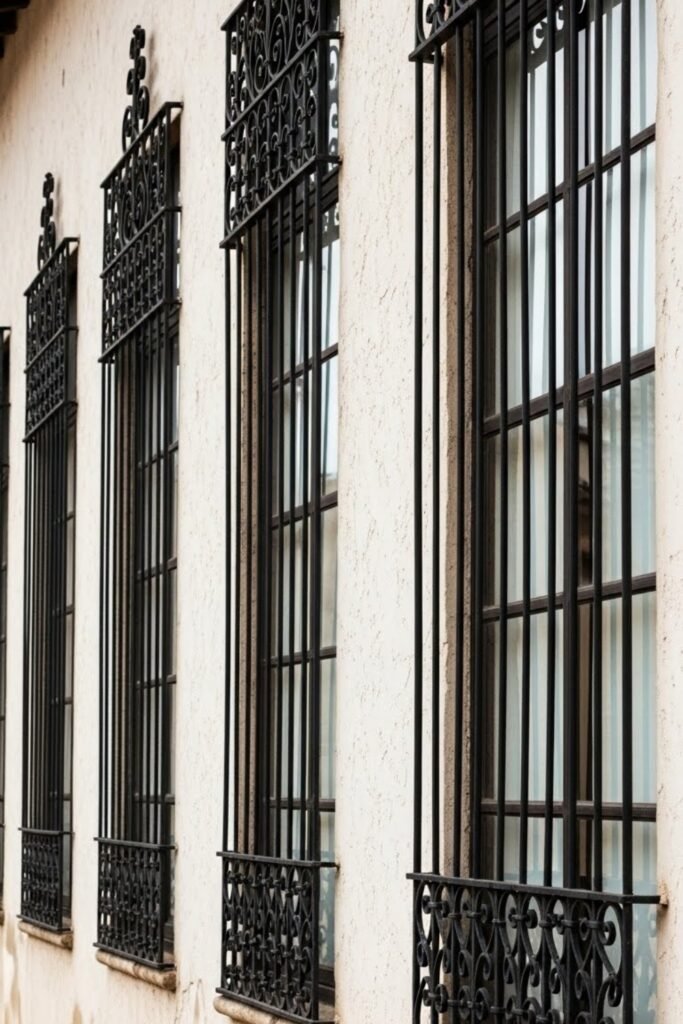
Deep Overhangs
Deep roof overhangs protect walls and windows from harsh sunlight. This feature improves comfort in warm climates while adding shadow and depth to the exterior.
Overhangs also enhance the home’s silhouette, making it feel grounded and thoughtfully designed.

Hi, my name is Ali Mehmood! I’m a passionate writer and DIY enthusiast who loves turning creative ideas into practical, hands-on projects.
I created this website to share inspiring, budget-friendly ideas that you can do yourself – whether it’s organizing your home, crafting something unique, or creating fun projects for kids and pets.
I believe DIY isn’t just a hobby – it’s a smart way to save money, reduce waste, and enjoy the satisfaction of making things with your own hands.
I’m excited to have you as part of this growing community, and I’ll continue bringing you helpful, realistic, and fun DIY ideas you can actually use.