This post may contain affiliate links: read full affiliate disclosure.
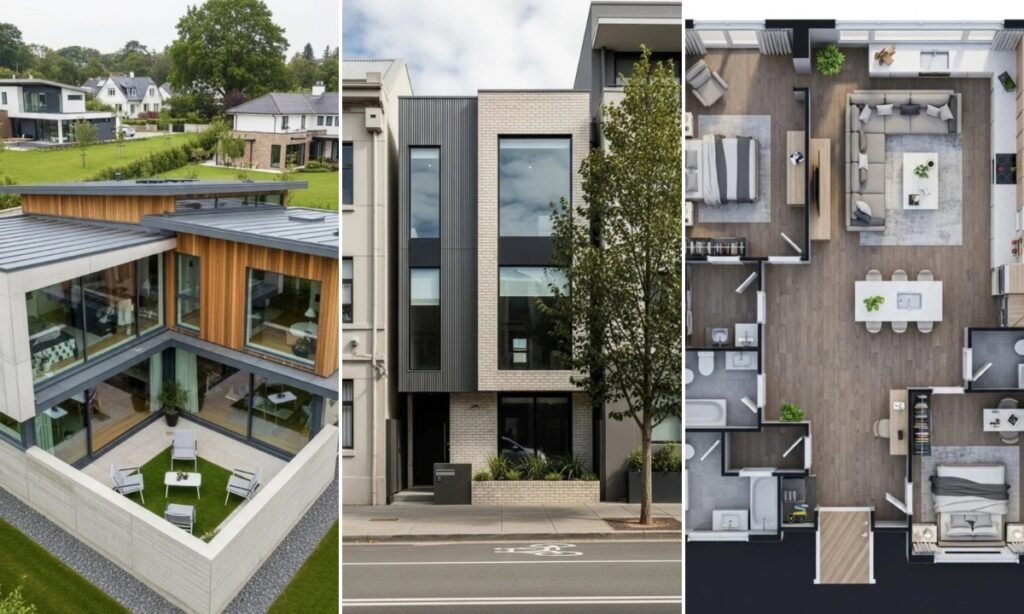
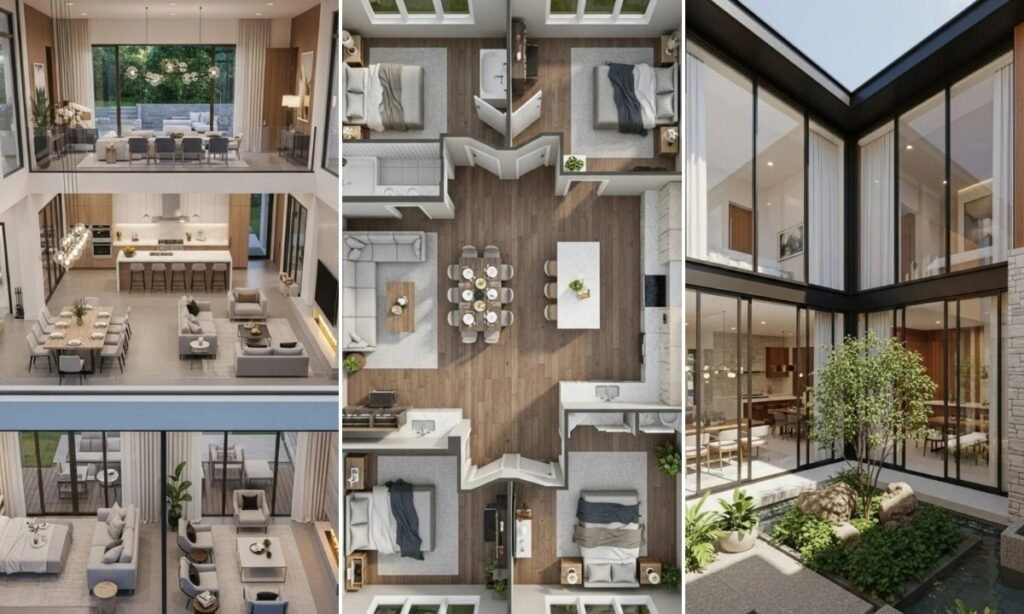
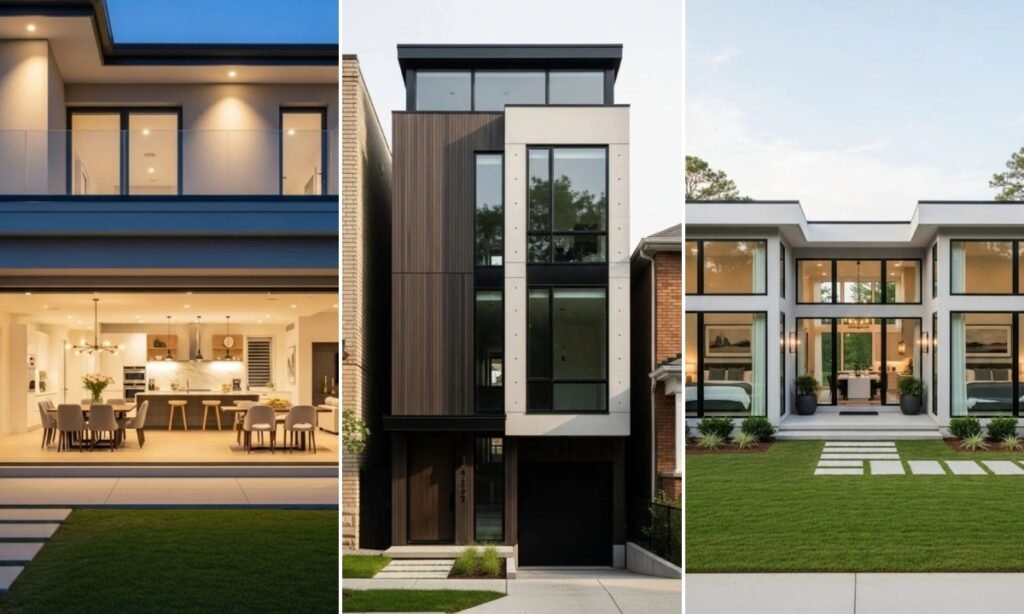
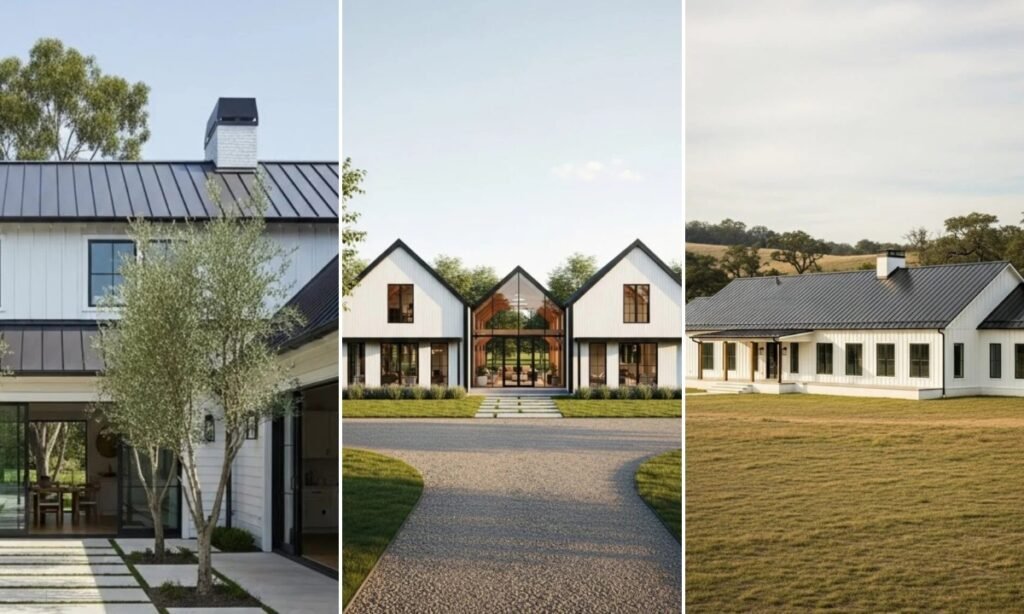
When I think about the perfect beach house, I don’t picture one single style. I think about how it feels to live there: the breeze, the light, the connection to the shoreline.
That’s why I put together these beach house ideas, each focusing on a different way to design for comfort, function, and coastal living.
Whether you’re planning a build or gathering inspiration, these ideas will help you shape a home that truly belongs by the sea.
Dune Retreat
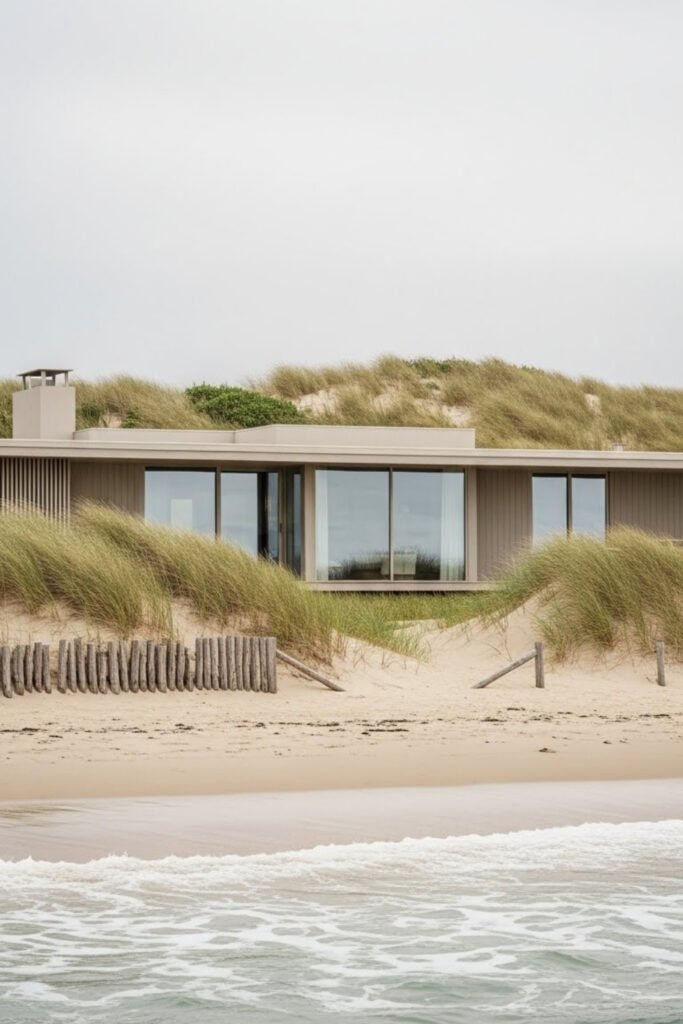
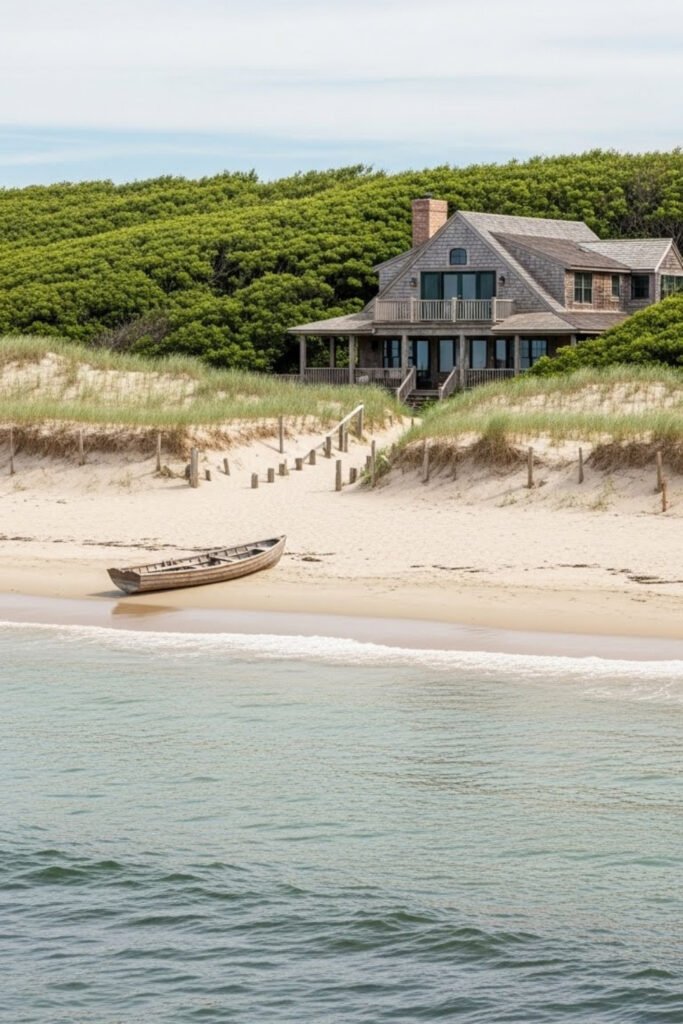
This idea focuses on building a beach house that blends naturally into sand dunes instead of standing out. Soft exterior colors, low-profile architecture, and native grasses help the home feel grounded in its surroundings.
Large windows face the ocean while protected courtyards shield from wind. It’s ideal if you want privacy, nature integration, and a calm, untouched coastal feel.
Coastal Minimal
A coastal minimal beach house strips everything back to essentials. Clean lines, open layouts, and a limited color palette keep the space light and breathable. Instead of heavy décor, the design relies on natural light, ocean views, and simple materials like pale wood and stone.
This works best for smaller beach homes where clutter can quickly ruin the relaxed vibe.
Driftwood Modern
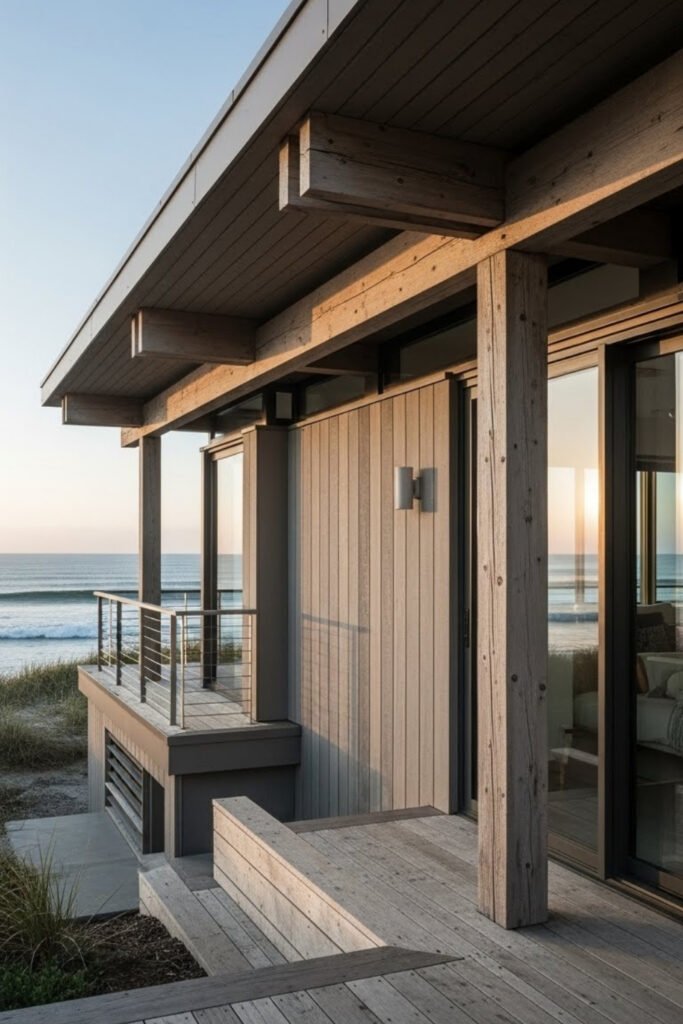
This style mixes modern architecture with raw, weathered materials. Think sleek forms paired with driftwood tones, exposed beams, and textured finishes that echo the shoreline. The contrast keeps the home contemporary without losing its coastal soul.
It’s a great option if you love modern design but still want warmth and a strong connection to the beach environment.
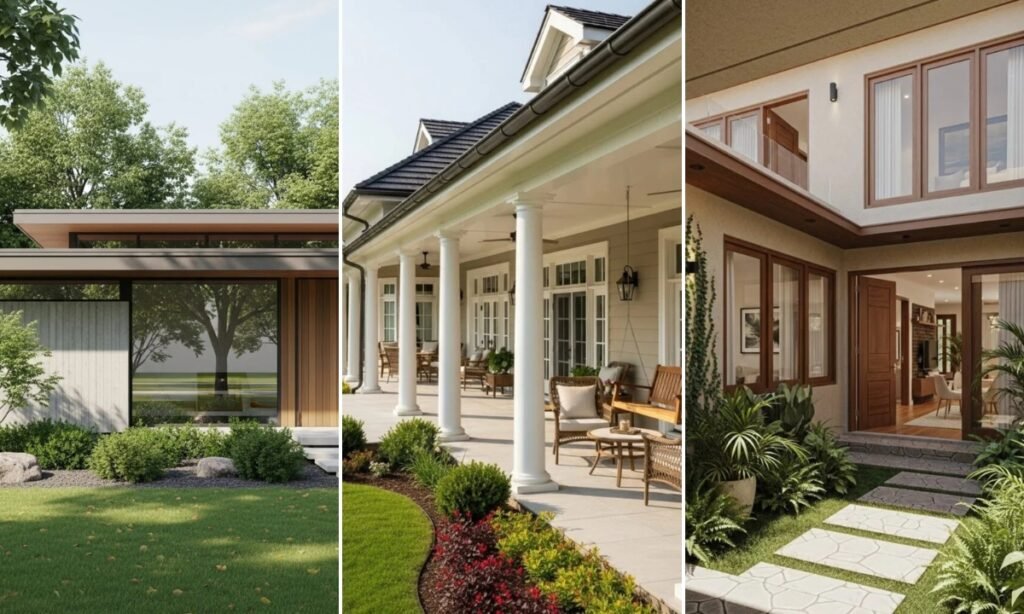
Open Veranda
An open veranda beach house is designed around outdoor living. Wide covered verandas wrap the home, creating shaded areas for lounging, dining, and relaxing all day.
These spaces help control heat while keeping ocean breezes flowing through the house. It’s perfect for families who spend most of their time outside and want seamless indoor–outdoor living.
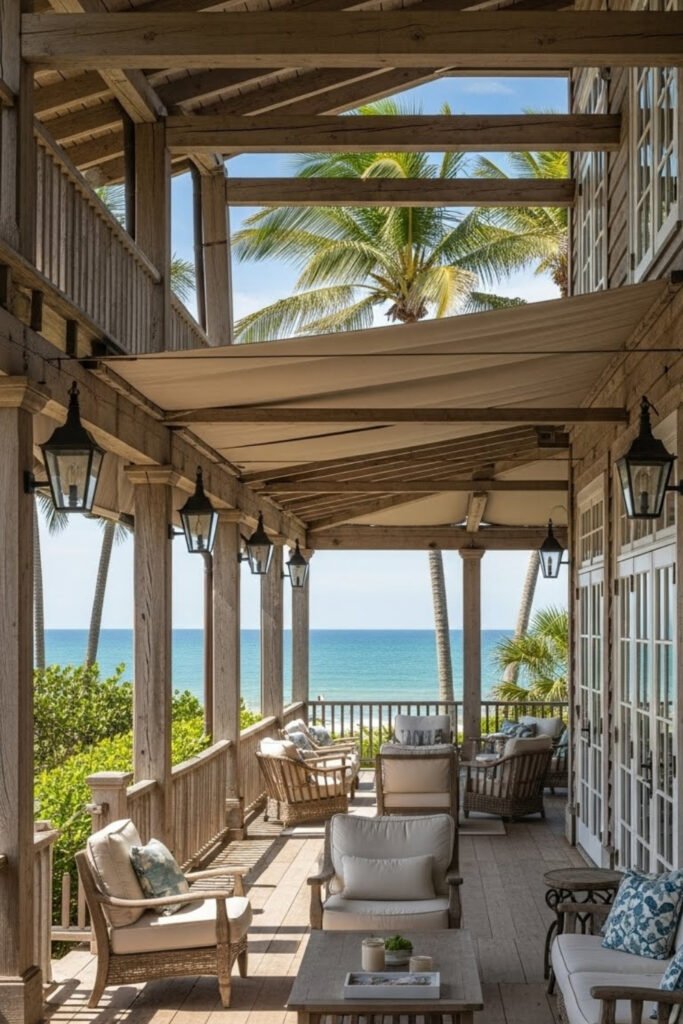
Breezeway Living
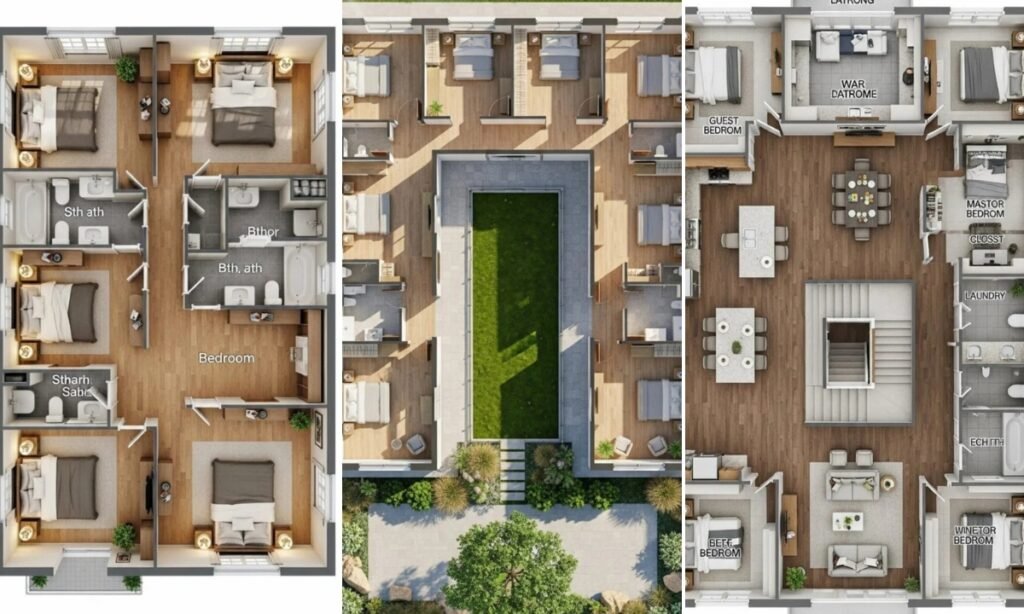
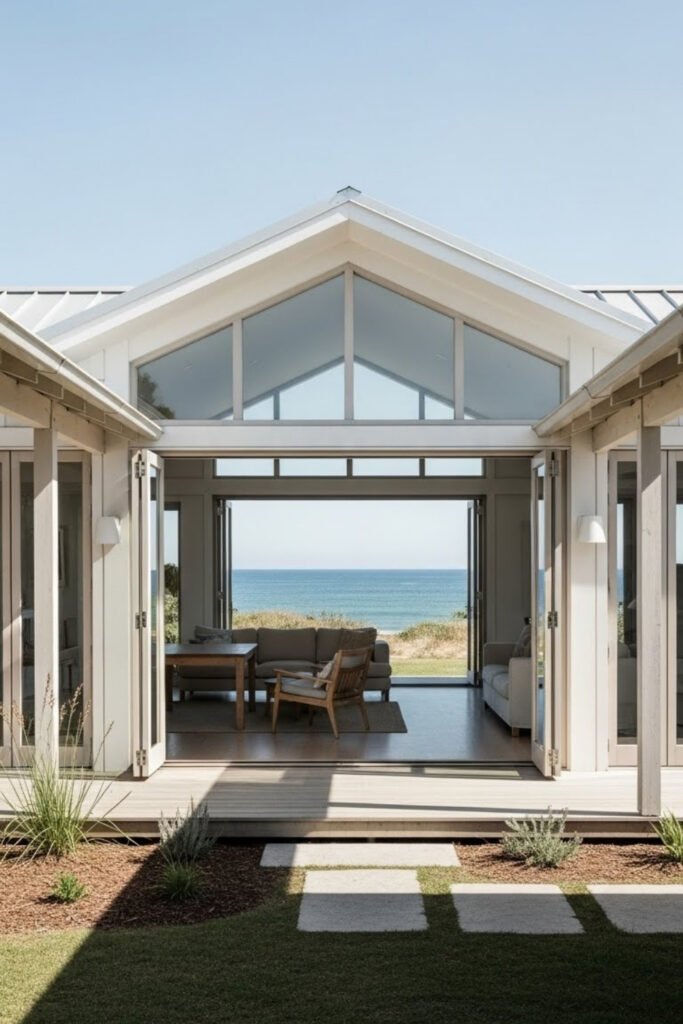
Instead of a solid structure, this beach house uses breezeways to divide living zones. Open walkways between rooms allow constant airflow and reduce heat buildup. It also creates shaded transition spaces that feel relaxed and resort-like.
This layout works especially well in warm coastal climates where natural ventilation matters more than enclosed square footage.
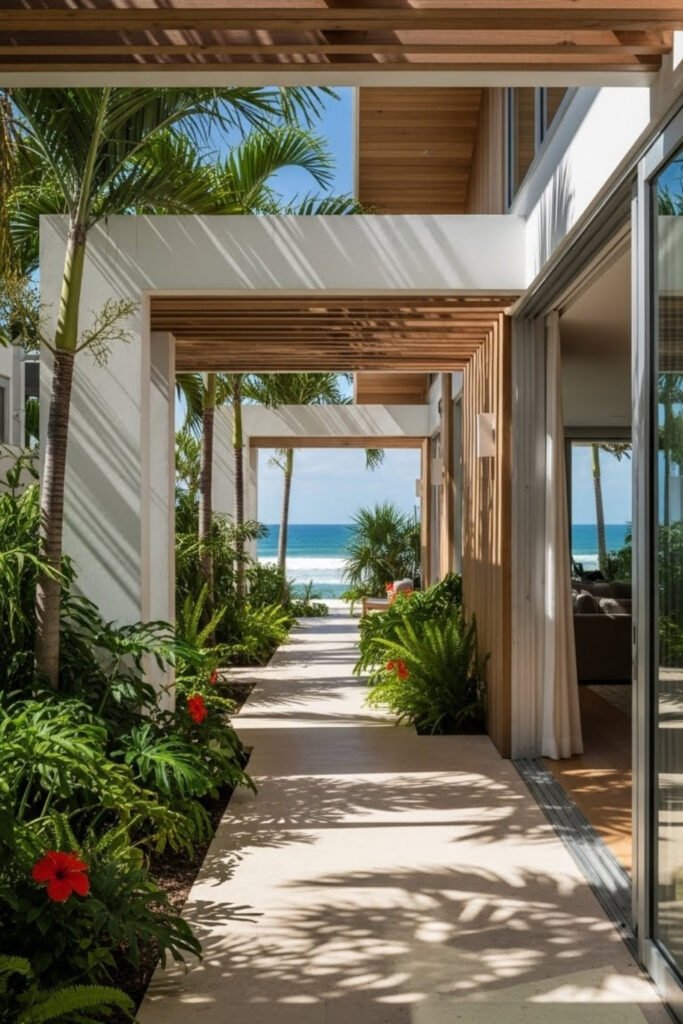
Elevated Cottage
Raising the house on stilts or piers protects it from flooding while improving views and airflow. The space beneath can serve as shaded parking or storage without affecting the home’s charm.
This design feels light, practical, and authentic to coastal living. It’s ideal for beachfront or near-shore properties with changing tides.
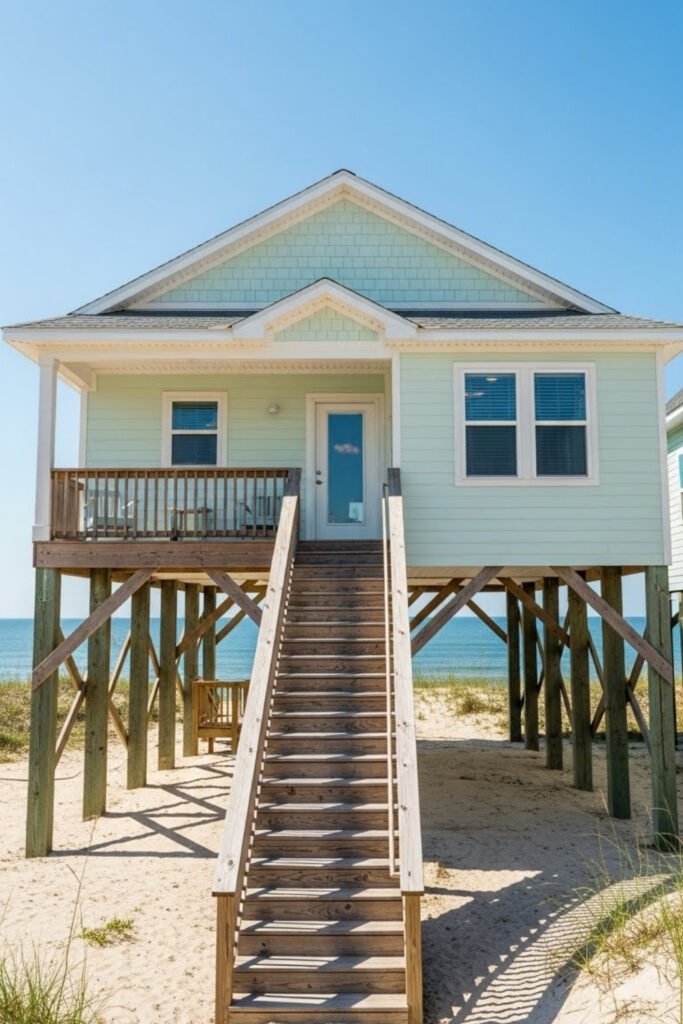
Oceanfront Glass
This idea centers on uninterrupted ocean views using floor-to-ceiling glass walls. The structure stays simple so the scenery becomes the main feature.
Strategic overhangs and tinted glass help control glare and heat. It’s a strong choice if the beach view is your biggest asset and you want the indoors to feel visually endless.
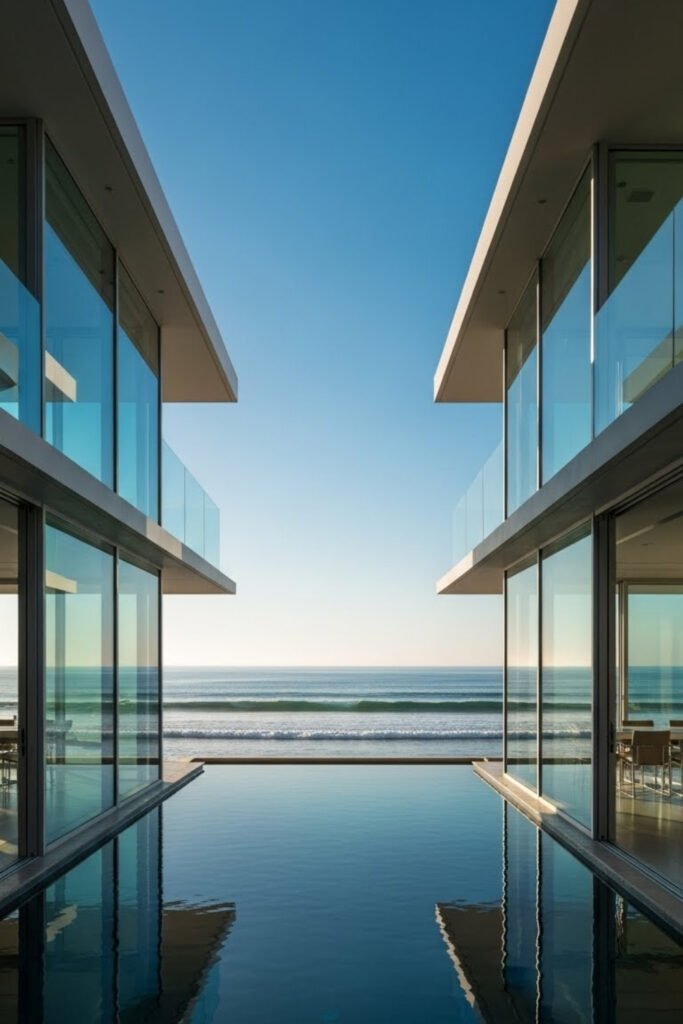
Sandy Neutrals
A sandy neutral palette mirrors the colors of the beach itself. Soft beiges, warm whites, and muted taupes keep the house calm and timeless.
These tones also hide wear from salt and sand better than bright whites. This approach works for both interiors and exteriors, creating a cohesive, low-maintenance coastal look.
Wraparound Deck
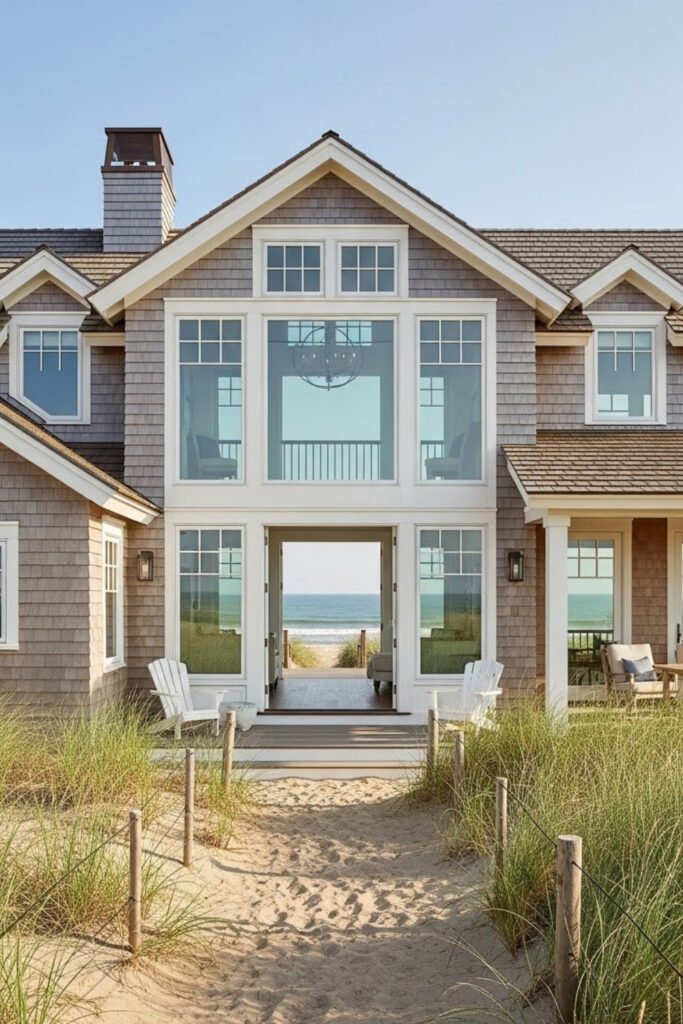
A wraparound deck gives you access to sun, shade, and views at different times of the day. It extends living space without adding interior square footage and helps connect every room to the outdoors.
This design works well on corner lots or elevated homes where panoramic coastal views are available from multiple angles.
Tropical Shade
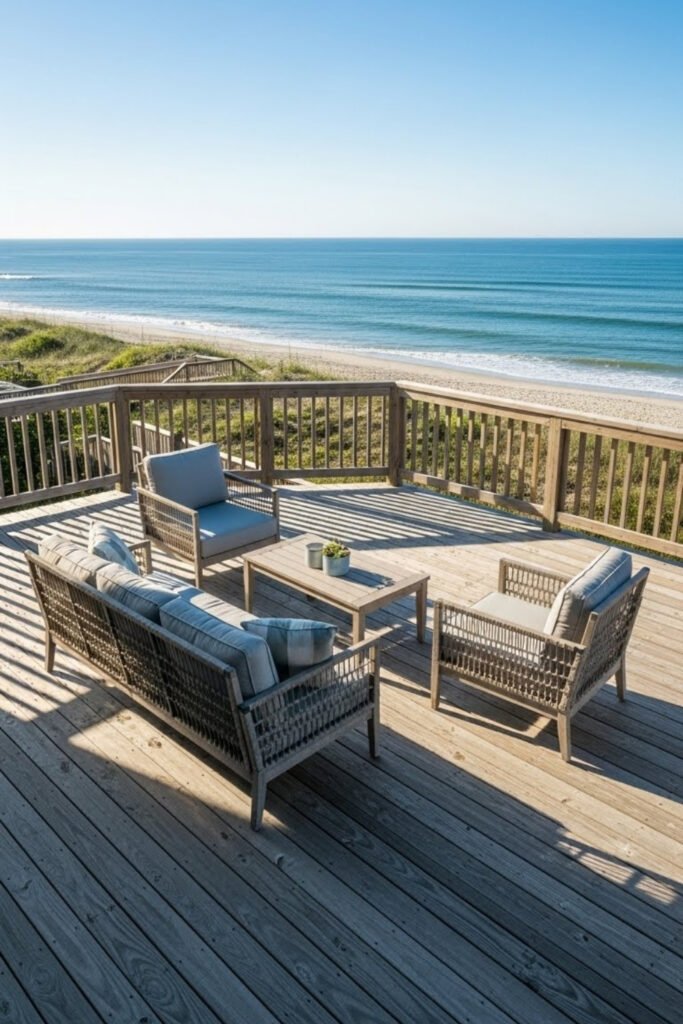
This beach house design focuses on deep overhangs, pergolas, and layered shading instead of heavy insulation.
Palm trees, slatted screens, and fabric canopies block harsh sun while keeping the home airy. It’s ideal for hot beach locations where cooling naturally matters more than sealing the house tight.
Weathered Wood
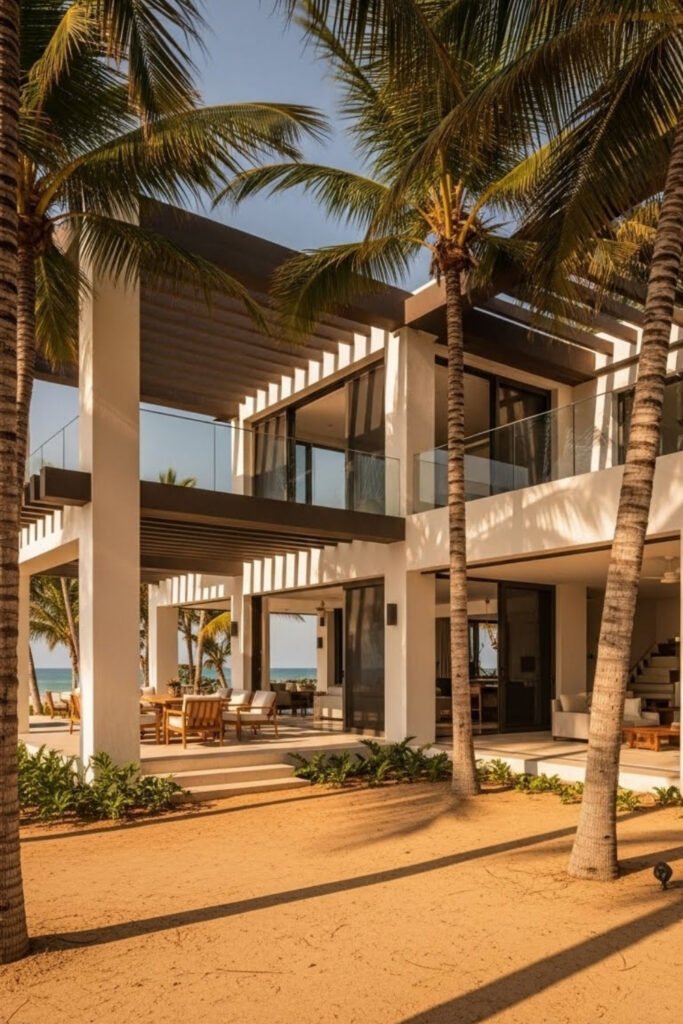
Using naturally aged or treated wood helps the house blend into the coastal environment. Gray, sun-faded finishes hide salt damage and require less upkeep over time.
The texture adds warmth without feeling rustic. This idea suits homeowners who want a lived-in, relaxed look rather than a polished beach aesthetic.
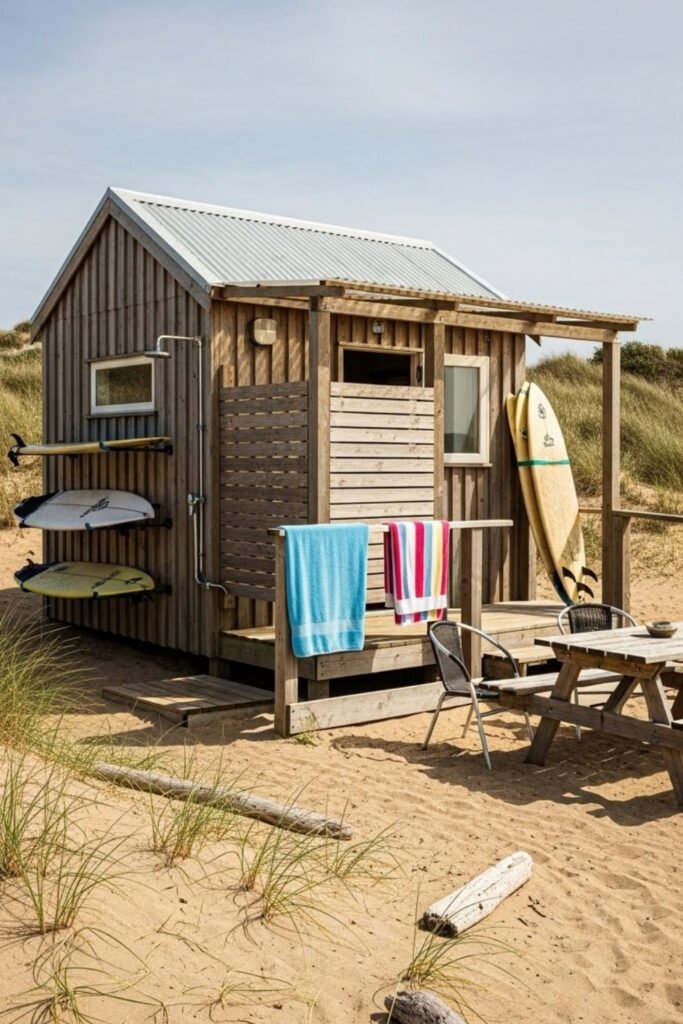
Surfside Cabin
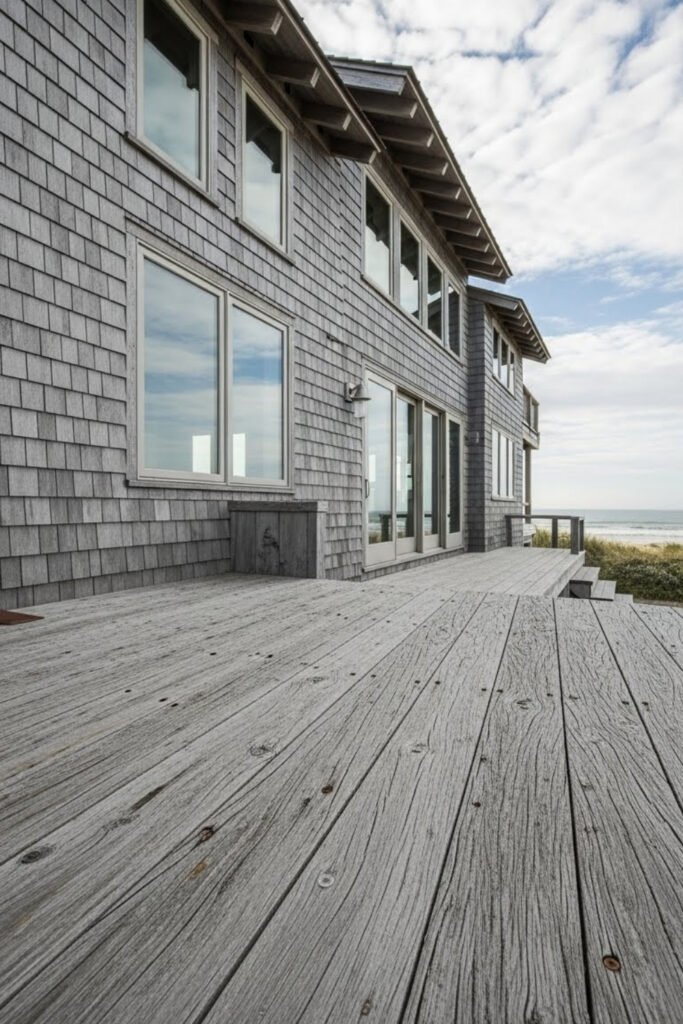
This concept keeps the beach house compact, practical, and easy to maintain. Simple forms, durable materials, and open interiors make it perfect for frequent beach use.
Outdoor showers and rinse zones handle sand before it enters the home. It’s a smart choice for vacation properties that prioritize function over formality.
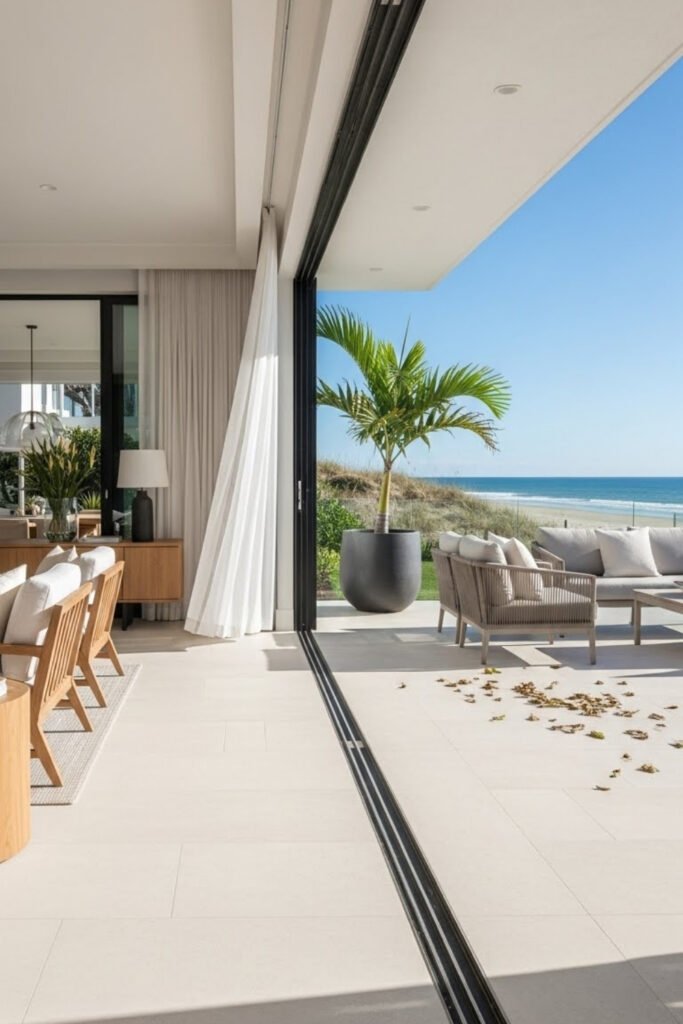
Indoor-Outdoor
This beach house removes the hard boundary between inside and outside. Sliding walls, retractable doors, and matching floor materials let spaces flow together naturally.
When open, the house feels like a covered outdoor lounge; when closed, it still stays bright and airy. This works best where the weather stays mild most of the year.
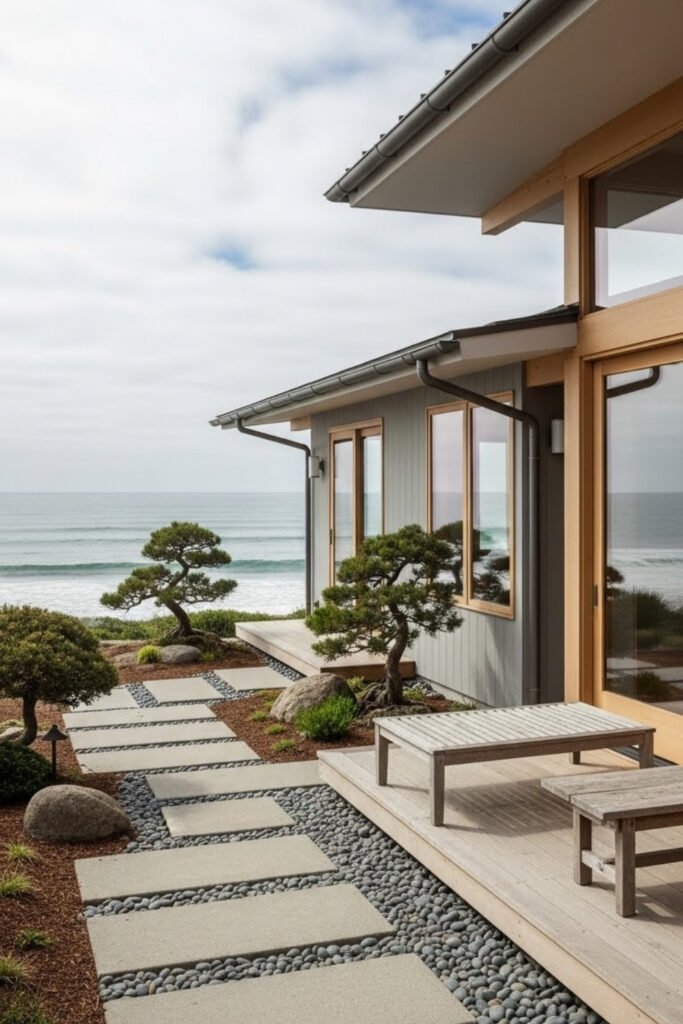
Coastal Zen
Instead of bright beach colors, this style leans into calm and balance. Soft neutrals, natural wood, and uncluttered layouts create a peaceful retreat.
The focus stays on light, air, and negative space rather than decoration. It’s ideal if you want your beach house to feel restorative rather than lively or decorative.
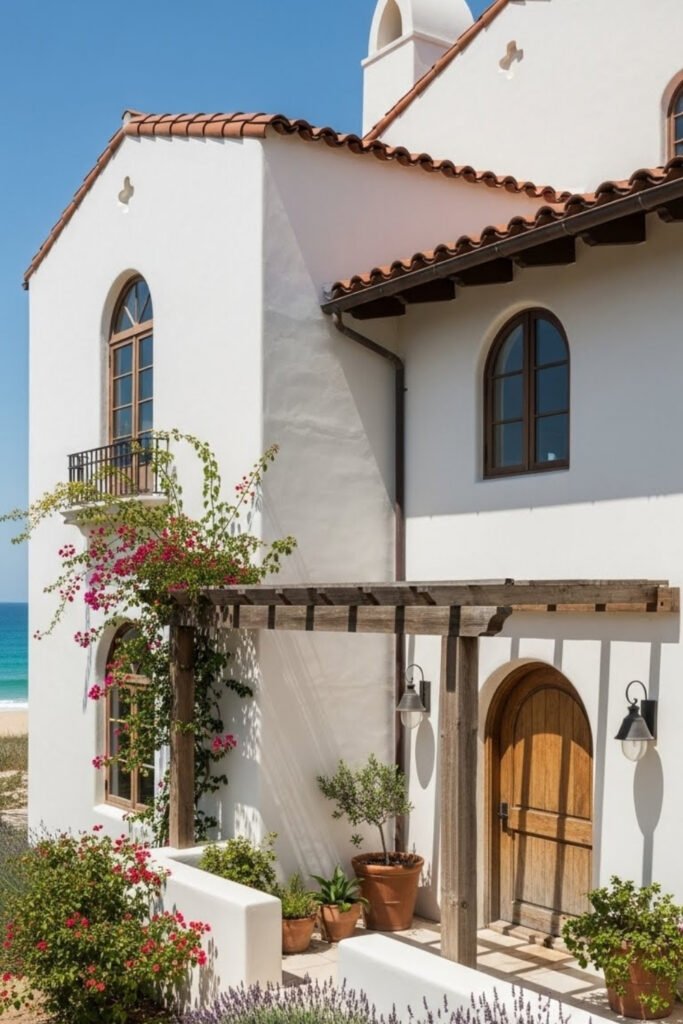
Whitewashed Haven
Whitewashed finishes keep the house bright while softening glare from sun and sand. Slight texture in walls and wood prevents the space from feeling stark.
This look reflects light beautifully and makes smaller beach houses feel more open. It’s a timeless option that works across different coastal regions.
Nautical Modern
This idea updates classic nautical elements with a cleaner approach. Subtle navy accents, rope textures, and marine-inspired materials appear in controlled doses.
Paired with modern lines, the result feels fresh instead of themed. It’s a good fit if you like coastal references without obvious beach clichés.
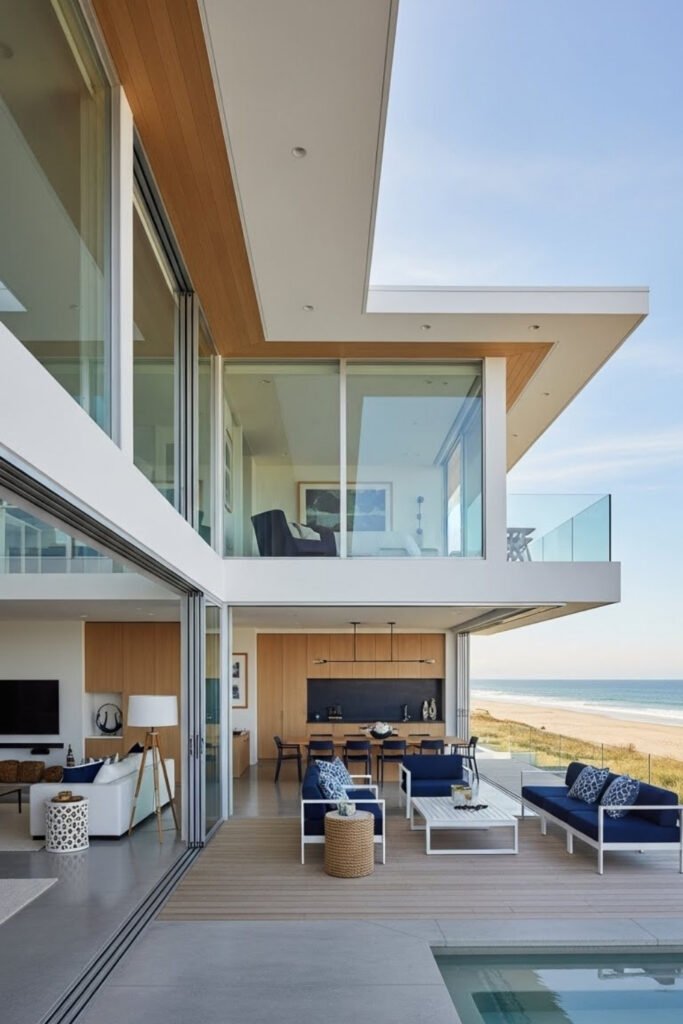
Sunset Balcony
This design prioritizes west-facing balconies that capture evening light and ocean sunsets. The balcony becomes a daily ritual space rather than an occasional feature.
Simple railings and built-in seating keep views unobstructed. It’s ideal for narrow lots where vertical outdoor spaces matter as much as ground-level patios.
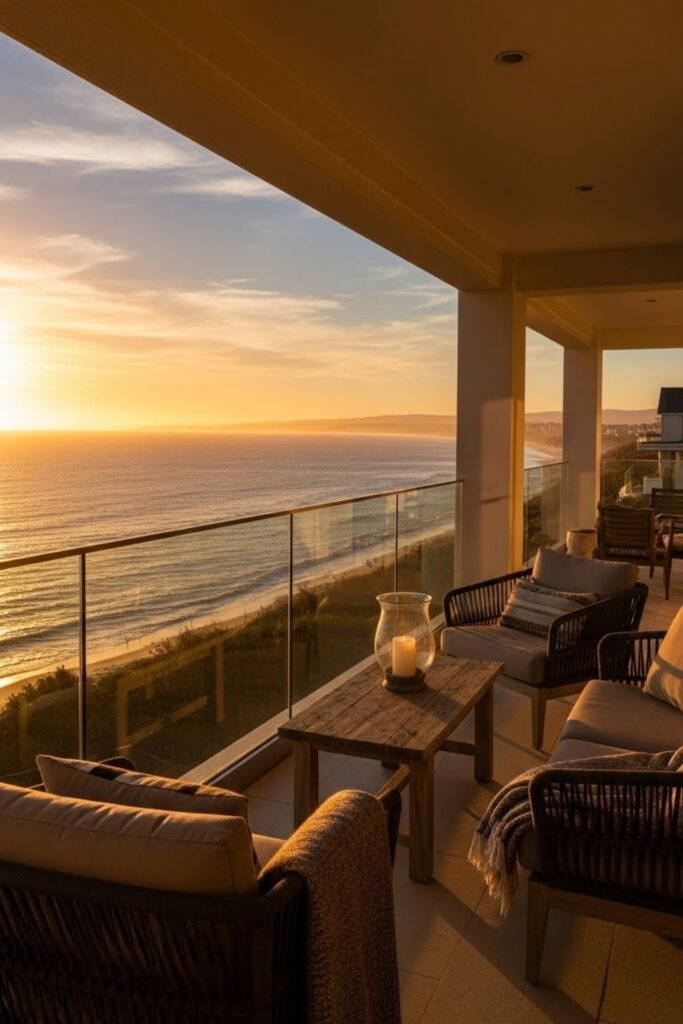
Palm Courtyard
Instead of pushing all outdoor space outward, this beach house pulls nature inward. A central palm-filled courtyard improves airflow and creates privacy from neighboring homes.
It also brings filtered sunlight into surrounding rooms. This layout works well in dense beach communities where side-yard space is limited.
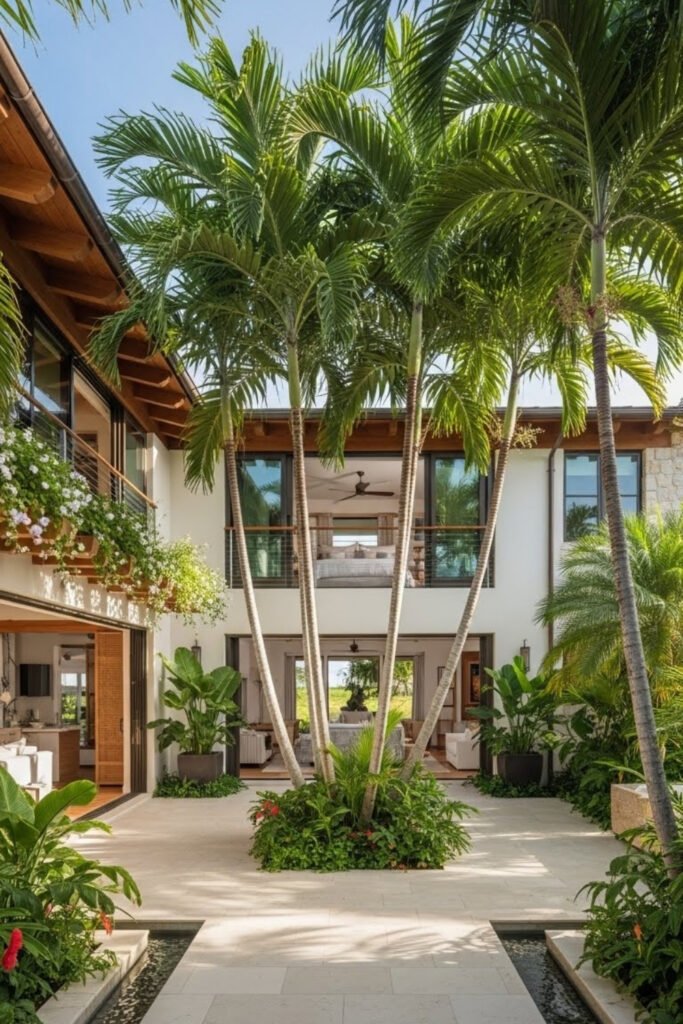
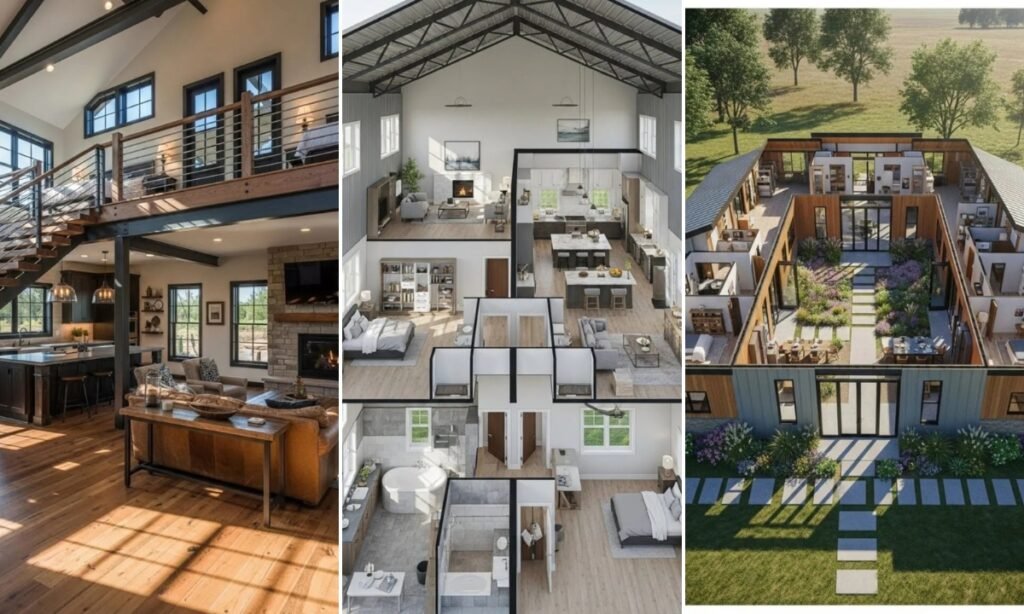
Seabreeze Loft
A loft-style beach house uses high ceilings and open volumes to move air naturally. Upper-level sleeping areas stay light and ventilated without feeling closed off.
This design suits compact footprints while still feeling spacious. It’s especially effective in warm climates where vertical airflow improves comfort.
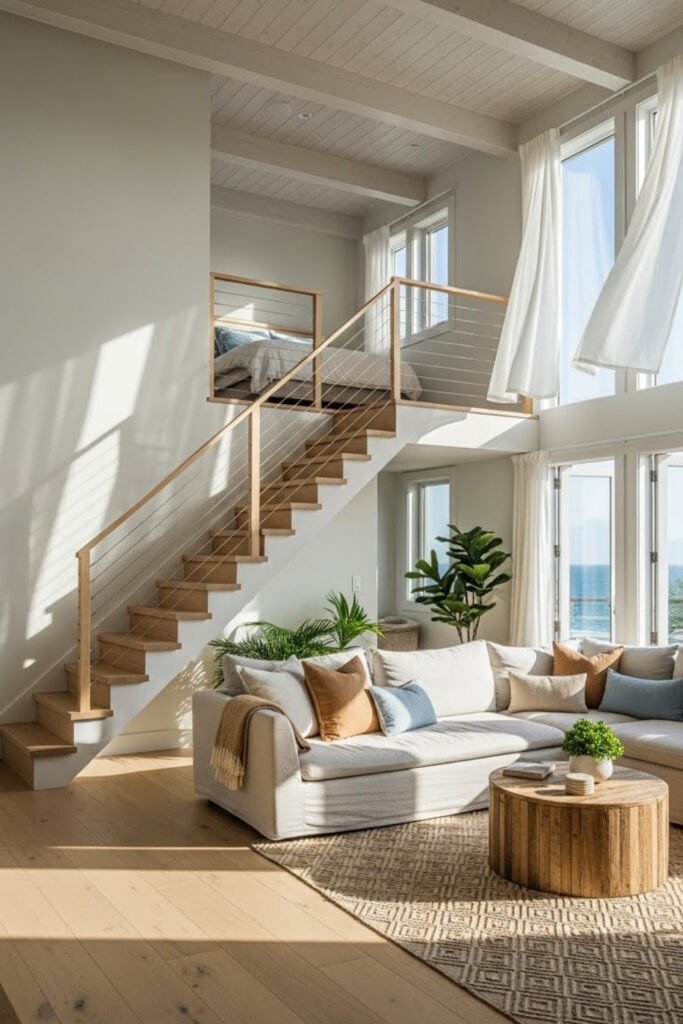
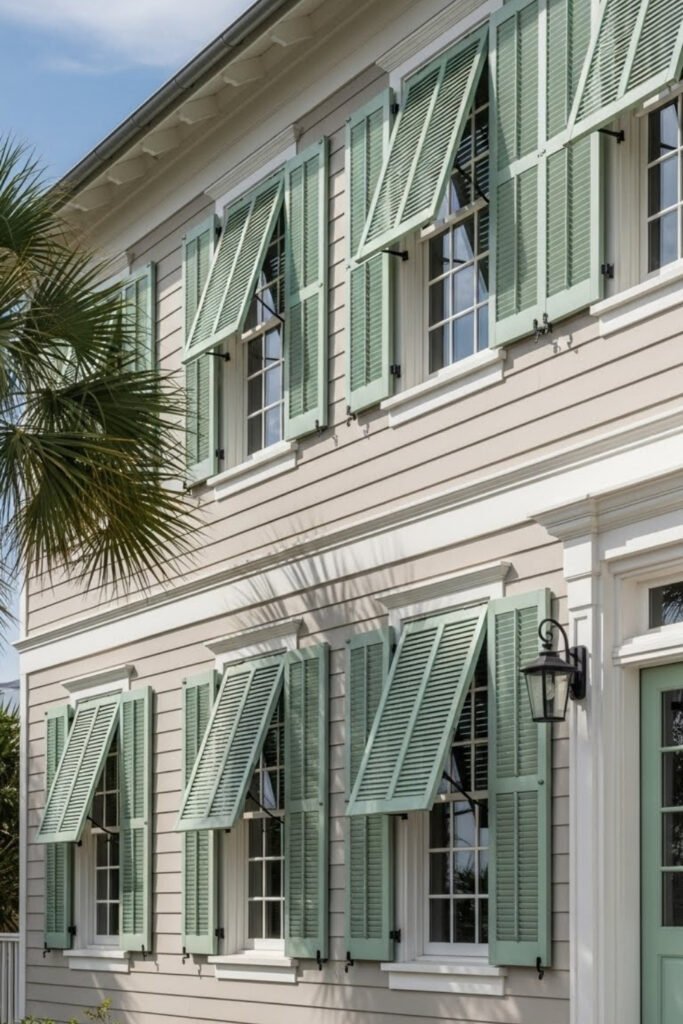
Shuttered Facade
Exterior shutters do more than add charm. They protect windows from storms, control sunlight, and add depth to the façade.
Adjustable shutters let you adapt to changing weather without sacrificing style. This idea works well for traditional or transitional beach houses in windy or high-sun coastal zones.
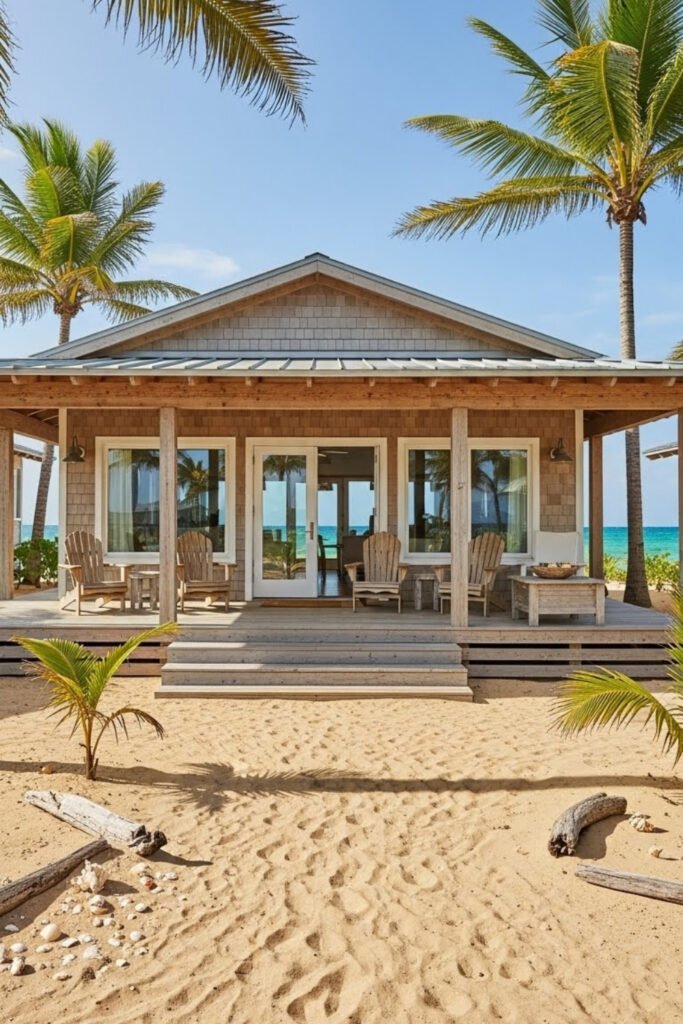
Beach Bungalow
This idea keeps everything low, simple, and relaxed. Single-story layouts make beach living easy, especially for frequent in-and-out movement.
Wide porches and casual interiors support a laid-back lifestyle. It’s perfect if you want a beach house that feels approachable and functional rather than oversized or formal.
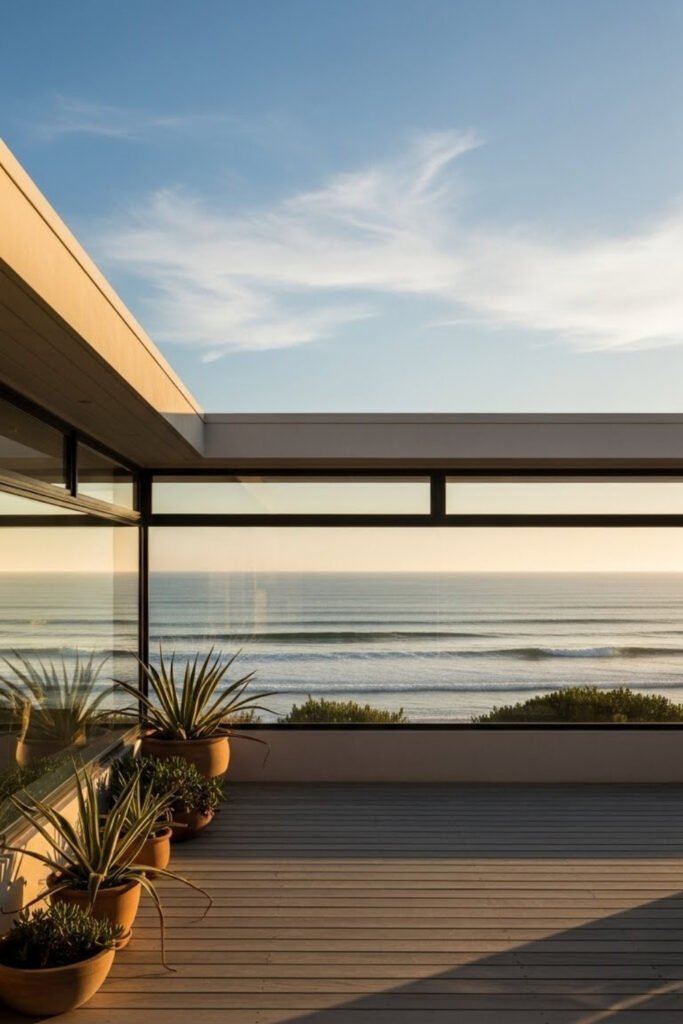
Horizon Views
Instead of focusing on close details, this design frames distant ocean horizons. Long horizontal windows and low-profile furniture keep sightlines clear.
The house feels expansive even on smaller lots. This works best in open coastal areas where uninterrupted views stretch far beyond the shoreline.
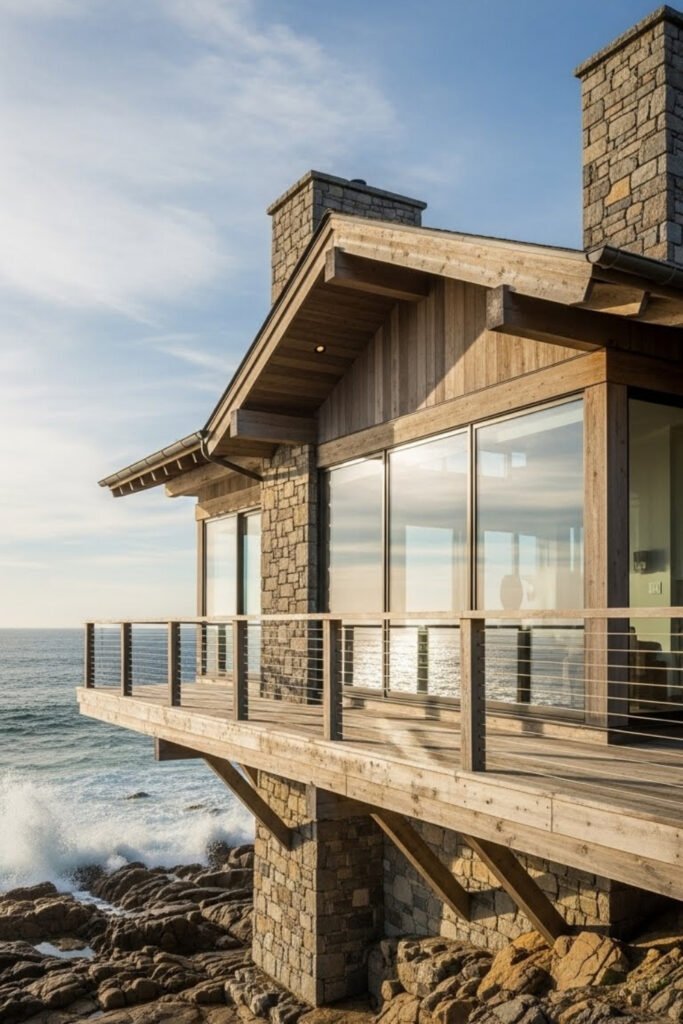
Coastal Stone
Stone adds weight and durability to a beach house without sacrificing style. Used selectively, it balances light materials like wood and glass.
The texture also helps the home age gracefully in salty air. This idea suits windy or rocky coastal locations where strength matters as much as appearance.
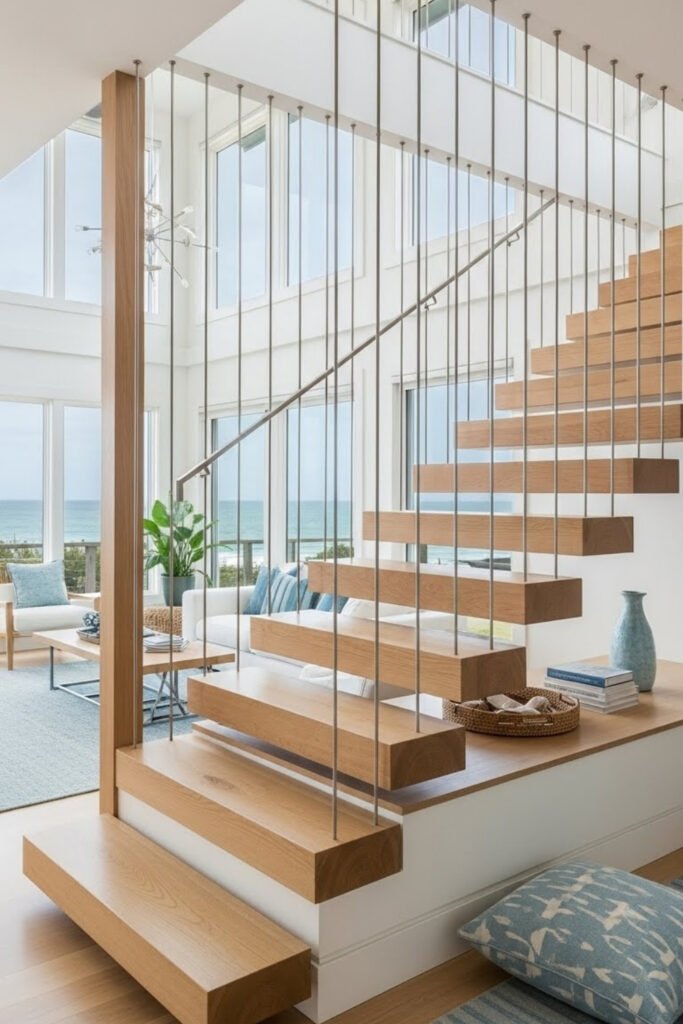
Floating Stairs
Floating staircases keep interiors visually open and allow light to pass through multiple levels.
In a beach house, this helps maintain an airy feel even in multi-story layouts. Wood treads soften the modern look and tie the design back to natural materials.
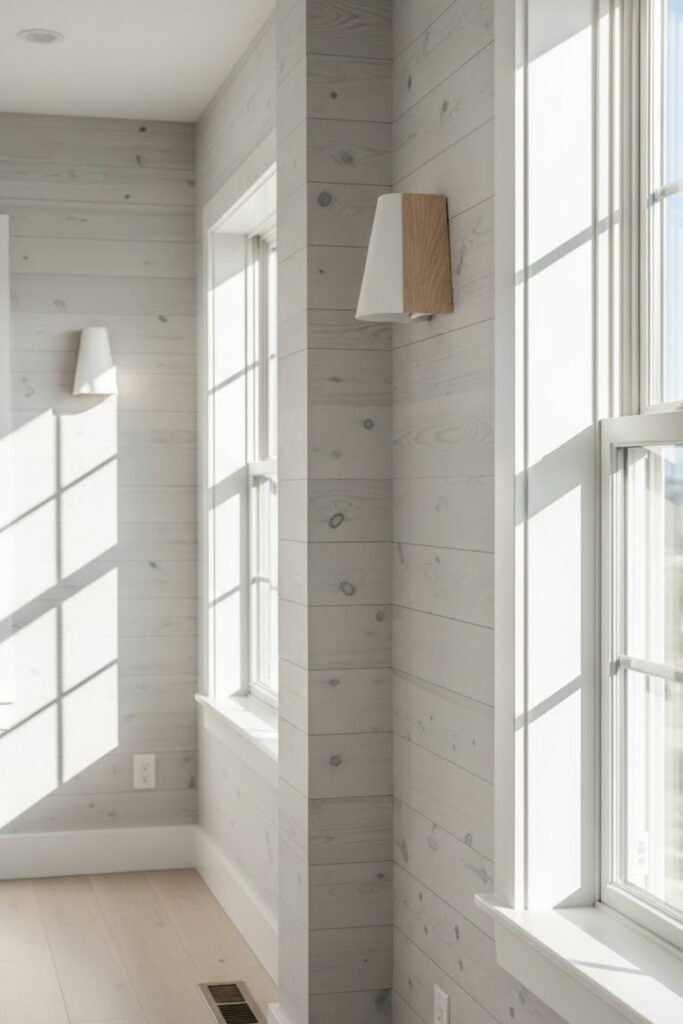
Lightwashed Walls
Softly washed wall finishes reflect daylight without harsh glare. Limewash or diluted paint adds a subtle texture that suits coastal light.
This approach keeps interiors bright while hiding minor wear from sand and salt. It works especially well in rooms that receive strong sun throughout the day.
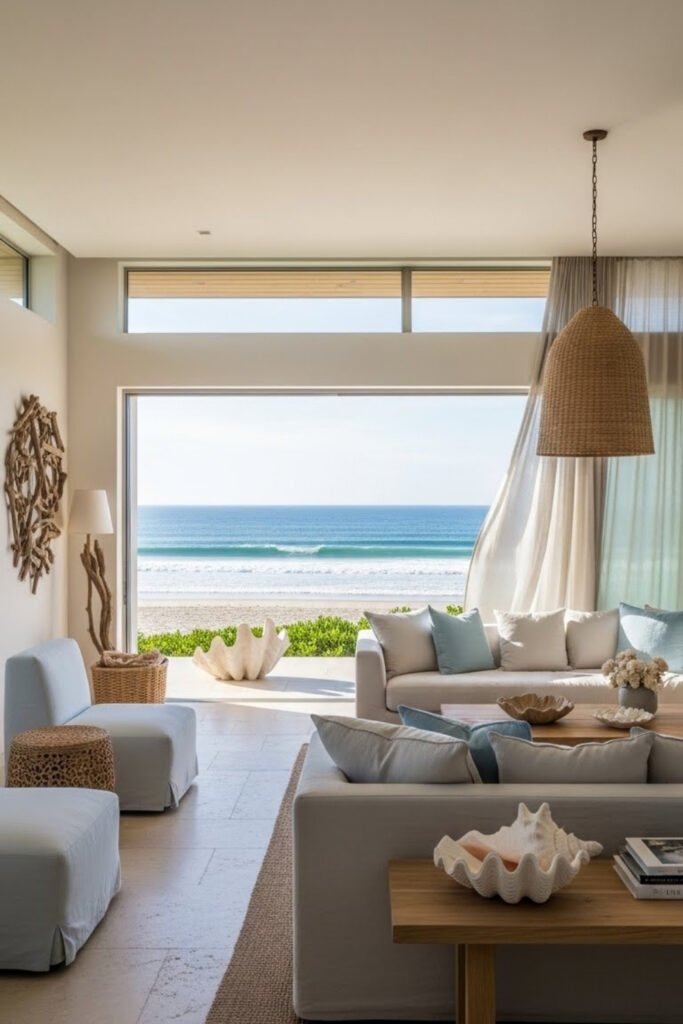
Barefoot Luxury
Luxury doesn’t need to feel formal at the beach. This idea blends high-end materials with relaxed layouts and comfortable furnishings.
Think natural stone, soft linens, and open spaces that invite movement. It’s ideal if you want refinement without losing the ease of true beach living.
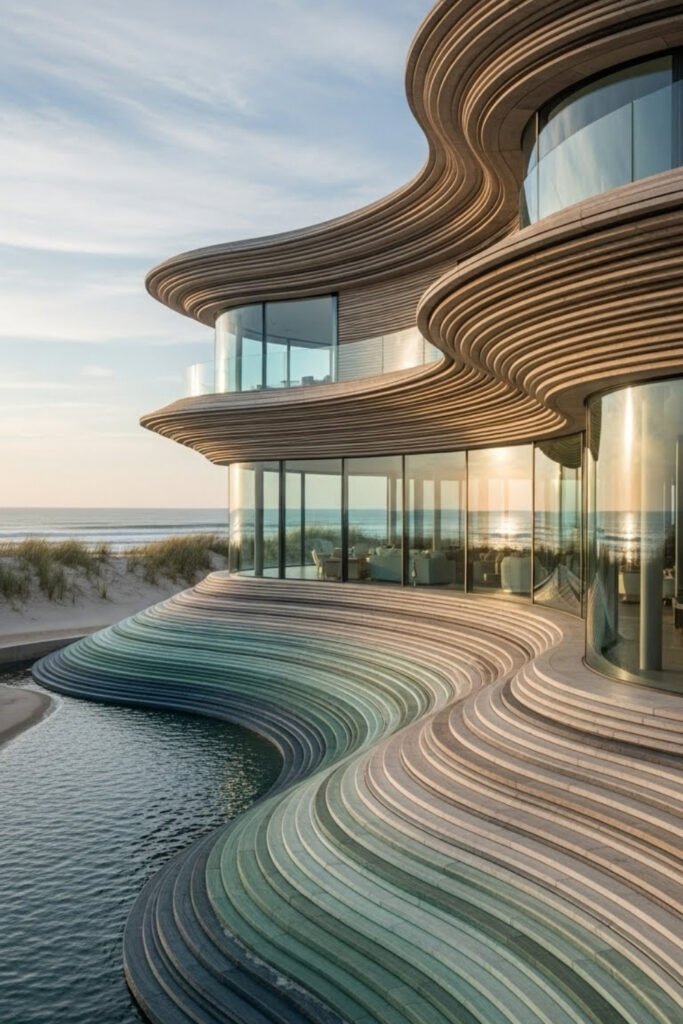
Tide-Inspired
Design elements in this home subtly echo tidal movement. Layered textures, gentle curves, and shifting tones reflect the rhythm of the ocean. Nothing feels rigid or static.
This works well for homeowners who want a thematic connection to the sea without obvious décor references.
Secluded Shore
This beach house focuses on privacy rather than exposure. Strategic placement, natural barriers, and inward-facing outdoor spaces create a quiet retreat.
It’s perfect for less-developed coastlines or owners who value solitude as much as ocean access.

Hi, my name is Ali Mehmood! I’m a passionate writer and DIY enthusiast who loves turning creative ideas into practical, hands-on projects.
I created this website to share inspiring, budget-friendly ideas that you can do yourself – whether it’s organizing your home, crafting something unique, or creating fun projects for kids and pets.
I believe DIY isn’t just a hobby – it’s a smart way to save money, reduce waste, and enjoy the satisfaction of making things with your own hands.
I’m excited to have you as part of this growing community, and I’ll continue bringing you helpful, realistic, and fun DIY ideas you can actually use.