This post may contain affiliate links: read full affiliate disclosure.
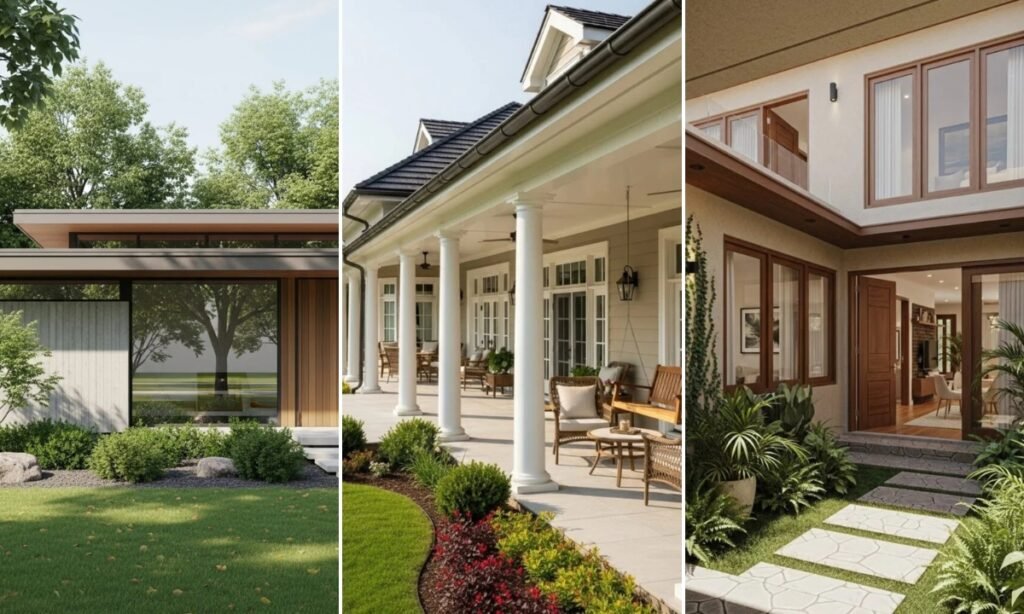
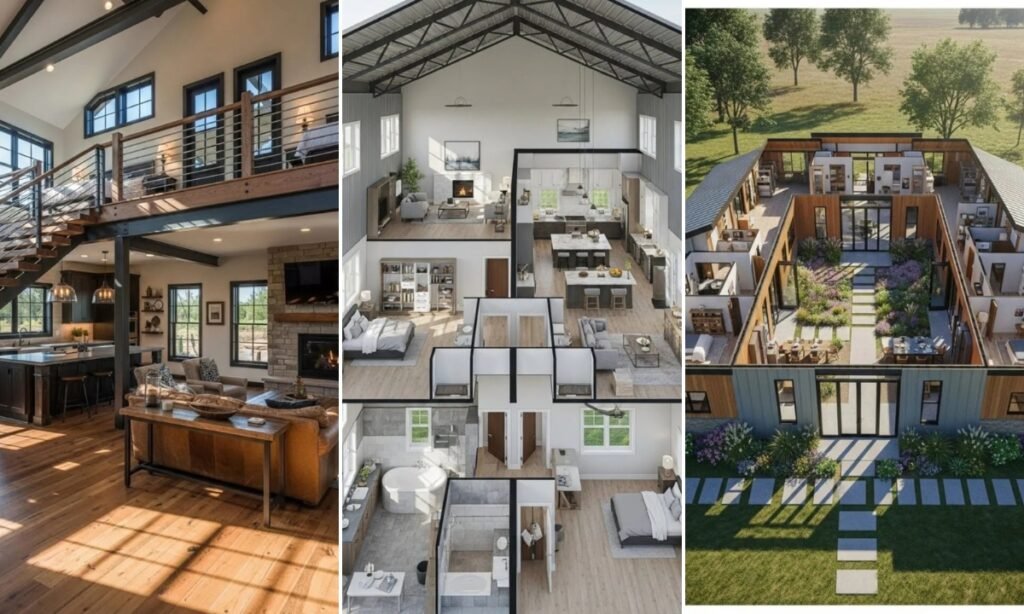
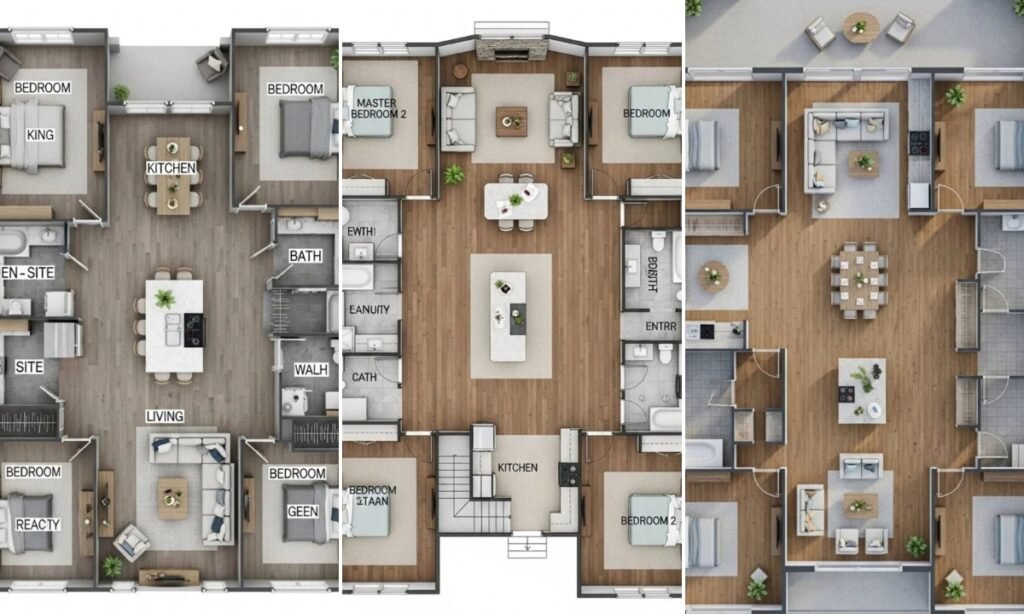
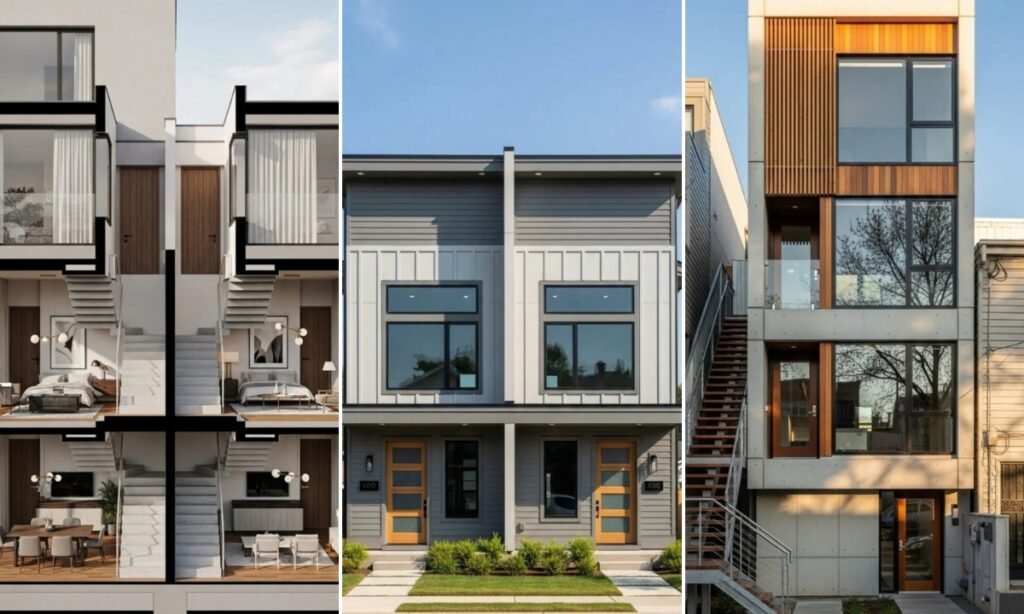
Living near the water changes how a home feels, and a lake house should be designed to match that slower, more peaceful rhythm.
When I think about lake house design, I don’t just focus on style, I think about views, comfort, and how each space connects to the lake.
In this article, I’m sharing lake house ideas that balance function and atmosphere, helping you create a home that truly feels made for lakeside living.
Floating Decks
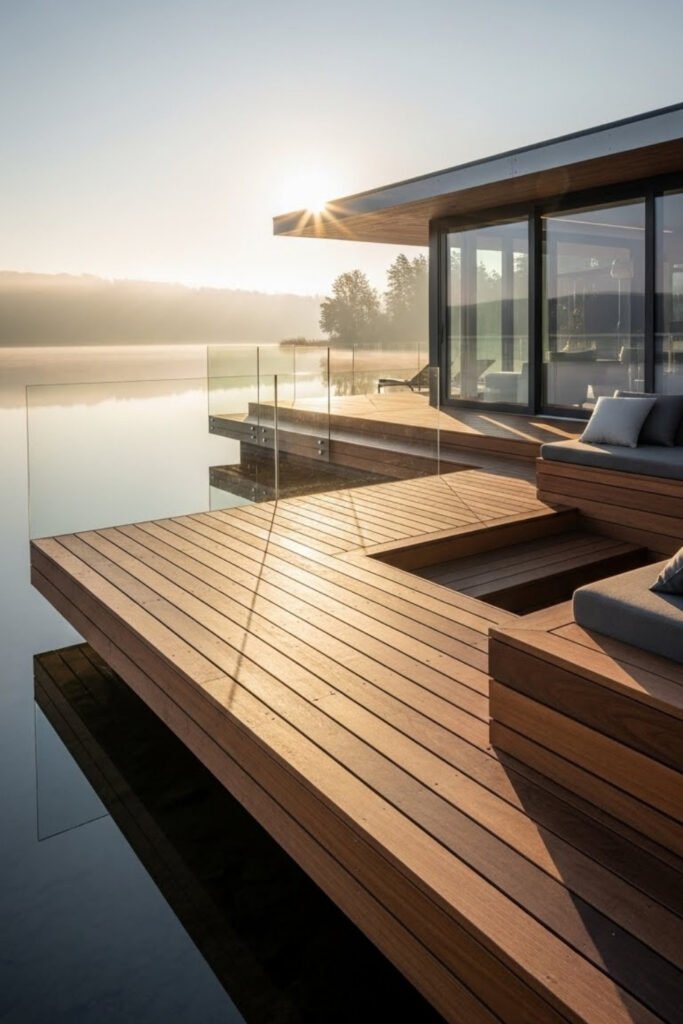
Floating decks extend slightly over the lake, creating the feeling of sitting directly on the water. This setup works especially well for calm lakes where reflections matter.
Use weather-resistant wood, minimal railings, and built-in seating to keep the view open. It becomes the most-used spot for morning coffee, sunset watching, and quiet evenings by the lake.
Boat Entry
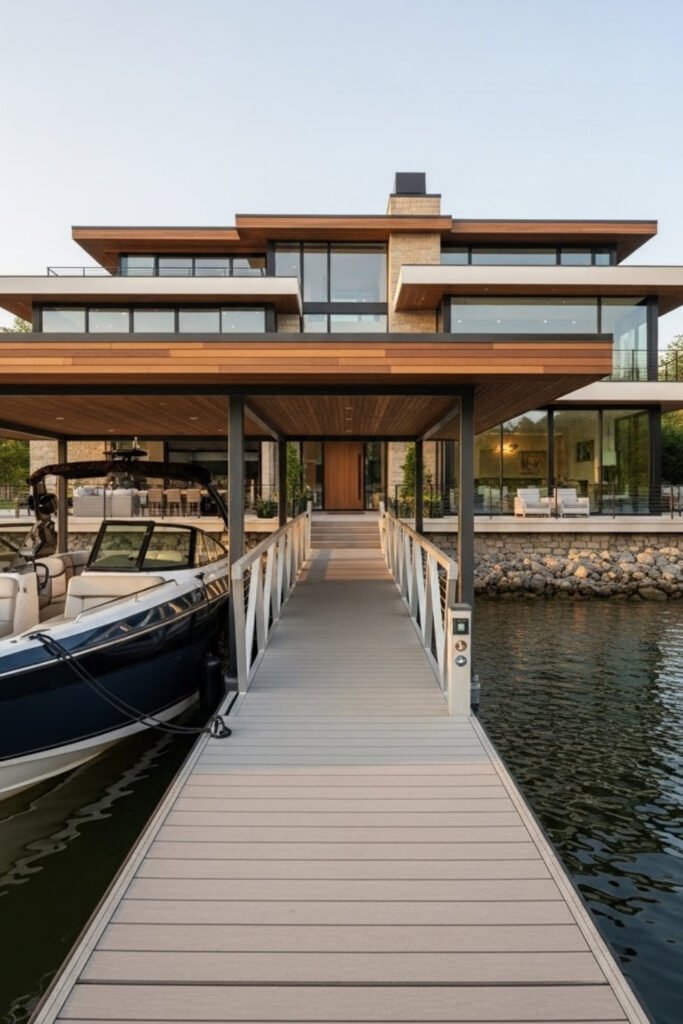
A boat-entry lake house treats the dock as the main arrival point instead of a driveway. The design focuses on seamless movement from boat to house, often with covered walkways and storage near the water.
This idea works best for remote or island-style lake homes and instantly gives the property a resort-like, vacation-first lifestyle.
Glass Corners
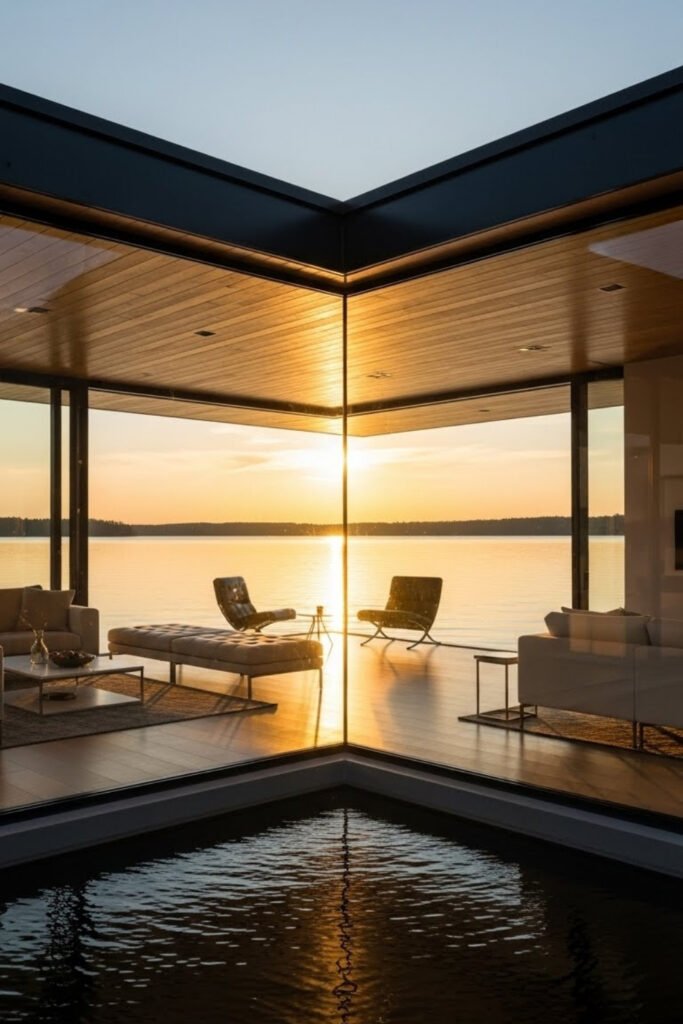
Glass corner walls remove visual boundaries and allow uninterrupted lake views from inside the house. Unlike standard windows, corner glazing makes rooms feel larger and brighter without adding square footage.
This works beautifully in living rooms or dining areas where the lake becomes part of the interior design, especially during sunrise and sunset hours.
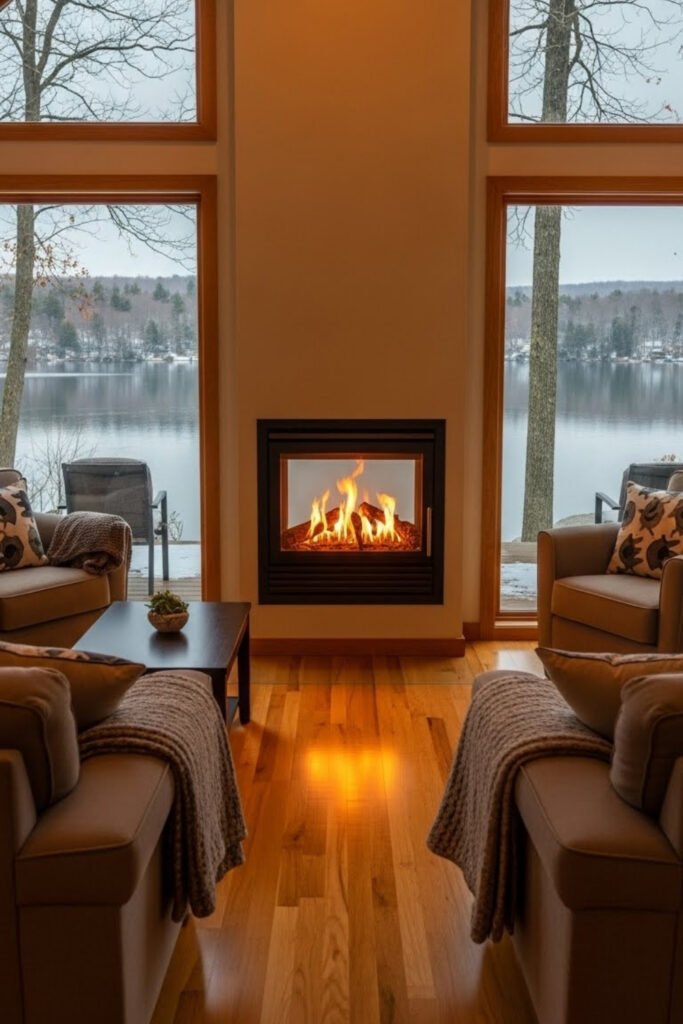
Fireplace Views
Instead of placing the fireplace on an interior wall, position it so seating faces both the fire and the lake. This layout balances warmth with scenery and makes the living area usable year-round.
It’s ideal for colder regions where lake views are still enjoyed in winter, creating a cozy atmosphere without turning away from nature.
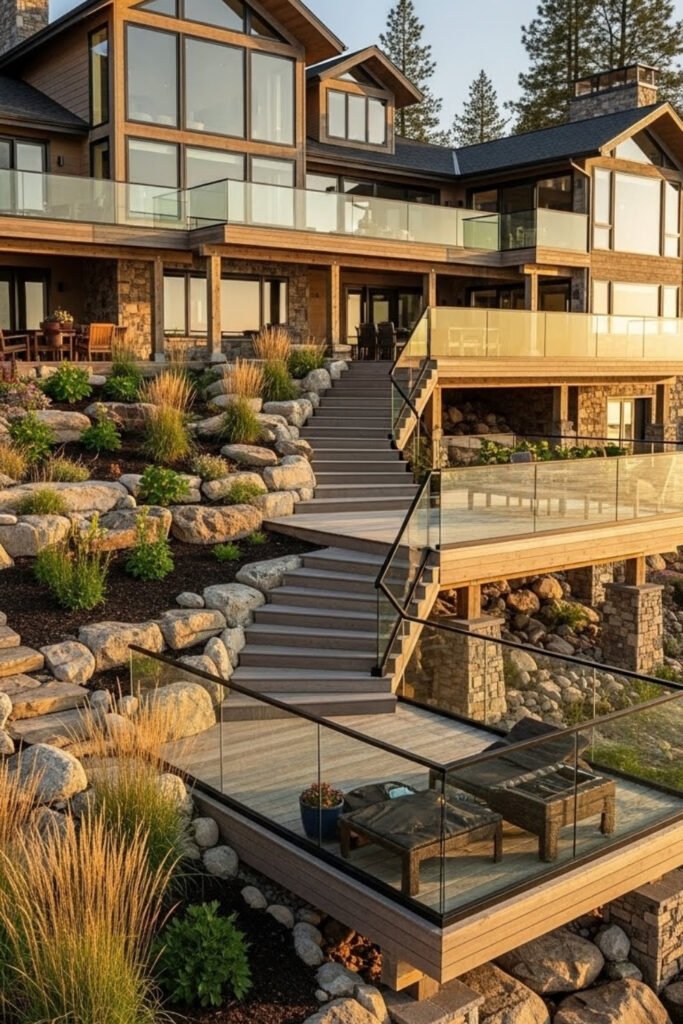
Split Levels
Split-level lake houses follow the natural slope of the land instead of fighting it. Each level opens toward the water at a slightly different height, which creates layered views from almost every room.
This layout also helps separate social spaces from private areas while keeping the lake visually connected throughout the home.
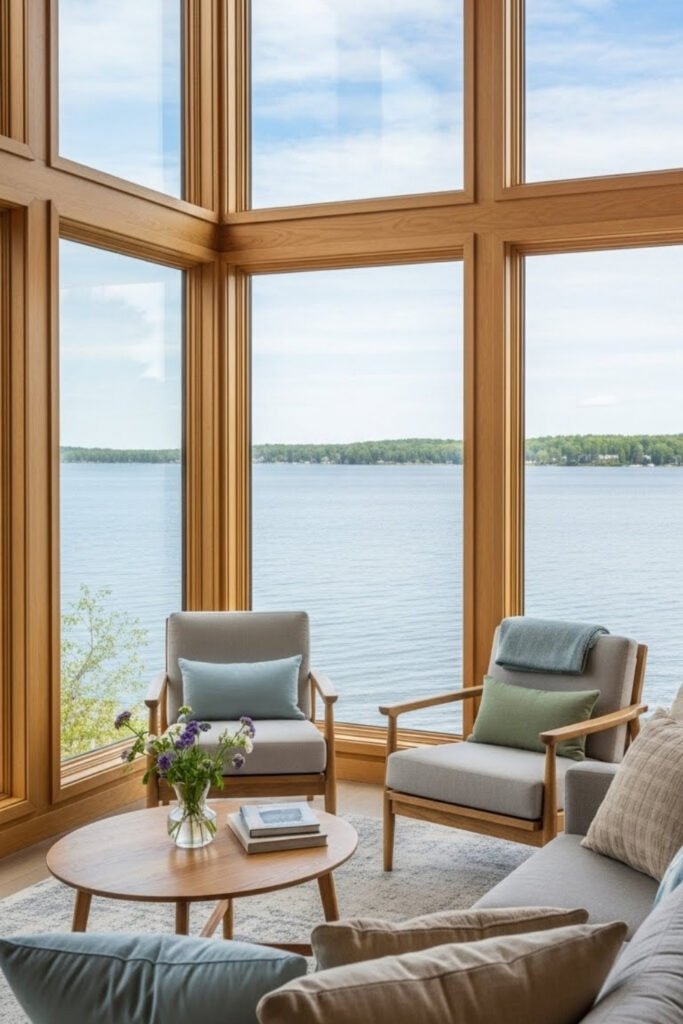
Sunroom Retreat
A lake-facing sunroom gives you a protected space to enjoy the view in every season. Floor-to-ceiling windows, comfortable seating, and soft lighting make it ideal for slow mornings and quiet afternoons.
It works especially well in colder climates where outdoor decks aren’t usable year-round but the scenery still deserves attention.
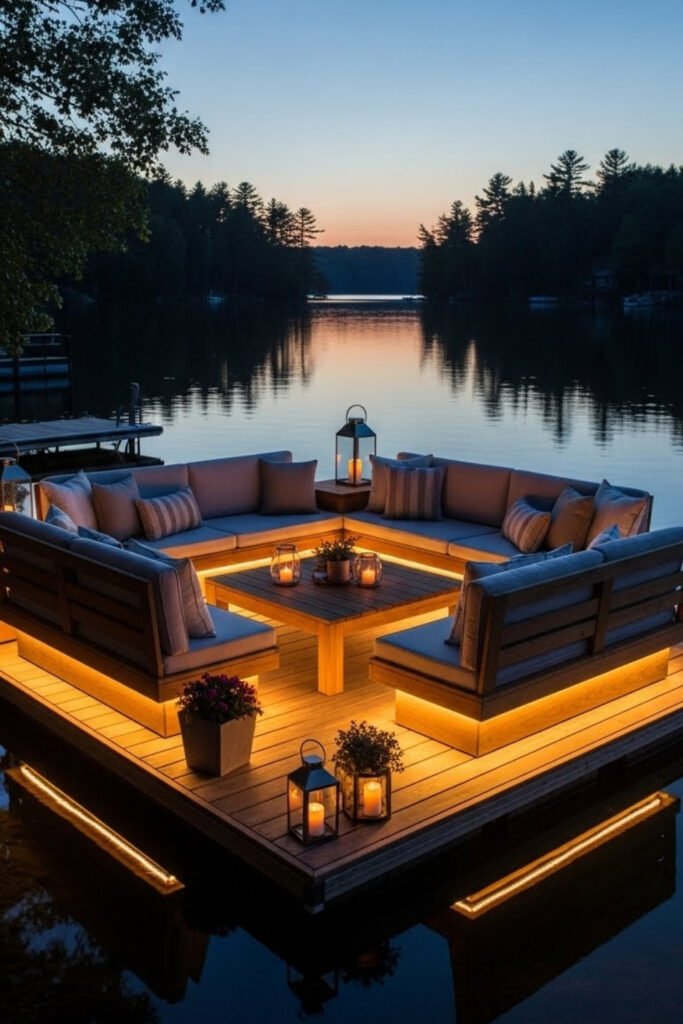
Dock Lounge
A dock lounge turns the dock into a true living space rather than just a parking spot for boats. Think built-in benches, outdoor rugs, low tables, and subtle lighting.
This idea is perfect for entertaining, evening hangouts, or simply sitting close to the water without needing to return inside the house.
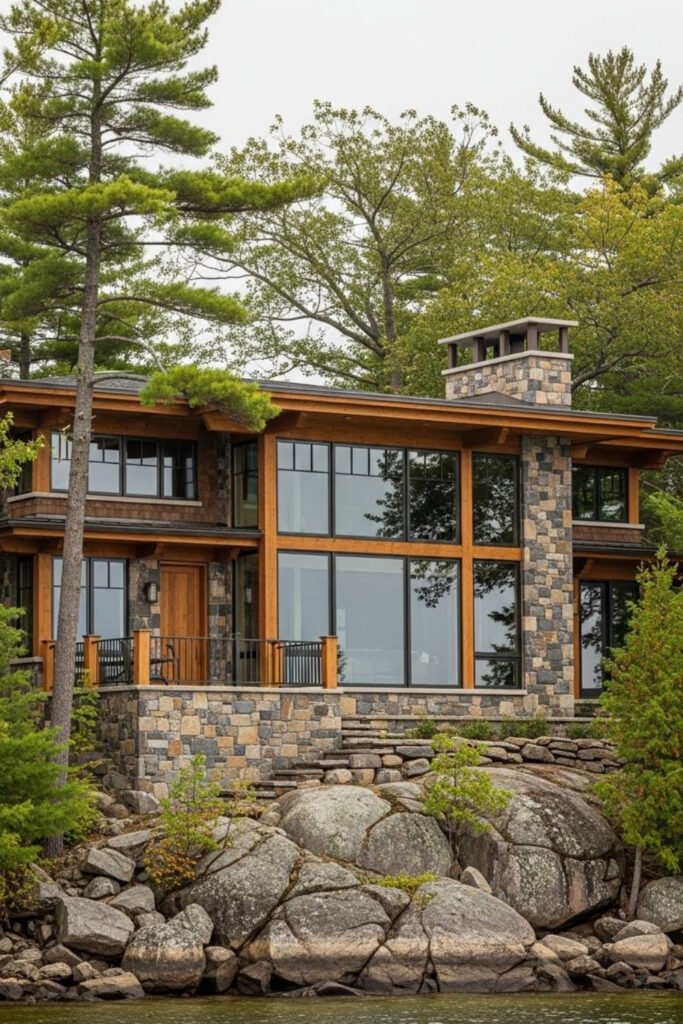
Stone Exterior
Stone exteriors help a lake house blend naturally into its surroundings, especially in wooded or rocky areas. Using local or natural-looking stone adds texture and timeless appeal while reducing the “new build” feel.
This approach works well for homeowners who want the house to feel grounded, durable, and visually connected to the landscape.
Lake Kitchen
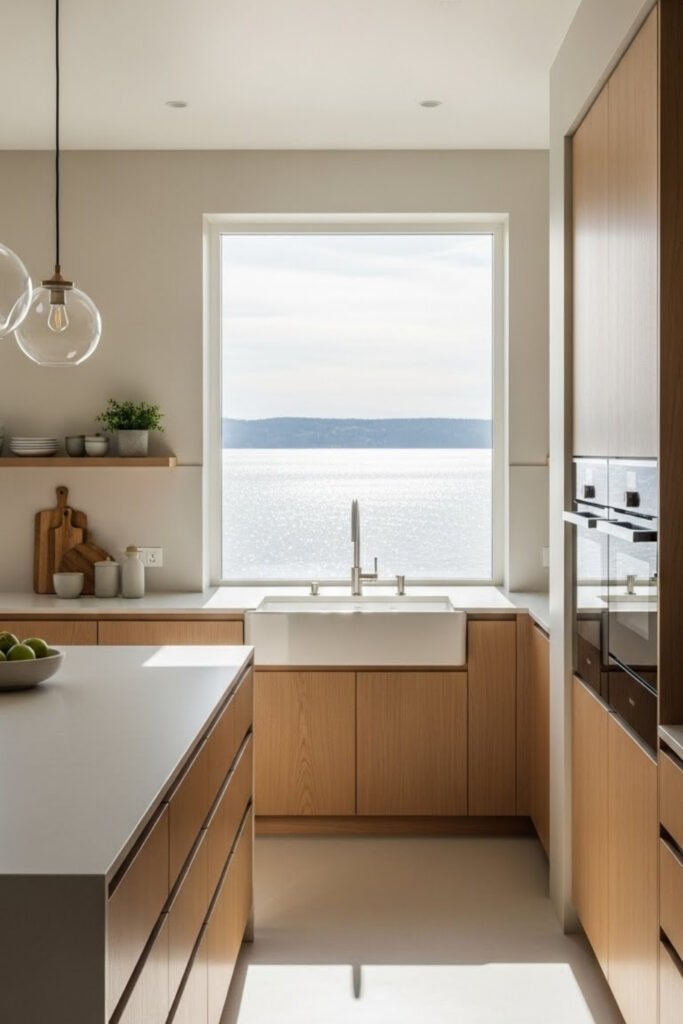
A lake kitchen places the main cooking and dining area directly toward the water instead of the backyard. This layout keeps the view visible during everyday moments, not just lounging time.
Large windows near the sink or island make cooking feel less like a chore and more like part of the lake experience, especially during mornings and sunset hours.
Outdoor Shower
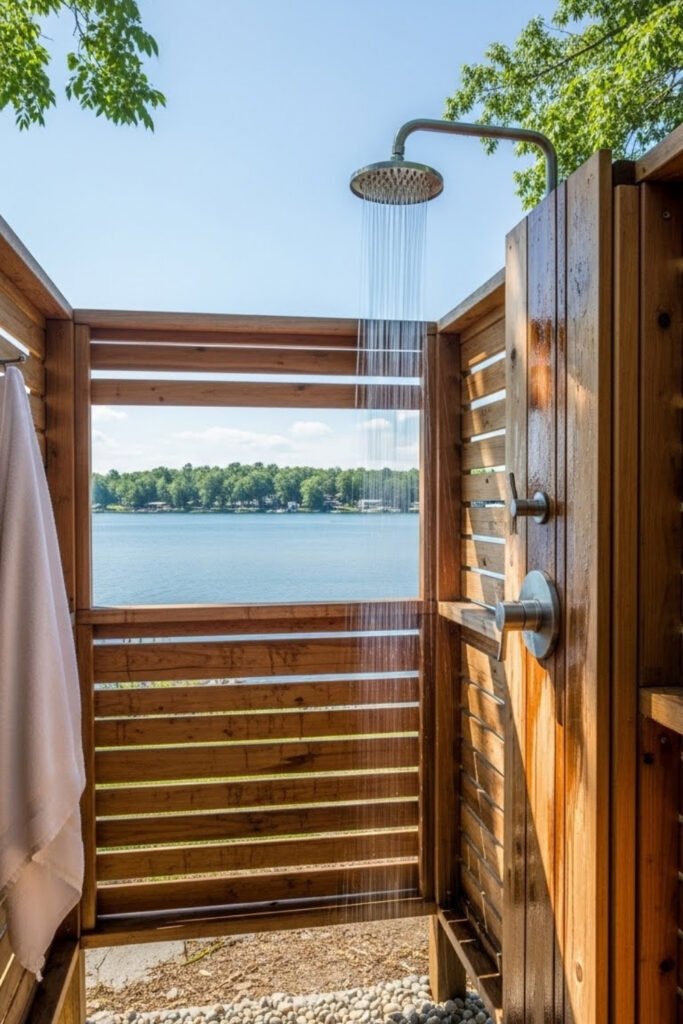
An outdoor shower adds a practical and relaxing element to lake living. It’s perfect for rinsing off after swimming while keeping the inside clean.
With simple wood panels, privacy screens, and warm water access, it becomes a refreshing ritual rather than just a utility feature, especially during summer months.
Wrap Porch
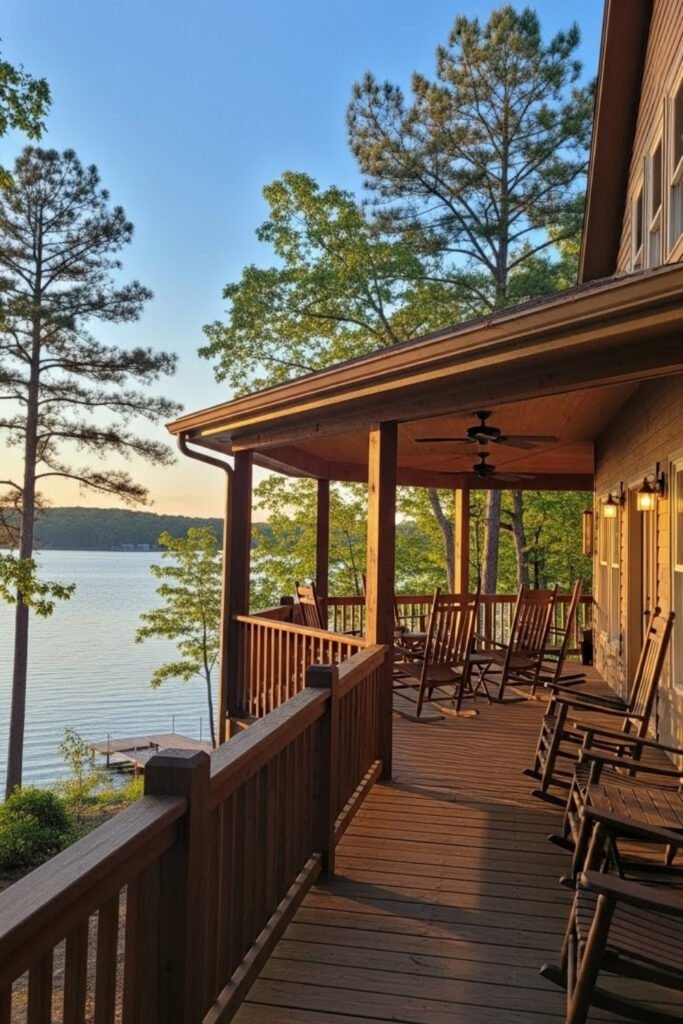
A wraparound porch gives you multiple ways to enjoy the lake throughout the day. As the sun moves, you can always find shade or warmth without leaving the porch.
This design also improves airflow and creates seamless indoor-outdoor living, making the house feel larger and more connected to the surroundings.
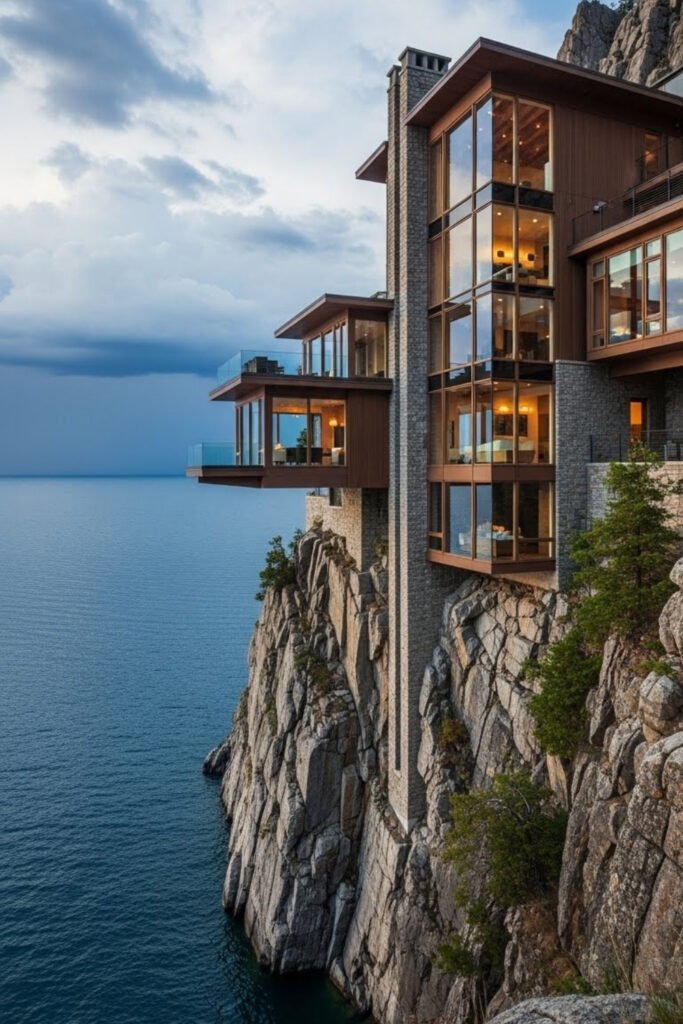
Cliff Build
Cliff-built lake houses are designed for steep or elevated shorelines where flat land is limited. The structure often rises vertically while still opening toward the water.
This approach maximizes views, reduces ground disturbance, and creates dramatic visuals that make the lake feel closer, even from higher elevations.
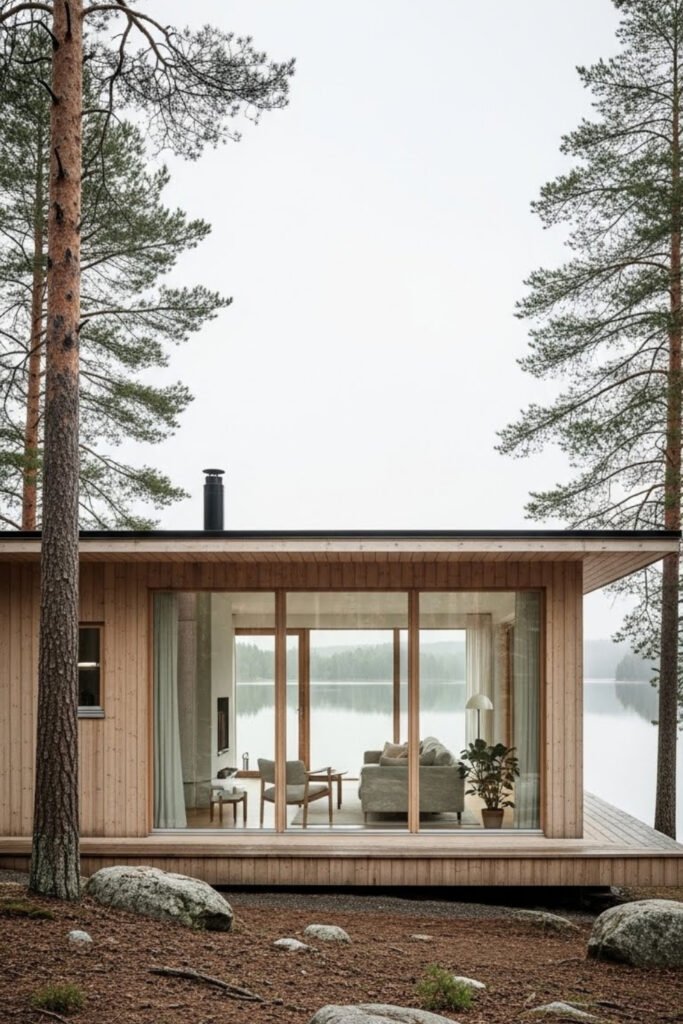
Minimal Cabin
A minimal cabin focuses on simplicity, light, and uncluttered spaces to let the lake take center stage. Clean lines, neutral materials, and open layouts reduce visual noise inside the home.
This idea works well for smaller lake houses where every design choice needs to support calm, easy living without distractions.
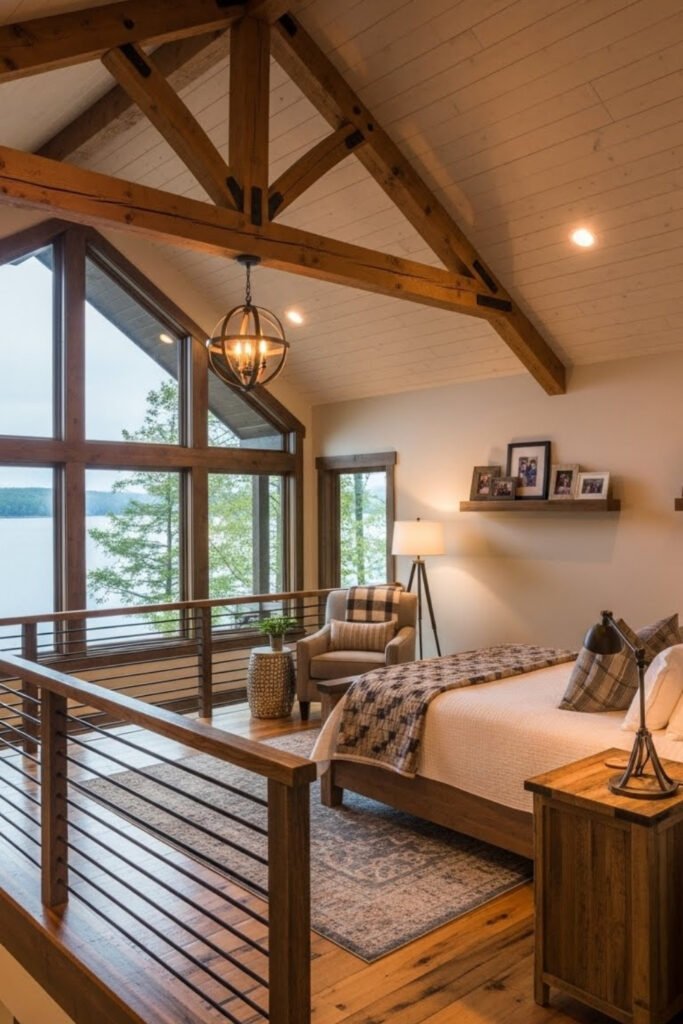
Family Loft
A family loft creates flexible sleeping and gathering space without closing off rooms. Open railings and shared layouts keep everyone visually connected while maintaining airflow and light.
This setup is ideal for vacation stays, allowing kids, guests, and family members to enjoy the lake house together without feeling cramped
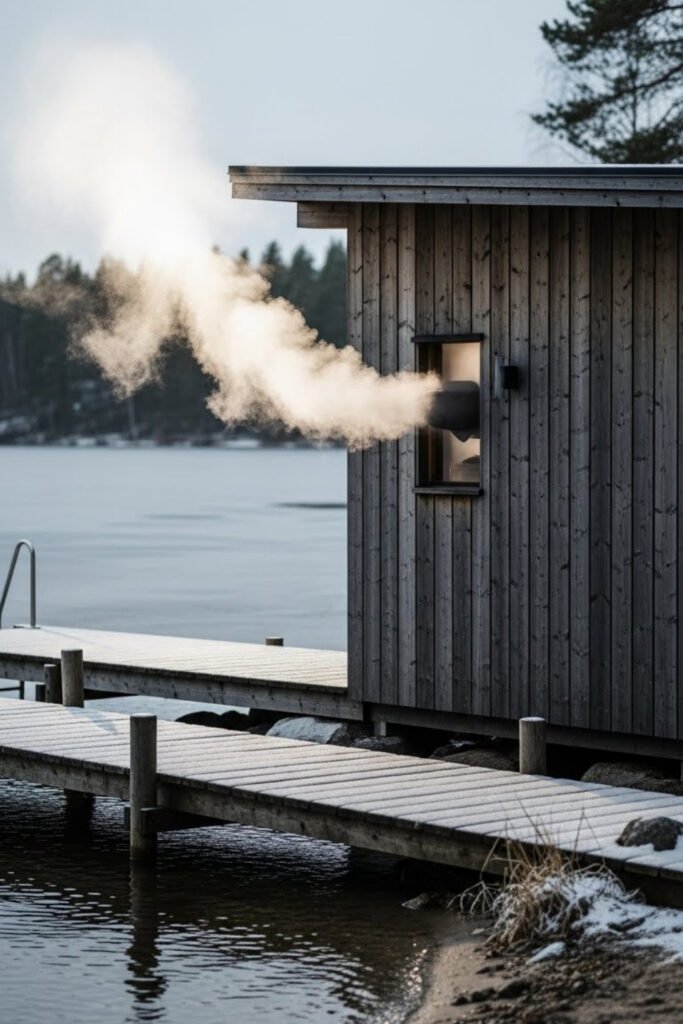
Sauna House
A detached sauna near the lake adds a wellness-focused feature that feels intentional, not decorative. After swimming or long days outdoors, the sauna becomes part of the lake routine.
Placing it close to the shoreline enhances the experience, especially in cooler climates where warm and cold contrasts are part of lake living.
Hidden Storage
Hidden storage keeps the interior visually calm while still supporting real-life lake use. Built-in cabinets, under-bench drawers, and wall-integrated shelving help store gear without clutter.
This approach is especially helpful for lake houses that host guests often, where functionality matters but the view should always remain the main focus.
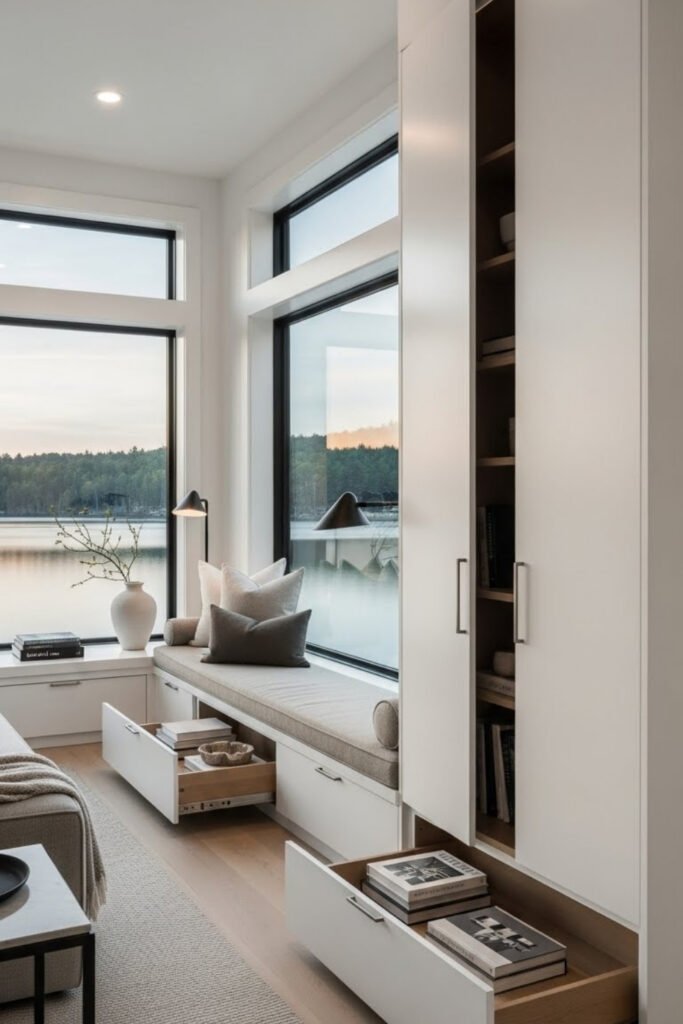
Sunken Living
A sunken living room lowers the seating area slightly so sightlines align more closely with the lake surface. This makes the water feel visually closer and more immersive.
It also creates a cozy, defined space without using walls, which works well in open-plan lake houses that still need natural separation.
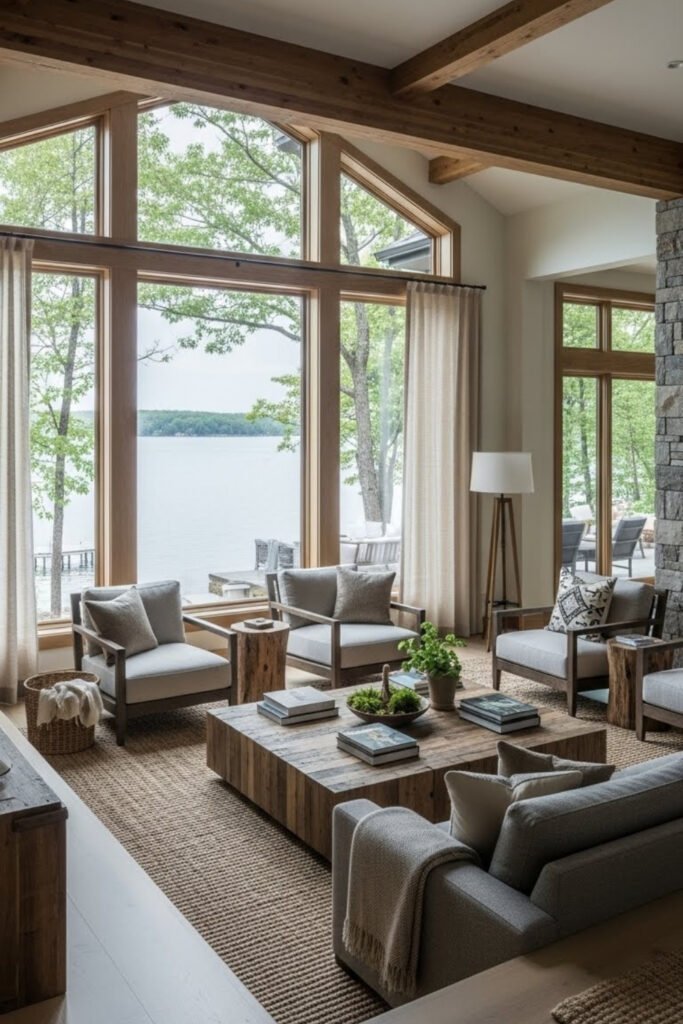
Lake Bedroom
A lake bedroom positions the bed to face the water directly, turning the view into the focal point. Large windows or sliding doors allow natural light to fill the space from sunrise onward.
This idea emphasizes slow mornings and peaceful nights, making the bedroom feel like a private retreat rather than just a place to sleep.
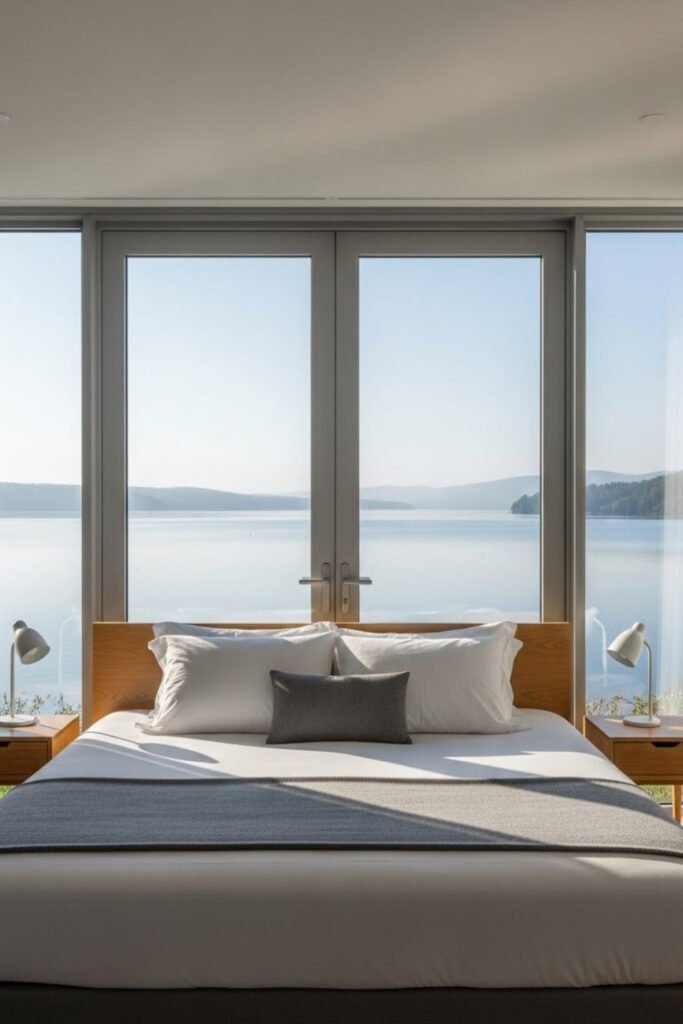
Rain Shelter
A rain shelter is a covered outdoor area designed for enjoying lake views during storms. With a solid roof, comfortable seating, and wind protection,
It lets you experience rain, sound, and movement without getting wet. This space adds value by extending outdoor use beyond perfect weather days.
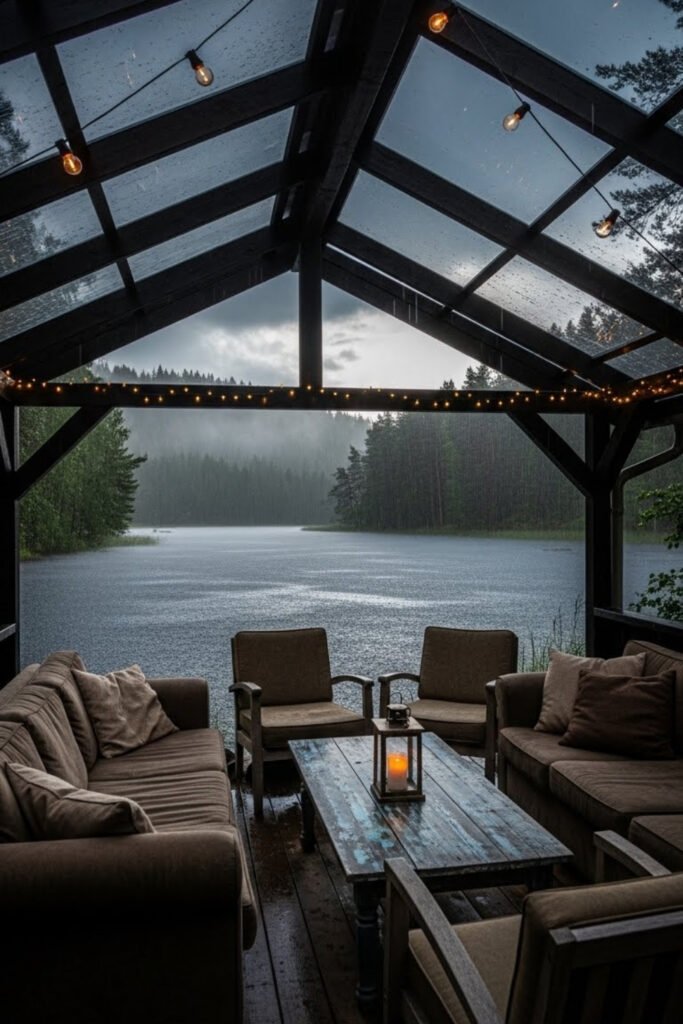
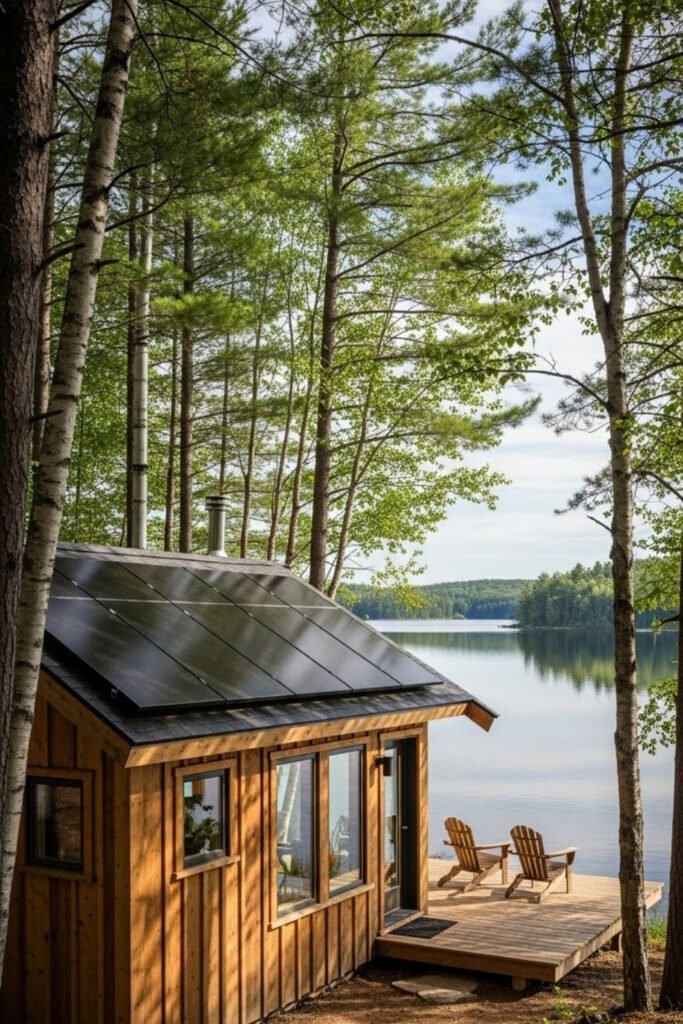
Eco Cabin
An eco cabin focuses on low-impact living without sacrificing comfort. Solar panels, natural ventilation, and sustainable materials reduce energy use while blending into the environment.
This idea suits off-grid or remote lake locations where preserving the surrounding nature is just as important as enjoying the water itself.
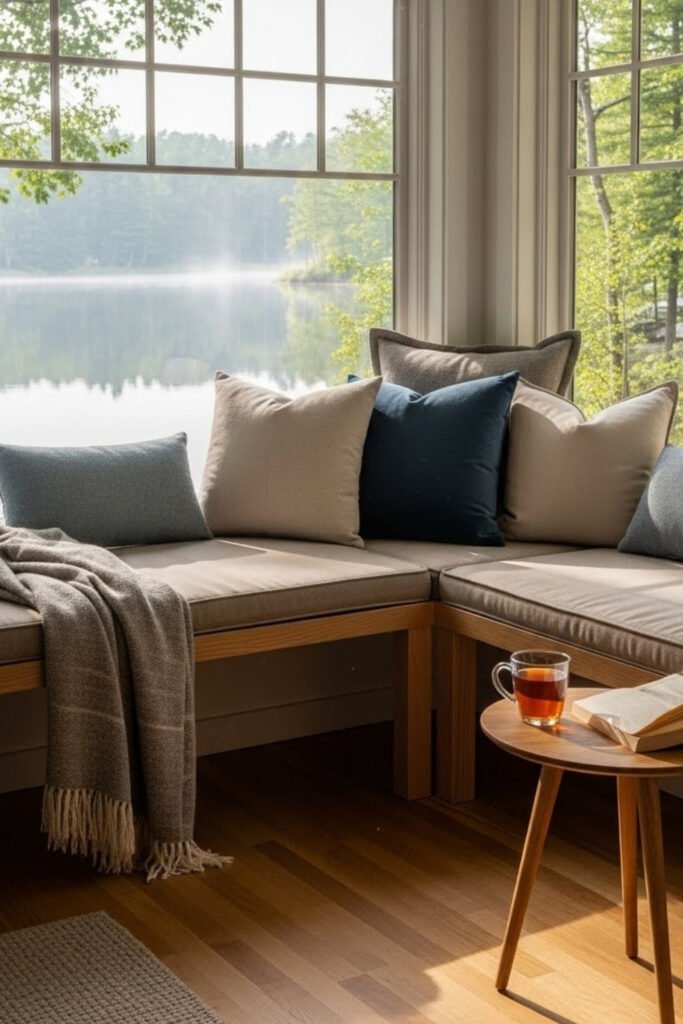
Window Bench
A window bench creates a dedicated spot to sit and enjoy the lake without needing a full seating area. Built directly beneath large windows, it works well in living rooms, bedrooms, or hallways.
Add cushions or hidden drawers underneath to make it both comfortable and practical while keeping the focus on the view.
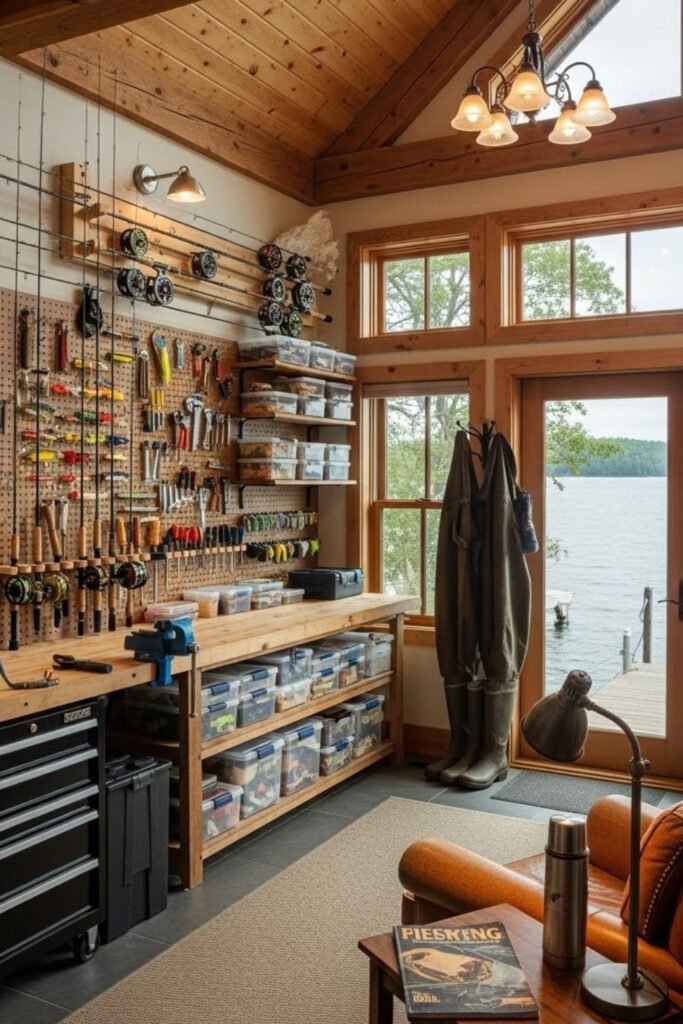
Fishing Room
A fishing room gives lake gear a proper place instead of spreading it throughout the house. This space can include storage for rods, tackle, and wet equipment, along with easy access to the outdoors.
It keeps the main living areas clean while supporting an active lake lifestyle.
Private Trail
A private trail connects the lake house to the shoreline in a natural, intentional way. Instead of a straight path, this idea uses gentle curves, steps, or boardwalks to follow the landscape.
It turns the walk to the water into part of the experience rather than just a functional route.

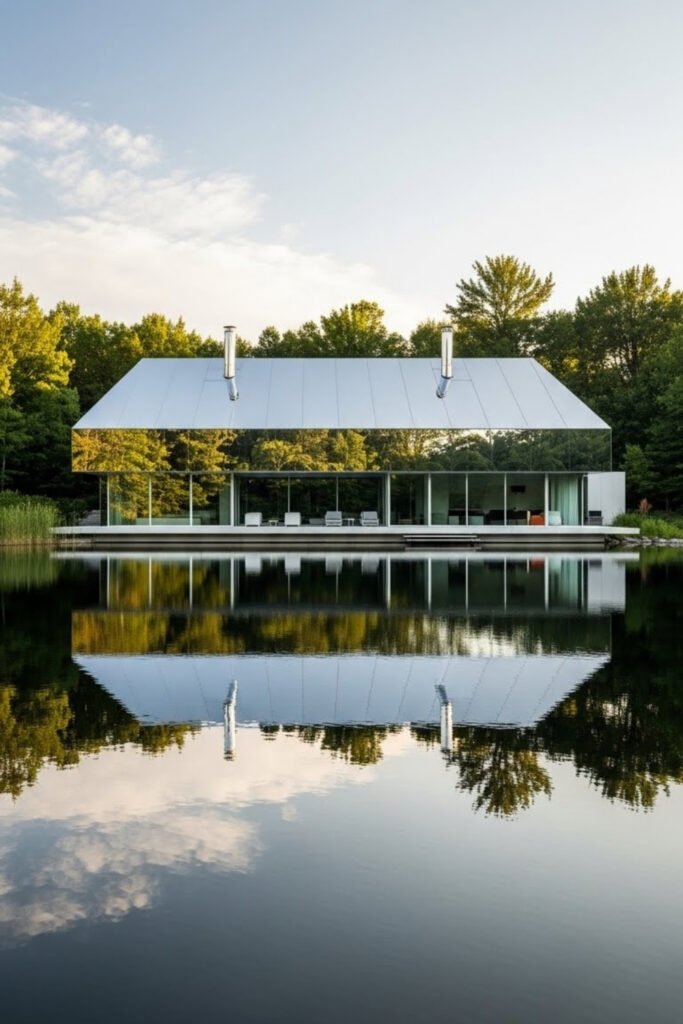
Mirror Roof
A mirror roof uses reflective materials to visually blend the house into its surroundings. From certain angles, the roof reflects trees, sky, or water, reducing visual impact.
This concept works best in quiet, scenic lake areas where preserving natural views and minimizing disruption is a priority.
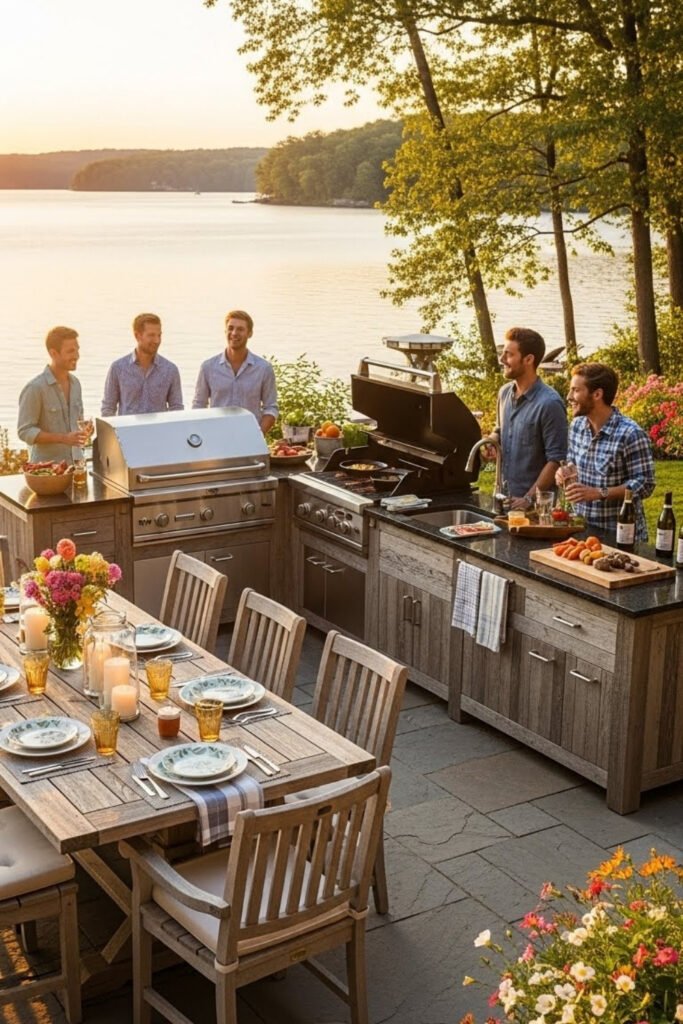
Outdoor Kitchen
An outdoor kitchen facing the lake turns cooking into a social, scenic activity. Placing the grill, prep space, and dining area toward the water keeps everyone engaged with the view.
This idea works best for summer-heavy lake use and helps reduce indoor heat while encouraging longer outdoor gatherings.
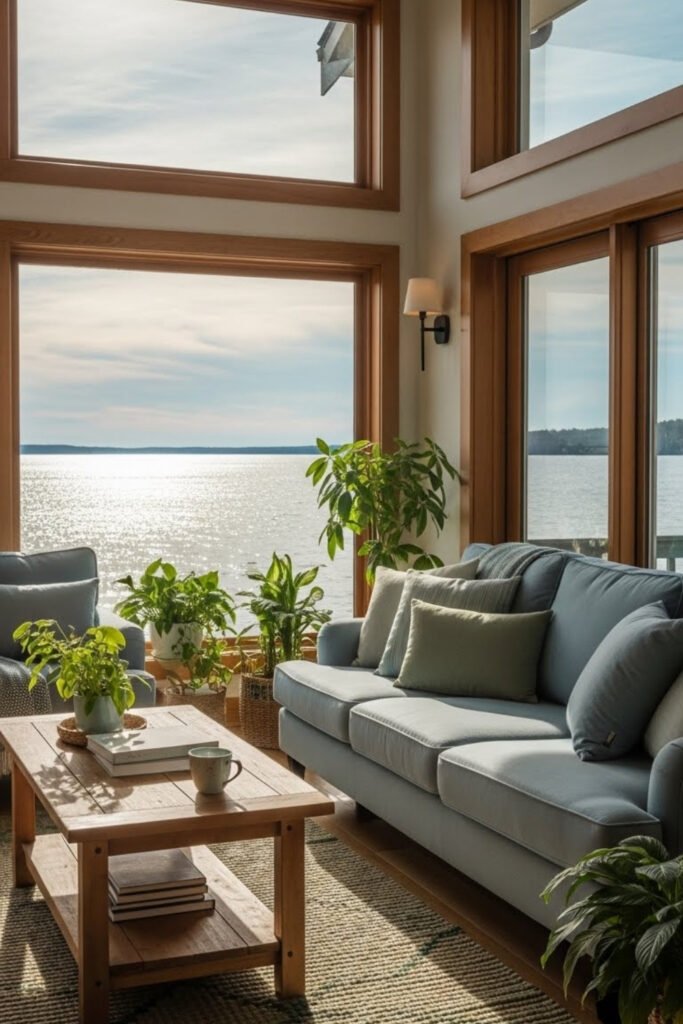
Calm Palette
A calm color palette inspired by water, fog, and stone helps the interior feel grounded and relaxing. Soft blues, muted greens, warm grays, and natural wood tones support the lake atmosphere without overpowering it.
This approach works well for readers who want a timeless look rather than bold trends.
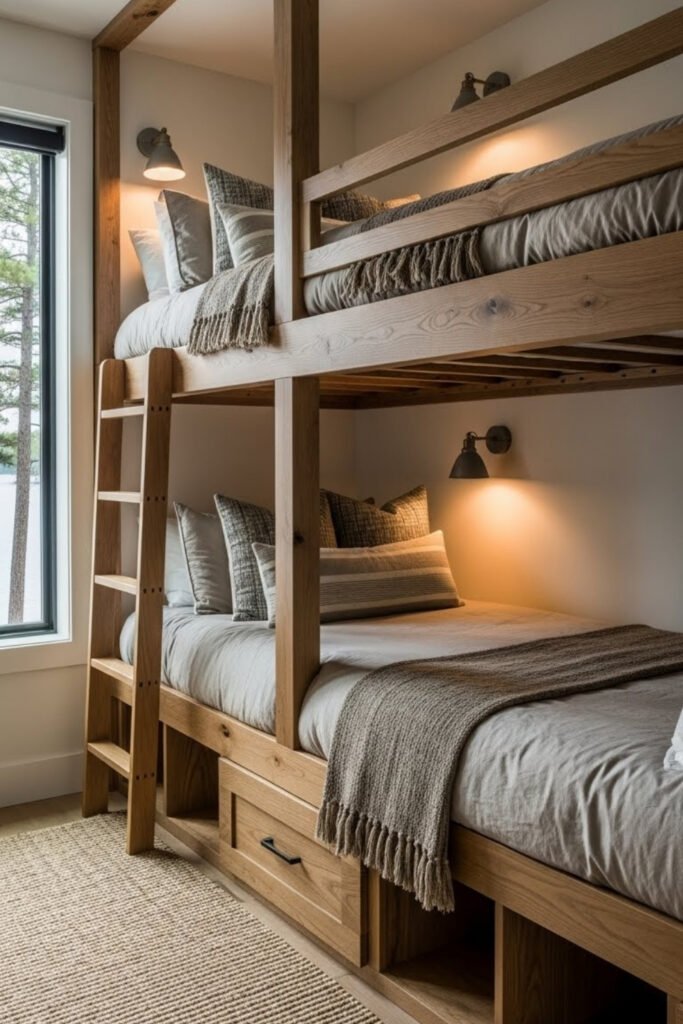
Guest Bunks
Guest bunks offer a space-efficient way to host more people without expanding the footprint. Built-in bunks with storage underneath work well for kids, friends, or extended family visits.
This idea supports casual lake living, where comfort matters more than formal guest rooms.
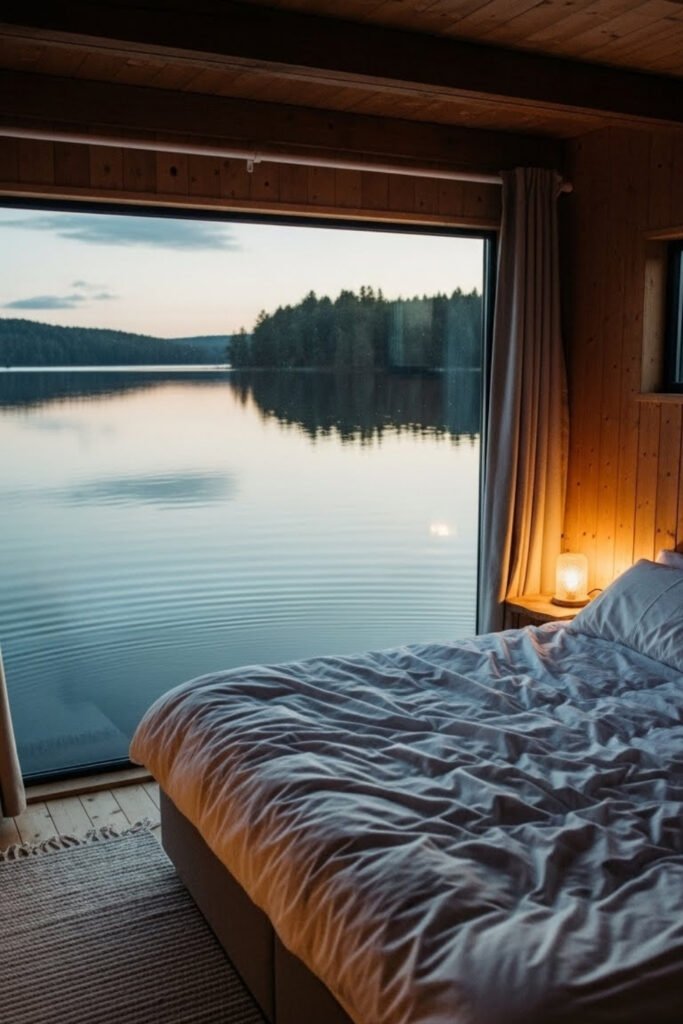
Dock Bedroom
A dock bedroom places sleeping space directly above or beside the water. Gentle wave sounds and close
Proximity to the lake creates a unique experience that feels separate from the main house. This idea works best for private properties where quiet and safety can be maintained.
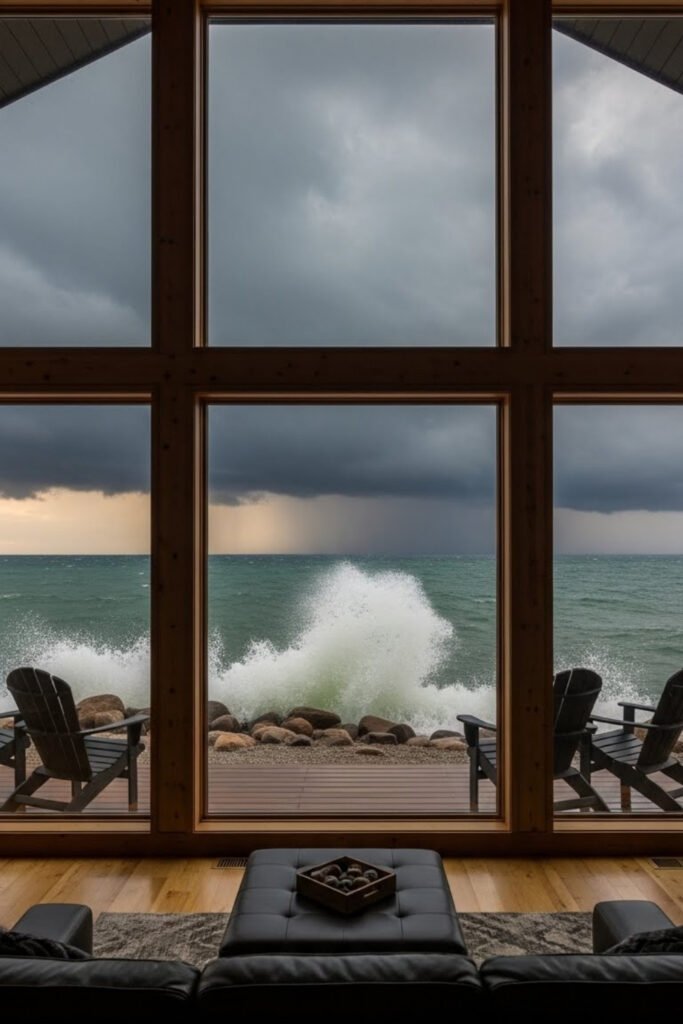
Storm Windows
Storm windows are designed to handle strong winds and changing weather while keeping views completely open. Large, reinforced glass panels let you watch dramatic lake conditions safely from indoors.
This idea adds both durability and visual impact, especially in regions where storms are part of the lake’s natural rhythm
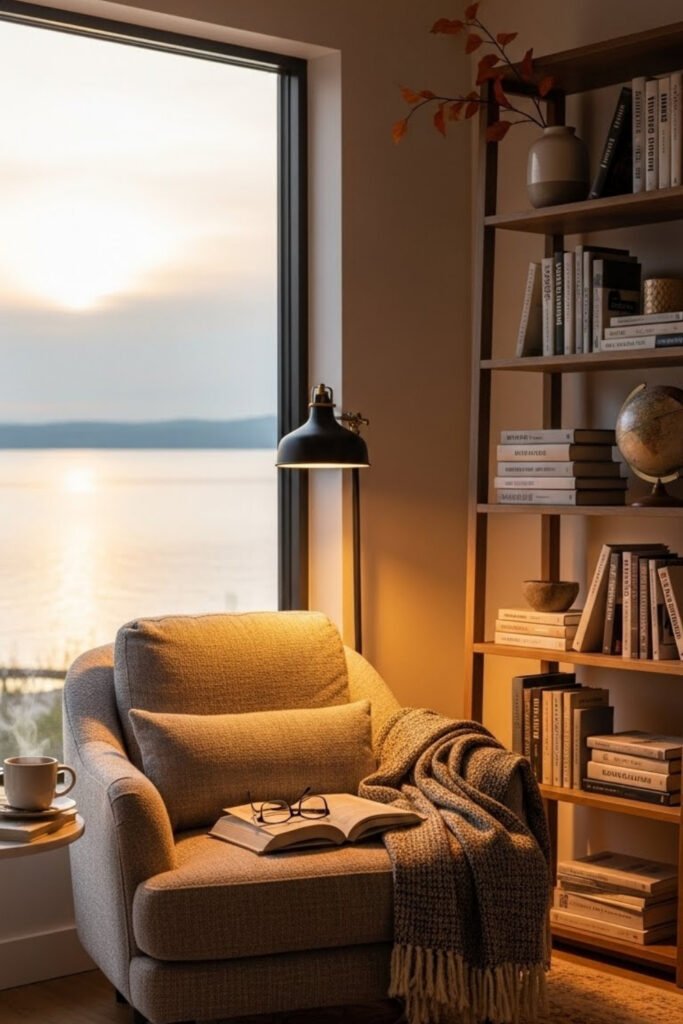
Reading Nook
A lake-facing reading nook creates a quiet escape within the home. Positioned near a window with comfortable seating and soft lighting, it encourages slow moments away from noise.
This space works well in corners or under stairs, turning unused areas into intentional, peaceful retreats.
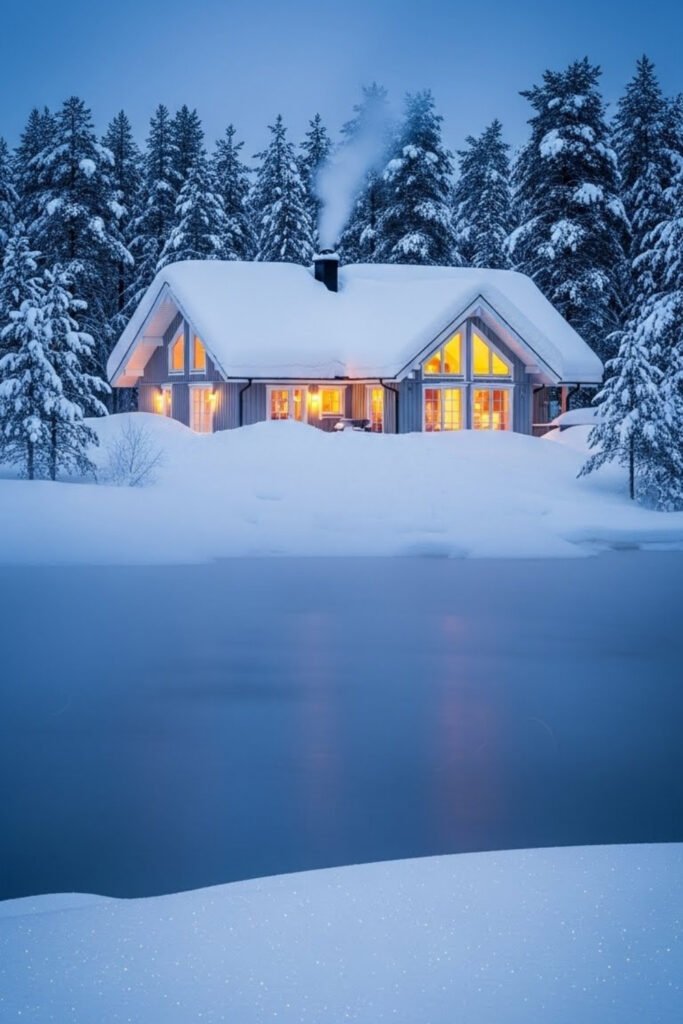
Winter Ready
A winter-ready lake house is built for year-round use, not just summer stays. Insulated walls, heated floors, and snow-resistant materials keep the home comfortable during colder months.
This idea appeals to readers who want their lake house to feel welcoming even when the lake freezes over.
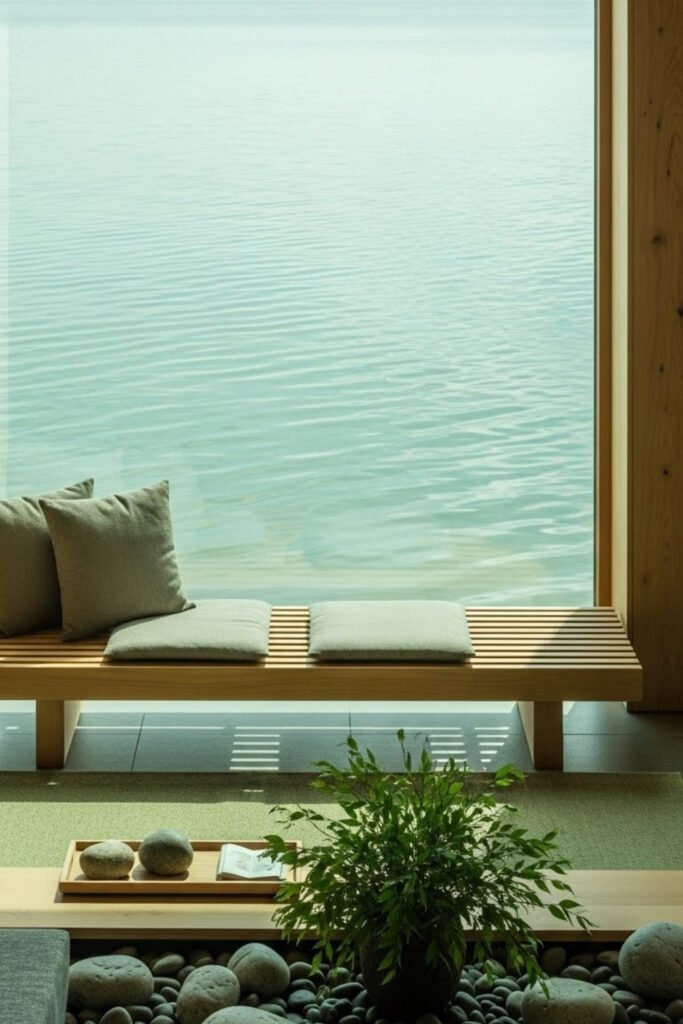
Silent Zone
A silent zone is a designated tech-free area where natural lake sounds become the focus. No screens, speakers, or notifications, just water, wind, and wildlife.
This concept supports mindful living and makes the lake house feel like a true escape from everyday noise and digital distractions.

Hi, my name is Ali Mehmood! I’m a passionate writer and DIY enthusiast who loves turning creative ideas into practical, hands-on projects.
I created this website to share inspiring, budget-friendly ideas that you can do yourself – whether it’s organizing your home, crafting something unique, or creating fun projects for kids and pets.
I believe DIY isn’t just a hobby – it’s a smart way to save money, reduce waste, and enjoy the satisfaction of making things with your own hands.
I’m excited to have you as part of this growing community, and I’ll continue bringing you helpful, realistic, and fun DIY ideas you can actually use.