This post may contain affiliate links: read full affiliate disclosure.
If you want to upgrade your walls without doing a full remodel, a DIY board and batten wall is one of the smartest projects you can start with.
It adds depth, structure, and character using simple materials and basic tools. I like it because you can go subtle or bold depending on the space.
From staircases and bedrooms to hallways and closets, board and batten works almost anywhere.
In this guide, you’ll find practical ideas that focus on layout, placement, and real use so you can choose a design that actually fits your home, not just looks good online.
Staircase Wrap
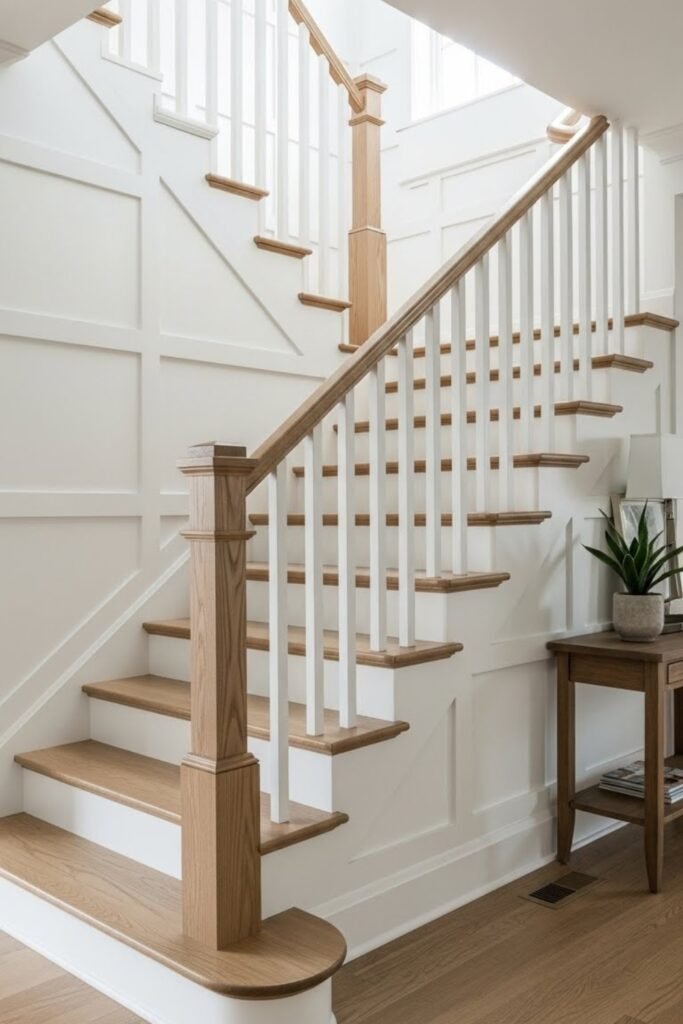
If your staircase wall feels empty, board and batten instantly adds structure by following the stair angle instead of forcing straight horizontal lines.
This approach makes the wall feel custom-built and intentional, especially in open staircases visible from living rooms, dining areas, or entry spaces.
It works best when you keep spacing consistent so the design flows smoothly upward without looking choppy or visually overwhelming.
Full Height
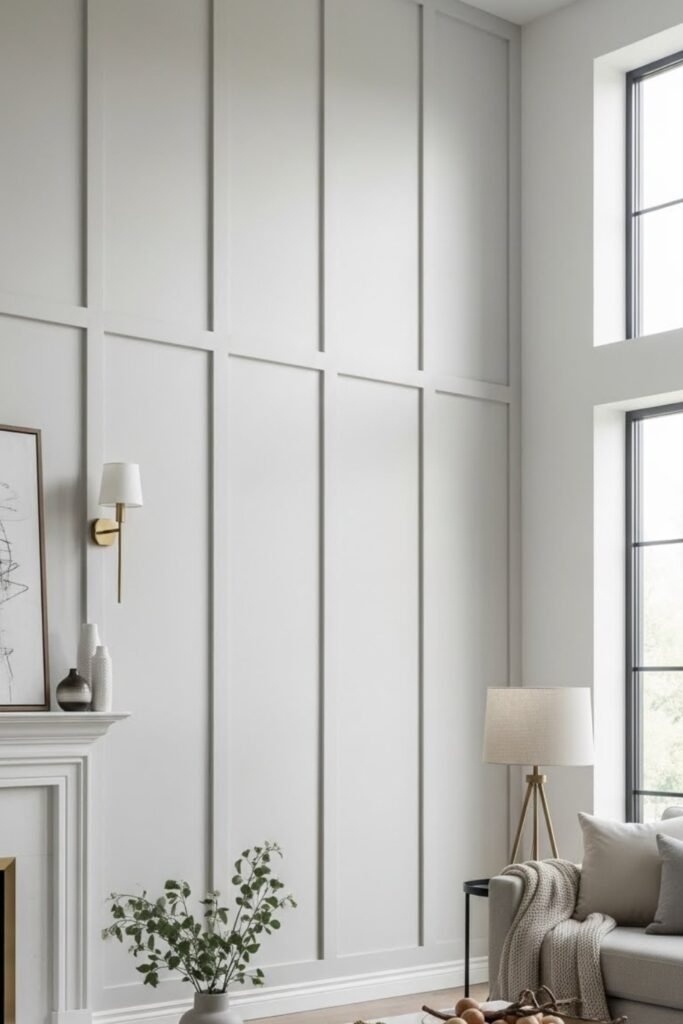
When a room feels short or boxed in, floor-to-ceiling battens visually stretch the wall upward without any structural ceiling changes.
Skipping the top rail keeps the design modern and lets the eye travel naturally from floor to ceiling without visual interruption.
This idea works especially well in bedrooms, offices, and compact living rooms that need height more than decorative detail.
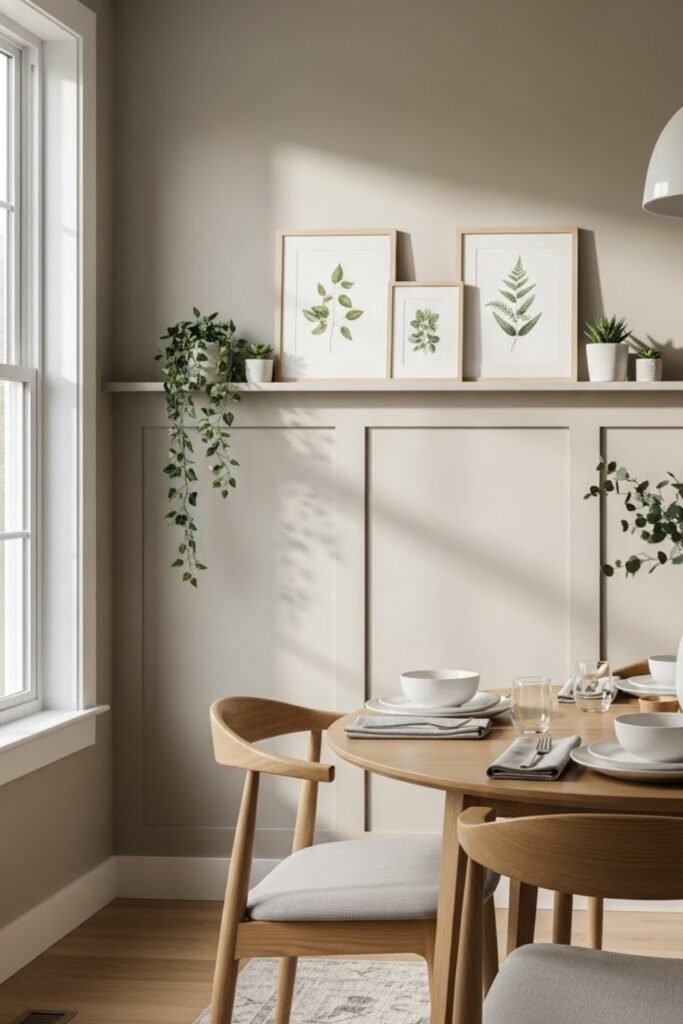
Floating Ledge
Instead of a thick top board, a slim floating ledge creates a lighter finish while still giving board and batten a clean stopping point.
The ledge adds function by holding frames, plants, or small décor without needing extra shelves or wall holes.
This works perfectly in dining rooms, hallways, or behind sofas where full-height battens might feel too heavy.
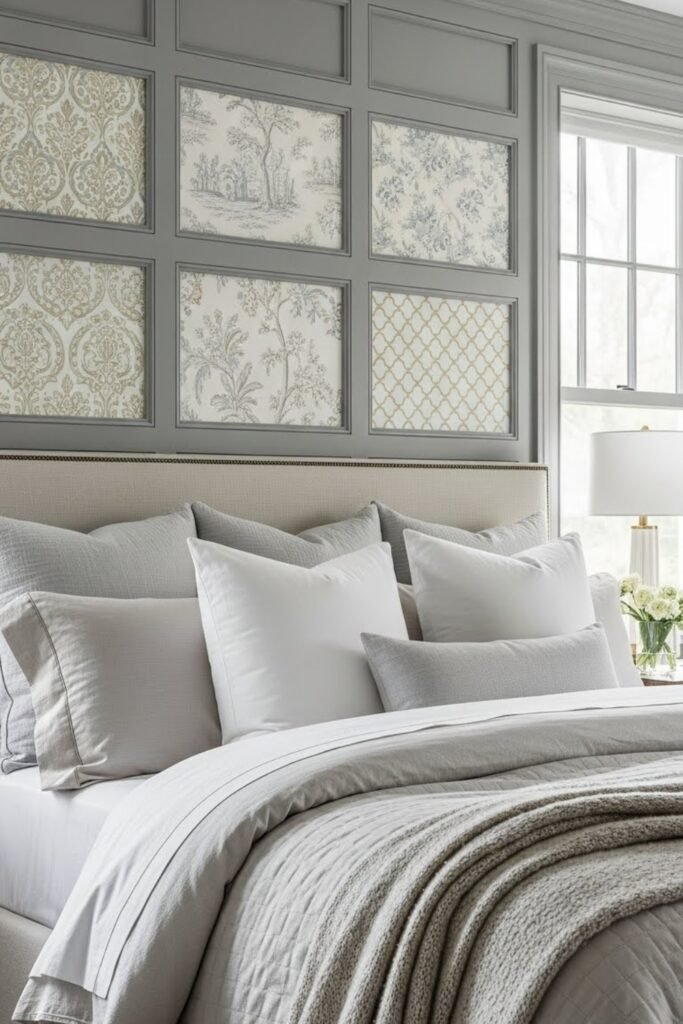
Wallpaper Panels
If you love wallpaper but fear it overpowering the room, board and batten helps break patterns into clean, manageable sections.
Placing wallpaper inside each panel keeps the design structured while still letting color or pattern shine through.
This idea works beautifully for bedrooms, powder rooms, or accent walls where balance and visual control matter most.
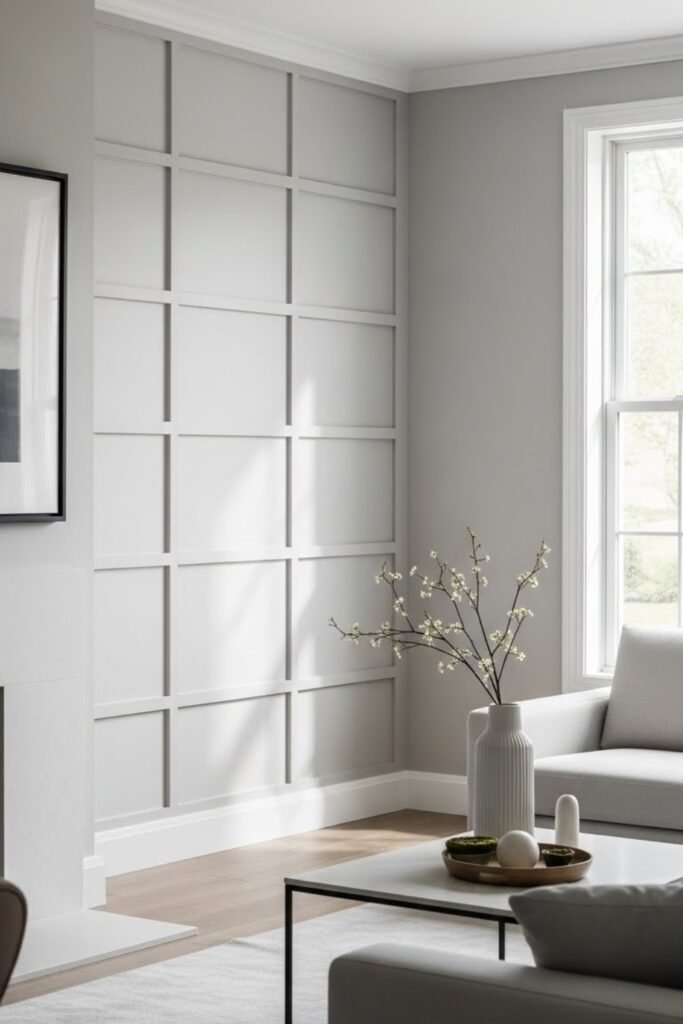
Skinny Grid
Using extra thin battens spaced closely together creates a subtle grid that adds texture without the heavy farmhouse board and batten look.
This style feels modern and minimal, making it ideal for living rooms, offices, or bedrooms that need quiet visual interest.
Keep paint colors soft or neutral so the tight spacing looks intentional rather than busy or overwhelming on larger walls.
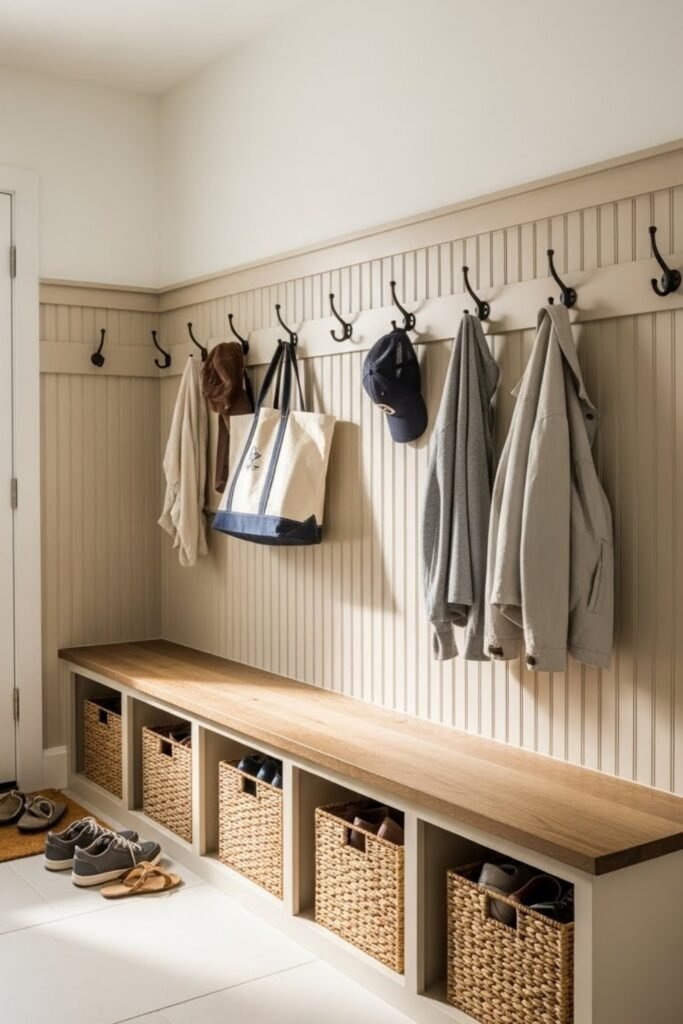
Entry Dropzone
Board and batten in an entryway works harder when combined with hooks, benches, or cubbies for everyday grab and go storage.
This setup keeps bags and jackets organized while making the wall feel finished instead of cluttered or temporary for families.
It is perfect for small homes where you need storage, style, and durability in one clearly defined landing area zone.
Asym Layout
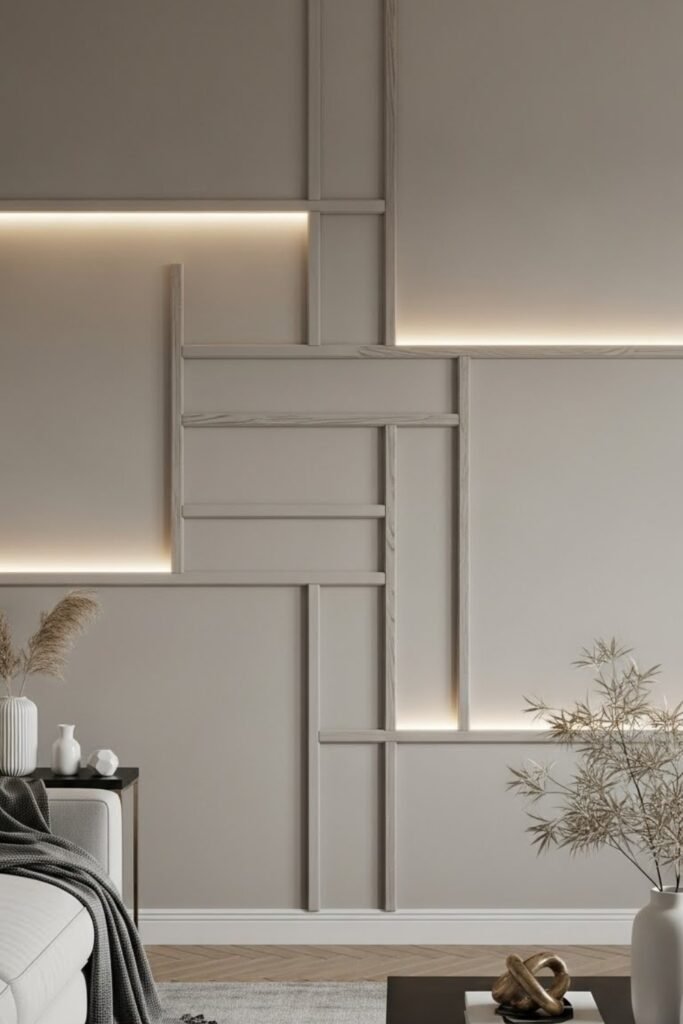
An asymmetrical board and batten layout instantly feels designer made by breaking the predictable spacing most walls usually follow today.
This approach works best as an accent wall where intentional imbalance becomes the focal point rather than a mistake visually.
Plan the pattern carefully on paper first so the final result feels bold and artistic, not random or rushed looking.
Two Tone
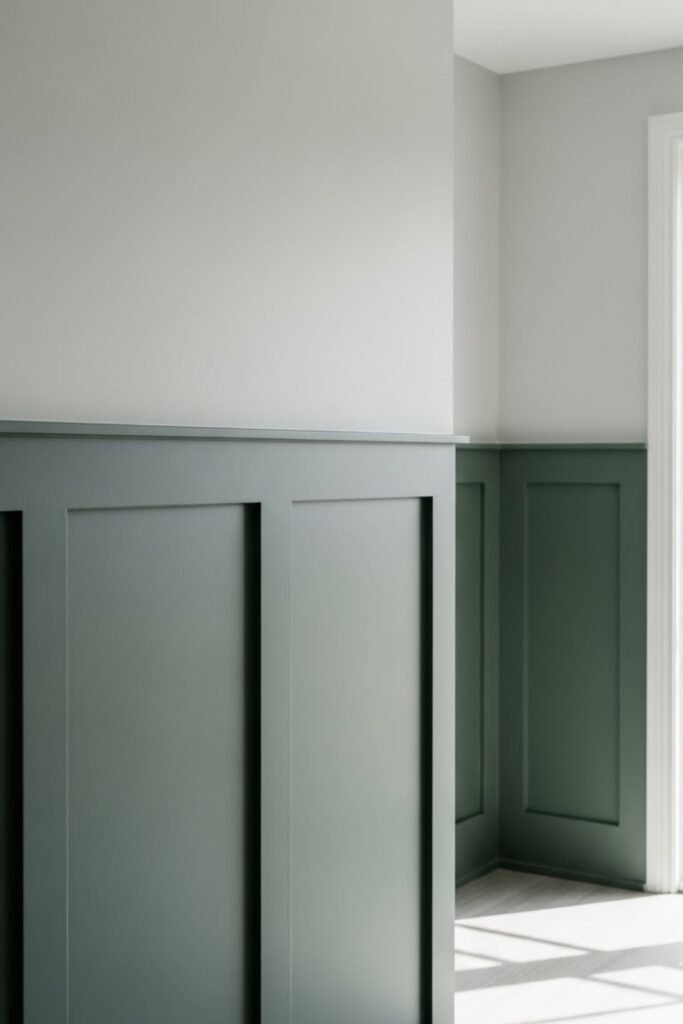
Painting the battens one color and the wall behind another adds depth without adding more trim or material cost overall.
This contrast highlights the pattern and makes even simple board and batten walls feel layered and intentional in spaces today.
Choose muted tones for a soft look or bold colors if you want the wall to stand out confidently visually.
Fireplace Frame
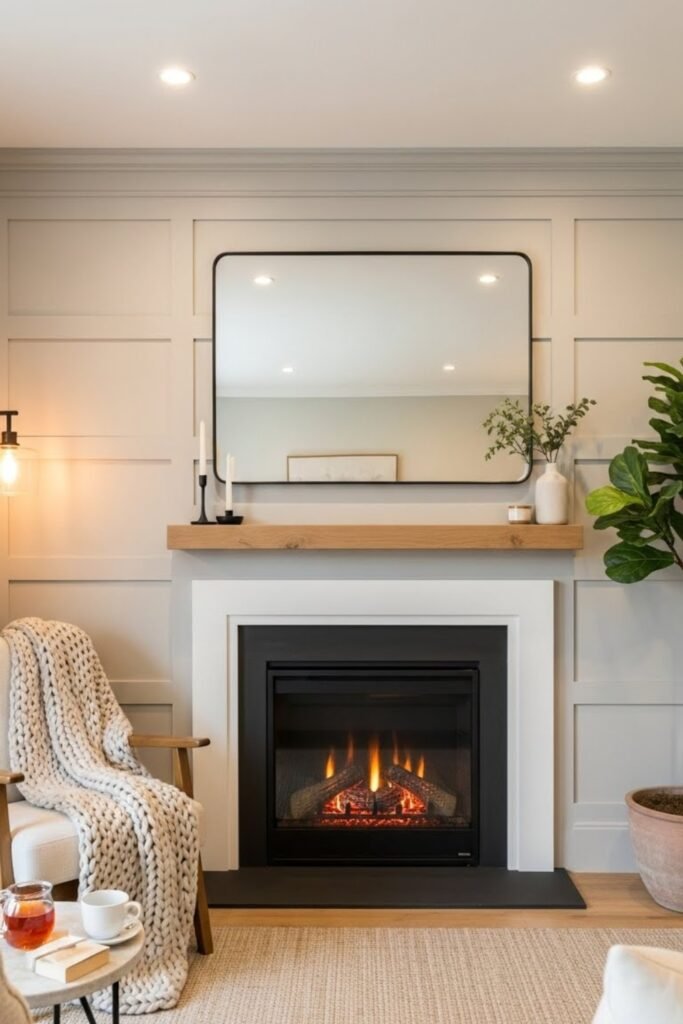
Board and batten around a fireplace creates a cozy focal wall without expensive stone, tile, or major renovation work costs.
It softens hard firebox lines and adds texture, making the fireplace feel intentional rather than visually flat or builder basic.
This idea works best in living rooms or family rooms where the fireplace already anchors furniture and daily gathering areas.
Narrow Hallway
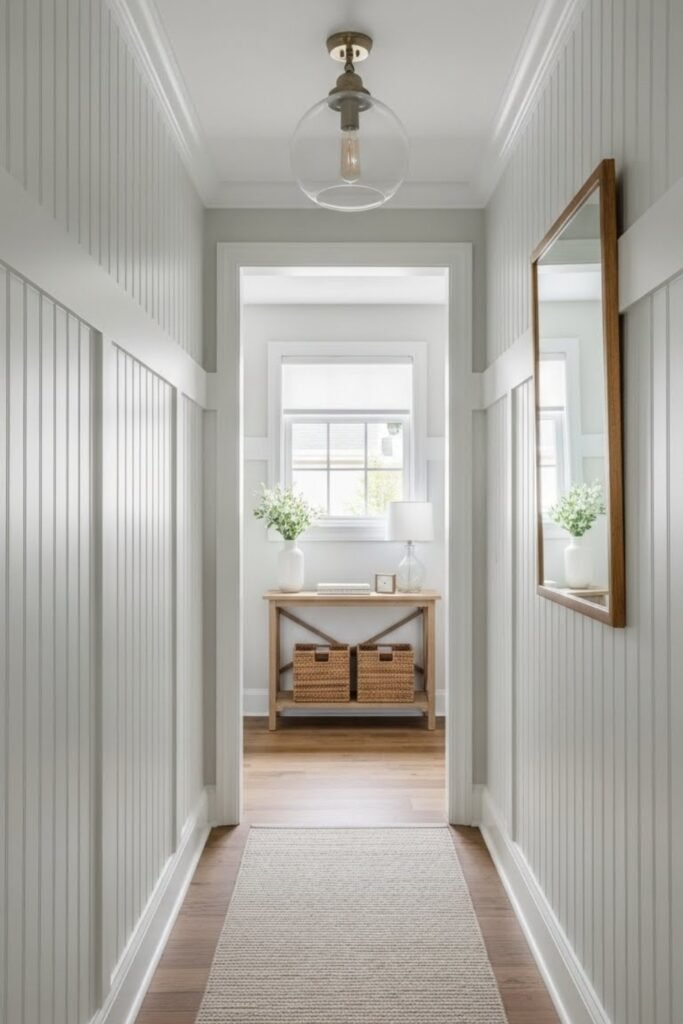
Vertical board and batten makes narrow hallways feel taller by pulling the eye upward instead of squeezing walls inward visually.
It adds interest to pass through spaces where artwork feels crowded and furniture simply does not belong in these areas.
Use slimmer battens and wider spacing so the hallway stays light, open, and easy to walk through daily without feeling tight.
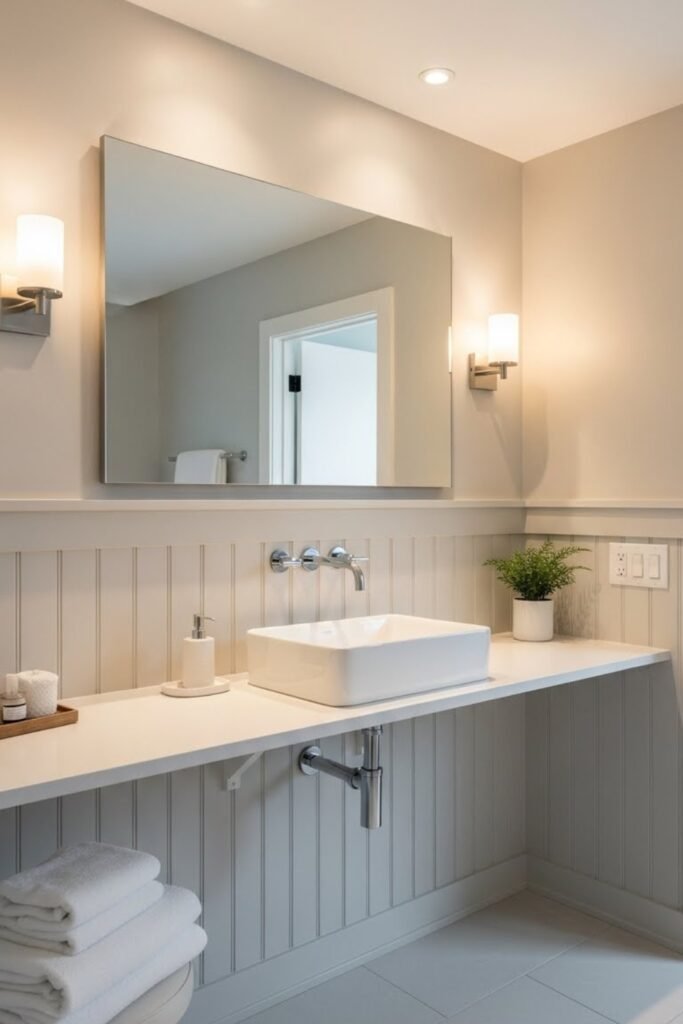
Bathroom Safe
Board and batten works in bathrooms when you use moisture resistant materials like PVC trim or properly sealed MDF panels.
This adds texture without risking swelling or peeling paint from humidity, steam, or daily splashes around sinks, tubs, showers areas.
It works well behind vanities or on accent walls where tile feels too cold or predictable for small bathroom designs.
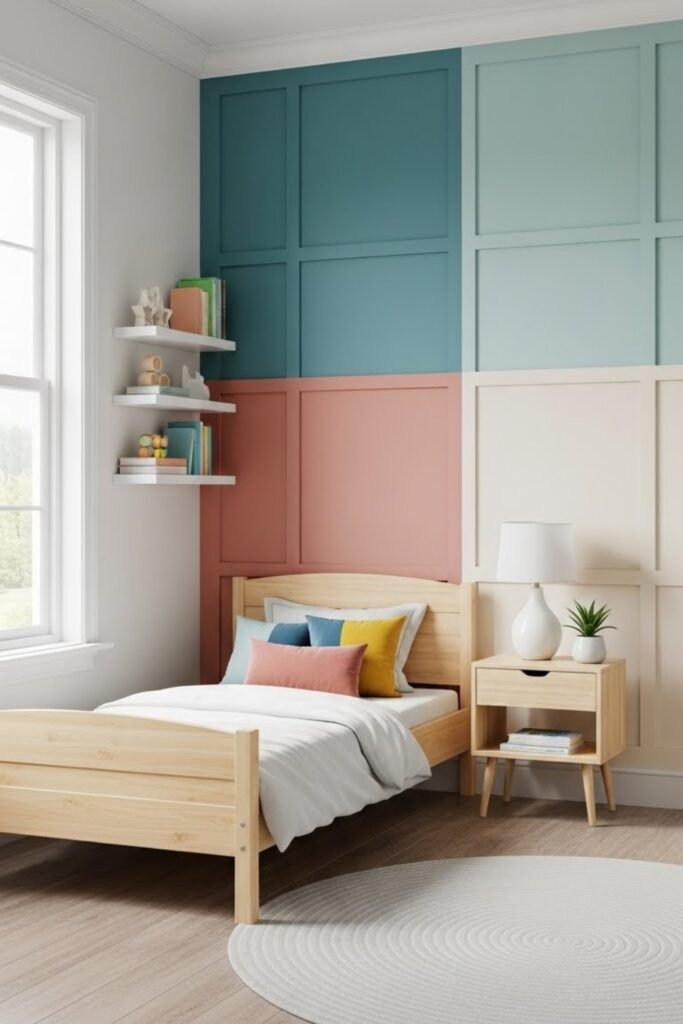
Kids Color
Color blocked board and batten lets you add playful shades while keeping the wall structured and easy to update later.
Paint inside panels using soft pastels or bold tones depending on age, personality, and room lighting conditions over time changes.
This approach grows with kids because repainting sections is easier than removing full wall treatments later as styles evolve naturally.
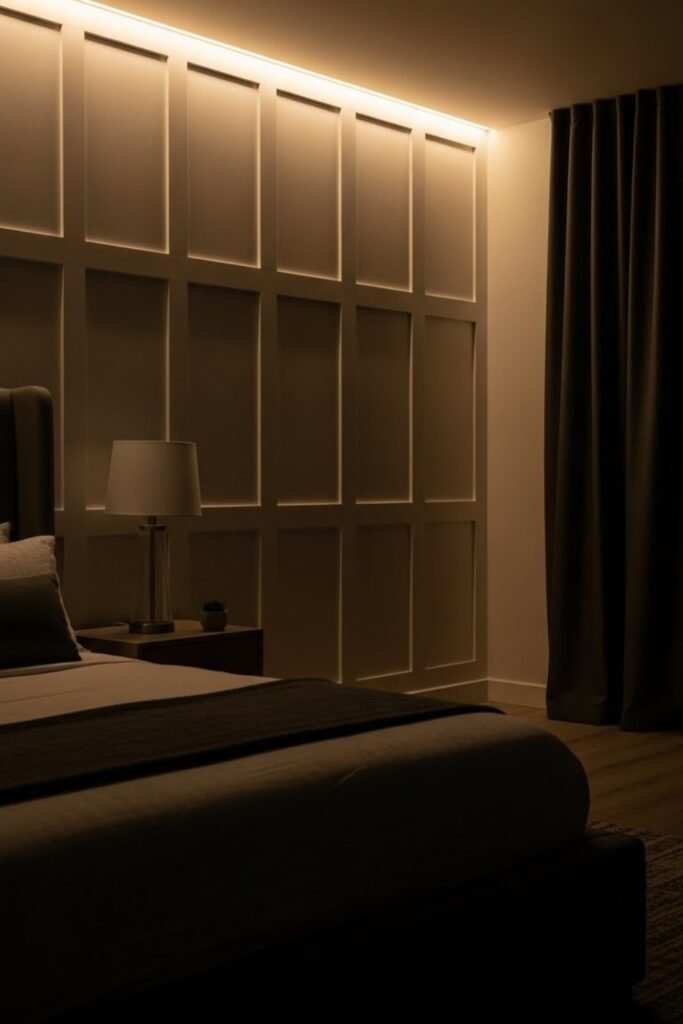
LED Accent
Adding hidden LED strips to board and batten creates a soft glow that elevates the wall beyond standard painted trim.
The lighting highlights vertical lines at night, making rooms feel warmer, deeper, and more custom without overwhelming brightness levels indoors.
This works best in bedrooms or living rooms where you want ambiance without relying on lamps or overhead fixtures alone.
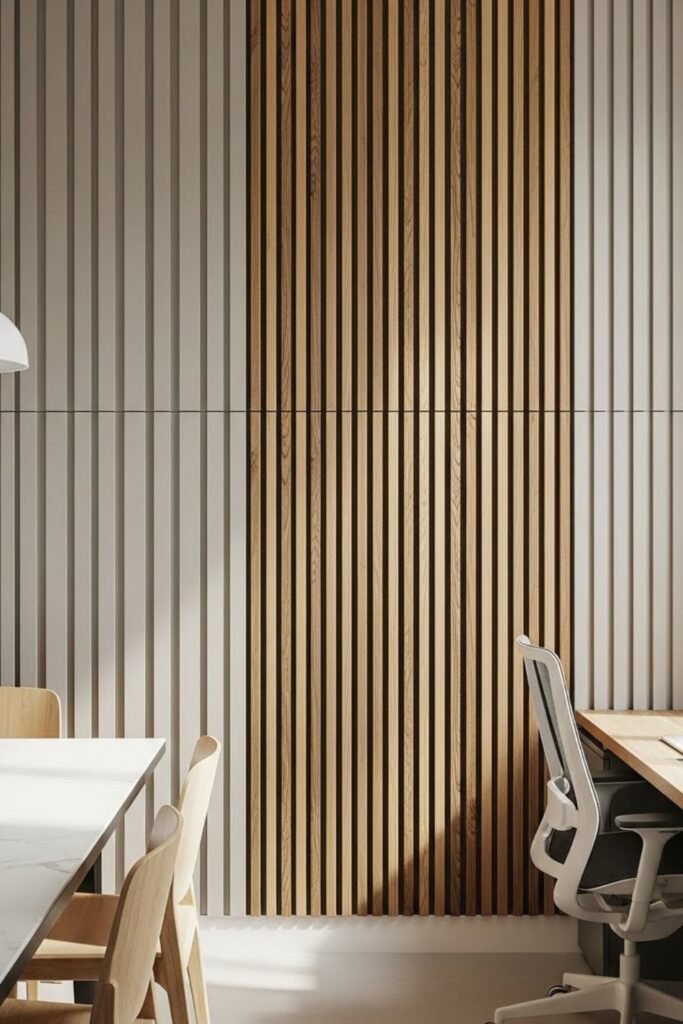
Wood Hybrid
Mixing flat battens with narrow wood slats adds warmth and texture while avoiding the overly traditional farmhouse board look style.
This hybrid design brings natural variation, making the wall feel richer and more dynamic than paint alone ever could achieve.
It works beautifully in modern rustic homes, offices, or dining spaces that need character without heavy décor or visual clutter.
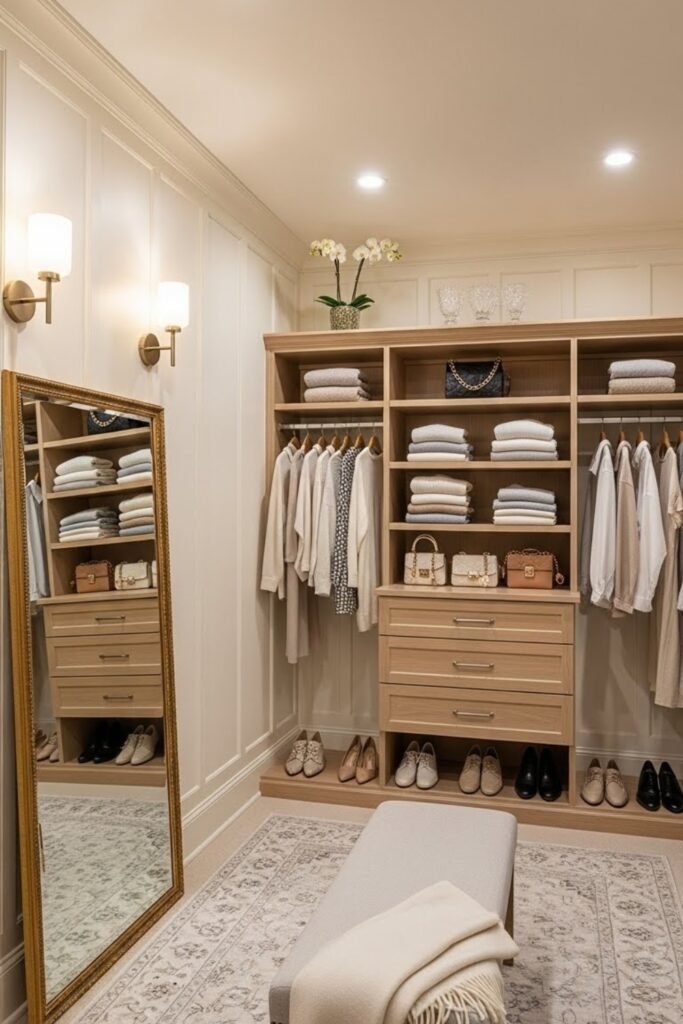
Closet Upgrade
Adding board and batten inside a walk in closet instantly upgrades the space from basic storage to boutique feel design.
It creates a polished backdrop for shelves, mirrors, and lighting without competing with clothing or accessories visually on display daily.
This idea is perfect for small closets where simple trim delivers impact without sacrificing function or square footage inside homes.
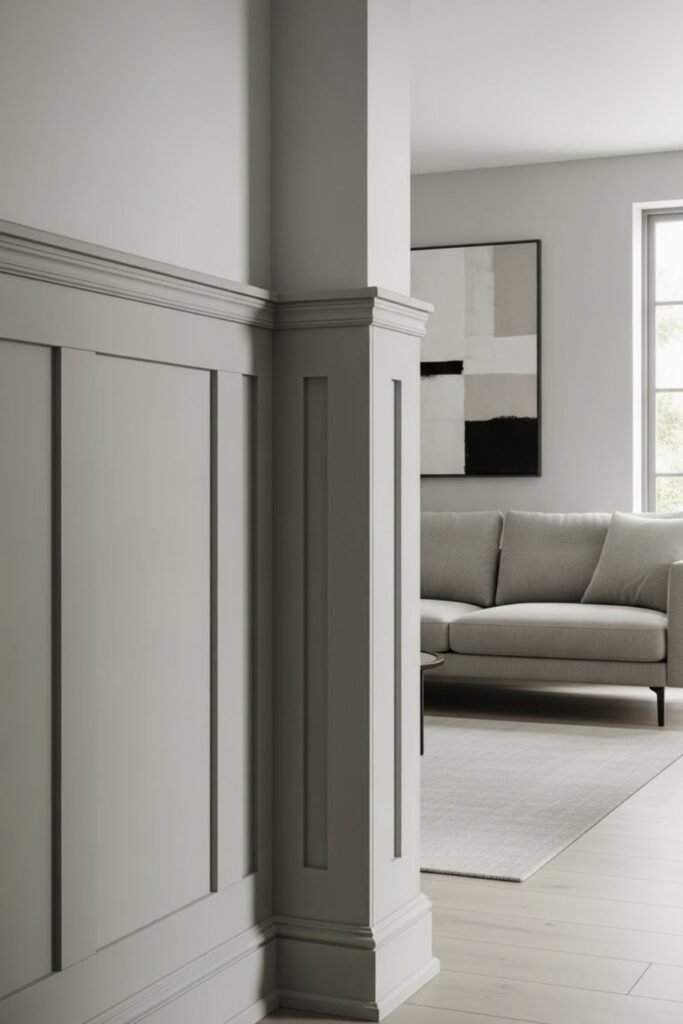
Corner Wrap
Wrapping board and batten around an inside corner helps connect two walls visually instead of stopping the design abruptly.
This makes the room feel more intentional, especially in living rooms or bedrooms with awkward wall breaks or layouts.
Keep spacing aligned on both walls so the corner feels seamless rather than patched together after installation.
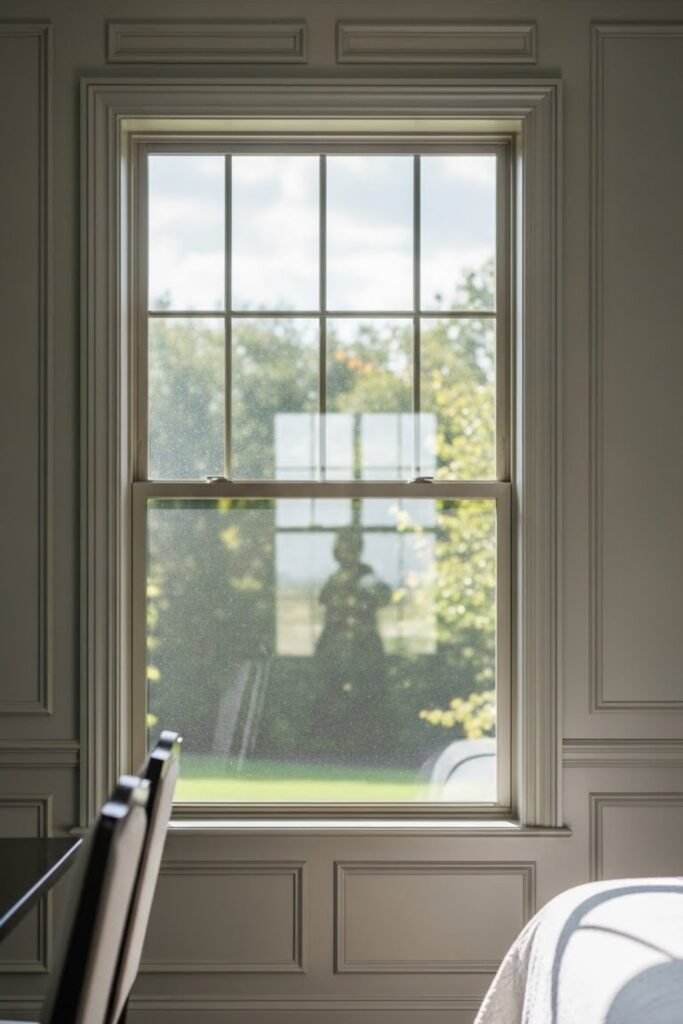
Window Frame
Using board and batten to frame a large window turns it into an architectural feature instead of just a functional opening.
The trim draws attention to natural light while adding balance to wide walls that feel empty or unfinished.
This works beautifully in dining rooms or bedrooms where curtains alone feel flat or underwhelming.
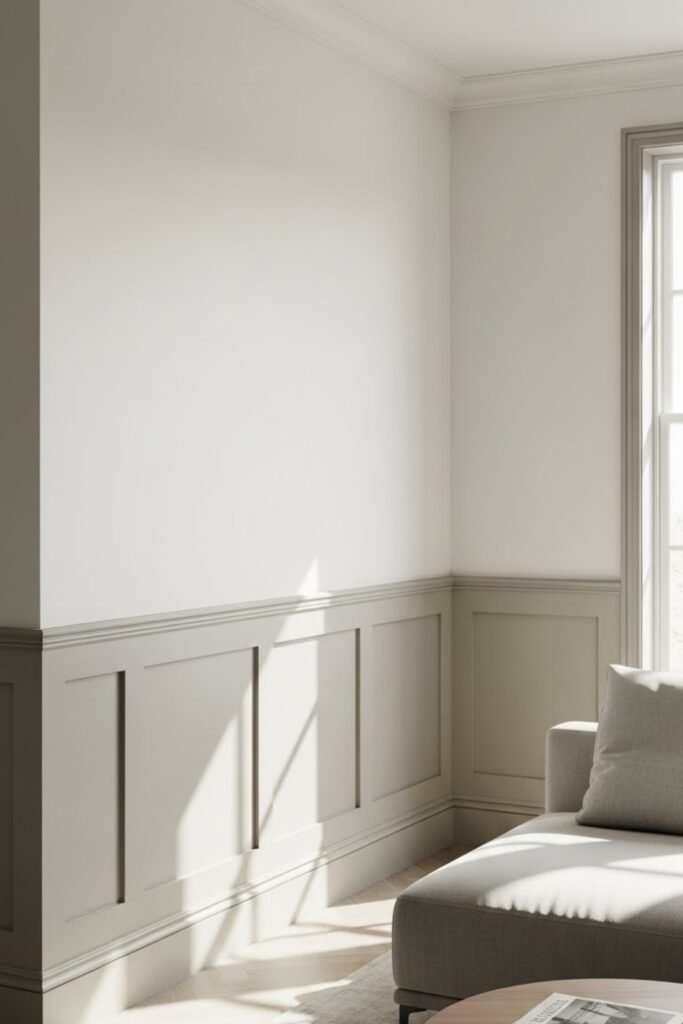
Low Wainscot
Installing board and batten lower than standard wainscoting creates a grounded look that works well in modern interiors.
It leaves more open wall space above, making rooms feel wider and less visually crowded overall.
Painted Ceiling
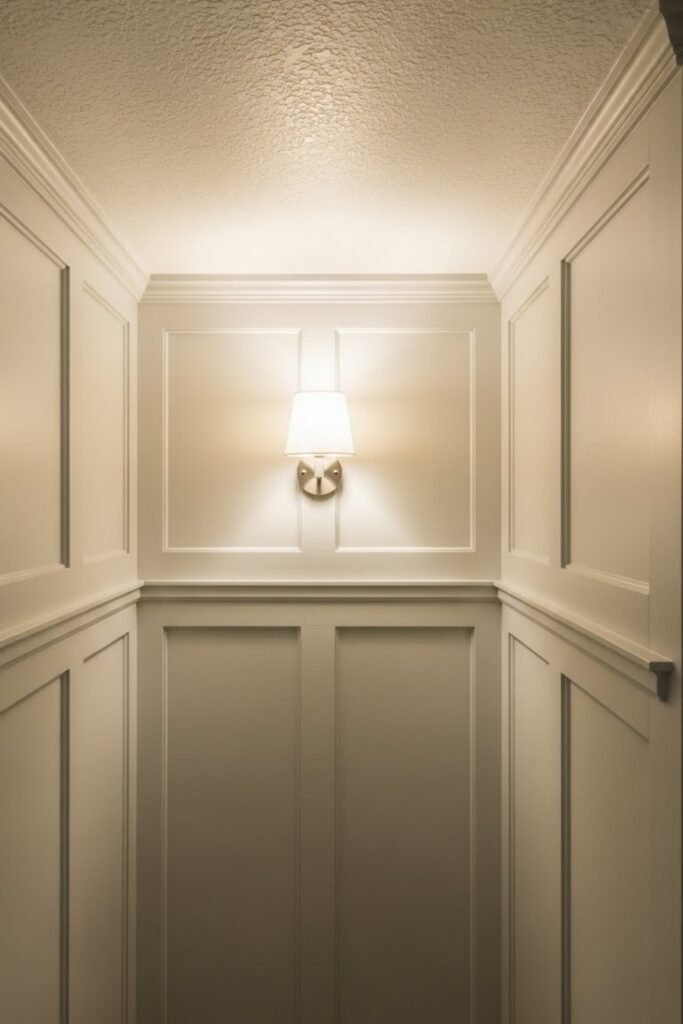
Extending the board and batten onto the ceiling adds unexpected texture and makes the space feel custom and thoughtfully designed.
This works best in small rooms where the ceiling often gets ignored and feels plain.Use lighter paint colors so the ceiling detail enhances the room.
Behind Bed
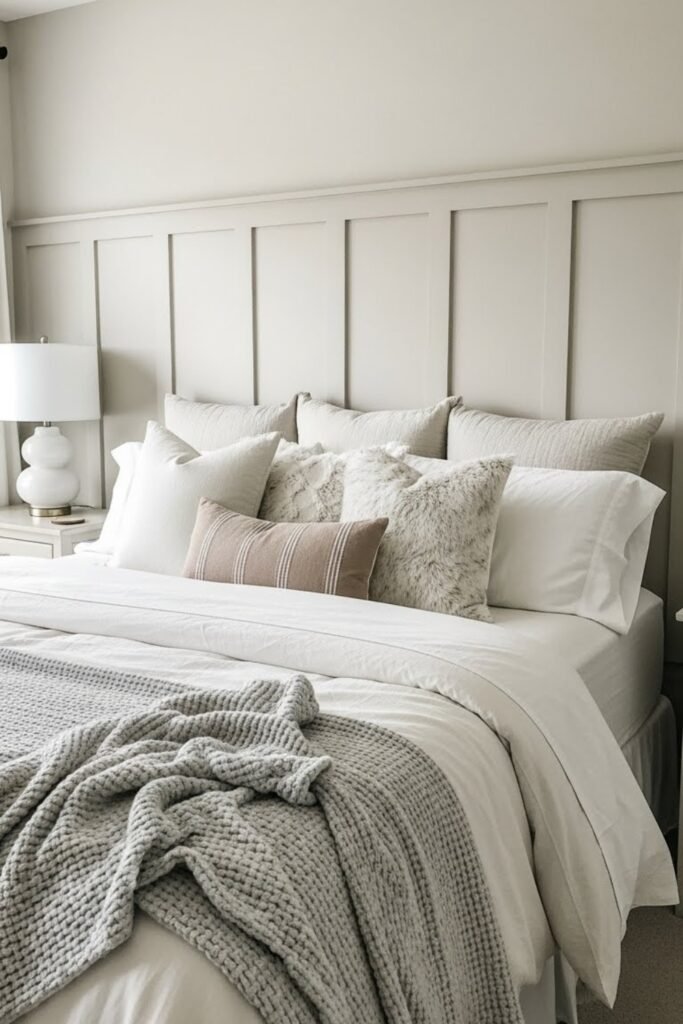
Board and batten behind a bed replaces a headboard and anchors the room without extra furniture or clutter.
It creates a strong focal point while keeping the bedroom feeling calm and uncluttered.This is ideal for small bedrooms where space saving design.
Dining Accent
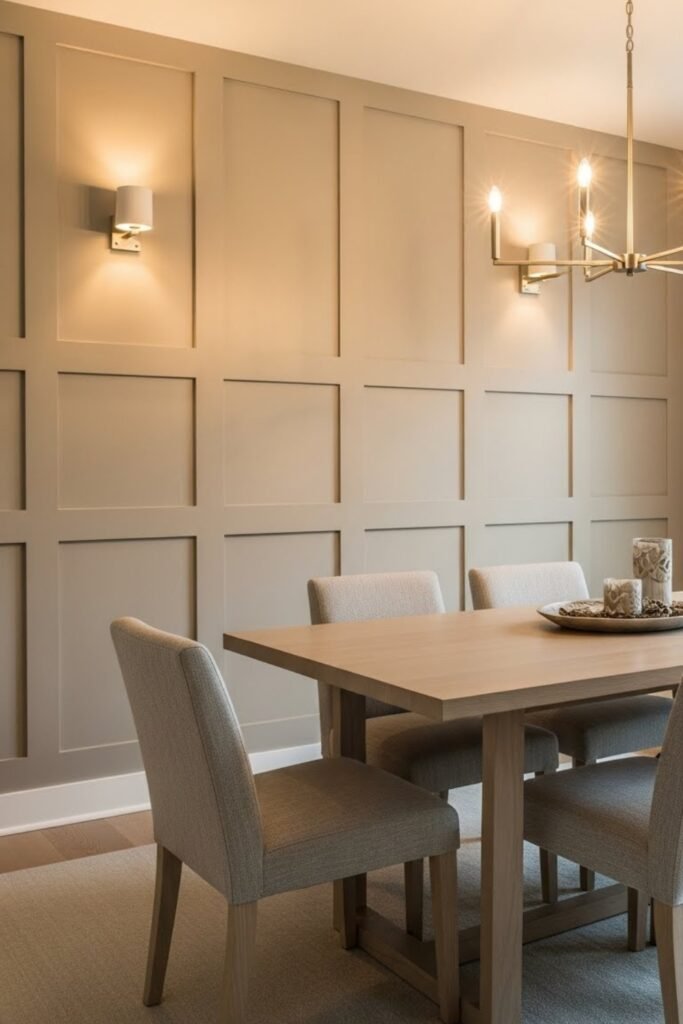
A board and batten accent wall in the dining area helps define the space without adding bulky furniture.
It creates visual separation in open floor plans where dining rooms often feel lost.Keep the design simple so it complements tables.
Office Focus
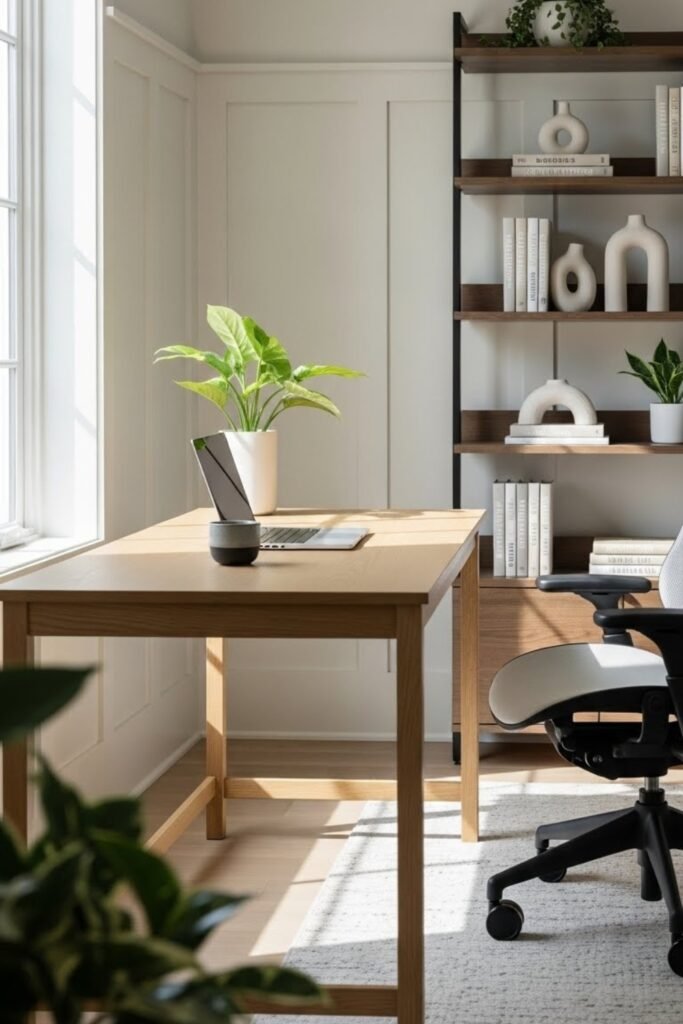
Board and batten behind a desk adds depth to home offices and creates a professional looking backdrop instantly.
It works well for video calls, shelving, or gallery walls without feeling overly decorative.Neutral paint colors keep the workspace
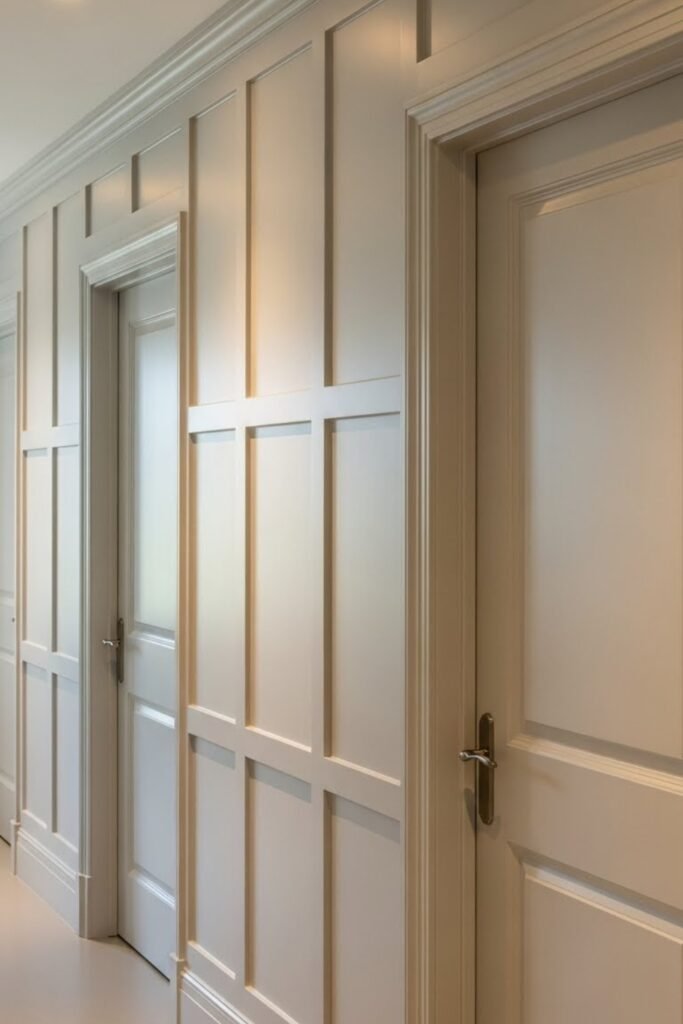
Door Wall
Installing board and batten on a wall with doors helps unify multiple openings into one cohesive design feature.
It reduces visual clutter caused by trim breaks and uneven spacing between doors.
This idea works especially well in hallways or bedrooms with closet and bathroom doors close together.

Hi, my name is Ali Mehmood! I’m a passionate writer and DIY enthusiast who loves turning creative ideas into practical, hands-on projects.
I created this website to share inspiring, budget-friendly ideas that you can do yourself – whether it’s organizing your home, crafting something unique, or creating fun projects for kids and pets.
I believe DIY isn’t just a hobby – it’s a smart way to save money, reduce waste, and enjoy the satisfaction of making things with your own hands.
I’m excited to have you as part of this growing community, and I’ll continue bringing you helpful, realistic, and fun DIY ideas you can actually use.