This post may contain affiliate links: read full affiliate disclosure.
You may love the idea of having a sink outside, but figuring out how to actually make one work can stop the project fast.
Where will the water come from? Where should it drain? Do you need permanent plumbing, or can you simply connect a garden hose and call it done?
I had the same practical questions in mind while putting together these DIY outdoor sink station ideas.
I’m sharing 27 inspiring setups, along with practical ideas you can borrow for storage, countertops, water connections, drainage, and weather-friendly materials.
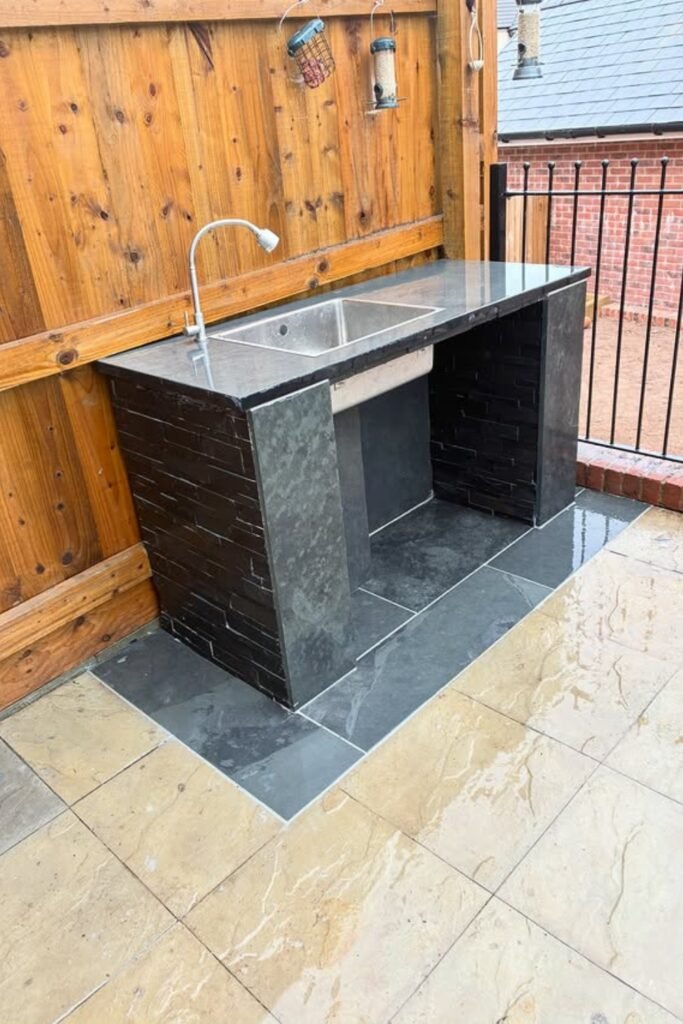
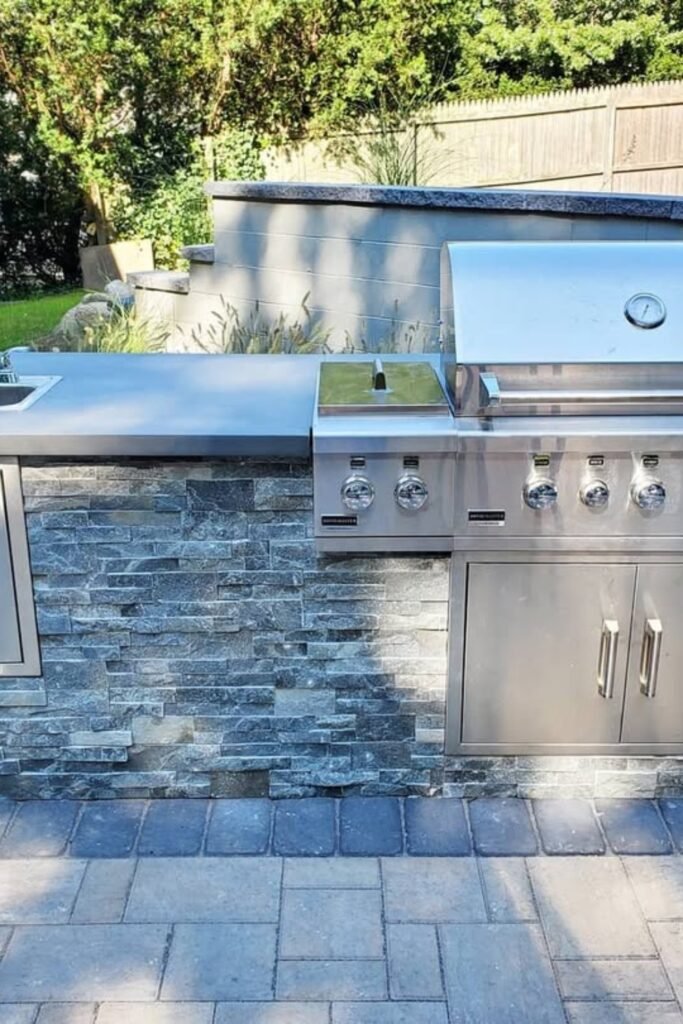
Permanent Patio Sink
Give a permanent patio sink extra value by leaving generous counter space beside the basin for rinsing vegetables, prepping food, or setting tools.
Pairing a weather-resistant worktop with a sturdy masonry-style base makes this approach especially practical when your sink will stay outdoors year-round.
Keep the underside accessible rather than completely enclosed, so you can reach plumbing connections easily and add storage later if your needs change.
Grill Side Sink
A sink beside the grill saves constant trips indoors, especially when you leave enough counter space between wet prep and hot cooking zones.
For a built-in setup like this, plan water and drainage before finishing the stone surround, because later plumbing changes become far more disruptive.
Stainless surfaces and enclosed cabinets also simplify cleanup, making this layout a smart choice for patios used regularly for outdoor meals and entertaining.
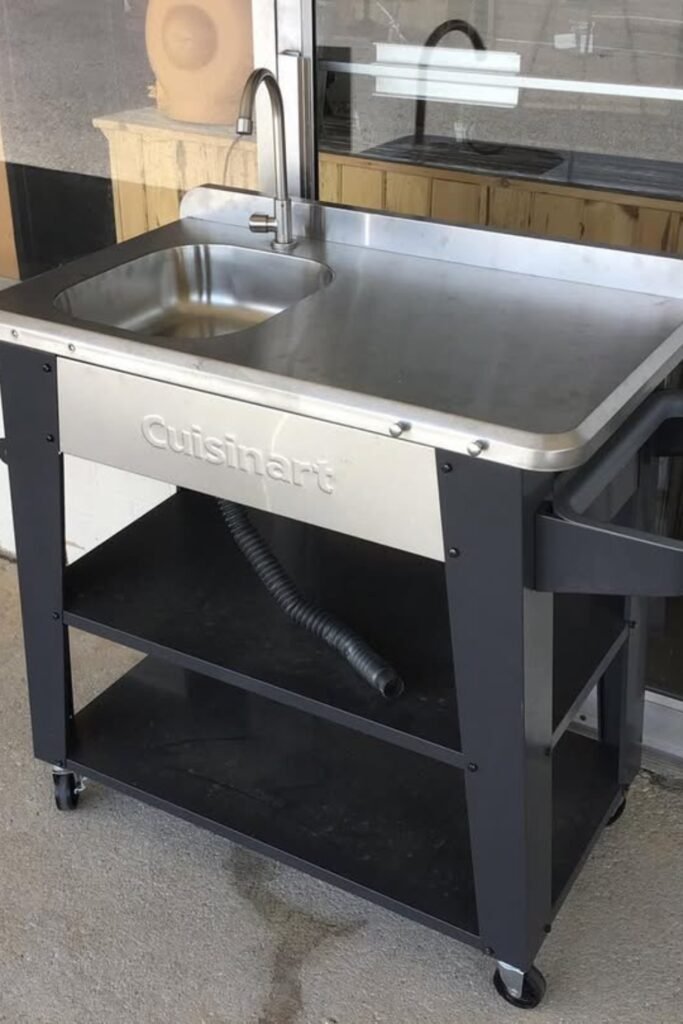
Rolling Utility Sink
If flexibility matters more than a permanent installation, build your sink around a wheeled utility cart that can move wherever cleanup is needed.
Choose locking casters and open shelving so the station stays steady during use while buckets, hoses, or washing supplies remain easy to reach.
A compact stainless worktop is especially handy for messy garden jobs because splashes wipe away quickly without soaking into a wooden counter surface.
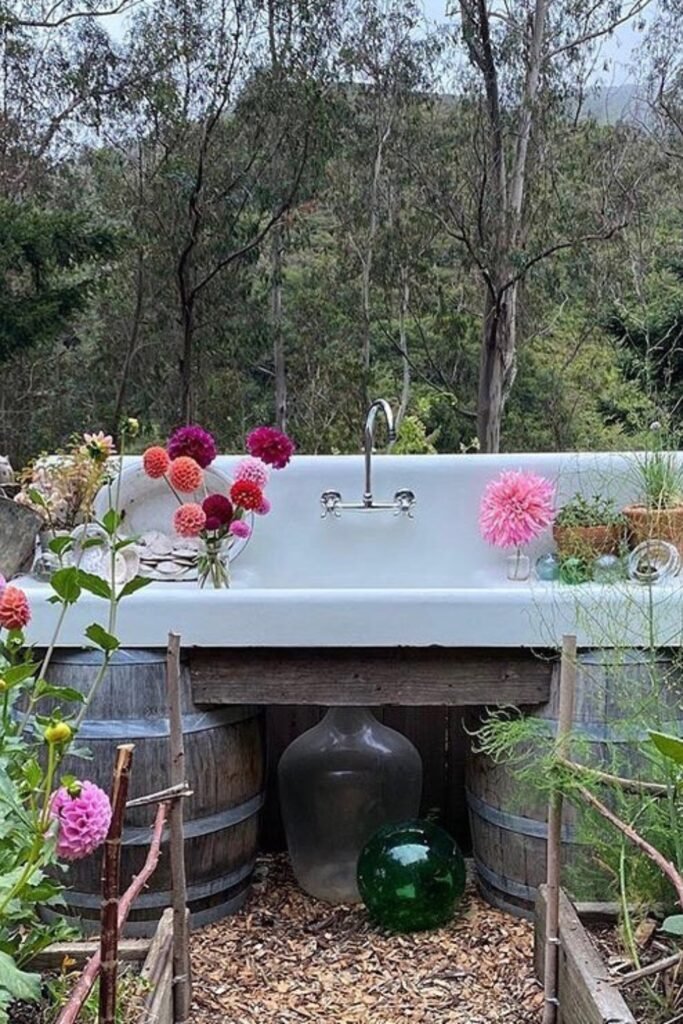
Vintage Garden Sink
An old freestanding sink can become the prettiest working feature in your garden when you treat it as part of the planting area.
Support a heavy vintage basin on a strong weather-ready base, then leave comfortable access underneath for drainage instead of boxing everything tightly closed.
Place it near vegetable beds or cutting flowers, where the broad basin can handle harvest rinsing while surrounding plants soften the utilitarian setup.
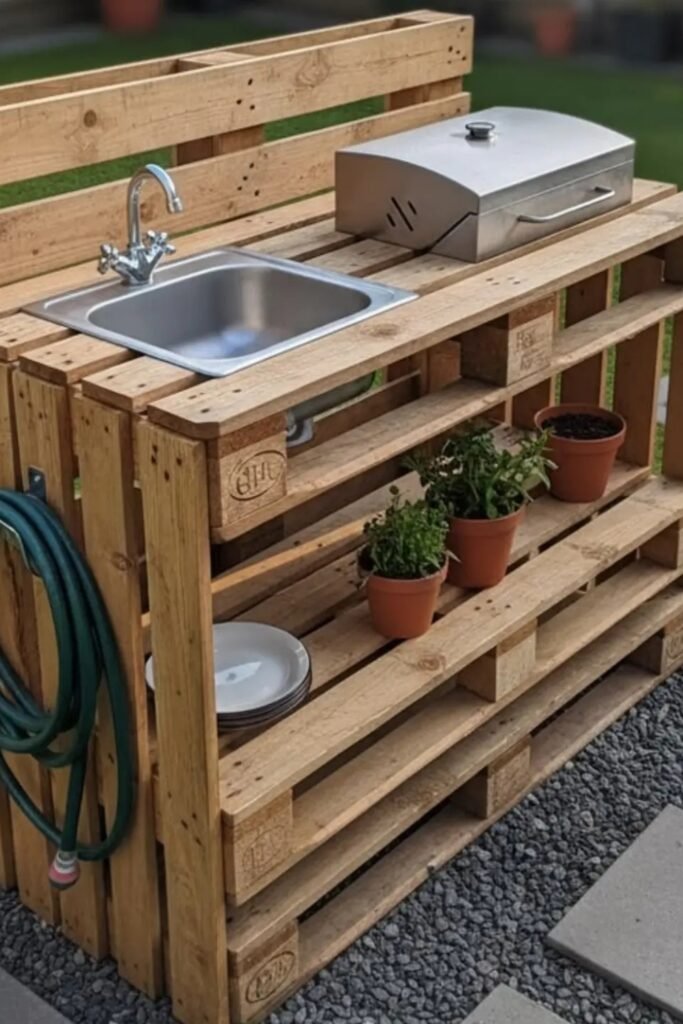
Pallet Prep Station
Reclaimed pallets can stretch a tight budget further, especially when you use their built-in slats for shelving, backsplash storage, and counter support.
Keep the sink near one end and preserve a wider dry surface beside it, giving yourself room for food prep or garden tasks.
Add a dedicated hose hanger along the side so your water supply stays neatly stored instead of becoming a tripping hazard nearby.
Gravity Fed Sink
No nearby faucet doesn’t have to ruin the plan; an elevated water container can supply a simple washing station without permanent plumbing.
Build the counter around a removable basin, then position the water container above faucet level so gravity can handle light rinsing jobs naturally.
A lower slatted shelf keeps buckets and supplies off the floor, making this compact setup especially useful on balconies or covered patios.
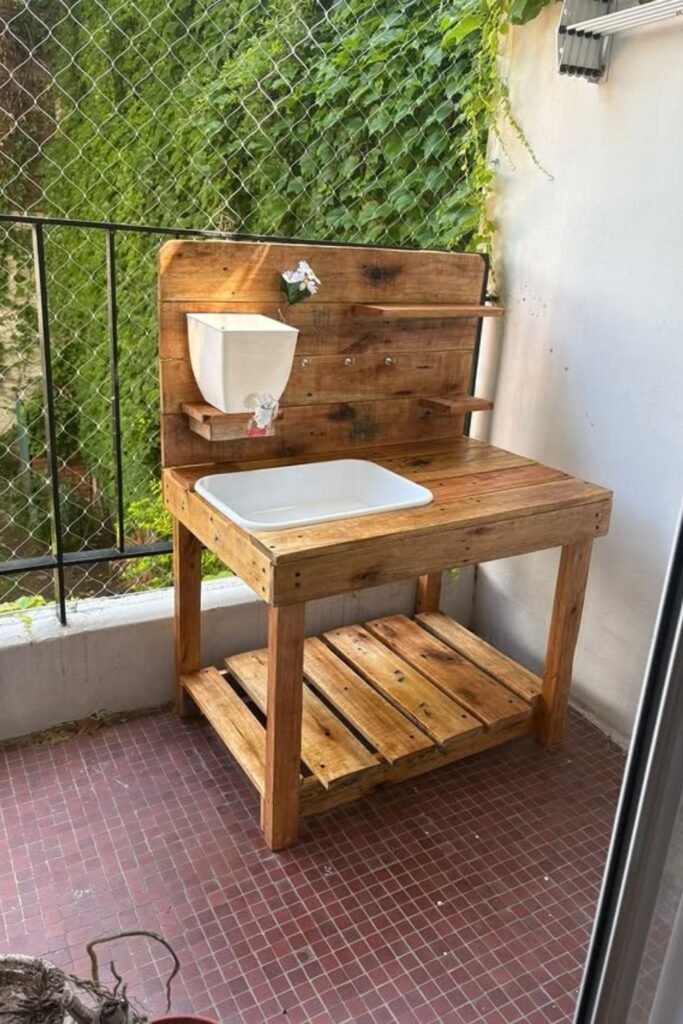
Wood Metal Station
Mixing a metal frame with wooden slats gives you sturdy support while keeping the station warmer and more approachable than all-steel construction.
Use the longest counter section for prep work, while drawers and open shelves keep utensils, cleaning supplies, and garden essentials within reach.
Seal every exposed wooden surface for outdoor use, particularly around the basin where repeated splashing can shorten the life of untreated boards.
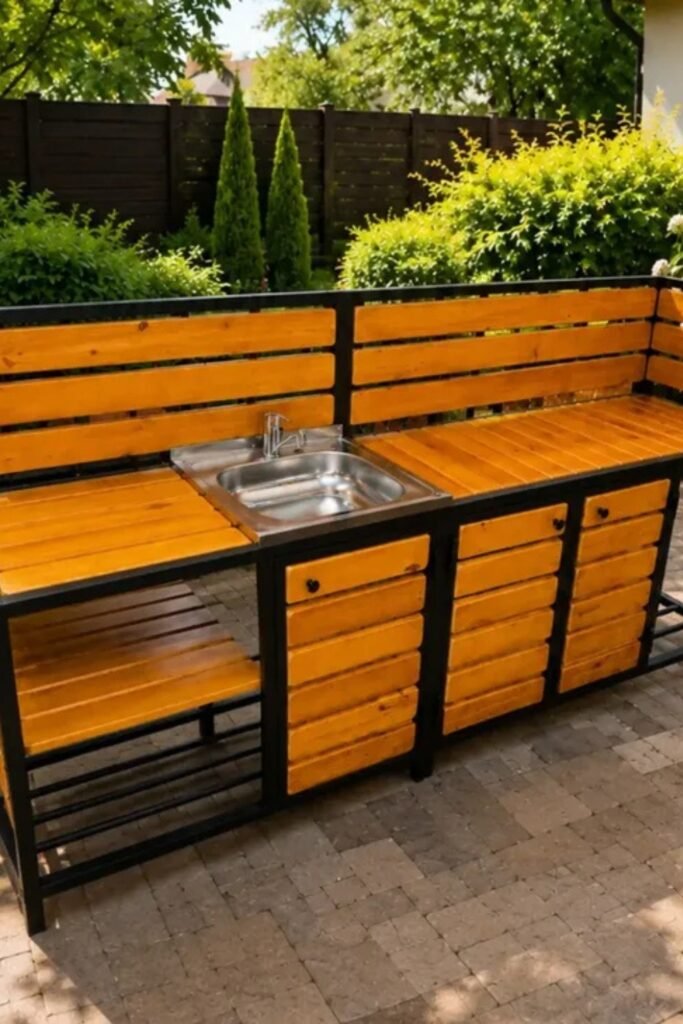
Garden Wash Bench
Turn the backsplash into working storage instead of decoration by adding planters, hooks, and a raised water container above your washing area.
Open shelving on both sides keeps buckets and frequently used supplies visible, while the centered basin leaves useful workspace around its edges.
For a garden-focused station, keep muddy tools and harvest baskets below, reserving the upper hooks for lighter items you grab frequently.
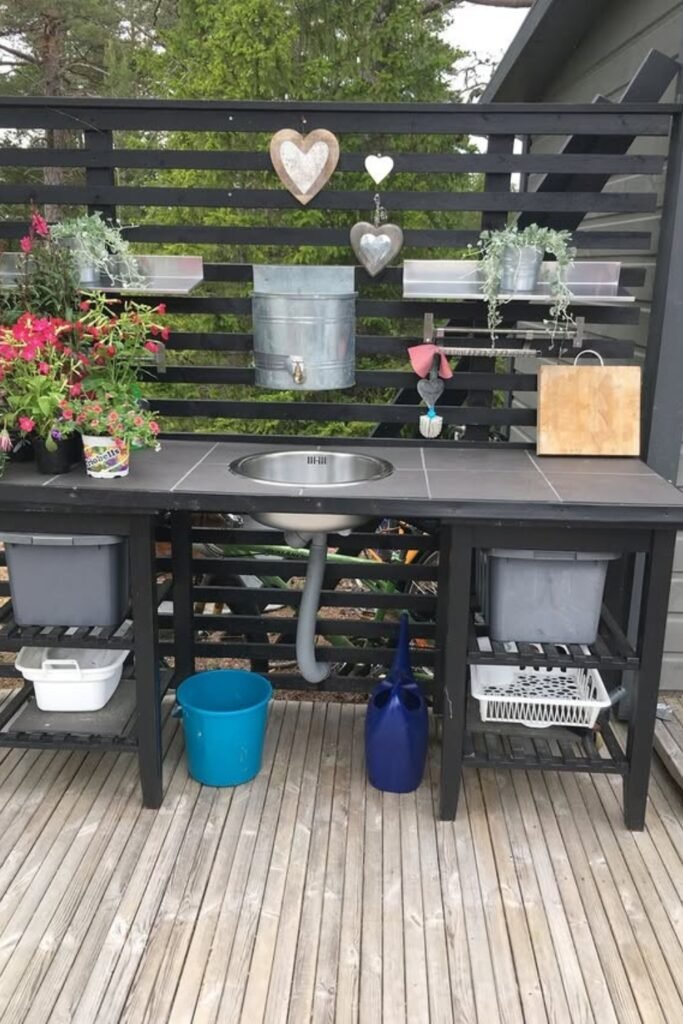
Dual Basin Bench
When several garden jobs happen at once, two separate basins let you rinse produce in one while keeping muddy tools contained elsewhere.
Mount simple water containers above each basin for light washing, then use the wide center counter as your main sorting and potting zone.
A long lower shelf earns its space by holding harvest baskets and pots, keeping bulky supplies underneath instead of crowding your worktop.
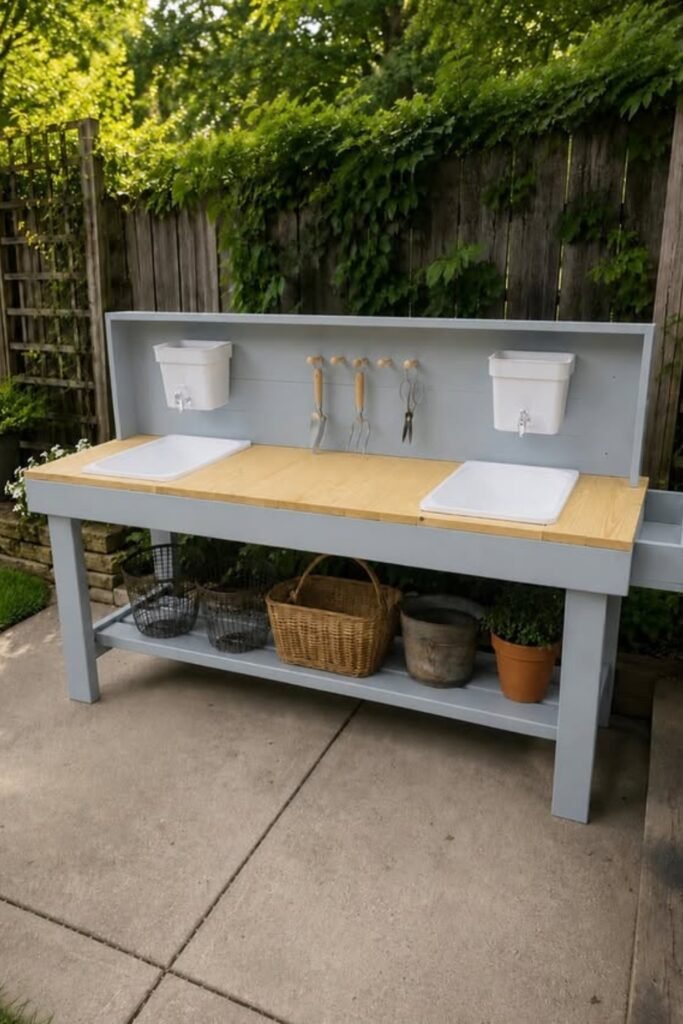
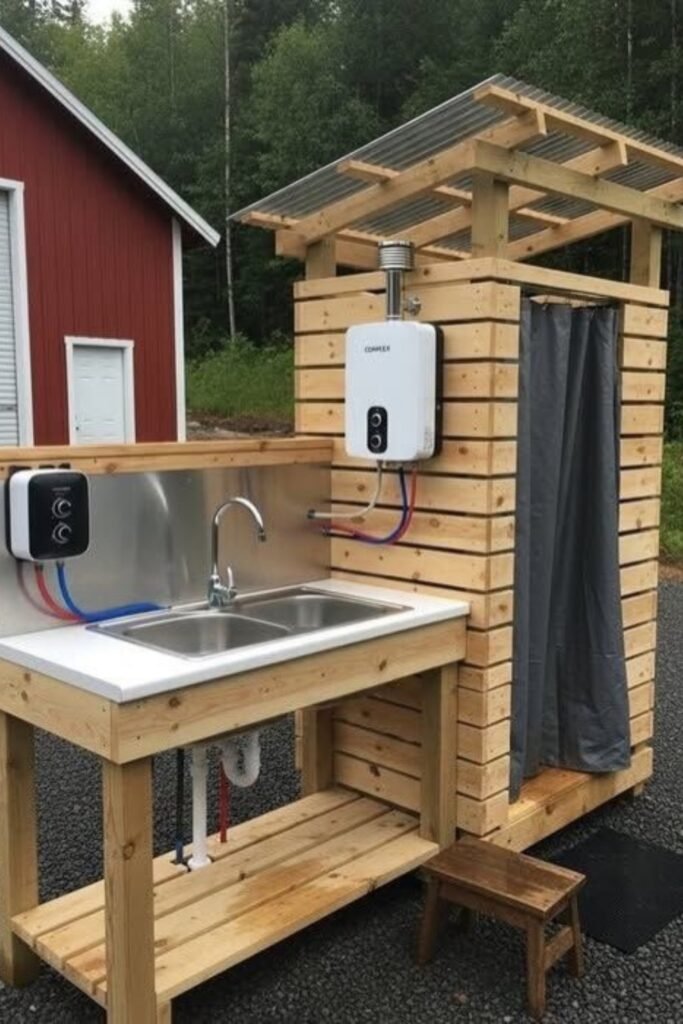
Hot Water Station
If you regularly need warm water outdoors, combining the sink with an outdoor shower area can make one plumbing setup work harder.
Keep water-heating equipment securely mounted away from the splash zone, and follow manufacturer requirements for weather exposure, ventilation, clearances, and installation.
A double basin makes sense here because you can separate washing and rinsing while the open lower frame keeps plumbing connections accessible.
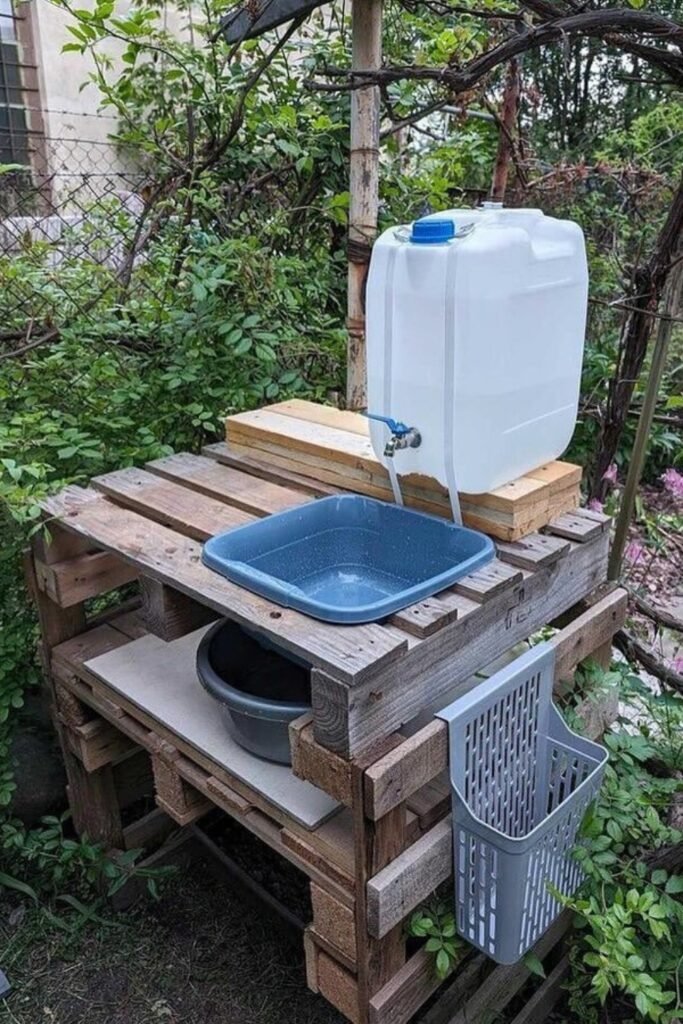
Water Tank Sink
For a garden corner beyond hose reach, a raised water tank and simple basin can create a genuinely useful off-grid washing point.
Set the container higher than the basin to take advantage of gravity, and choose a removable tub that makes emptying wastewater much easier.
Reclaimed pallet boards keep costs down, but sand rough edges and protect exposed wood so frequent splashes do not accelerate deterioration outdoors.
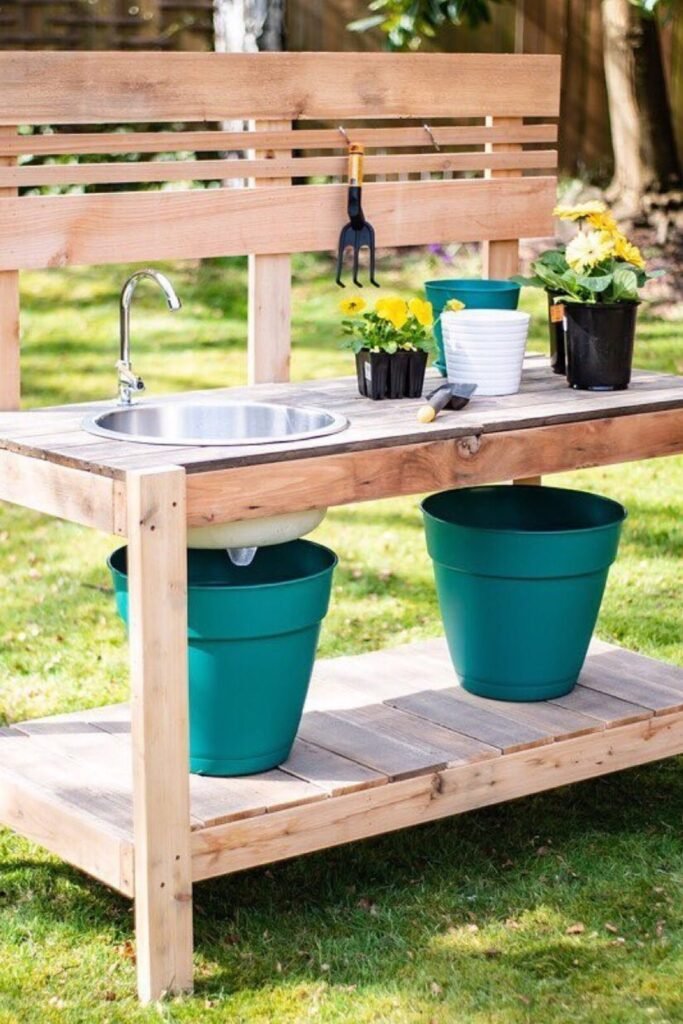
Potting Sink Bench
Give your potting bench a small sink at one end rather than sacrificing the whole worktop, leaving plenty of room for repotting.
A slatted backsplash becomes useful when you add hooks for hand tools, keeping messy forks and trowels off the working surface between jobs.
Leave the lower shelf mostly open for oversized pots and buckets, since these bulky pieces quickly consume valuable countertop space during gardening sessions.
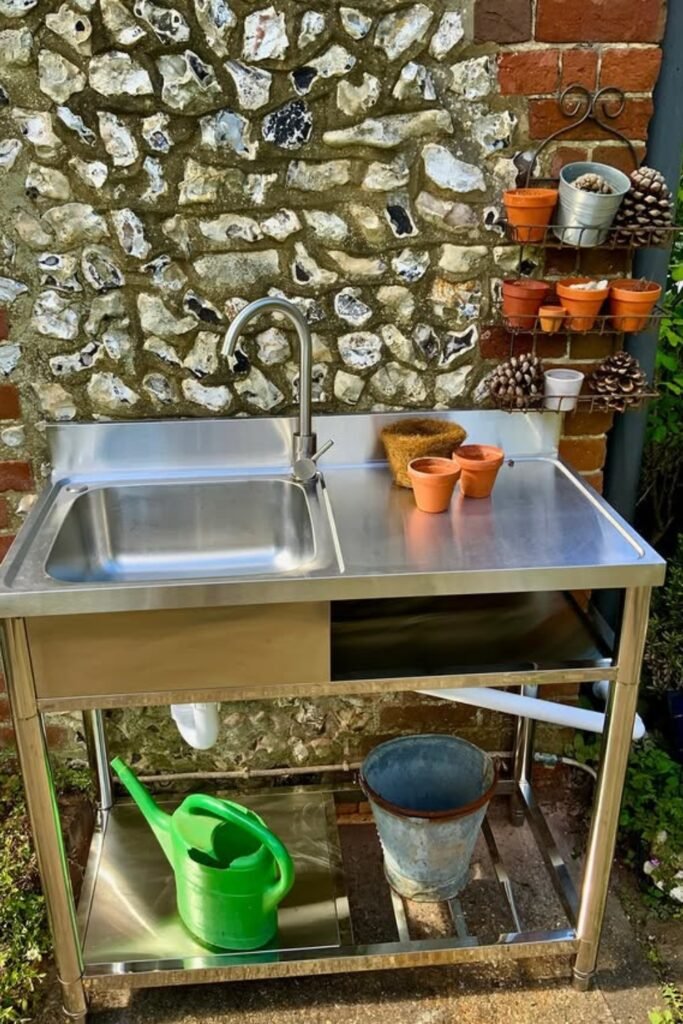
Stainless Garden Sink
Stainless steel is worth choosing for messy garden jobs because muddy tools and pots can be rinsed without worrying about staining the worktop.
Use the open lower shelf for watering cans and buckets, keeping wet equipment below while smaller supplies stay organized on nearby wall storage.
Position a station like this beside an exterior wall when possible, giving water connections a shorter route and creating a naturally protected workspace.
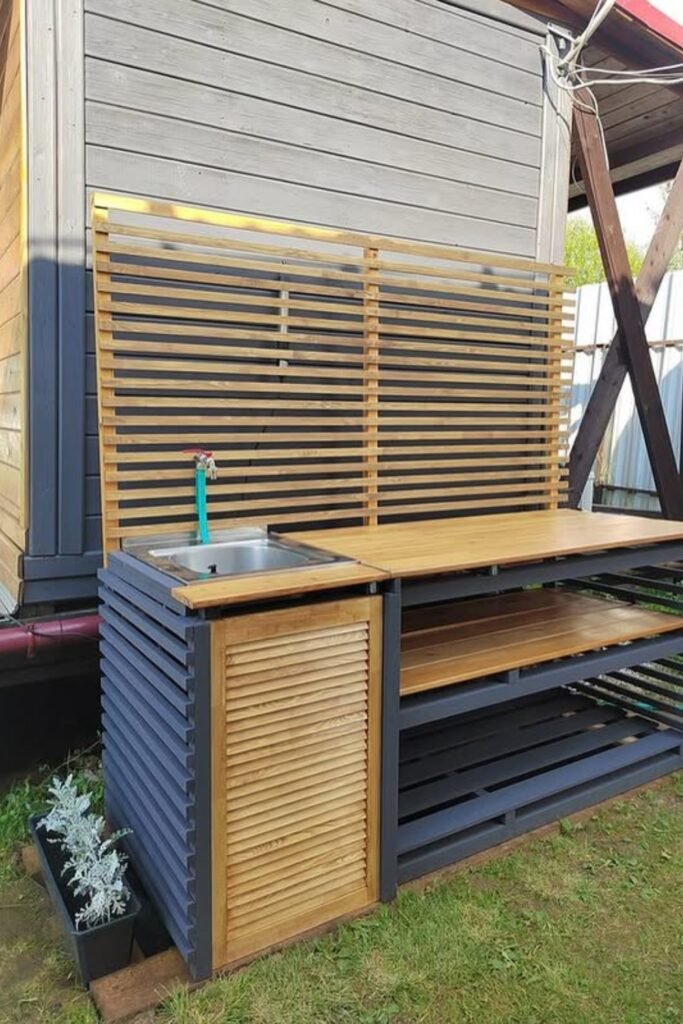
Slatted Privacy Station
A tall slatted backsplash can do double duty, hiding an outdoor sink from view while giving the whole workstation a more finished feel.
Stretch the counter beyond the small basin so you still have a generous dry zone for sorting vegetables, repotting plants, or preparing supplies.
Building open shelves underneath keeps the structure visually lighter, while a small enclosed section can conceal plumbing or less attractive garden essentials.
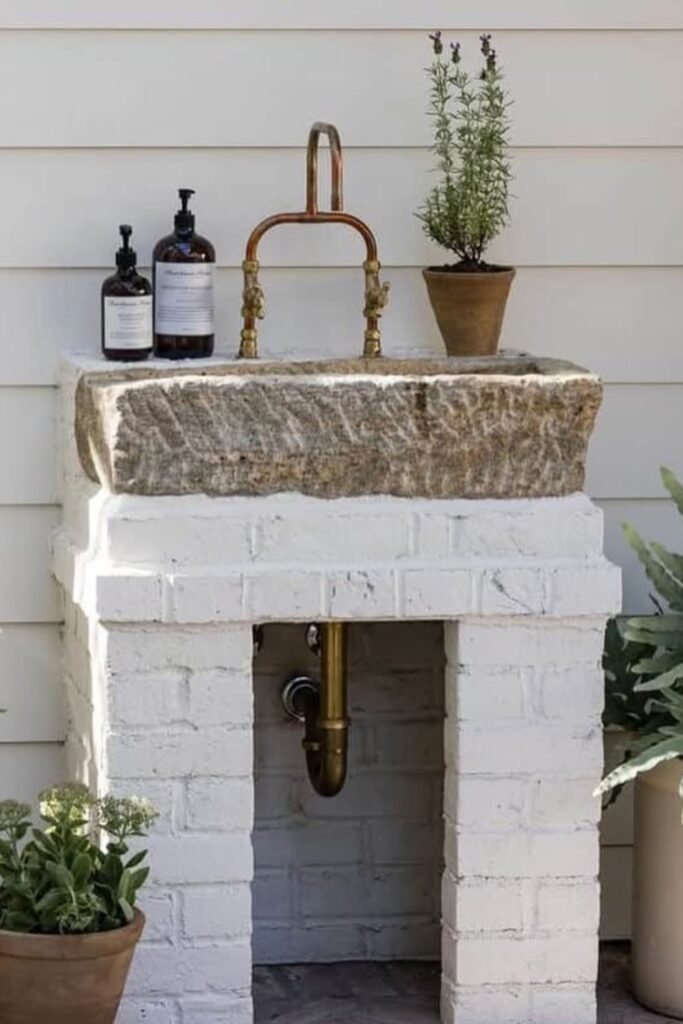
Stone Basin Sink
For a sink that feels permanently rooted in the patio, a heavy stone basin paired with masonry creates a durable architectural focal point.
Keep the plumbing opening accessible beneath the basin rather than sealing everything inside brickwork, making future drain repairs much less frustrating.
Because stone adds serious weight, start with a stable level foundation and confirm the supporting base can comfortably handle the loaded basin.
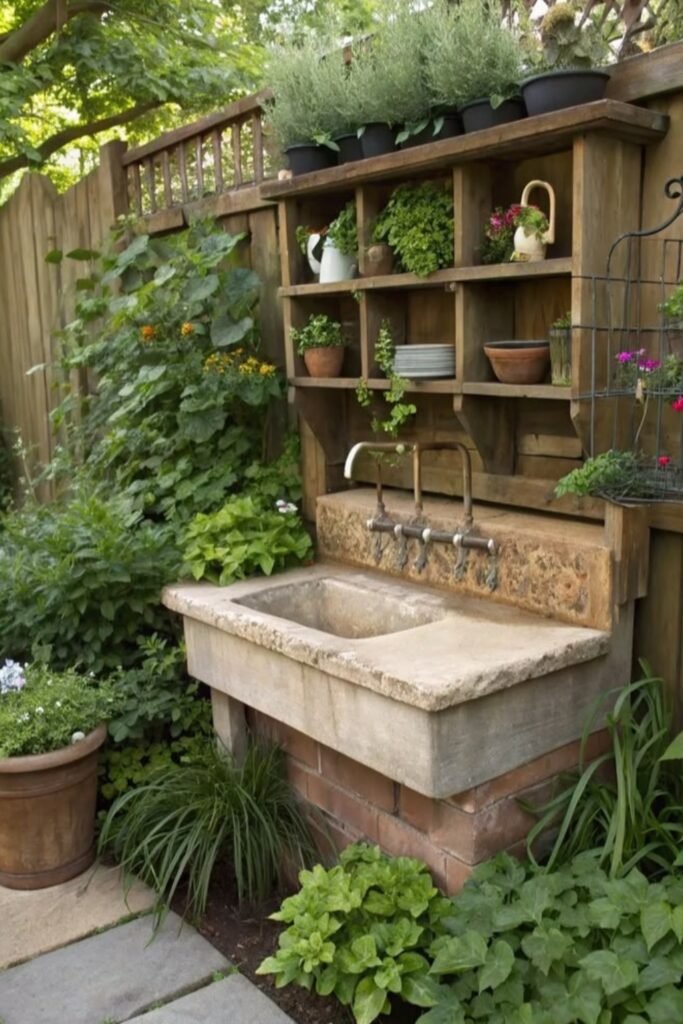
Garden Wall Sink
When floor space is limited, build upward by placing open cubbies above the sink for pots, watering cans, and everyday gardening supplies.
A deep masonry basin handles muddy harvests and oversized tools comfortably, making this setup particularly useful beside productive vegetable or flower beds.
Let surrounding plants soften the hard materials, but keep vigorous growth away from faucets and drains so maintenance remains easy throughout the season.
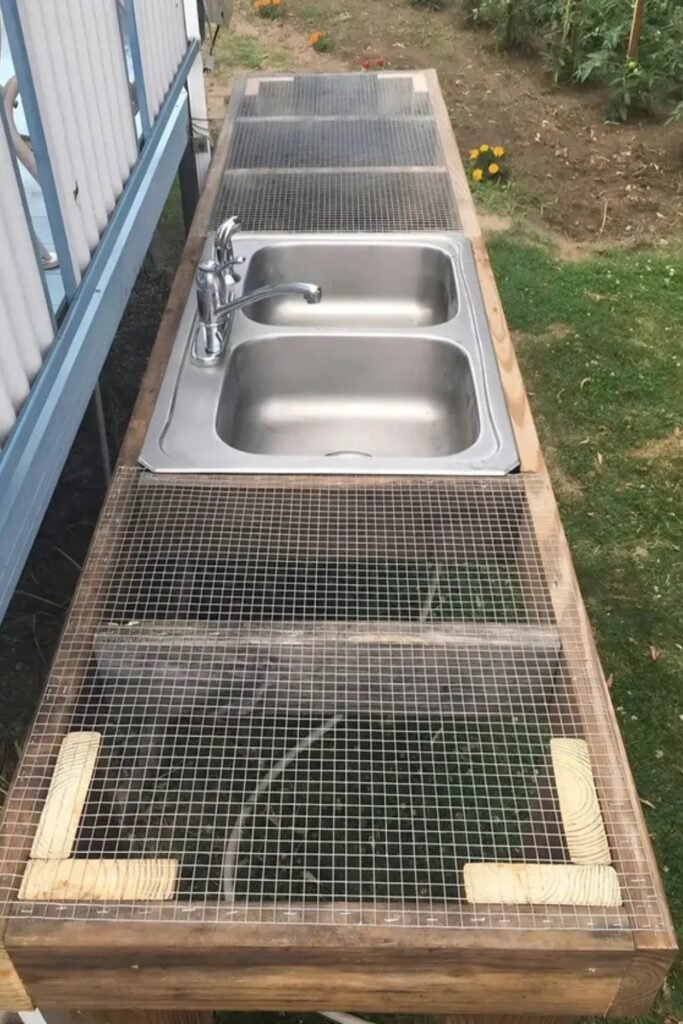
Harvest Rinse Counter
A double basin earns its keep during harvest season, letting you wash muddy produce in one side and rinse cleaner batches separately.
Extend the counter with mesh work surfaces so water and loose soil can fall through instead of collecting around freshly washed vegetables.
This longer layout works especially well beside productive garden beds, where multiple baskets can move from picking to washing without entering indoors.
Reclaimed Porch Sink
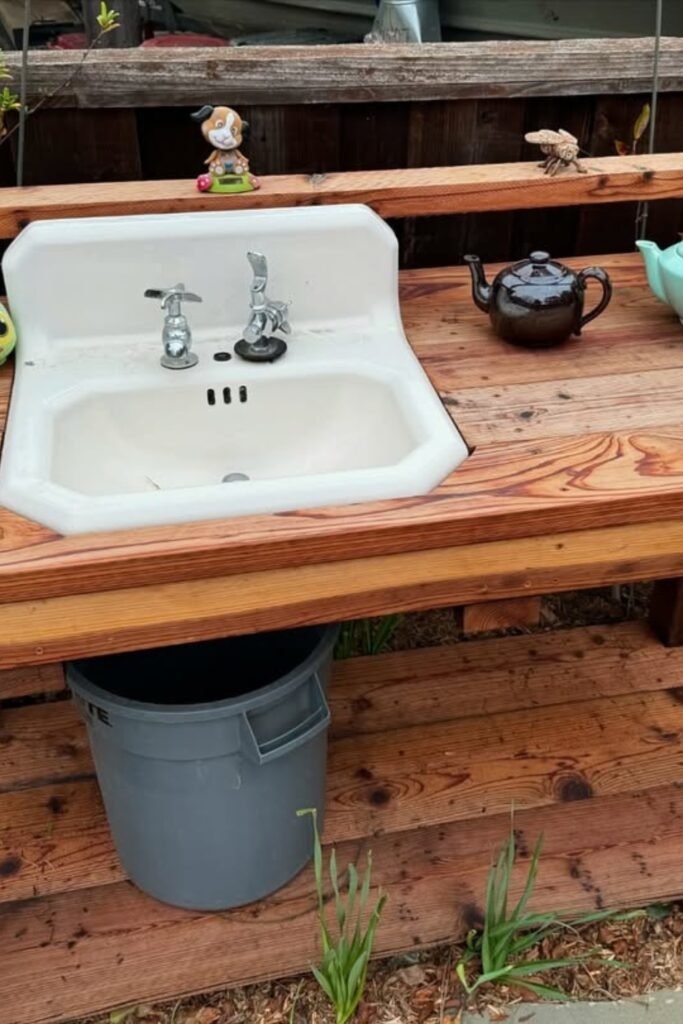
Give an old porcelain sink another life by setting it into a simple timber bench instead of buying an entirely new outdoor fixture.
Leave plenty of wooden counters around the basin for baskets, drinks, or potting supplies, then protect those boards with an exterior finish.
A removable collection bucket underneath keeps the setup straightforward where permanent drainage is impractical, while also making wastewater levels easy to monitor.
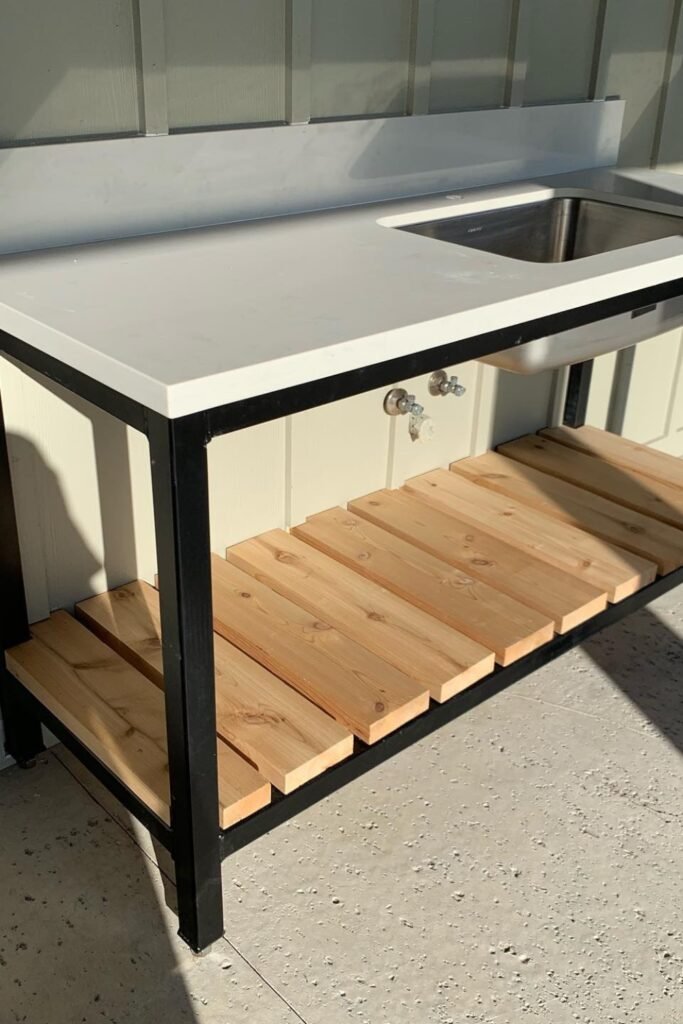
Open Frame Sink
A slim metal frame keeps an outdoor sink feeling uncluttered, making it especially practical against sheds, garages, or narrow covered patio walls.
Offset the basin toward one end so the remaining solid countertop becomes a useful landing zone for tools, produce, or cleaning supplies.
Use slatted wood below for breathable storage, but keep plumbing connections unobstructed so shutoffs, hoses, and drainage remain accessible when maintenance comes around.
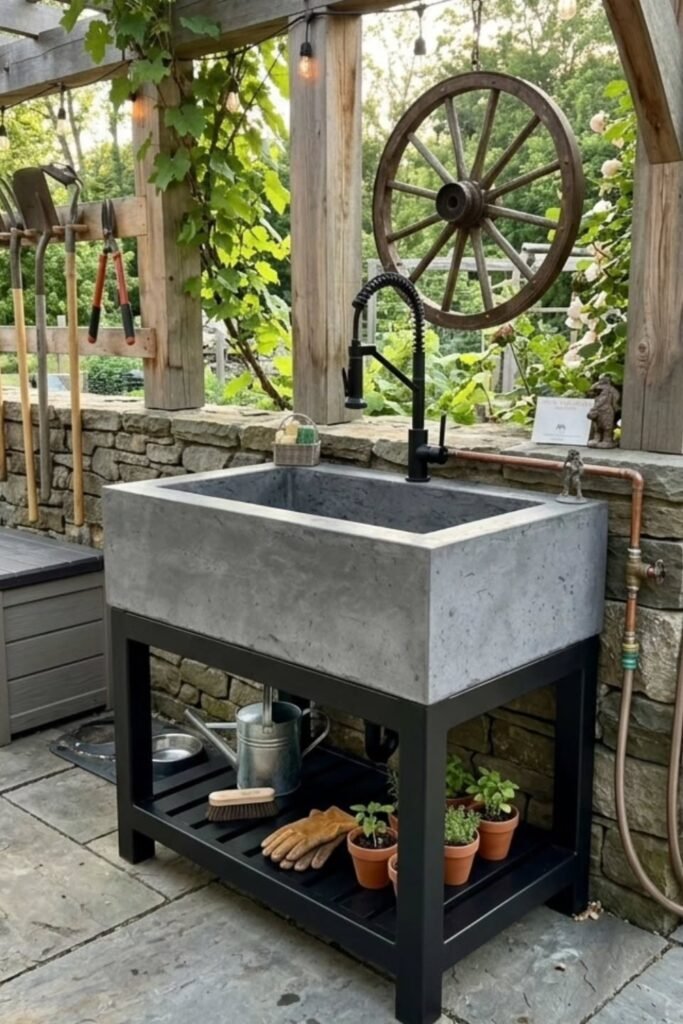
Concrete Utility Sink
For heavy garden cleanup, a deep concrete basin handles oversized tools and muddy harvests while bringing serious durability to a permanent station.
Pair that weighty basin with a strong metal base and open shelf, giving watering cans, brushes, gloves, and pots an easy storage spot.
Keeping the hose connection beside the sink makes watering and washing share one convenient zone, which works beautifully near vegetable beds or greenhouses.
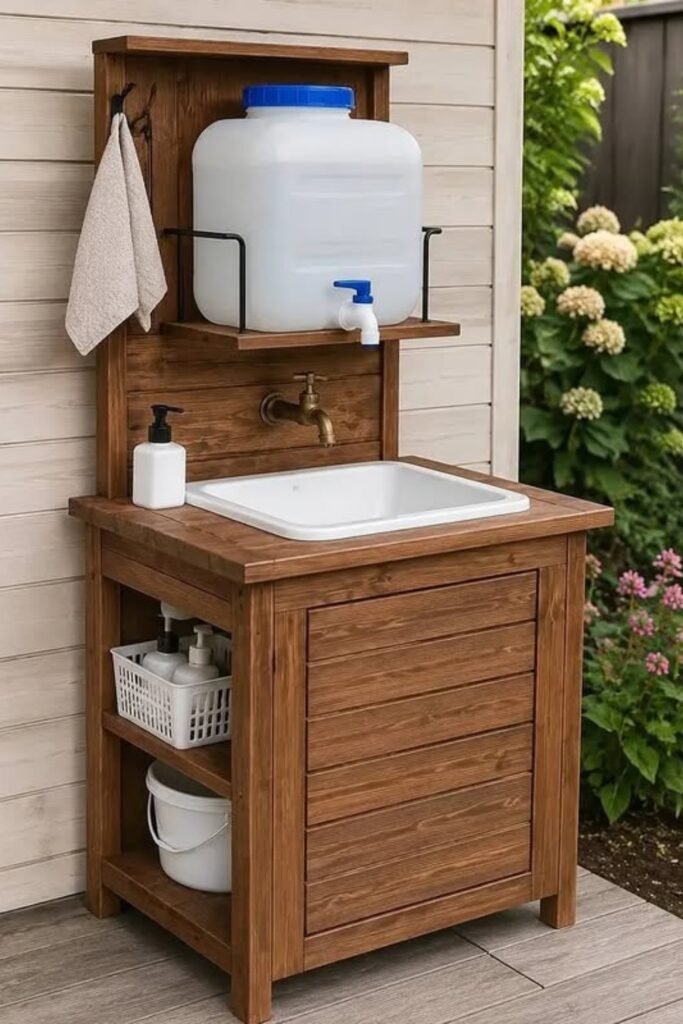
Compact Tank Sink
When running a water line feels excessive, mount a refillable tank above the basin and let gravity handle everyday handwashing or light rinsing.
Build enclosed storage beneath the sink to hide collection containers and supplies, while open side shelves keep soap and towels within reach.
This compact footprint fits decks and small patios nicely, especially when you want a self-contained station without sacrificing valuable outdoor floor space.
Bucket Drain Stand
For the simplest off-grid setup, pair a raised water container with a basin and catch wastewater in a removable bucket underneath.
Keeping the supply tank directly above the sink creates straightforward gravity flow, while the open frame makes refilling and emptying containers hassle-free.
Add a towel hook and soap beside the basin, turning this basic build into a practical handwashing station for busy garden days.
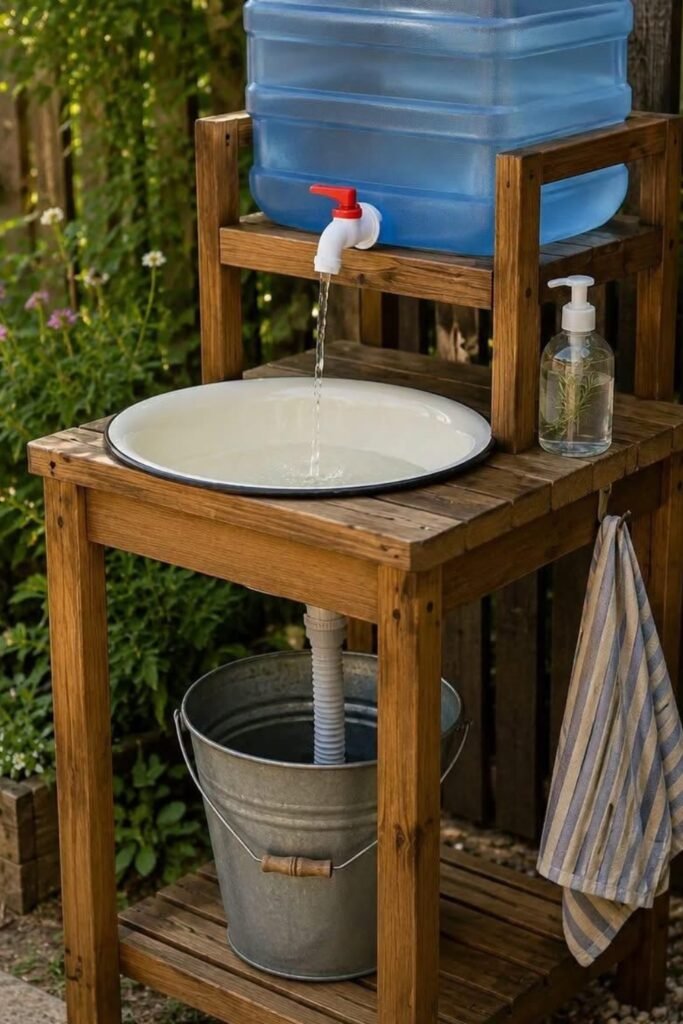
Repurposed Table Sink
Before buying lumber, look at an old table differently; a sturdy furniture base can save construction time and give your sink character.
Cut the top carefully for a drop-in basin, then reinforce underneath if needed so the remaining frame comfortably supports water-filled weight.
A galvanized tub beneath can serve as accessible collection storage, making this approach especially useful where permanent drainage is not an easy option.
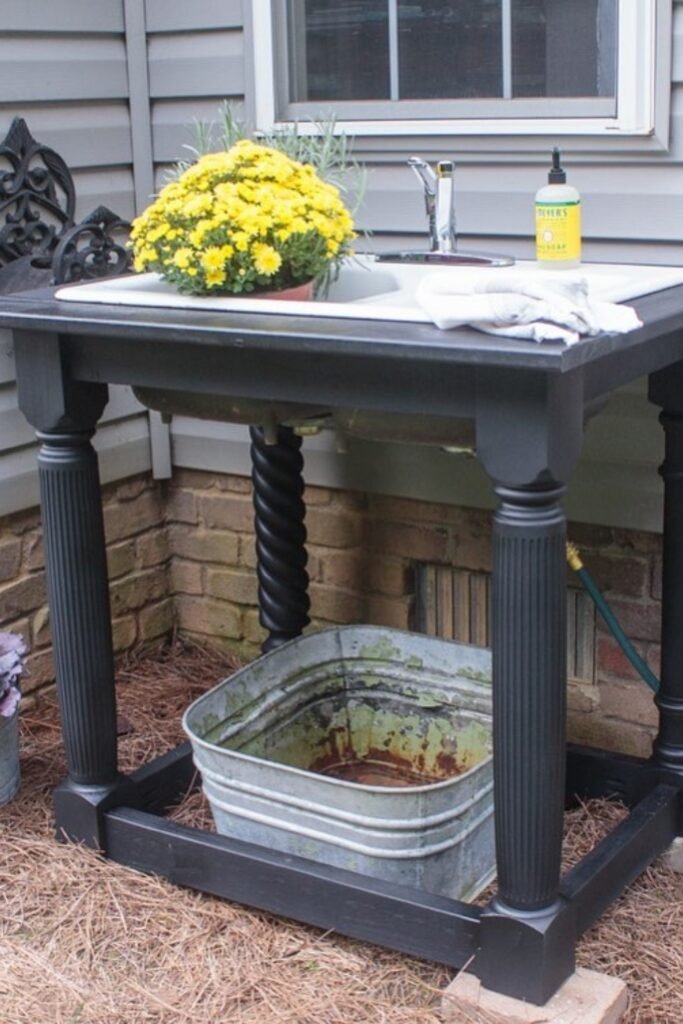
Deep Utility Wash
Some outdoor jobs need more than a kitchen-sized basin, so choose a deep utility sink when cleaning oversized tools or muddy equipment.
Add a flexible spray hose alongside the faucet to reach awkward corners, rinse bulky items, and direct water exactly where it is needed.
Keep the supporting frame open underneath for easy plumbing access, then add shelving later if storage becomes more important than maintenance clearance.
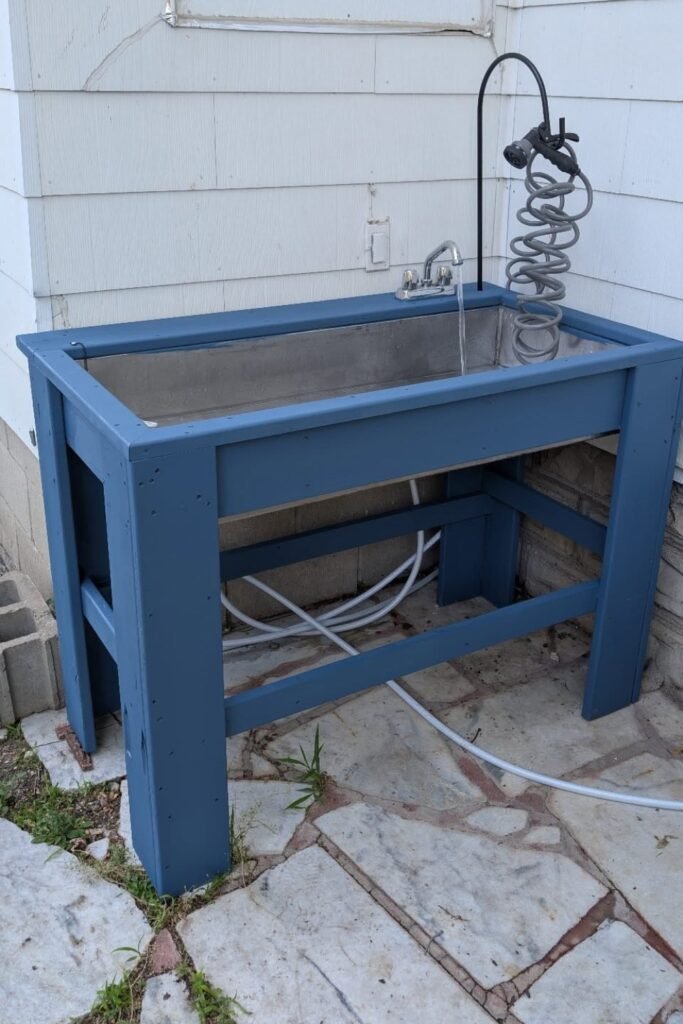
Concrete Garden Counter
For a station that can take plenty of outdoor wear, a solid concrete counter gives you a tough surface for watering and cleanup.
Divide the open base into zones, keeping the hose and watering gear on one side while wooden shelves organize smaller garden supplies.
This simple layout suits decks especially well, where a narrow counter can sit against a wall without consuming valuable walking or seating space.
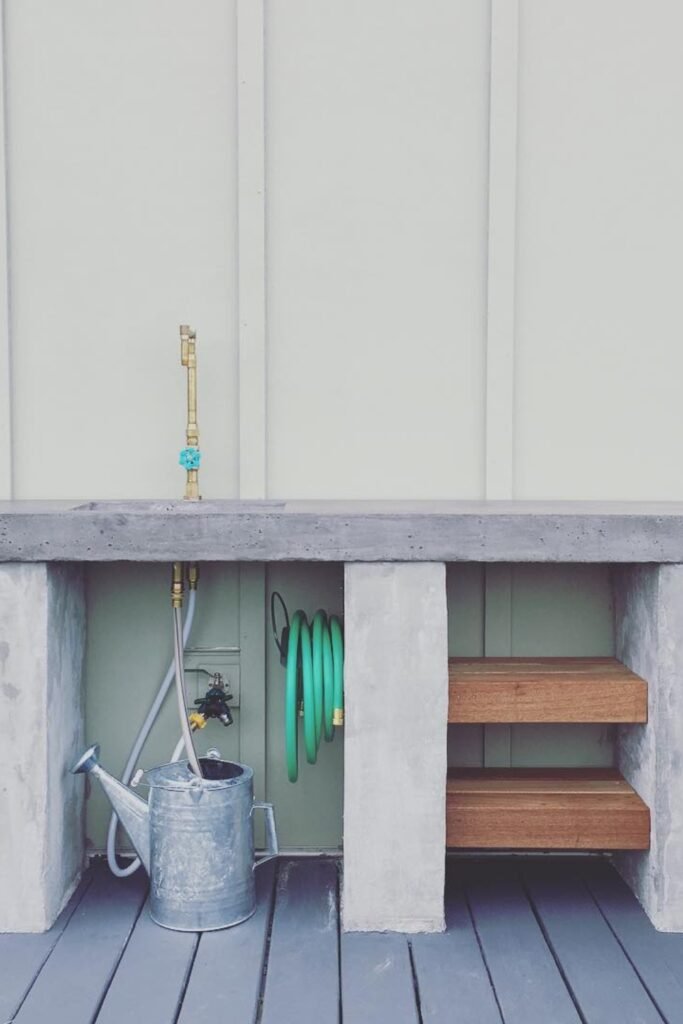
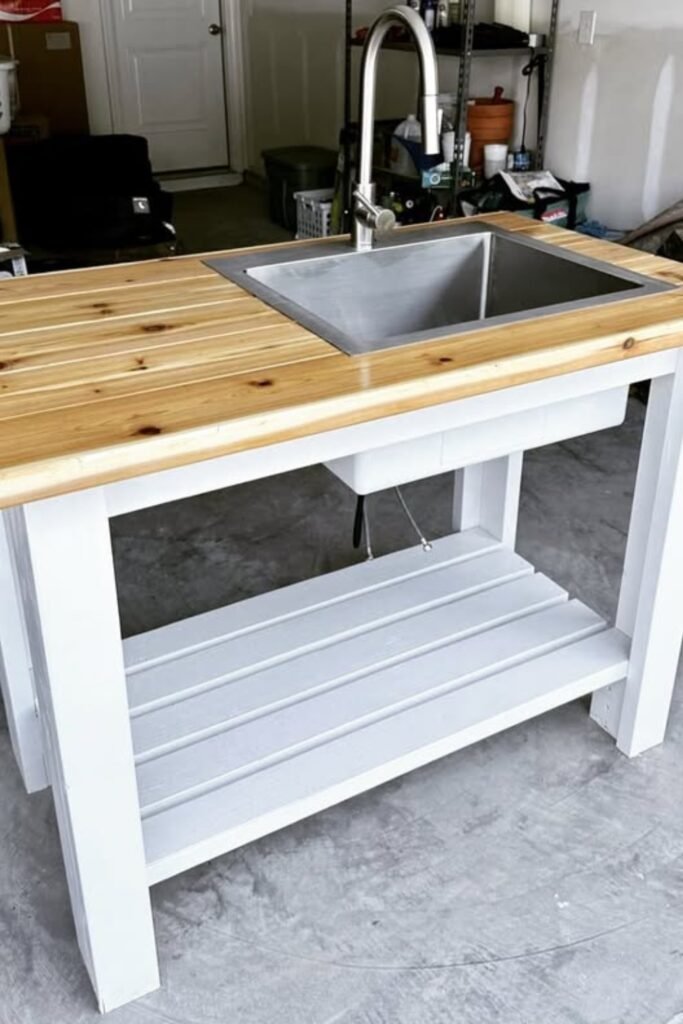
Cedar Work Sink
A wide wooden counter makes washing more comfortable because you can keep baskets, tools, or freshly rinsed produce beside the deep basin.
Centering the sink leaves usable workspace on both sides, while a slatted lower shelf gives bulky buckets and supplies somewhere convenient to land.
Seal the cedar carefully around the sink cutout and faucet, since these exposed edges will receive more moisture than the surrounding boards.
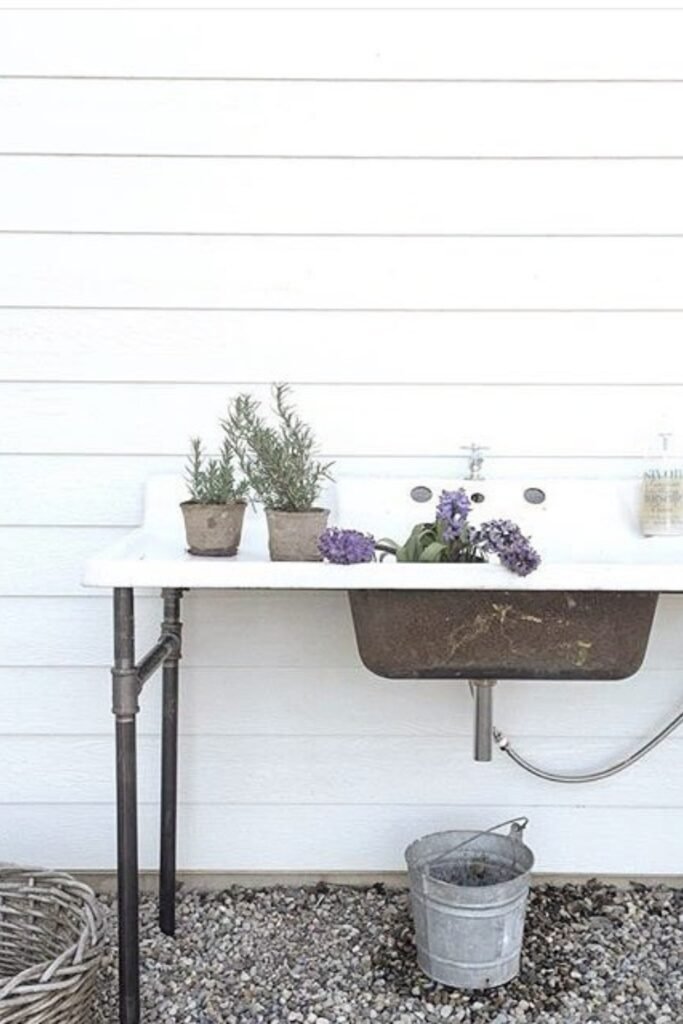
Minimal Hose Sink
You can keep an outdoor washing area surprisingly simple by supporting a salvaged sink on metal legs and using the nearby spigot.
Run a short supply connection from the outdoor faucet, then keep the drain route visible so clogs, leaks, or adjustments remain easy to handle.
This stripped-back setup works nicely beside a garden or potting area where function matters more than cabinetry, shelves, or decorative finishes.
FAQs
Can I Connect a DIY Outdoor Sink Directly to a Garden Hose?
Yes, a garden hose can provide cold water without running permanent supply lines. You’ll need compatible fittings or an adapter between the hose and faucet.
This works especially well for garden and potting stations, but choose drinking-water-safe components if you plan to wash produce or use the water around food.
What Is the Easiest Way to Drain a DIY Outdoor Sink?
For a simple non-permanent station, collecting wastewater in a removable bucket is often the easiest setup.
If you want to drain elsewhere, check local rules first because requirements can differ depending on soaps, food waste, grease, and where the water goes.

Hi, my name is Ali Mehmood! I’m a passionate writer and DIY enthusiast who loves turning creative ideas into practical, hands-on projects.
I created this website to share inspiring, budget-friendly ideas that you can do yourself – whether it’s organizing your home, crafting something unique, or creating fun projects for kids and pets.
I believe DIY isn’t just a hobby – it’s a smart way to save money, reduce waste, and enjoy the satisfaction of making things with your own hands.
I’m excited to have you as part of this growing community, and I’ll continue bringing you helpful, realistic, and fun DIY ideas you can actually use.