This post may contain affiliate links: read full affiliate disclosure.
Shoes crowd the floor, folded clothes pile up wherever they fit, and one basic shelf above the rod quickly becomes overloaded.
DIY closet shelves can turn awkward corners, empty upper walls, and unused vertical space into storage that actually works for your clothes and everyday routine.
I’ve gathered practical DIY closet shelf ideas for small reach-ins, larger closets, shoes, baskets, folded clothes, and hanging sections.
Twin Towers
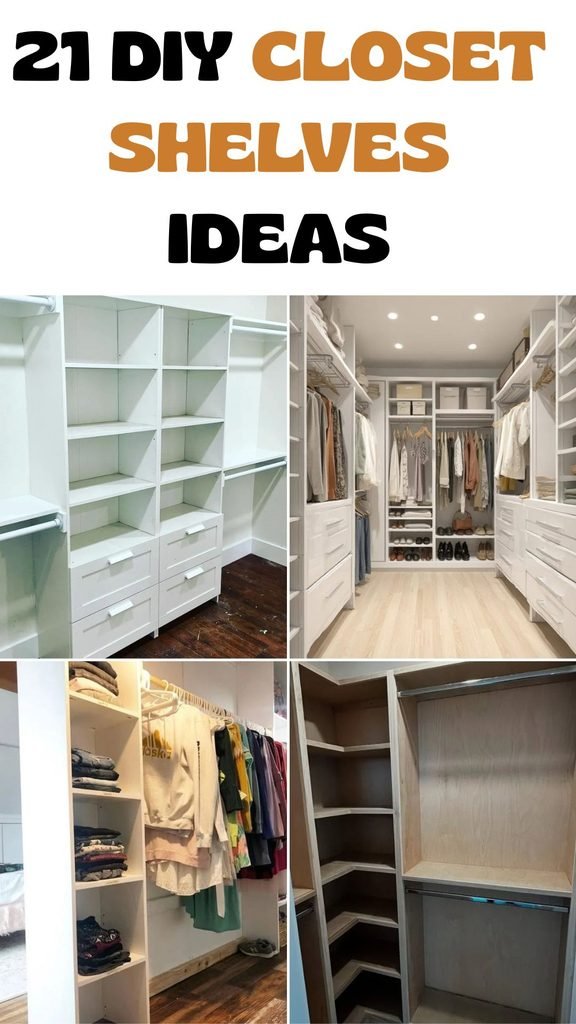
Instead of letting one long hanging section waste the middle of your closet, use twin shelving towers to create practical storage from floor to ceiling.
Open cubbies handle folded clothes, baskets, or everyday accessories, while the lower drawers neatly hide smaller pieces that usually make exposed shelving look cluttered.
Run hanging rods outward from both towers, using different heights where needed, so longer clothes and shorter garments each get comfortable clearance underneath them.
Walk-In Shelves
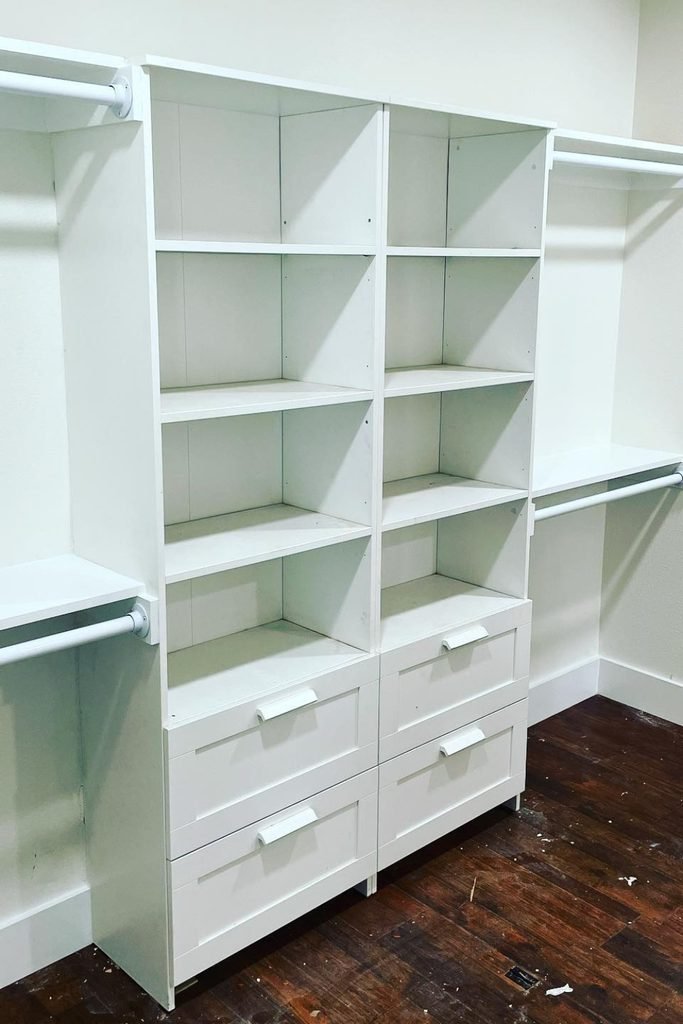
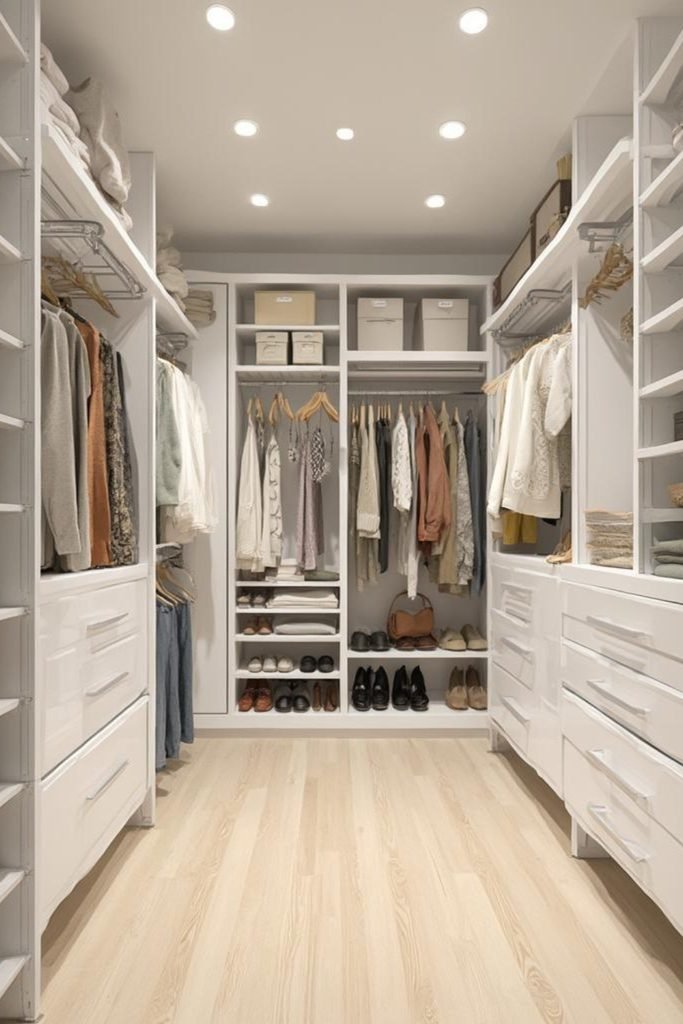
A walk-in closet becomes easier to navigate when shelves line the outer walls while hanging sections and drawers occupy the deeper central storage areas.
Reserve eye-level shelves for folded clothes you reach regularly, then move bulky linens, boxes, and seasonal pieces onto the highest shelves safely above them.
Recessed ceiling lights are especially useful with tall shelving because they brighten narrow aisles and help you see items tucked toward deeper shelf sections.
Corner Shelves
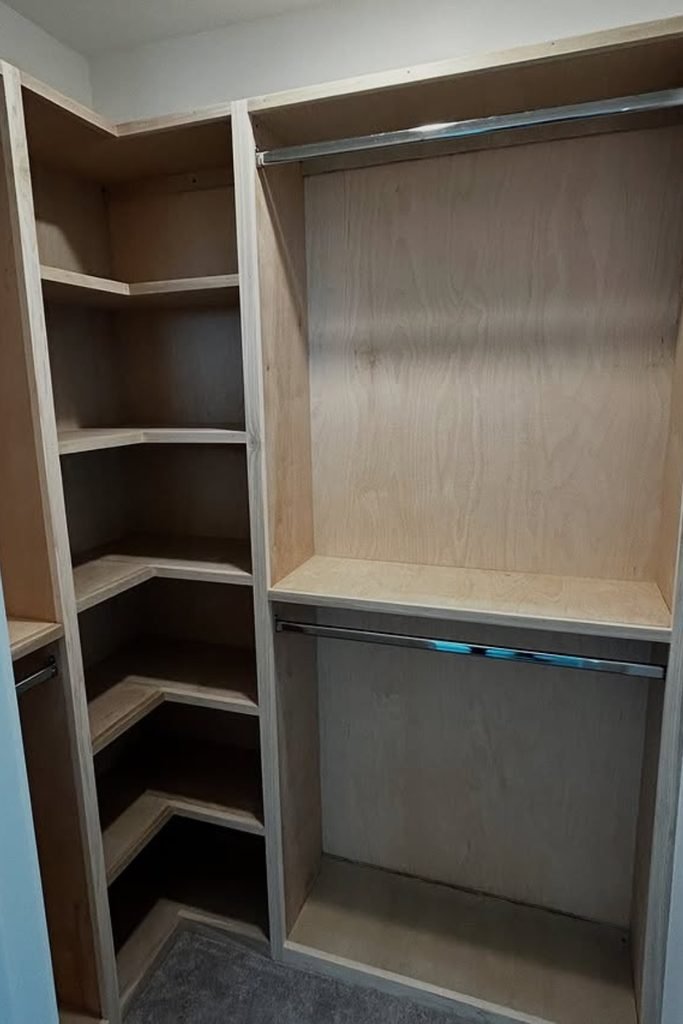
Awkward inside corners do not have to become dead space when staggered shelves wrap around the turn instead of stopping abruptly at one wall.
Build the corner shelves beside a vertical hanging bay, leaving enough open height for shirts above and another rod below for shorter everyday garments.
Using unfinished plywood first also makes fitting easier because you can test every shelf against imperfect walls before sanding, edging, and applying your finish.
Slim Tower
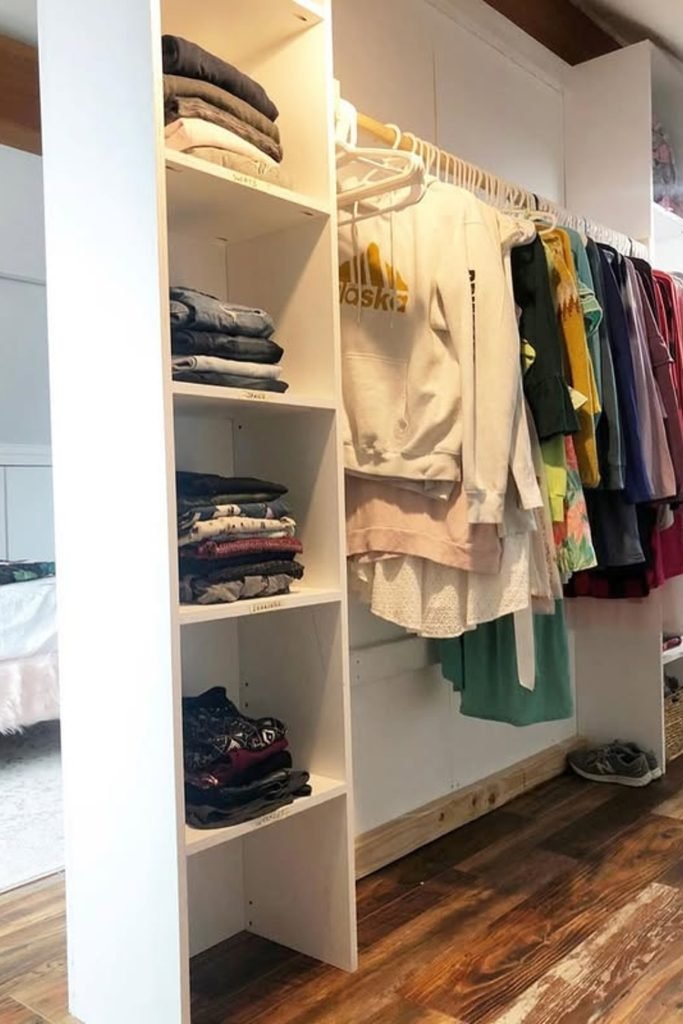
One slim shelving column can completely change a basic closet when you need folded storage but cannot sacrifice an entire wall of hanging space.
Place everyday jeans, shirts, and smaller clothing stacks on the open shelves, while the adjacent rod stays available for dresses, jackets, and longer pieces.
A small light above the tower makes darker shelves easier to use, and matching white panels help the addition blend naturally with surrounding walls.
Freestanding Storage
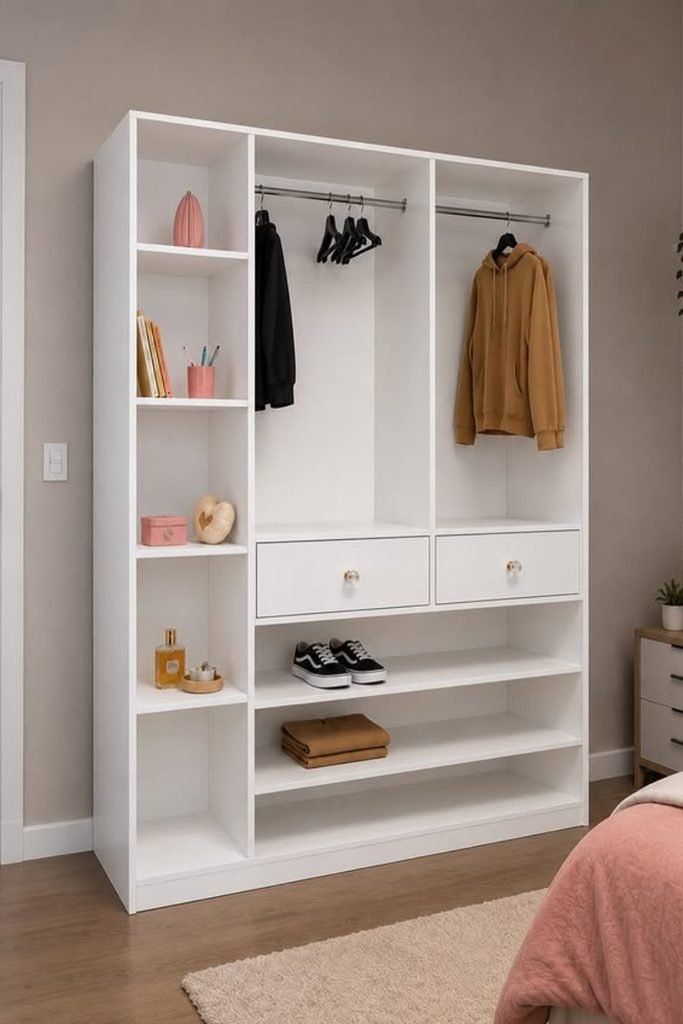
Working without a traditional closet room can still feel organized when one freestanding unit combines open shelves, hanging rails, practical drawers, and shoe storage.
Use the narrow side cubbies for accessories and smaller folded pieces, then reserve the wide lower shelves for shoes, bags, or frequently worn clothes.
Measuring garment length before positioning the rods prevents hanging clothes from crowding drawers and shelves.
Adjustable Center
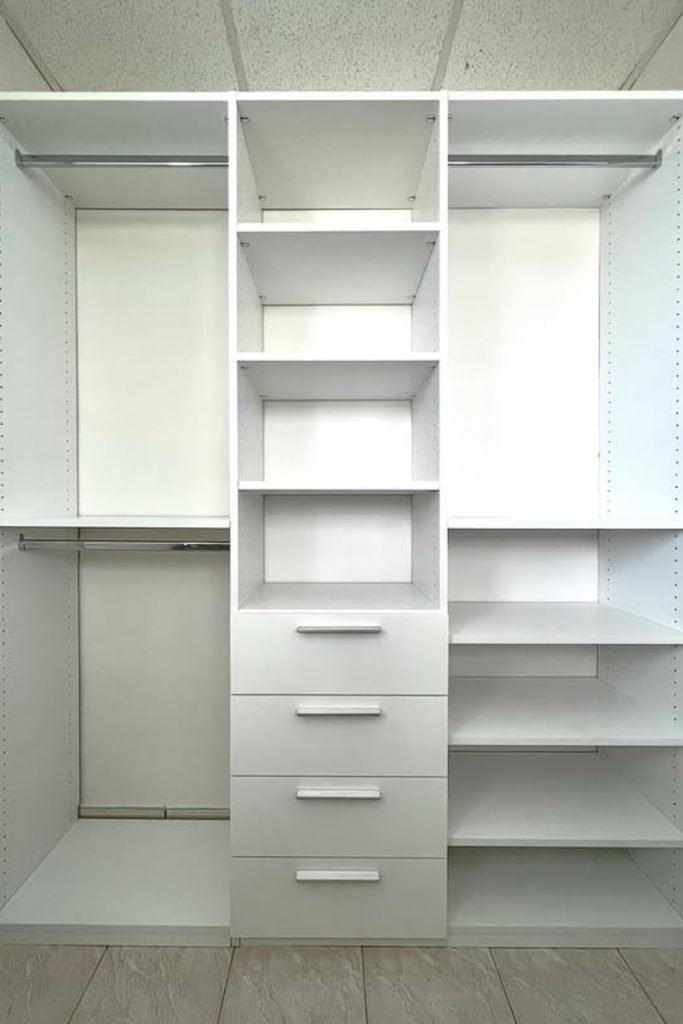
When your closet needs several storage zones, a centered shelf column prevents folded clothes from competing with hanging pieces.
Use adjustable shelf holes to change spacing as your wardrobe changes, while four drawers handle underwear, accessories, and smaller items.
Separate rods on both sides also let you organize short and long garments without sacrificing useful shelving underneath them.
Drawer Core
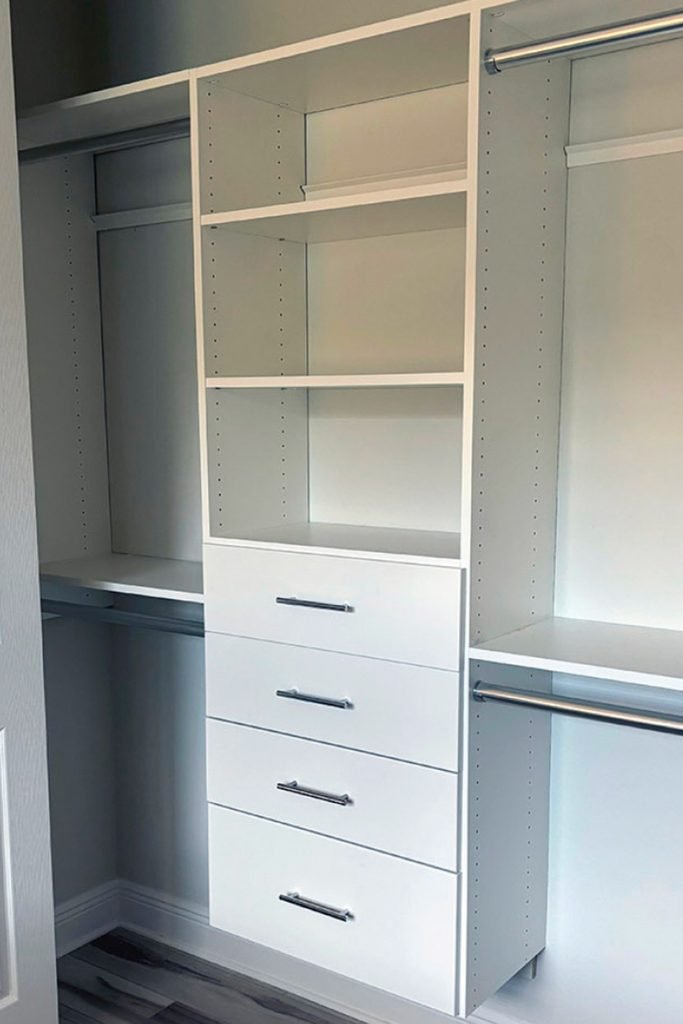
A drawer tower can become the hardworking center of a narrow closet, especially when open shelving alone starts looking cluttered.
Leave the shelves above open for folded favorites or baskets, then use deep drawers for pieces you want hidden away.
Double hanging rods on either side make better use of height, while adjustable holes help you fine-tune shelf positions later.
Basket Columns
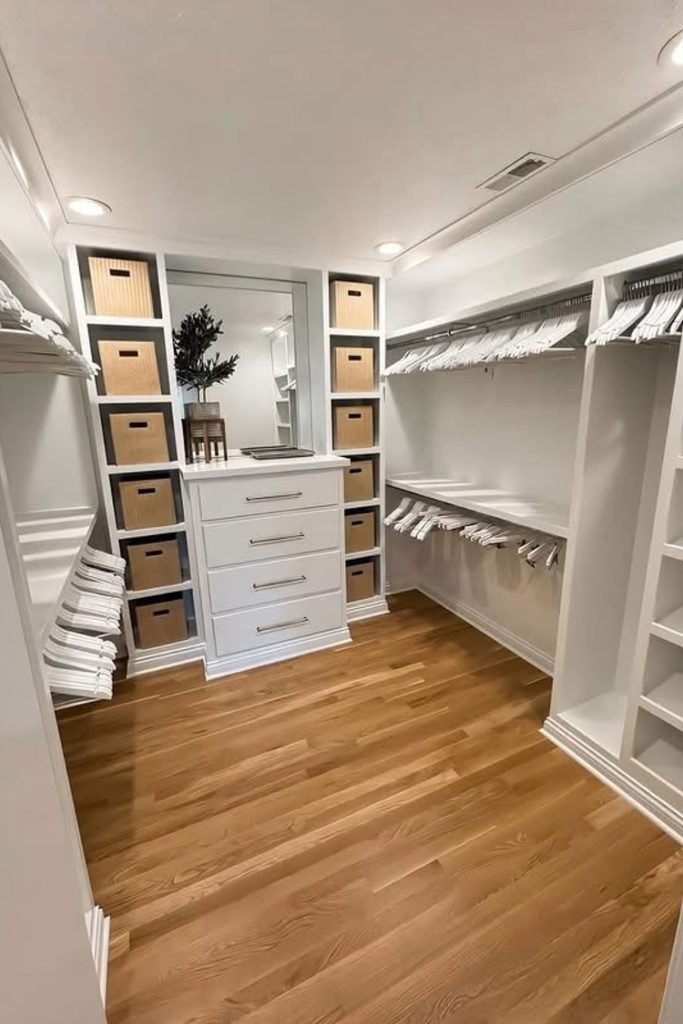
Built-in basket columns turn narrow wall sections into useful storage, so smaller belongings stop spreading across your main closet shelves.
Position matching baskets beside a central drawer unit for accessories, seasonal pieces, or linens that benefit from quick pull-out access.
Wrap hanging rods around the remaining walls, then reserve open end shelves for shoes or folded items you reach regularly.
Laundry Shelves
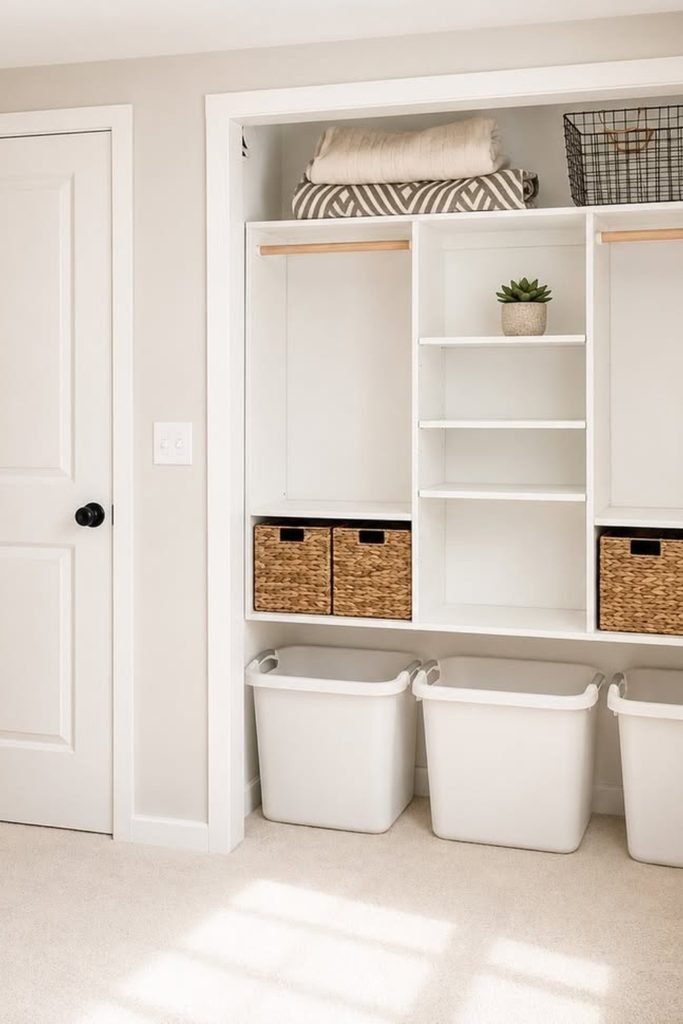
Closet shelving can work beyond clothing storage when baskets and laundry bins need dedicated spots instead of occupying valuable floor space.
Set woven baskets beneath the hanging sections for smaller essentials, while three large bins below make sorting laundry much easier.
Use the high shelf for bulky bedding and occasional items, leaving the central shelves accessible for everyday folded pieces or supplies.
Wraparound Shelves
Empty corners become valuable storage when shelves continue around both walls instead of leaving an awkward gap between separate units.
Mix wider shelves with adjustable sections so folded clothes, baskets, shoes, and bulky items can each have comfortable spacing.
Finish the upper level with continuous shelving, giving seasonal bins a dedicated home without interfering with everyday hanging areas below.
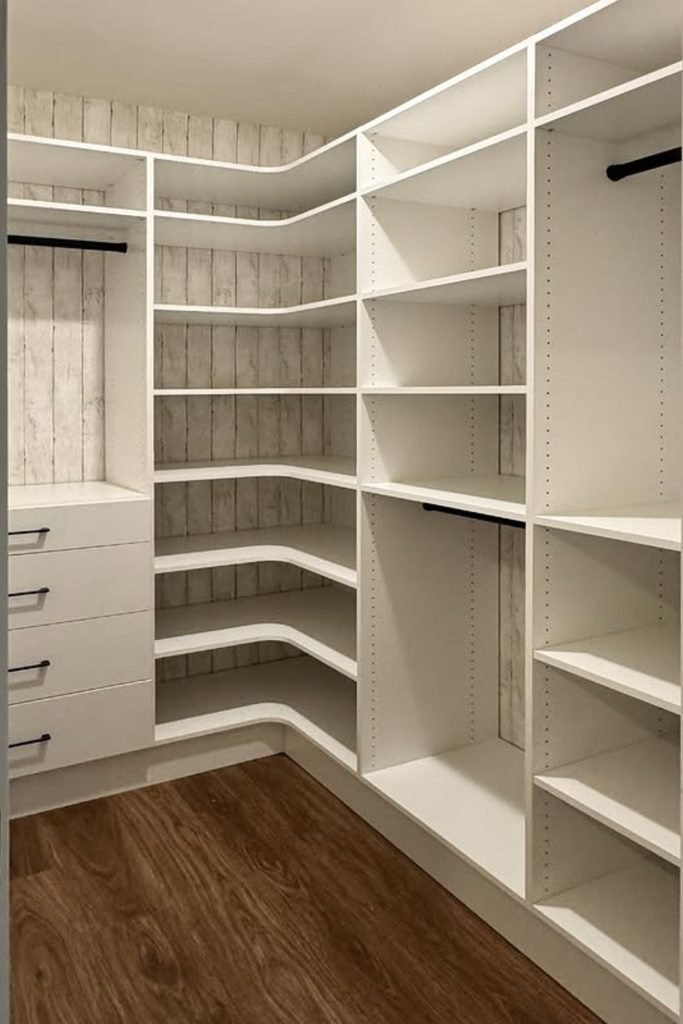
Shoe Grid
If shoes constantly disappear into floor piles, a tall cubby grid makes every pair visible before you start getting dressed.
Build smaller compartments for sneakers and flats, then leave taller openings along the bottom where boots need extra vertical clearance.
An open middle shelf breaks up the grid nicely and creates useful space for bags, shoe supplies, or everyday accessories.
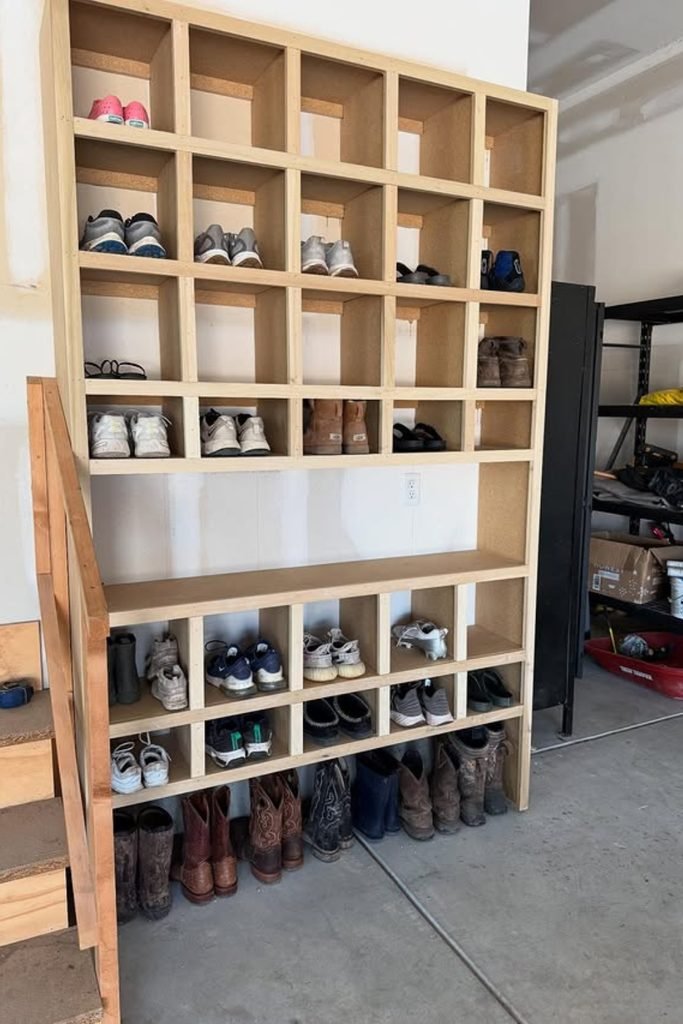
Hanging Zones
Splitting one closet into several hanging heights works especially well when your wardrobe contains more shirts and trousers than long garments.
Place narrow shelves between the rods for folded pieces, while a taller side tower handles shoes, bags, or frequently used accessories.
Black rods against white shelving add crisp contrast, making a straightforward DIY build feel more finished without complicated decorative trim.
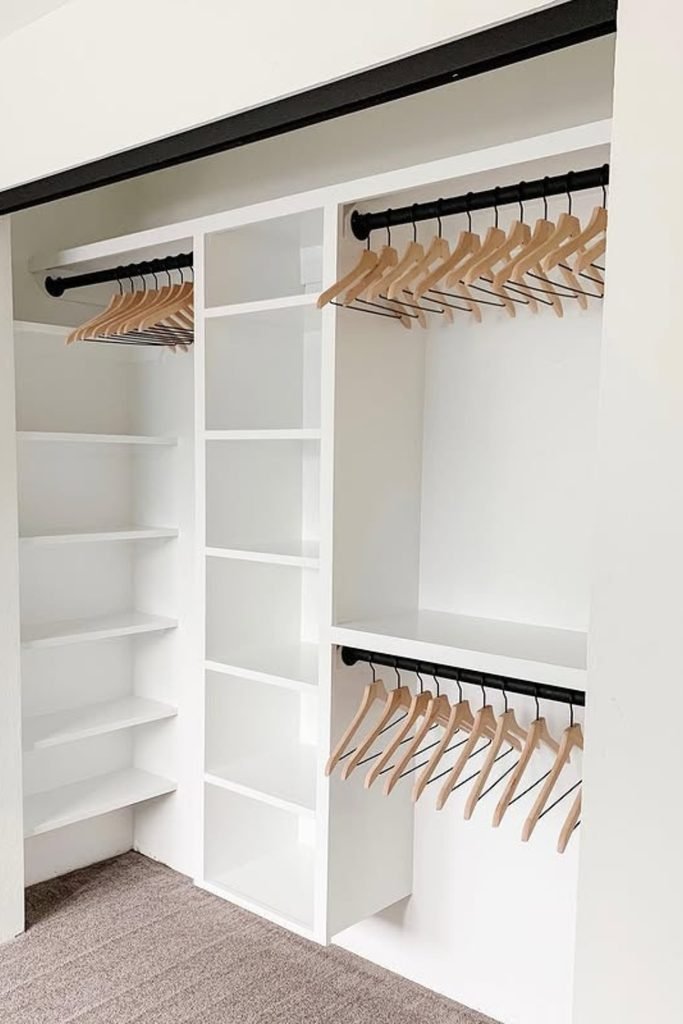
Reachable Storage
Shelves work better when everyday pieces sit around eye level, saving the highest sections for belongings you only need occasionally.
Pair open shelves with nearby drawers so folded clothes stay visible while smaller accessories remain contained instead of cluttering each surface.
Leaving generous aisle space in front matters too, since you need enough room to reach shelves and pull drawers comfortably.
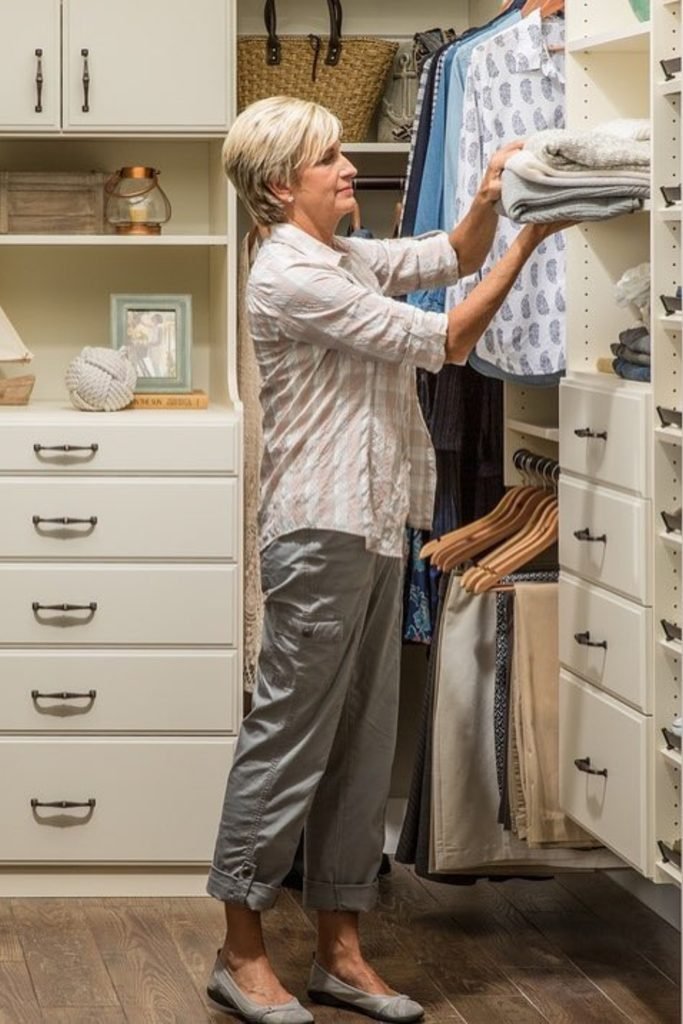
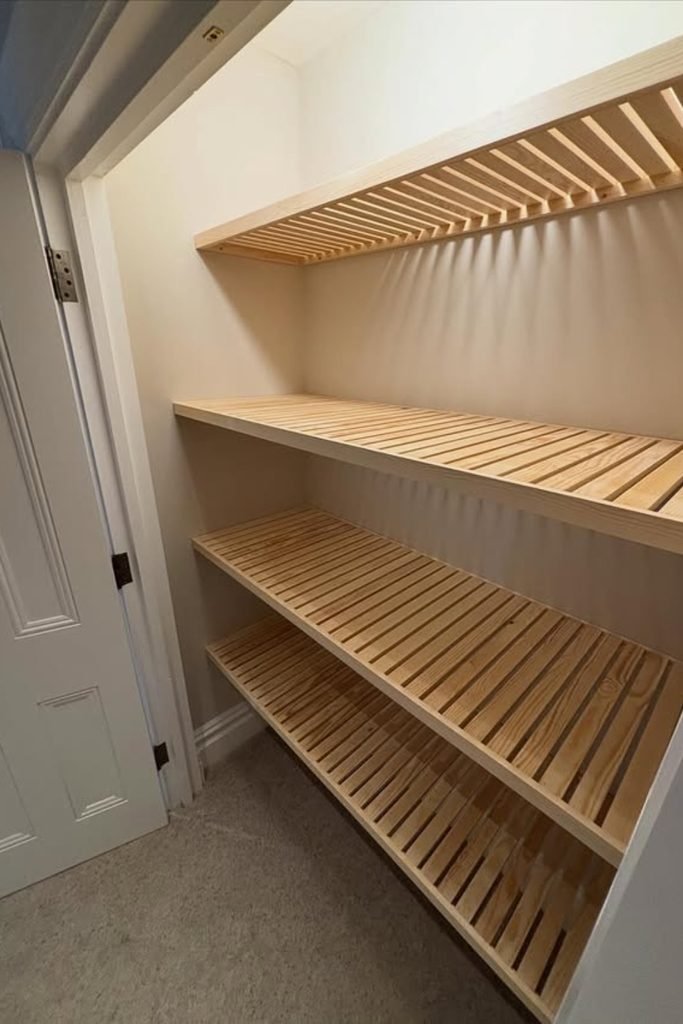
Slatted Shelves
Slatted wood shelves bring airflow into a packed closet, which makes them especially practical for linens, towels, shoes, or folded clothing.
Space the slats evenly across sturdy frames, then vary shelf heights so bulky bedding and smaller stacks each fit comfortably.
Natural wood also brings warmth into plain walls, letting you create useful storage without relying on another all-white built-in system.
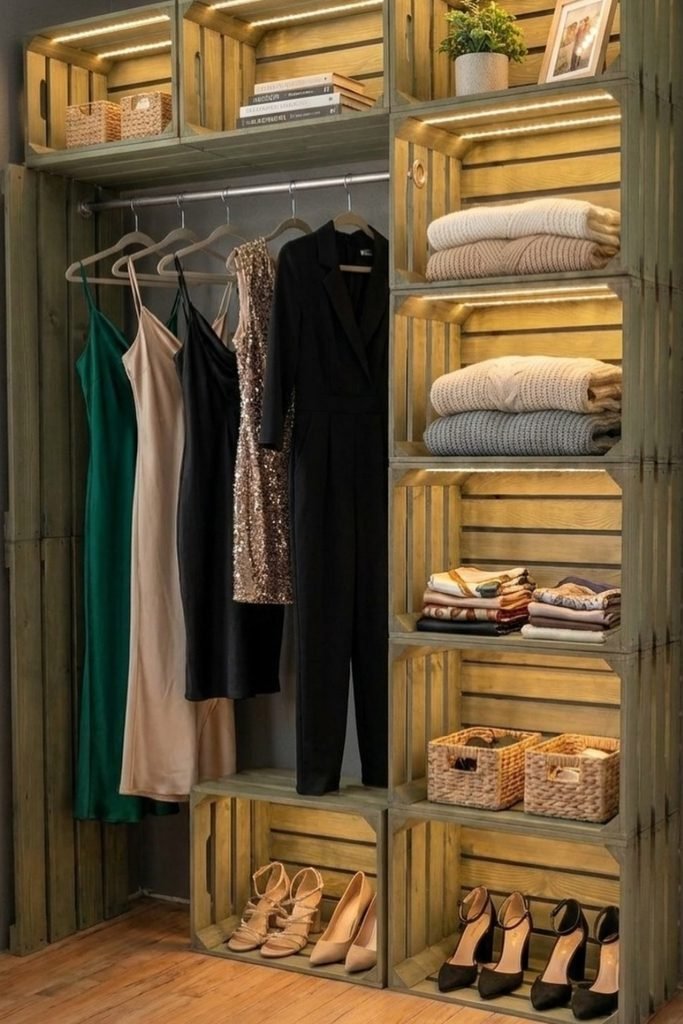
Crate Shelves
Wooden crate-style cubbies can turn an open wall into wardrobe storage while bringing more character than standard painted closet shelving.
Stack deeper boxes vertically for folded sweaters and baskets, then reserve the lower cubbies for shoes you want within easy reach.
Warm strip lighting tucked beneath upper edges highlights each compartment and makes darker stained wood much easier to navigate at night.
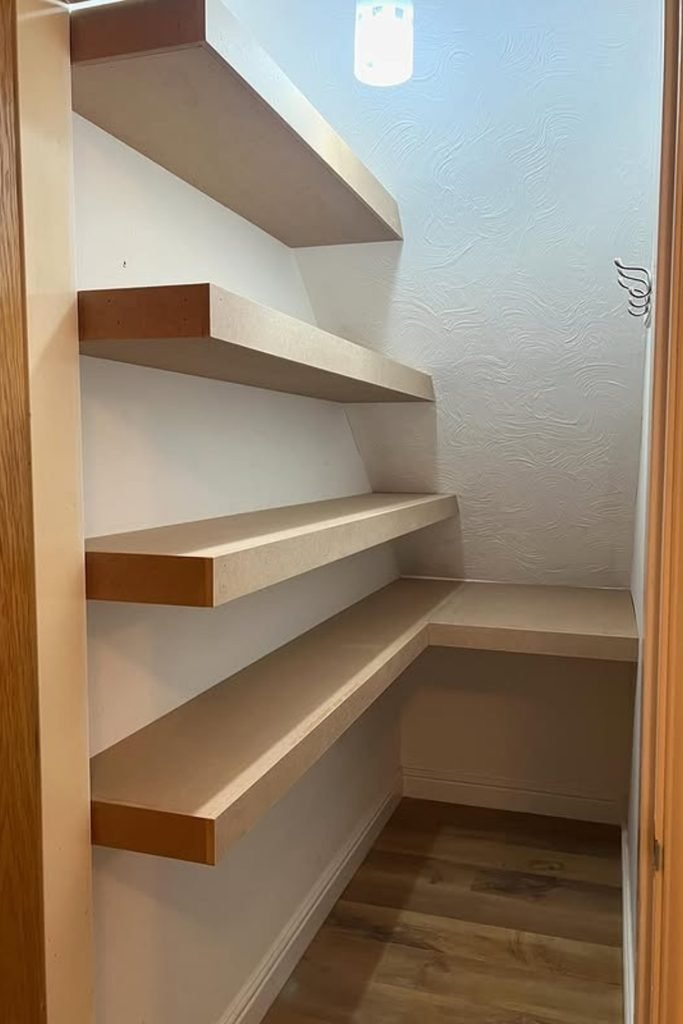
Floating Shelves
Narrow closets feel less boxed in when thick floating shelves provide storage without vertical panels dividing every section of wall.
Run several shelves along one side, then wrap the lowest level around the back wall to capture otherwise awkward corner space.
Secure hidden supports carefully because longer floating spans need reliable reinforcement, especially when you plan to store heavier folded items.
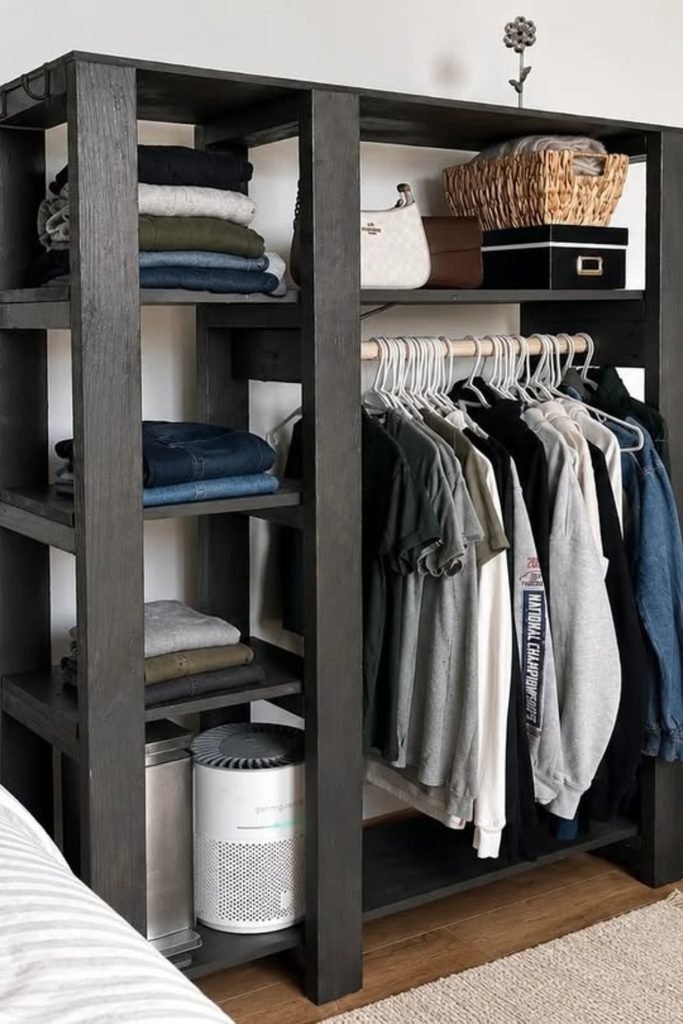
Open Wardrobe
No built-in closet is not necessarily a problem when a freestanding wood frame combines hanging space and shelving in one footprint.
Dedicate one side to folded clothes and household pieces, while the wider section leaves enough height for shirts and jackets.
Upper shelving handles baskets and occasional belongings nicely, helping the open wardrobe stay organized instead of becoming another visible clutter zone.
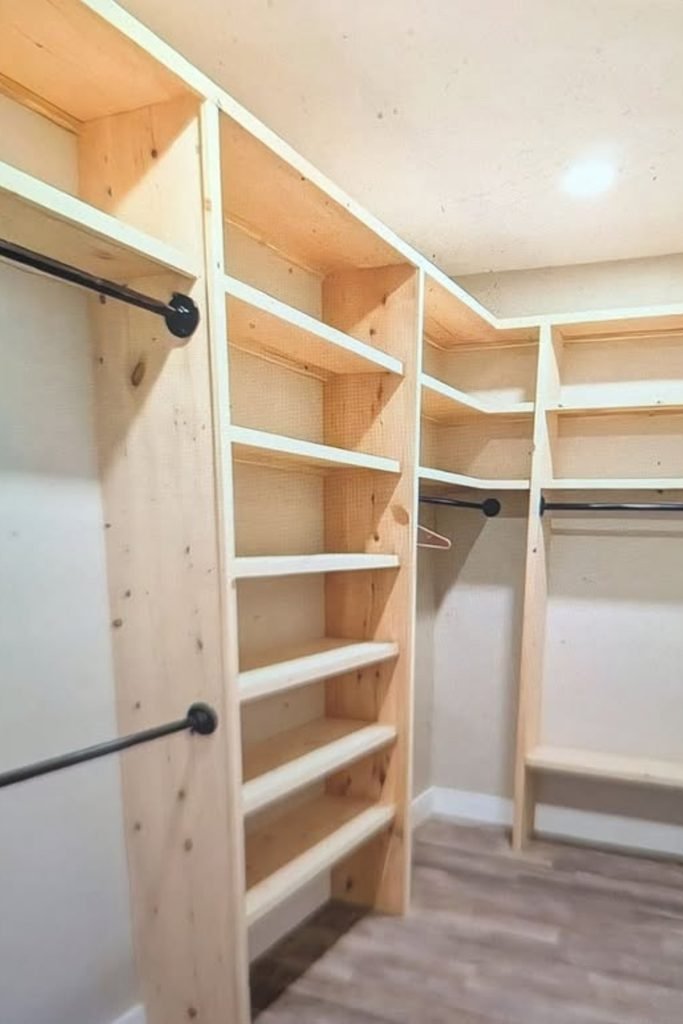
Pine Shelves
Raw pine boards make a practical starting point when you want custom closet storage without paying for a complete fitted system.
Use narrow shelves for folded clothes and shoes, then connect upper boards around corners to capture space that normally sits empty.
Black hanging rods add useful contrast against unfinished wood, while sanding and sealing later can create a cleaner, longer-lasting surface.
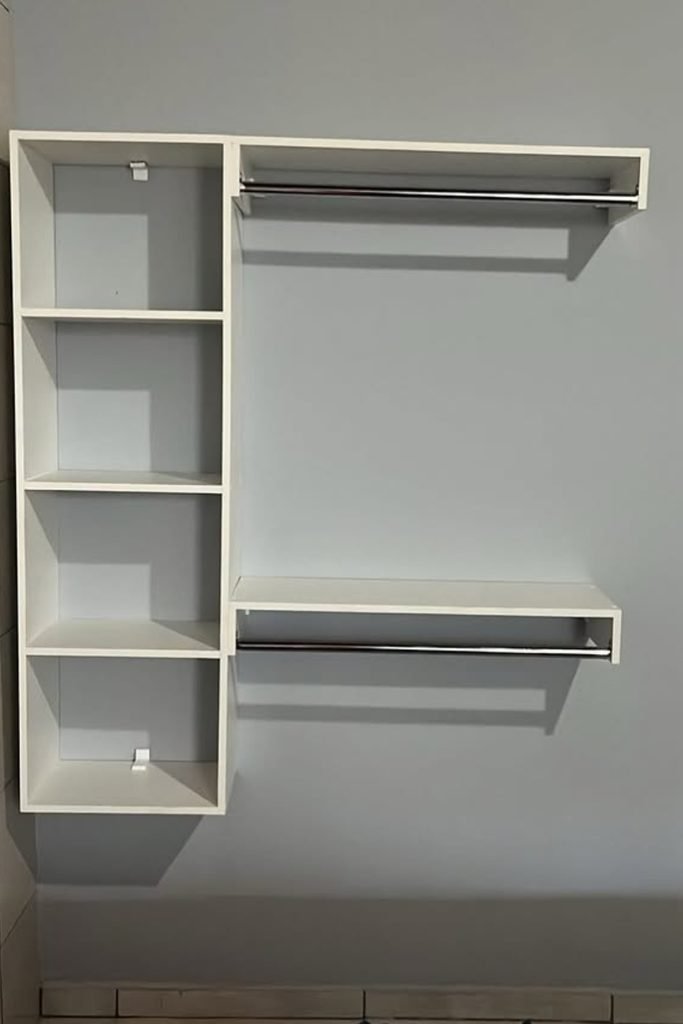
Wall Organizer
When floor space matters, mounting the entire organizer above it leaves the closet easier to clean and visually less crowded.
Stack four cubbies along one side, then extend shelves outward with rods underneath for separate upper and lower hanging zones.
Secure the unit into suitable wall framing because suspended shelves and loaded clothing rods can place considerable weight on their mounting points.
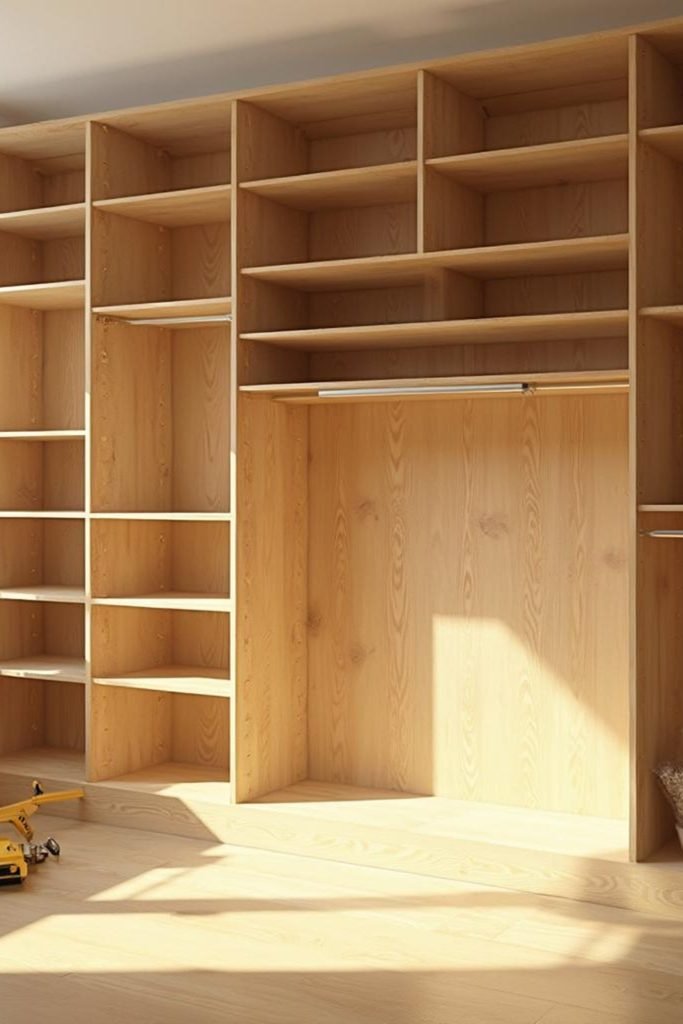
Full Wall
A wide blank wall can become serious storage when shelving stretches nearly ceiling-high instead of stopping around standard closet height.
Combine narrow side shelves with a broad central hanging bay, leaving upper compartments available for boxes, bags, or seasonal clothing.
Natural wood creates a furniture-like finish, and adjustable shelf holes let you change spacing whenever your storage needs shift later.
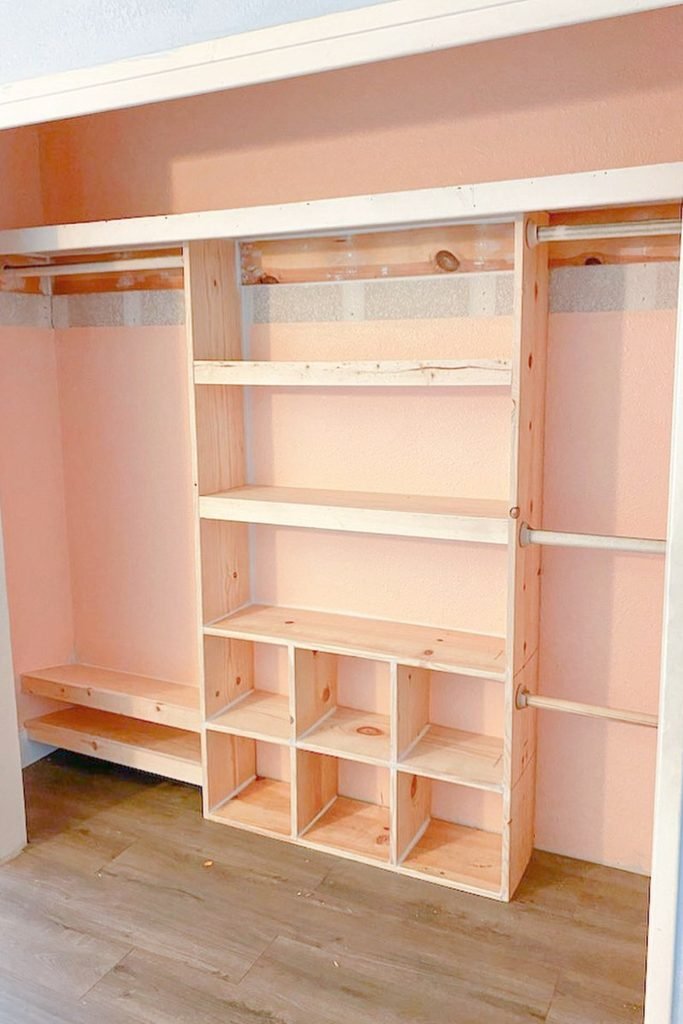
Shoe Cubbies
Shoes stop taking over the closet floor when small cubbies create individual spots beneath a central stack of everyday shelves.
Build the middle tower between two hanging sections, then add low side shelves where frequently worn pairs stay easy to grab.
Simple pine boards make this layout approachable for DIY work, while paint or clear finish can polish the completed organizer later.
FAQs
How Deep Should DIY Closet Shelves Be?
Shelf depth really depends on what you plan to store, so measure your clothes, baskets, and shoes before cutting boards.
Shallow shelves work nicely for shoes and accessories, while deeper shelves handle folded clothes or larger bins.
How Can You Make DIY Closet Shelves Look Built-In?
Small finishing details can turn basic wood shelves into something that looks much more polished.
Fill visible gaps, sand rough edges, add front trim where needed, and paint the shelving to match the surrounding walls.

Hi, my name is Ali Mehmood! I’m a passionate writer and DIY enthusiast who loves turning creative ideas into practical, hands-on projects.
I created this website to share inspiring, budget-friendly ideas that you can do yourself – whether it’s organizing your home, crafting something unique, or creating fun projects for kids and pets.
I believe DIY isn’t just a hobby – it’s a smart way to save money, reduce waste, and enjoy the satisfaction of making things with your own hands.
I’m excited to have you as part of this growing community, and I’ll continue bringing you helpful, realistic, and fun DIY ideas you can actually use.