This post may contain affiliate links: read full affiliate disclosure.
Keys have a habit of disappearing exactly when you’re ready to leave, especially when they keep landing on counters, tables.
Add wallets, sunglasses, mail, and other everyday essentials, and your entryway can quickly become another cluttered spot.
A DIY key holder gives everything a more practical home without taking up valuable floor space.
From simple scrap wood and hooks to shelves, pegs, magnets, and organizers with extra storage.
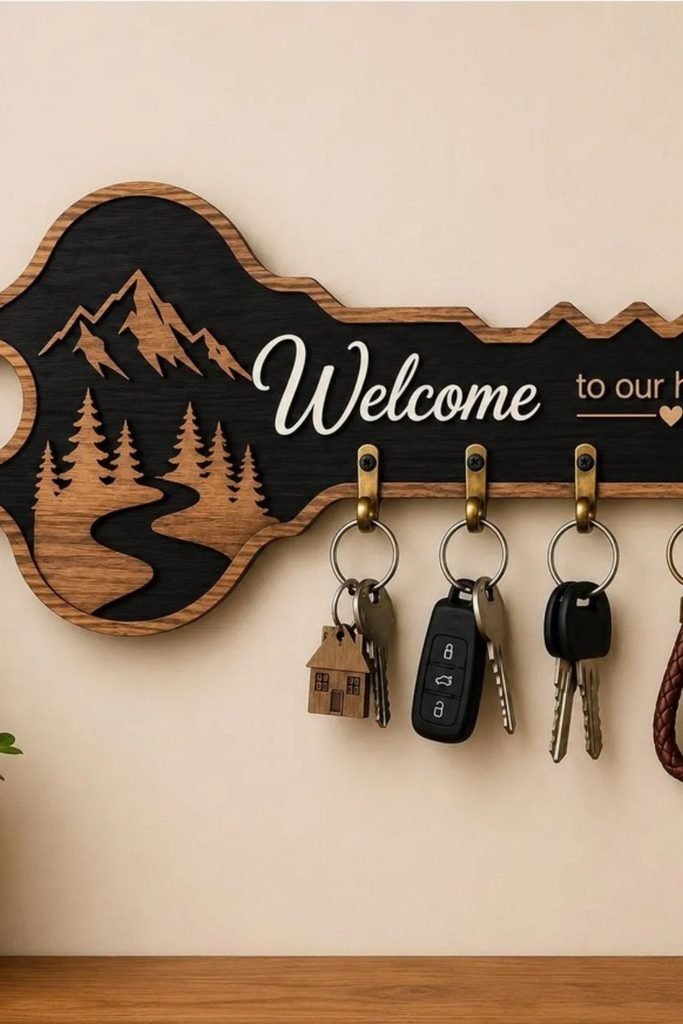
Key Silhouette
Turn the holder itself into part of your entryway decor by cutting scrap wood into an oversized key silhouette.
Keep four hooks evenly spread across the lower edge, giving bulky car fobs enough room to hang without tangling together.
A contrasting stain or painted center can highlight the shape while letting the natural wood edge add warmth near the door.
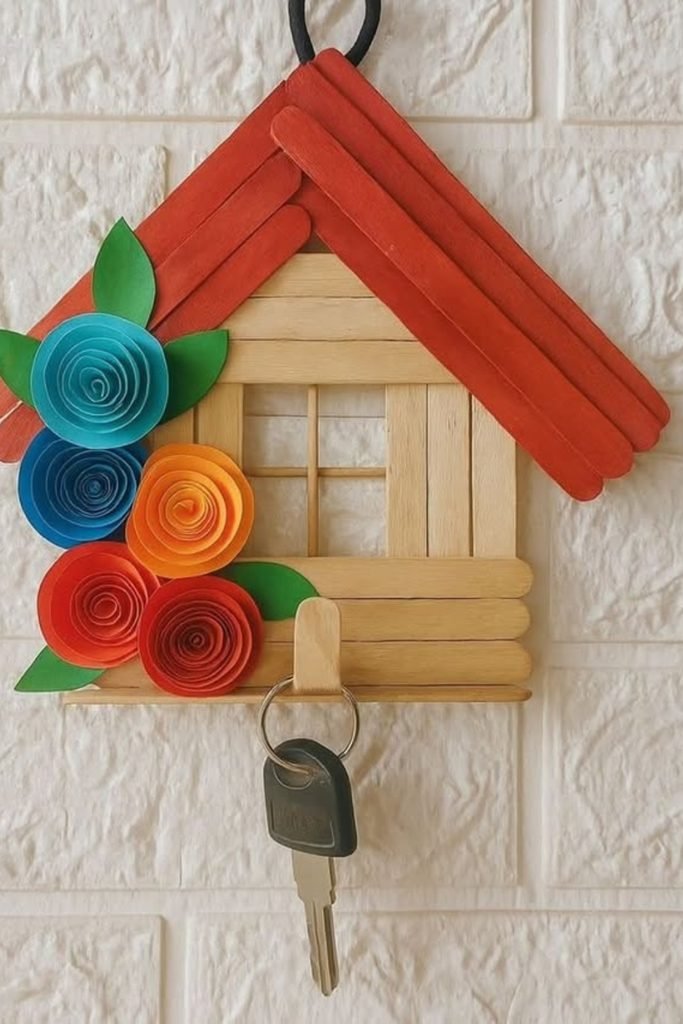
Craft Stick Cottage
Save craft sticks for a lightweight key holder when you want a project that feels more decorative than a standard wooden rack.
Build the house shape in layers, then add paper flowers or painted details before fixing a small hook underneath.
Since the finished piece stays fairly light, keep it for one everyday key set rather than loading it with heavy fobs.
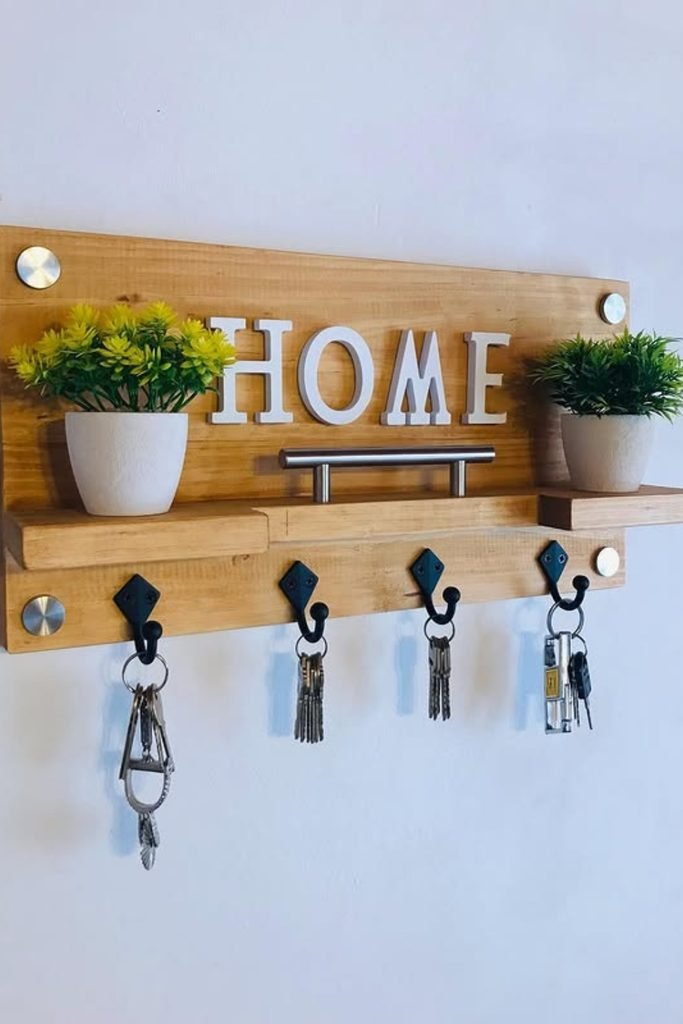
Entry Shelf
If several people need a landing spot, widen the backing board and give each key set its own clearly spaced hook.
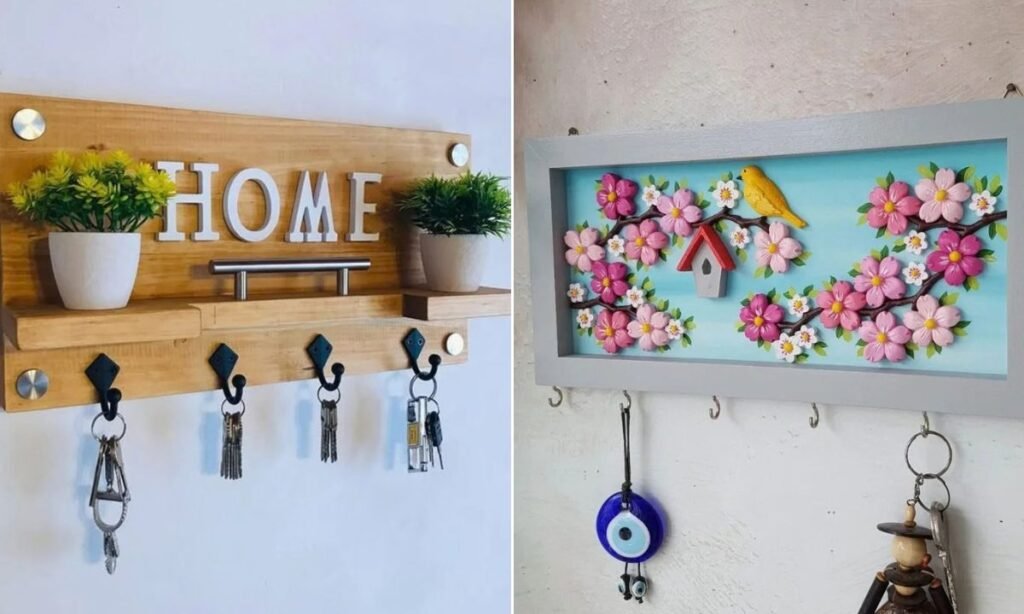
Adding a shallow shelf above creates an easy place for small plants or decor without interfering with the keys hanging below.
Use sturdy wall fixings for a larger wooden build, especially once the shelf and several heavy keyrings start adding extra weight.
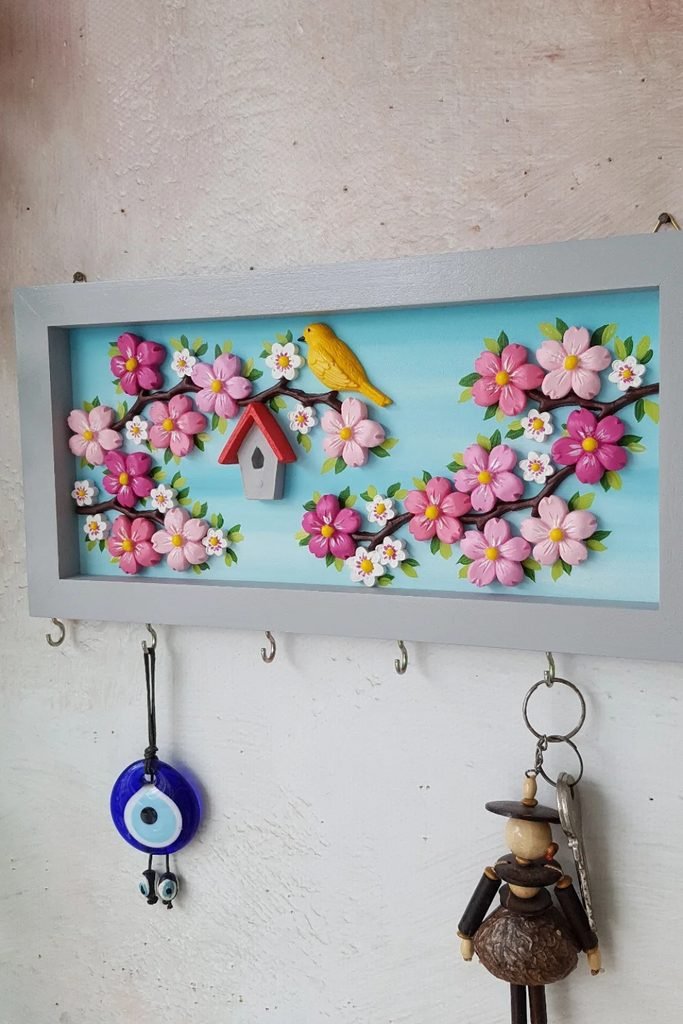
Floral Frame
Treat the key holder like small wall art when your entryway needs storage but you do not want another plain organizer.
Build a shallow framed panel, add raised flowers or other handmade details, then place simple hooks along the bottom edge.
Keeping the hooks visually quiet lets the decorative panel stay noticeable while still giving everyday keys an obvious place to return.
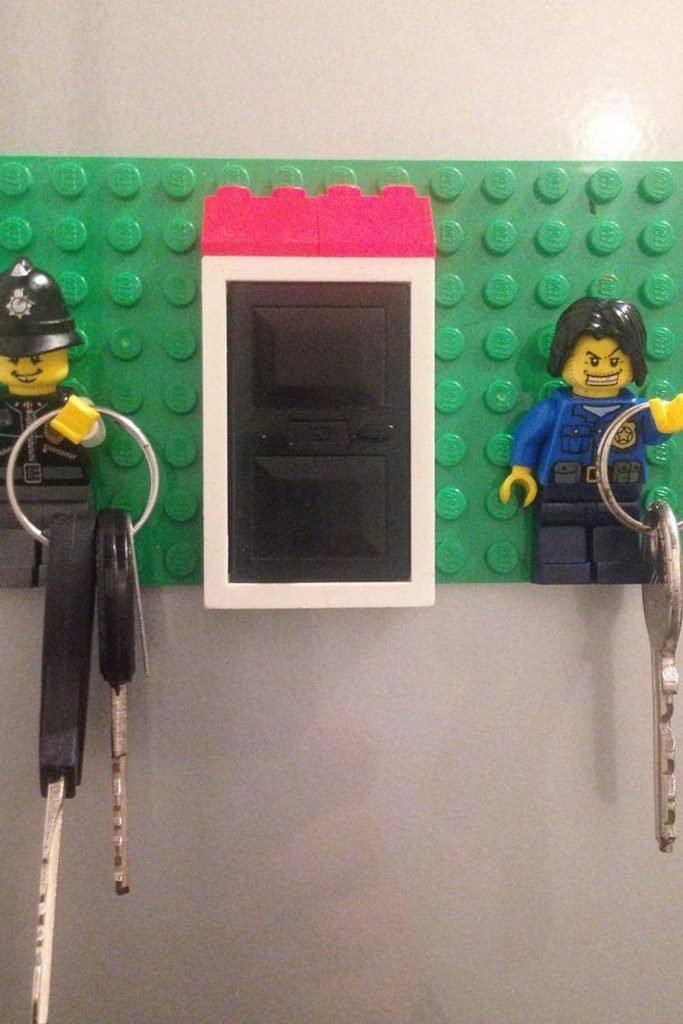
LEGO Station
Bring some personality into a small entryway by turning a LEGO baseplate into a playful docking spot for everyday keys.
Attach sturdy figures or pieces that can hold keyrings securely, leaving enough separation so two sets never overlap or snag.
Because the layout is modular, you can rearrange colors and characters later without rebuilding the entire holder from scratch.
Forged Hooks
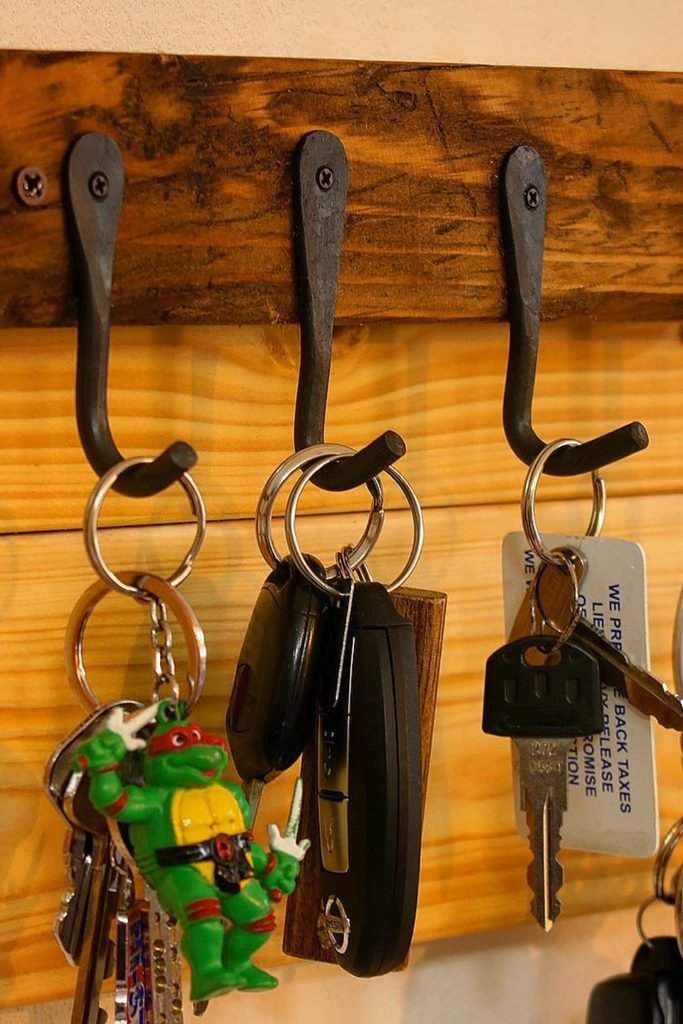
Put leftover timber to work with chunky metal hooks when your household carries heavier keyrings, car fobs, or multiple keys.
Keep the wood finish slightly rustic, then secure each hook with screws instead of relying on lightweight adhesive mounting.
Generous spacing between hooks makes grabbing one crowded keyring easier without pulling neighboring sets down along with it.
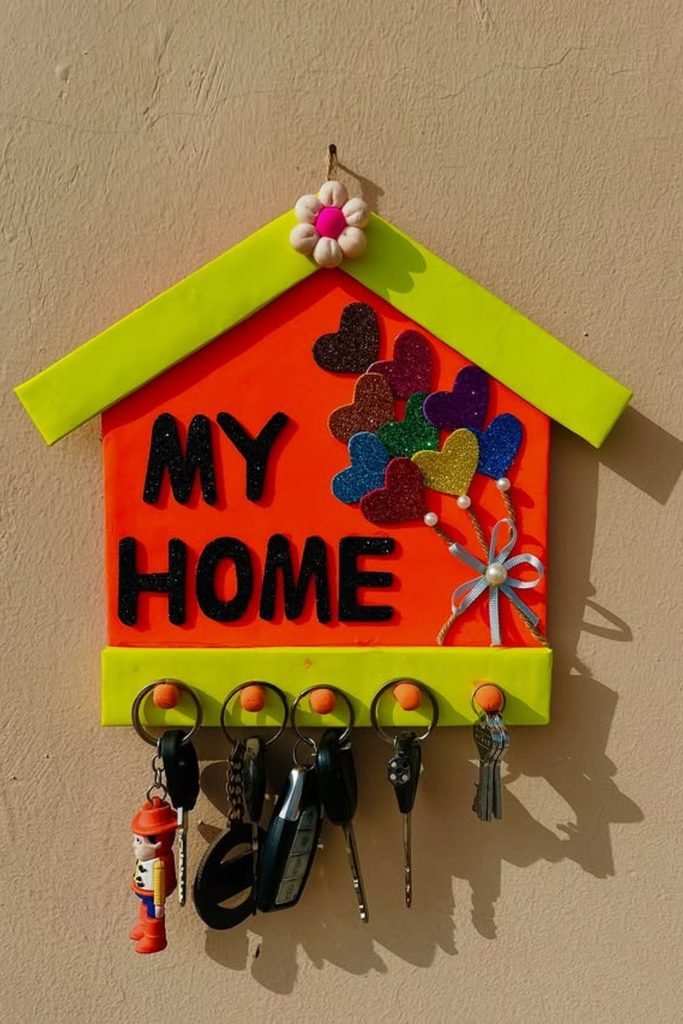
Family House
Give every family member a clear key spot by lining several small pegs across the bottom of a house-shaped backing.
Bright paint, simple lettering, and handmade decorations can turn an inexpensive board into something cheerful enough for an everyday entrance.
Assigning one peg per person also makes missing keys easier to notice before everyone starts searching drawers, bags, and counters.
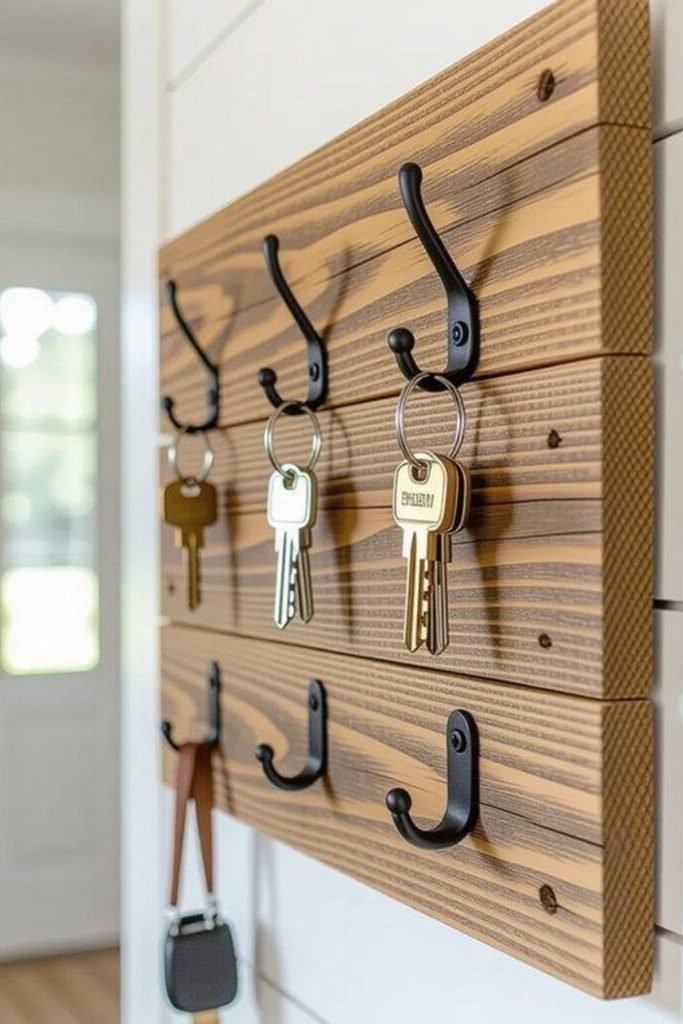
Double Row
Use two hook levels when one straight row cannot handle everything your family regularly needs beside the main entrance.
Reserve the upper hooks for everyday keys, then let the lower row hold larger fobs, lanyards, or other grab-and-go essentials.
Mounting both rows on a wide wooden backing keeps the arrangement organized while making better use of vertical wall space.
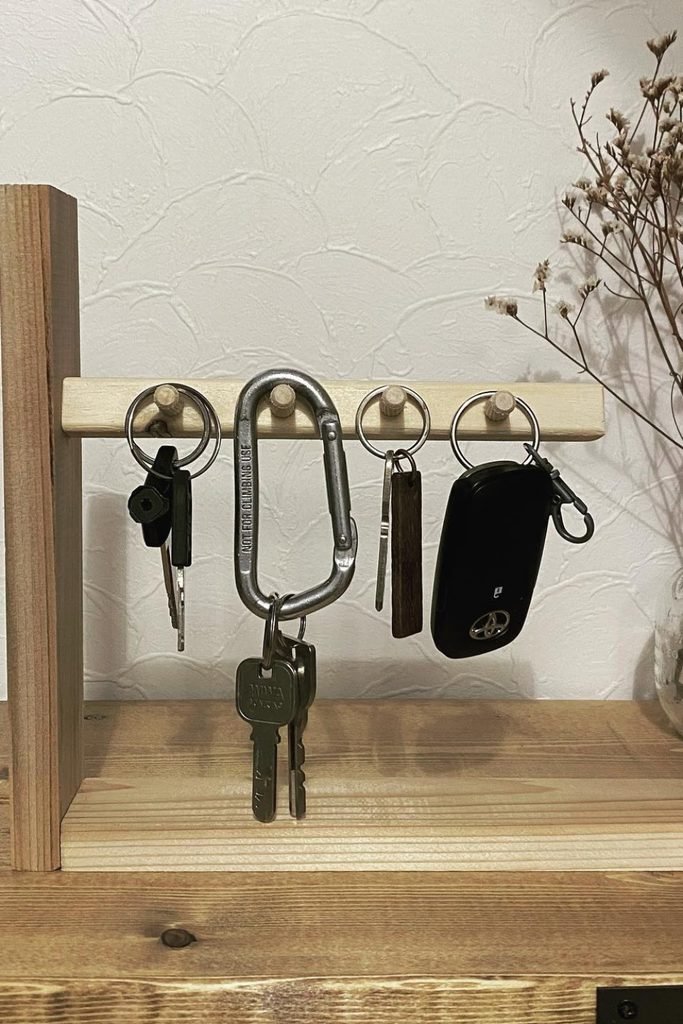
Countertop Stand
Skip wall drilling completely when you have a console or entry table where a freestanding key organizer can stay within easy reach.
Build a sturdy wooden base with one upright support, then run a narrow peg rail across it for several key sets.
Leaving open space beneath the rail keeps longer keys and bulky fobs from resting against the base or tangling together.
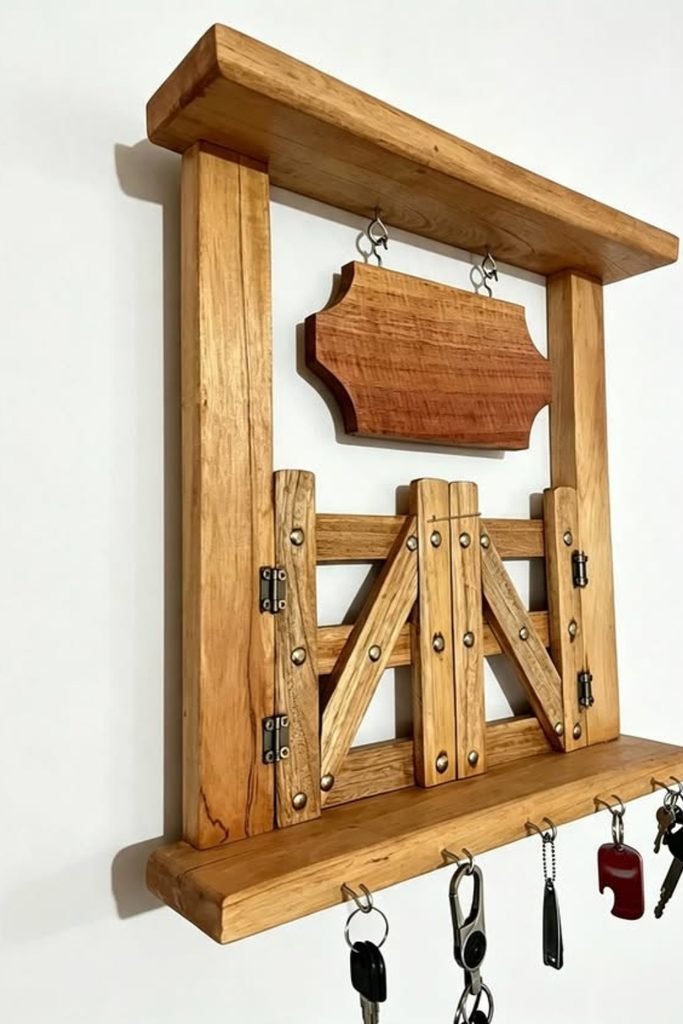
Farmhouse Gate
Turn a larger key holder into statement wall decor by building a miniature farm gate inside a simple wooden frame.
Run small hooks along the bottom shelf so the decorative center stays uncluttered while everyday keys remain quick to grab.
A deeper top ledge can finish the structure nicely, but secure the heavier frame properly before loading it with keyrings.
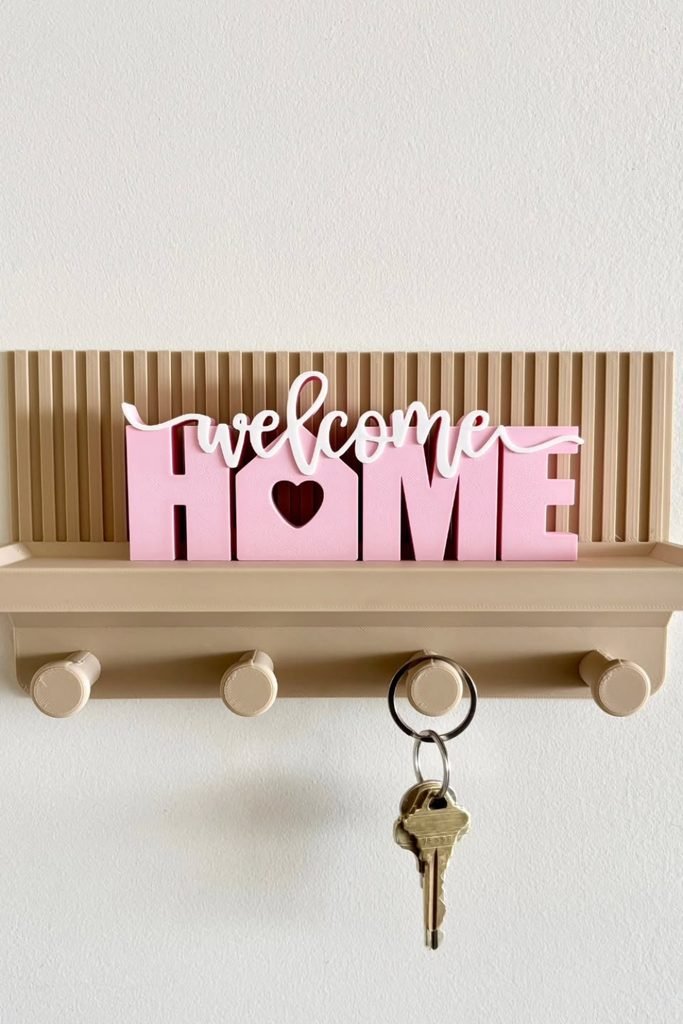
Display Ledge
Combine a slim display ledge with key pegs when you want useful storage without making your wall feel overly practical.
Keep decorative pieces on the upper shelf and position rounded pegs underneath, giving each everyday keyring a separate landing spot.
Matching the pegs and shelf to one neutral finish helps colorful decor stand out without making the organizer itself feel busy.
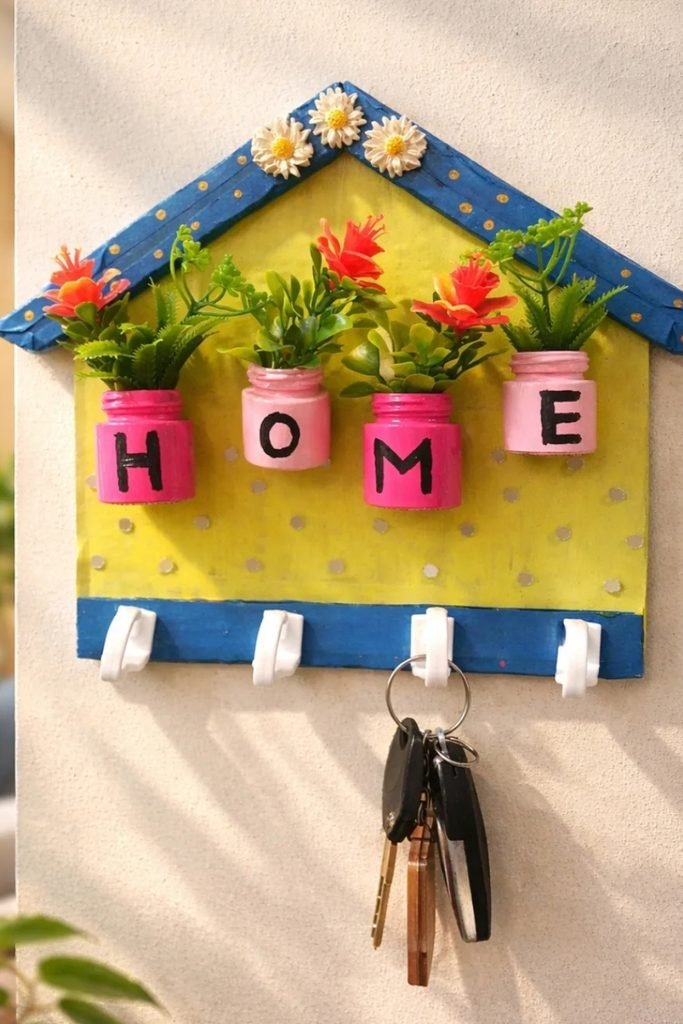
Planter House
Reuse tiny containers as decorative planters when you want a handmade key holder with more character than plain hooks alone.
Arrange the mini pots across a house-shaped backing, then keep the actual key hooks along a separate strip underneath.
Using lightweight faux greenery keeps the wall piece manageable while adding color without creating another plant-care job near your entrance.
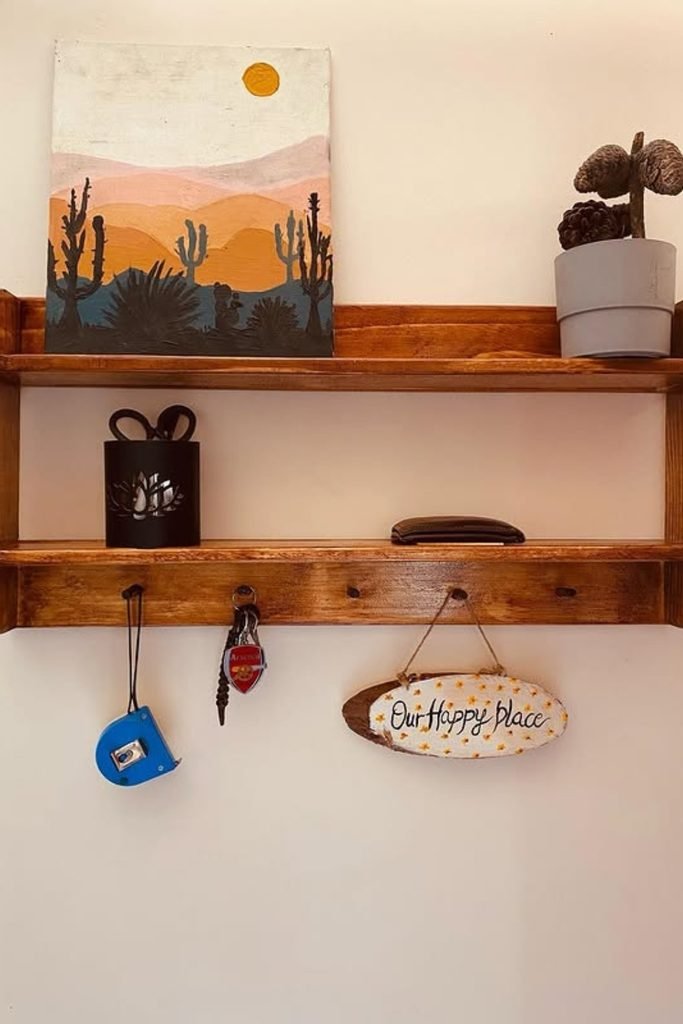
Storage Shelves
Stretch the project beyond keys by adding two narrow shelves for the small things that usually collect around your entrance.
Keep hooks underneath for keys and lightweight essentials, while the shelves handle wallets, small decor, or other easy-to-forget items.
Building everything from matching stained wood keeps this larger organizer cohesive instead of making the extra storage feel randomly added.
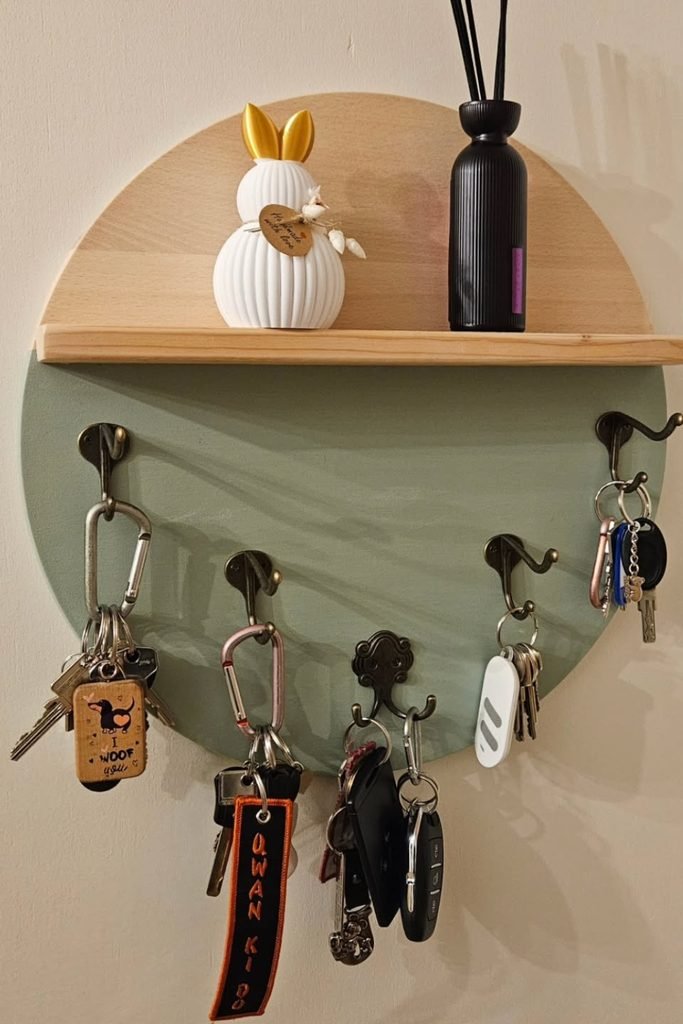
Round Organizer
Break away from rectangular boards with a circular backing that gives a practical key station a softer, more decorative presence.
Stagger hooks across the lower section rather than forcing them into one row, especially when several bulky key sets need clearance.
Finish the upper portion with a slim shelf, creating room for lightweight decor without reducing the hanging space below.
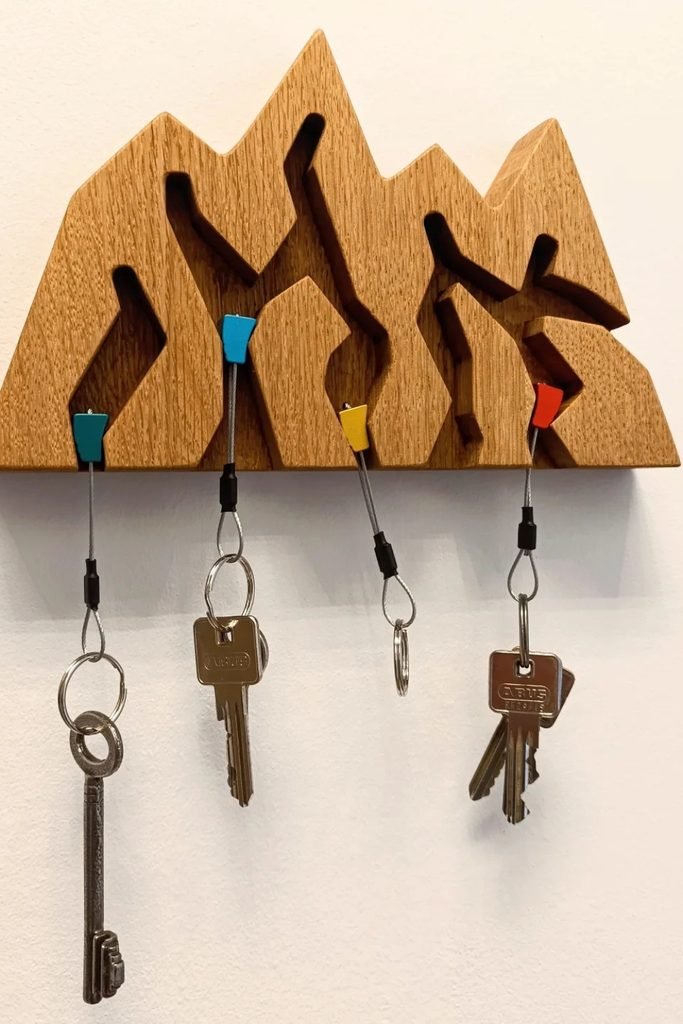
Mountain Slots
Skip ordinary hooks by routing angled channels into a wooden mountain design and pairing each groove with a matching sliding key piece.
Give every keyring its own track so returning keys becomes almost automatic while keeping the front free from visible metal hardware.
Different colored tabs can separate household keys at a glance, which is especially useful when several similar sets share one organizer.
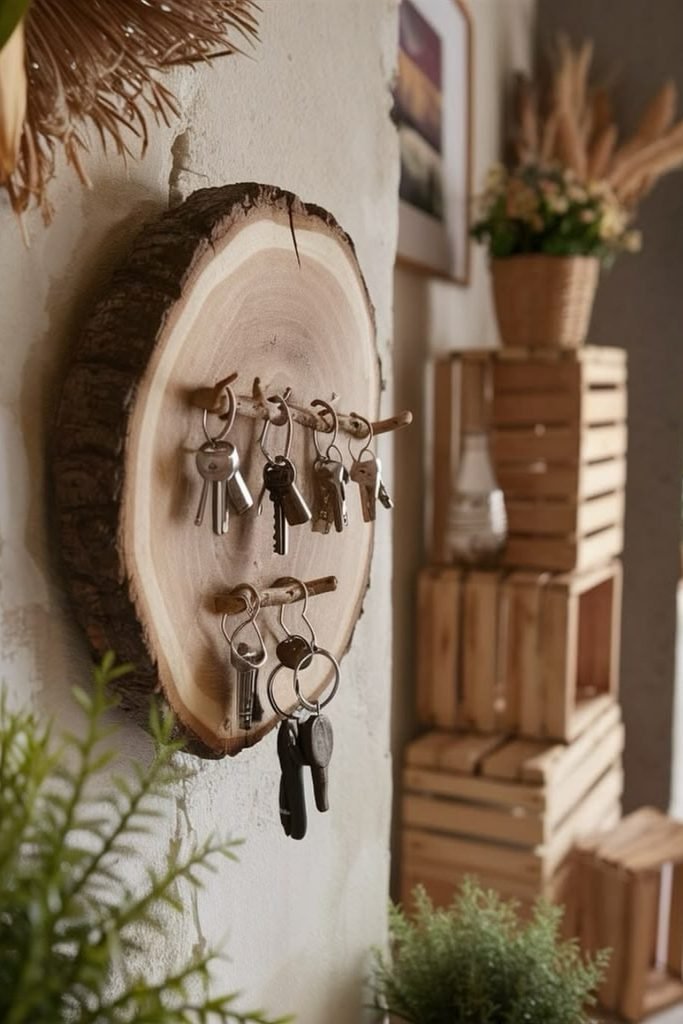
Branch Hooks
Bring leftover natural materials into the project by fixing short sturdy branches onto a wood slice instead of buying conventional hooks.
Use two rows when you have several key sets, but leave enough vertical clearance so longer keys do not overlap below.
Keeping the bark edge and branch texture intact gives the organizer character while making inexpensive materials feel intentionally chosen.
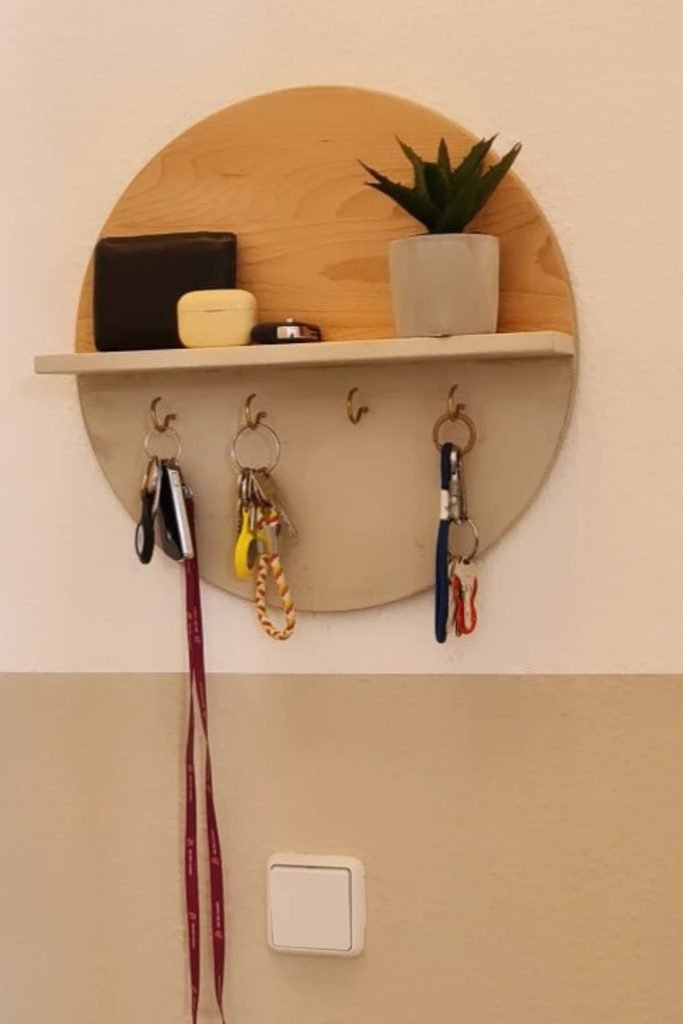
Half Circle
Let a rounded backing soften the usual key rack shape while a narrow shelf gives everyday pocket items somewhere to land.
Place hooks beneath the shelf for keys and lanyards, keeping the upper ledge free for a wallet or small planter.
Using two wood tones adds definition without extra decoration, making this approach easy to fit into a simple modern entryway.
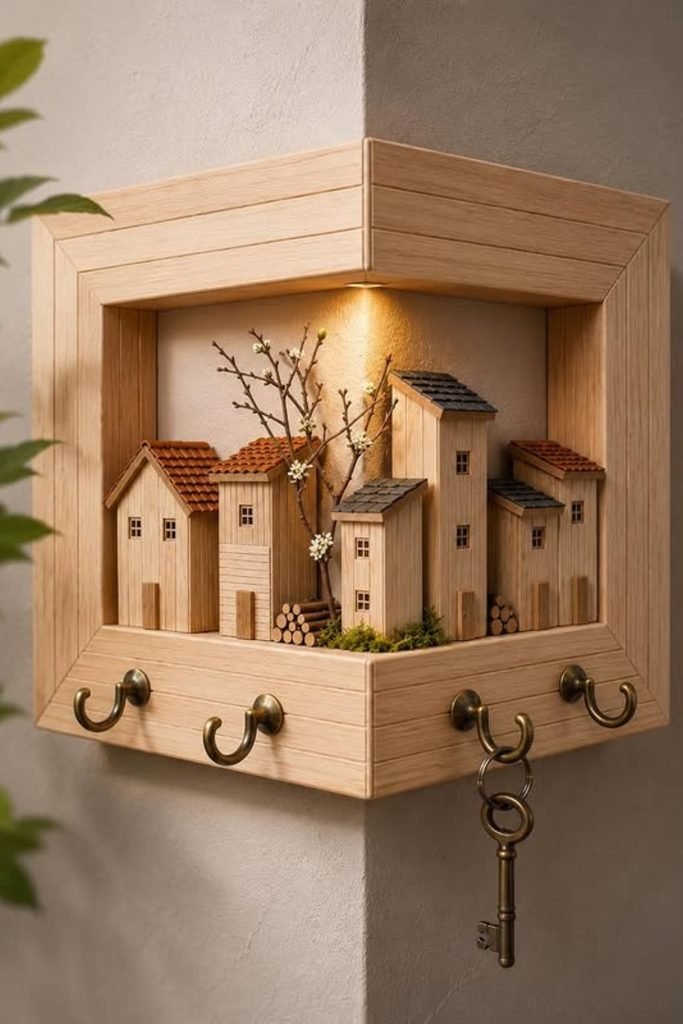
Corner Village
Put an unused corner to work with a wraparound key holder that turns awkward wall space into something genuinely useful.
Build the wooden frame across both walls, then keep hooks along the lower edges where keys remain easy to reach.
A miniature village can fill the center as decorative detail, giving the organizer personality without sacrificing the practical hanging area.
Mail Pocket
Catch incoming mail before it reaches the counter by building a deep wooden pocket directly above your everyday key hooks.
Make the compartment wide enough for envelopes and notebooks, but keep its depth controlled so the organizer stays comfortable in narrow hallways.
Three hooks underneath can separate house and car keys while leaving the storage pocket completely free for papers and reminders.
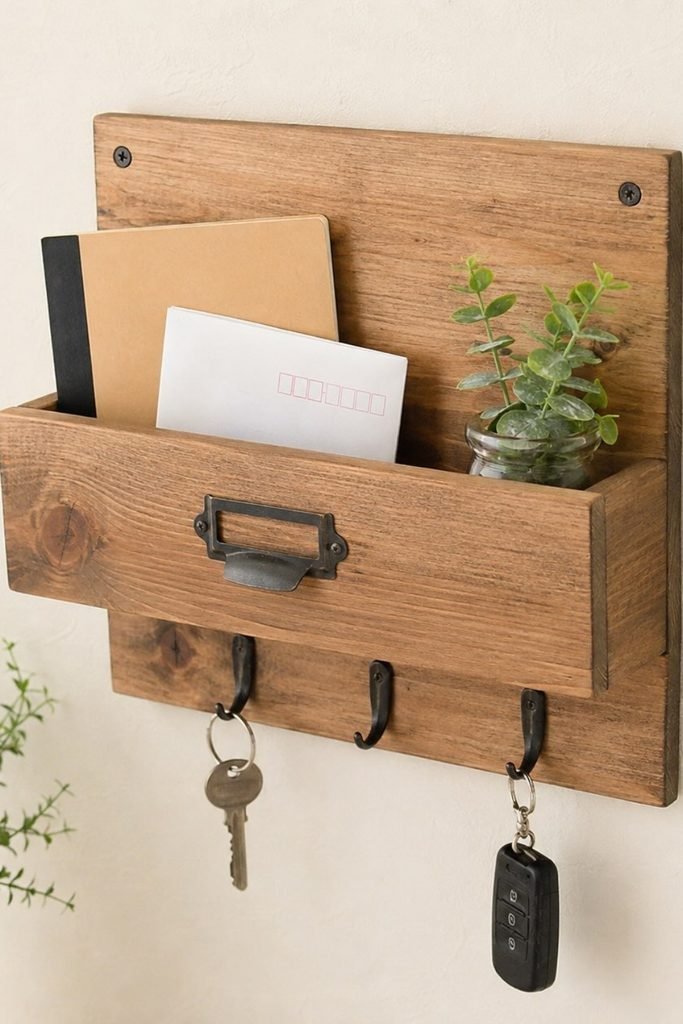
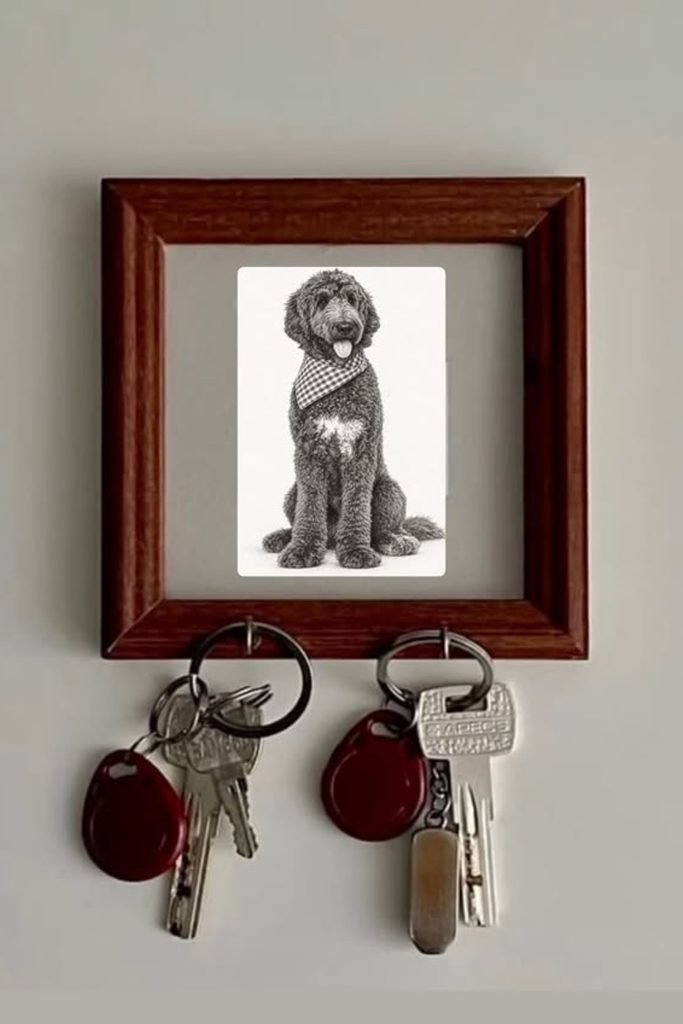
Photo Frame
Give a simple picture frame another job by adding key hooks underneath instead of hanging separate storage beside your favorite photo.
Choose an image that feels personal, then keep the frame design simple so keys can hang below without covering the display.
Two hooks are plenty for a smaller household, making this compact project useful where a full entryway organizer would feel oversized.
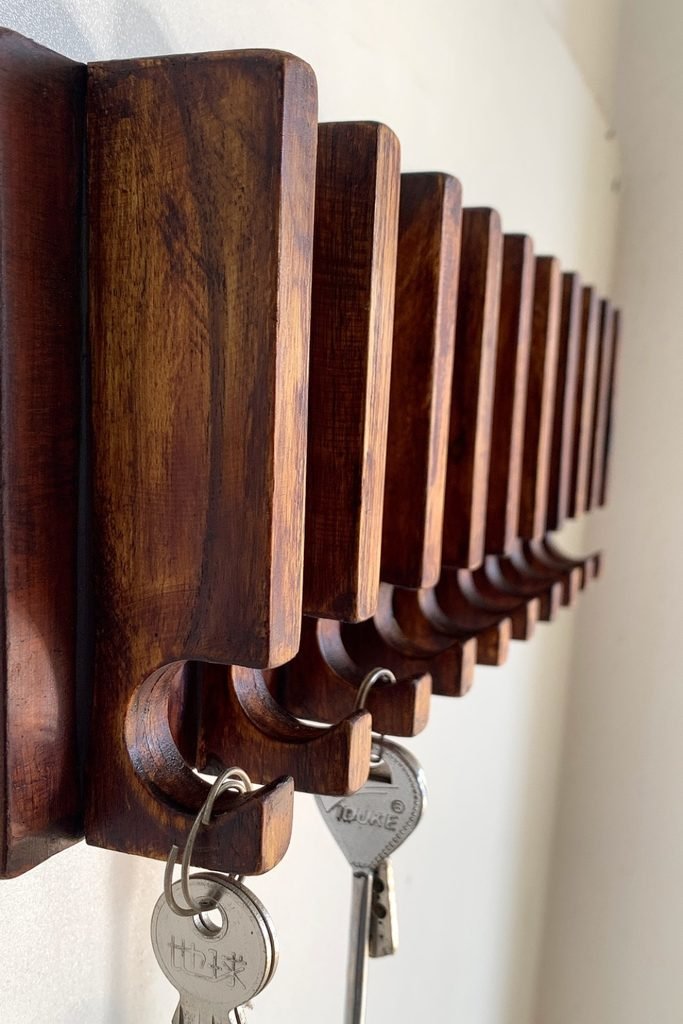
Wooden Pegs
Replace separate metal hooks with carved wooden pegs when you want the storage hardware to blend directly into the organizer.
Shape each lower section with enough curve to catch a keyring securely, then sand every edge smooth before finishing.
Repeating the same peg across a long backing creates plenty of capacity without making a busy household key station look cluttered.
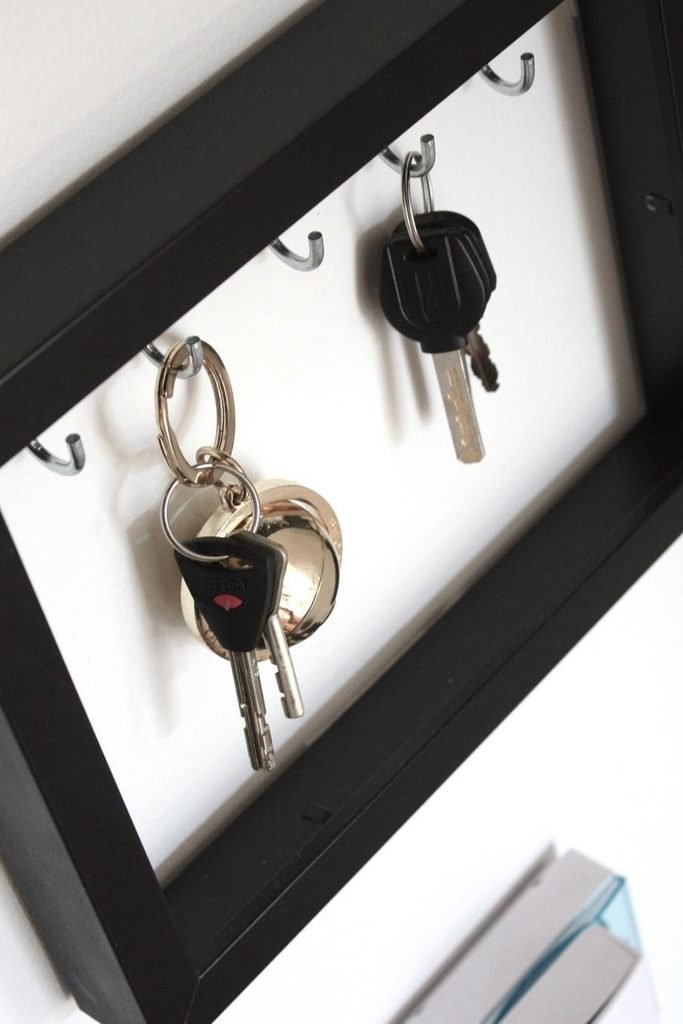
Open Frame
Repurpose an empty frame into a lightweight key station when you want something quick without cutting or assembling a wooden backing.
Fix small hooks along the inside upper edge, allowing the keys to hang within the frame instead of covering its border.
Leaving several hooks empty gives you room to add spare keys later without rebuilding the organizer when your storage needs change.
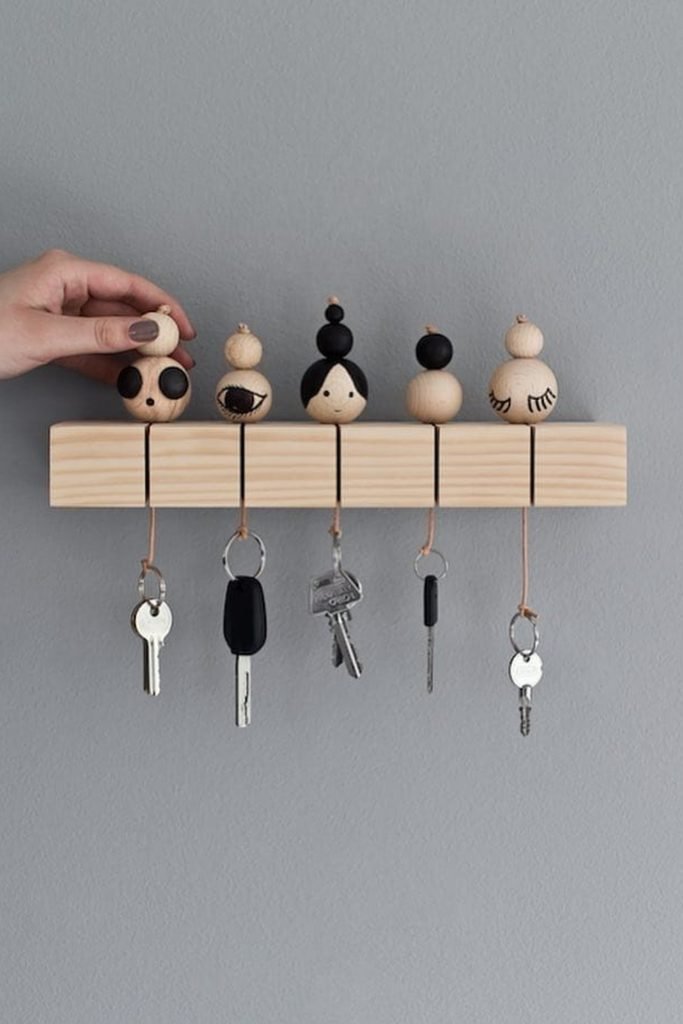
Sliding Characters
Make assigned key spots easier to remember by giving each hanging position its own small wooden character or recognizable marker.
Cut narrow sections into a simple timber rail, then connect each character to its matching keyring with a short cord.
Everyone can return their character to the correct slot, turning everyday key storage into a simple routine instead of another search.
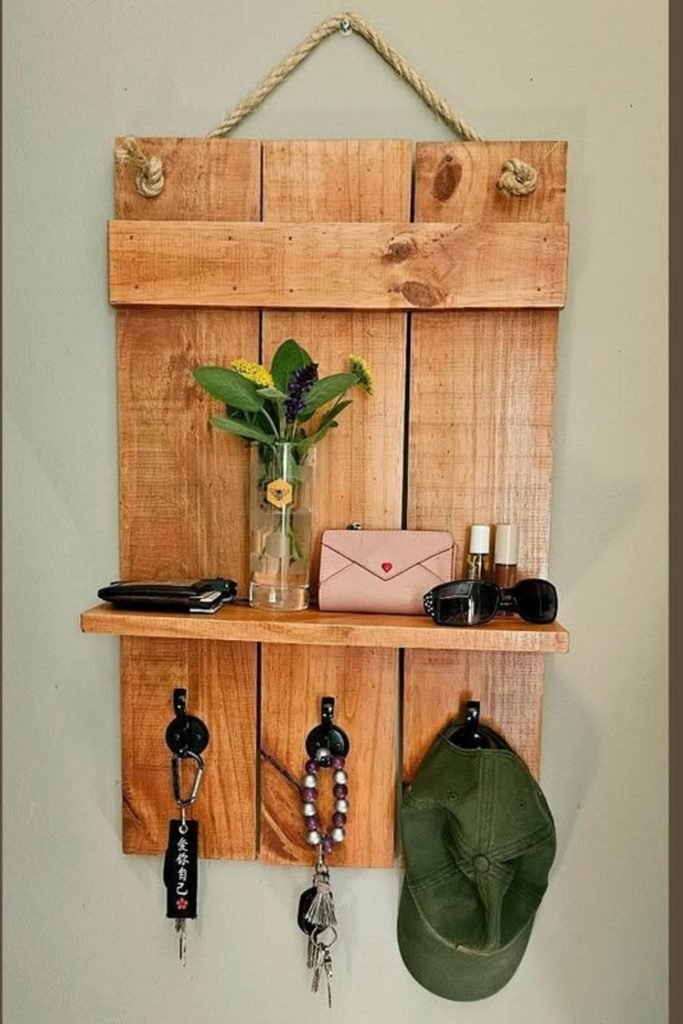
Pallet Station
Use pallet-style boards when your entrance needs more than key storage and you have enough wall space for a larger organizer.
Add a mid-level shelf for wallets and sunglasses, then place sturdy hooks underneath for keys, hats, or lightweight grab-and-go pieces.
A rope hanger reinforces the handmade character, while matching wood across the backing and shelf keeps all those functions visually connected.
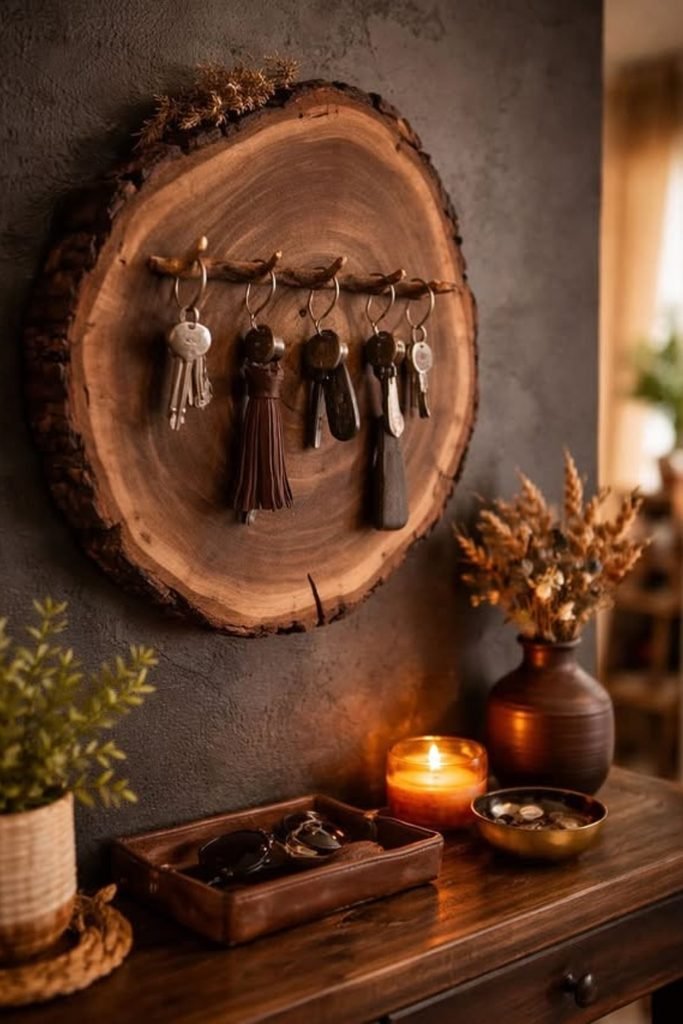
Rustic Slice
Keep the natural edge of a thick wood slice when you want the key holder to feel handmade without adding decorative hardware.
Fix a slim branch across the face, then use small metal loops so several key sets can hang independently.
Spacing the loops along one branch keeps everything easy to scan, which helps when similar house keys usually get mixed together.
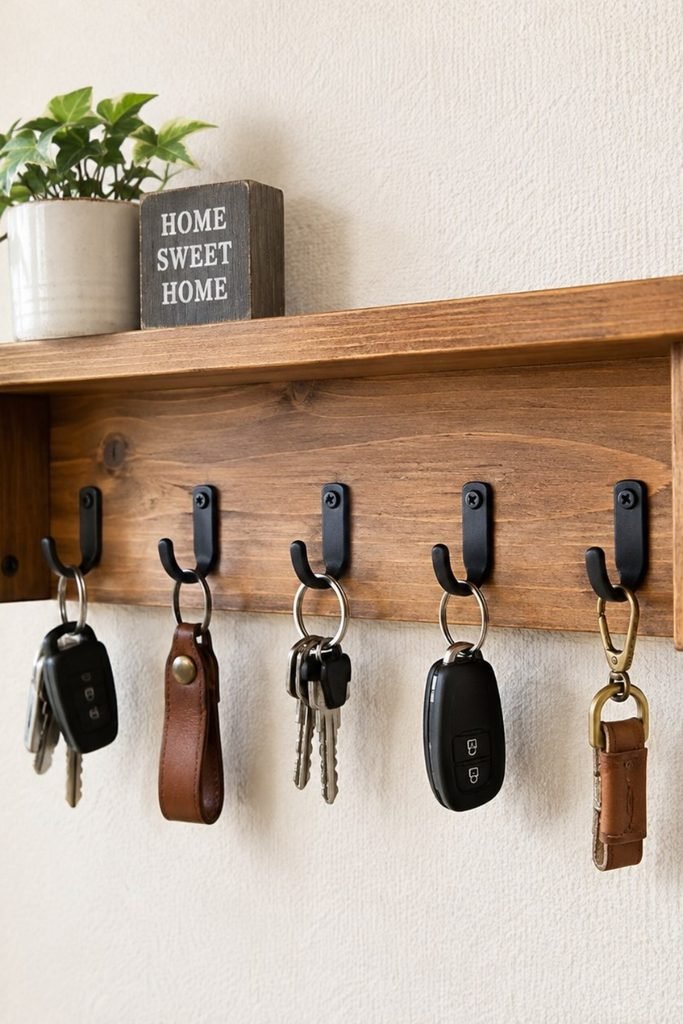
Top Shelf
Give a basic hook rack more purpose by extending the upper board into a shelf for decor or lightweight everyday extras.
Line up sturdy hooks beneath it with enough breathing room for car fobs, leather tags, and fuller household keyrings.
Using dark hardware against warm stained wood keeps the construction simple while giving a busy entryway station a cleaner finished look.
FAQs
How Can I Keep Heavy Keyrings From Pulling My DIY Key Holder Loose?
For heavier car fobs or several key sets, use suitable wall anchors or attach the holder into studs when possible.
I also recommend spreading heavier keyrings across separate hooks instead of crowding everything onto one spot.
Where Should I Hang a DIY Key Holder So I Actually Use It?
Pick the entrance you use most often, even if that happens to be the garage or side door rather than the front entrance.
The easier it is to drop your keys there immediately, the less likely they are to end up on random counters.

Hi, my name is Ali Mehmood! I’m a passionate writer and DIY enthusiast who loves turning creative ideas into practical, hands-on projects.
I created this website to share inspiring, budget-friendly ideas that you can do yourself – whether it’s organizing your home, crafting something unique, or creating fun projects for kids and pets.
I believe DIY isn’t just a hobby – it’s a smart way to save money, reduce waste, and enjoy the satisfaction of making things with your own hands.
I’m excited to have you as part of this growing community, and I’ll continue bringing you helpful, realistic, and fun DIY ideas you can actually use.