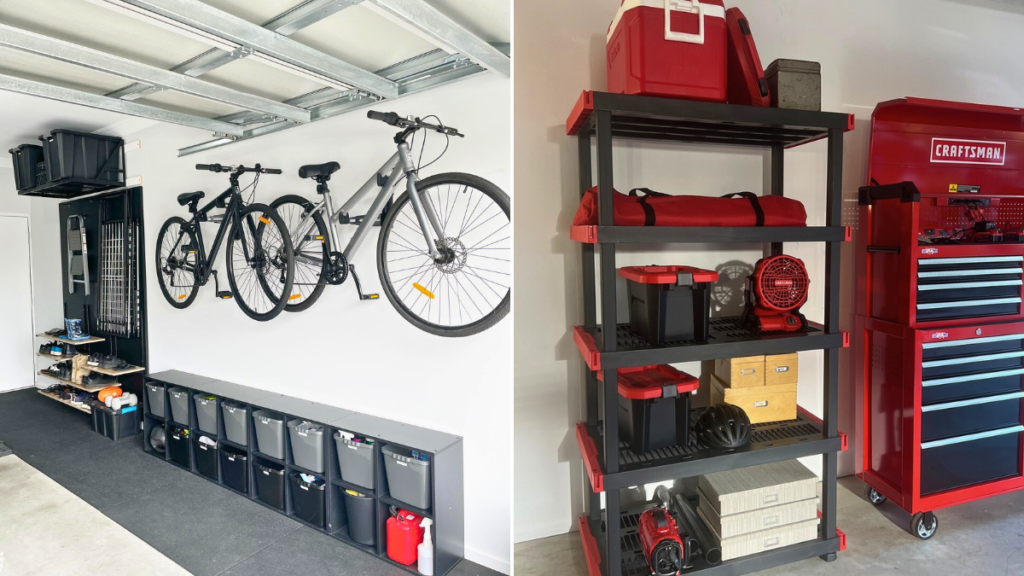
This post may contain affiliate links: read full affiliate disclosure.
Suddenly, you’re moving five heavy totes just to grab one thing, while half your garage or basement still feels cluttered.
I find the bigger problem is often not having too many bins, but not having an easy way to reach them.
A DIY storage bin rack can change that by using vertical space and giving each tote its own accessible spot.
I’m covering those practical details first, along with ideas that can help you plan a rack around the storage space you actually have.
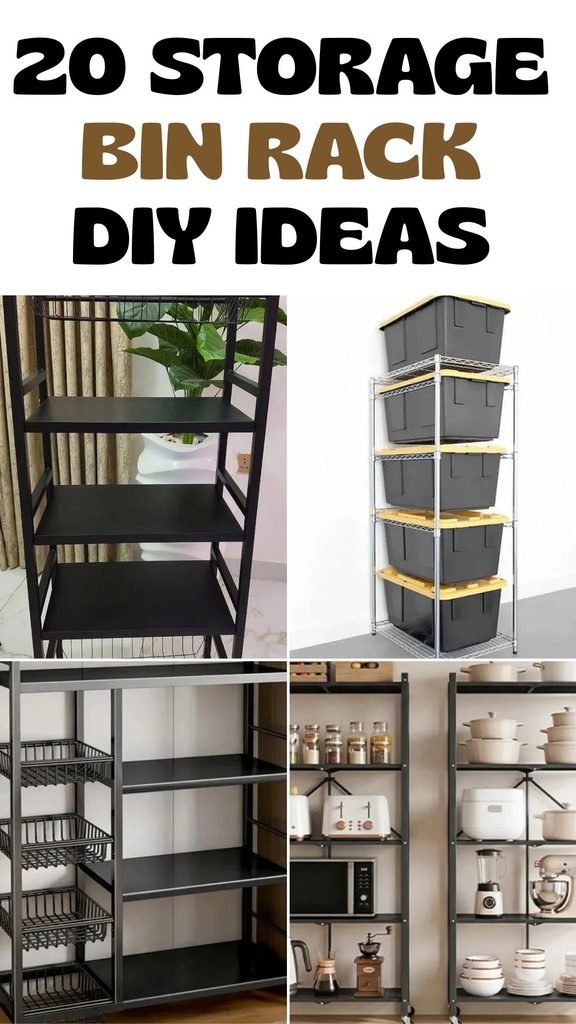
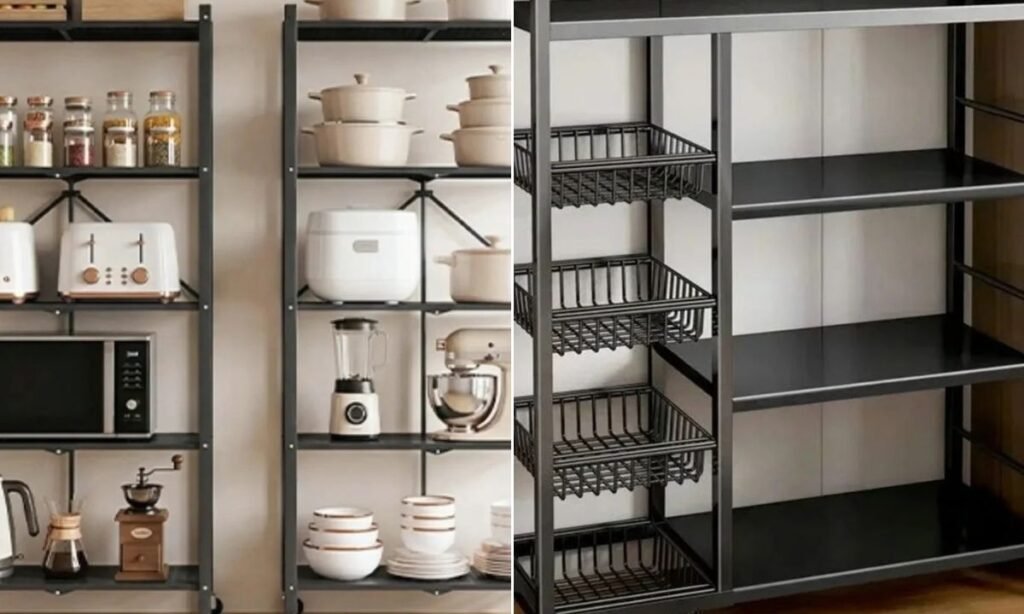
Slim Wire Rack
When floor space feels tight, a tall wire frame lets you stack several large totes without creating another bulky storage zone.
Choose shelf heights around your actual bin dimensions, leaving enough overhead clearance so lids never scrape while pulling containers forward.
Keeping heavier bins near the bottom makes everyday access easier, while lighter seasonal storage can comfortably take the upper positions.
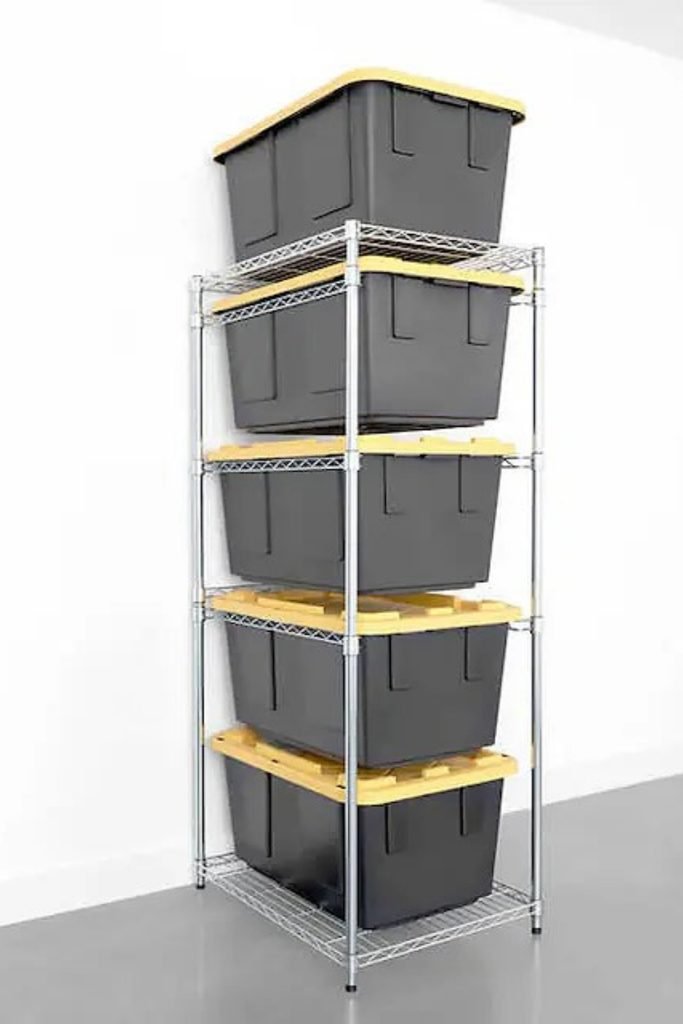
Basket Shelf Rack
Mixing solid shelves with wire baskets gives your DIY rack more flexibility when every item does not belong inside large totes.
Use deeper shelves for medium storage bins, then reserve shallow baskets for smaller supplies you usually need to grab more frequently.
Building this narrow layout on casters also makes sense when you want storage that can shift between rooms or work areas.
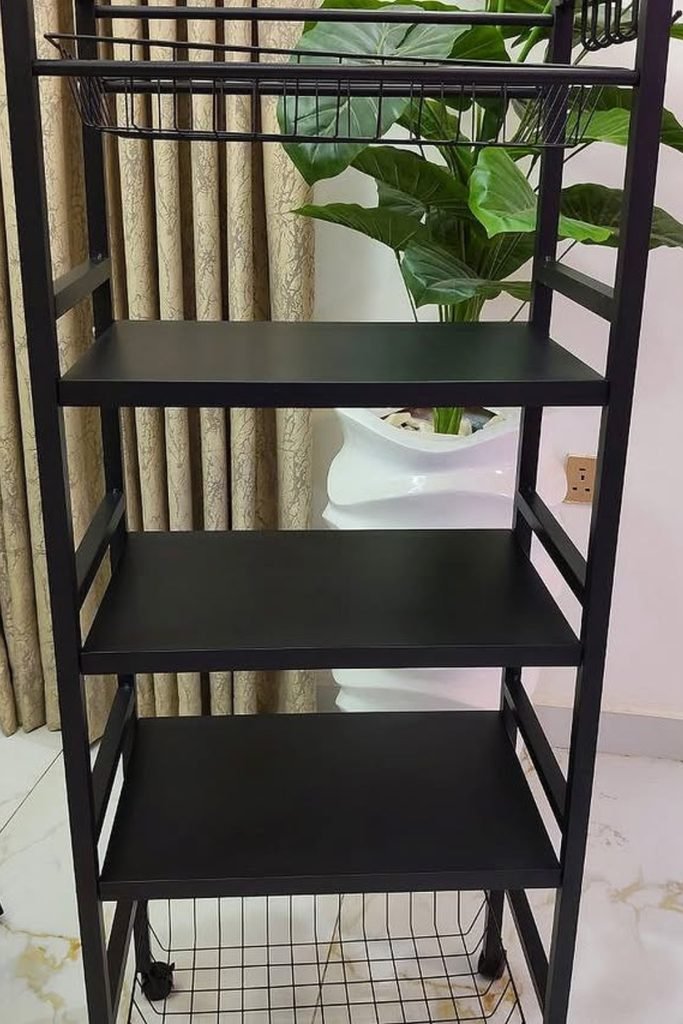
Split Storage Rack
Instead of making every opening identical, divide a wider frame between large tote spaces and narrower pullout baskets for smaller supplies.
Planning different bay widths helps you avoid wasting valuable shelf space when your storage collection includes several container sizes.
Add locking casters underneath if the finished rack needs occasional movement, especially around a garage workbench or flexible craft area.
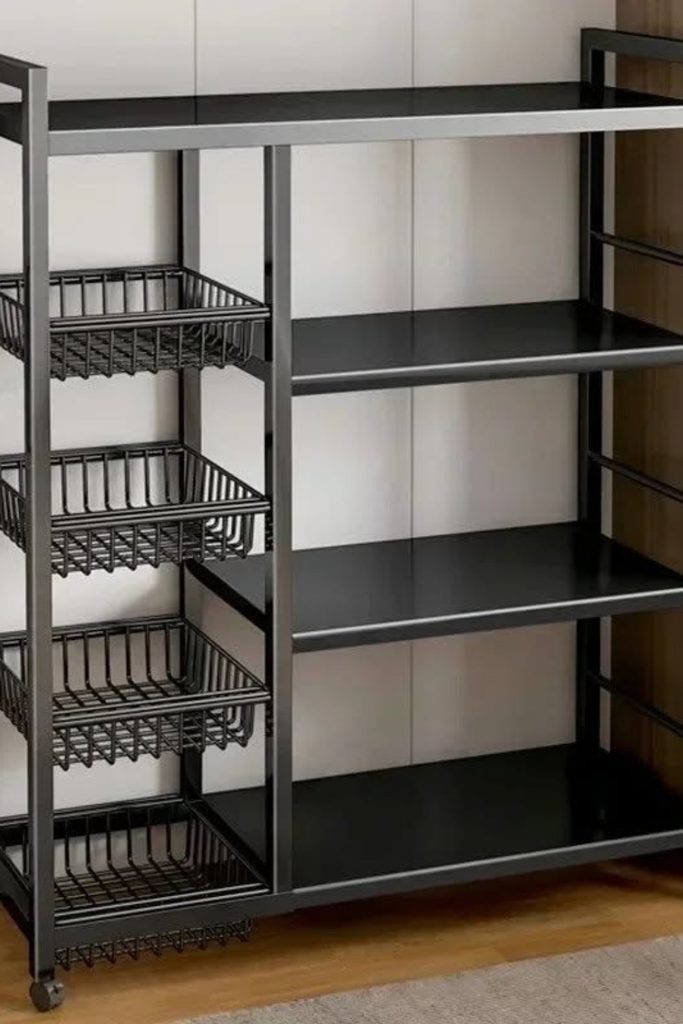
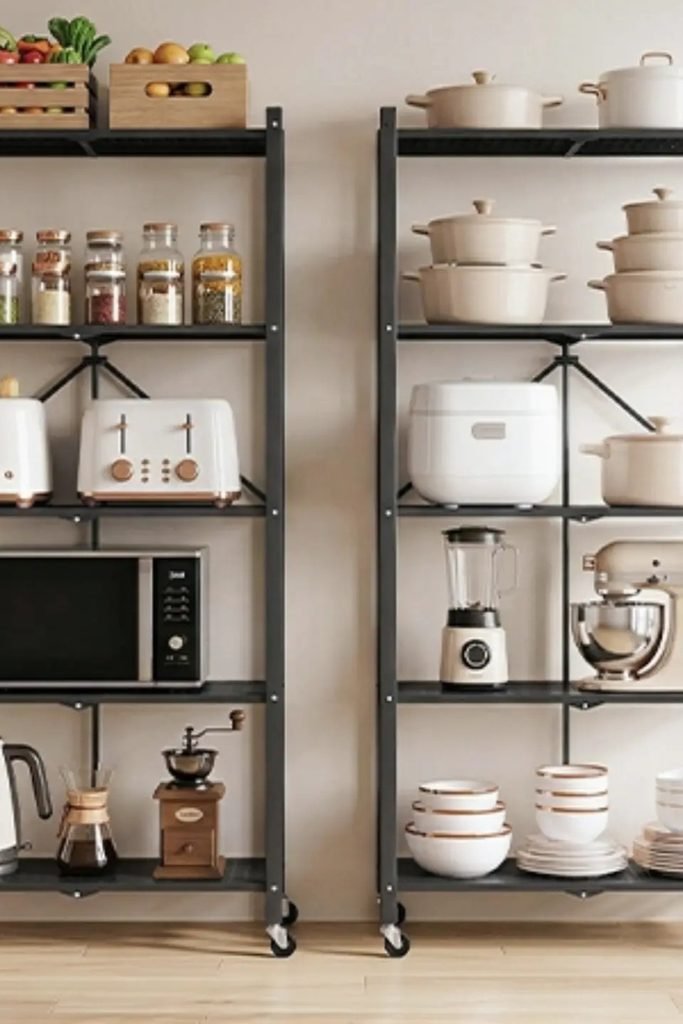
Rolling Shelf System
Sometimes full shelves work better than tote rails, especially when you want the rack to hold bins plus other household supplies.
Build each shelf with enough depth for your containers, then vary the vertical spacing instead of forcing identical openings throughout.
Casters turn a wide rack into flexible storage, but choose locking wheels and keep heavier containers toward the lowest shelves.
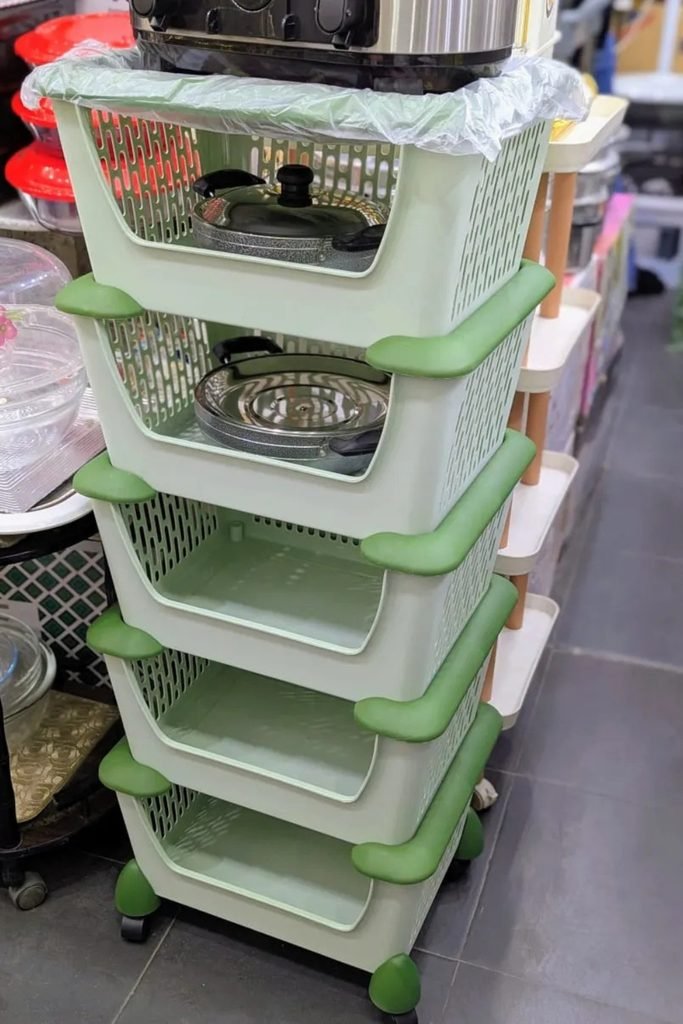
Open Basket Tower
Small supplies become easier to reach when you use open-front bins instead of stacking lidded totes that need constant lifting.
Keep frequently used pieces around waist height, while heavier cookware or supplies belong lower where grabbing them takes less effort.
Adding wheels underneath turns the narrow tower into portable storage you can pull beside a worktable whenever extra organization is needed.
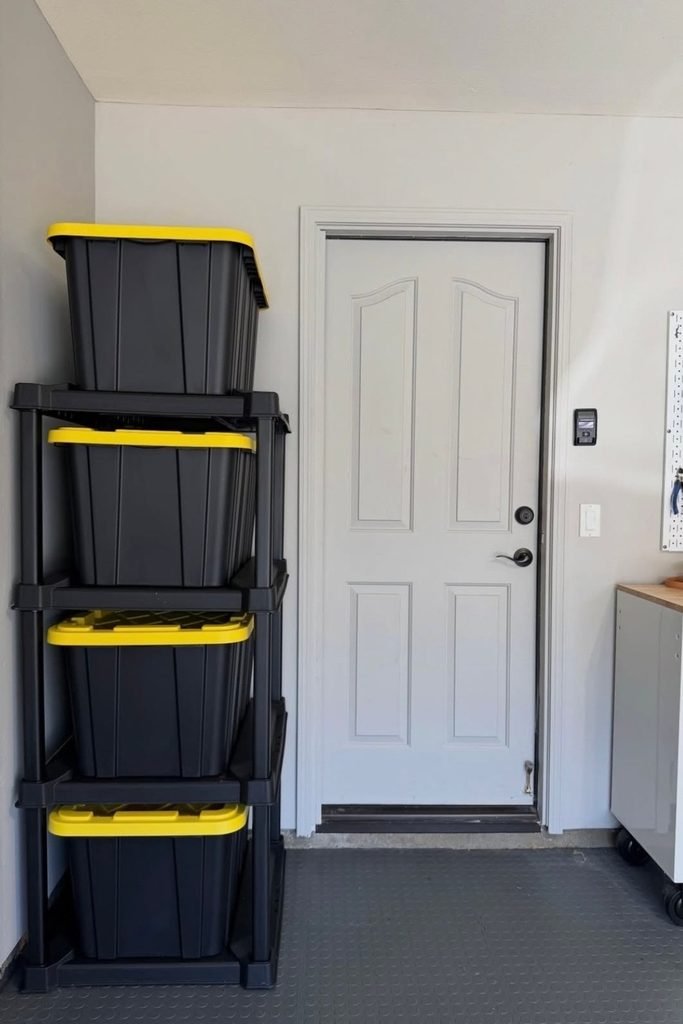
Doorway Bin Rack
An unused strip beside a garage door can hold several large totes without taking over the main working area.
Match every opening to your tote height first, leaving enough clearance above each lid for smooth removal without unnecessary wasted space.
Before placing the rack here, check that bins can pull forward completely without interfering with the doorway or nearby equipment.
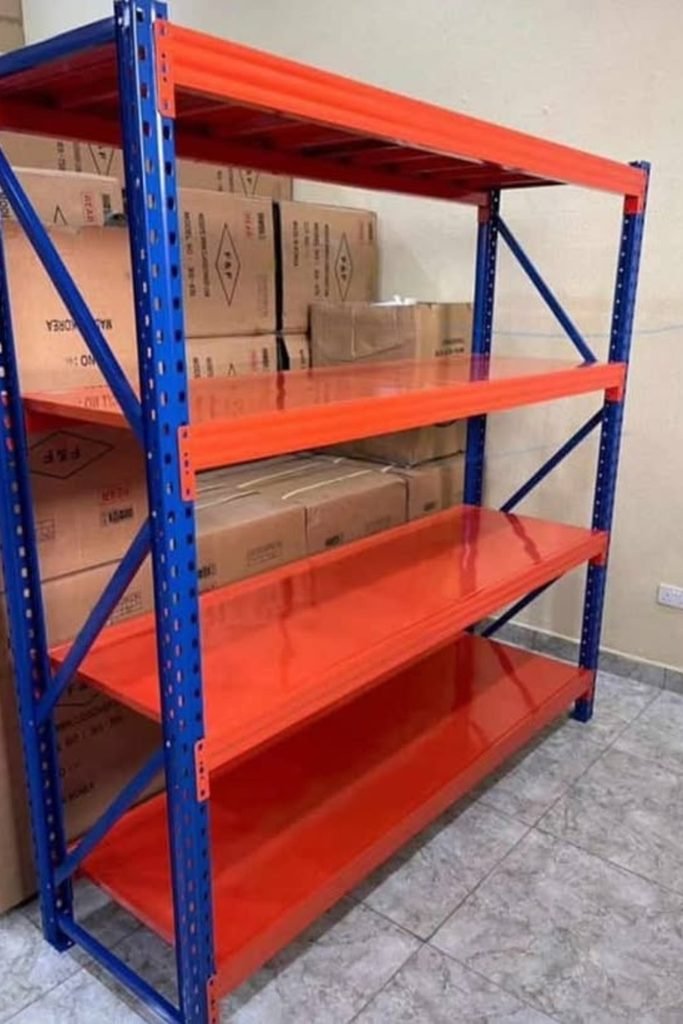
Heavy Duty Shelves
When your bins carry heavier supplies, full metal shelves can support their bottoms instead of relying entirely on plastic tote rims.
Adjustable uprights are especially handy because you can change shelf spacing later when your container sizes or storage needs change.
Reserve the lowest levels for the heaviest bins, then use higher shelves for lighter items you only reach occasionally.
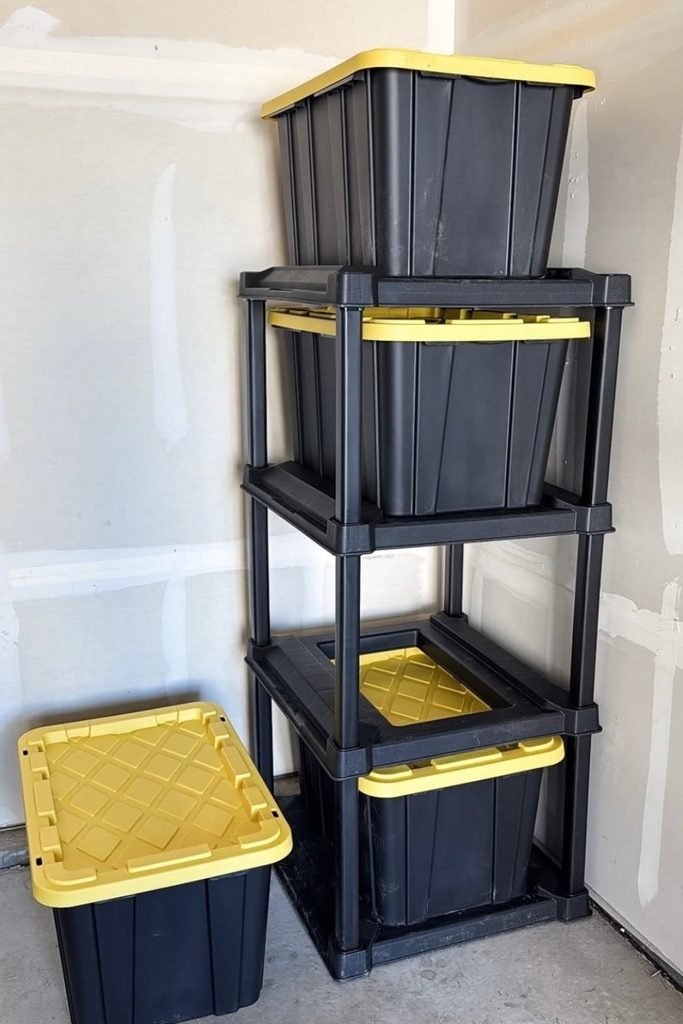
Modular Tote Tower
You do not need a huge storage wall when a compact vertical tower can handle the bins cluttering one garage corner.
Build or assemble individual levels around matching totes, so every container slides forward without forcing you to unstack the entire pile.
Leaving one bay temporarily open also gives you flexibility when sorting contents, rotating seasonal storage, or adding another matching tote later.
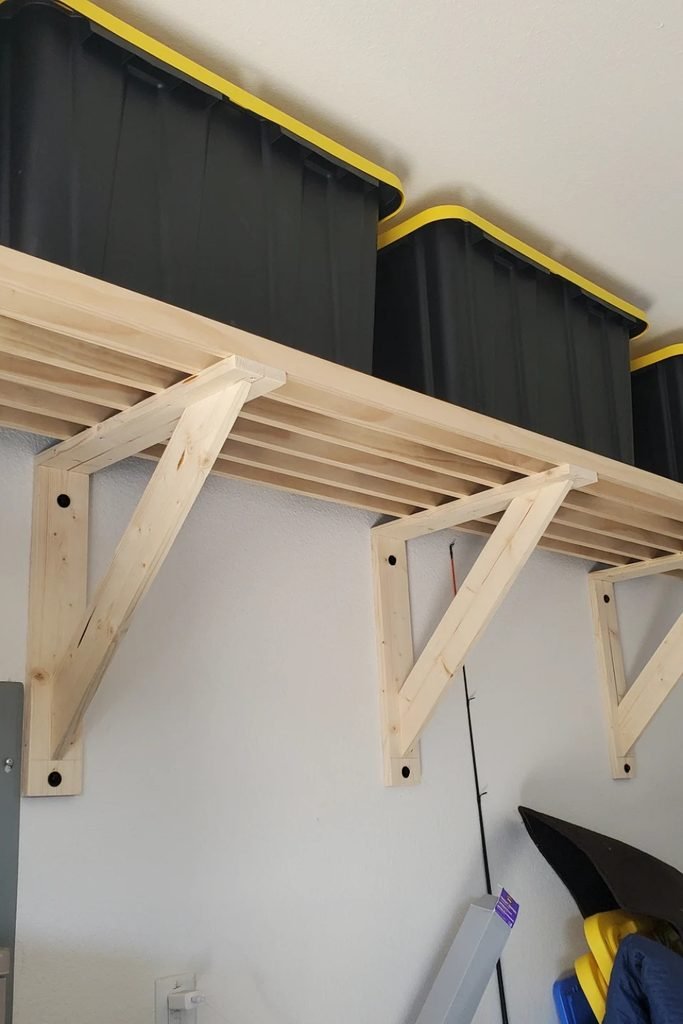
Overhead Tote Shelf
Look above your usual storage zone when floor space is already crowded, because a high wall shelf can hold rarely used totes.
Strong triangular supports help carry the shelf load, but fasten them into suitable structural framing rather than relying on drywall alone.
Keep lightweight seasonal bins overhead and everyday storage lower, since repeatedly lifting heavy containers from this height quickly becomes inconvenient.
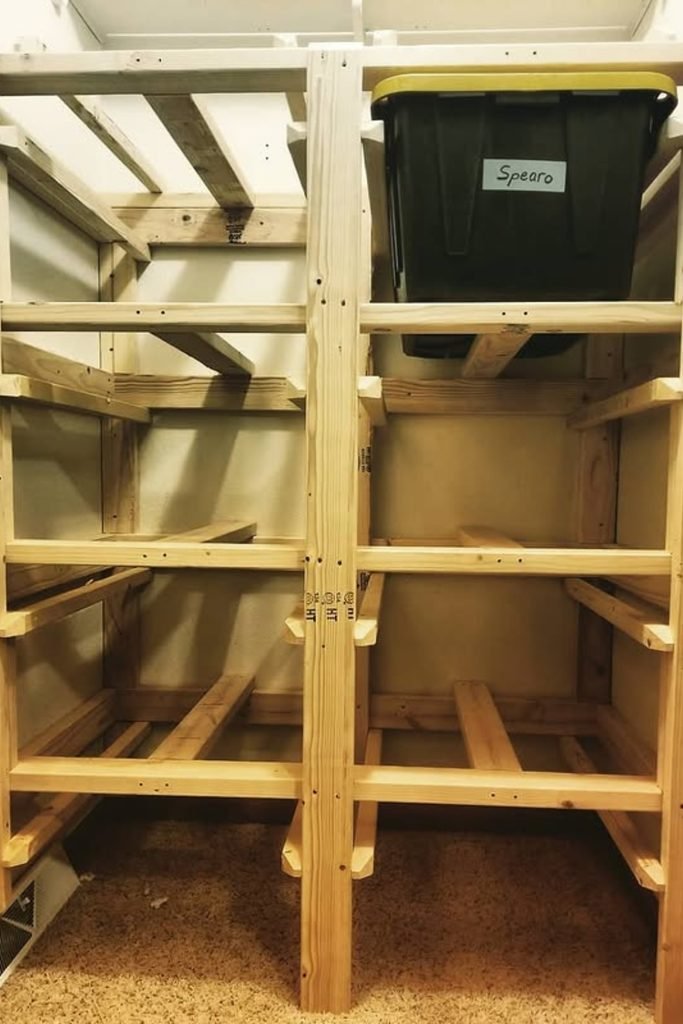
Double Rail Rack
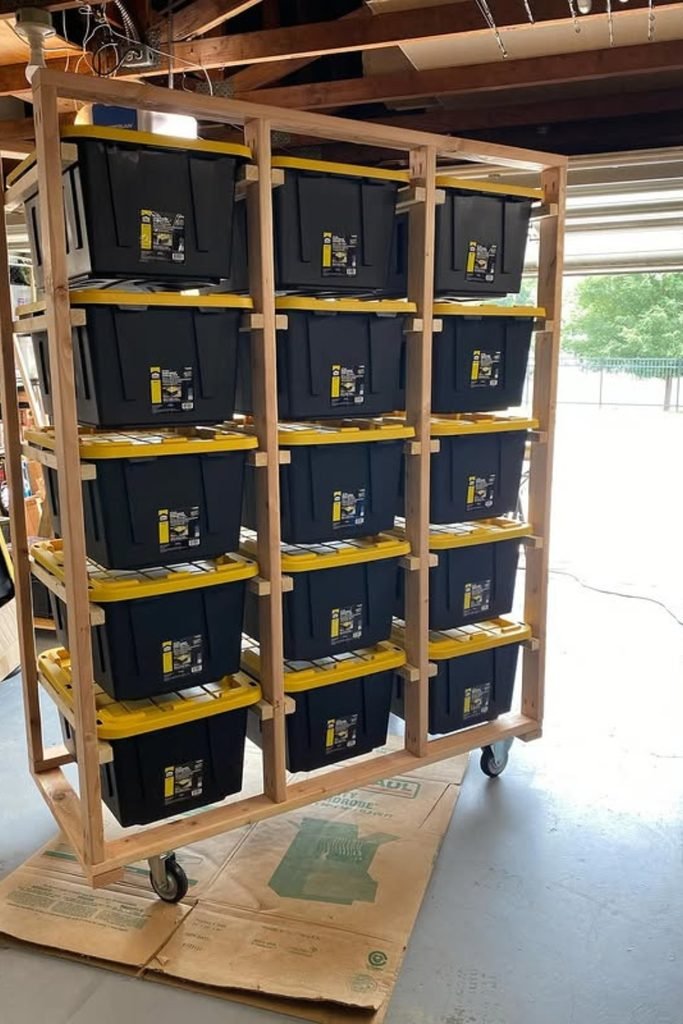
Building two tote columns side by side gives you plenty of capacity without making every container depend on a solid shelf.
Set paired wooden runners from your actual tote rims, then test one opening before repeating the spacing throughout the entire frame.
Labeling the front of each bin saves another headache later, especially when several identical dark totes fill the finished rack.
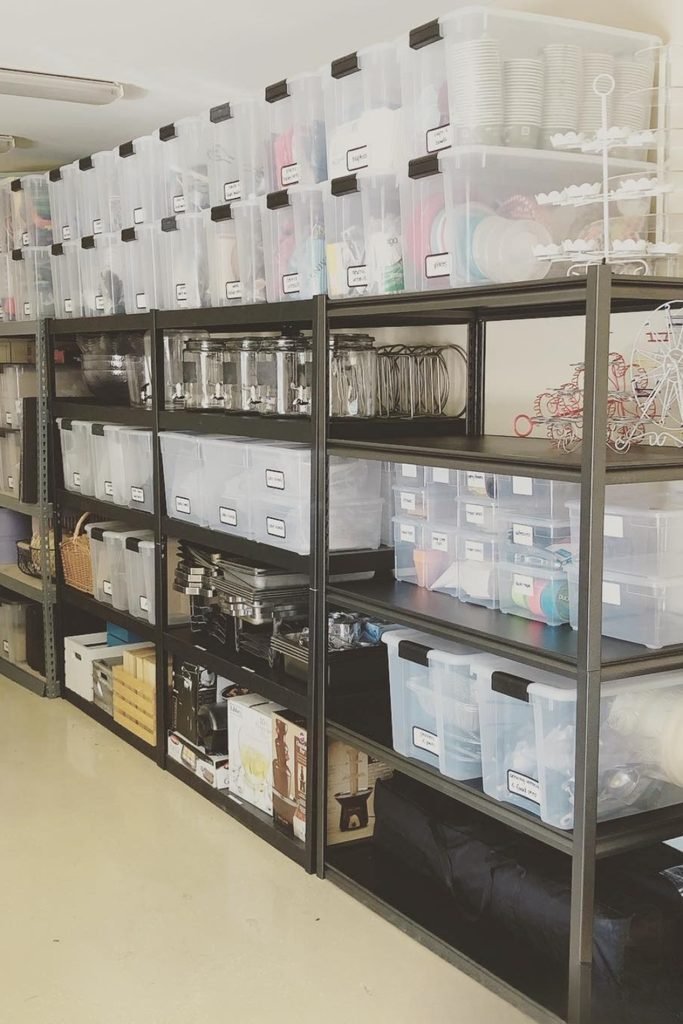
Clear Bin Wall
Clear containers make a large storage wall easier to manage because you can spot contents before pulling anything from the shelves.
Group similar supplies together and add simple front labels, so visual identification and written categories work together when things get busy.
Wide shelving also handles different container sizes better than fixed tote rails, making future storage changes much easier to accommodate.
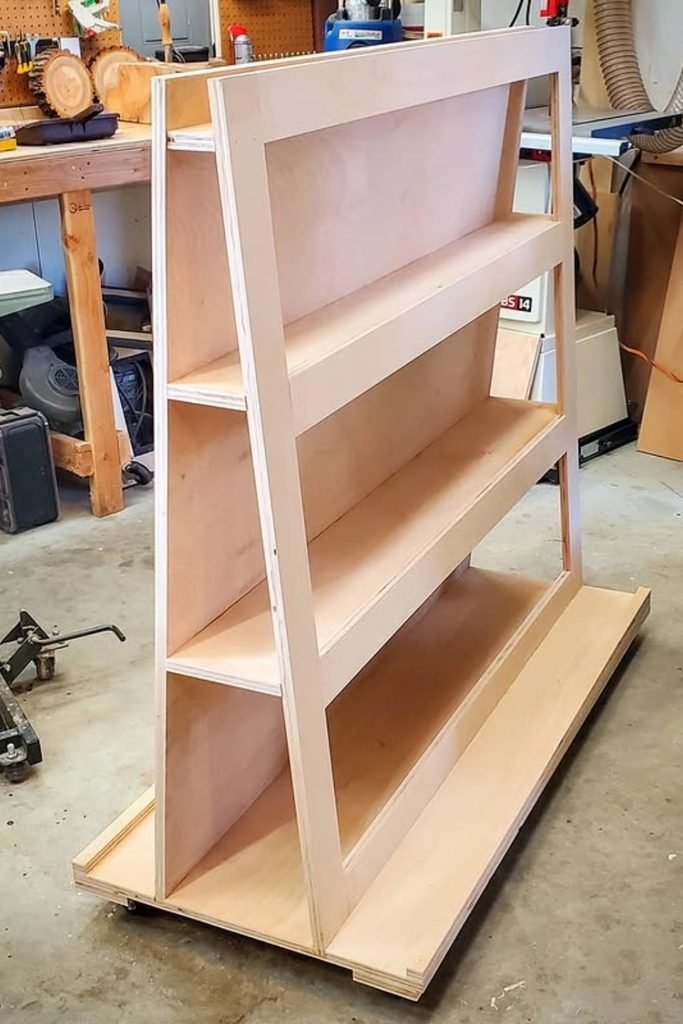
Plywood Bin Rack
Plywood gives you freedom to size each opening around smaller bins when chunky lumber framing would waste too much interior space.
Before assembling the carcass, plan opening heights around what you actually store instead of dividing the rack into equal sections automatically.
A wide base helps the unit stand securely, while concealed casters can make a workshop rack easier to reposition during cleanup.
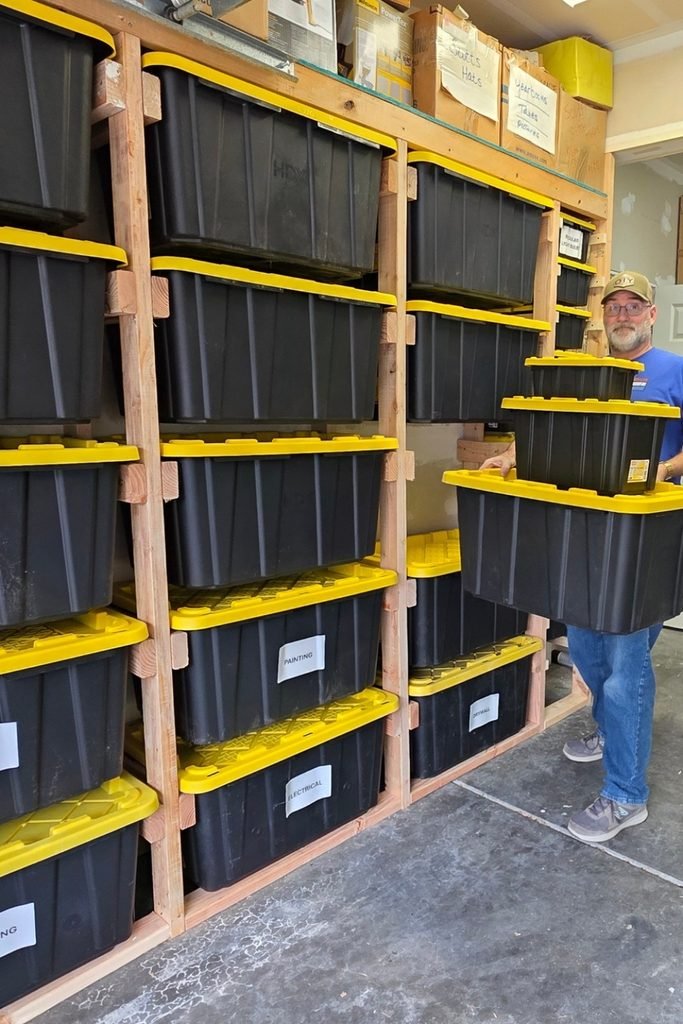
Labeled Tote Wall
Once your rack holds dozens of identical bins, clear labels matter almost as much as the wooden frame supporting them.
Give every tote its own category, then position frequently needed tools around waist height instead of wherever an empty slot appears.
Individual runners also prevent the usual unstacking problem, letting you remove one labeled bin while every neighboring container stays put.
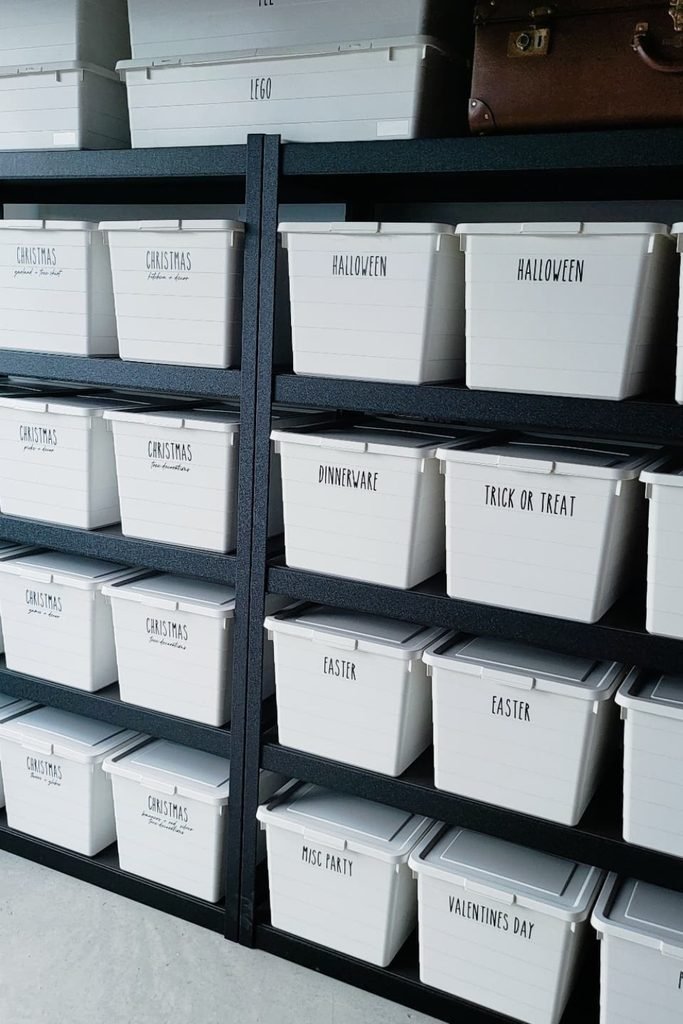
Seasonal Bin Shelves
Holiday decorations are much easier to rotate when matching bins stay grouped by season instead of disappearing into random garage stacks.
Use full shelves when you want flexibility between container styles, leaving a little clearance above lids for comfortable lifting and replacement.
Large category labels make seasonal swaps quicker, especially when Christmas, Halloween, Easter, and party supplies share the same storage wall.
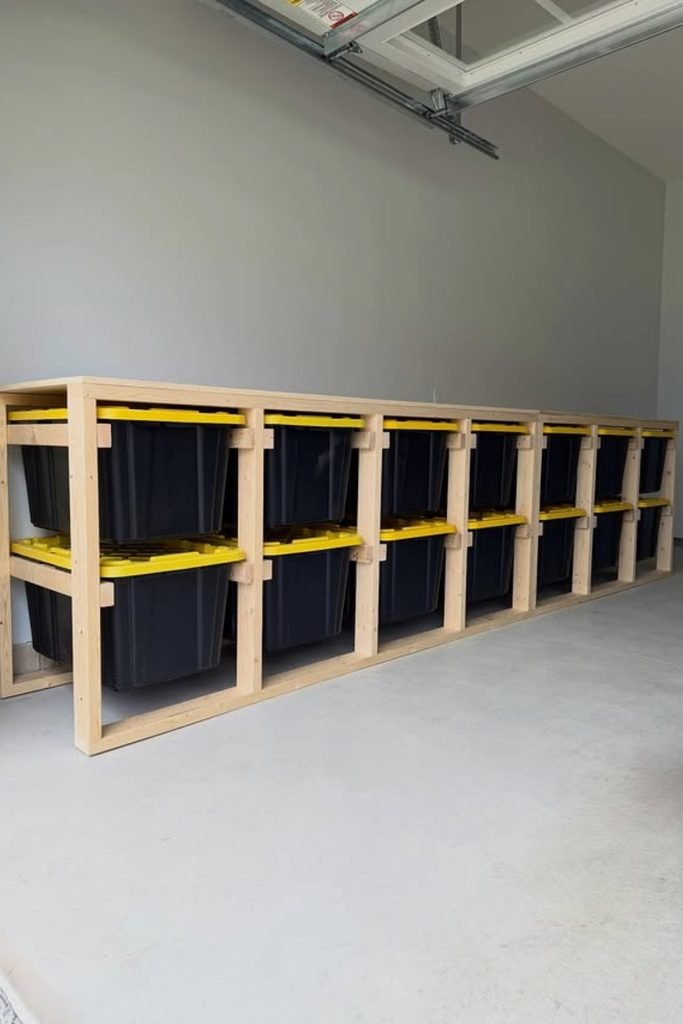
Low Garage Rack
Going wider instead of taller keeps every tote within comfortable reach and leaves the upper wall feeling open rather than overloaded.
Measure around garage tracks and parked vehicles first, then size the rack so pulling a bin forward never blocks your walkway.
The broad top can become bonus storage for lightweight supplies, giving this low layout another useful surface without adding extra height.
Shed Bin Columns
A narrow shed can still hold plenty when you build vertical tote columns along one wall and preserve the central walkway.
Closely spaced runners work especially well with shallow matching bins, since you gain more storage levels without creating an oversized frame.
Before repeating every rail, test the heaviest tote first and make sure its rim stays properly supported on both sides.
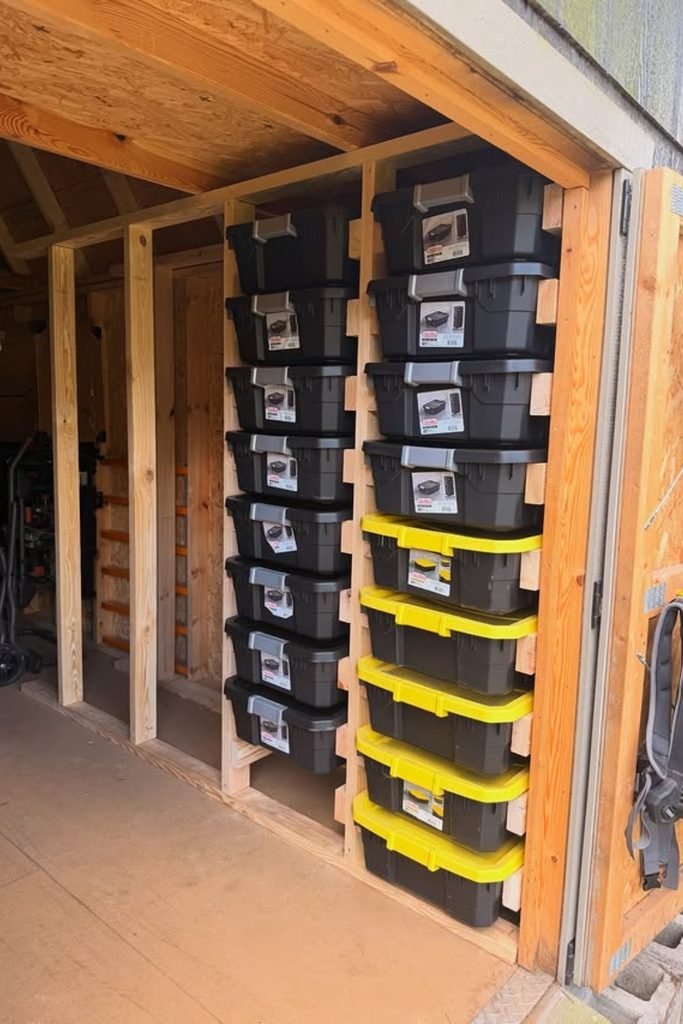
Compact Grid Rack
When several matching totes need one home, a compact grid keeps every bin individually accessible without stretching across an entire wall.
Size each opening from the widest part of your tote, then leave just enough clearance for smooth sliding without excessive gaps.
A sturdy top surface can hold an extra lightweight bin, but keep frequently handled containers inside the easier waist-level openings.
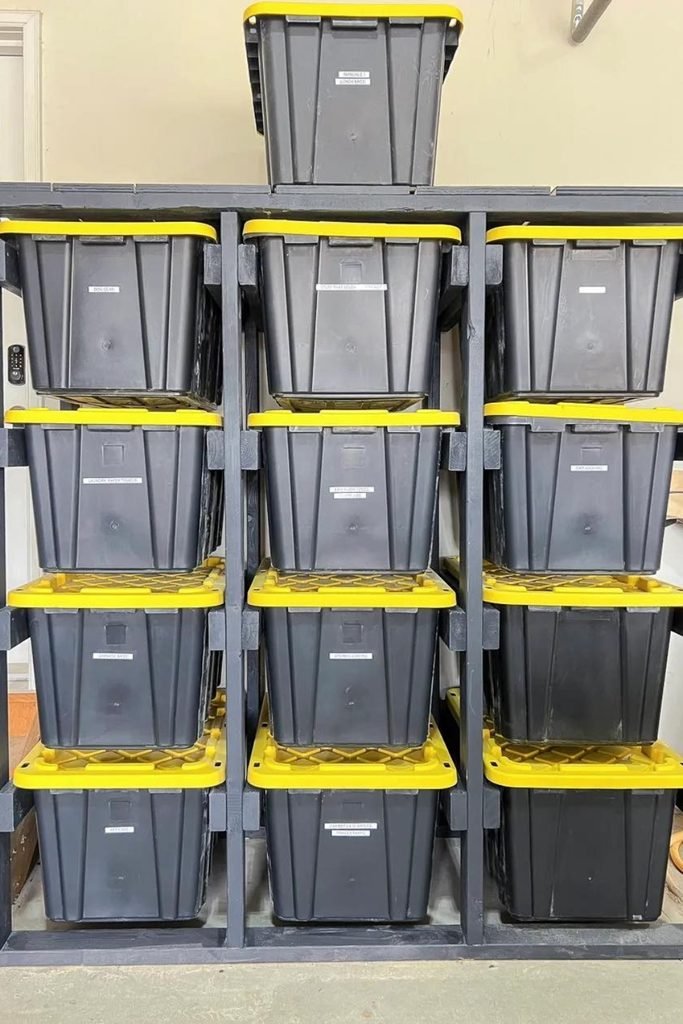
Mobile Wood Rack
Adding casters underneath a wooden frame makes sense when your garage layout changes often or you occasionally need access behind storage.
Build the base rigid enough to resist twisting, then choose locking casters suited to the finished rack and its expected load.
Keep the wheel positions near structural corners so the frame stays supported instead of letting long bottom rails carry unnecessary stress.
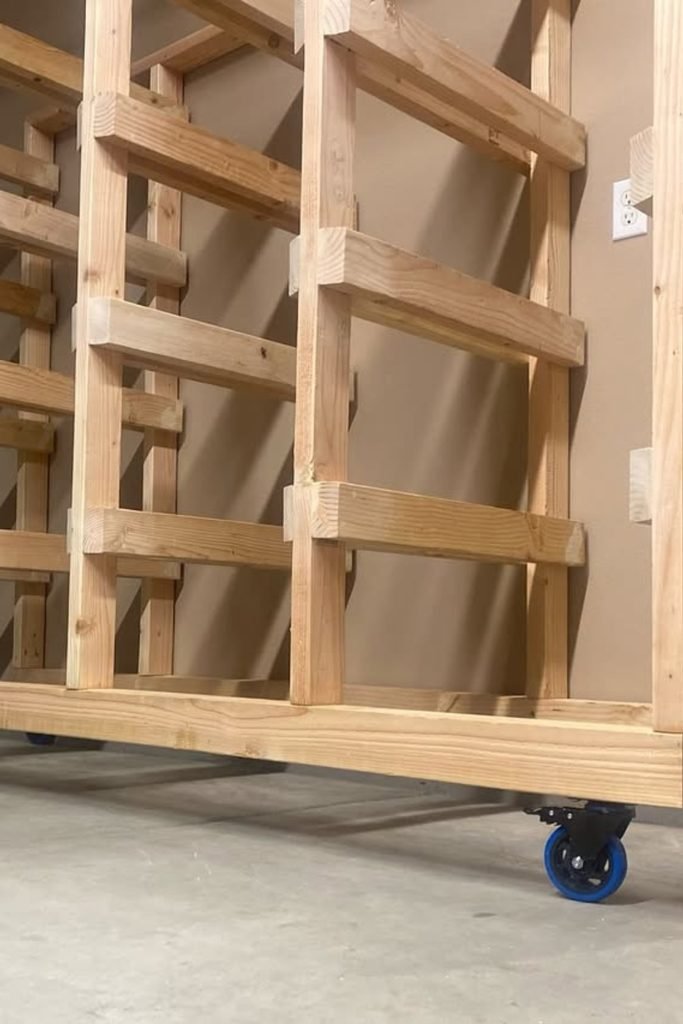
Corner Shelf Layout
Awkward storage rooms become more useful when shelving follows multiple walls instead of leaving corners empty and hard to organize.
Use adjustable shelf heights if your tote collection varies, because fixed openings can quickly become wasted space after containers change.
Keep the central aisle wide enough to remove your deepest bin comfortably, especially when shelves wrap around more than one wall.
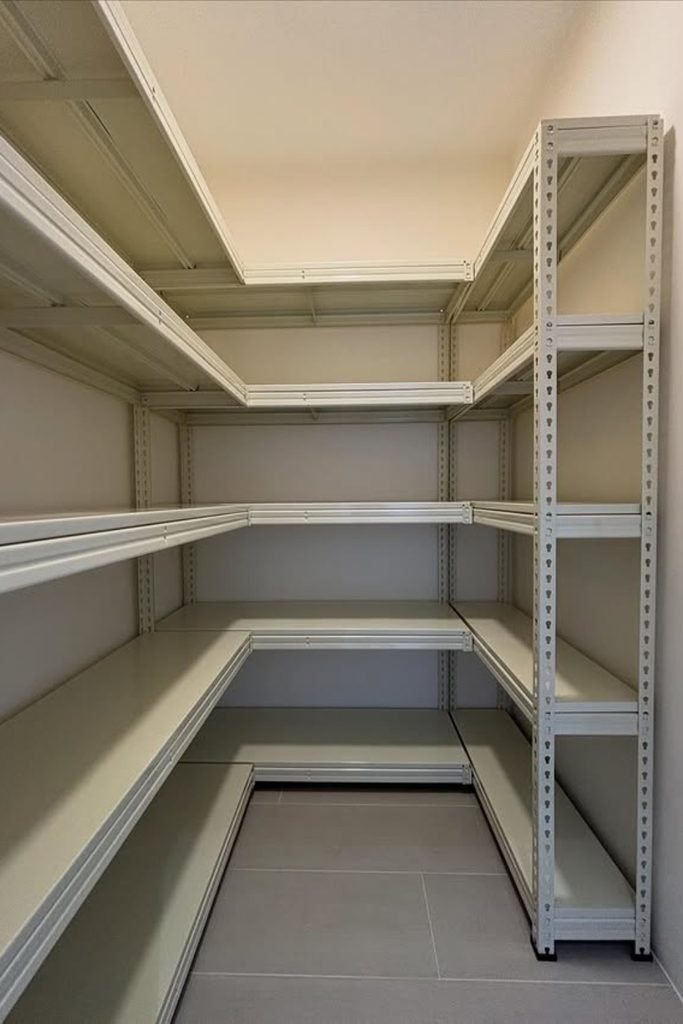
Rolling Tote Wall
A large tote collection does not have to become permanent wall storage when the entire rack can move on heavy-duty casters.
Multiple narrow columns keep each container accessible, while consistent runner spacing works best when most of your totes share matching dimensions.
Before making a tall rack mobile, pay extra attention to frame bracing, caster capacity, and keeping heavier contents near the bottom.
FAQs
How Much Space Should I Leave Between Storage Bins?
I’d leave enough clearance for each tote to slide out without the lid or rim catching the frame.
Measure your actual bins at their widest points first because containers with the same gallon capacity can still have different dimensions.
Should I Use Shelves or Rails for a DIY Storage Bin Rack?
Rails work well when you have matching totes with sturdy rims and want each bin to slide out separately.
Full shelves give you more flexibility for mixed container sizes and support bins from underneath.

Hi, my name is Ali Mehmood! I’m a passionate writer and DIY enthusiast who loves turning creative ideas into practical, hands-on projects.
I created this website to share inspiring, budget-friendly ideas that you can do yourself – whether it’s organizing your home, crafting something unique, or creating fun projects for kids and pets.
I believe DIY isn’t just a hobby – it’s a smart way to save money, reduce waste, and enjoy the satisfaction of making things with your own hands.
I’m excited to have you as part of this growing community, and I’ll continue bringing you helpful, realistic, and fun DIY ideas you can actually use.