This post may contain affiliate links: read full affiliate disclosure.
Making fabric flowers can feel tricky when you don’t know which fabric to use, how to shape the petals,
The good news is that you don’t need expensive supplies or complicated techniques to get started.
From simple rolled roses to layered flowers, there are plenty of ways to make beautiful designs with basic materials.
I’ve gathered 28 fabric flower ideas to help you try different techniques, use your fabric scraps, and create handmade decorations for your home.
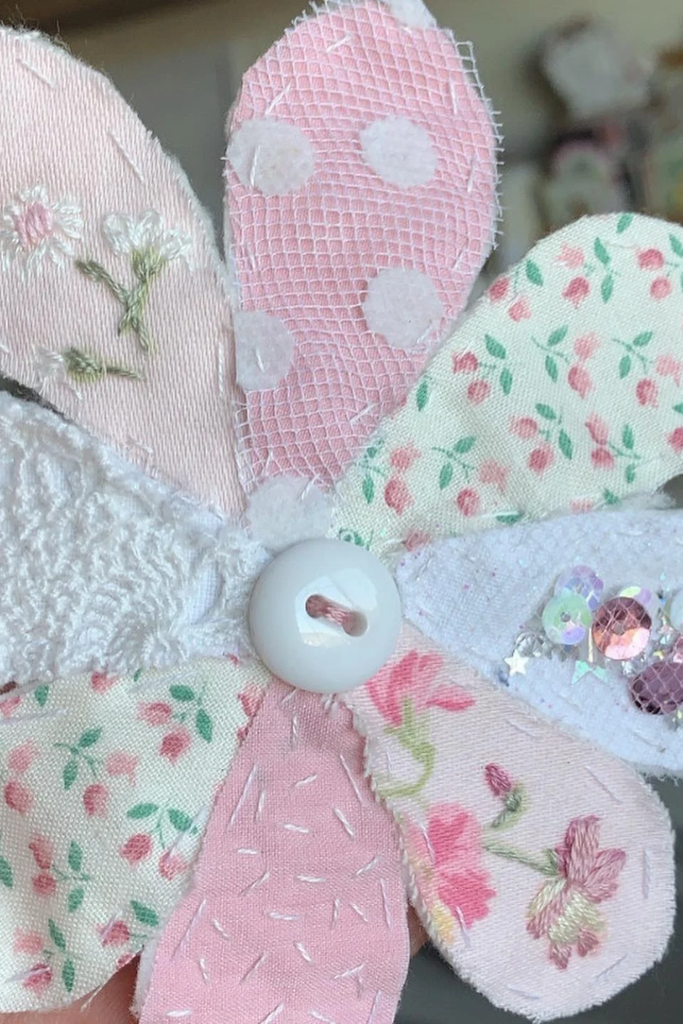
Patchwork Petals
Give leftover fabric scraps a new purpose by cutting rounded petals from different cotton prints, textured cloth, and embroidered pieces.
Sew each petal with light padding inside, then arrange them around a central button to create a soft flower.
Mixing floral patterns with plain fabrics adds character, making these handmade flowers lovely for bags, cushions, or decorative wall hangings.
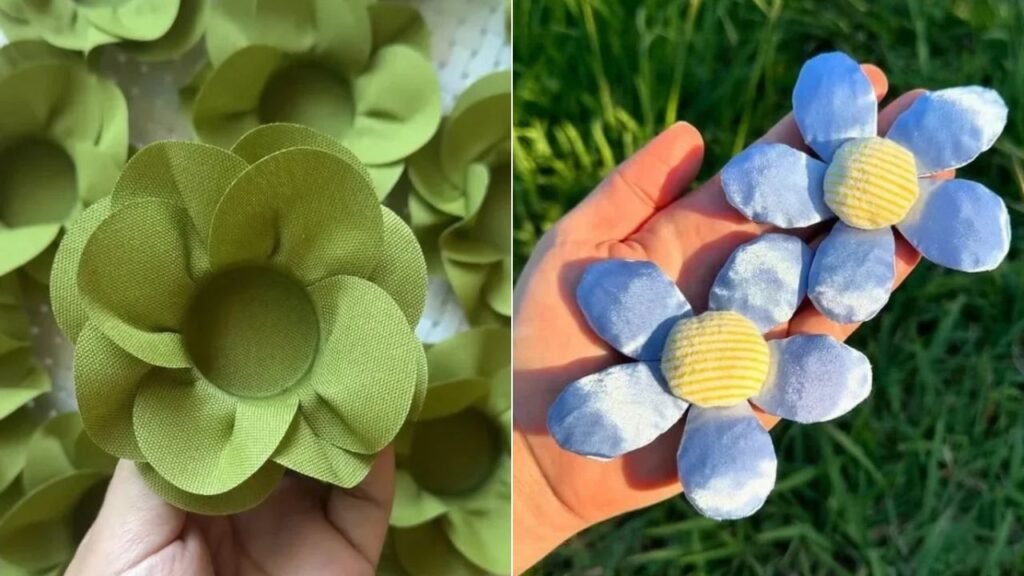
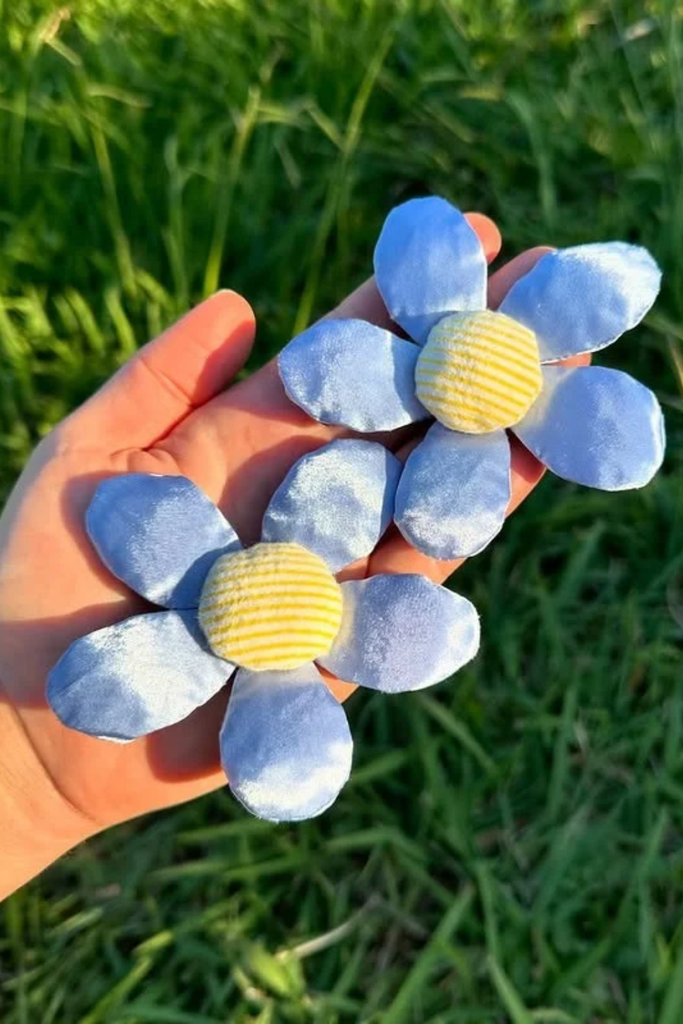
Blue Satin Daisies
Soft satin works nicely for making cheerful daisies, but cutting matching petal shapes first helps your flowers look more balanced.
Stitch two fabric pieces together for each petal, turn them right side out, and arrange them around a circular base.
Cover a small padded center with striped cotton fabric, then attach it securely for a playful finish on hair accessories.
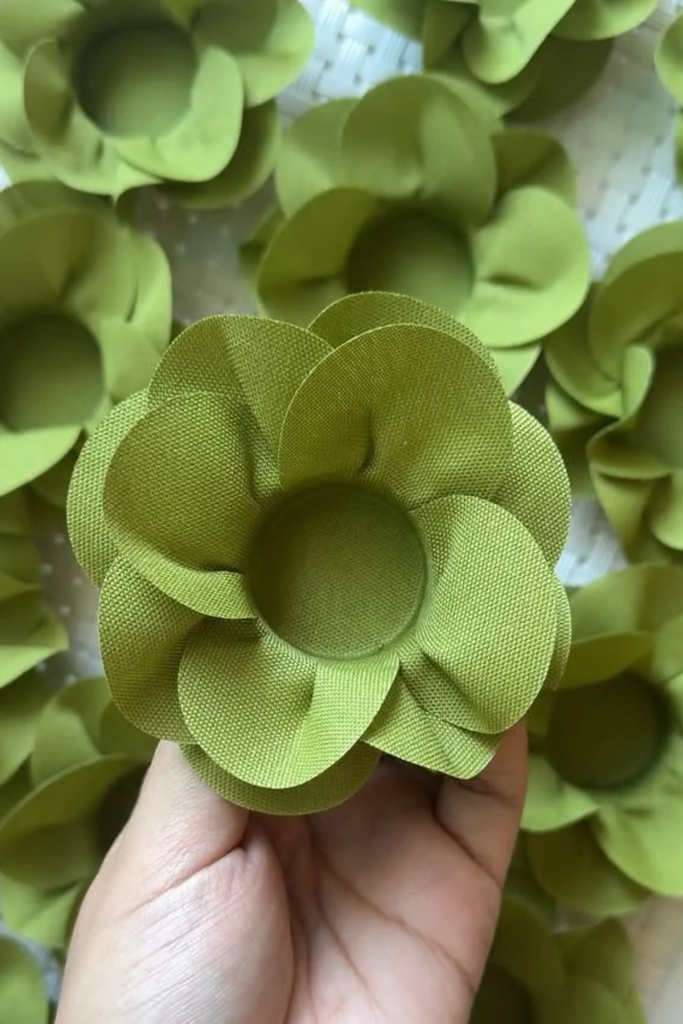
Layered Green Blooms
For flowers that hold their shape, choose sturdy green fabric and cut several rounded petals in two slightly different sizes.
Overlap the petals in circular layers, securing their bases with small stitches while leaving the upper edges free to curve.
Finish with a fabric covered circular center, giving your flower enough structure for wreaths, table decorations, or handmade floral arrangements.
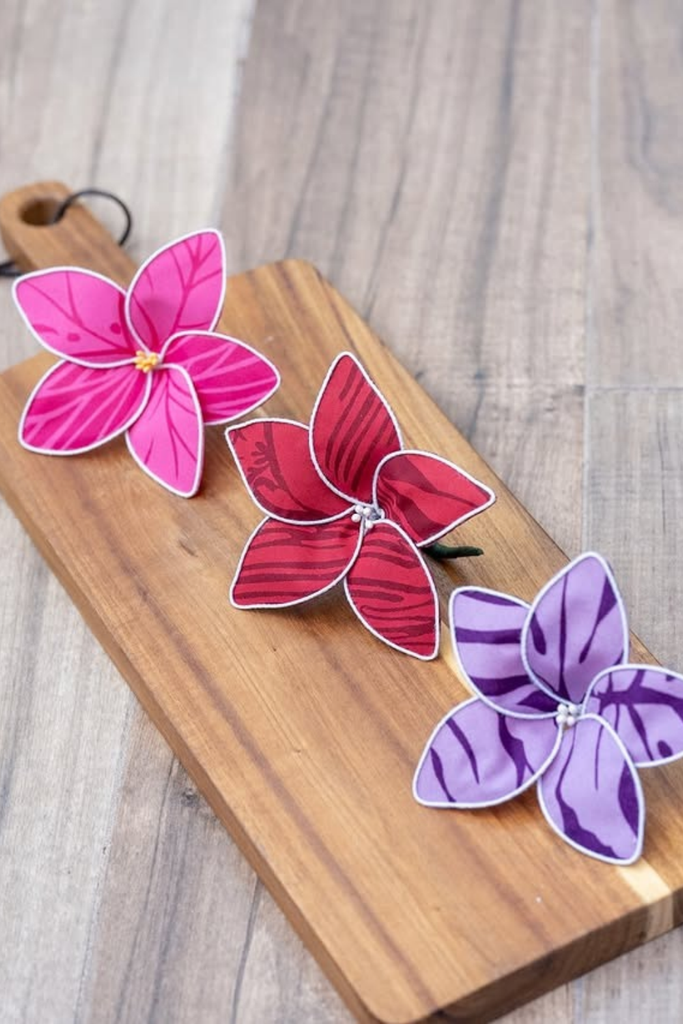
Printed Fabric Orchids
Bold printed cotton can become striking orchid flowers when you use pointed petal templates instead of ordinary rounded shapes.
Cut five petals for each flower, add lightweight interfacing, and stitch narrow contrasting fabric around the edges for definition.
Shape the petals slightly upward before joining them around tiny bead centers, creating colorful accents for bouquets or decorative displays.
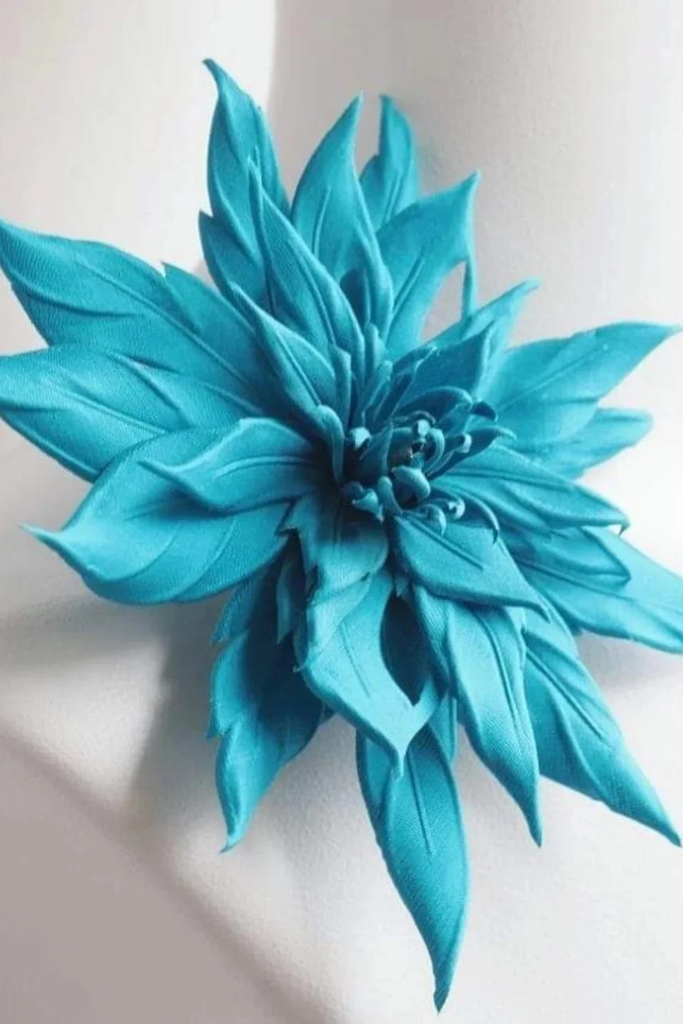
Sculpted Blue Petals
Creating dramatic fabric flowers becomes easier when you use stiffened satin and cut pointed petals in several different sizes.
Shape each petal with gentle curves and raised center folds, then arrange larger pieces behind smaller ones for depth.
Add narrow fabric stamens to the middle, giving your finished flower a striking appearance for brooches or decorative arrangements.
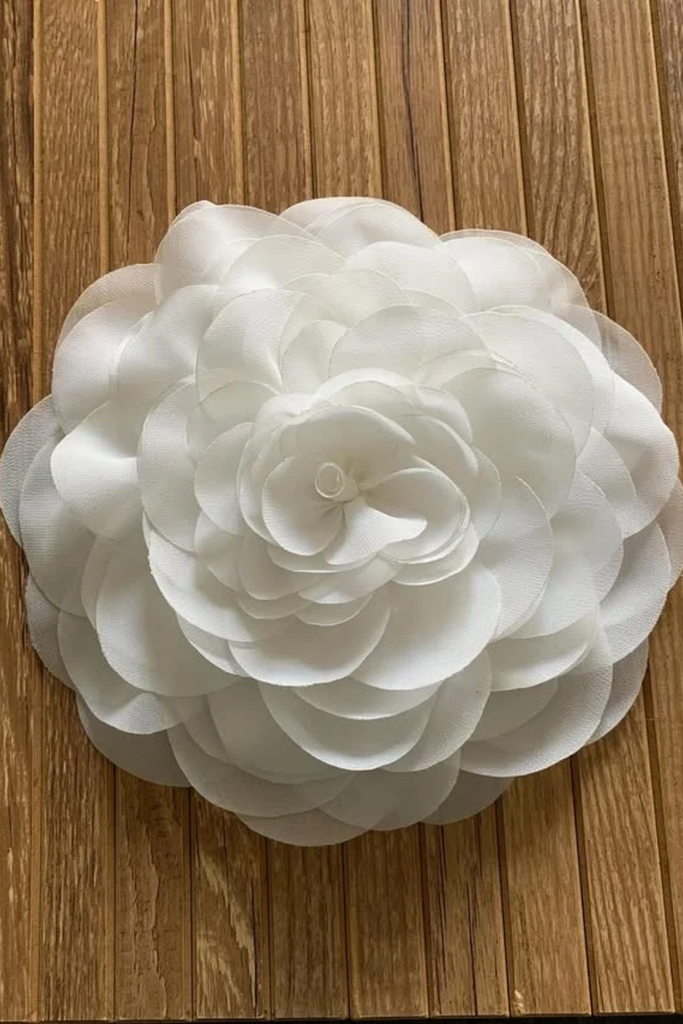
White Layered Rose
Oversized fabric roses need plenty of petals, so prepare several circular sizes from sturdy white fabric before assembling them.
Begin with tightly curled center petals, then gradually overlap wider pieces outward to build a full, rounded flower shape.
Attach each layer to a firm backing, making this design suitable for wedding backdrops, wall decorations, or statement centerpieces.
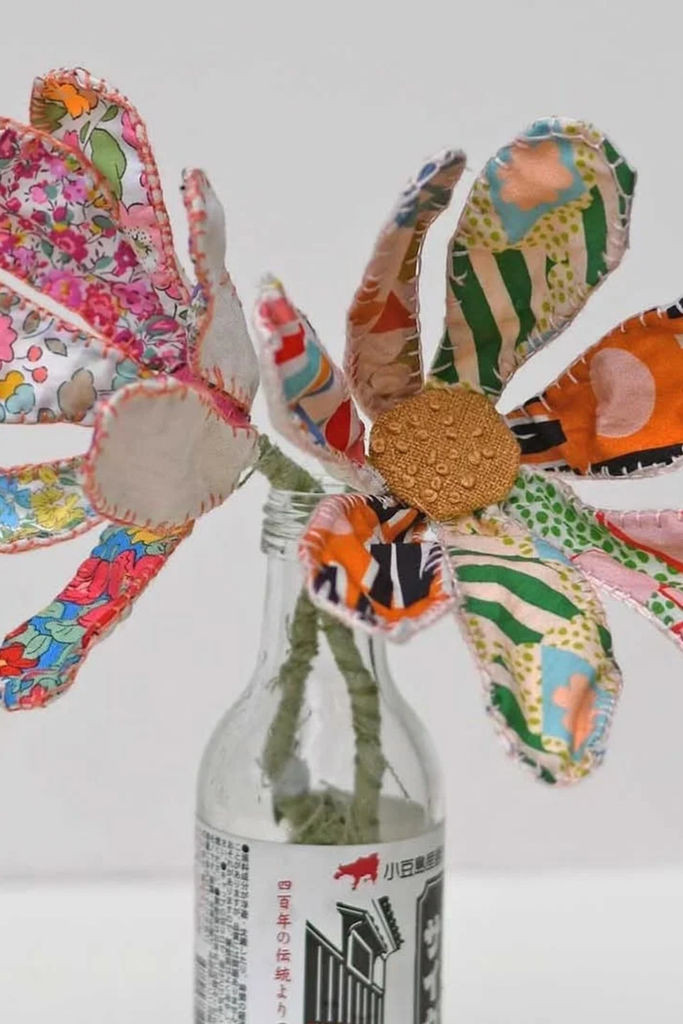
Colorful Scrap Daisies
Instead of matching every petal, combine bright floral prints and patterned fabric scraps for a cheerful handmade daisy bouquet.
Cut elongated petal pairs, stitch around their edges with contrasting thread, and add light stuffing for a soft finish.
Wrap floral wire with green fabric strips, then attach textured circular centers to complete flowers you can display in bottles.
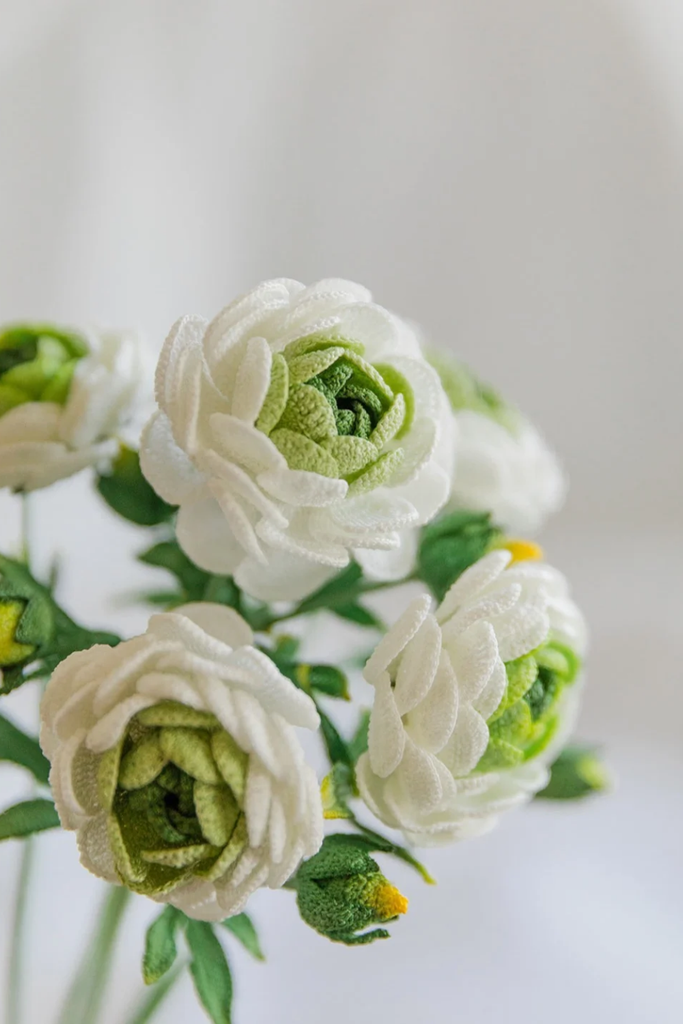
White Fabric Ranunculus
Delicate ranunculus flowers look more natural when their inner petals sit tightly together while the outer layers open gradually.
Choose soft white fabric for the petals and pale green material for the centers, cutting small rounded shapes for layering.
Secure each petal around a wrapped wire stem, then add green leaves and unopened buds for a realistic floral arrangement.
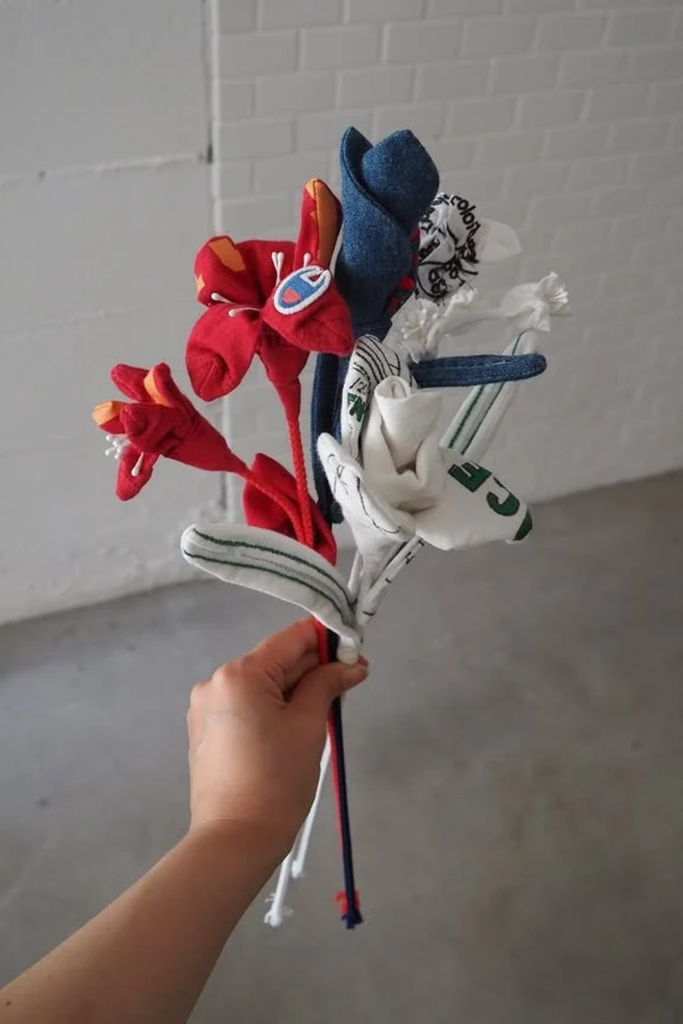
Upcycled Fabric Bouquet
Old clothing scraps can become a creative flower bouquet when you combine bold colors, denim pieces, and printed fabric.
Fold and stitch different petal shapes, then attach them to fabric wrapped wire stems with matching leaves for support.
Try mixing open blooms with smaller buds, creating a playful arrangement that gives unwanted clothing a completely new purpose.
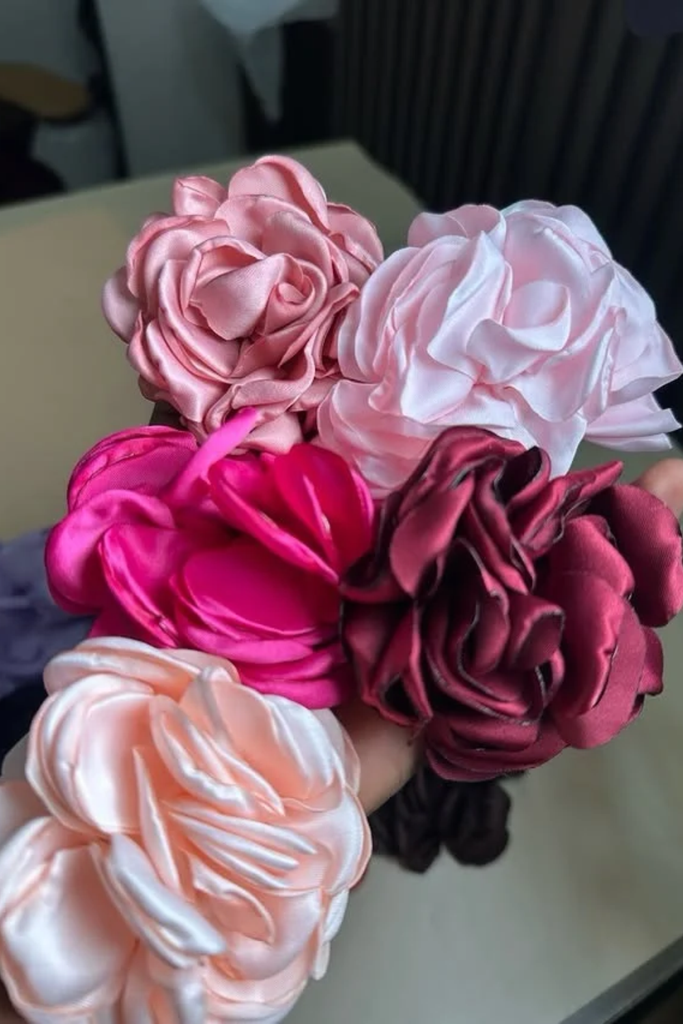
Pink Satin Roses
Choosing several shades of pink satin makes handmade roses look richer without needing complicated decorations or additional floral materials.
Cut rounded petals, fold their edges gently, and stitch them around a tightly rolled center to build natural layers.
Use lighter shades for delicate bouquets and deeper pinks for statement flowers on gift boxes, headbands, or wedding accessories.
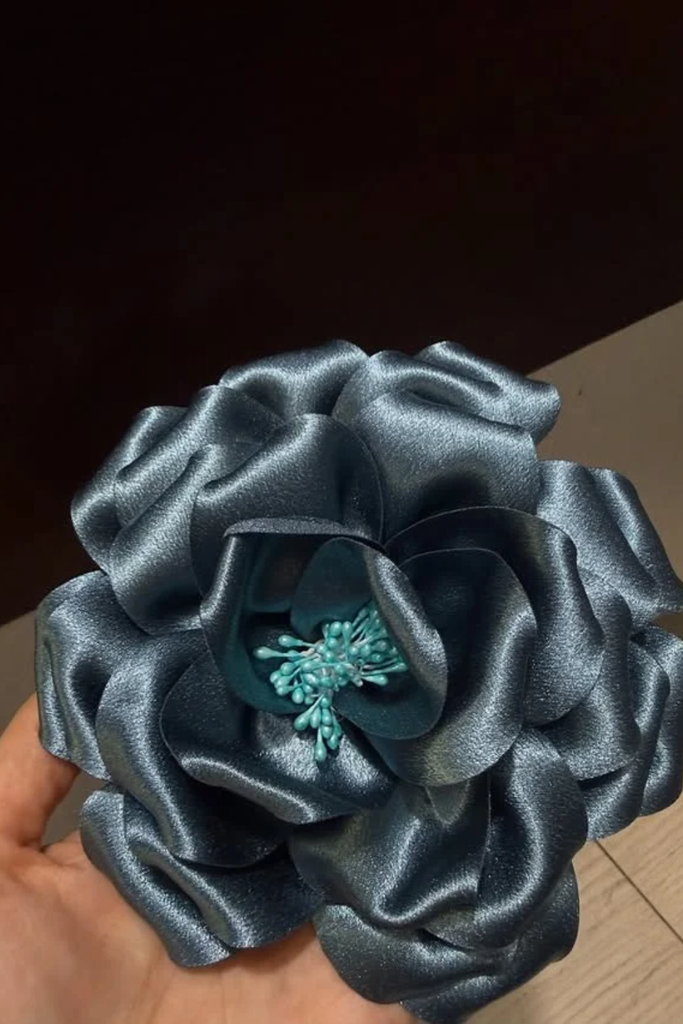
Metallic Satin Bloom
Dark metallic satin creates a dramatic flower, but loose folds are essential if you want soft petals instead of stiffness.
Gather wide satin pieces individually, overlapping their curved edges around a small fabric base to form a full bloom.
Finish the center with contrasting turquoise stamens, adding a little color that makes the flower suitable for brooches or accessories.
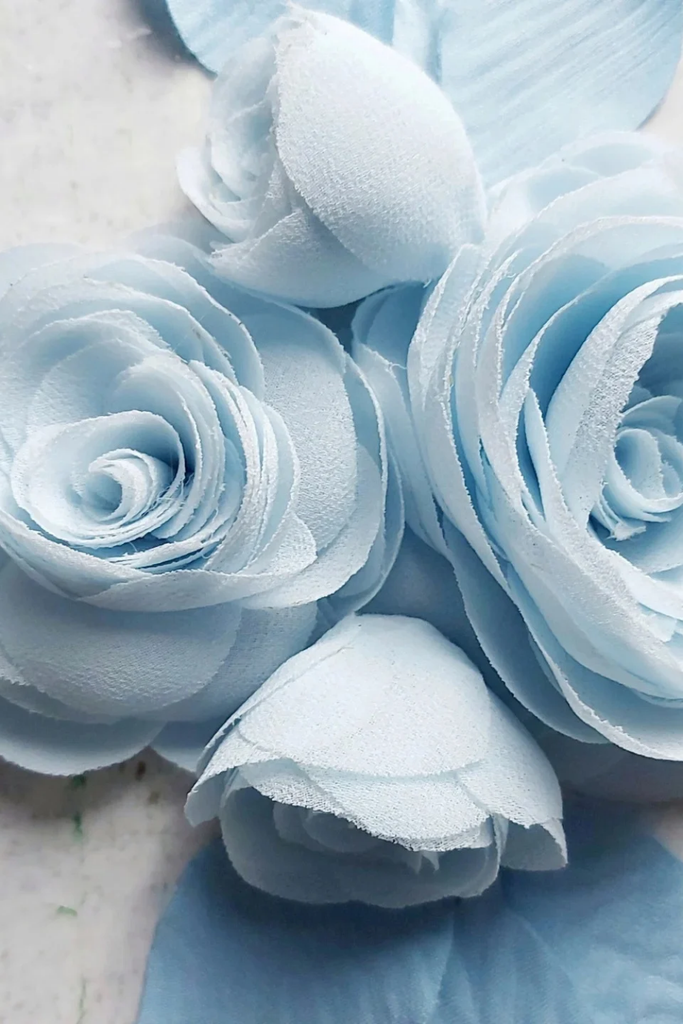
Pale Blue Roses
For soft romantic roses, lightweight pale blue fabric allows you to create delicate overlapping petals without making the flowers bulky.
Start with a small rolled center, then attach progressively larger curved petals, allowing their outer edges to open naturally.
Leave the edges slightly textured for a handmade finish, and combine open roses with closed buds for wedding arrangements.
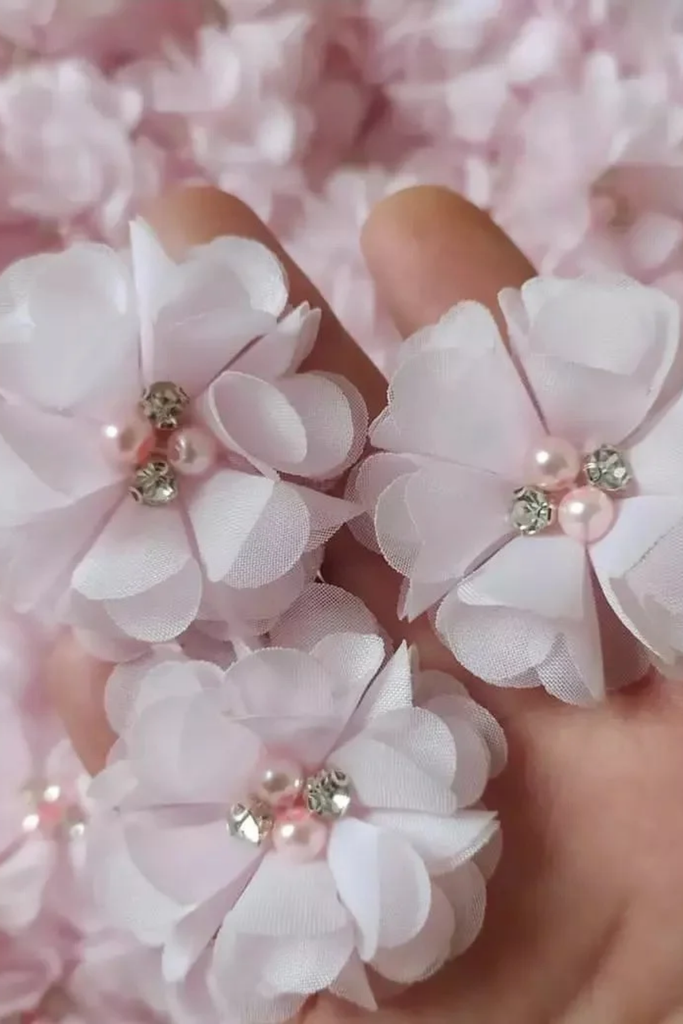
Pearl Chiffon Flowers
Tiny chiffon flowers can add a delicate touch to wedding accessories without requiring large fabric pieces or complicated sewing techniques.
Cut small rounded petals from pale pink chiffon, fold them gently, and stitch several layers together around the center.
Finish each flower with pearl beads and tiny rhinestones, creating pretty embellishments for bridal veils, dresses, or hair clips.
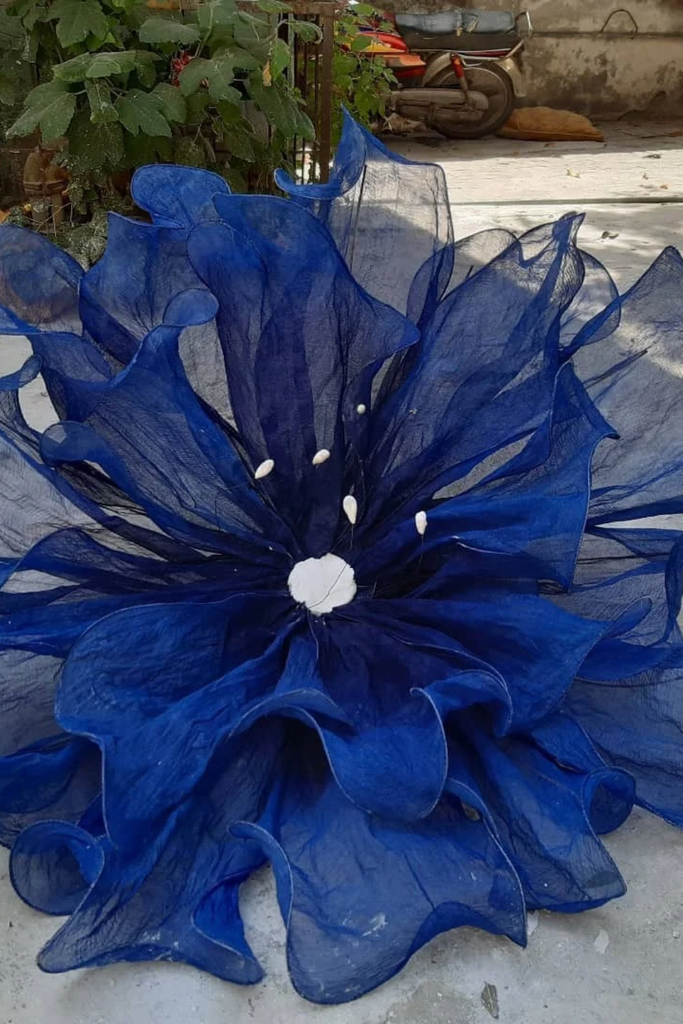
Giant Blue Bloom
Oversized flowers need lightweight materials, and sheer blue organza works well because it creates volume without adding too much weight.
Shape large petals over flexible wire frames, then stretch and secure the fabric carefully around their curved edges.
Gather the petals around a sturdy central support, adding slender white stamens for a dramatic wedding backdrop or photo display.
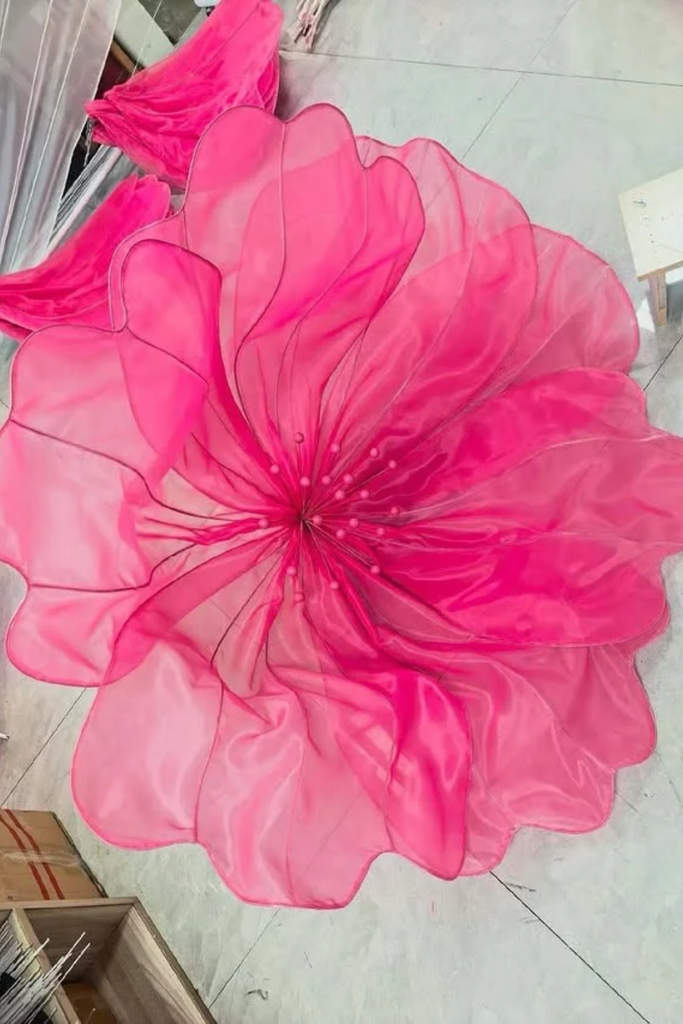
Pink Organza Flower
Bright pink organza can transform an empty wall into a colorful floral display when you make the petals dramatically oversized.
Bend flexible wire into broad petal outlines, cover each frame with sheer fabric, and secure the edges using matching thread.
Layer the petals around a reinforced center, then add long decorative stamens to create an eye-catching party backdrop decoration.
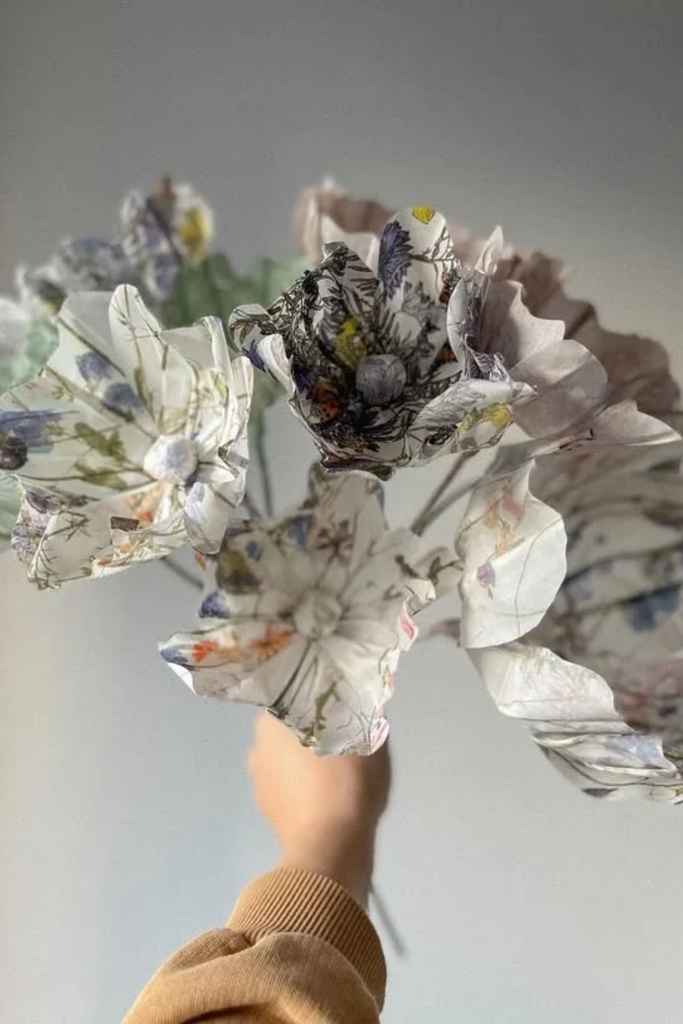
Botanical Print Flowers
Delicate botanical prints work wonderfully for fabric bouquets when you want a softer appearance than bright, solid-colored flowers.
Choose lightweight cotton with small floral patterns, then gather irregular petal shapes around covered buttons or fabric wrapped centers.
Attach the blooms to slender wire stems, allowing their ruffled edges to spread naturally for a charming vintage arrangement.
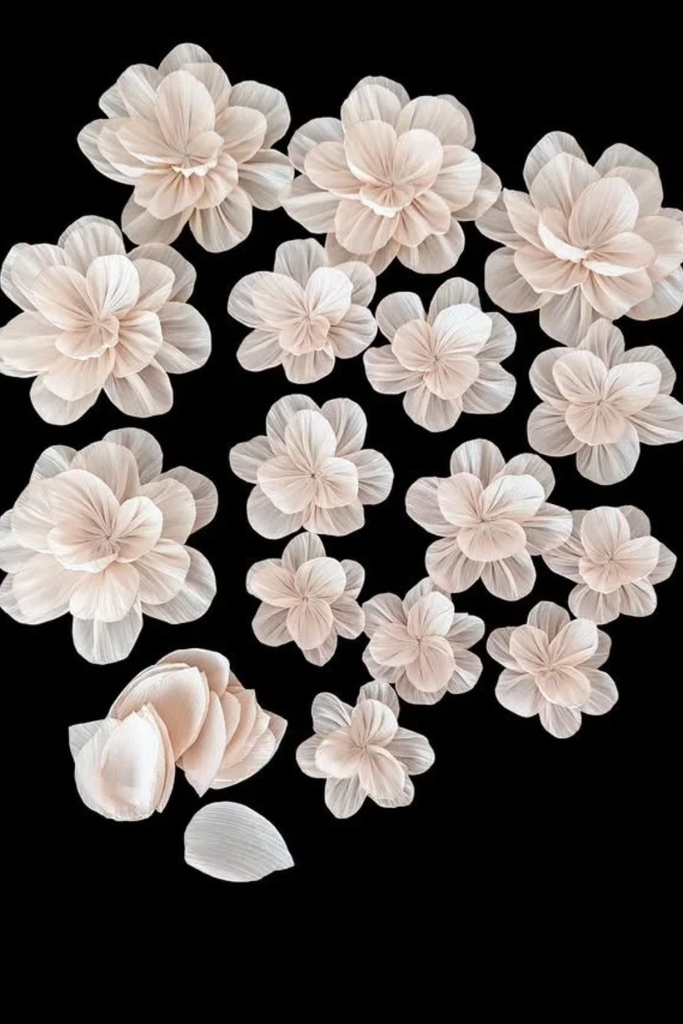
Pleated Fabric Blossoms
Pleated fabric gives small flowers a beautiful texture, making them a lovely choice when you want delicate decorations without bulky petals.
Cut oval petals from lightweight pleated fabric, pinch their bases together, and arrange them in overlapping layers around a center.
Make several sizes using the same technique, then attach them to wedding accessories, floral backdrops, or handmade gift decorations.
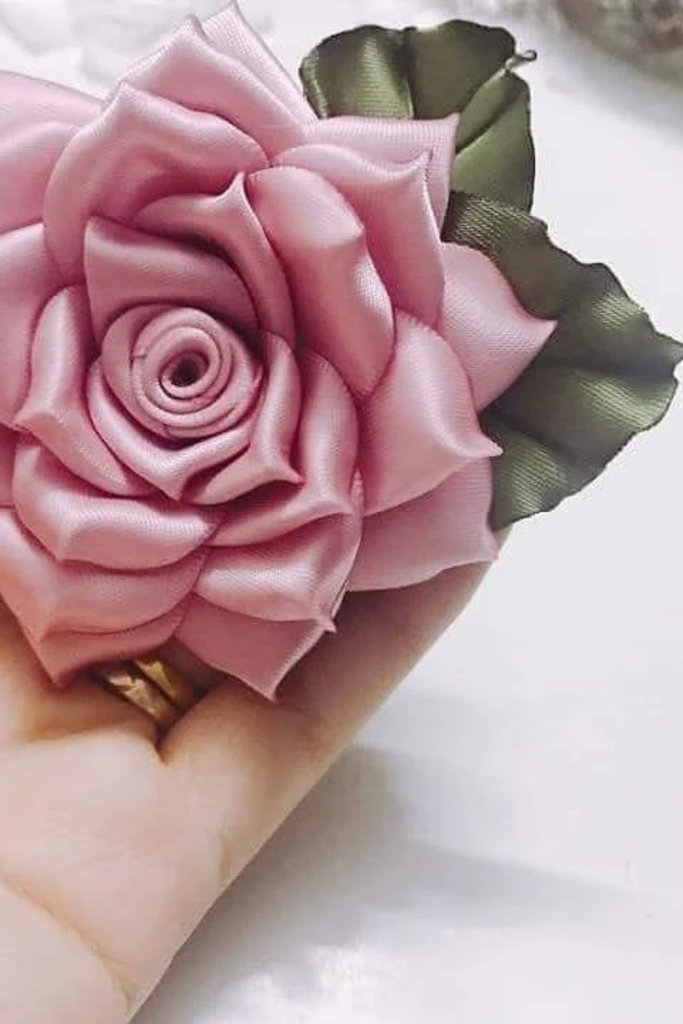
Folded Satin Rose
A tightly rolled center can make your satin rose look surprisingly realistic, even when you’re working with simple folded strips.
Use dusty pink satin to create pointed outer petals, securing each fold underneath so the flower maintains its shape.
Add olive green satin leaves behind the bloom, giving your finished rose a polished appearance for brooches or hair accessories.
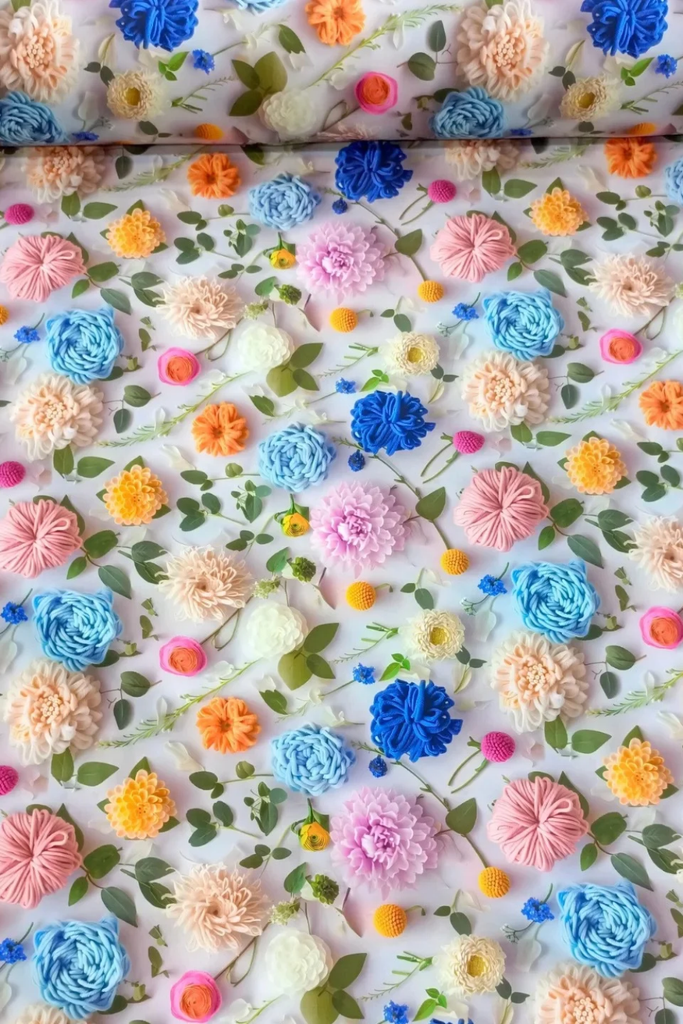
Colorful Floral Fabric
For a cheerful floral pattern, combine different flower shapes and sizes instead of repeating one design across your fabric.
Use printed floral cotton as your base, then stitch colorful yarn flowers over selected blooms to create raised texture.
Balance large blue flowers with smaller pink, orange, and yellow accents, creating decorative fabric for cushions or wall hangings.
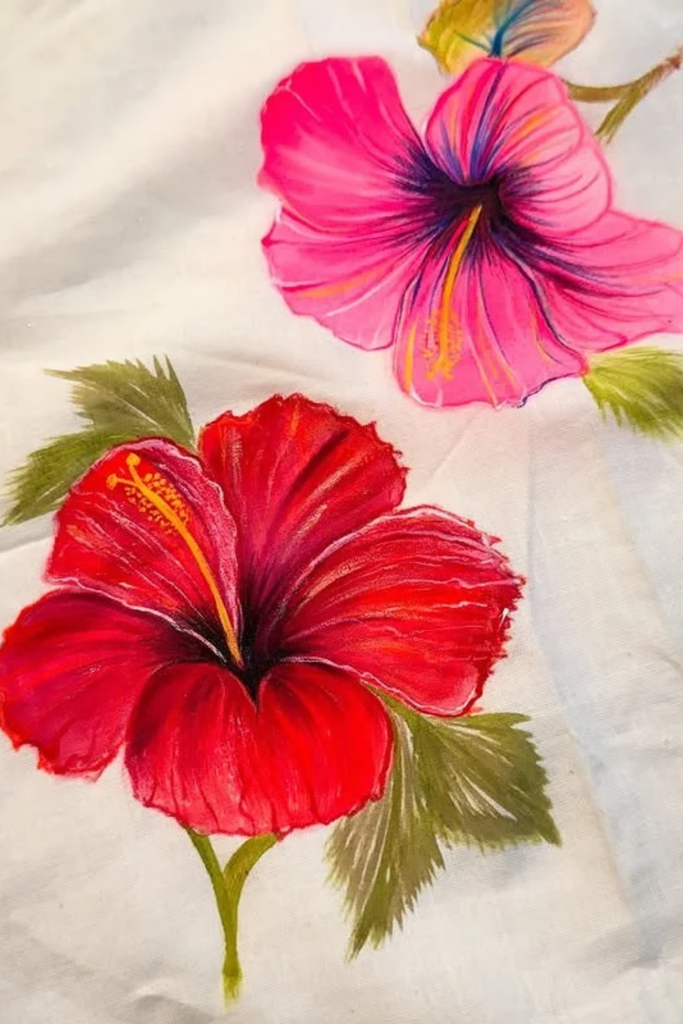
Painted Hibiscus Flowers
Painting hibiscus flowers directly onto fabric lets you create bold floral decorations without cutting or assembling individual petals.
Sketch large flower outlines on plain cotton, then blend red and pink fabric paints outward from darker central areas.
Add fine petal veins, yellow stamens, and green leaves using a small brush, then heat set according to paint instructions.
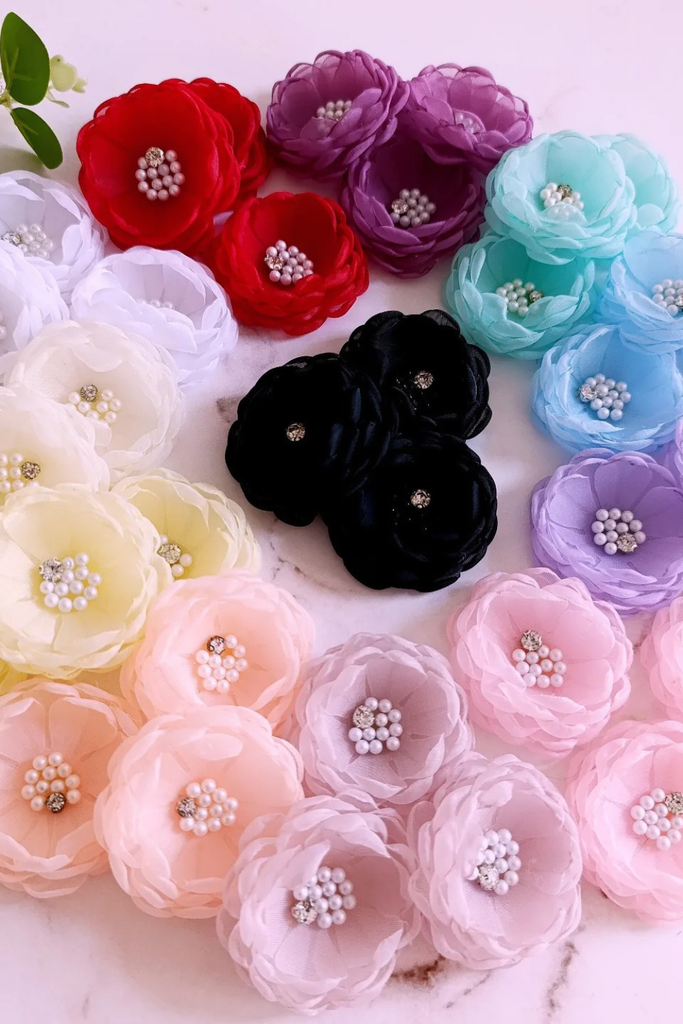
Colorful Chiffon Blossoms
Making flowers in several colors gives you more decorating options, especially when you need matching pieces for different accessories.
Cut lightweight chiffon into graduated circles, gently gather their centers, and stack the layers to create soft, cup-shaped petals.
Sew pearl clusters and tiny rhinestones into each center, then attach the finished blooms to clips, dresses, or gift decorations.
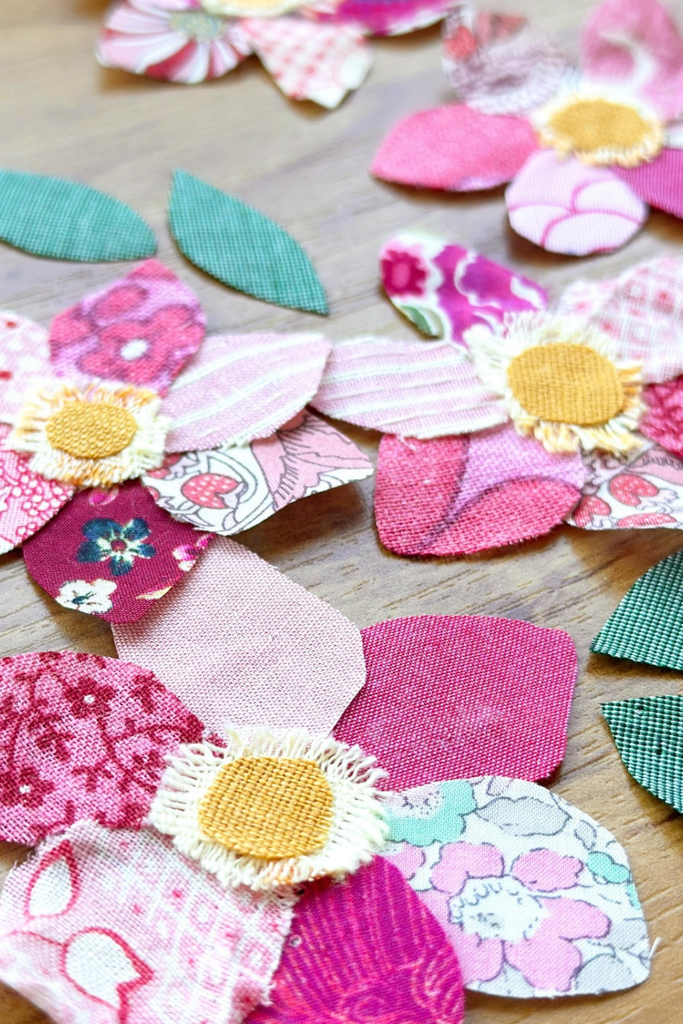
Scrappy Pink Daisies
Small cotton offcuts are perfect for cheerful daisies, so collect different pink prints instead of buying matching fabric pieces.
Cut six rounded petals for each flower, arrange them around a fabric circle, and stitch their bases securely together.
Add a yellow fabric center with fringed edges, then pair your daisies with green leaves for colorful handmade garlands.
FAQs
How Do You Stop Fabric Flowers From Fraying?
Fraying usually happens when you cut fabrics like cotton, satin, or chiffon without finishing their edges.
You can apply a small amount of fabric fray sealant along the cut edges or fold them inward before stitching.
Can You Make Fabric Flowers Without a Sewing Machine?
Yes, you can make plenty of fabric flowers using just scissors, fabric glue, and a few basic supplies.
Rolled roses, layered felt flowers, and simple folded petals are great projects to try without a sewing machine.

Hi, my name is Ali Mehmood! I’m a passionate writer and DIY enthusiast who loves turning creative ideas into practical, hands-on projects.
I created this website to share inspiring, budget-friendly ideas that you can do yourself – whether it’s organizing your home, crafting something unique, or creating fun projects for kids and pets.
I believe DIY isn’t just a hobby – it’s a smart way to save money, reduce waste, and enjoy the satisfaction of making things with your own hands.
I’m excited to have you as part of this growing community, and I’ll continue bringing you helpful, realistic, and fun DIY ideas you can actually use.