This post may contain affiliate links: read full affiliate disclosure.
If you have storage totes stacked in a garage corner, basement wall, or closet, you already know the problem.
The tote you need is always at the bottom. You pull one out, the whole stack shifts, and suddenly everything feels more messy than before.
You buy more bins, thinking it will help, but the space still feels crowded and hard to manage. Store-bought tote racks look expensive, feel flimsy, or never fit your bins properly.
You’ll learn how to choose the right rack style, measure your totes the right way, avoid common build mistakes, and plan a setup that stays organized long-term.
Save this article for later!
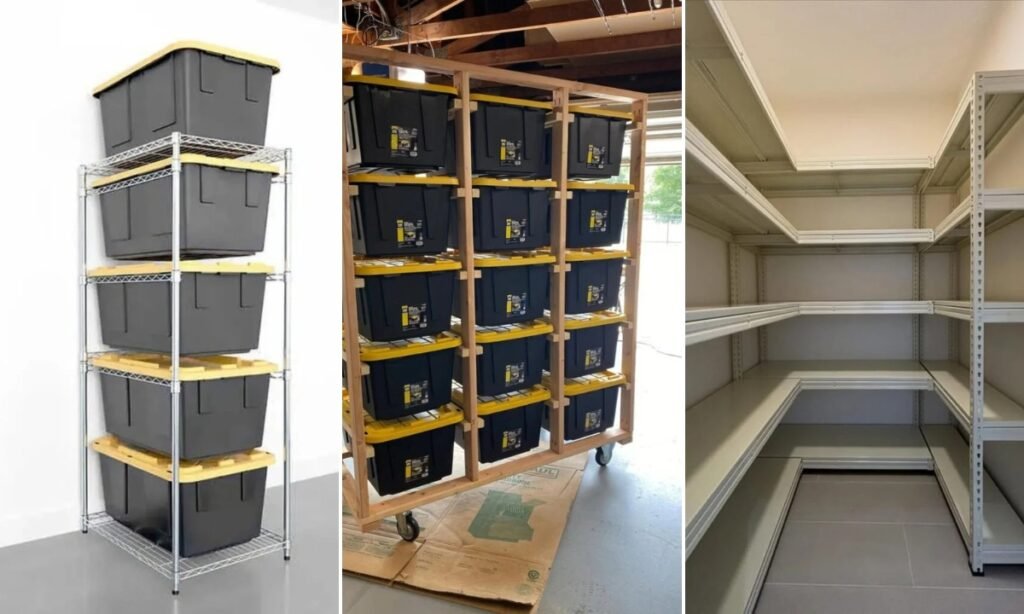
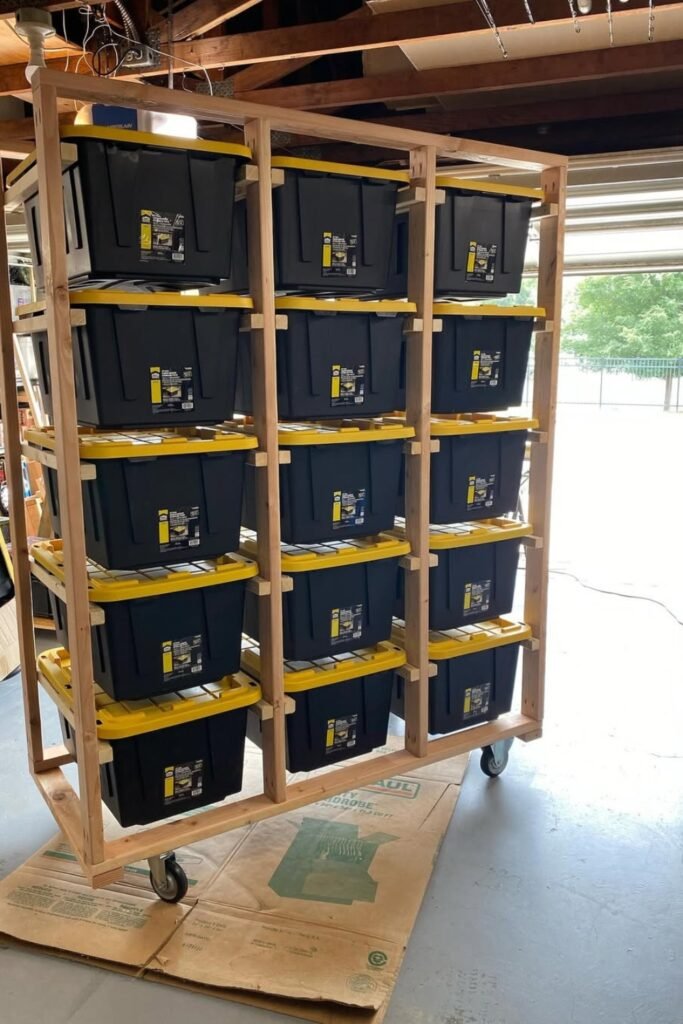
Mobile Wooden Tote Wall
A rolling wooden tote rack like this solves heavy-bin access while letting you reorganize seasonally without unloading everything.
Best for garages or workshops, build it from 2×4 frames, add runners, then mount locking casters for safety.
Keep spacing consistent and anchor cross-bracing so the rack stays rigid when fully loaded and rolled around corners.
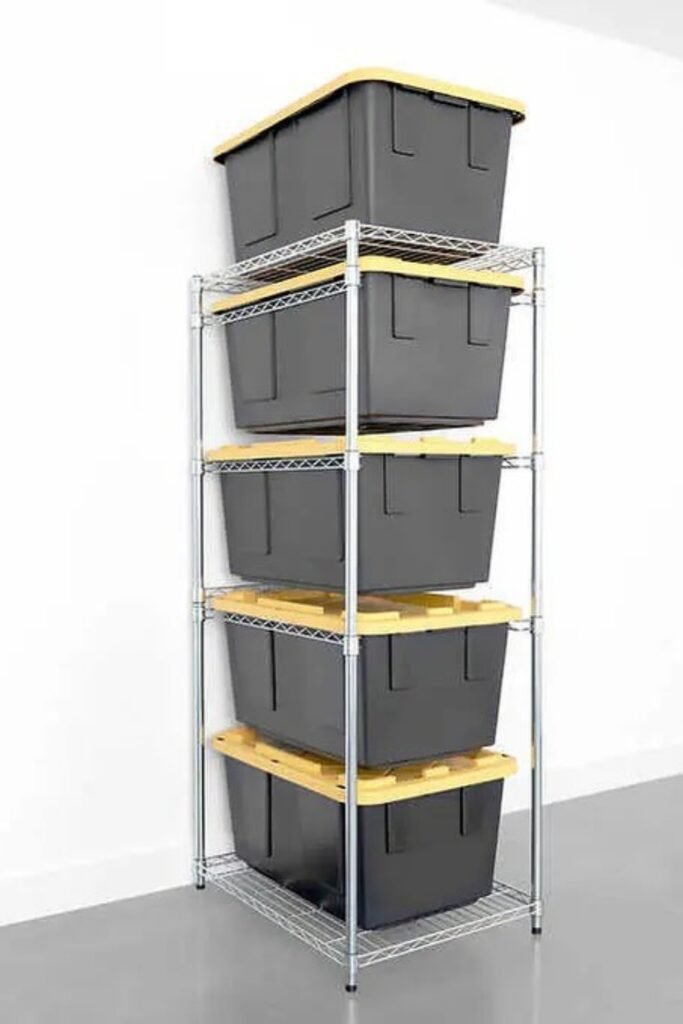
Slim Vertical Wire Rack
When floor space is tight, a tall wire rack creates vertical tote storage that stays accessible without custom woodworking
Ideal for basements or utility rooms, combine adjustable wire shelving with plywood inserts to support tote lids evenly.
Measure tote depth carefully and lock shelf clips firmly to prevent sagging over time under repeated heavy loads.
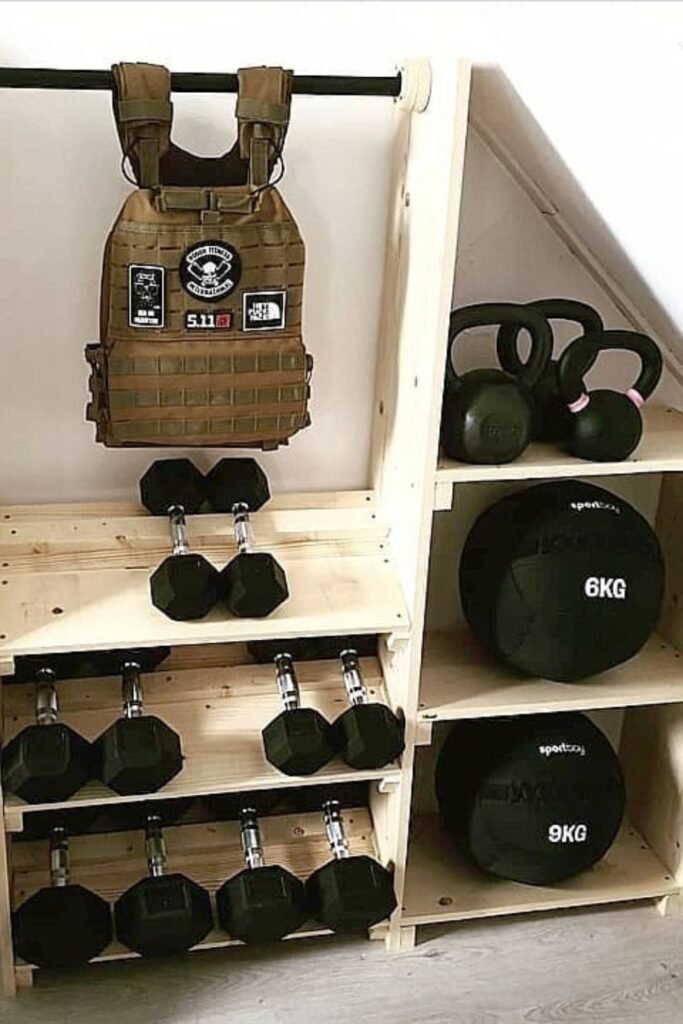
Under-Stairs Custom Rack
Awkward stair angles become useful storage when you build a stepped tote rack that follows the ceiling slope precisely.
This works best in attics or under stairs, framed with plywood sides and short shelves sized per tote height.
Plan bin heights first, then cut shelves to avoid wasted vertical gaps that limit future storage flexibility.
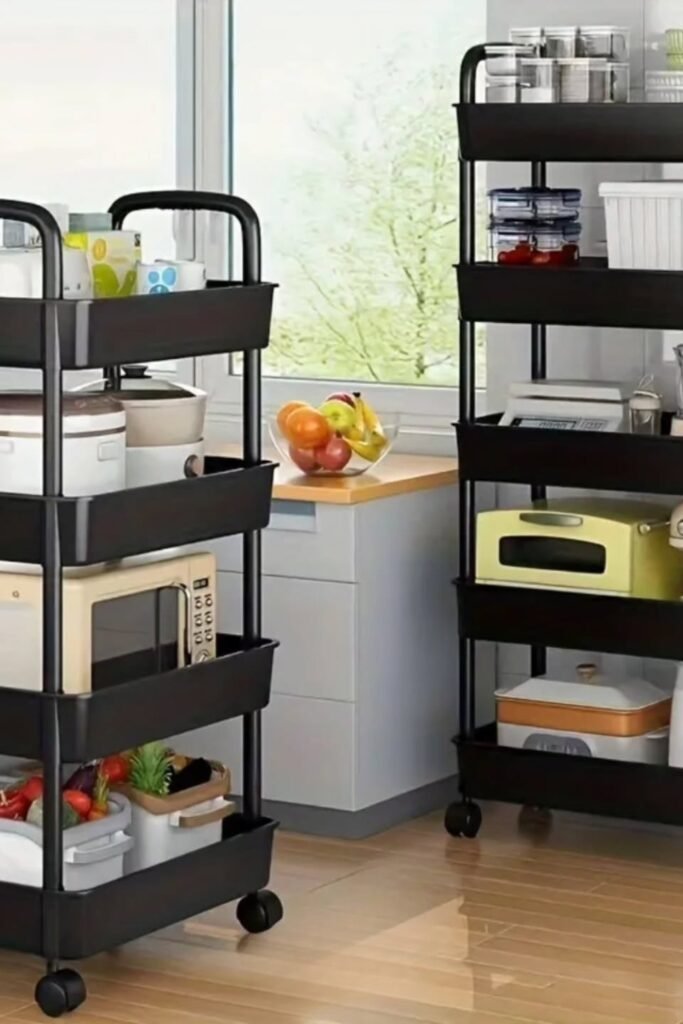
Cart-Style Utility Rack
This cart-inspired setup shows how narrow rolling racks can hold bins while doubling as flexible room-to-room storage
Perfect for kitchens or craft rooms, adapt a metal cart frame and reinforce shelves to handle heavier totes.
Use it for frequently accessed items and reserve fixed racks for long-term storage elsewhere.
Closet-Sized Metal Shelving
Closets benefit from clean metal shelving when you want tote storage without permanent construction or wall drilling.
Use adjustable steel racks, set shelf heights to your bins, and add shelf liners for smooth sliding.
Anchor the unit or load heavier bins lower to prevent tipping in tight enclosed spaces.
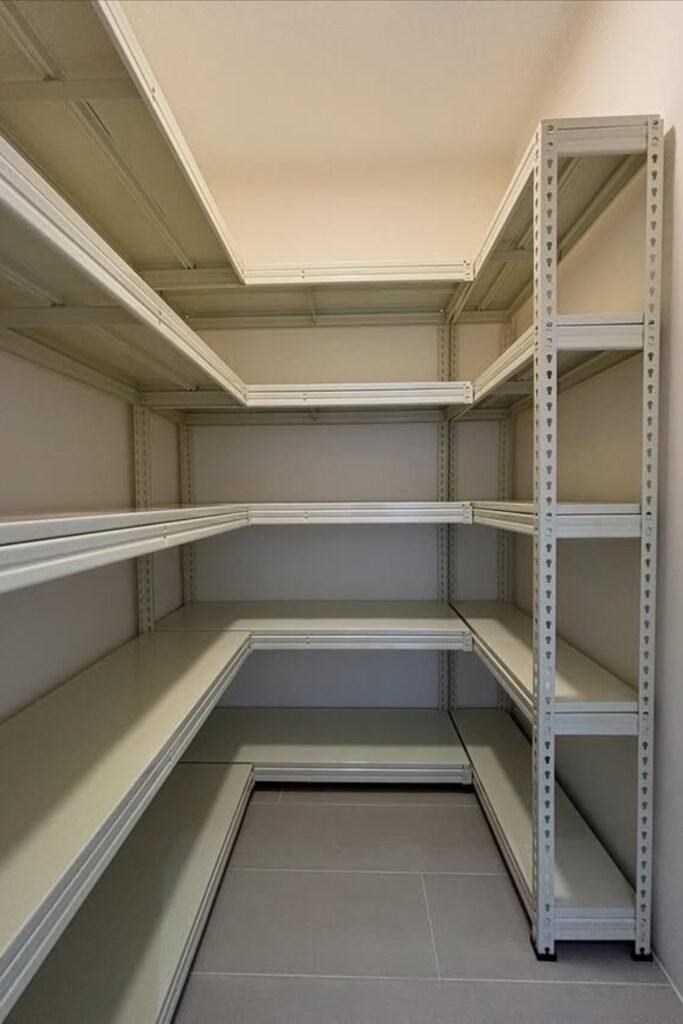
Heavy-Duty Runner Frame
This image highlights a classic DIY runner system where totes slide on wooden rails instead of resting on shelves.
Best for garages, build paired uprights with internal runners sized to tote rims for easy pullout access.
Leave small side clearances so bins slide freely even when wood expands with seasonal humidity changes.
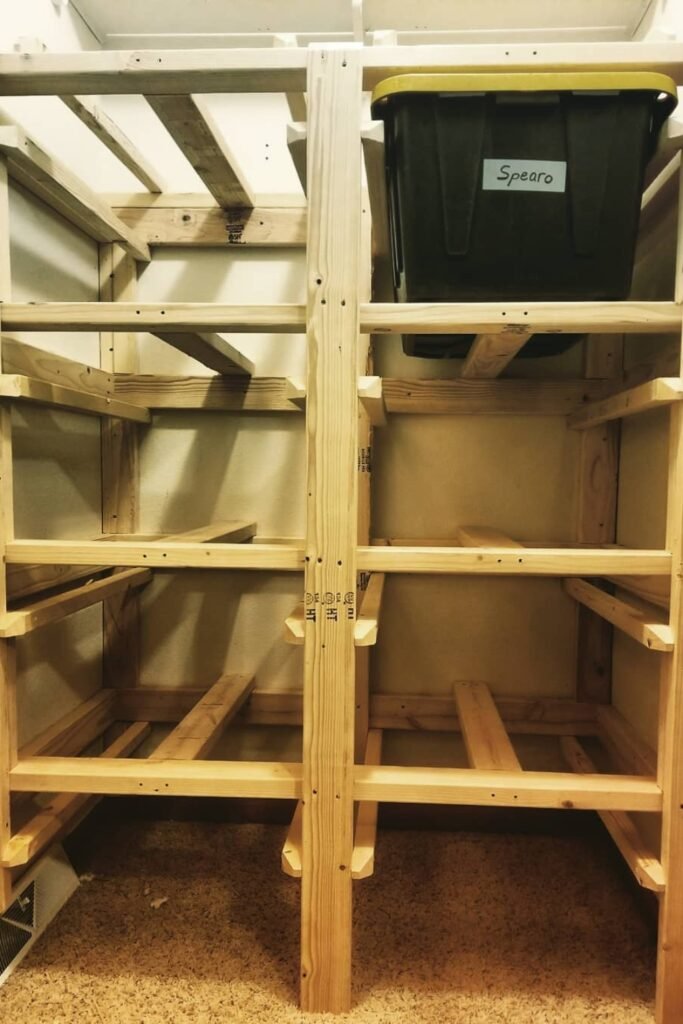
Mixed-Size Tote Shelf Rack
Not all storage uses identical bins, and this rack shows how mixed tote sizes can still stay organized.
Build wider shelves for large bins and tighter spacing above, using plywood decks instead of runners.
Place heavier totes lower and label fronts clearly to keep visual order and balance intact.
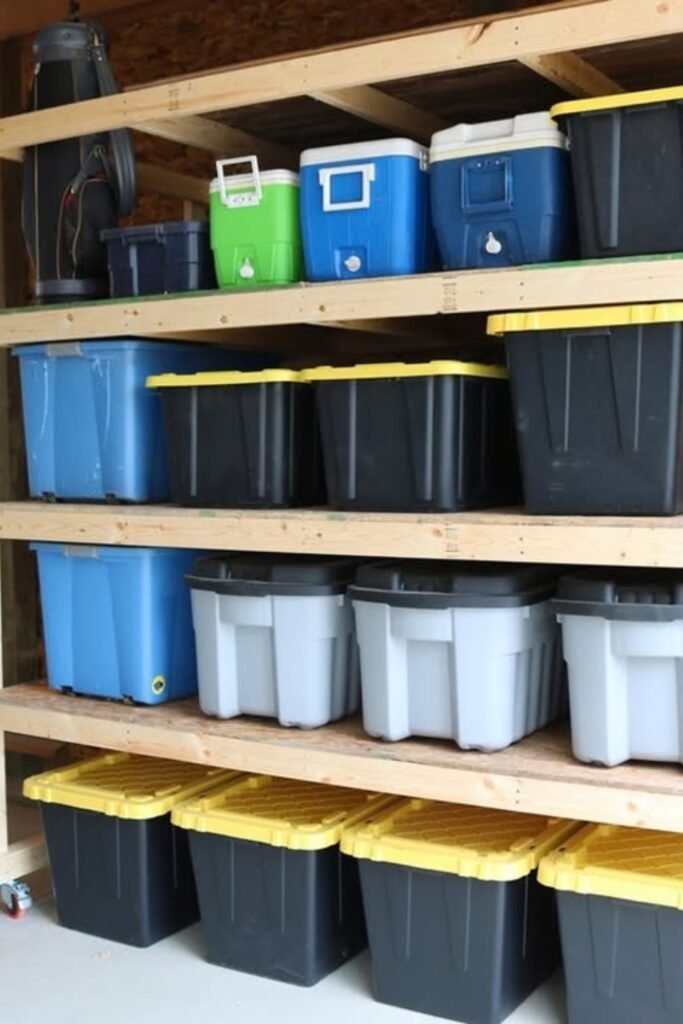
Framed Wall Runner System
Built straight against unfinished walls, this open runner frame turns long basement stretches into high-capacity tote storage.
Recreate it using repeated vertical bays, fixed runners, and floor anchoring so every bin slides independently without stacking.
Keep runners perfectly level across bays to avoid bins catching or sagging under heavier seasonal loads.
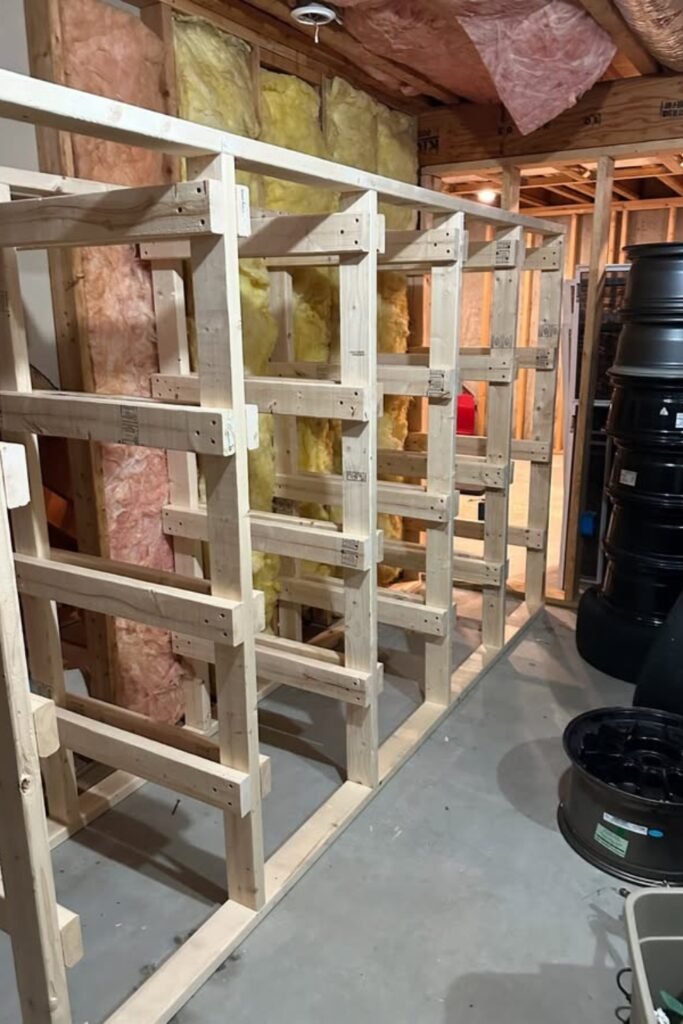
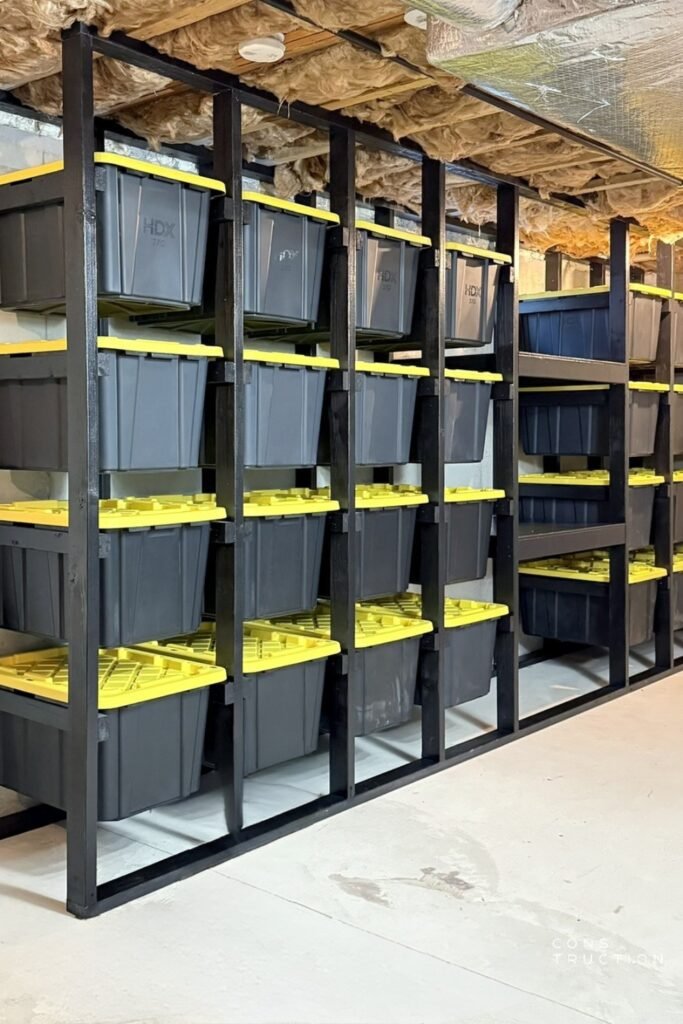
Painted Heavy-Duty Tote Wall
Dark-painted framing makes this rack feel permanent while handling serious storage volume across an entire basement wall.
Ideal for large collections, build identical bays, add consistent runner spacing, then anchor uprights into concrete or studs.
Paint after test-fitting bins so thickness never interferes with smooth sliding clearance.
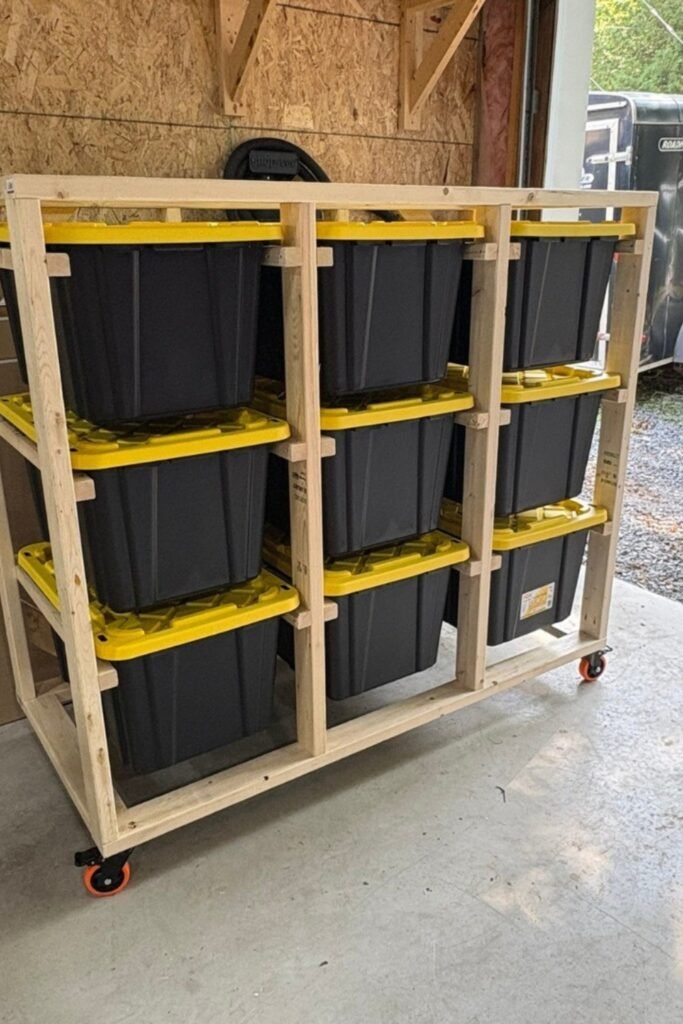
Outdoor-Access Rolling Rack
Placed near garage doors, this rolling rack makes seasonal totes easy to move outside without unloading contents.
Build a compact wooden frame, add internal runners, then mount locking casters rated for fully loaded weight.
Position heavier bins on lower rows to keep the rack stable while rolling across uneven floors.
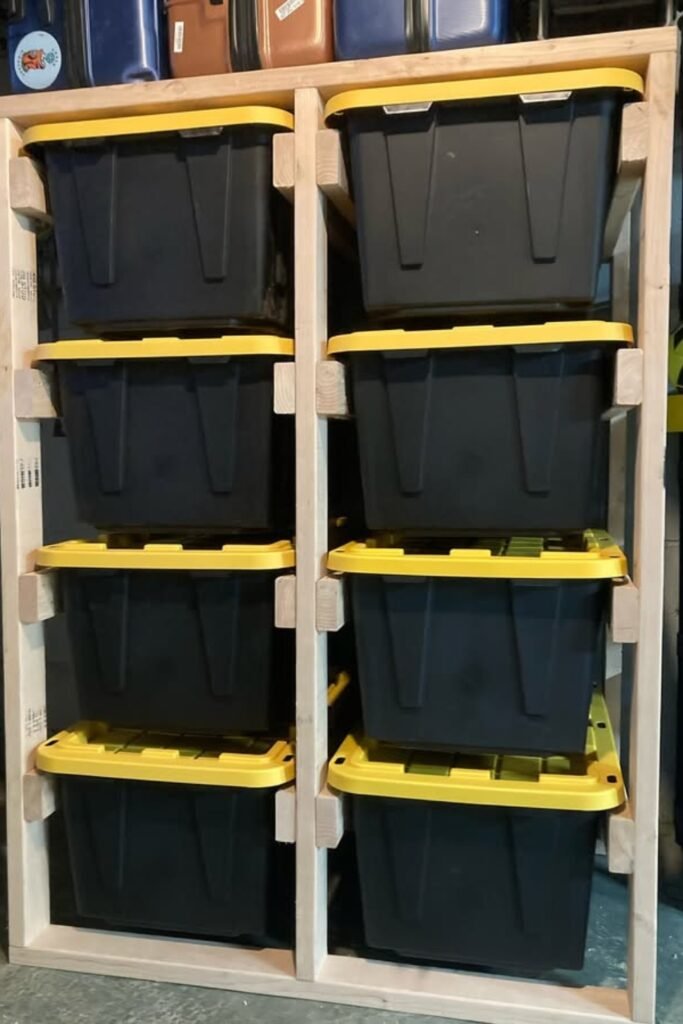
Compact Double-Column Rack
Narrow spaces benefit from this two-column layout that keeps tote access simple without consuming wall width.
Frame two vertical bays, add short runners, and secure the rack directly to the wall behind.
This layout works best when all totes match size, preventing uneven loading across columns
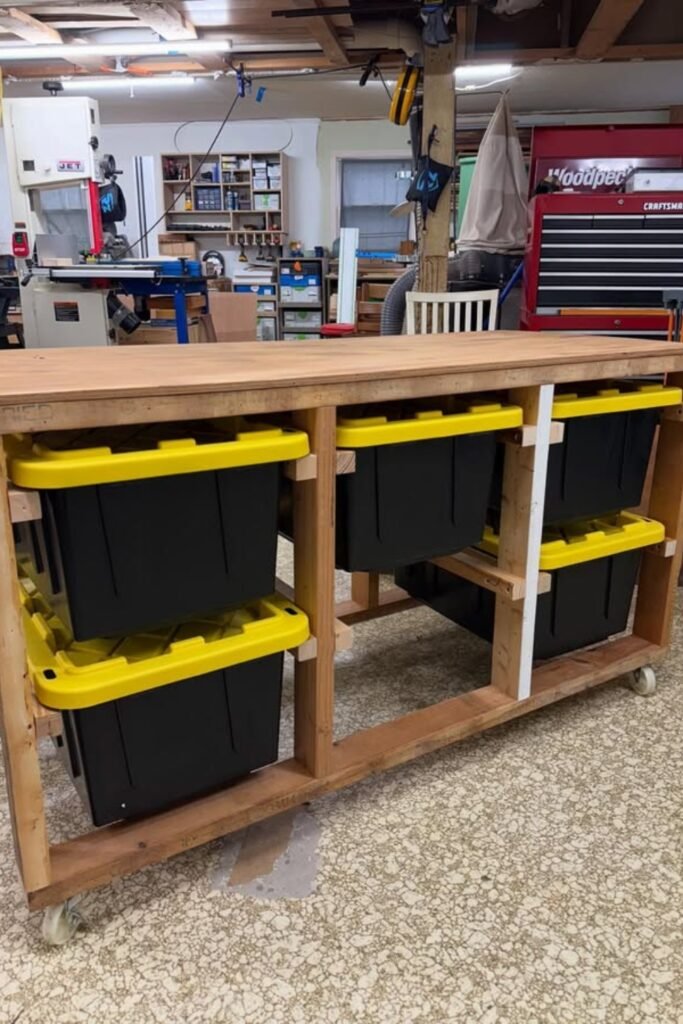
Workbench-Integrated Tote Base
Here, totes live beneath a workbench, turning dead space into organized storage without reducing the workspace above.
Build the bench first, then size runner bays underneath to match tote height and hand clearance.
Leave toe space in front so bins pull out easily without hitting feet or tools.
Pantry-Style Bin Shelving
Although designed for dry goods, this shelf logic adapts well to smaller totes in utility rooms.
Use plywood shelves instead of runners, spacing them tightly to prevent wasted vertical gaps.
This approach suits lighter bins that are lifted occasionally rather than slid daily.
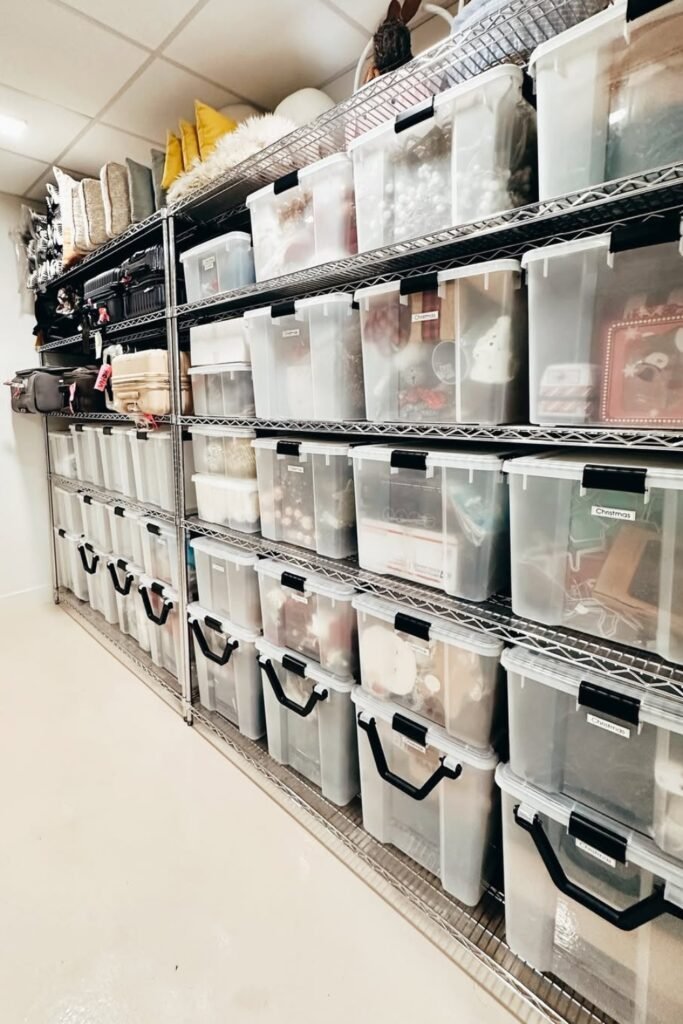
Long-Run Wire Tote Shelving
Wire shelving supports many bins efficiently when you need visibility and fast reconfiguration without custom carpentry.
Install heavy-duty wire racks, adjust shelf heights precisely, and reinforce shelves with wood slats if needed.
Label bins clearly since sliding access is limited compared to runner-style wooden systems.

Hi, my name is Ali Mehmood! I’m a passionate writer and DIY enthusiast who loves turning creative ideas into practical, hands-on projects.
I created this website to share inspiring, budget-friendly ideas that you can do yourself – whether it’s organizing your home, crafting something unique, or creating fun projects for kids and pets.
I believe DIY isn’t just a hobby – it’s a smart way to save money, reduce waste, and enjoy the satisfaction of making things with your own hands.
I’m excited to have you as part of this growing community, and I’ll continue bringing you helpful, realistic, and fun DIY ideas you can actually use.