This post may contain affiliate links: read full affiliate disclosure.
Grilling gets frustrating when you have nowhere to set food, keep utensils nearby, or organize everything without running back inside.
Building a full outdoor kitchen might solve those problems, but the cost can quickly become much bigger than you planned.
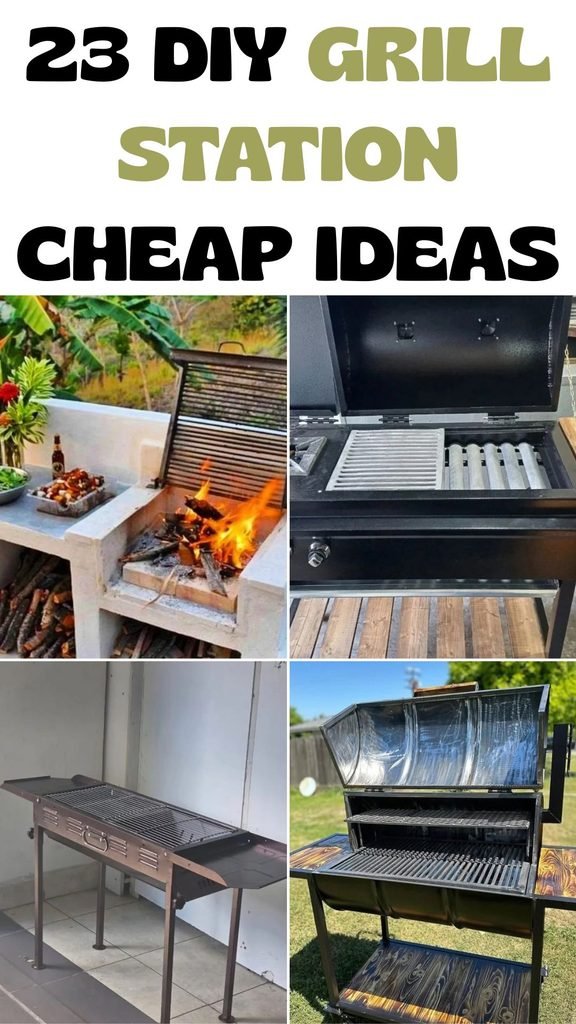
A simple DIY grill station gives you another option without filling your patio or draining your budget.
In this article, you’ll discover cheap DIY grill station ideas, practical material choices, smart storage solutions.
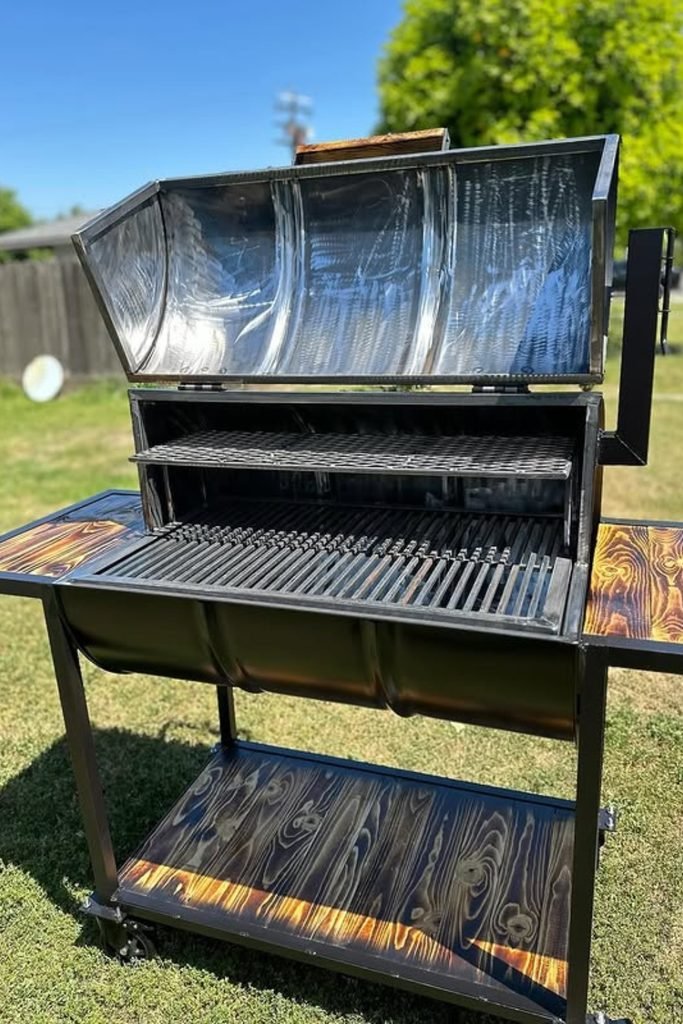
Smoker Workstation
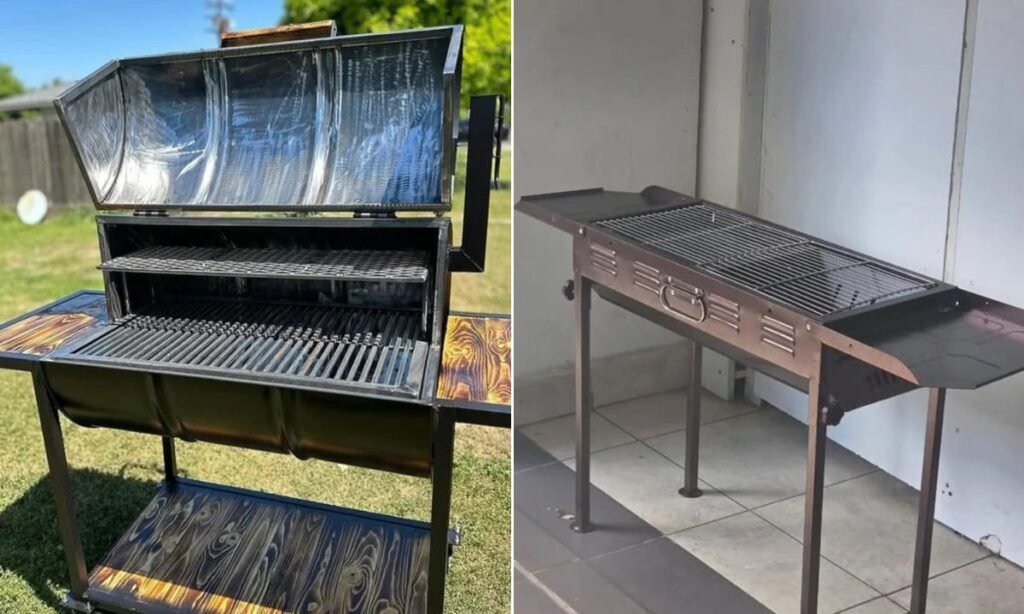
If you can weld a basic steel frame, side counters turn an ordinary smoker into a much handier workstation.
Use inexpensive timber offcuts for prep surfaces, while keeping them safely separated from the hot firebox and chamber.
Add a low shelf for charcoal, trays, or tools so supplies stay close without crowding your cooking area.
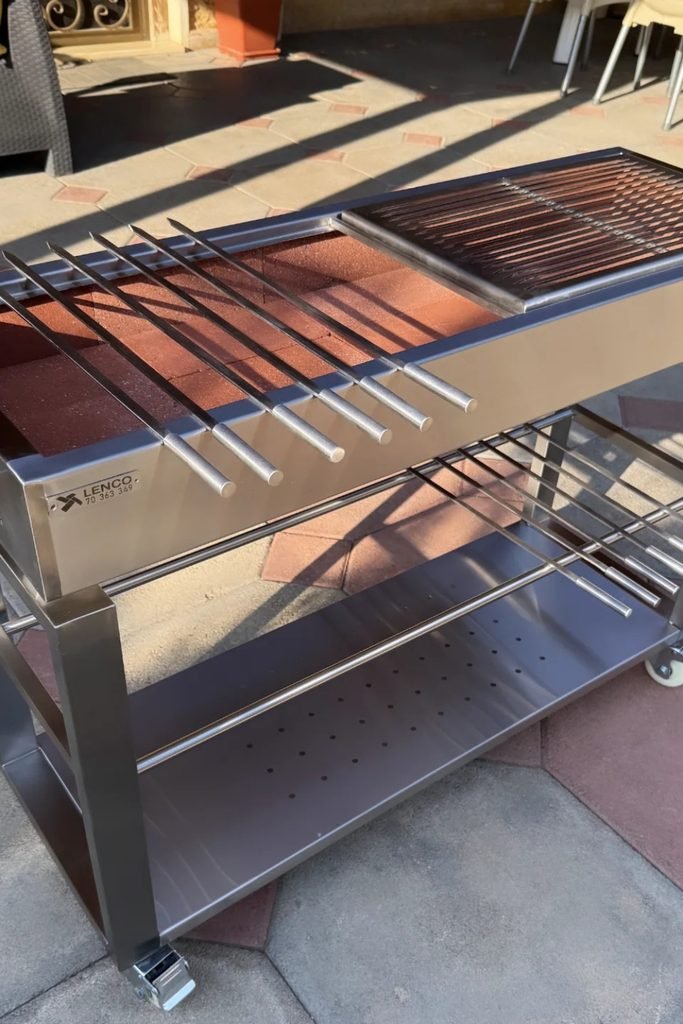
Skewer Cart
Cooking skewers gets easier when a long metal firebox gives you room to rotate several portions without stacking food together.
Build the frame around simple square tubing, then add a lower rack where extra skewers can stay organized between batches.
Locking casters are worth adding here because you can roll the station aside once cooking finishes and reclaim your patio space.
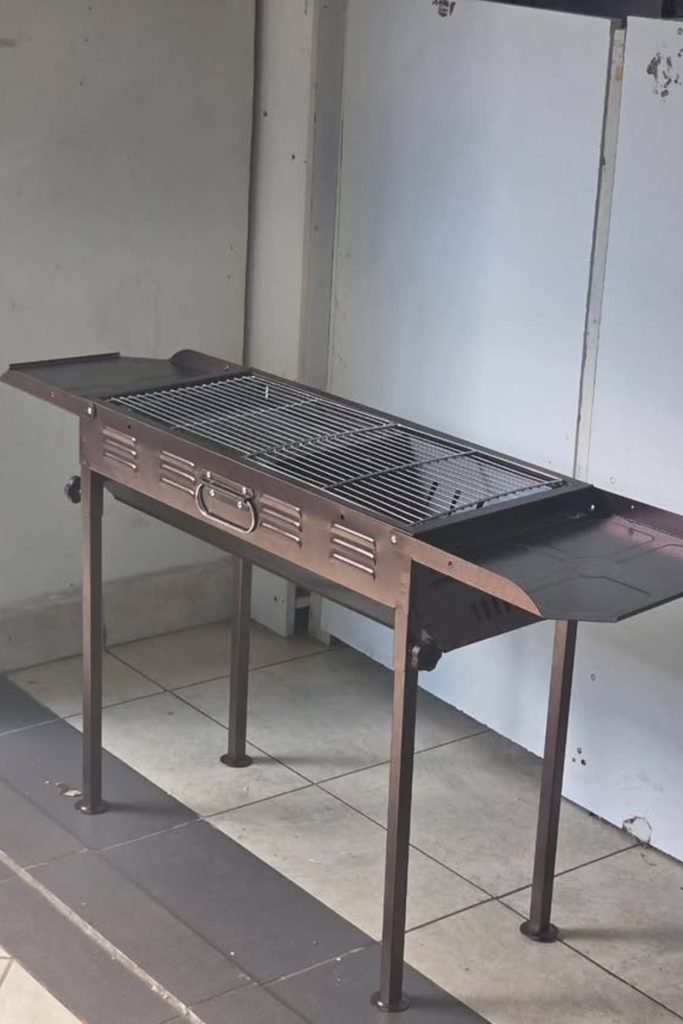
Simple Charcoal
Skip complicated cabinetry when your main goal is simply getting a generous grilling surface and somewhere convenient to rest food.
Slim metal legs keep material costs down, while side trays give you useful landing spots without building a full countertop.
Choose this stripped-back approach for a covered patio where permanent storage matters less than having an affordable dedicated cooking station.
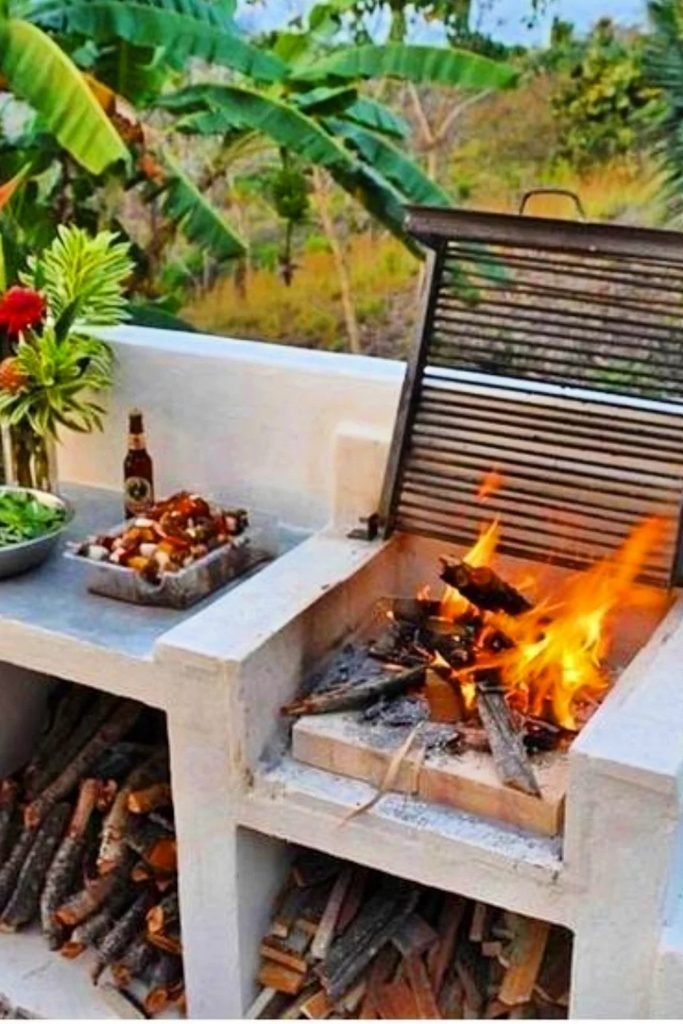
Masonry Grill
Masonry becomes especially practical when you want the grill, prep counter, and firewood storage combined into one permanent backyard spot.
Keep open cubbies underneath instead of adding doors or drawers, giving firewood an easy-access home while reducing construction work.
Extend one side into a broad counter so salads and serving trays stay away from the flames while you cook.
Combo Grill
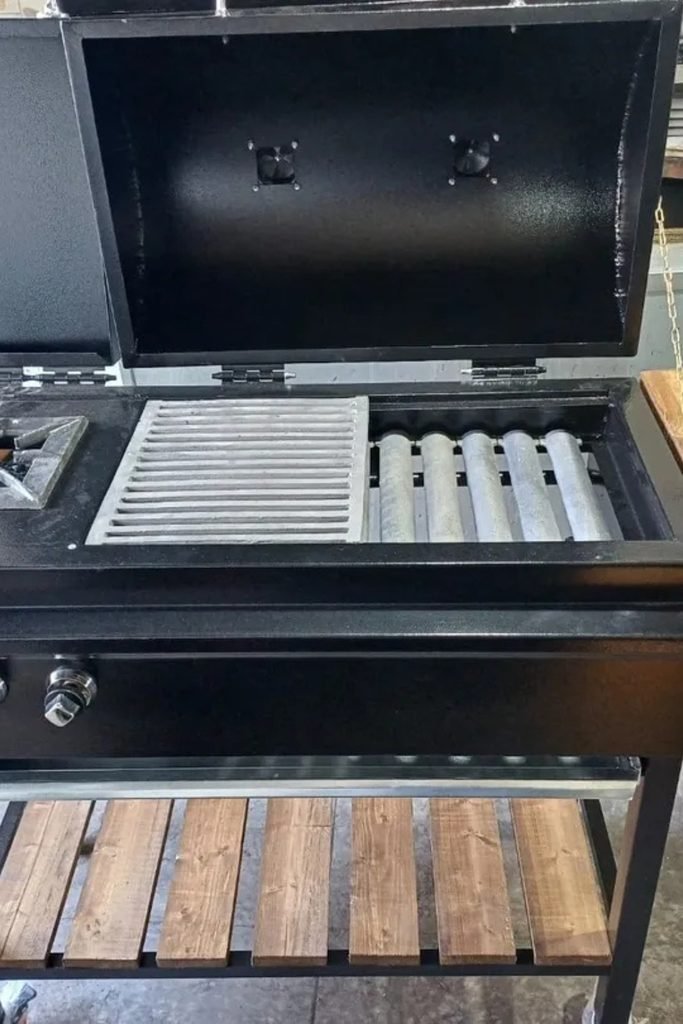
One compact frame can handle more than grilling when you divide the cooking surface between a burner and separate grate sections.
Keep a slatted wooden shelf underneath for pots and supplies, while a side platform gives you extra room during preparation.
Mixing steel with inexpensive timber also keeps the build practical without making your homemade station feel unfinished or overly industrial.
Rolling Island
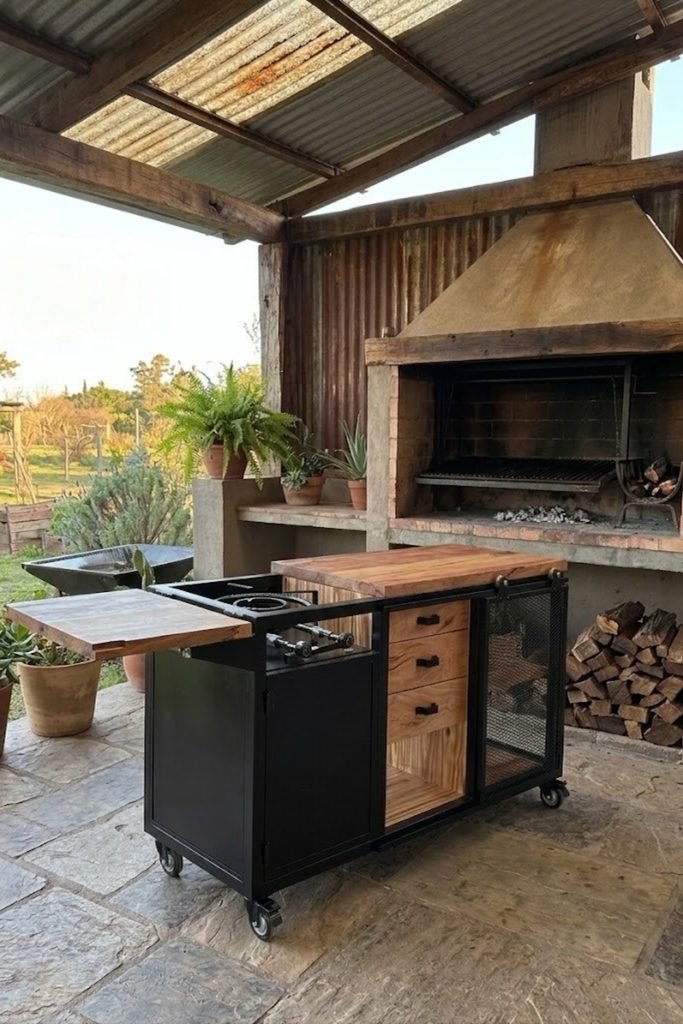
Give yourself flexibility by putting the prep station on casters, especially when your covered cooking area serves several different purposes.
Drawers keep smaller utensils organized, while the open compartment handles larger supplies without requiring another expensive cabinet or storage unit.
Extend a wooden worktop from one end whenever you need more prep room, then keep the main footprint compact afterward.
Skewer Station
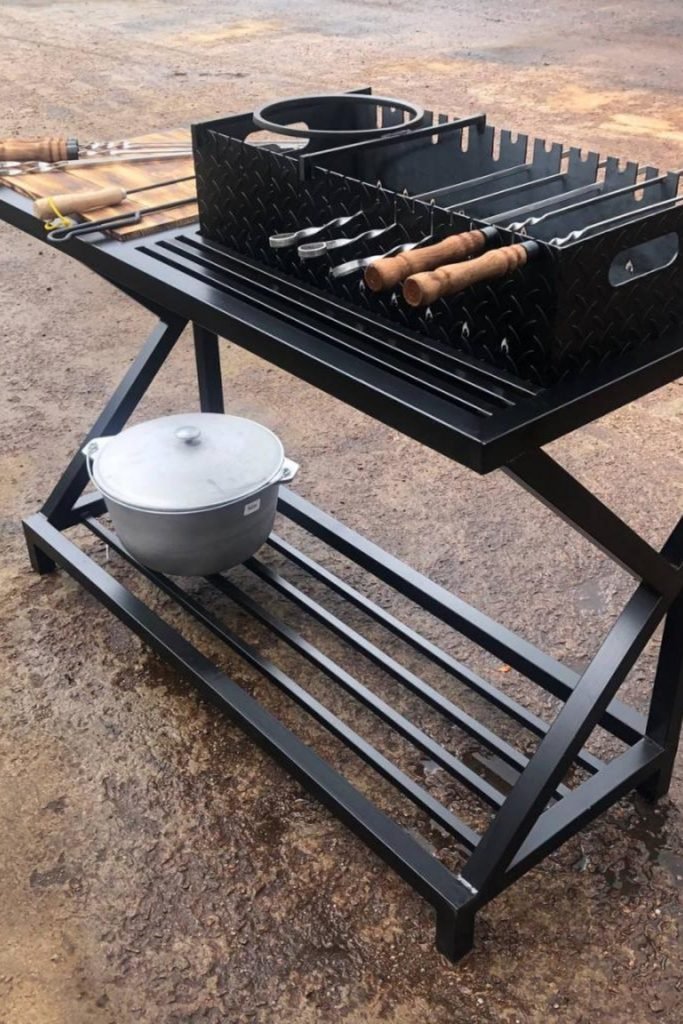
If skewers are your usual grilling choice, build the firebox around their length instead of paying for features you rarely use.
Notched edges hold each skewer securely over the heat, helping you keep several portions spaced evenly while turning them by hand.
Use the lower metal rack for cookware or charcoal, leaving the small side ledge free for uncooked skewers and grilling tools.
Family Grill
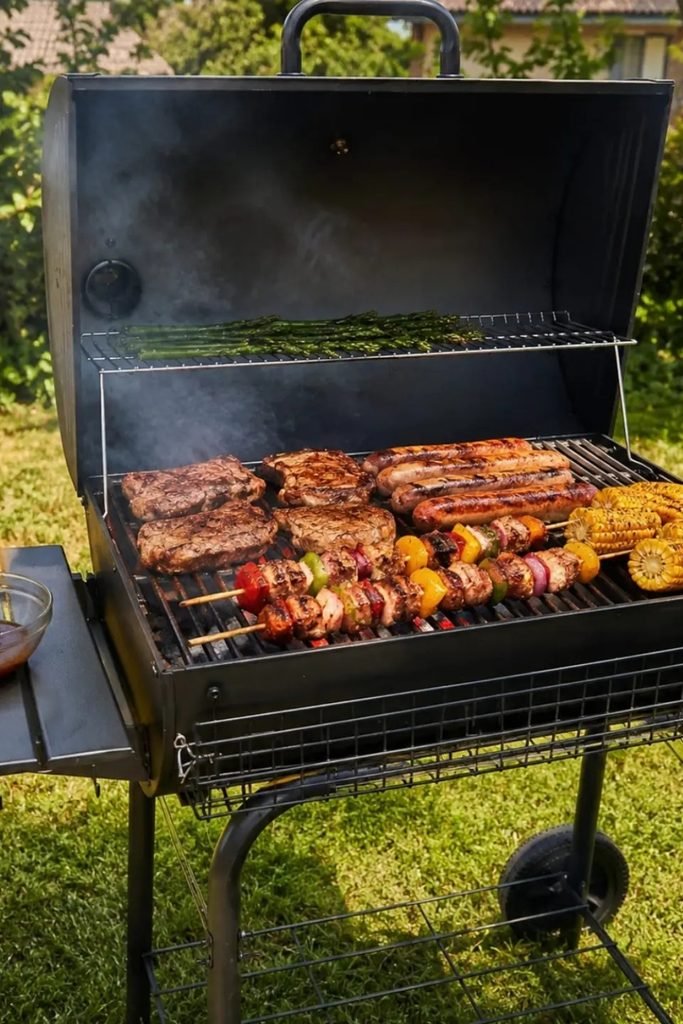
Cooking several foods together becomes much easier when your budget station puts most of its space into one generous grilling surface.
Add a raised warming rack for vegetables or finished portions, freeing the main grate whenever another batch needs direct heat.
Keep seasonings on a narrow side shelf and utensils along the front, so your countertop never needs to become oversized.
Hanging Rack
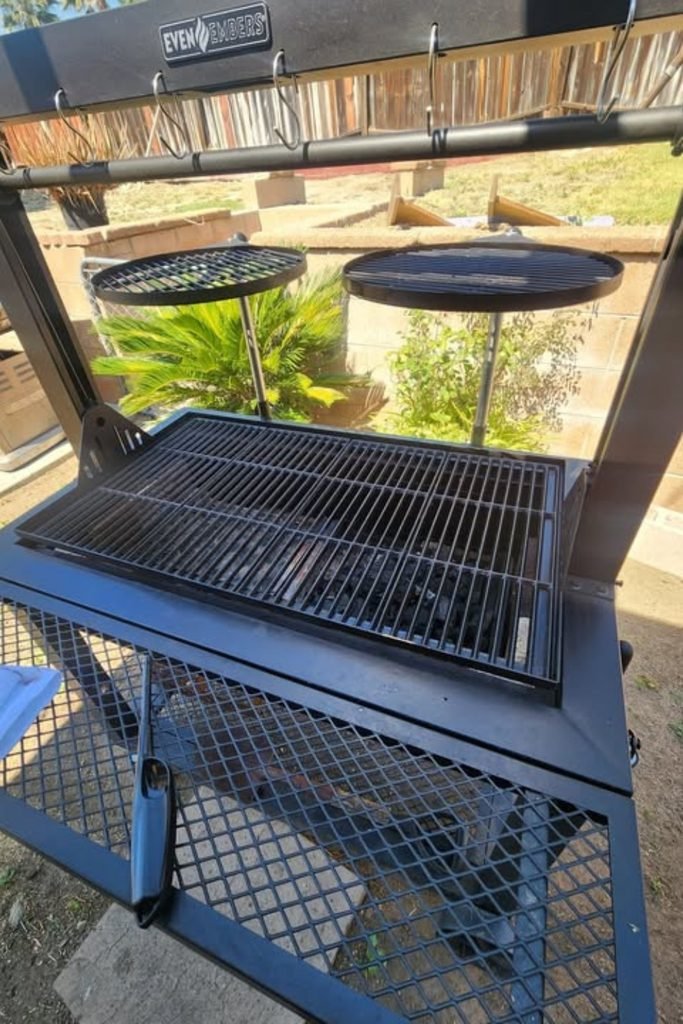
Running a bar above the grill gives tongs, skewers, and brushes their own spot instead of cluttering valuable side surfaces.
Keep the main grate wide for everyday cooking, then use raised round racks when vegetables or finished food need gentler heat.
Mesh side tables are a budget-friendly addition because they provide landing space while letting rainwater and loose debris pass through easily.
Brick Lined
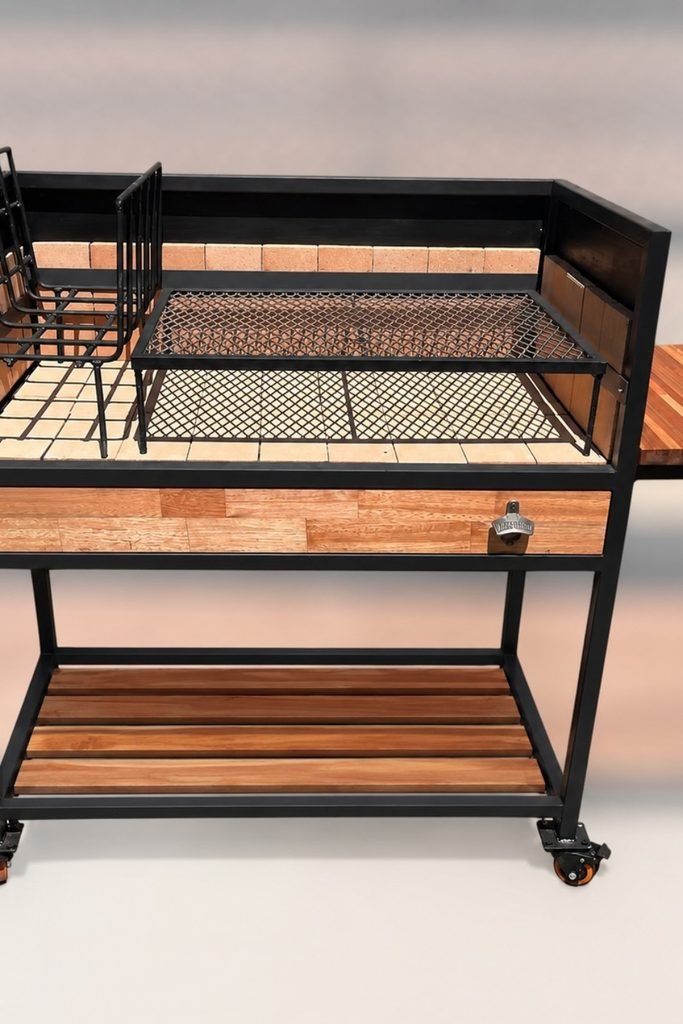
For a sturdier homemade setup, lining the fire area with heat-suitable brick keeps the cooking zone separate from decorative wooden details.
Build in simple metal holders along one side so skewers stay organized instead of taking over your preparation surface.
Finish with a small timber side board and slatted lower shelf, adding useful work and storage areas without expensive cabinetry.
Compact Cart
Working with a tight patio gets easier when the grill, preparation board, and lower storage all share one compact footprint.
Reserve one side of the top for a cutting surface, so ingredients can move straight from preparation onto the nearby grate.
A basic square-tube frame and open slatted shelf keep construction straightforward while leaving enough room below for everyday grilling supplies.
Open Frame
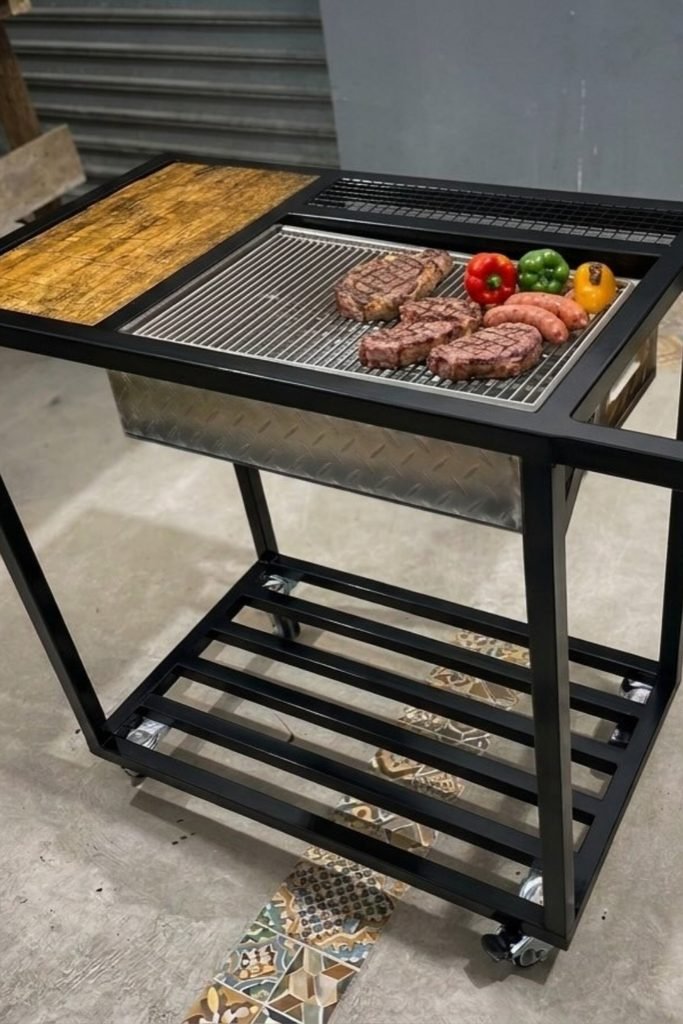
Sometimes fewer materials make the smarter build, especially when you need a sturdy charcoal station without drawers, panels, or bulky cabinetry.
Let an open steel frame provide the support, then dedicate one side to skewers and small items waiting to be cooked.
Use the full-width lower rack for charcoal bags, cookware, or trays, keeping heavier supplies underneath instead of beside your grill.
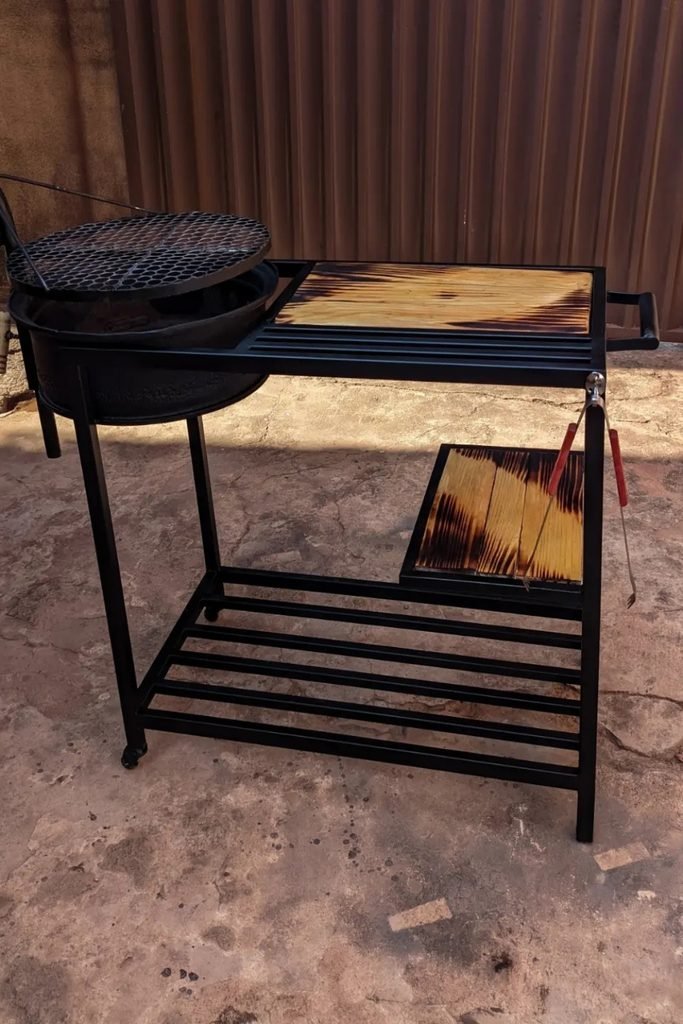
Kettle Station
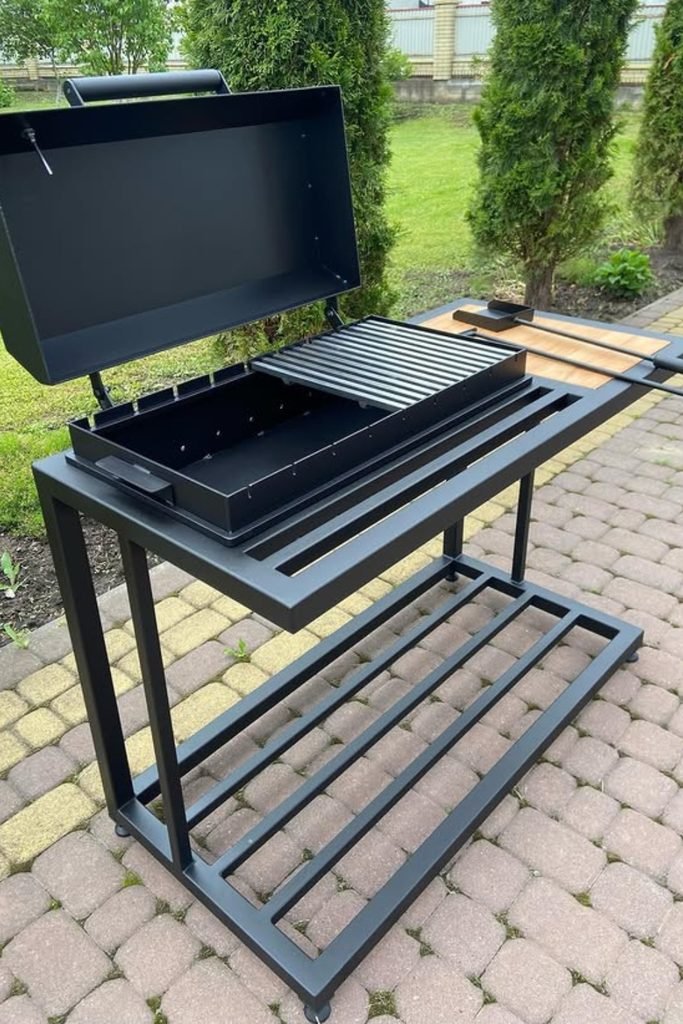
Pairing a round charcoal grill with a narrow prep counter keeps everything close without turning the project into a bulky outdoor kitchen.
Use a small timber worktop for plates and ingredients, then hang tongs from the frame instead of adding extra storage.
Keep the lower section mostly open for larger supplies, making this practical when you want an affordable station with minimal materials.
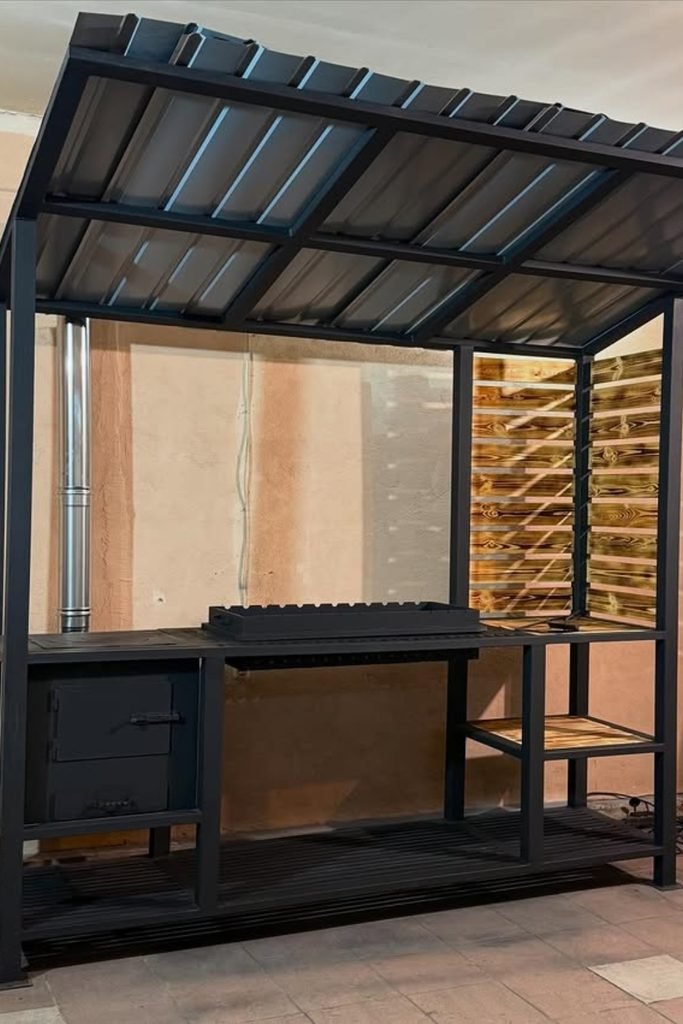
Covered Station
Rain or harsh sun can interrupt outdoor cooking, so a simple roof makes sense when you grill regularly throughout the year.
Plan the cooking zone around your grill manufacturer’s ventilation and clearance requirements before adding roofing, timber panels.
Use open shelves and one enclosed compartment for supplies, keeping the station organized without filling the entire frame with costly cabinetry.
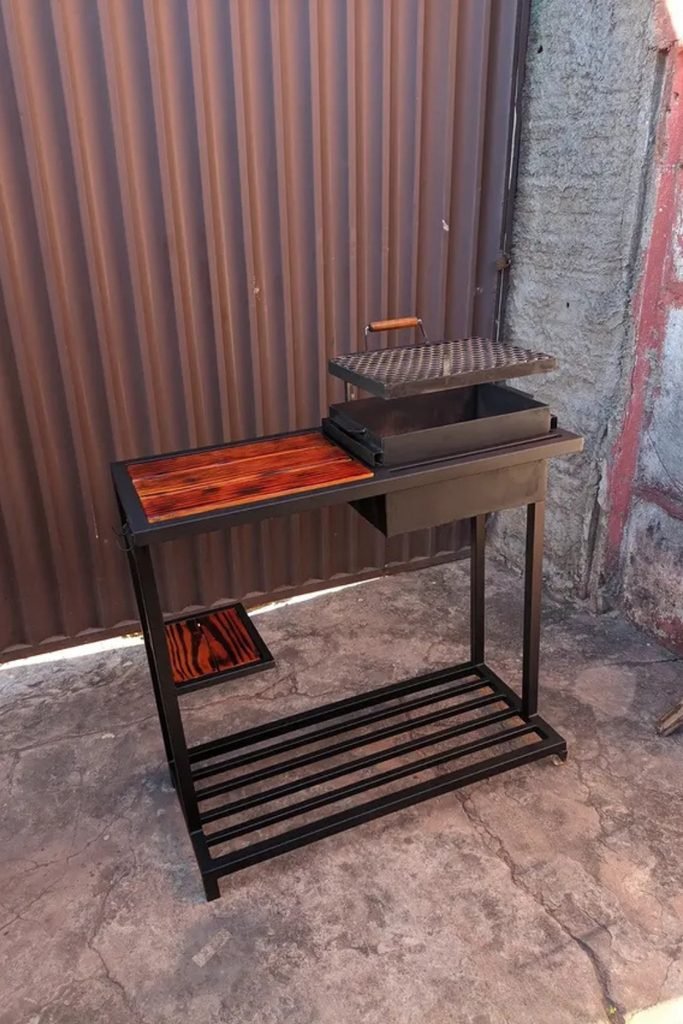
Raised Brazier
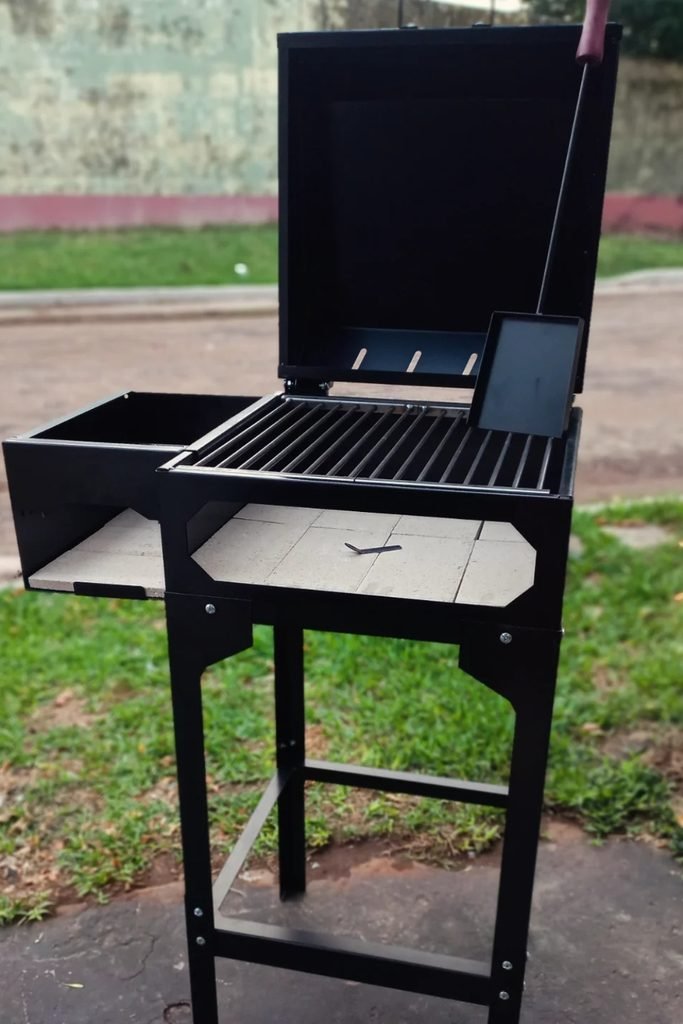
For occasional grilling, a small raised brazier can provide enough cooking space without committing your patio to a large permanent setup.
Place a narrow wooden prep board beside the grate, giving you somewhere for seasonings or plates while keeping the footprint compact.
Skip enclosed cabinets underneath and use an open metal rack instead, cutting material costs while still creating room for bulky supplies.
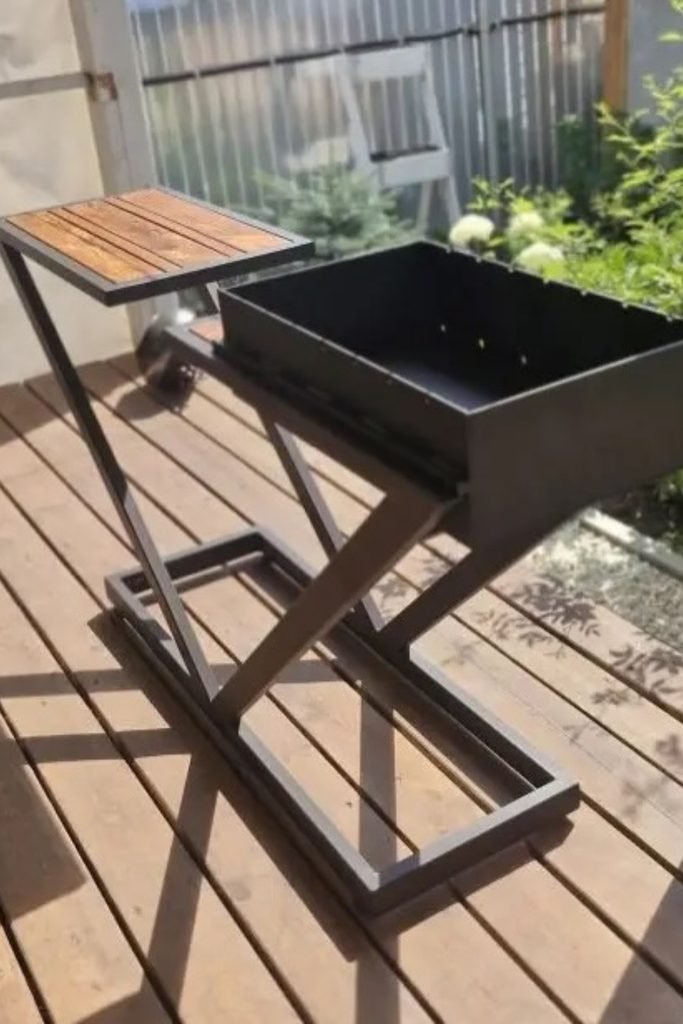
Side Shelf
Small decks benefit from a grill that puts the preparation surface beside the firebox instead of stretching the entire station wider.
Build the side shelf just large enough for a tray or cutting board, saving material while keeping ingredients within easy reach.
An open base uses far less material than cabinetry, making this stripped-back design useful when budget and floor space both matter.
Firebrick Grill
Stretching a small budget works better when you spend on the cooking zone and keep the supporting frame simple and open.
Line the charcoal bed with suitable firebrick, helping protect the surrounding structure while creating a more durable area for concentrated heat.
Keep one side compartment open for charcoal or tools, so useful storage comes from the frame without adding costly drawers.
Grill Canopy
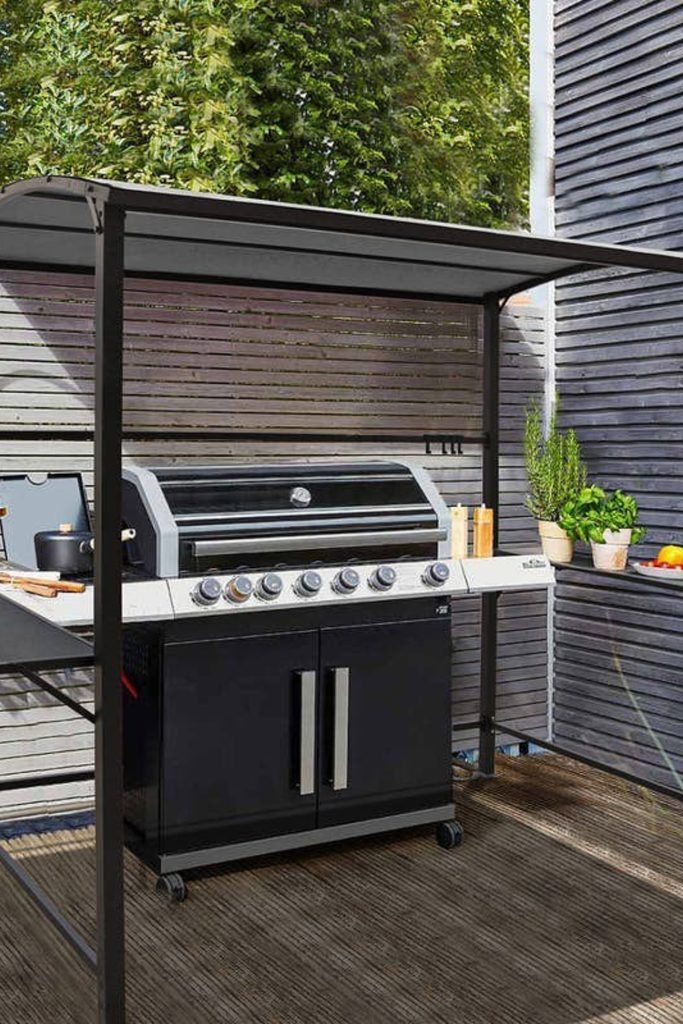
Instead of rebuilding your existing gas grill, frame a simple sheltered station around it and add inexpensive side tables for preparation.
Keep herbs, seasonings, and serving pieces on the surrounding counters, leaving the grill’s own side shelves clear while you cook.
Before adding any canopy, follow your grill manual for overhead clearance, ventilation, and combustible-material requirements rather than copying dimensions blindly.
Backyard Kitchen
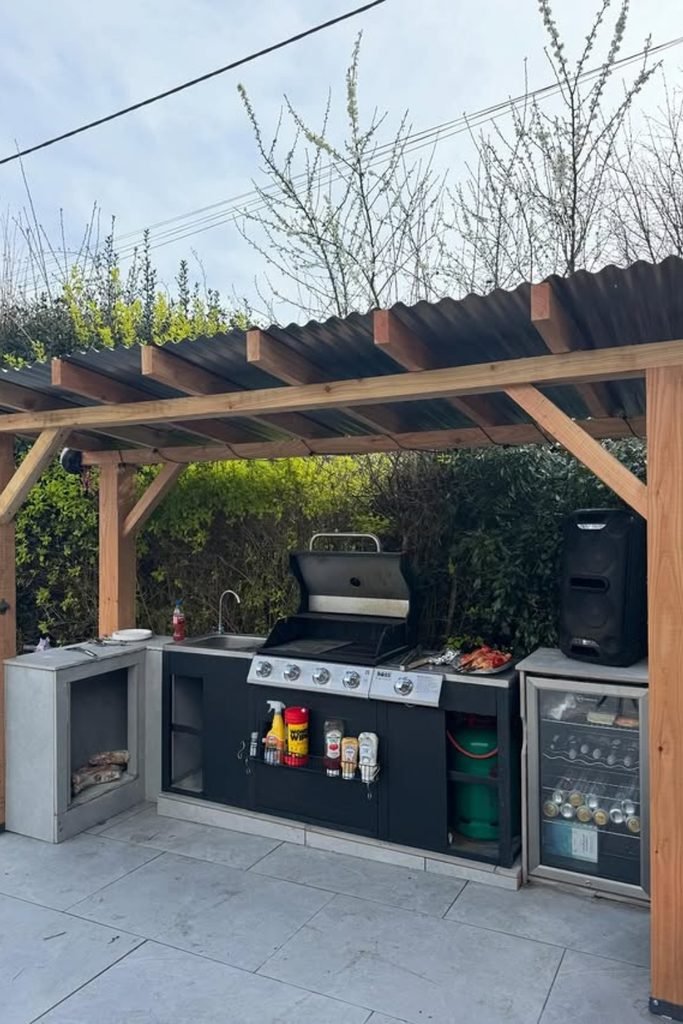
When you already own the grill, building counters around it can create an outdoor-kitchen feel without replacing your main appliance.
Combine simple base cabinets with open sections for everyday supplies, then reserve one counter for washing or preparing ingredients nearby.
A basic timber roof can finish the zone, but size and position it around your grill’s required ventilation and clearances.
Balcony Grill
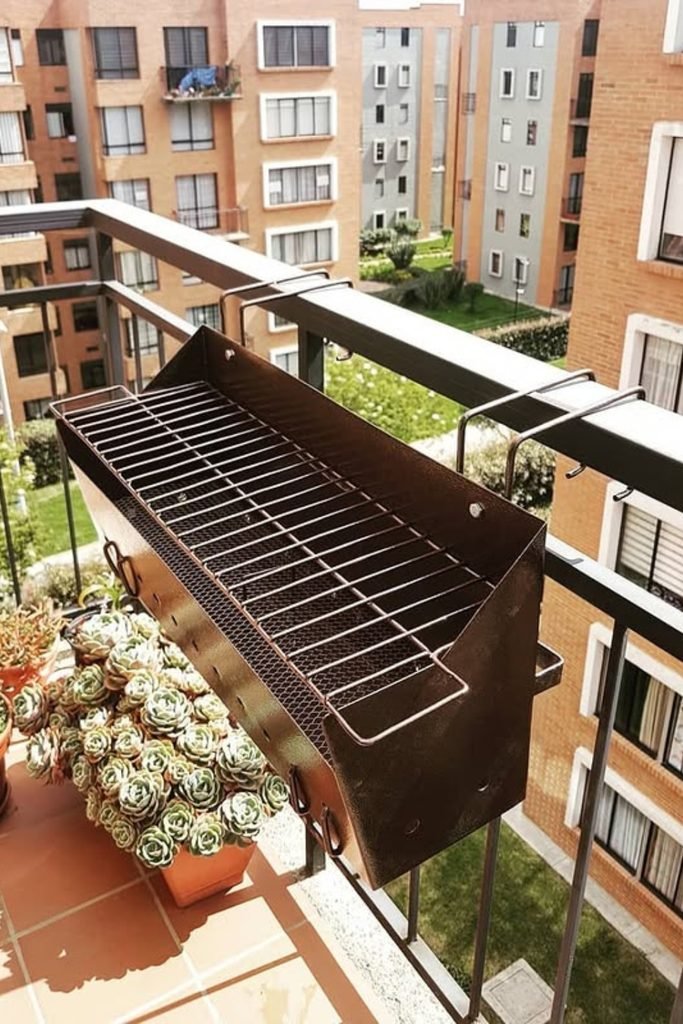
Apartment balconies call for restraint, so a compact rail-mounted grill can preserve precious floor space better than a freestanding station.
Before considering one, check your building rules, local fire requirements, and grill instructions because balcony grilling is restricted in many places.
If permitted, keep nearby plants and combustible items safely away, and choose a setup specifically designed for secure railing installation.
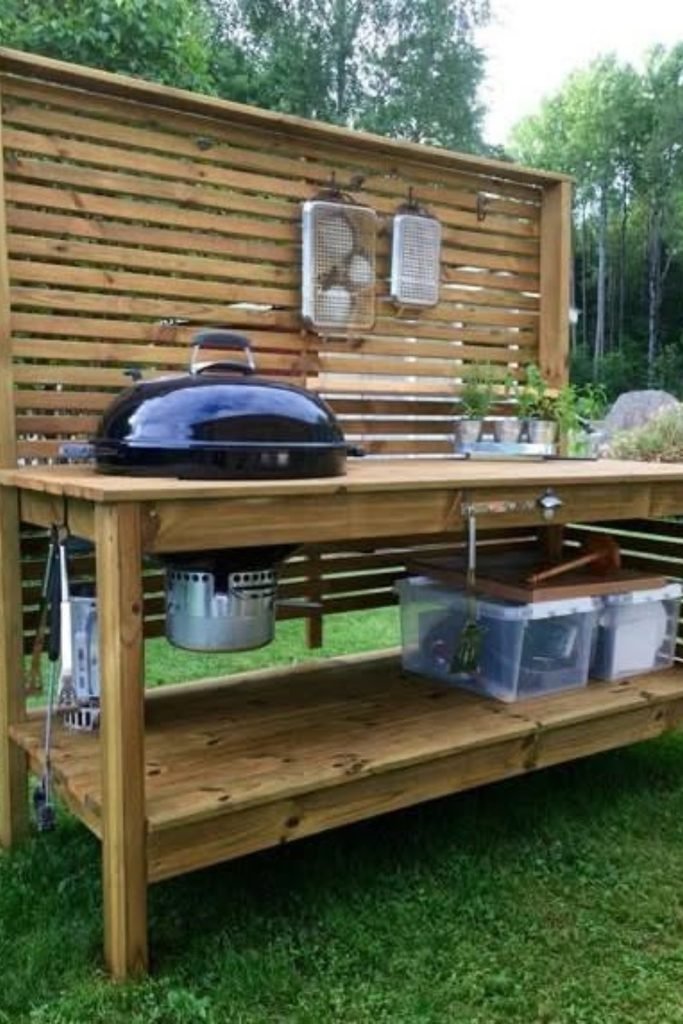
Timber Station
Turn a basic kettle grill into a proper workstation by surrounding it with enough timber counter space for everyday food preparation.
Use the slatted back panel for hooks and lightweight grilling tools, keeping frequently used pieces visible instead of filling drawers.
Large open shelving underneath works well for inexpensive storage bins, letting you separate charcoal, utensils, and supplies without building cabinets.
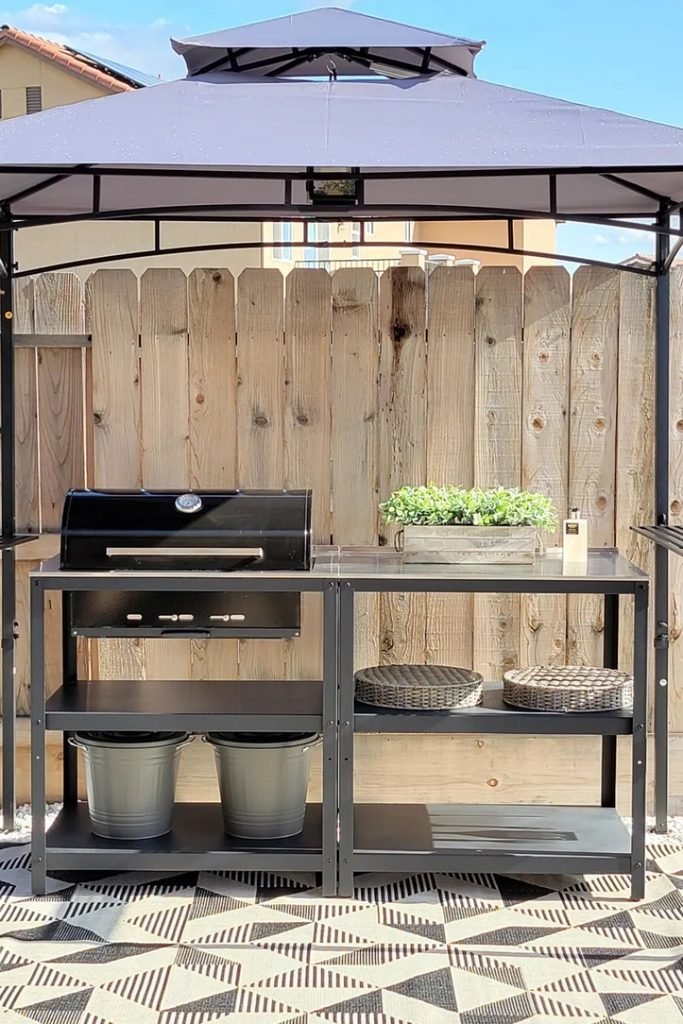
Gazebo Station
If your grill area gets intense sun, a freestanding gazebo can create a more comfortable cooking zone without building permanent walls.
Pair the grill with inexpensive open shelving, using buckets or baskets underneath to organize supplies while keeping the counter mostly clear.
Choose any overhead structure only after checking your grill’s required ventilation and clearances, especially around roofing and other combustible materials.
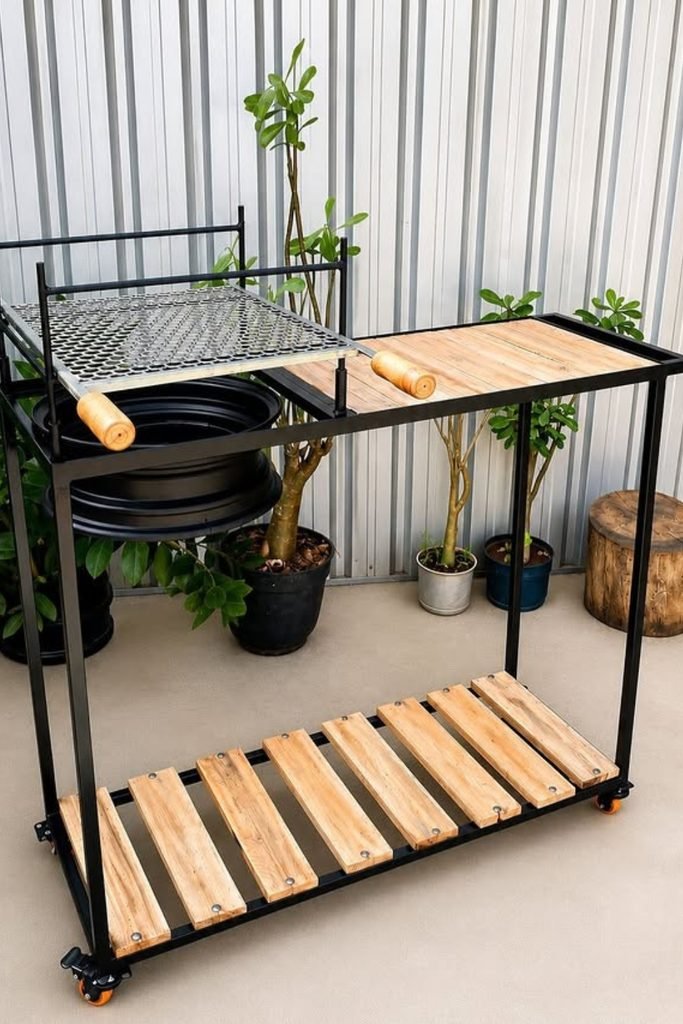
Mobile Brazier
Make a small charcoal setup work harder by pairing the brazier with a preparation board and storage shelf on one movable frame.
Wheels help when you need to reclaim patio space, while the open design avoids the cost and weight of enclosed cabinetry.
Use timber only where appropriate for your grill design, keeping combustible surfaces positioned according to the appliance manufacturer’s required clearances.
FAQs
What Is the Cheapest Way to Build a DIY Grill Station?
Start with materials you can source affordably, such as leftover lumber, concrete blocks, pavers, or a simple metal frame.
Open shelves and a basic prep surface can give you the storage and workspace you need without turning the project into an expensive outdoor kitchen.
How Can I Keep a Cheap Grill Station Safe Around Heat?
Check your specific grill manual before deciding how closely wood, roofing, walls, or other combustible materials can sit around the cooking area.
For built-in designs, use materials approved for that setup and avoid copying another DIY station’s measurements without checking whether they work for your grill.

Hi, my name is Ali Mehmood! I’m a passionate writer and DIY enthusiast who loves turning creative ideas into practical, hands-on projects.
I created this website to share inspiring, budget-friendly ideas that you can do yourself – whether it’s organizing your home, crafting something unique, or creating fun projects for kids and pets.
I believe DIY isn’t just a hobby – it’s a smart way to save money, reduce waste, and enjoy the satisfaction of making things with your own hands.
I’m excited to have you as part of this growing community, and I’ll continue bringing you helpful, realistic, and fun DIY ideas you can actually use.