This post may contain affiliate links: read full affiliate disclosure.
A patio table sounds like a simple thing to add to your outdoor space until you start looking at the prices.
The sturdy ones can feel expensive, the cheaper ones often look weak, and a DIY version can feel confusing when you are not sure what wood, size, or finish will actually work outside.
That is where the right DIY patio table idea can save you from wasting money and time. You do not need a complicated build to create something useful for your deck, backyard, porch, or small patio.
You just need a design that fits your space, feels strong enough for daily use, and can handle sun, rain, and regular outdoor mess.
In this article, I am going to share DIY patio table ideas that can help you build a table that looks good, works for your outdoor setup, and feels realistic to make at home.
Let’s dive in!
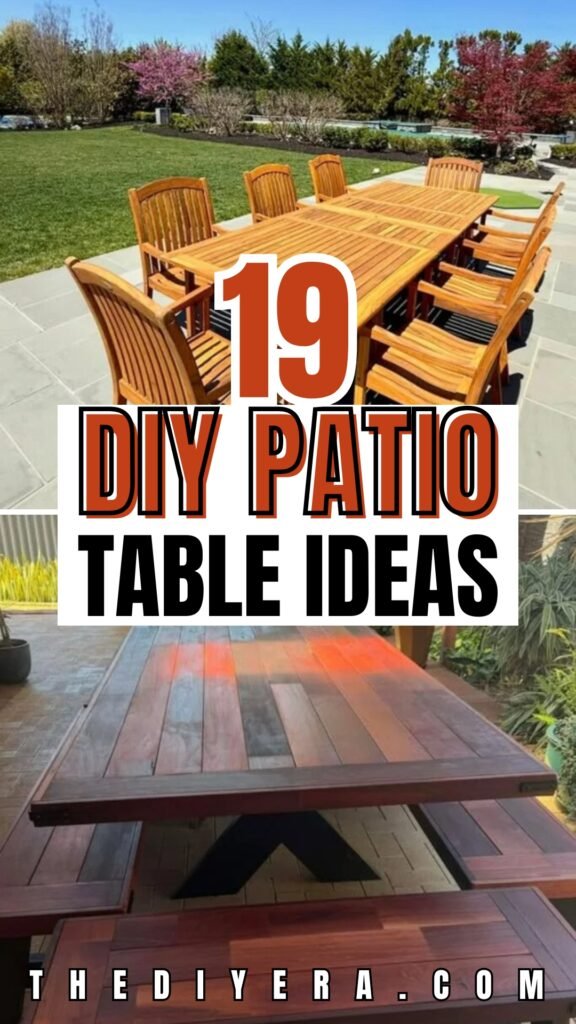
Match Dining Set
A full wooden dining set works best when your patio has open space and you want one proper area for outdoor meals.
Keep the table wide enough for serving dishes, but leave a comfortable walking room around every chair so guests do not feel squeezed.
This setup feels especially useful for family dinners, weekend lunches, or backyard gatherings where you need a strong table with matching seating.
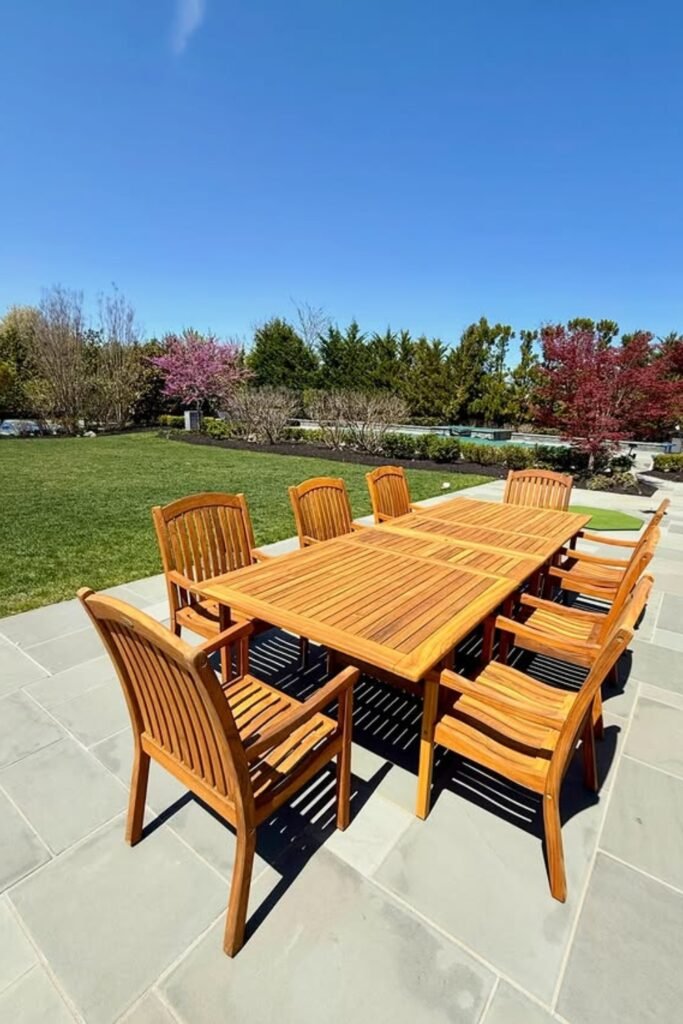
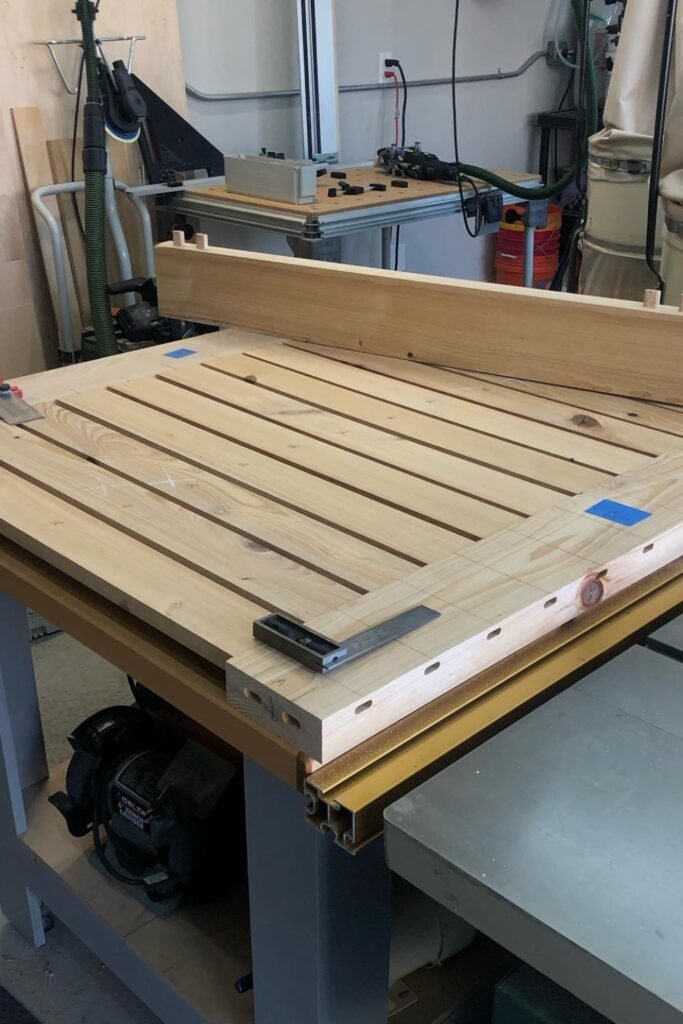
Build Slatted Top
Slatted tabletop boards are a smart detail because they help rainwater drain instead of sitting too long on the surface.
Use even spacing between each board so the table looks clean, balanced, and more intentional once the final finish goes on.
This style works well for outdoor dining tables because it feels sturdy, breathable, and easier to maintain through regular patio use.
Add Bench Seating
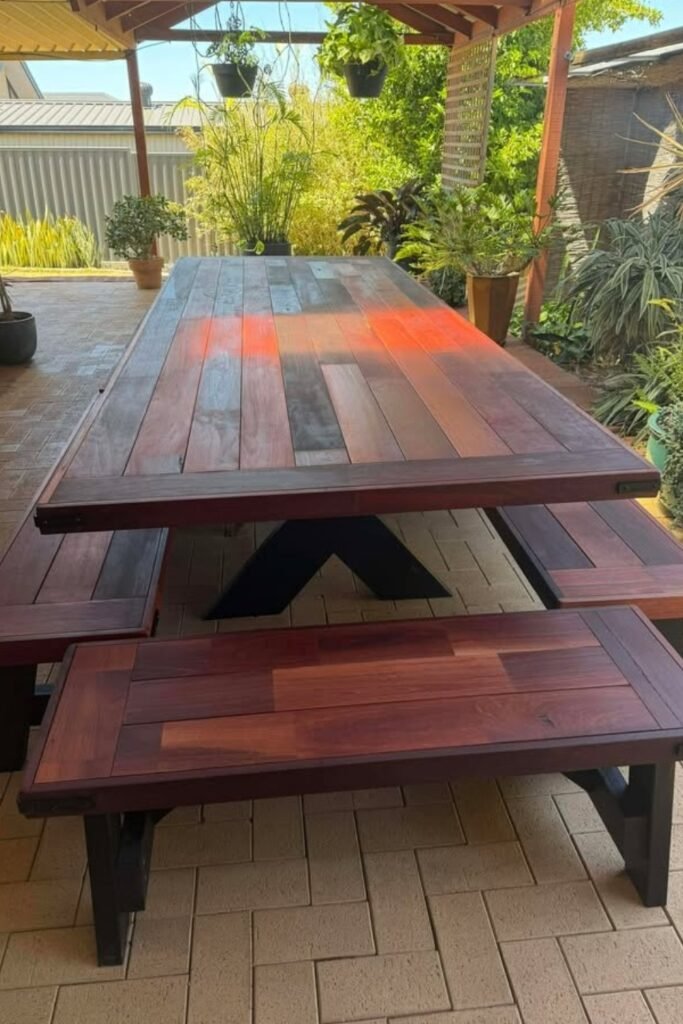
Bench seating gives your DIY patio table a relaxed backyard feel, especially when you host casual family meals or weekend get-togethers.
A long table like this also makes better use of covered patio space because benches can tuck closer when not in use.
Choose a rich outdoor stain and strong base support so the table feels polished, durable, and ready for everyday outdoor seating.
Create Planter Center
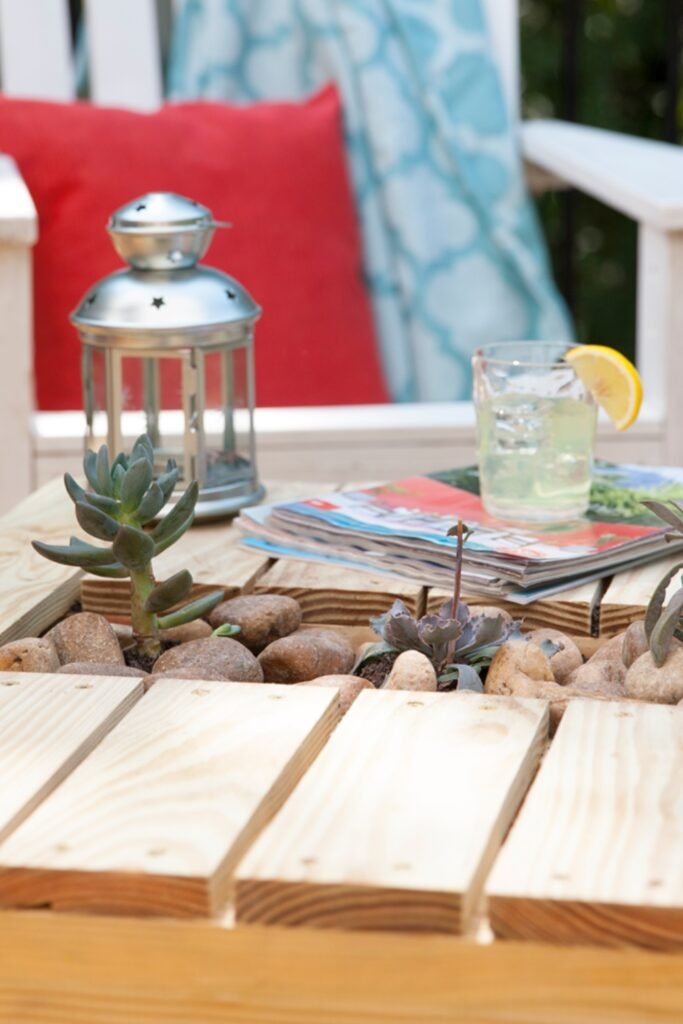
A built-in planter center can turn a simple patio coffee table into something more useful, decorative, and personal for your seating area.
Use the middle space for succulents, small stones, or low plants so the table still leaves room for drinks and magazines.
This idea works nicely near lounge chairs because it adds greenery without needing a separate planter that takes up extra patio space.
Try Picnic Style
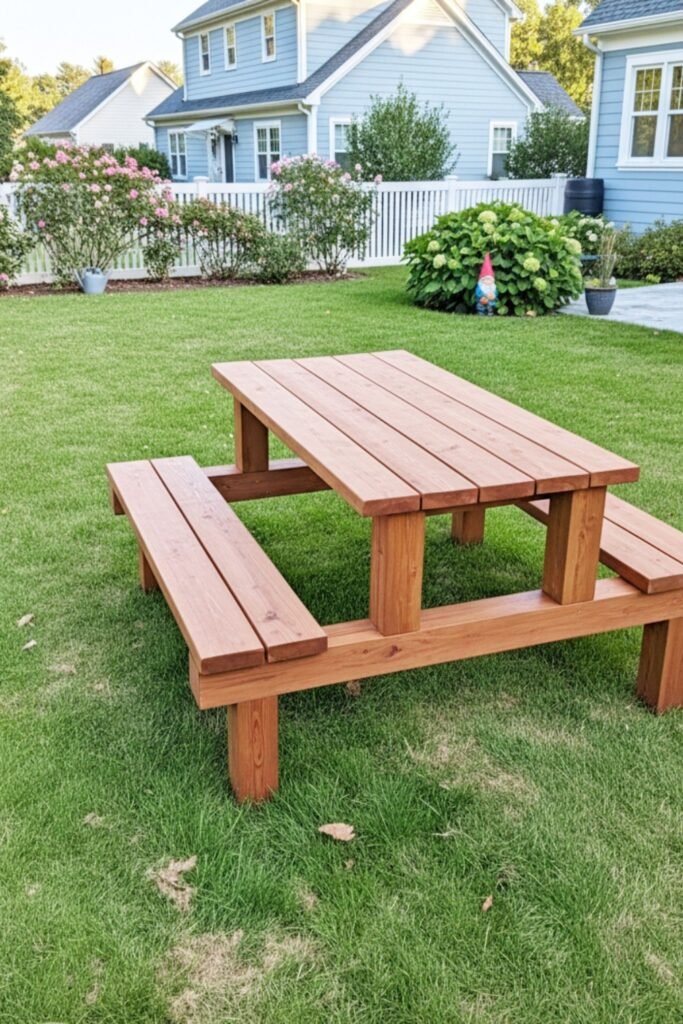
A picnic-style patio table makes sense when you want outdoor seating that feels casual, sturdy, and easy to use on the lawn.
Because the benches connect with the table, you do not need to move separate chairs every time you eat outside.
Use sealed wood and thick legs for this kind of build so it can handle grass moisture, kids, meals, and regular backyard use.
Mix Wood Metal
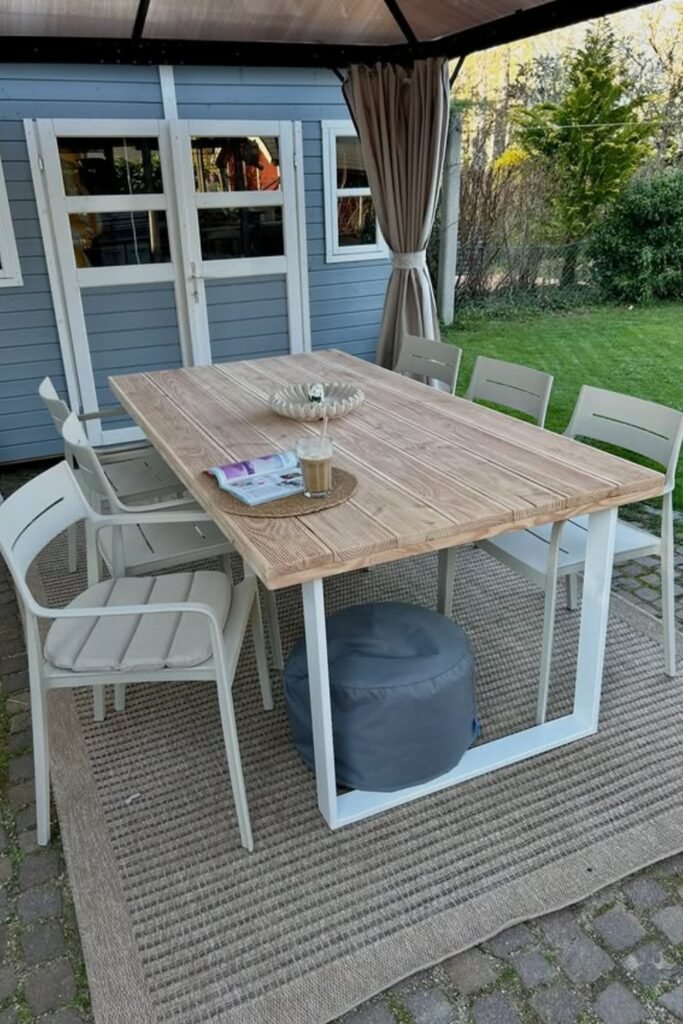
Pairing a wooden tabletop with a white metal base gives your DIY patio table a cleaner look without making the build feel too heavy.
This works especially well under a gazebo or covered patio where the table can anchor the space without overpowering lighter chairs.
Keep the top simple, sand the edges smooth, and let the contrast between natural wood and painted legs create the finished look.
Keep Low Center
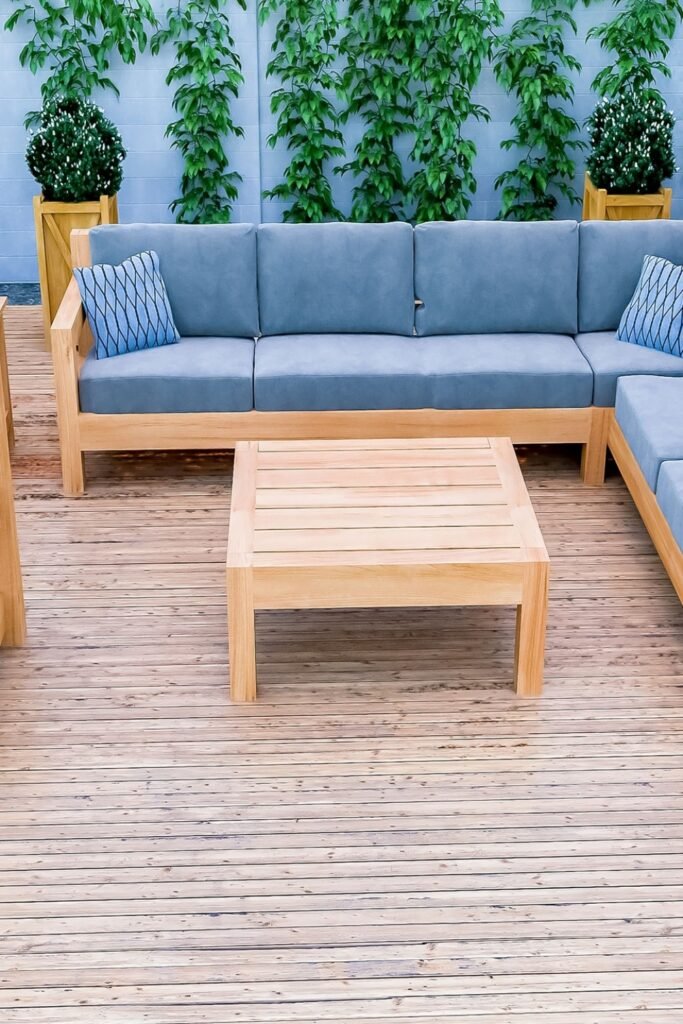
A low square coffee table works better than a dining table when your patio is built around sofas, cushions, and relaxed conversations.
The slatted top keeps the table connected to the rest of the wooden furniture, so the whole seating area feels planned.
Use this idea for lounge decks where people need a place for drinks, snacks, books, or trays without blocking the seating flow.
Add Strong Base
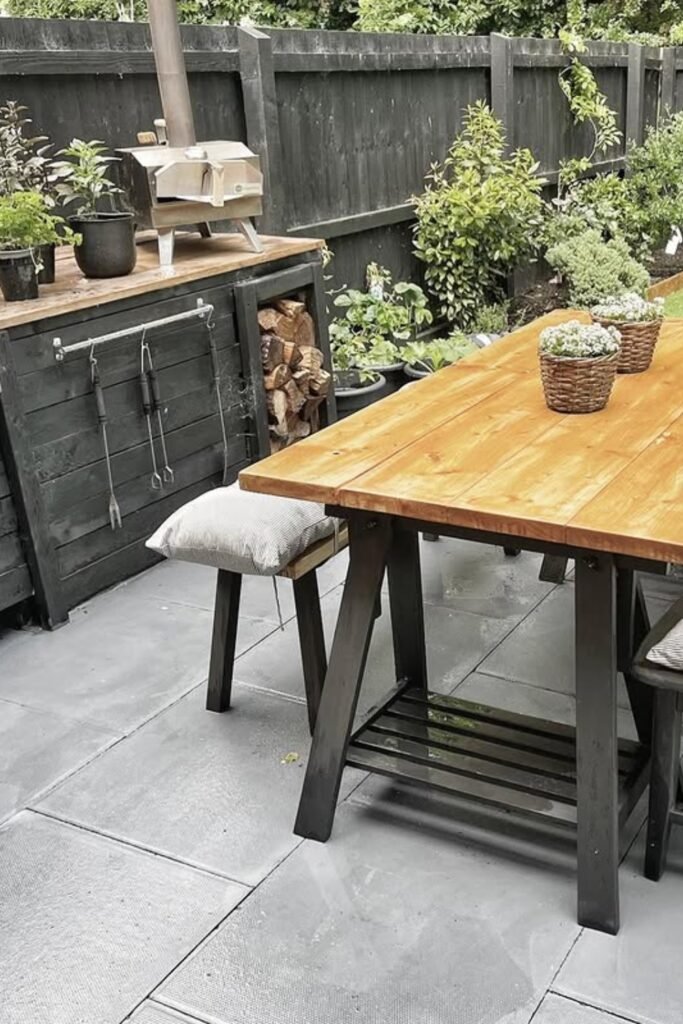
A thick wooden tabletop with dark angled legs gives your patio table a more solid, grown-up look for outdoor dining areas.
This style works well beside an outdoor kitchen because the table feels strong enough for meals, serving plates, and everyday use.
Choose a warm stain for the top and a darker base if you want the table to feel rustic without looking too rough.
Style With Plants
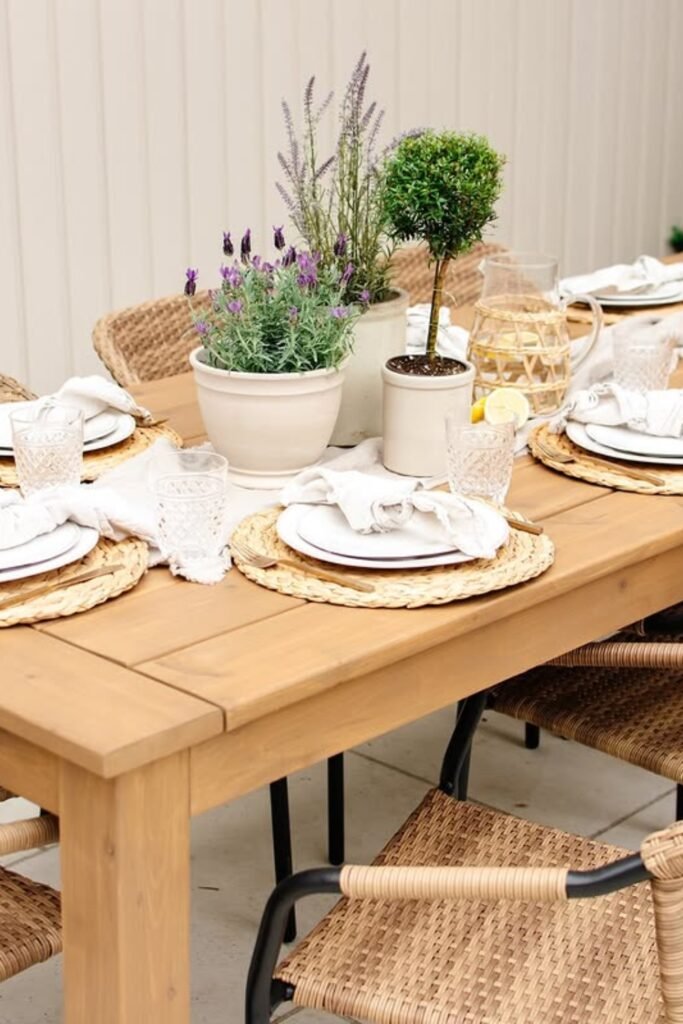
Potted herbs or lavender can make a simple wooden patio table feel styled without needing expensive outdoor decor or a full centerpiece.
Keep the plants low enough so people can still talk across the table without moving decorations every time they sit down.
This idea works beautifully for covered patios where woven chairs, neutral plates, and natural textures help the table feel warm and relaxed.
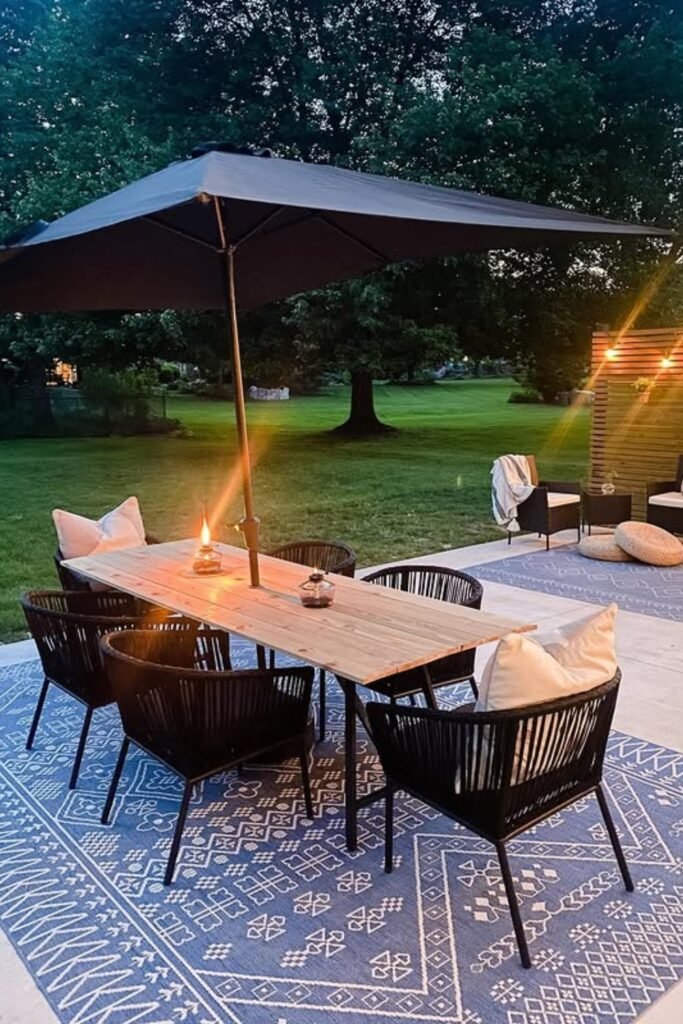
Add Umbrella Slot
An umbrella slot is a small detail that can make your DIY patio table much more useful during sunny afternoons or evening meals.
Place the hole in the center of the tabletop so the shade feels balanced and every seat gets some protection.
This setup works best on open patios where you want dining space, lounge comfort, and shade without building a full pergola.
Keep Simple Build
A basic rectangular table is often the smartest DIY choice when you want something useful without adding complicated cuts or heavy details.
Straight legs, wide boards, and clean gaps make the table easier to build while still giving it a proper outdoor look.
Use this style if your patio already has sofas or chairs, because the simple shape can fit into many seating layouts.
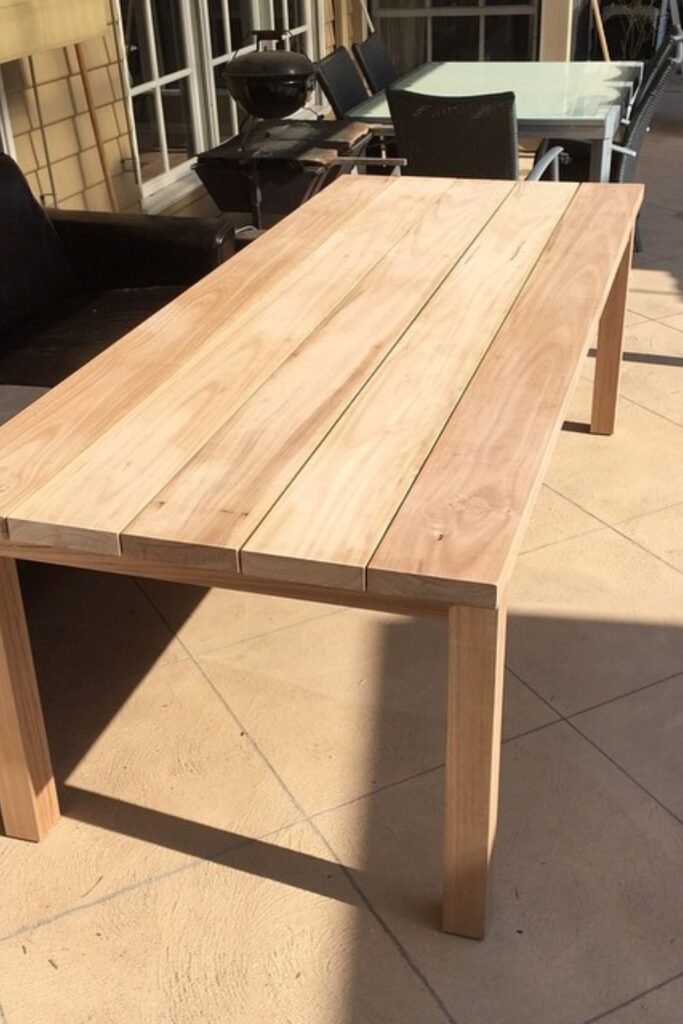
Build Long Table
A long wooden patio table is perfect when your deck needs one strong surface for family meals, grilling nights, or weekend hosting.
The thick legs and center support help the table feel sturdy, which matters when you plan to use it often outside.
Leave space around the chairs and seal every side of the wood so the table handles regular weather and outdoor dining better.
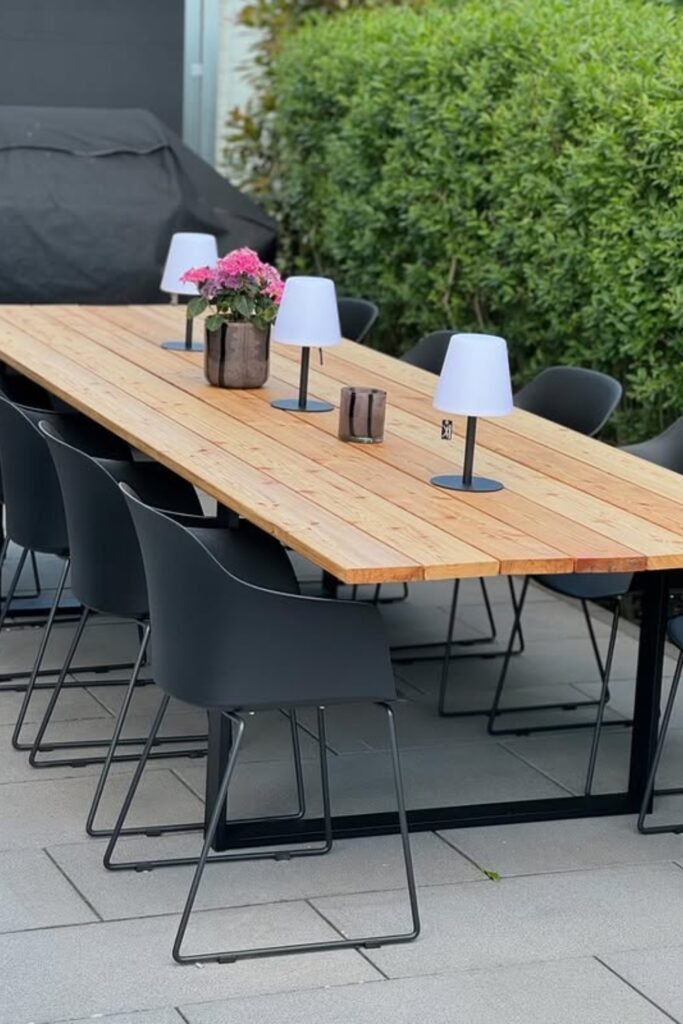
Extend Seating
A long narrow patio table works well when you host bigger meals but still want the setup to feel clean, modern, and easy to move around.
Black chairs and slim metal legs keep the table from looking bulky, even when the tabletop stretches across a larger outdoor dining area for gatherings.
Battery lamps or simple flower pots can finish the surface without taking over the table, especially if you need space for serving dishes and drinks.
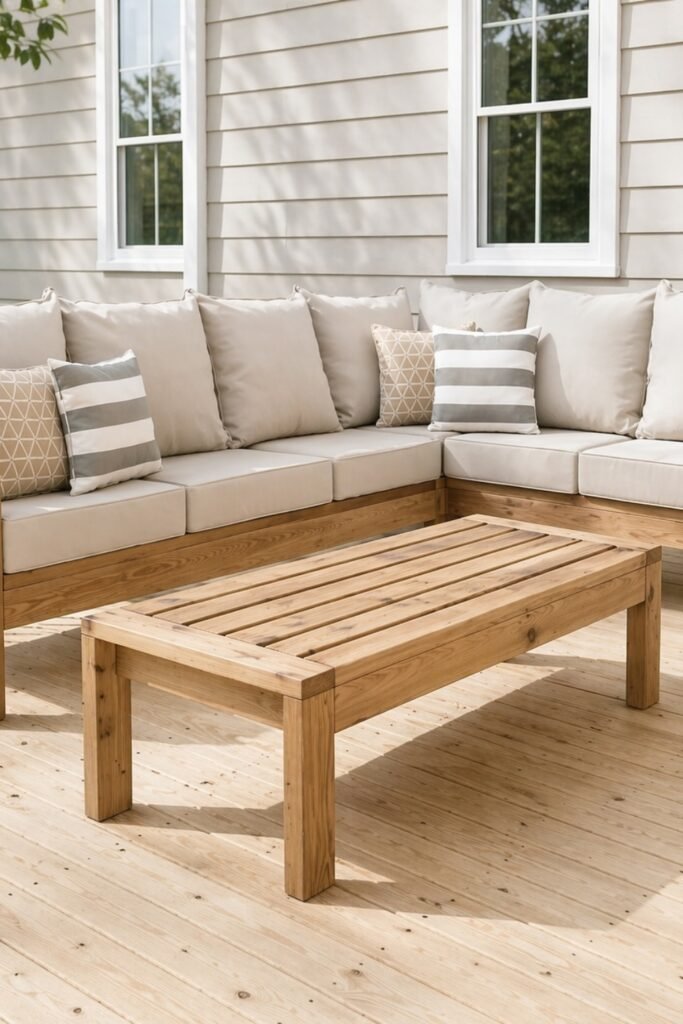
Match Lounge
A matching wooden coffee table helps an outdoor sofa area feel complete without forcing the space into a formal dining setup or stiff layout outside.
The slatted top ties back to the sofa frame, which makes the whole deck look planned instead of pieced together later with random furniture pieces.
Keep the height low enough for drinks, trays, or books so the table supports conversation instead of interrupting the lounge flow around your seating area.
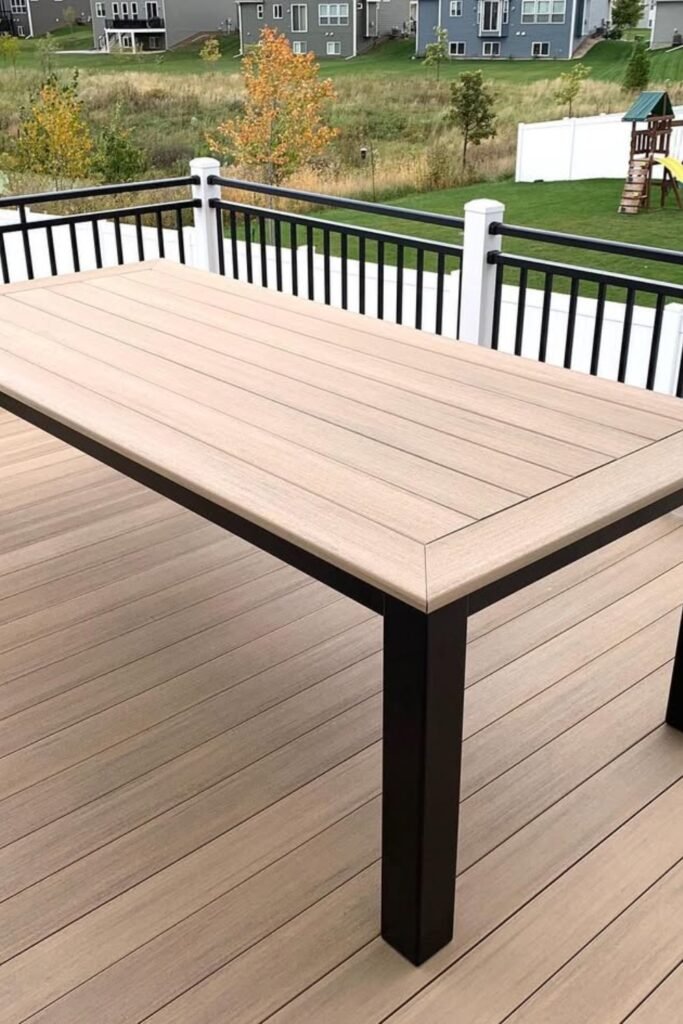
Frame Cleanly
A framed tabletop gives a DIY patio table a more finished look, especially when you want something sleeker than exposed board ends on deck spaces.
Pairing the light top with black legs creates sharp contrast, so the table feels modern without needing complicated decorative details or extra styling on top.
Use this idea on raised decks where clean lines, railings, and open views already make the outdoor space feel structured and easy to furnish.
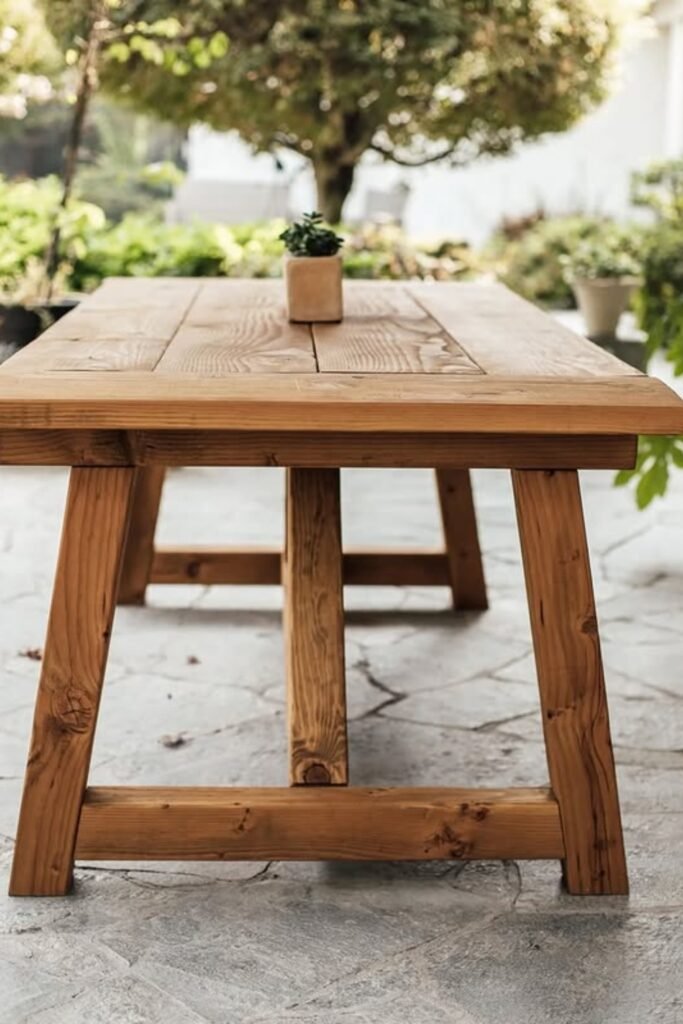
Use Trestle Legs
Angled legs can make a chunky wooden patio table feel stronger and more handmade without turning the build into something too fancy for everyday use.
The lower support rail is not just decorative because it helps the base stay steady when people lean, serve food, or move chairs around it.
Choose this style for rustic patios or garden corners where warm wood, simple shapes, and solid construction feel more important than a polished showroom look.
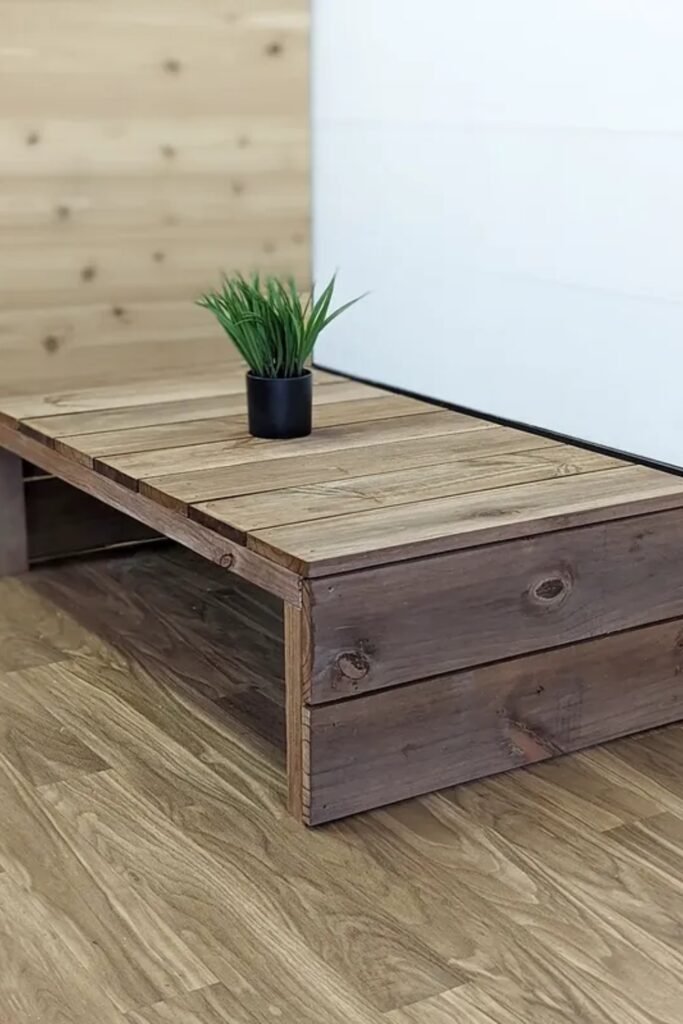
Go Low Profile
Low box-style patio tables work well when you want something simple near floor seating, lounge chairs, or a relaxed outdoor corner.
The chunky sides make the table feel grounded, while the slatted top keeps it from looking too heavy or closed off.
Use this idea for small patios where you need a coffee table that feels handmade, sturdy, and easy to style with one plant.
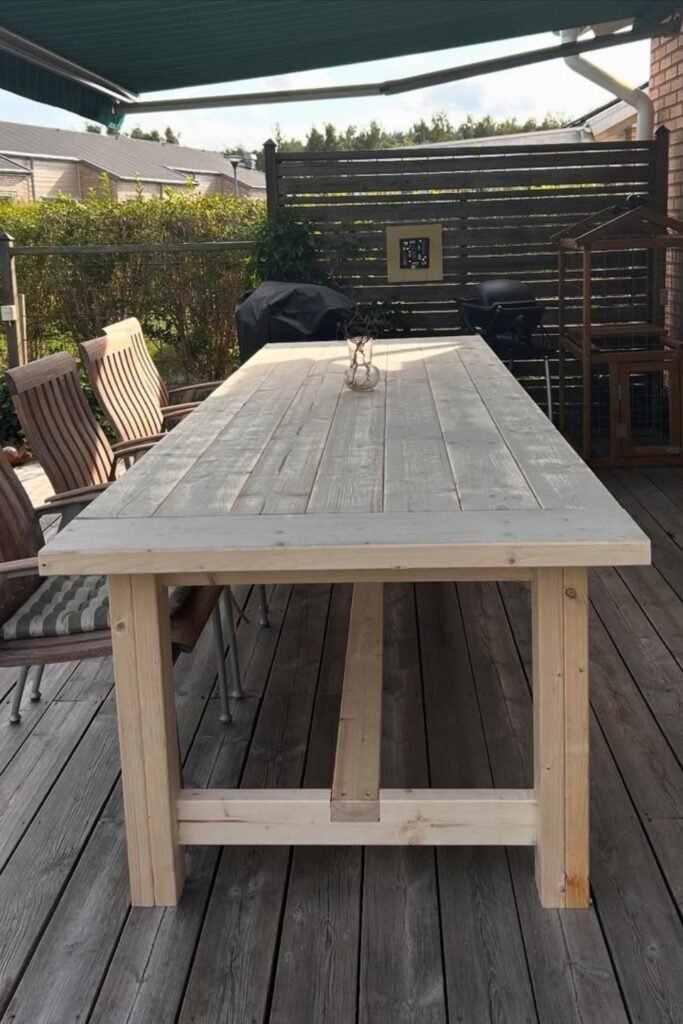
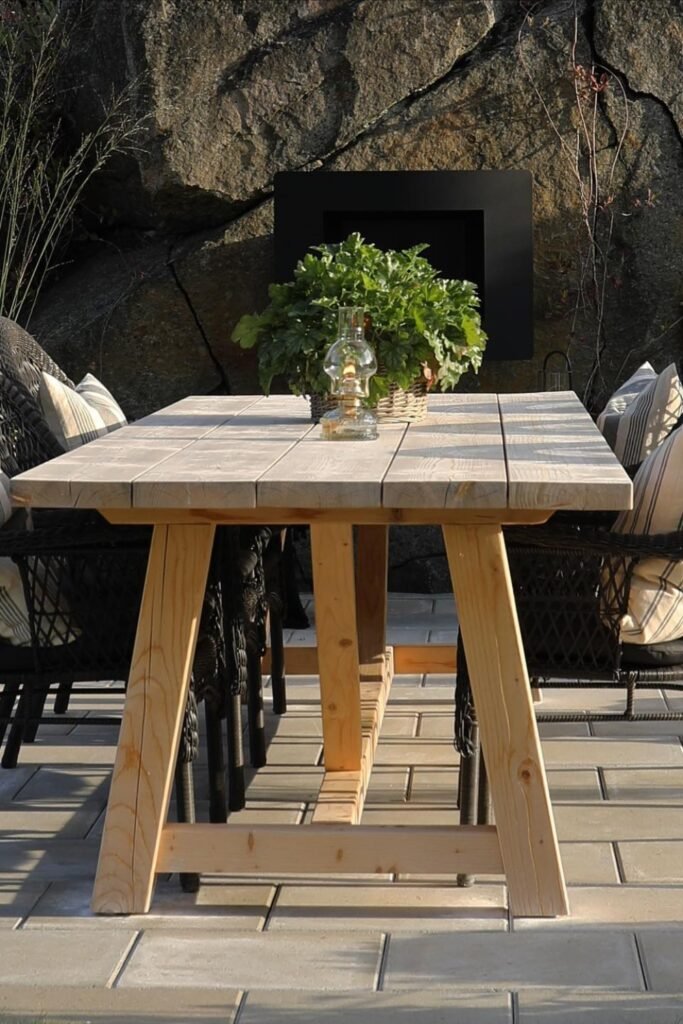
Pair With Wicker
A chunky trestle patio table can look softer when you pair it with woven chairs, striped cushions, and a natural outdoor backdrop.
The angled legs give the table strong support, which helps if you use it for dinners, drinks, or longer weekend meals outside.
Keep the tabletop boards slightly spaced and sealed well, so the table handles weather while still keeping that relaxed handmade charm.
Try Weathered Finish
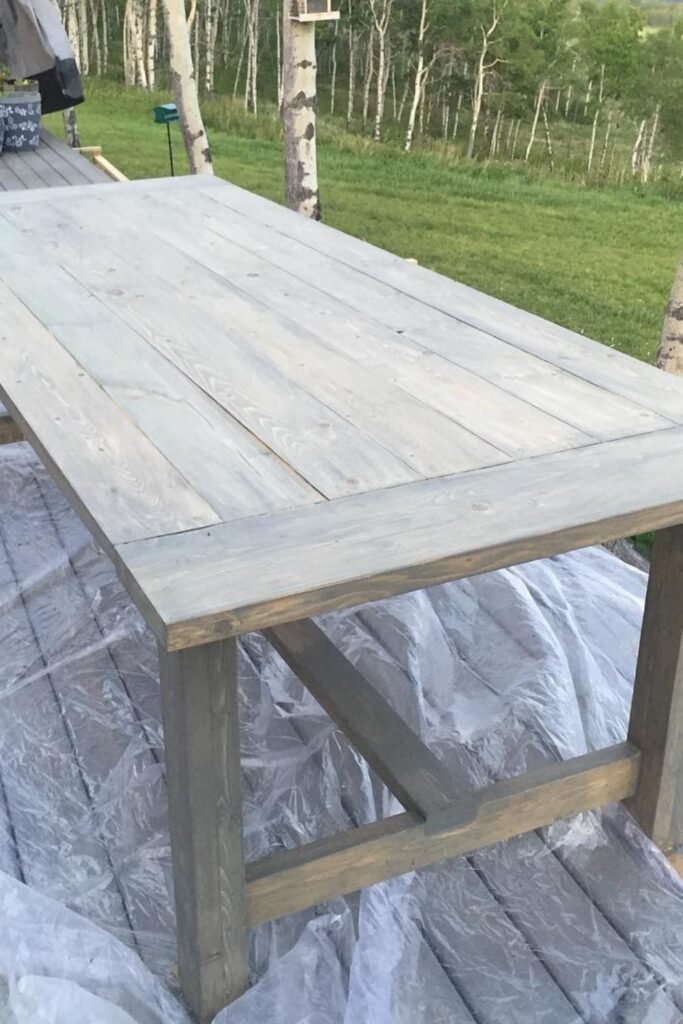
A weathered gray finish is a smart choice when you want your DIY patio table to blend with decks, trees, and outdoor views.
Instead of chasing a perfect polished look, let the stain soften the wood grain and make the table feel naturally aged.
This style works especially well for large decks because the muted color feels calm, casual, and easier to match with existing furniture.
FAQs
What is the best wood to use for a DIY patio table?
The best wood for a DIY patio table depends on your budget and how much weather exposure the table will face.
Cedar, pressure-treated lumber, deck boards, and outdoor-rated hardwoods work well because they handle outdoor use better than regular indoor wood.
Just make sure you sand the surface, seal all sides, and protect the end grain so the table lasts longer outside.
How do you make a DIY patio table last outside?
A DIY patio table lasts longer when you build it with outdoor conditions in mind from the start.
Leave small gaps between tabletop boards so rainwater can drain, use strong legs or base support, and avoid leaving raw wood exposed.
After building, apply an exterior stain, outdoor sealer, or weatherproof finish to the top, underside, legs, and edges.

Hi, my name is Ali Mehmood! I’m a passionate writer and DIY enthusiast who loves turning creative ideas into practical, hands-on projects.
I created this website to share inspiring, budget-friendly ideas that you can do yourself – whether it’s organizing your home, crafting something unique, or creating fun projects for kids and pets.
I believe DIY isn’t just a hobby – it’s a smart way to save money, reduce waste, and enjoy the satisfaction of making things with your own hands.
I’m excited to have you as part of this growing community, and I’ll continue bringing you helpful, realistic, and fun DIY ideas you can actually use.