This post may contain affiliate links: read full affiliate disclosure.
A DIY planter light post looks easy until you start thinking about the problems that can happen after the lights go up.
You want that warm backyard glow, but maybe you do not have a pergola, fence, tree, or wall in the right place.
Then you start asking the real questions: will the post lean, will the planter tip, will the lights pull too hard, and can flowers still grow around the base?
That is why this project needs more than a pretty finished photo. A good planter light post should give you height, stability, and style without forcing you to dig permanent holes in your yard.
In this article, I am going to share how DIY planter light posts work, what makes them sturdy, and what mistakes you should avoid.
Lets dive into it!
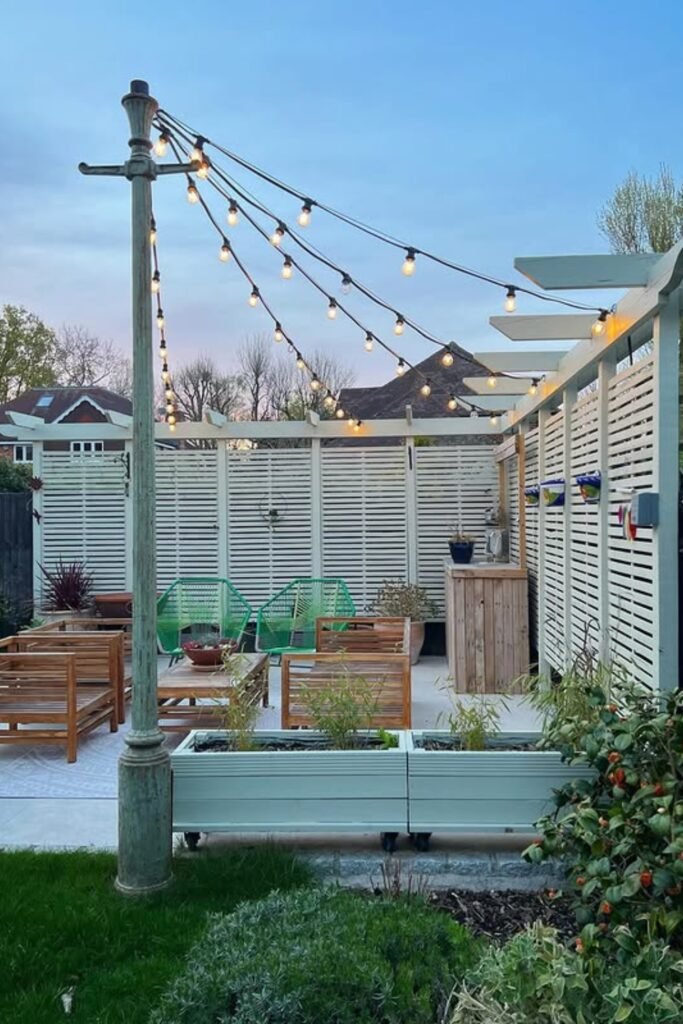
Raise One Anchor
A single tall post can handle several light strands when the base feels heavy, wide, and placed before you add weight.
Use this idea for open patios where one strong anchor needs to connect back to a pergola, fence, or house wall.
Keep the light lines loose enough to create graceful arcs, because tight cables can slowly pull the post inward over time.
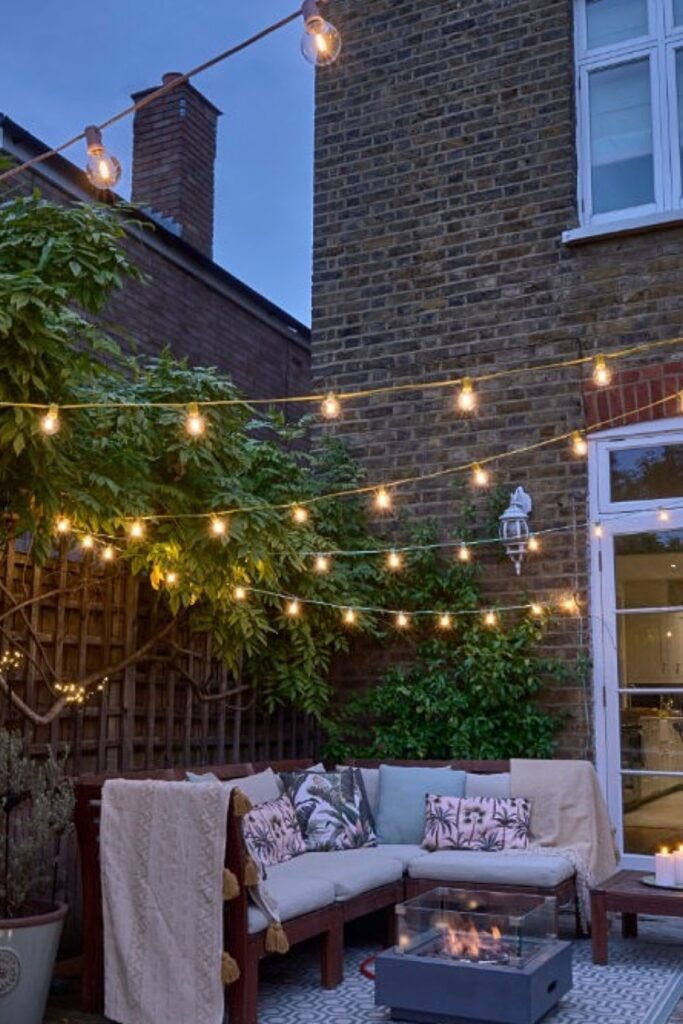
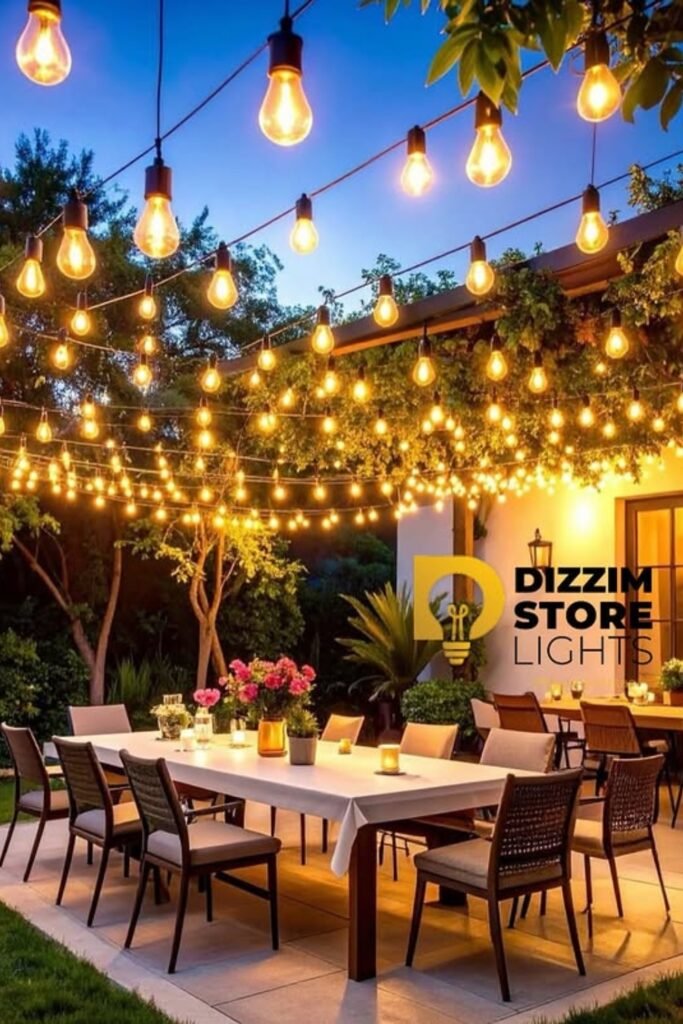
Build A Canopy
For an outdoor dining area, run several warm strands above the table so the whole space feels like a glowing canopy.
This look works best when planter posts sit outside the dining zone, leaving chairs and walkways clear for guests at night.
Choose stronger bulbs for mood, but space them evenly so the light feels cozy instead of harsh over the table area.
Hide Dark Posts
A black planter post almost disappears at night, which helps the lights and seating area become the main focus after dark.
Pair it with globe lanterns or simple bulbs when you want the deck to feel soft, layered, and more relaxed outside.
Place the planter near a corner sofa, hammock, or dining bench so the glow lands where people gather most at night.
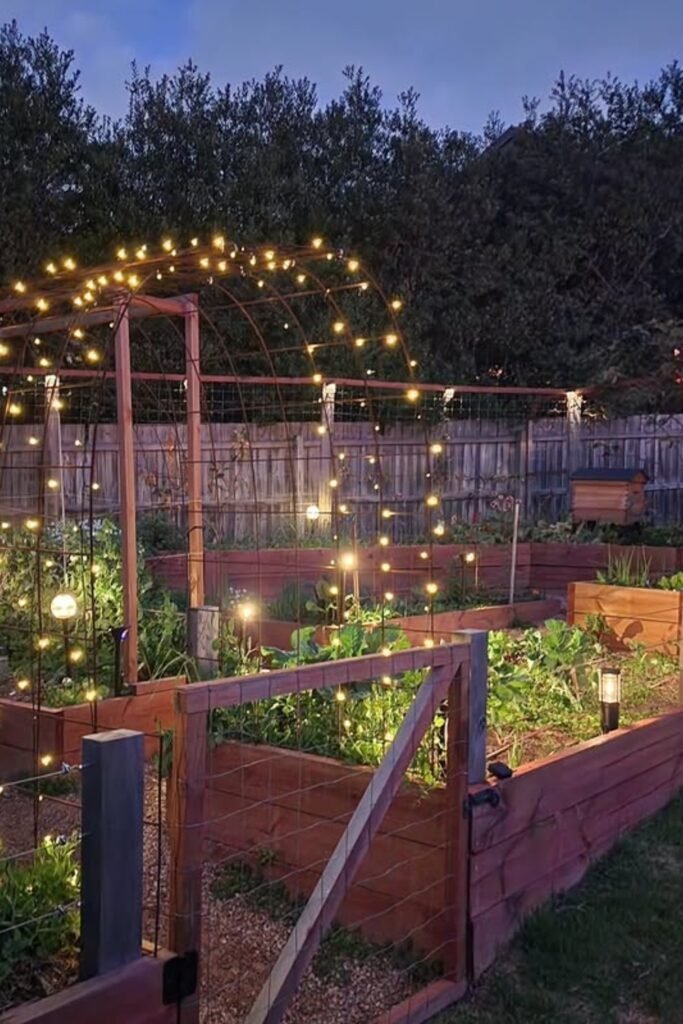
Light Garden Beds
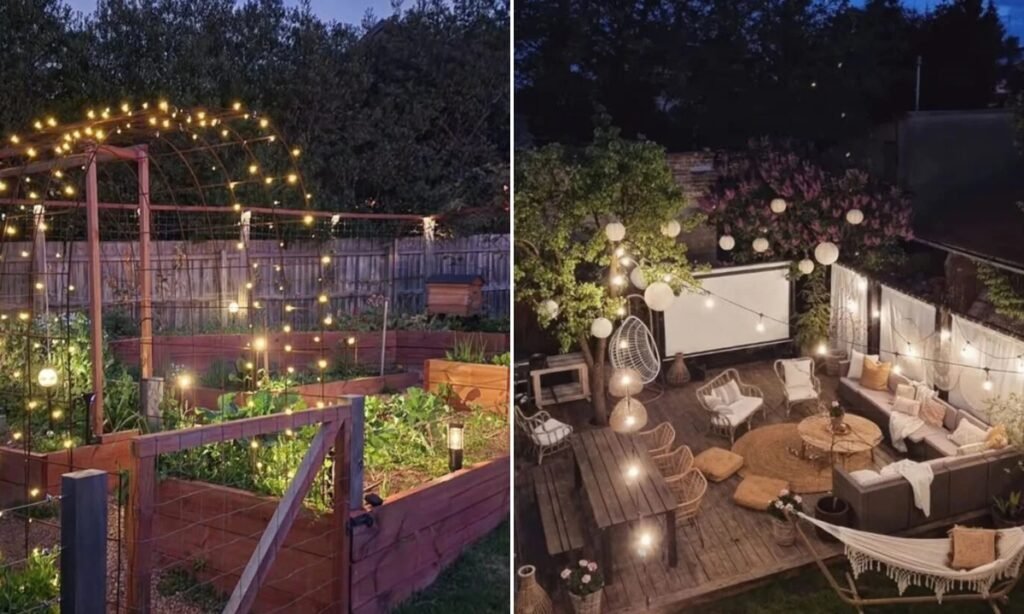
Garden arches already create structure, so wrap the lights across the frame when you want the beds to feel special after sunset outside.
Use nearby raised planters as the visual base, because they make the light post idea feel more permanent and garden-friendly inside the yard.
Keep the bulbs warm and spaced apart, so the glow supports the plants without overpowering the natural garden texture around the beds nearby.
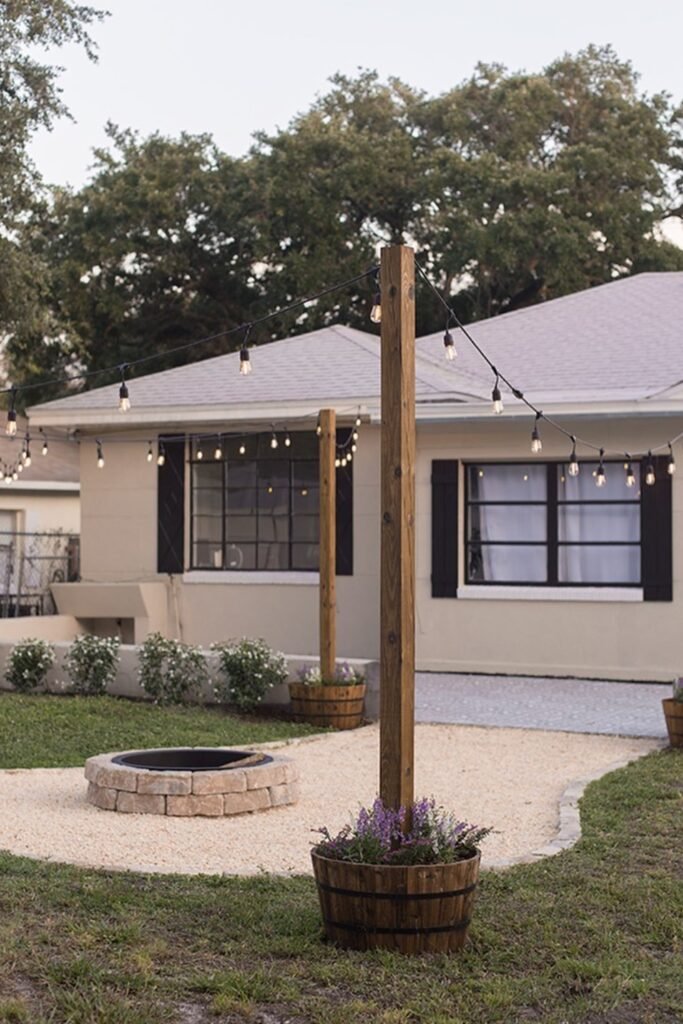
Anchor The Firepit
Whiskey barrel planters are a smart choice around a firepit because they bring weight, height, and a finished backyard look without digging holes.
Set each barrel outside the walking path, so guests can move between chairs without brushing against posts, hooks, or cords at night nearby.
Let the strands sag slightly above the gravel area, because that curve helps the whole setup feel relaxed and stable for gatherings outside.
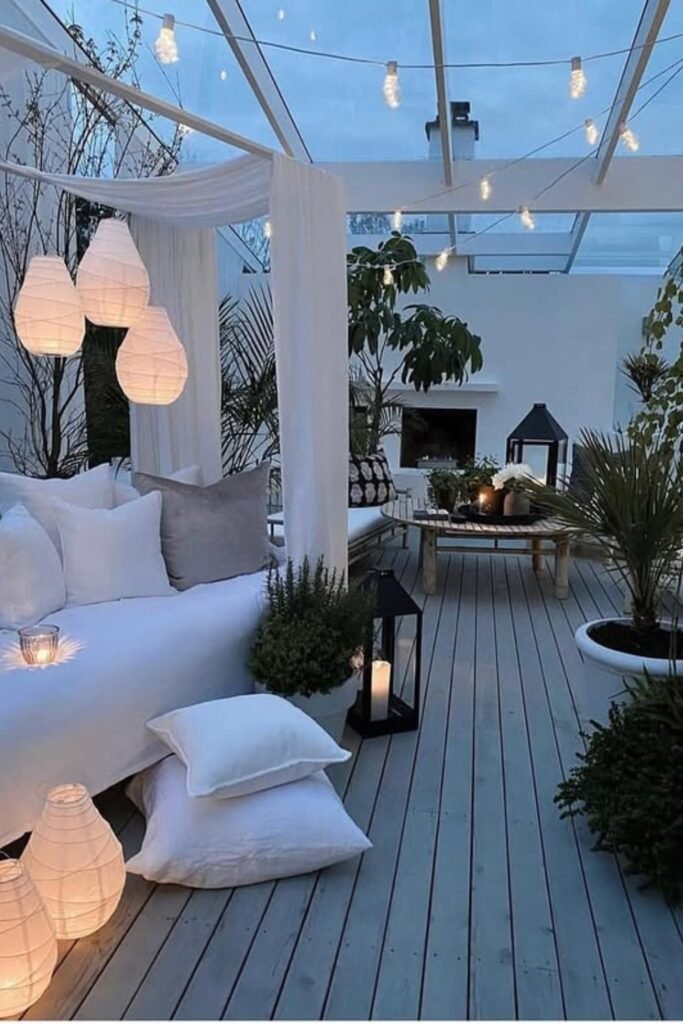
Soften White Decks
White decks can feel bright and flat in the evening, so use warm lights to bring softness above the seating area at night.
Planter posts work well near lounge corners, especially when greenery helps break up all the pale flooring and white cushions around the space.
Add lanterns or candles lower down if you want the glow to feel layered instead of only coming from overhead string lights alone.
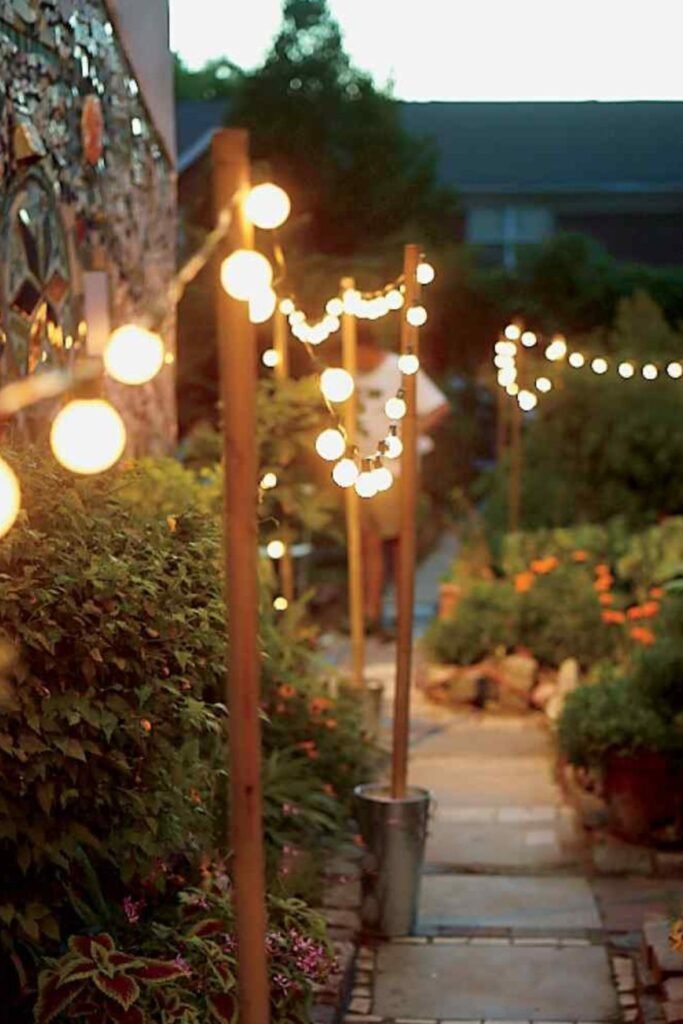
Guide The Walkway
A narrow garden path needs gentle direction, and simple planter posts can guide people without making the walkway feel overlit or crowded outside.
Place the posts close to borders or plants, so the lights follow the path instead of cutting awkwardly across it at night visually.
Use small buckets, pots, or hidden anchors when you want the idea to feel casual, flexible, and easy to adjust later on seasonally.
Hang Paper Lanterns
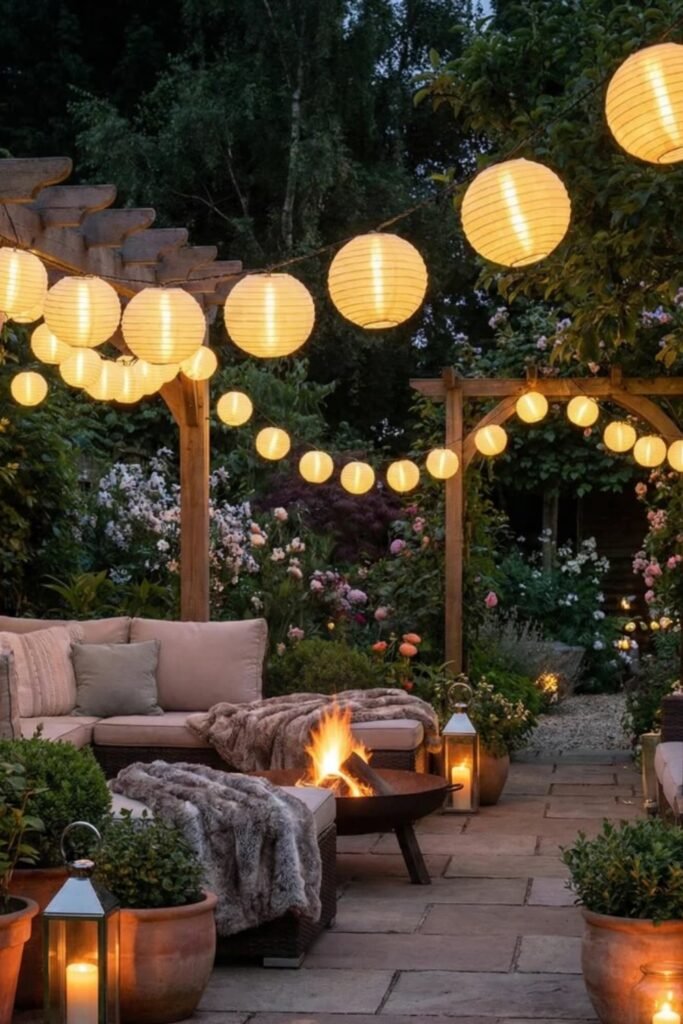
Paper lanterns make a planter light post setup feel softer when your patio already has pergolas, vines, or garden seating nearby at night.
Use larger round lanterns between smaller bulbs, because the size contrast adds warmth without needing extra furniture or heavy decor pieces around the patio.
Keep planters close to the supports, so the posts look connected to the garden instead of standing alone in empty corners after sunset.
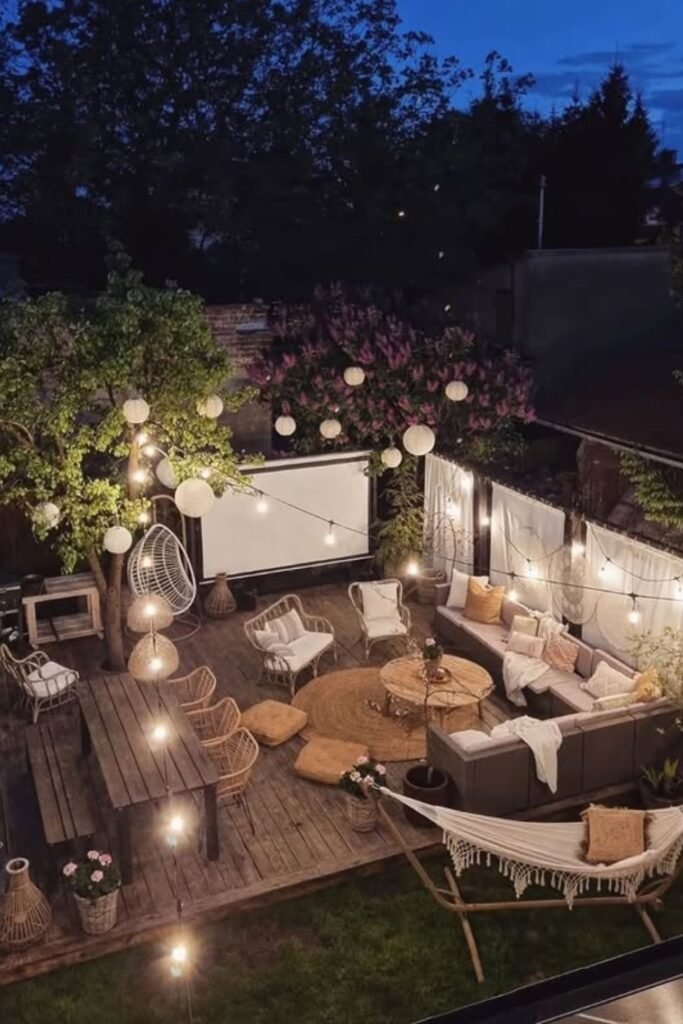
Cross Deck Lights
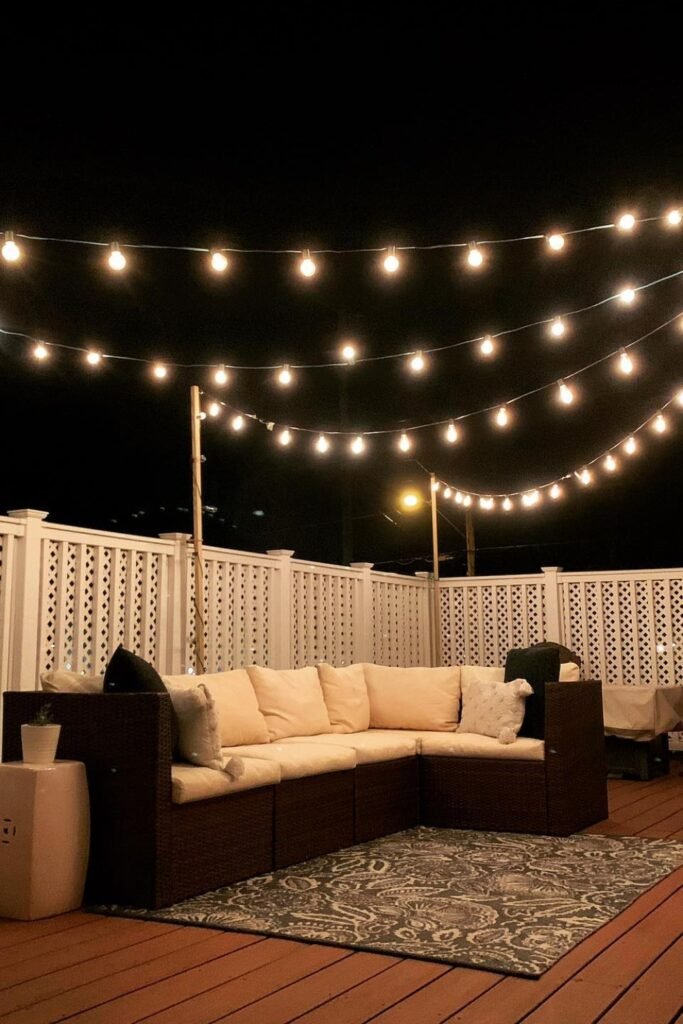
High deck spaces need strong vertical posts, especially when there are no trees, pergolas, or nearby walls to hold lights securely above seating.
Let the strands cross in wide relaxed rows, because tight straight lines can make thin posts look stressed and awkward over time outside.
A soft outdoor rug under the seating area helps define the zone, while the overhead lights make it feel more complete at night.
Add Privacy Curtains
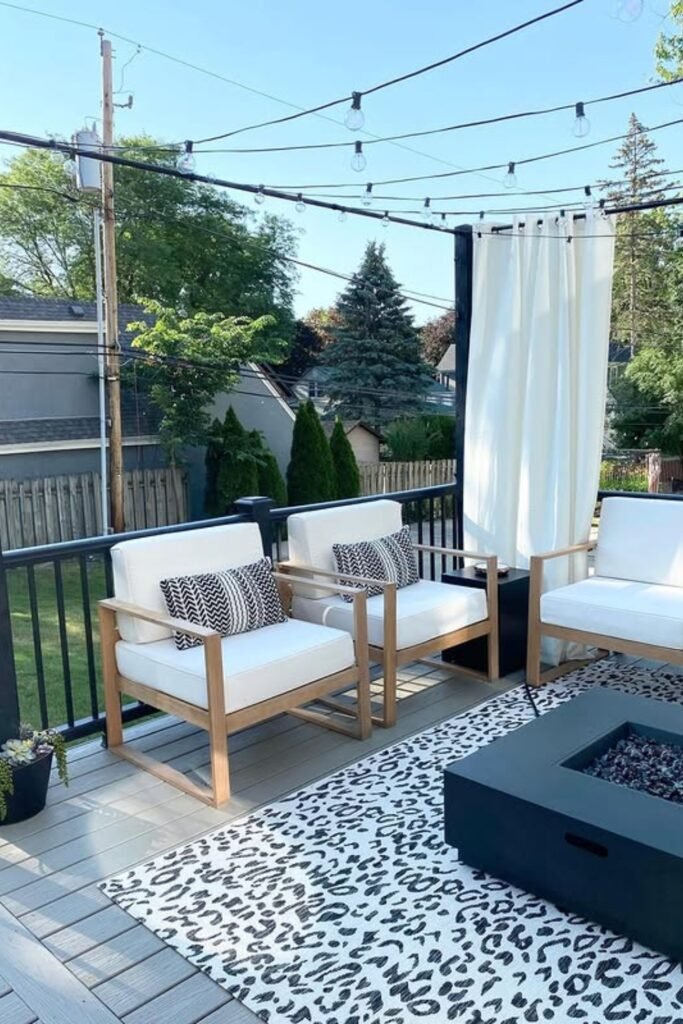
Curtains can make a simple deck light setup feel more private, especially when planter posts sit near railings or open views nearby outside.
Use dark posts with black string light cords if you want the structure to blend into the railing and firepit area more easily.
A small planter at the base keeps the idea decorative, but choose enough weight before trusting it with longer light runs across the deck.
Create Deck Privacy
Privacy curtains work well when your planter light posts sit near railings and you want the deck to feel more enclosed at night.
Use dark posts and black cords so the light structure blends with the railing instead of fighting the clean seating layout around it.
Keep a weighted planter at the base, because longer deck runs need more support than a small decorative pot can give alone outside.
FAQs
Can a planter light post really hold string lights?
Yes, a planter light post can hold string lights, but only when the base has enough weight and width.
A tall post inside a small lightweight planter can lean once the lights pull on it, especially if the strands are stretched too tightly.
Use a wide planter, add enough concrete or heavy base support, and keep the lights slightly relaxed instead of perfectly tight.
What is the best way to stop a DIY planter light post from leaning?
The best way is to start with a wide, heavy planter and secure the post firmly before adding soil or plants.
Also, avoid long tight light runs because tension can pull the post inward. A soft sag in the string lights looks better and helps reduce pressure.

Hi, my name is Ali Mehmood! I’m a passionate writer and DIY enthusiast who loves turning creative ideas into practical, hands-on projects.
I created this website to share inspiring, budget-friendly ideas that you can do yourself – whether it’s organizing your home, crafting something unique, or creating fun projects for kids and pets.
I believe DIY isn’t just a hobby – it’s a smart way to save money, reduce waste, and enjoy the satisfaction of making things with your own hands.
I’m excited to have you as part of this growing community, and I’ll continue bringing you helpful, realistic, and fun DIY ideas you can actually use.