This post may contain affiliate links: read full affiliate disclosure.
A good hamster cage is more than just a place to sleep it’s where your hamster eats, runs, burrows, and feels safe.
With so many cage styles available, it can be confusing to choose one that fits your space, budget, and your hamster’s needs.
Some cages focus on deep bedding, others on climbing or easy cleaning. In this article, you’ll find 20 creative hamster cage ideas.
That balance comfort, safety, and design, helping you create a setup your hamster can truly thrive in.
How to Choose the Right Hamster Cage?
Choosing the right hamster cage depends on space, ventilation, and how your hamster behaves.
A good cage should offer enough floor area for running, deep bedding for burrowing, and proper airflow to keep the environment healthy.
It should also be easy to clean and safe from escapes. The ideas in this article cover different layouts, materials.
Budgets so you can find a setup that fits both your home and your hamster’s comfort needs.
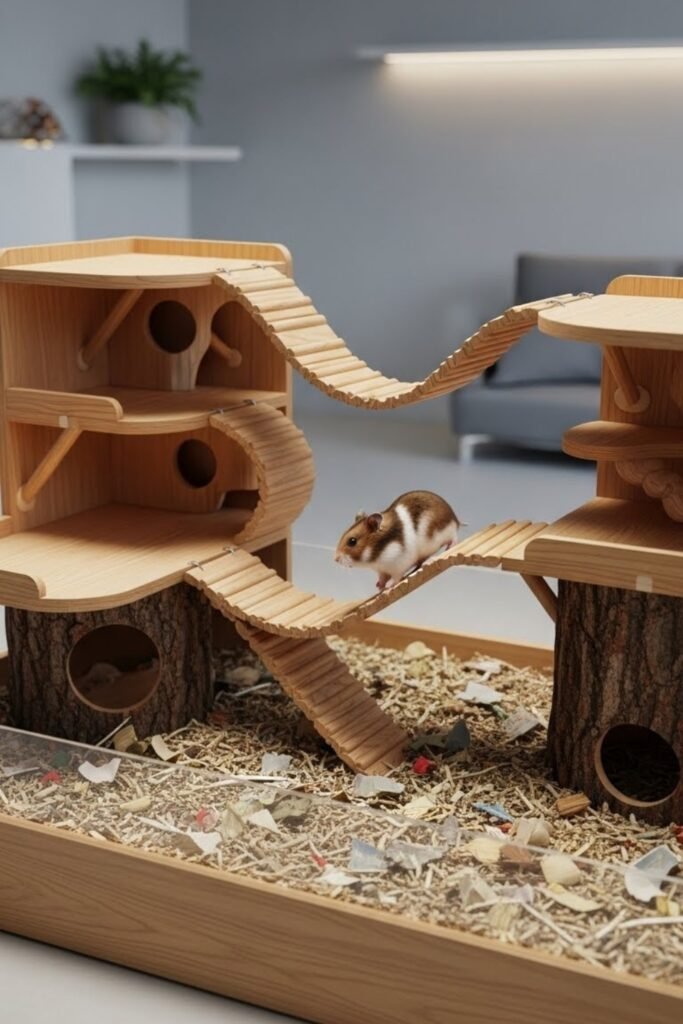
Multi-Level Cage
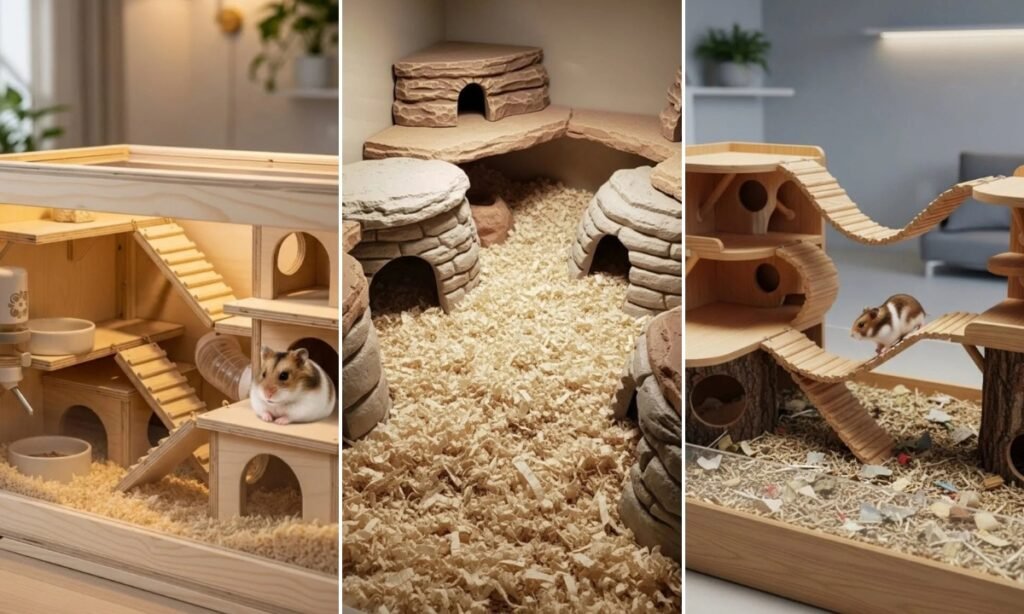
This cage uses stacked platforms to give your hamster more space to climb, explore, and stay active without increasing floor size. Ramps or ladders connect each level, making it ideal for small rooms.
It works best for dwarf hamsters and should include guard rails to prevent falls while keeping the layout open and engaging.
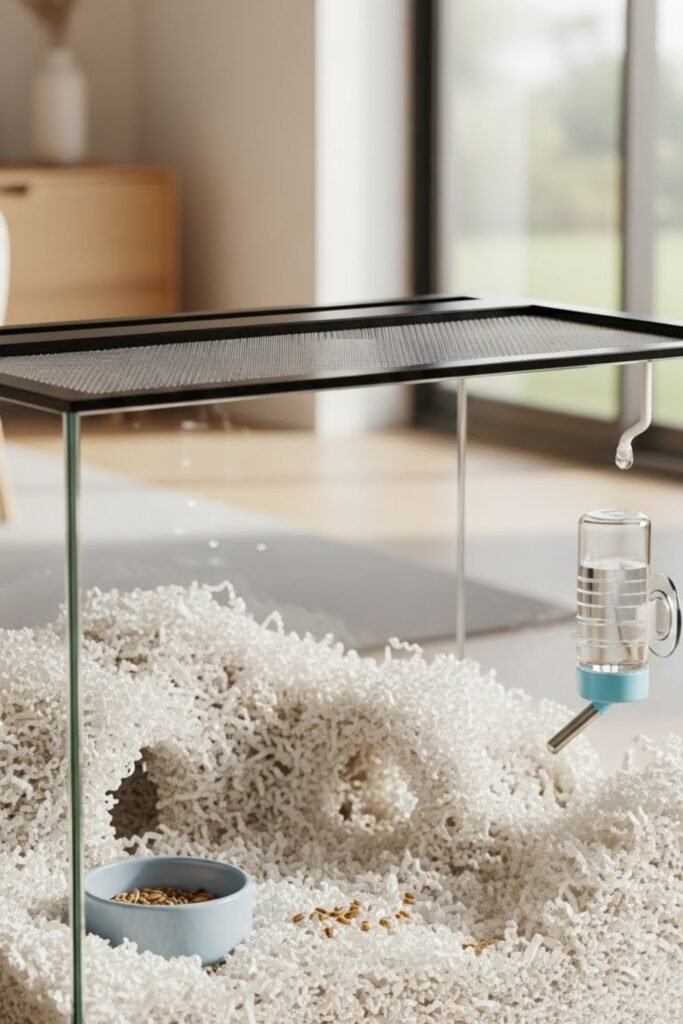
Glass Tank
A glass tank setup offers excellent visibility and strong ventilation from the top. It prevents bar chewing and holds deep bedding for natural burrowing behavior.
This option looks clean and modern while keeping the mess contained. Pair it with a mesh lid and wide accessories to maintain airflow and comfort.
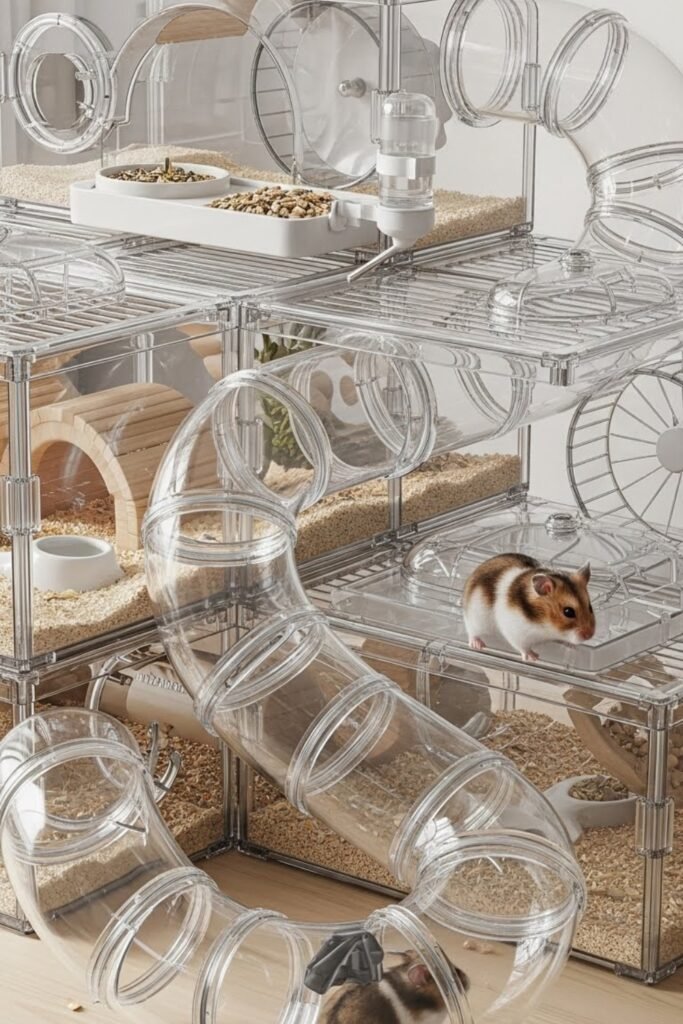
Modular Habitat
Modular cages allow you to connect multiple sections using tunnels and connectors. You can expand or rearrange the layout anytime, which keeps the environment stimulating.
This idea works well if you like changing setups often. Make sure connections are secure and avoid narrow tubes that restrict movement.
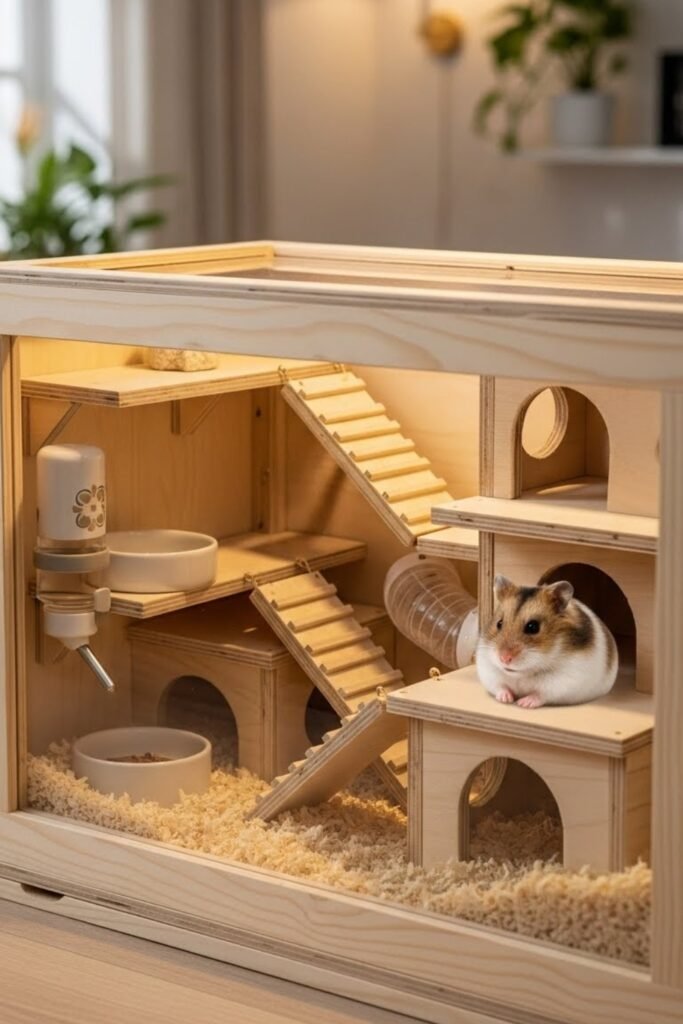
Wood Cage
A wooden hamster cage creates a warm, natural look and blends well with home décor. It allows customization of shelves, hideouts, and climbing areas.
Use untreated wood and add a clear front panel for visibility. Proper sealing is important to protect the wood from moisture and odors.
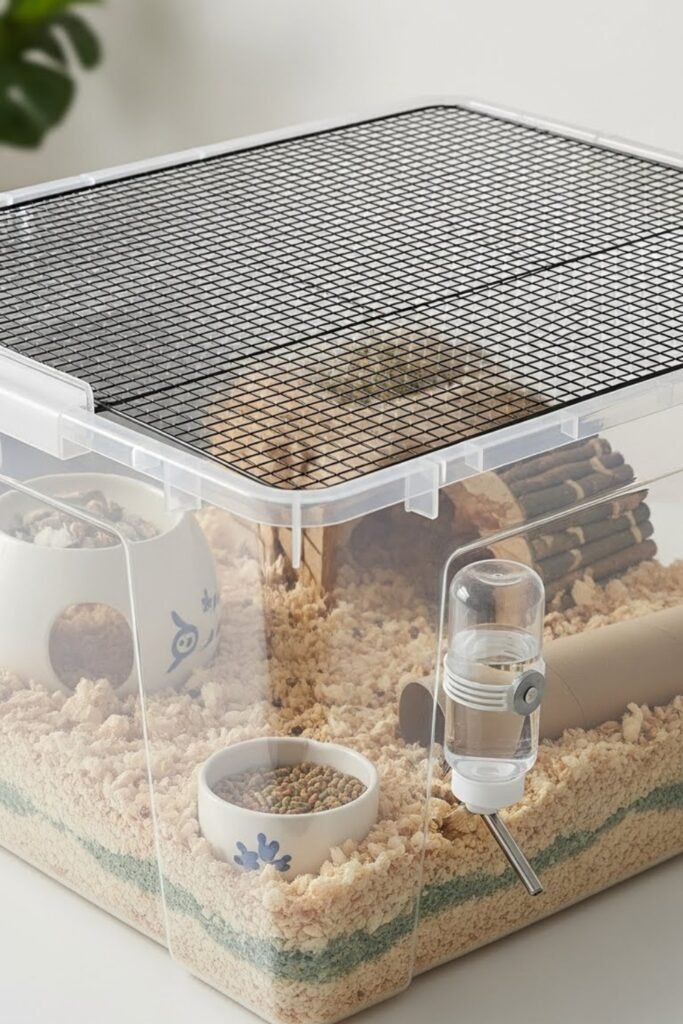
Bin Cage
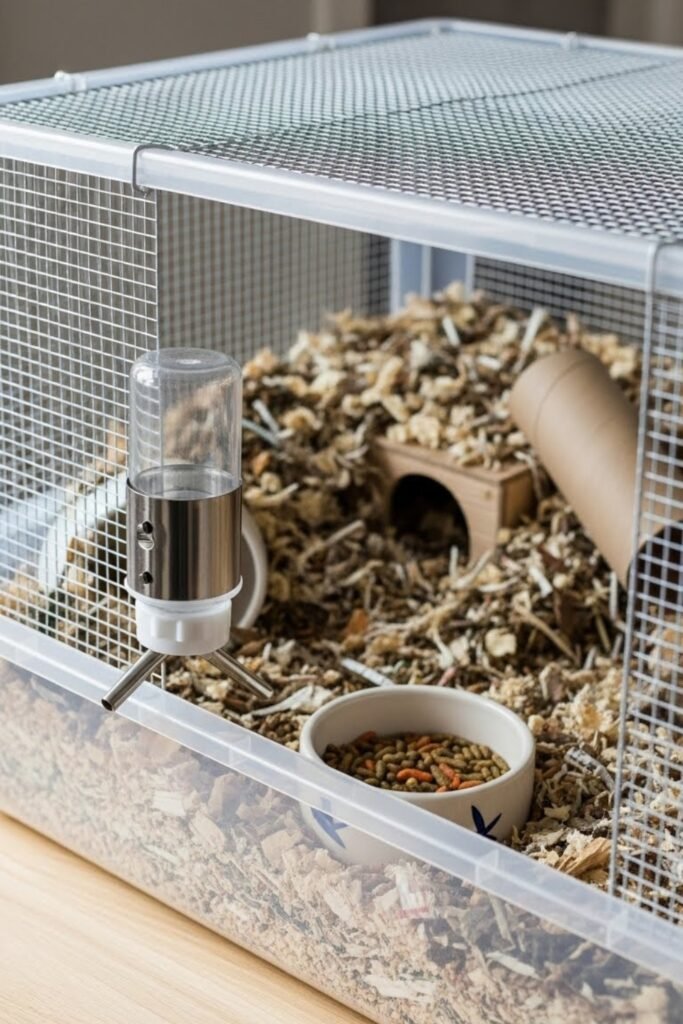
A bin cage uses a large clear plastic storage box with a mesh lid for airflow. It’s budget-friendly and offers plenty of floor space for bedding and tunnels.
This setup is easy to customize with DIY cutouts and works especially well for beginners who want a simple but spacious cage.
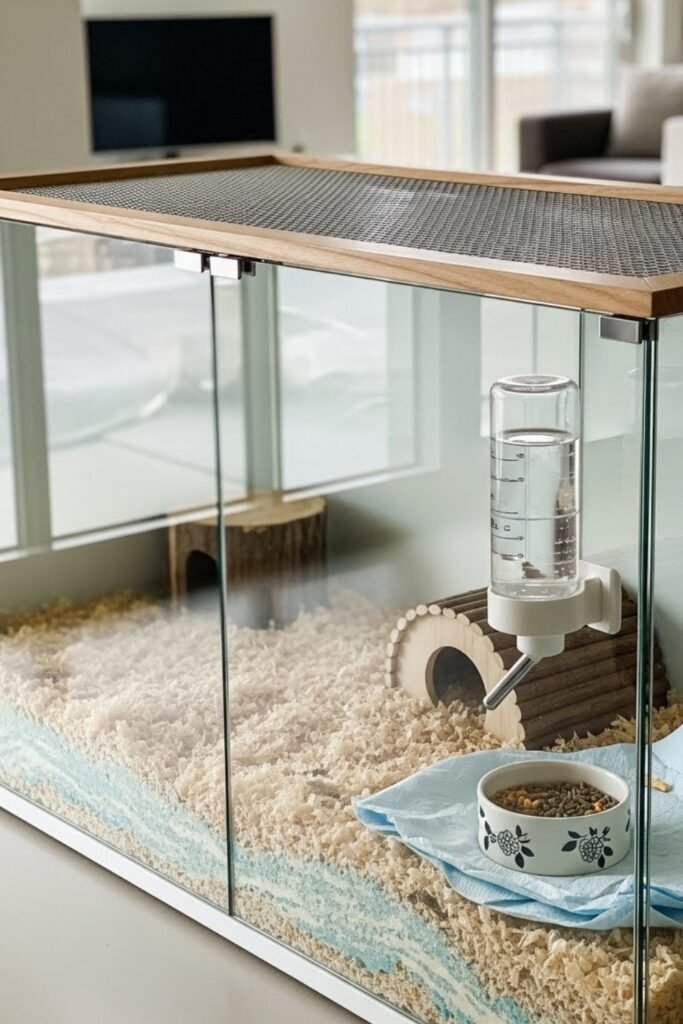
Detolf Cage
This setup repurposes an IKEA Detolf cabinet into a wide, horizontal hamster enclosure. It provides excellent floor space, which is ideal for Syrian hamsters.
With a custom lid and internal dividers, it looks sleek while supporting natural movement and burrowing without feeling cramped.
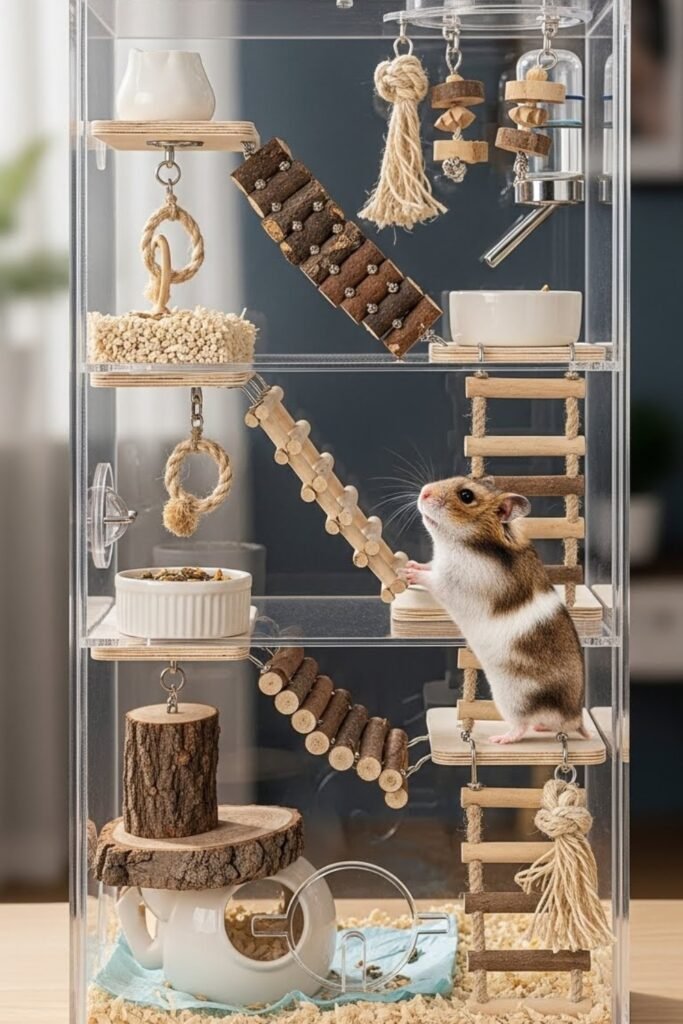
Vertical Habitat
A vertical habitat focuses on height rather than width, using shelves, climbing frames, and platforms. It suits active hamsters that enjoy climbing and exploring.
Safety is key here, so platforms should be close together and padded with bedding to reduce fall risk while keeping enrichment high.
Minimal Cage
A minimalist cage keeps the layout clean with only essential items like a wheel, hideout, food area, and deep bedding. It reduces clutter while still meeting space needs.
This idea works well for owners who prefer a tidy look and want to focus on comfort rather than decoration.
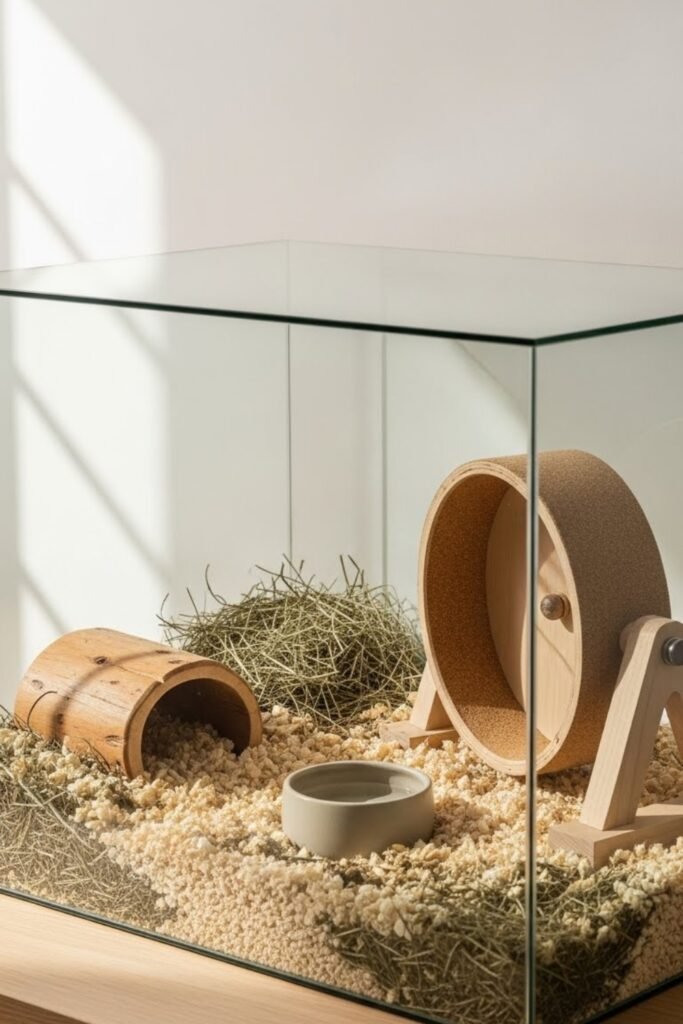
Burrow Cage
This cage is designed for deep bedding, allowing hamsters to dig tunnels and create underground nests.
Clear sides help you see burrowing behavior without disturbing them. It works best with paper or aspen bedding layered thickly, making the habitat feel more natural and stress-free.
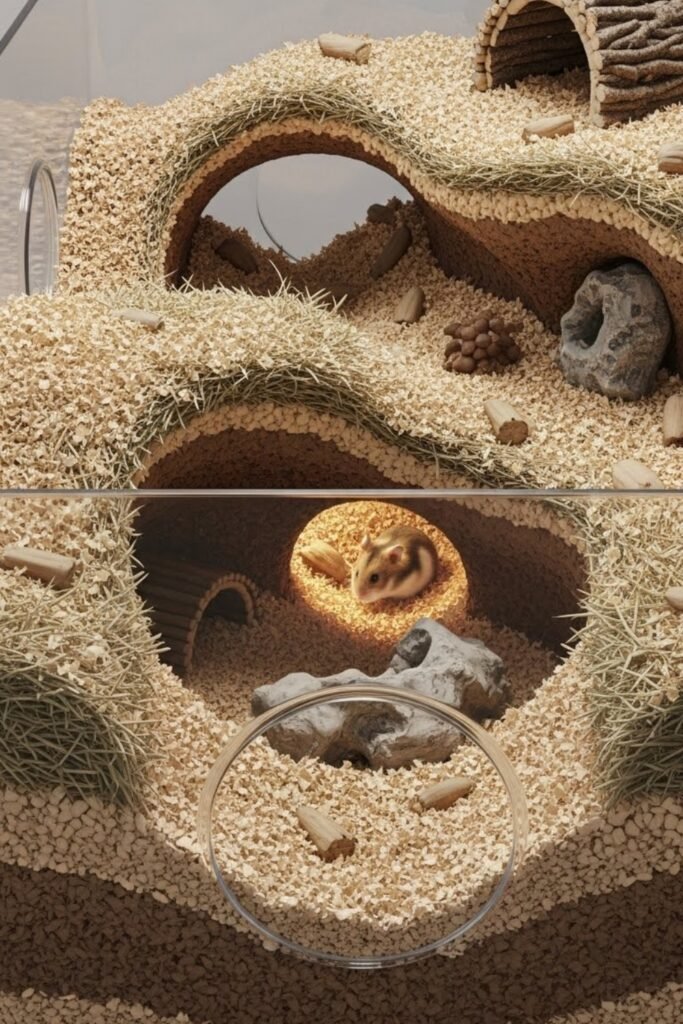
Jungle Theme
A jungle-themed cage uses wooden bridges, hanging toys, and natural textures to create an adventurous environment.
Green accents and branch-style accessories encourage climbing and exploration. This setup focuses on enrichment while still keeping enough open space for running and nesting.
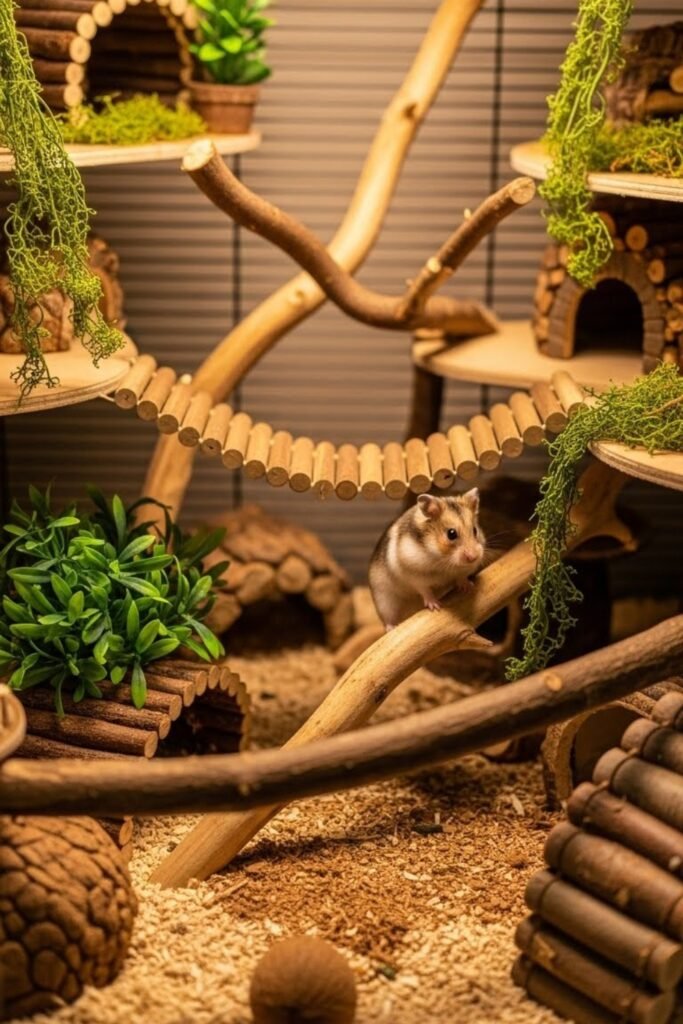
Desert Theme
This idea mimics a dry, sandy environment using neutral colors, stone-style hideouts, and minimal décor.
It creates a calm, open layout that feels spacious and uncluttered. Avoid real sand baths as flooring and focus instead on deep bedding with desert-inspired accessories.
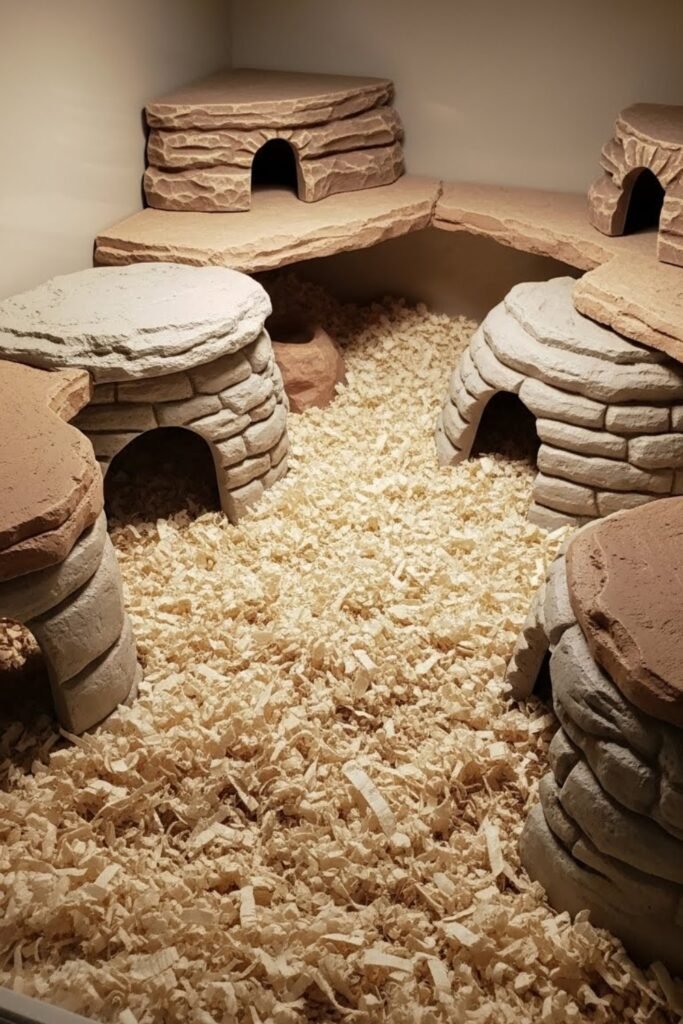
12. Pastel Cage
A pastel cage uses soft colors like blush, mint, or beige to create a gentle, aesthetic look. Accessories stay functional but visually cohesive.
This setup is popular for display cages in bedrooms while still offering proper space, ventilation, and enrichment.
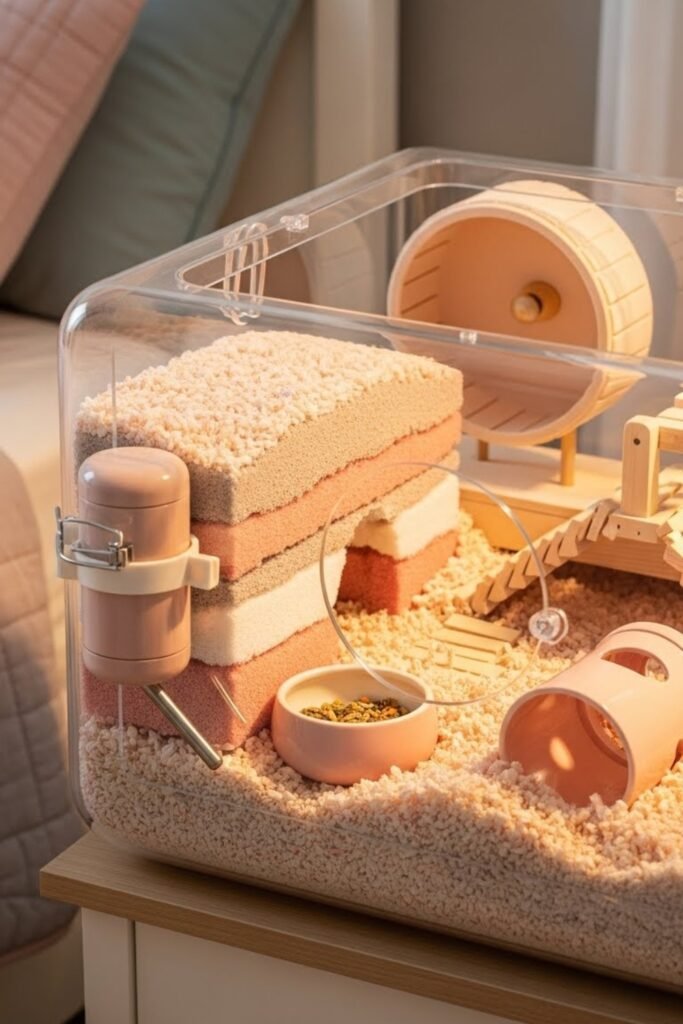
Acrylic Cage
An acrylic cage uses clear panels for full visibility while keeping bedding contained. It looks modern and works well for custom-built enclosures.
Ventilation panels are essential to maintain airflow. This setup allows deep bedding, clean lines, and easy observation of your hamster’s daily activity.
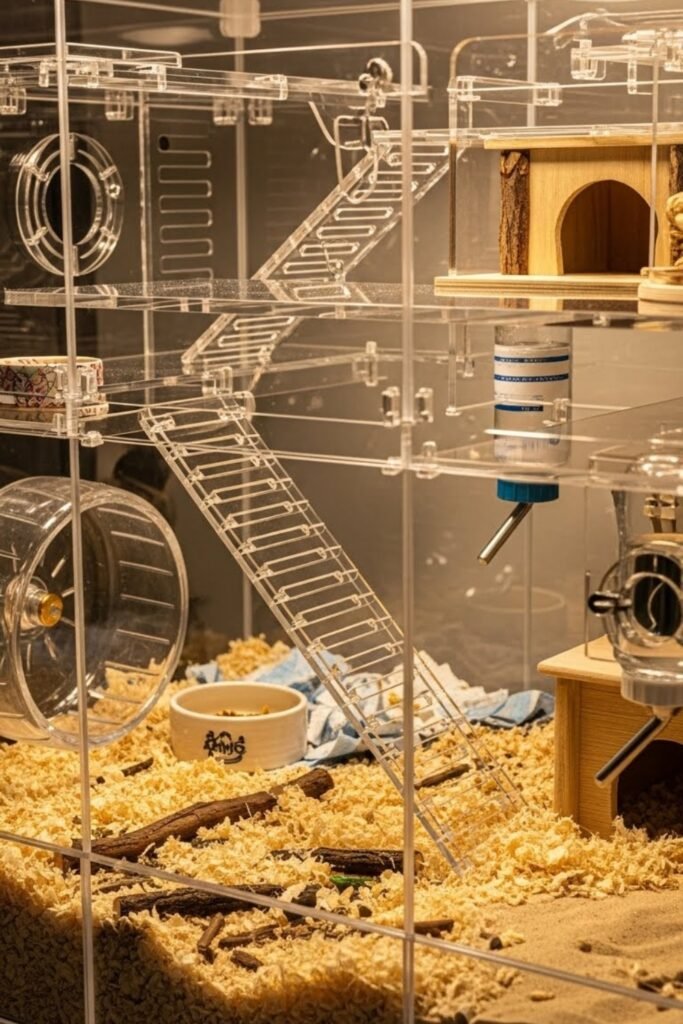
Corner Cage
A corner cage is designed to fit neatly into unused room corners. Its angled shape saves space while still offering a decent floor area.
This idea works well in small apartments and can be customized with triangular platforms and compact accessories.
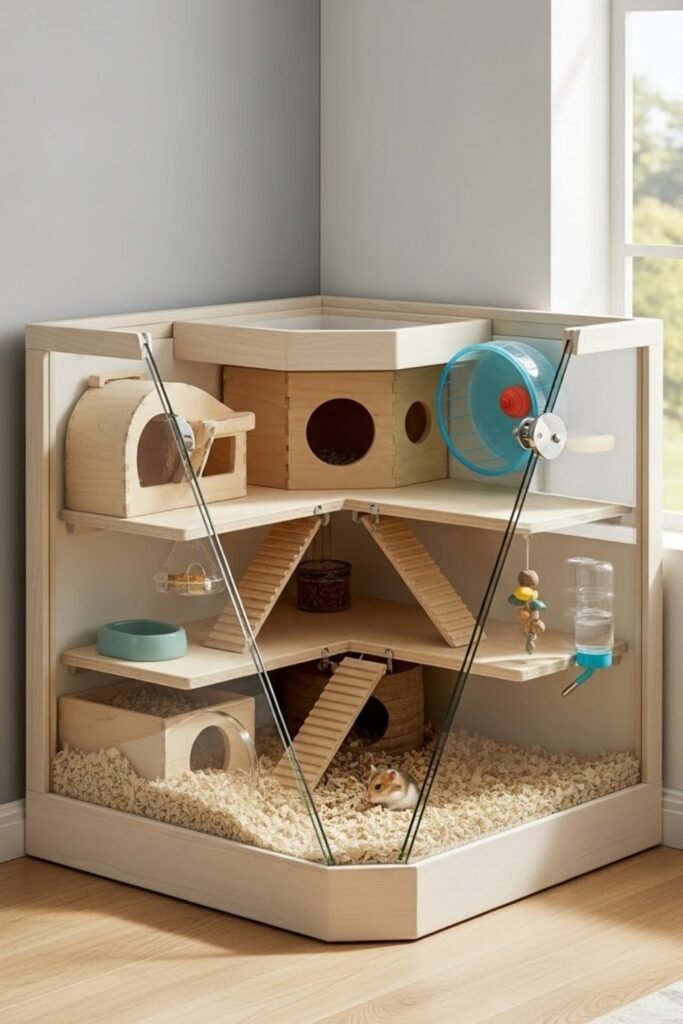
Travel Cage
A travel cage is lightweight and easy to move, making it useful for short trips or temporary housing. It includes basic essentials without heavy décor.
This option should only be used for limited periods, not as a permanent home, to avoid restricting movement.
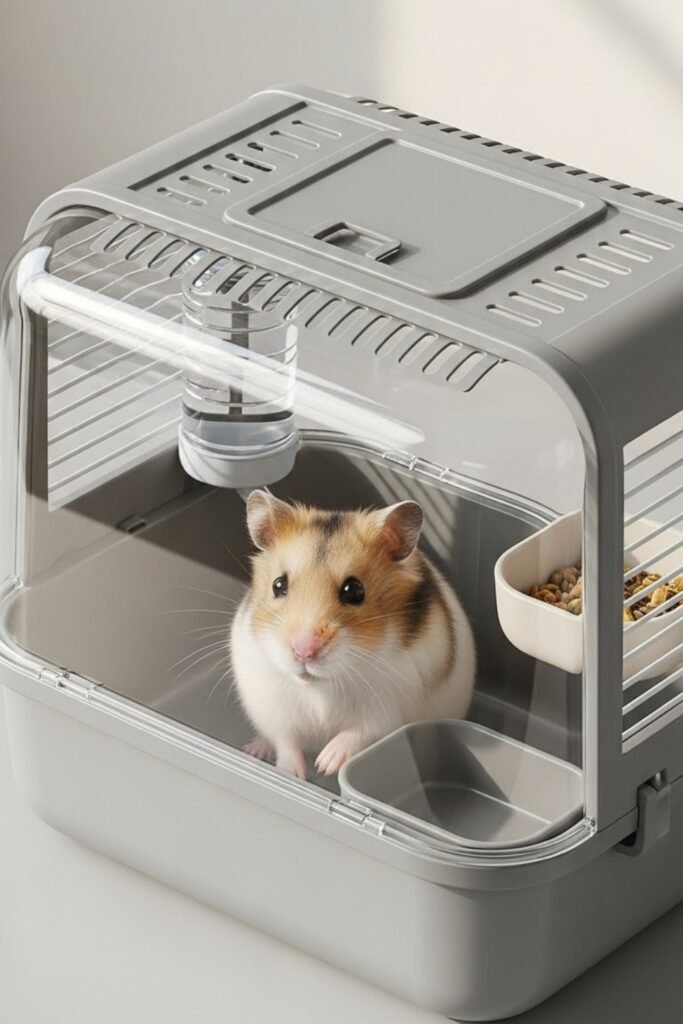
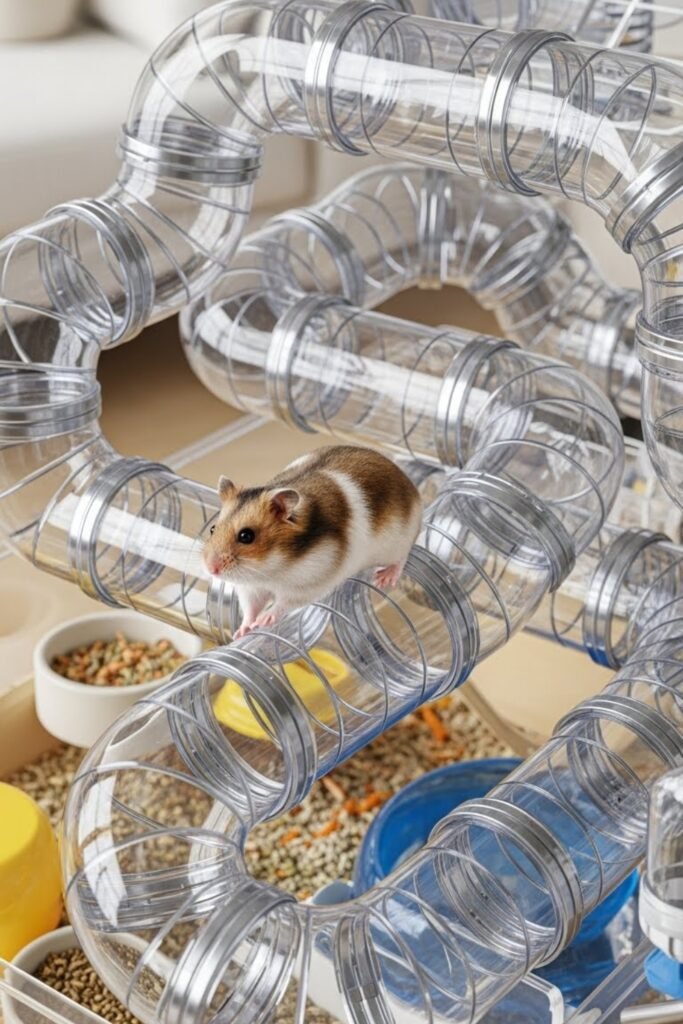
Tube Maze
This cage focuses on connected tunnels that run through different sections of the enclosure. It encourages exploration and curiosity while adding visual interest.
Tubes should be wide and well-ventilated to prevent discomfort and allow easy cleaning.
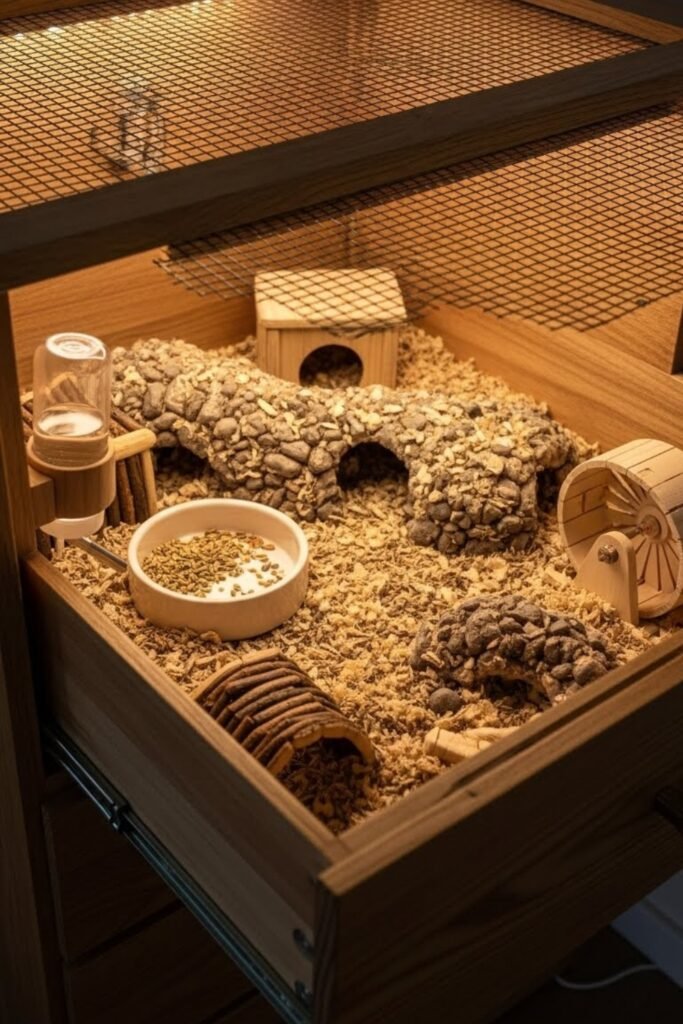
Drawer Cage
A drawer cage repurposes a deep dresser drawer into a wide, low enclosure. The solid base supports deep bedding, while a mesh top provides airflow.
This idea is great for DIY lovers who want a hidden yet functional setup that blends into furniture.
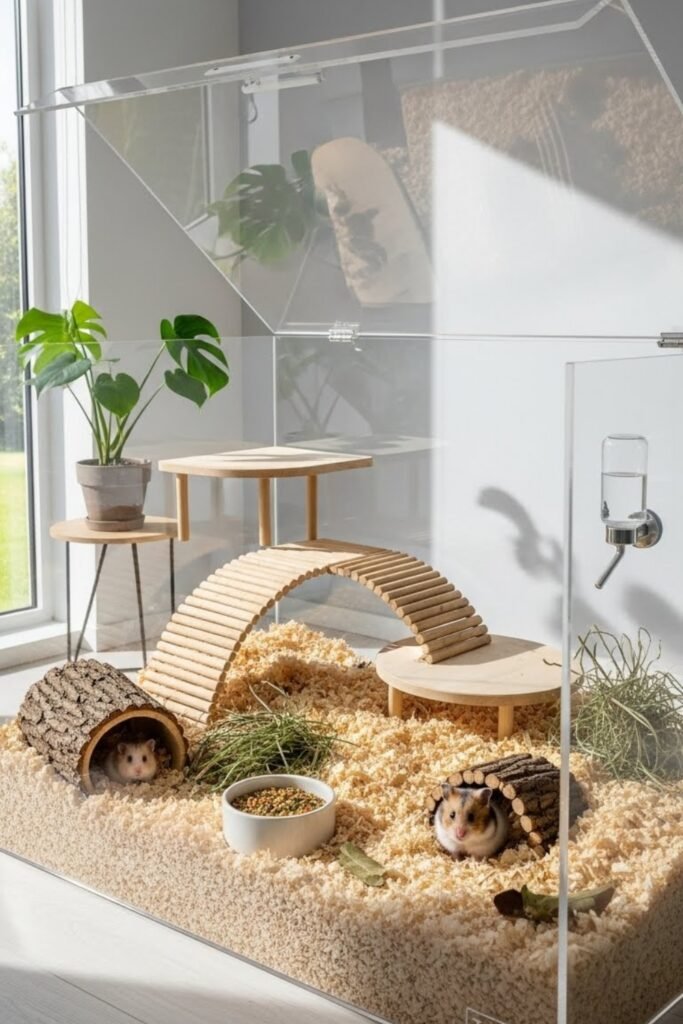
Open Enclosure
An open-top enclosure removes bars completely and uses tall walls to prevent escape. It offers easy access for cleaning and decorating.
This setup works best for calm hamsters and requires careful placement away from pets or drafts.
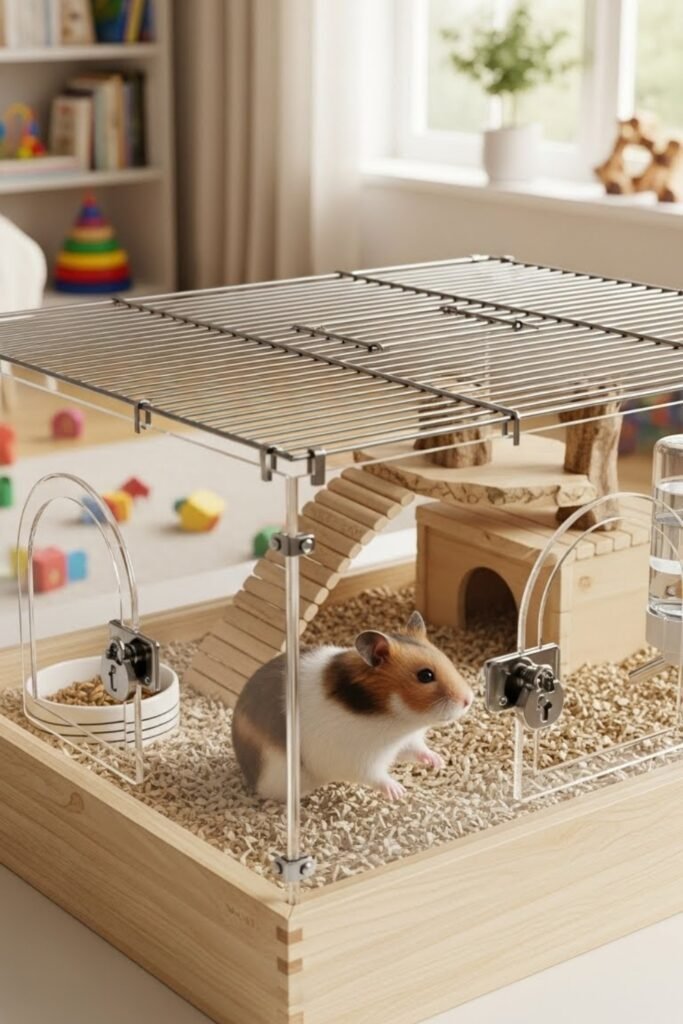
Kids Safe
A kids-safe cage focuses on durability and security with sturdy materials and locked access points.
It prevents tipping and accidental openings while still allowing children to observe safely. This idea balances interaction with responsible hamster care.
Budget Cage
A budget cage uses affordable materials like storage bins or repurposed containers to create a spacious habitat.
It focuses on function over looks while still meeting space needs. This setup is ideal for beginners who want proper care without high cost.

Hi, my name is Ali Mehmood! I’m a passionate writer and DIY enthusiast who loves turning creative ideas into practical, hands-on projects.
I created this website to share inspiring, budget-friendly ideas that you can do yourself – whether it’s organizing your home, crafting something unique, or creating fun projects for kids and pets.
I believe DIY isn’t just a hobby – it’s a smart way to save money, reduce waste, and enjoy the satisfaction of making things with your own hands.
I’m excited to have you as part of this growing community, and I’ll continue bringing you helpful, realistic, and fun DIY ideas you can actually use.