This post may contain affiliate links: read full affiliate disclosure.
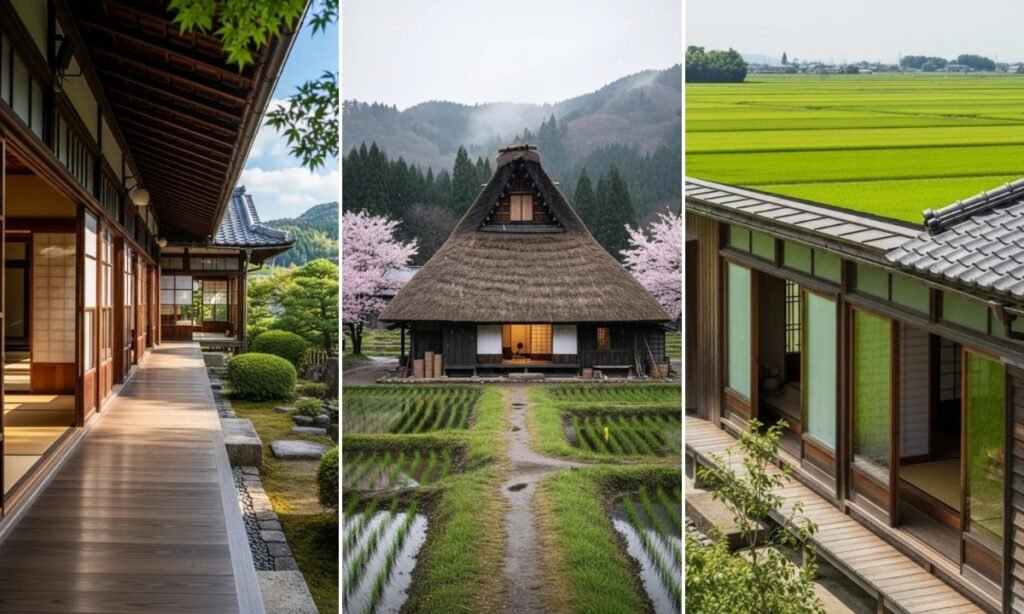
Japanese countryside houses are all about quiet living, strong connections to nature, and thoughtful design.
These homes don’t try to impress with size or excess. Instead, they focus on balance, simplicity, and daily comfort shaped by the land around them.
In this article, I’m sharing 24 unique Japanese countryside house ideas that show how rural design can feel calm, practical, and deeply timeless.
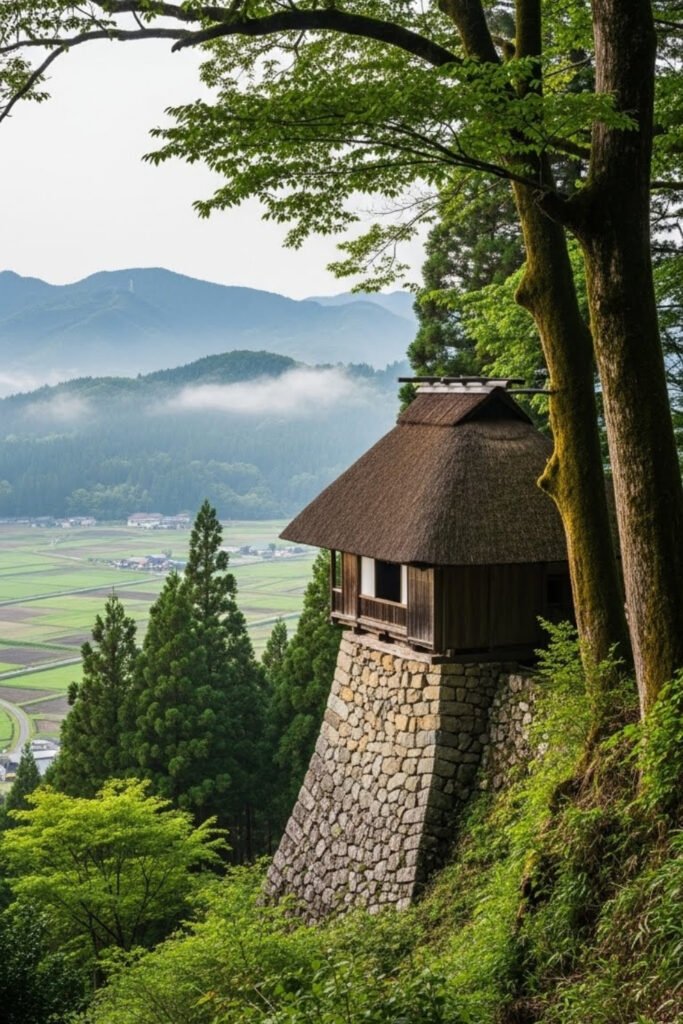
Mountain Edge
This Japanese countryside house sits where farmland meets wooded hills. Natural wood siding, stone bases, and deep roof overhangs protect the home from mountain weather.
Large openings frame forest views while keeping interiors calm and grounded. The design feels quiet, stable, and closely tied to the surrounding landscape.
Rice View
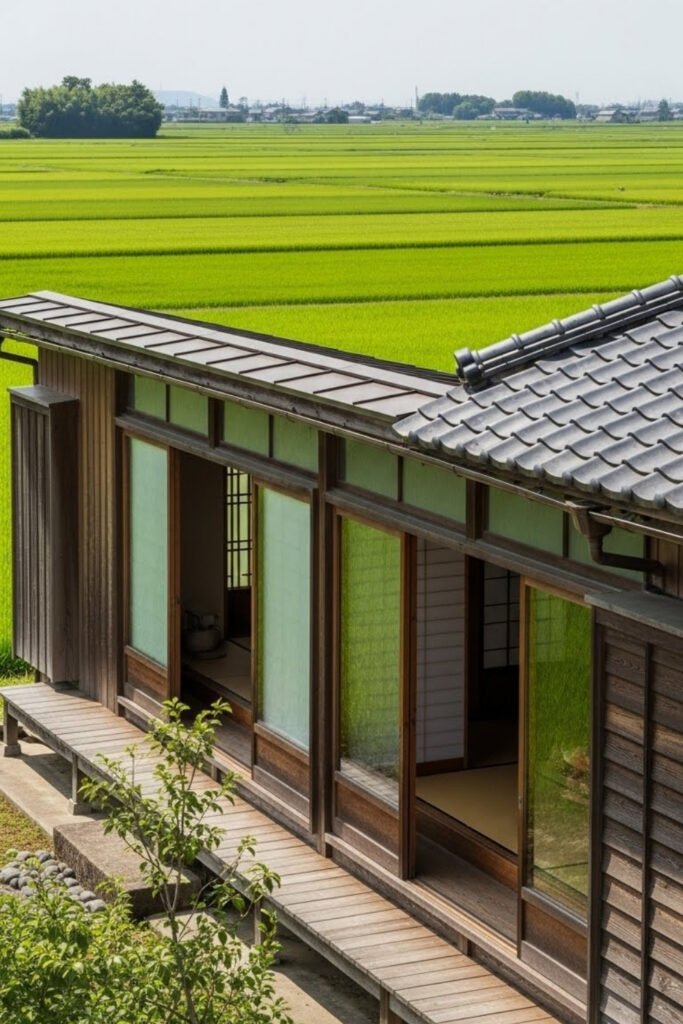
Placed beside open rice paddies, this countryside house stretches horizontally to match the flat land.
Wide verandas and sliding doors face the fields, bringing seasonal changes into everyday life. The layout focuses on long sightlines, soft daylight, and an open connection to rural scenery.
Engawa Wrap
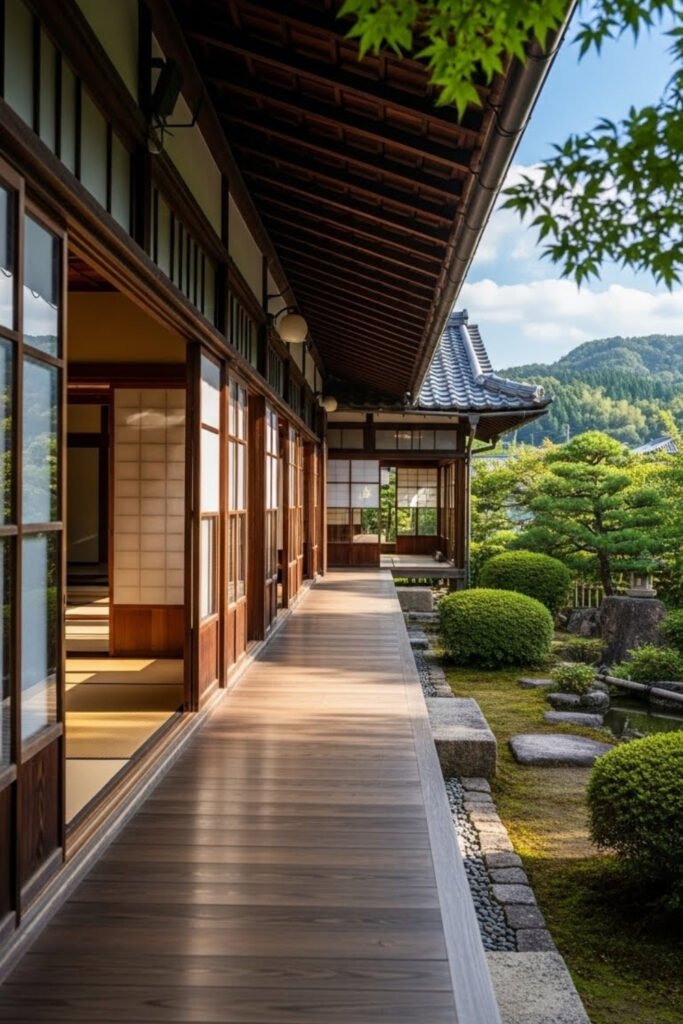
This house is planned around a continuous engawa that wraps the structure. The walkway creates a gentle transition between indoor rooms and the countryside outside.
It improves airflow, light, and daily movement while preserving the slow, traditional rhythm of rural Japanese living
Thatched Revival
A modern countryside house inspired by traditional thatched roofs, redesigned with updated structure and insulation.
The thick roof provides natural temperature control throughout the year. Paired with simple interiors and natural materials, it preserves rural character while supporting comfortable modern life.
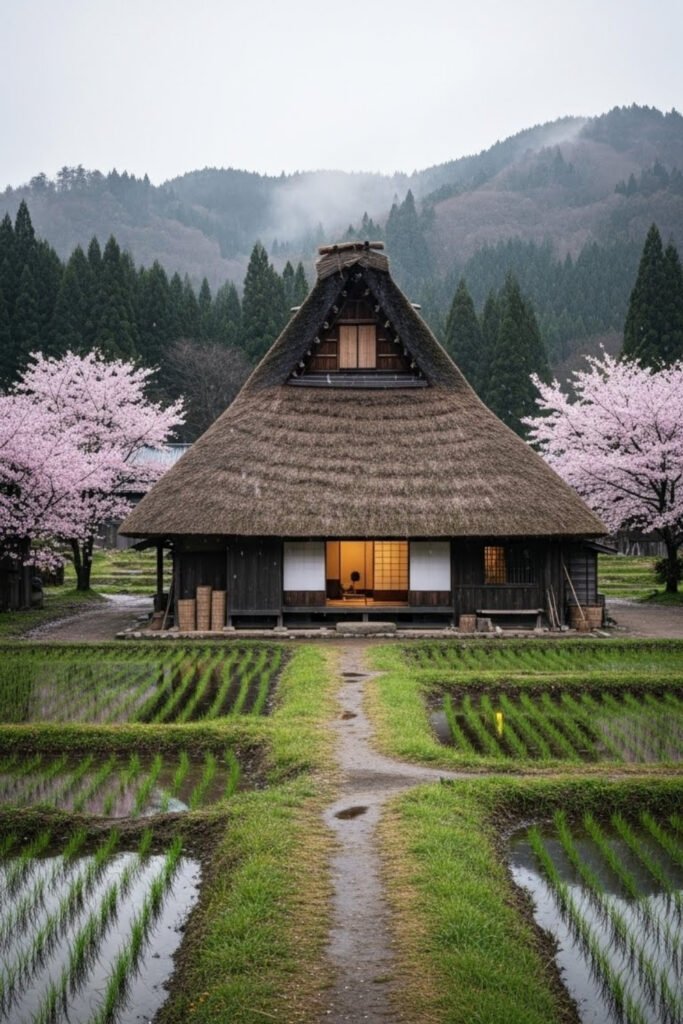
Forest Clearing
This Japanese countryside house sits in a natural opening surrounded by trees. The layout keeps the structure low and quiet, allowing the forest to feel close without overwhelming the space.
Large windows face outward while solid walls protect privacy. It’s ideal for rural living that feels secluded but not isolated.
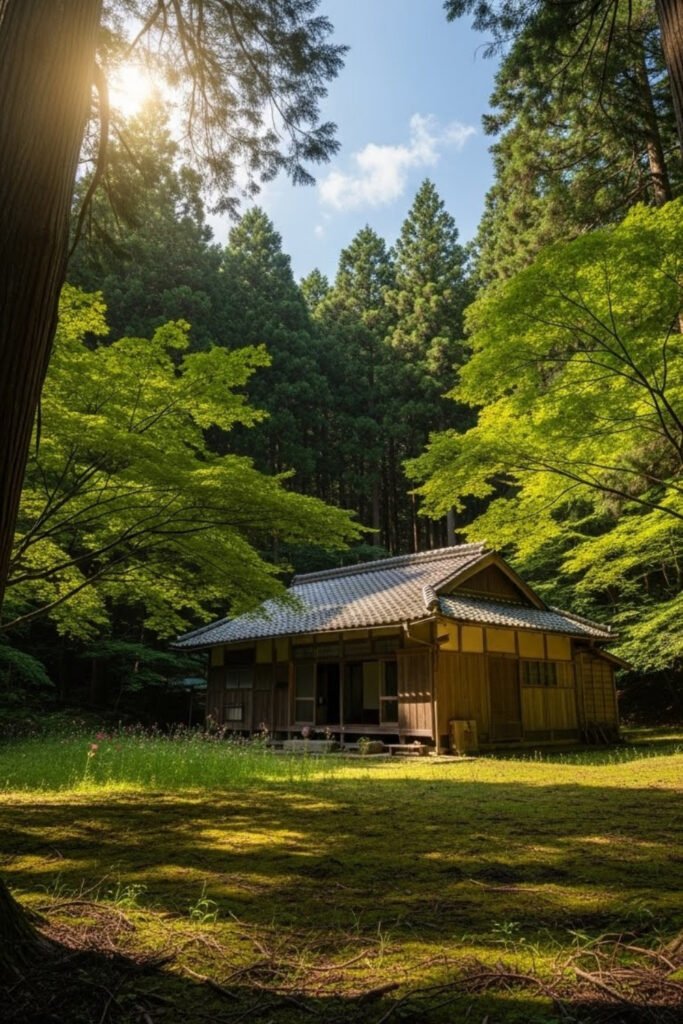
Open Hearth
This countryside house is organized around a central open hearth inspired by the traditional irori.
The fire becomes the emotional and functional center of the home, used for warmth, cooking, and gathering. Surrounding rooms stay simple so daily life naturally revolves around this shared space.
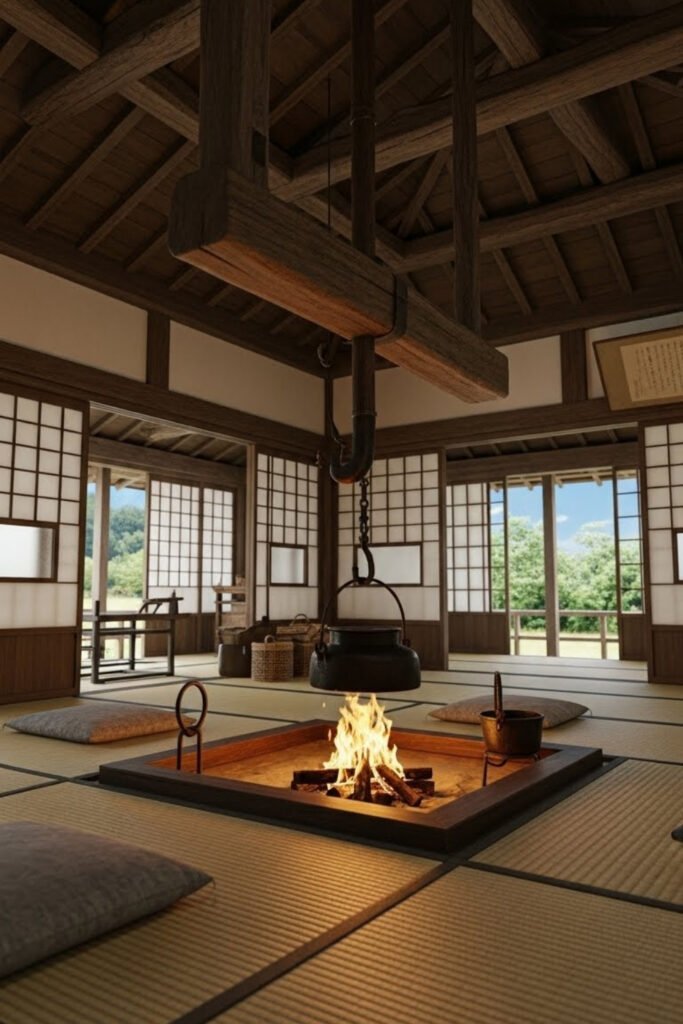
Split Terrain
Designed for uneven countryside land, this house follows the natural slope instead of flattening it. Different floor levels create subtle separations between living, sleeping, and work areas.
The result feels organic and grounded, as if the house grew naturally from the land itself.
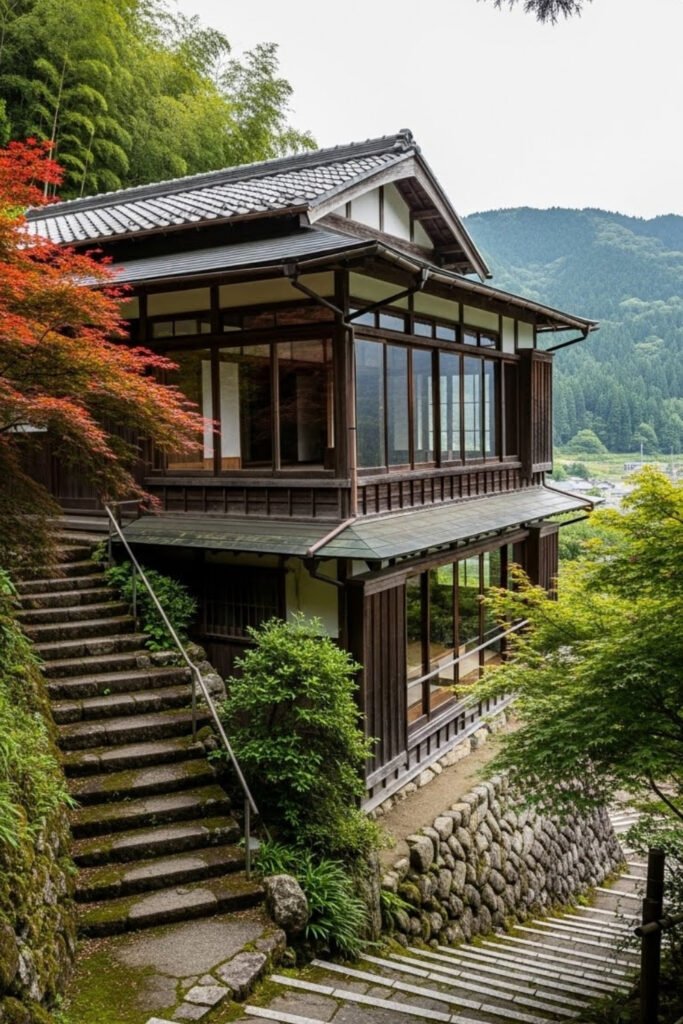
Seasonal Garden
This countryside house is planned around outdoor spaces that change with the seasons.
Gardens are positioned to highlight spring blossoms, summer greenery, autumn colors, and winter stillness. Interior rooms stay visually connected to these views, making nature an active part of everyday living.
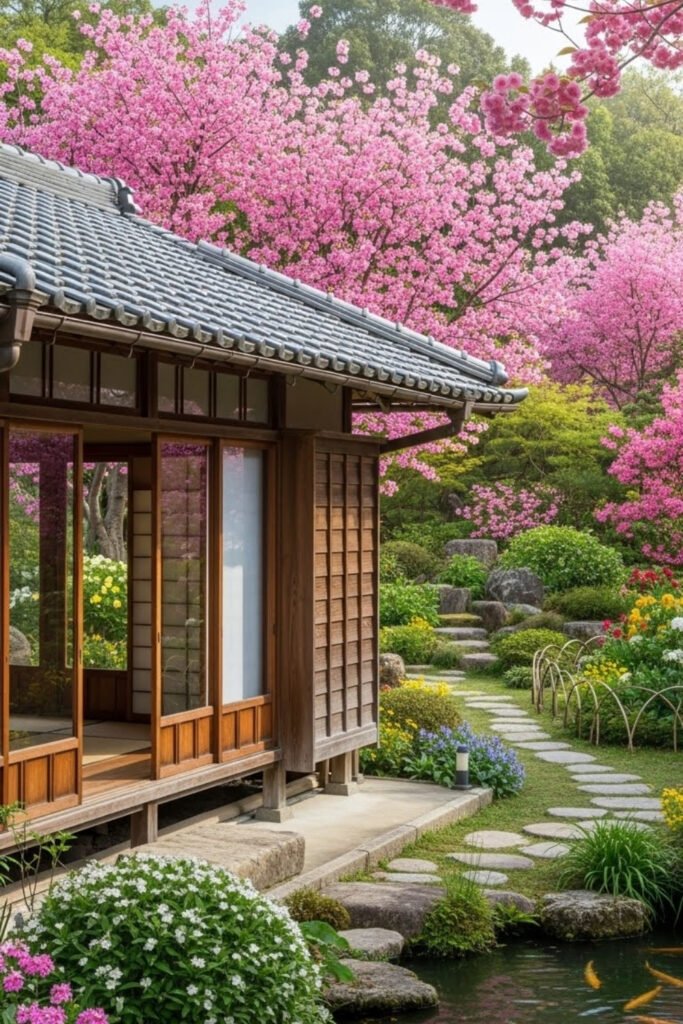
Timber Retreat
This Japanese countryside house focuses on exposed timber construction and minimal finishes. Natural wood walls, beams, and ceilings create warmth without decoration.
The layout stays simple and quiet, allowing materials to stand out. It’s ideal for rural living that values calm, craftsmanship, and a strong connection to nature.
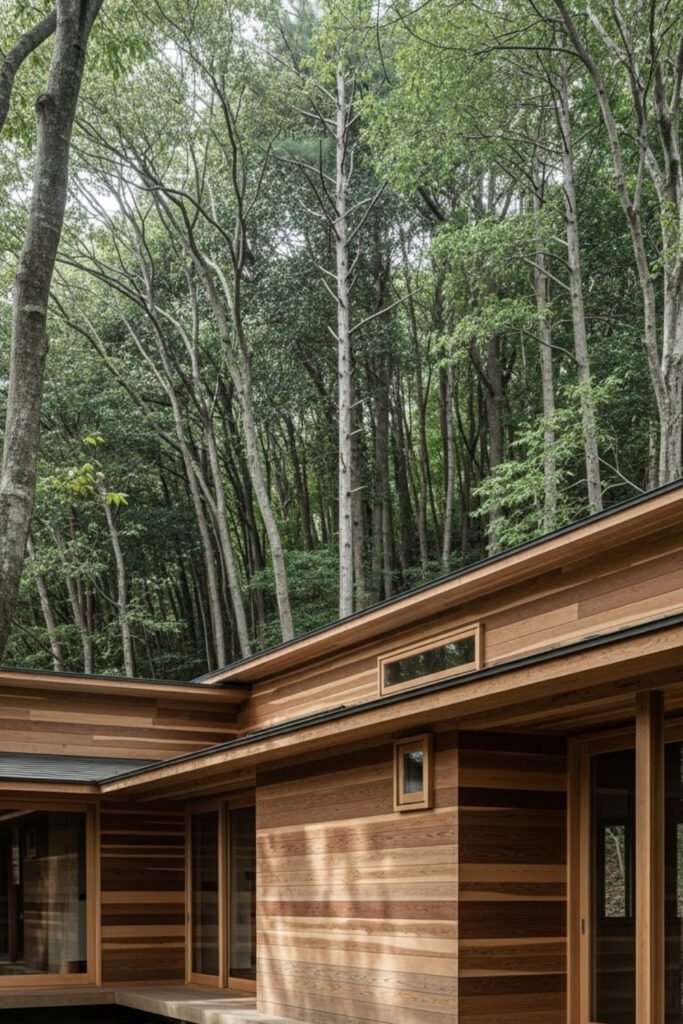
Riverbank Home
Placed near a slow-moving river, this countryside house is designed to reflect light, water, and sky. Large openings face the river while raised flooring protects against moisture.
The sound and movement of water become part of daily life, creating a peaceful and meditative rural atmosphere.
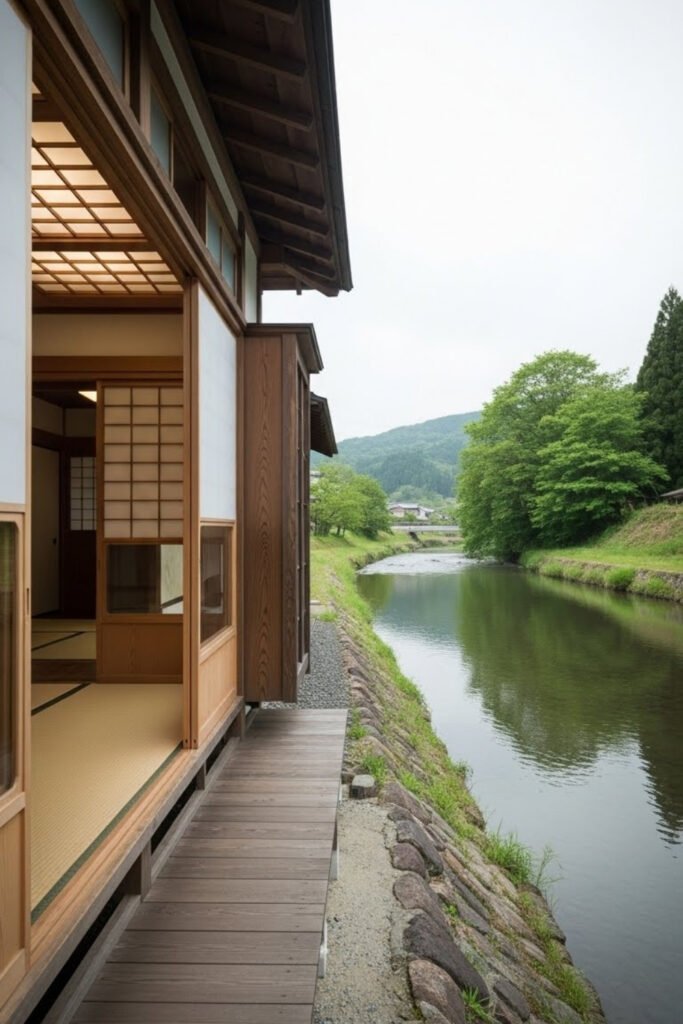
Courtyard Farm
This countryside house is organized around a protected inner courtyard. The courtyard brings light and air into every room while shielding the home from strong winds and open farmland.
It creates a private outdoor space that feels calm, functional, and deeply rooted in traditional rural design.
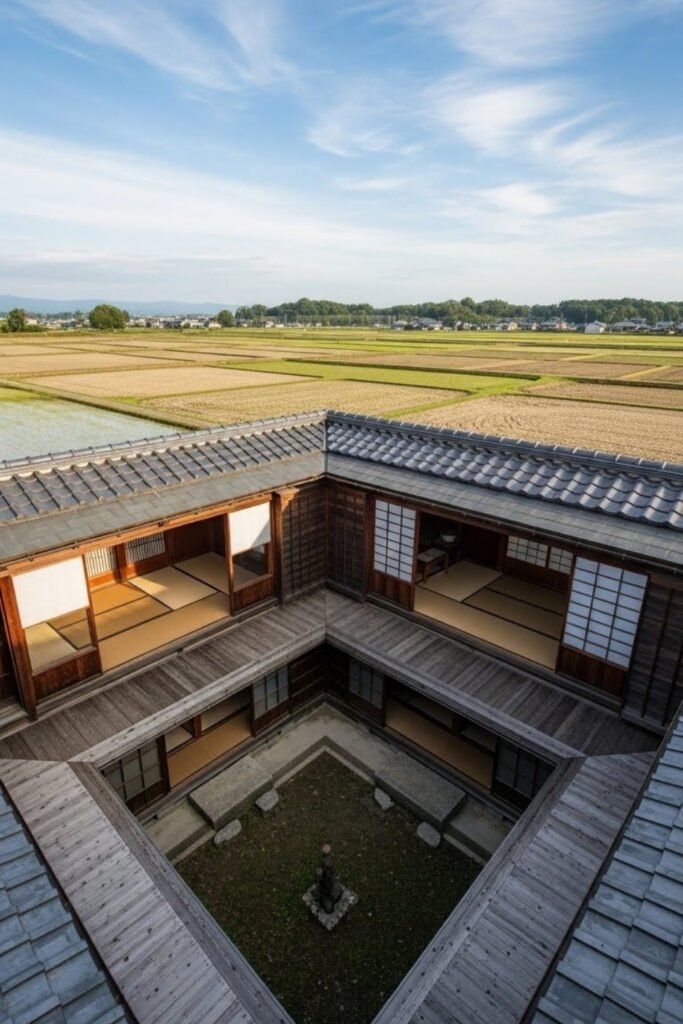
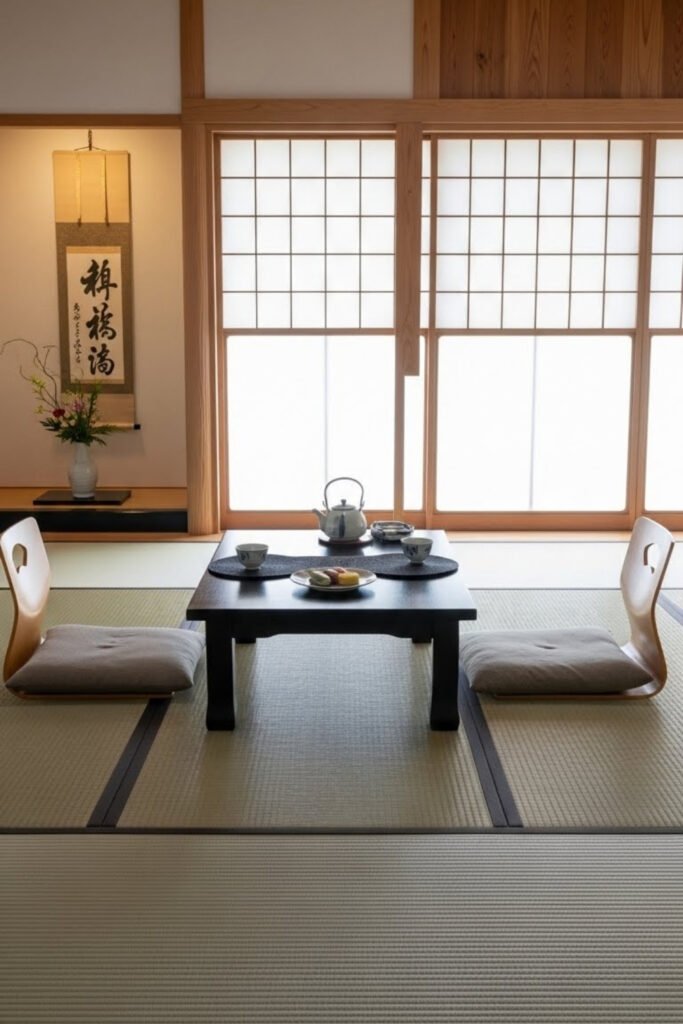
Tatami Living
This house centers daily life around tatami rooms instead of furniture-heavy spaces. Floor seating, low tables, and flexible room use define the layout.
The design encourages simplicity, mindfulness, and a slower pace that fits naturally with countryside living.
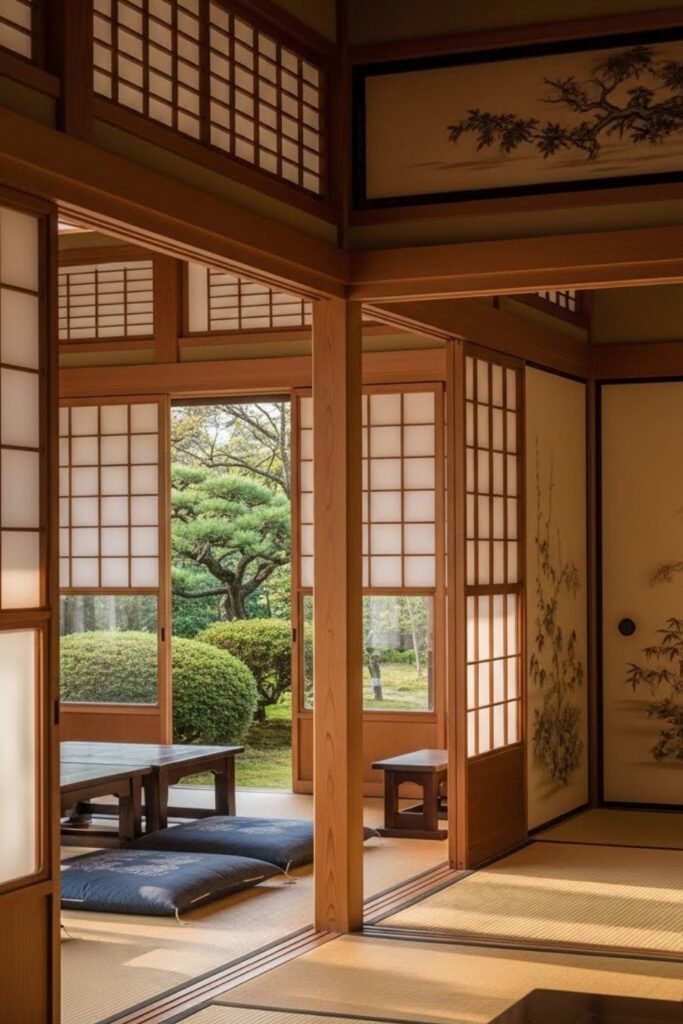
Sliding Walls
This countryside house uses shoji and fusuma to change room sizes throughout the day. Spaces open for gatherings and close for privacy as needed.
The flexible layout supports seasonal living and family routines while keeping the home light, airy, and connected to the outdoors.
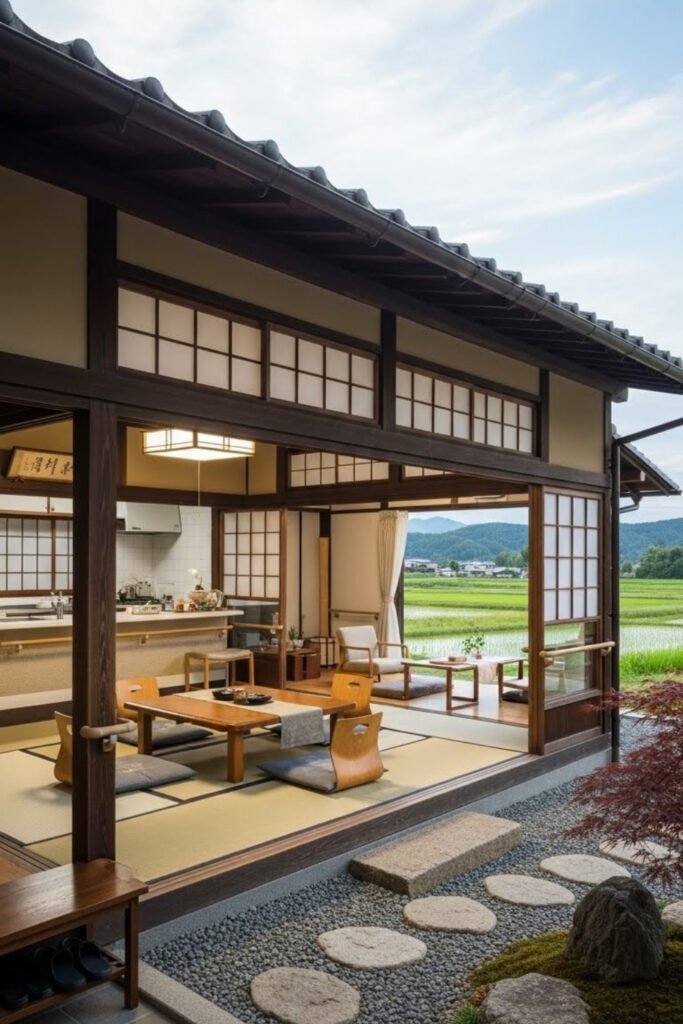
Aging Friendly
Designed for long-term rural living, this house focuses on accessibility without losing traditional style.
Single-level layouts, wide passages, and soft transitions between rooms make daily movement easier. Natural light and simple materials keep the home comfortable, calm, and practical for all ages.
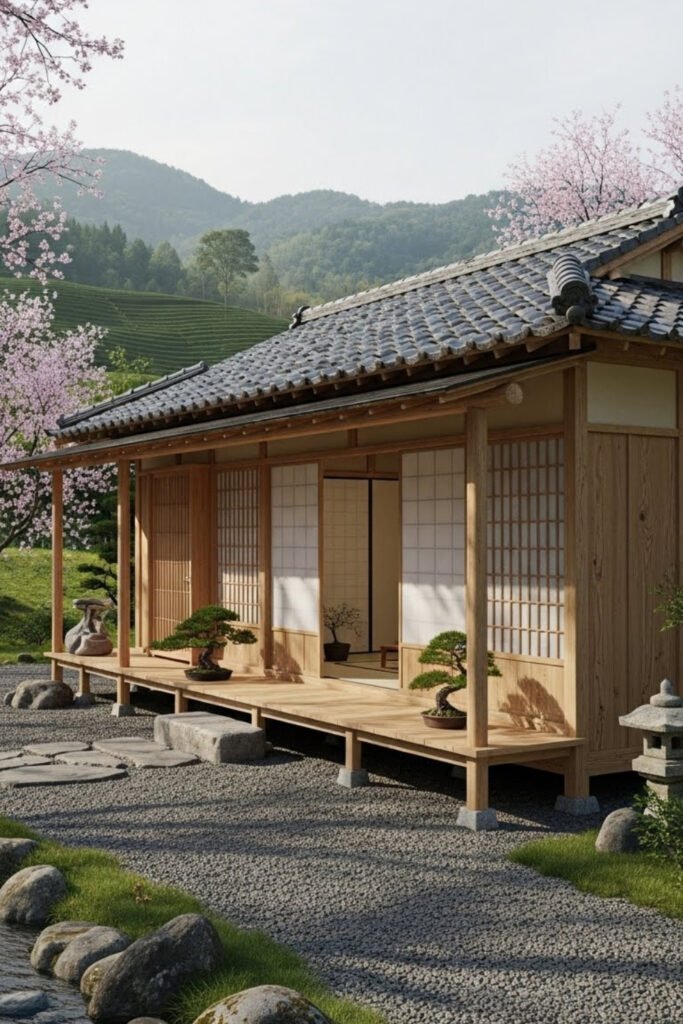
Tea Inspired
This countryside house draws proportions and calm details from traditional tea spaces. Rooms stay modest in size, materials remain natural, and decoration stays minimal.
The design encourages slow living, intentional movement, and quiet moments within a rural setting.
Earth Tones
This house blends into its countryside setting through muted exterior colors like clay, wood, and stone.
The palette keeps the structure visually grounded while interiors feel warm and balanced. It’s ideal for rural landscapes where the home should support, not dominate, its surroundings.
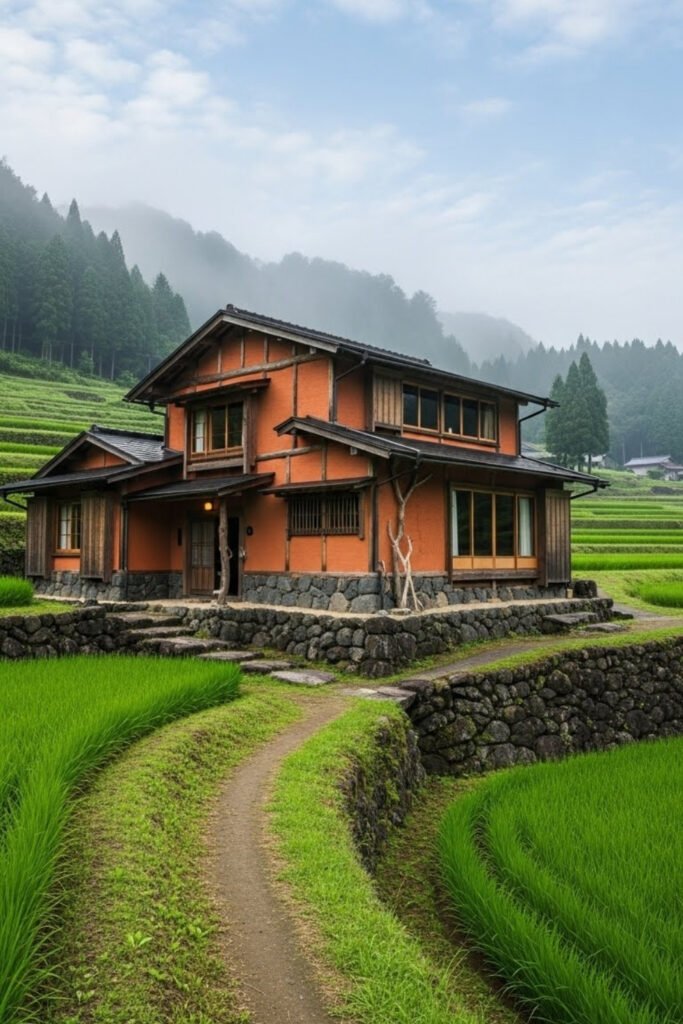
Longhouse
This Japanese countryside house uses an elongated form inspired by historic rural homes. Rooms are arranged in a linear sequence, creating clear separation between public and private areas.
The long structure fits naturally into open farmland and allows light and airflow to move easily through the house.
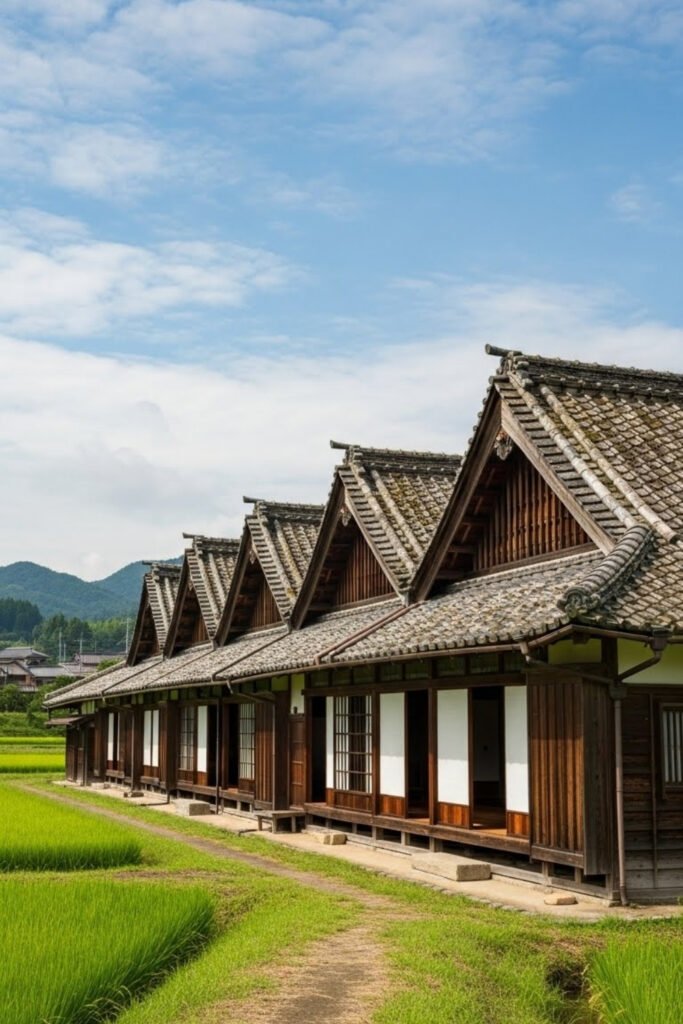
Outdoor Bath
This countryside house is designed around a private outdoor bath facing nature. The bathing area opens toward fields, trees, or hills while remaining screened for privacy.
It turns bathing into a daily ritual that connects the body directly with the rural environment.
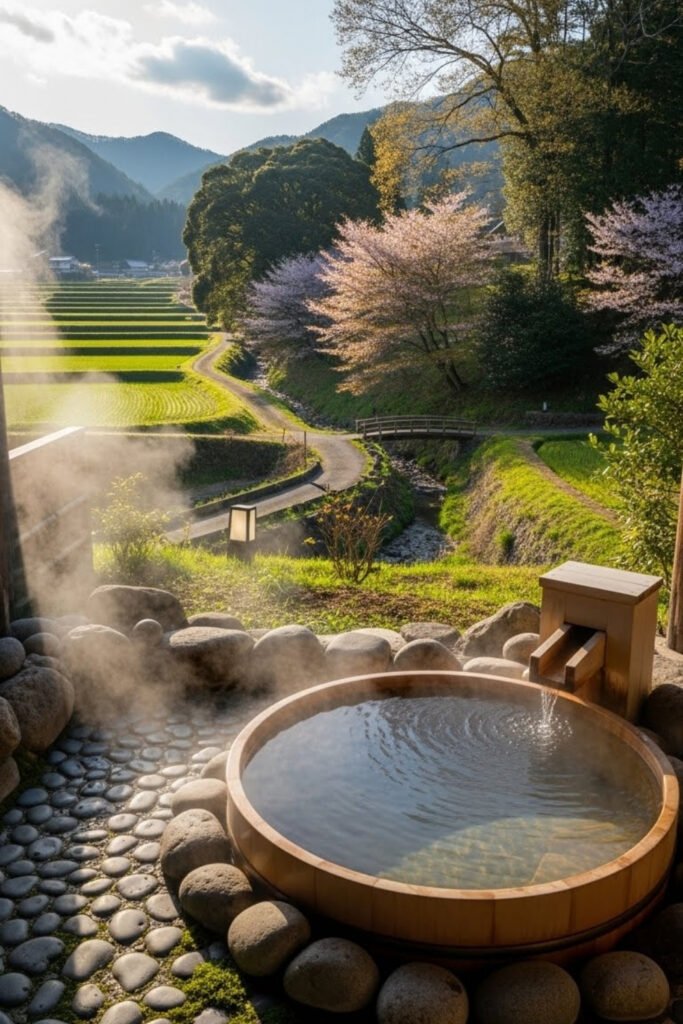
Family Living
This rural house supports multi-generation living under one roof. Separate sleeping zones provide privacy, while shared spaces encourage daily interaction.
The layout balances tradition and comfort, making it ideal for countryside families who value togetherness without crowding.
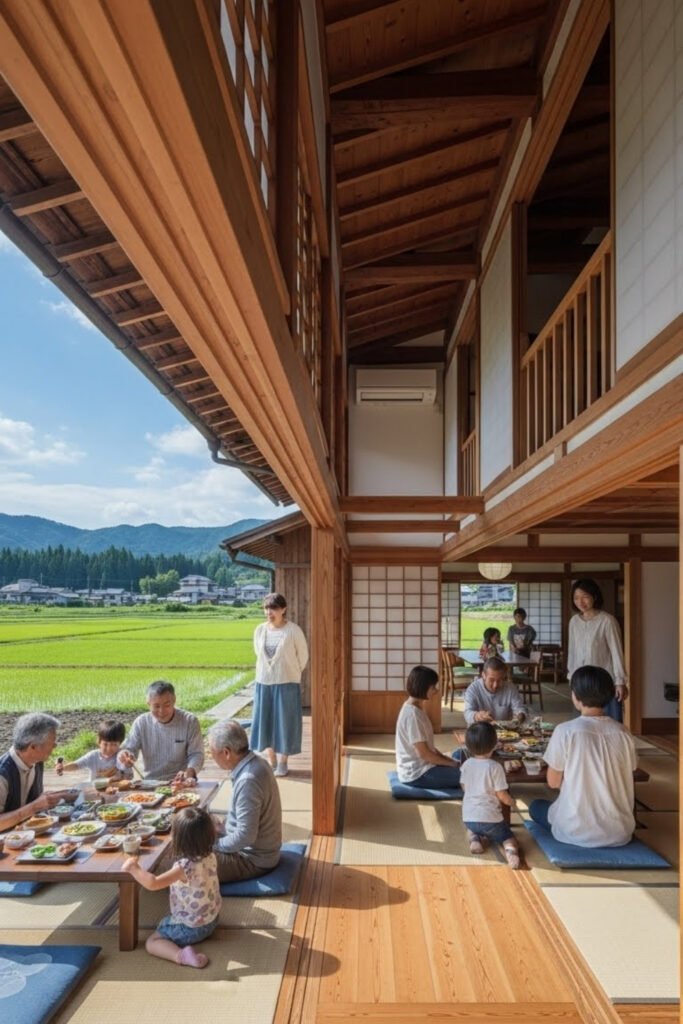
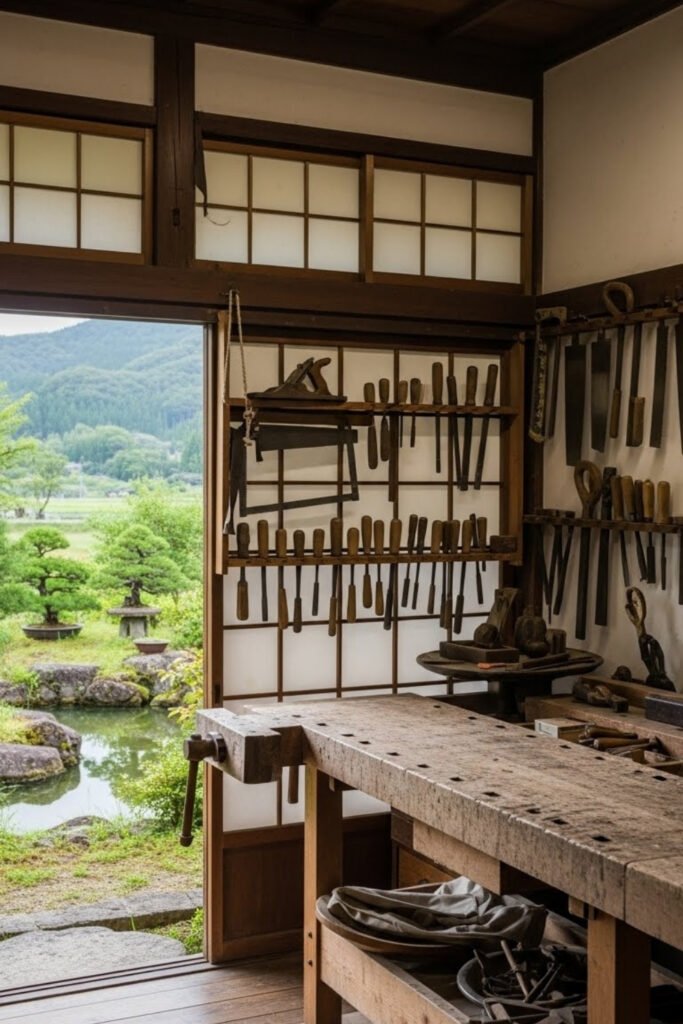
Work Space
This countryside house includes a dedicated area for crafts, tools, or rural work. The workspace stays connected to the main home but remains functional and easy to access.
It supports traditional skills, hobbies, or farming life without disrupting daily living spaces.
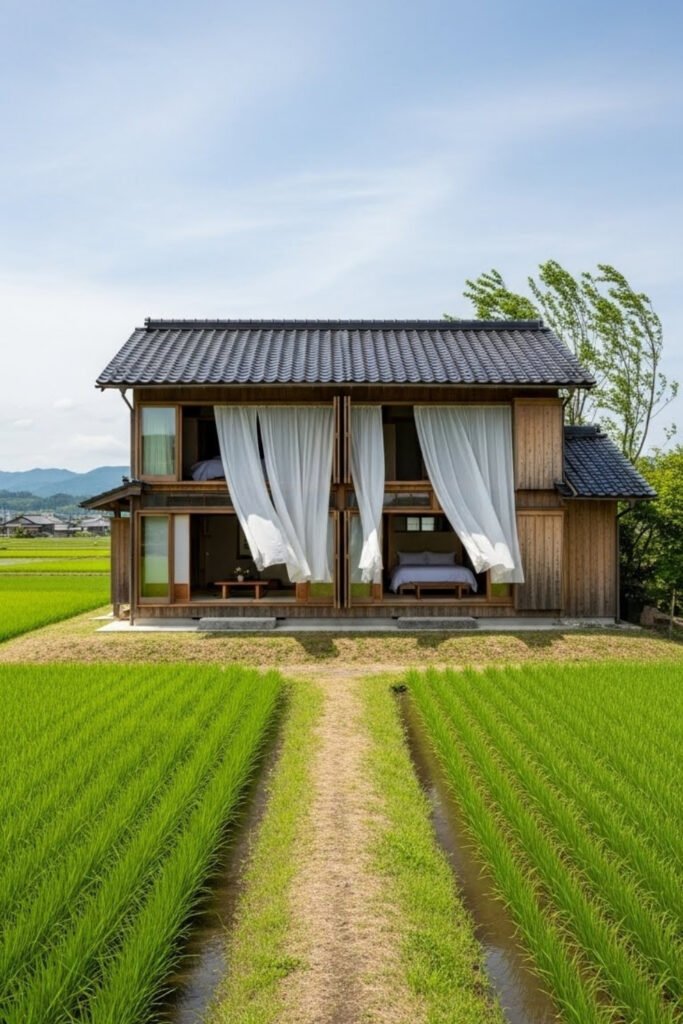
Wind Oriented
This countryside house is positioned to capture natural breezes across open land. Window placement and room alignment allow air to move freely through the home.
The design reduces reliance on mechanical cooling while keeping interiors comfortable during warmer rural seasons.
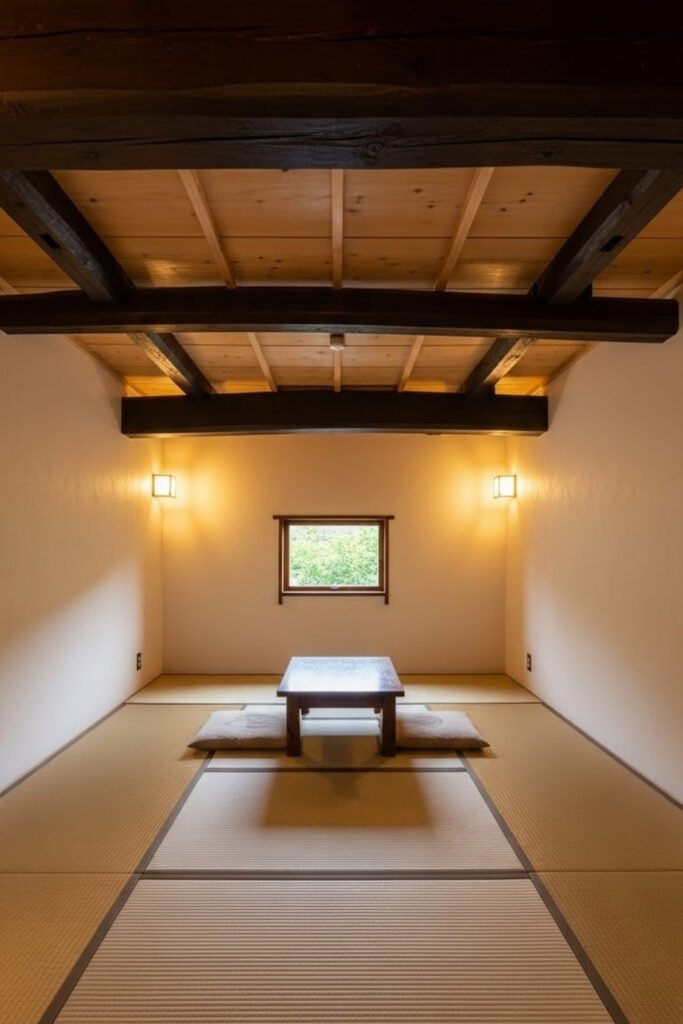
Low Ceilings
This rural Japanese house uses intentionally low ceilings to create warmth and intimacy. The proportions make rooms feel protected and calm, especially during colder months.
Combined with natural materials, the space feels grounded and well-suited to quiet countryside living.
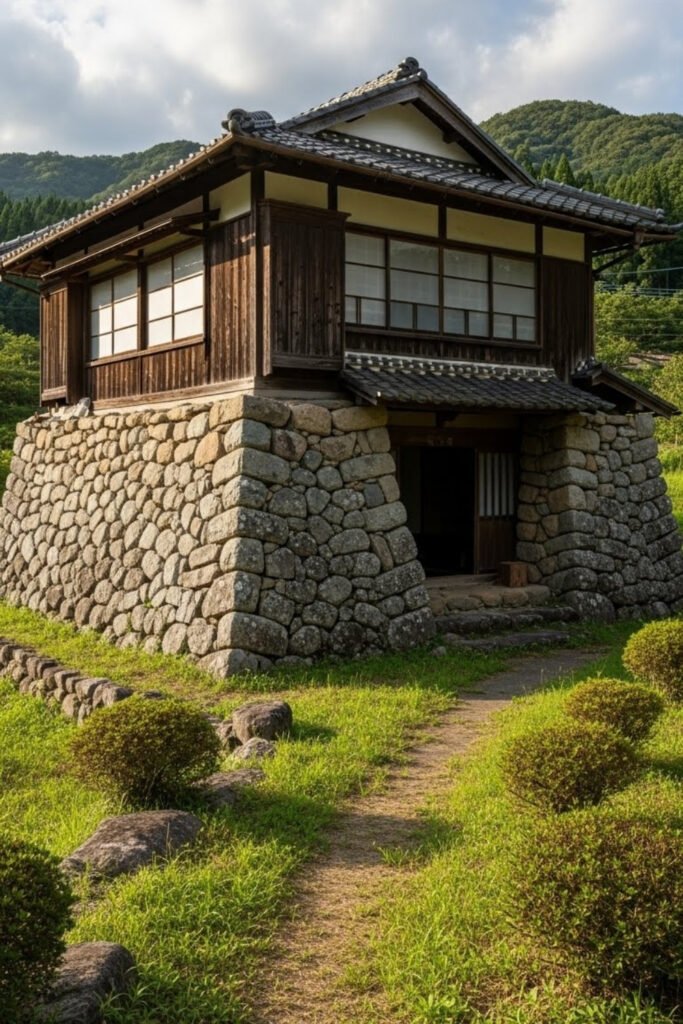
Stone Base
Built on a raised stone foundation, this countryside house handles moisture, rain, and uneven ground.
The stone base adds durability while visually anchoring the structure to the land. Above it, wood construction keeps the home light and balanced.
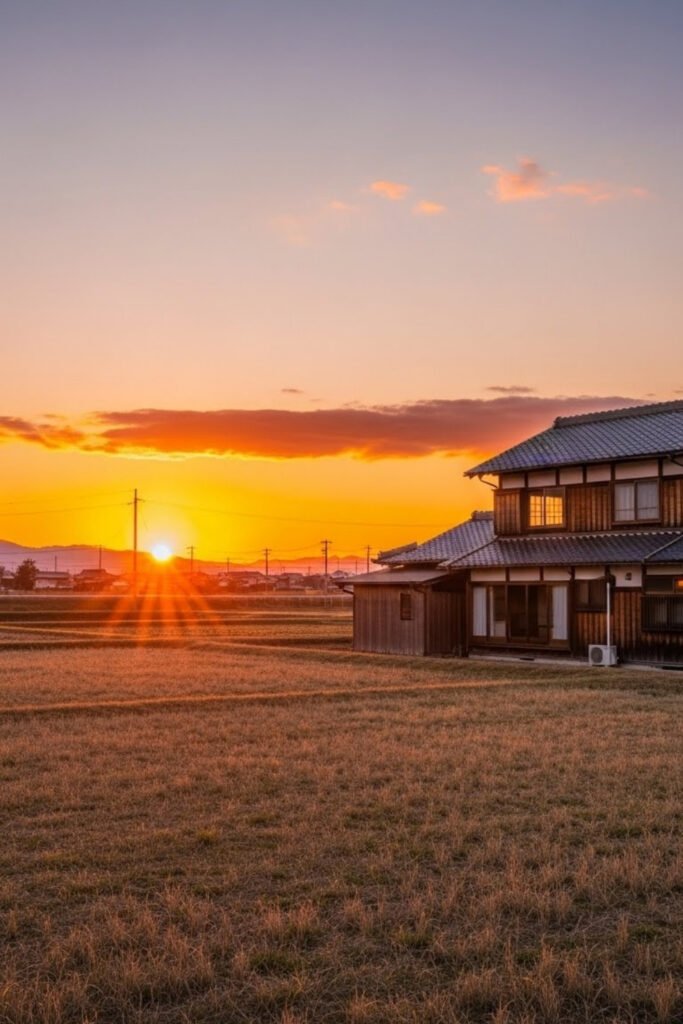
Sunset View
This countryside house is planned around west-facing views of open land and evening skies.
Main living spaces orient toward the sunset, turning daily routines into visual moments. The design celebrates light, time, and the slow rhythm of rural life.

Hi, my name is Ali Mehmood! I’m a passionate writer and DIY enthusiast who loves turning creative ideas into practical, hands-on projects.
I created this website to share inspiring, budget-friendly ideas that you can do yourself – whether it’s organizing your home, crafting something unique, or creating fun projects for kids and pets.
I believe DIY isn’t just a hobby – it’s a smart way to save money, reduce waste, and enjoy the satisfaction of making things with your own hands.
I’m excited to have you as part of this growing community, and I’ll continue bringing you helpful, realistic, and fun DIY ideas you can actually use.