
This post may contain affiliate links: read full affiliate disclosure.
If you have to move heaps of fabric, look for no tools, and fight for space at a small table every time you sew, the issue isn’t your skills; it’s your setup.
A lot of people who sew feel trapped because their sewing space never seems right. The light isn’t right. The table hurts your back.
Overflows in storage. And instead of feeling inspired, stitching starts to feel like a chore before the machine even kicks on.
This is where most people become mad and stop trying to make their area better. a shared corner or a tiny setup that you put away every night.
In this article, I will show you how to build sewing room with 24 different unique ideas you can consider in 2026.
Let’s jump in!
Essentials for Sewing Room You Can Consider
When you start with right essentials you will see setting up your sewing room will become much easier than you think.
These core items will help you keep space organized, comfotable, and effient for daily sewing projects. Wheter you sew occasionally or often, these basics will make a noticable difference.
Here’s the list of the most essential items you should conisder for sewing room:
- Sewing Machine
- Sewing Table
- Ergonomic Sewing Chair
- Fabric Scissors
- Self-Healing Cutting Mat
- Thread Storage Organizer
Save this article for later!
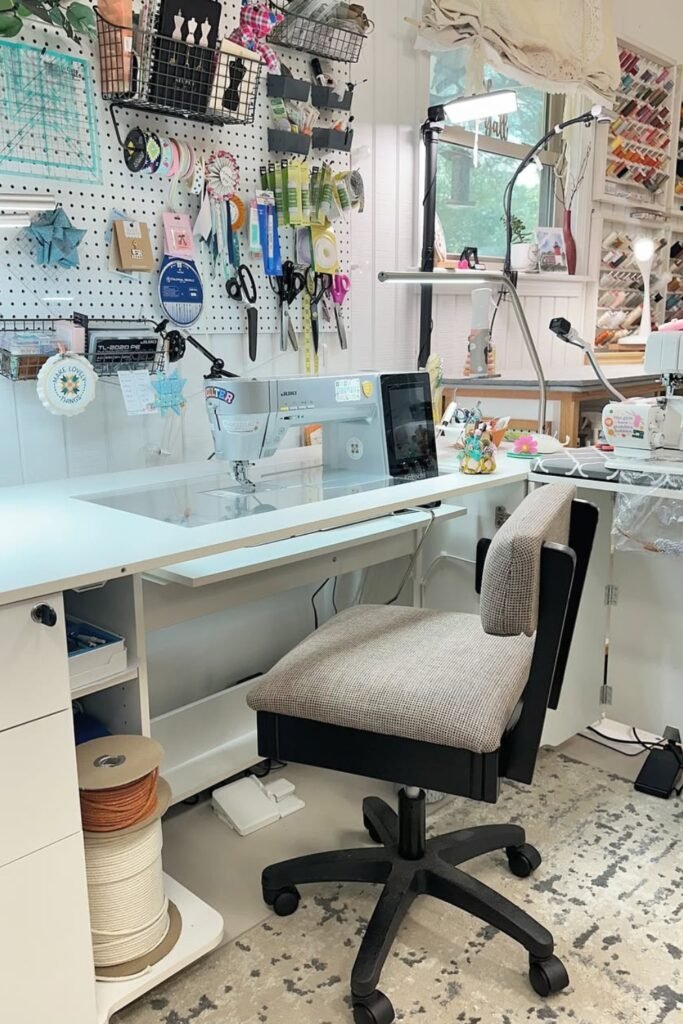
Pegboard Power Setup
A wall-mounted pegboard [Check on Amazon] keeps scissors, rulers, and cutting tools in sight, which cuts down on the mess on your table and speeds up your stitching.
Best for sewing rooms that are only for sewing or shared sections where vertical storage saves space without making it harder to get to tools every day.
Make your own with metal hooks and slim wire holders, and only keep tools you use frequently at distance from you.
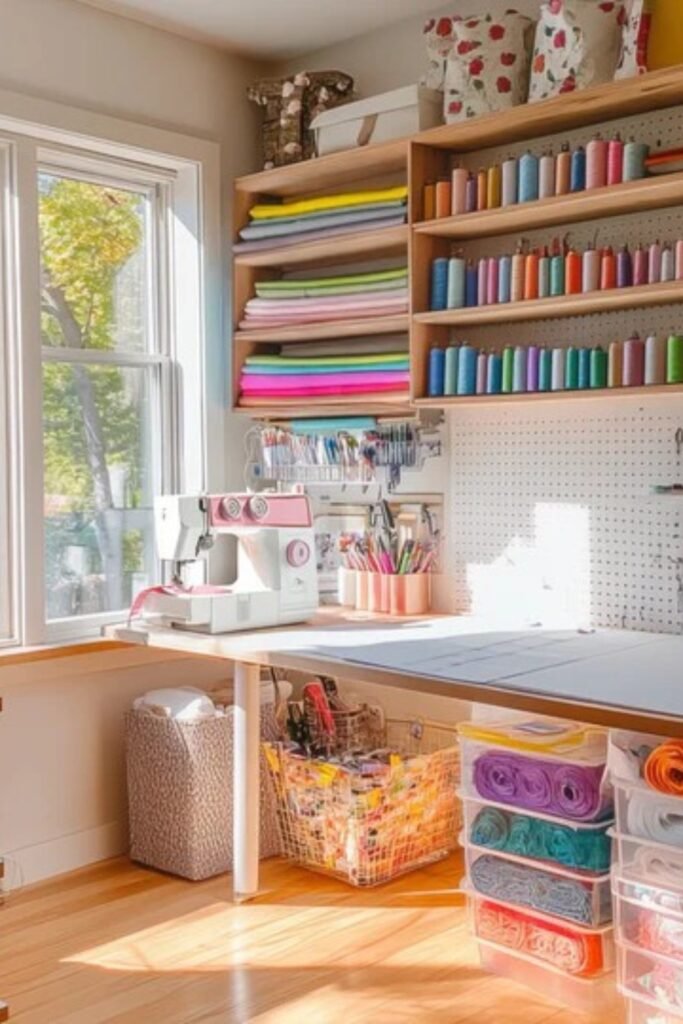
Sunlit Cutting Zone
This cutting corner gets a lot of morning light, which makes the colors of the cloth look right and makes it easier on the eyes when cutting for a long time.
Built-in wall shelves [Check on Amazon] keep fabric and thread organized by color, which is great for people who plan projects visually every day.
Put a cutting table next to a window, open shelves above it, and clear bins listed below it with labels on them to make it again.
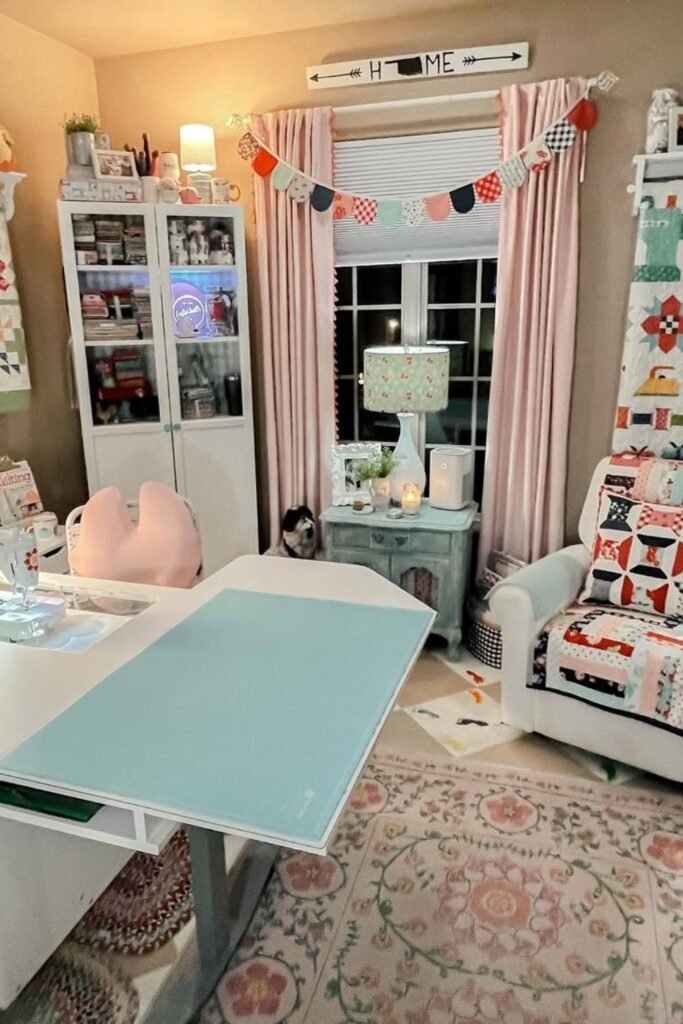
Comfort-Led Sewing Lounge
Soft sitting next to the cutting table [Check on Amazon] makes long quilting sessions easier, which is great for craft rooms that are used for long periods of time.
Set up an armchair near a window so you can take pauses, hand-stitch, or look over designs without leaving the sewing area.
Put a small table for tools next to the work area and make sure the floor is clear so that rolling carts and cutting mats can move around easily.
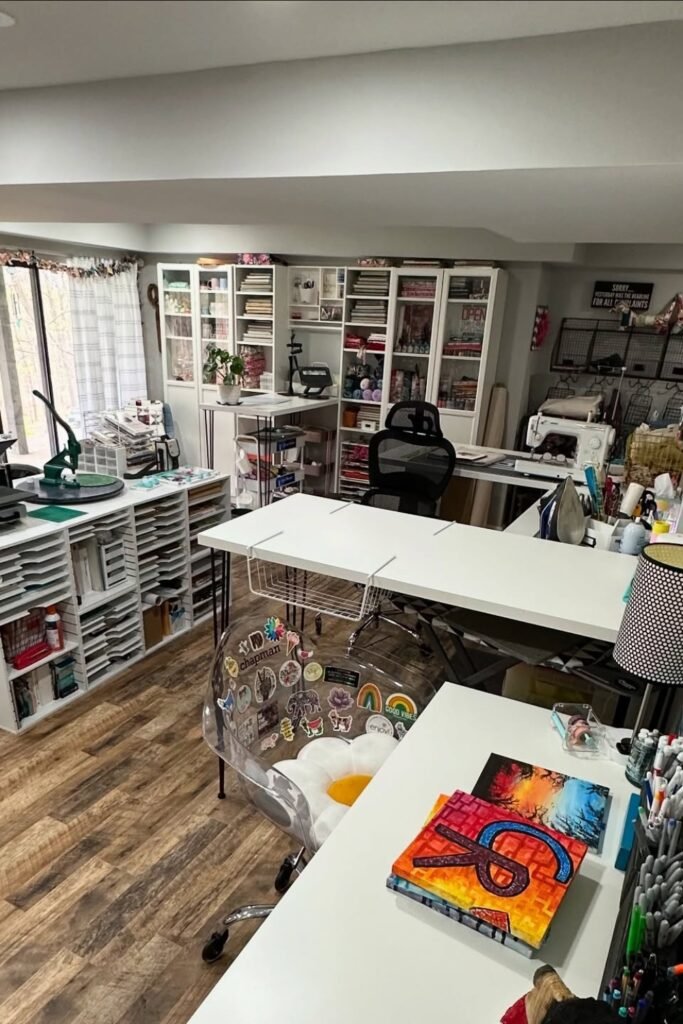
Island Sewing Workflow
With a big island layout like this, sewing becomes a real productivity hub instead of a constrained single-station configuration.
Best for basements or big rooms when you need to press, cut, and sew in different areas without getting in each other’s way.
To recreate, put two long tables back to back, store tools in island cubbies, and keep machines facing each other.
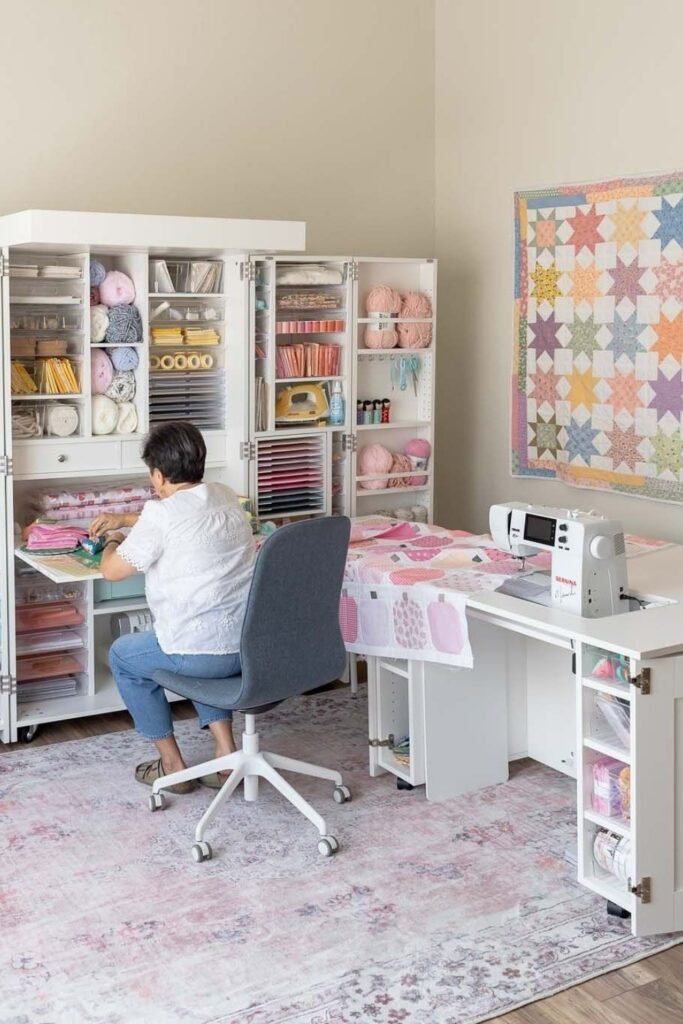
Hidden Cabinet Studio
This fold-out sewing cabinet [Check on Amazon] keeps all of your tools hidden until you need them, which keeps dust and visual clutter off of your fabric.
Great for small, private rooms or shared bedrooms if you need a lot of storage but don’t want to lose floor space permanently.
Made again with a craft armoire that has adjustable shelves, peg panels on the inside, and a pull-out work area in the middle for sewing.
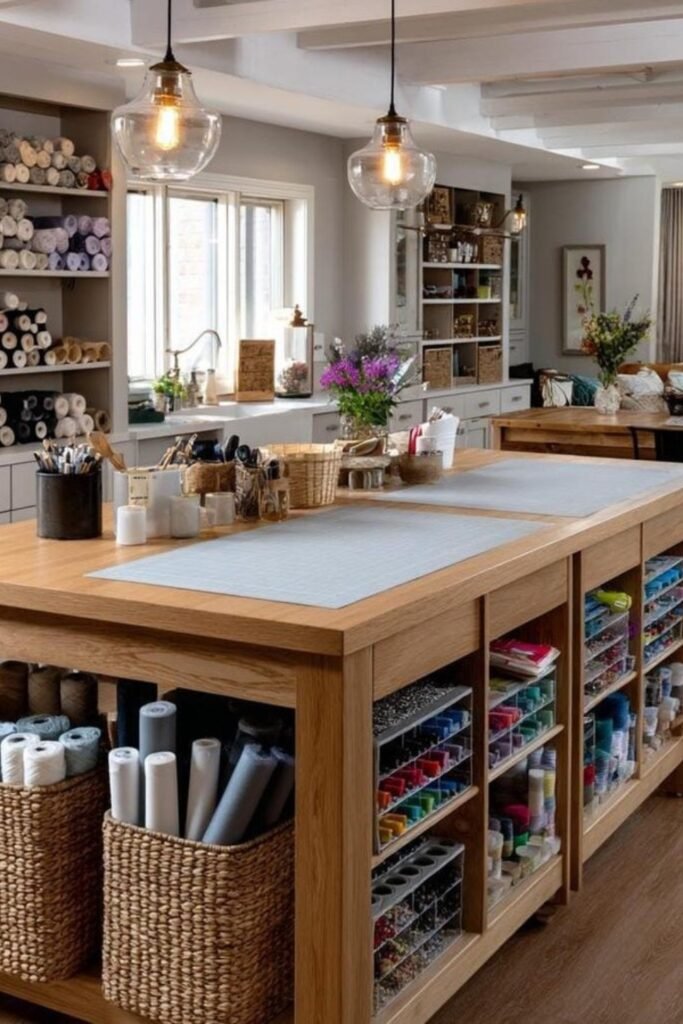
Thread-Ready Island
This center island makes cutting and putting things together a fluid process instead of having to move around between different tables.
Under-shelf thread storage makes it easy to see all the colors, which speeds up color matching when projects change quickly.
It has a deep butcher-block surface, cube shelves underneath, and basket storage for stabilizers and big rolls of fabric.
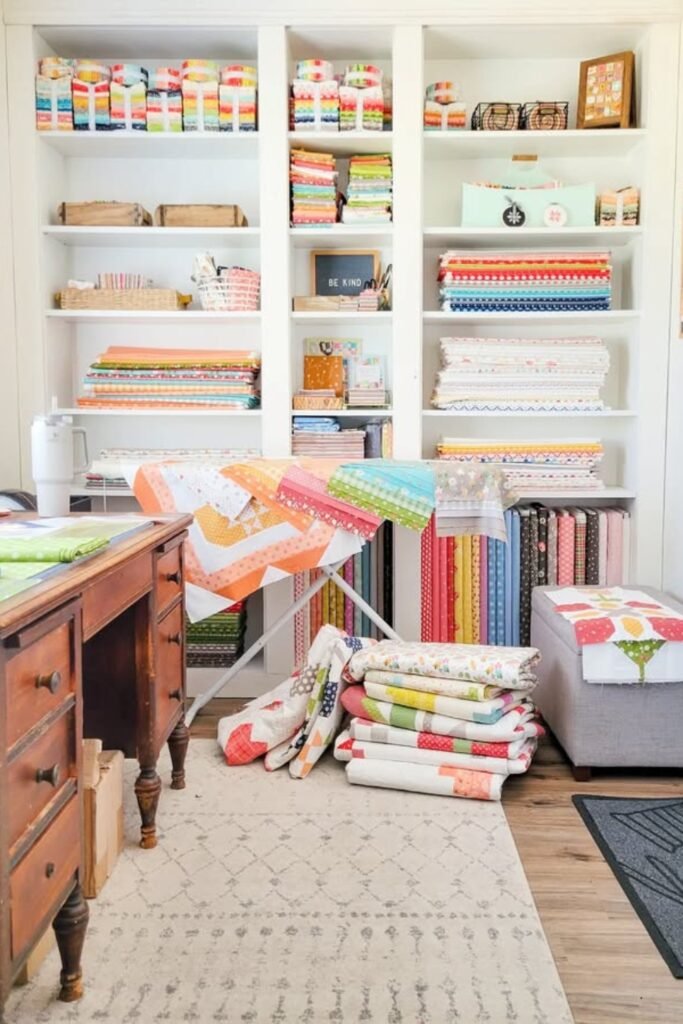
Fabric-First Storage Wall
Color-stacked fabric shelves make it easy to choose what you want without having to hunt through hidden bins at the start of each job.
This arrangement works well in spare sleeping spaces where one wall can hold all of the prospective yardage and quilt collections.
To recreate, put in deep adjustable shelves, fold fabric into even stacks, and keep projects that are still going on the bottom levels.
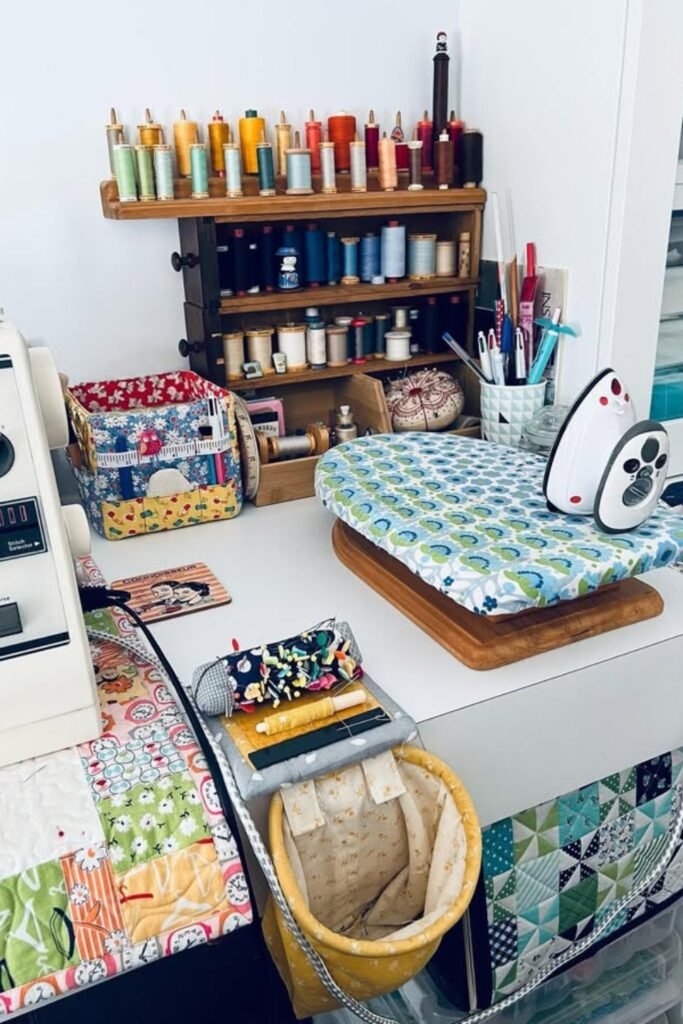
Desk Micro-Station
Small desks [Check on Amazon] look great when all of your sewing tools are easy to reach instead of being hidden away in cluttered cabinets.
This small configuration is great for sewing corners in apartments where room is limited but daily pressing and piercing are still important for workflows.
Put up a thin thread rack, add a padded pressing board, and put pins next to the machine so you can switch them out faster.
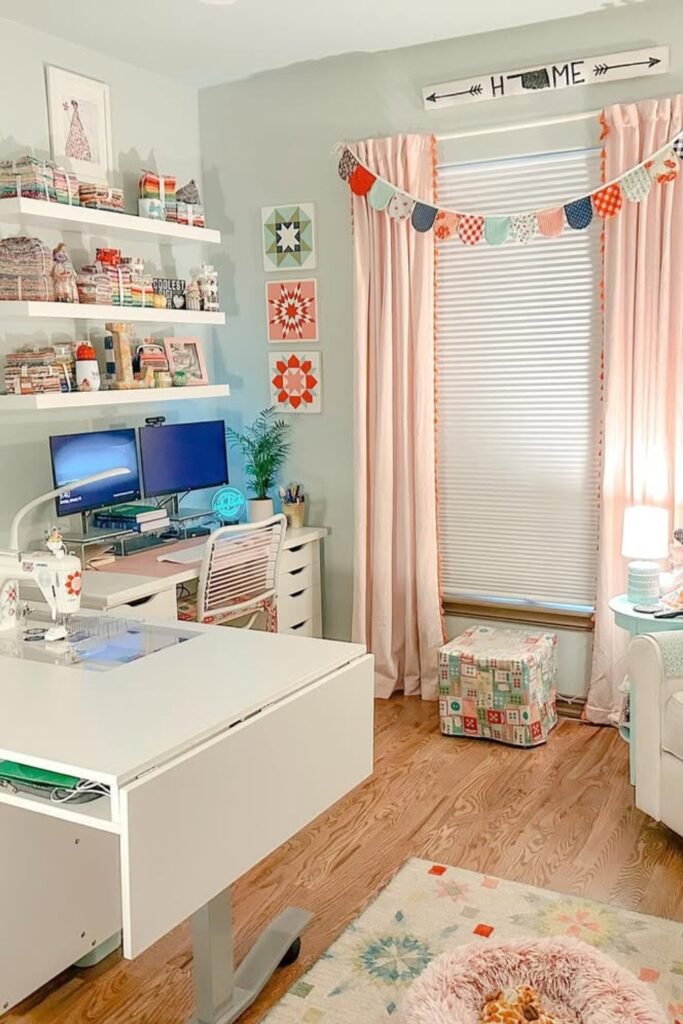
Hybrid Craft Zone
Rolling cutting tables [Check on Amazon] make it easy to change the layout of a room, which is great for rooms that are used as guest areas or for daily family life.
Put the sewing machine on a desk that doesn’t move close by so that the moveable surface can handle cutting while the stitching stays stable.
Put design templates and fabric precuts on floating shelves above computers to keep work digital and tactile areas separate.
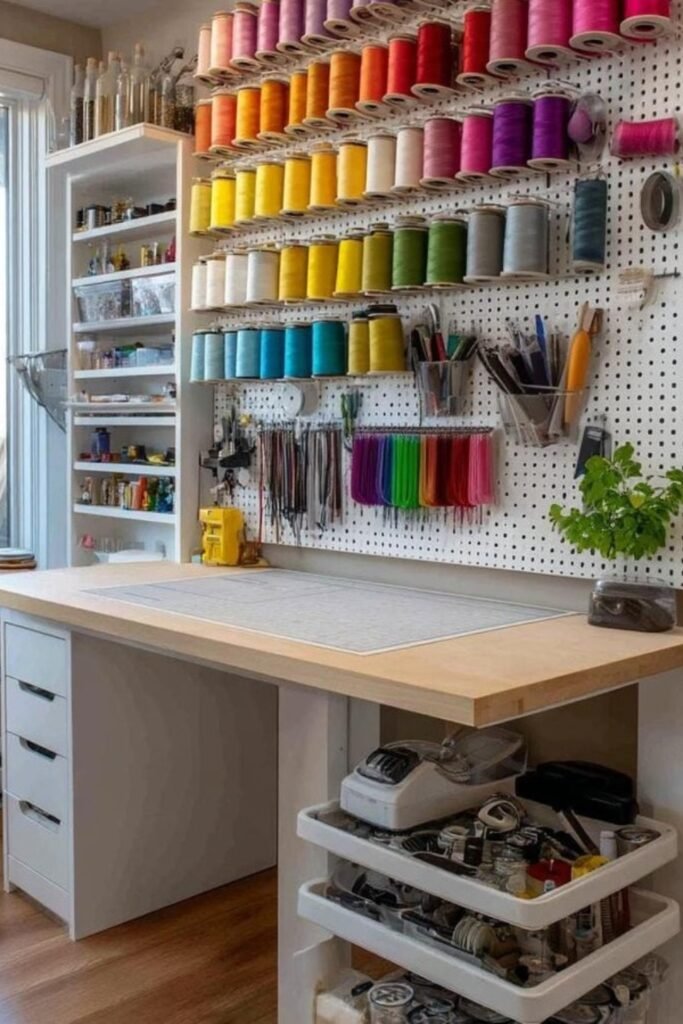
Color-Sorted Thread Wall
With a full vertical needle wall [Check on Amazon], choosing colors takes just seconds, so you don’t have to hunt through drawers while sewing quickly.
Best for work tables next to windows, because the light from the windows maintains thread shades true for lengthy creative hours.
Put up a pegboard with spool rods, keep the tones you use most often at eye level, and keep the rulers and cutters close by.
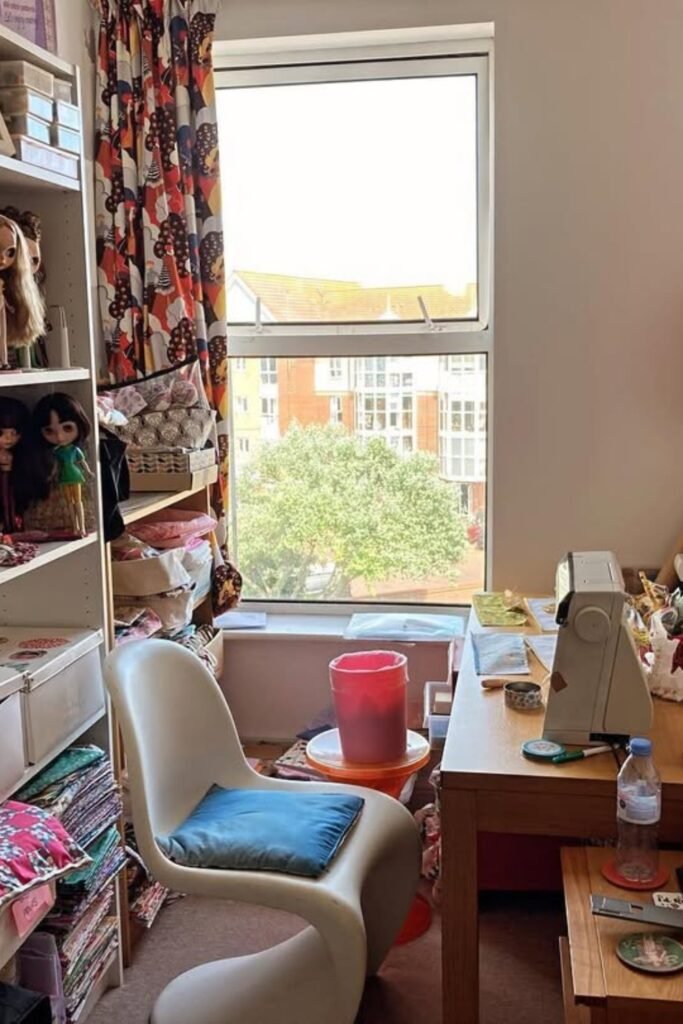
Creative Corner Studio
This little corner transforms into a totally absorbing embroidery environment alongside tall cupboards full of materials and dolls.
Best for living rooms where one wall can be utilized for organization and the desk is free for daily embroidery work.
To stay calm and focused, use thin shelves, stack fabric vertically, and only keep instruments that you are using on the table.
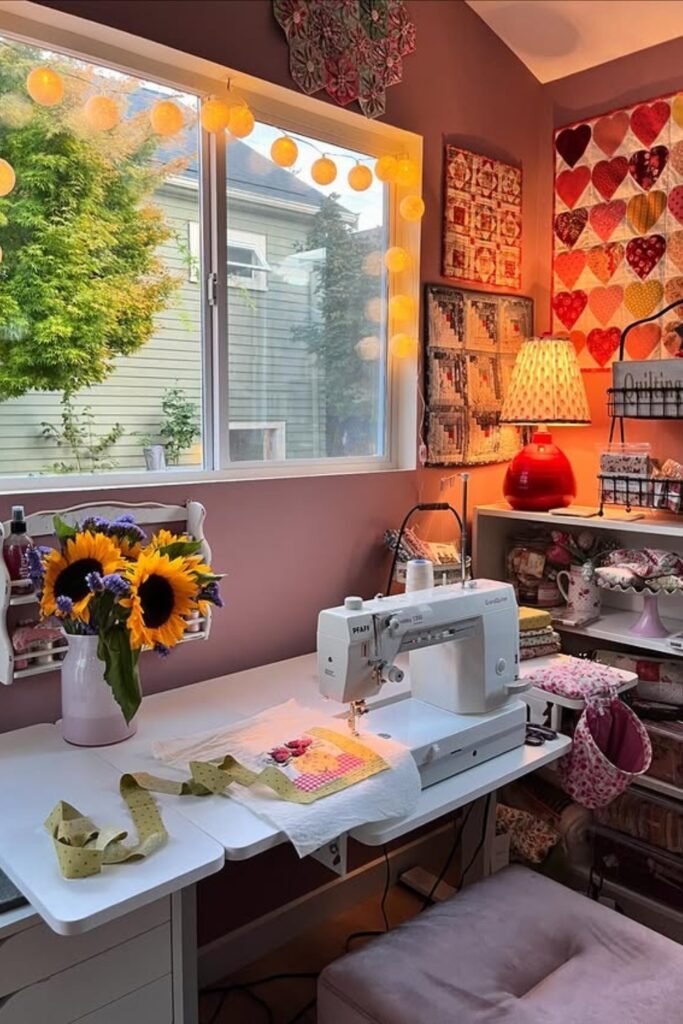
Window Glow Desk
With warm window illumination and concentrated task lamps, stitching at night is easy on the eyes and won’t wash away colors.
Putting the small desk under the glass keeps the patterns brilliant during the day, while the string lights make the shadows softer at night.
Put shallow shelves next to the needle, position a tiny lamp over the foot, and only use drawers for projects that are currently in progress.
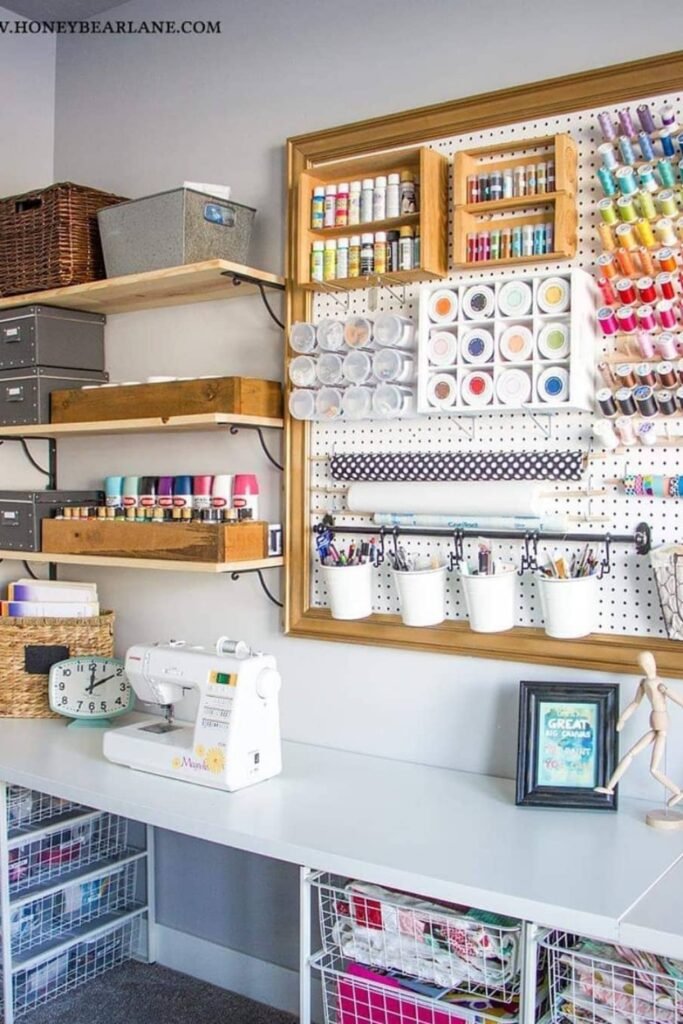
Pegboard Control Wall
This is where pegboard [Check on Amazon] and open shelving come together to keep paint, thread, and notions visible without getting in the way of sewing.
This layout works best in craft rooms that need to be able to get to things quickly, not in rooms with concealed storage behind closed cabinets.
Put a board with holes above a long desk, add cups with labels for tools, and stack wire organizers below for easy organization.
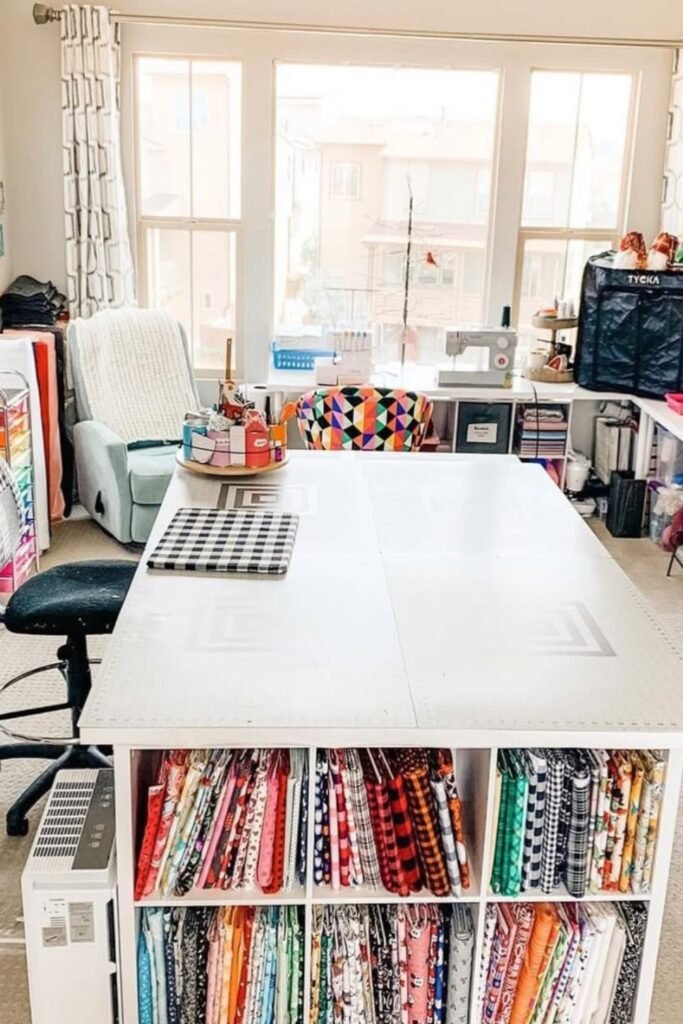
Center Cutting Core
This kind of large sewing table does away with regular folding shifts and gives vast quilt design accuracy and metric control with any breaks.
Put fabric cubbies around the table so that people can choose things without having to get up, hunt through bins, or lose their focus.
To make it again, put two strong tables together, add storage bases underneath, and leave at least three feet of space for rolling.
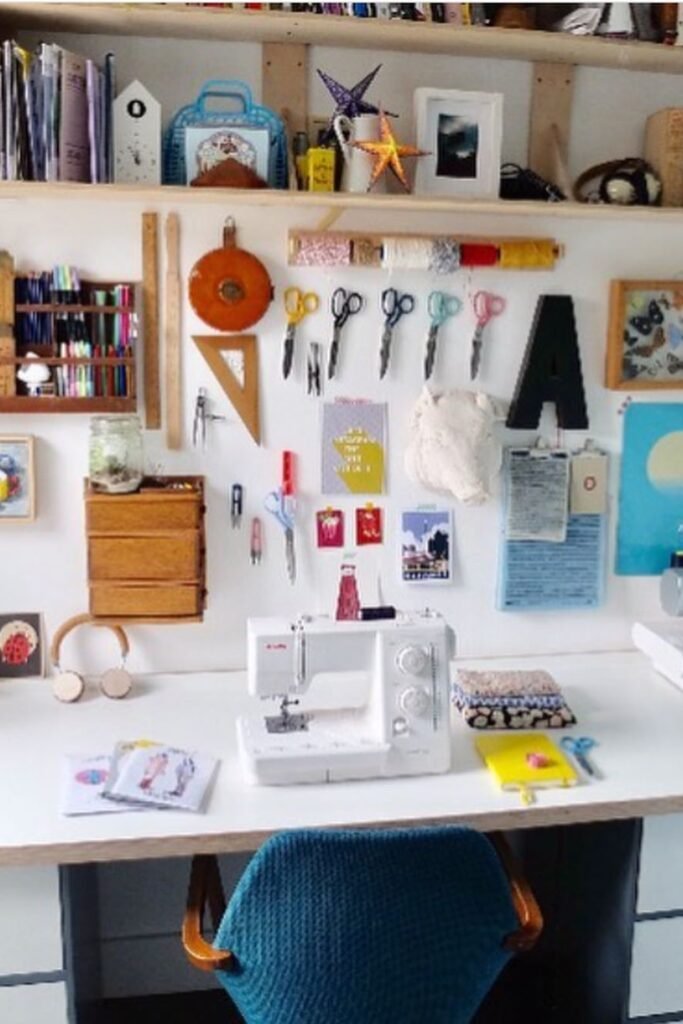
Tool-Front Desk
Mounting tools make this little desk into a sewing station that reacts quickly and has all you need in plain sight and is easy to reach while you work.
Best for studio apartments or shared workspaces where tall shelves take the place of big cupboards and keep the floor clear.
Use short shelves, magnetic strips, and labeled hooks to copy this, and only use drawer space for things that don’t leave storage very often.
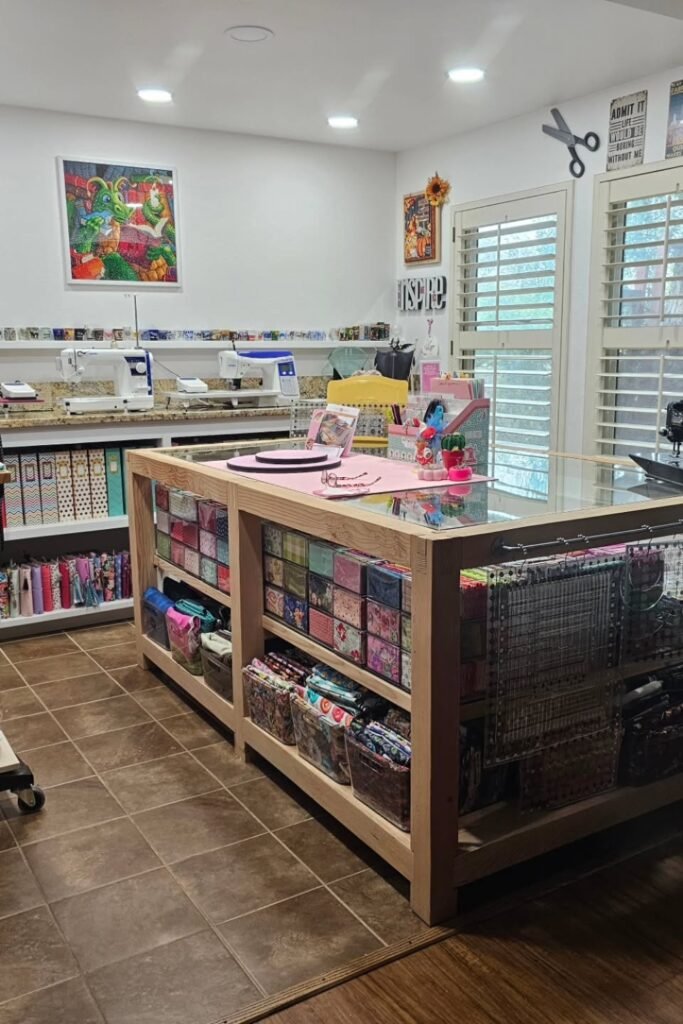
Glass-Top Workflow
Glass-top islands make it easier to line up motifs and keep fabric edges from becoming dragged when you move them about a lot over huge quilt areas.
This setup works well for private studios that do batch sewing since the storage area in the skin keeps things going in the cutting and binding steps.
Use a solid frame, tempered glass insert, and drawer-clear fronts to make it so rulers can hang without hiding fabric inventory.
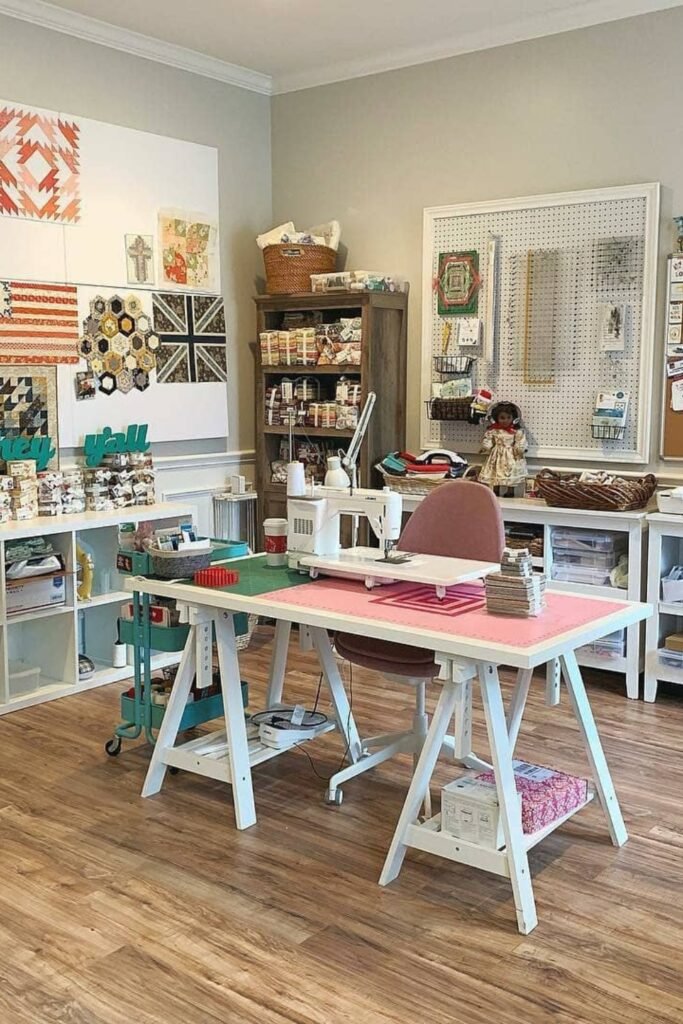
Open-Flow Studio
With open floor plans like these, cutting, sewing, and sorting can all happen without getting in the way of storage or tripping over rolling carts.
Use linked trestle tables to change the height of your machines while keeping them stable so that vibration doesn’t mess up your seams.
Set up one wall for design boards and peg tools, and then put clear bins along the opposite cabinets for each stage of the project.
Dual-Machine Command
Two machines sharing a single table [Check Similar on Amazon] make it easier to make clothes when switching between overlock and straight stitches gets a regular part of the job.
Strings and rulers put on pegboards keep the desktop from being too full and make it easy to see colors as projects change fast every day.
Place this against a narrow wall, hang some shelf lights above it, and only use the bottom drawers for things you need to get to every hour.
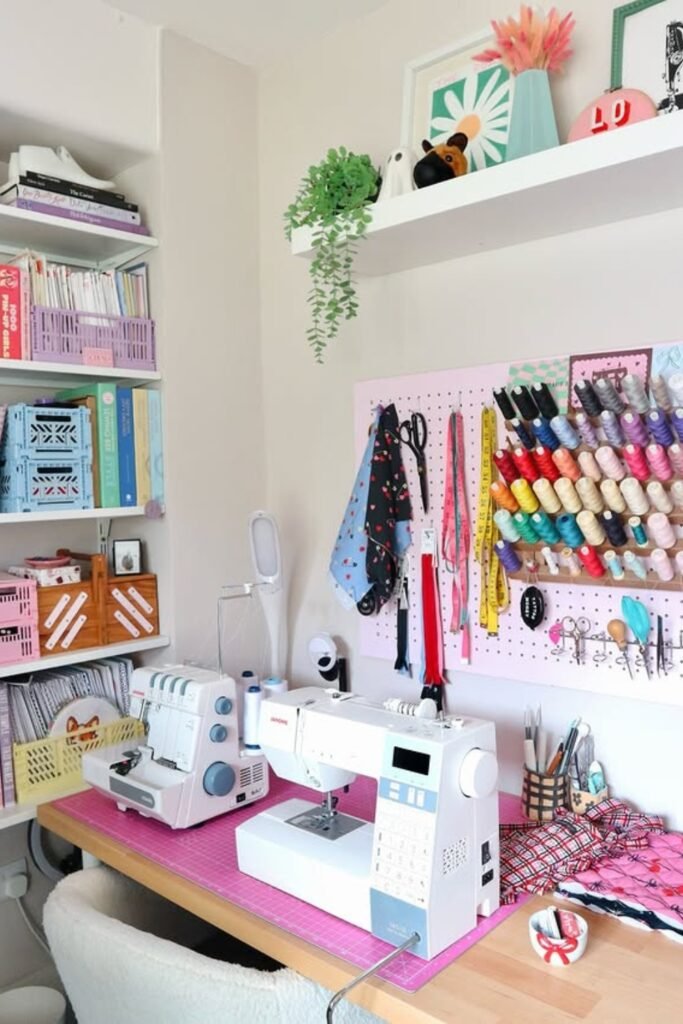
Dress-Form Focus Station
When the dress form stays next to the cutting area for regular pin checks and shape modifications, pattern fitting goes faster.
This setup works great in spare rooms because one area may be used to test clothes without getting in the way of people walking through.
Put scissors and rulers on the edge of the table, textiles below them, and task lighting directly on the fitting zone.
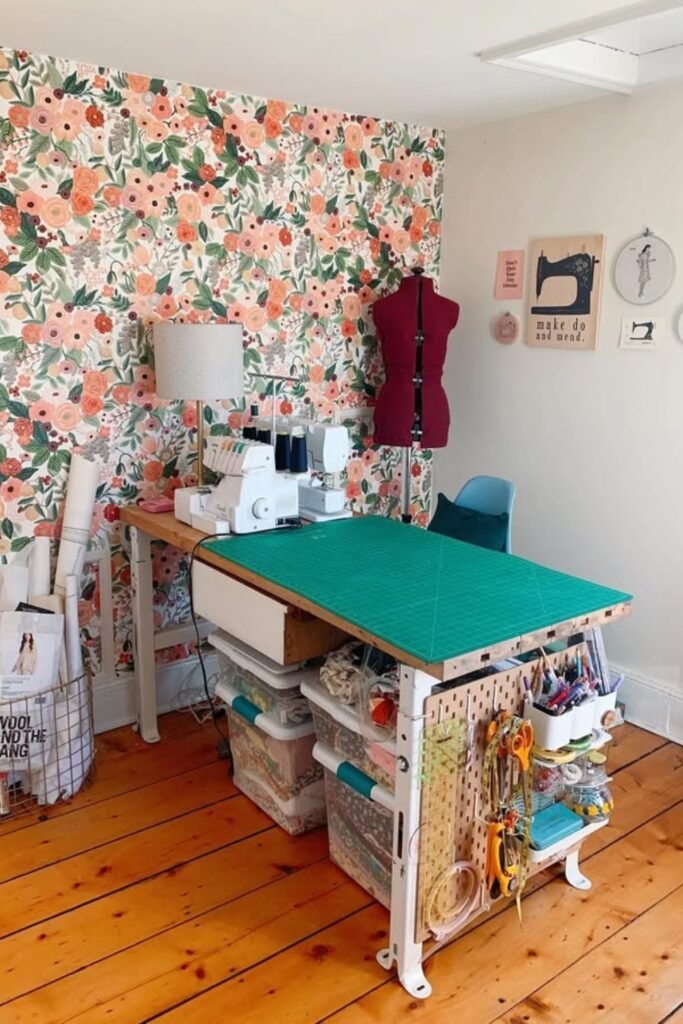
Industrial Flow Zone
Long pieces of fabric stay smooth on a center rolling table that is made for cutting across big pattern layouts without stopping.
Stacked bins and wall-mounted rails take the role of drawers, making it easy to see every tool without disturbing the cutting rhythm.
Park large equipment against walls that stay put, save the middle area for cutting, and safeguard the edges with clip rails.
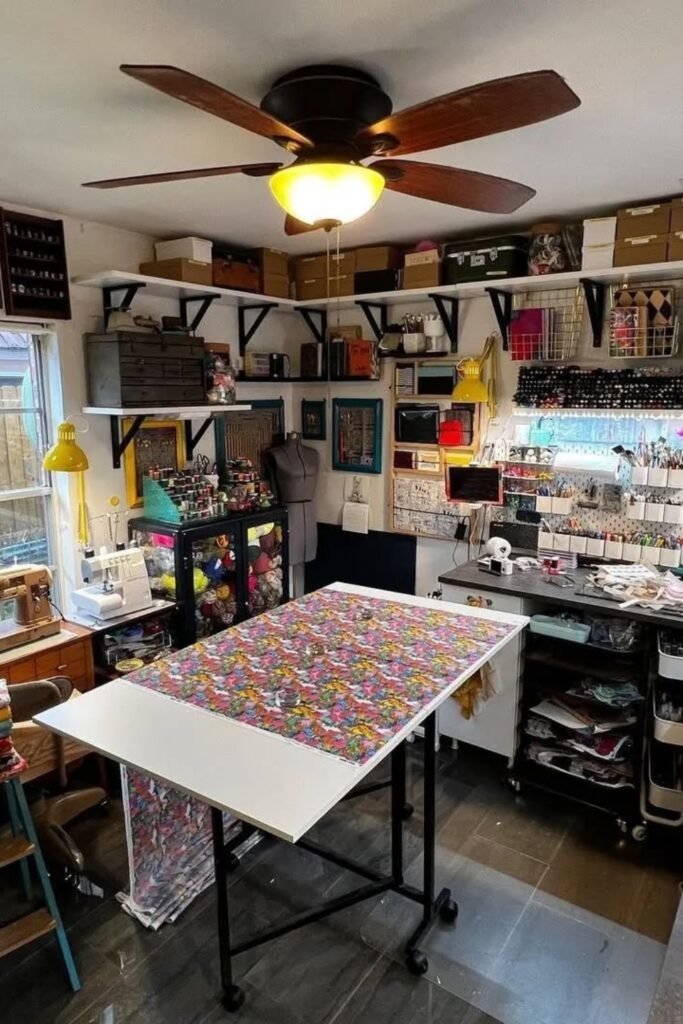
Pastel Command Hub
Soft pastel storage [Check Similar on Amazon] turns a lot of visual noise into serenity, and you can still get to every spool, ruler, and vinyl sheet right away.
Twin fold-down tables make it easy to cut, piece, and trim without having to make forever layout choice while working on a project.
Rolling drawer islands move with the work, so thread, notions, and tools can follow your hands instead of getting in the way of the flow of work.
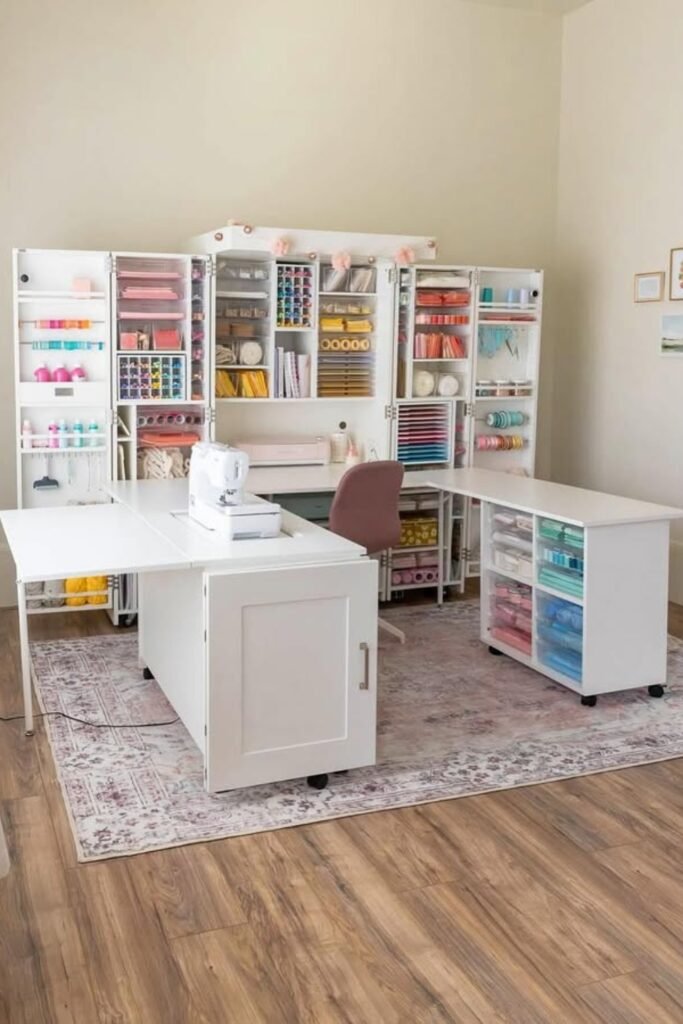
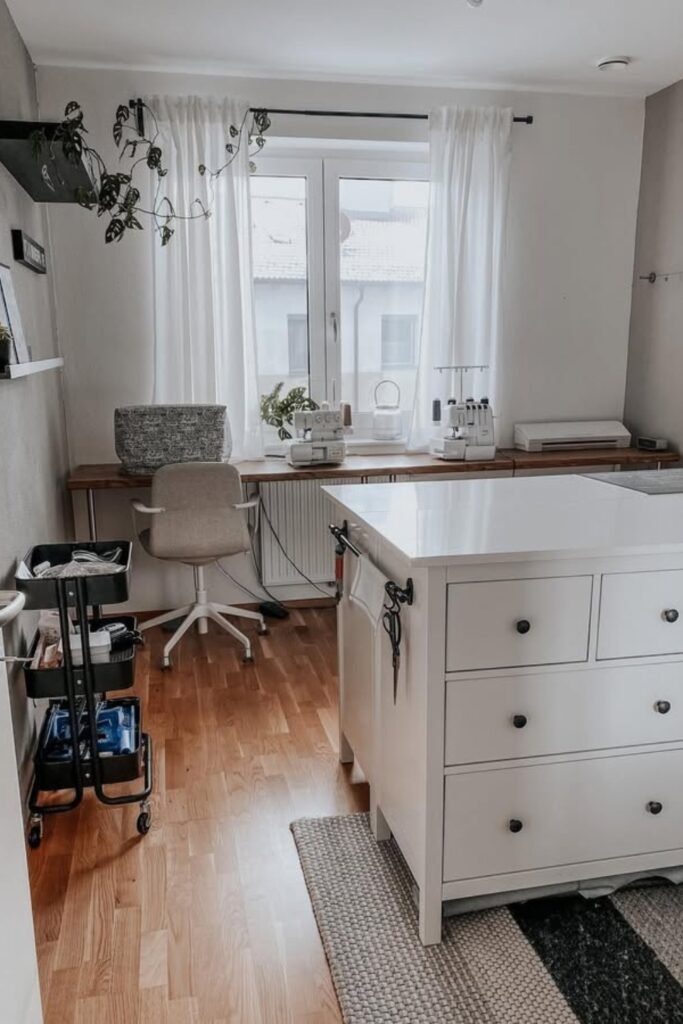
Lean Light Studio
Natural light coming through the window makes stitching more accurate and doesn’t strain your eyes during extended hours of precise work.
Cutting instruments and patterns are kept in the compartments on the central island, which keeps the periphery open and tranquil.
A transportable resource cart [Check on Amazon] maintains tools on the go all the time rather than taking up floor space on permanent locations.
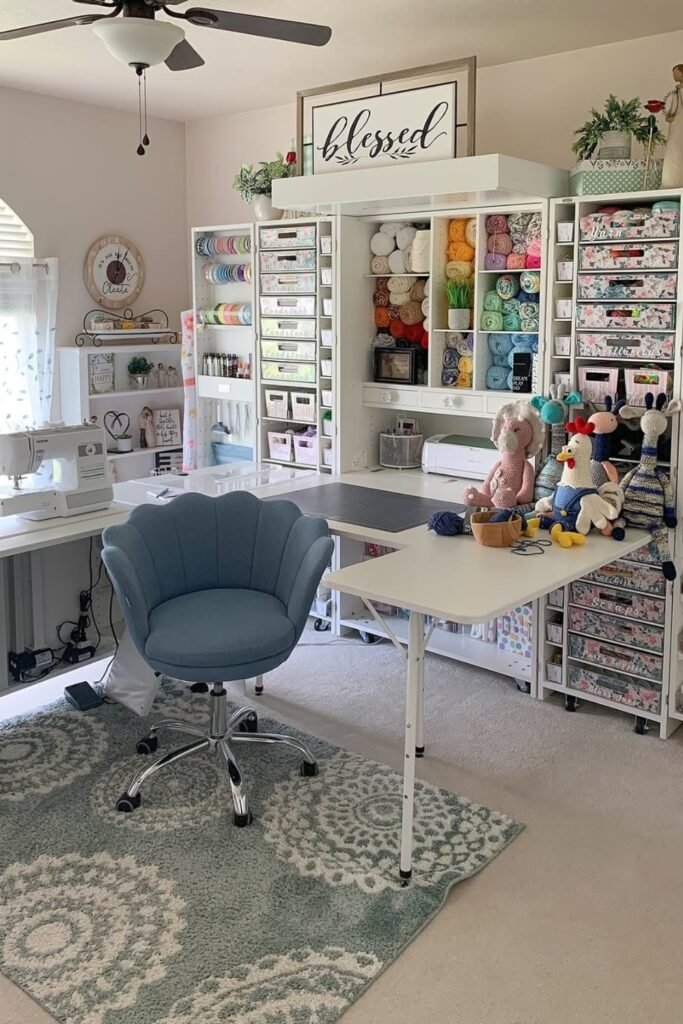
Soft Storage Wall
Plush yarn cubbies turn raw materials into quick decorations and make sure that every color is visible while you prepare your project.
The central work surface may cut and lay out components without restricting access to the machines along the perimeter of the workspace.
The drawer towers arrange tools by the type of activity they are used for, so setting them up never slows down imaginative thinking.
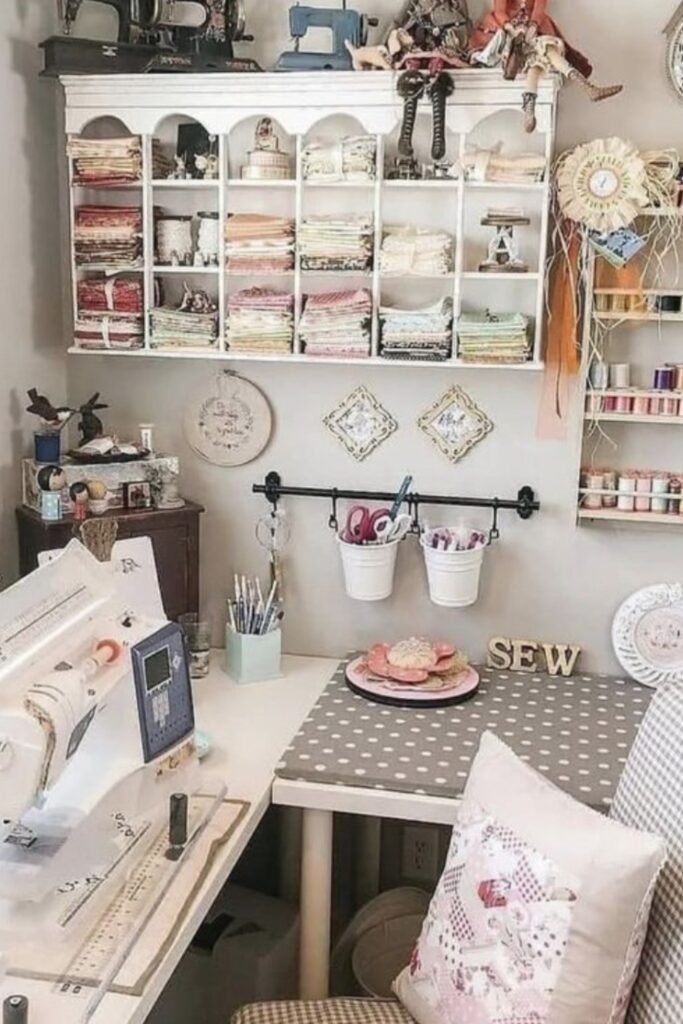
Vintage Corner Nook
Soft light coming in from the side window keeps the detailed stitching sharp without making the main sewing surface too bright.
Wall cubbies [Check on Amazon] keep folded fabrics sorted by color family, which speeds up organizing projects and makes it easier on the eyes.
Placing the pails underneath the rail keeps scissors and markers close at hand without taking up important room on the table.
You may like to read!

Hi, my name is Ali Mehmood! I’m a passionate writer and DIY enthusiast who loves turning creative ideas into practical, hands-on projects.
I created this website to share inspiring, budget-friendly ideas that you can do yourself – whether it’s organizing your home, crafting something unique, or creating fun projects for kids and pets.
I believe DIY isn’t just a hobby – it’s a smart way to save money, reduce waste, and enjoy the satisfaction of making things with your own hands.
I’m excited to have you as part of this growing community, and I’ll continue bringing you helpful, realistic, and fun DIY ideas you can actually use.