This post may contain affiliate links: read full affiliate disclosure.
Spanish-style homes have a warmth and character that never go out of style. From sun-washed stucco walls to tiled courtyards and arched doorways, this design blends beauty with everyday comfort.
Whether you love old-world details or want ideas that work for modern living, Spanish homes offer timeless inspiration.
In this article, you’ll explore 26 unique Spanish-style home ideas that highlight layouts, materials, and features you can use to create a space that feels inviting, functional, and rich in architectural charm.

Central Courtyard
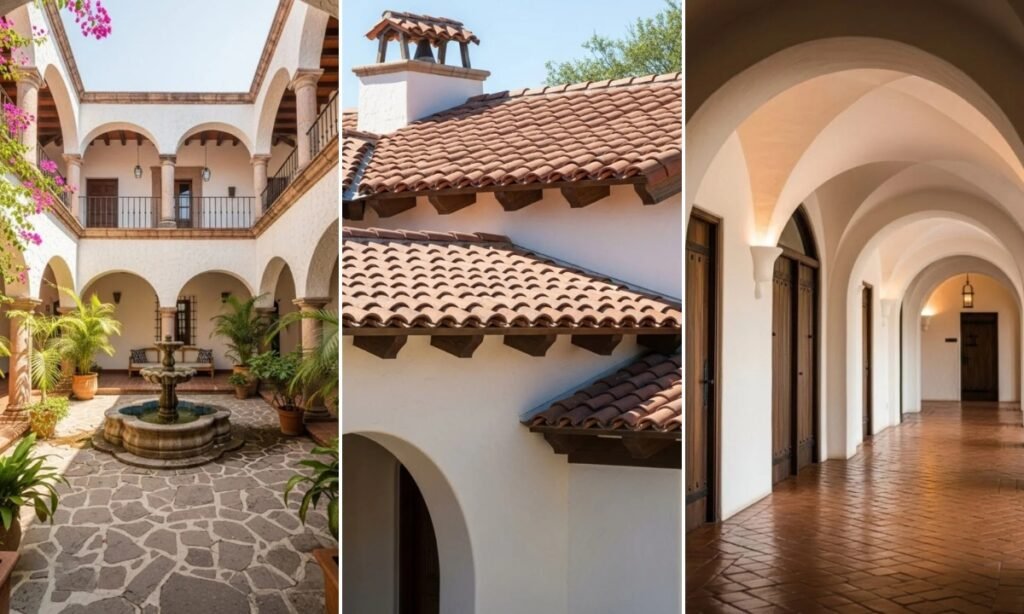
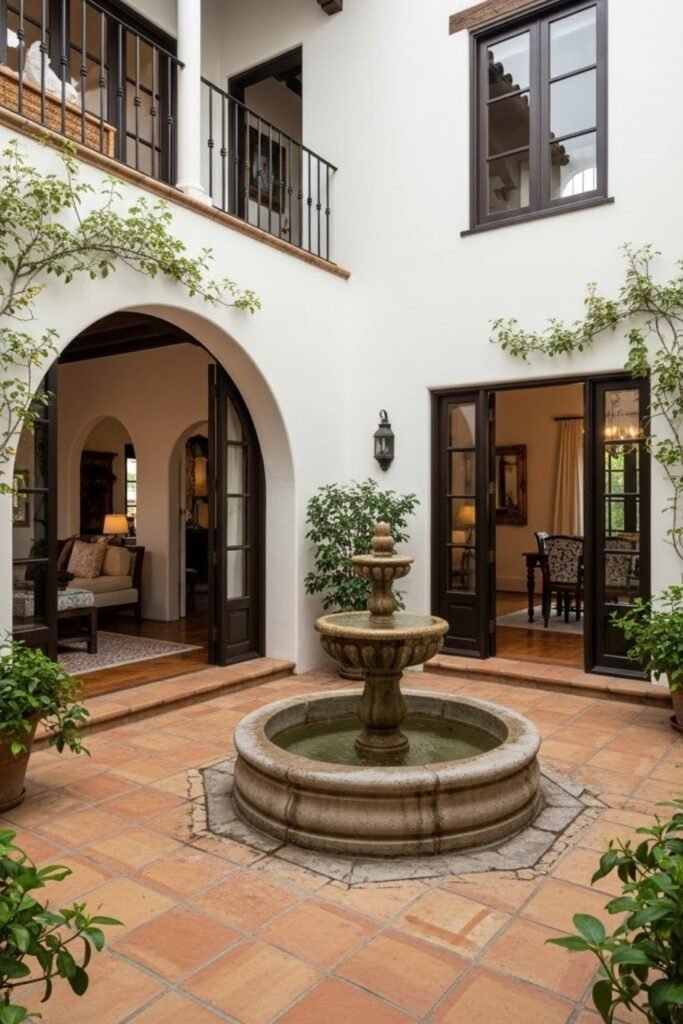
A central courtyard places an open-air space at the core of the home, with rooms facing inward. This layout improves natural light, airflow, and privacy at the same time.
Courtyards often include stone flooring, greenery, or a small fountain, creating a calm retreat that stays cool and usable throughout the day in warm climates.
Clay Roof
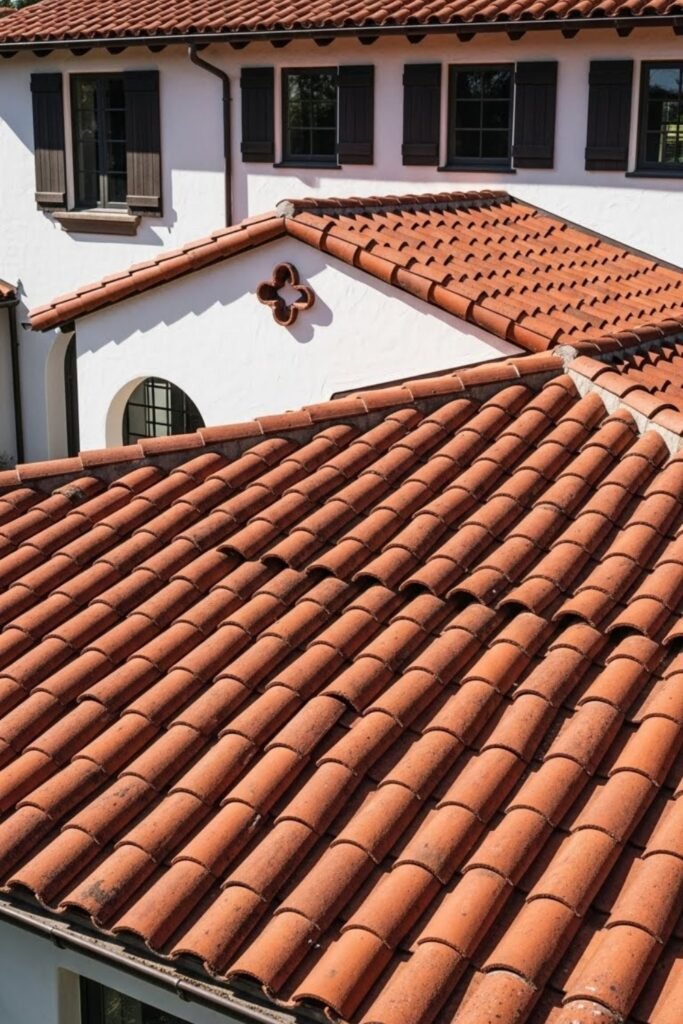
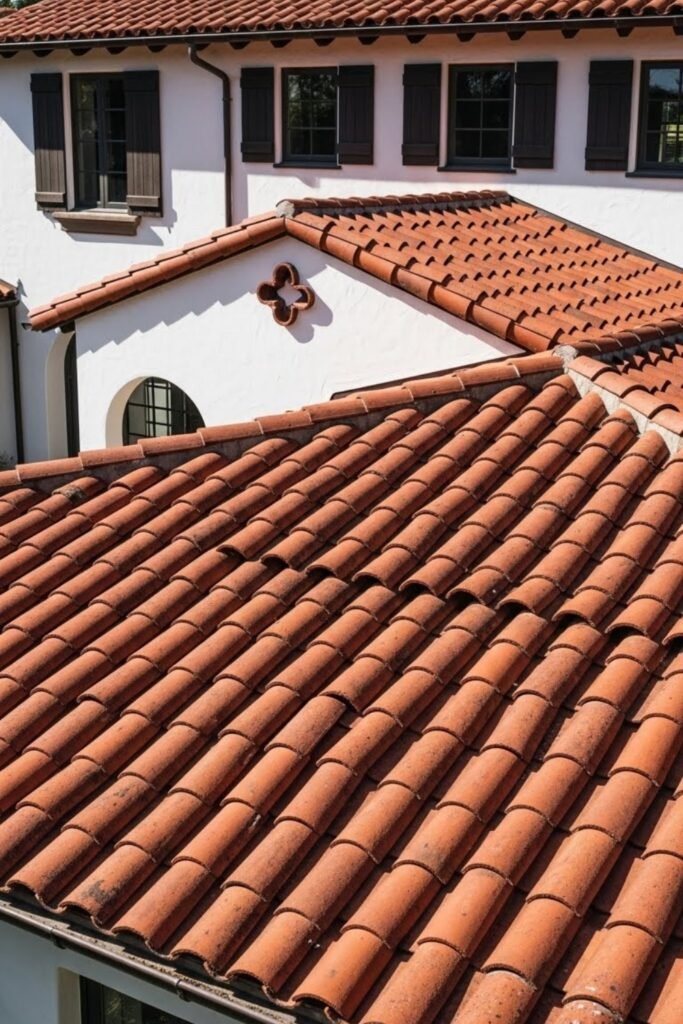
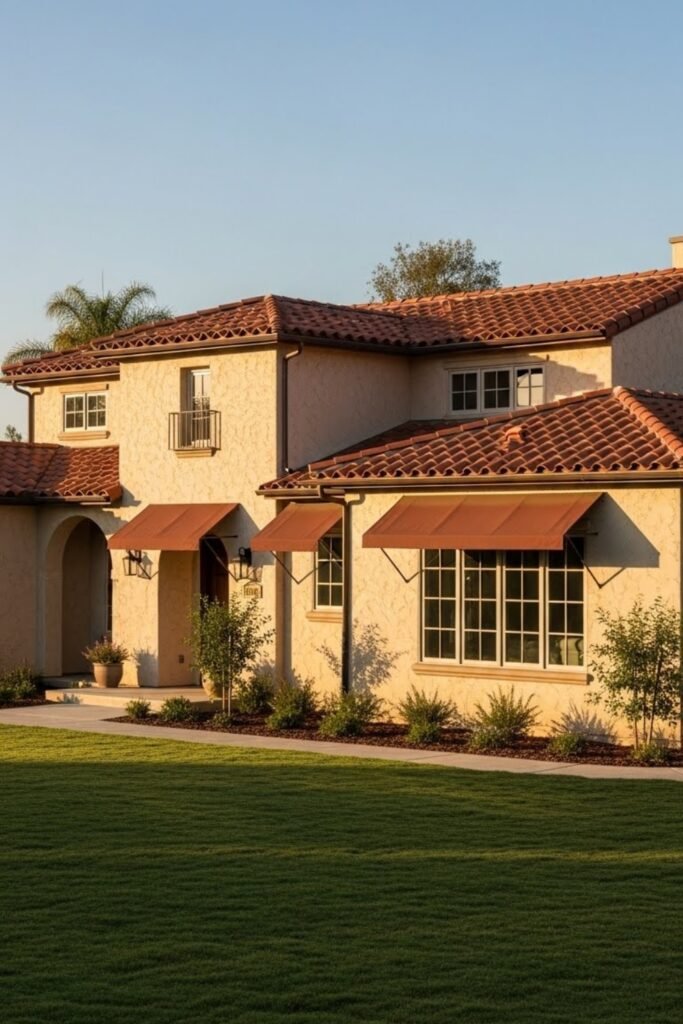
Clay tile roofs are a signature feature of Spanish-style homes. Their curved terracotta tiles help reduce heat buildup by allowing air circulation beneath them.
Visually, they add depth and texture to the exterior. Over time, the tiles develop a natural weathered look that enhances the home’s traditional and timeless character.
Stucco Walls
Stucco walls give Spanish homes their clean, sun-reflective exterior. This material works well in hot regions by helping maintain indoor comfort.
Light-colored stucco pairs beautifully with clay roofs, iron accents, and wood details. It also provides a smooth base that highlights architectural features like arches and recessed windows.
Arched Doors
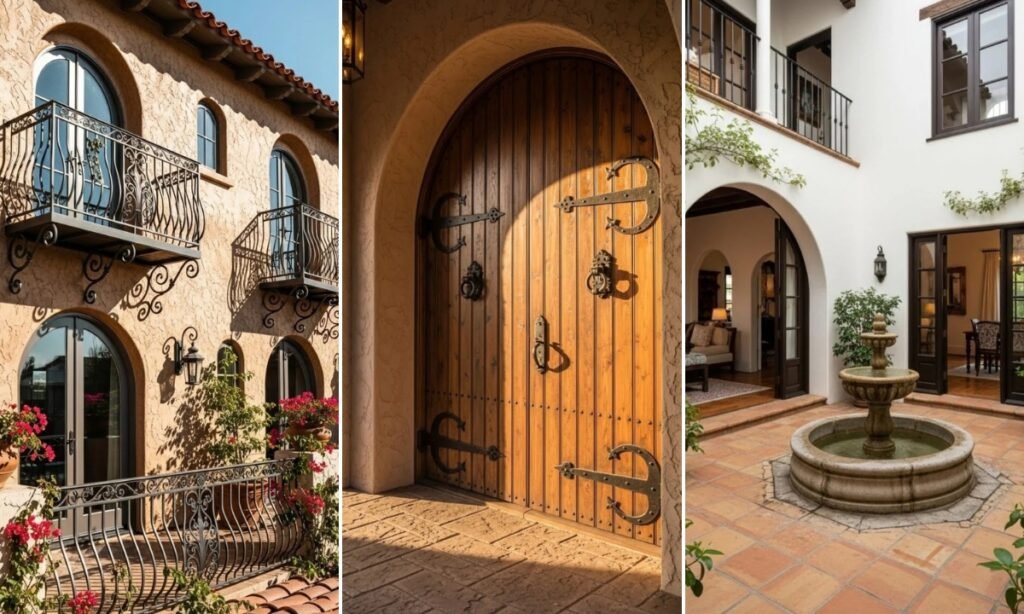
Arched doors add softness and flow to Spanish-style homes. Instead of sharp angles, the curved shape creates a welcoming transition between spaces.
These arches are often used for entryways, patios, and interior passages, helping the home feel connected and elegant while staying true to historic Spanish design influences.
Iron Balconies
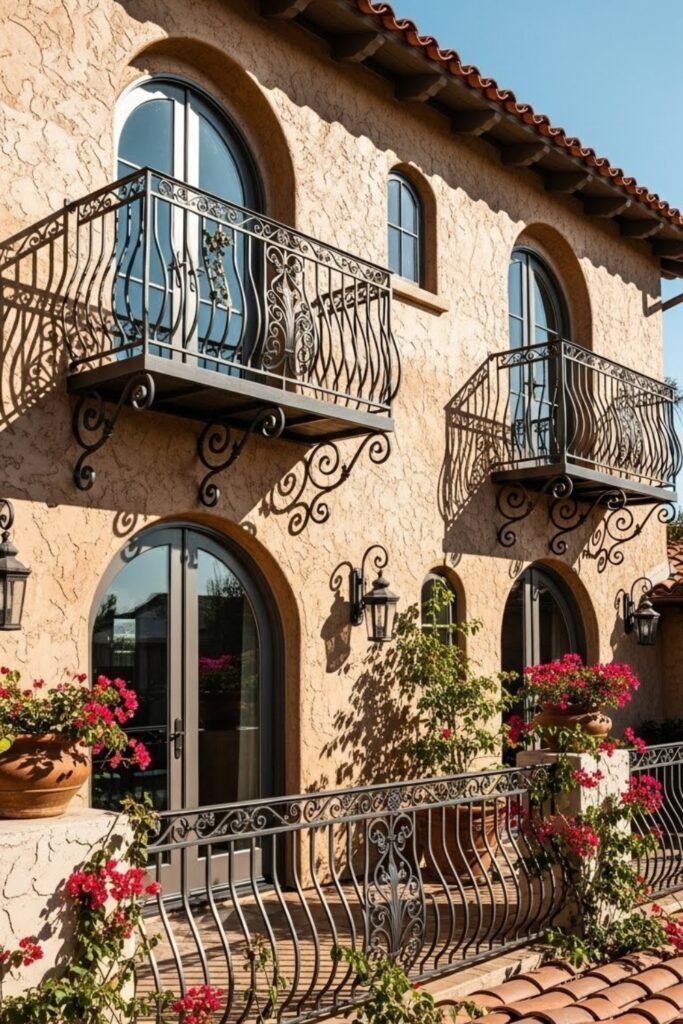
Wrought iron balconies add character and contrast to Spanish-style homes. These decorative features are often paired with arched windows or French doors.
Even small balconies enhance the exterior by adding texture and shadow. Ironwork also reinforces the old-world charm that defines traditional Spanish architecture.
Tile Accents
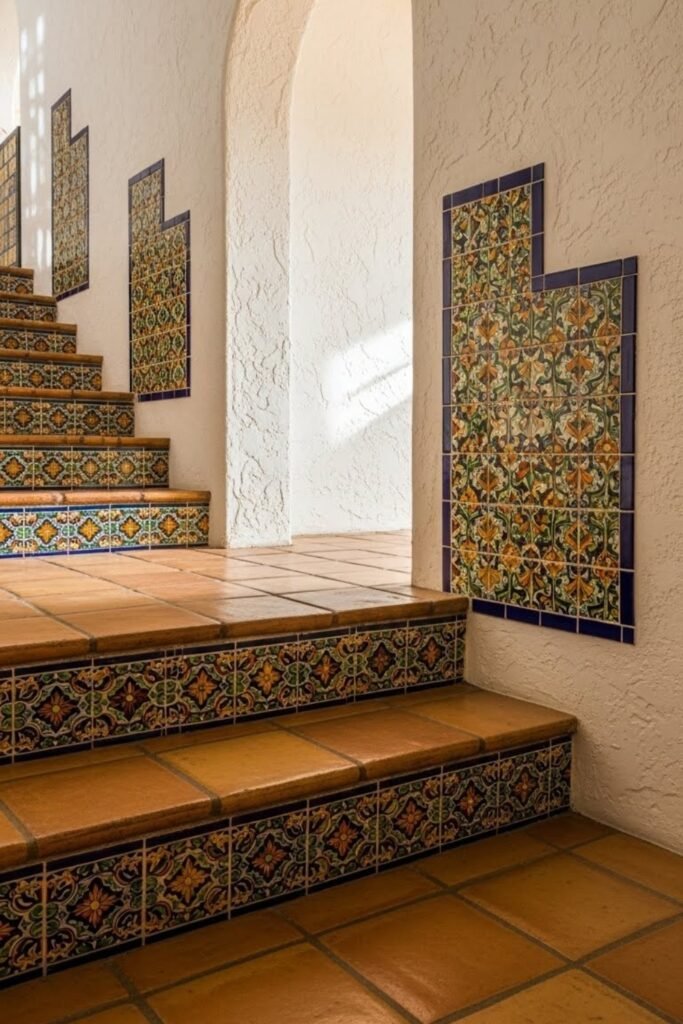
Colorful tile accents bring personality into Spanish homes. Hand-painted tiles are commonly used on stair risers, kitchen backsplashes, or patio walls.
These patterns introduce color without overwhelming the space. Tile accents also tie indoor and outdoor areas together, creating a cohesive and vibrant design.
Wood Beams
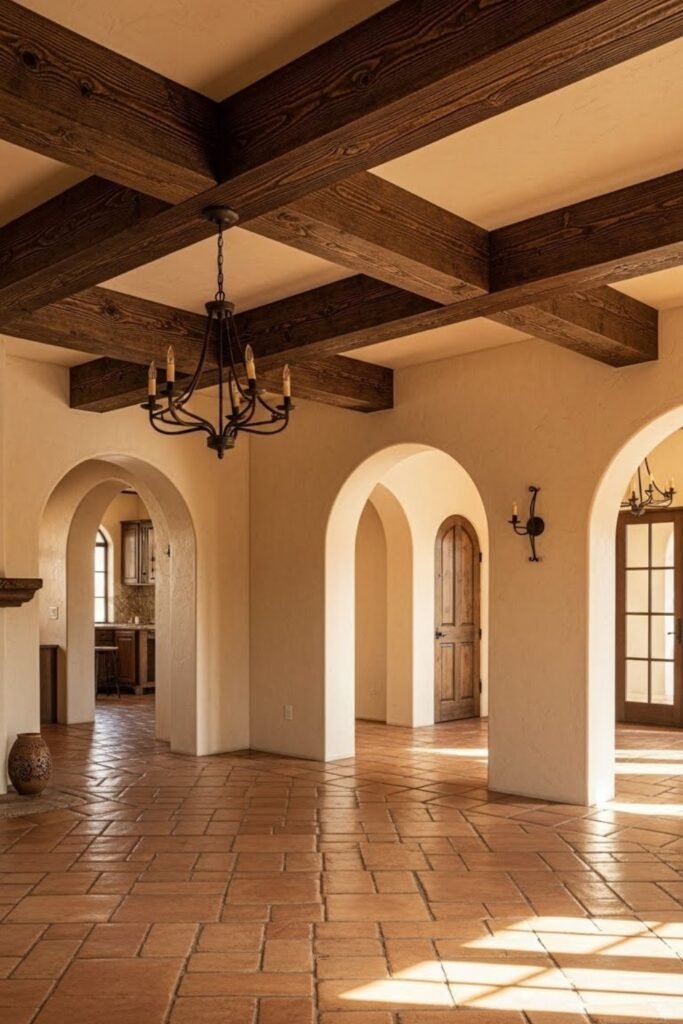
Exposed wooden beams add warmth and depth to Spanish-style interiors. They are often placed on ceilings in living rooms, kitchens, and hallways.
The natural wood texture balances stucco walls and tile floors, making large spaces feel grounded and inviting while maintaining a rustic, authentic look.
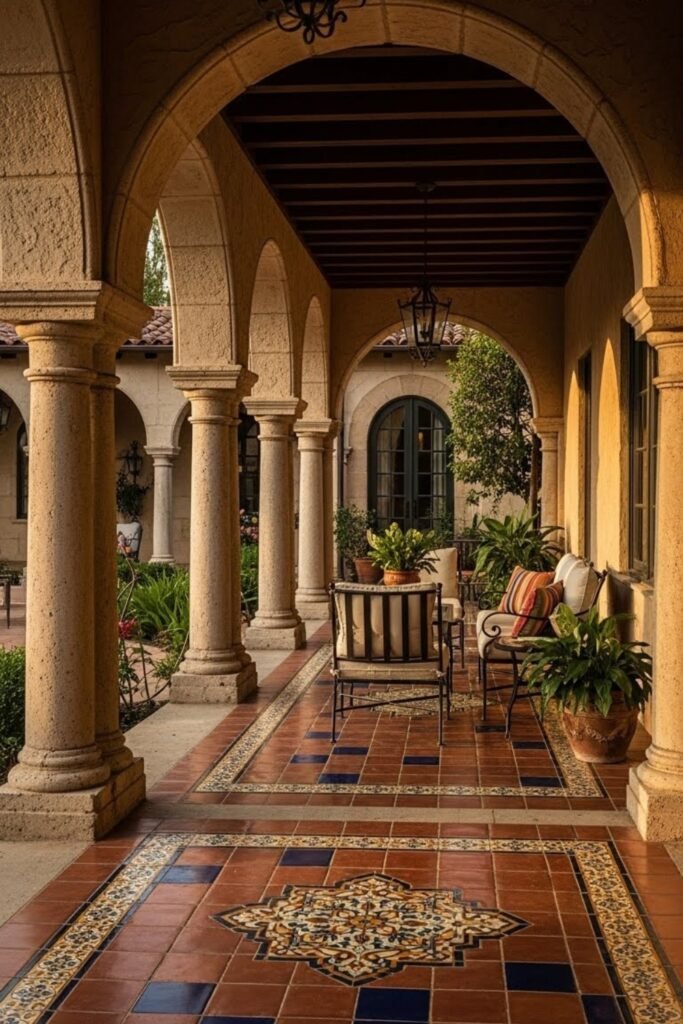
Covered Portico
A covered portico creates a shaded transition between the outdoors and the interior. This space protects entryways from sun and rain while adding architectural interest.
Thick columns and tiled floors enhance the Spanish aesthetic, making the portico both practical and visually striking.
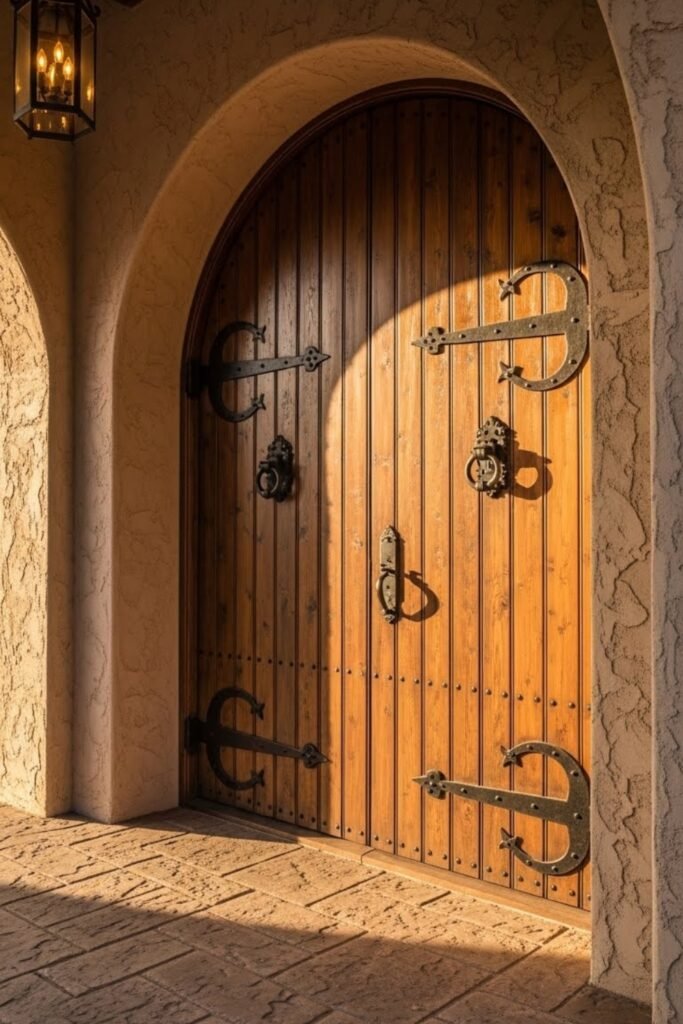
Rustic Doors
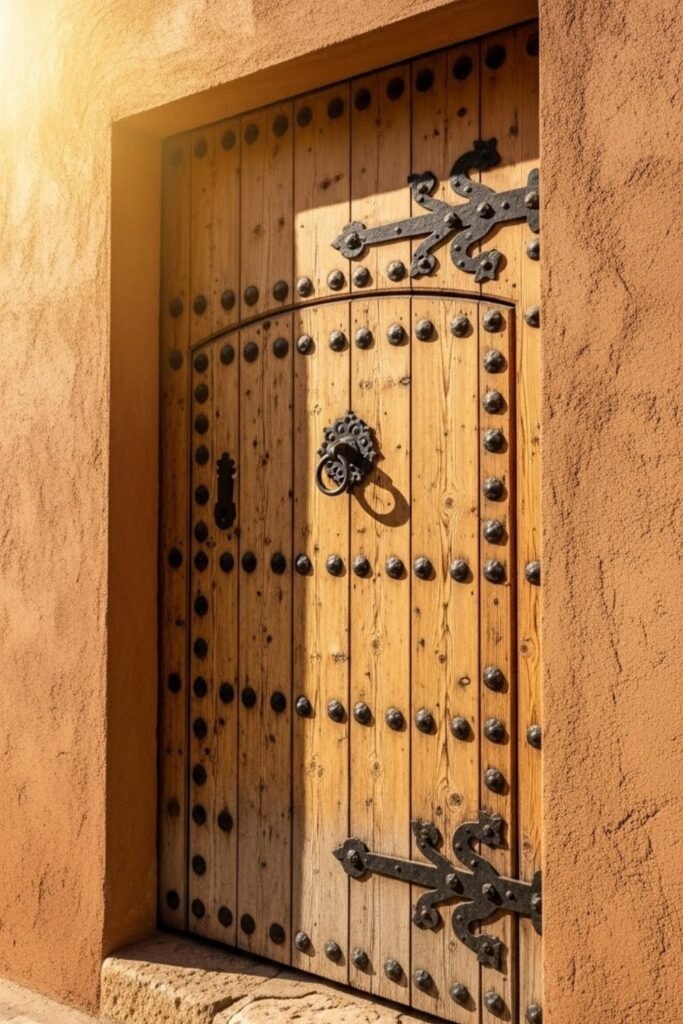
Rustic wooden doors make a strong first impression in Spanish-style homes. These doors are usually thick, solid, and paired with iron hardware.
The natural wood grain adds warmth and contrast against stucco walls. Even simple designs feel bold and timeless, especially when used for main entrances or courtyard access.
Tile Floors
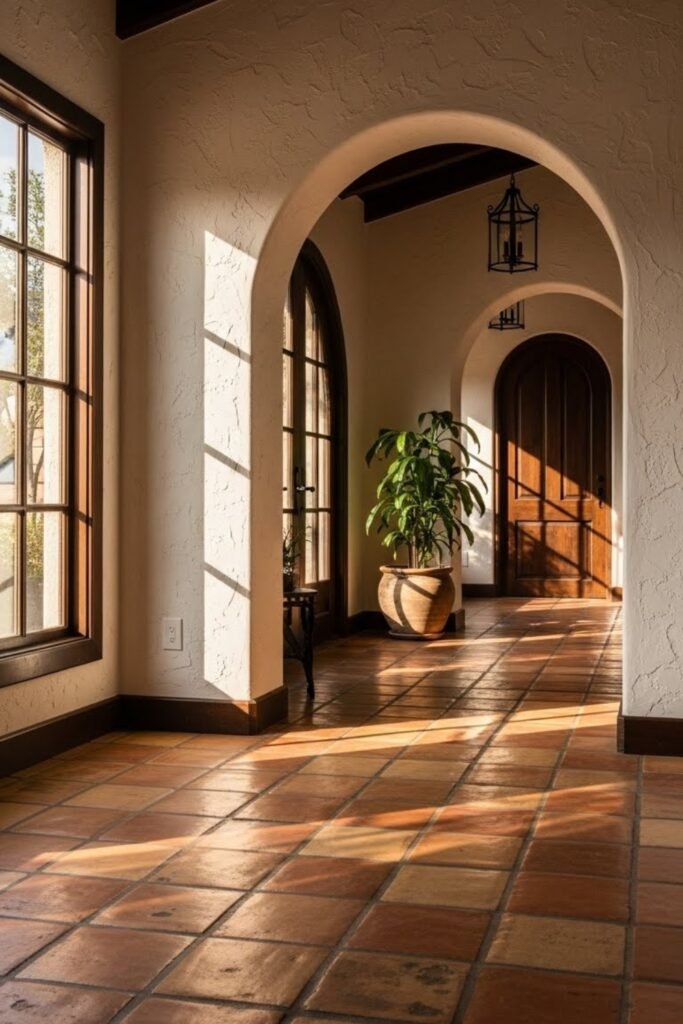
Tile flooring is a practical and classic choice for Spanish homes. Terracotta or clay tiles stay cool underfoot and handle heat well.
Their natural color variations add character to interiors. Tile floors also connect indoor rooms with outdoor patios, creating a seamless flow throughout the home.
Inner Fountain
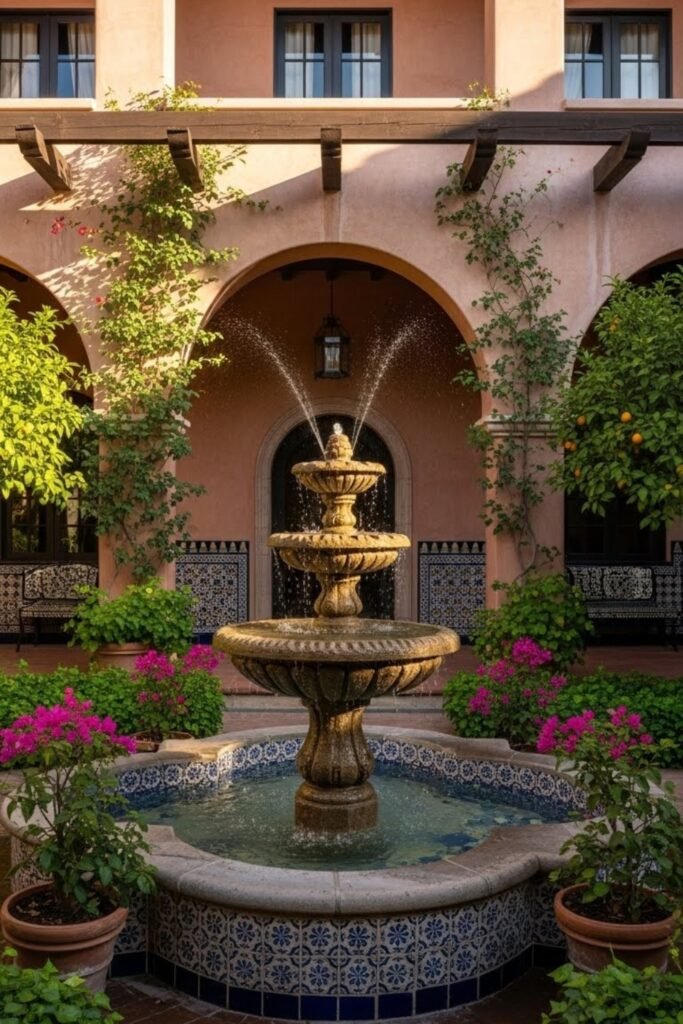
An inner fountain brings movement and sound into a Spanish-style layout. Often placed in courtyards or entry spaces, fountains help cool the air naturally.
The gentle water sound adds a relaxing atmosphere and strengthens the home’s Mediterranean influence without requiring a large outdoor space.
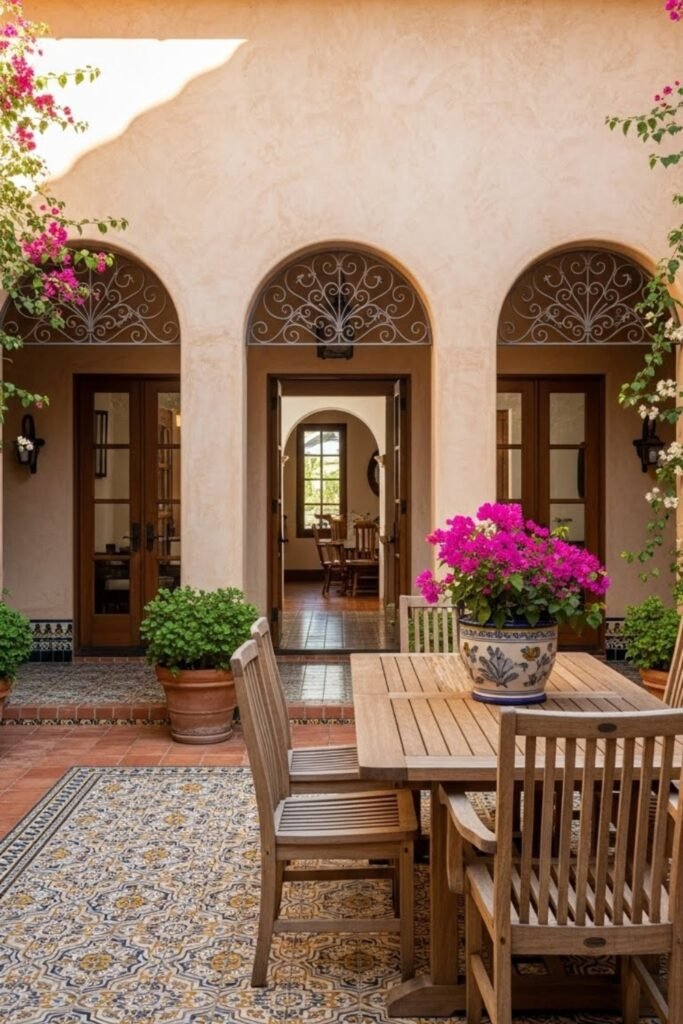
Open Patio
An open patio extends living space outdoors while keeping it private. Spanish homes often position patios within walls or courtyards rather than exposed yards.
This setup allows for outdoor dining, lounging, or gardening. Tile flooring and surrounding arches help the patio feel like a natural extension of the interior.
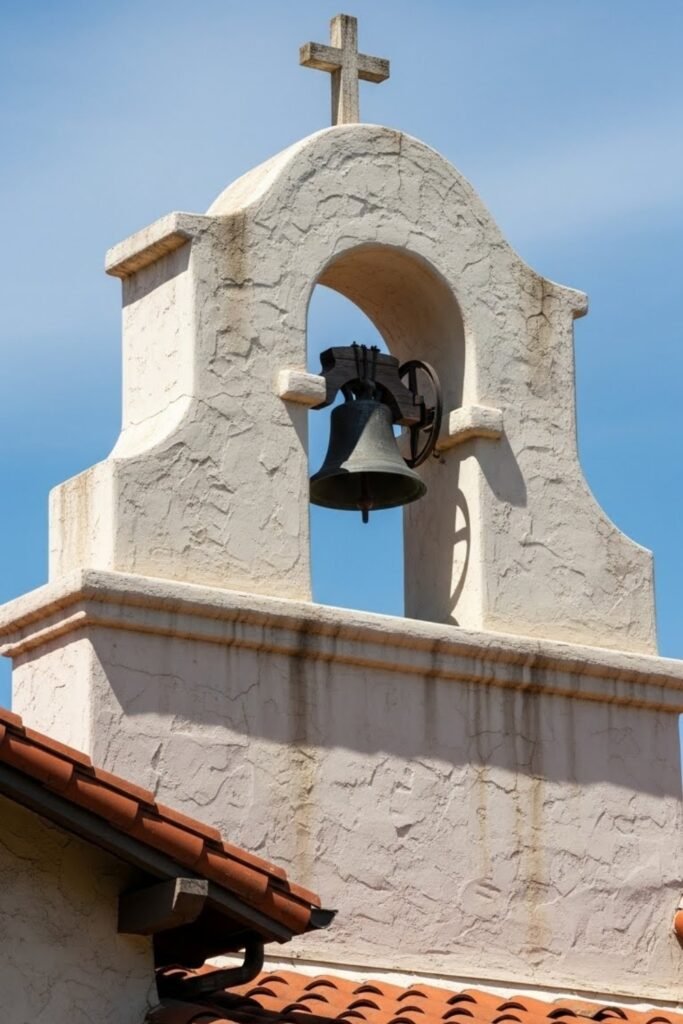
Bell Gable
A bell gable adds a historic Spanish mission touch to the home’s exterior. This roof feature usually rises above the main structure and becomes a visual focal point.
Even when used decoratively, it gives the house a strong Spanish identity and enhances rooflines without overwhelming the overall design.
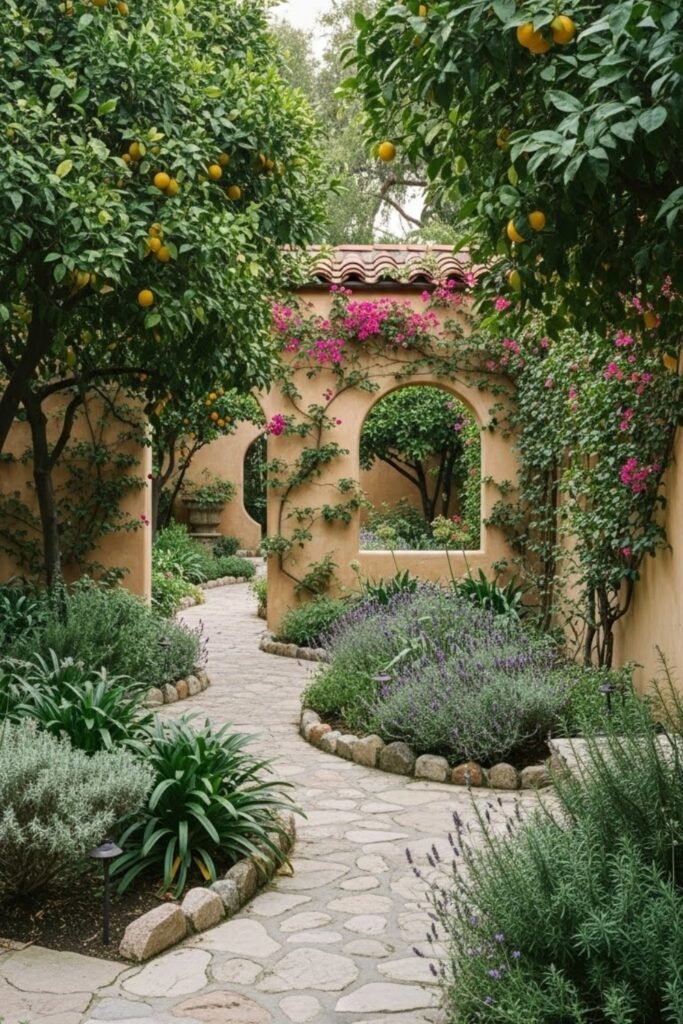
Garden Courtyard
A garden courtyard blends architecture with nature in Spanish-style homes. Surrounded by walls, it offers privacy while allowing sunlight and airflow.
Plants like citrus trees, olive trees, or climbing vines thrive in this setup. The courtyard becomes a peaceful retreat that connects daily living with the outdoors.
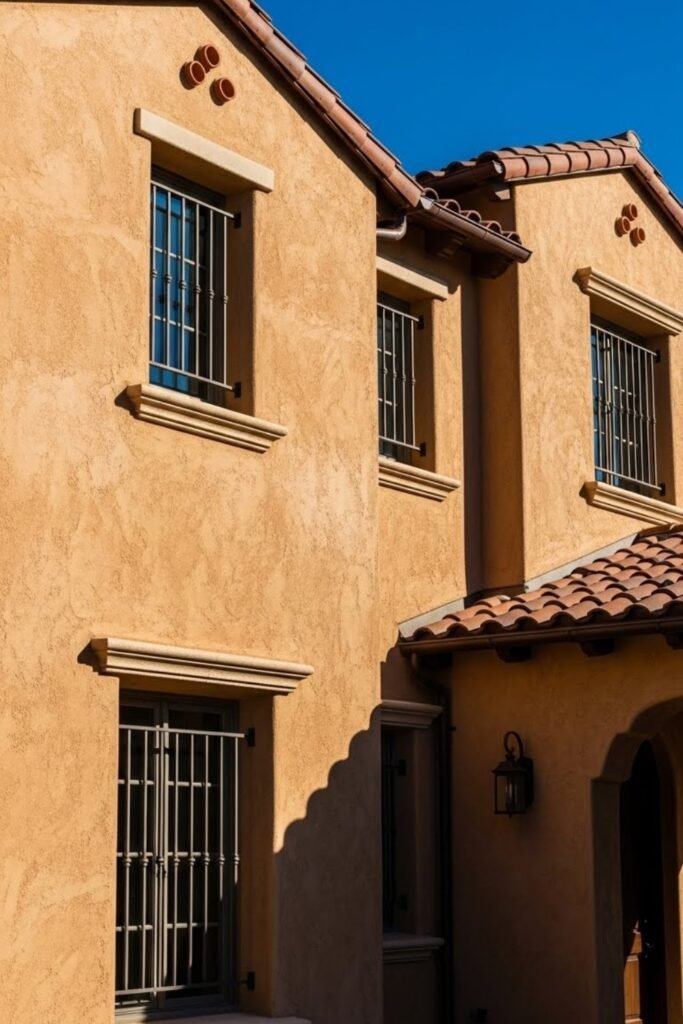
Thick Walls
Thick masonry walls are a practical feature in Spanish homes. They help regulate indoor temperatures by slowing heat transfer, keeping interiors cooler during the day.
Visually, thick walls create deep window openings and a sense of solidity. This construction style adds durability and long-term comfort.
Low Roof
Low-pitched roofs give Spanish-style homes a grounded appearance. This roof style emphasizes horizontal lines and pairs well with wide facades.
In warm climates, low roofs also help reduce heat exposure. When combined with clay tiles, they create a classic Spanish silhouette that feels balanced and timeless.
Iron Grilles
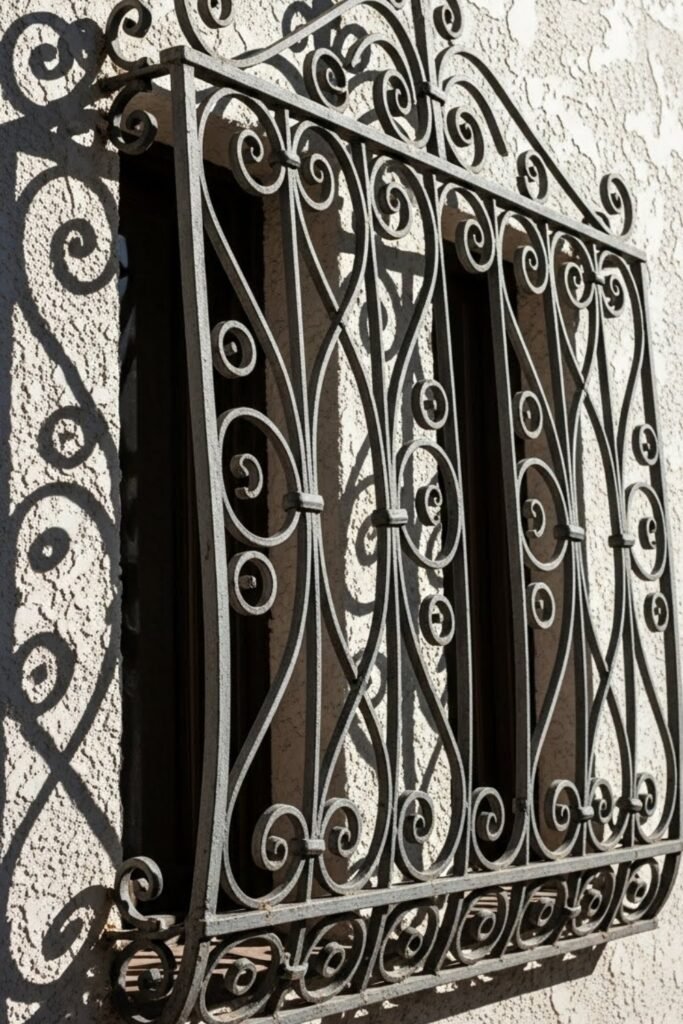
Iron window grilles add both security and style to Spanish-style homes. These decorative elements are often curved or patterned, creating visual interest without blocking light.
When paired with stucco walls, iron grilles introduce contrast and reinforce the traditional Spanish aesthetic seen in historic homes.
Outdoor Kitchen
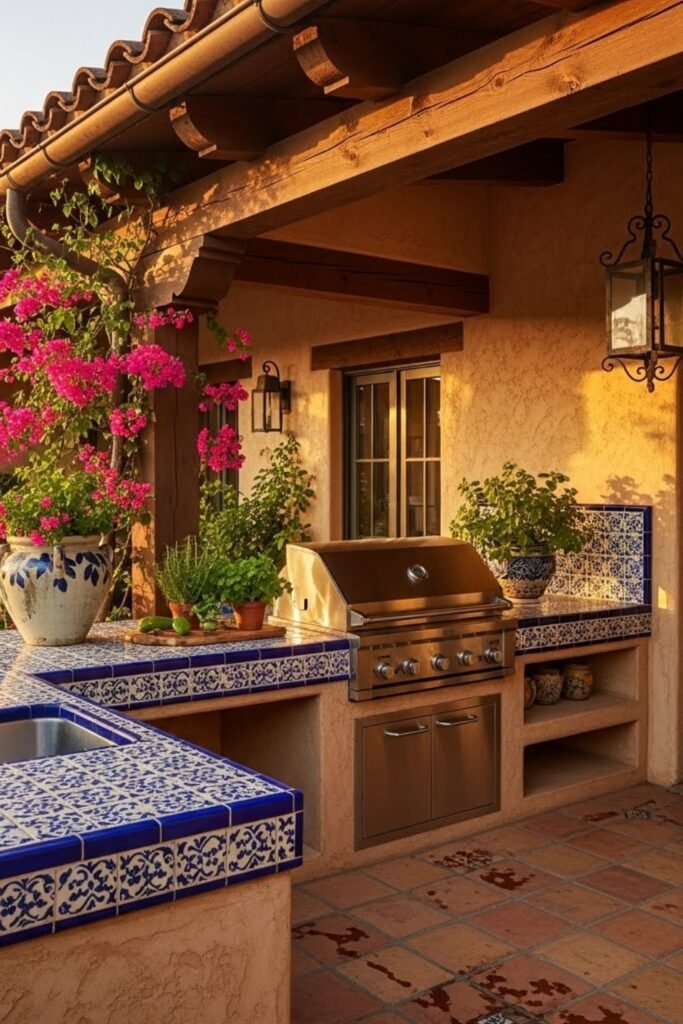
An outdoor kitchen fits naturally into Spanish-style living. Usually placed in a courtyard or patio, this space supports cooking and dining in warm weather.
Tile counters and built-in grills match the home’s materials, helping the outdoor area feel like a true extension of the interior rather than a separate zone.
Stone Fireplace
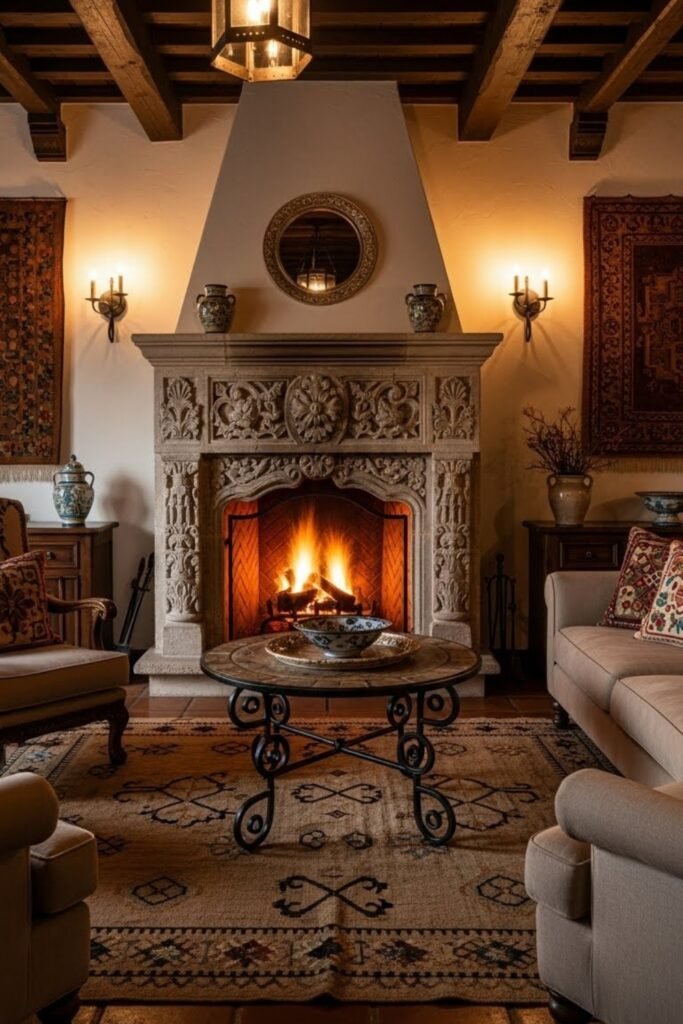
A stone fireplace becomes a strong focal point inside Spanish-style homes. Often detailed with carved stone or plaster surrounds, it adds warmth and texture to living spaces.
The fireplace anchors the room visually and complements materials like wood beams, tile floors, and stucco walls.
Organic Layout
An organic layout avoids strict symmetry in favor of natural flow. Spanish-style homes often feel collected over time, with rooms arranged around courtyards or patios.
This approach creates cozy transitions between spaces and gives the home a relaxed, lived-in character that feels authentic rather than rigid.
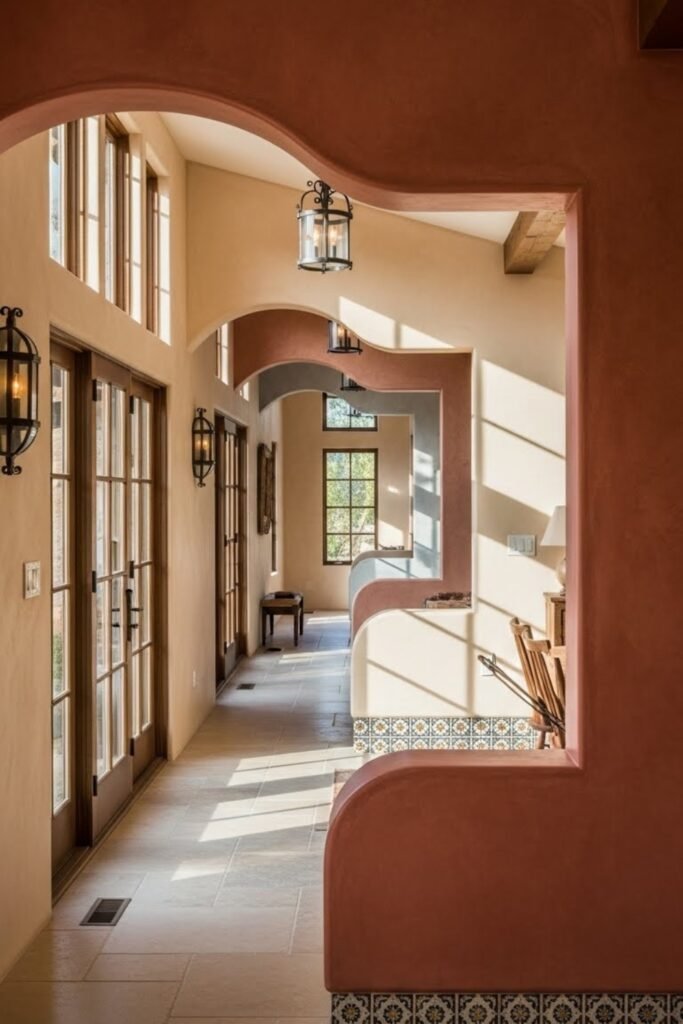
Shaded Walkways
Shaded walkways connect different parts of a Spanish-style home while protecting from direct sun. These covered paths often feature arches or wooden beams overhead.
They encourage outdoor movement throughout the day and create beautiful transitions between rooms, courtyards, and garden spaces.
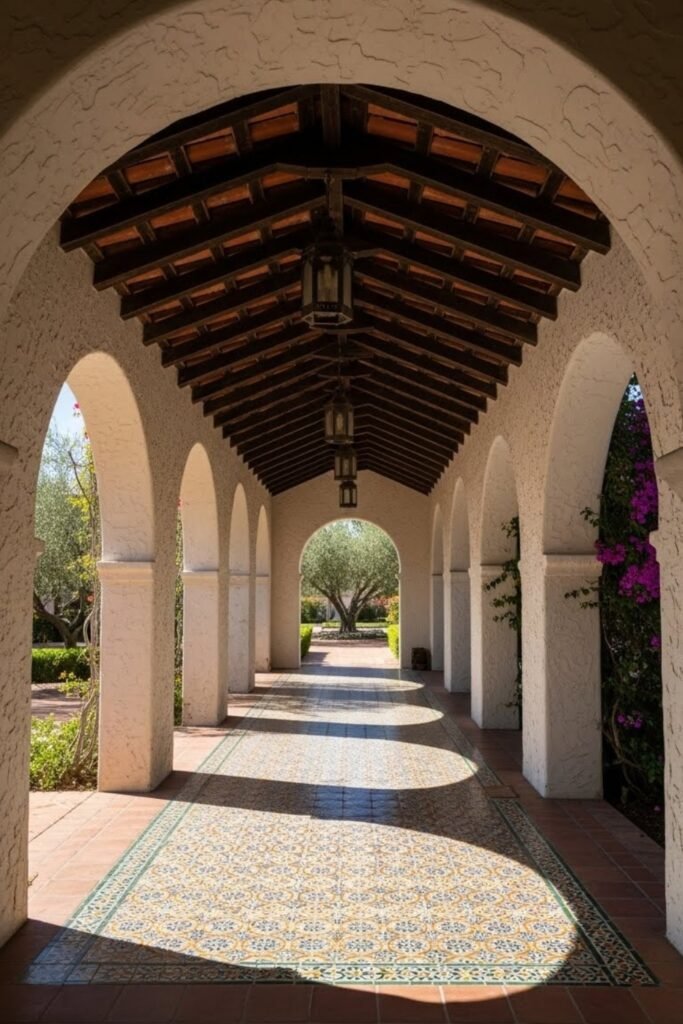
Earth Tones
Earth-tone color palettes are central to Spanish-style design. Shades like sand, clay, beige, and warm brown reflect the natural landscape.
These colors create a calm, grounded feel and work well with stucco walls, tile floors, and wood details without overwhelming the space.
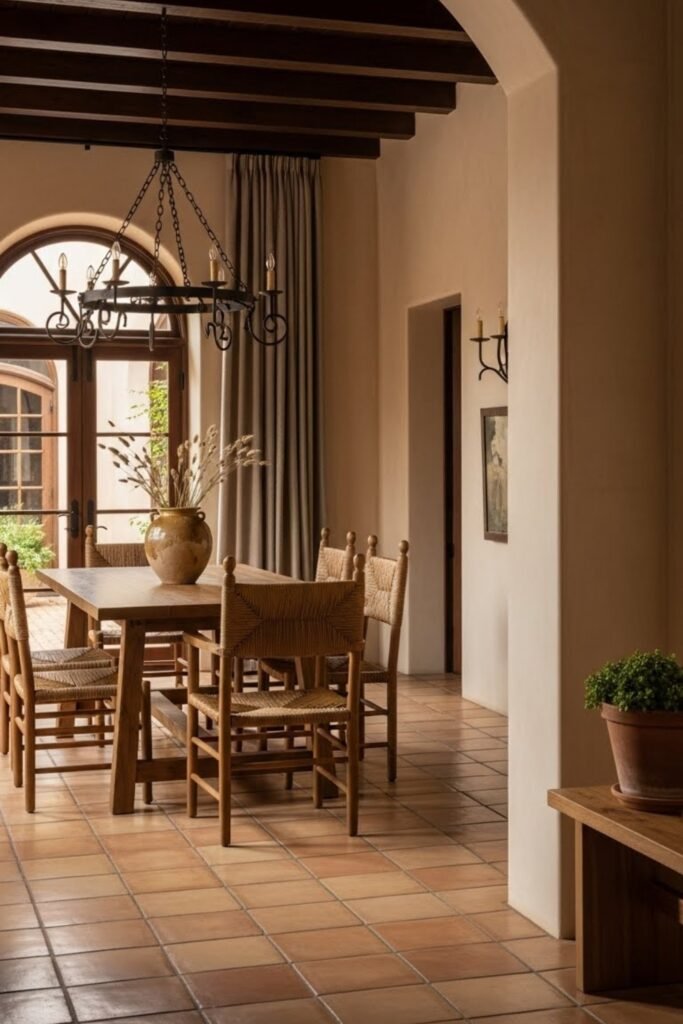
Courtyard Pool
A courtyard pool offers privacy and comfort in Spanish-style homes. Instead of large open pools, these are often compact and tucked inside enclosed courtyards.
The surrounding walls help block wind and noise, creating a peaceful, resort-like atmosphere perfect for warm climates.
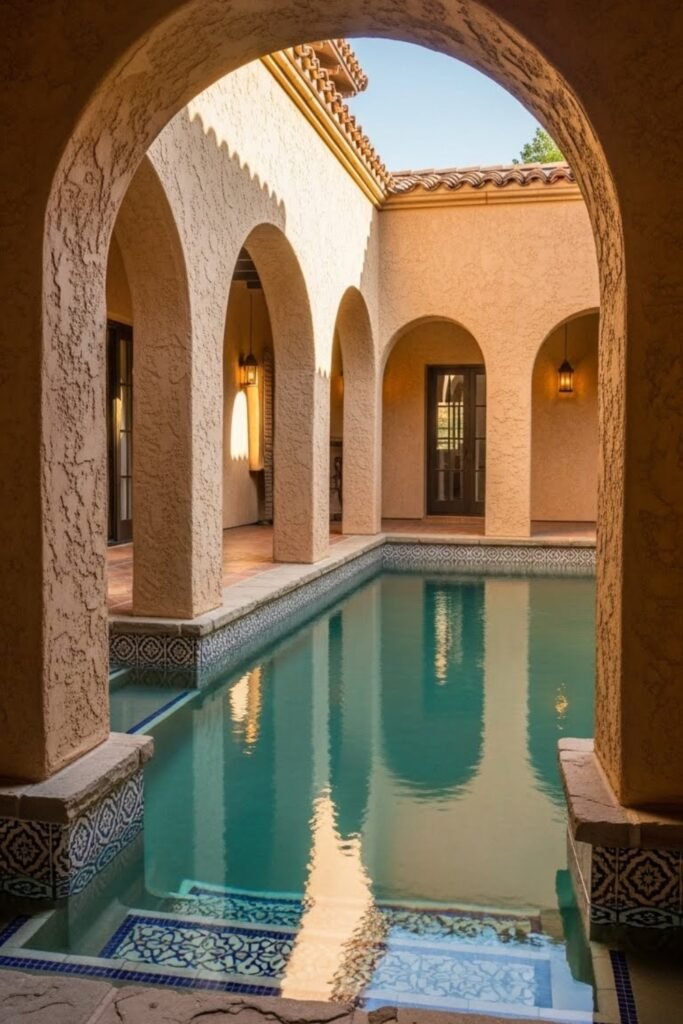
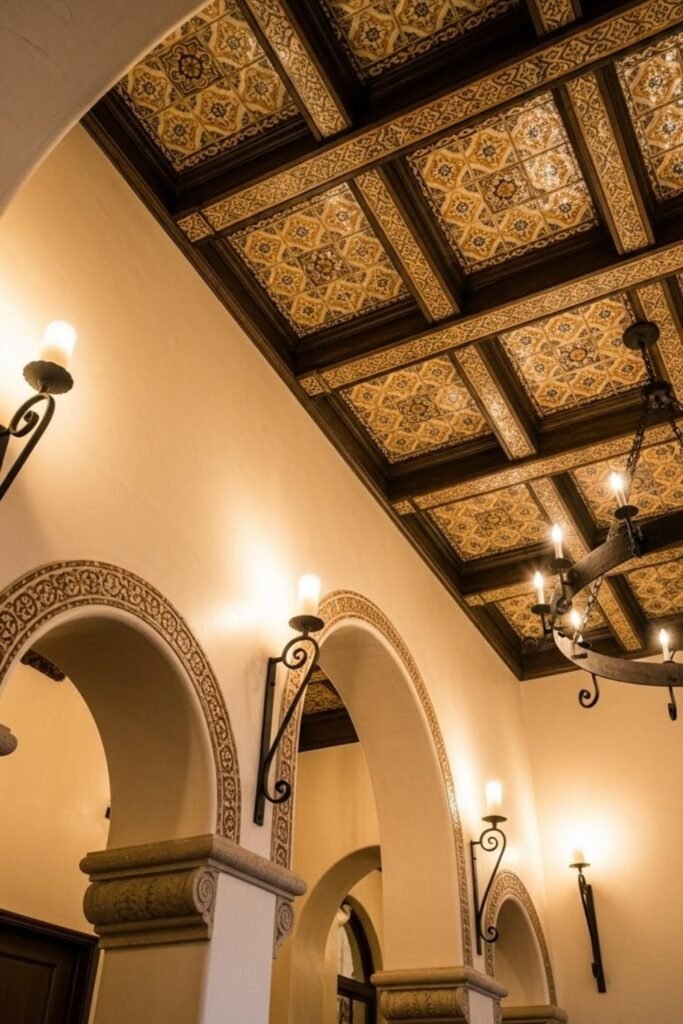
Ceiling Tiles
Decorative ceiling tiles add unexpected detail to Spanish interiors. Painted or patterned designs draw the eye upward and add character without clutter.
These tiles are often used in dining areas, hallways, or covered patios to enhance visual interest while staying true to traditional Spanish influences.
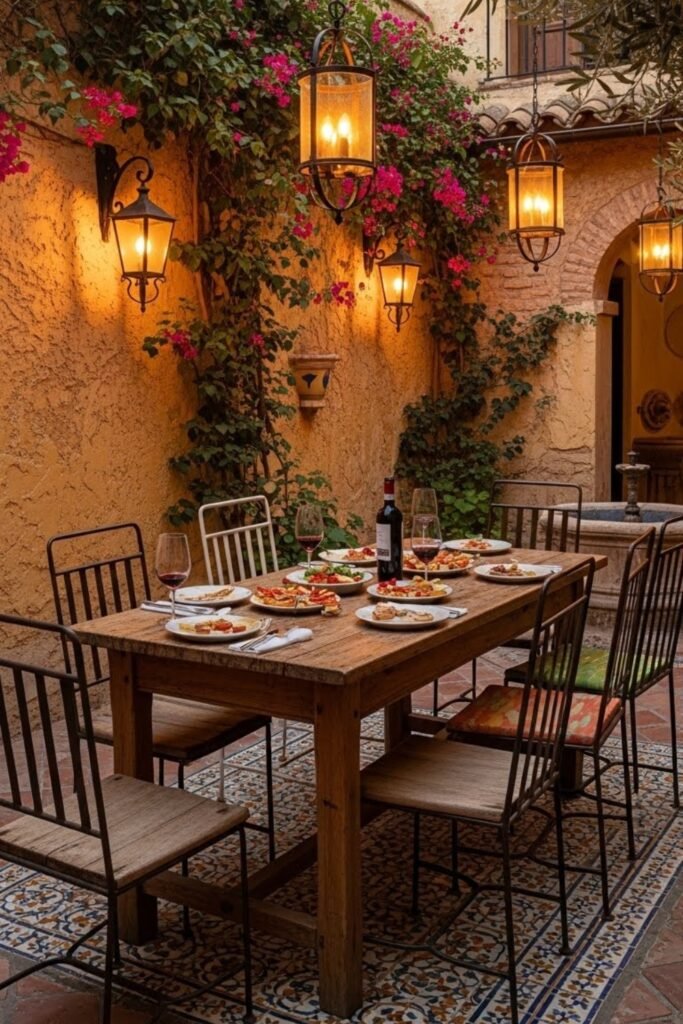
Outdoor Dining
Outdoor dining areas are a natural part of Spanish-style homes. These spaces are often placed in courtyards or covered patios, making meals feel relaxed and social.
Tile floors, wooden tables, and nearby kitchens help the dining area function comfortably while blending seamlessly with the home’s architecture.
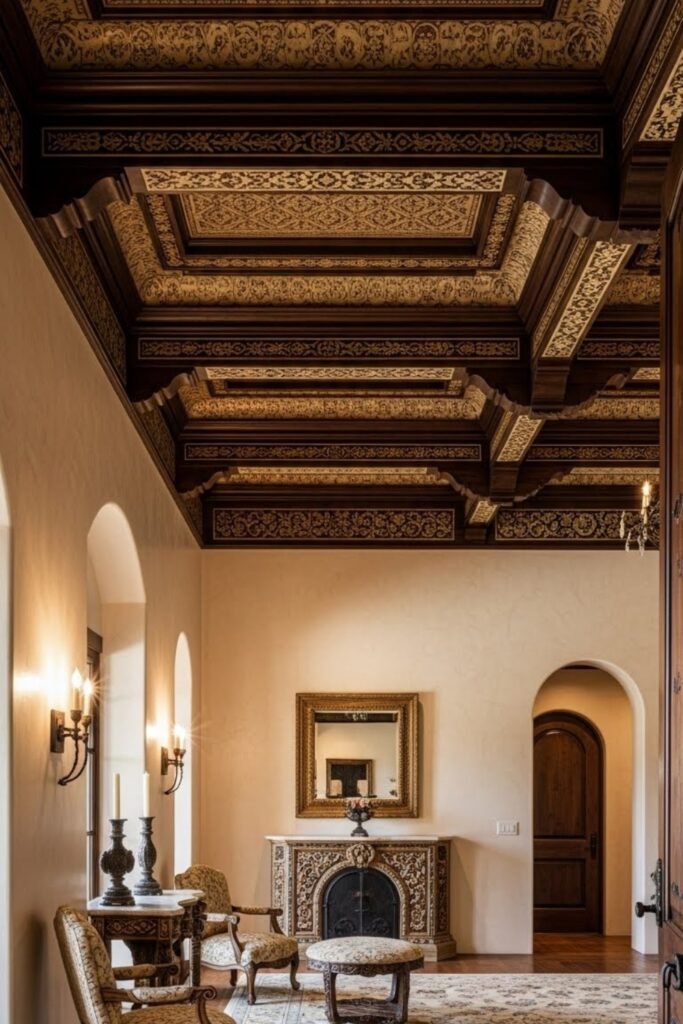
Decorative Ceilings
Decorative ceilings add depth and craftsmanship to Spanish interiors. This can include painted patterns, subtle textures, or wood detailing. Ceiling treatments bring visual interest
without affecting floor space and help complete the layered, old-world feel that defines Spanish-style homes.

Hi, my name is Ali Mehmood! I’m a passionate writer and DIY enthusiast who loves turning creative ideas into practical, hands-on projects.
I created this website to share inspiring, budget-friendly ideas that you can do yourself – whether it’s organizing your home, crafting something unique, or creating fun projects for kids and pets.
I believe DIY isn’t just a hobby – it’s a smart way to save money, reduce waste, and enjoy the satisfaction of making things with your own hands.
I’m excited to have you as part of this growing community, and I’ll continue bringing you helpful, realistic, and fun DIY ideas you can actually use.