This post may contain affiliate links: read full affiliate disclosure.
Colonial house interior design is all about balance, tradition, and timeless elegance. This style draws inspiration from early American homes, where symmetry, craftsmanship, and practicality shaped every space.
Instead of trends that fade quickly, colonial interiors focus on classic details that feel warm, refined, and enduring.
In this article, you’ll discover 25 carefully selected colonial interior design ideas that help you recreate this look in a modern home without making it feel outdated.

Symmetrical Layout
Colonial interiors emphasize balance and order. Arrange furniture in matching pairs and center key pieces around a fireplace or focal wall.
This layout creates a formal, calm atmosphere that feels intentional and timeless. It works especially well in living rooms and sitting areas where structure and visual harmony matter most.
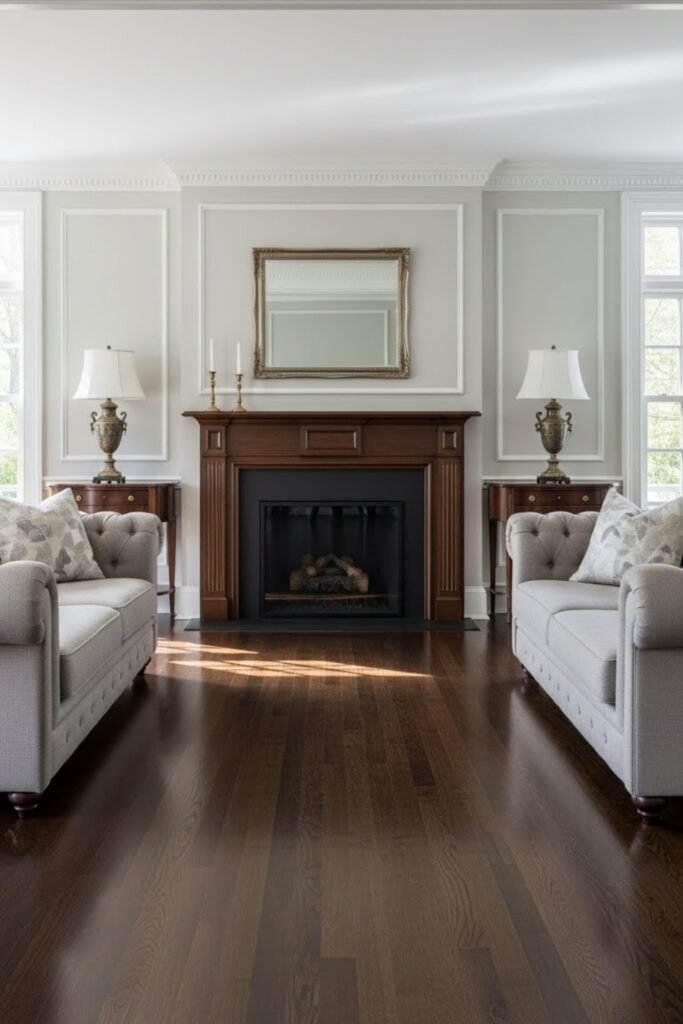
Paneled Walls
Wall paneling adds depth and historic charm to colonial interiors. Raised or flat wood panels bring texture without overpowering the space.
Paint them in soft neutrals for elegance or keep natural wood for warmth. Paneled walls are ideal for dining rooms, hallways, and formal living spaces.
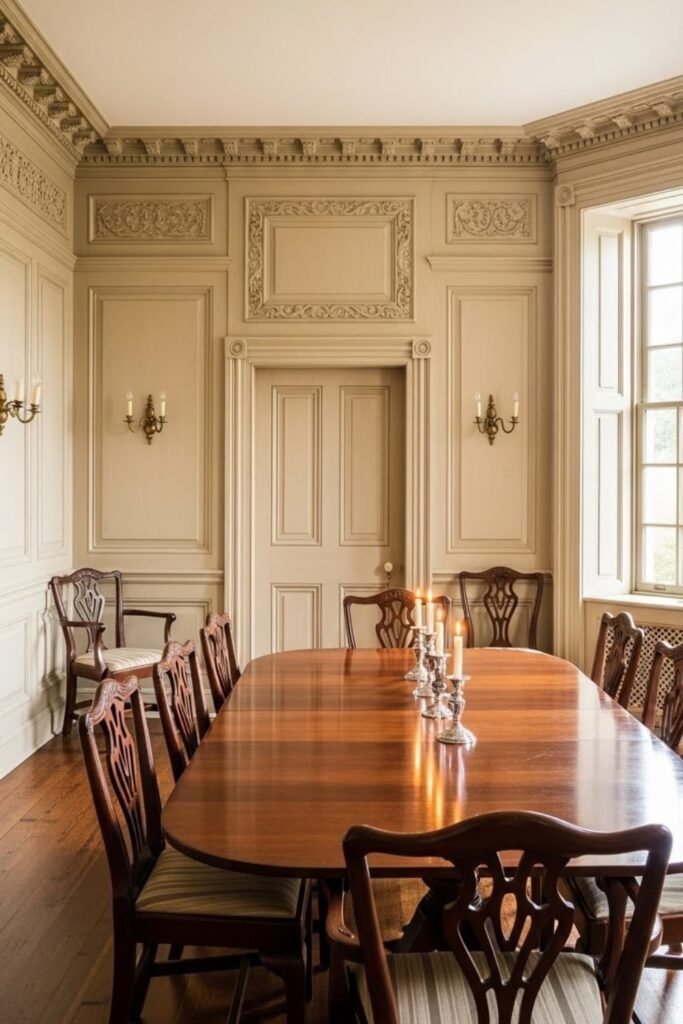
Crown Molding
Crown molding is a signature colonial detail that frames the room beautifully. It adds architectural interest and visually connects walls and ceilings.
Simple, well-defined molding painted in white or cream enhances ceiling height while keeping the space refined and traditional rather than ornate.
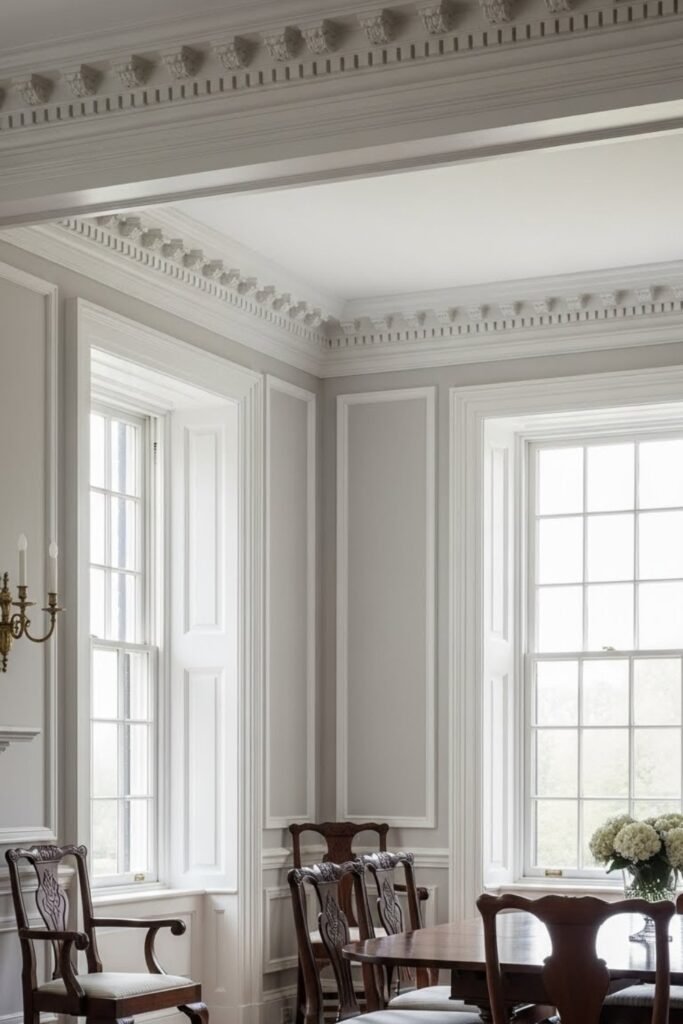
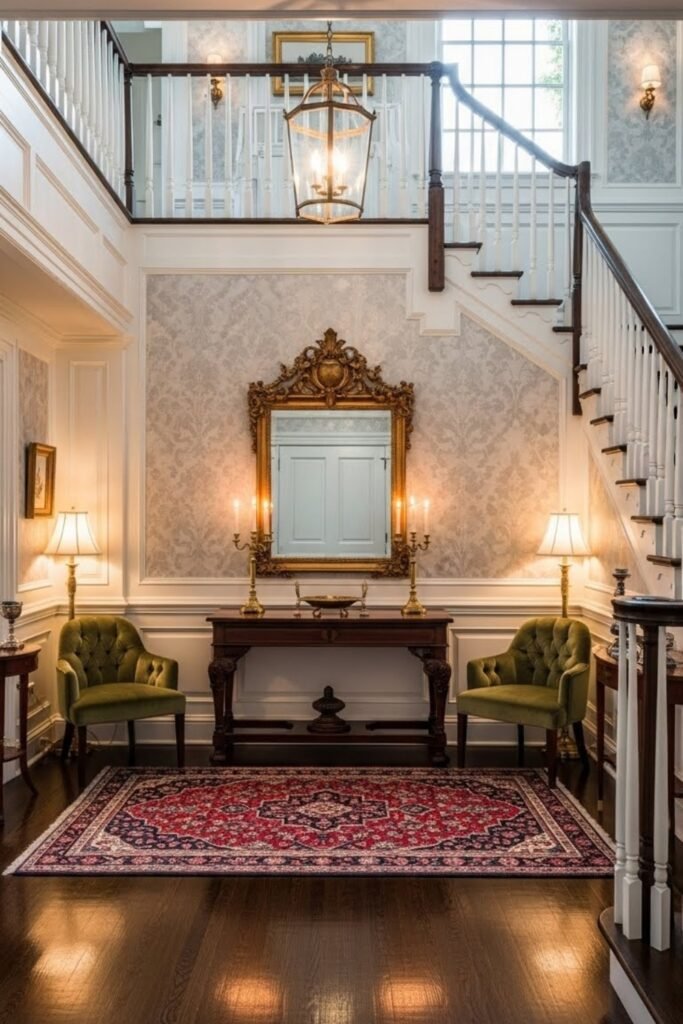
Formal Foyer
A colonial foyer feels structured and welcoming. Use a centered console table, classic rug, and traditional lighting to create symmetry.
Matching lamps or wall sconces add balance. This entry space sets the tone for the rest of the home, emphasizing elegance, order, and timeless design.
Classic Fireplace
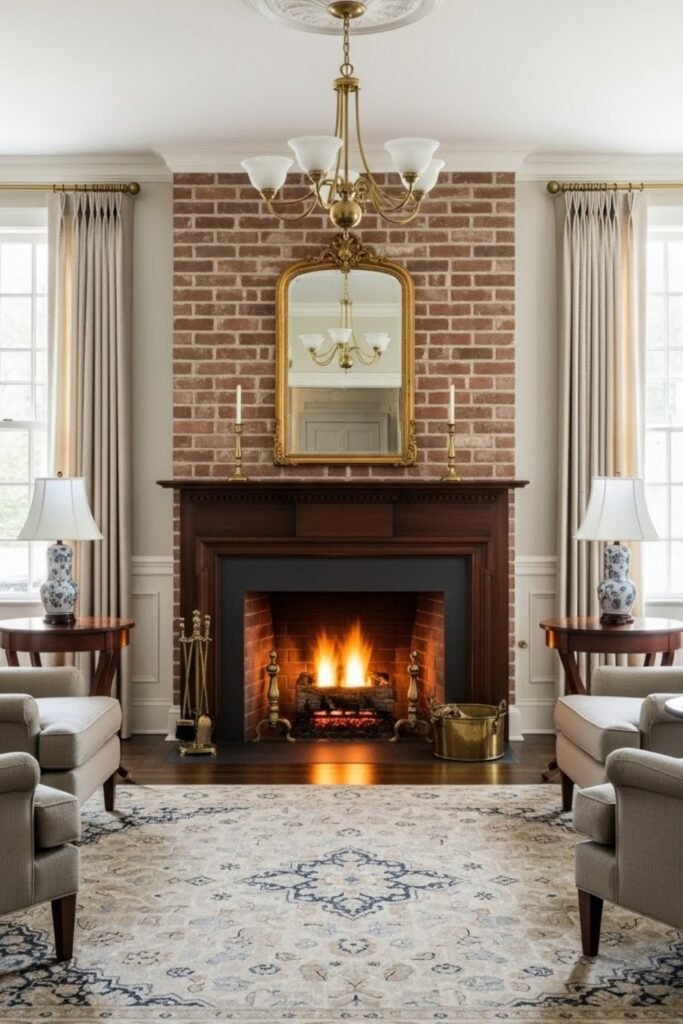
A traditional fireplace anchors colonial interiors. Brick or stone surrounds with a simple wood mantel create a strong focal point.
Arrange seating symmetrically around it to reinforce balance. Even in modern homes, a classic-style fireplace instantly adds colonial warmth and architectural presence to living rooms.
Heritage Colors
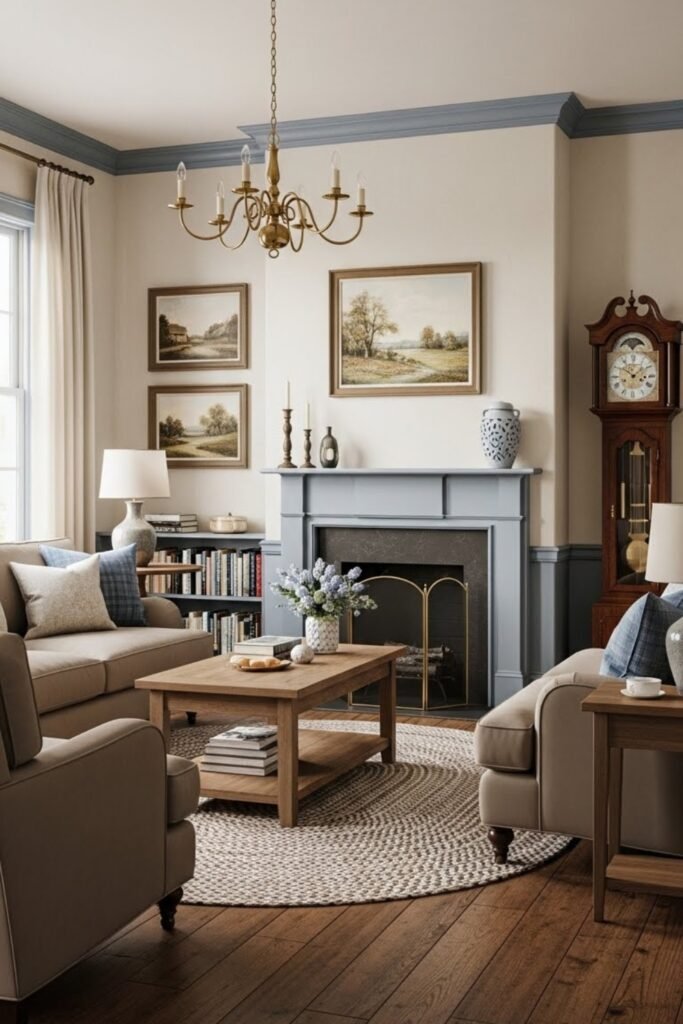
Colonial interiors favor calm, historic colors. Think soft creams, muted blues, warm taupes, and gentle grays. These shades create a timeless backdrop that highlights wood details and traditional furnishings.
Avoid bold or trendy tones—heritage colors keep the space elegant, grounded, and historically inspired.
Hardwood Floors
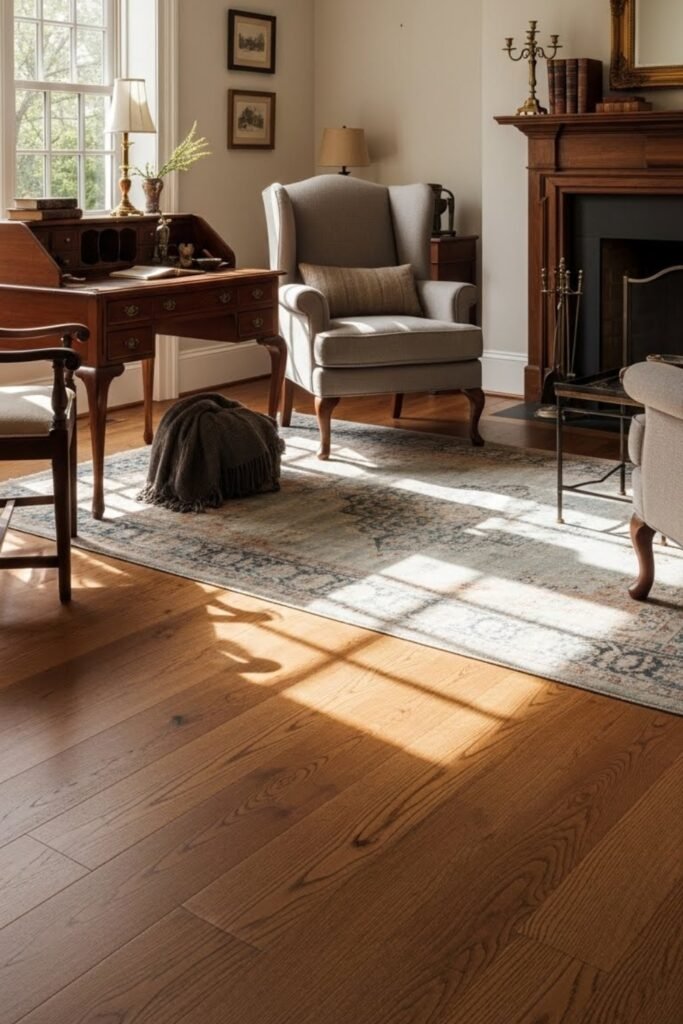
Hardwood flooring is essential in colonial interiors. Wide planks or darker stains add authenticity and warmth.
These floors provide a strong foundation that complements traditional furniture and neutral palettes. Area rugs can soften the look while still allowing the natural beauty of the wood to stand out.
Built-In Shelves
Built-in shelving adds both function and symmetry. Place them on either side of fireplaces or along feature walls for a balanced look.
Painted shelves keep the design refined, while styled books and classic decor enhance the colonial feel. They offer storage without disrupting the room’s formal structure.
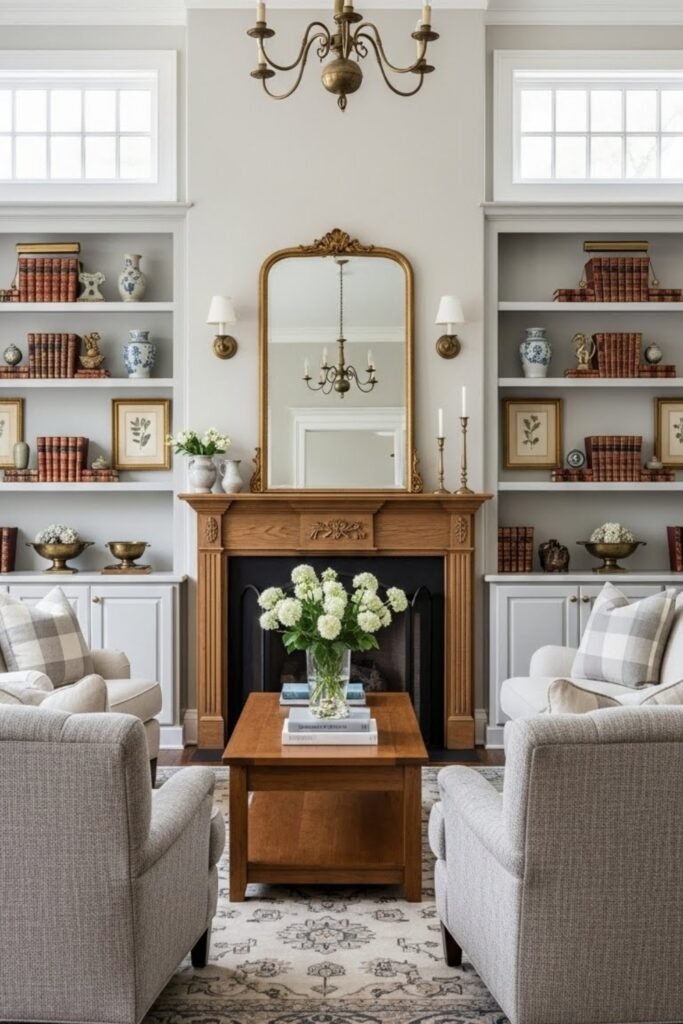
Antique Furniture
Colonial interiors rely on solid, well-crafted furniture. Choose wood pieces with classic silhouettes, turned legs, and traditional detailing.
These items add weight and authenticity to the space. Even one antique-style piece can elevate a room and make it feel rooted in colonial tradition.
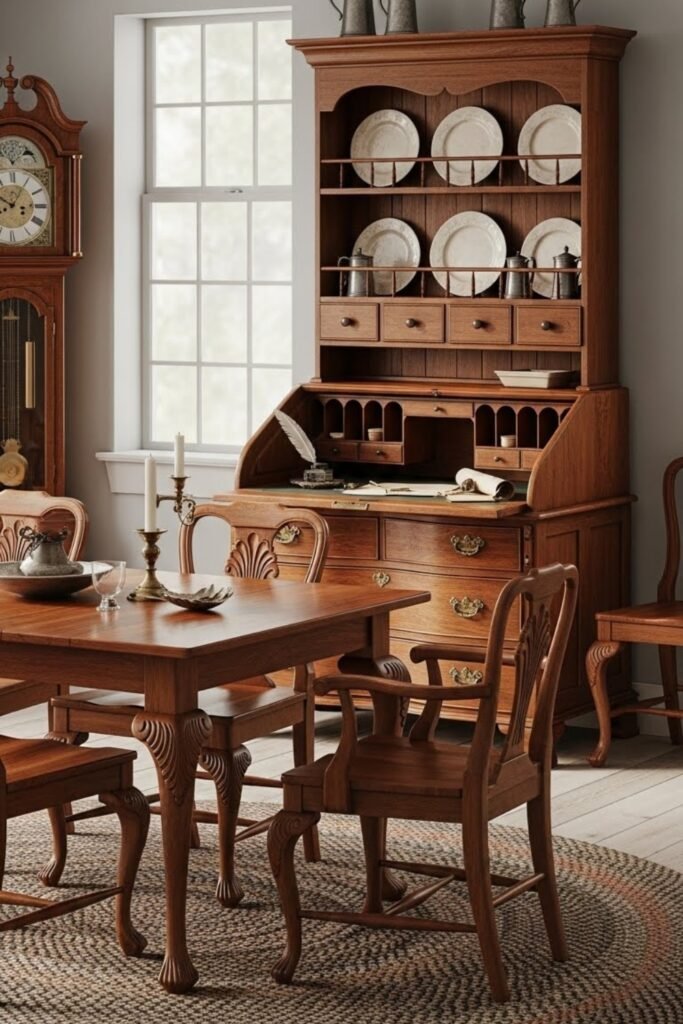
Formal Dining
A dedicated dining room is a hallmark of colonial homes. Use a large wood table, traditional chairs, and a central light fixture to establish formality.
This space should feel intentional, designed for gatherings and structured meals rather than casual everyday use.
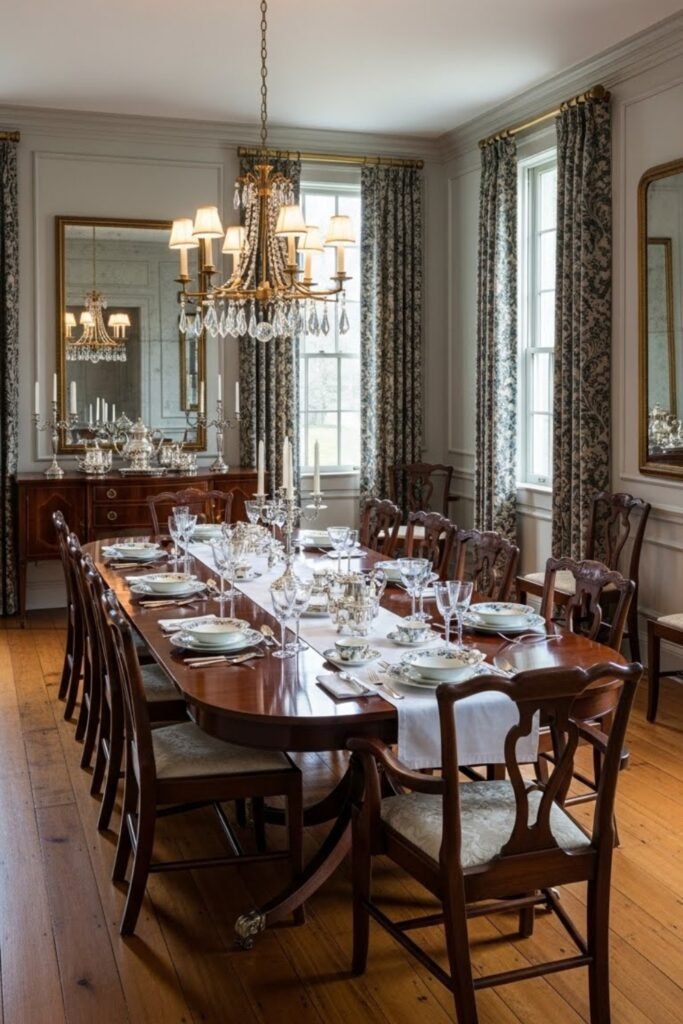
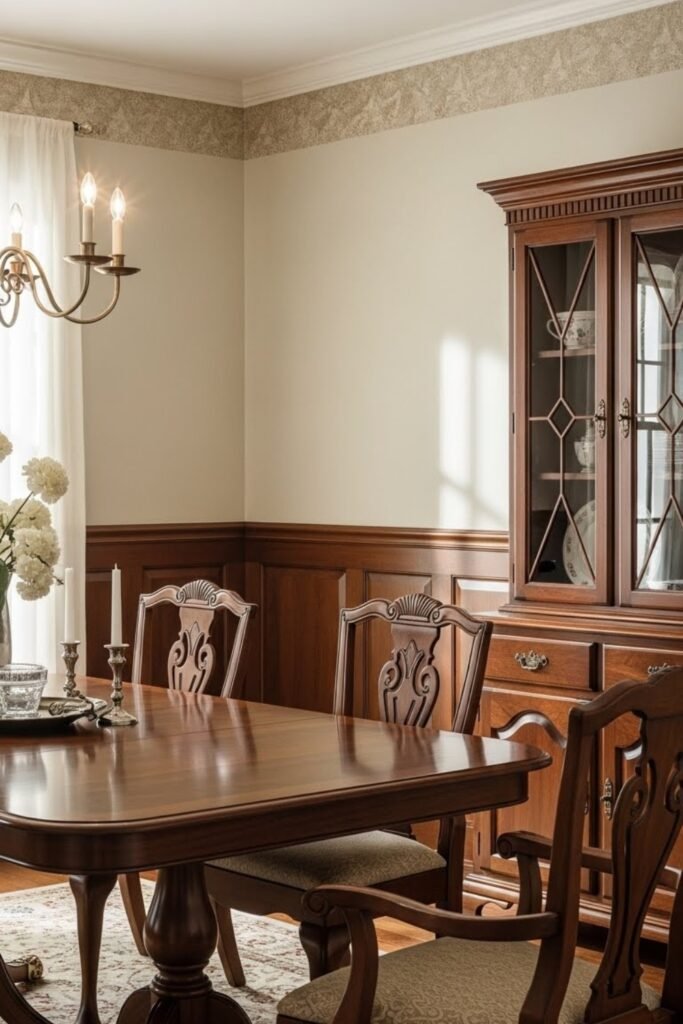
Chair Rails
Chair rails add both function and style. They break up wall height while protecting surfaces from furniture damage.
Paint or panel below the rail for contrast and depth. This detail works especially well in dining rooms and hallways, reinforcing the home’s colonial character.
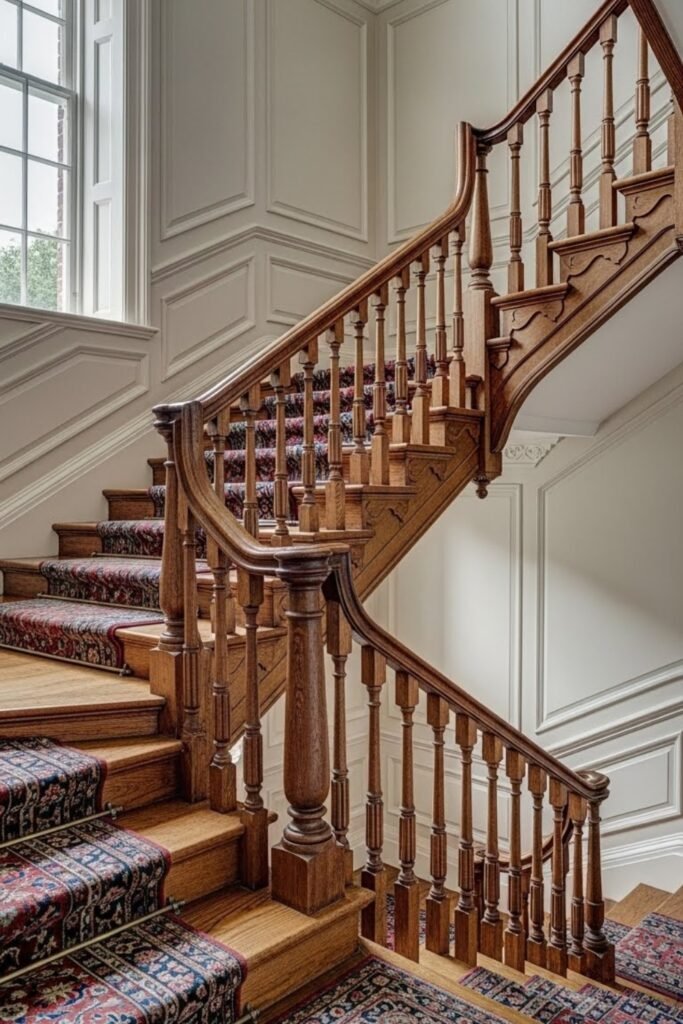
Wood Staircase
A classic wooden staircase adds architectural charm. Traditional balusters, detailed handrails, and natural wood tones create a strong visual statement.
Keep the design clean and symmetrical to match colonial principles. Staircases often become a subtle centerpiece in colonial interiors.
Window Drapery
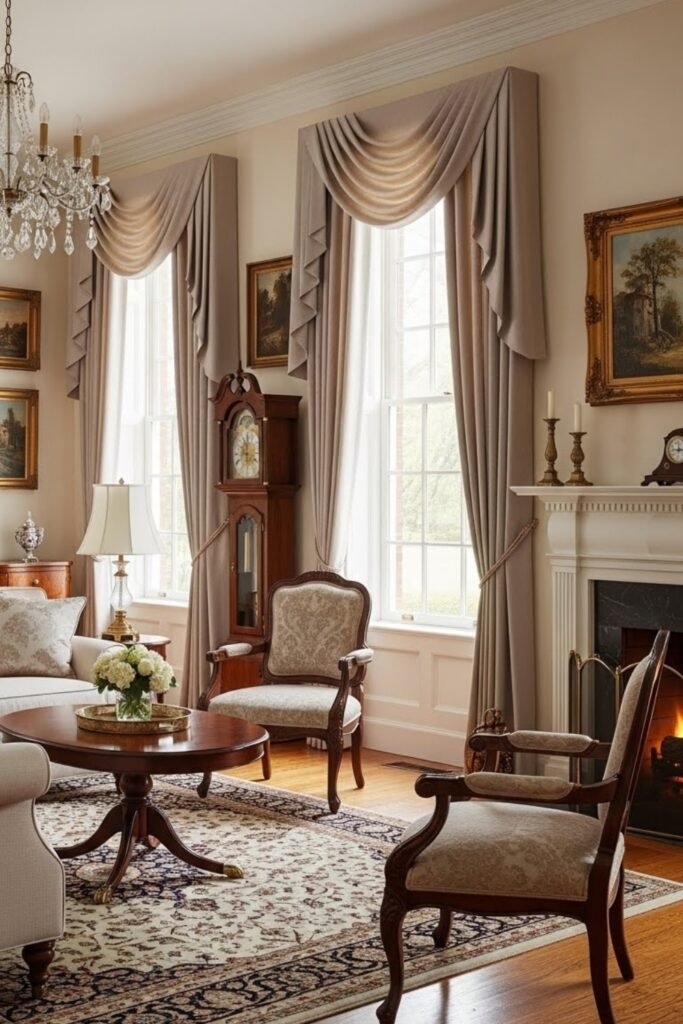
Colonial interiors favor classic window treatments. Use full-length curtains, simple valances, or fabric shades instead of modern blinds.
Neutral fabrics or subtle patterns keep the look refined. Properly dressed windows soften rooms while reinforcing the traditional, formal feel typical of colonial design.
Metal Hardware
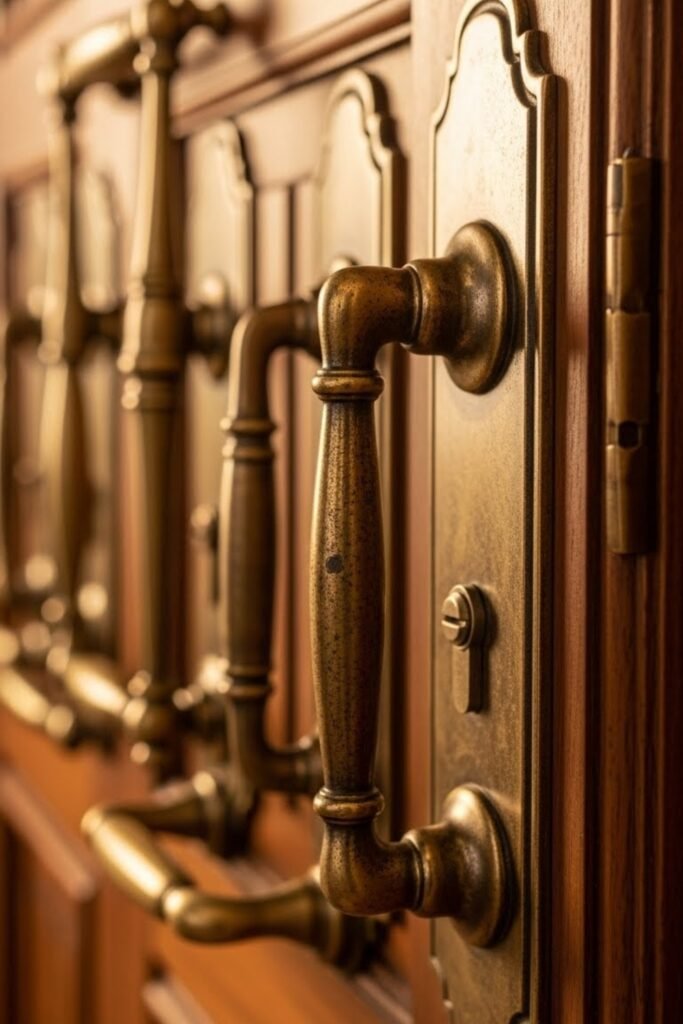
Small details matter in colonial interiors. Brass, iron, or oil-rubbed finishes work best for door handles, hinges, and cabinet pulls.
These metals add warmth and historical accuracy. Avoid sleek chrome or matte black, as traditional hardware supports the timeless colonial aesthetic.
Area Rugs
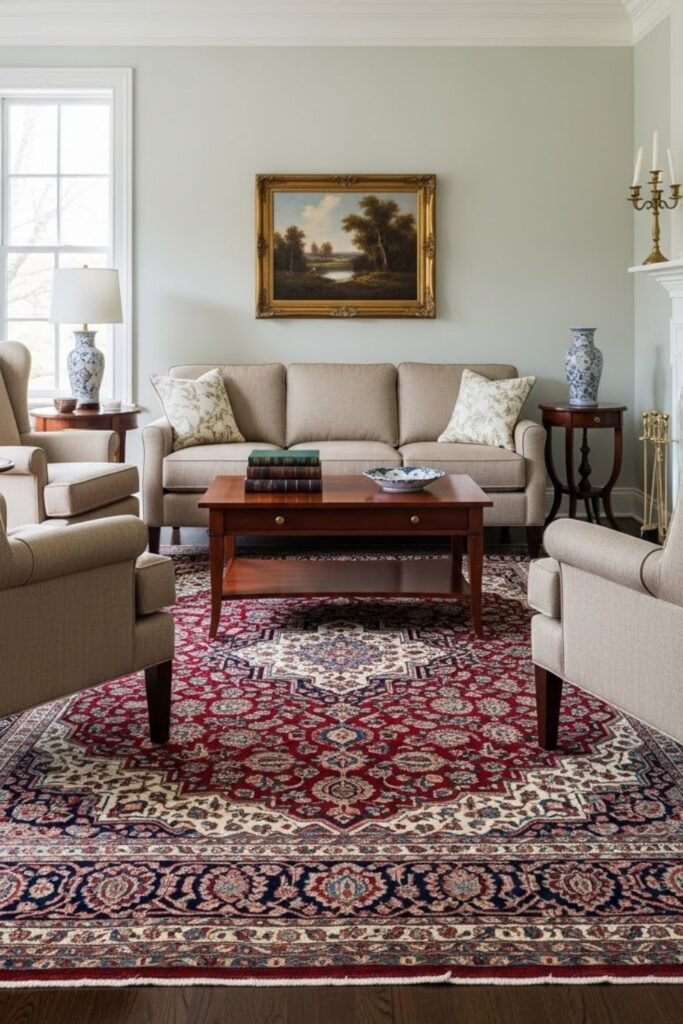
Traditional area rugs bring color and warmth to colonial spaces. Persian or oriental-style rugs complement wood floors and formal furniture.
Place rugs symmetrically under seating or dining tables. They help define spaces while adding pattern without overpowering the room’s balanced design.
Sitting Room
Colonial homes often include formal sitting rooms. These spaces focus on conversation rather than casual lounging.
Arrange chairs symmetrically around a central table or fireplace. Keep decor minimal and refined to maintain the room’s purpose as a calm, structured gathering space.
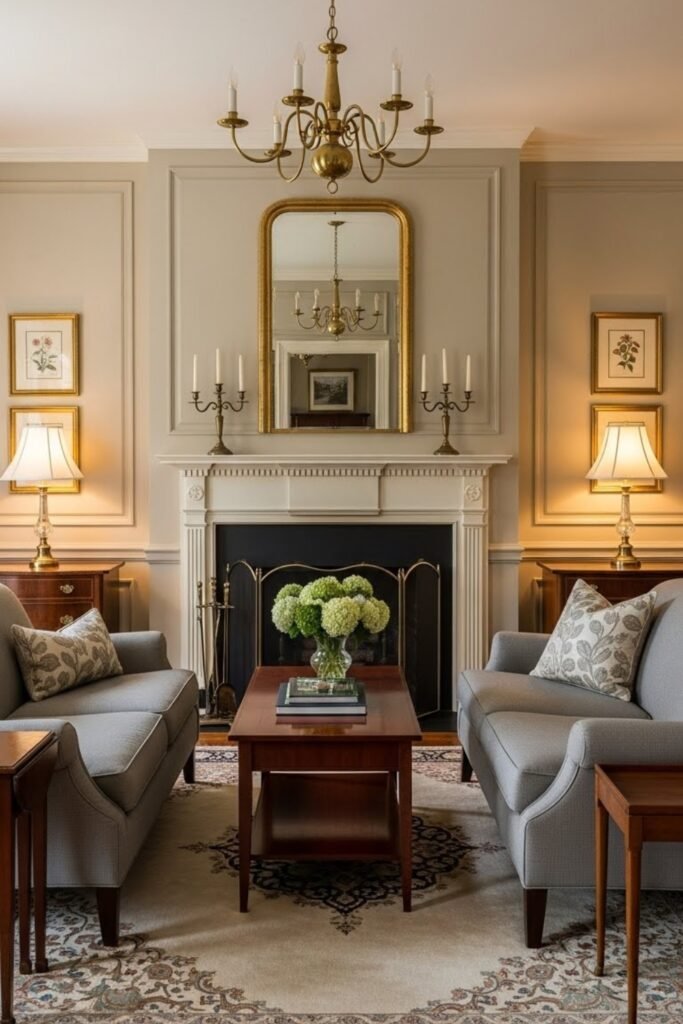
Classic Kitchen
Colonial kitchens feel structured and timeless. Use simple cabinetry layouts, balanced proportions, and practical work zones.
Avoid ultra-modern finishes and focus on functionality with subtle elegance. A well-organized kitchen keeps the colonial spirit intact while still feeling comfortable for daily use.
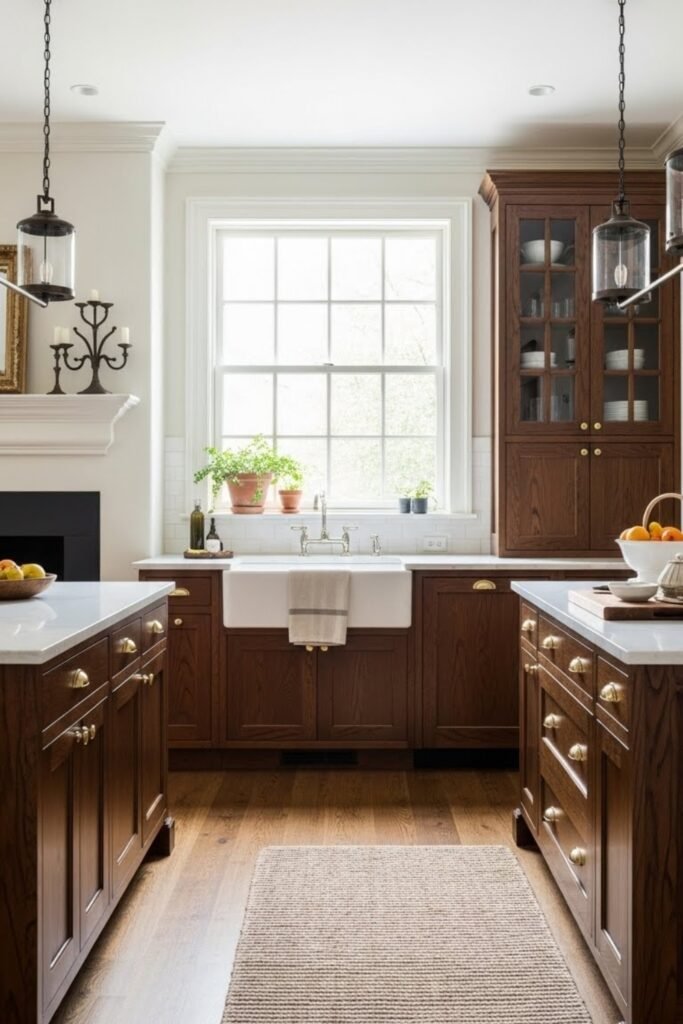
Painted Cabinets
Painted wood cabinets suit colonial interiors perfectly. Soft whites, creams, or muted greens maintain a historic look without feeling heavy.
These colors highlight craftsmanship and keep the space bright. Avoid glossy finishes to preserve the traditional, understated character of colonial design.
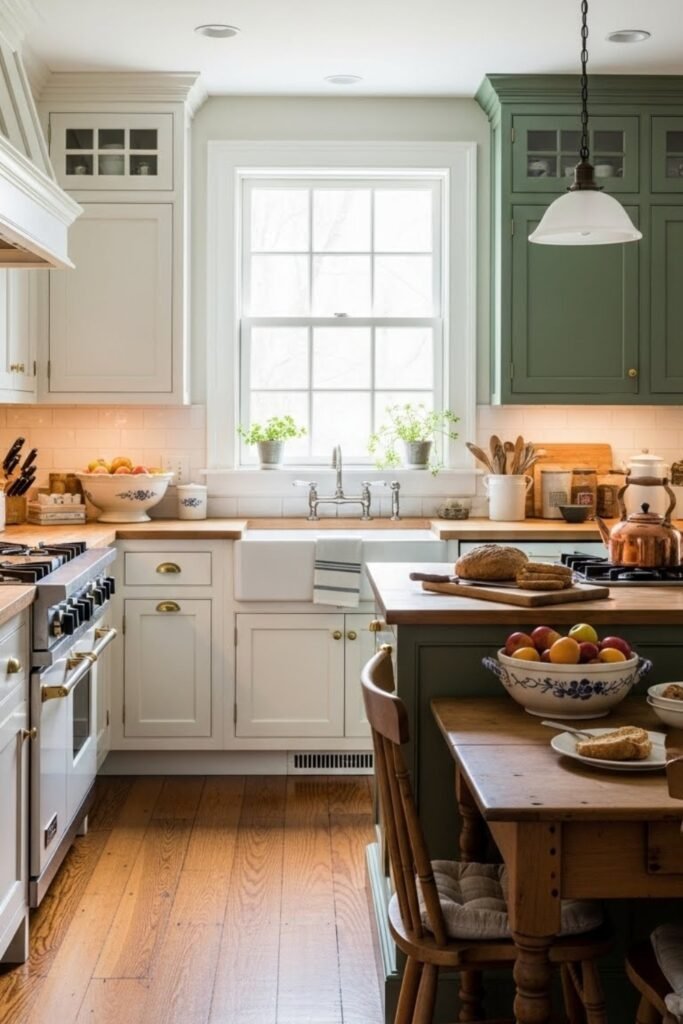
Historic Artwork
Wall art should reflect tradition and history. Choose framed landscapes, maps, or classic portraits. Keep frames simple and symmetrical when hanging.
This approach adds visual interest while reinforcing the colonial theme without turning the space into a museum-like setting.
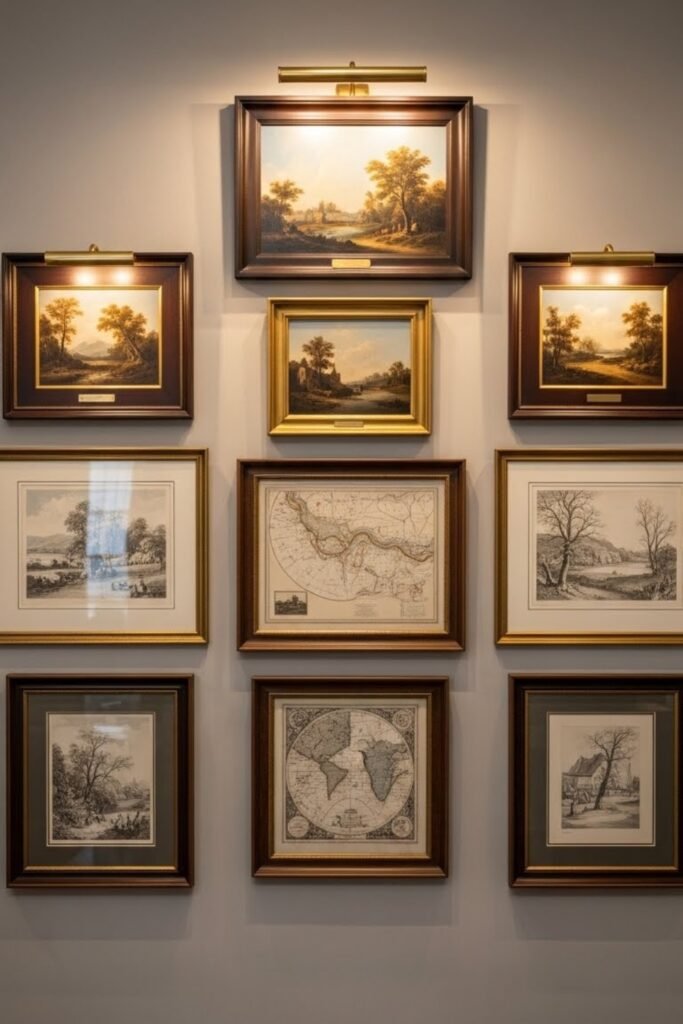
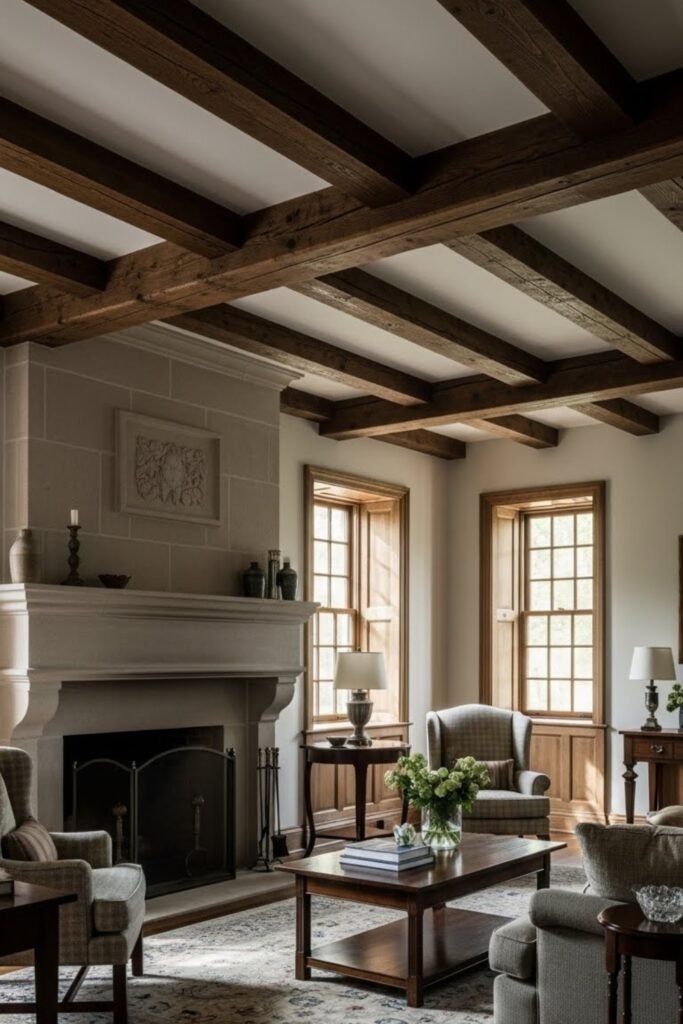
Ceiling Beams
Exposed or decorative wood beams add depth to colonial interiors. They introduce architectural interest without overpowering the room.
Natural or stained wood works best with neutral walls. Ceiling beams help create warmth and subtle character, especially in living rooms or family areas.
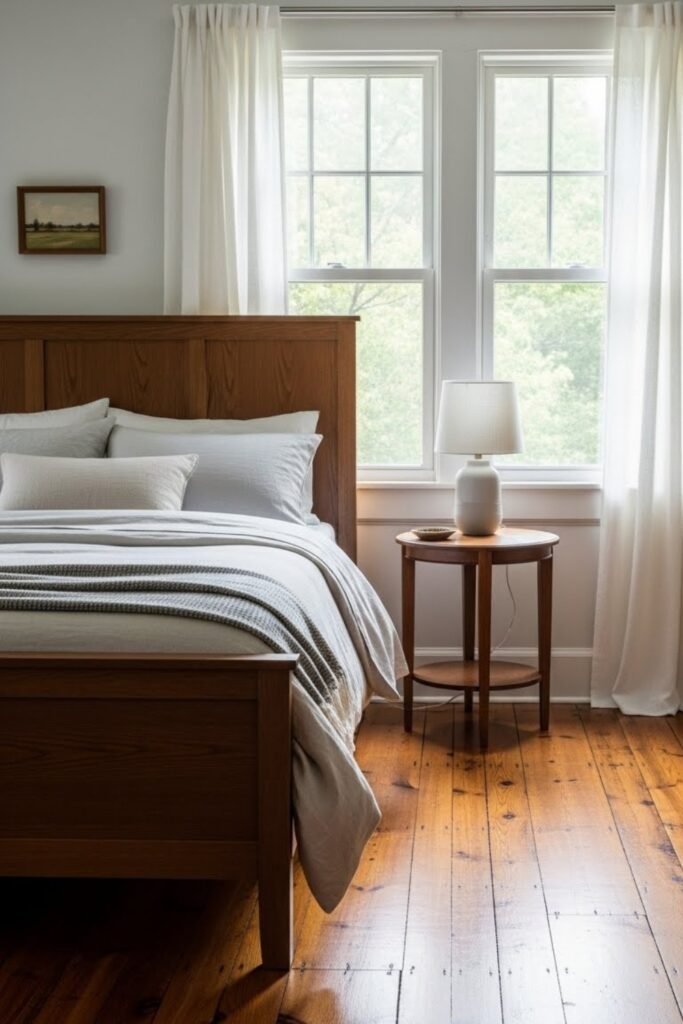
Calm Bedrooms
Colonial bedrooms feel simple and restful. Use classic wood furniture, soft bedding, and neutral colors to maintain a peaceful atmosphere.
Avoid clutter or bold accents. The goal is comfort with structure, creating a space that feels timeless, balanced, and quietly elegant.
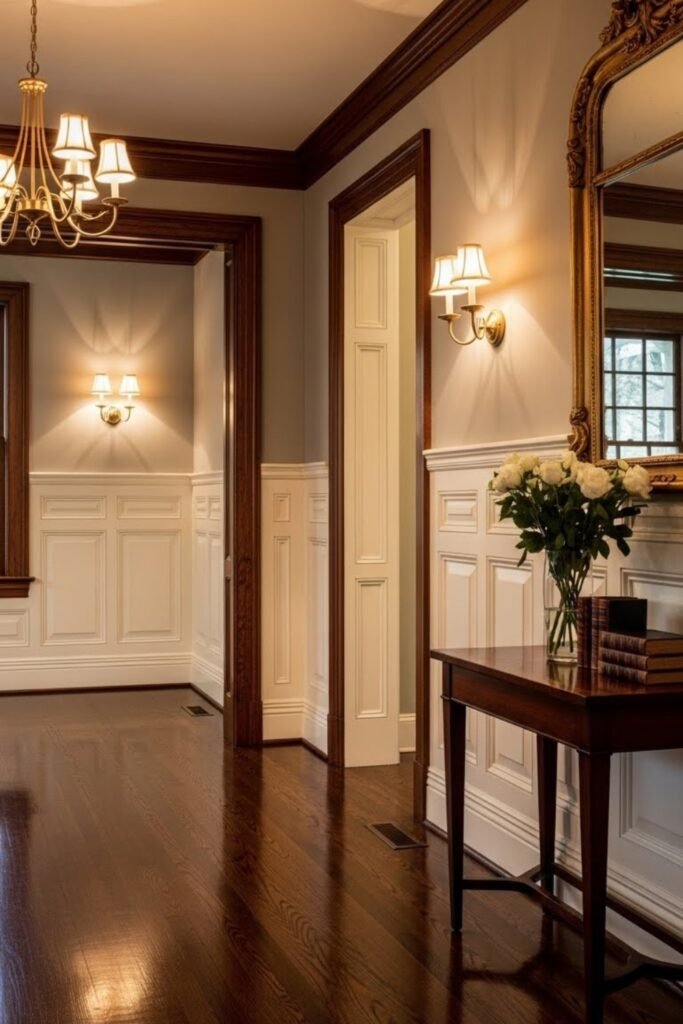
Wainscoting Panels
Wainscoting adds texture and refinement to colonial interiors. Install it in hallways, dining rooms, or staircases to enhance wall depth.
Painted panels in light shades keep rooms bright while reinforcing traditional architectural detail without overwhelming the space.
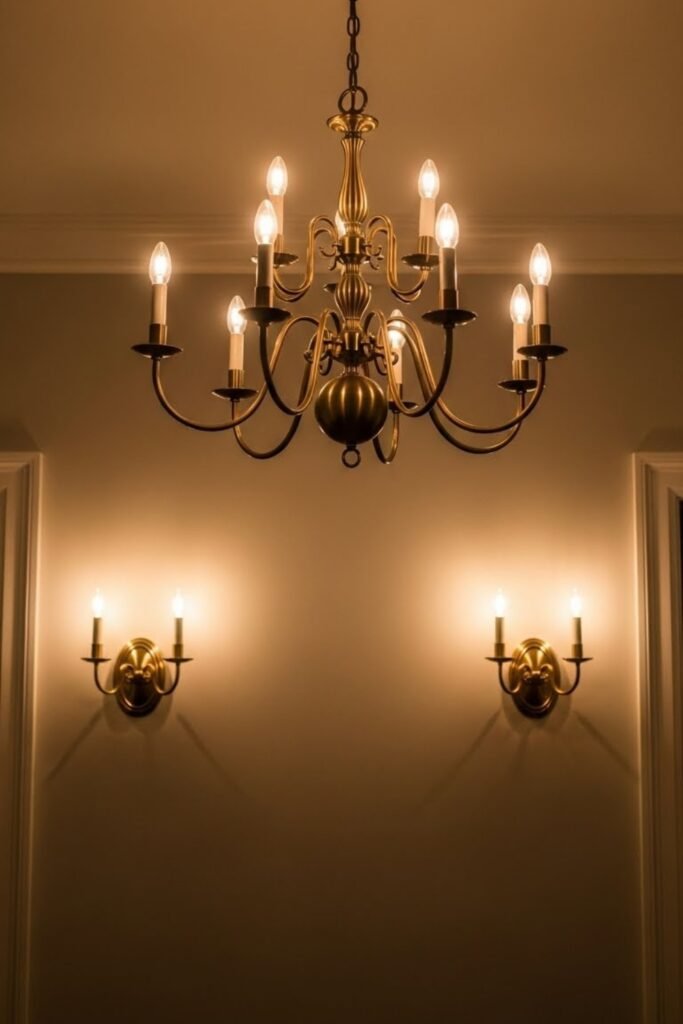
Traditional Lighting
Lighting should feel elegant and understated. Use chandeliers, lantern-style pendants, or wall sconces with classic shapes.
Warm light enhances wood finishes and neutral colors. Avoid modern or industrial fixtures to maintain a cohesive colonial atmosphere throughout the home.
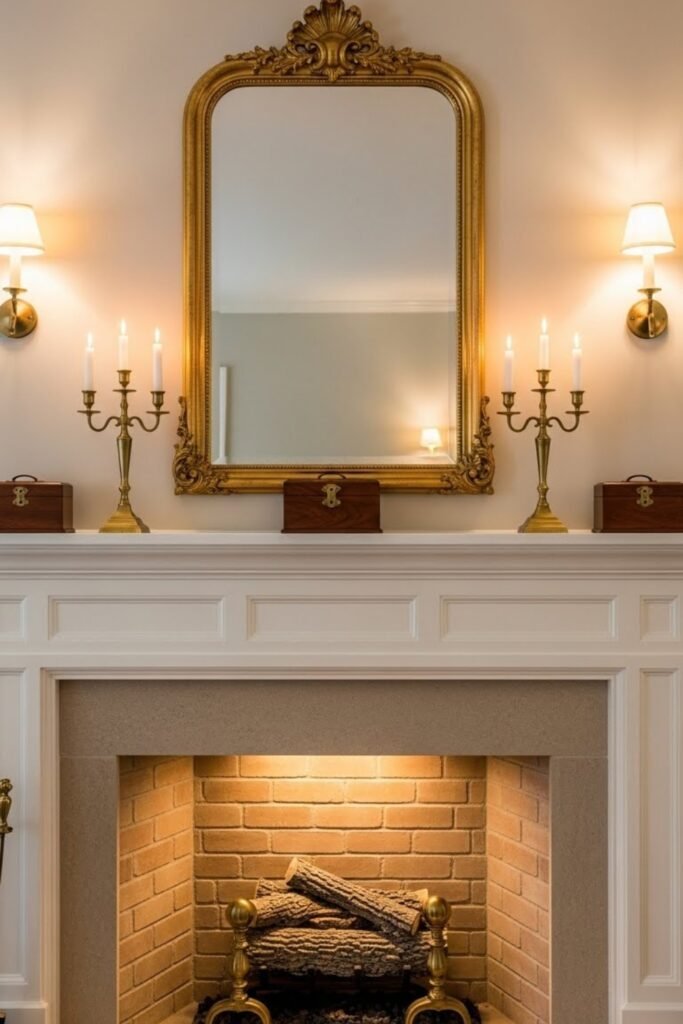
Mantel Styling
A fireplace mantel offers the perfect spot for subtle decor. Use mirrors, candles, or classic accessories arranged symmetrically. Keep styling minimal to avoid clutter.
This balanced approach highlights the fireplace while staying true to colonial design principles.
Historic Accents
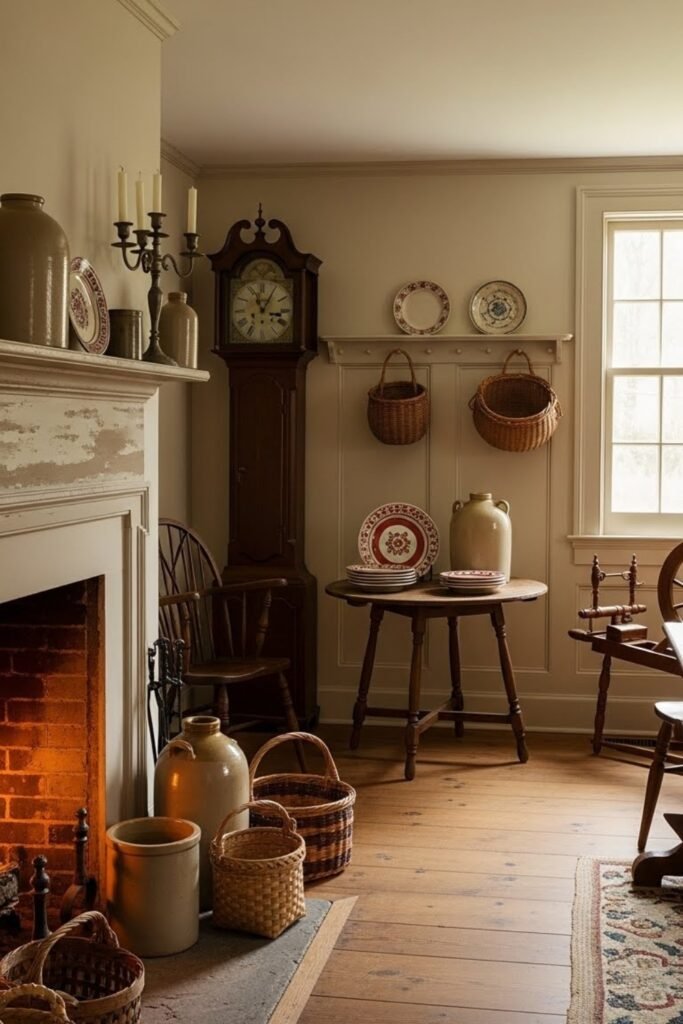
Finish rooms with small, meaningful accessories. Think pottery, woven baskets, clocks, or framed documents inspired by colonial life.
These details add authenticity without overpowering the design, helping the interior feel lived-in, warm, and historically grounded.

Hi, my name is Ali Mehmood! I’m a passionate writer and DIY enthusiast who loves turning creative ideas into practical, hands-on projects.
I created this website to share inspiring, budget-friendly ideas that you can do yourself – whether it’s organizing your home, crafting something unique, or creating fun projects for kids and pets.
I believe DIY isn’t just a hobby – it’s a smart way to save money, reduce waste, and enjoy the satisfaction of making things with your own hands.
I’m excited to have you as part of this growing community, and I’ll continue bringing you helpful, realistic, and fun DIY ideas you can actually use.