This post may contain affiliate links: read full affiliate disclosure.
Creating a DIY outside play area for kids sounds exciting until you start thinking about the real problems.
You want your kids to play outside more, but you may worry about hard ground, too much sun, muddy corners, sharp edges, messy toys, small yard space, and the cost of buying a full playground set.
It just needs to give kids a safe place to move, climb, dig, splash, pretend, and explore without turning your backyard into a cluttered mess.
The best setups are usually simple, smart, and planned around how kids actually play.
That is why DIY ideas work so well. You can use small corners, fence space, shade, soft ground cover, recycled wood, buckets, tires, sand, or water stations to build something useful.
In this article, you will find practical DIY outside play area ideas that help you create a fun, safe, and budget-friendly space for your kids.
Lets dive in!
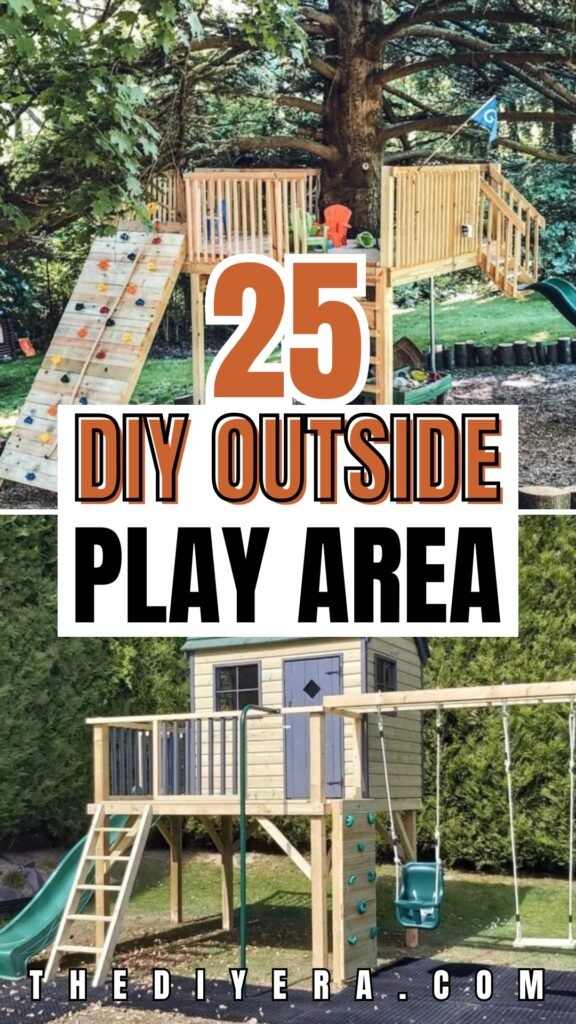
Raised Playhouse Zone
A raised playhouse gives kids more than one way to play, which helps the backyard feel active without needing separate toys everywhere around the lawn.
The slide, ladder, swings, and small climbing wall create movement, pretend play, and confidence-building activities in one organized wooden setup for daily outdoor use too.
Place soft mats, mulch, or thick grass under the landing spots so kids have a safer surface when they climb, swing, and slide down fast.
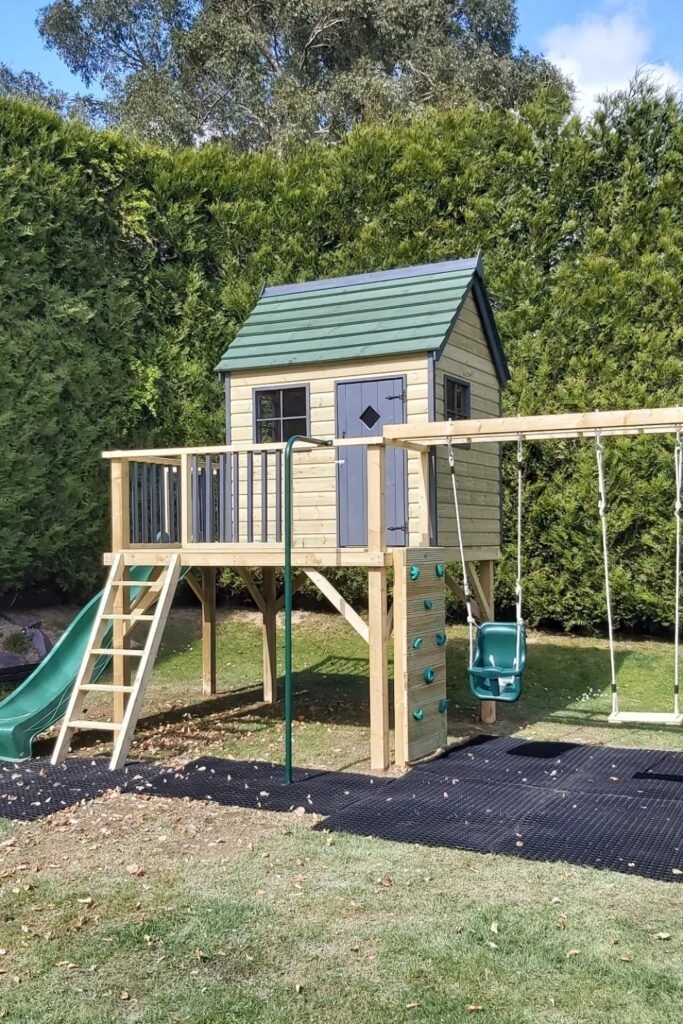
Double-Entry Play Deck
Two entry points make a play deck feel more exciting because kids can climb up one side and race down the slide on repeat again.
The porch gives the structure a little clubhouse feel, while the climbing ramp adds challenge without needing another large backyard feature beside the house area.
Use this idea in a roomy yard where you can leave clear grass around the slide, ladder, and climbing section for safer movement every day.
Compact Swing Station
Small yards work better when one frame carries several activities, and this setup proves kids do not need a huge playground to stay busy outside.
The climbing wall, tic-tac-toe board, baby swing, and disc swing give different ages something to try without spreading play zones across grass or patio space.
Keep the structure low, check the swing hardware often, and add mulch or mats underneath because compact play areas still need safe landings for kids.
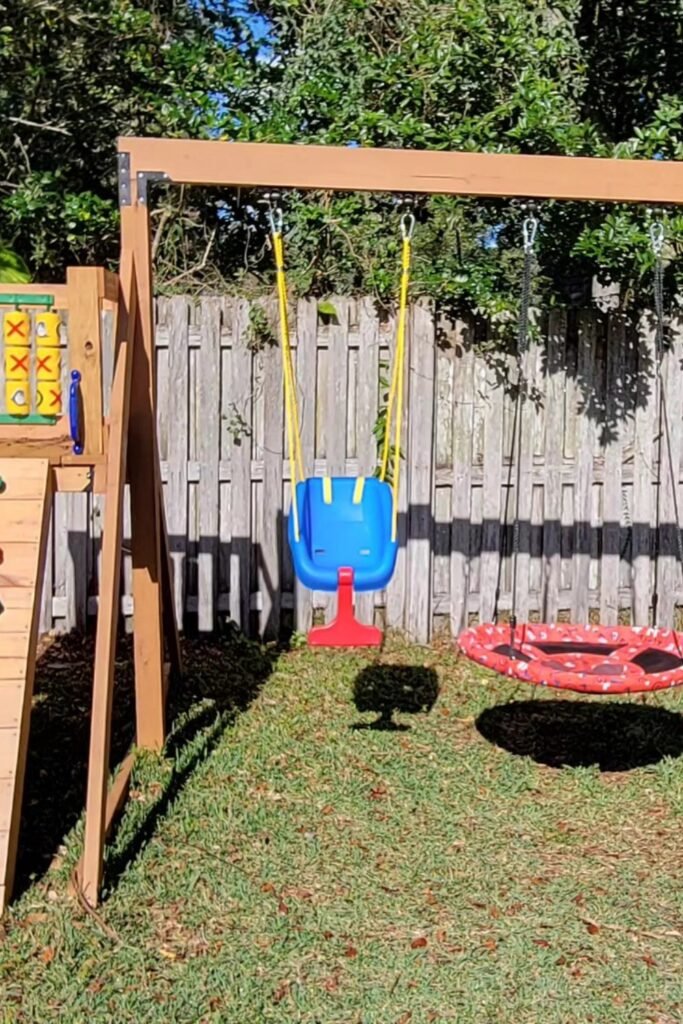
Natural Tree Play Area
Shade can make a kids play area much more usable, especially when summer heat turns open grass into a difficult spot for long play sessions.
The deck, climbing panels, slide, wood-chip base, and log border create a natural playground that feels built into the garden instead of dropped there randomly.
Use this style under strong trees or beside tall greenery, then add logs around the edge to define the play zone neatly for kids too.
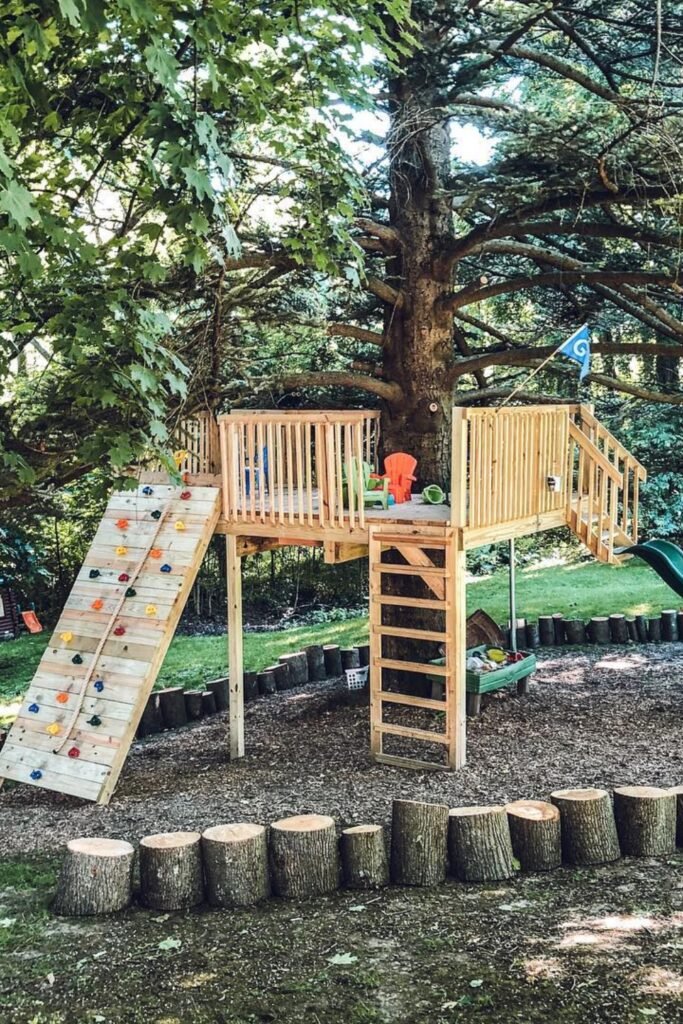
Corner Playhouse
A small corner can still become a real play zone when you use a compact playhouse instead of spreading activities across the whole backyard.
The little porch, windows, bell, and nearby art table make the space feel personal, so kids can pretend, draw, and play close by.
Place it against a fence or patio edge when you want a neat setup that feels contained, sunny, and easy to watch from inside.
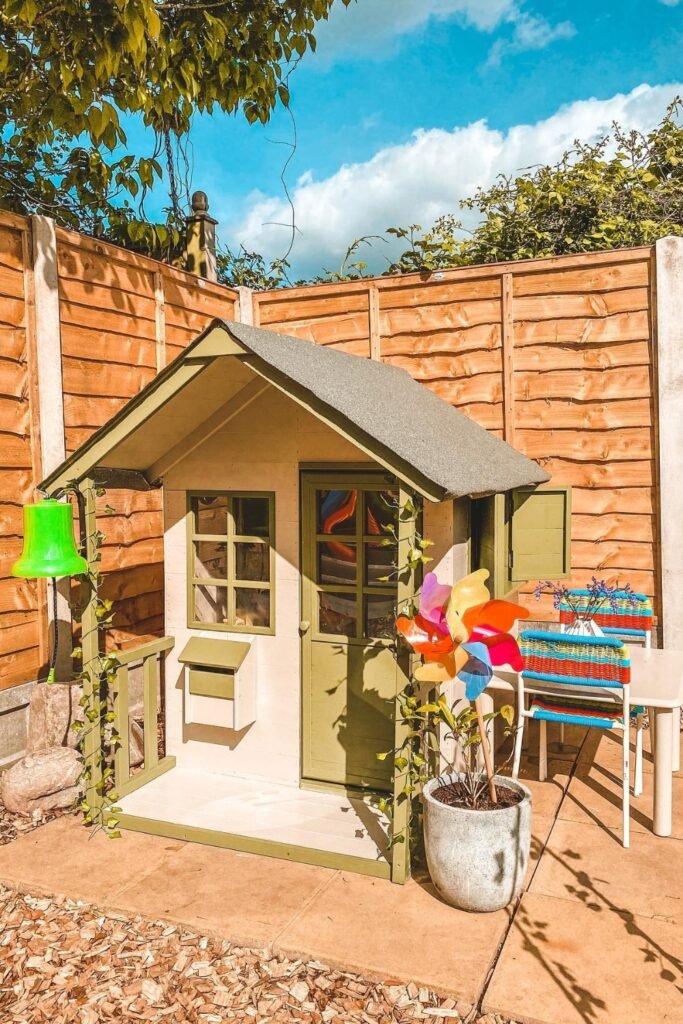
Fire Truck Playset
Big imaginative play works best when the structure gives kids a story before they even climb, and this fire truck setup does exactly that.
The slide, ladder, hose detail, and raised deck turn normal backyard play into rescue games, climbing practice, and fast movement in one place.
Keep enough grass or soft matting near the slide landing so kids can run, climb, and pretend without bumping into hard edges.
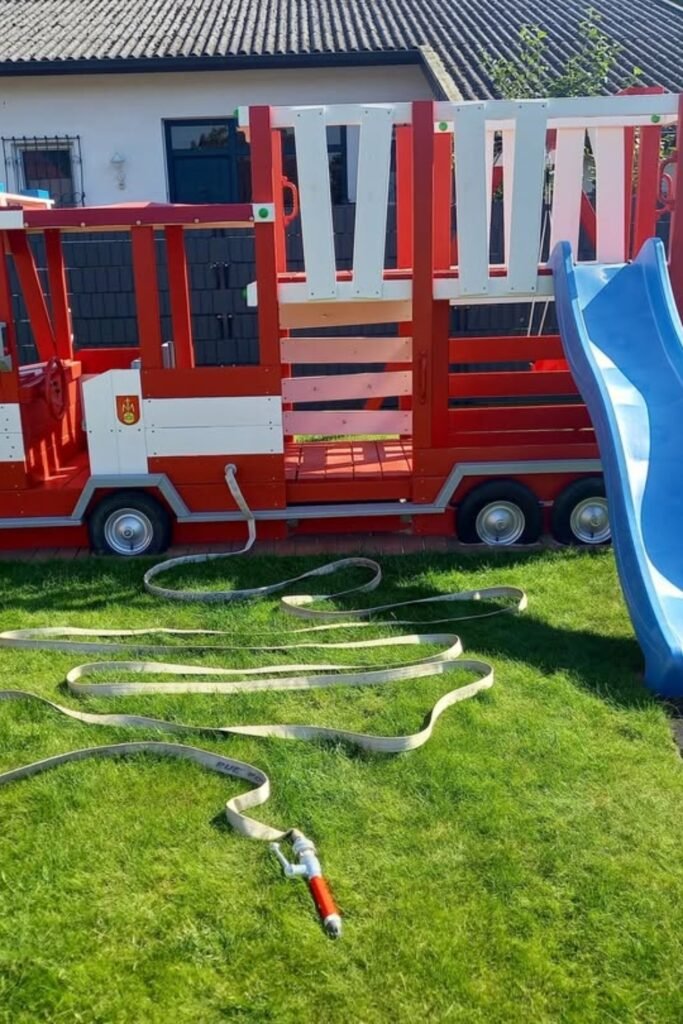
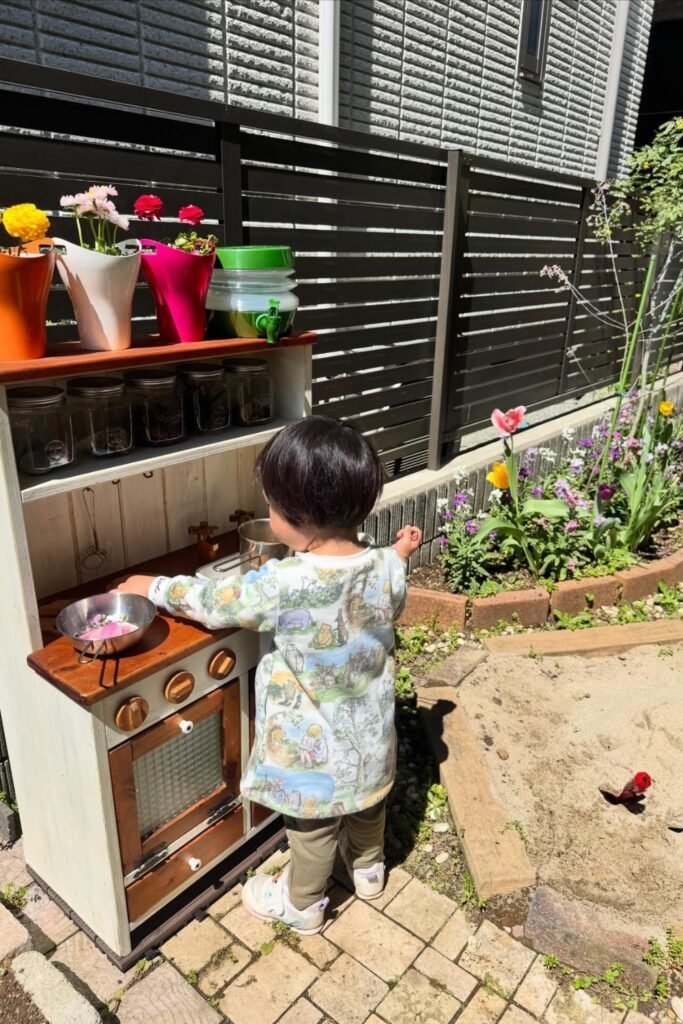
Garden Mud Kitchen
A mud kitchen feels more useful when it sits near flowers, sand, or loose natural materials that kids can scoop, mix, and pretend with.
The small stove, jars, water container, and countertop give toddlers a safe place to copy real kitchen play without bringing mess indoors.
Use this idea along a fence or garden bed, then keep bowls, spoons, and cups nearby so play feels easy every day.
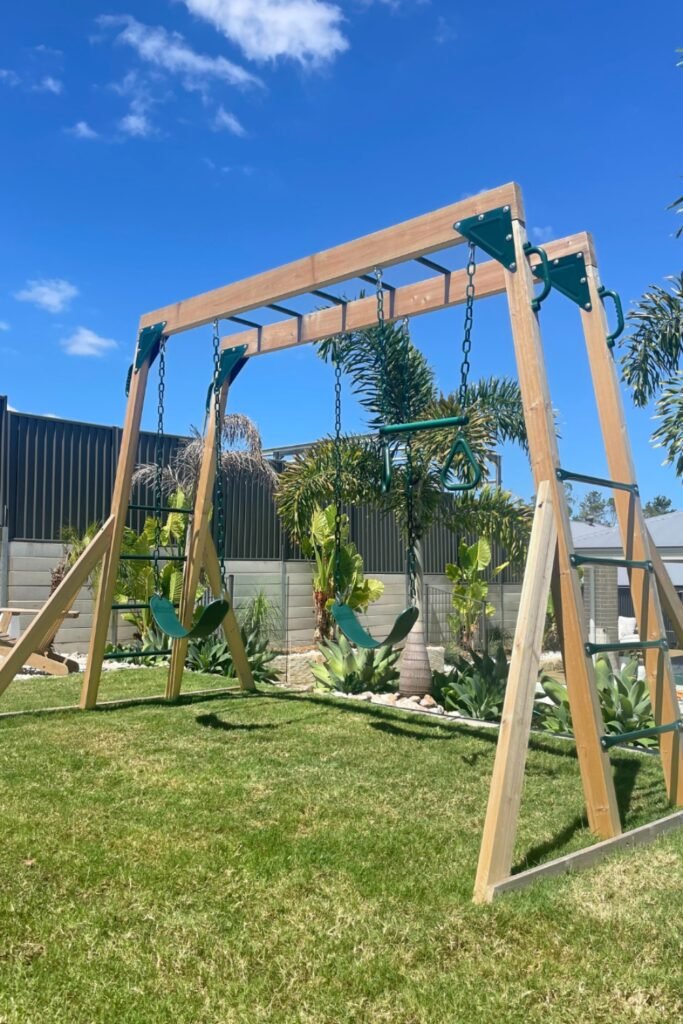
Backyard Swing Frame
Older kids need movement that feels a little more challenging, and a strong swing frame can give them that without a full playhouse.
The swings, hanging handles, side ladder, and monkey bar section create climbing, balancing, and upper-body play in one clean backyard structure.
Set it over grass, mulch, or play mats, then check the bolts and chains often because swing zones take constant daily pressure.
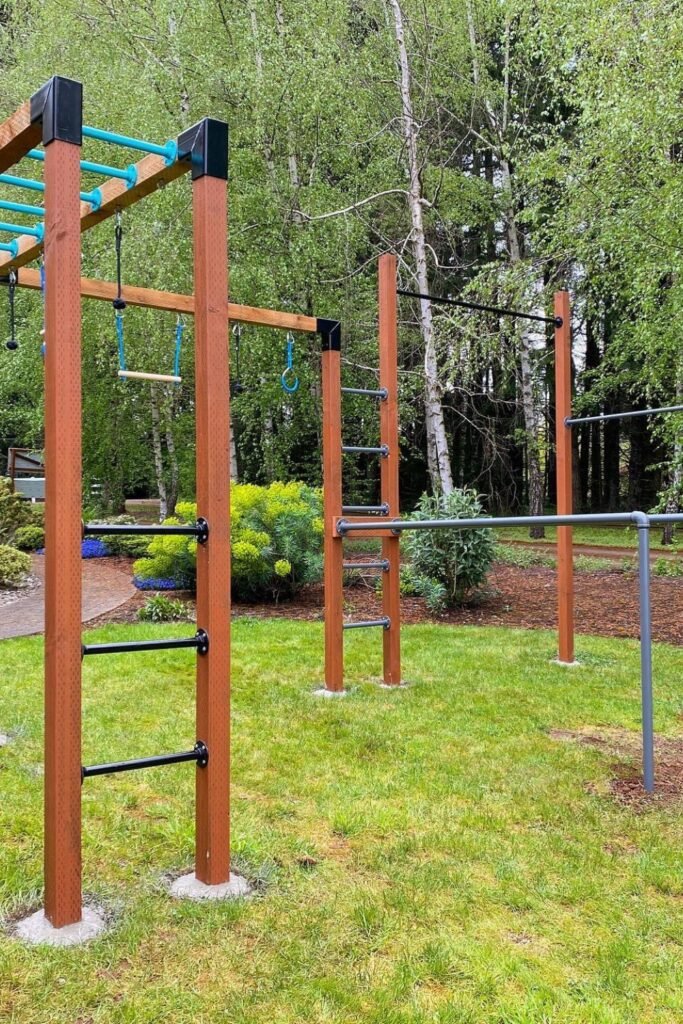
Backyard Fitness Course
Older kids need outdoor play that feels stronger than a basic slide, and this fitness-style course gives them climbing, hanging, and balancing challenges.
The monkey bars, ladders, hanging rings, and pull-up sections work best in a wide yard where kids can move from station to station.
Keep grass, mulch, or rubber surfacing below each activity zone, because climbing equipment needs safe landing space around every side of the structure.
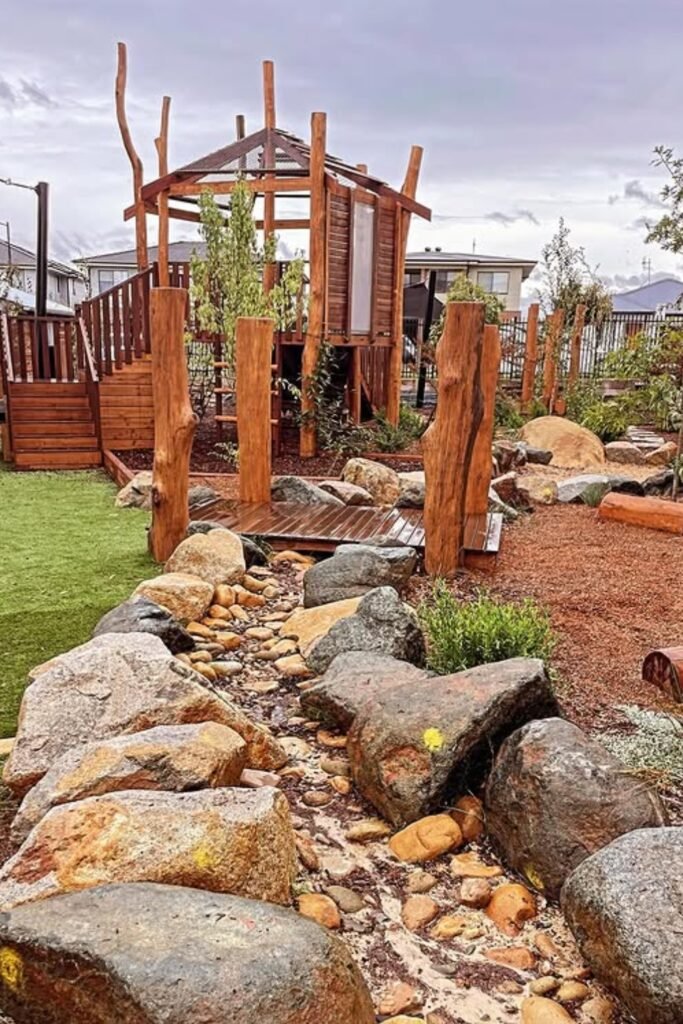
Nature Bridge Play
A natural play area feels more adventurous when kids can cross bridges, step over rocks, and move through textures instead of using plastic toys.
The wooden bridge, boulders, log posts, and mulch path create a mini explorer zone that works beautifully in garden-style backyards or larger yards.
Use sturdy wood, smooth stone edges, and clear walking paths so kids can balance, imagine, and explore without the space feeling too crowded.
Covered Slide Deck
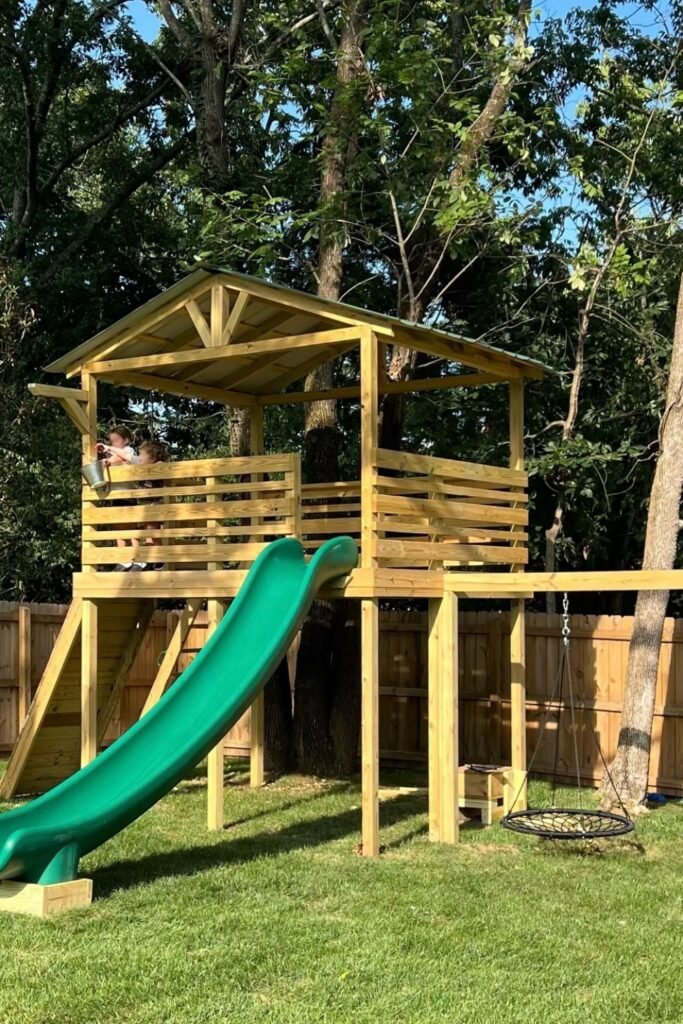
A roofed play deck helps kids stay outside longer because it gives them shade while still leaving room for climbing, sliding, and swinging.
The tall slide, open deck, and attached swing beam make the whole setup feel active without needing many separate play pieces around the yard.
Place this kind of structure where you can see it clearly from the house, especially when kids climb high or use swings often.
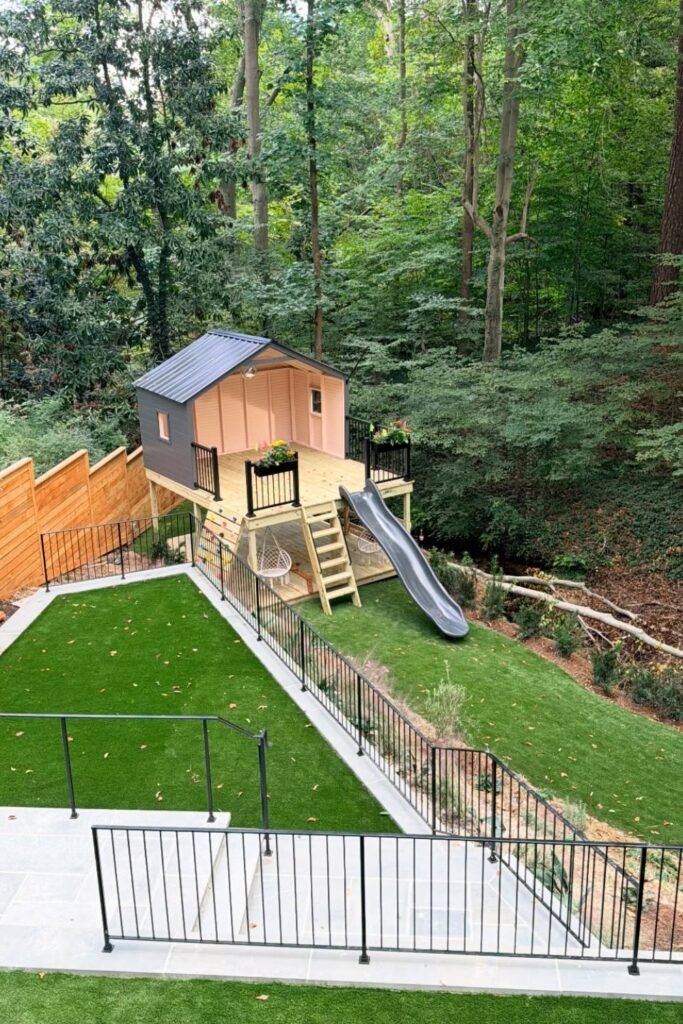
Fenced Hill Playhouse
Sloped yards can still become useful play spaces when you turn the upper area into a playhouse zone instead of fighting the uneven ground.
The raised house, slide, ladder, turf, and safety railing make the slope feel planned, clean, and easier for kids to enjoy outside.
Use fencing around steep edges and choose soft turf or mats under the slide so the play area feels safer and more finished.
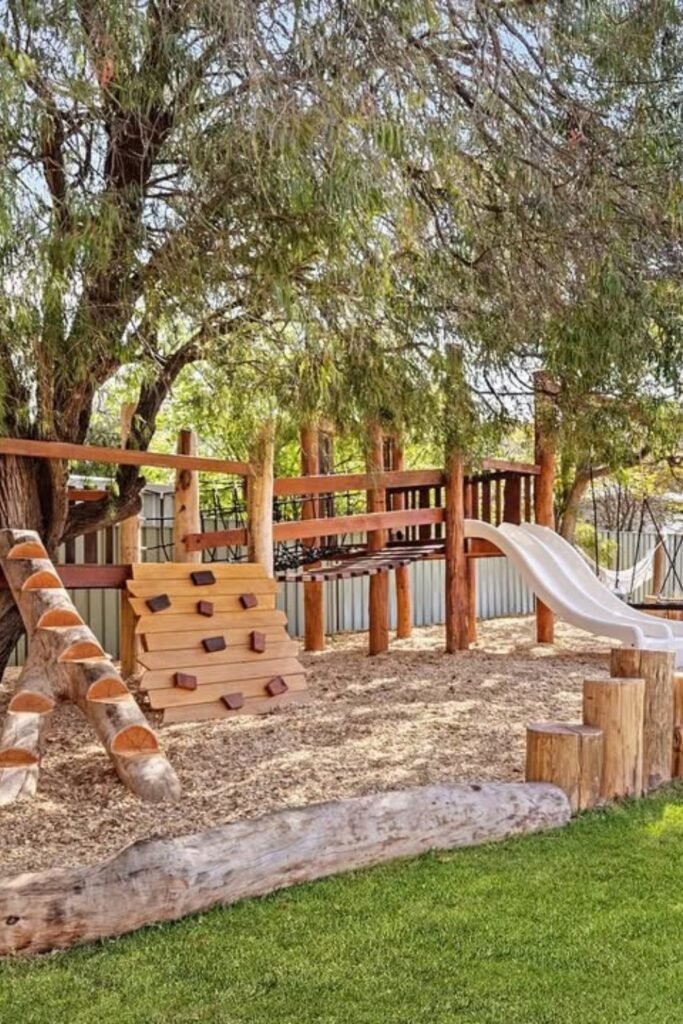
Log Border Playground
Natural logs can make a play area feel like part of the yard instead of a bright plastic structure placed in the middle.
The climbing ramps, bridge, slide, and wood-chip base give kids movement, texture, and shade while keeping the whole zone clearly defined.
Use thick logs around the edges when you want a safer boundary that separates active play from grass, paths, or garden beds.
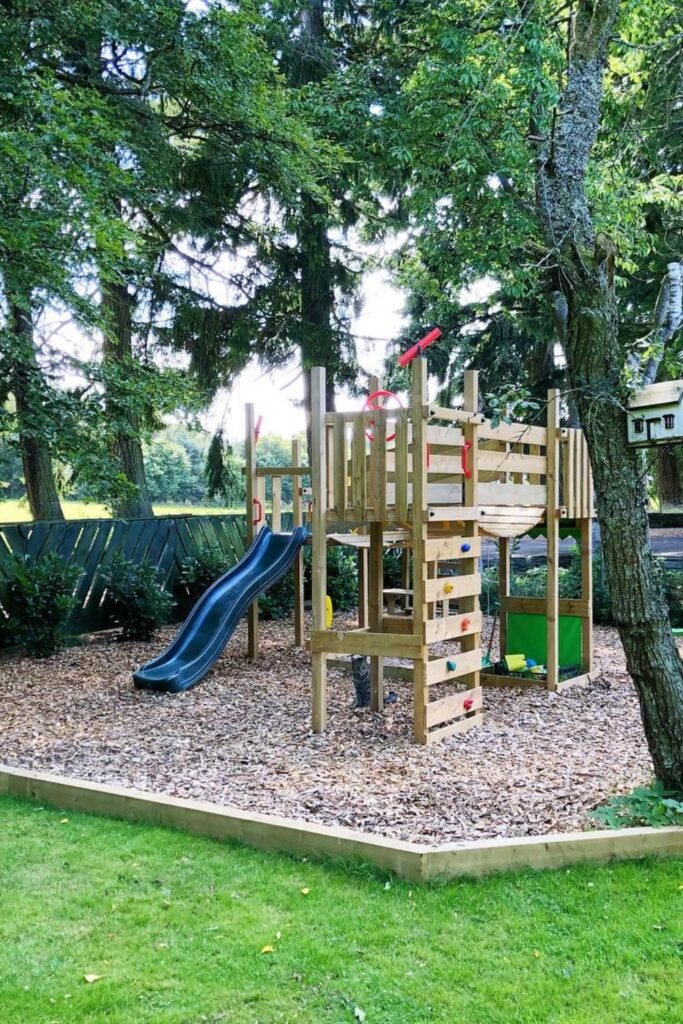
Wood-Chip Play Corner
A framed wood-chip base is a smart choice when you want the play area to feel organized, soft, and easier to maintain.
The slide, climbing wall, swing, mud kitchen, and tree shade create a full play corner without spreading equipment across the entire backyard.
Try this layout beside mature trees or fence lines, then keep the border raised enough to hold the wood chips neatly inside.
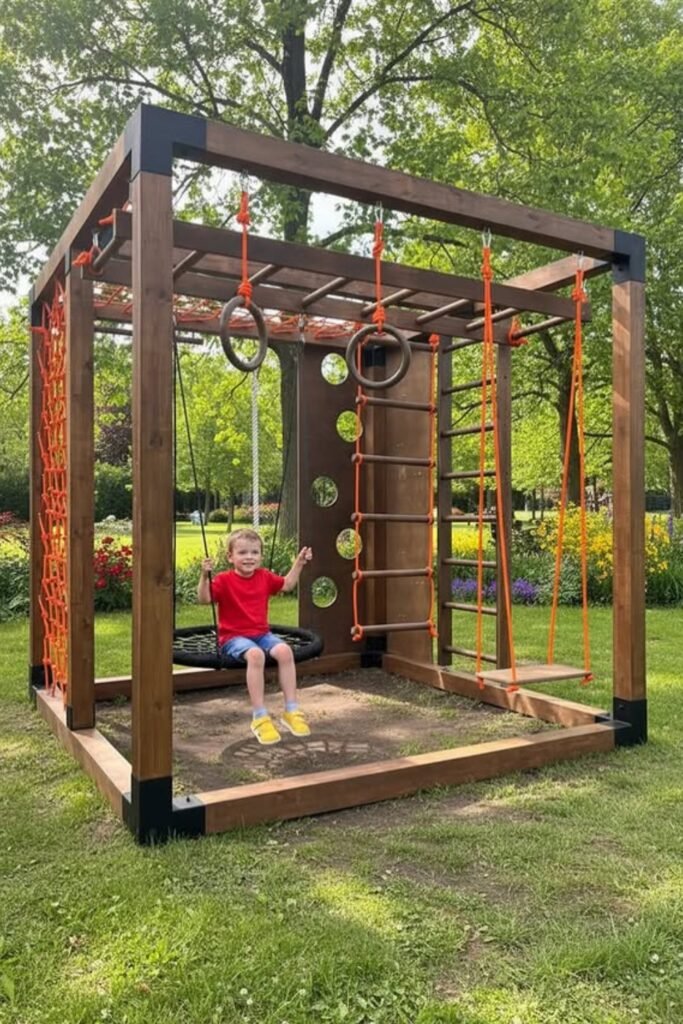
Cube Climbing Frame
Some kids need more than a swing, and a cube-style climbing frame gives them several challenges inside one clean backyard structure.
The rope net, rings, ladder, swing, and climbing wall help kids build strength while still keeping everything in one compact play zone.
Place sand, mulch, or rubber mats underneath because hanging and climbing activities need a softer landing area than plain hard soil.
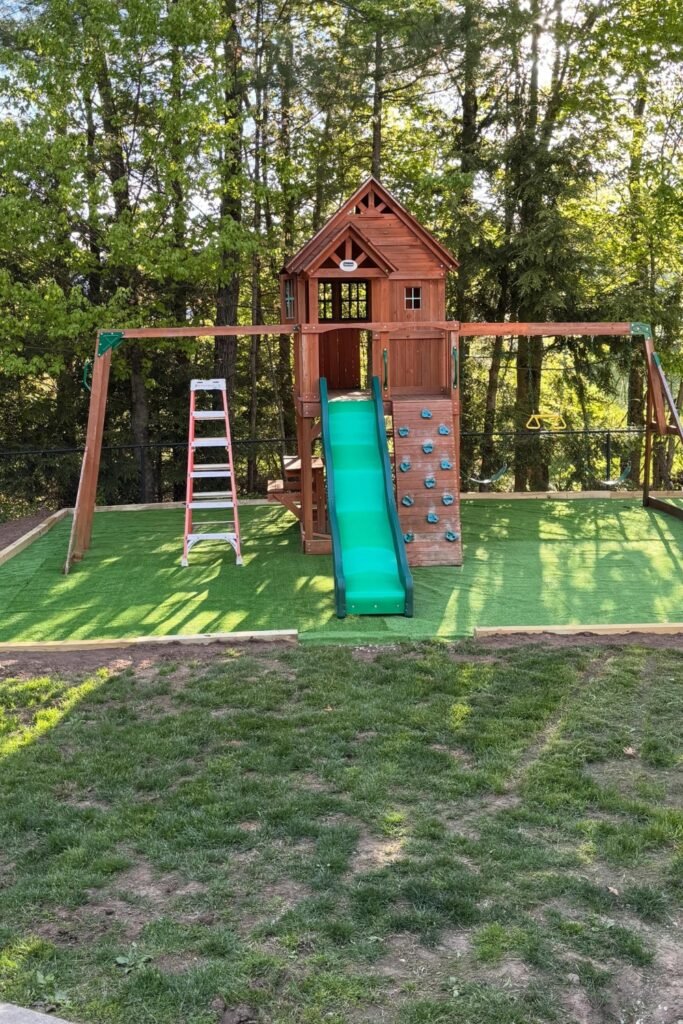
Turf Playset Base
Artificial turf can make a backyard playset look cleaner when grass struggles under swings, slides, and heavy daily foot traffic from kids.
The central playhouse, slide, climbing wall, and swings sit on one clear surface, so the whole area feels planned and easy to use.
Add a timber border around the turf if you want the play zone to stay defined and separate from muddy or patchy lawn areas.
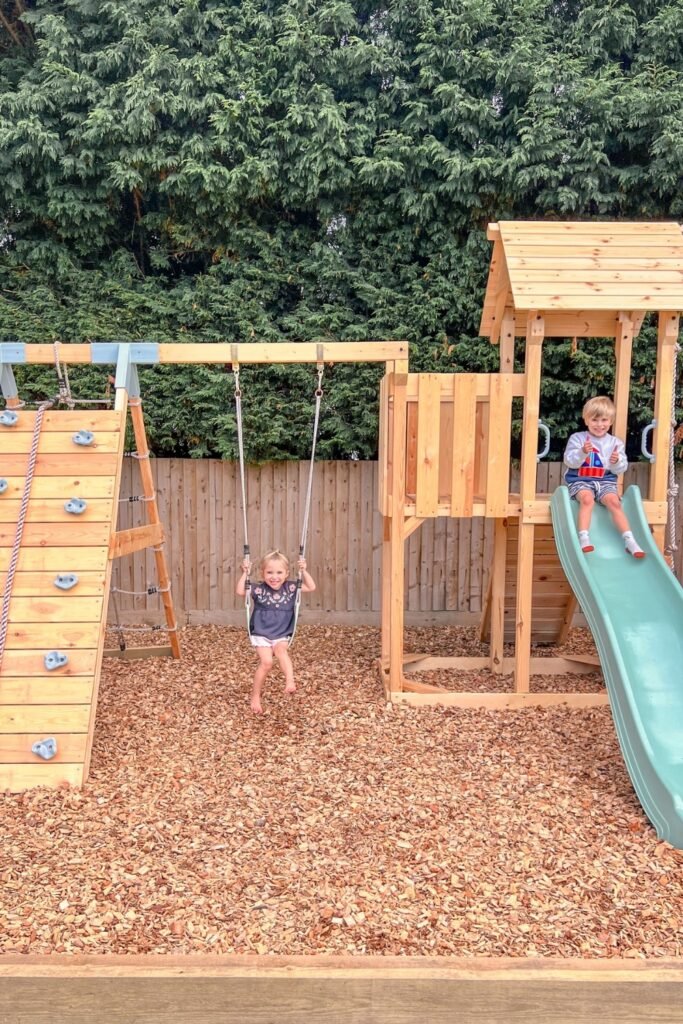
Wood-Chip Playset
A wood-chip base works well when the playset includes swings, climbing, and slides, because kids need softer landings in busy activity zones like this one.
The climbing ramp, swing beam, tower, and slide keep everything connected, so the backyard feels organized instead of scattered with separate play pieces everywhere around it.
Use timber borders and refillable mulch when you want a play area that stays defined, drains better, and feels practical for daily outdoor play too.
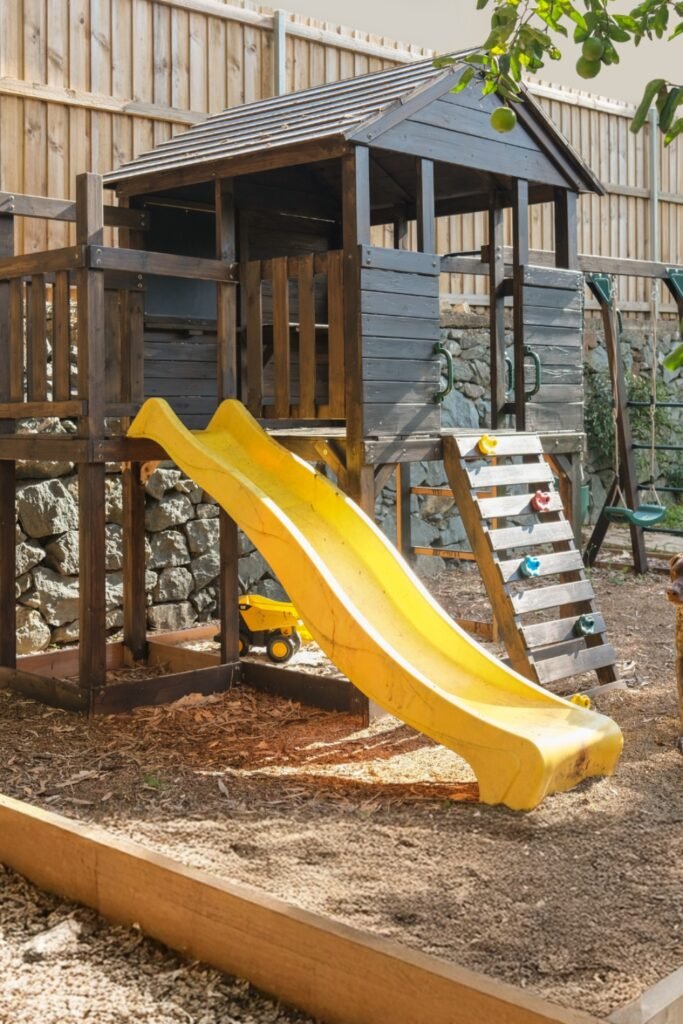
Shaded Timber Playhouse
Darker wood can make a playhouse feel calmer and less toy-like, especially when the backyard already has fences, stone, or natural edging around it nearby.
The double slide, climbing board, swing, and raised deck give kids several choices without making the whole space feel crowded or messy during play time.
Use this look when you want a sturdy play zone that blends with landscaping instead of standing out in bright colors all over the yard.
Multi-Swing Corner
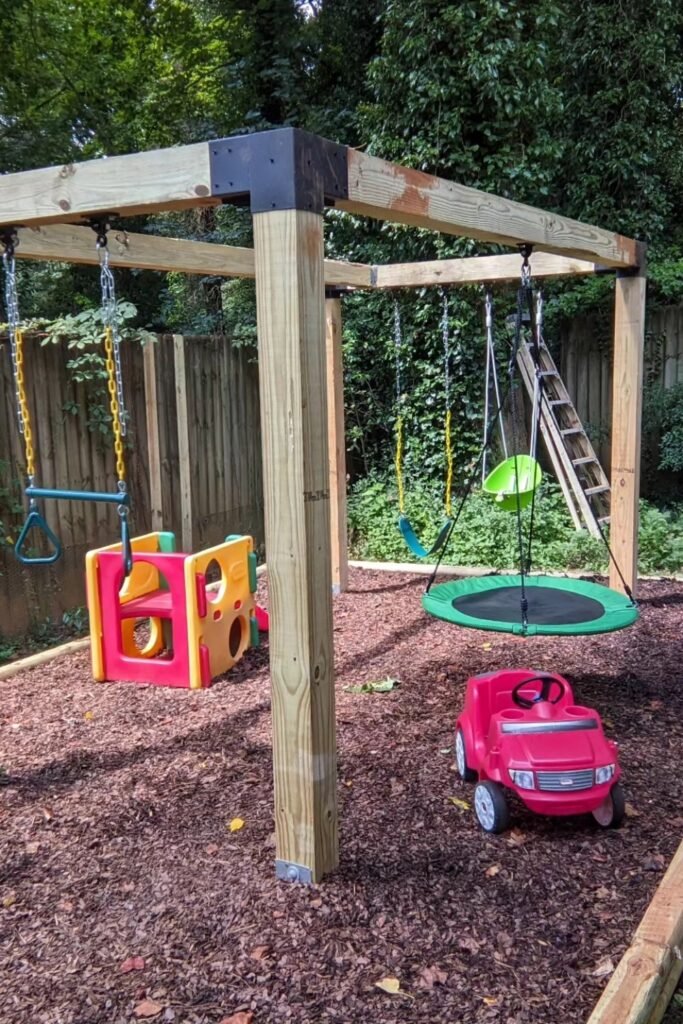
A square swing frame gives younger kids variety without needing a tall tower, which is useful when you want safer movement closer to the ground.
The belt swing, toddler seat, saucer swing, and small climbing toy let different ages share one soft, contained backyard play area without too much setup.
Add wood chips inside a simple timber border so toys stay together, weeds stay controlled, and the space feels easier to clean after busy play.
Painted Playhouse Set
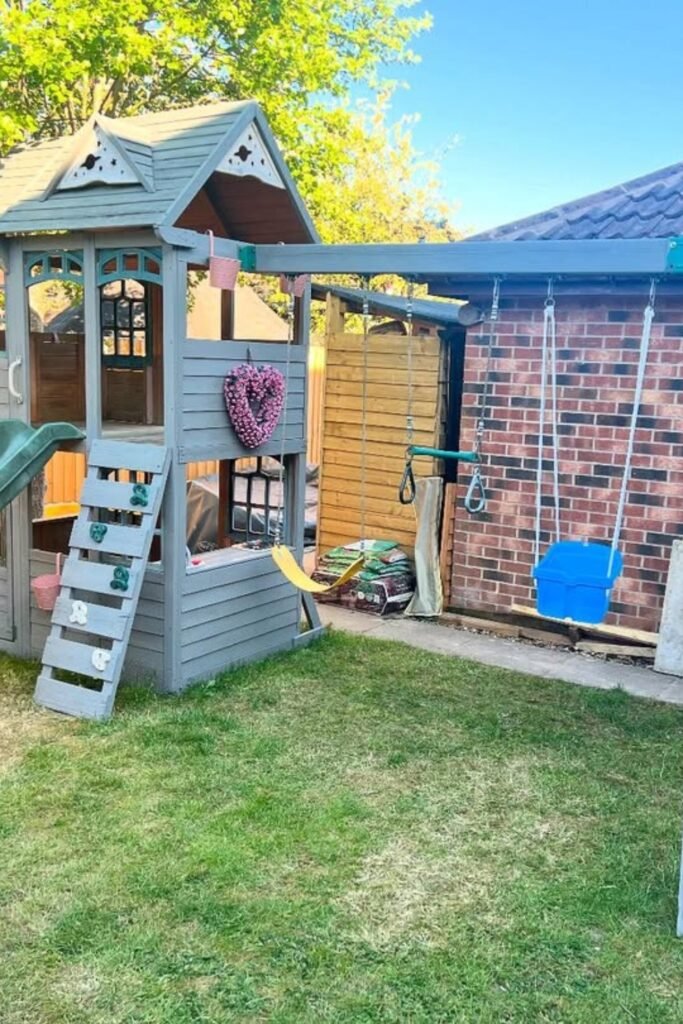
A painted playset can make a small backyard feel more finished, especially when the structure sits close to a wall, fence, or patio edge nearby.
The slide, climbing wall, swings, and little house give kids a full play routine while still keeping everything along one side of the yard neatly.
Use soft grass or mats under the swing section, and keep stored garden items away so play space stays clear and safer for daily use.
Full Backyard Play Zone
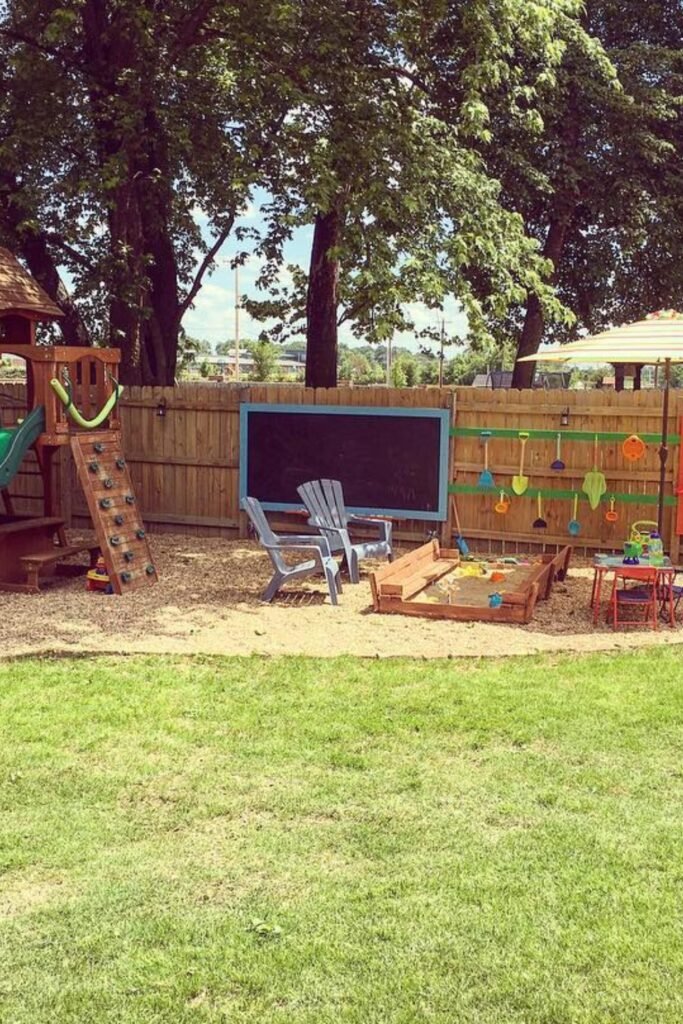
Wide yards can handle more than one activity, so a long play zone helps kids move between climbing, drawing, sand play, and pretend play.
The slide tower, chalkboard, sandbox, toy wall, and shaded table create separate stations without making the backyard feel random or unfinished.
Keep messy areas on sand or mulch, then leave open grass in front so kids still have space to run between activities.
Tube Slide Playhouse
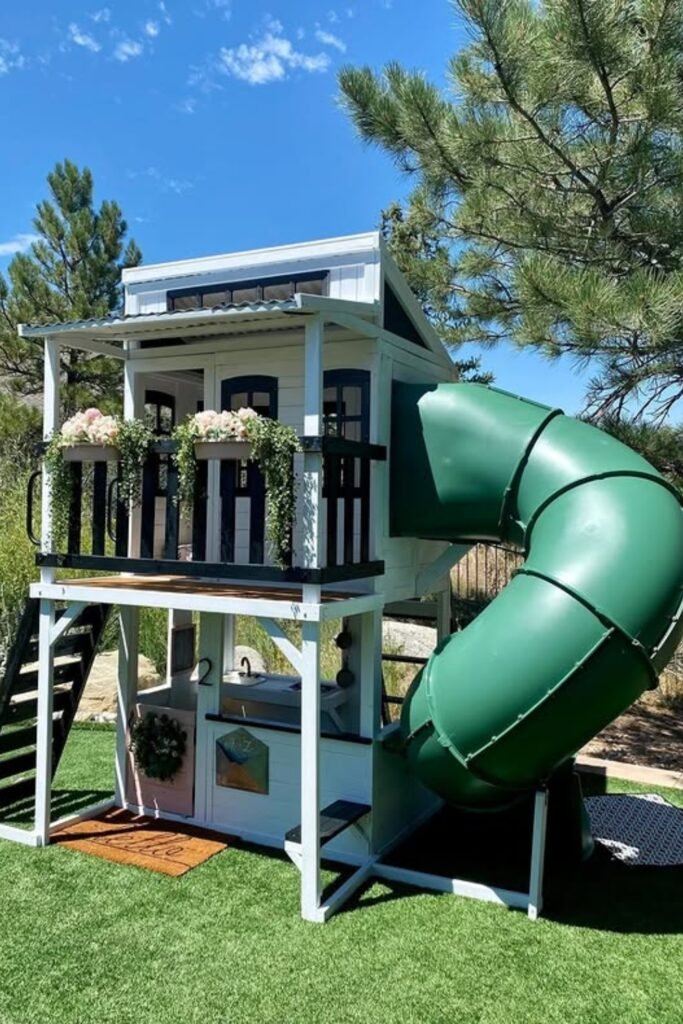
A tube slide adds excitement when you want the playhouse to feel different from a basic ladder-and-slide backyard setup.
The raised house, porch railings, play kitchen below, and curved slide make the structure useful for both pretend play and active movement.
Use turf or mats around the slide exit because tube slides often bring faster landings than short open slides in small yards.
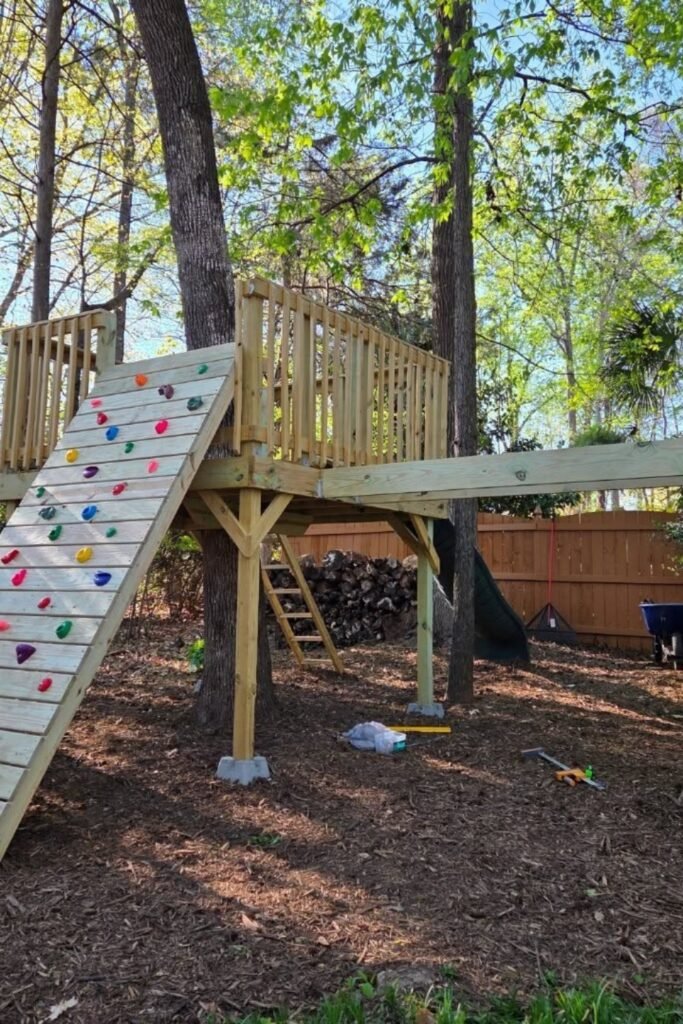
Tree Deck Climber
Trees can make a simple platform feel like a real adventure area, especially when the deck wraps into the shade naturally.
The climbing wall, raised deck, ladder, and swing beam create a play space that feels more like a backyard fort than a regular playset.
Build around strong trees only after checking stability, and keep mulch underneath so climbing practice feels safer for kids every time.
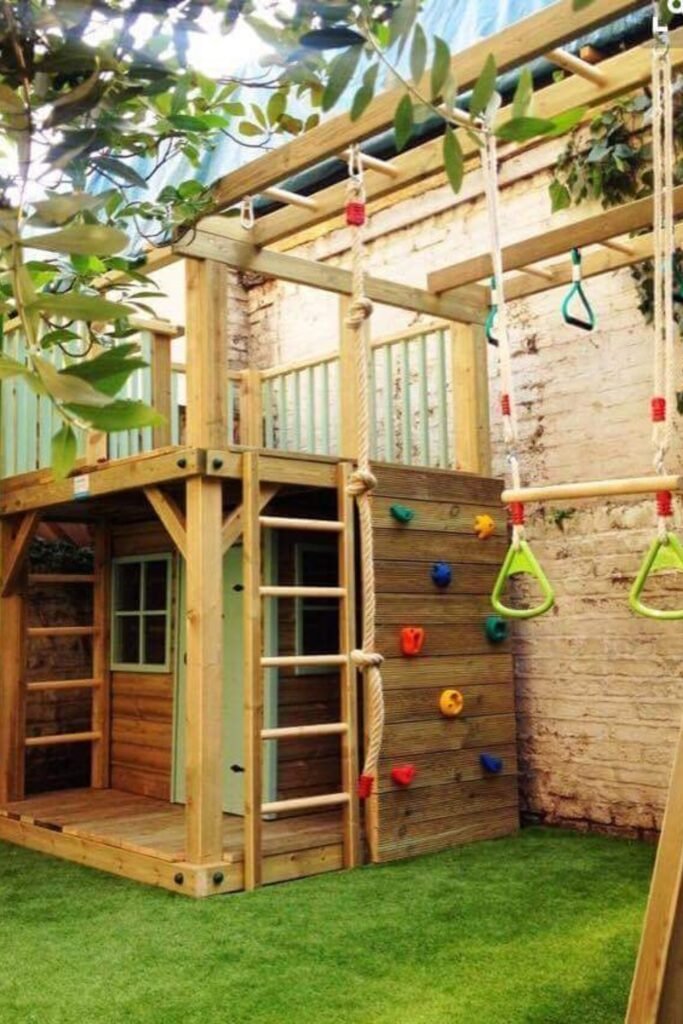
Courtyard Climbing Frame
Narrow outdoor spaces can still hold a strong play area when you build upward instead of using too much floor space.
The monkey bars, rope ladder, climbing wall, slide pole, and lower playhouse give kids several challenges in one tight courtyard layout.
Use artificial turf below the frame, and keep the wall side clear so children have room to climb without bumping into hard surfaces.
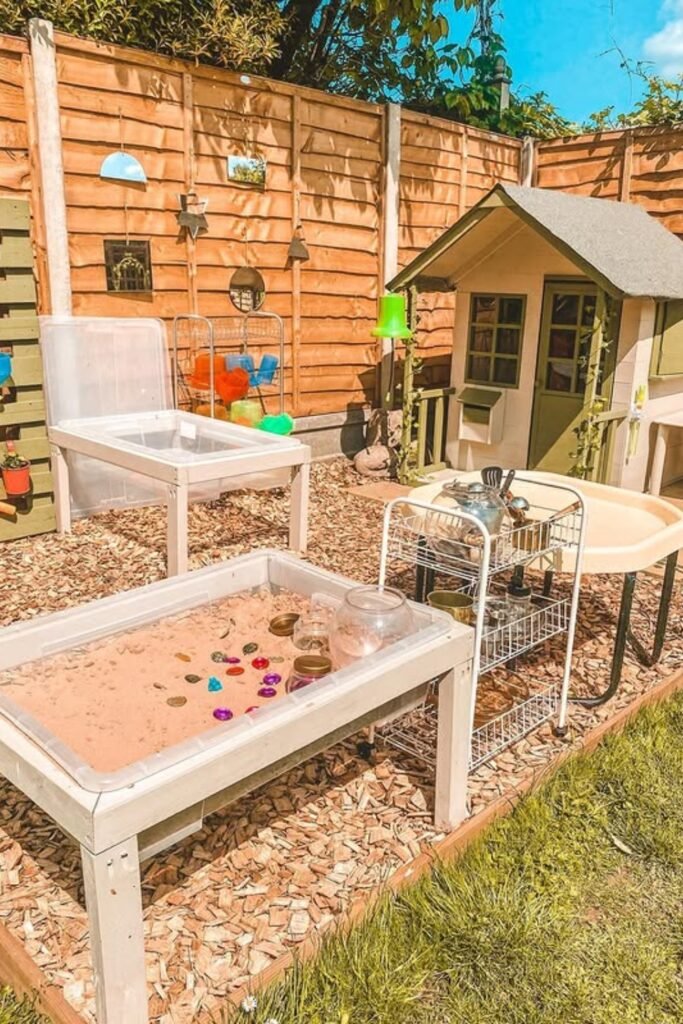
Sensory Play Corner
Messy play feels easier to manage when sand, water, plants, and loose parts stay inside one bordered corner instead of spreading across the yard.
The playhouse, sensory tables, sink, garden wall, and wood-chip base give kids different textures to pour, scoop, wash, and explore.
Use lids, baskets, and washable tools here so the space stays practical after play, not just cute for the first few days.
FAQs
What is the safest ground cover for a DIY outside play area?
For climbing frames, swings, and slides, soft materials like rubber mulch, wood chips, play mats, or thick grass work better than concrete or bare dirt.
Kids need a softer landing surface, especially under active zones where they jump, run, or fall.
Also check the ground often because mulch can spread, grass can become patchy, and mats can shift after regular play.
How can I make a kids outdoor play area on a small budget?
Start with simple ideas like a mud kitchen, sandbox, chalkboard wall, water table, tire path, log balance beam, or sensory corner.
Use recycled wood, old buckets, crates, pallets, stones, and basic outdoor toys to build small play stations.
The goal is to give kids different ways to climb, dig, splash, pretend, and explore without spending too much money.

Hi, my name is Ali Mehmood! I’m a passionate writer and DIY enthusiast who loves turning creative ideas into practical, hands-on projects.
I created this website to share inspiring, budget-friendly ideas that you can do yourself – whether it’s organizing your home, crafting something unique, or creating fun projects for kids and pets.
I believe DIY isn’t just a hobby – it’s a smart way to save money, reduce waste, and enjoy the satisfaction of making things with your own hands.
I’m excited to have you as part of this growing community, and I’ll continue bringing you helpful, realistic, and fun DIY ideas you can actually use.