This post may contain affiliate links: read full affiliate disclosure.
Ducks can make a backyard feel lively and fun, but their enclosure can become messy very quickly if you do not plan it the right way.
Water bowls spill, bedding gets wet, grass turns into mud, and small gaps in the fence can become a real predator risk.
Many people start with a simple pen and later realize ducks need a setup that works differently from a basic chicken coop.
A good duck enclosure should give them a safe place to rest, enough room to move, and a smart water area that does not flood the whole space.
You also have to think about shade, drainage, easy cleaning, and strong protection from animals that may dig, climb, or attack from above.
In this article, I am going to share DIY duck enclosure ideas that can help you build a safer, cleaner, and more practical setup for your ducks without making the project feel too complicated.
Let’s dive in!
Gravel Pool Zone
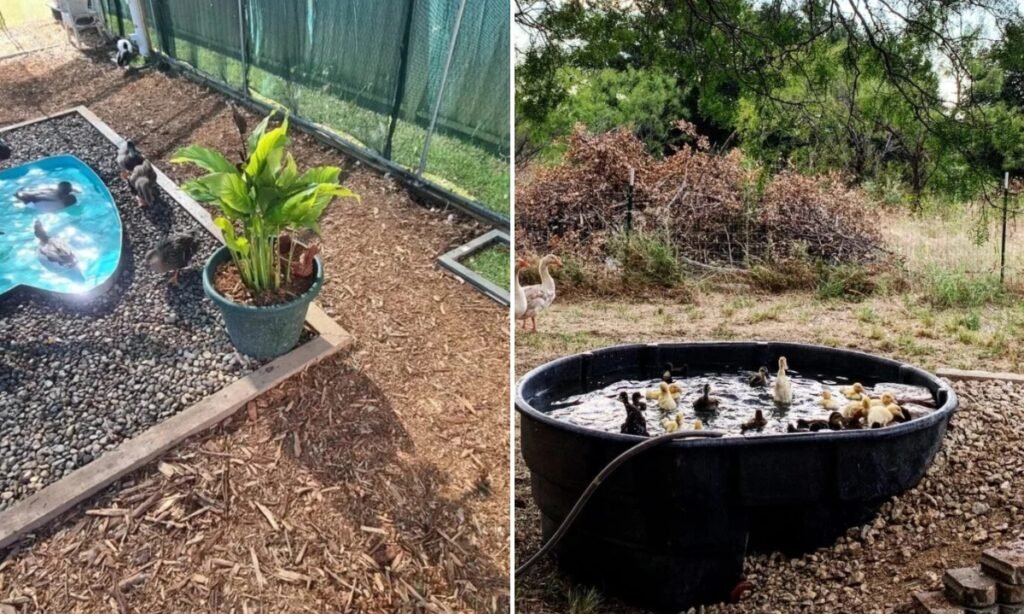
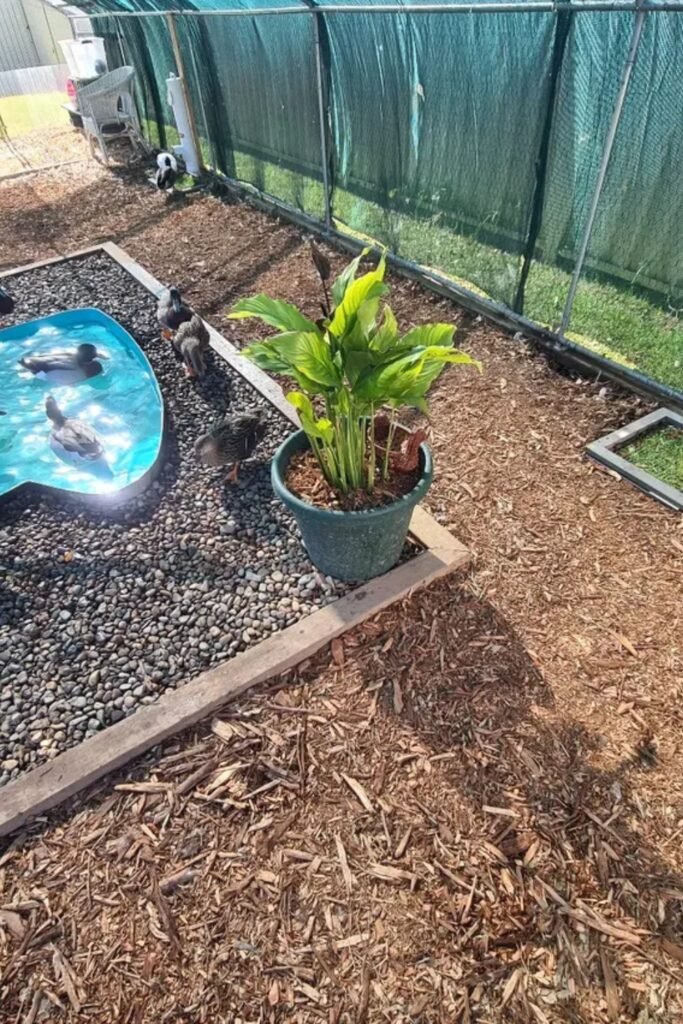
Place the duck pool over gravel when you want the splash area to drain faster instead of turning the whole enclosure into sticky mud daily.
A framed border helps keep rocks in place, while the mulch side gives ducks a drier walking and resting space after swimming during warm afternoons.
For a backyard setup, copy the same wet-and-dry layout so cleaning feels easier and bedding stays away from constant water mess near the pool edge.
Stock Tank Pond
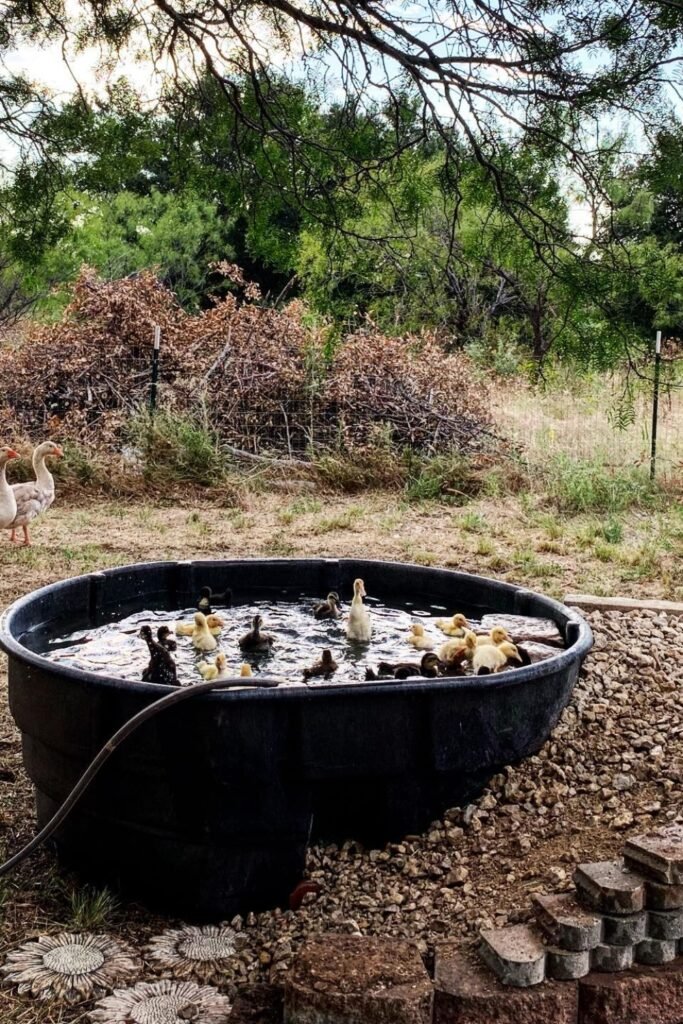
A stock tank pond is useful when you want deeper duck water without the work of building a permanent in-ground pond in your yard yet.
Set it on a gravel pad and add blocks or pavers around one side so ducks can climb in safely without slipping on wet edges.
Keep the hose or drain point nearby, because large water tubs need regular emptying before muddy water collects around the base later.
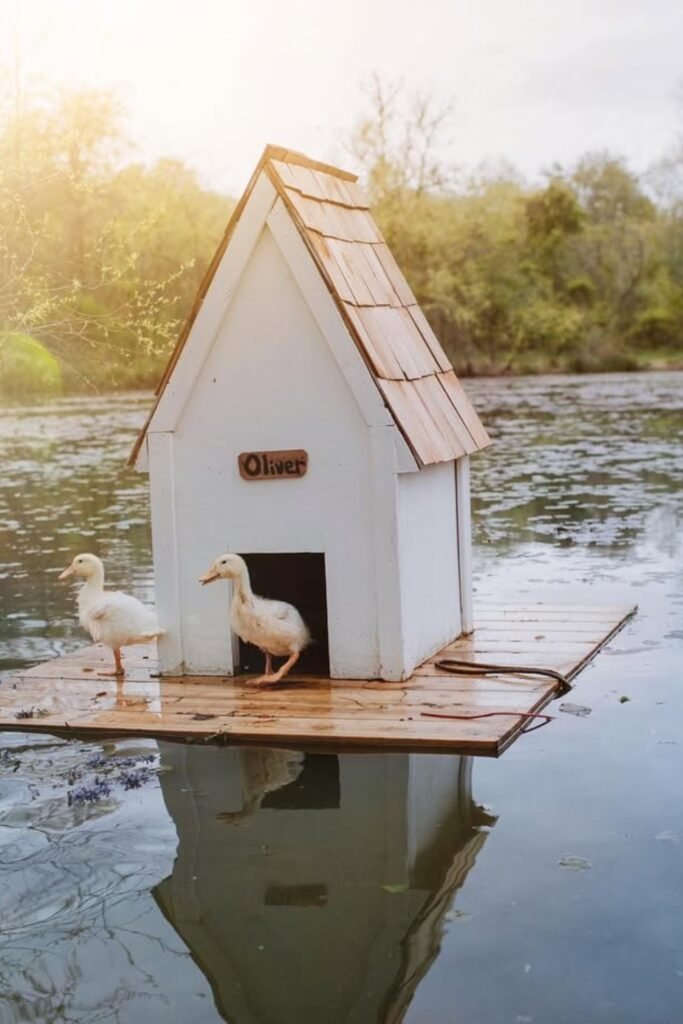
Floating Duck House
A floating duck house makes sense when you already have a pond and want ducks to rest close to the water without crowding the bank.
Use a wide base, low doorway, and sealed platform so the house feels stable instead of tipping when ducks step on after swimming around outside.
Anchor it well, especially in open water, because wind can move lightweight builds and make nighttime shelter harder for ducks to reach when they return.
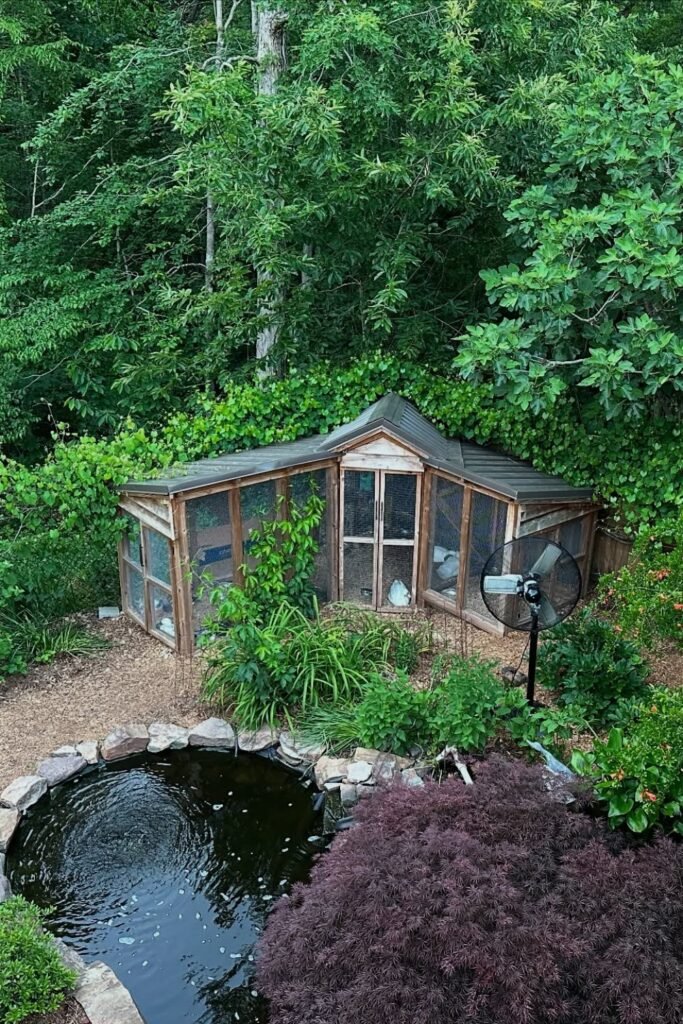
Garden Run
A garden style duck run works beautifully when you want the enclosure to blend into landscaping instead of looking like a plain pen behind shrubs.
The mesh walls give protection, while the roofed frame adds shade and keeps the resting area calmer during hot or rainy days near the pond.
Copy the idea with strong wire, wide doors, and plants outside the fence so ducks get beauty without destroying fresh greenery inside the run daily.
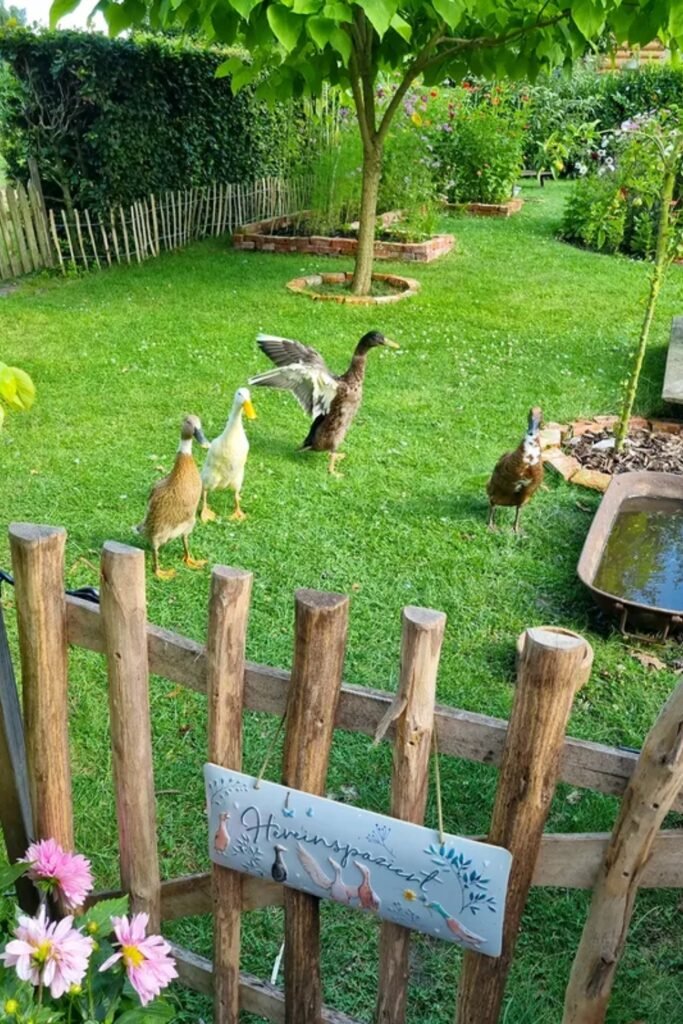
Garden Free-Range
Let ducks roam inside a fenced garden when you have enough lawn space and want a softer, more natural enclosure during the day.
A small water tub near the edge gives them a splash spot without placing wet mess right in the middle of the grass.
Keep the fence secure and add a nighttime shelter nearby, because open garden runs still need stronger protection after dark.
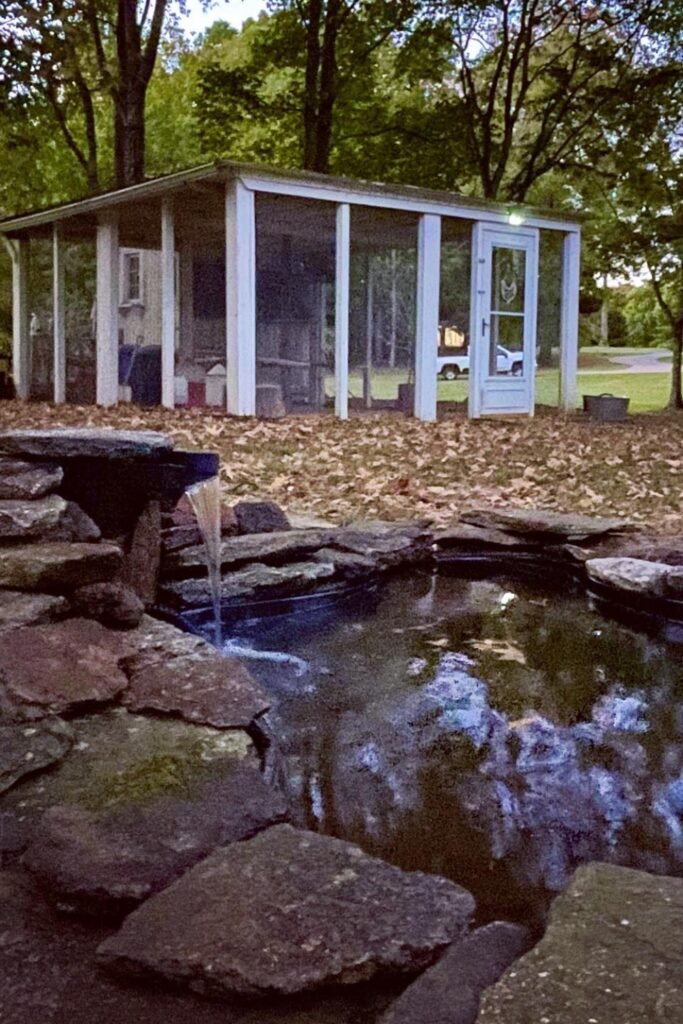
Screened Pond House
A screened duck house beside a pond works well when you want ducks protected at night but still close to their favorite water area.
Large mesh walls keep airflow moving, while the roof gives shade and helps the sleeping area stay calmer during hot afternoons.
Place the pond slightly away from the door so splashed water does not soak the bedding or make the entrance muddy.
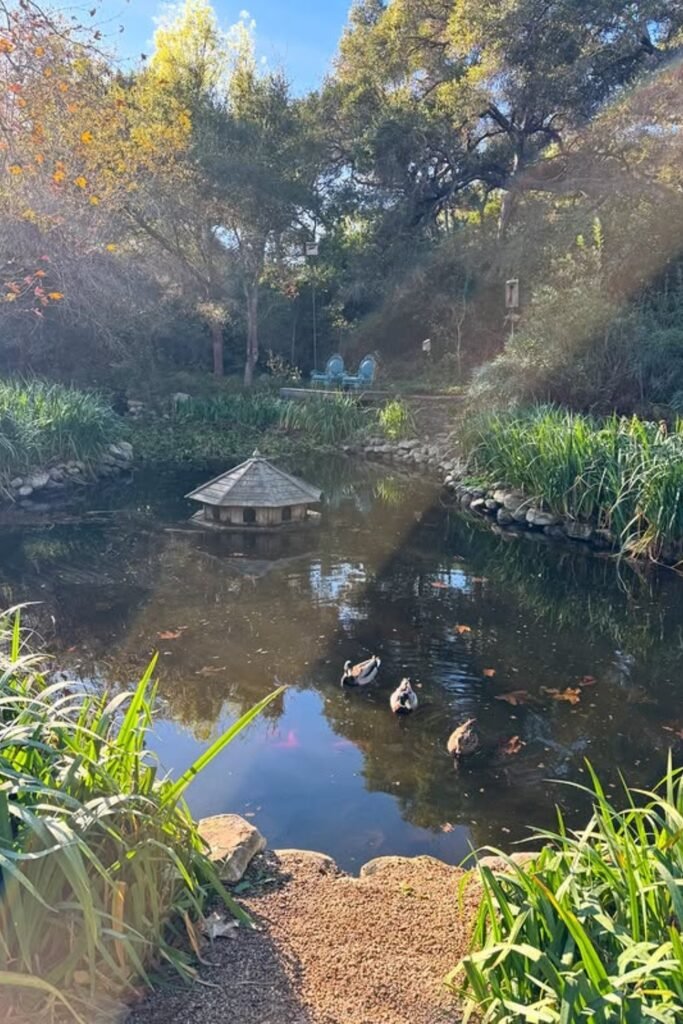
Natural Pond Shelter
A natural pond enclosure feels best when ducks have open water, planted edges, and quiet areas where they can swim without crowding.
The floating shelter gives them a safe resting spot on the pond, while tall grasses help soften the edges and create cover.
Use this setup only where predators are controlled, and add a secure night enclosure if ducks cannot stay protected on open water.
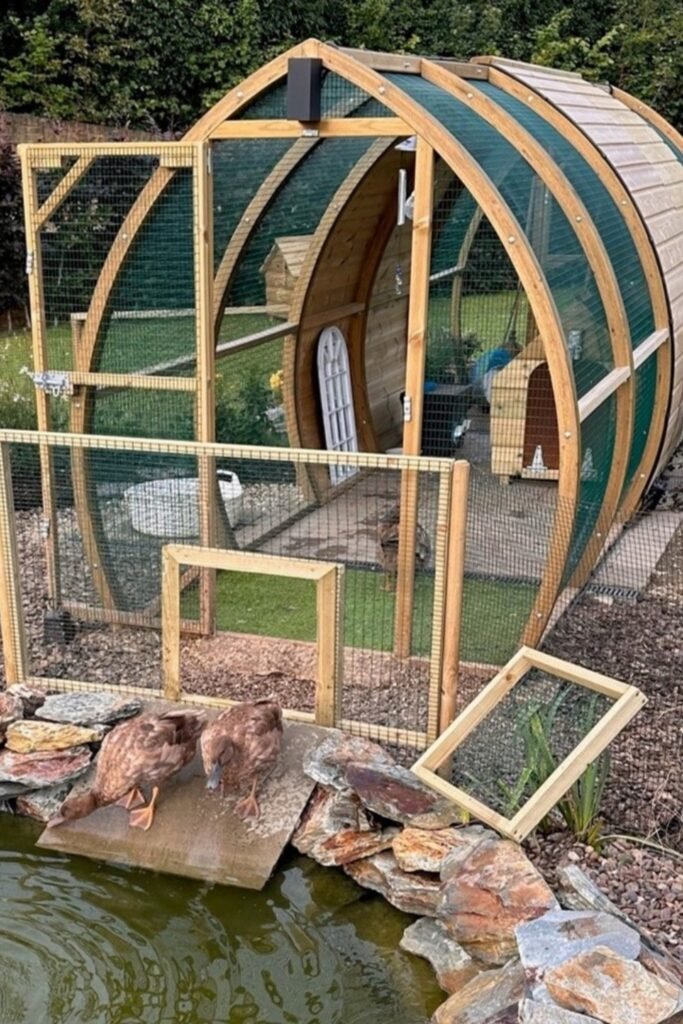
Curved Coop Run
A curved wooden coop run is a smart choice when you want the enclosure to look beautiful while still giving ducks covered protection.
The arched frame adds height for easier access, and the mesh panels help separate the dry run from the pond edge.
Copy this with strong wire, lockable doors, and a low ramp so ducks can move between water and shelter safely.
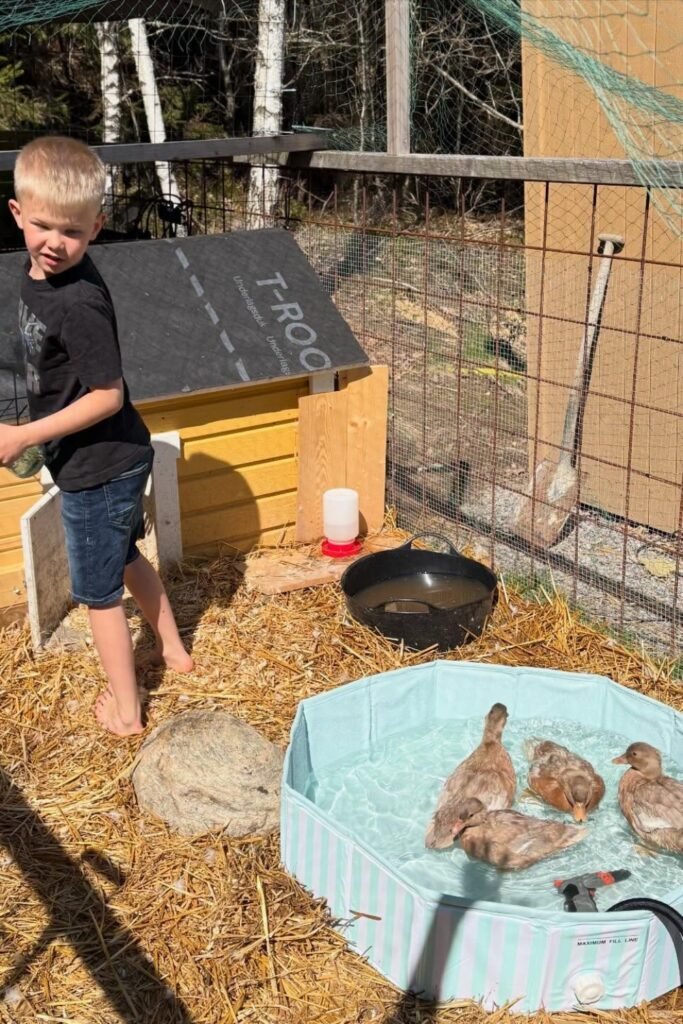
Kiddie Pool Pen
A small foldable pool works well for ducklings or young ducks when you need a simple splash area inside a protected pen.
Keep straw away from the pool edge as much as possible, because ducks will splash water and soak bedding faster than you expect.
Add a drain-friendly spot under the pool or empty it often, so the enclosure stays cleaner and easier for kids to help maintain.
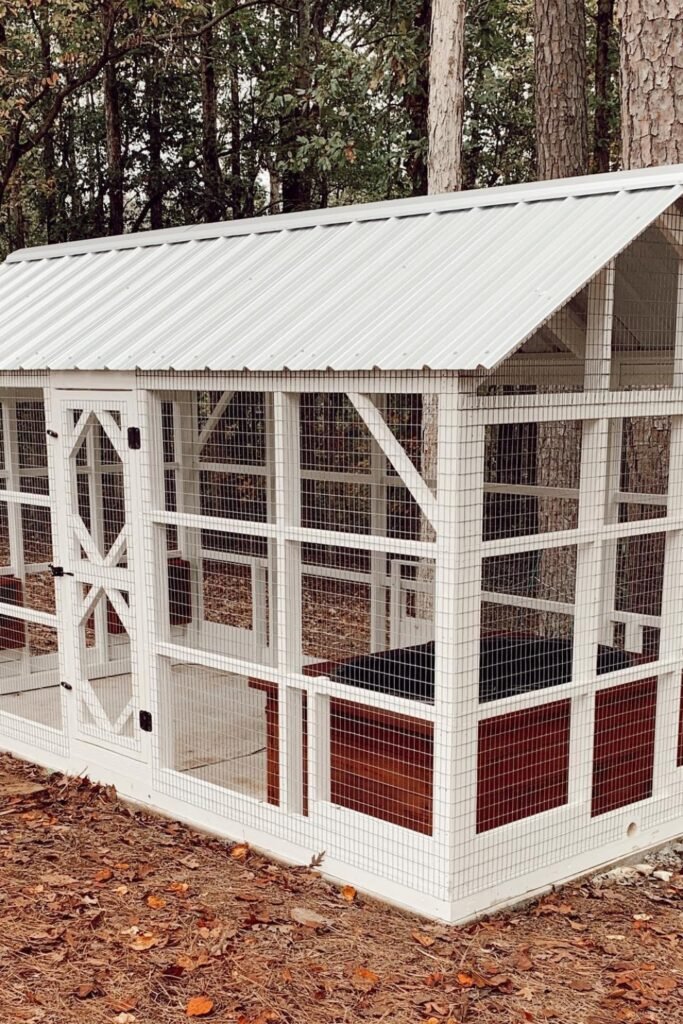
Walk-In Duck Coop
A tall walk-in duck coop makes daily care much easier because you can step inside, clean corners, and check every water station properly.
The metal roof keeps rain off the run, while wire walls give airflow without making the enclosure feel dark or boxed in.
Copy this layout if you have several ducks, but use strong latches and buried wire to protect them from digging predators at night.
Low Run Shelter
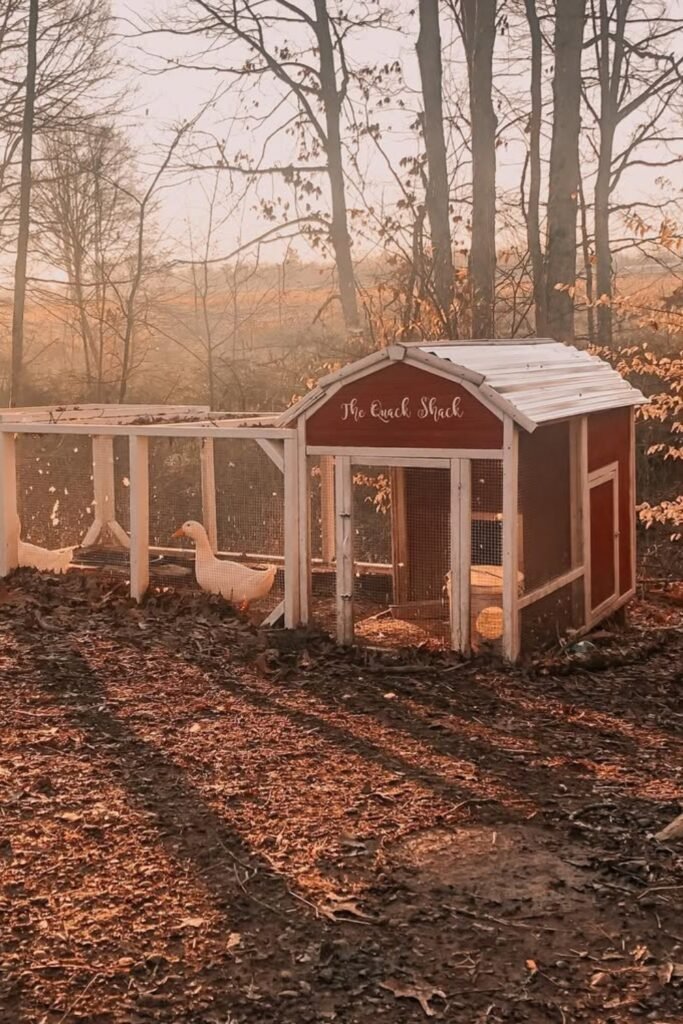
A low attached run is useful when you want ducks to have a secure outdoor space directly connected to their sleeping house.
The covered mesh area gives them fresh air and daylight, while the small house keeps bedding protected from wind and rain.
Use this setup for a small flock, but make the access door wide enough so cleaning does not become frustrating later.
Tank Pool Ramp
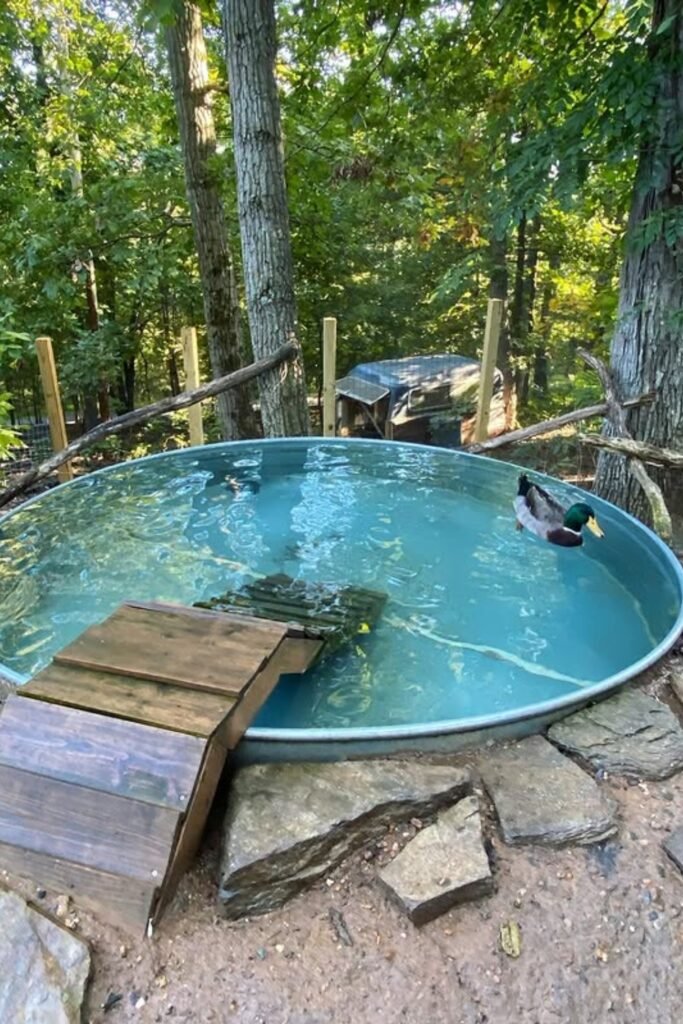
A large round stock tank gives ducks deeper water, but the ramp matters because wet webbed feet need a safe way out.
Set flat stones around the base to control mud, then use a wide wooden ramp with grip strips for easier climbing.
Keep the pool near shade if possible, because open water heats quickly and ducks still need a cooler resting spot nearby.
Rock Pond Edge
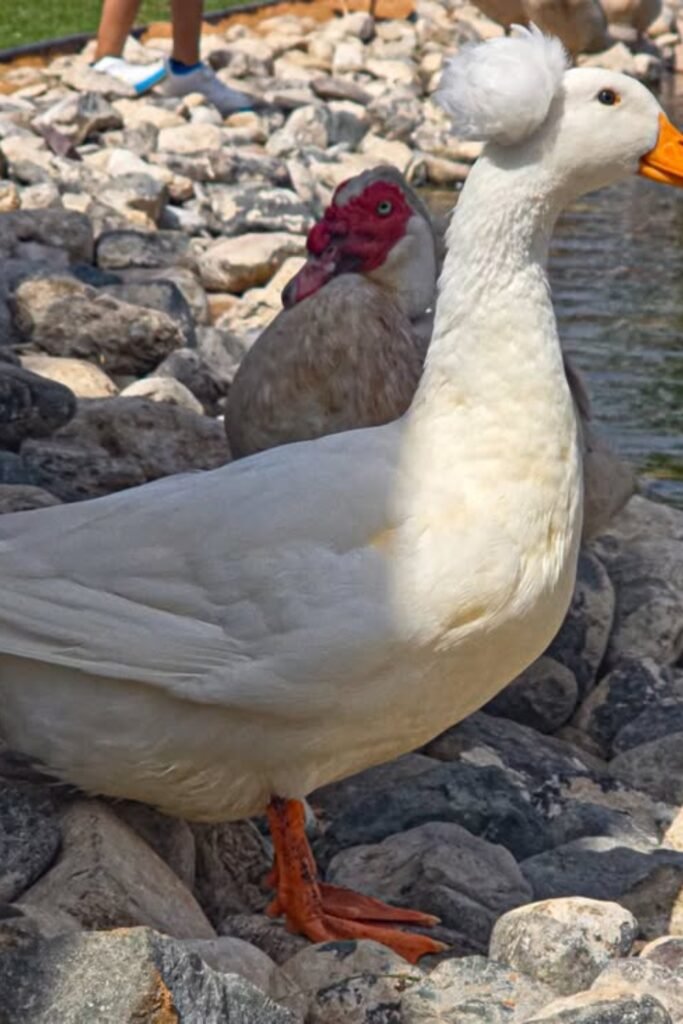
Rock edging works well around a duck pond because it gives wet feet grip and keeps soft soil from washing into the water daily too.
Use larger stones near the bank, then fill smaller gaps with gravel so ducks can walk without sliding along muddy edges after every swim session.
Keep the slope gentle, especially for heavier breeds, because steep pond sides can make entry and exit stressful for ducks during regular daily water use.
Shaded Pond Area
A shaded pond area helps ducks stay cooler, especially when the enclosure sits near trees and gets strong afternoon heat during long summer days outside.
Keep gravel or packed stone around the waterline so rain, splashing, and foot traffic do not turn the bank into deep mud near the ducks.
Add a secure shelter nearby for nighttime, because open ponds feel natural during the day but still need predator-safe planning after dark for your flock.

Shared Run Setup
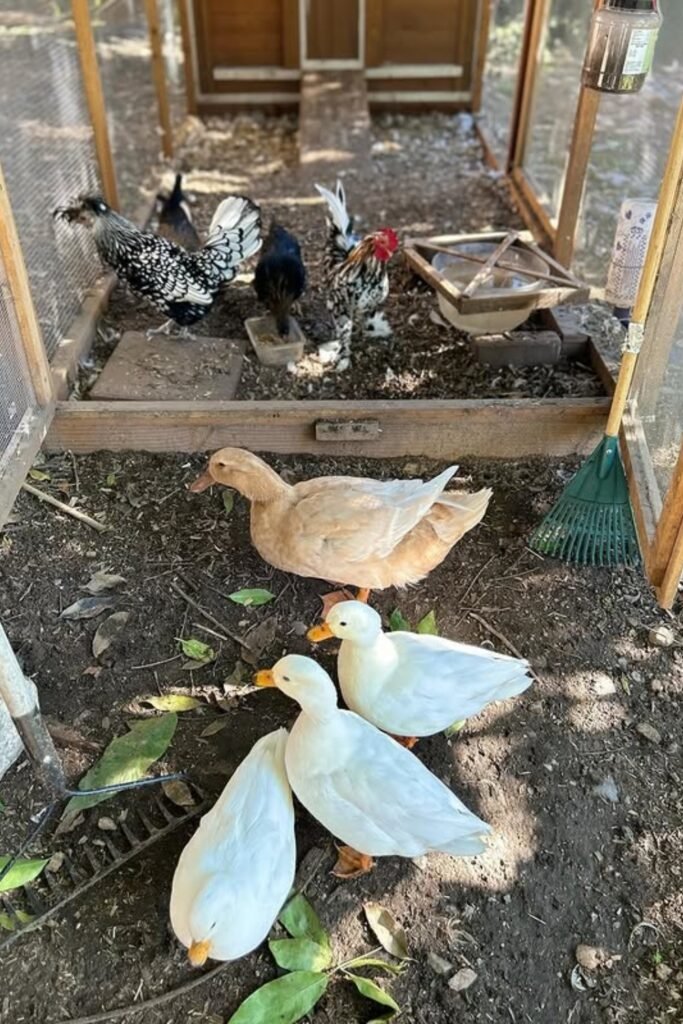
A shared poultry run can work when ducks and chickens have separate water habits, dry resting corners, and enough space to avoid crowding each day.
Place duck water outside the chicken bedding zone, because ducks splash more and can make a mixed enclosure messy very quickly after every refill time.
Use mesh walls, rake-friendly paths, and low feeding spots so daily care stays simple for both birds without constant floor problems inside the shared run.
Fountain Pond Corner
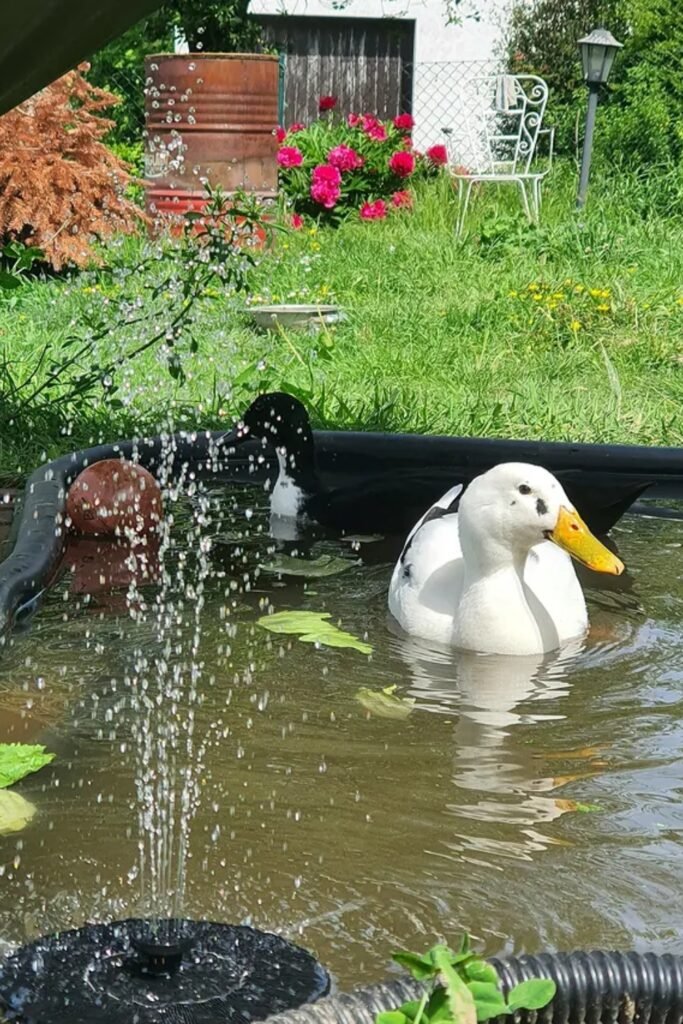
A small fountain pond gives ducks moving water and makes the enclosure feel more like a garden feature than a basic pen in your yard.
Keep plants around the outer edge, not directly in the splash path, so ducks enjoy greenery without destroying every soft stem near the pond border.
Use a liner, rocks, and easy pump access, because pretty water features still need cleaning once ducks start swimming daily and stirring the bottom sediment.
Planted Pond Coop
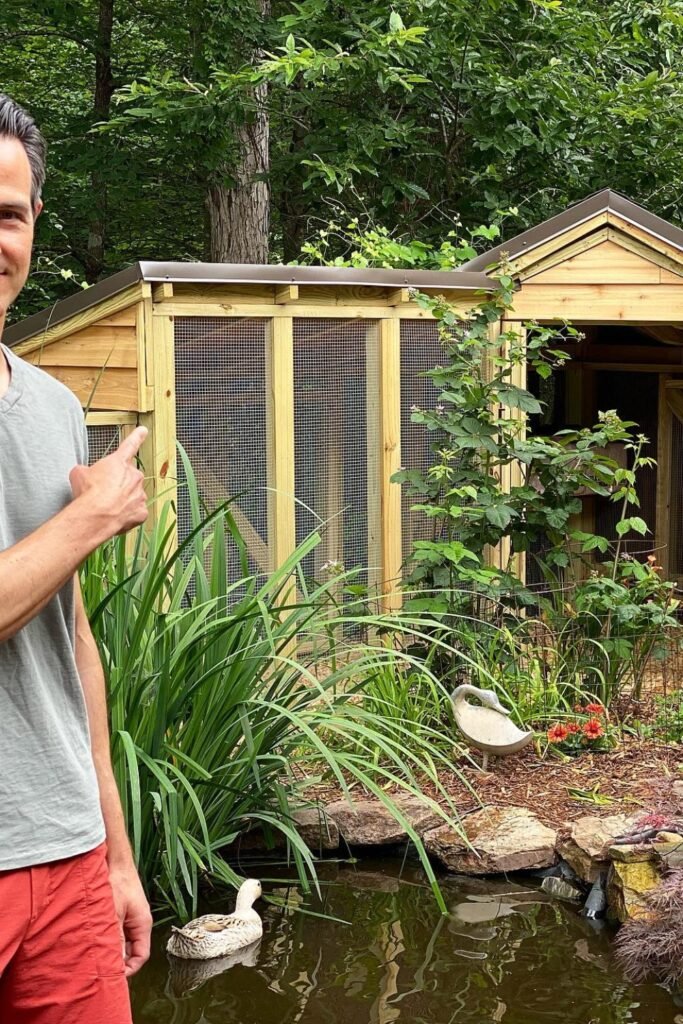
Place the coop behind the pond when you want ducks to move between water and shelter without crossing the full yard every time.
Dense plants soften the enclosure, but keep them outside the main walking path so ducks do not flatten every fresh stem.
Use strong mesh panels, lockable doors, and easy pond access so the setup feels beautiful while still solving safety and cleaning problems.
Large Pond Fence
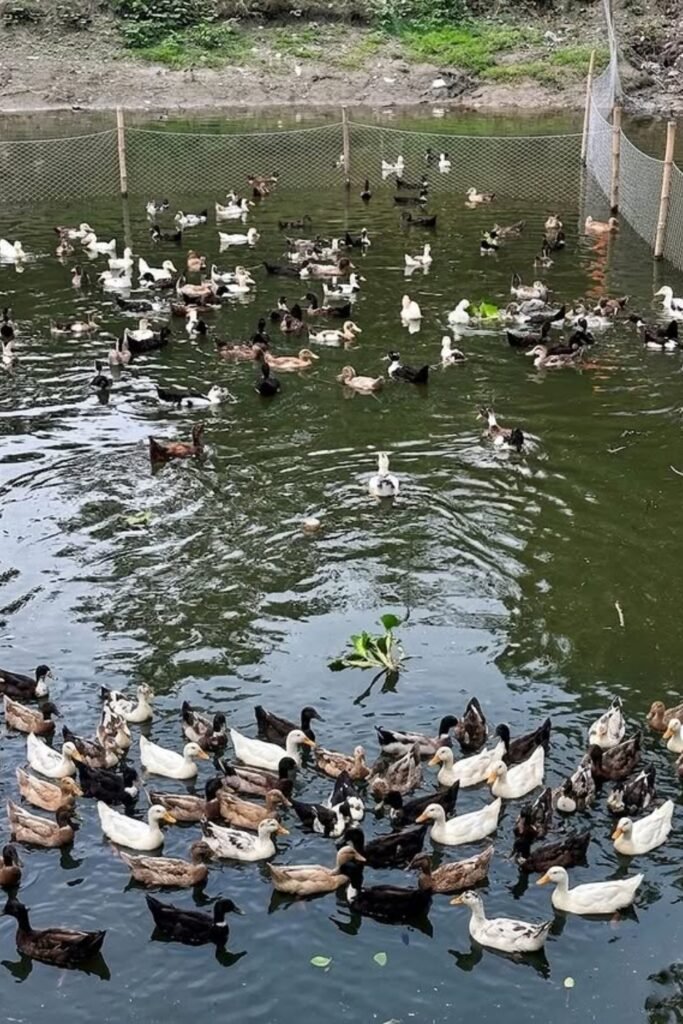
A fenced pond enclosure works best for a bigger flock because it gives ducks open swimming space without letting them wander into unsafe areas.
The fence line helps control movement, but large water setups still need shaded banks, safe exits, and clean feeding spots nearby.
Use this only where you can manage water quality and night protection, because big flocks need more than space to stay healthy.
Walk-In Wood Run
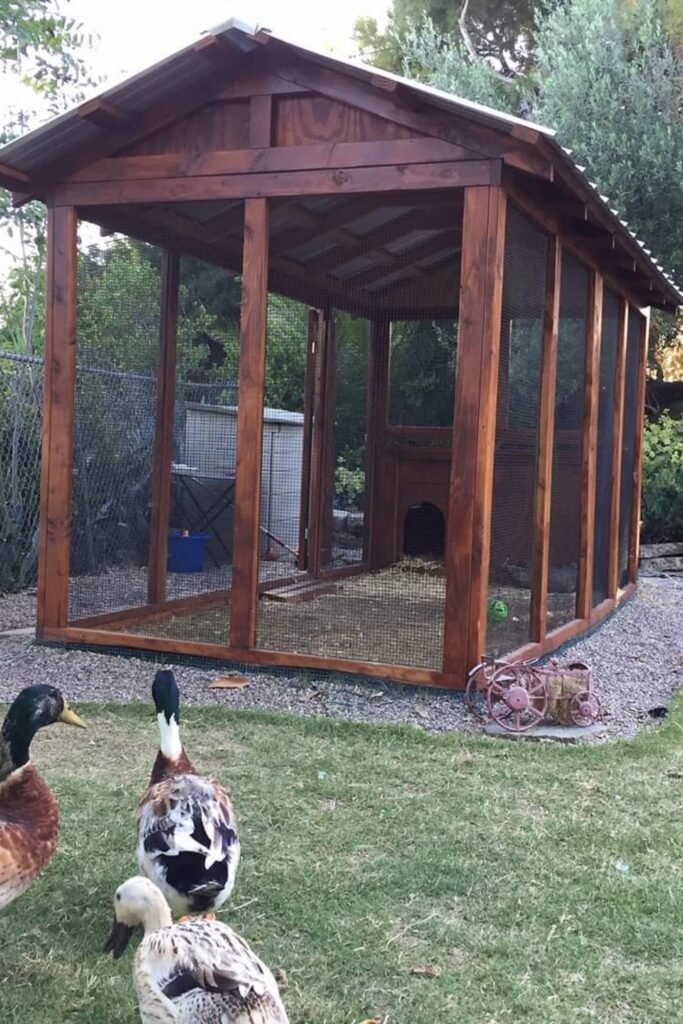
A tall wooden run is worth building when you want a duck enclosure that feels sturdy, clean, and easy to enter for daily care.
The gravel border helps with drainage around the base, while the covered roof keeps rain from soaking the inside too quickly.
Add hardware cloth, secure latches, and a low duck door so the setup protects your flock without making chores harder.
Modular Covered Run
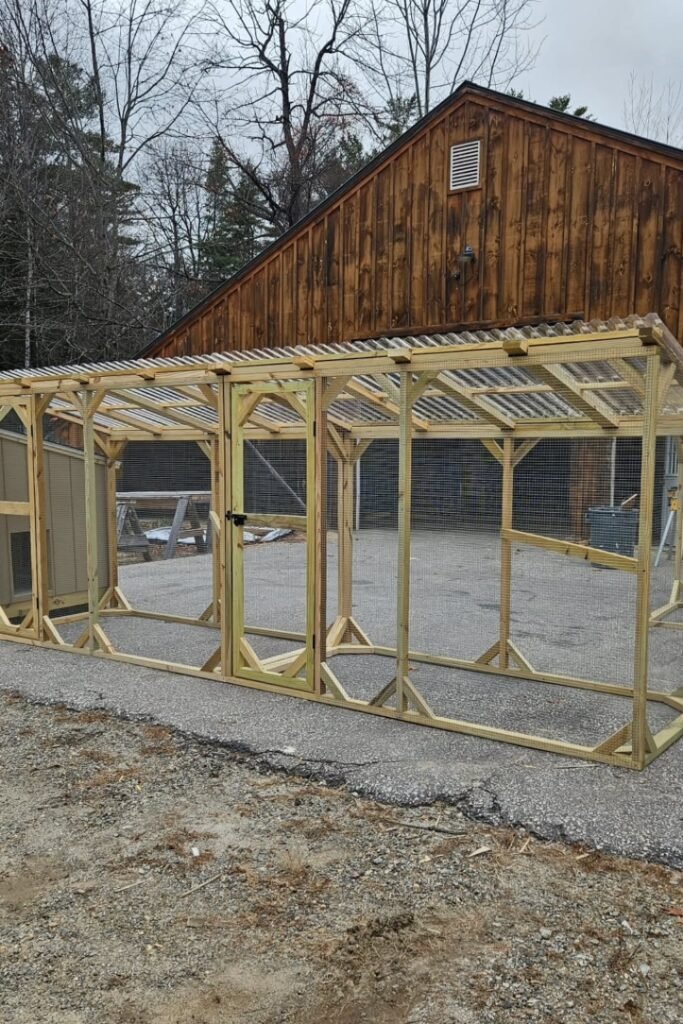
A modular covered run is useful when you want a long protected area that can connect directly to a duck house or barn wall.
The clear roof keeps rain out while mesh sides give airflow, so ducks get daylight without sitting in a wet, closed space.
Build it with strong framing, lockable doors, and hardware cloth, especially if your ducks stay inside the run overnight.
A-Frame Duck House
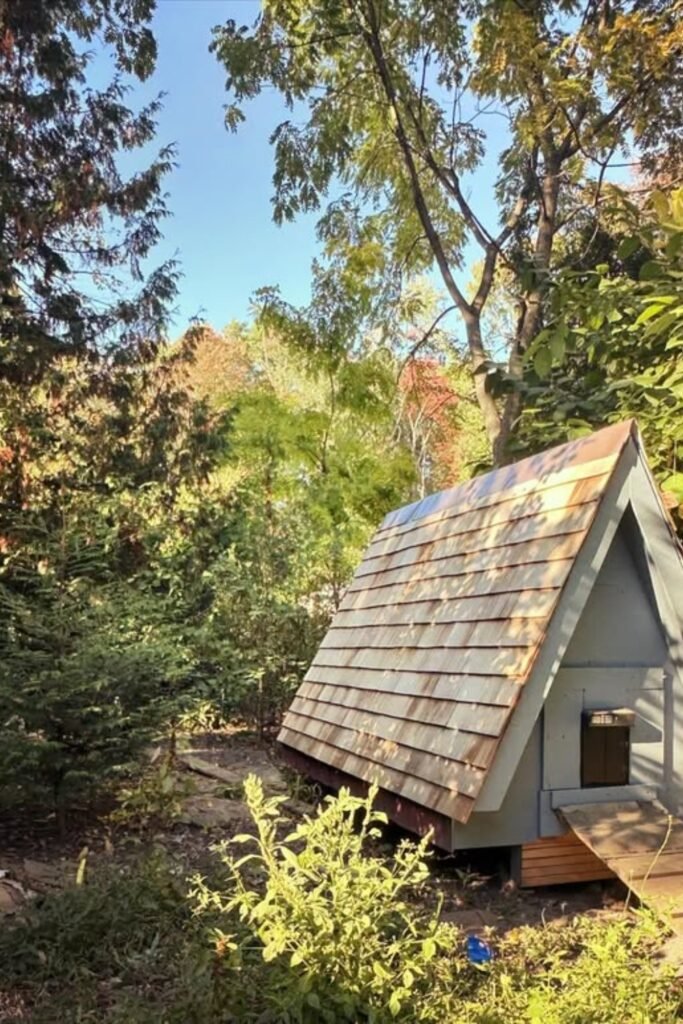
An A-frame duck house works well in a leafy corner where you want shelter to feel tucked into the garden instead of exposed.
The steep roof sheds rain quickly, while the low ramp makes entry easier for ducks that struggle with tall chicken-style doors.
Keep the doorway wide, add ventilation near the top, and use dry bedding inside so the house stays comfortable after wet days.
Mossy Pond Border
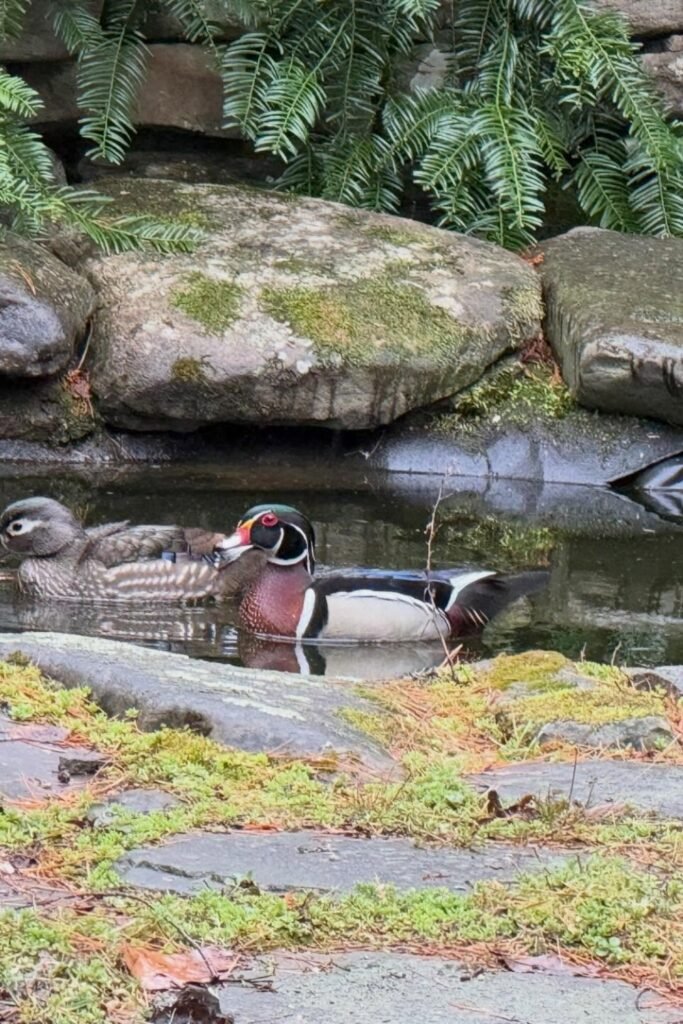
A mossy stone pond edge gives ducks a natural swimming area while still protecting the bank from collapse and muddy foot traffic.
Flat rocks near the waterline make entry easier, especially for smaller ducks that need a gentle place to step out safely.
Use this look in shaded garden ponds, but keep the liner protected and check slippery moss before it becomes a fall risk.
FAQs
What should I put on the ground inside a duck enclosure?
Use different ground materials for different areas because ducks make water mess very quickly.
Gravel or pavers work best around pools and water bowls, while straw, wood chips, or dry bedding work better inside the sleeping space.
The goal is to keep the wet zone separate from the dry zone so the enclosure does not turn muddy, smelly, or hard to clean every day.
How do I make a DIY duck enclosure predator-proof?
Hardware cloth or welded wire is better than weak chicken wire, especially if you have raccoons, foxes, dogs, or cats nearby.
Also protect the bottom with buried wire, blocks, or an outward wire apron, because many predators dig under the fence before they try to climb over it.

Hi, my name is Ali Mehmood! I’m a passionate writer and DIY enthusiast who loves turning creative ideas into practical, hands-on projects.
I created this website to share inspiring, budget-friendly ideas that you can do yourself – whether it’s organizing your home, crafting something unique, or creating fun projects for kids and pets.
I believe DIY isn’t just a hobby – it’s a smart way to save money, reduce waste, and enjoy the satisfaction of making things with your own hands.
I’m excited to have you as part of this growing community, and I’ll continue bringing you helpful, realistic, and fun DIY ideas you can actually use.