This post may contain affiliate links: read full affiliate disclosure.
A store-bought water table can look fun at first, but many parents stop for the same reasons.
It can feel too expensive, too bulky, too short for growing kids, or not worth it when your child only wants to pour, splash, scoop, and move water from one cup to another.
You can build something simple with a storage bin, PVC pipe, an old table, crates, buckets, or leftover wood without turning it into a complicated project.
The goal is not to make a perfect toy. The goal is to create a safe, affordable, easy-to-clean water play station that keeps kids busy outside.
A good DIY water table also solves the problems parents care about most: shallow water for safer play, a sturdy base.
The right height, simple drainage, and enough little activities to stop kids from getting bored after five minutes.
In this article, you will find practical ways to make a kids water table that works for toddlers, preschoolers, and older kids without spending too much.
Let’s dive in!
PVC Funnel Station
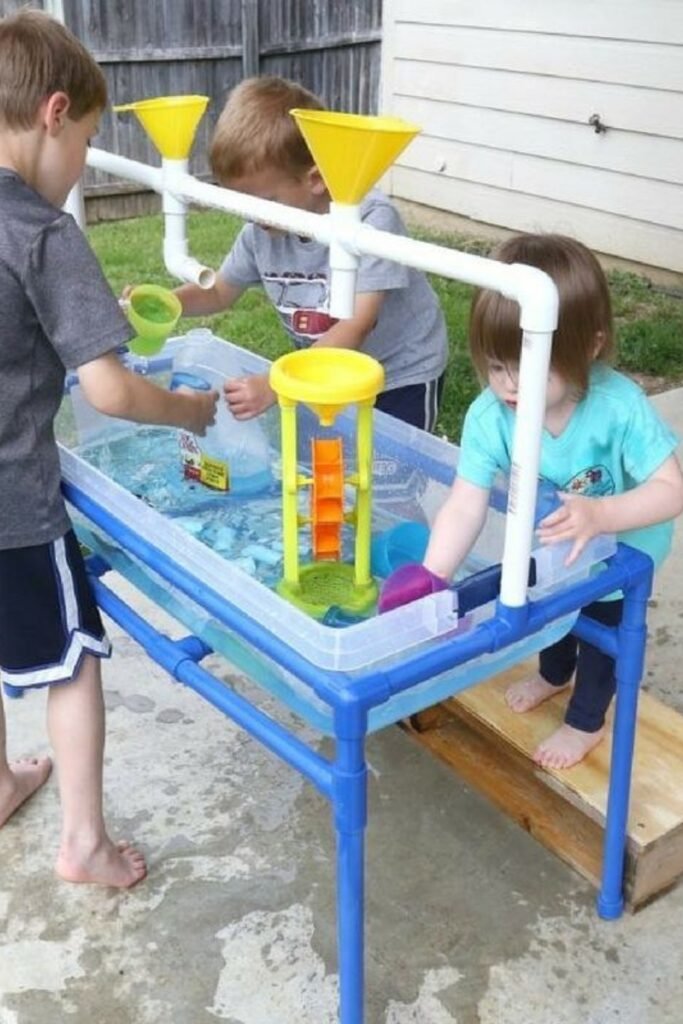
A PVC funnel station works best when more than one child wants to play at the same table without fighting over space or turns at once.
Let the funnels handle the excitement, while the clear tub below keeps water shallow enough for scooping, splashing, and quick cleanup after backyard play ends.
Add a small step beside one side if toddlers need height, but keep the frame steady so nobody climbs onto the table during busy play.
Floating Block Tray
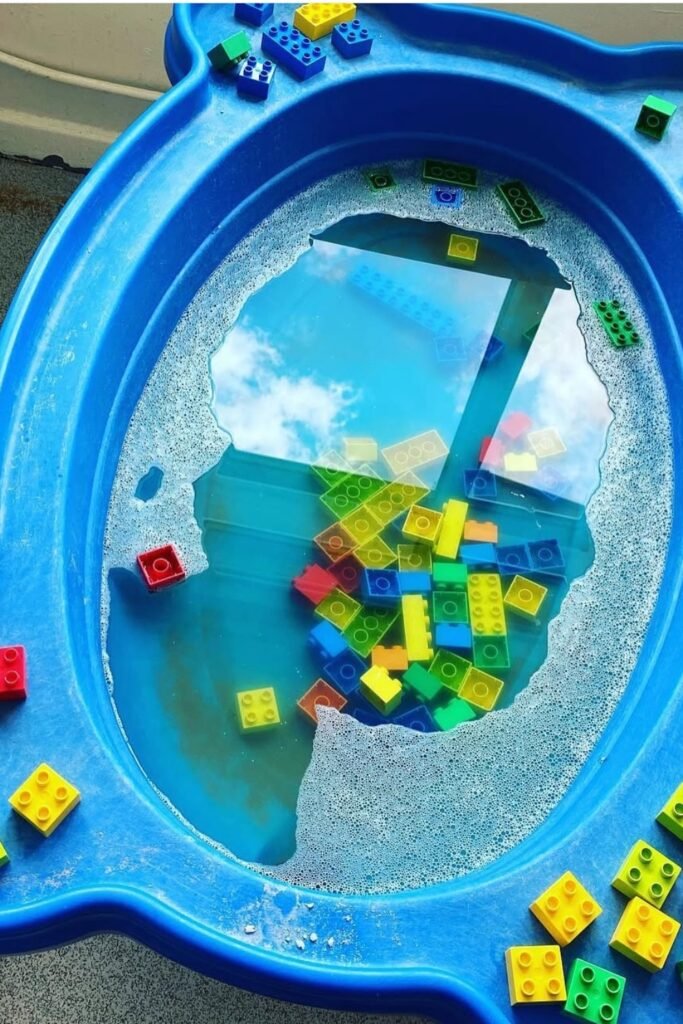
Loose building blocks make a water tray feel new because kids can test colors, stack floating pieces, and scoop them back out again with cups.
Use this setup when you need quick balcony or porch play, since the raised rim holds splashes better than a flat bin on tile floors.
A little bubble water adds texture, but keep pieces large enough for your child’s age and rinse everything at the end of playtime.
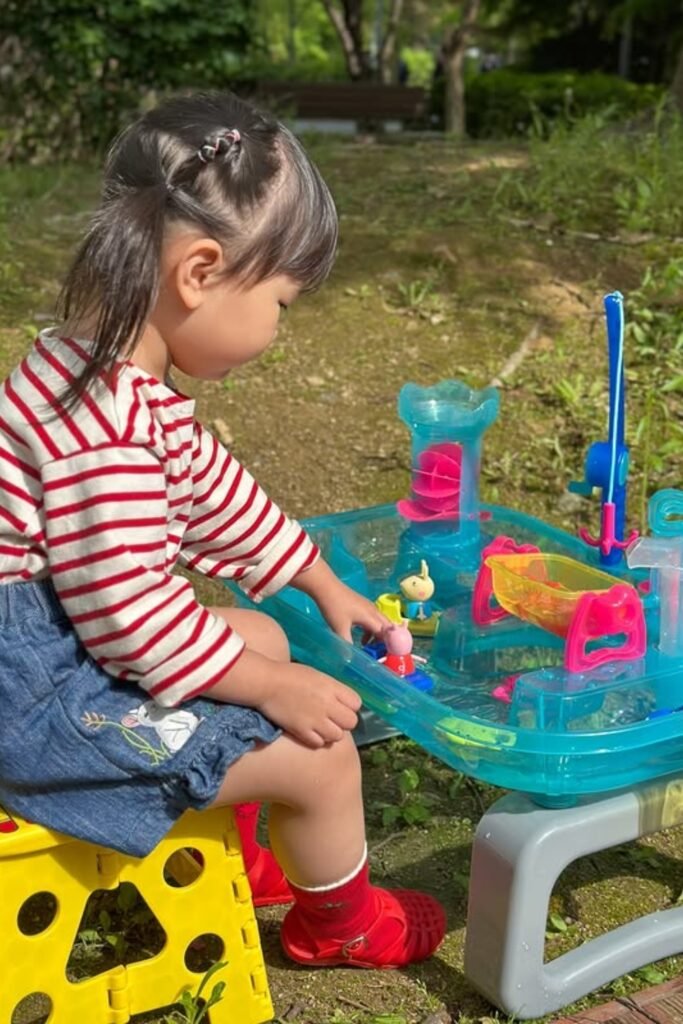
Low Toddler Table
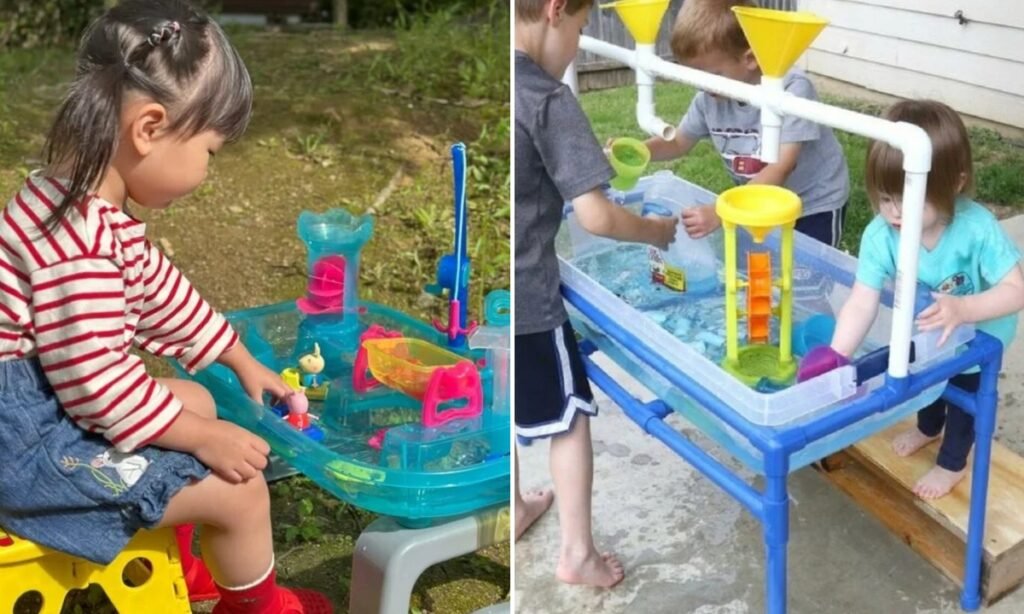
A low water table is easier for toddlers because they can sit close, reach the toys, and play without leaning their whole body forward too.
Place it in a shaded garden corner with a sturdy stool, so your child can focus on pouring instead of balancing near the table safely.
Small ramps, cups, and character toys work well here because they give gentle movement without making the setup feel too busy for younger kids outside.
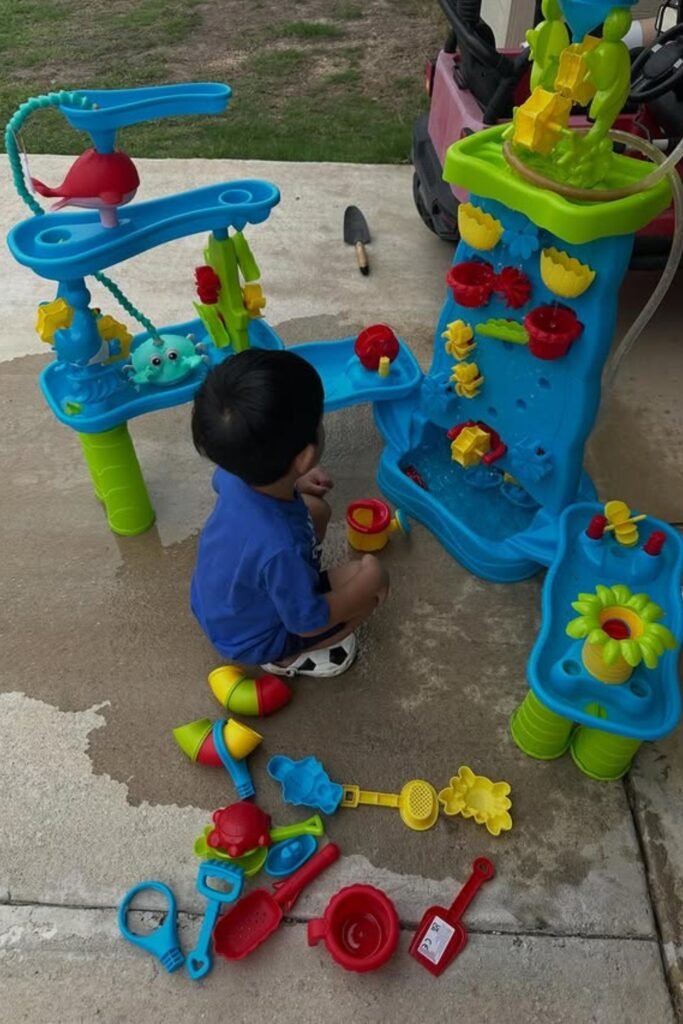
Multi-Level Splash Table
A multi-level splash table suits kids who get bored fast because water keeps moving through towers, cups, wheels, and side trays again and again outside.
Keep extra scoops nearby, but do not overload every section, or children may dump everything before they explore the water paths with patience and focus.
Concrete or grass works better than indoor flooring for this style, especially when buckets tip, trays overflow, and little feet move around during excited play.
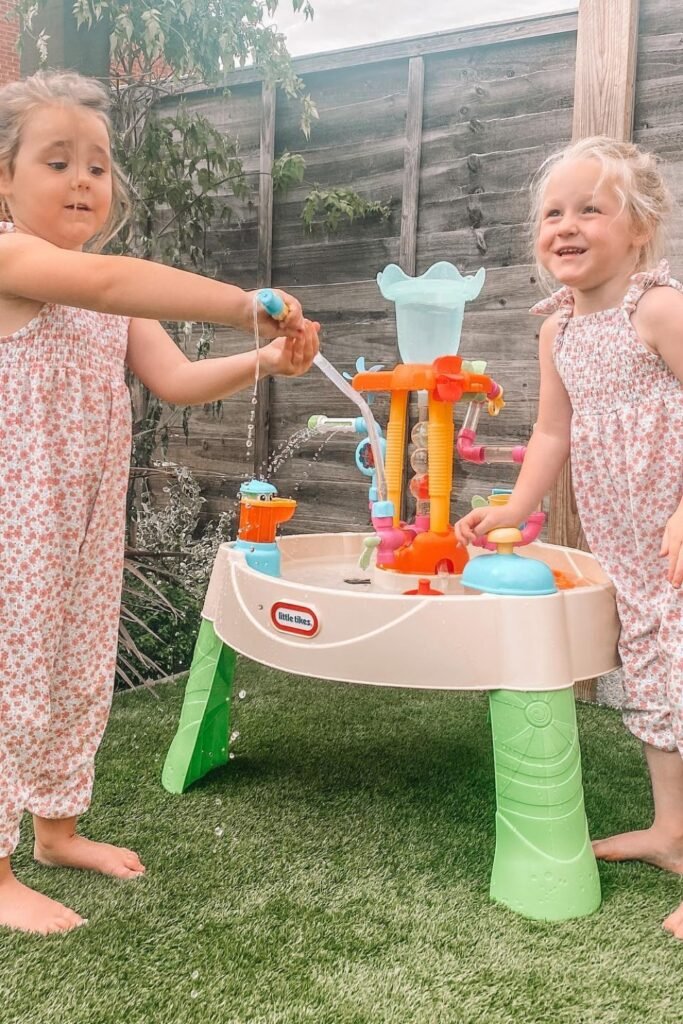
Pump Play Station
A pump-style water table is great when kids need more action than simple scooping, because the moving water instantly makes the setup feel exciting.
Place it on grass if possible, since spray toys and side spouts can soak the ground fast when two kids play together.
For a DIY version, add squeeze bottles, hand pumps, or small tubes to a shallow table so kids can press, pour, and refill safely.
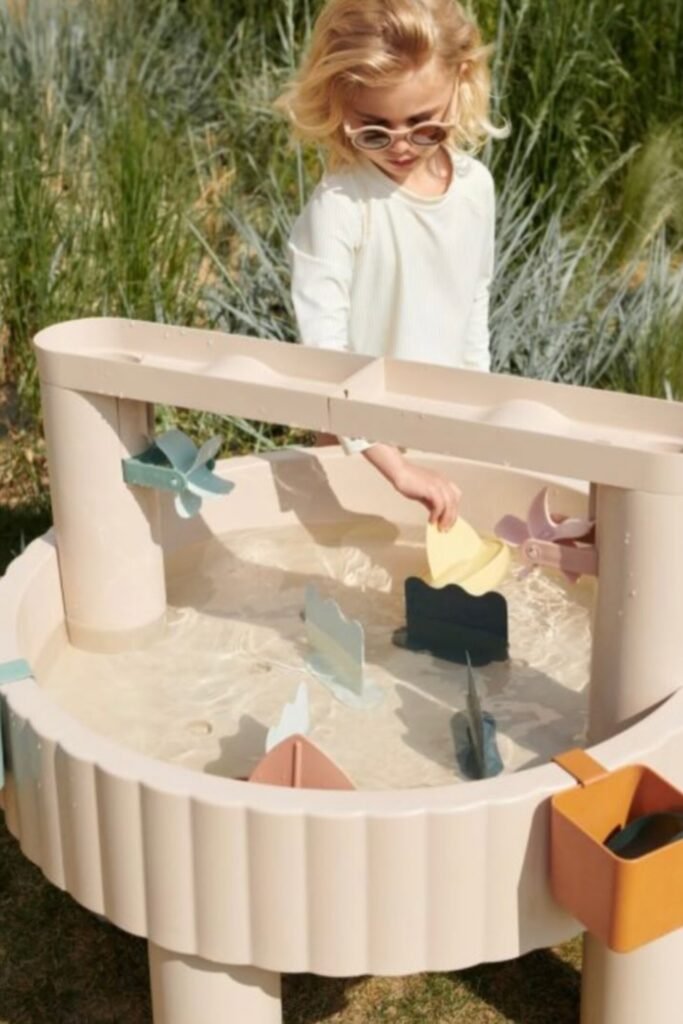
Neutral Water Table
Soft neutral tables work well when you want backyard play to feel calmer, especially if bright plastic toys always look too loud outside.
Use simple scoops, side cups, and small dividers so kids can move water around without turning the whole table into clutter.
A wide shallow basin gives children room to explore, while the raised sides help keep most splashes inside during relaxed garden play.
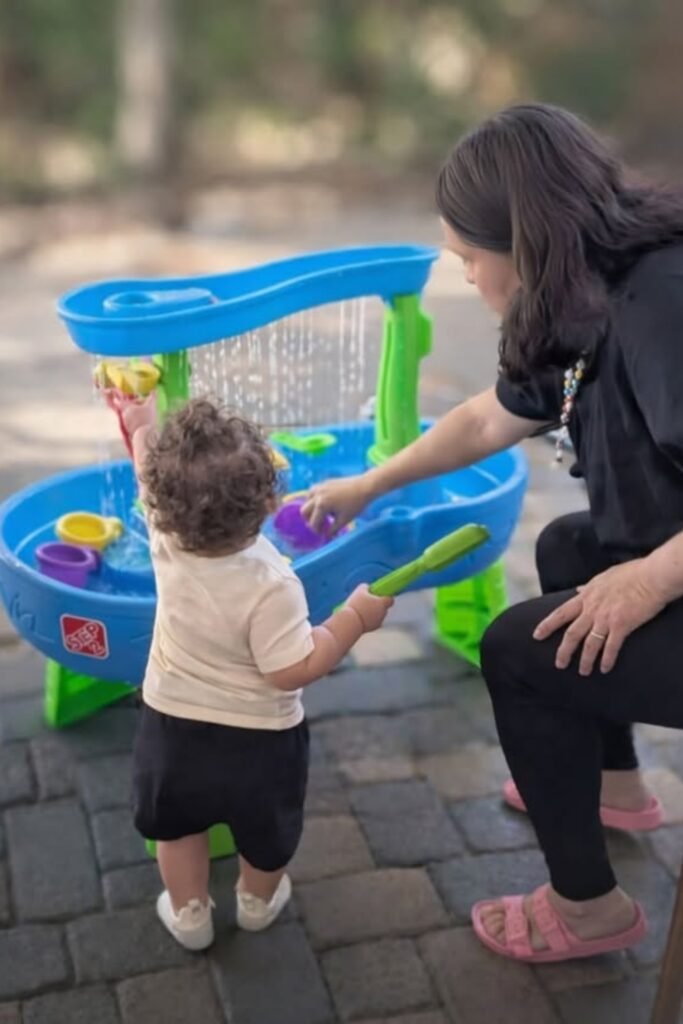
Rainfall Splash Table
A rainfall-style table gives toddlers instant excitement because water drops from above, instead of just sitting flat in a plain basin.
Set it on pavers or grass, then hand kids cups and scoops so they can refill the top tray again and again.
This setup works beautifully for younger children because they can watch cause and effect without needing complicated toys or a big backyard space.
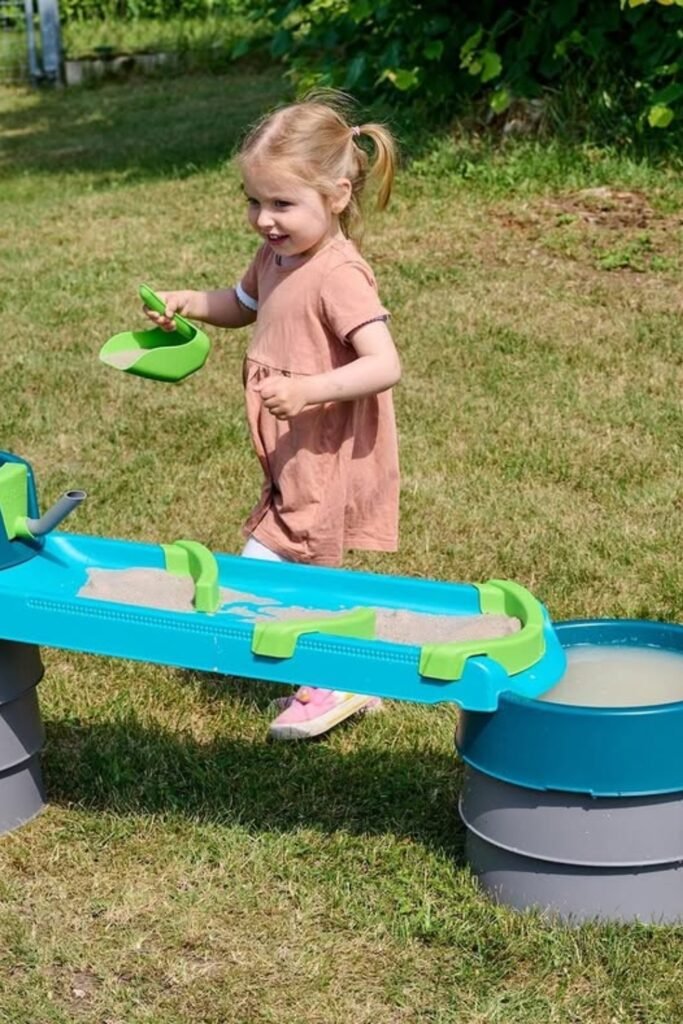
Sand Water Run
A long water run is perfect when you want kids to see movement from one end to the other, almost like a mini stream.
Add a little sand near one section if you want more texture, but keep separate scoops so water does not turn muddy too fast.
This idea suits open lawns because children can walk around both ends, pour from different spots, and follow the flow naturally.
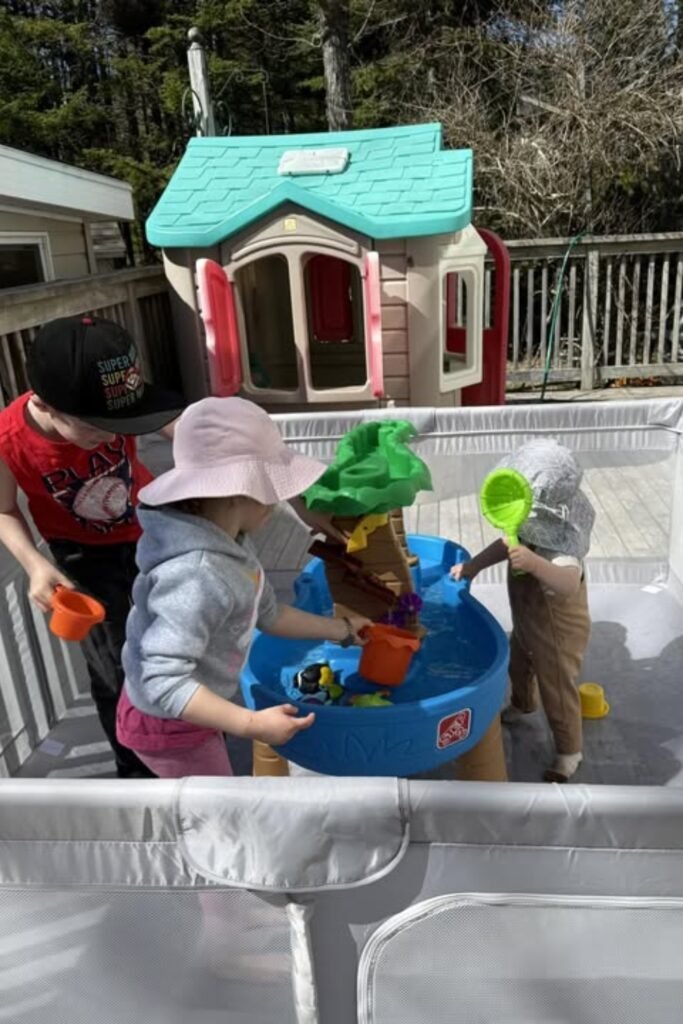
Play Yard Station
A water table inside a play yard helps contain the chaos when several toddlers want to scoop, splash, and move around together.
Use this setup for decks or patios where you need a clear boundary, especially if younger kids wander during outdoor play.
Keep cups, scoops, and floating toys simple, so children focus on sharing the table instead of dumping too many pieces everywhere.
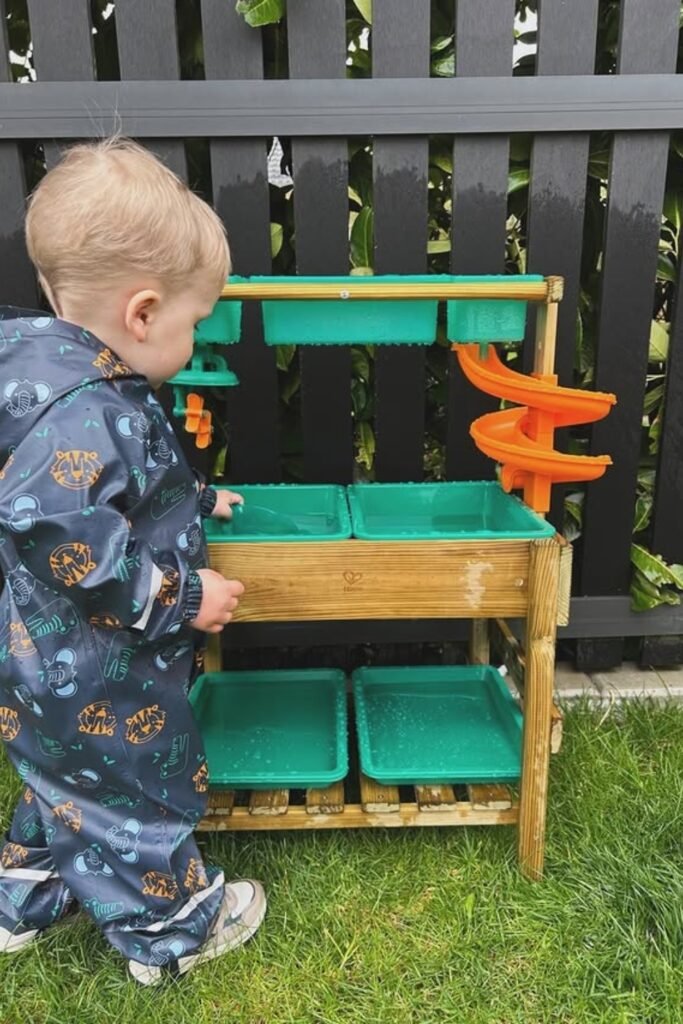
Compact Wood Station
A small wooden water station works well when you want a backyard setup that feels sturdy, tidy, and easier to style than bright plastic tables.
Use shallow trays on different shelves so toddlers can pour, transfer, and explore water without needing one large basin that becomes messy fast.
The lower trays are useful for extra tools or overflow play, especially when kids like moving cups between levels during quiet outdoor time.
Nature Water Tray
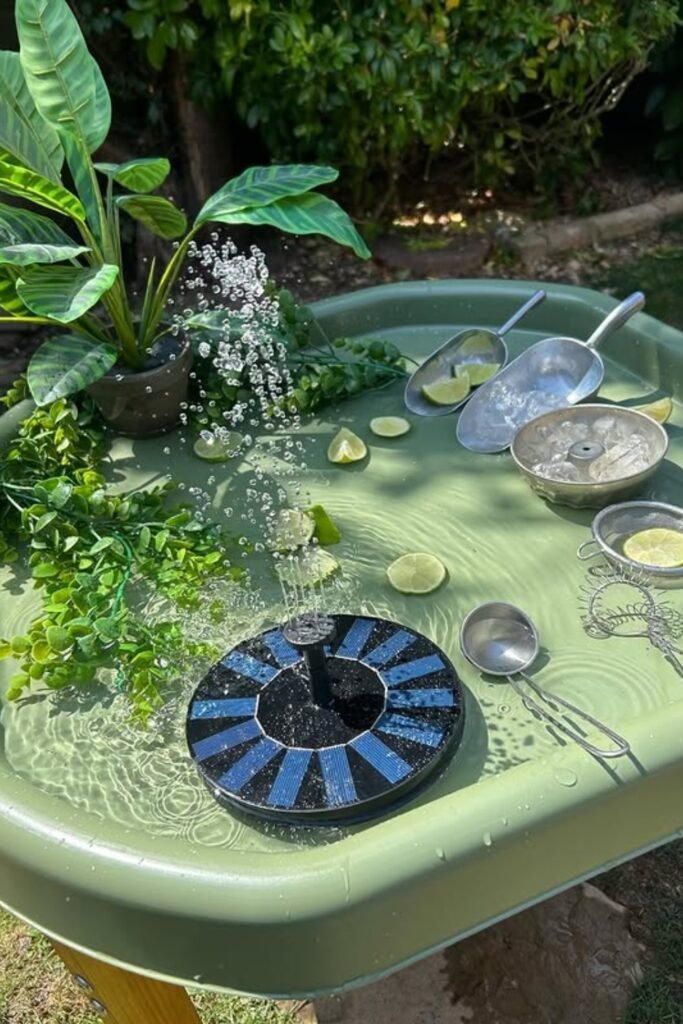
A nature-inspired water tray turns simple splashing into calm sensory play, especially when you add leaves, lime slices, scoops, and a small fountain.
Place this on grass or a shaded patio, so kids can explore water movement while the natural pieces make the setup feel fresh.
Metal bowls and strainers work beautifully here because they let children scoop, drain, stir, and experiment without needing expensive water table toys.
Overhead Pour Table
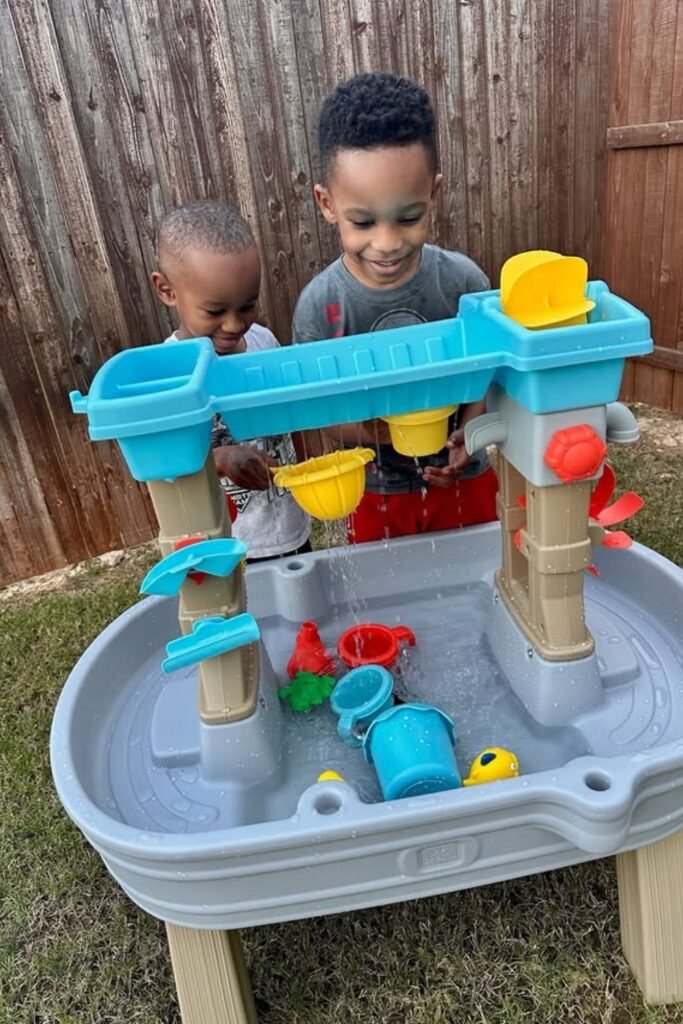
An overhead pour table keeps kids engaged because water drops from the top section before landing into the bigger basin below.
Use this style when siblings play together, since one child can refill the top while another catches water underneath with cups.
Keep the basin shallow and leave enough open space, so kids can move toys around without knocking over every scoop and bucket.
Garden Pump Table
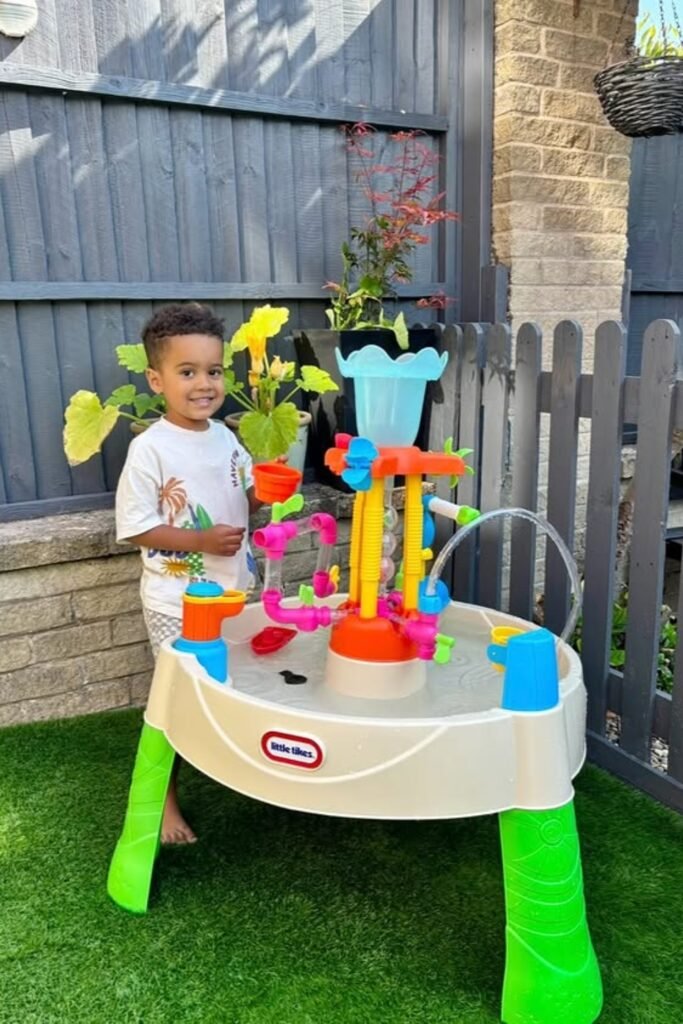
A pump table fits small garden corners because it gives kids active water play without needing a huge backyard or complicated DIY build.
Set it near artificial grass or a fence line, where splashes can dry quickly and the table still feels easy to supervise.
Add cups around the edges so children can refill the tower, press the pumps, and follow the water as it moves through tubes.
Seated Baby Play
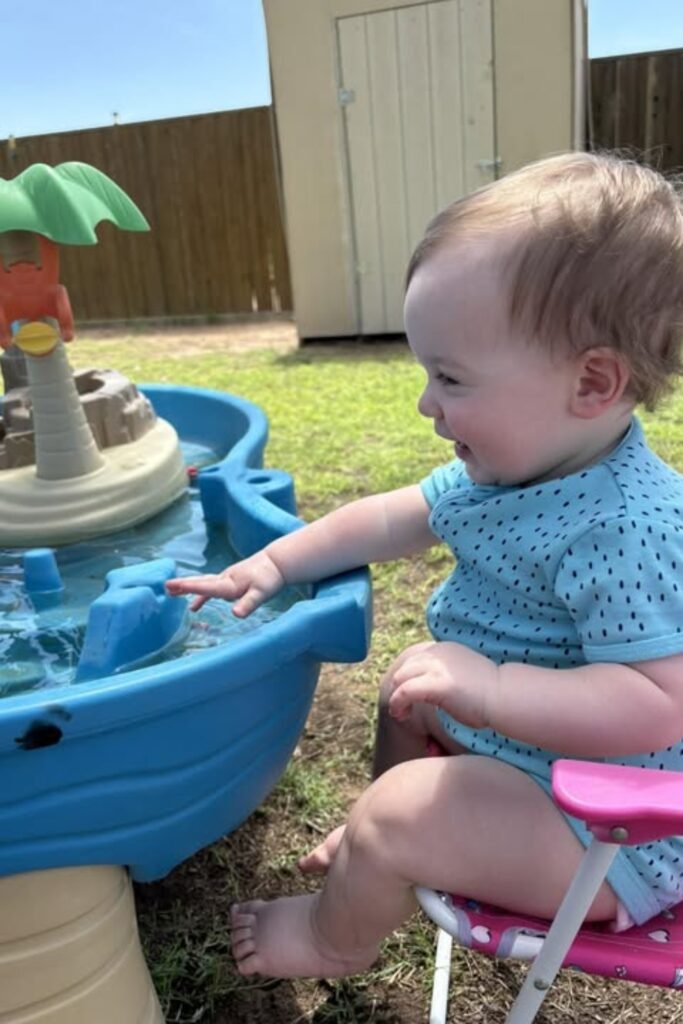
A seated water table setup helps babies join outdoor play without needing to stand, especially when they still need support near the basin.
Keep the chair close enough for reaching, but far enough that little hands cannot lean too deeply into the water during excited splashing.
Use larger floating toys and shallow water only, so the play stays simple, safe, and easy for parents to watch closely outside.
Open Patio Table
An open patio table works well for active toddlers because they can walk around every side, grab toys, and return to play easily.
Place it on concrete when you want fast drainage underfoot, since this style often leads to bigger splashes and quick toy drops.
Keep only a few cups, wheels, and floating pieces in the basin so the table still feels fun without becoming messy too quickly.
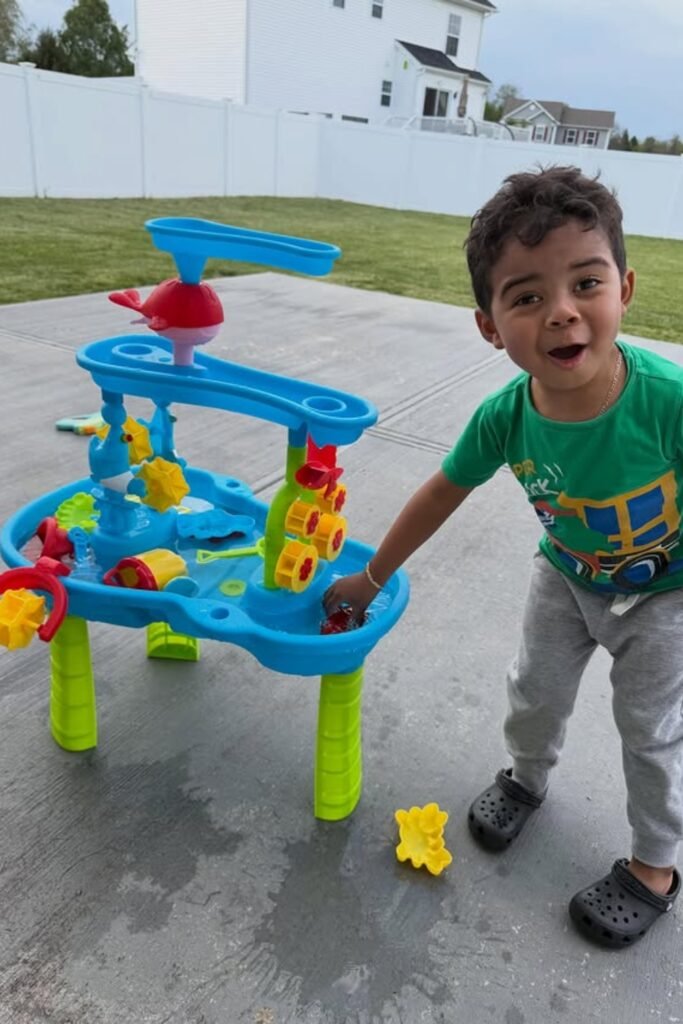
Double Basin Table
Two connected basins give kids more room to separate water play, especially when one side holds toys and the other stays open.
Use this style on grass if your child loves dumping water, because the lawn handles spills better than a patio or deck.
Add ice cubes, boats, or scoops to each basin, so kids can move between both sides without needing a larger play setup.
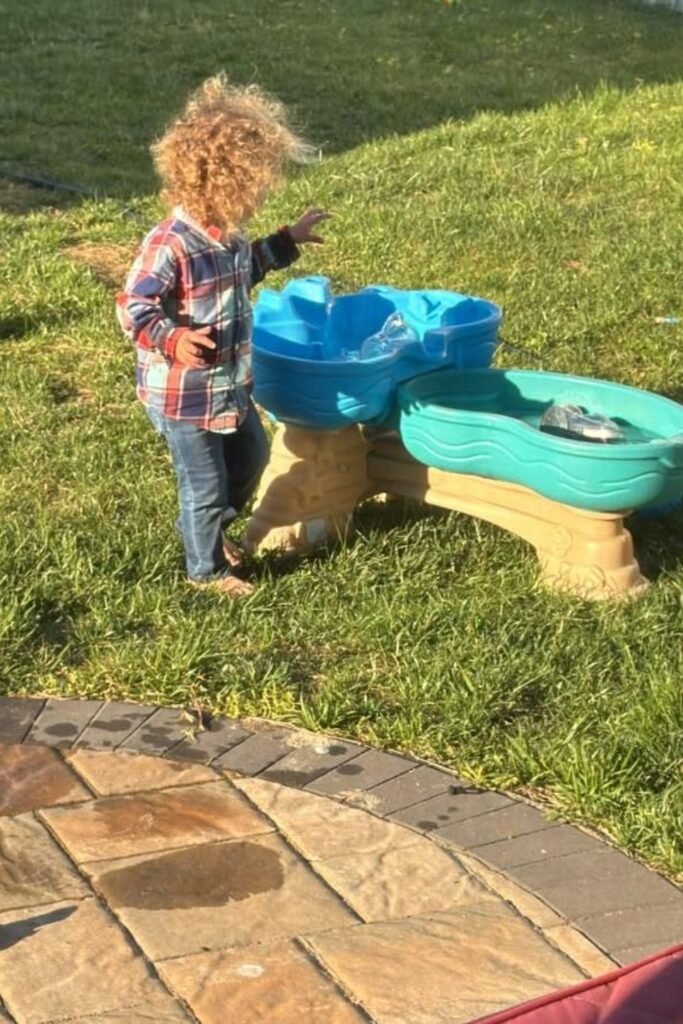
Nature Stream Table
A nature stream table feels perfect for kids who like mixing water with leaves, wood pieces, flowers, and small outdoor treasures.
Use wooden channels or loose boards to create little water paths, then let children move cups and toys through the pretend stream.
This setup works best in a mud kitchen or garden play area, where natural mess feels part of the fun instead of a problem.
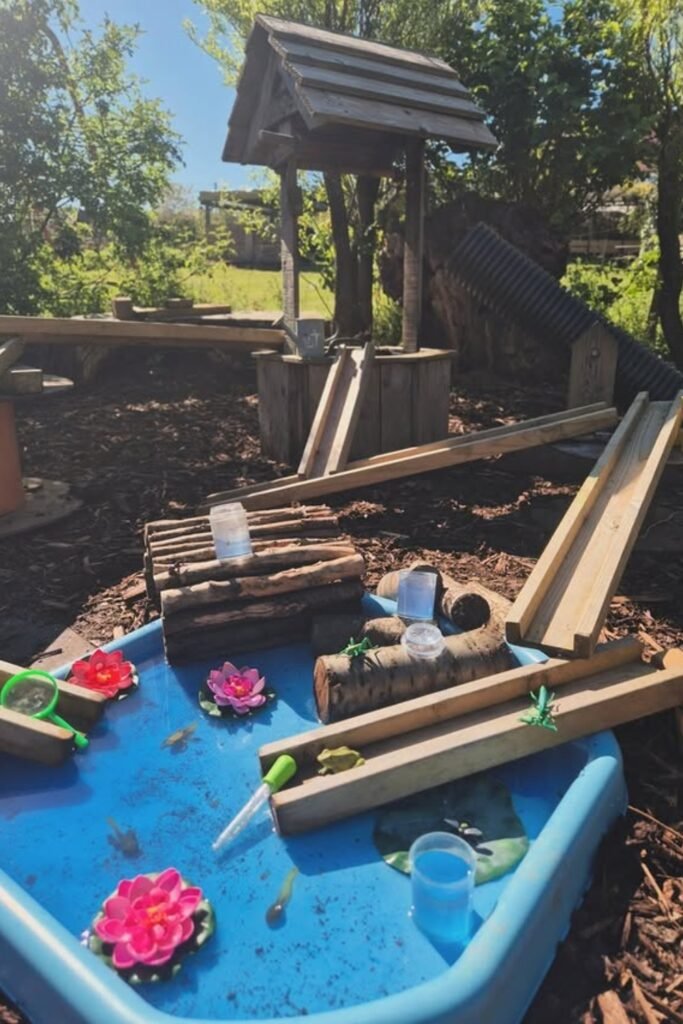
Group Water Zone
Several water tables work better when you have more kids, because each child gets a separate station instead of crowding one small basin.
Space them across artificial grass or lawn, then keep a large bucket nearby so adults can refill tables without constant trips inside.
This setup suits playdates, daycare yards, or big patios where children need room to move, share toys, and explore different water activities.
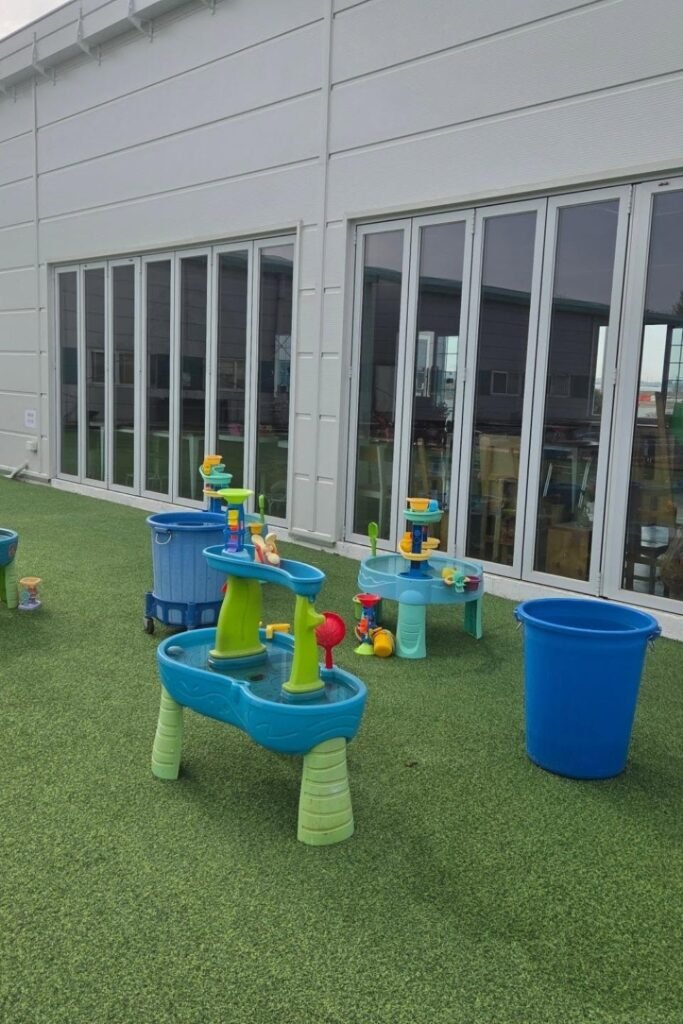
Deck Water Table
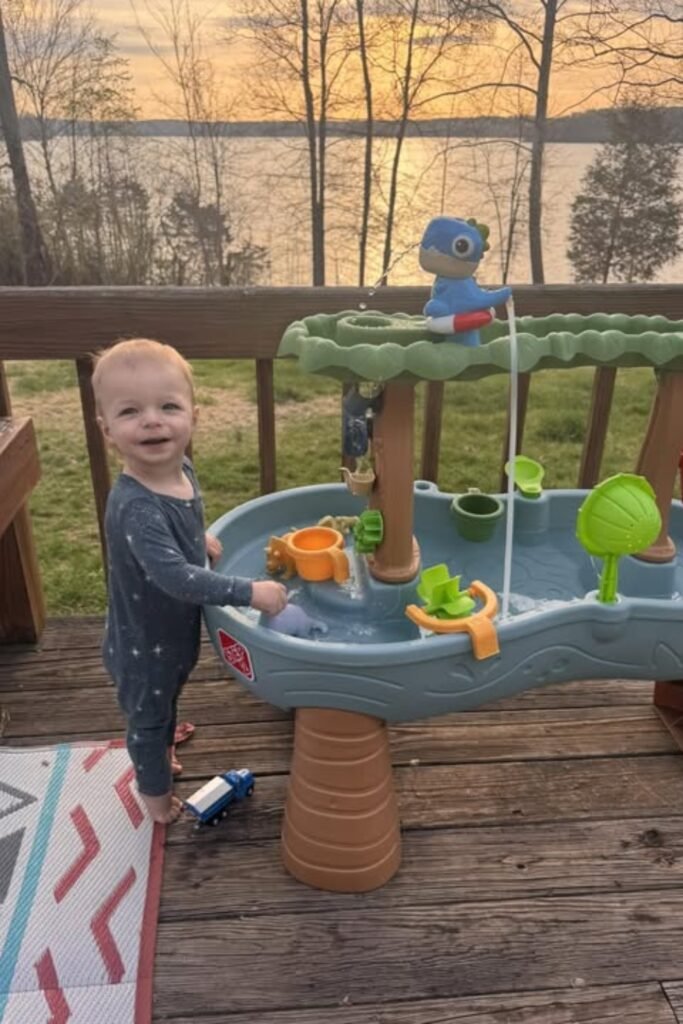
A deck water table can feel special when the view, fresh air, and simple toys turn quick play into a relaxed outdoor moment.
Keep a washable mat nearby if the deck gets slippery, especially when toddlers splash over the sides or carry cups around.
A table with open basins and small buckets works well here because kids can pour, refill, and stay close to adults outside.
Wooden Pour Run
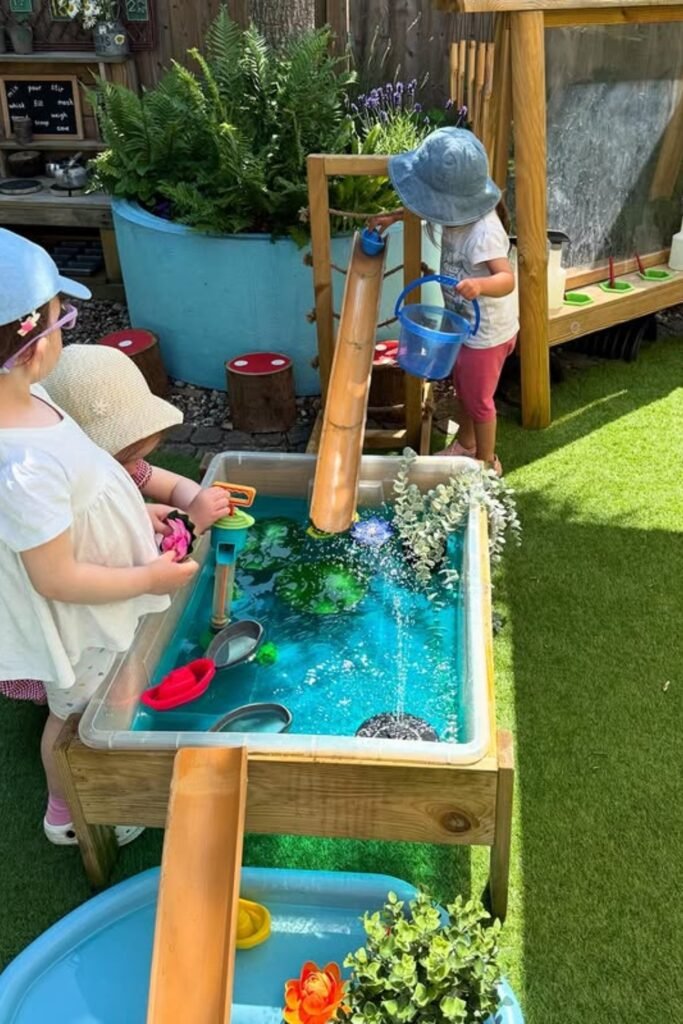
A wooden pour run gives kids a real sense of movement because water travels down ramps before reaching the lower tray or basin.
Use this idea in a mud kitchen area, where extra splashes, leaves, flowers, and loose parts already feel natural and useful.
Add lightweight buckets and long channels so children can test flow, change directions, and build their own little water paths again.
Storage Bin Sprinkler
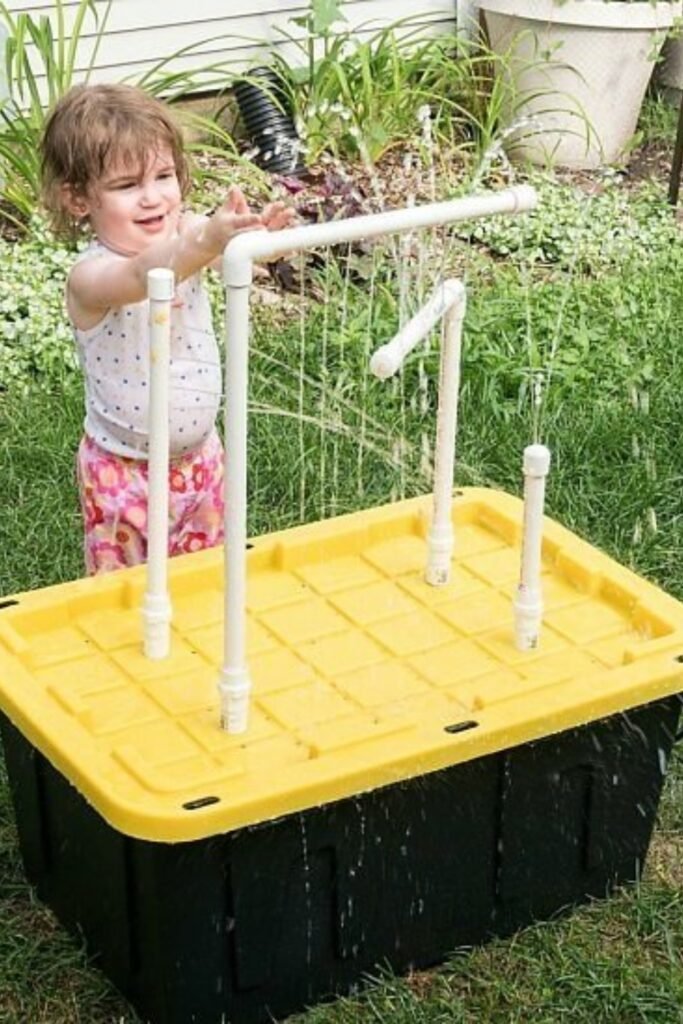
A storage bin sprinkler is a smart DIY option when you want water play without buying a full outdoor table first.
Drill small holes into PVC pipes, attach them above a sturdy lidded bin, and let the water fall like gentle rain.
Keep the lid secure and the water shallow, so kids can splash safely while the bin catches overflow during backyard play.
FAQs
Can I make a DIY water table without buying special materials?
Yes, you can make a simple DIY water table with things you may already have at home.
A shallow storage bin, plastic tub, old table, crates, buckets, PVC pipe, or even a sturdy tray can work.
The main thing is to keep the water shallow, choose a stable base, and use safe toys like cups, scoops, funnels, and floating pieces.
How do I keep a DIY water table safe and less messy?
Start with shallow water and never leave kids alone during play, even for a minute. Place the table outside on grass, concrete, or another splash-friendly surface so cleanup feels easier.
Use removable bins if you want quick draining, and empty the water right after playtime.
Keep toys simple too, because too many pieces can make the table messy faster than the water itself.

Hi, my name is Ali Mehmood! I’m a passionate writer and DIY enthusiast who loves turning creative ideas into practical, hands-on projects.
I created this website to share inspiring, budget-friendly ideas that you can do yourself – whether it’s organizing your home, crafting something unique, or creating fun projects for kids and pets.
I believe DIY isn’t just a hobby – it’s a smart way to save money, reduce waste, and enjoy the satisfaction of making things with your own hands.
I’m excited to have you as part of this growing community, and I’ll continue bringing you helpful, realistic, and fun DIY ideas you can actually use.