This post may contain affiliate links: read full affiliate disclosure.
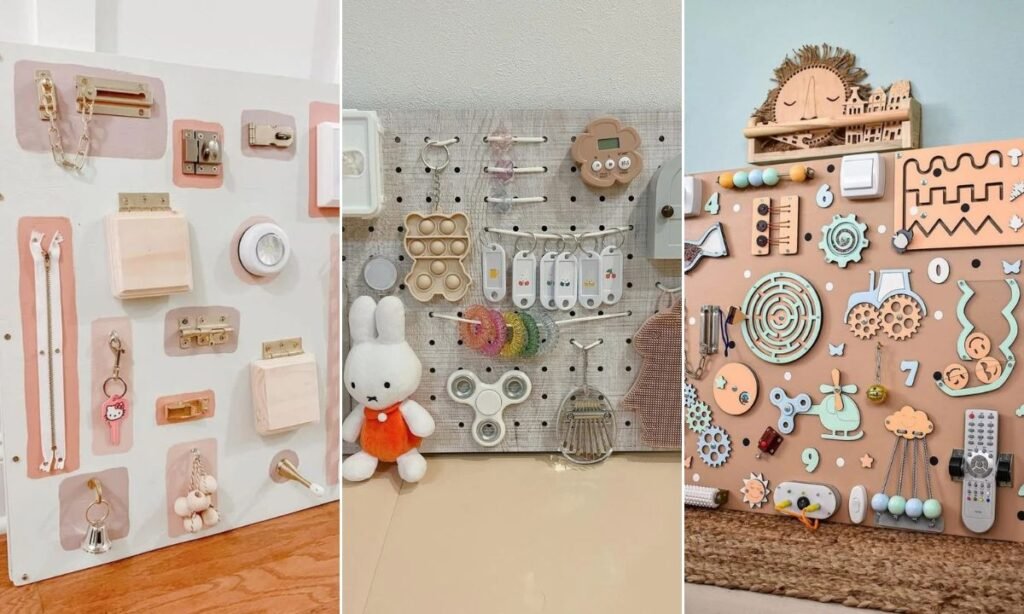
Toddlers have a way of finding the exact things you wish they would leave alone switches, zippers, cabinet latches, handles, knobs, and anything that moves.
A DIY busy board gives them one dedicated place to pull, twist, open, fasten, slide, and explore without turning every drawer in the house into a new activity.
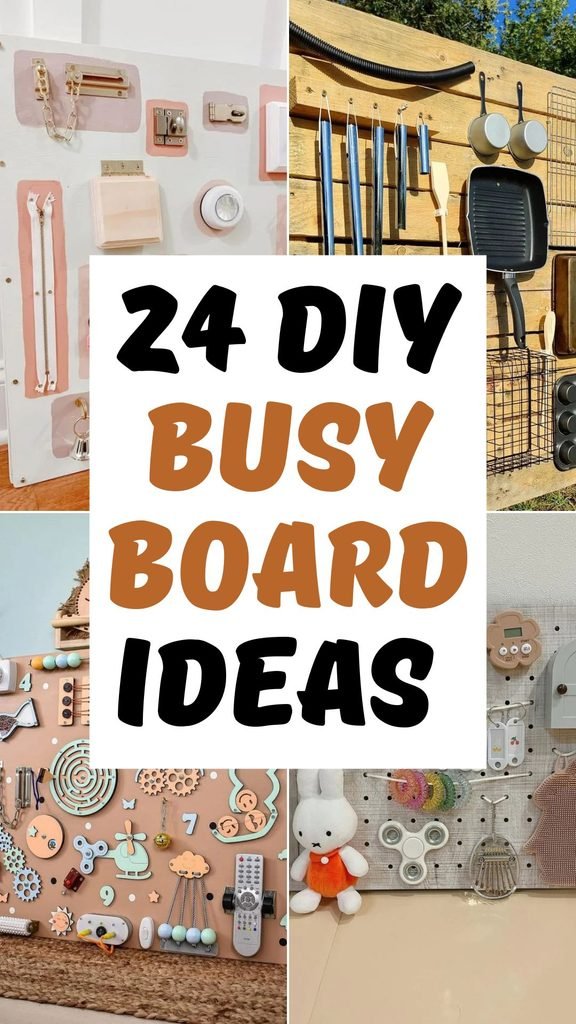
In this guide, you’ll find 24 DIY busy board ideas with different layouts, activities, and styles to inspire your own version.
Activity Mix
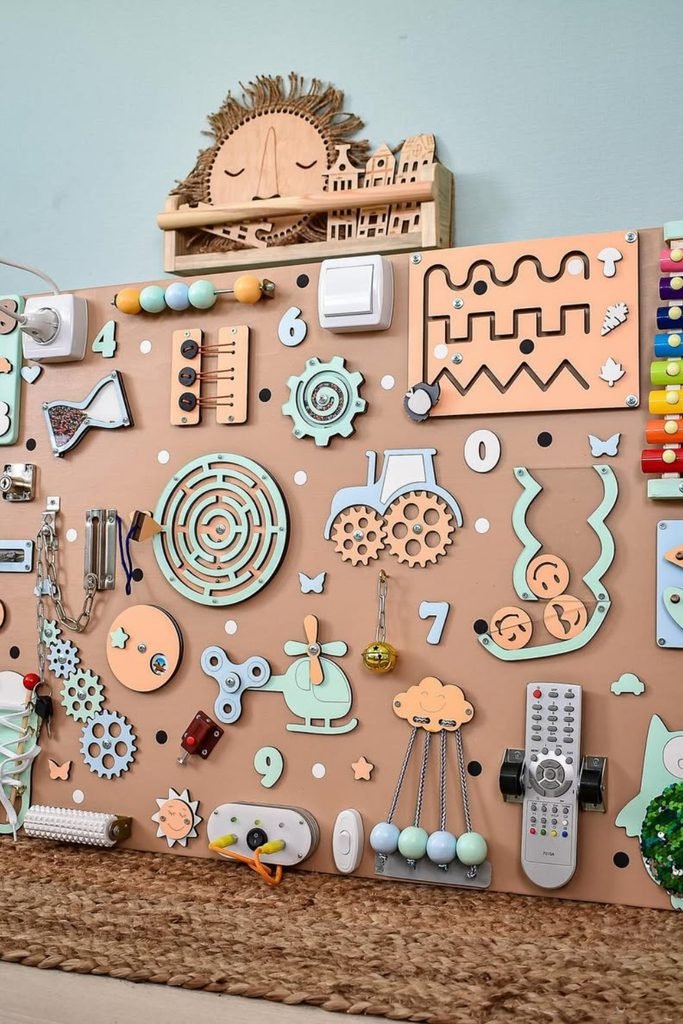
Mix several motions on one larger board, using gears, mazes, fasteners, music pieces, and sliders to keep play genuinely varied.
Give each feature breathing room so little hands can grip, twist, pull, and trace without bumping into the next activity.
A fuller setup suits a permanent play corner, but every movable or removable-looking piece should stay firmly secured during repeated use.
Compact Sensory
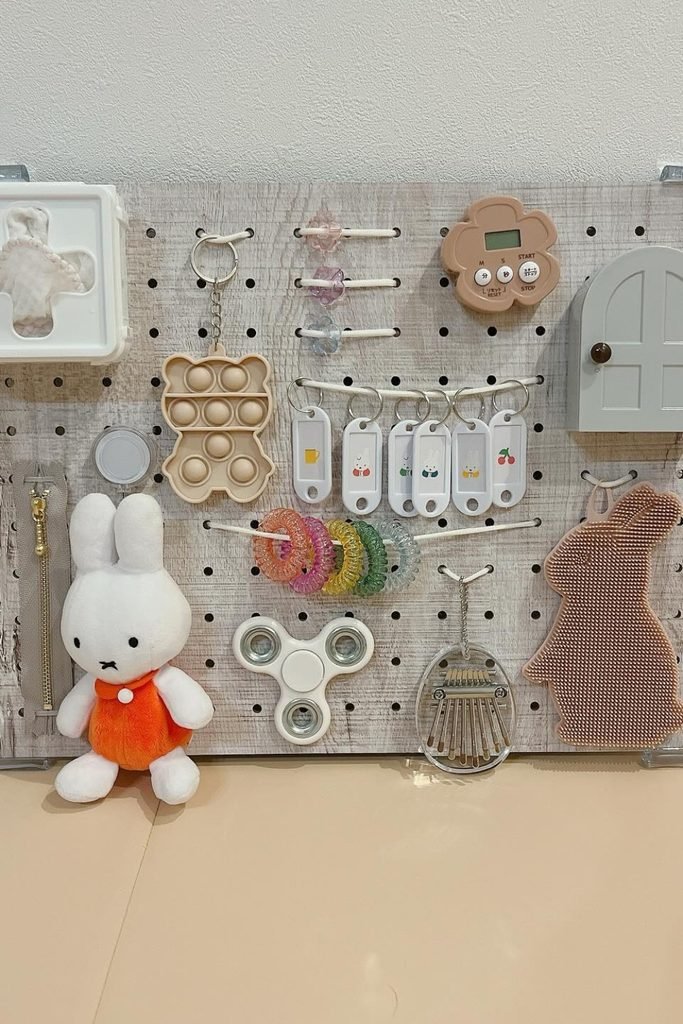
Try a smaller pegboard when floor space is tight, pairing tactile pieces, zippers, poppers, and spinners in one manageable setup.
Limit the number of activities so each texture and movement feels intentional, rather than turning the board into visual clutter.
Shorten dangling elements and fasten everything securely, then rotate a few activities later to refresh interest without rebuilding the whole board.
Outdoor Sound Wall
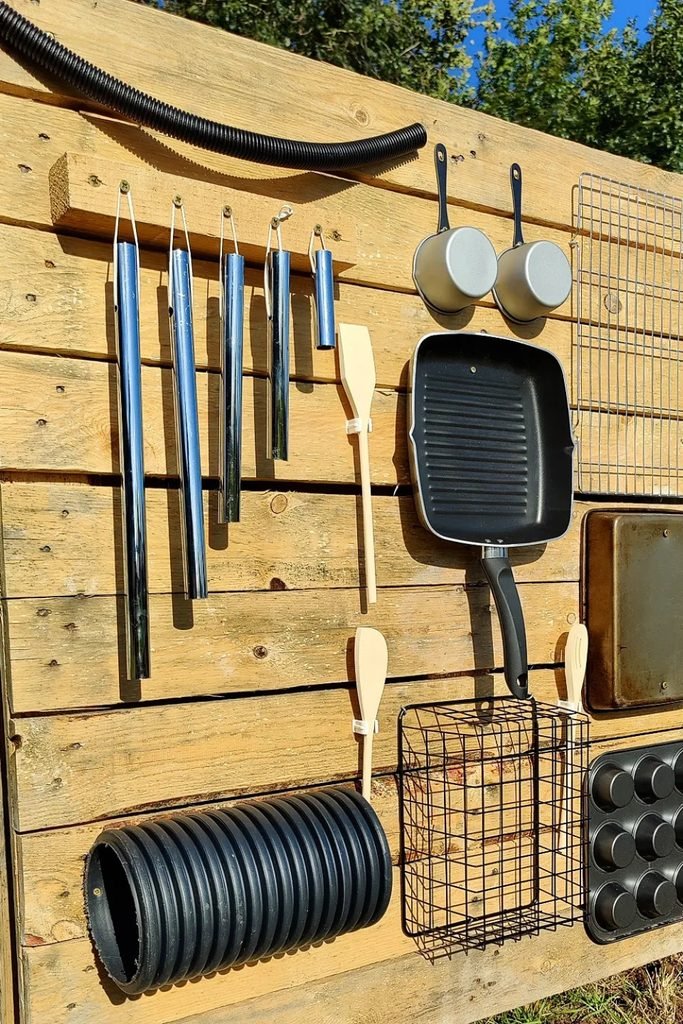
Turn a backyard panel into hands-on sound play with chimes, pans, kitchen tools, grates, and textured tubes made for tapping.
Let the outdoor setting handle louder experimenting, giving kids freedom to bang, scrape, and compare sounds without overwhelming the indoor space.
Anchor heavier pieces into solid wood, smooth rough edges, and space swinging tools apart so neighboring activities stay easier to use.
Fastening Practice
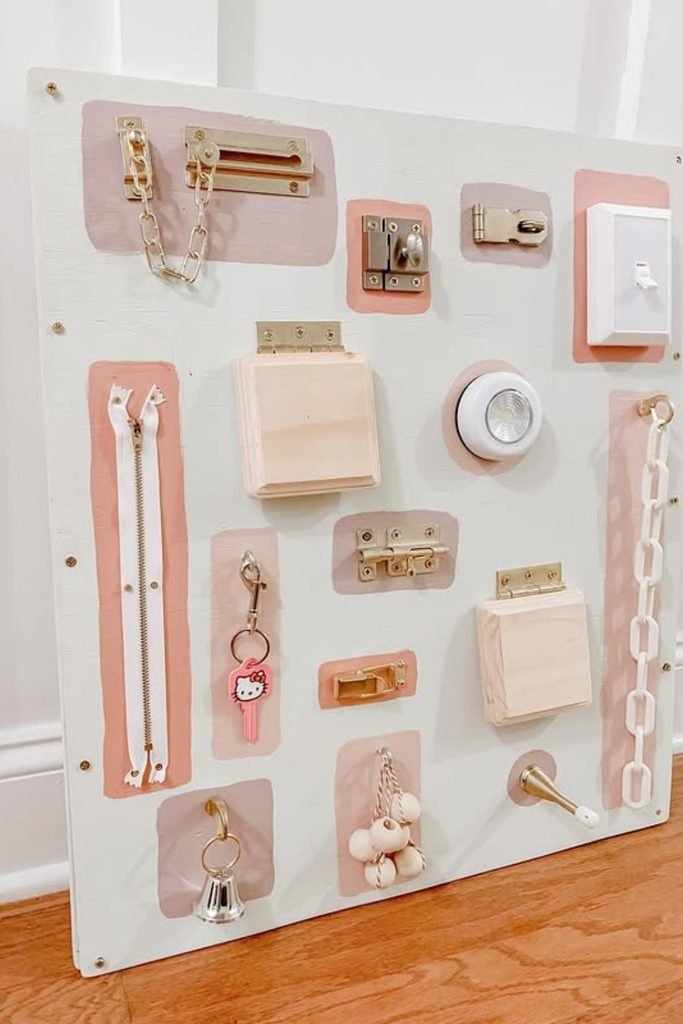
Center the board around practical hand skills by combining zippers, latches, chains, little doors, and switches instead of adding random decorations.
Soft color blocks can separate each mechanism visually, helping younger toddlers notice one action clearly before moving toward the next challenge.
Use larger hardware, cover exposed screw ends, and skip loose keys or tiny detachable parts that could create an avoidable hazard.
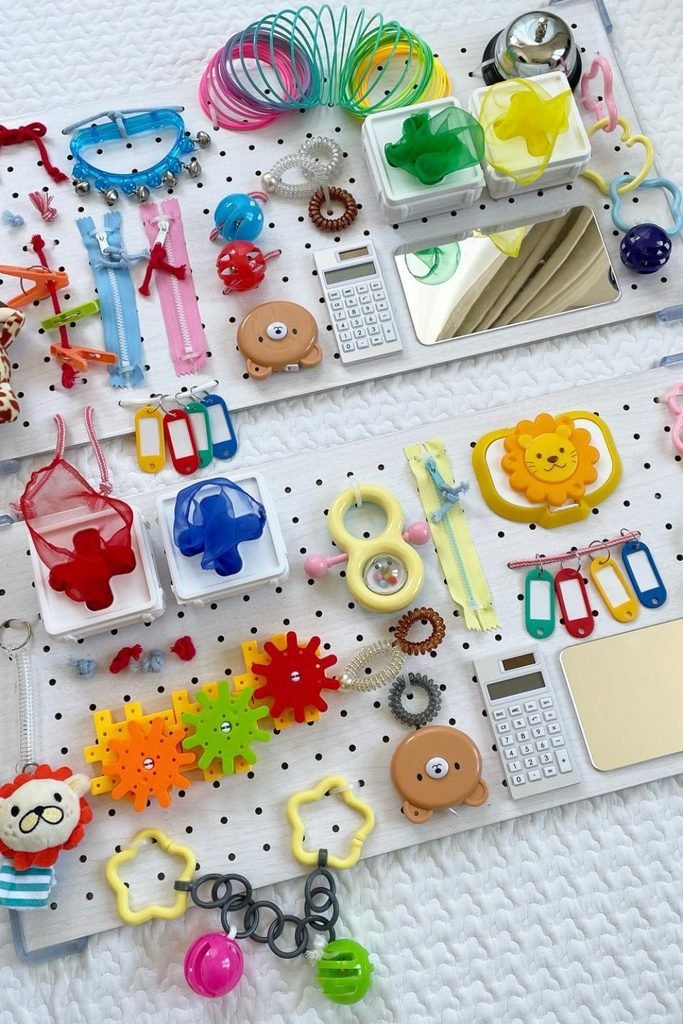
Colorful Sensory Mix
Build around bright, easy-to-grab pieces when you want a busy board that invites touching before toddlers need much instruction first.
Pair zippers, stretchy loops, mirrors, gears, and fabric pulls so each section offers a different motion without crowding tiny hands.
A lightweight pegboard base also makes rotation easier, letting you swap worn activities while keeping the overall setup familiar later.
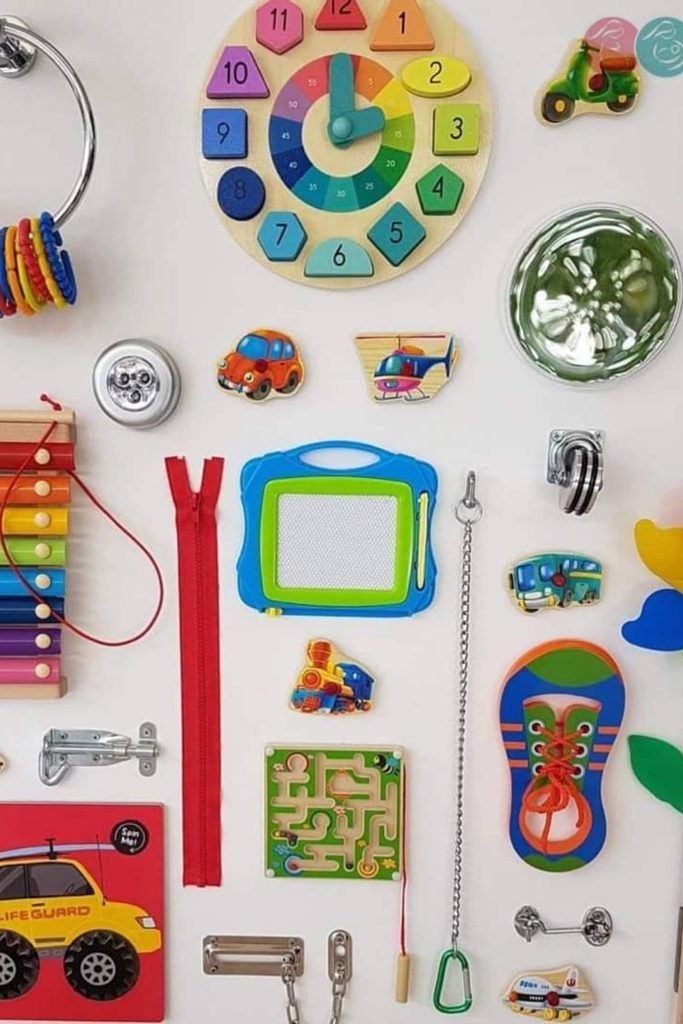
Mixed Skill Play
Not every busy board needs one theme; combining dressing practice, music, drawing, and simple puzzles can stretch interest much longer.
Use familiar favorites like a zipper or lacing shoe beside playful pieces, giving toddlers both achievable tasks and fresh challenges.
Leave generous gaps around moving parts, particularly the pinwheel and hanging pieces, so fingers can work without catching nearby activities.
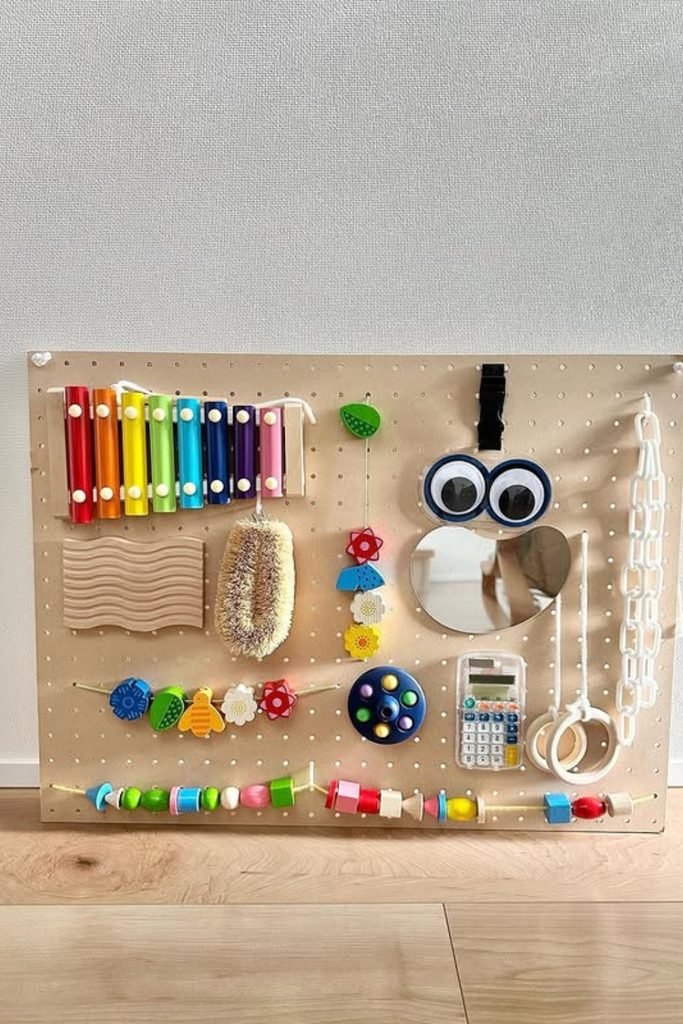
Texture Trail
Use a calmer neutral base when colorful activities already provide enough visual interest, helping each texture and movement stand out.
Run beads, rings, brushes, and spinners across different heights so toddlers naturally reach, slide, tap, and compare each activity independently.
A simple layout like this works well in smaller rooms, especially when you want fewer activities with more purposeful spacing.
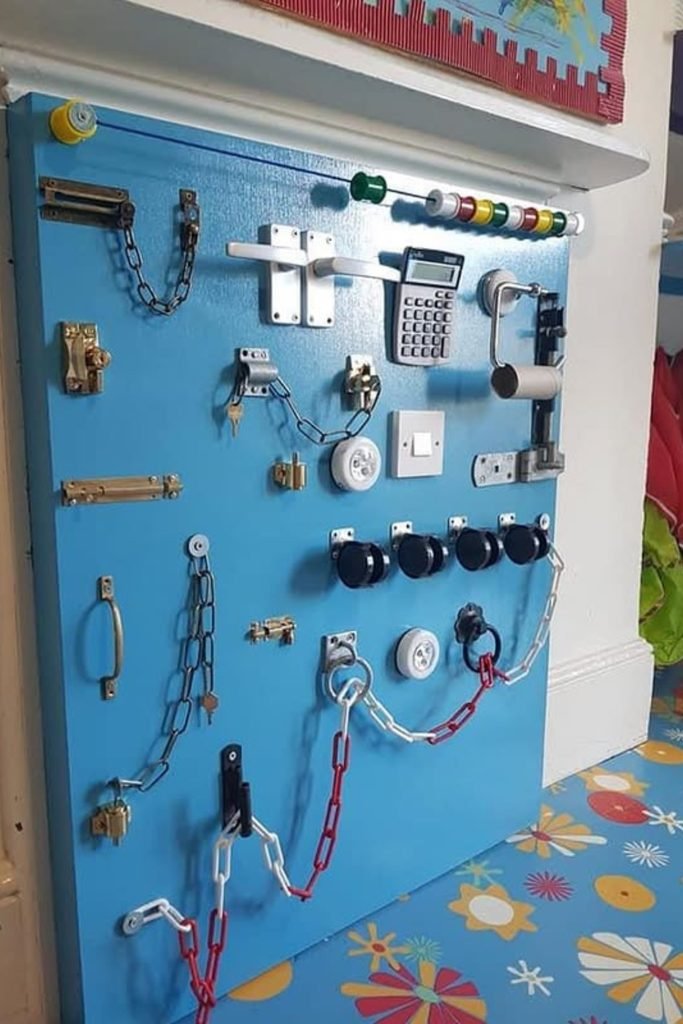
Hardware Challenge
Turn everyday hardware into a challenge board by grouping latches, chains, handles, and switches according to how each one moves.
Place easier pull-and-slide pieces lower down, then reserve trickier locks and linked chains for children ready for more coordinated movements.
A bold painted background keeps practical metal pieces easy to spot, while generous spacing gives hands room to work independently.
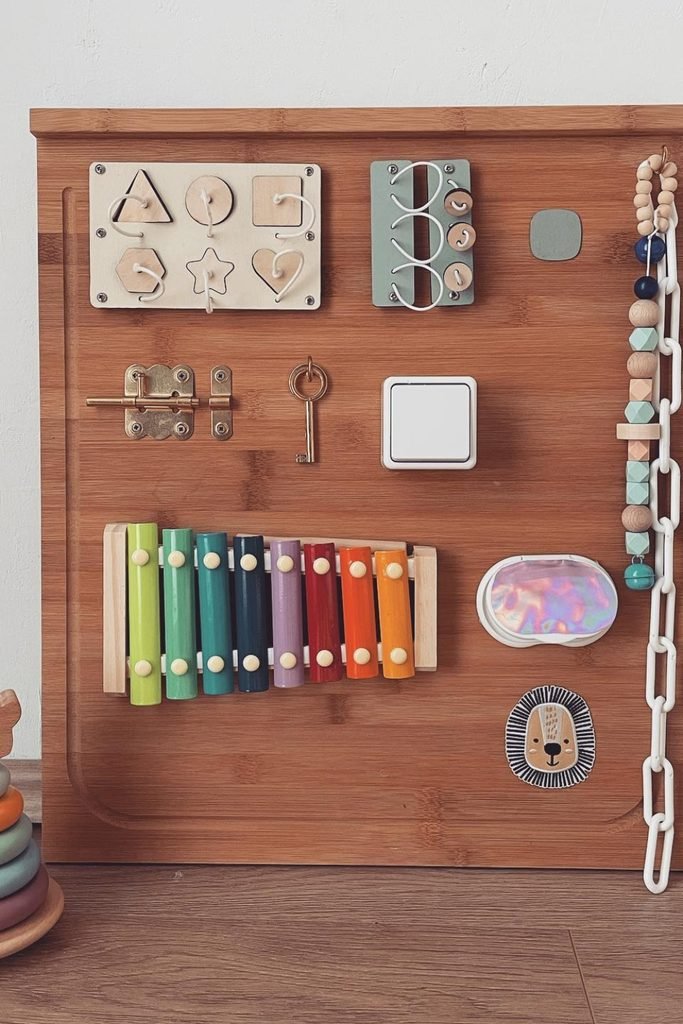
Wooden Skill Board
Choose a warm wooden base when you want the activities to feel calmer, then add just a few contrasting colors.
Threading shapes, sliding beads, tapping keys, and opening a latch create variety without making the board feel overly busy visually.
This pared-back approach suits shared living spaces, where a busy board can stay accessible without looking like permanent toy clutter.
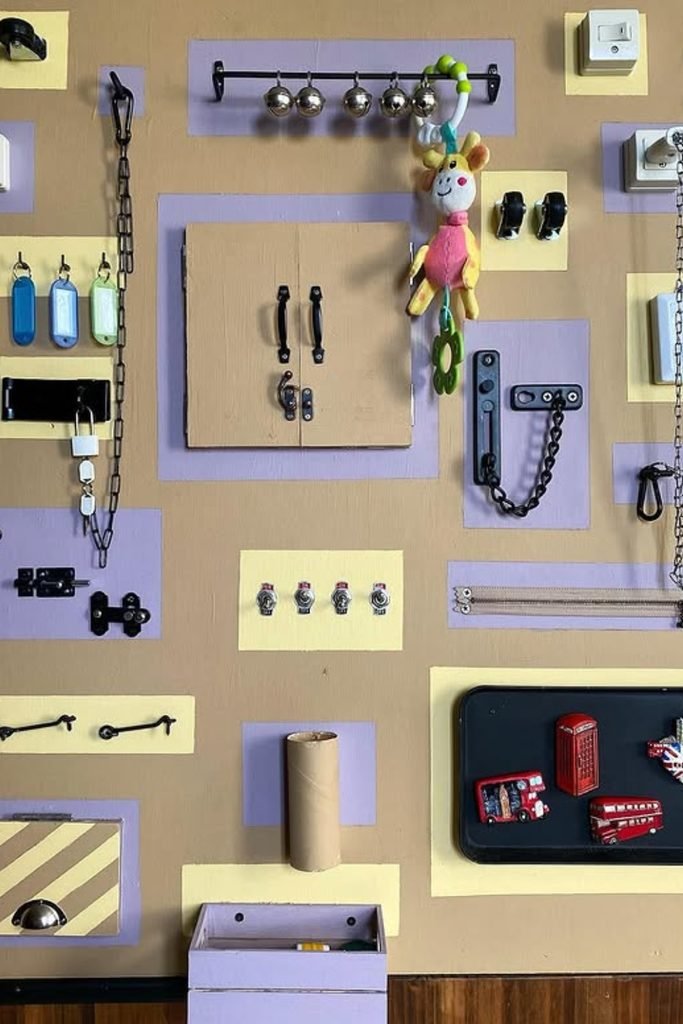
Movement Wall
Build a taller board when you have wall space, using different heights to encourage reaching, crouching, and changing play positions.
Mix bells, toggle switches, doors, chains, and drop-through openings so each action gives a noticeably different result for curious toddlers.
Keeping each activity inside its own painted zone makes a large setup easier to scan and less overwhelming during exploration.
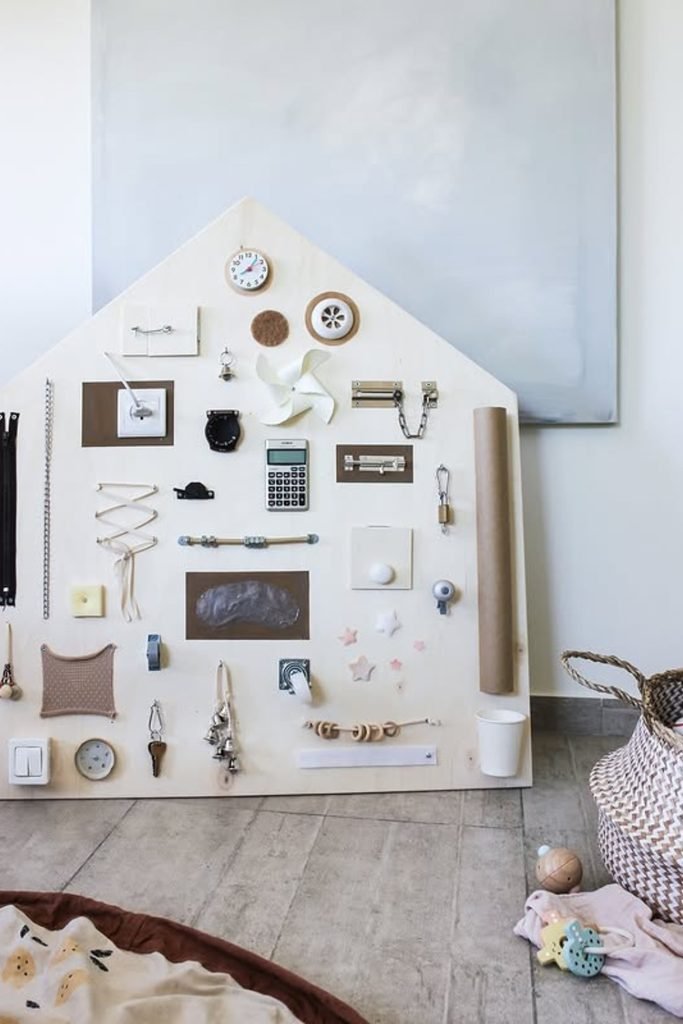
House-Shaped Board
Shape the base like a little house when you want the busy board to feel playful without adding bright colors.
Use neutral switches, tubes, bells, textured patches, and sliding pieces to create variety while keeping the overall look calm indoors.
A taller silhouette gives you extra vertical room, so spread activities upward instead of squeezing many pieces across one level.
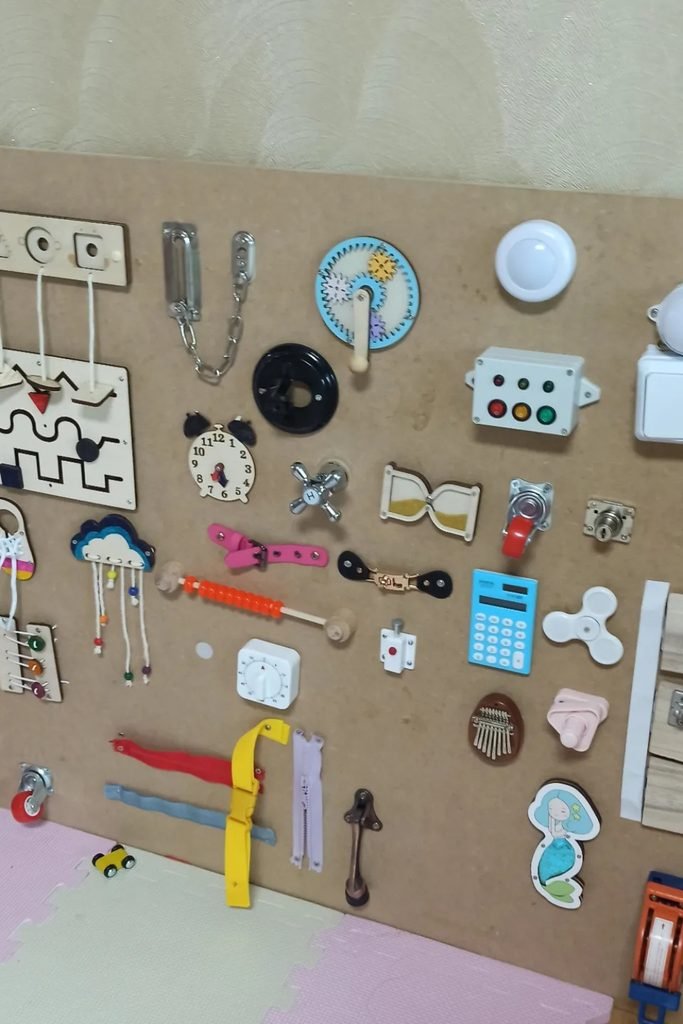
Cause-Effect Board
For kids who love pressing and testing everything, build around obvious cause-and-effect actions like buttons, switches, spinners, and small locks.
Scatter simpler tasks between harder latches so toddlers can move between quick wins and activities demanding more focused hand control.
Bold yes-and-no buttons add playful decision making, while clocks, zippers, and sliders keep the board useful beyond simple pressing games.
Door Challenge
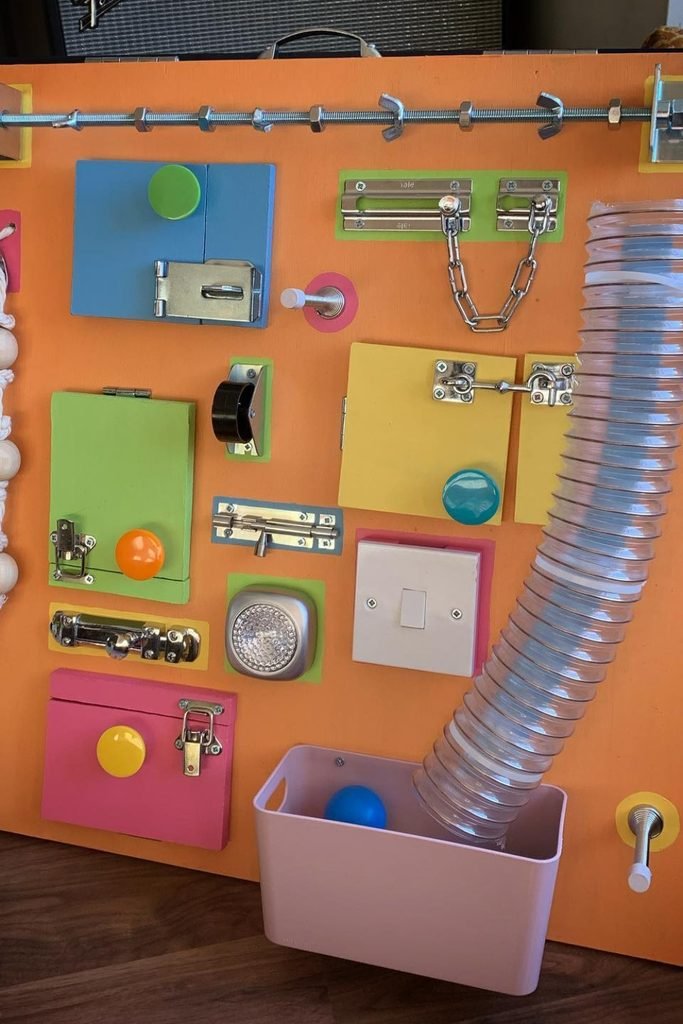
Make opening and closing the main challenge by adding several doors, each finished with a different latch, knob, or catch.
The clear tube brings another kind of play, especially when a lightweight ball can travel through and land below safely.
Bright blocks behind the hardware help toddlers spot each task quickly, while the orange base keeps this practical board cheerful.
Personalized Activity
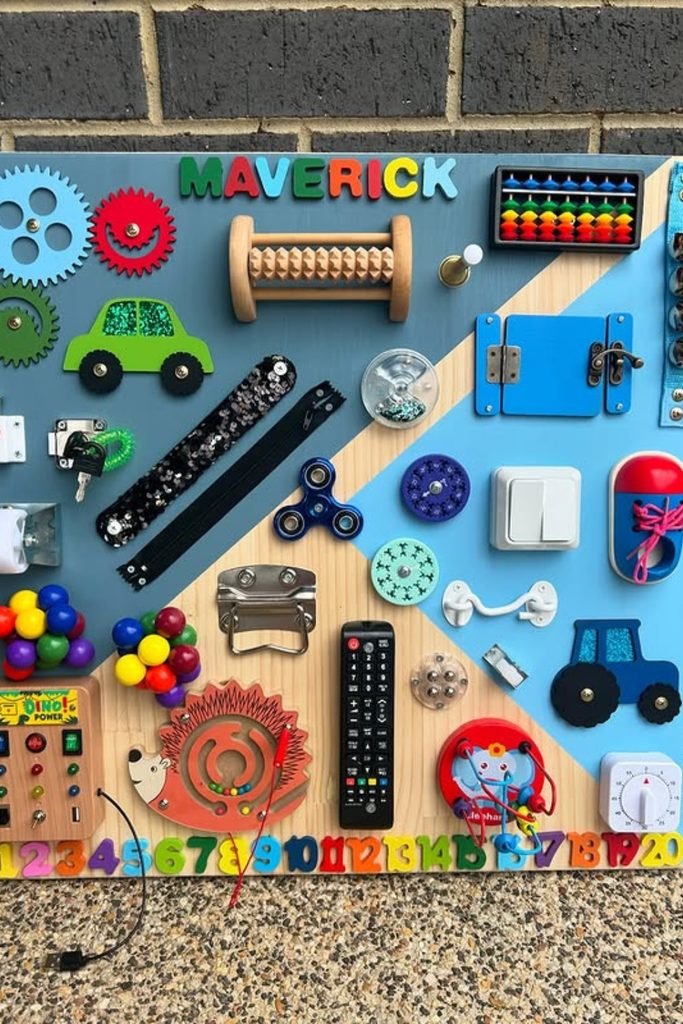
Personalize the board with a child’s name, then mix counting, gears, fasteners, and familiar objects to make exploration feel special.
Use brighter colors around favorite activities, while keeping similar motions spaced apart so busy hands can move comfortably between tasks.
A name strip along the top also gives the board a finished look without taking space away from hands-on play.
Simple Hardware
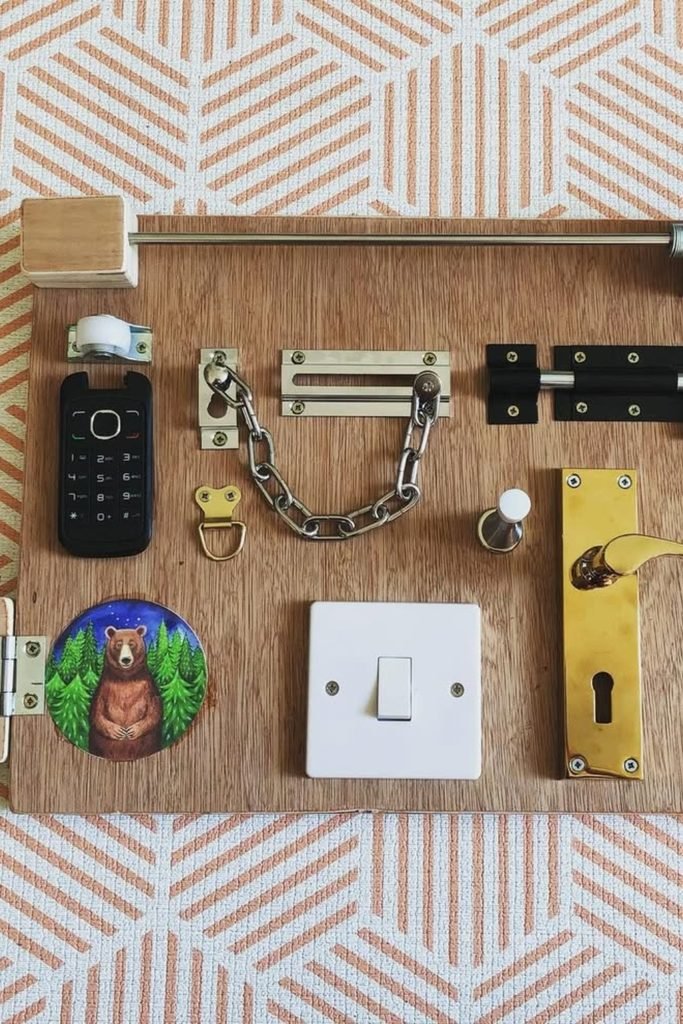
Sometimes a smaller challenge works better, especially when you want toddlers practicing locks, handles, switches, and chains without extra distractions.
Choose a solid wood base and space each mechanism generously, giving little fingers enough room to slide, turn, pull, and open.
This stripped-back setup is especially useful for beginners because every activity has one clear action and an easy-to-understand purpose too.
Gear and Latch
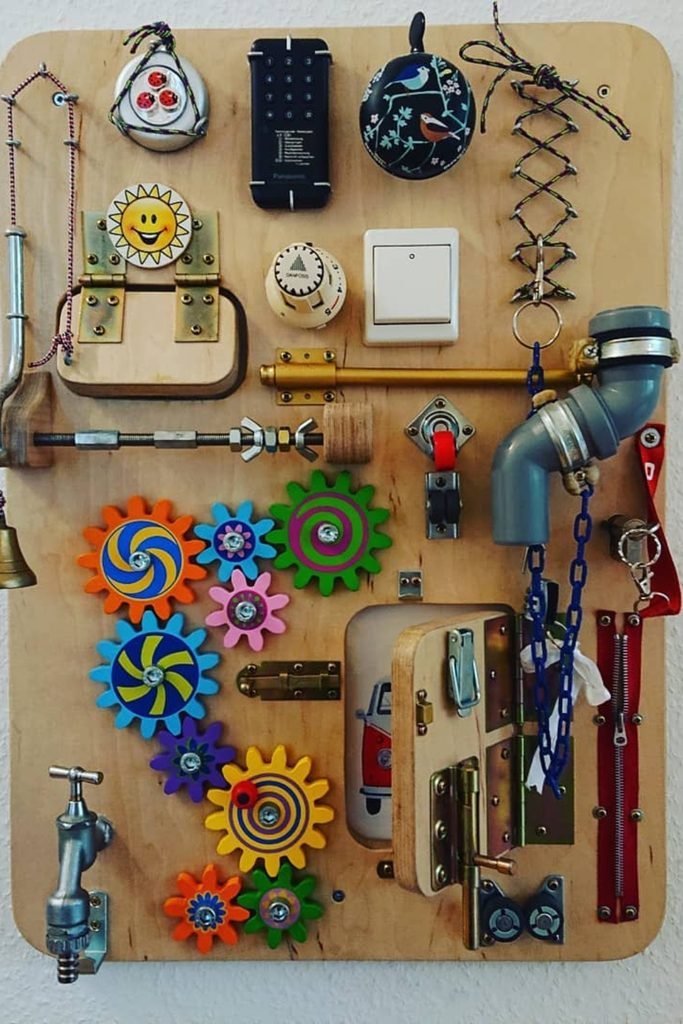
Bring more mechanical play into the mix with colorful gears, pipes, zippers, taps, and little doors that reward repeated experimenting.
Cluster the spinning gears together so toddlers can see how one movement affects another, then separate latches for focused practice.
A vertical layout keeps plenty happening without needing a huge footprint, making this style handy for smaller play areas indoors.
Minimal Hardware
Skip the crowded look entirely by choosing a few oversized household-style pieces and letting each activity become the main attraction.
Black hardware against pale wood creates strong contrast, while knobs, latches, a door knocker, and textured fabric offer varied movements.
This simpler board is easier to inspect regularly, since loose screws or worn attachments are quicker to notice during play.
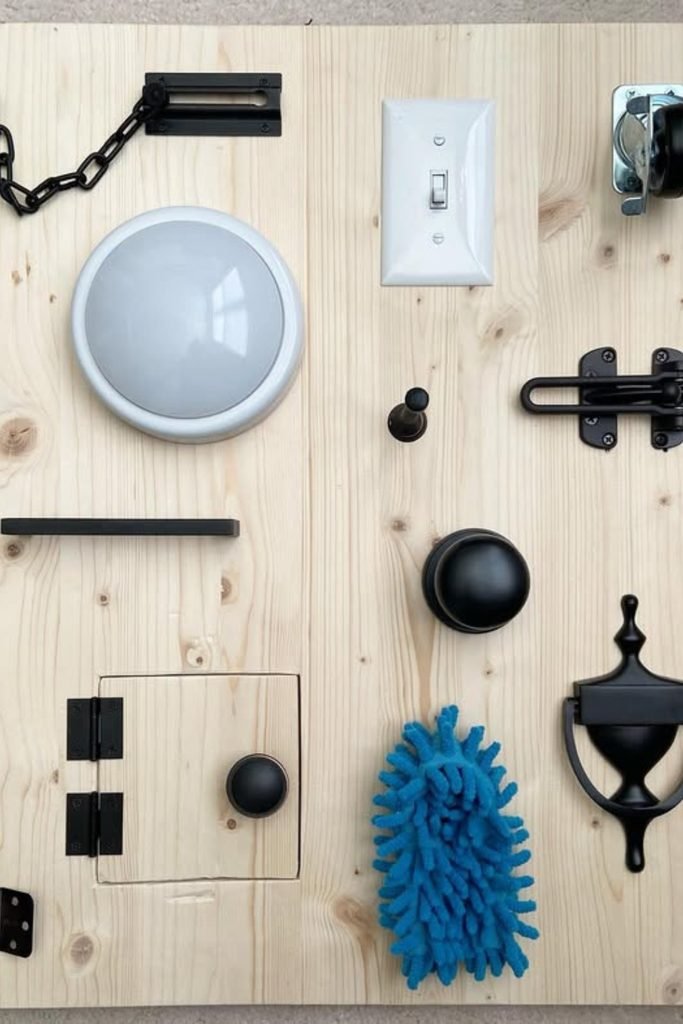
Low Wall Board
Mounting the board low on a wall gives toddlers easy access while keeping the activity station from taking over floor space.
Choose chunky latches, knobs, wheels, and pulls that feel different in the hand, then leave clear space around each one.
Since little hands will tug hard, check every screw and fitting regularly so nothing loosens after weeks of enthusiastic play.
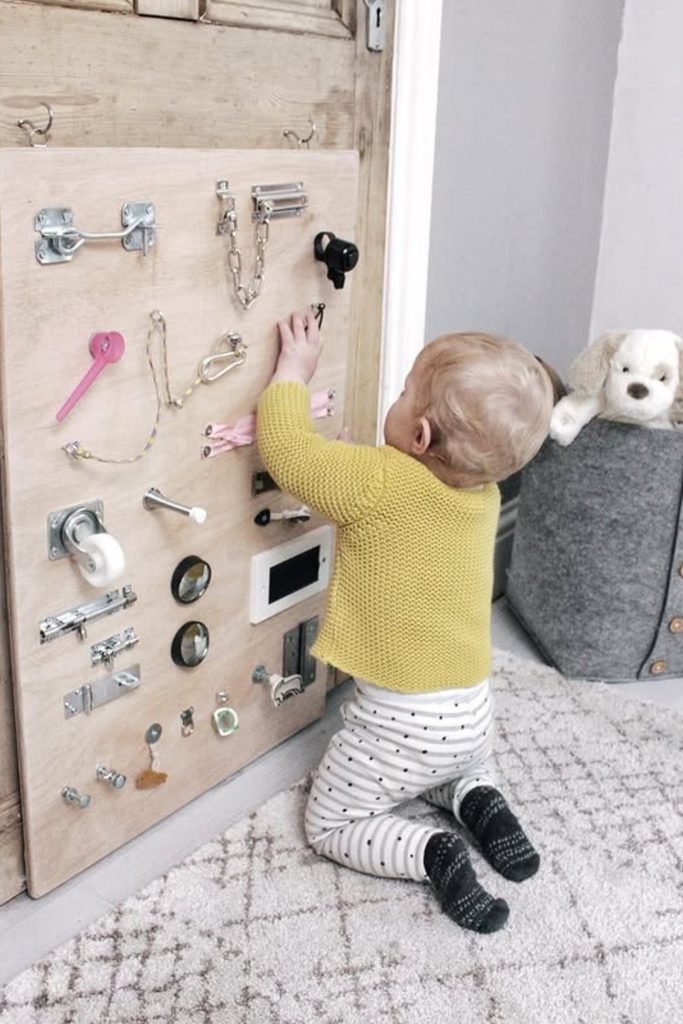
Everyday Skills Mix
Blend dressing practice with playful learning when you want one board to cover zippers, lacing, counting, gears, locks, and music.
Place the shoe, zipper, and buckle sections near the bottom, where toddlers can sit comfortably and work with both hands.
Save the upper area for numbers and sound pieces, creating a natural shift from practical tasks toward quick exploratory play.
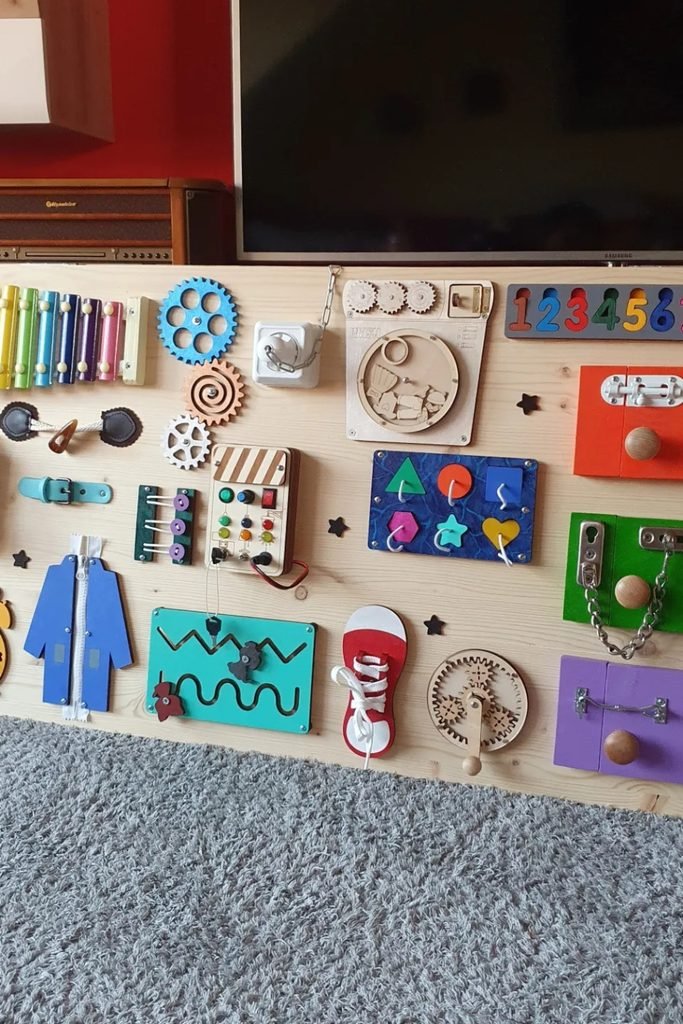
Freestanding Busy Station
Build the board into a sturdy freestanding frame when you want play available from the floor without drilling into walls.
Use a mix of latches, textured brushes, sliders, rings, and calculators, but keep dangling cords short and securely anchored down.
Because children may lean against the setup, make stability the priority and inspect the frame before each longer play session.
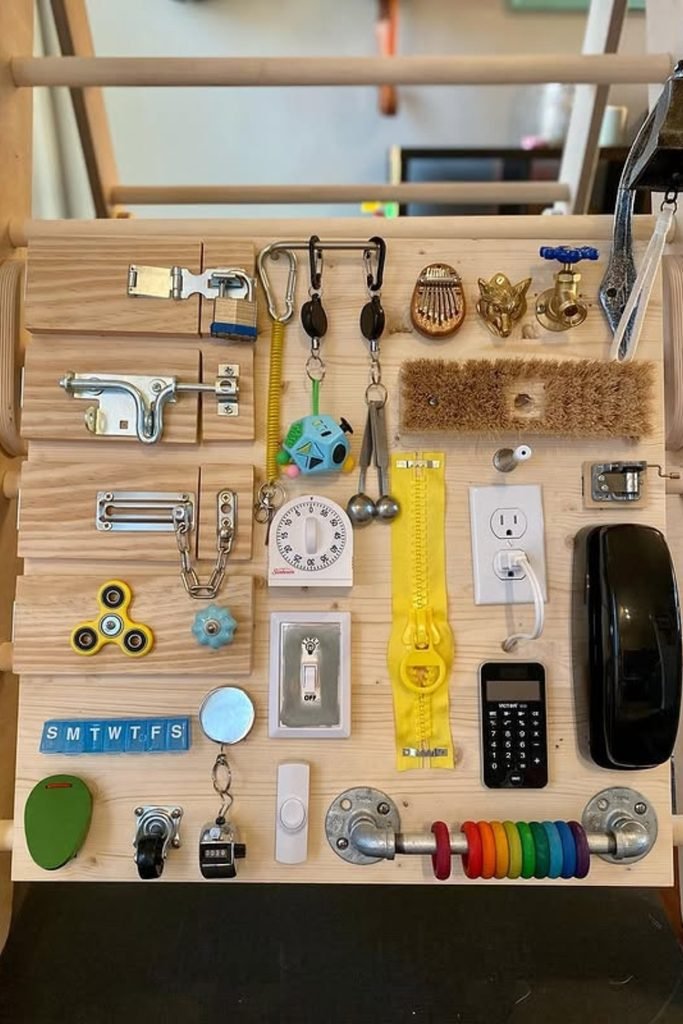
Everyday Sound Board
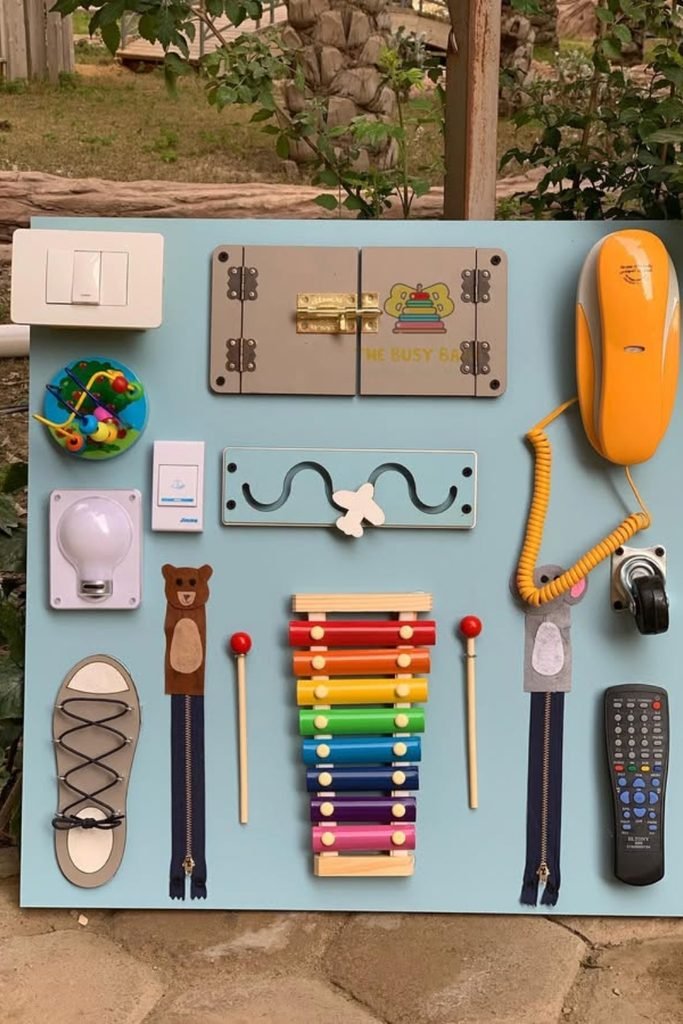
Bring familiar household sounds into play by pairing a toy phone, xylophone, zippers, switches, and simple sliding tracks on one board.
Use the musical pieces as quick rewards between harder tasks, so toddlers can reset before trying laces, doors, or turning controls.
Keep cords short and firmly fixed, and choose oversized attachments that can handle repeated pulling without becoming loose during daily play.
Pipe Drop Play
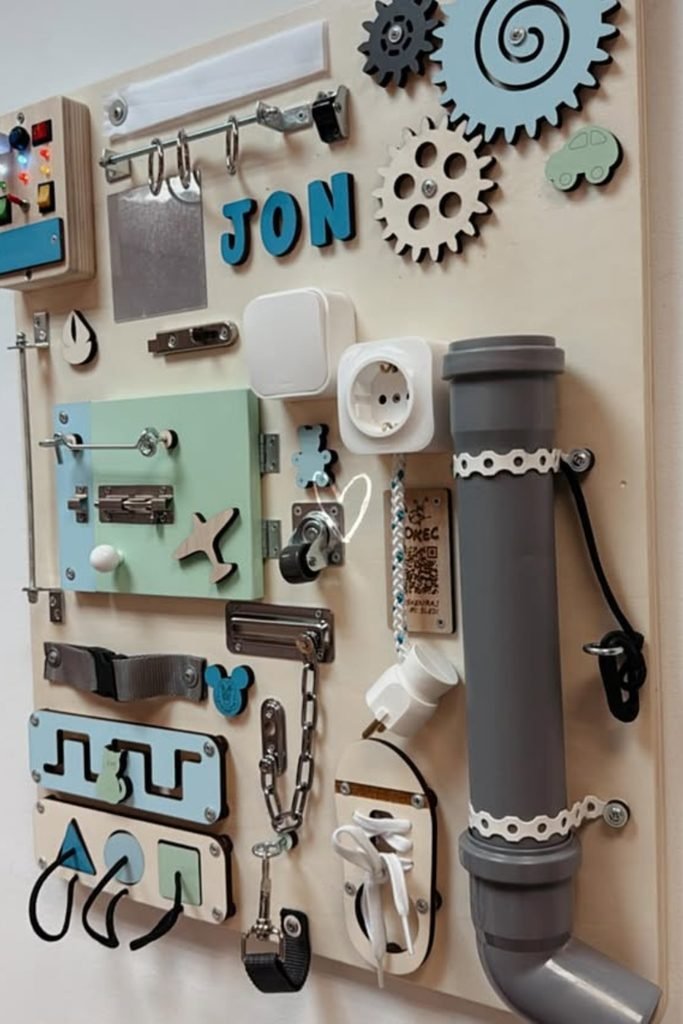
Make movement more exciting with a wide tube, gears, latches, buckles, and little doors that give toddlers several satisfying actions.
A drop-through pipe adds an easy cause-and-effect game, especially when lightweight balls travel visibly from the top toward a lower catch.
Balance those larger features with smaller hand challenges nearby, giving the board variety without making every section equally demanding at once.
Portable Skill Board
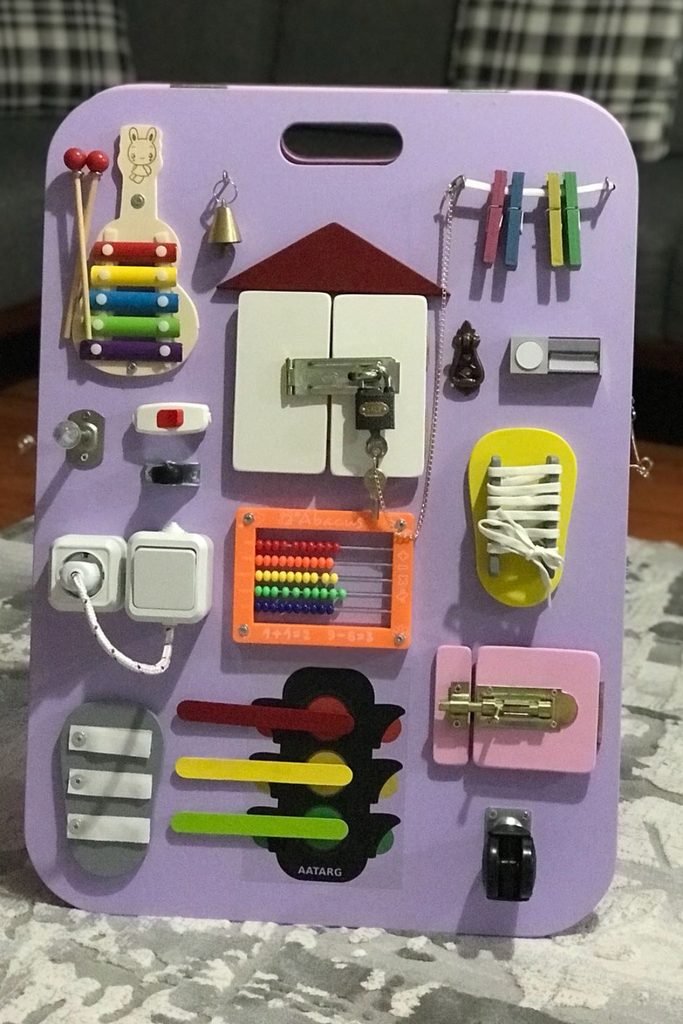
A built-in handle turns a smaller busy board into an easy carry-along activity for playrooms, grandparents’ homes, or short visits.
Combine lacing, counting, switches, pegs, and a simple door so the compact size still offers several noticeably different hand movements.
Because portable boards get moved often, round every edge and inspect loose hardware frequently before handing it back for another play session.
House Activity Board
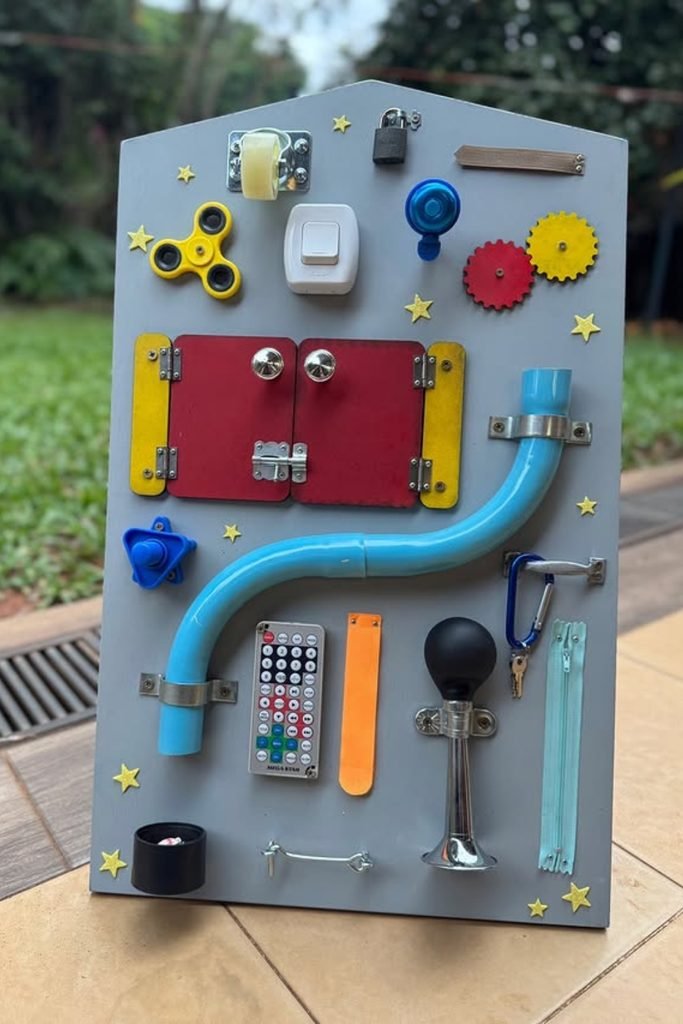
Give the board a house shape when you want extra personality while still keeping the activities practical and easy to arrange.
Use doors, gears, a tube, switches, zippers, and sound makers to create a clear mix of opening, turning, and listening tasks.
Keep heavier pieces near the center and secure the freestanding base well, especially if toddlers may push or lean while exploring.
FAQs
What Age Is Best for a DIY Busy Board?
There isn’t one perfect age, because the right setup depends more on your child’s abilities, interests, and how safely activities are chosen.
For younger toddlers, stick with larger, simple pieces that spin, slide, open, or pull without creating loose-part or pinch hazards.
How Do You Keep a Busy Board Interesting?
You don’t need to rebuild the whole board whenever interest drops; changing a few activities can make it feel new again.
Try rotating textures, fasteners, sound pieces, or simple puzzles, especially if your child has clearly mastered the current setup at home.

Hi, my name is Ali Mehmood! I’m a passionate writer and DIY enthusiast who loves turning creative ideas into practical, hands-on projects.
I created this website to share inspiring, budget-friendly ideas that you can do yourself – whether it’s organizing your home, crafting something unique, or creating fun projects for kids and pets.
I believe DIY isn’t just a hobby – it’s a smart way to save money, reduce waste, and enjoy the satisfaction of making things with your own hands.
I’m excited to have you as part of this growing community, and I’ll continue bringing you helpful, realistic, and fun DIY ideas you can actually use.