This post may contain affiliate links: read full affiliate disclosure.
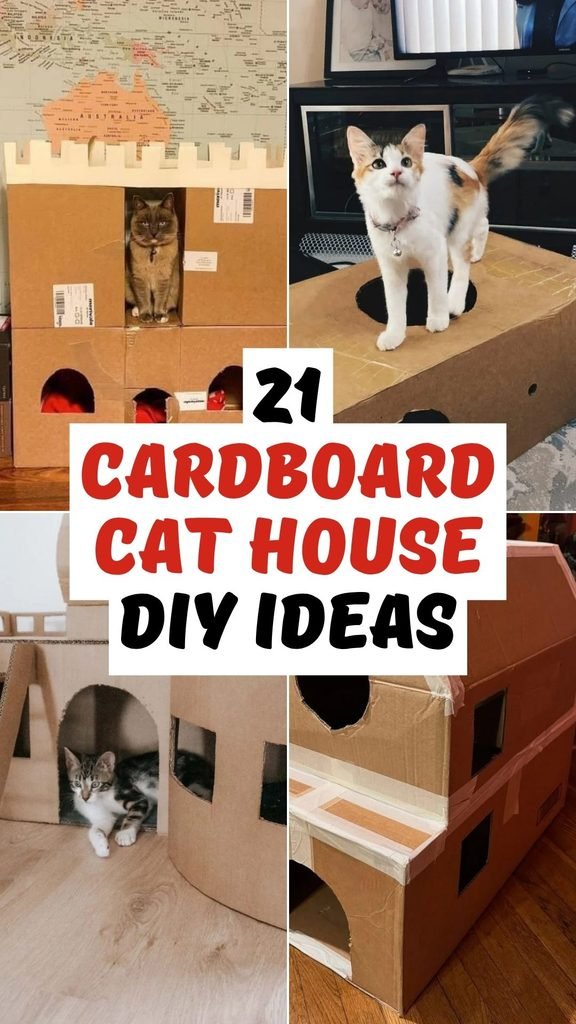
You have a few cardboard boxes ready to reuse, but turning them into a cat house that actually works is where things get tricky.
The roof can collapse when your cat jumps on it, the doorway may feel too tight, or you might spend time building something your cat completely ignores.
With the right box, smart reinforcement, comfortable openings, and a design that matches how your cat likes to hide, climb, scratch and sleep.
In this article you will find 21 cardboard cat house DIY ideas with practical tips to help you recreate each design, make it stronger, and choose one that works for your cat.
Climbing House
Turn a wide base into a play zone by adding low stairs, open windows, and a sturdy upper lounging platform.
Reinforce every step with doubled cardboard underneath, since climbing cats put far more pressure on edges than simple hideaways do.
Keep the ladder angle gentle and openings generous, so kittens or smaller cats can move between levels without awkward jumps.
Two-Story Cottage
Stacking two boxes creates more usable space without widening the footprint, making this setup handy for smaller rooms or apartments.
Strengthen the middle floor with a full cardboard sheet before attaching the upper section, especially if your cat likes climbing.
Cut entrances on different sides to create separate routes, then leave a wall around each opening to prevent tearing over time.
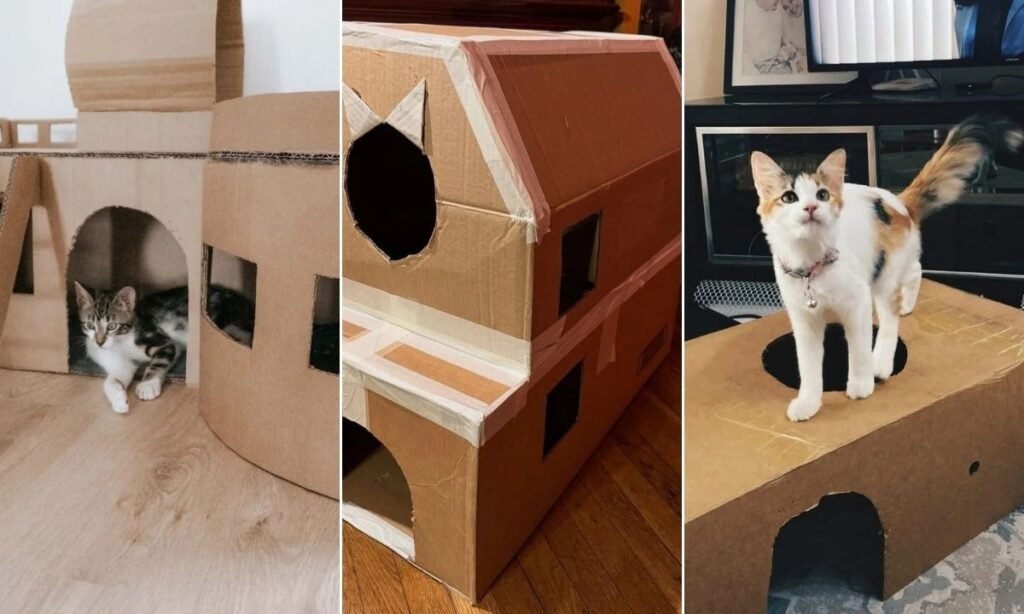
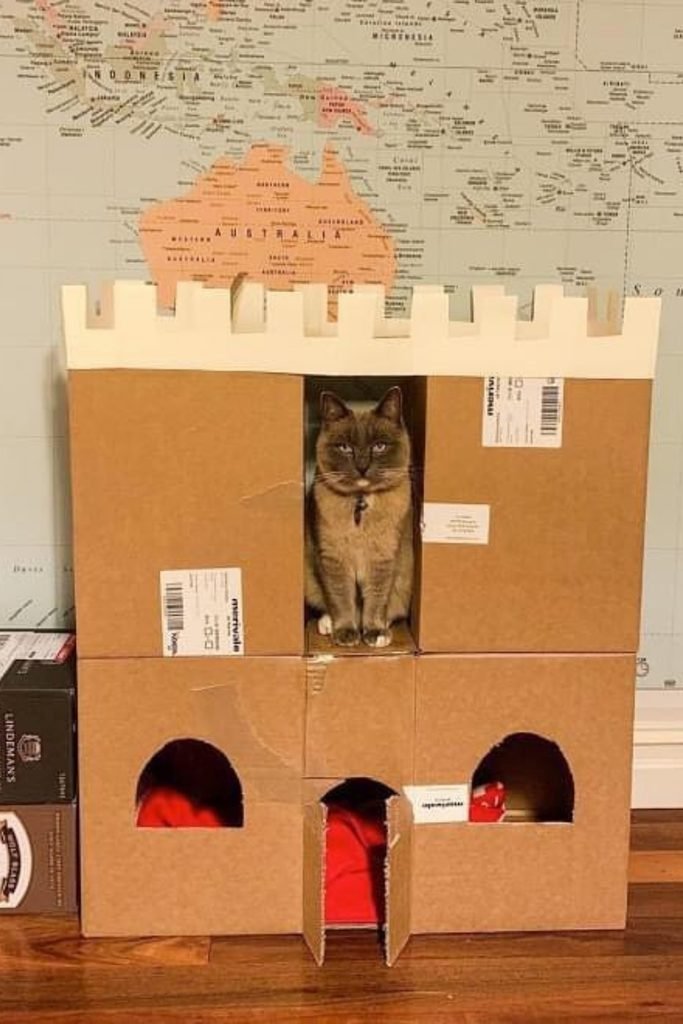
Box Castle
A basic castle works brilliantly when you only have a few shipping boxes, because battlements add character without complicated construction.
Join the boxes tightly at seams first, then cut doorways afterward so the structure stays square and easier to reinforce.
Use a wider lower entrance and smaller lookout opening above, giving your cat both easy access and a private perch.
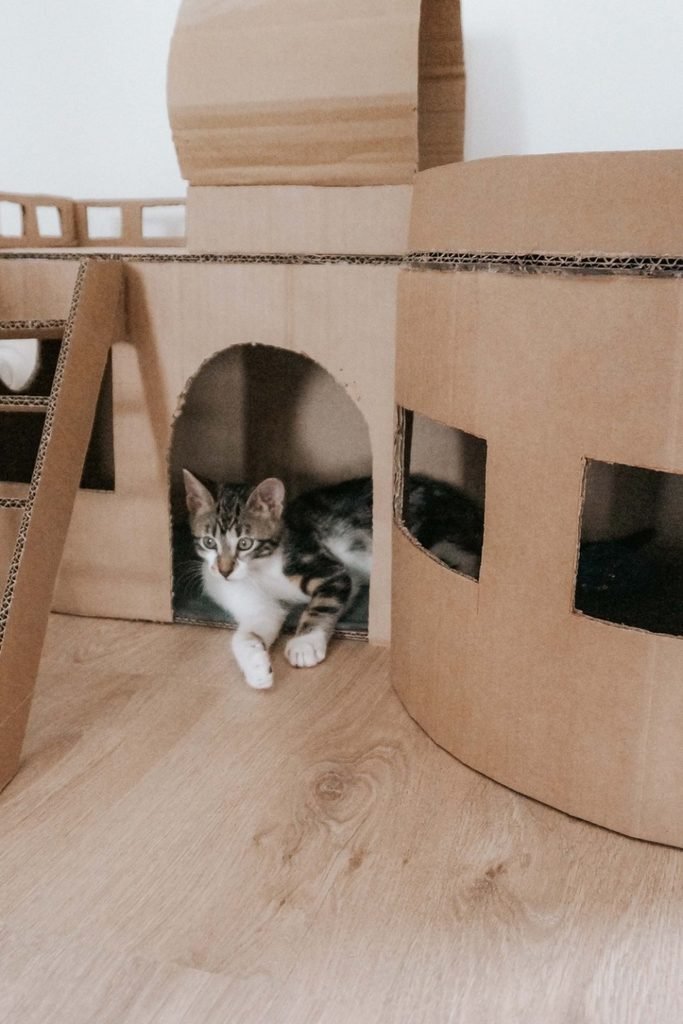
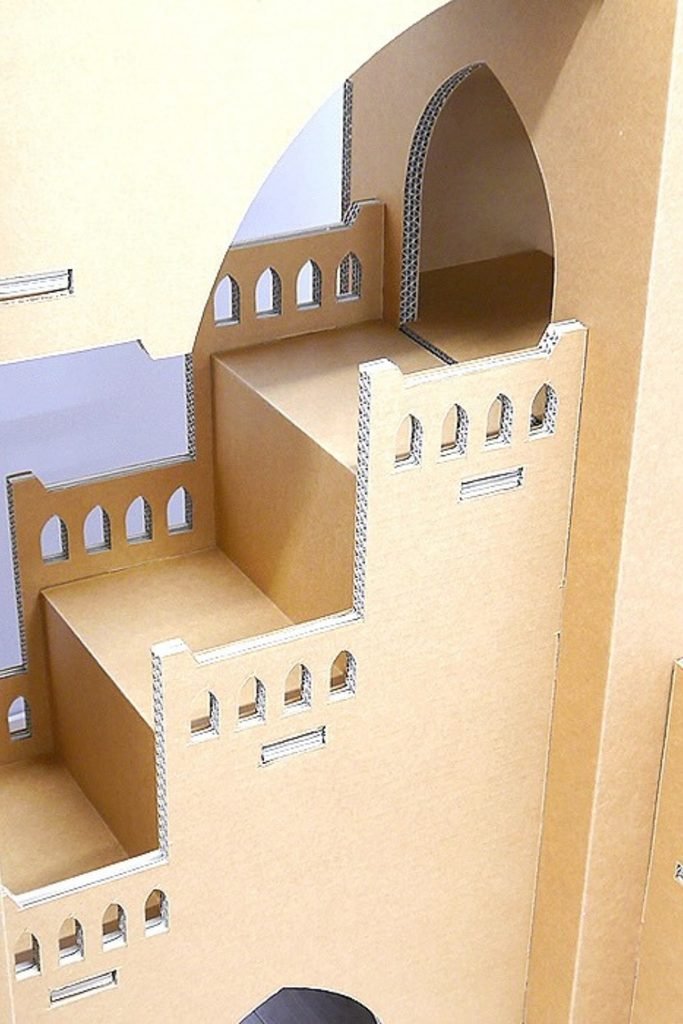
Staircase Fortress
Instead of stacking closed boxes, build open stair platforms between walls so adventurous cats can climb gradually through the structure.
Large arched cutouts make each level easier to access, but keep generous cardboard borders around them to protect wall strength.
Test every landing with downward pressure before use, because narrow steps and tall walls need extra support for safe climbing.
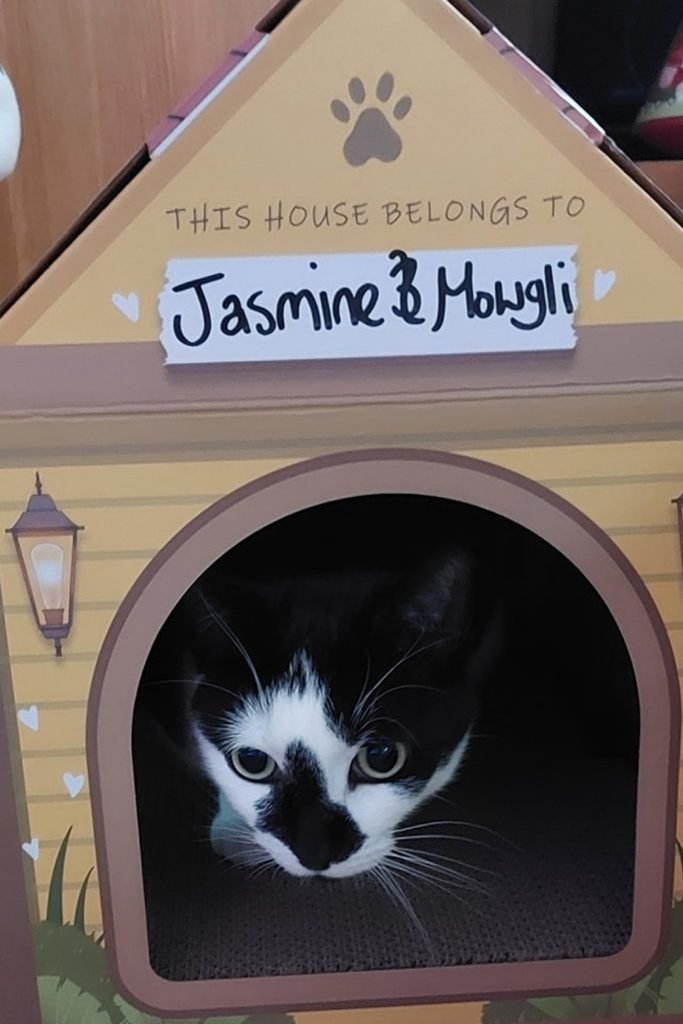
Personalized Cottage
A simple pitched-roof box feels more finished when you add a nameplate, making an inexpensive hideaway look intentionally made for your cat.
Keep the front opening broad and rounded, so your cat can enter comfortably without weakening too much cardboard around the doorway.
Use lightweight decoration on the exterior only, then leave the interior plain if your cat regularly scratches, chews, or rubs against walls.
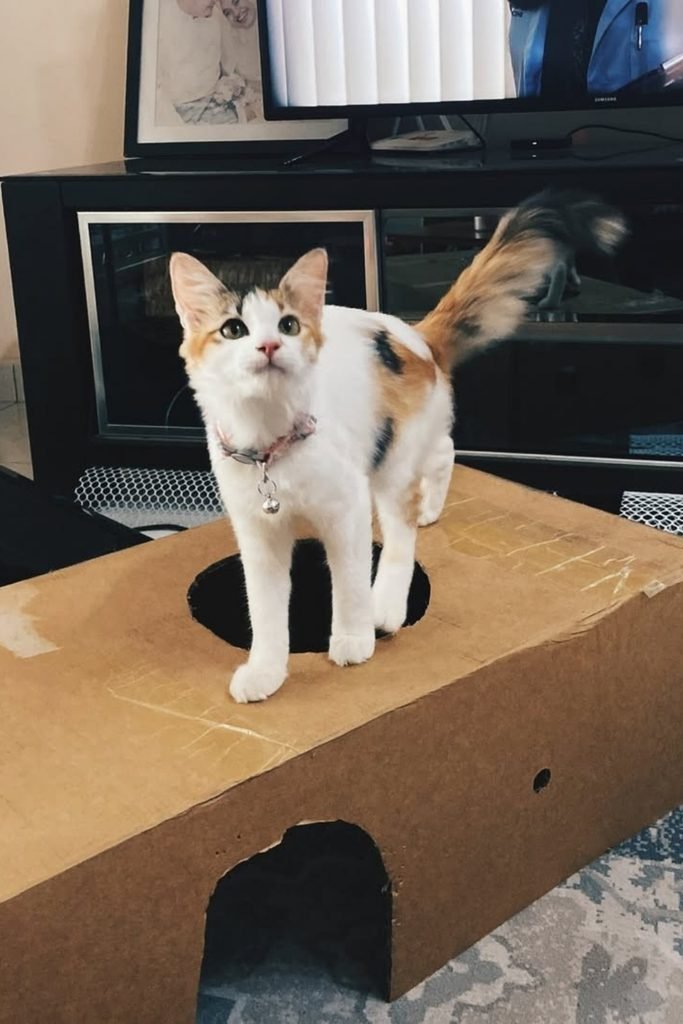
Peekaboo Box
One sturdy box can become a better playhouse when you cut a side entrance and a roomy opening through the top.
That second opening gives curious cats another route and turns the roof into an interactive spot for popping up during play.
Reinforce the lid around the cutout with extra cardboard, because removing too much material can quickly make the top sag.
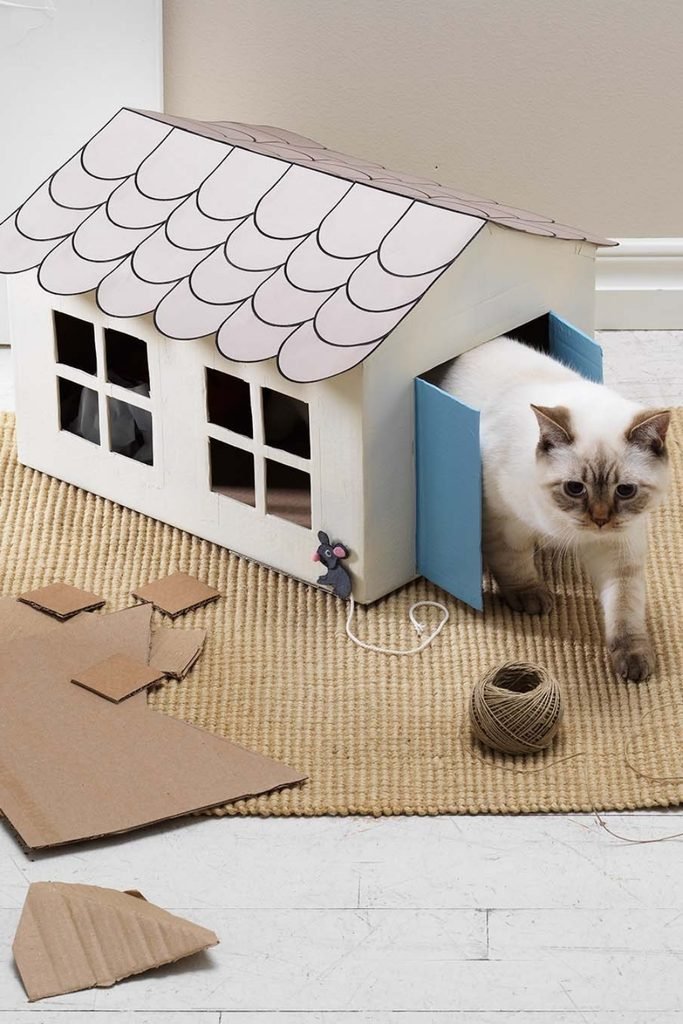
Shingled Cottage
Decorative roof shingles are easiest to add as lightweight paper or thin-cardboard pieces, keeping the main roof underneath strong and simple.
Cut several small windows instead of one huge opening, so the walls keep more strength while your cat still gets visibility.
Skip loose strings or tiny hanging decorations unless supervised, and focus on flat trim that cannot be easily pulled off and swallowed.
Activity House
A larger cardboard build becomes more engaging when different sections offer hiding, peeking, climbing, and resting instead of repeating one enclosed room.
Keep homemade benches, signs, and barriers low and lightweight, so playful cats can knock them over without creating heavy falling pieces.
For two cats, add more than one doorway and open route, which helps prevent one cat from blocking the other’s exit.
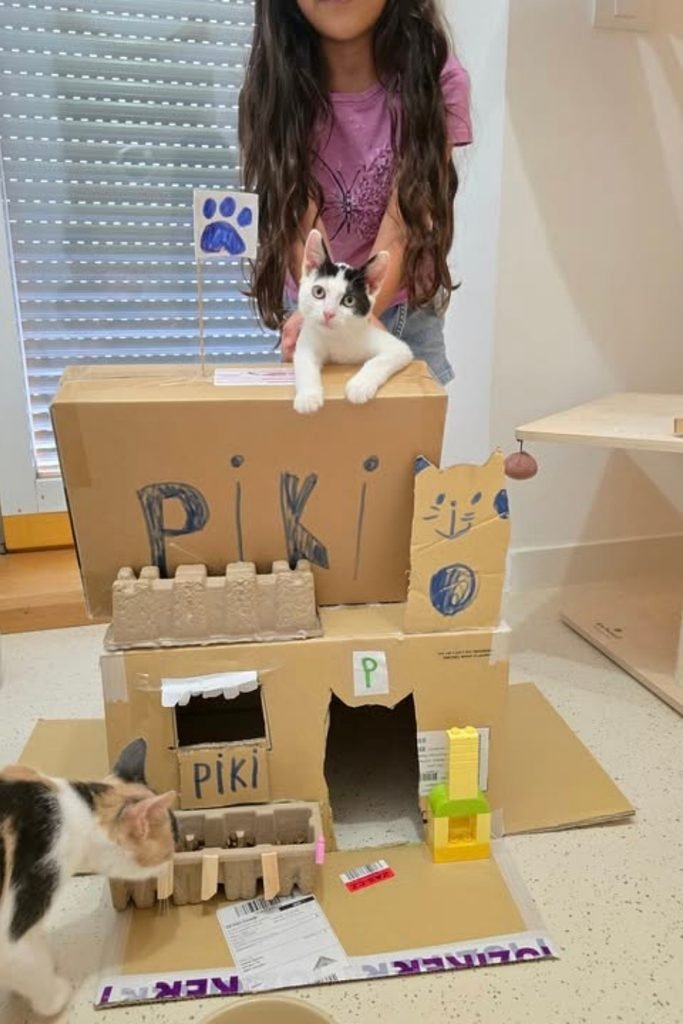
Stacked Tower
A tall box tower works best when each level has its own entrance, giving active cats more routes without widening the footprint.
Use full cardboard panels between stacked boxes, because taped flaps alone can bend once your cat starts climbing between floors.
Keep the base wider than the upper section, then press each corner firmly before use to catch any wobble early.
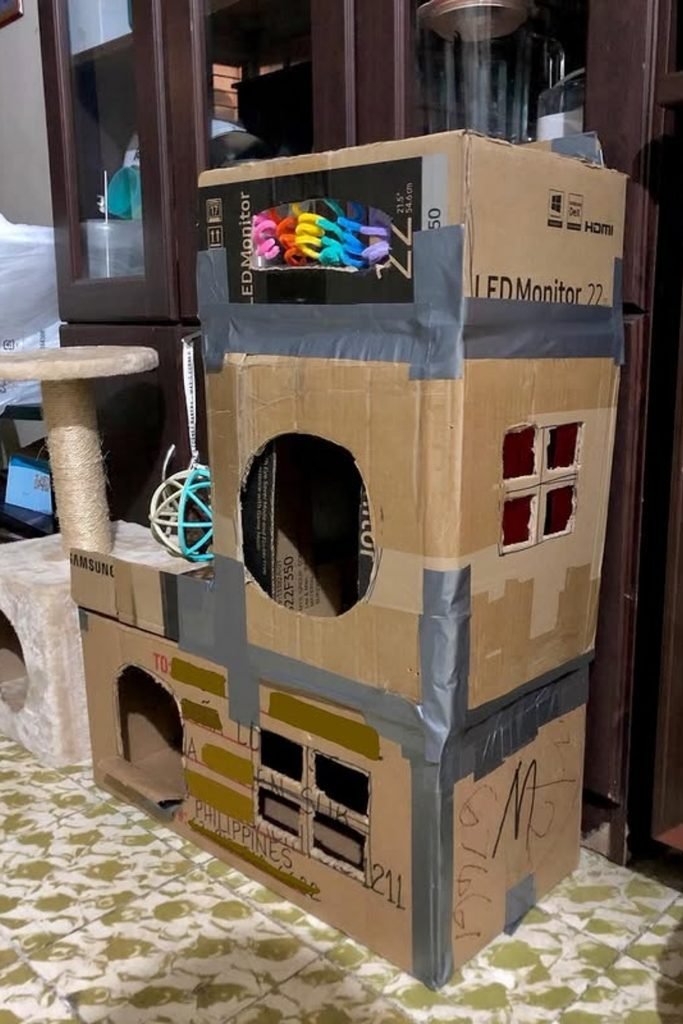
Striped Hideaway
A clean striped finish can make plain cardboard feel more decorative, especially when you want the house to sit openly in living spaces.
Build the structure first and decorate afterward, so paint, paper, or panels never hide weak seams that still need reinforcement inside.
A broad rectangular doorway suits larger cats better than a narrow arch, while still leaving enough cardboard around the front.
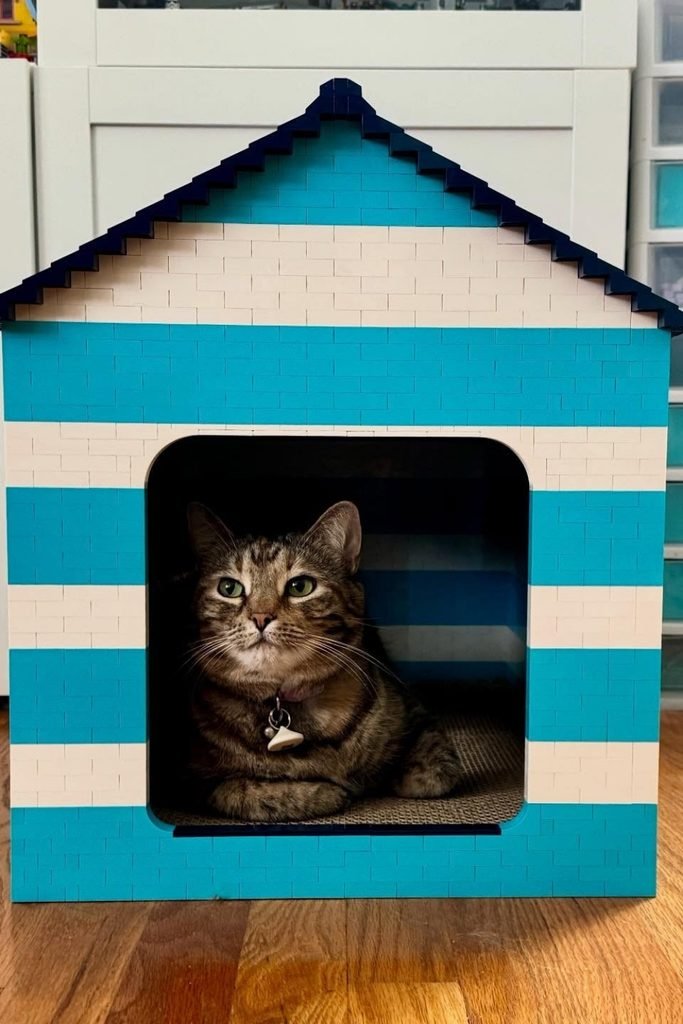
Garden Castle
Decorative castle walls can stay lightweight, but the top platform needs real support because cats often claim the roof as seating.
Reinforce the upper deck from underneath before adding towers, keeping ornamental pieces separate from anything that carries your cat’s weight.
Painted details work best on flat exterior surfaces, while doorways and ledges should remain smooth, sturdy, and free from loose trim.
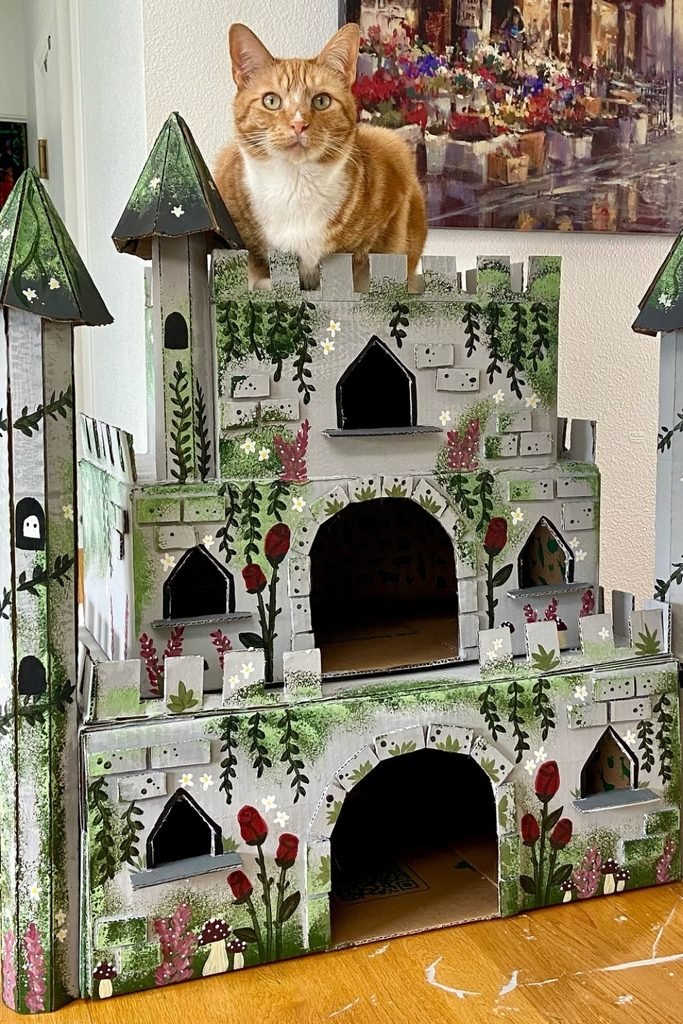
Modular Condo
A modular layout lets you mix enclosed boxes with open platforms, which works well for cats that alternate between hiding and climbing.
Support every shelf at more than one point, especially around round openings, so repeated jumping does not slowly bend the cardboard.
Wrapping sturdy cardboard tubes with scratch-friendly material adds another function, but secure both ends tightly before letting your cat use them.
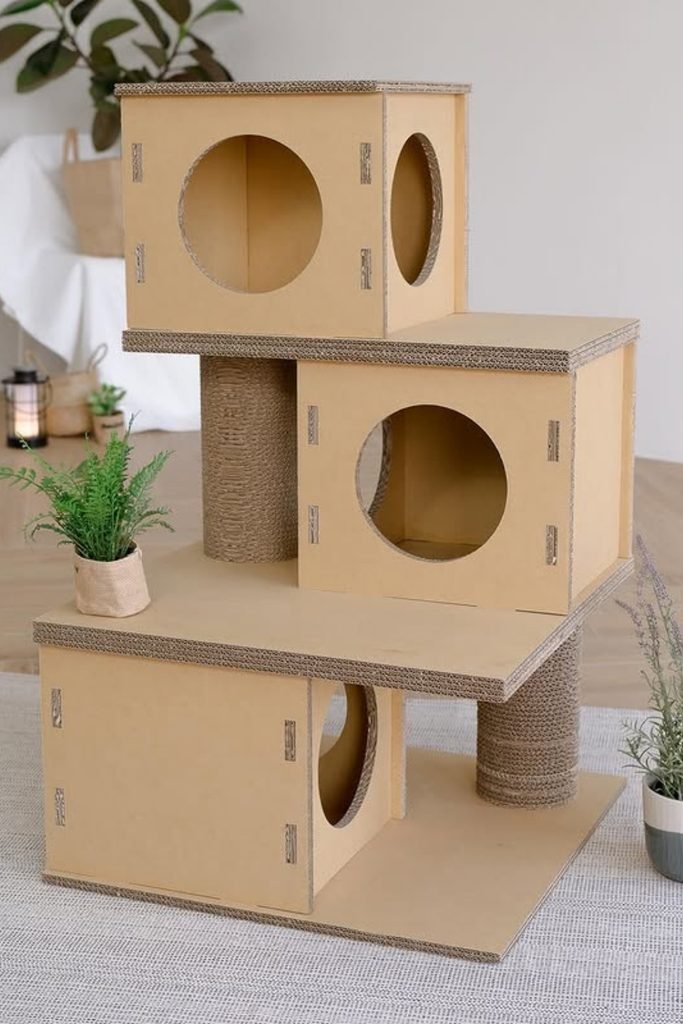
Vertical Playhouse
A narrow multi-level build saves floor space while giving energetic cats several places to climb, hide, pause, and watch the room.
Anchor each upper box to a broad base, then reinforce platforms from underneath before adding railings or lightweight decorative walls.
A shallow ramp at ground level helps hesitant cats enter comfortably, while a wrapped post adds scratching without taking extra space.
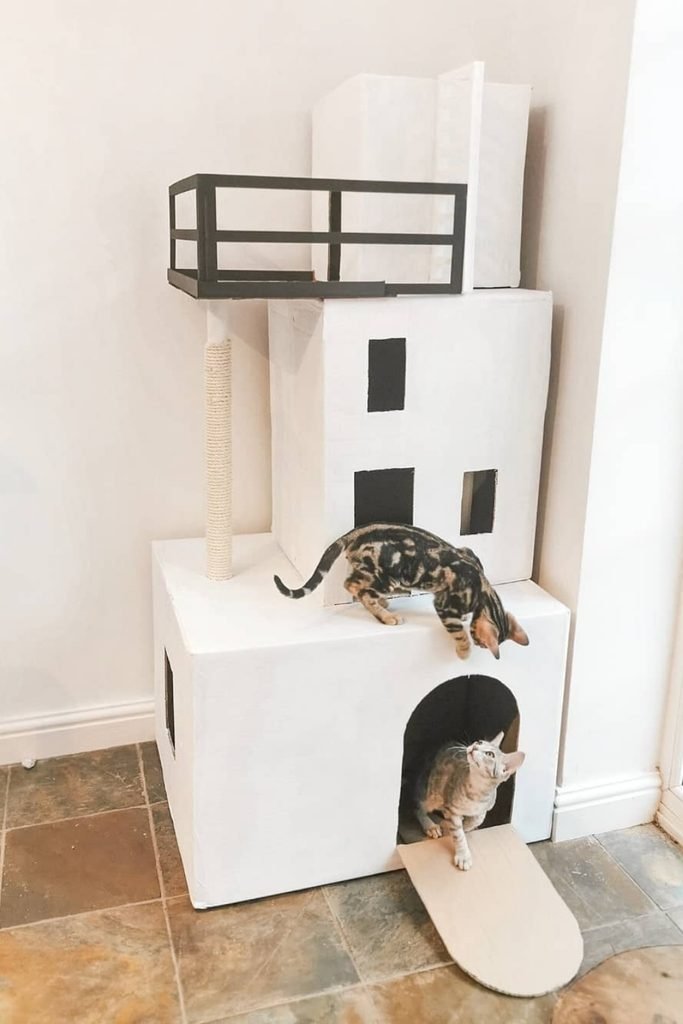
Compact Cottage
When you only have one box, a tall cottage shape keeps the project simple while still giving your cat a private retreat.
Cut the doorway low enough for easy access, then add small side windows so the interior feels less closed in.
Keep the roof lightweight but doubled along the ridge, since that fold is usually the first place thin cardboard starts bending.
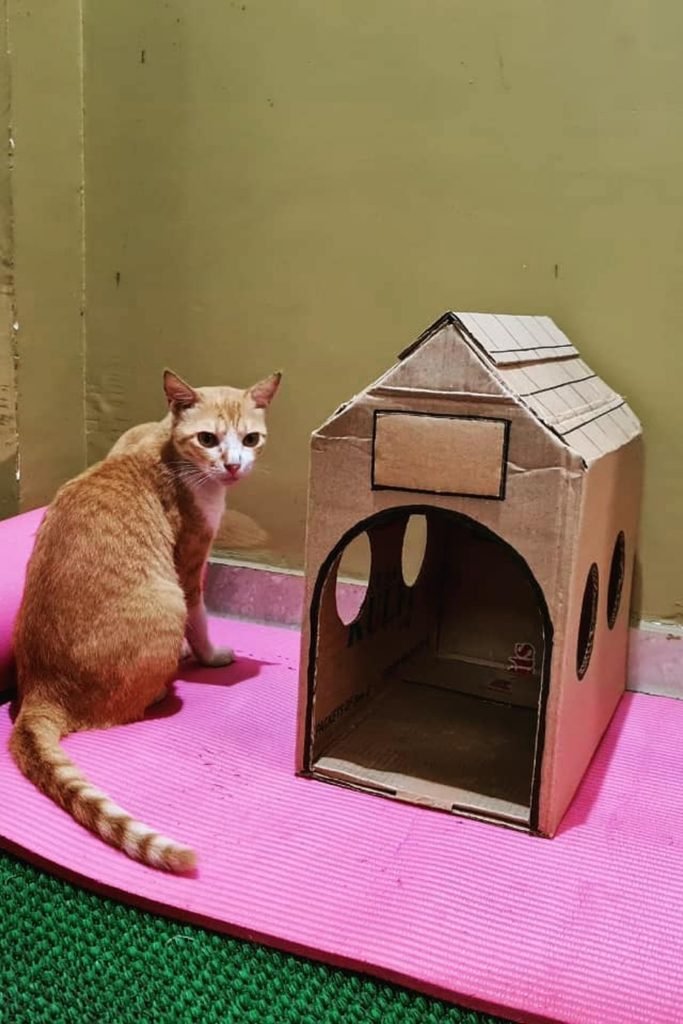
Café Hideout
Turning a wide box into a storefront-style hideout works well when you want something playful that still fits neatly against a wall.
Leave most of the front panel intact around the entrance, because a large open façade can weaken the box surprisingly quickly.
Flat paper signs and painted awnings add character safely, while loose menus, strings, or hanging pieces are better avoided around chewers.
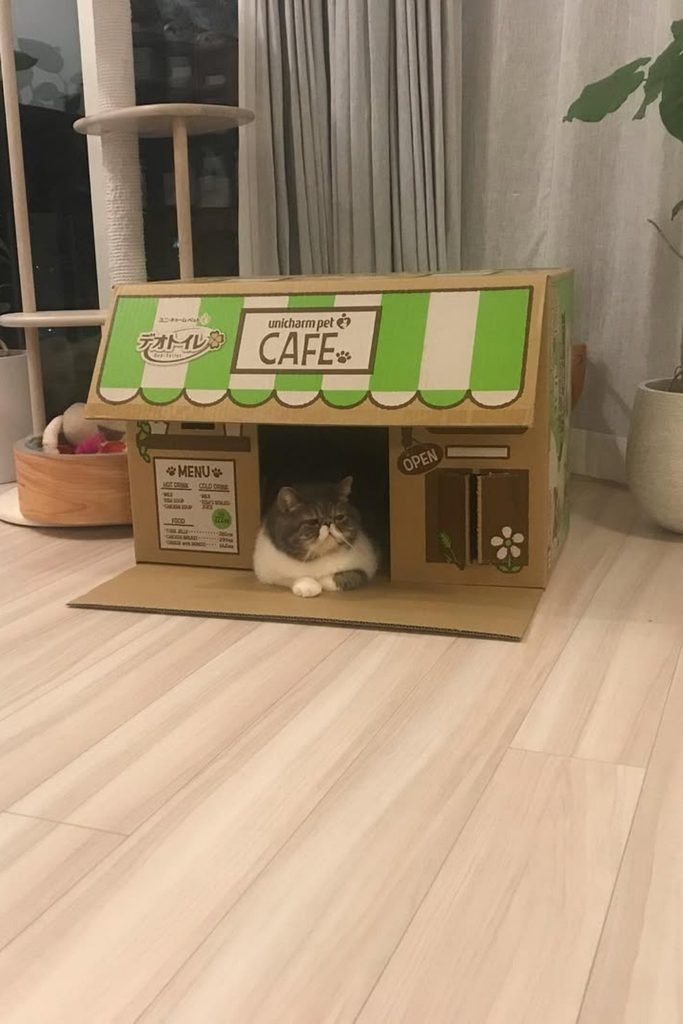
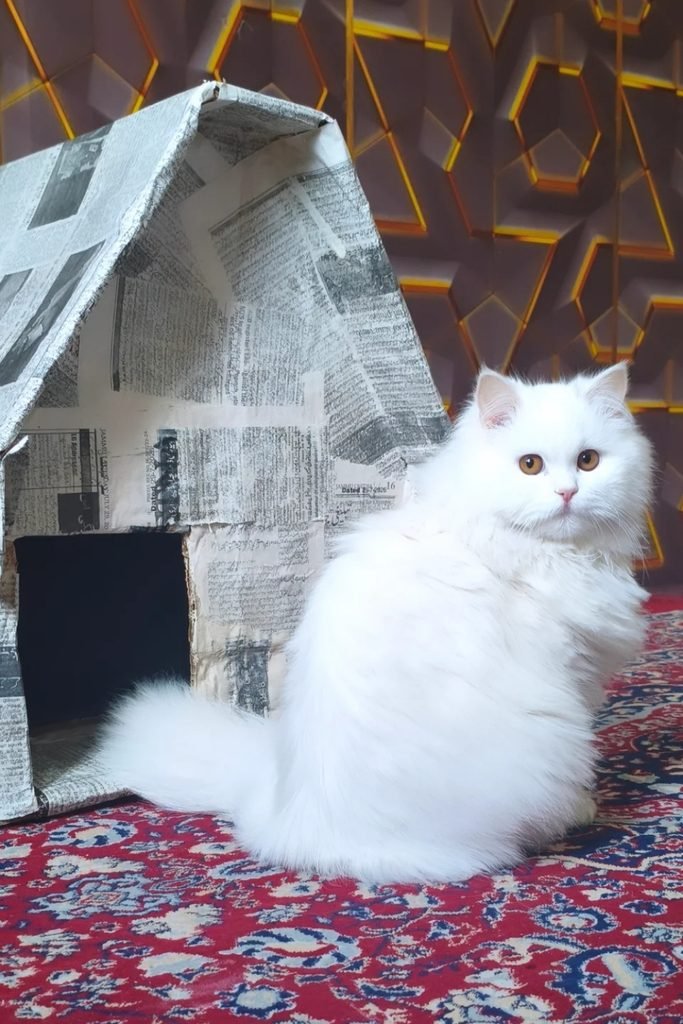
Papered Cottage
Covering plain cardboard with paper can hide shipping graphics cheaply, making a basic box house look more intentional without adding much weight.
Apply the paper before final assembly when possible, so you can smooth edges flat instead of working around tight corners later.
Keep the doorway generous and the roof firmly braced underneath, especially if your cat tends to lean, scratch, or climb outside.
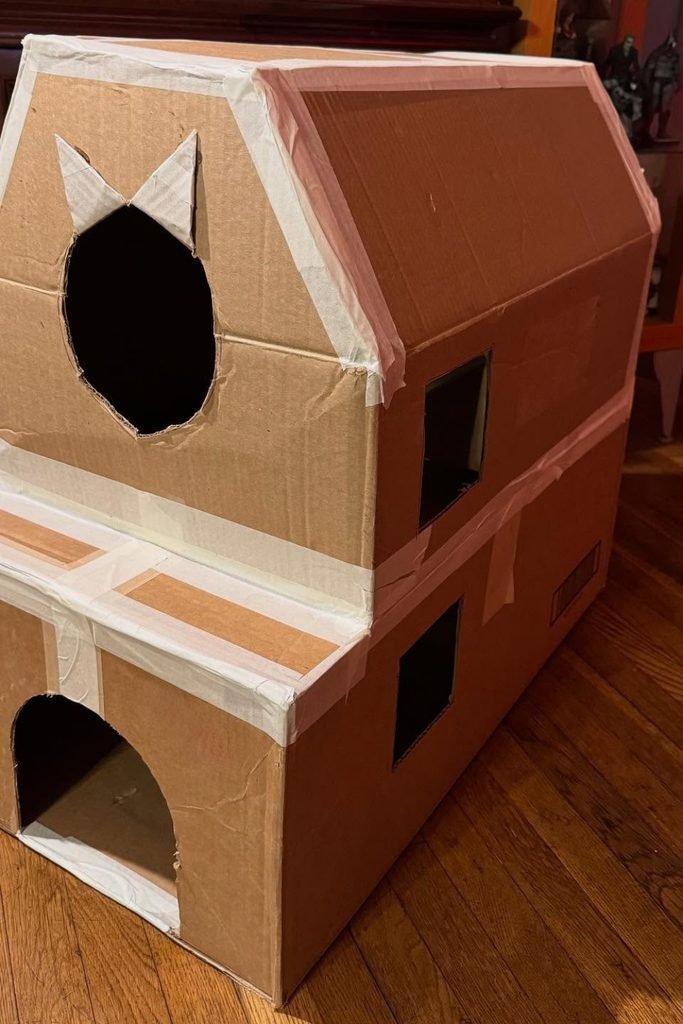
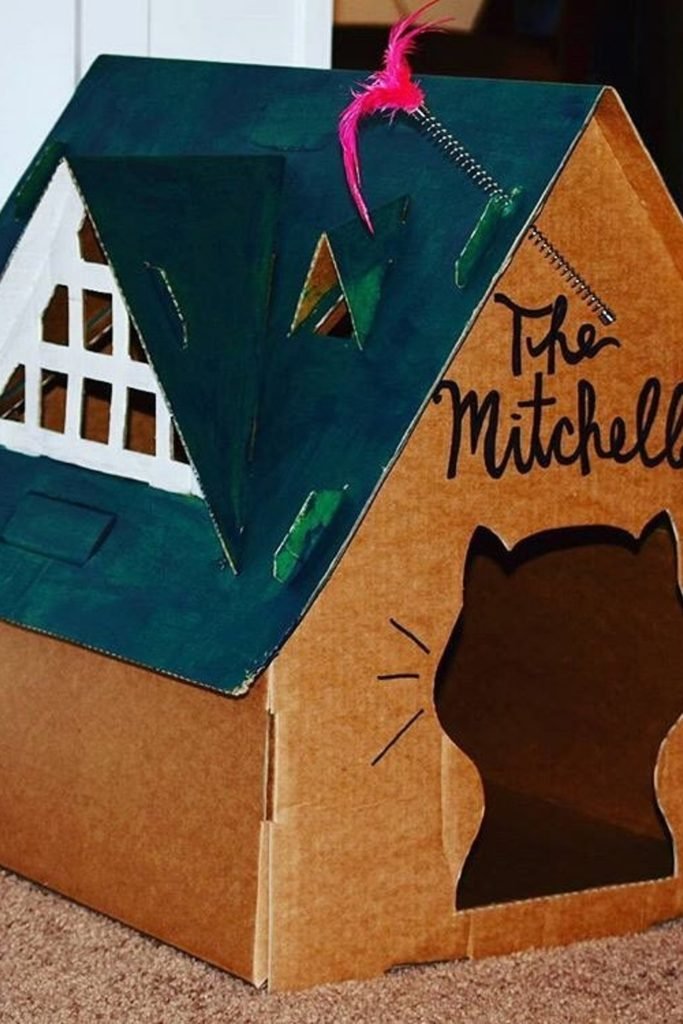
Cat Doorway
A cat-shaped doorway makes a plain cottage feel playful, but trace the opening first so both sides stay balanced and smooth.
Strengthen the roof ridge with an extra strip underneath, especially if your cat likes climbing onto the top during play.
Skip permanently attached feathers or springs when unsupervised, and use painted details instead for a safer decorative finish around curious chewers.
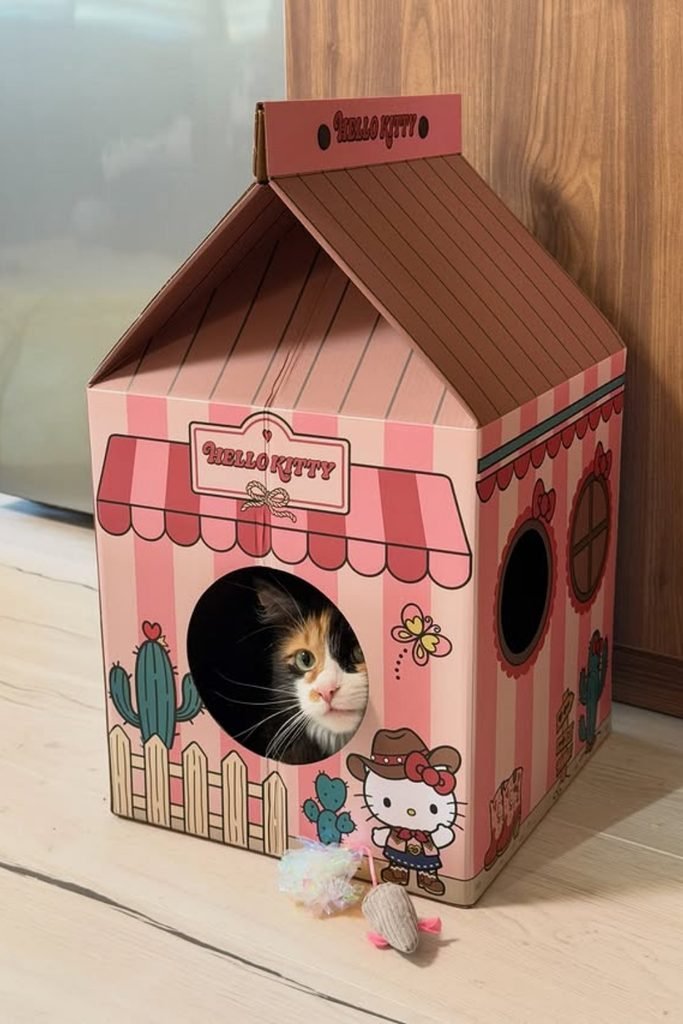
Printed Cottage
Pre-printed cardboard or decorative paper can give a basic box instant character without adding the weight of extra structural pieces.
Keep the entrance low and generously sized, then add a second side opening so your cat never feels boxed into one route.
For chewers, choose non-toxic finishes and avoid raised stickers, dangling tags, or trim that can peel away during repeated use.
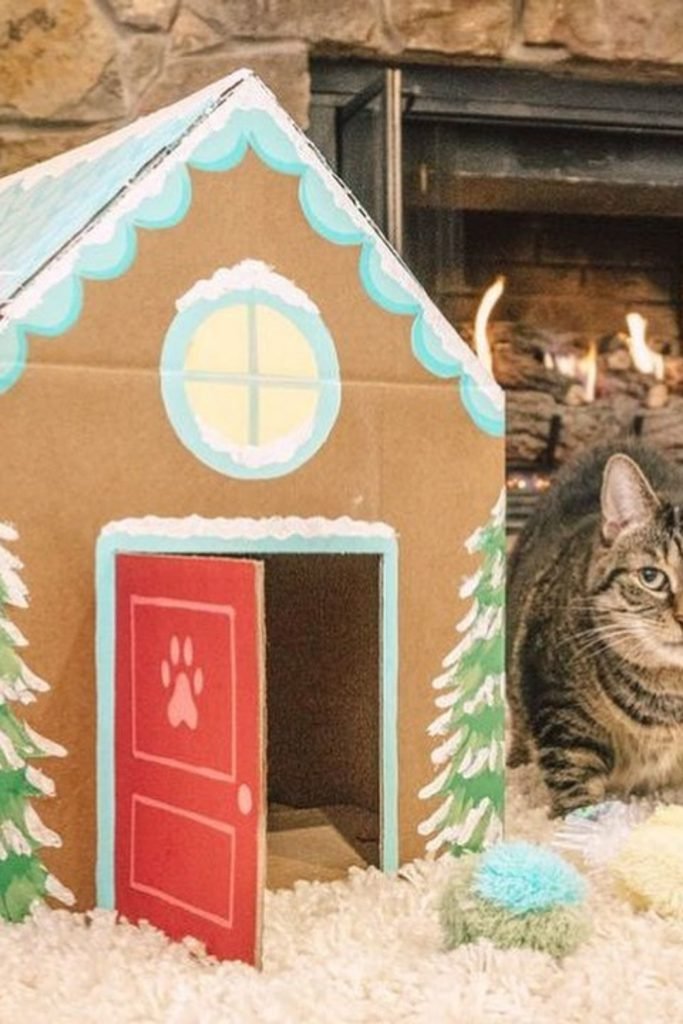
Seasonal Cottage
Seasonal paint turns one cardboard cottage into holiday decor, so you can refresh the look without changing the basic structure.
Use flat painted windows and trim instead of glued ornaments, which keeps the exterior lighter and easier to inspect for damage.
A hinged-looking front panel works best as decoration only; keep the actual doorway wide, smooth, and free from sharp folded edges.
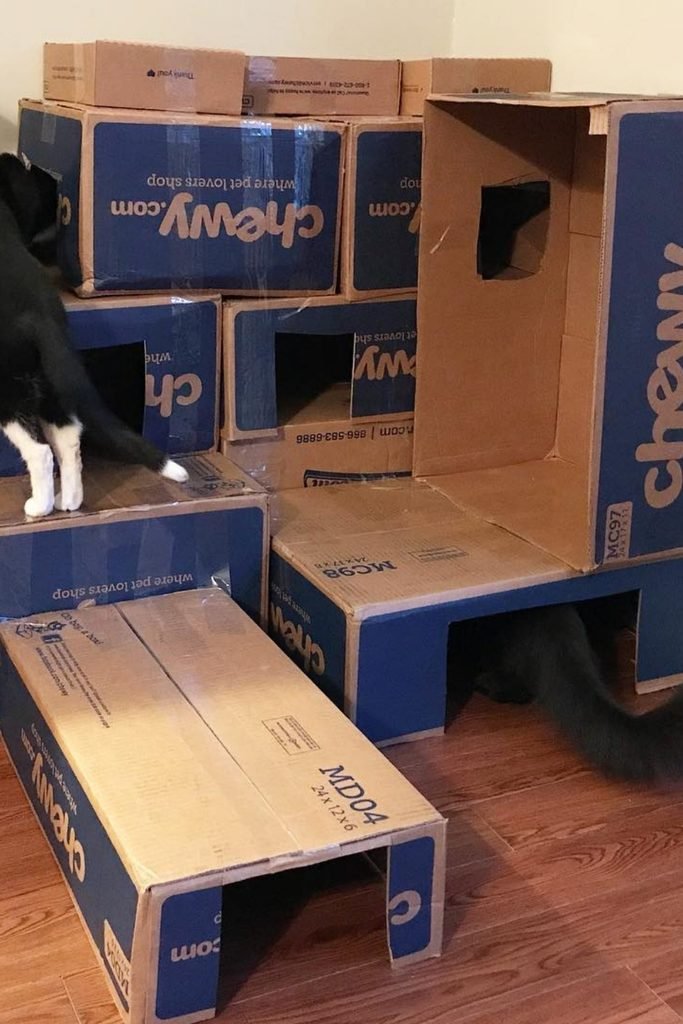
Box Maze
Saving several matching boxes lets you build a maze gradually, adding rooms and tunnels only after testing each section for stability.
Connect openings at floor level first, then add upper routes, because cats need reliable exits before extra climbing features become useful.
Keep long bridges short and well supported underneath, since wide unsupported spans can sag quickly when cats race across them repeatedly.
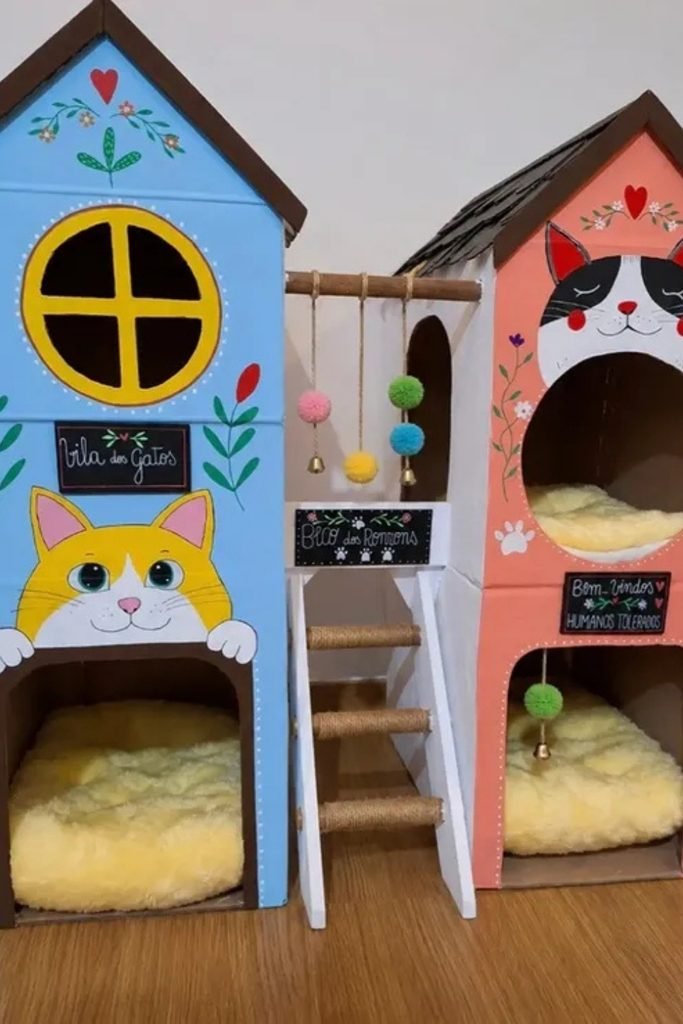
Twin Towers
Twin towers work well for multi-cat homes because separate sleeping cubbies give each cat privacy without spreading the setup across the room.
Build the center stairs from doubled cardboard and keep each step shallow, so cats can move between levels without awkward jumping.
Hanging pom-poms can add play value, but attach them only for supervised use and keep removable bedding inside every lower cubby.
FAQs
How Long Does a Cardboard Cat House Usually Last?
Lifespan depends on cardboard thickness, your cat’s weight, and how much scratching or chewing the house gets during daily use.
Reinforced floors, doubled roofs, and protected corners can help it last longer, especially when your cat likes climbing or sitting above.
How Can I Get My Cat to Use a New Cardboard House?
Place the house where your cat already relaxes, because a familiar location usually feels safer than introducing it somewhere completely new.
Add familiar bedding, leave the entrance easy to access, and give your cat time to explore without pushing or placing them inside.

Hi, my name is Ali Mehmood! I’m a passionate writer and DIY enthusiast who loves turning creative ideas into practical, hands-on projects.
I created this website to share inspiring, budget-friendly ideas that you can do yourself – whether it’s organizing your home, crafting something unique, or creating fun projects for kids and pets.
I believe DIY isn’t just a hobby – it’s a smart way to save money, reduce waste, and enjoy the satisfaction of making things with your own hands.
I’m excited to have you as part of this growing community, and I’ll continue bringing you helpful, realistic, and fun DIY ideas you can actually use.