This post may contain affiliate links: read full affiliate disclosure.
When bathroom counters keep filling with skincare, toothbrushes, grooming products, and everyday essentials, finding anything quickly becomes frustrating.
A DIY medicine cabinet can put that wasted wall space to work while keeping frequently used items organized and close by.
You can build around a mirror, hide storage behind artwork, add adjustable shelves, or choose a shallow design when space is tight.
In this article, you’ll find DIY medicine cabinet ideas that can help you create practical storage without making your bathroom feel crowded.
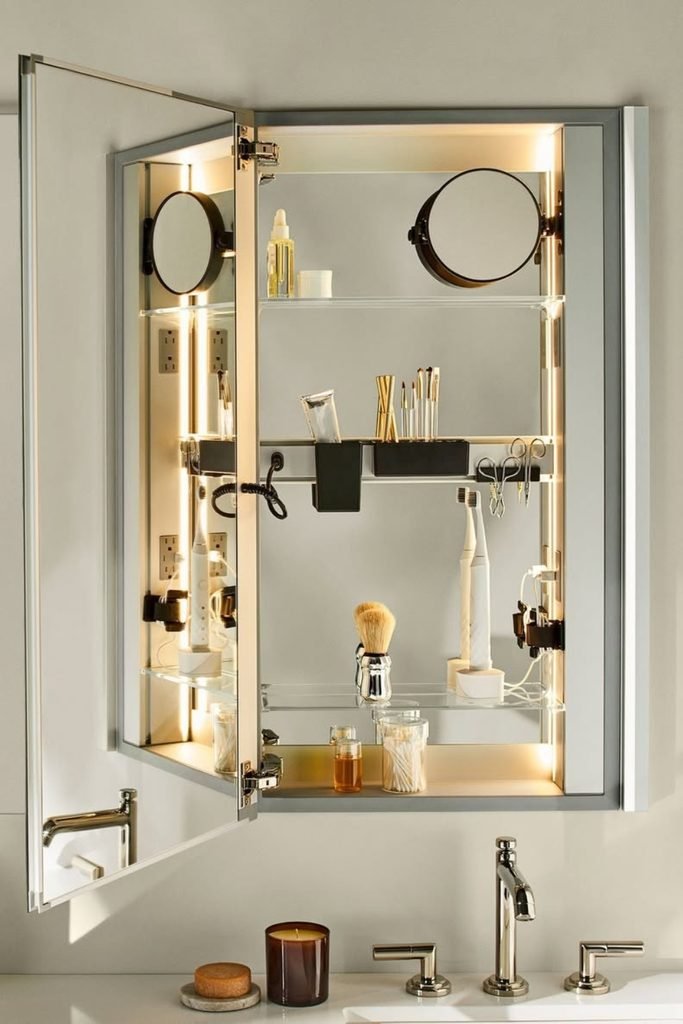
Illuminated Storage
Keep grooming tools easier to spot by adding warm interior lighting along the cabinet sides instead of relying on ceiling light.
Glass shelves help that light travel through each level, while small holders keep brushes, scissors, and toothbrushes from spreading around.
For a similar build, plan any electrical work before installation and keep powered components safely suited to bathroom conditions.
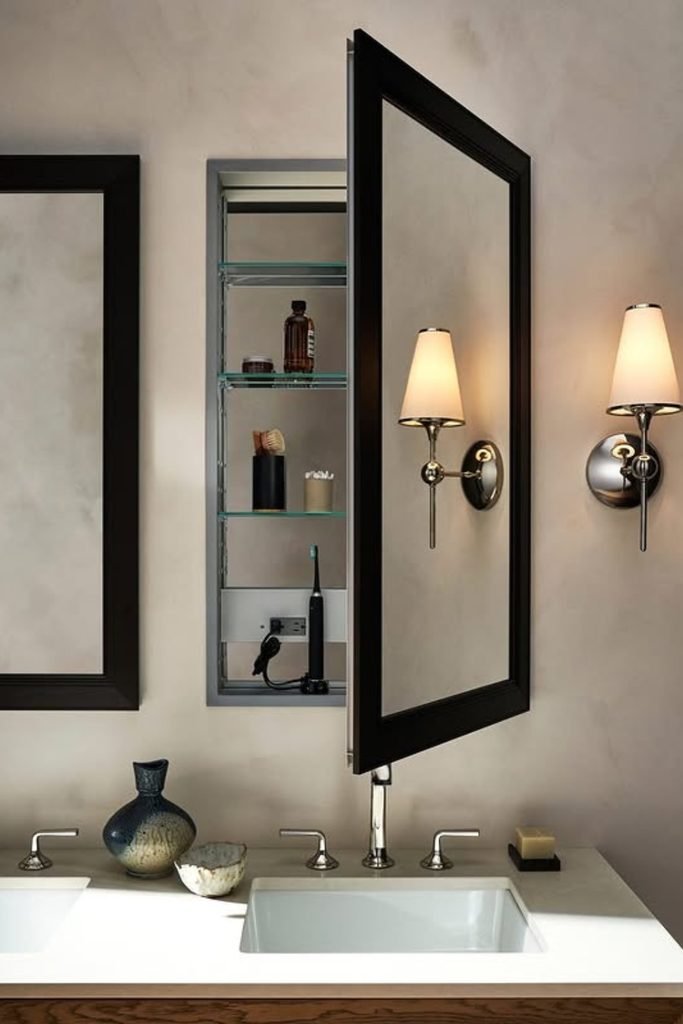
Charging Cabinet
When countertop cords bother you, dedicate the lower cabinet section to charging while keeping daily grooming essentials organized on shelves above.
A tall mirrored door gives you useful storage without adding another visual feature, which works especially well above double vanities.
Before adding an internal outlet, confirm bathroom electrical requirements and leave enough shelf clearance so chargers never crowd bottles or toothbrushes.
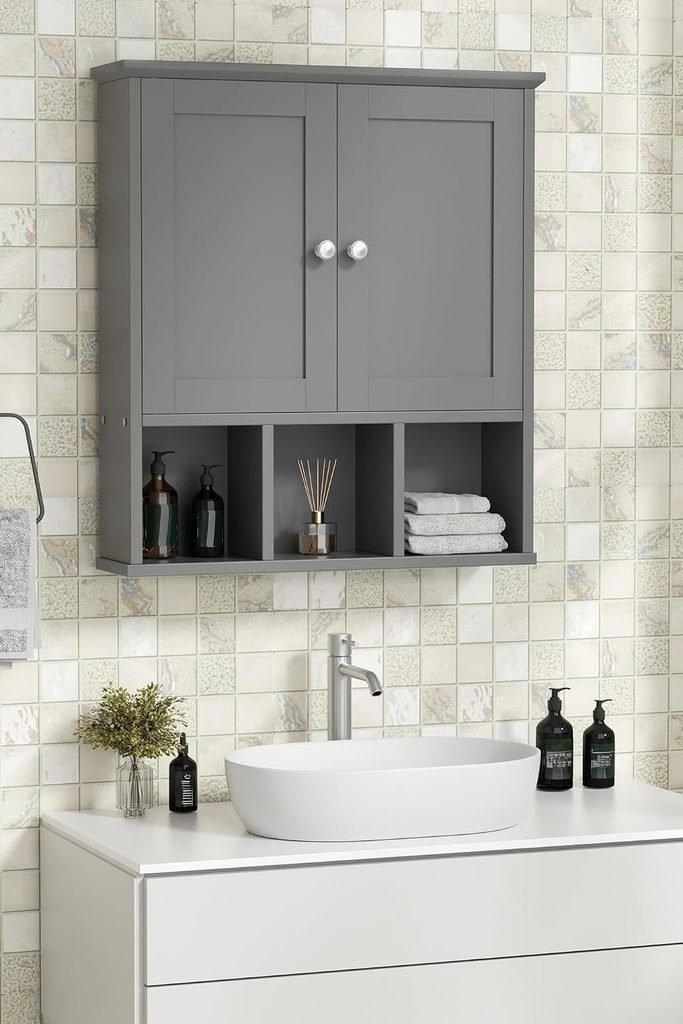
Open Cubbies
Mixing closed storage with lower cubbies lets you hide personal toiletries while keeping towels and frequently grabbed bottles within easy reach.
Build the cabinet slightly taller instead of deeper when floor space feels tight, using vertical wall space without crowding the sink.
Paint every exposed edge with a bathroom-suitable finish, especially around open compartments where moisture and splashes can reach the wood regularly.
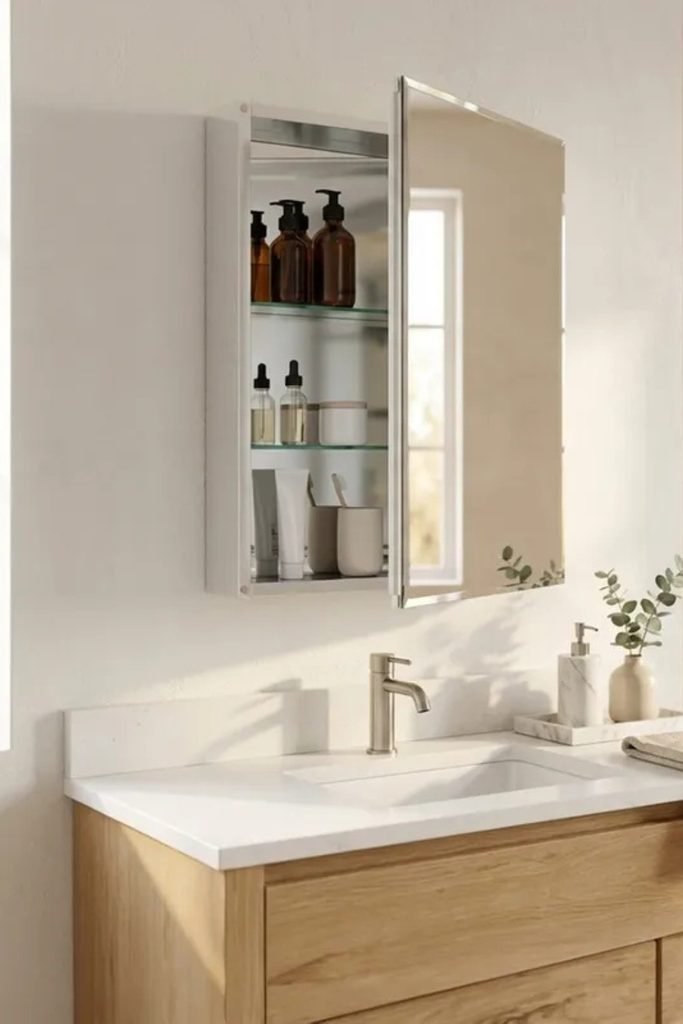
Slim Mirror
For bathrooms where cutting into drywall feels unnecessary, a shallow surface-mounted cabinet can still provide useful storage without looking overly bulky.
Match the cabinet width closely to your mirror so the box stays visually tucked behind the reflective front when closed.
Inside, space glass shelves around your tallest skincare bottles first, then use the remaining levels for smaller grooming and dental essentials.
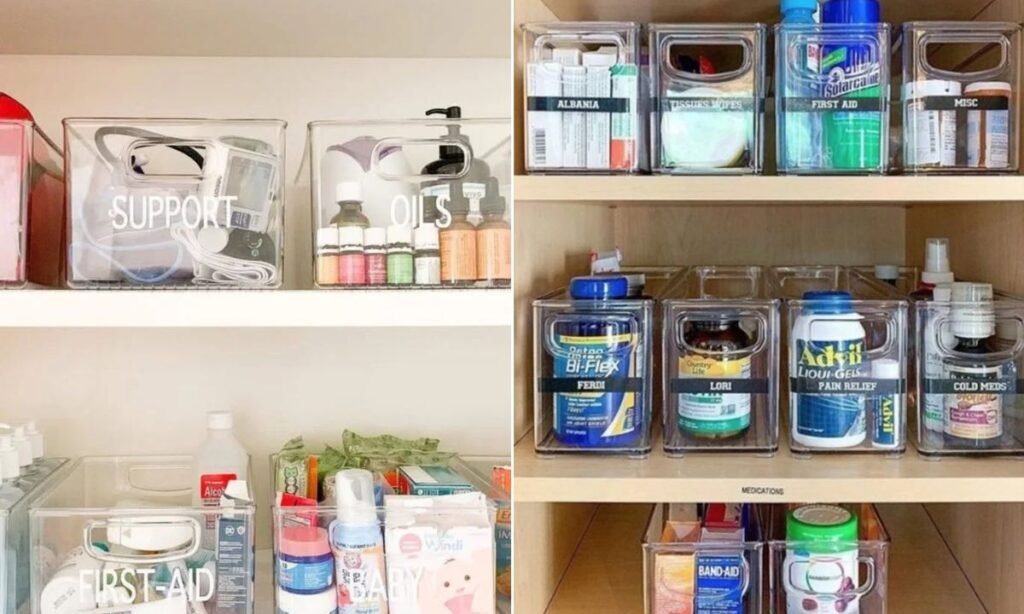
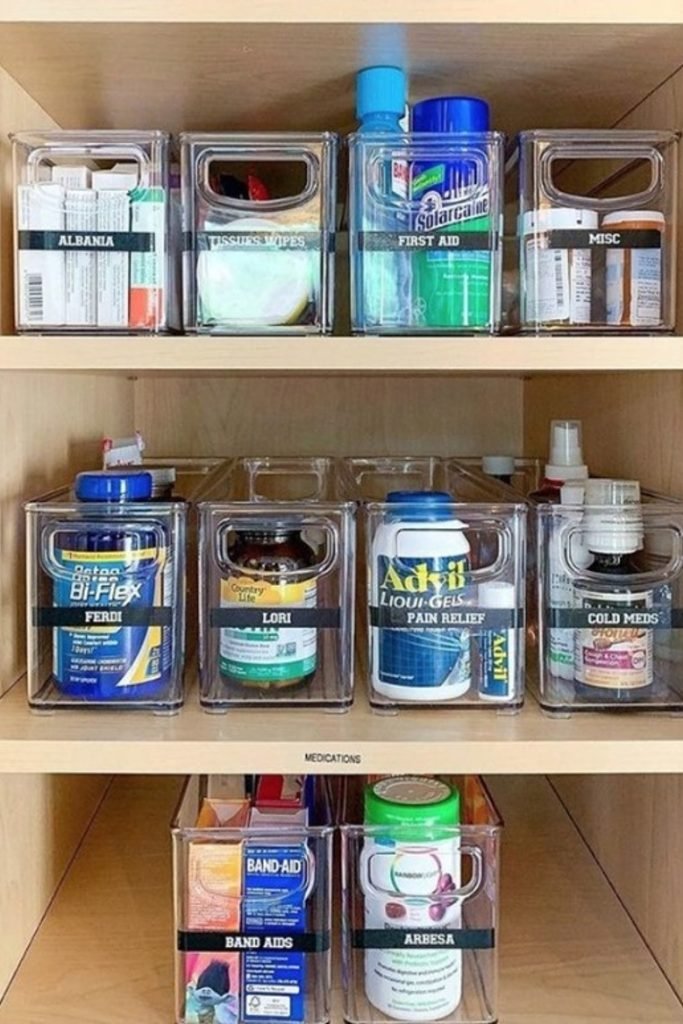
Labeled Bins
If small essentials keep disappearing behind larger bottles, clear handled bins can turn deep cabinet shelves into easier pull-out storage.
Group similar items together and label each container, so you can grab what you need without emptying an entire shelf.
Keep frequently used toiletries toward eye level, while less-used supplies can sit higher or lower without interrupting your daily routine.
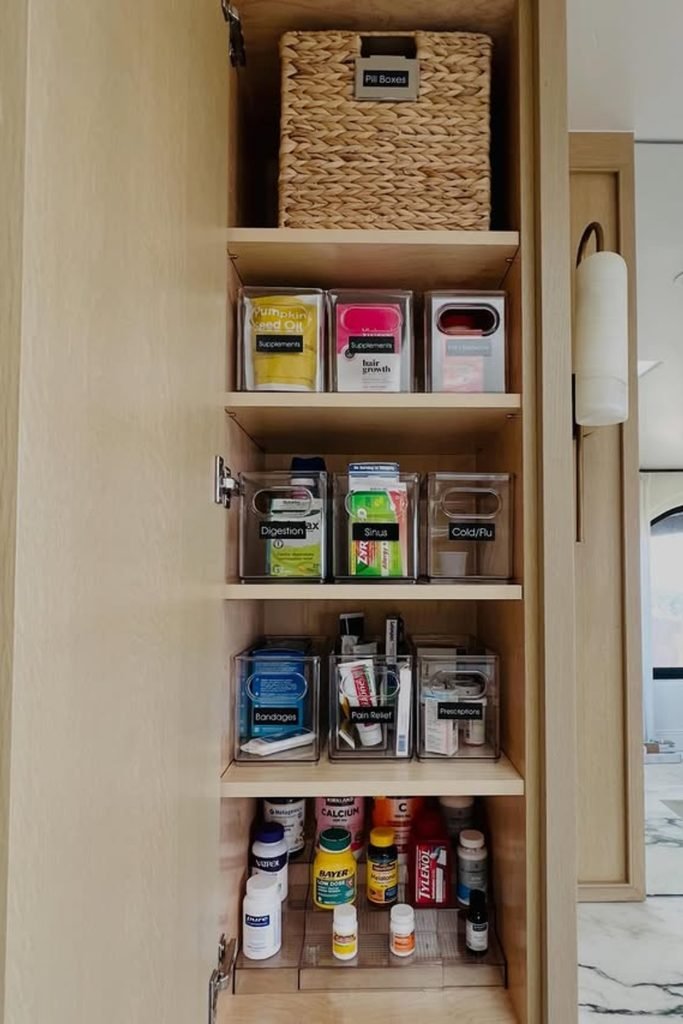
Category Storage
Give every shelf a clear purpose when one tall cabinet needs to hold several types of personal and household essentials.
Smaller transparent containers make categories easier to separate, while a basket above can hide backup items you rarely need immediately.
Before filling the cabinet, adjust shelf heights around your containers so valuable vertical space does not disappear between short storage bins.
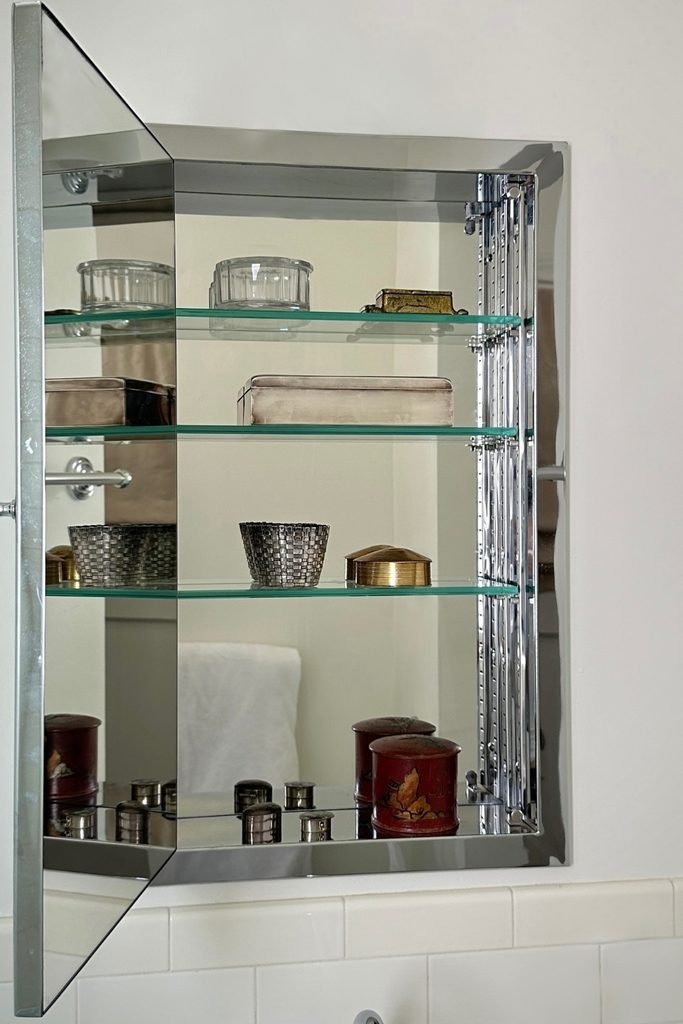
Mirrored Interior
Want a recessed cabinet to feel less boxed in? Mirroring the interior can visually open shallow storage while reflecting bathroom light.
Pair that reflective backing with glass shelves, keeping the inside bright and making smaller grooming essentials easier to locate quickly.
Choose shelf positions before mounting hardware, leaving taller gaps where bottles belong instead of dividing every section at equal heights.
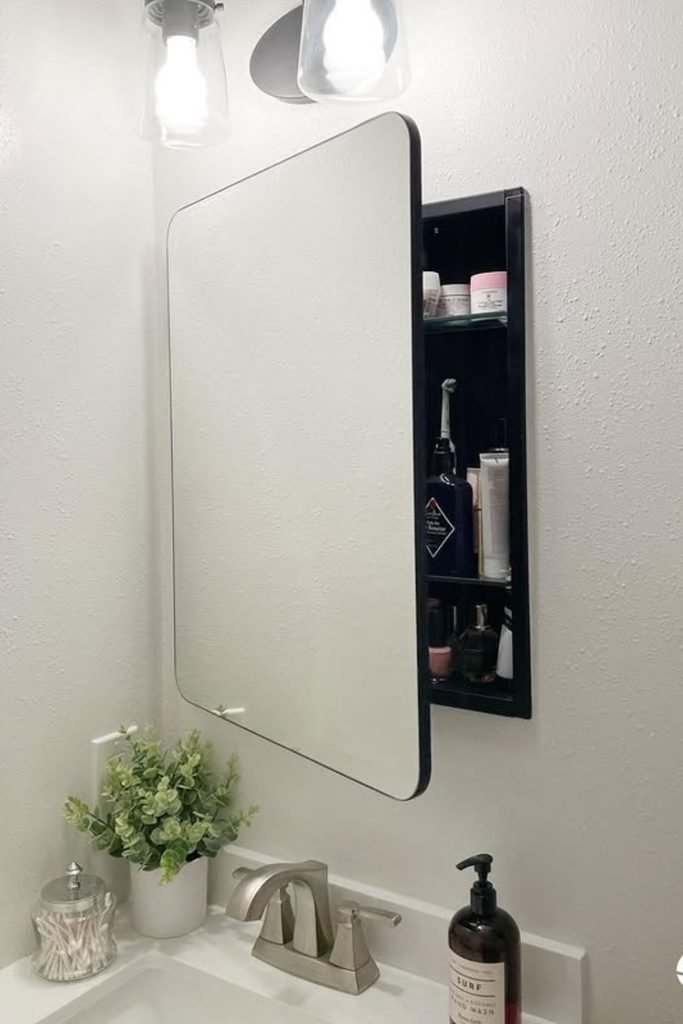
Oversized Door
An oversized mirror can quietly hide a narrow storage cavity, giving you more reflective surface without advertising where toiletries are stored.
Keep the cabinet box slimmer than the mirror front so its edges disappear naturally whenever the door remains fully closed.
Check faucet, lighting, and side-wall clearance before choosing the hinge direction, since a wider mirror needs generous room to swing safely.
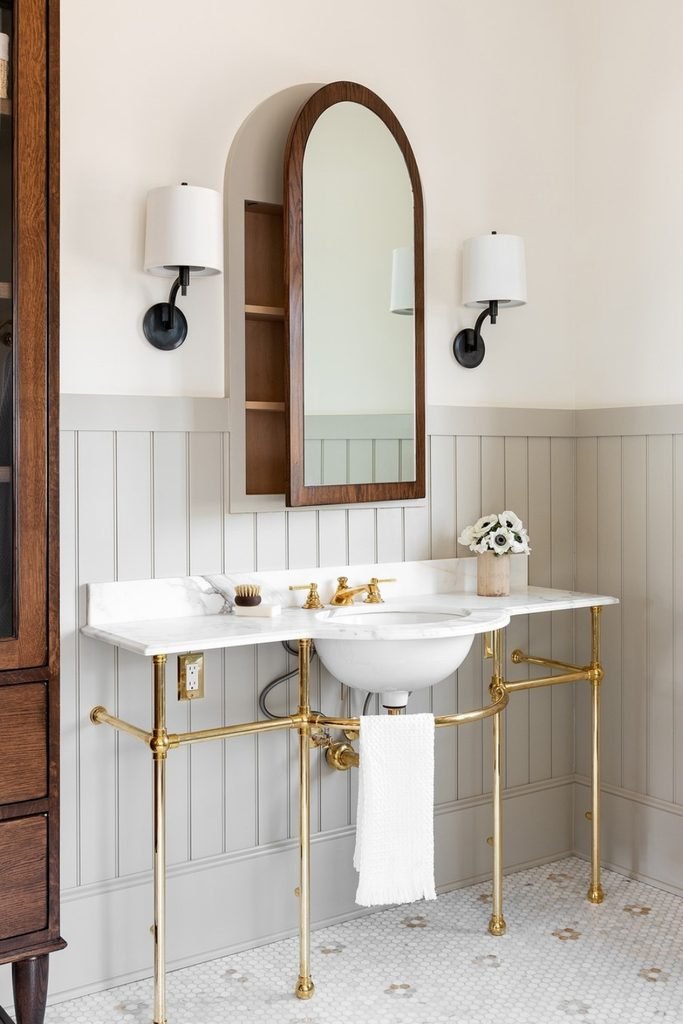
Arched Mirror
If a standard rectangle feels too boxy, an arched mirrored door can soften the cabinet while still giving you concealed storage.
Carry the same wood around the mirror and cabinet edges, helping a DIY build feel intentional rather than simply attached afterward.
Before sizing the door, leave comfortable clearance beside wall sconces so the curved mirror can open fully without catching nearby fixtures.
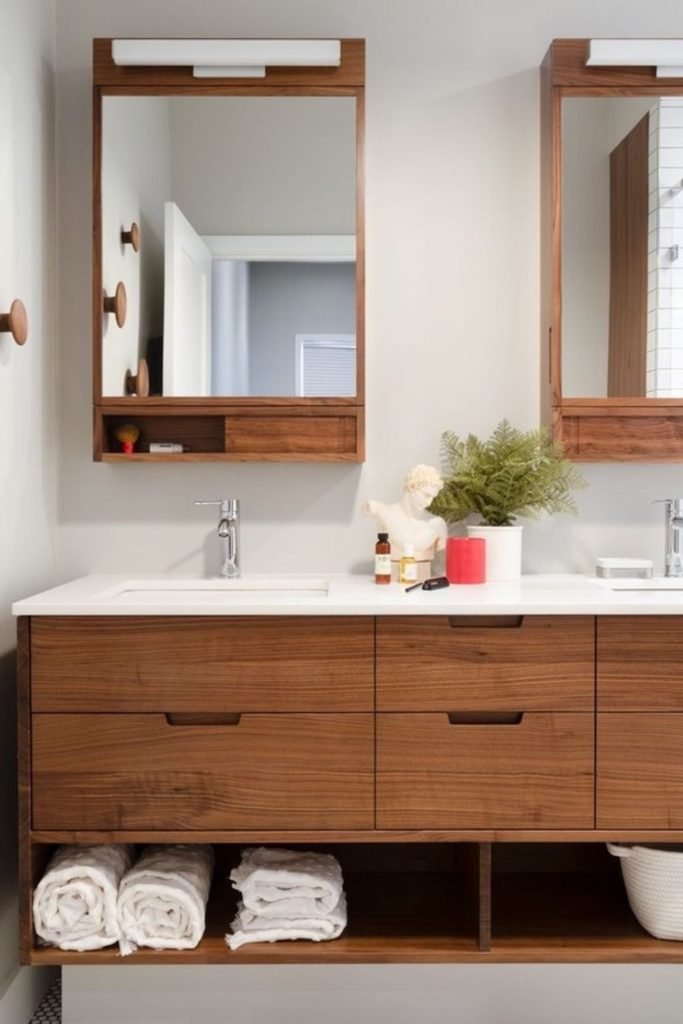
Lower Shelf
Sometimes the most useful storage belongs outside the cabinet, especially for small grooming items you reach for several times daily.
Build a shallow open shelf beneath the mirrored section, then reserve hidden interior space for bottles that make counters feel cluttered.
Keeping the shelf narrow prevents it from crowding the faucet area while still giving frequently used essentials an easy landing spot.
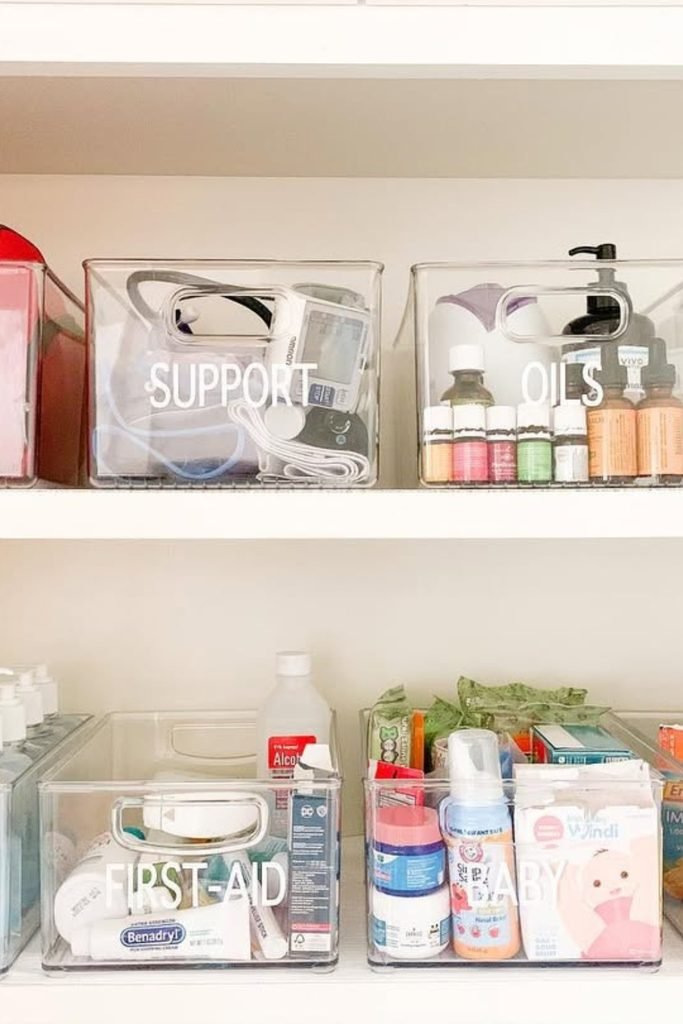
Clear Categories
When one cabinet holds lots of small supplies, grouping them by purpose saves you from digging through everything during busy mornings.
Use clear handled bins for separate categories, keeping labels visible from the front so each item returns to its proper place.
For actual medications, choose a cool, dry location outside humid bathrooms when storage instructions recommend avoiding heat and moisture.
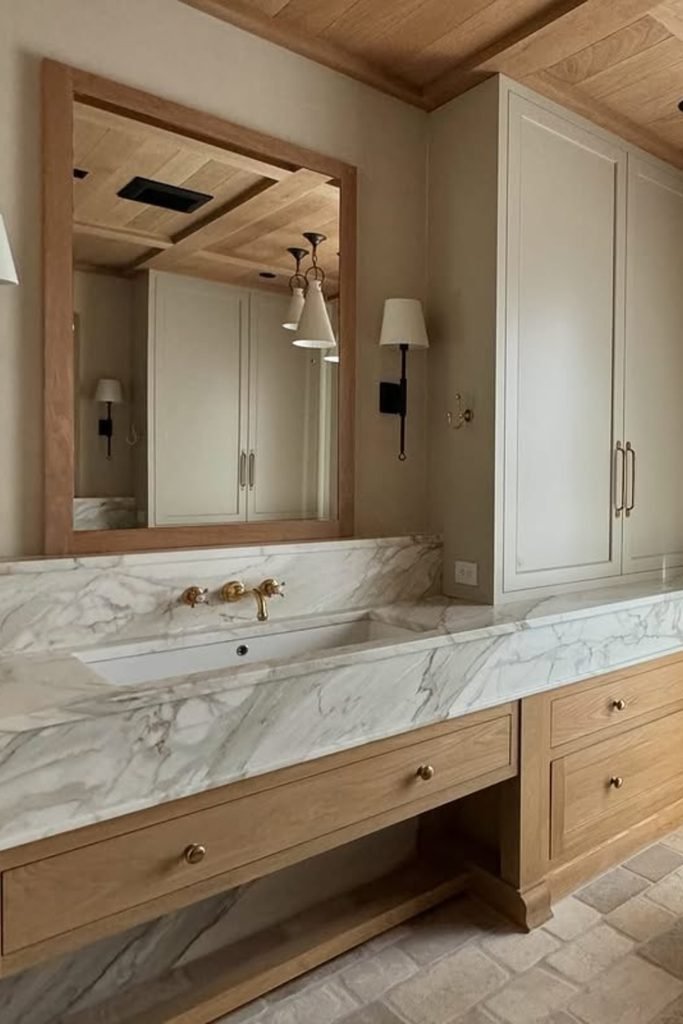
Side Cabinet
You don’t have to squeeze every storage feature behind the mirror when an unused side wall can handle a taller cabinet.
Pairing a simple vanity mirror with full-height cabinetry gives bulky toiletries and backup supplies more room without shrinking your reflection.
Use adjustable shelves inside so tall bottles, folded towels, and smaller grooming essentials can share the cabinet without wasting vertical space.
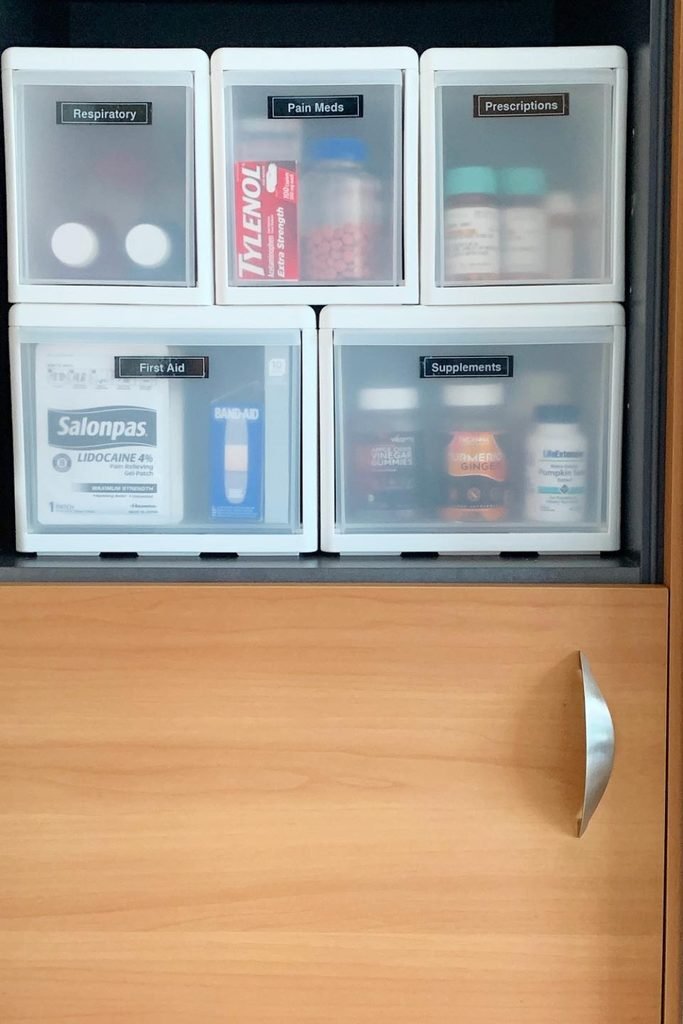
Drawer Bins
If loose supplies keep turning into one messy pile, stackable pull-out bins can give each category its own compact compartment.
Choose translucent fronts so you can recognize contents quickly, then add simple labels to avoid opening several bins every time.
Use this setup in a cool, dry cabinet for medications, keeping them secured away from children and following individual storage directions.
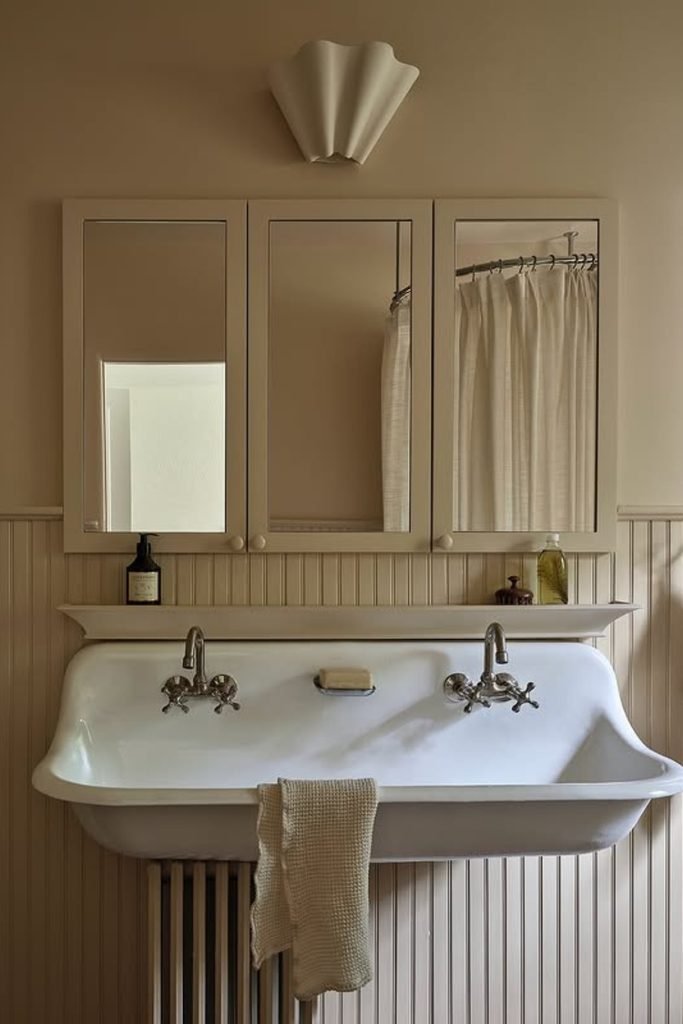
Triple Mirrors
Sharing one sink area gets easier when separate mirrored doors divide a wide cabinet into smaller storage zones for everyday essentials.
Build each door narrower than one oversized panel, making the cabinet easier to open when faucets, walls, or nearby fixtures limit movement.
A slim ledge underneath adds a handy resting spot for daily toiletries without leaving everything scattered across the sink surround.
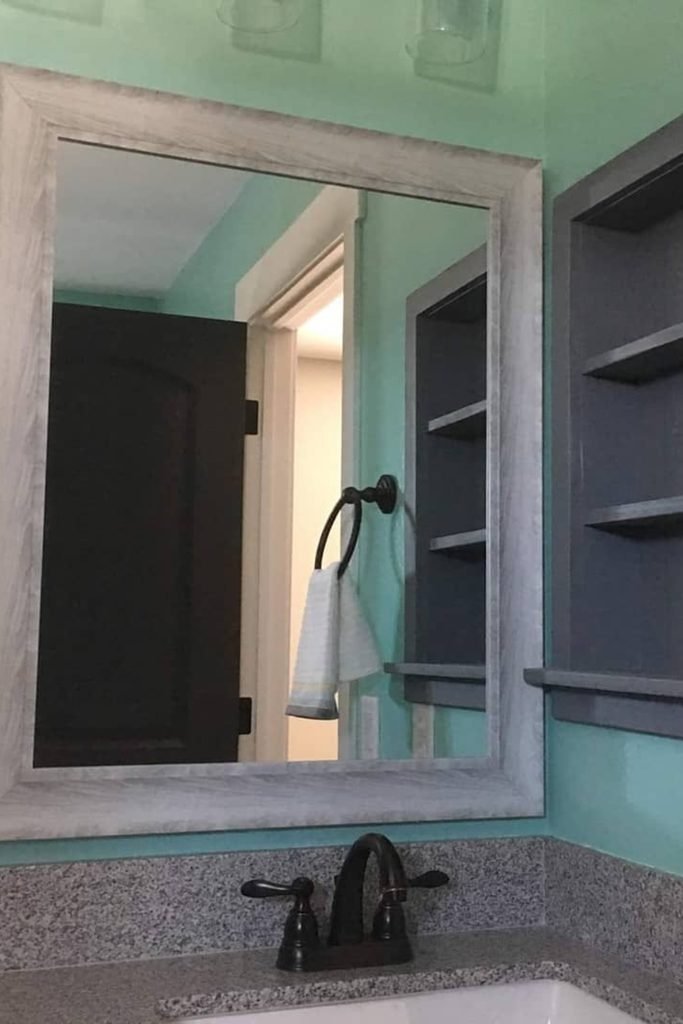
Recessed Shelves
An awkward strip beside the vanity can become useful storage when you recess narrow shelving instead of adding another projecting cabinet.
Frame the opening between suitable wall supports, then size each shelf around taller bottles and smaller grooming items you actually use.
Painting the interior darker can add contrast, while keeping the shelves open makes frequently reached essentials easy to grab and return.
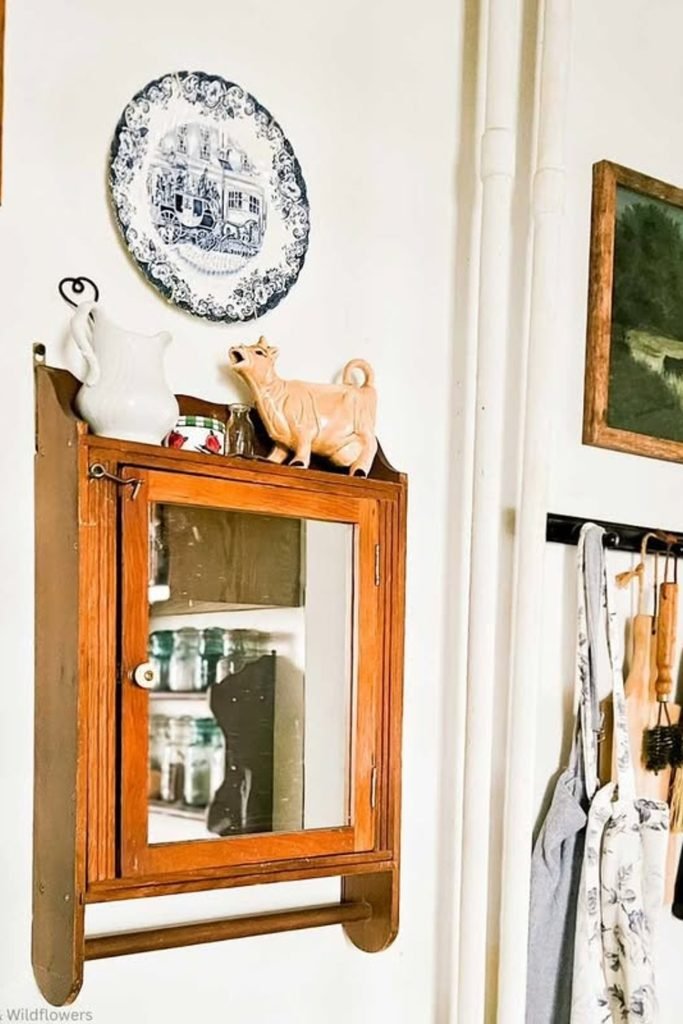
Vintage Cabinet
Repurposing an older wall cabinet can bring useful storage into a bathroom without making every DIY project start from fresh lumber.
Keep the original wood character when possible, then repair loose hinges and seal exposed surfaces against everyday bathroom humidity and splashes.
A mirrored door handles grooming duties, while a lower rail can hold a hand towel without using another section of wall.
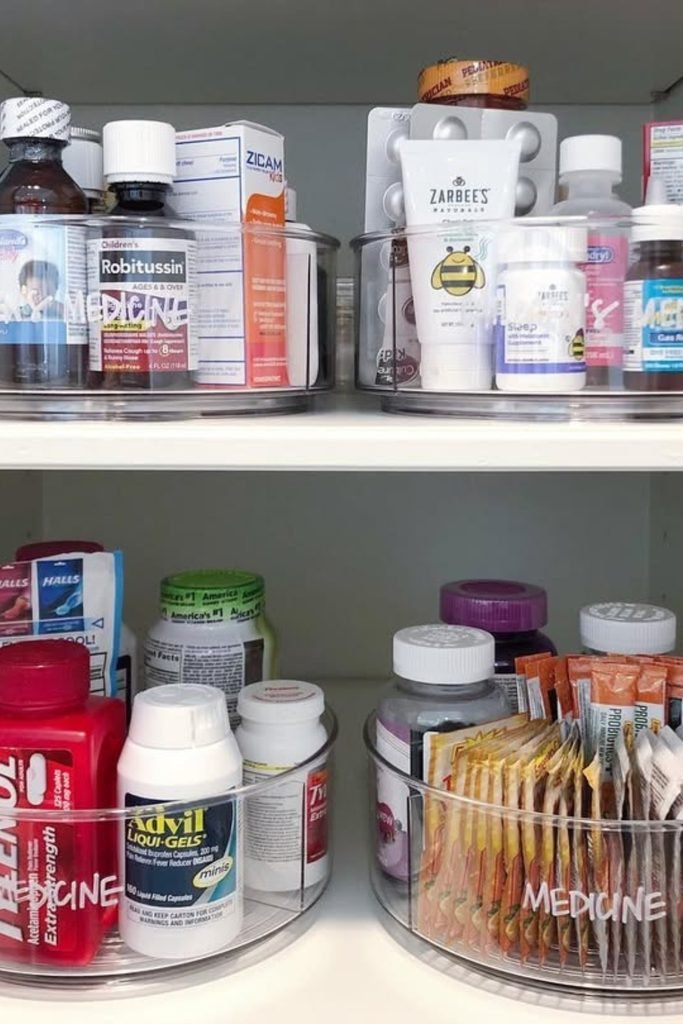
Rotating Trays
Deep shelves become much easier to use when rotating trays bring bottles from the back forward without moving everything first.
Divide each tray by purpose, then avoid packing it too tightly so containers can rotate without catching neighboring items.
For medications, place these organizers in a secure, cool, dry cabinet rather than automatically choosing a humid bathroom location.
Sliding Door
When swinging doors would interrupt a tight bathroom, a sliding wooden panel can conceal storage without needing extra clearance in front.
Mount sturdy track hardware across the cabinet top, making sure the door overlaps the opening enough to keep stored essentials hidden.
Leave part of the shelving accessible when useful, creating a flexible mix of concealed toiletries and easy-to-reach decorative bathroom pieces.
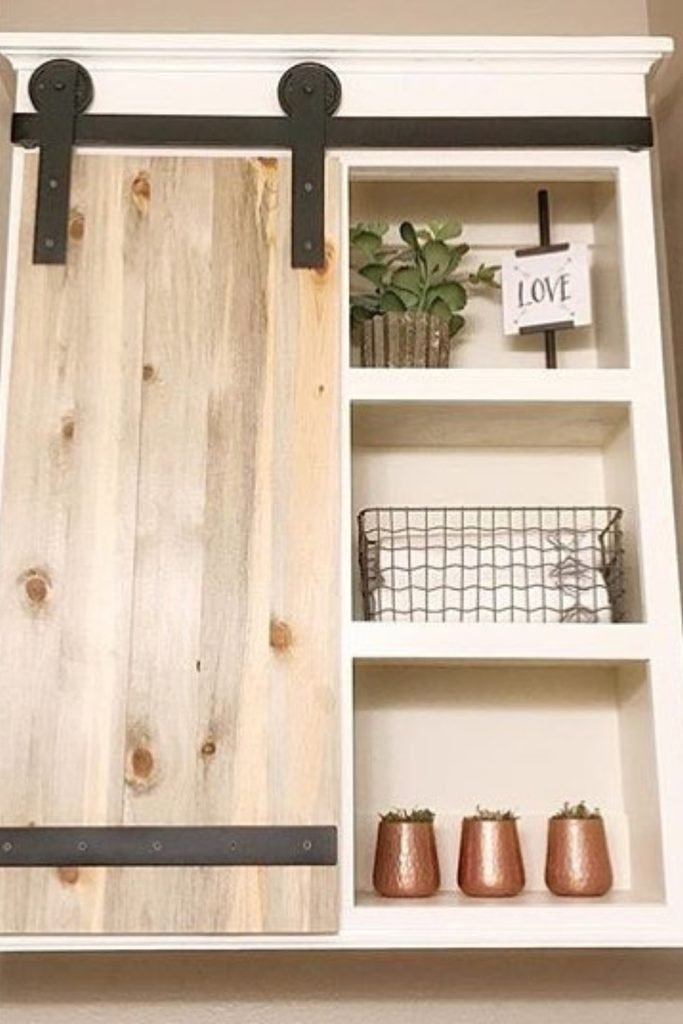
Side Shelves
Make an unusually wide vanity work harder by extending narrow shelving beside the mirror instead of increasing the cabinet’s overall depth.
Build shallow shelves for everyday grooming bottles, keeping deeper storage unnecessary when most frequently used products have compact footprints.
Matching the shelf interior to nearby wood tones can help added storage feel built-in rather than squeezed beside the mirror afterward.
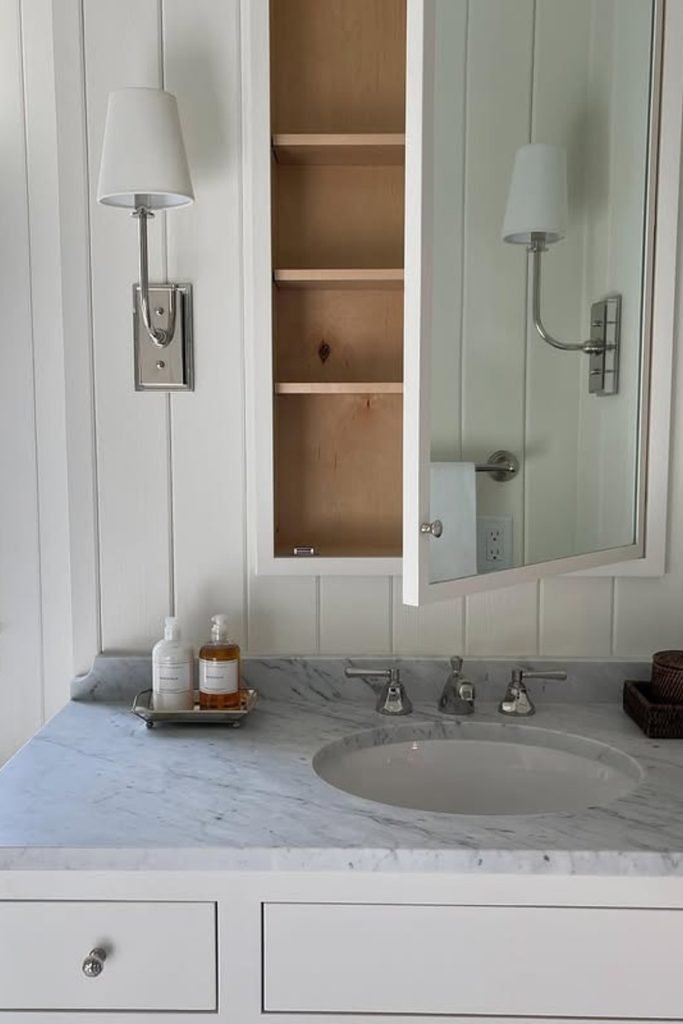
Sorted Supplies
Large household storage works better when every clear bin handles one specific need instead of mixing unrelated supplies across several shelves.
Use front-facing labels and handled containers so categories stay recognizable and an entire group can be pulled forward when needed.
Store medications according to their individual directions, with secure placement away from children and bathroom humidity when cool.
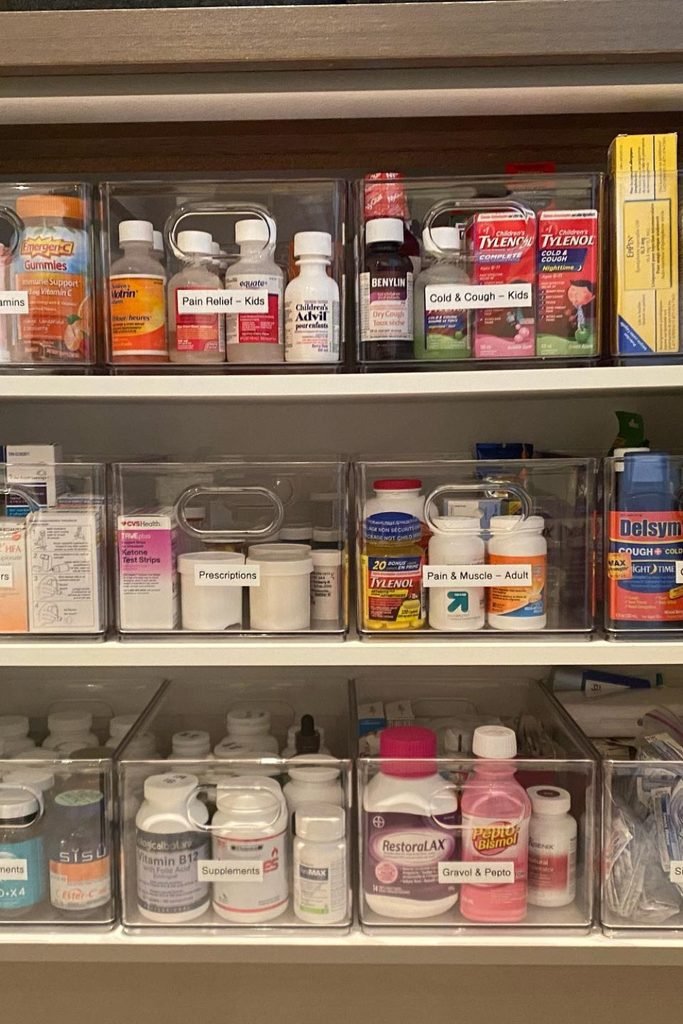
Hidden Mirror
For a cleaner vanity wall, let a large framed mirror do double duty by concealing narrow storage directly behind its surface.
Keep the recessed box shallow enough for grooming bottles, then position shelves around the products you reach for most often.
Before hanging a heavy mirrored door, use sturdy hinges and secure framing so repeated opening does not loosen the cabinet over time.
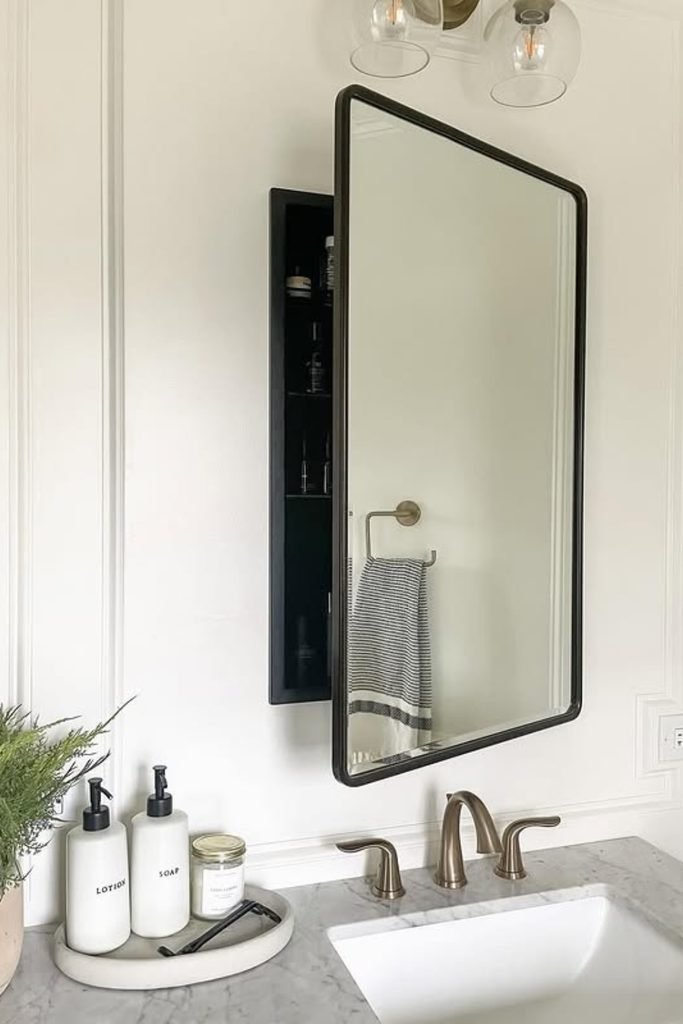
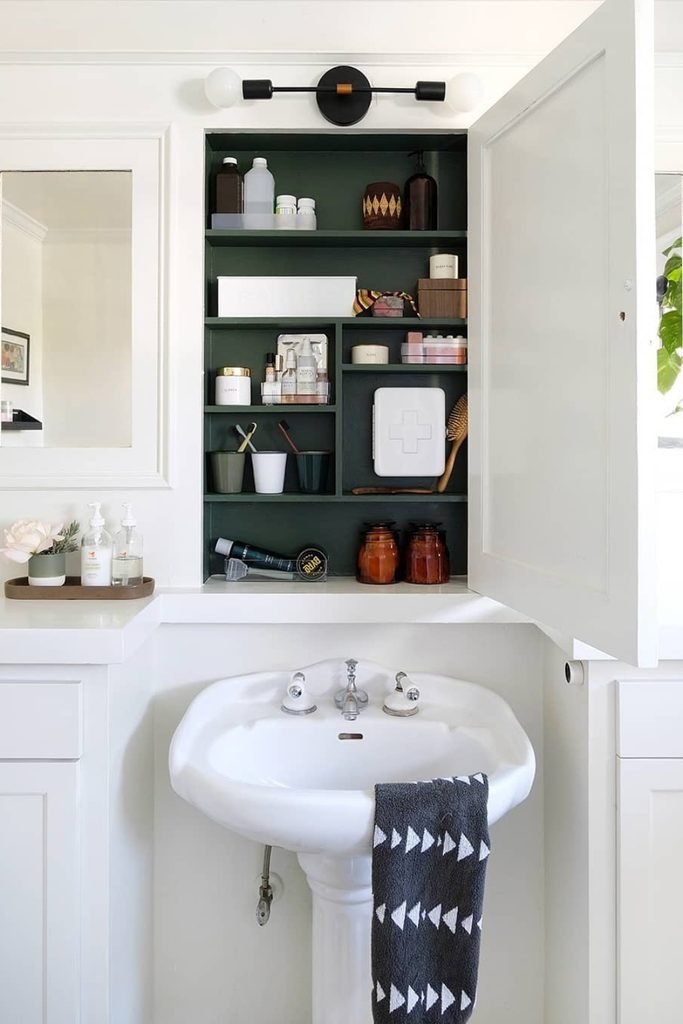
Deep Cabinet
When you have enough wall depth, extending the cabinet vertically can handle far more than the usual few bathroom essentials.
Vary shelf heights instead of spacing everything evenly, giving tall bottles, grooming tools, boxes, and smaller containers their own zones.
Painting the interior a contrasting shade can make the storage feel intentional while helping lighter products stand out when you open it.
Framed Niche
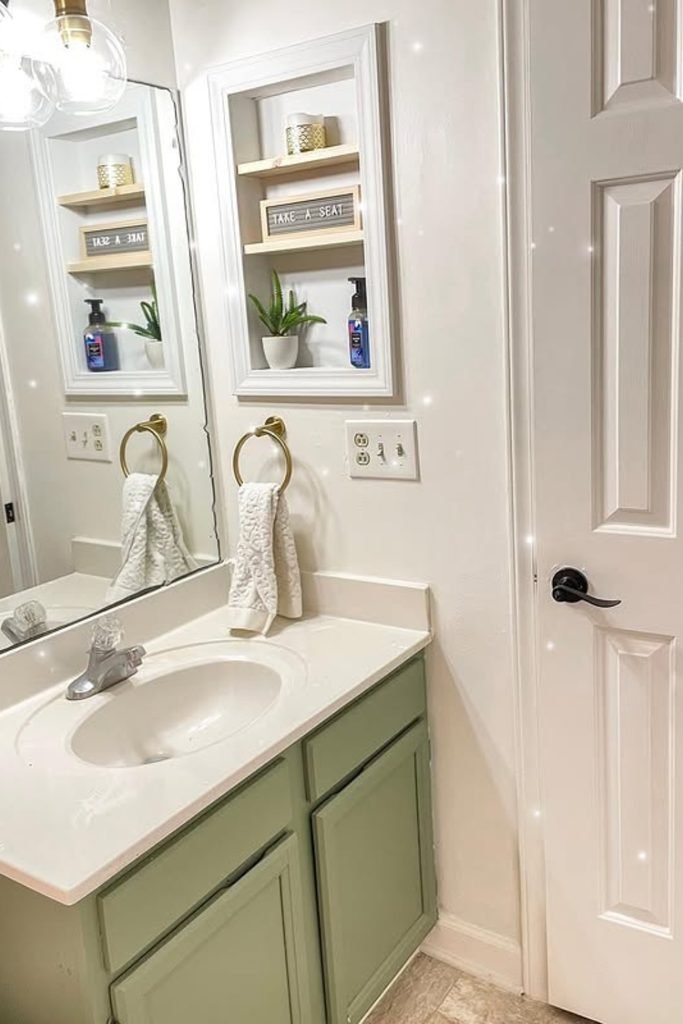
Not every useful medicine cabinet needs a door, especially when you want quick access to a few everyday bathroom essentials.
Turn a narrow wall cavity into open shelving, then frame the opening so it feels finished rather than simply cut out.
Keep only frequently used toiletries here, since an open niche works best when shelves stay lightly filled and easy to maintain.
FAQs
How Deep Should a DIY Medicine Cabinet Be?
Start with the tallest bottles and grooming products you actually use, then choose enough depth to store them without wasting wall space.
A shallow cabinet works well for toothbrushes, skincare, and smaller toiletries, while bulkier items may need deeper shelving.
Can You Build a Medicine Cabinet Without Cutting Into the Wall?
Yes, a surface-mounted cabinet is a practical option when you don’t want to open drywall or deal with hidden plumbing and wiring.
Keeping the cabinet relatively slim helps you gain useful storage without making a small bathroom feel crowded.

Hi, my name is Ali Mehmood! I’m a passionate writer and DIY enthusiast who loves turning creative ideas into practical, hands-on projects.
I created this website to share inspiring, budget-friendly ideas that you can do yourself – whether it’s organizing your home, crafting something unique, or creating fun projects for kids and pets.
I believe DIY isn’t just a hobby – it’s a smart way to save money, reduce waste, and enjoy the satisfaction of making things with your own hands.
I’m excited to have you as part of this growing community, and I’ll continue bringing you helpful, realistic, and fun DIY ideas you can actually use.