This post may contain affiliate links: read full affiliate disclosure.
Finding crochet flowers that look beautiful without being too tricky to make can be harder than you expect.
Some patterns feel complicated, while others leave you wondering how to get those neat petals and lovely shapes.
These 18 crochet flower ideas bring you fresh inspiration and practical tips to help you create flowers you’ll love.
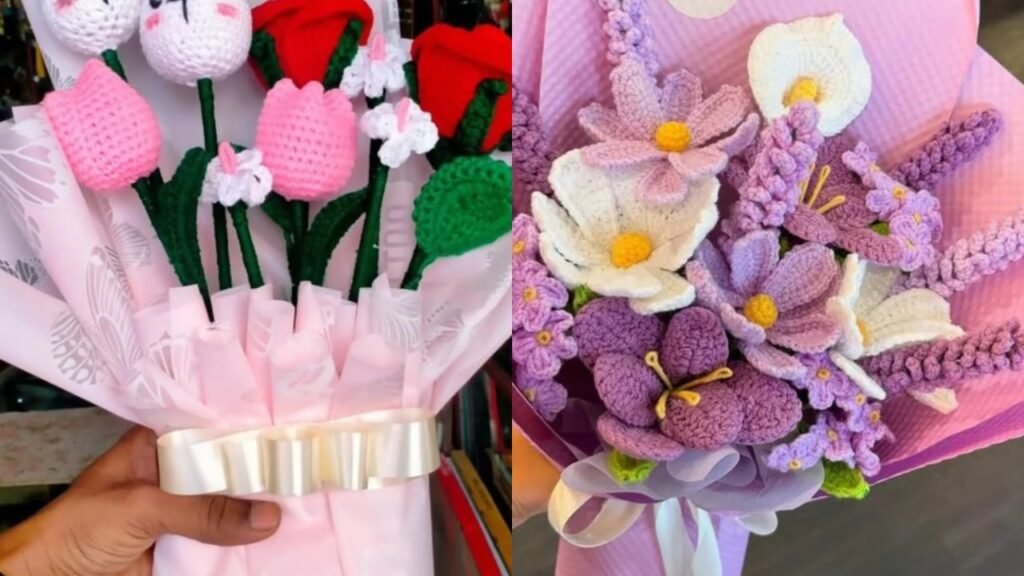
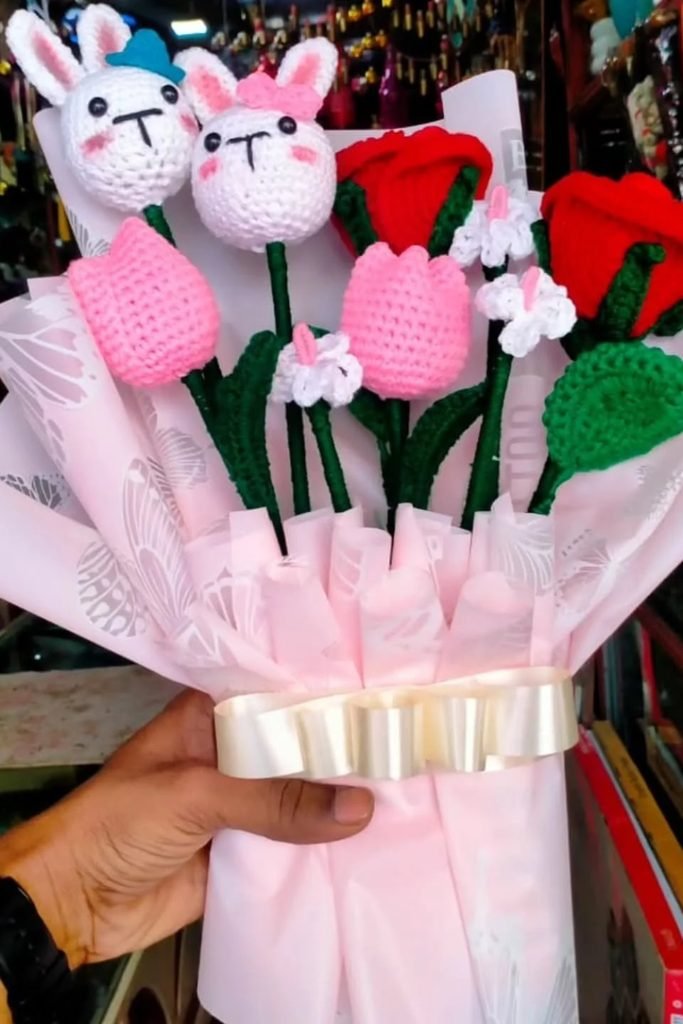
Bunny Flower Bouquet
Mixing bunny faces with crochet tulips makes a playful bouquet, but keep the stems sturdy enough to support everything.
Work bunny heads with tight single crochet stitches so stuffing stays hidden, then embroider expressions before attaching the ears.
Wrap each stem neatly and stagger roses and tulips at different heights so the characters remain easy to see.
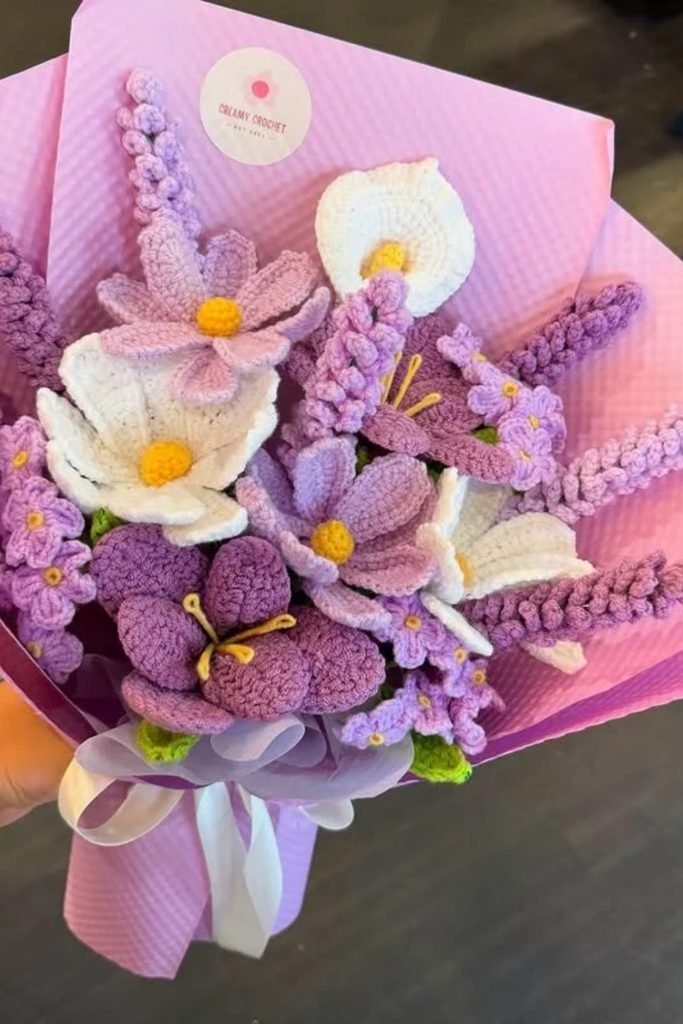
Purple Flower Bouquet
A purple bouquet looks more interesting when you combine open blooms with narrow, textured sprigs instead of repeating shapes.
Use a slightly smaller hook for lavender stems to keep their little clusters firm without making them bulky.
Keep calla lily petals gently curved, and tuck smaller blossoms between them to fill gaps without crowding the arrangement.
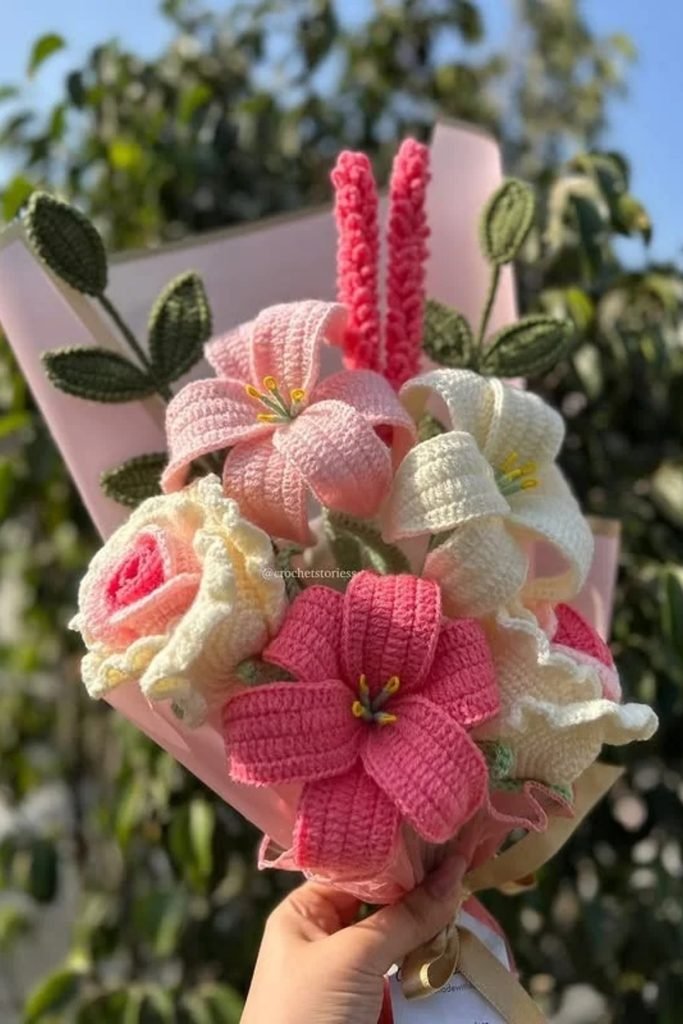
Pink Crochet Lilies
For crochet lilies, shaping petals matters just as much as getting the stitch count right, especially with larger blooms.
Try flexible craft wire along the petal edges if your pattern allows it, so you can bend them outward.
Attach stamens securely before closing the flower base, then vary stem lengths to give your bouquet some breathing room.
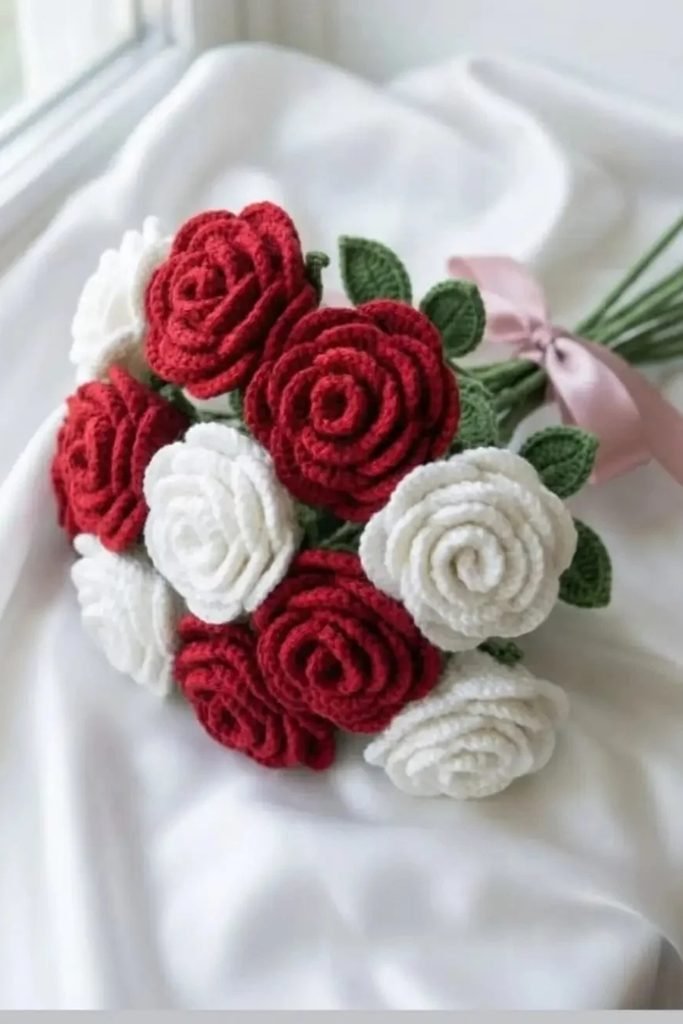
Crochet Rose Bouquet
Layered crochet roses hold their shape best when the rolled petal strips are secured gradually, not stitched only once.
Leave the outer petals a little looser than the center, giving each rose an open, rounded finish without gaps.
Pair deep red and ivory yarn for contrast, then space leaves between blooms so the individual roses stand out.
Bright Pink Flower
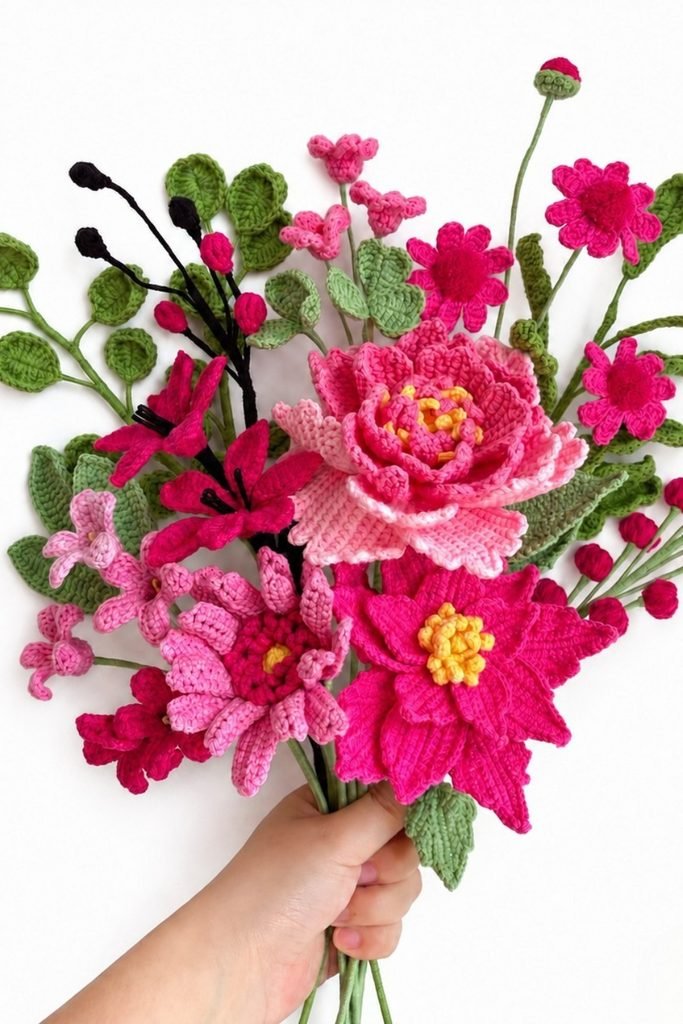
A bold flower bouquet works best when you give the largest bloom enough space instead of packing everything tightly.
Build your central peony with firm stitches, then shape its outer petals outward to create a fuller silhouette.
Scatter smaller pink blossoms and berry stems at different heights, letting the greenery separate colors without hiding details.
Crochet Heart Roses
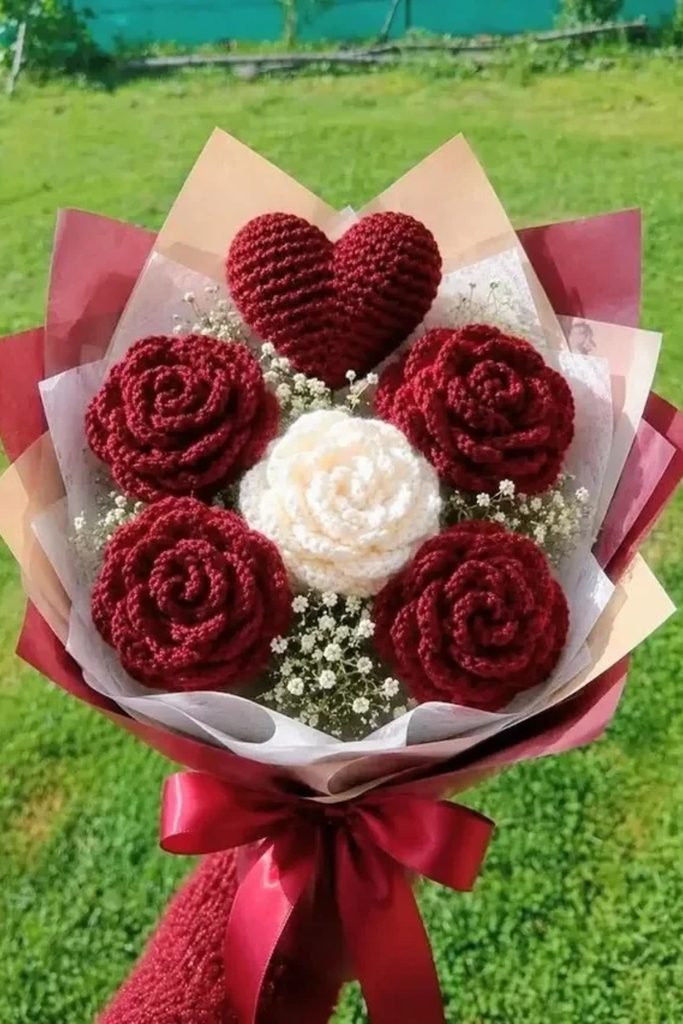
Want a crochet rose bouquet to feel more personal? Try adding a small crocheted heart above the flowers.
Keep the rose petals evenly rolled, and secure each layer at the base so the blooms stay rounded.
Place one ivory rose among burgundy blooms for contrast, then use finer filler flowers to soften the arrangement.
Pastel Flower
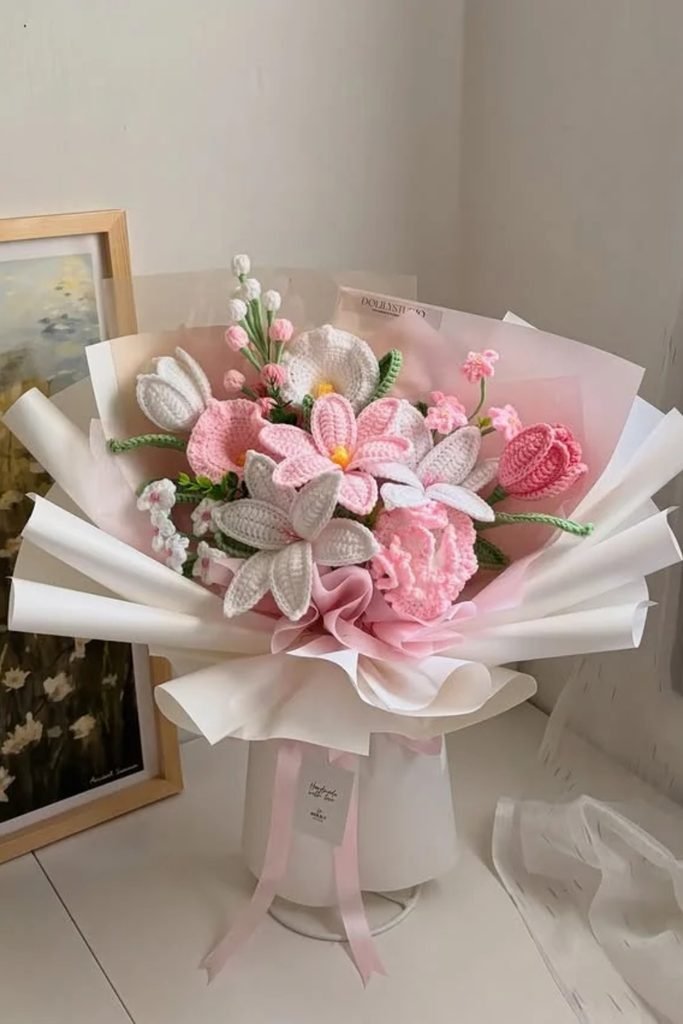
Soft pink and white flowers can look crowded unless you give each large blossom its own breathing room.
Try using a consistent yarn weight for the lilies and roses, so their proportions feel balanced when arranged.
Bend wired stems gently toward different directions, and leave tiny blossoms visible between the larger petals for texture.
Sunflower Crochet
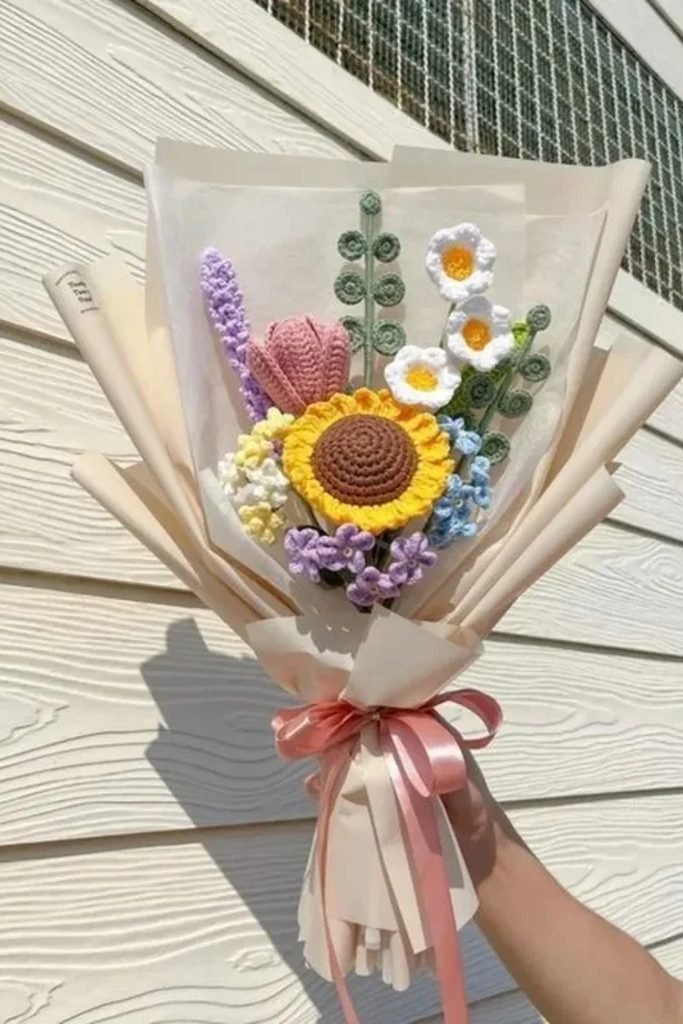
You don’t need a huge bouquet to make crochet flowers feel complete; a few different shapes can do it.
Let the sunflower sit slightly lower than the daisies, with a tulip and lavender adding height behind it.
Keep your filler flowers small and the leaves sparse, so the sunflower’s textured center remains the focal point.
Pink Crochet Carnations
Getting those lovely ruffled edges on crochet carnations comes down to adding enough increases along each petal’s outer edge.
Try working extra stitches into selected spaces, allowing the fabric to curl naturally rather than forcing each layer.
For a softer finish, choose light pink cotton yarn and secure the green calyx snugly beneath each flower head.

Lavender Peony Bouquet
A large crochet peony can easily overpower smaller flowers, so pay attention to proportions before assembling your bouquet.
Work the inner petals slightly tighter while allowing the outer layers to spread, creating depth without excessive bulk.
Slip narrow lavender sprigs between the lilies and daffodils, keeping their stems tall enough to remain visible above everything.
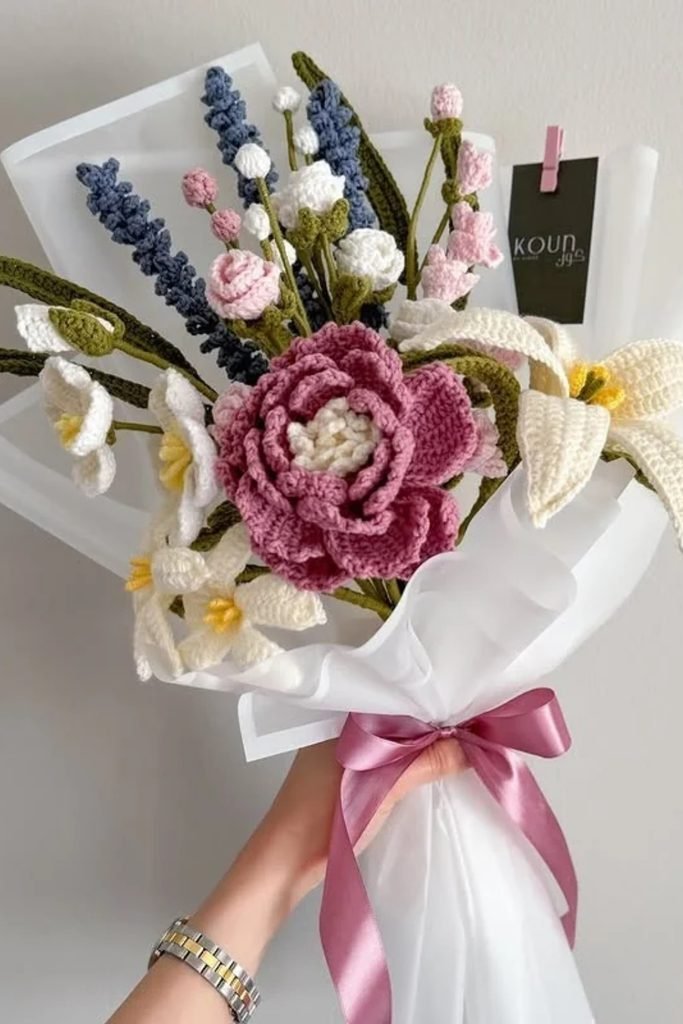
White Crochet Tulips
White crochet tulips look especially elegant when their petals hold a gentle curve instead of spreading completely open.
To achieve that shape, keep your tension consistent and stitch the petal bases securely around the central bud.
Use muted green yarn for long, pointed leaves, arranging them at different angles to avoid a stiff, crowded bunch.
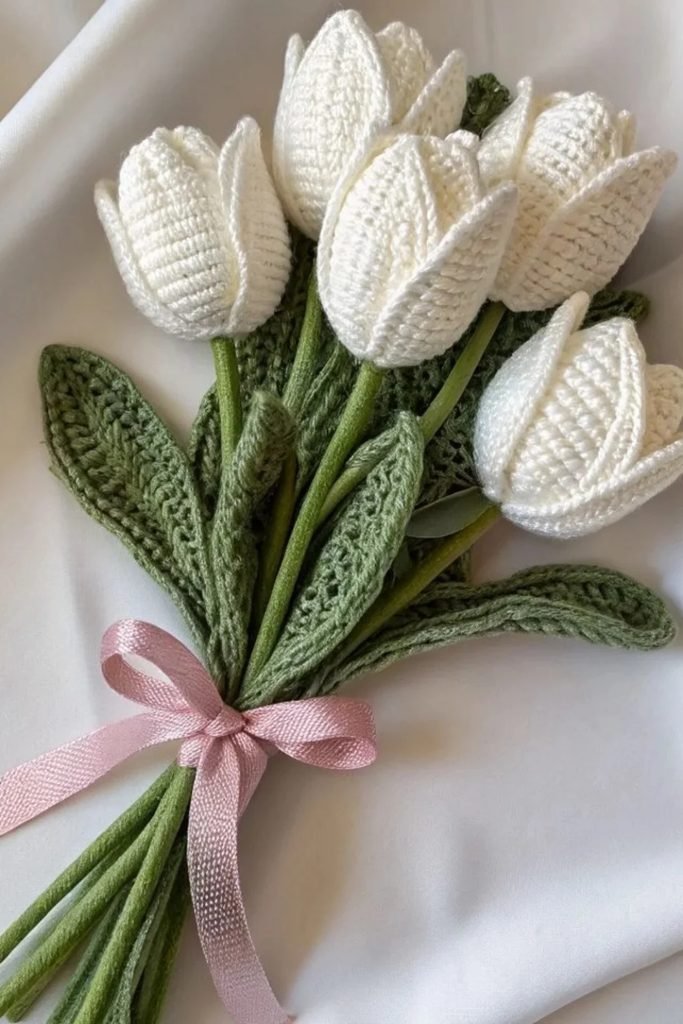
Orange Crochet Flowers
Bright orange crochet flowers can bring warmth to an arrangement, especially when paired with yellow blooms and softer greenery.
For defined petals, work each section separately and maintain even tension so the edges don’t twist or bunch.
Add a few tall flower buds and curved stems around the main blooms to create movement without overwhelming them.

Pastel Lily Bouquet
When making crochet lilies in different colors, use the same yarn weight so the blooms stay balanced in size.
Shape the pointed petals with flexible wire, leaving enough room around the stamens for each flower to open naturally.
Mix fully opened lilies with smaller buds, giving your arrangement depth without needing extra flowers to fill every space.
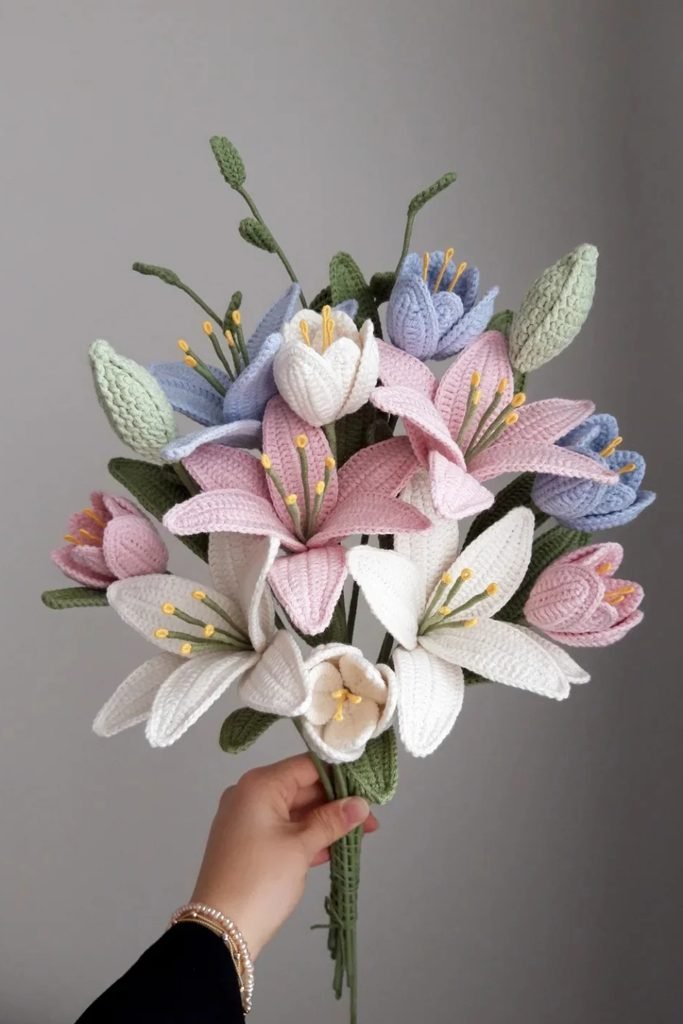
Purple Daisy Bouquet
Purple crochet daisies look fuller when you build each flower with two layers of petals instead of just one.
Try alternating darker and lighter purple yarn, keeping the centers slightly raised to add definition between the individual petals.
A few tiny blossoms can soften the arrangement, while longer green leaves help separate the flowers without adding bulk.
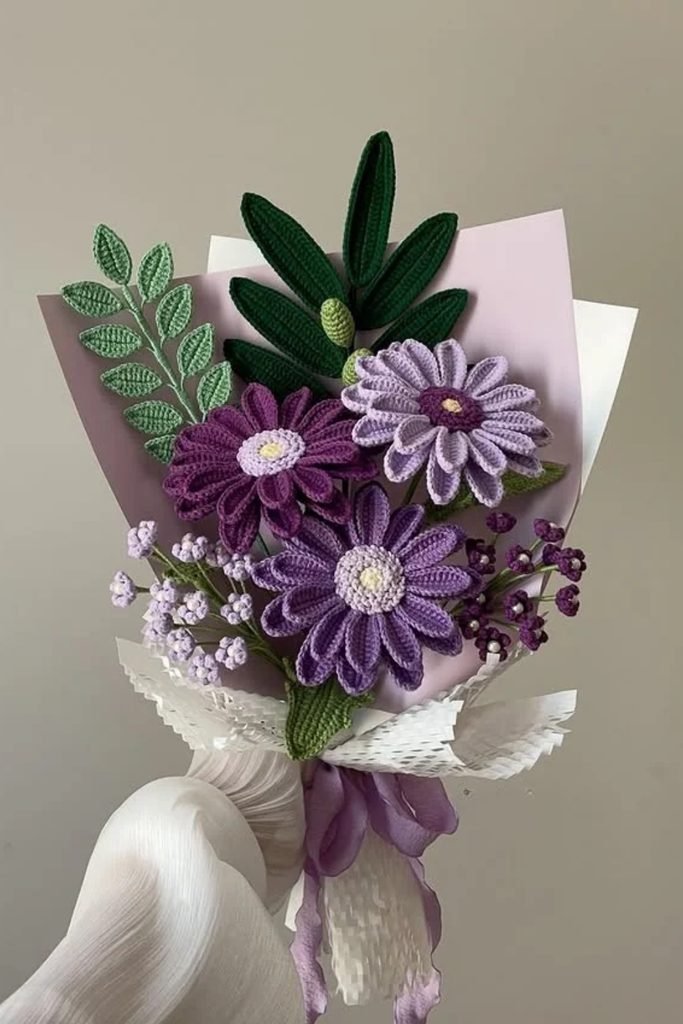
Colorful Crochet Bouquet
Can’t decide which crochet flower to make first? Combining simple daisies, tulips, and roses lets you practice different stitches.
Choose three main yarn colors and repeat them across smaller blooms so the arrangement feels connected rather than random.
Place larger flowers toward the center, then tuck miniature blossoms around the edges to fill spaces without hiding your favorites.

Mini Crochet Bouquets
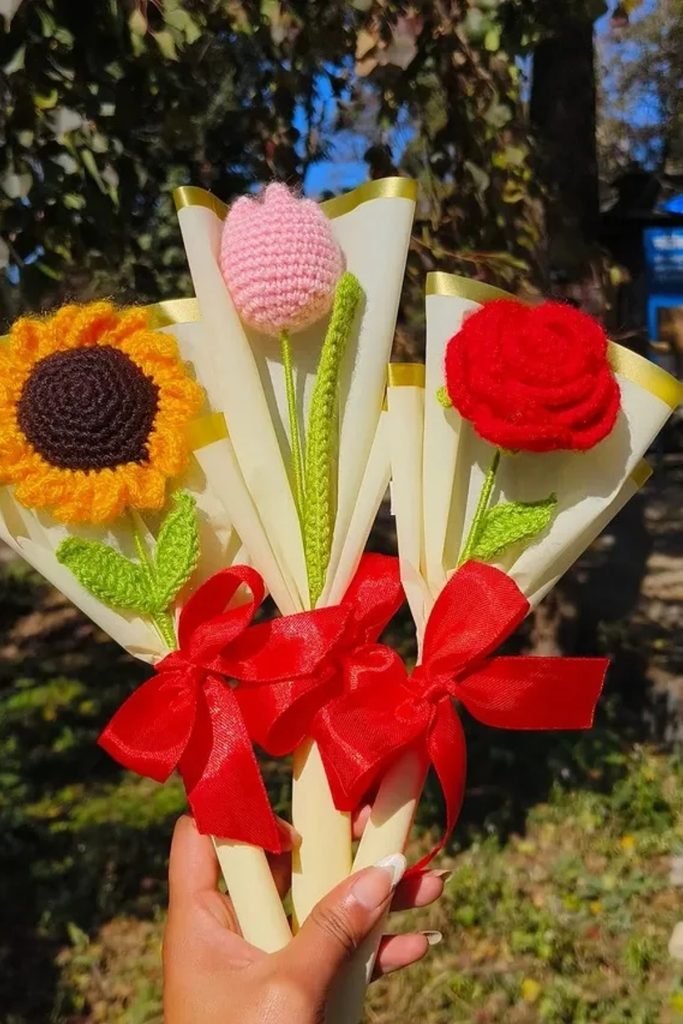
Instead of arranging all your crochet flowers together, try making individual mini bouquets with just one bloom in each.
A sunflower, tulip, or rose works nicely on its own, especially when you give the stem a small leaf.
Keep the wrapping simple and secure each bundle with ribbon, making these little flowers easy to gift individually.
Blue Crochet Flowers
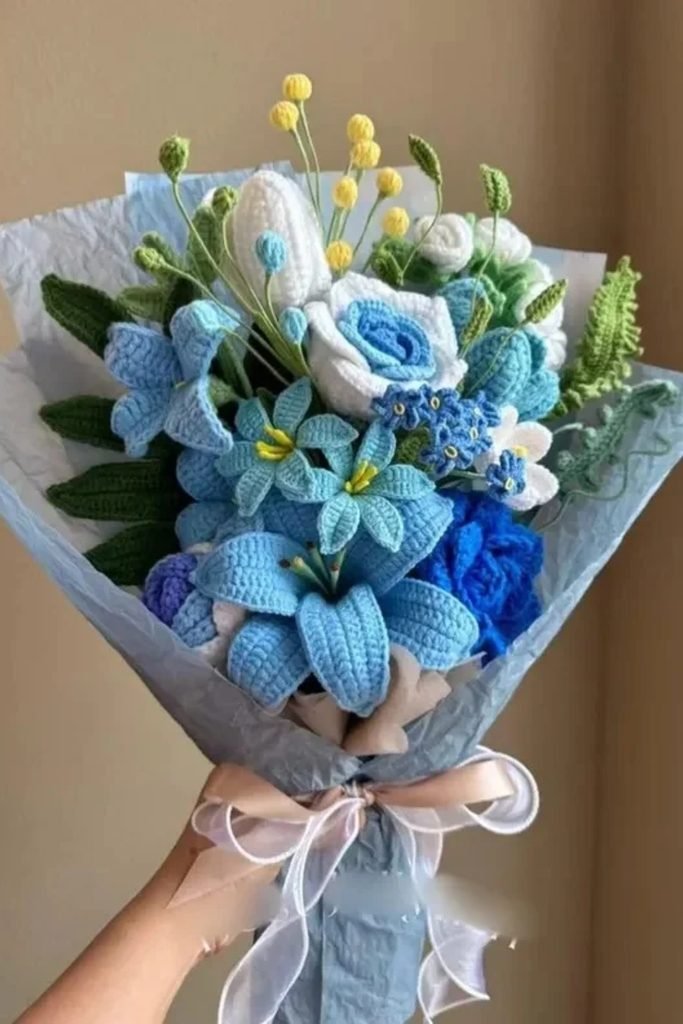
Blue crochet flowers can feel more natural when you mix several shades instead of making every bloom identical.
For pointed lily petals, keep your increases gradual and use flexible wire if you want the tips to curve outward.
Add tiny blue blossoms and yellow buds between larger flowers, leaving enough space for their different shapes to show.
Purple Lily Bouquet
Those wide crochet lily petals need a little extra support, especially when you’re making larger flowers with detailed centers.
Try stitching flexible wire along the petal edges, then gently bend each one to create an open bloom.
Balance the purple lilies with smaller rolled roses and lavender stems, keeping the tallest flowers toward the back of the bouquet.

FAQs
What is the easiest crochet flower for beginners?
A simple five-petal flower or daisy is a great starting point because you can practice basic stitches without complicated shaping.
Once you’re comfortable making even petals, try tulips or simple roses before moving on to more detailed crochet flowers.
How do you keep crochet flower petals from curling?
First, check your stitch count and tension, since tight stitches or missed increases can cause petals to curl unexpectedly.
Using the recommended hook size and gently blocking finished petals can help them lie flatter.

Hi, my name is Ali Mehmood! I’m a passionate writer and DIY enthusiast who loves turning creative ideas into practical, hands-on projects.
I created this website to share inspiring, budget-friendly ideas that you can do yourself – whether it’s organizing your home, crafting something unique, or creating fun projects for kids and pets.
I believe DIY isn’t just a hobby – it’s a smart way to save money, reduce waste, and enjoy the satisfaction of making things with your own hands.
I’m excited to have you as part of this growing community, and I’ll continue bringing you helpful, realistic, and fun DIY ideas you can actually use.