This post may contain affiliate links: read full affiliate disclosure.
Lego bricks scattered across the floor, missing pieces, and unfinished creations taking over your furniture can make playtime frustrating.
Finding an affordable Lego table with enough building space and practical storage isn’t always easy, especially in smaller homes.
In this article, I’ll share 24 DIY Lego table ideas and practical building tips to create an organized play space without overspending.
Wooden Table
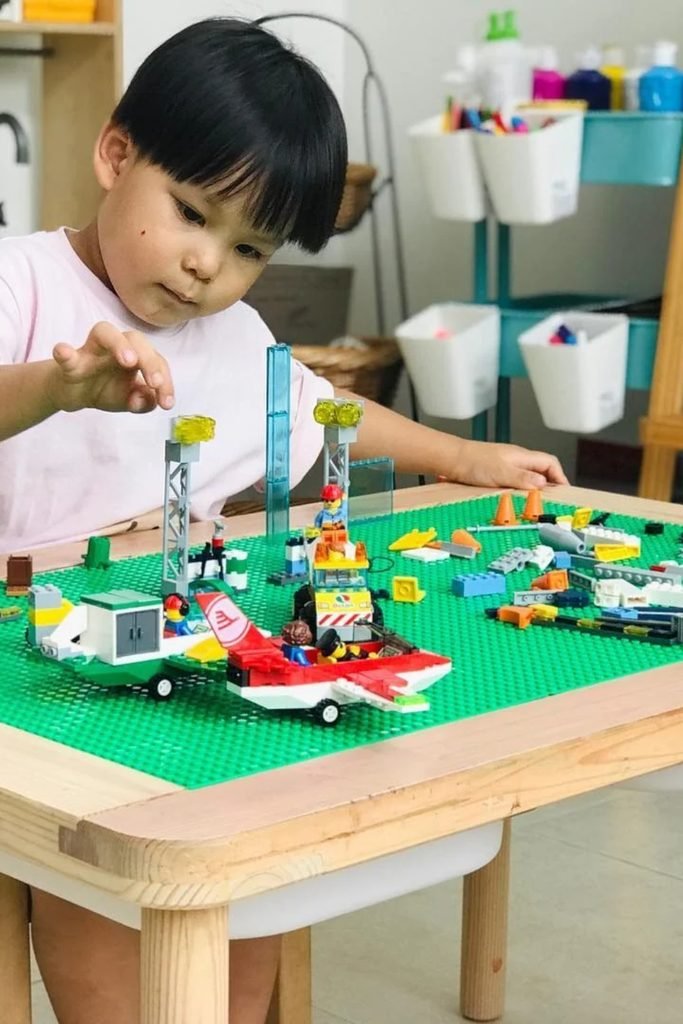
Give an ordinary wooden activity table a new purpose by covering its center with securely attached green Lego baseplates.
Leave a smooth wooden border around the building surface so children have somewhere to rest their arms comfortably.
Fit shallow storage trays underneath the tabletop to keep frequently used bricks nearby without taking up additional floor space.
Racetrack Table
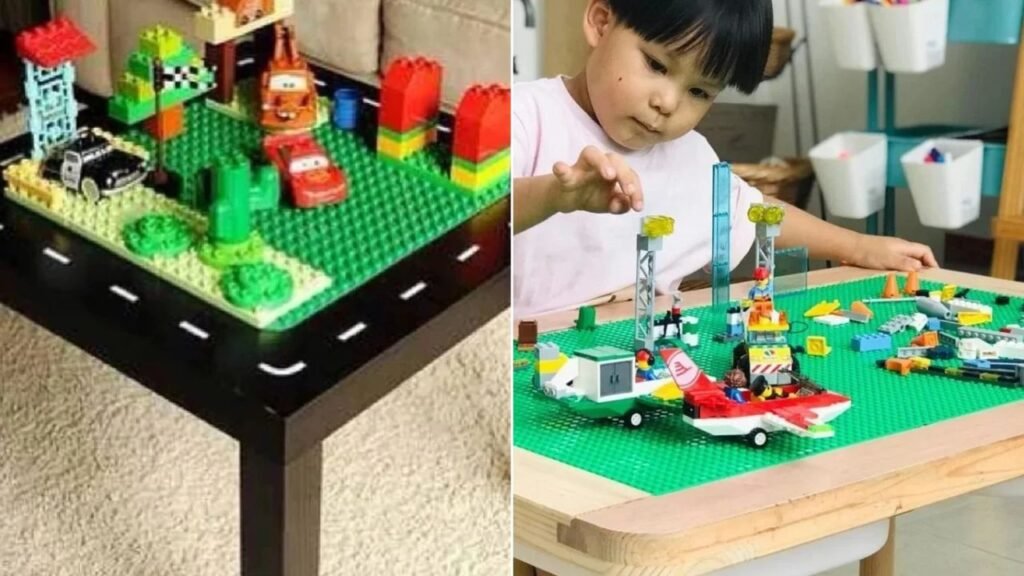
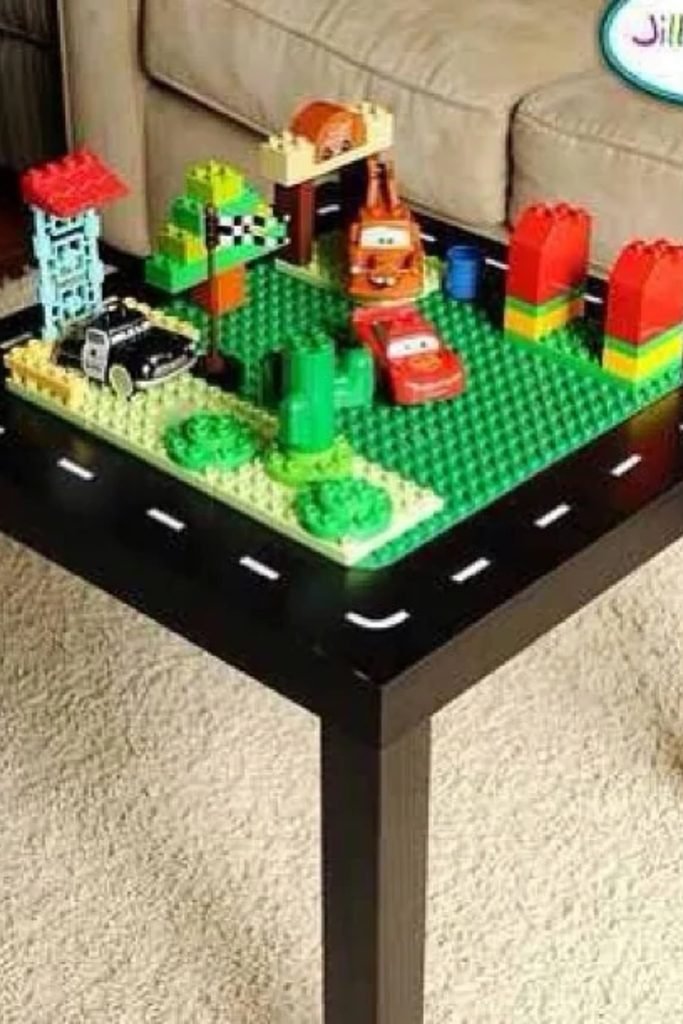
Little car enthusiasts will enjoy having a dedicated racetrack around their building area, especially when creating miniature Lego towns.
Use white vinyl strips or paint to mark road lanes around the uncovered edges of a black side table.
Keep the central baseplates available for constructing garages, buildings, and bridges that children can rearrange whenever they want something different.
Multi-Activity Station
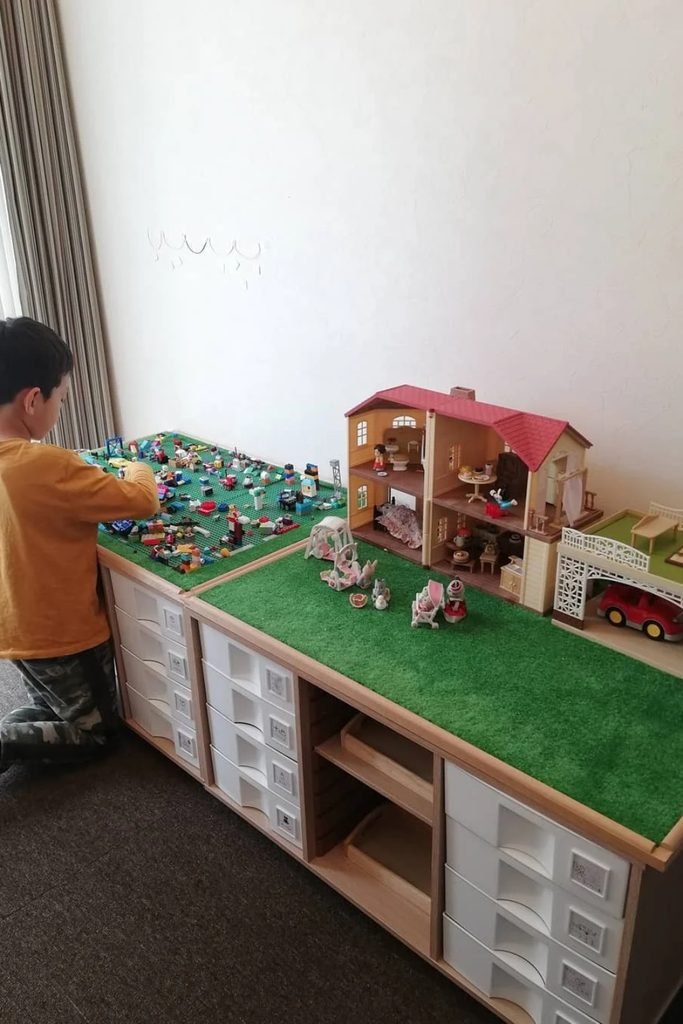
Why dedicate an entire table to Lego when you can combine building, imaginative play, and toy storage together?
Place a supported wooden countertop over low storage units, dividing the surface into Lego and artificial grass play zones.
Label individual drawers with pictures of their contents so children can find and return small pieces without needing assistance.
Pull-Out Instruction Drawer
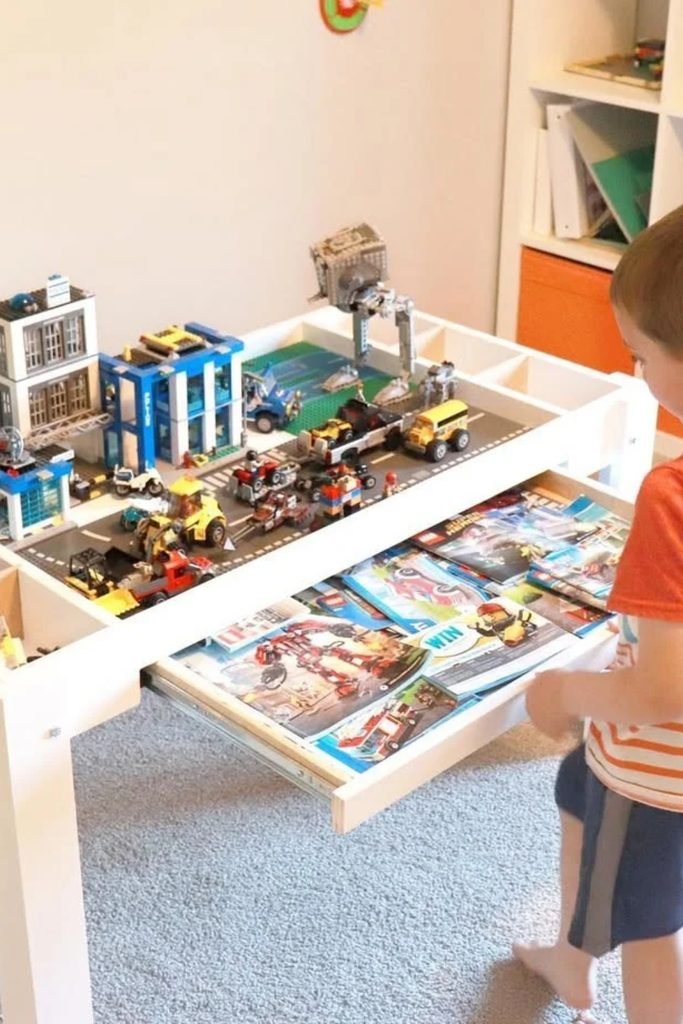
Keep Lego instruction booklets from getting lost or damaged by installing a shallow pull-out drawer beneath the building surface.
Build divided compartments along the tabletop edges to separate frequently used bricks, miniature figures, wheels, and other small accessories.
A raised wooden frame helps contain loose pieces while providing a designated space where unfinished creations can remain undisturbed.
Recessed Storage Bins
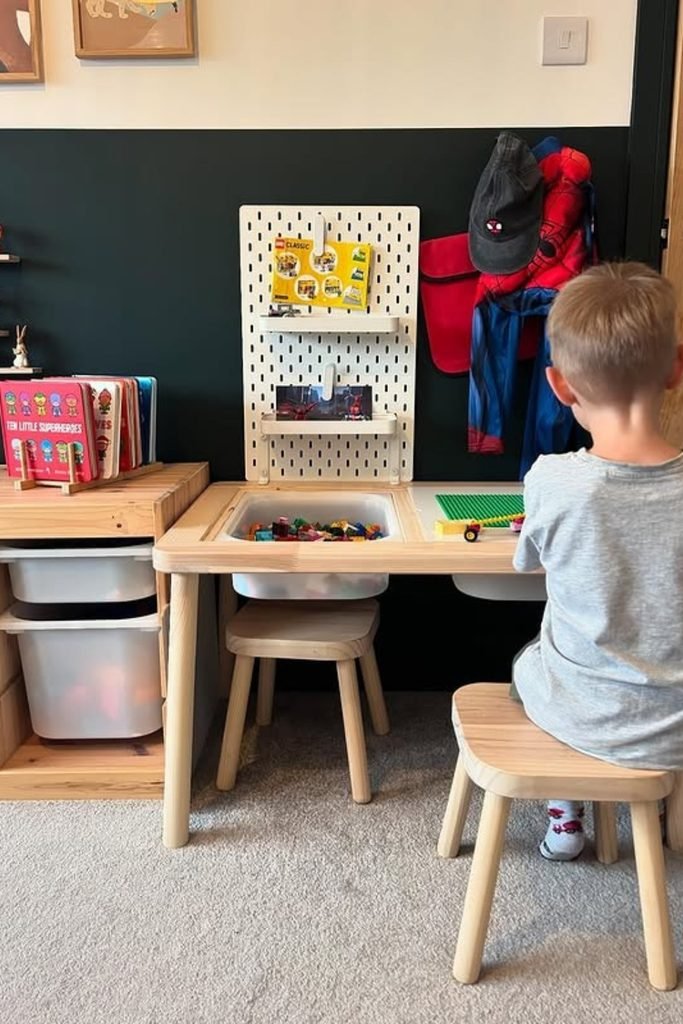
Save your children from constantly bending down for bricks by incorporating removable storage containers directly into their Lego tabletop.
A wooden sensory table works particularly well for this project, with one compartment for storage and another for building.
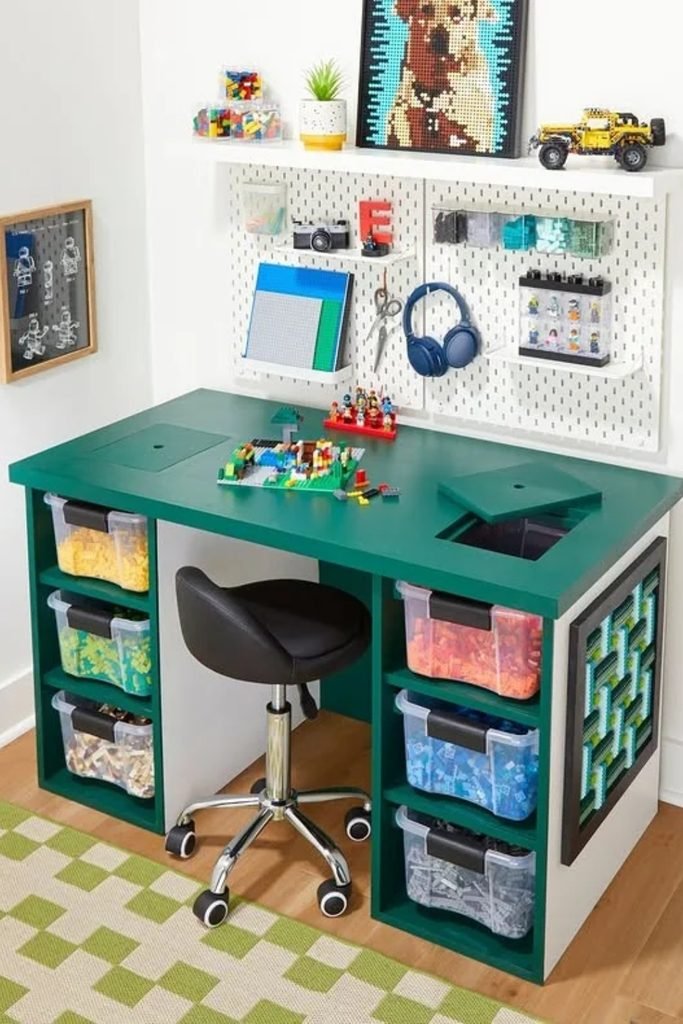
Mount a small pegboard above the table to organize instruction booklets and accessories without sacrificing any valuable building space.
Hidden Storage Desk
For growing Lego collections, build a desk with shelving units on either side and enough legroom in the middle.
Create covered openings above the storage compartments, allowing children to access bricks without pulling out containers every few minutes.
Clear storage boxes make locating specific pieces easier, while removable lids let the desk double as an ordinary workspace.
L-Shaped Lego Station
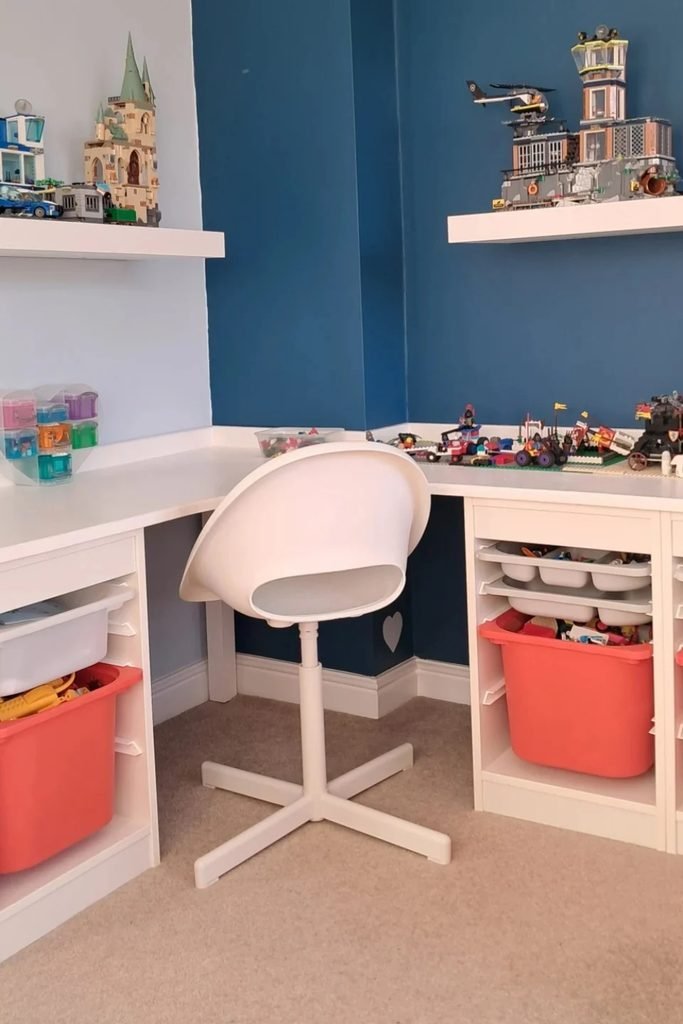
Make better use of an awkward bedroom corner by joining two supported countertops to create an L-shaped building station.
Reserve one section for assembling new projects and the other for arranging miniature towns, vehicles, or unfinished Lego creations.
Install floating shelves above the workspace to display completed models, leaving more tabletop space available for their next adventure.
Modular Building Tables
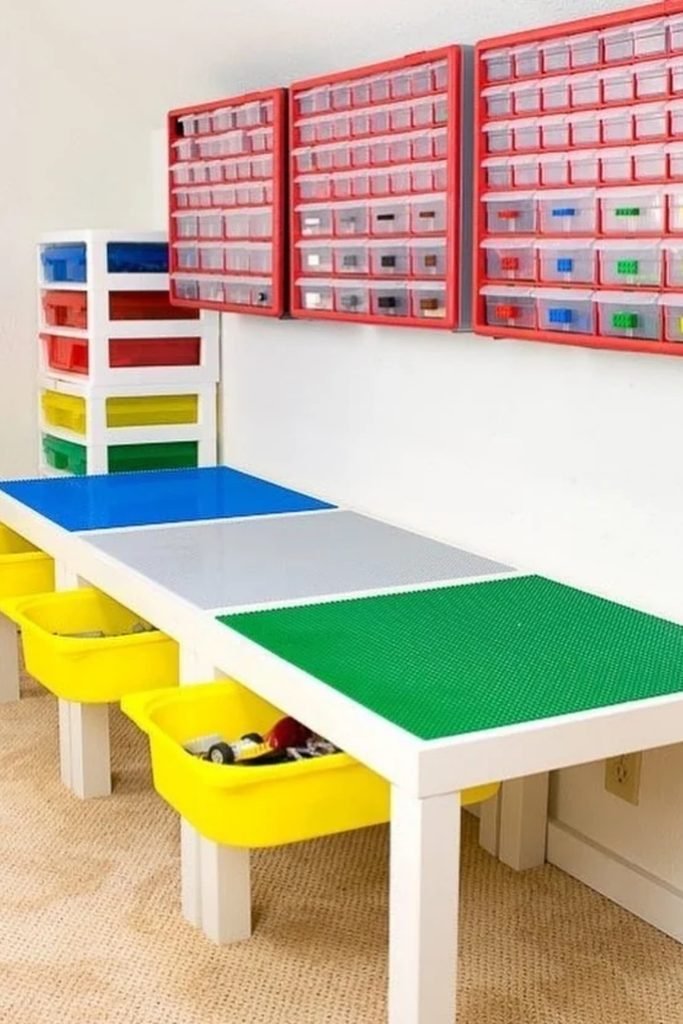
Instead of investing in one oversized Lego table, arrange several inexpensive side tables together to create an expandable workspace.
Give each building section different colored baseplates, allowing children to create separate landscapes, roads, and imaginative scenes during playtime.
Add lightweight storage tubs beneath each table and securely mount small compartment organizers above for sorting specialized Lego pieces.
Rolling Floor-Level Table
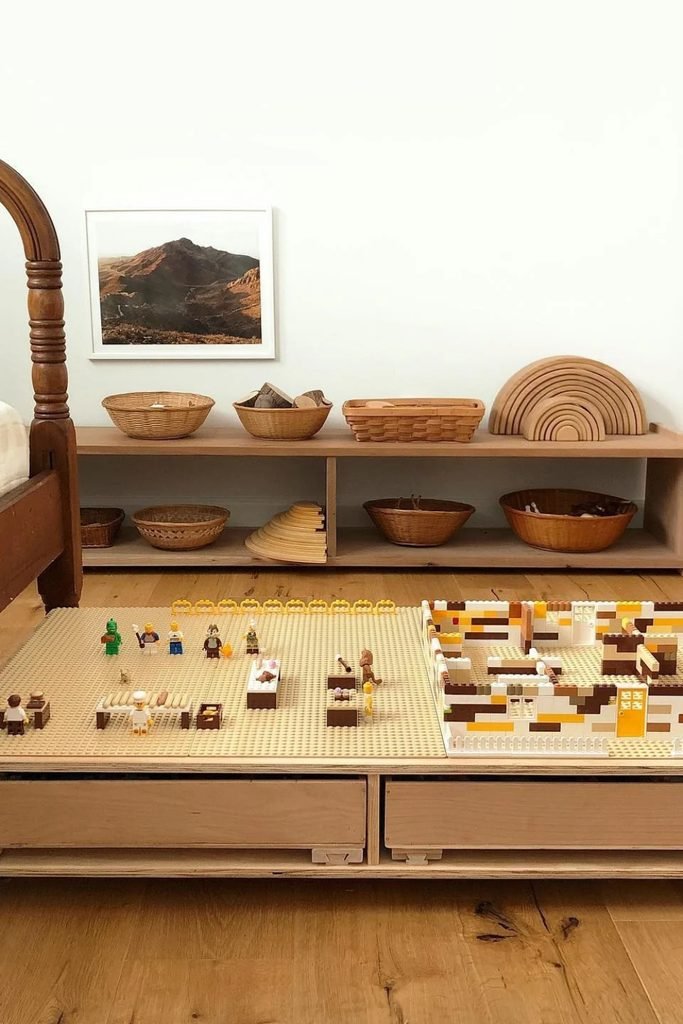
Not every Lego station needs tall legs, especially when children prefer sitting on the floor while building their favorite creations.
Construct a low plywood platform with pull-out wooden drawers, keeping loose bricks organized without interrupting the main building area.
Attach locking casters underneath so you can move the entire station out of the way without dismantling unfinished projects.
Central Mesh Storage
Make cleanup part of playtime by incorporating a removable mesh storage basket right in the middle of your Lego table.
Arrange individual baseplates around the opening, giving each child a separate building area while sharing access to loose bricks.
Choose a sturdy, fine-mesh basket that prevents tiny pieces from slipping through and can be removed easily for emptying.
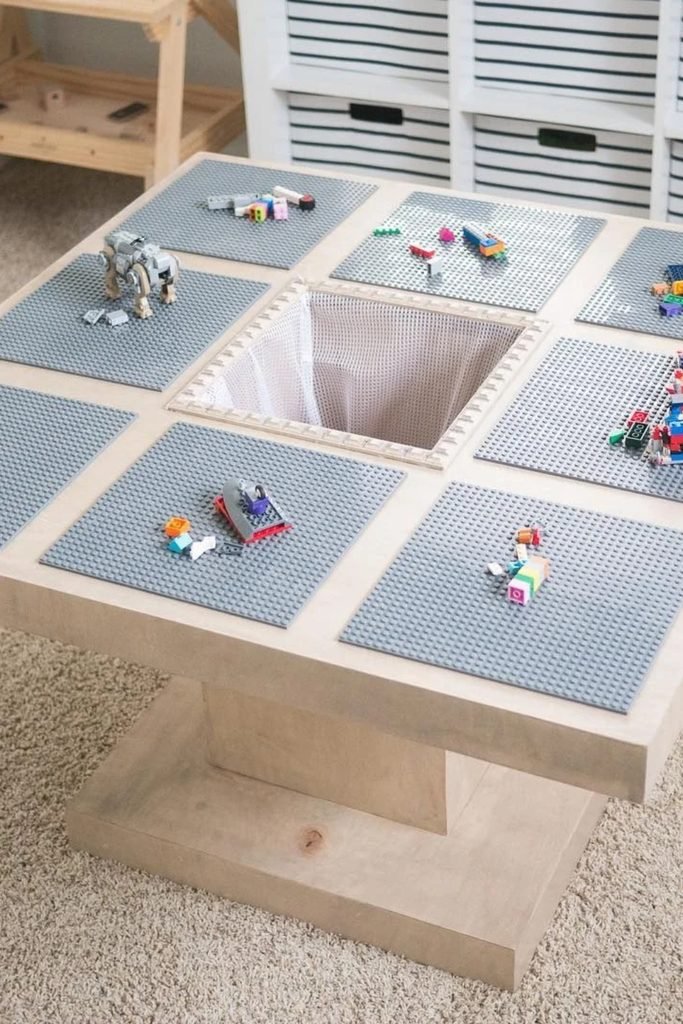
Cubby Storage Table
If digging through oversized containers frustrates your children, smaller transparent storage boxes can make finding specific Lego pieces much easier.
Build open cubbies beneath the tabletop, sizing each compartment according to the dimensions of your chosen plastic storage containers.
Keep the tabletop smooth with slightly raised edges, allowing children to move their creations freely without losing loose bricks.
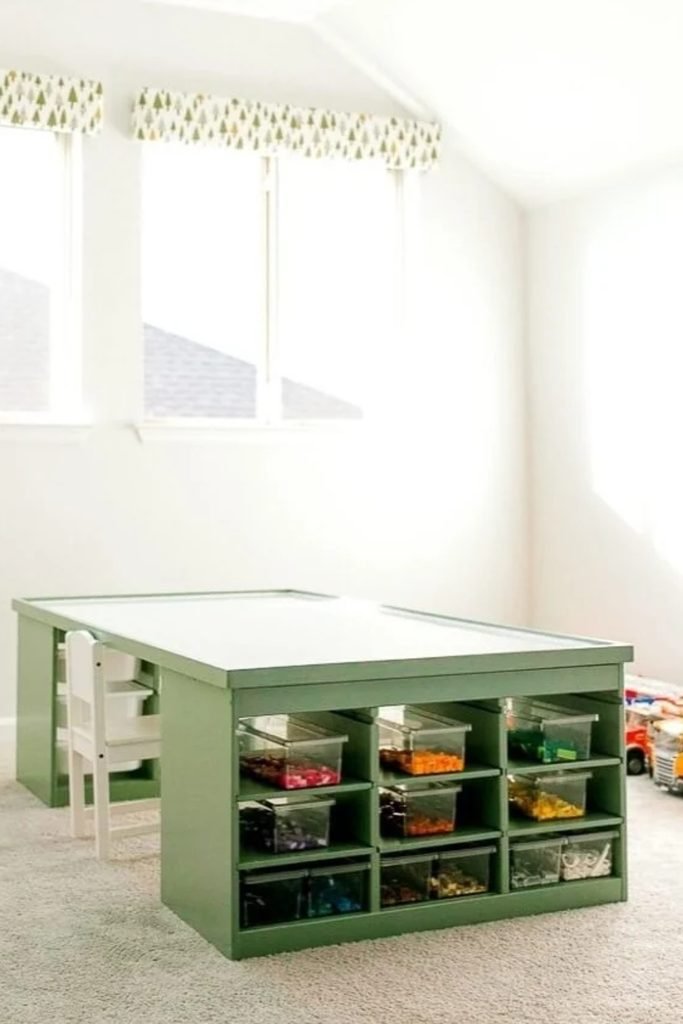
Mobile Lego City
Give an expanding Lego city room to grow by transforming low storage cabinets into a spacious, freestanding building island.
Combine road plates with regular baseplates to establish streets, construction areas, and neighborhoods that children can redesign over time.
Secure hanging containers along the sides for smaller accessories, and install suitably rated locking wheels for convenient furniture movement.
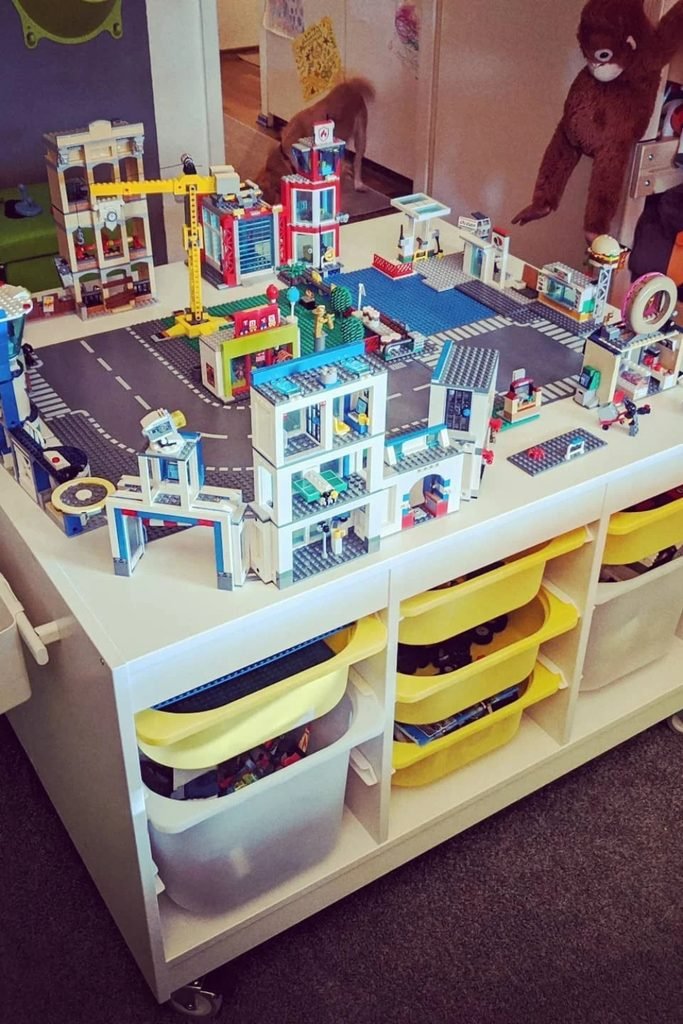
Divided Drawer Storage
Finding tiny Lego accessories becomes much easier when you divide shallow wooden drawers into individual compartments using clear organizer trays.
Measure the drawer interior before purchasing containers to maximize storage capacity and prevent them from sliding around during everyday use.
Separate windows, doors, plants, and connectors by type so children can locate specialized pieces without disturbing their entire brick collection.
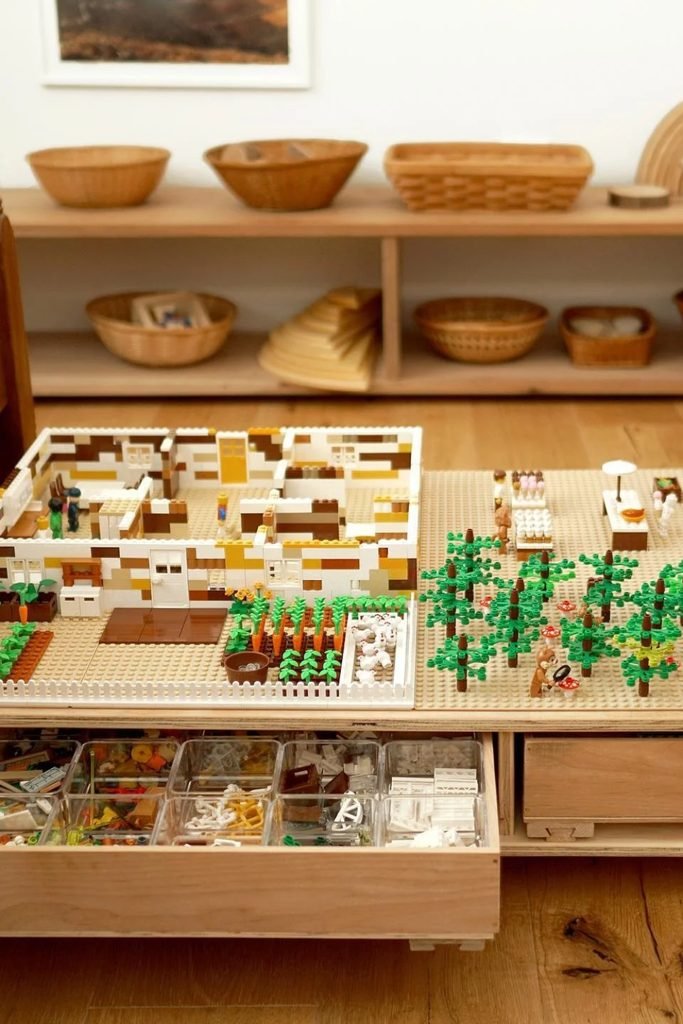
Color-Coded Station
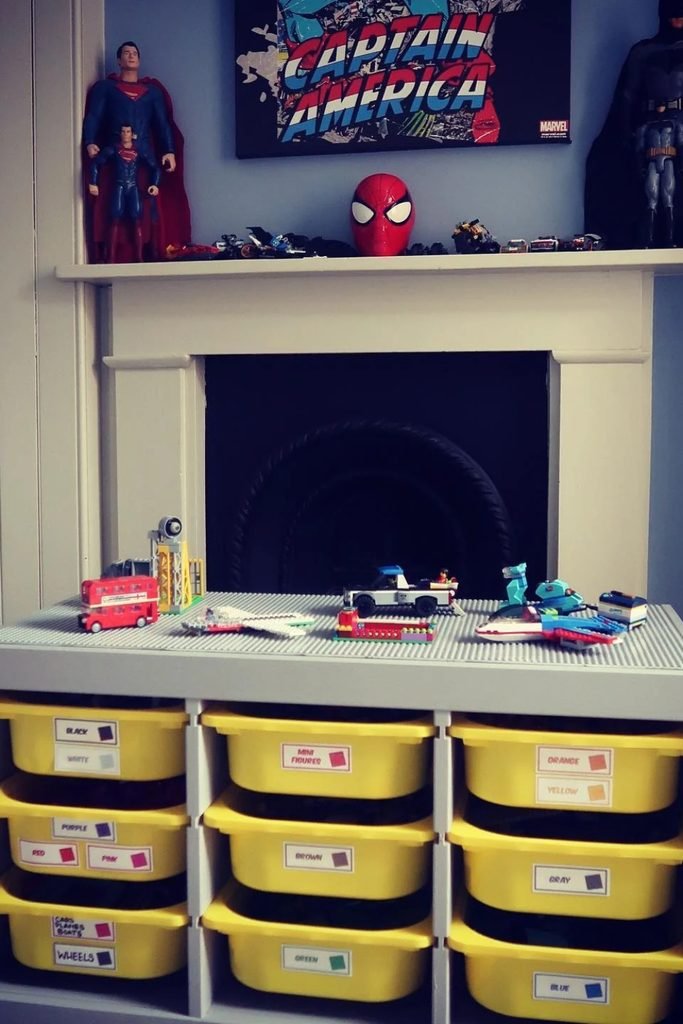
Encourage independent cleanup by assigning different brick colors to labeled storage bins that children can easily recognize and access themselves.
Repurpose a low storage cabinet by securing gray baseplates across its upper surface to create a continuous Lego building area.
Dedicate separate containers to wheels and miniature figures, since sorting specialized pieces by color alone can make finding them difficult.
Simple Duplo Table
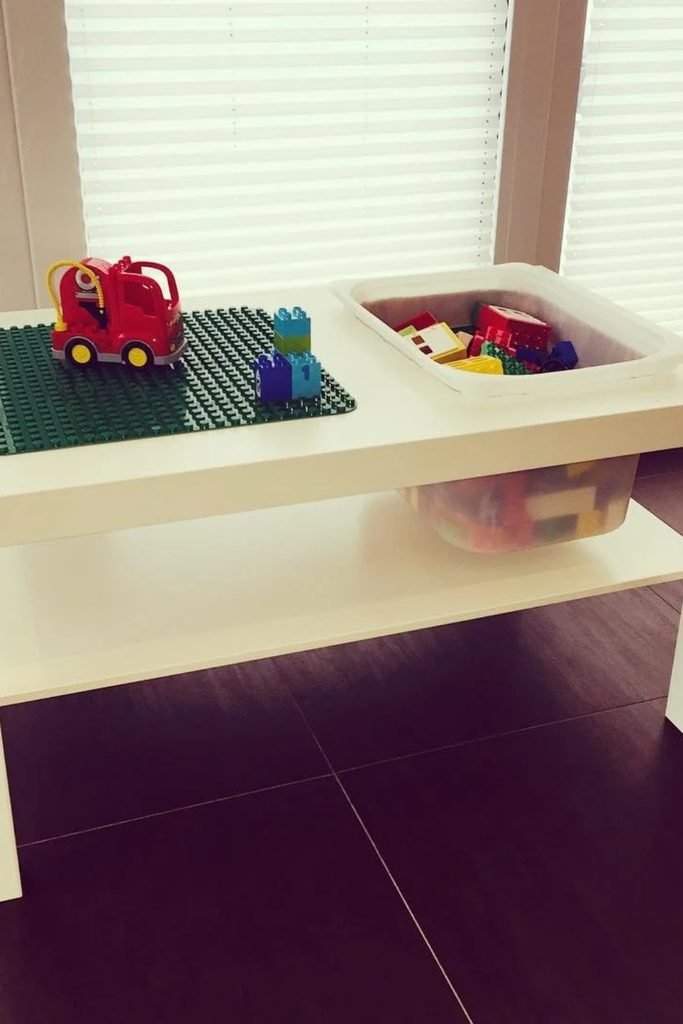
Start with a sturdy coffee table if you need an inexpensive building station that suits younger children’s larger Duplo bricks.
Choose a solid tabletop before cutting an opening for a removable plastic container, ensuring its rim rests securely around the edges.
Use the lower shelf for extra building plates and larger accessories that might otherwise occupy too much of the tabletop.
Reading Nook Table
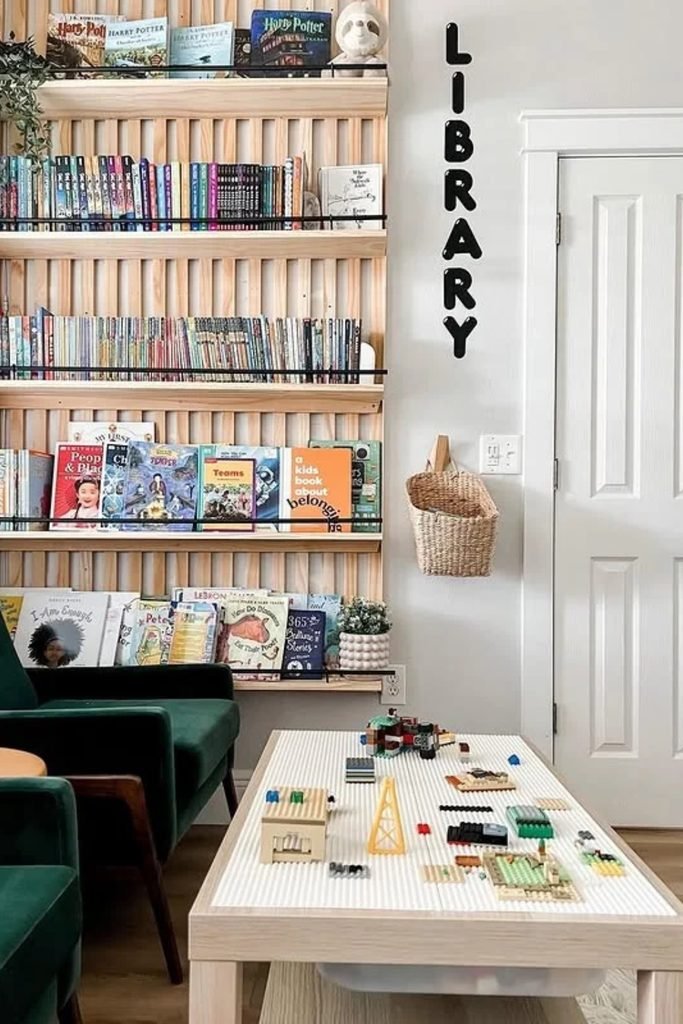
Your Lego station doesn’t have to look like playroom furniture, particularly when it shares space with a family reading corner.
White baseplates paired with a natural wood table create a neutral building surface that blends easily with existing furniture finishes.
Position a removable storage tray beneath the tabletop to simplify cleanup while keeping the surrounding reading area neat and comfortable.
Basket Storage Table
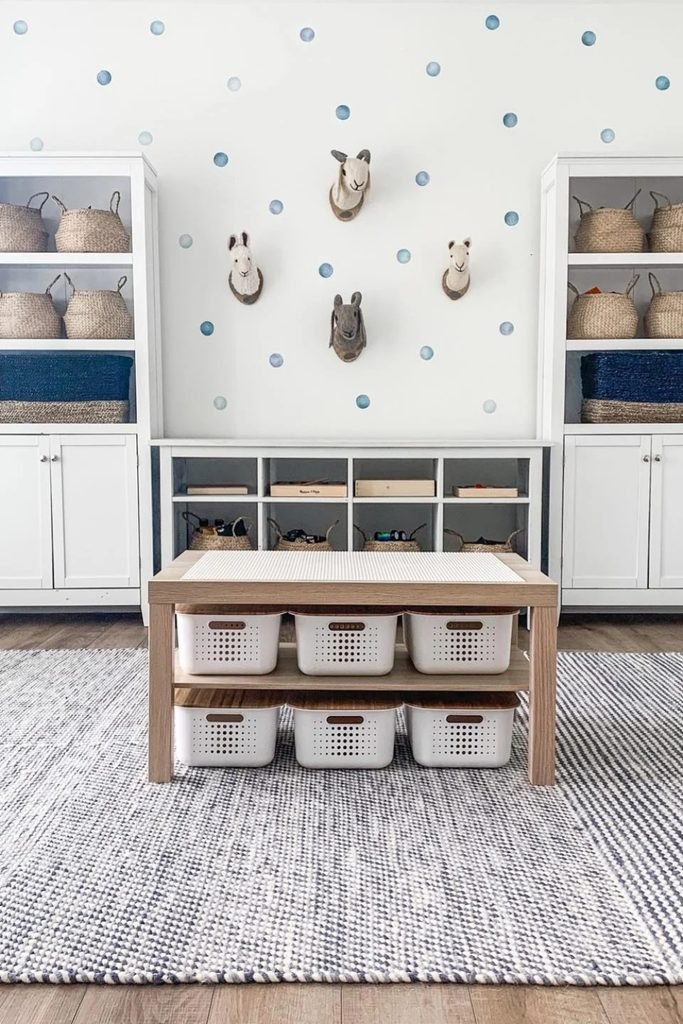
Before buying a dedicated Lego table, check whether an existing coffee table has enough room underneath for matching storage baskets.
Add a lower shelf if needed, measuring the basket height carefully so children can pull containers out without difficulty.
Neutral baseplates and wooden finishes help the building station blend into your living room without making it feel overcrowded.
Shared Lego Workspace
When siblings enjoy building together, connecting several matching tables can provide enough space for everyone without requiring custom woodworking.
Plan road layouts across neighboring surfaces while leaving individual building zones available for children who prefer working on separate projects.
Keep spare baseplates in wall-mounted holders so the tabletop layout can easily change whenever their next Lego adventure begins.
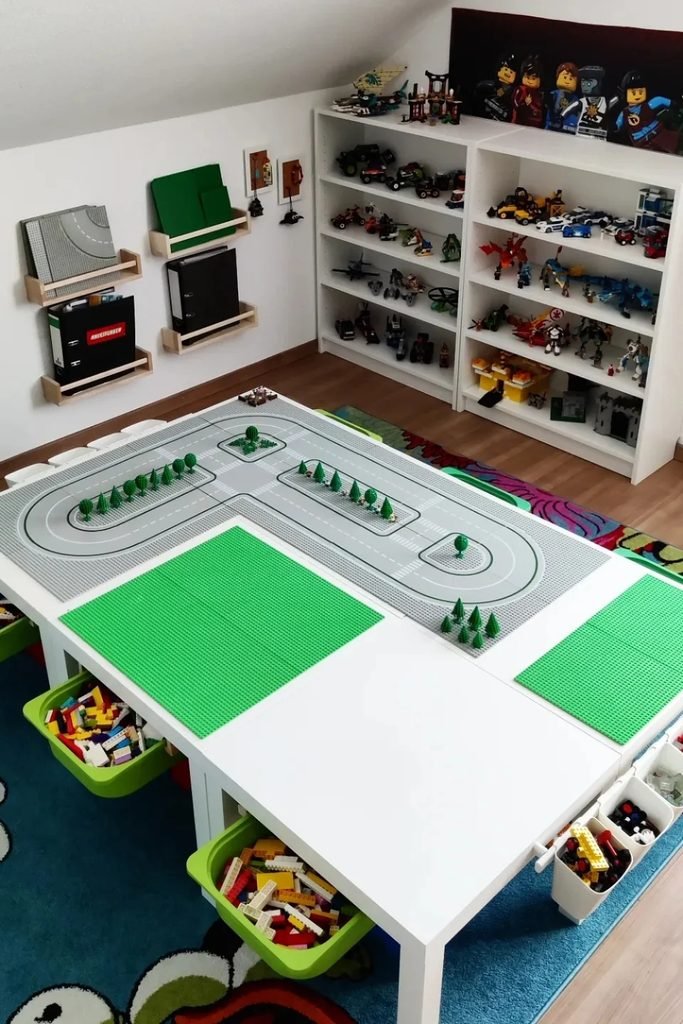
Storage Island Hack
Two low storage units placed back to back can become the foundation for a practical DIY Lego building island.
Secure a sturdy tabletop across both units, finishing exposed board edges with smooth edging tape before attaching the baseplates.
Choose removable road plates instead of permanently gluing every section, giving children more freedom to rearrange their miniature city.
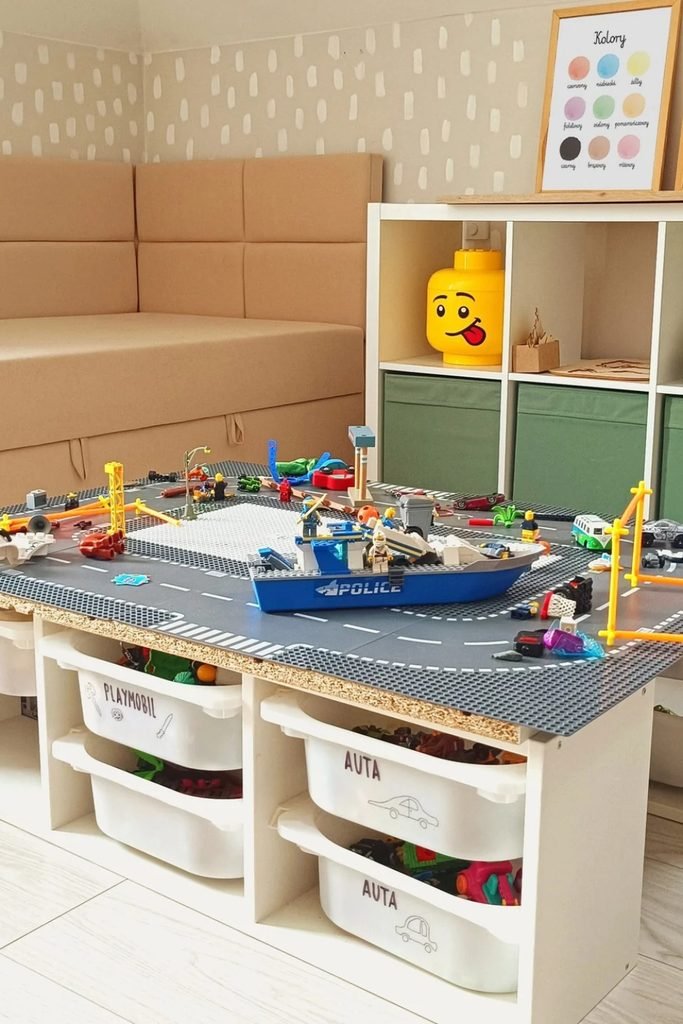
Mirrored Duplo Station
Introduce another dimension to imaginative building by placing securely mounted, shatter-resistant acrylic mirrors behind a child-height Duplo activity station.
Use shallow containers for frequently accessed blocks and deeper bins for bulky vehicles, larger building pieces, and miscellaneous accessories.
A continuous baseplate surface gives younger builders plenty of room to experiment with different structures without needing additional furniture.
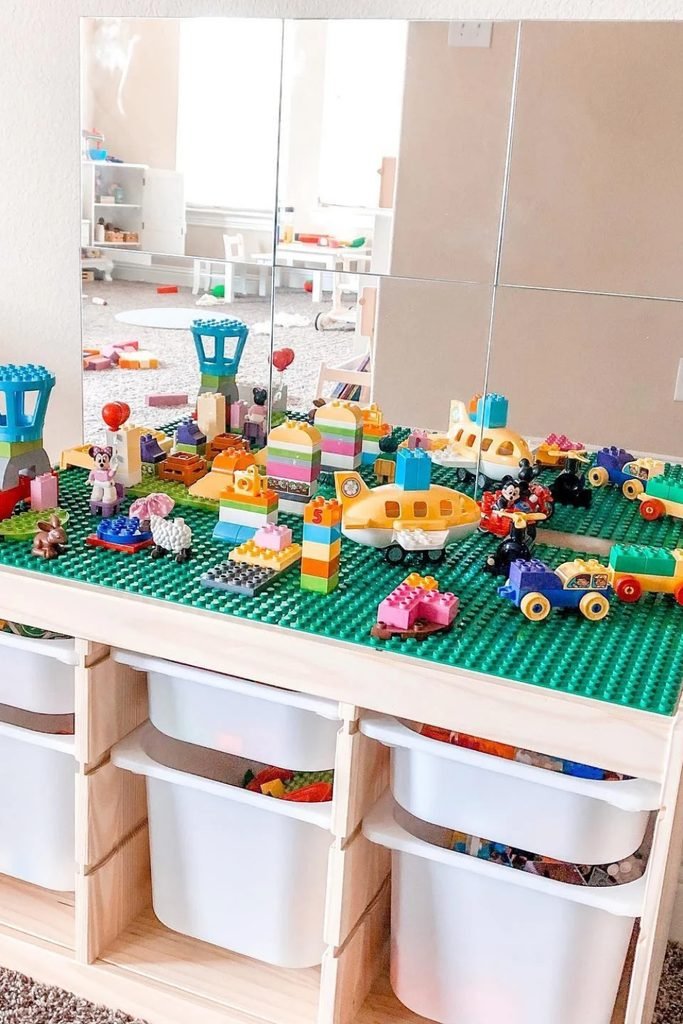
Perimeter Sorting Compartments
Stop loose bricks from crowding the building surface by constructing divided wooden storage compartments around three sides of the table.
Keep these compartments shallow enough for children to reach inside comfortably without having to lean excessively across the tabletop.
Leave the front edge unobstructed to provide comfortable seating and easier access to the central building area during playtime.
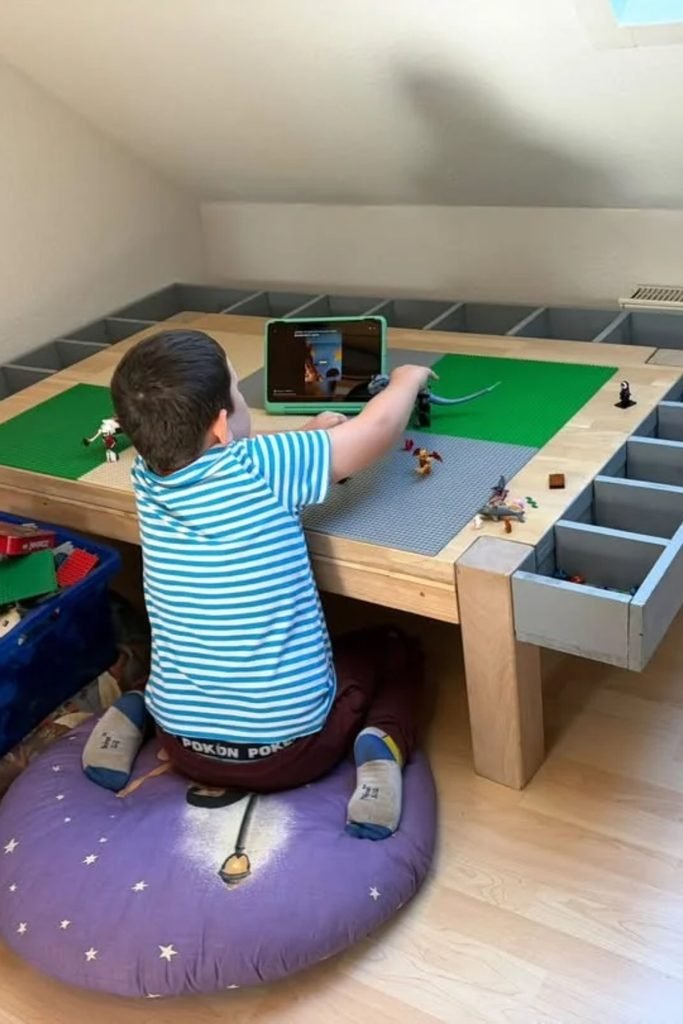
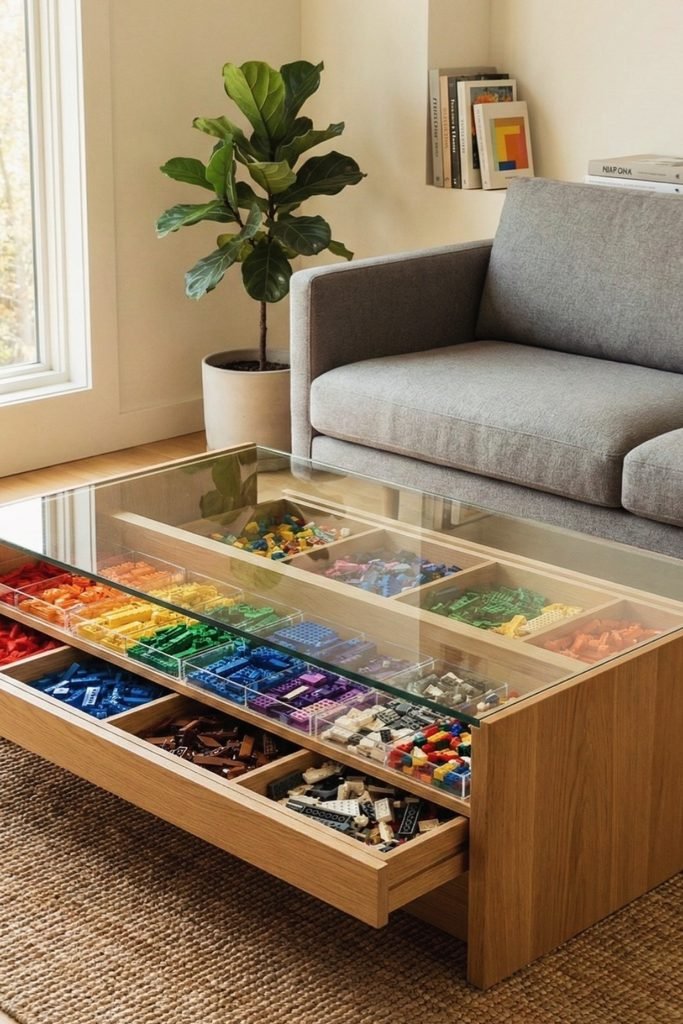
Glass-Top Table
Who says Lego storage cannot become part of your living room furniture without making the entire space look childish?
Customize a display coffee table with divided drawers beneath a securely fitted tempered safety glass top for visible brick organization.
Place removable building boards on the tabletop whenever needed, preserving its smooth surface for regular use after playtime ends.
Raised Building Platform
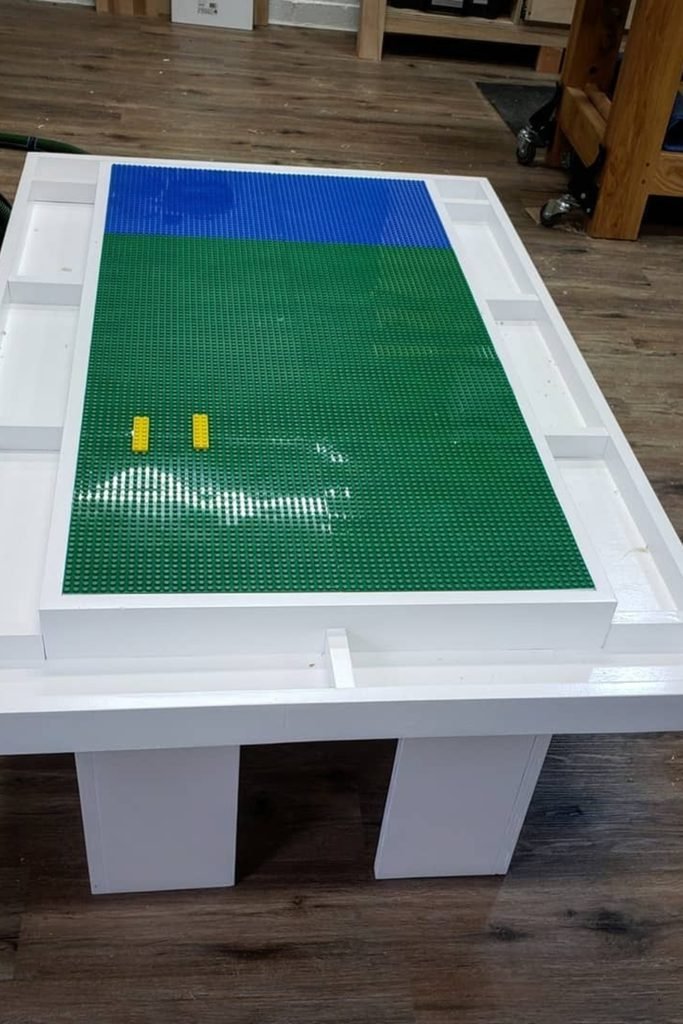
Give loose bricks their own designated space by surrounding an elevated baseplate platform with shallow, divided wooden sorting channels.
Keep the surrounding compartments slightly lower than the building surface to prevent stored pieces from interfering with ongoing projects.
Sand every wooden edge before painting, paying particular attention to the corners and dividers that children will frequently touch.
Picnic-Style Table
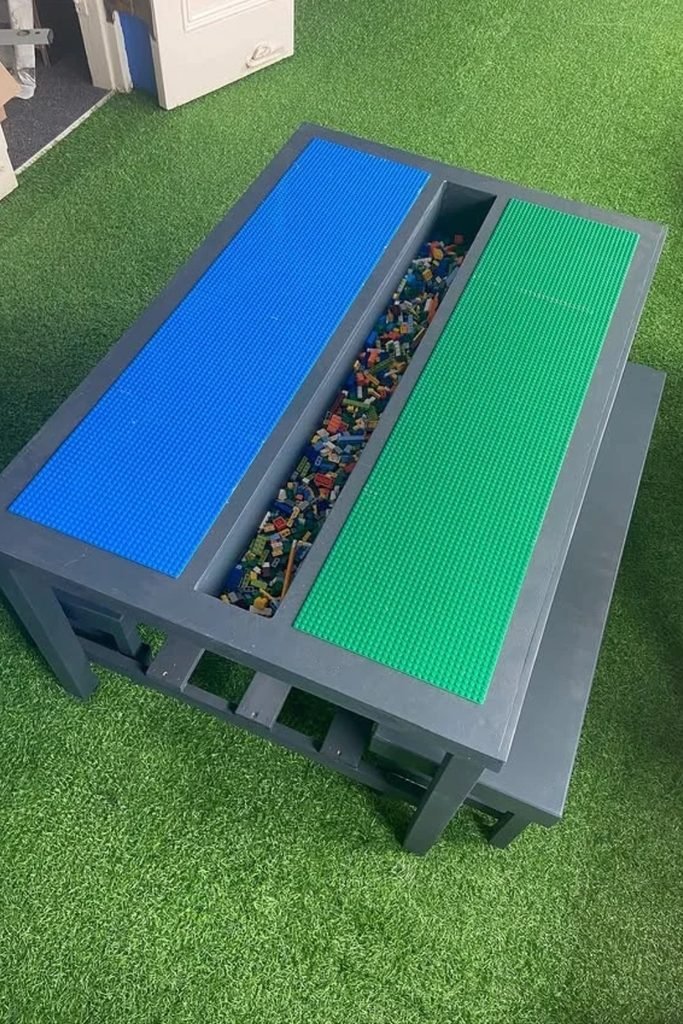
Turn a wooden picnic table into a shared Lego station where children can sit opposite each other while building together.
A narrow storage channel running through the center keeps loose bricks within everyone’s reach without cluttering individual building areas.
Choose contrasting baseplate colors to define separate workspaces, and securely attach bench seating to create a comfortable, stable play station.
FAQs
How do you attach Lego baseplates to a DIY Lego table?
Connect neighboring baseplates using Lego bricks before securing them with double-sided mounting tape or a compatible adhesive.
This ensures proper spacing between the plates, allowing children to build across the entire surface without alignment issues.
What is the cheapest way to make a DIY Lego table?
Repurpose an old coffee table or children’s activity desk instead of purchasing new furniture or building everything from scratch.
Add compatible baseplates and reuse plastic storage containers underneath to create an affordable building station with plenty of storage.

Hi, my name is Ali Mehmood! I’m a passionate writer and DIY enthusiast who loves turning creative ideas into practical, hands-on projects.
I created this website to share inspiring, budget-friendly ideas that you can do yourself – whether it’s organizing your home, crafting something unique, or creating fun projects for kids and pets.
I believe DIY isn’t just a hobby – it’s a smart way to save money, reduce waste, and enjoy the satisfaction of making things with your own hands.
I’m excited to have you as part of this growing community, and I’ll continue bringing you helpful, realistic, and fun DIY ideas you can actually use.