This post may contain affiliate links: read full affiliate disclosure.
Shoes piling up by the front door and nowhere to sit while putting them on can make everyday routines frustrating.
Even finding an affordable entryway bench that fits your limited space and offers enough storage can be a struggle.
These 22 DIY entryway bench ideas will help you create comfortable seating, tackle clutter, and make the most of your entrance.
Slatted Wall
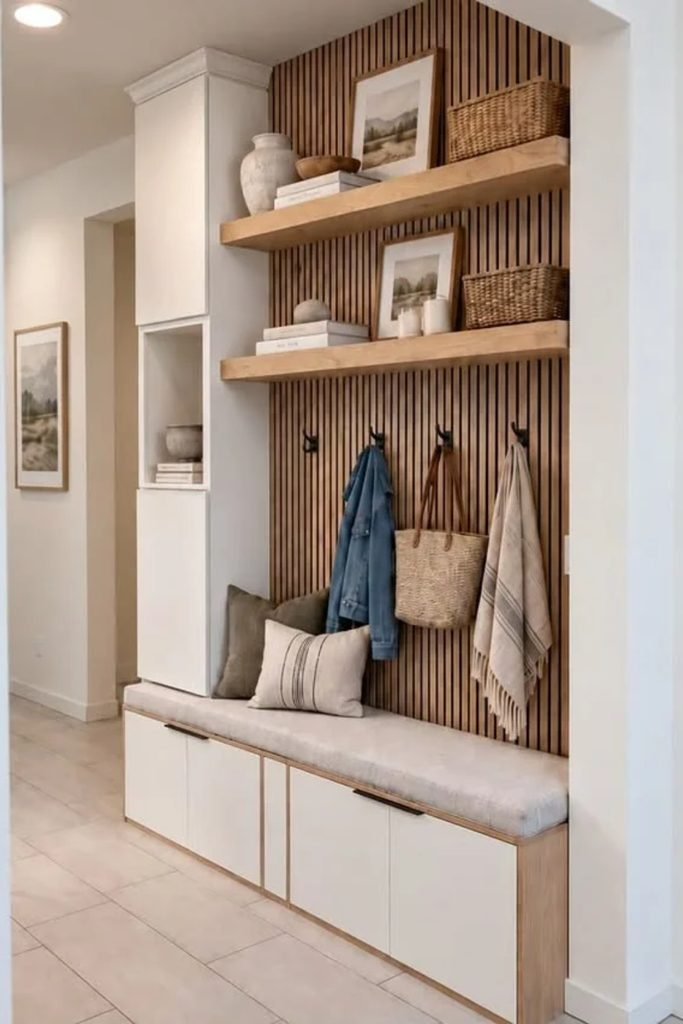
Turn an empty entryway wall into a functional drop zone by combining a cushioned storage bench with vertical wooden slats.
Build enclosed compartments underneath the seat to keep shoes hidden, and mount sturdy hooks into suitable supports for everyday accessories.
Install floating shelves above the seating area to accommodate storage baskets without taking up any additional space on the floor.
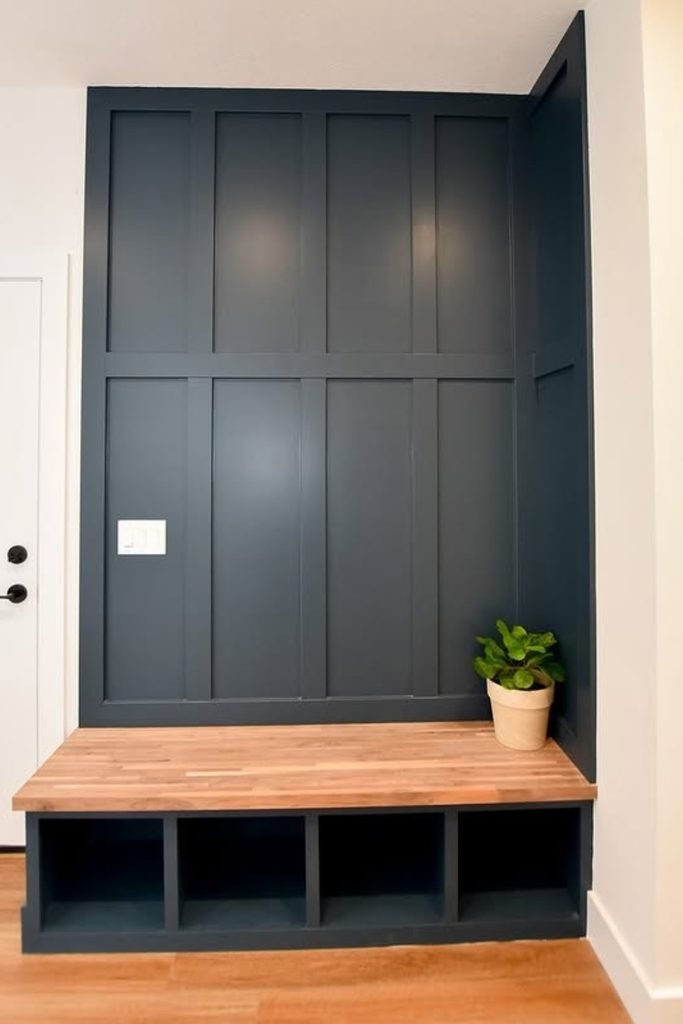
Open Cubby
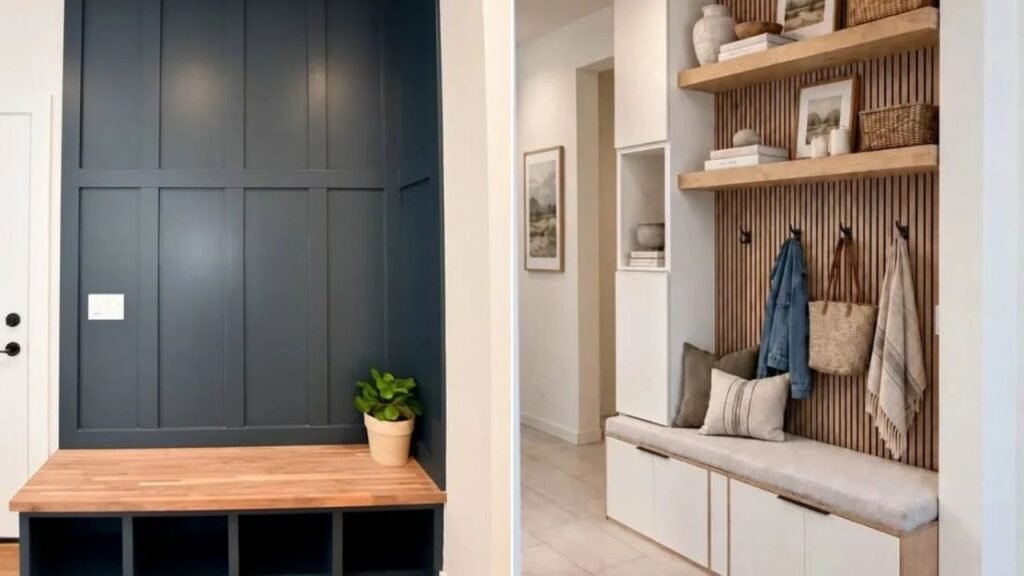
Give every family member a designated shoe compartment by dividing the space beneath your wooden bench into individual open cubbies.
Use a butcher block countertop for the seat and support it with sturdy plywood partitions to create a stable base.
Extend board and batten paneling behind the bench, painting it the same color as the base for a seamless finish.
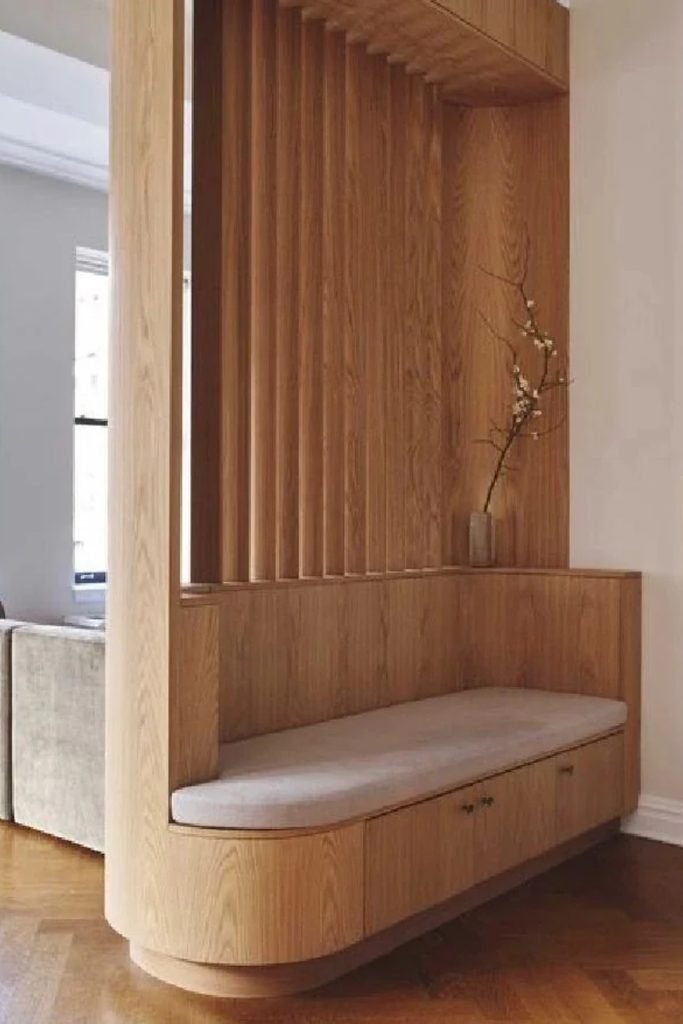
Curved Divider
Does your front door open directly into the living room? Combine a custom storage bench with a wooden slatted partition.
Use flexible plywood over a properly supported curved framework to soften exposed corners and create a smooth, rounded cabinet front.
Secure the vertical timber divider to suitable structural supports while leaving gaps between slats to maintain airflow and natural light.
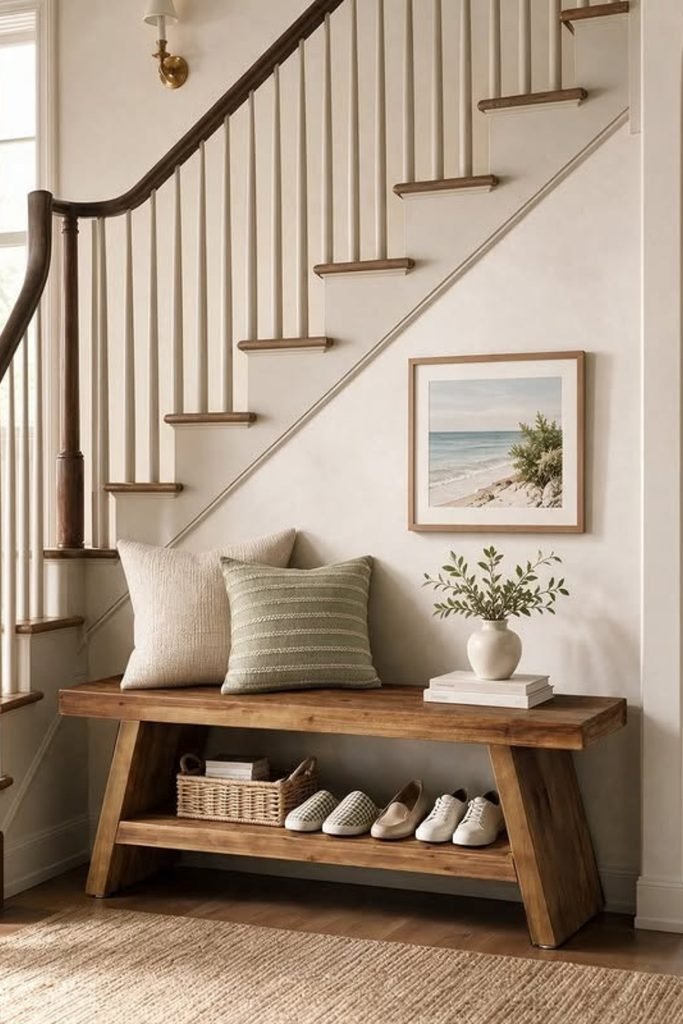
Understairs Wooden
Don’t let the empty wall beneath your staircase go unused when a simple wooden bench could provide practical everyday seating.
Build the frame with angled wooden supports and connect them with a lower shelf for storing frequently worn shoes neatly.
Apply a protective wood finish to handle everyday wear, and add removable cushions that you can easily wash when needed.
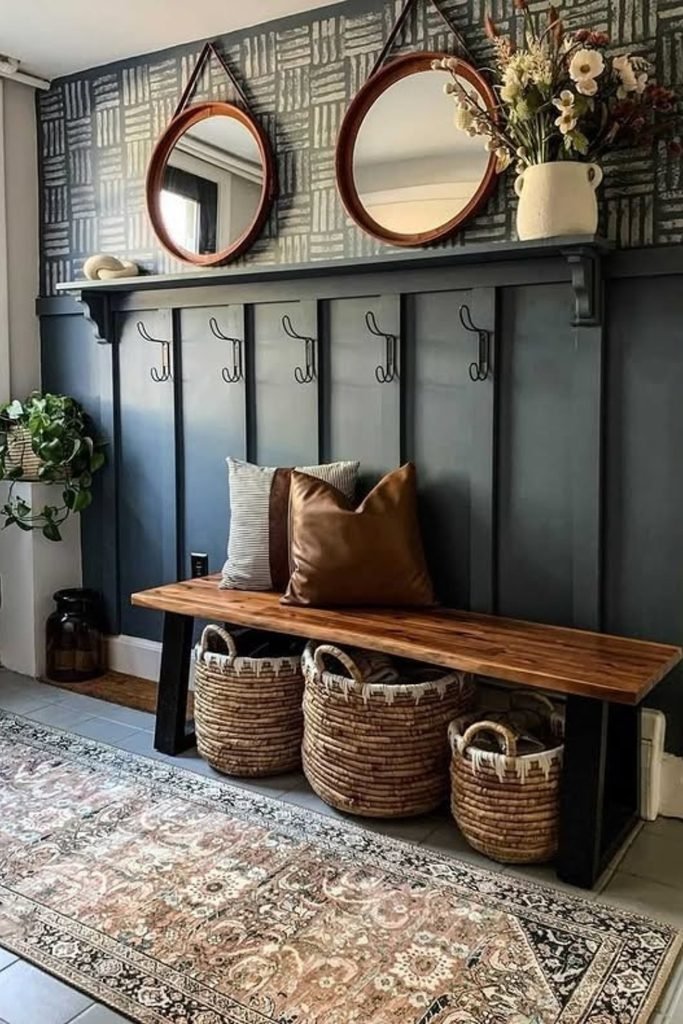
Woven Basket Storage
Instead of building complicated storage compartments, leave the space beneath your wooden seat open for a few removable woven baskets.
Measure your baskets before cutting the bench legs to ensure enough clearance for pulling them out without scratching the wood.
Stain the seat in a warm wood tone and paint the legs black to complement darker entryway wall paneling.
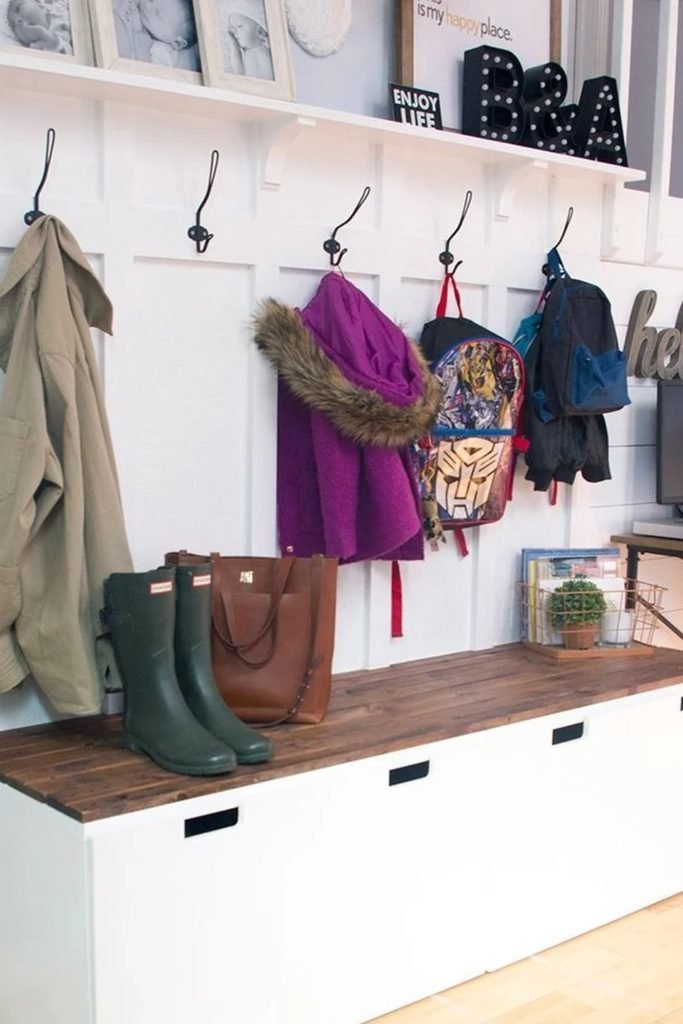
Family Drop Zone
Morning routines become much easier when everyone has a dedicated place to leave their backpacks, shoes, jackets, and outdoor accessories.
Construct a long storage bench with separate pull-out compartments, using recessed handles instead of protruding knobs along the front panels.
Position coat hooks at accessible heights so children can independently organize their belongings without needing your help every single morning.
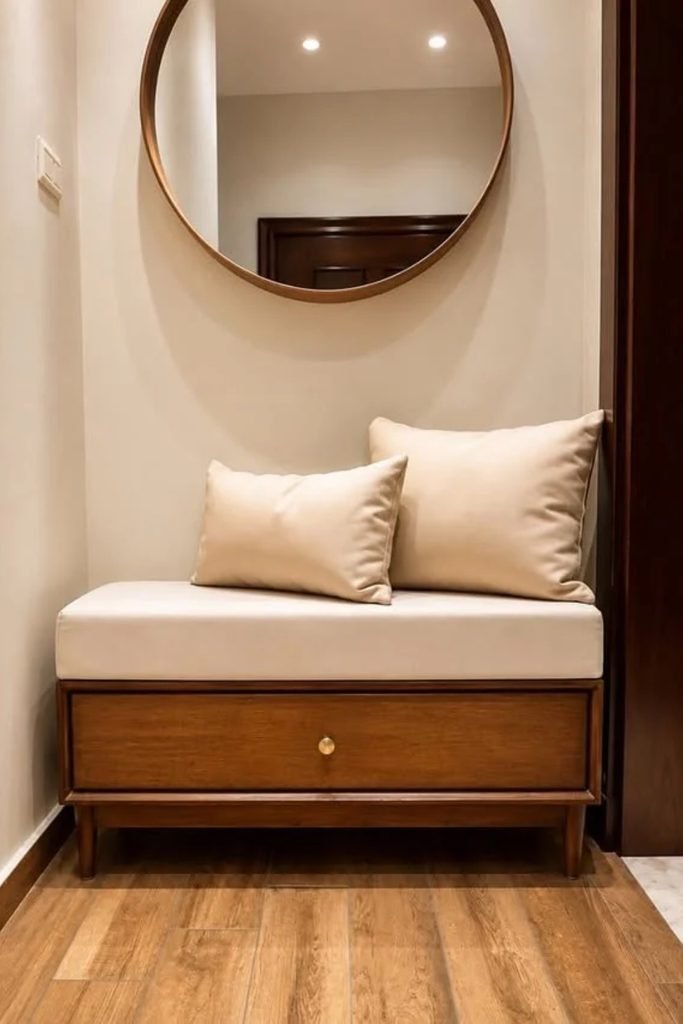
Cozy Alcove Seating
Even the smallest entryway nook can accommodate comfortable seating if you customize a wooden base to fit its exact width.
Include a deep drawer underneath for storing slippers, gloves, and other everyday essentials that tend to clutter your hallway floor.
Top your DIY entryway bench with firm upholstery foam and a removable fabric cover for easier cleaning throughout the year.
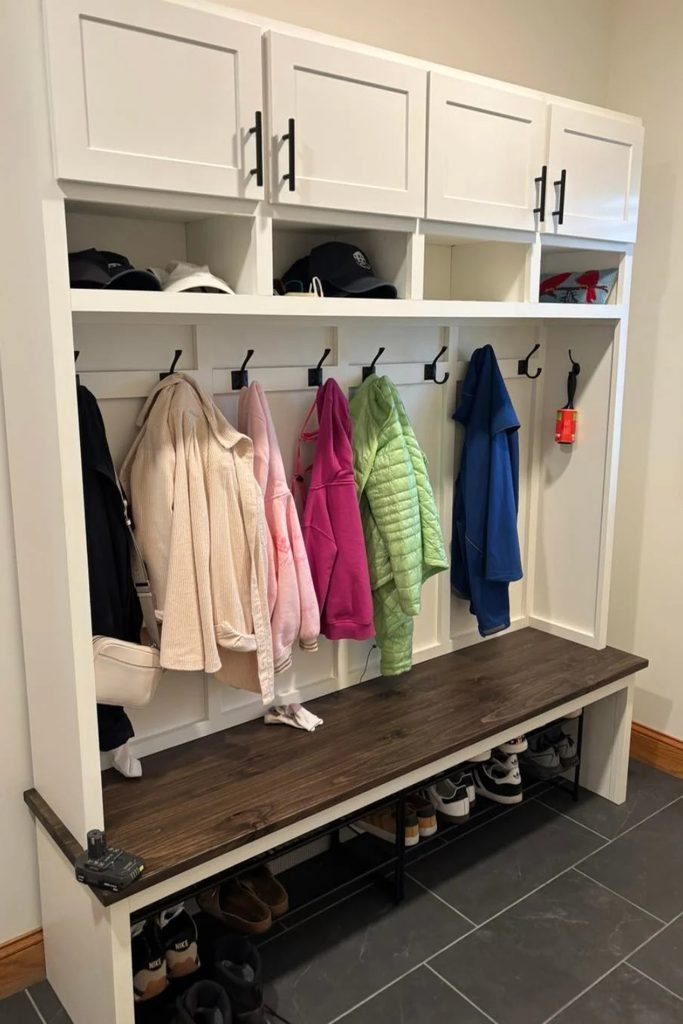
Overhead Cabinetry
Running out of floor space for storage means it’s time to start utilizing the vertical space above your entryway seating.
Secure overhead cabinets into wall studs and reserve the open compartments directly below them for frequently used hats and accessories.
Keep the area beneath your seat accessible with removable metal shoe racks that make sweeping away tracked-in dirt much easier.
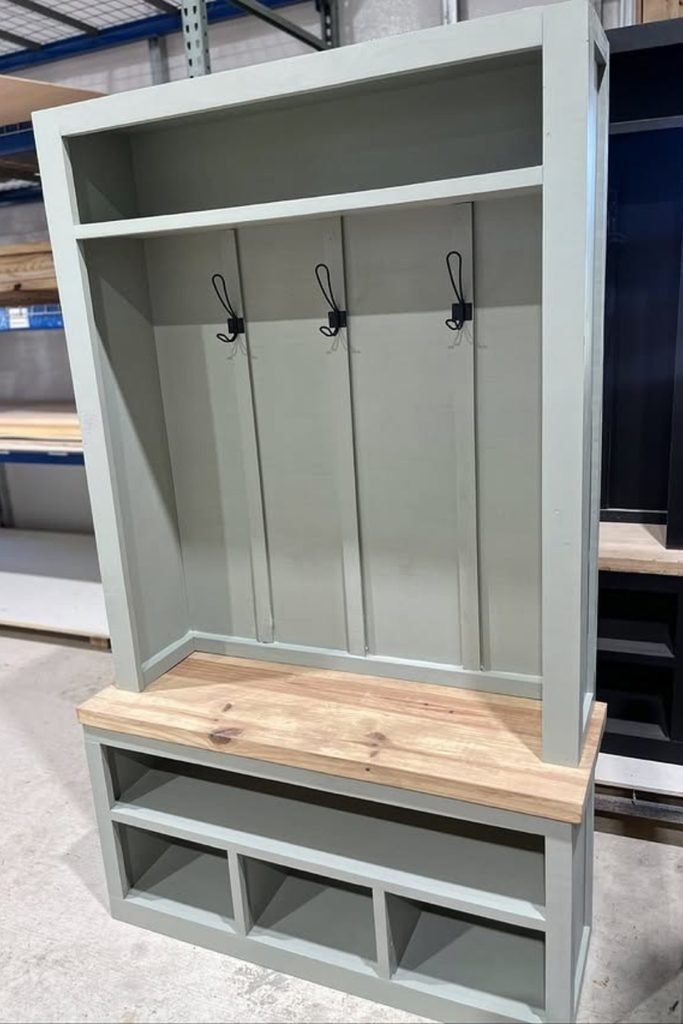
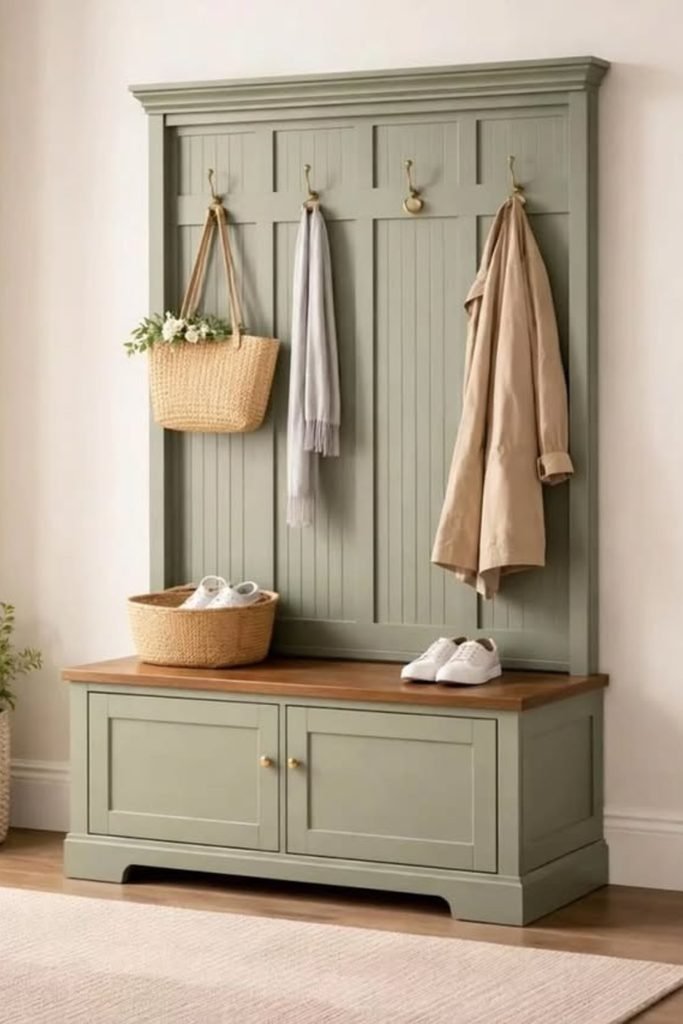
Sage Hall Tree
A standalone hall tree gives you the flexibility to reorganize your entrance without committing to permanent wall-to-wall built-in cabinetry.
Create two storage levels beneath the wooden seat, reserving the wider upper compartment for items that need quick access.
Finish the framework with sage green furniture paint and secure the tall unit to wall studs to prevent tipping.
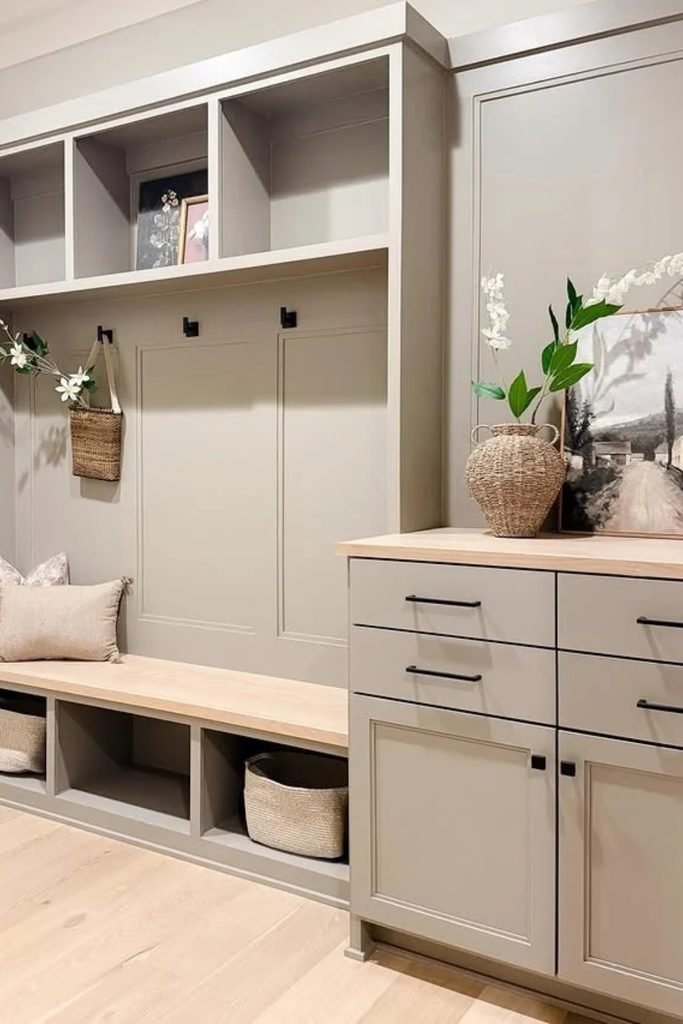
Coordinated Cabinetry
Consider extending your entryway bench into matching cabinetry if you need extra storage for household supplies and miscellaneous belongings.
Matching wooden countertops across both sections will help connect the separate furniture pieces without making the entrance feel overcrowded.
Add decorative molding to the back panel for a custom appearance without spending extra money on elaborate woodworking techniques.
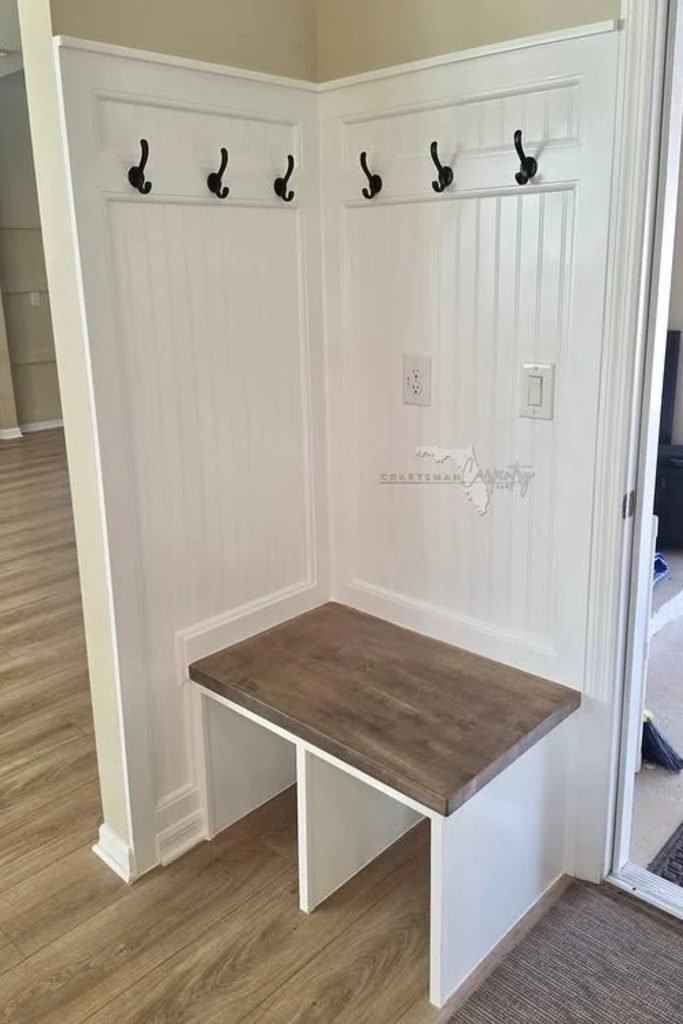
Compact Corner Seating
That awkward corner beside your garage entrance could become a convenient spot for removing muddy shoes before entering the house.
Keep the bench construction simple with a solid wooden seat supported by vertical panels that double as storage dividers.
Cover both adjoining walls with beadboard to protect the surfaces from frequently hung bags, damp jackets, and everyday scuff marks.
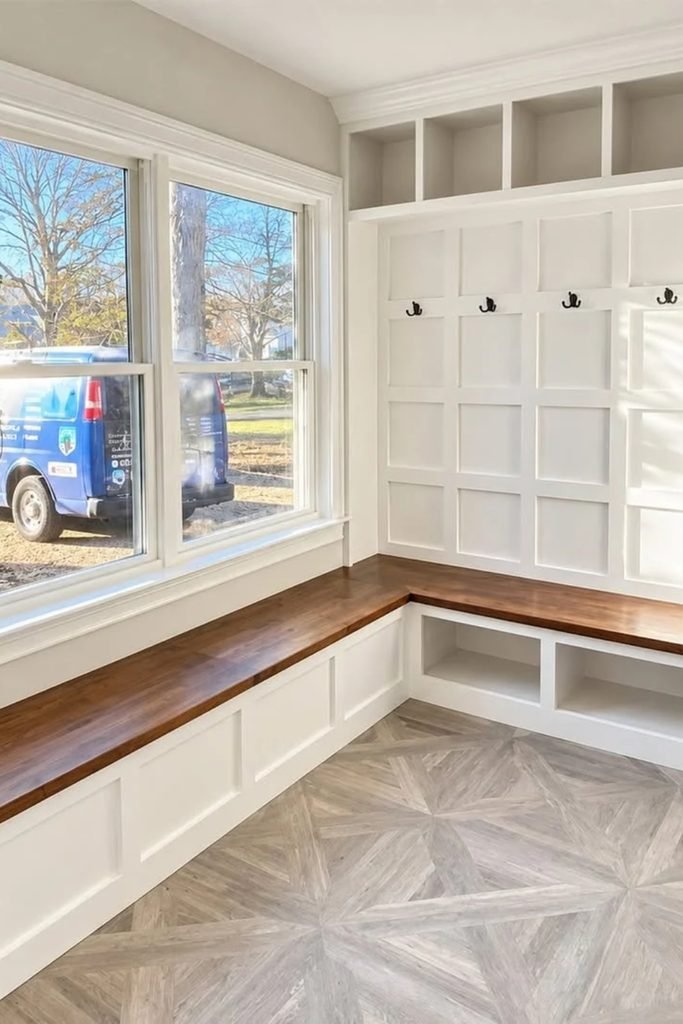
Wraparound Window Seating
Why limit yourself to a single wall when an L-shaped bench can provide additional seating without blocking your entryway windows?
Construct two separate supporting frames and join their wooden seats at the corner for a continuous, custom-built seating arrangement.
Keep shoe compartments near the entrance while using the longer window section as comfortable seating for multiple family members.
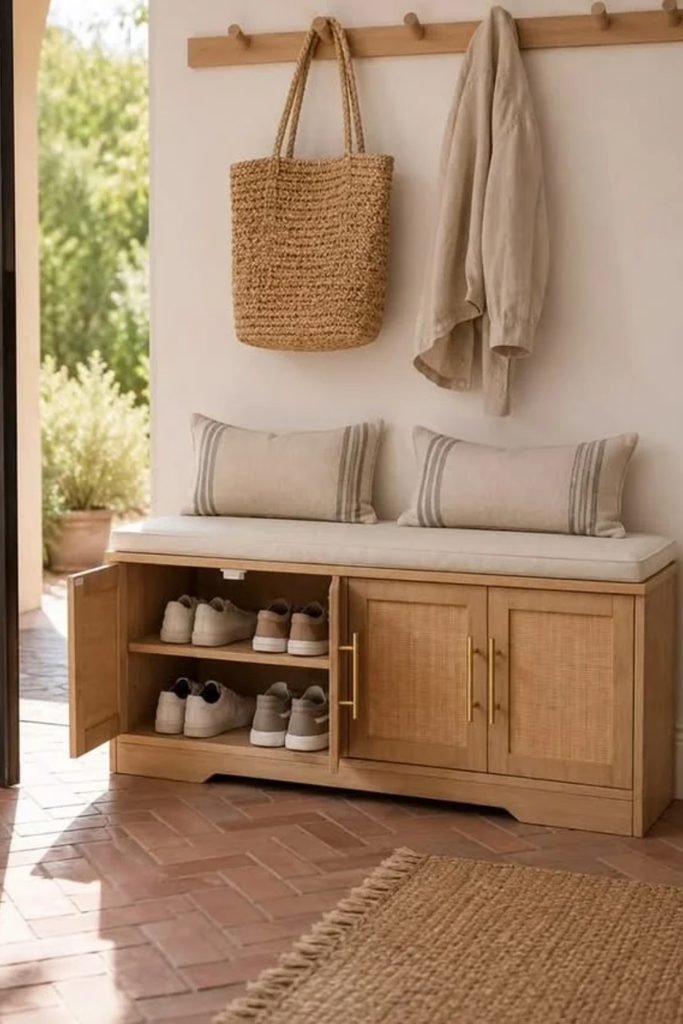
Cane Door Storage
Not a fan of having shoes on display? Build an enclosed entryway bench with cane cabinet doors for better ventilation.
Fit adjustable shelves inside the cabinet so you can accommodate different footwear sizes without wasting valuable storage space underneath your seat.
Choose brass handles and a natural wood finish to complement the woven texture while keeping the overall design warm and inviting.
Cottage Charm
Give your entrance a cottage-inspired makeover by pairing a wooden seat with a beadboard backing and classic shaker cabinet doors.
Use decorative crown molding along the top to achieve a furniture-style finish, even when working with relatively inexpensive building materials.
Install brass coat hooks into reinforced backing and anchor the entire unit securely to the wall to prevent accidental tipping.
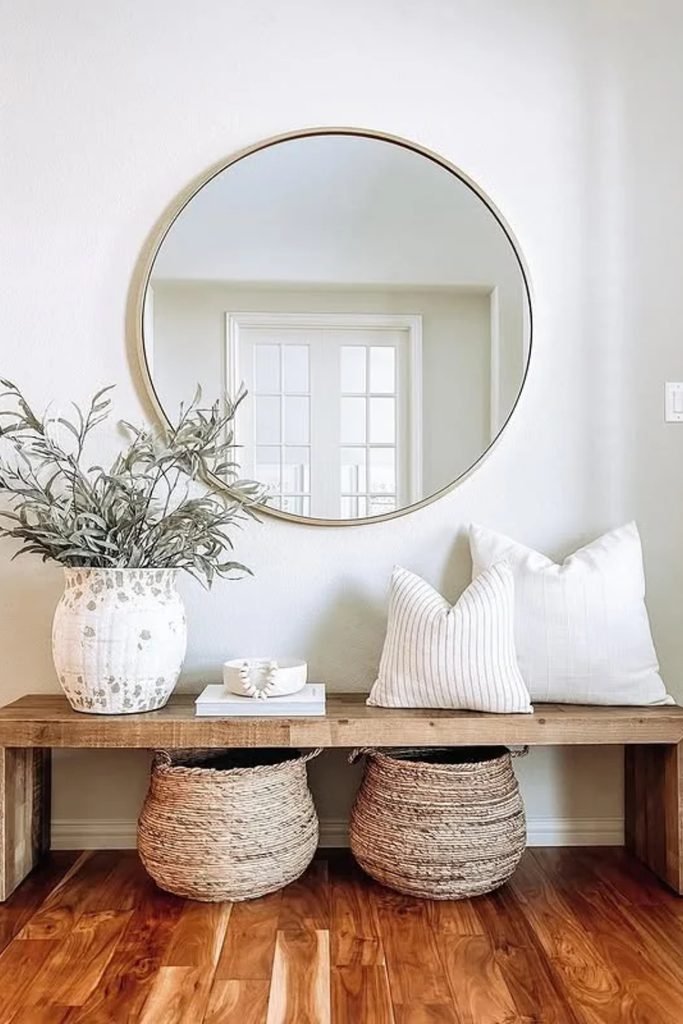
Waterfall Wood Design
You don’t need elaborate woodworking skills to achieve a minimalist look when working with a straightforward waterfall-style wooden seating design.
Join thick wooden boards using reinforced joints and concealed bracing to prevent the long seat from sagging or shifting sideways.
Preserve the natural wood grain with a matte protective finish rather than covering its character with thick layers of paint.
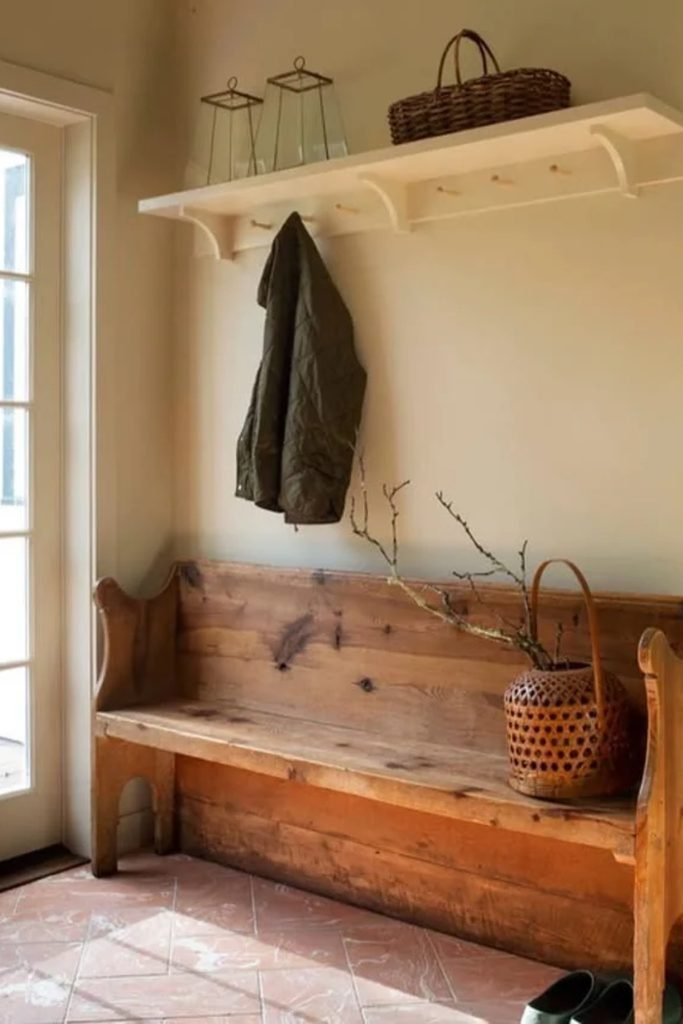
Vintage Pew Makeover
Before buying new lumber, check thrift stores and flea markets for an old wooden pew you could restore for your entrance.
Inspect the existing joints for weakness, tighten loose connections, and gently sand rough surfaces without removing all the aged character.
Mount a separate peg shelf above your restored seating to organize outdoor accessories without modifying the original vintage furniture structure.
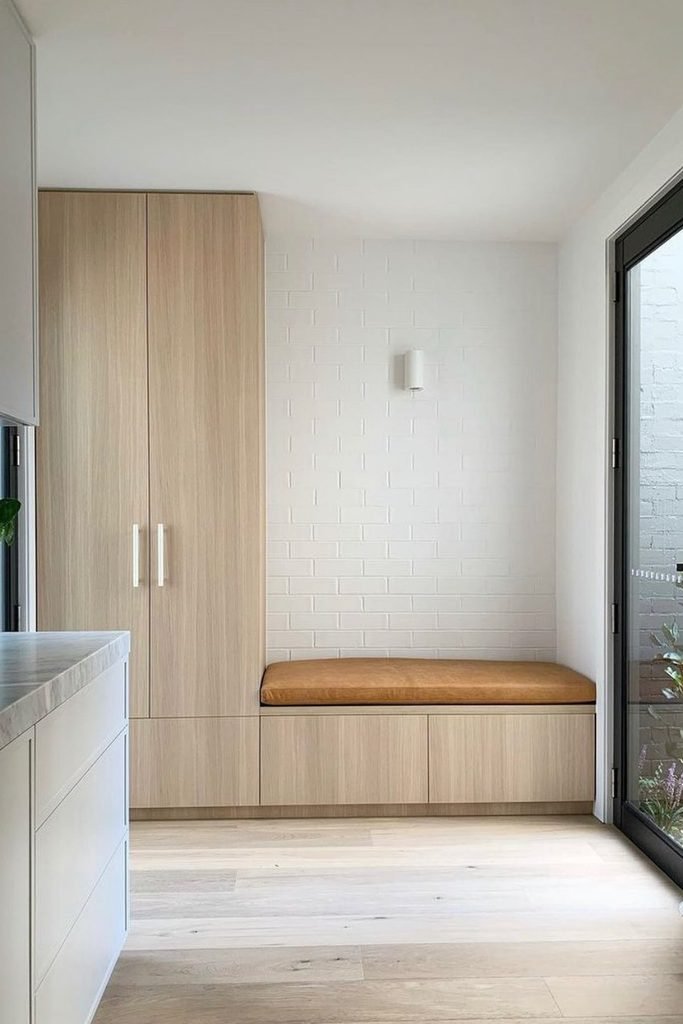
Seamless Oak Storage
If your entrance connects directly to the kitchen, extend the existing cabinetry style into a low seating area with concealed storage.
Use matching oak veneer panels and push-to-open hardware to achieve a streamlined appearance without handles protruding into the walking area.
A wipeable faux leather cushion makes everyday maintenance easier, particularly when your entrance regularly collects moisture and dirt from outdoors.
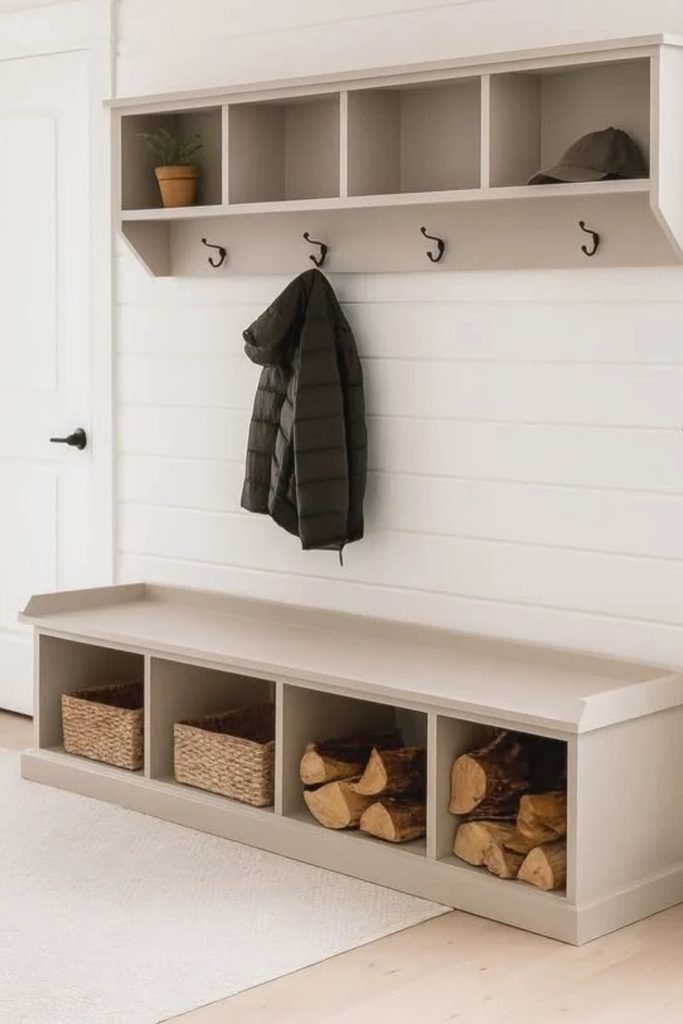
Shiplap Storage Station
Keep your DIY entryway bench and overhead shelving separate so you can customize the distance between them according to your needs.
Add raised wooden edges around the seat to prevent small belongings from slipping behind the bench or falling onto the floor.
Reserve individual cubbies for storage baskets or dry firewood, using removable liners to protect painted surfaces from scratches and debris.
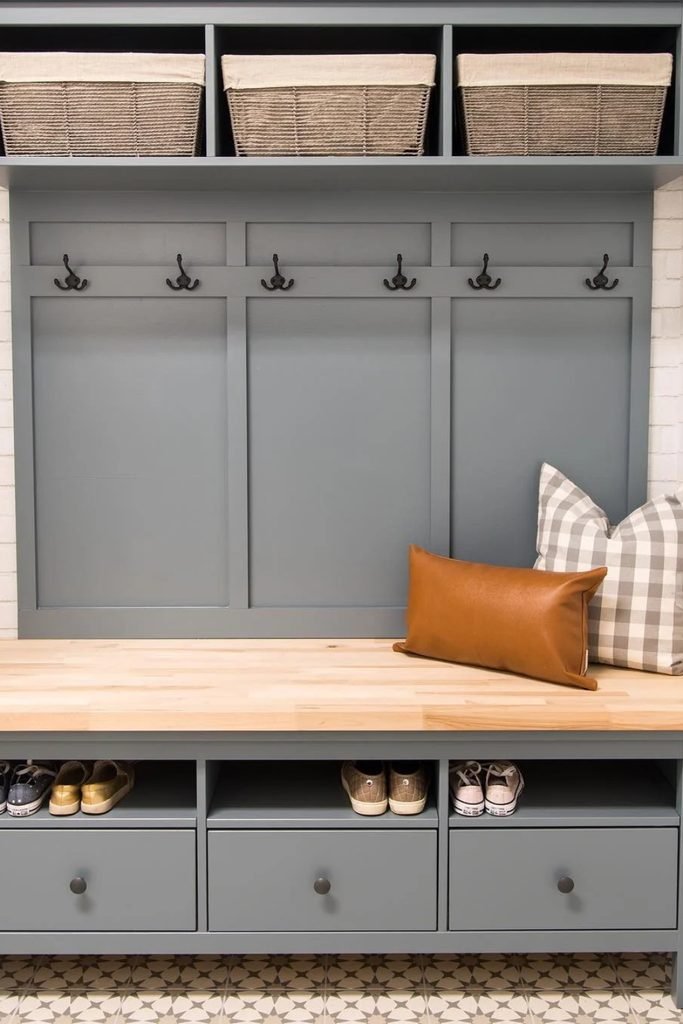
Layered Drawer Storage
Rather than choosing between open shelving and hidden storage, incorporate both into your entryway bench to accommodate different organizational needs.
Install full-extension drawer slides so you can easily retrieve smaller accessories without having to reach deep inside the storage compartments.
Leave narrow shoe slots directly beneath the seat for frequently worn footwear, keeping the deeper drawers available for seasonal belongings.
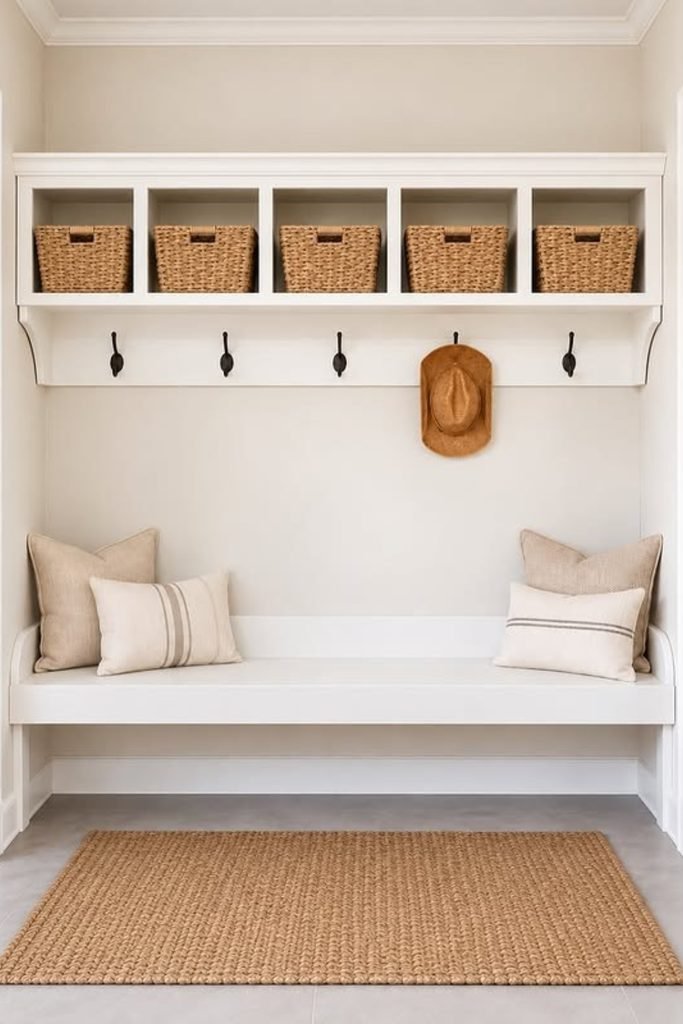
Floating Alcove Seating
Free up valuable floor space by building a floating entryway bench that fits neatly between two walls within an existing alcove.
Support the wooden seat with load-bearing cleats secured into wall studs, adding adequate reinforcement across the span to prevent sagging.
Position matching basket compartments overhead to compensate for the absence of lower cabinetry while keeping the floor underneath easily accessible.
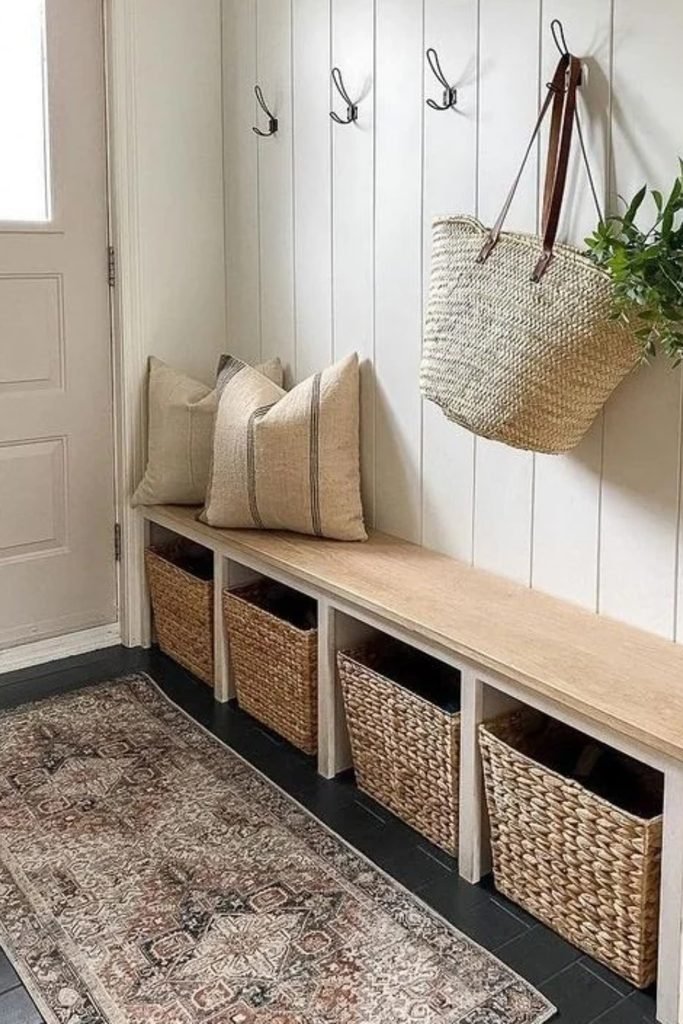
Farmhouse Basket Cubbies
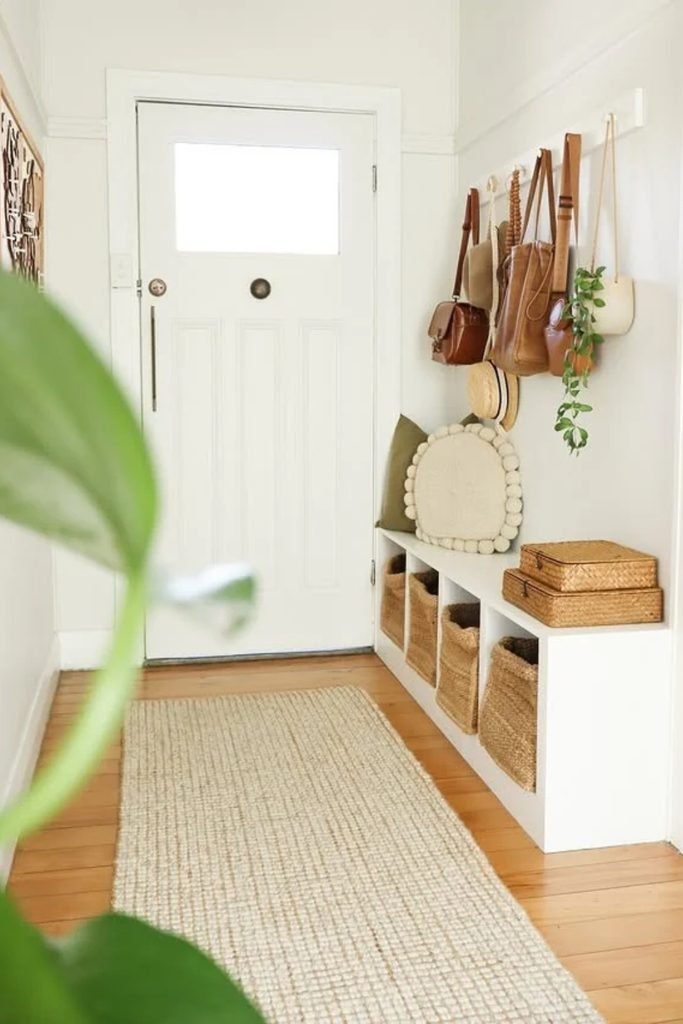
Make everyday organization easier by building a low wooden bench with equally sized compartments for storing matching rectangular woven baskets.
Choose a light oak seat and vertical wall paneling to introduce farmhouse character without making your narrow entryway feel overwhelming.
Use durable, washable paint on the lower framework since this area will frequently come into contact with shoes and outdoor dirt.
Slim Hallway Storage
A narrow entrance doesn’t mean you have to sacrifice seating, especially when you can customize the depth of your bench.
Check the door’s full swing before determining your measurements, leaving enough walking space to move comfortably through the hallway every day.
Keep the upper surface relatively clear and assign individual baskets underneath for reusable shopping bags and frequently used accessories.
FAQs
What is the cheapest way to build a DIY entryway bench?
Use affordable pine boards, leftover lumber, or plywood to build a simple seating frame with open storage underneath.
You can also repurpose a sturdy old cabinet by reinforcing its structure and adding a comfortable cushion on top.
What is the ideal size for a DIY entryway bench?
Aim for a finished seat height of 17–19 inches and a depth of 14–16 inches for comfortable everyday seating.
Adjust the width according to your available space, leaving enough clearance for opening doors and walking through the entrance comfortably.

Hi, my name is Ali Mehmood! I’m a passionate writer and DIY enthusiast who loves turning creative ideas into practical, hands-on projects.
I created this website to share inspiring, budget-friendly ideas that you can do yourself – whether it’s organizing your home, crafting something unique, or creating fun projects for kids and pets.
I believe DIY isn’t just a hobby – it’s a smart way to save money, reduce waste, and enjoy the satisfaction of making things with your own hands.
I’m excited to have you as part of this growing community, and I’ll continue bringing you helpful, realistic, and fun DIY ideas you can actually use.