This post may contain affiliate links: read full affiliate disclosure.
Finding a standing desk that fits your height, workspace, and budget can be frustrating, especially when store-bought options are expensive.
Building one yourself sounds promising, but choosing the right materials and creating a stable work surface can feel overwhelming.
That’s why I’ve gathered 26 DIY standing desk ideas to help you create a comfortable, functional workspace without breaking the bank.
L-Shaped Workstation
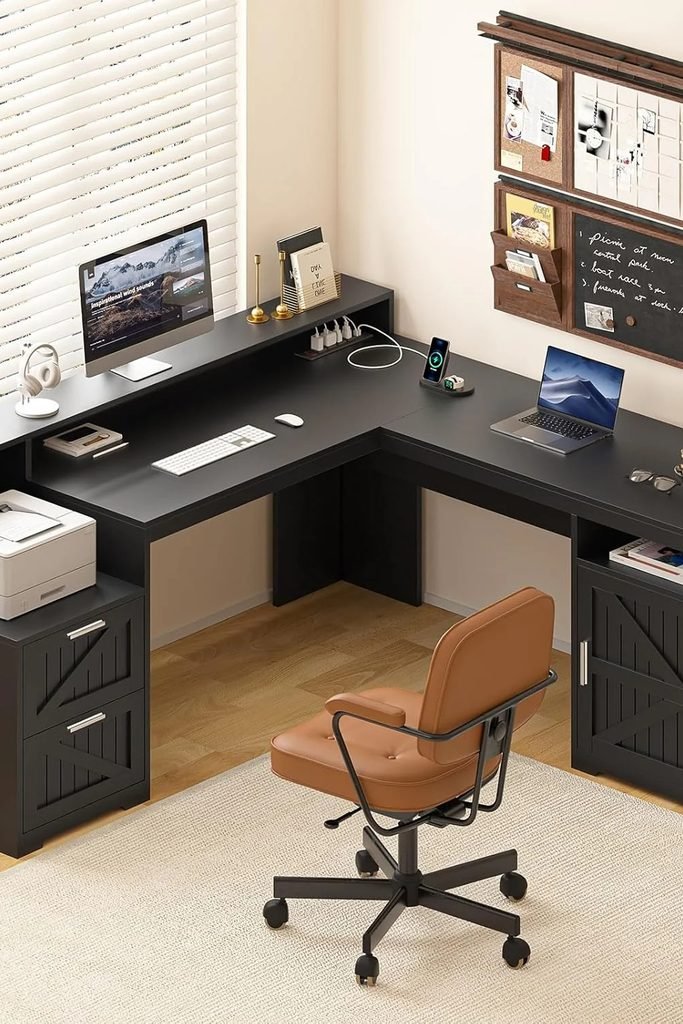
Need separate areas for computer work and paperwork? Adapt an L-shaped desk by adding a standing desk converter to one side.
Build a raised monitor shelf using plywood, keeping the keyboard platform at elbow height to maintain comfortable posture.
Incorporate cabinets beneath both ends to store office supplies without sacrificing the open space needed for comfortable movement.
Drawer Unit Hack
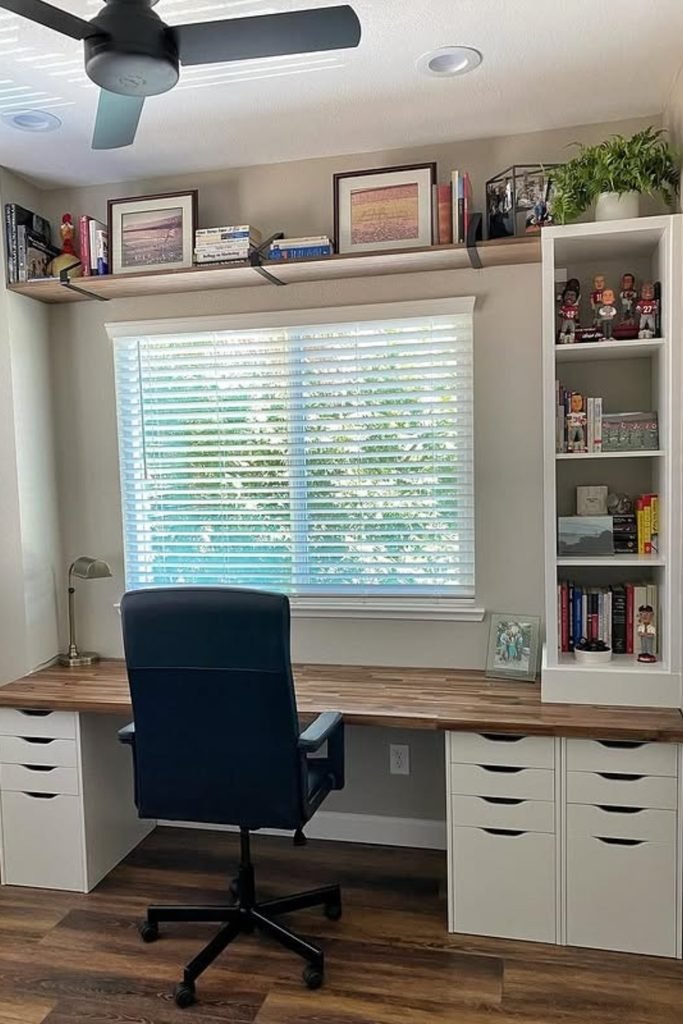
Before spending money on a new desk, consider repurposing existing drawer units and a wooden countertop for your workstation.
Create a removable standing platform above the countertop instead of permanently raising the entire desk and losing seated functionality.
Secure overhead shelving properly to keep books and office accessories organized without cluttering your newly created standing workspace.
Electric Standing Desk
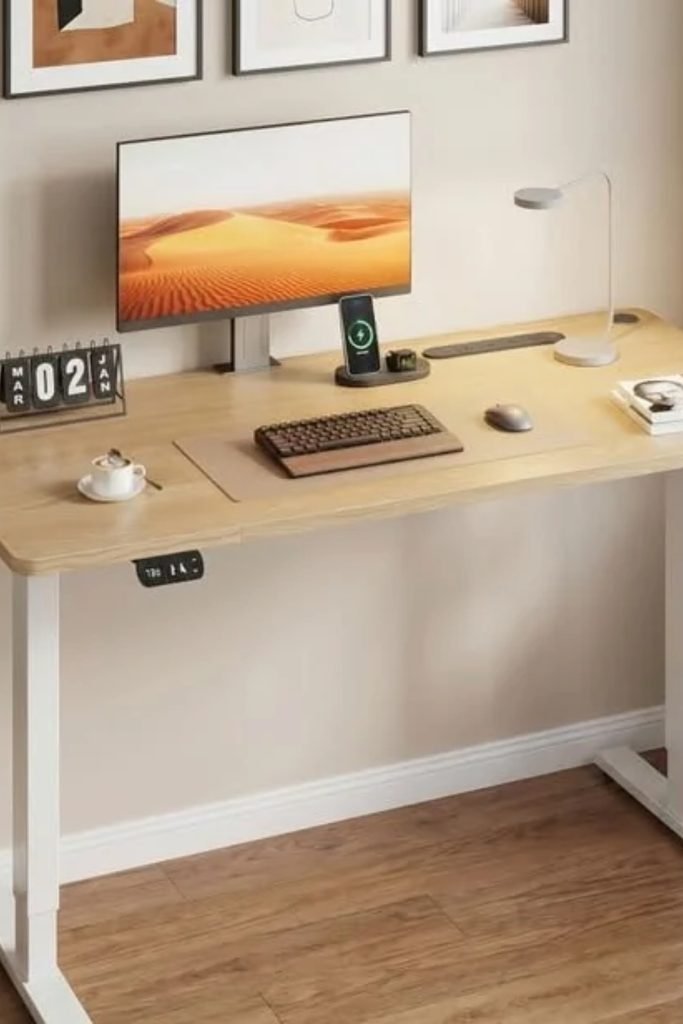
You don’t need to build a lifting mechanism from scratch when ready-made electric desk frames can simplify your project.
Pair the adjustable base with a light wooden desktop, checking its dimensions and weight against the frame’s specifications.
Leave enough slack in your power and monitor cables so nothing gets pulled when switching between working positions.
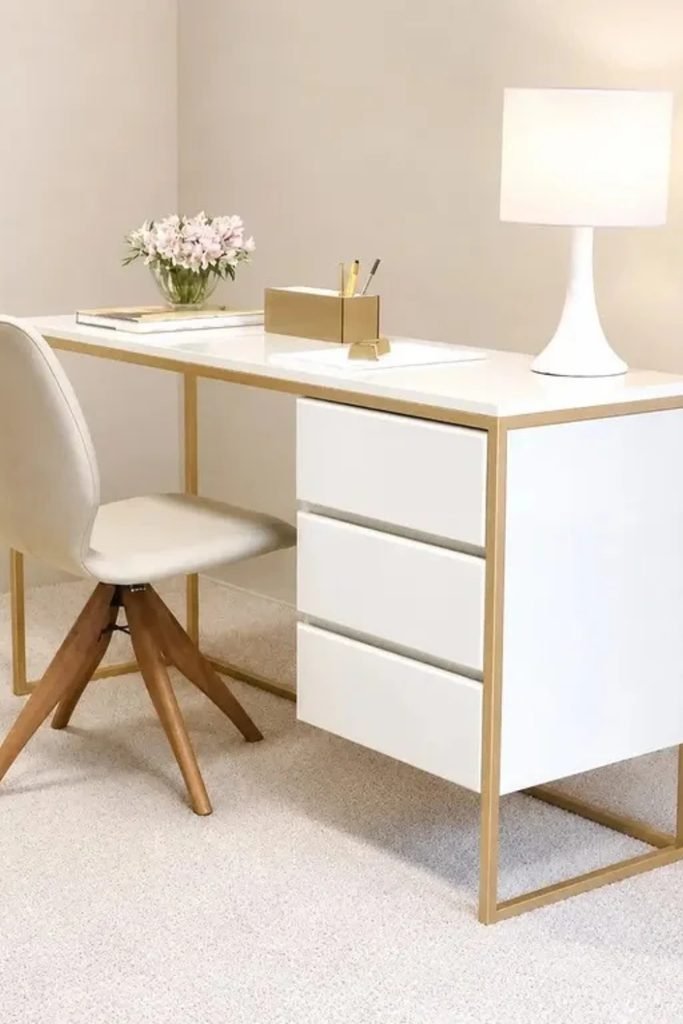
Slim Metal Frame
Working with a narrow bedroom corner doesn’t mean you have to give up on creating a functional standing workstation.
Adapt this slim metal frame design with taller supports, keeping the desktop height aligned with your standing elbows.
Position compact drawers beneath one side while leaving enough clearance for your legs and an adjustable drafting stool.
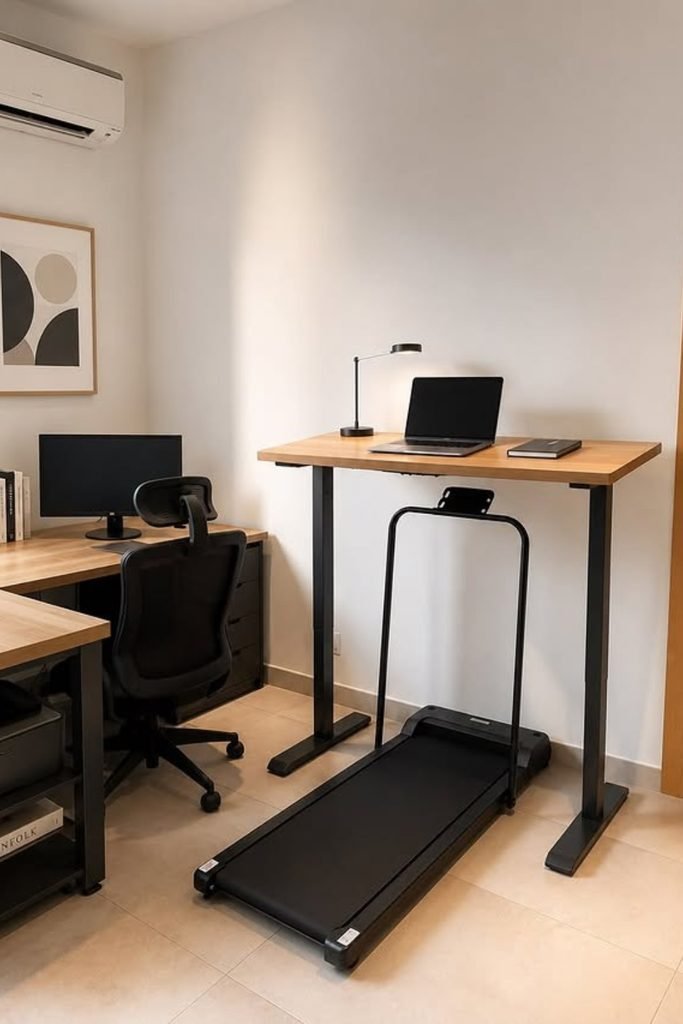
Walking Pad Workstation
Turn your standing desk into an active workstation by leaving enough space between the legs for a compact walking pad.
Remember to account for the treadmill’s platform height when determining where your keyboard and laptop should comfortably sit.
Keep the surrounding floor clear and position your treadmill controls within easy reach for safe, convenient speed adjustments.
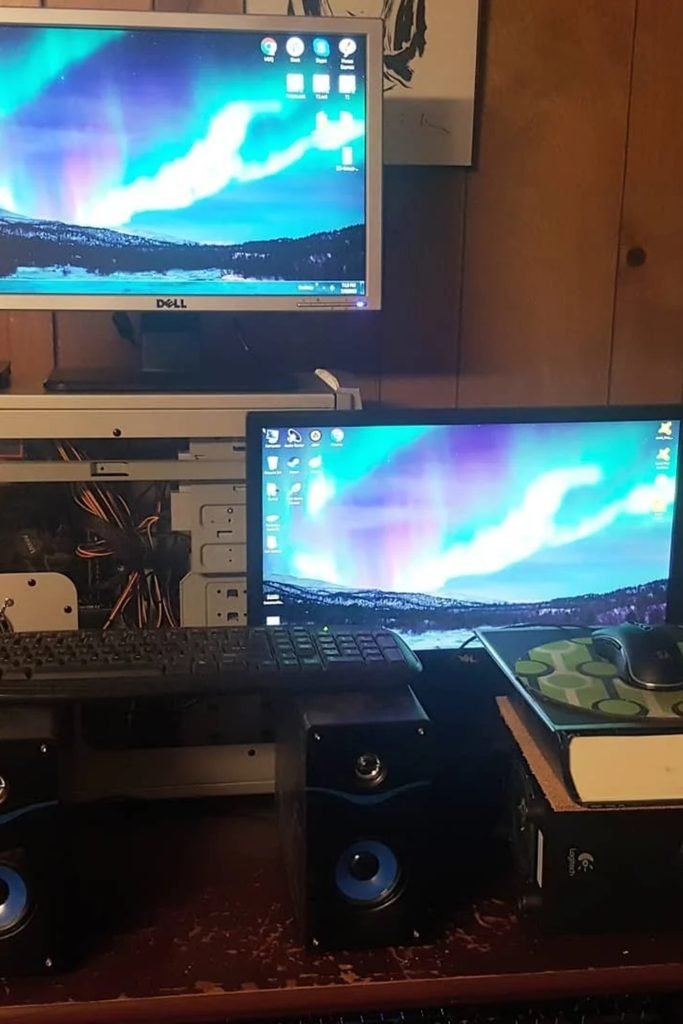
Zero-Cost Desk Converter
Getting started with a standing workstation doesn’t necessarily require buying new furniture, especially if you have spare wooden boards.
Use sturdy wooden blocks beneath a wide platform to elevate your keyboard and mouse instead of relying on electronics.
Test different working heights before committing to a permanent build, and avoid stacking unsecured objects beneath heavy computer equipment.
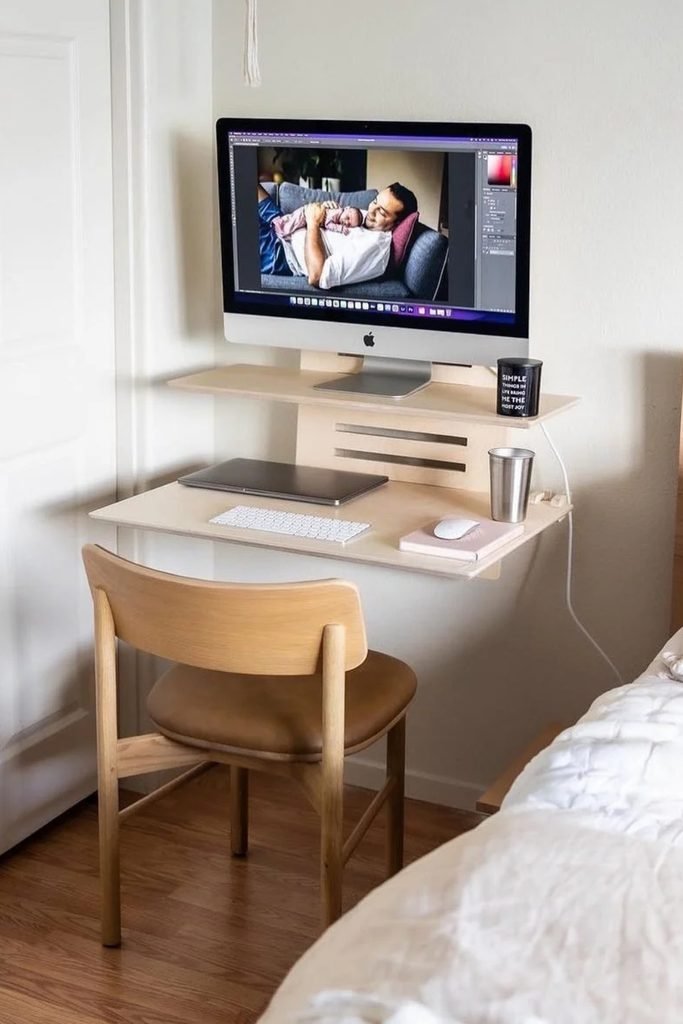
Floating Two-Tier Desk
That unused bedroom wall could become a functional standing workstation without taking up valuable floor space beside your bed.
Install a slotted wooden mounting panel with repositionable shelves to accommodate both seated and standing positions throughout the day.
Anchor the panel into wall studs using suitable fasteners and ensure both shelves can safely support your equipment.
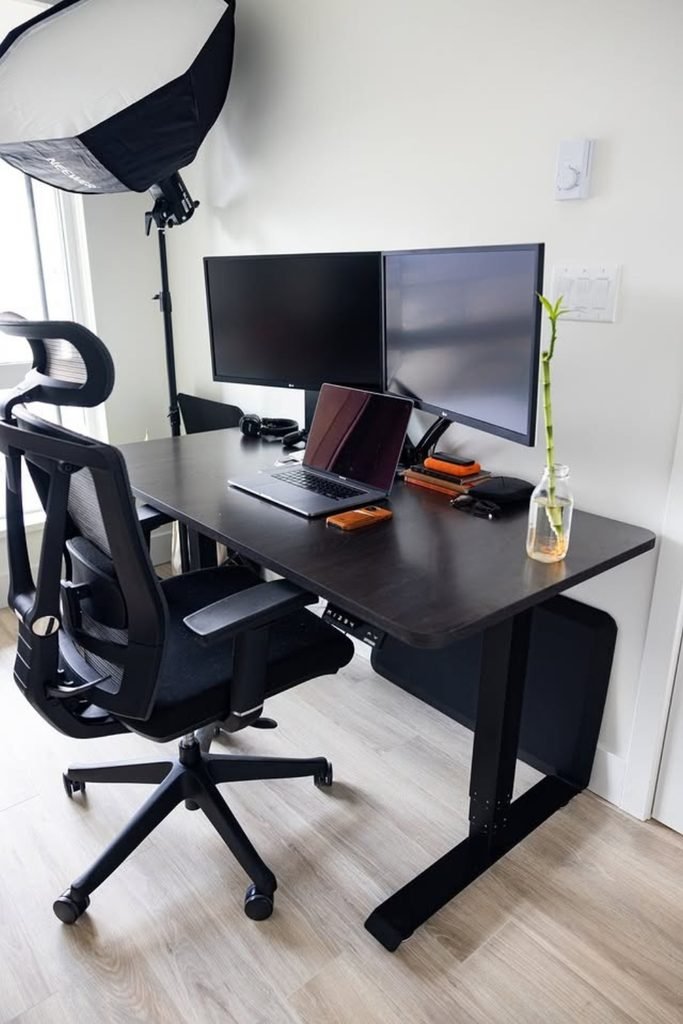
Dual-Monitor Setup
Running two monitors requires more thoughtful planning, particularly when your homemade standing desk needs to support heavier computer equipment.
Choose a desktop with sufficient depth and reinforced mounting areas for attaching adjustable monitor arms without damaging the surface.
Consider a programmable lifting frame that remembers your preferred working heights, making transitions between sitting and standing much easier.
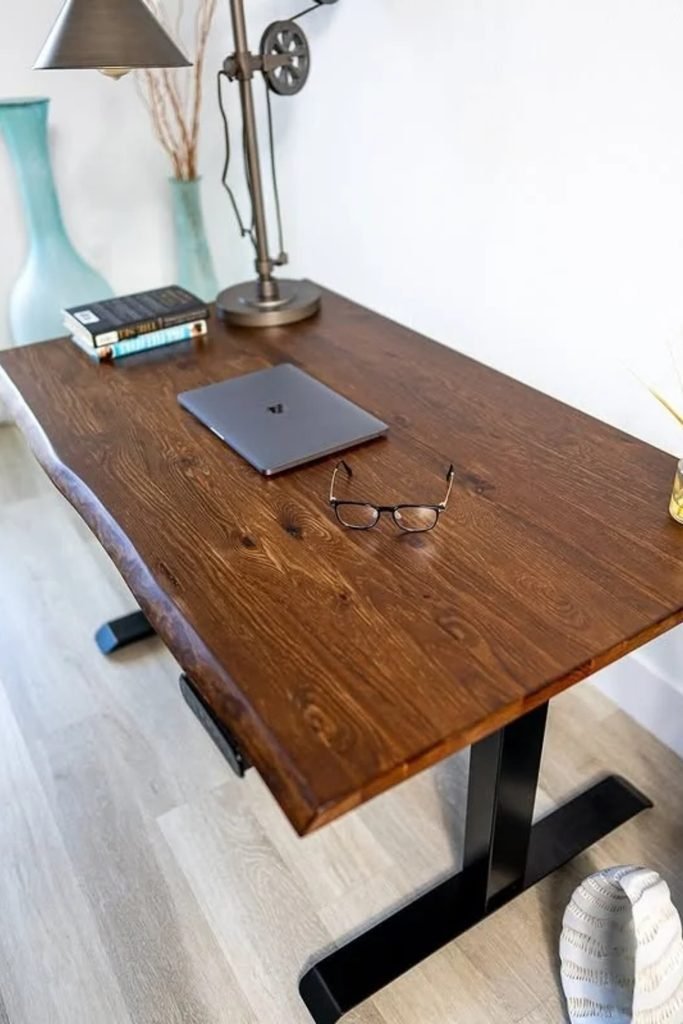
Live-Edge Wooden Desk
Give an ordinary standing desk frame a custom furniture look by attaching a natural live-edge wooden slab on top.
Sand the irregular edges until smooth, then apply a protective finish to prevent everyday spills from staining the wood.
Use suitable tabletop fasteners that accommodate natural wood movement as indoor humidity changes throughout different seasons of the year.
Concealed Lifting Mechanism
Not everyone likes exposed metal legs, especially when trying to match a standing desk with traditional home office furniture.
Create decorative wooden panels around a compatible lifting frame while keeping its motor and moving components completely unobstructed.
Keep surrounding storage cabinets independent from the moving desktop, allowing adequate clearance to prevent collisions when adjusting the height.
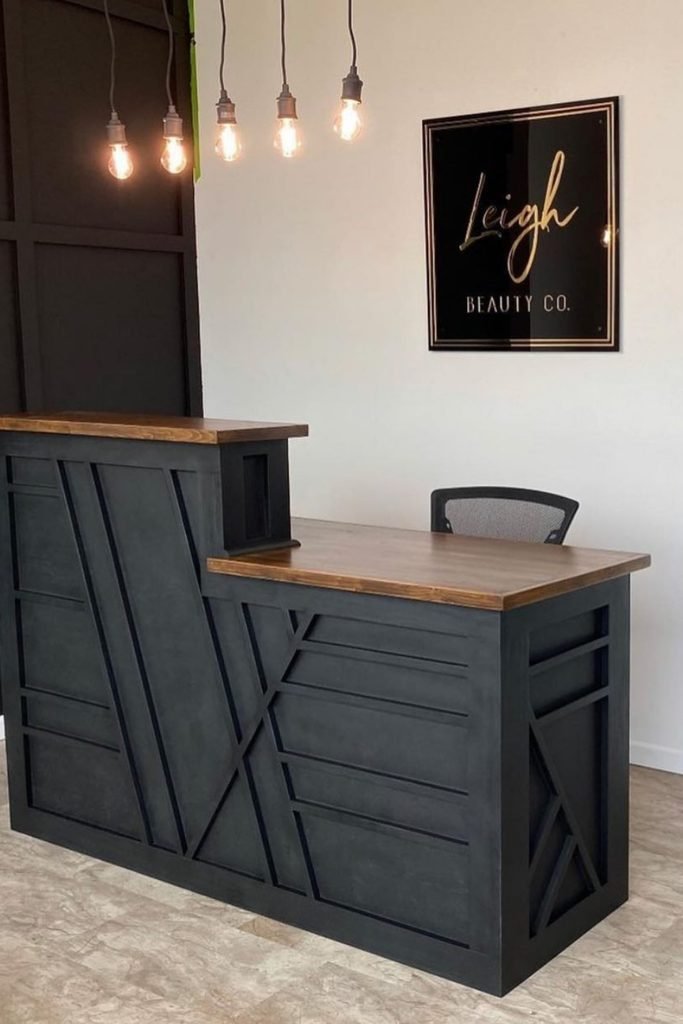
Split-Level Workstation
Why bother with complicated lifting mechanisms when two permanent working heights could give you the flexibility you need?
Adapt this reception desk design by creating separate surfaces for standing tasks and seated computer work within one structure.
Use plywood cladding and decorative wooden strips to achieve a custom furniture appearance without investing in expensive hardwood panels.
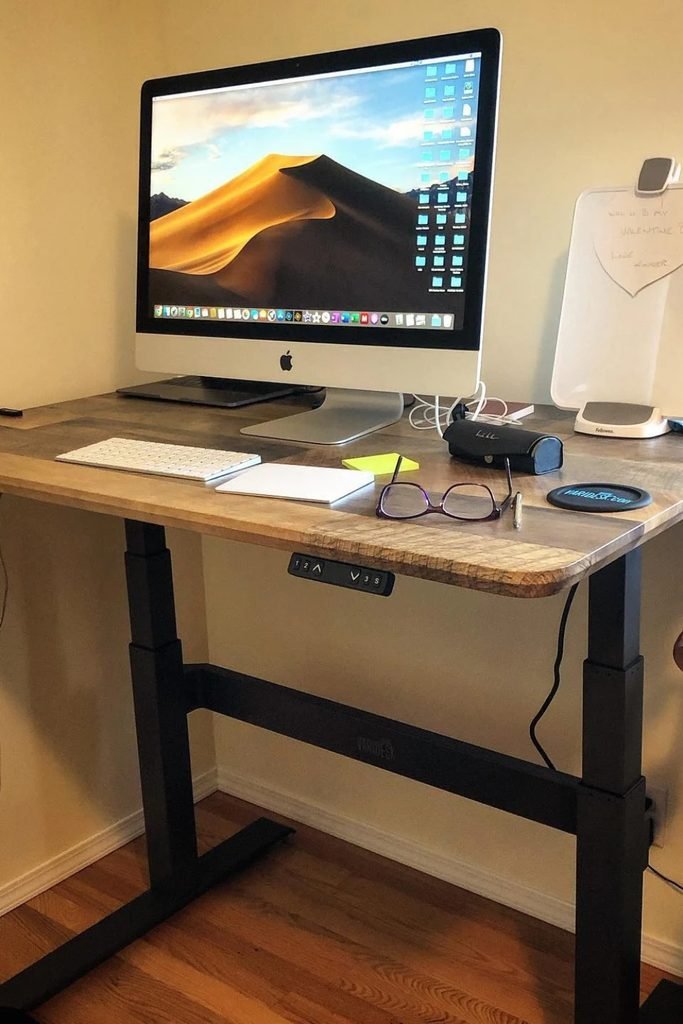
Cross-Braced
A shaky desktop can become incredibly distracting when you’re typing, particularly after raising your workstation to its maximum height.
Look for an adjustable metal frame with an integrated crossbar that helps reduce unwanted movement between the supporting legs.
Attach accessories like headphone hooks beneath the desktop to reclaim valuable working space without interfering with the lifting mechanism.
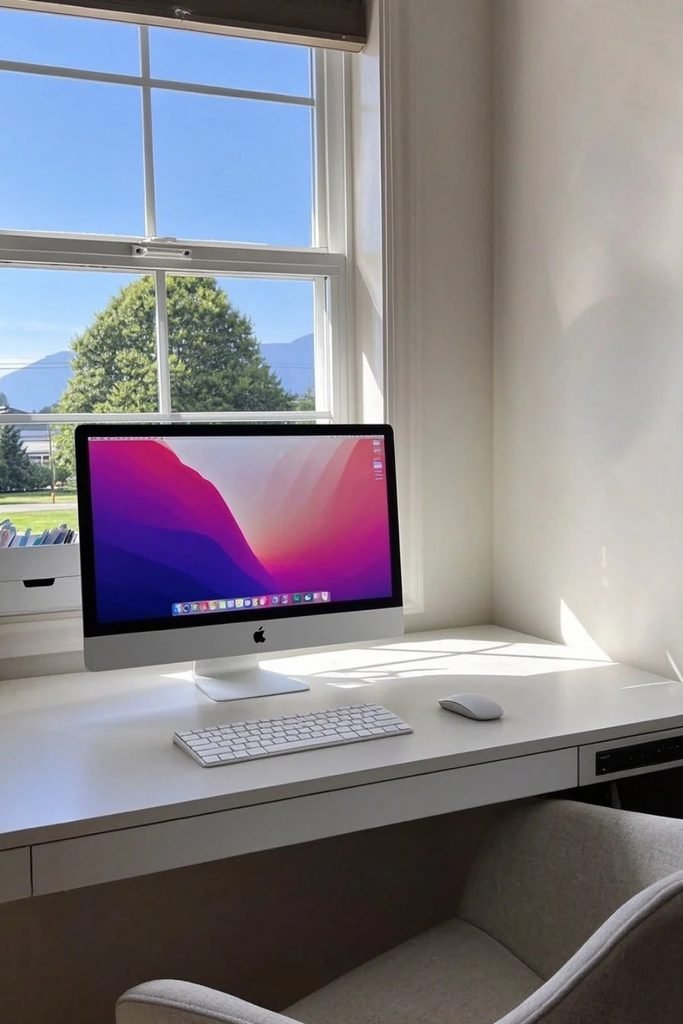
Window-Side
Take advantage of natural daylight by positioning your DIY standing desk near a window instead of a darker corner.
Measure the window ledge and nearby obstructions before installing an adjustable frame to ensure the desktop can move freely.
Consider adding light-filtering blinds to reduce screen glare without blocking the natural sunlight that makes your workspace feel inviting.
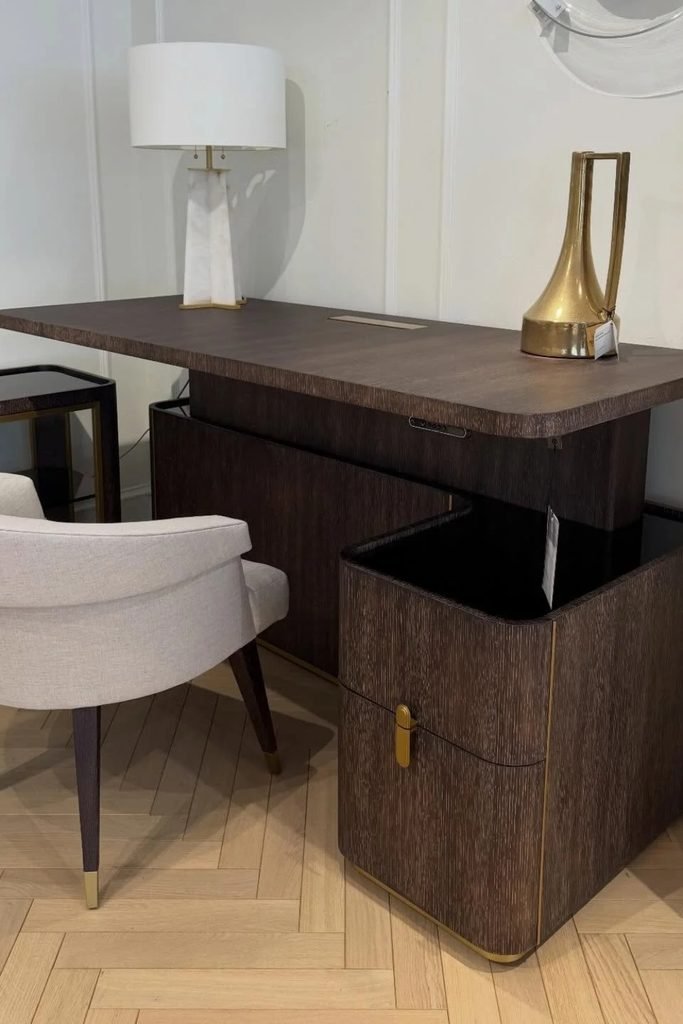
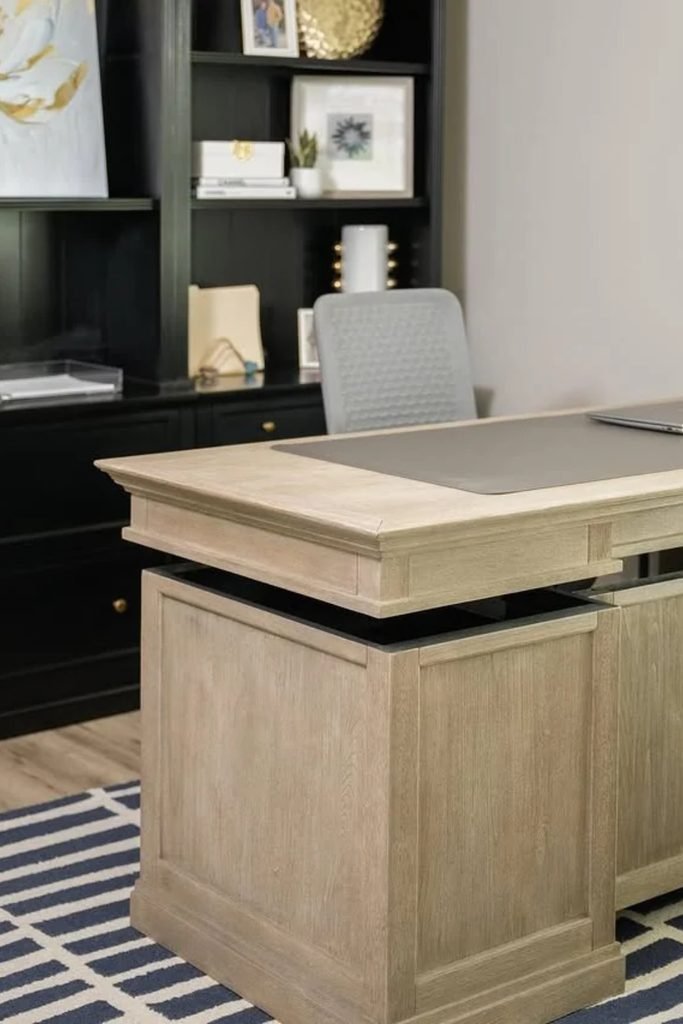
Lift-Top Executive Desk
Love traditional office furniture but want adjustable functionality? Retrofit a wooden executive desk using a compatible tabletop lifting system.
Preserve the original decorative molding wherever possible, giving your upgraded workstation a furniture-quality finish rather than an industrial appearance.
Check that the desktop moves independently of the cabinet surrounds, leaving sufficient clearance around potential trapping and pinch points.
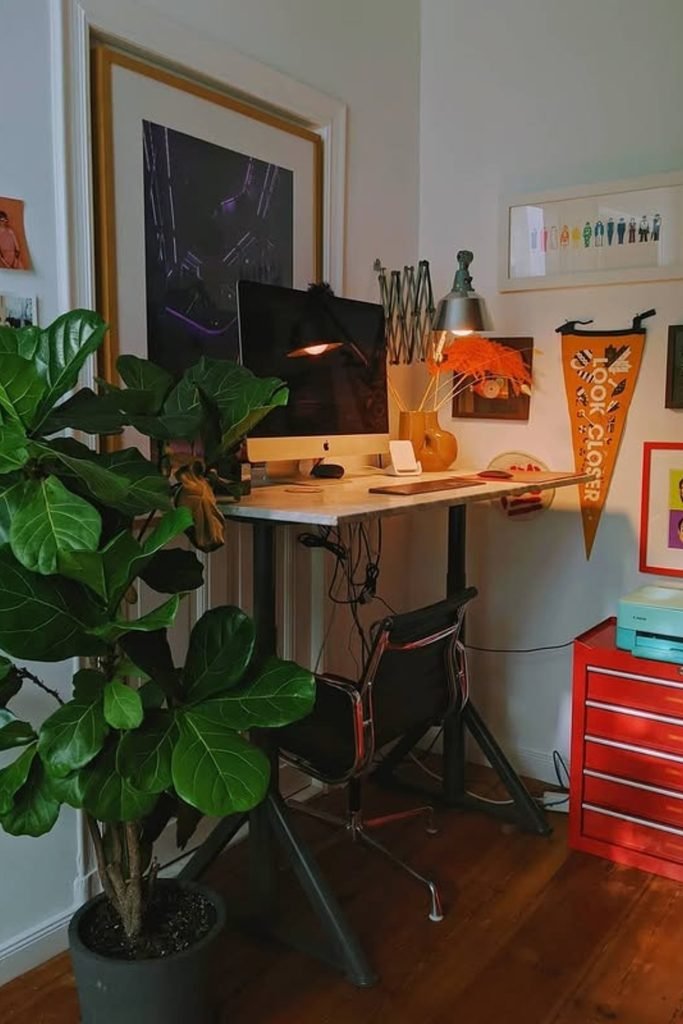
Trestle Standing Desk
Adjustable trestle legs offer a straightforward alternative to motorized frames, particularly when you’re trying to keep construction costs down.
Choose height-adjustable trestles with secure locking mechanisms and attach a wooden tabletop using the manufacturer’s recommended mounting hardware for stability.
Move bulky accessories onto a separate storage cabinet so your standing surface remains available for everyday computer tasks.
Standing Craft Station
Crafting often involves switching between computer work and hands-on projects, making a height-adjustable workstation especially useful for your creative space.
Build a desktop shelf with open compartments to organize cutting tools, stationery, and smaller crafting supplies within easy reach.
Place your printer on a separate side table to reduce the weight carried by your adjustable crafting desk.
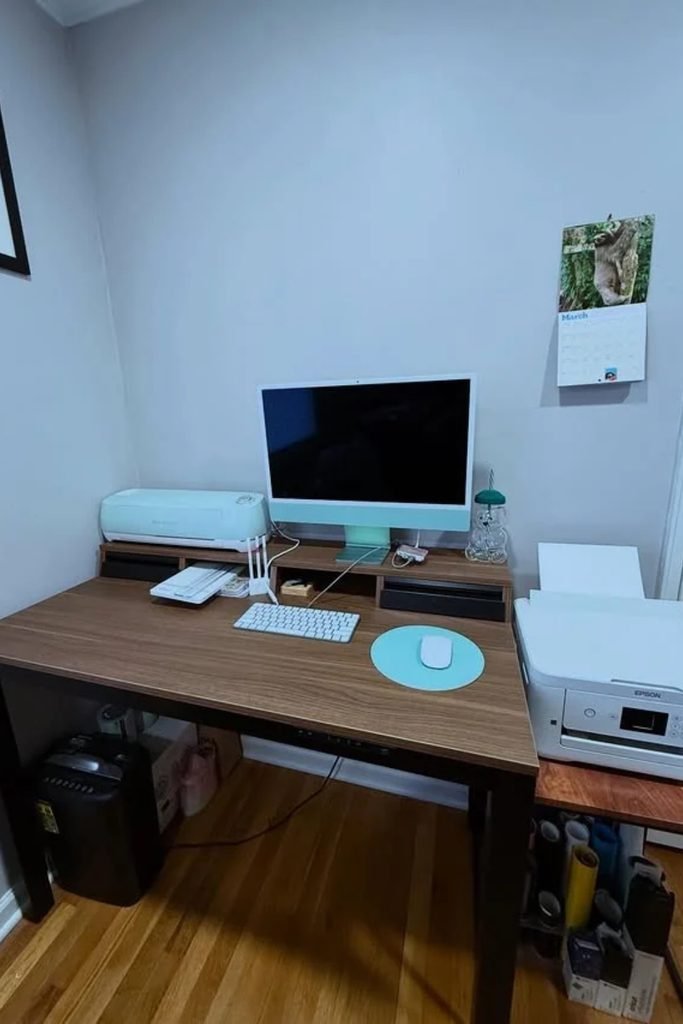
Industrial Pipe Desk
For a workstation that accommodates several monitors, consider building an extended desktop supported by a sturdy metal pipe framework.
Add horizontal support pipes between the legs to reinforce the structure and reduce movement across the longer work surface.
Fit load-rated locking casters beneath the frame if you want the flexibility to reposition your workstation whenever necessary.
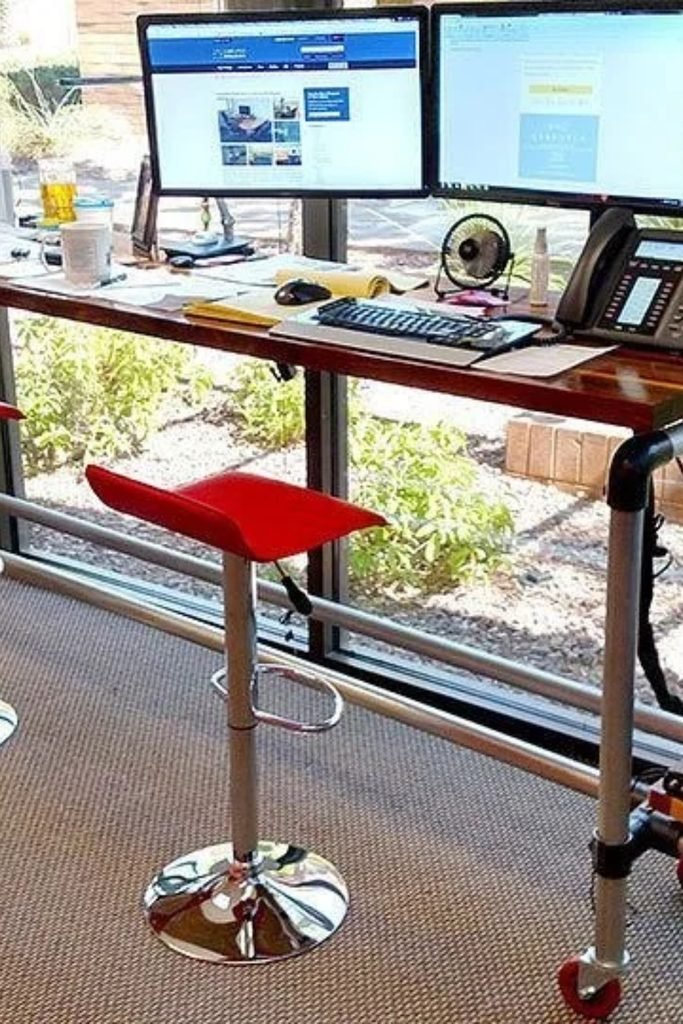
Recycled Pallet Desk
Leftover wooden pallets can become an affordable standing desk if you’re comfortable with basic woodworking and furniture assembly projects.
Select clean, untreated or heat-treated pallets, remove protruding nails, and sand rough surfaces thoroughly before assembling your workstation.
Cover the desktop slats with smooth plywood to prevent smaller accessories from slipping through gaps during your daily tasks.
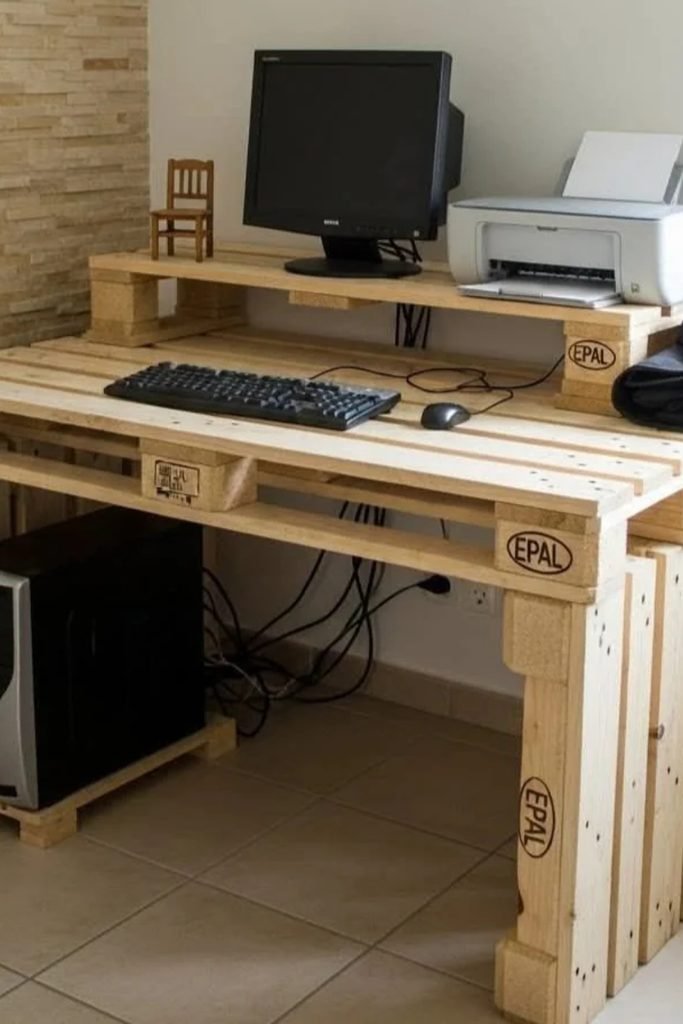
Cube Organizer Hack
Storage doesn’t have to be an afterthought when building a standing desk from inexpensive cube organizers and wooden boards.
Choose load-bearing shelving units tall enough for your standing height, then securely attach a countertop across the supporting units.
Slide woven baskets into the compartments to conceal charging cables, notebooks, and miscellaneous supplies while keeping everything easily accessible.
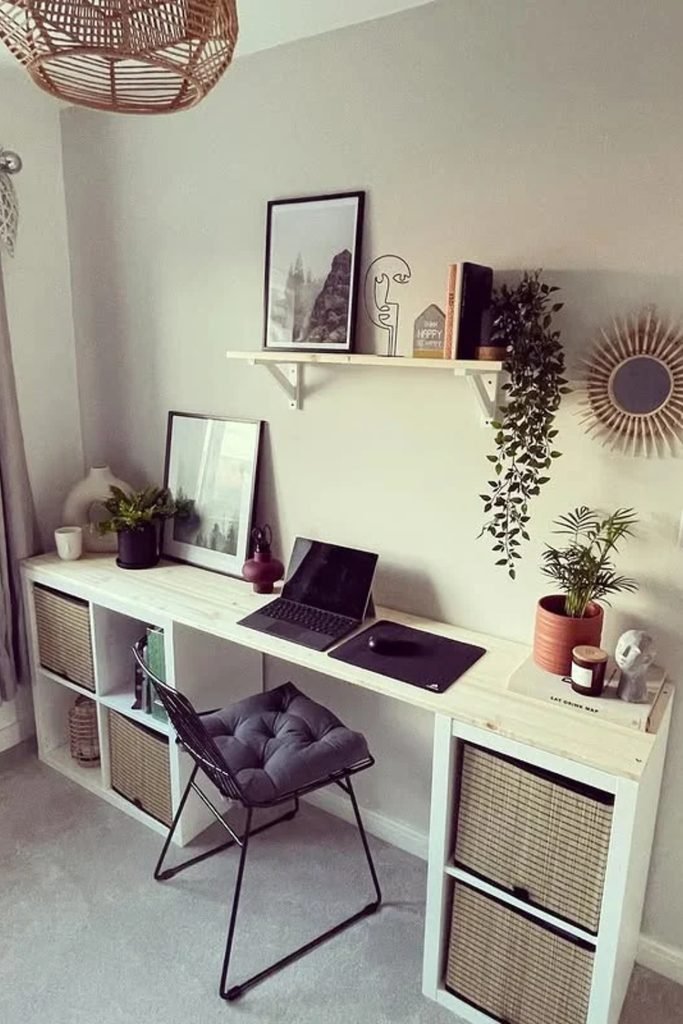
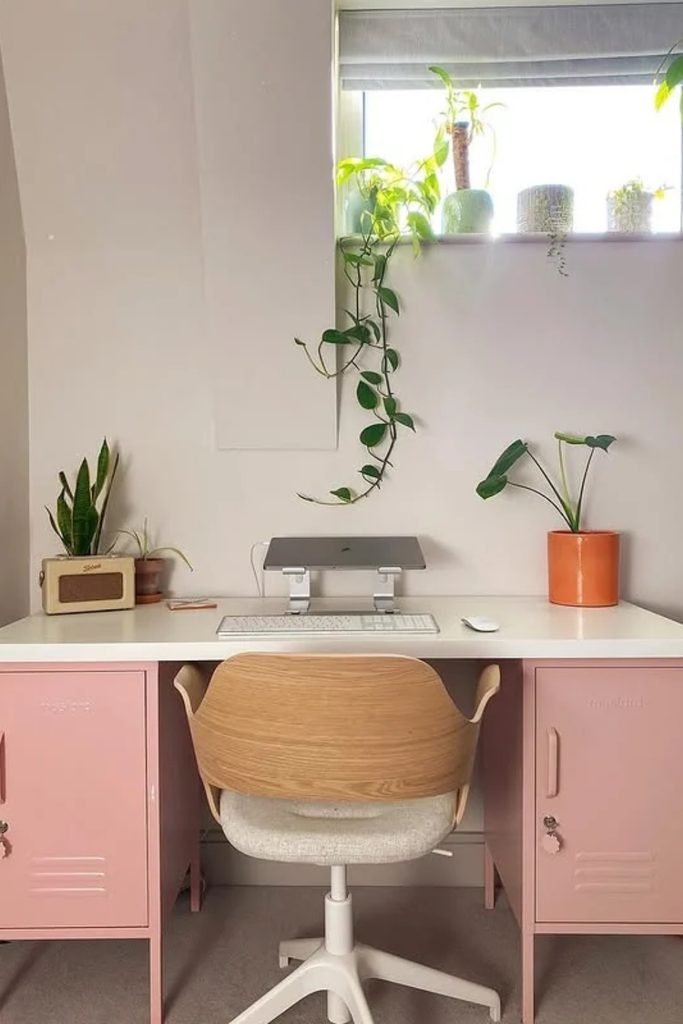
Metal Locker
Give secondhand metal lockers a new purpose by transforming them into functional storage supports for a custom standing workstation.
Look for matching lockers with suitable height and load capacity, then secure a solid desktop across both units.
Paint the metal surfaces with a compatible furniture paint to personalize your workspace without purchasing an entirely new desk.
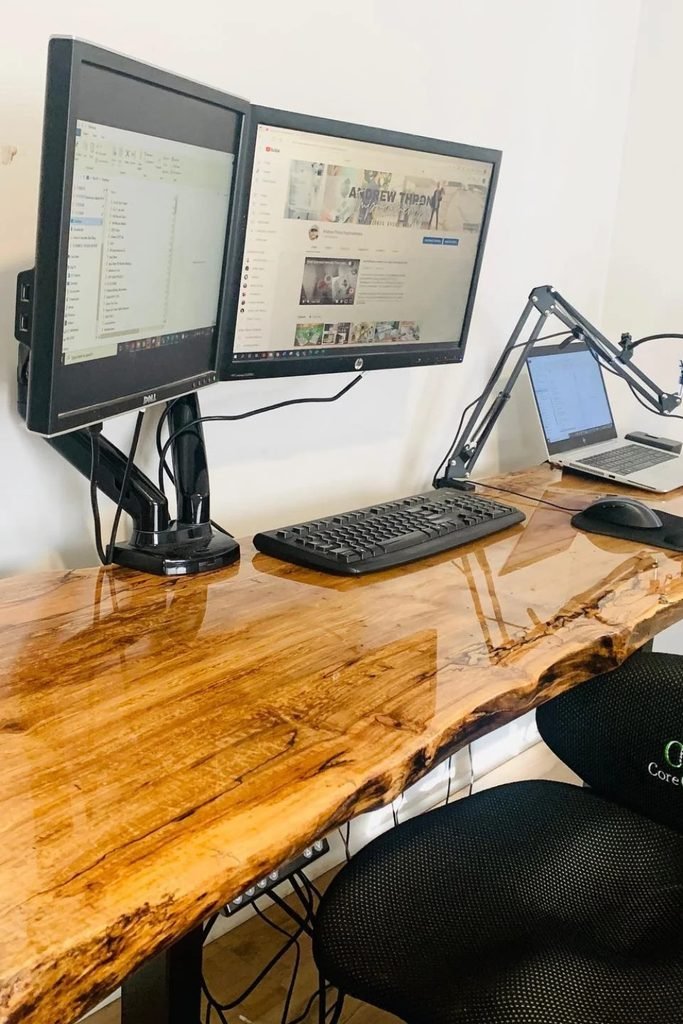
Glossy Slab Desktop
An irregular wooden slab can become a beautiful standing desk surface without requiring you to build the supporting frame yourself.
Fill small surface cracks with suitable wood epoxy and apply a clear finish to highlight the natural grain.
Reserve flat, structurally sound areas along the back edge for securely mounting your microphone stand and other adjustable accessories.
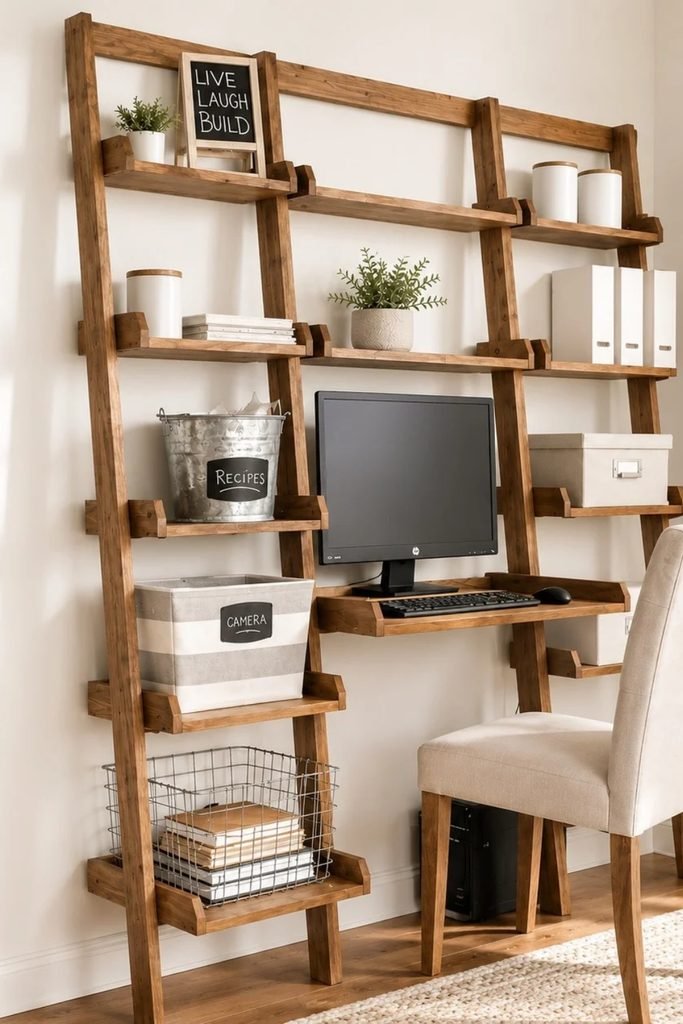
Ladder Shelf Workstation
Make better use of vertical space by incorporating a standing-height work surface into a custom wooden ladder shelving unit.
Position the surrounding shelves away from your monitor to provide sufficient headroom and keep frequently used supplies within reach.
Secure the entire shelving structure to the wall to prevent tipping when you’re leaning against the desktop during work.
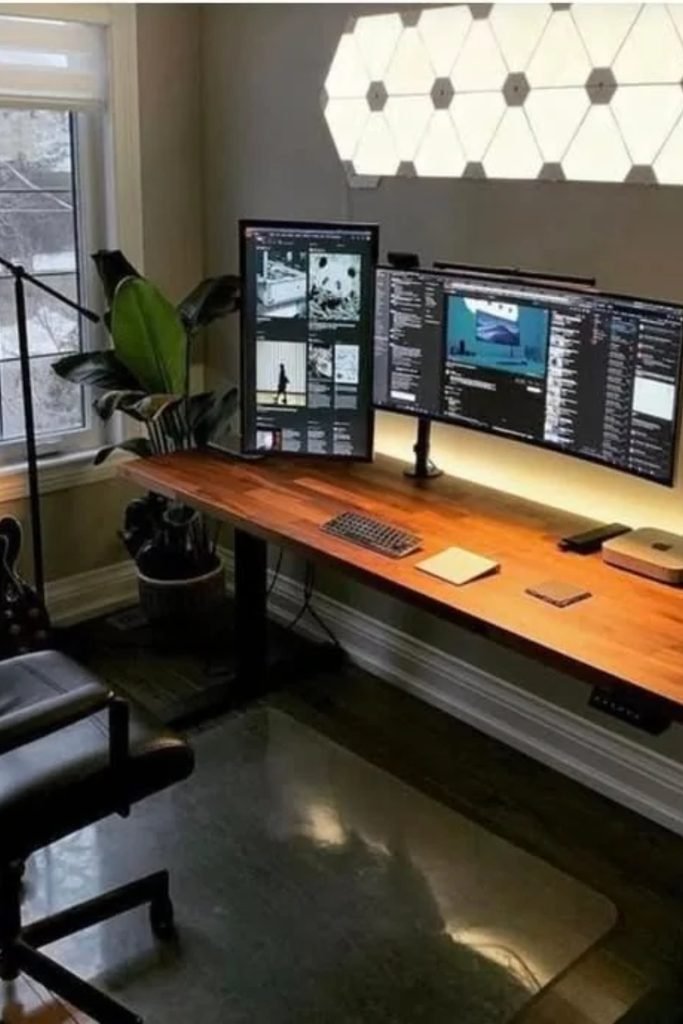
Illuminated Standing Desk
Long evening work sessions deserve thoughtful lighting, especially when bright monitors create a noticeable contrast against dark surrounding walls.
Attach LED strips behind your wooden desktop to introduce indirect lighting without sacrificing valuable space for your computer accessories.
Mount the lighting power supply beneath the moving desktop, keeping its wiring organized and clear of any adjustable components.
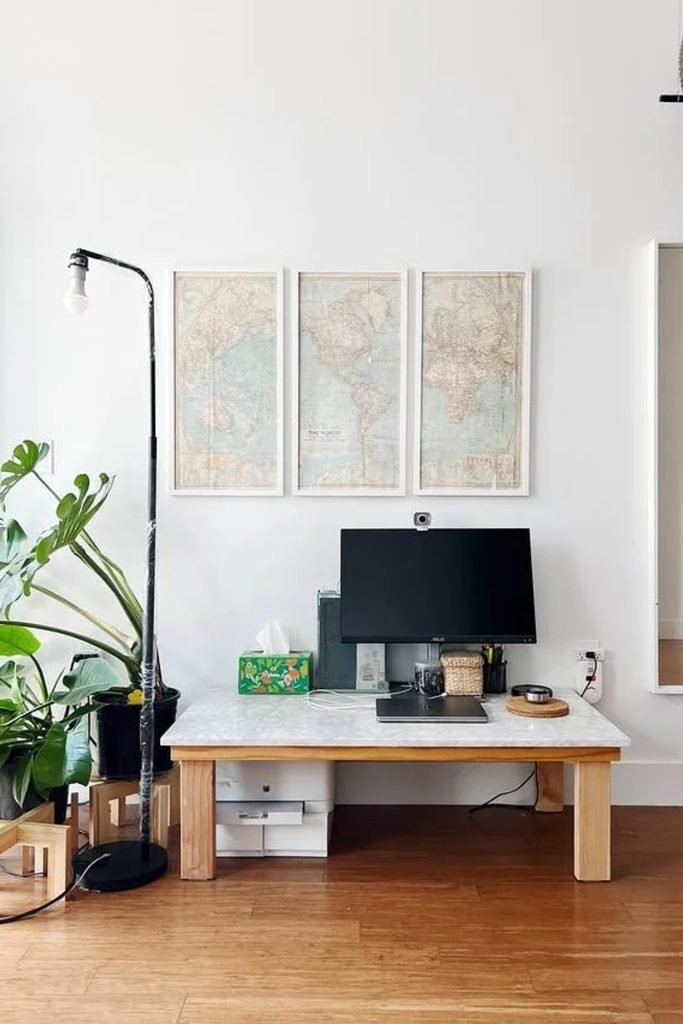
Low Table Transformation
Don’t overlook an old coffee table when gathering materials for a homemade standing desk, particularly if its surface remains sturdy.
Replace the short legs with a properly braced timber frame rather than stacking furniture risers to achieve standing height.
Reuse the original tabletop and refresh its appearance with marble-effect adhesive vinyl for an inexpensive, easy-to-clean working surface.
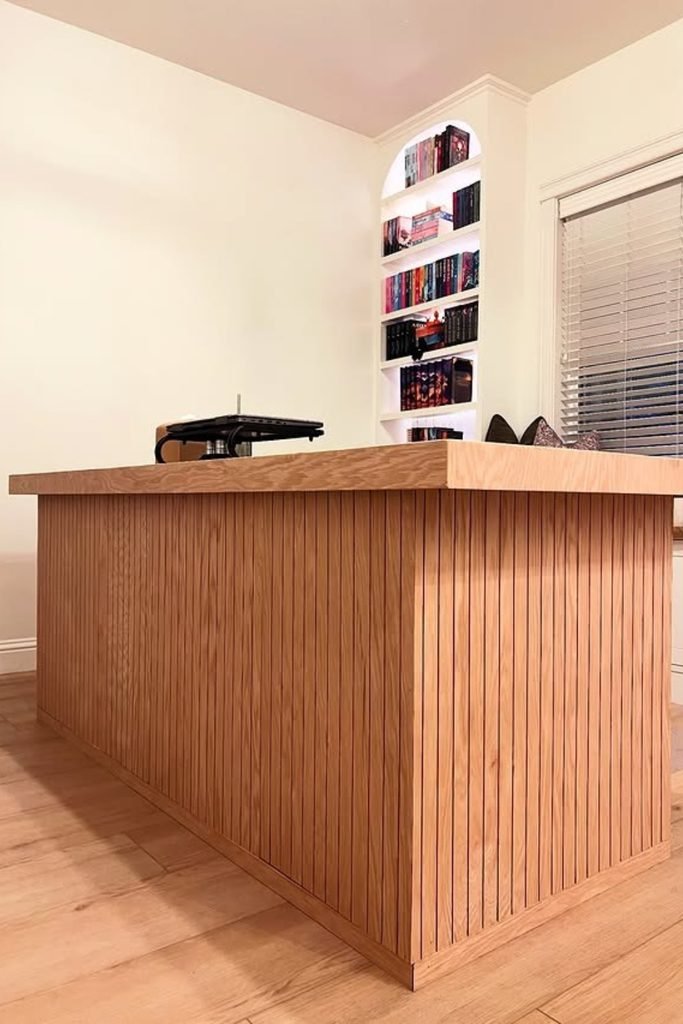
Fluted Wood Workstation
You can achieve a high-end standing desk design using inexpensive plywood panels dressed with narrow wooden strips or fluted cladding.
Build the supporting structure at your preferred working height, leaving generous countertop overhang for comfortable positioning while standing.
Include a removable rear access panel to make electrical connections and cable organization easier without dismantling your entire workstation.
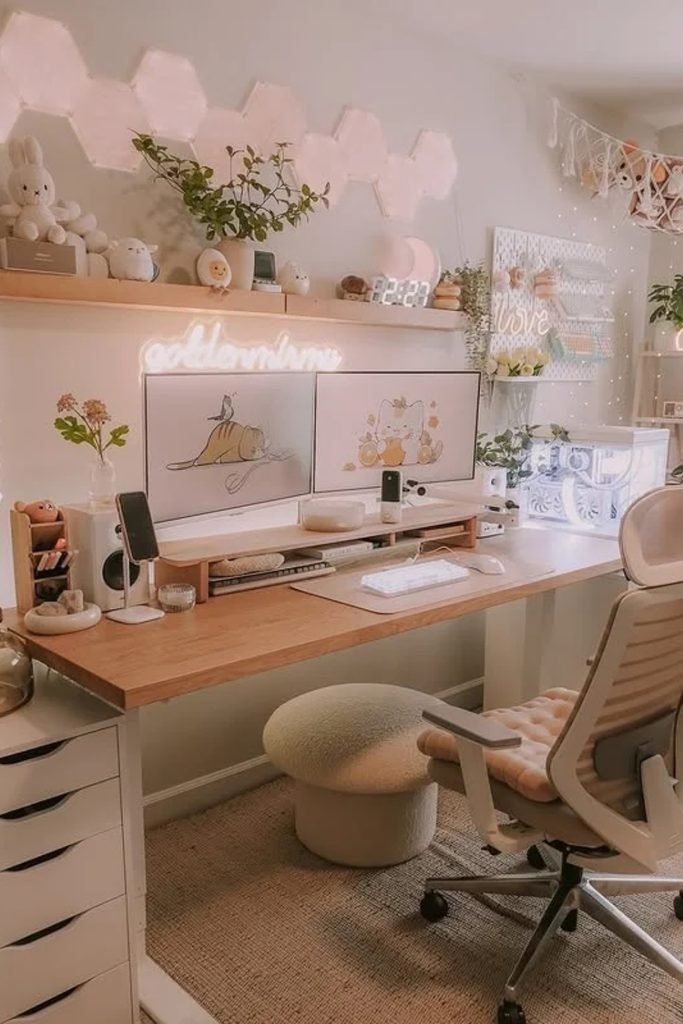
Pastel Gaming Desk
Creating a personalized gaming setup becomes much easier when you combine a wooden desktop with a white adjustable frame.
Keep decorative shelving above the maximum monitor height so your screens won’t collide with anything when raising the desk.
Use a separate drawer cabinet for accessories and incorporate pastel accents without overcrowding the surface needed for gaming.
FAQs
What is the cheapest way to make a DIY standing desk?
Repurpose your existing desk by building a simple wooden riser using leftover plywood or sturdy timber from previous projects.
Measure your standing elbow height before cutting the materials, and create separate platforms for your monitor and keyboard.
How do I make my DIY standing desk more stable?
Add diagonal support braces, tighten loose connections, and use wider supporting legs to reduce wobbling during everyday computer work.
Check that the desk sits evenly on the floor and distribute heavier equipment across the supported areas of your desktop.

Hi, my name is Ali Mehmood! I’m a passionate writer and DIY enthusiast who loves turning creative ideas into practical, hands-on projects.
I created this website to share inspiring, budget-friendly ideas that you can do yourself – whether it’s organizing your home, crafting something unique, or creating fun projects for kids and pets.
I believe DIY isn’t just a hobby – it’s a smart way to save money, reduce waste, and enjoy the satisfaction of making things with your own hands.
I’m excited to have you as part of this growing community, and I’ll continue bringing you helpful, realistic, and fun DIY ideas you can actually use.