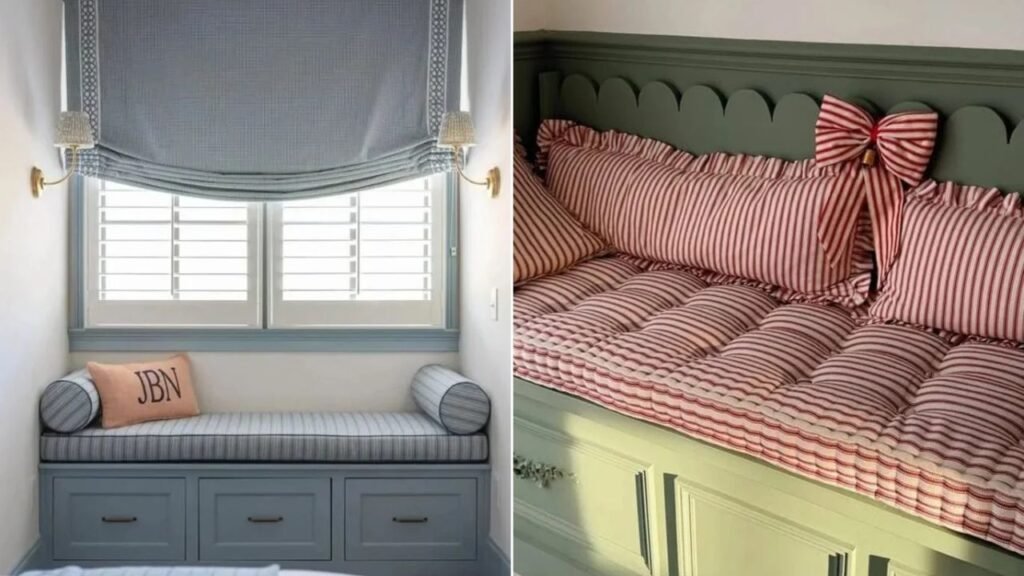
This post may contain affiliate links: read full affiliate disclosure.
Ready-made bench cushions can be expensive, especially when you need a specific size or want fabric that matches your space.
Making one yourself can feel overwhelming when you’re unsure about foam thickness, fabric choices, or sewing techniques.
These 21 DIY bench cushion ideas offer practical, budget-friendly ways to create comfortable seating, even without advanced sewing skills.
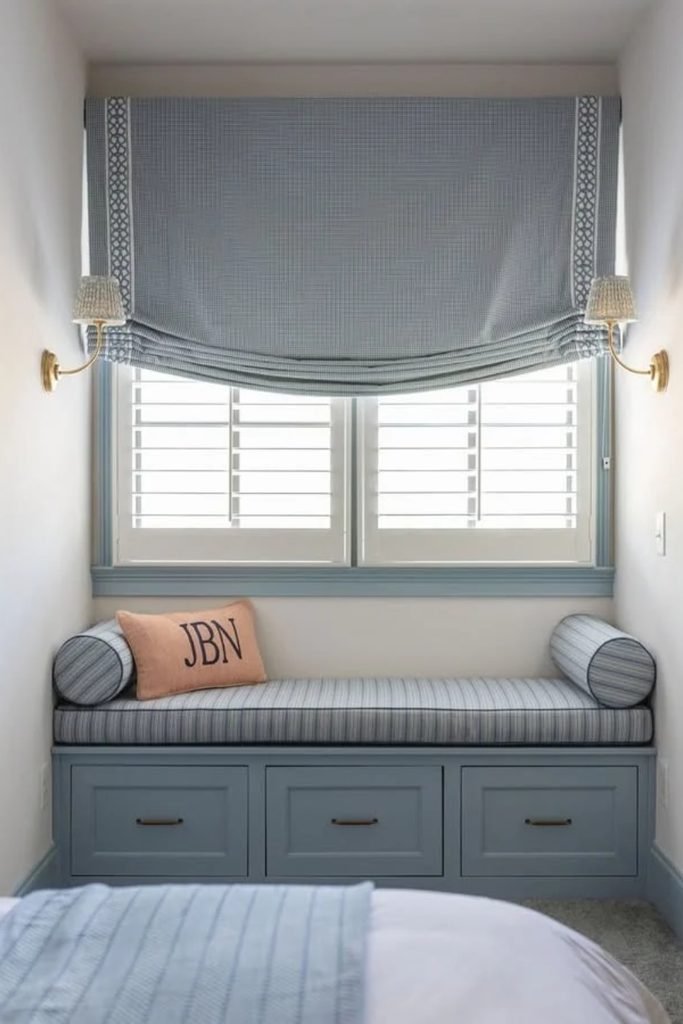
Tailored Window Seat
Getting a snug fit inside a recessed window seat starts with measuring the width at both front and back.
Choose three-inch upholstery foam for comfortable seating, then wrap it with batting to soften the edges beneath striped fabric.
Add matching bolster pillows at either end for arm support without sacrificing too much of your available seating space.
French Mattress
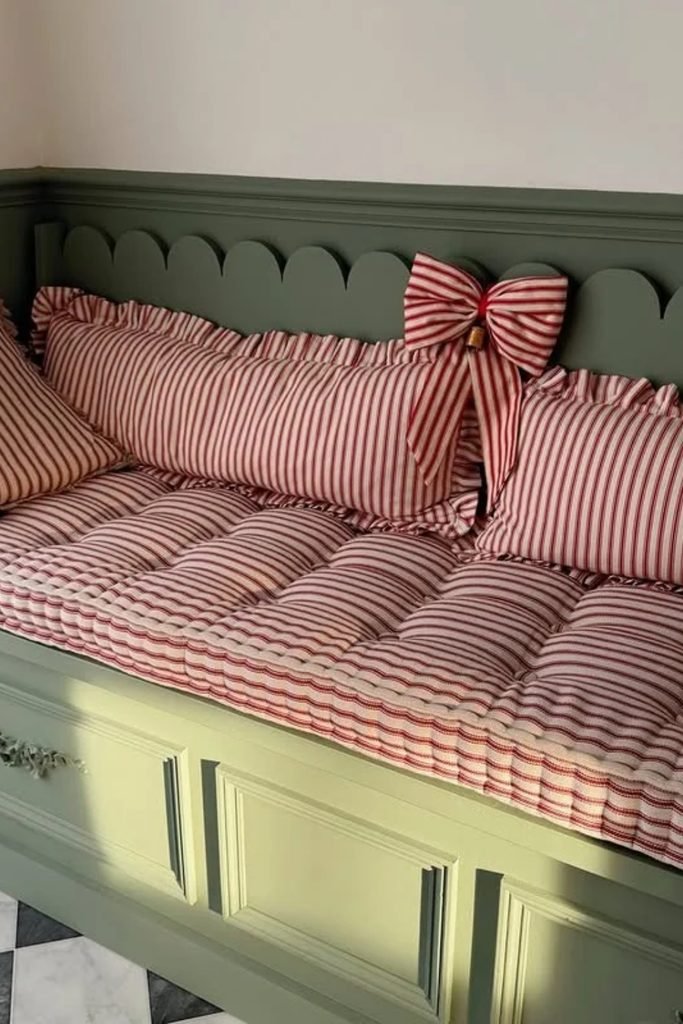
Give your storage bench a cozy cottage feel by making a French mattress cushion with traditional red ticking fabric.
Mark evenly spaced tufting points before stitching through the padding, keeping the thread tension consistent for a balanced finish.
Hand-stitch around the perimeter to create raised mattress edges, and use leftover fabric for coordinating ruffled pillows or decorative bows.
Garden Bench
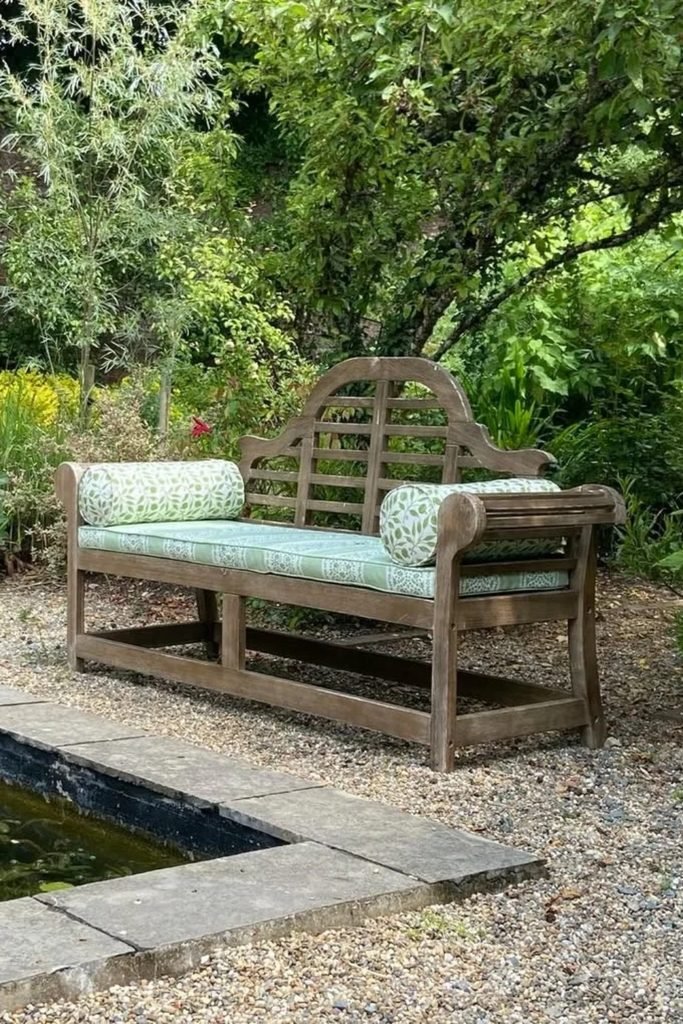
Outdoor seating needs more than pretty fabric, particularly when your garden bench regularly faces morning dew and unexpected showers.
Pair quick-drying foam with UV-resistant outdoor fabric to reduce moisture retention and help prevent fading during extended sun exposure.
Sew fabric ties onto the back corners to secure your DIY bench cushion against the wooden slats on windy days.
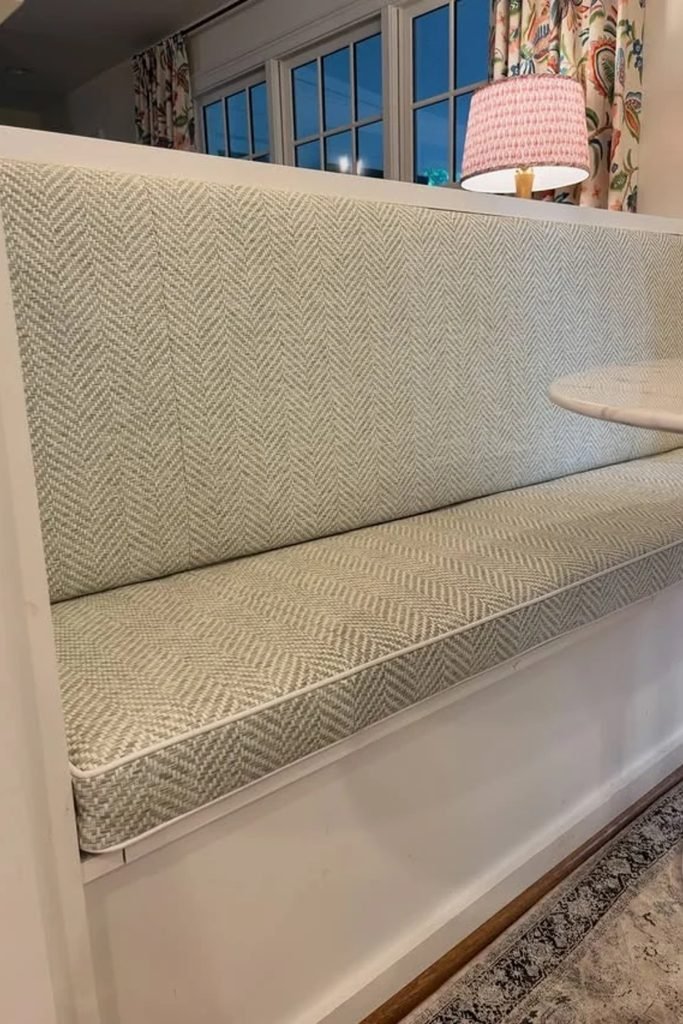
Piped Banquette
For a polished breakfast nook without custom upholstery prices, make a fitted box cushion with contrasting piping along its edges.
Check your finished seat height before selecting foam thickness, leaving enough room for comfortable leg movement underneath the dining table.
Use a concealed zipper along the rear edge so you can remove the cover whenever food spills need cleaning.
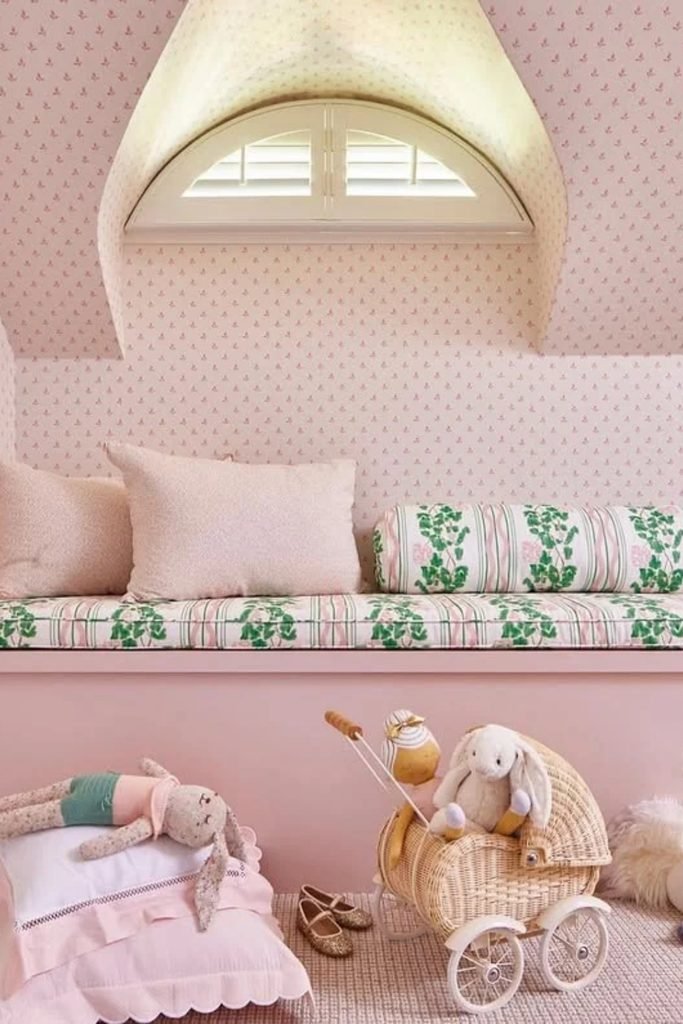
Floral Reading Nook
Bring a playful touch to a bedroom reading nook by choosing floral upholstery fabric that complements your existing wallpaper.
Before cutting patterned fabric, position the largest floral motifs where they will remain visible across the finished seating surface.
Consider prewashing washable cotton fabric to prevent unexpected shrinkage when your bench cushion cover needs its first thorough cleaning.
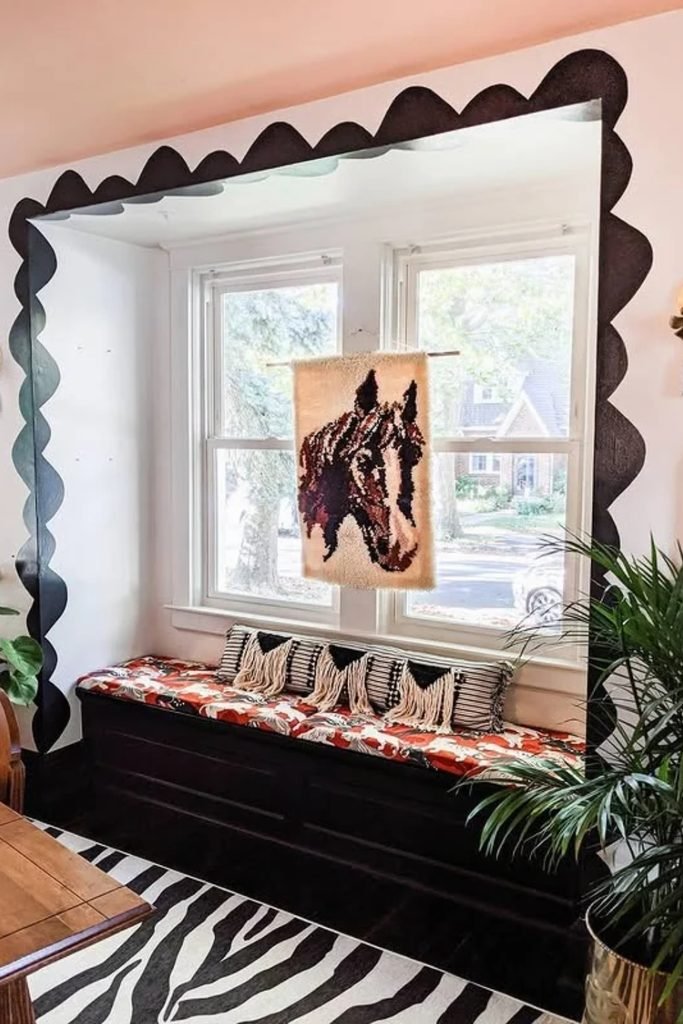
Bold Printed
Don’t hesitate to experiment with oversized prints, especially when your bench needs personality without an expensive furniture makeover.
Repurpose an existing foam insert if it still provides adequate support, saving money while giving your seating a fresh appearance.
Balance busy cushion patterns with textured throw pillows in simpler colors rather than introducing another competing print into the space.
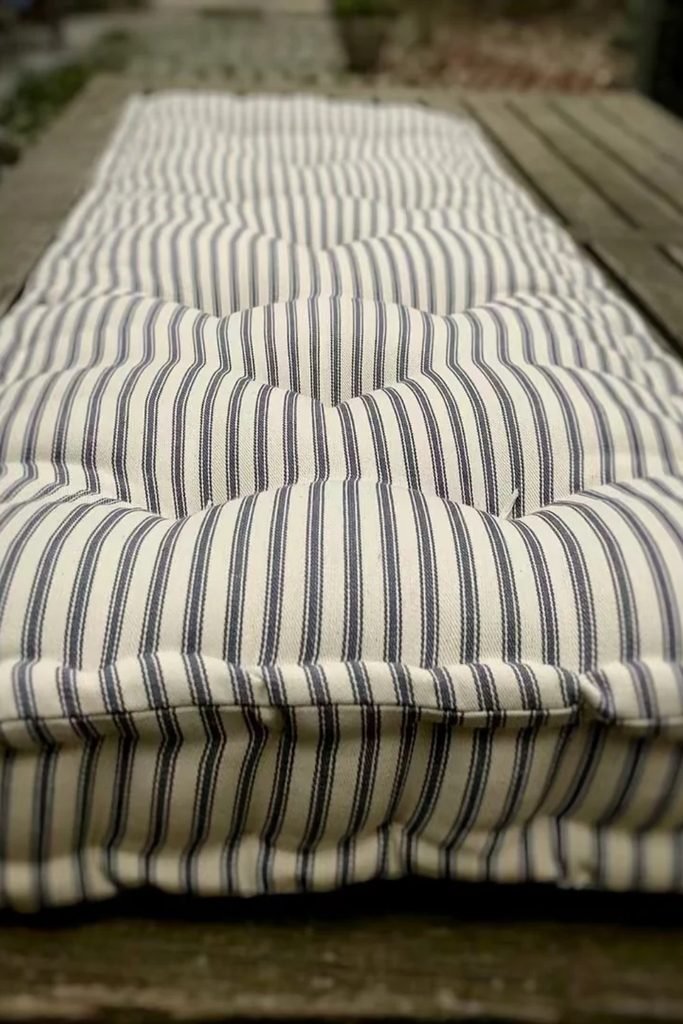
Deep Tufted
If ordinary foam cushions feel too rigid, create a generously padded bench cushion with deep tufting and rounded edges.
Work from the center outward using a long upholstery needle and strong thread to distribute the tufting tension evenly.
Avoid pulling the stitches excessively tight, as this can compress the filling and create uncomfortable dips across your seating.
Extra-Long Bench
Making an extra-long bench cushion becomes easier when you create a paper template before purchasing or cutting any materials.
Join smaller foam sections using foam-safe upholstery adhesive if finding a single piece in your required length proves difficult.
Cover the joined sections with continuous batting to disguise minor ridges and maintain a smooth appearance beneath the fabric.
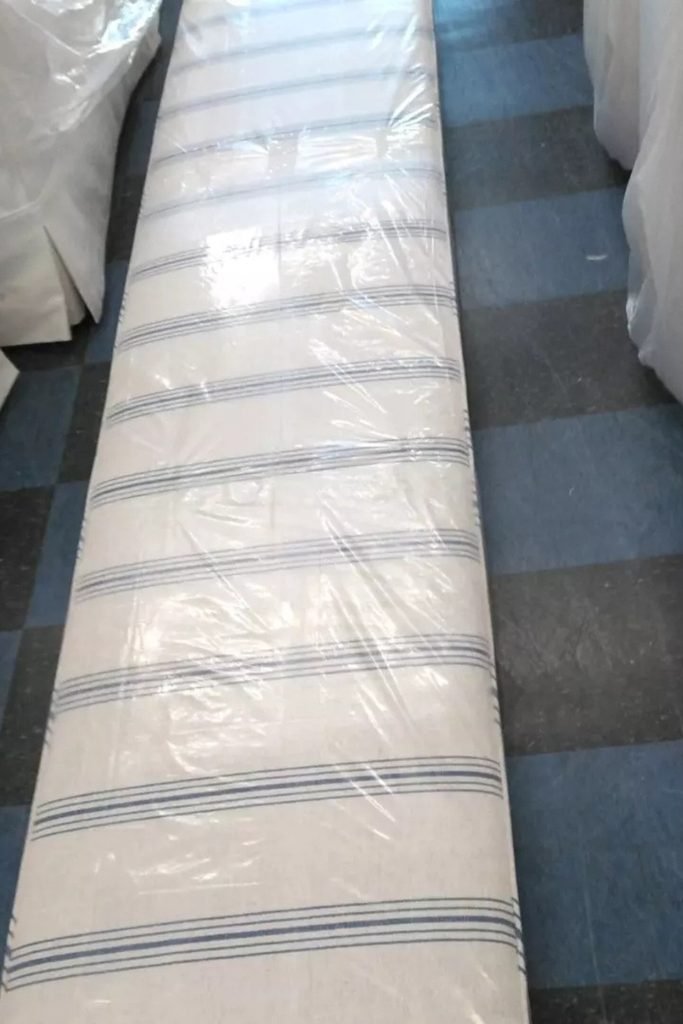
Soft Tassel
Sometimes, a softly stuffed cushion is all you need to turn a bare window bench into a relaxing retreat.
Create a plump finish by combining supportive foam with polyester batting, allowing extra fabric to accommodate the rounded edges.
Attach handmade tassels to the corners with reinforced stitches so they remain secure when you lift or reposition the cushion.
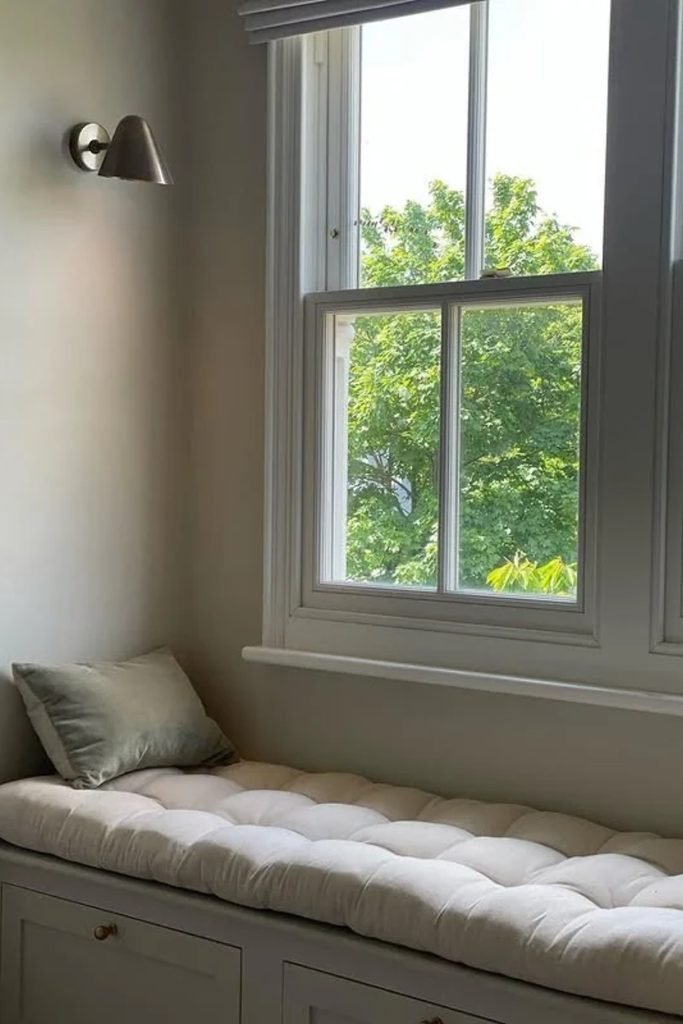
Charcoal Dining
Busy dining areas benefit from charcoal upholstery fabric that helps disguise everyday marks between washes without overwhelming the surrounding decor.
Try tightly woven performance fabric for better resistance to abrasion, particularly if your family uses the bench every day.
Keep the seating surface relatively firm so everyone can sit comfortably at the table without sinking too far down.
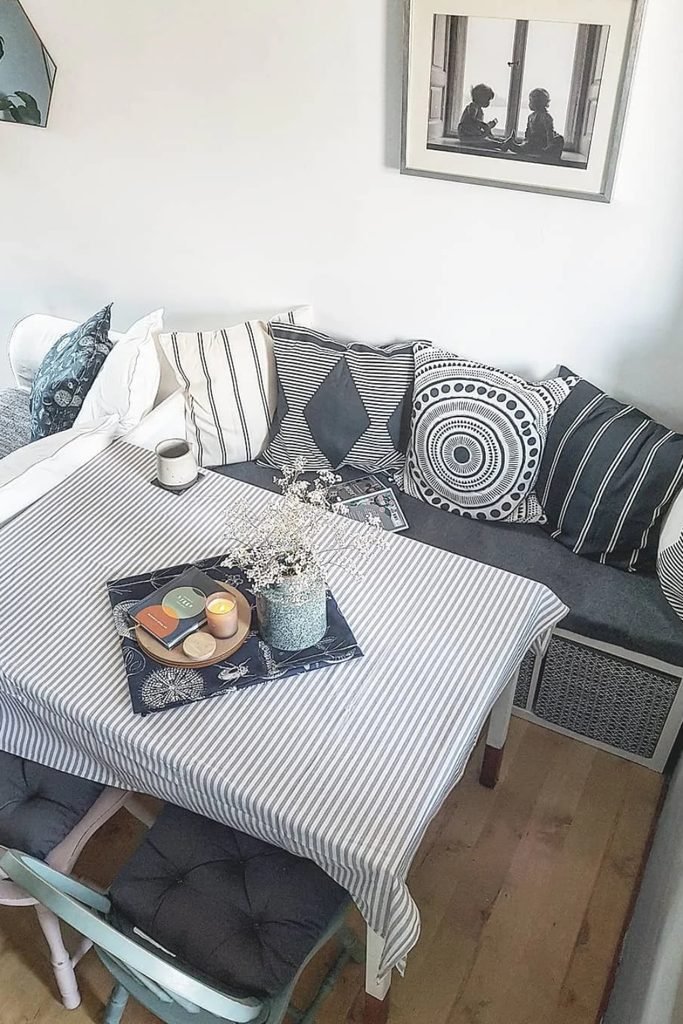
Cinder Block Bench
A homemade cinder block bench becomes much more inviting when you add a thick cushion across its wooden seating planks.
Check the spacing between the planks before choosing padding, since overly soft filling can sink into the gaps underneath.
Pick a navy geometric outdoor fabric for your cushion, and store it indoors whenever prolonged wet weather is expected.

Minimalist No-Sew
Skip decorative seams and complicated sewing patterns by making a simple upholstered cushion that blends seamlessly with built-in cabinetry.
Wrap neutral upholstery fabric around foam and a thin plywood base, securing the material underneath with a staple gun.
Test the cushion against your cabinet doors before finishing, ensuring the fabric doesn’t overhang and interfere with their movement.
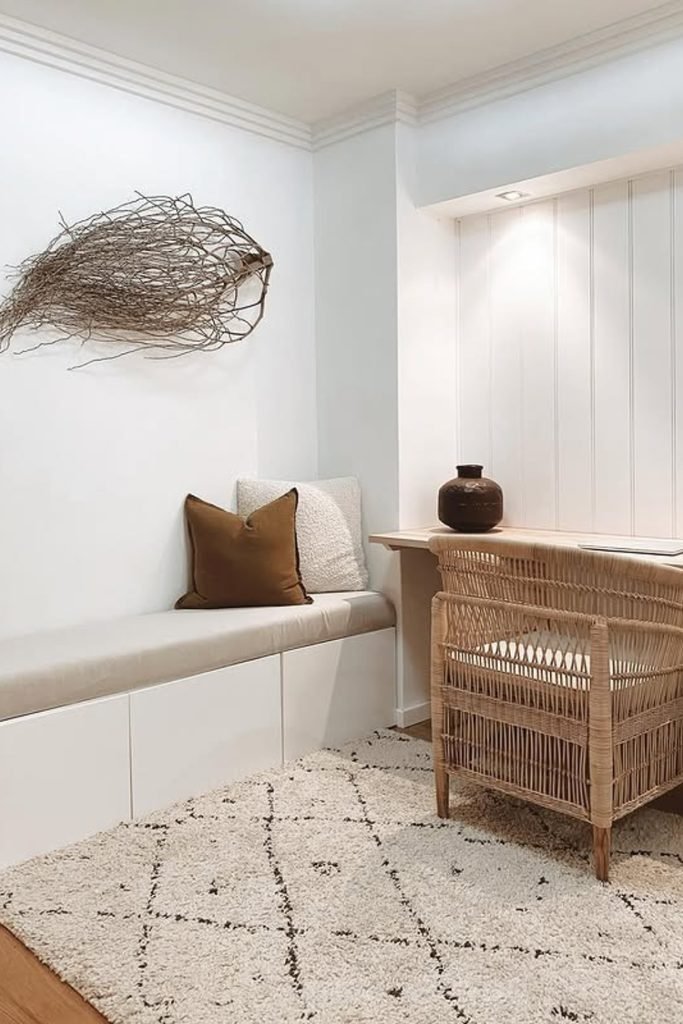
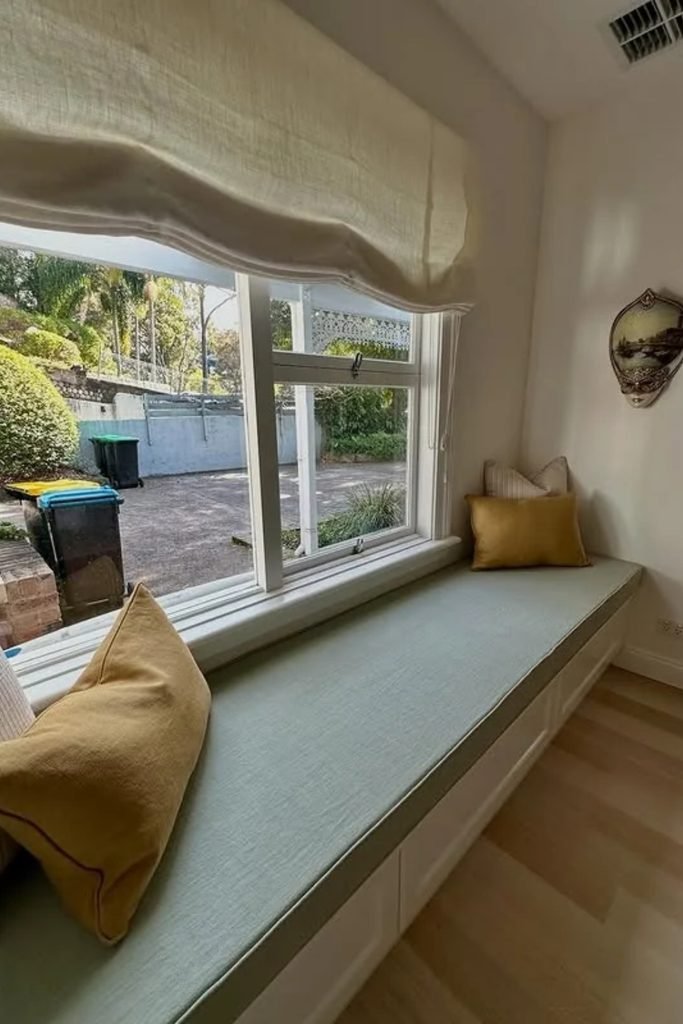
Sage Green
Sunlight streaming through large windows can gradually fade ordinary upholstery fabric, so consider lightfast materials when making window seat cushions.
A muted sage green cover offers a calming foundation that works beautifully with warm mustard pillows and natural linen accents.
Cut your foam with an electric carving knife, keeping the blade vertical to achieve straight edges along longer seating surfaces.
Hanging Backrest
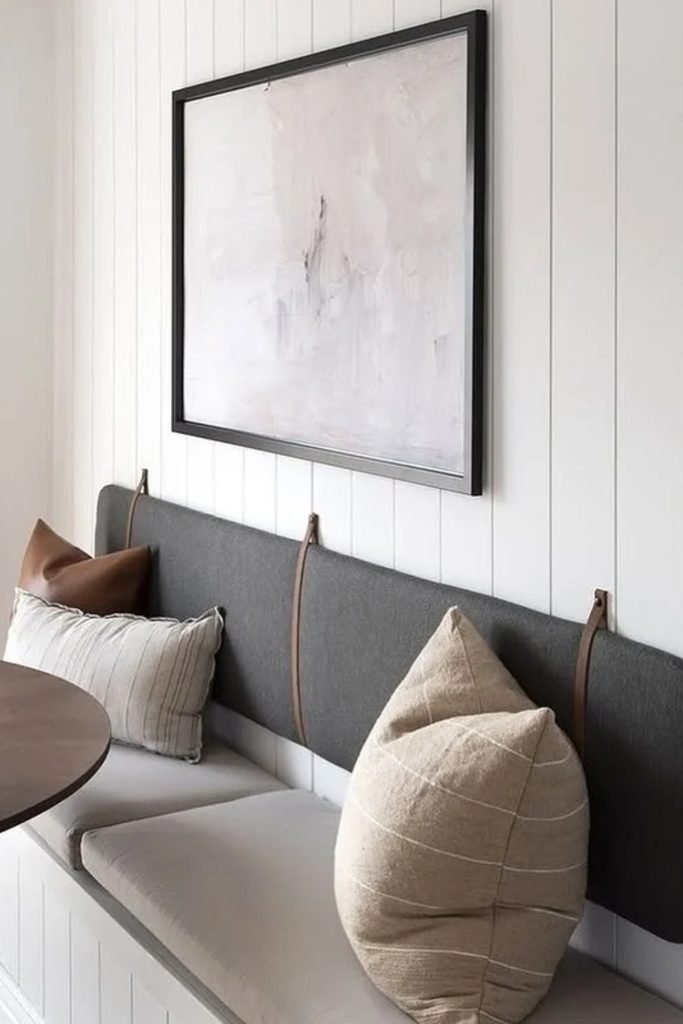
Why stop at the seating surface when you can make your dining bench more comfortable with a suspended padded backrest?
Use rounded foam corners and sturdy leather straps to recreate this design, securing the mounting hardware into suitable wall supports.
Divide the seat padding into individual cushions for easier handling, especially when removing covers or replacing worn sections over time.
Colorful Cubby
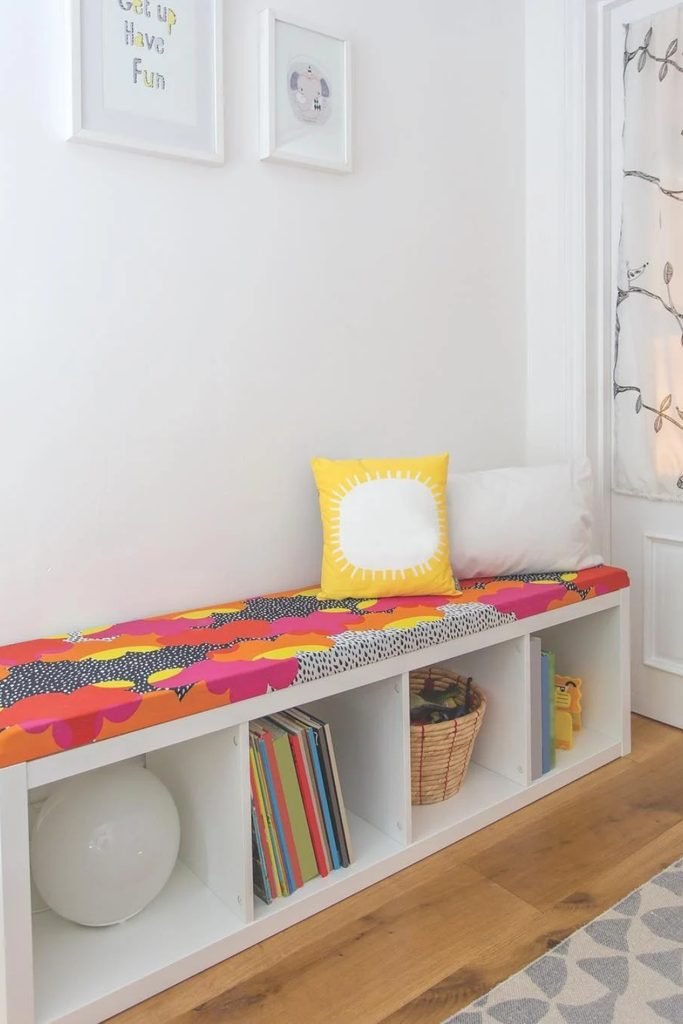
Turn a sturdy, seating-rated cube storage unit into a playful reading bench using bright floral fabric and supportive foam padding.
An envelope-style cushion cover makes seasonal fabric changes easier without requiring you to install a zipper or complicated fastening hardware.
Place a furniture-safe non-slip liner underneath the cushion to prevent shifting when children climb onto the bench or reach for books.
Basket Storage
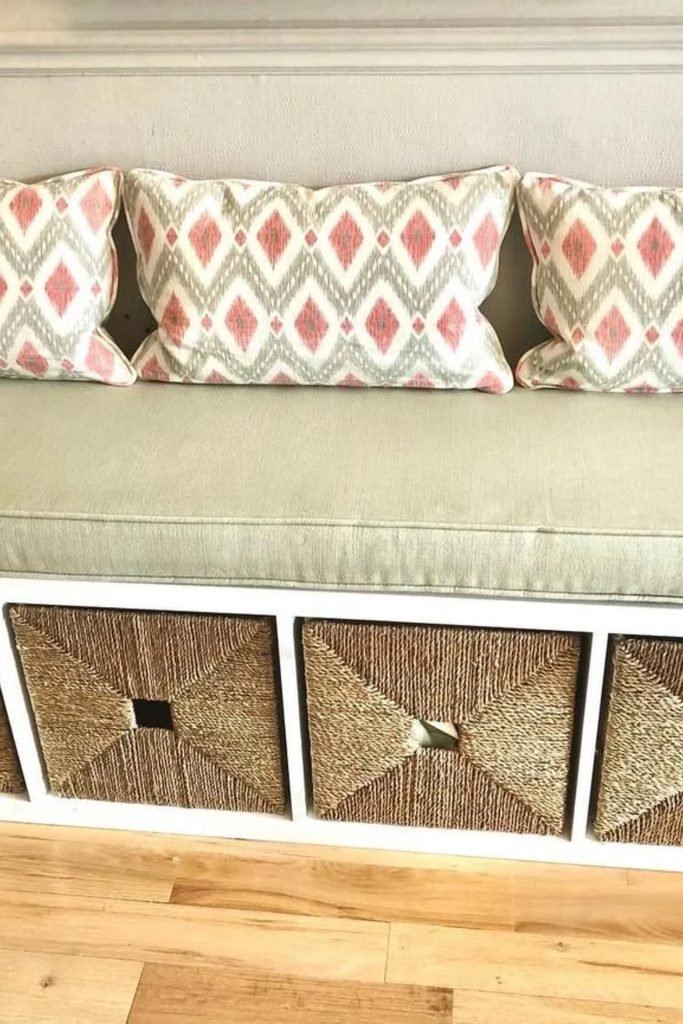
Keep your entryway seating practical with a neutral bench cushion that complements woven storage baskets without competing with patterned pillows.
Calculate fabric requirements using the foam’s length, width, thickness, and seam allowances before purchasing material for your box cushion cover.
Reinforce the front seams with an additional row of stitching, particularly where repeated sitting puts pressure on the cushion edges.
Split Bench
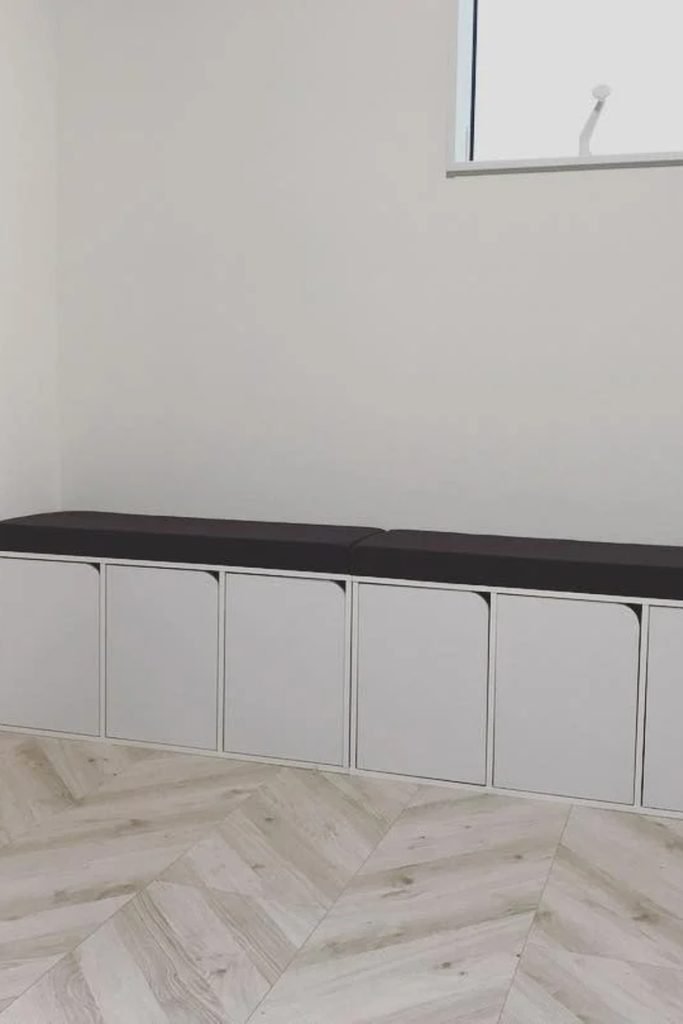
Instead of wrestling with one oversized foam insert, make two separate cushions that sit neatly across your storage bench.
Cut both pieces from the same upholstery foam sheet to maintain consistent firmness and height across the entire seating area.
Choose black fabric with a slight texture to disguise minor wrinkles while creating a striking contrast against white cabinetry.
Individual Tie-On
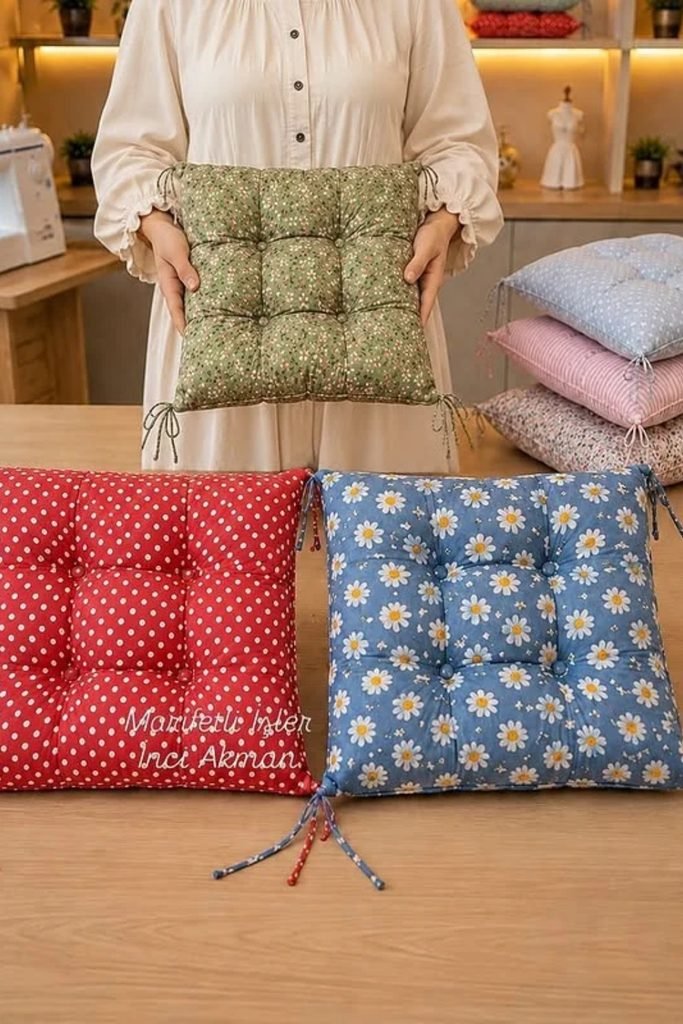
Working with leftover fabric becomes much easier when you make individual seat pads rather than one continuous bench cushion.
Sandwich layered upholstery batting between two fabric squares, stitching through the filling at several points to prevent uneven distribution.
Insert fabric ties into the corner seams before sewing everything closed, making each cushion easy to secure and reposition.
Mustard Corduroy
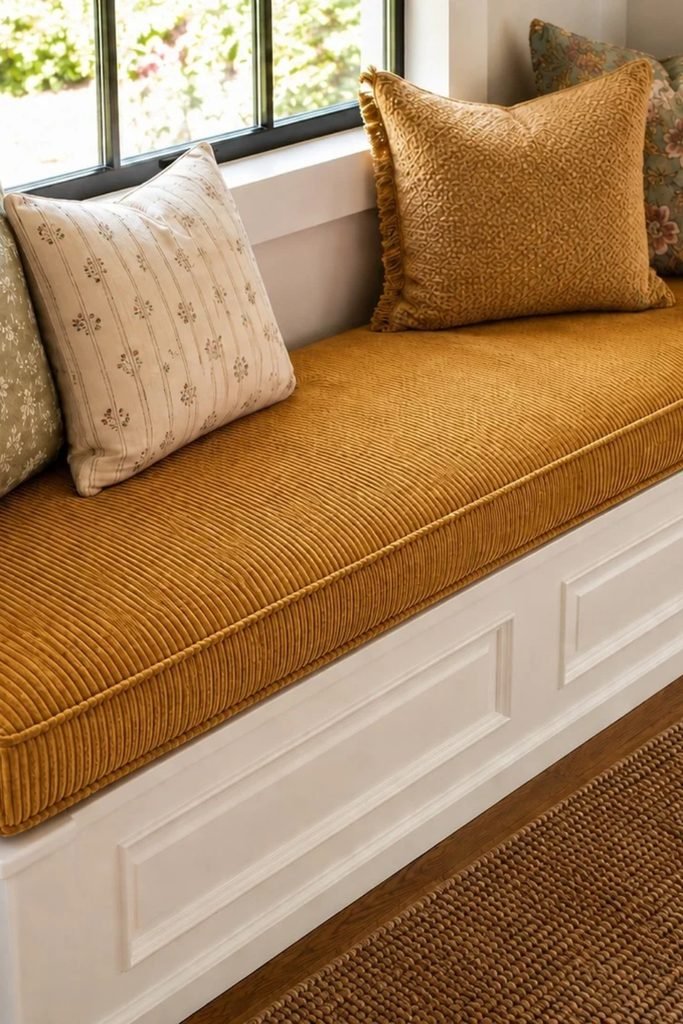
Corduroy brings warmth and texture to ordinary bench seating, making it particularly appealing for cozy reading corners during colder months.
Pay attention to the direction of the fabric ribs when cutting separate panels, ensuring they align consistently across adjoining seams.
Use a walking foot on your sewing machine to help prevent thick corduroy layers from shifting while stitching together.
Blue Textured
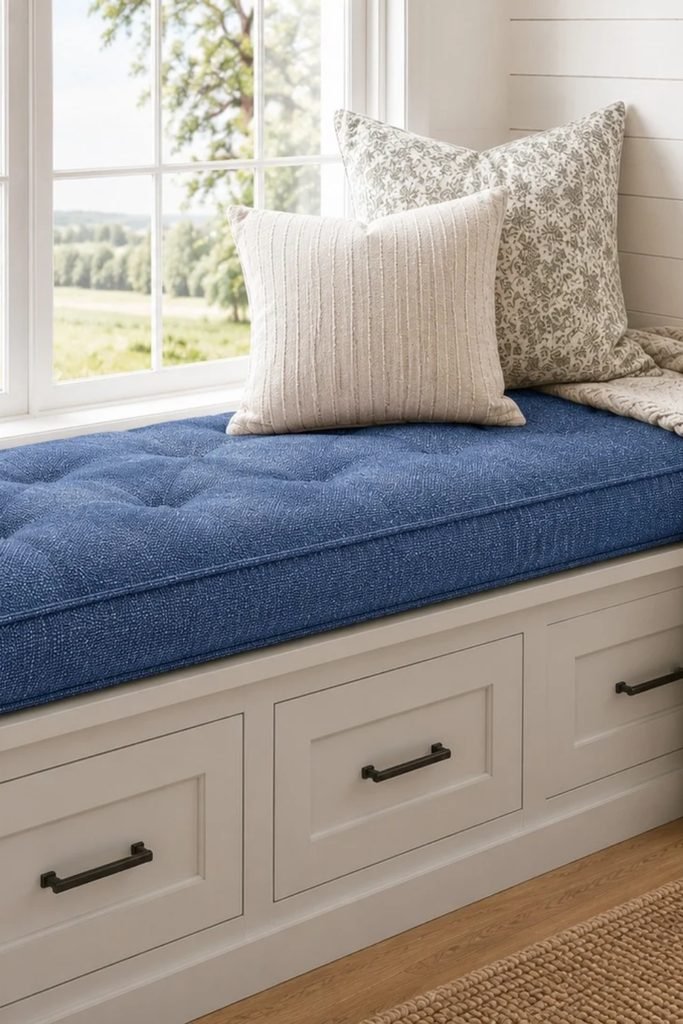
Give your DIY bench cushion a furniture-store finish by combining textured blue upholstery fabric with matching corded edges and subtle tufting.
Practice making shallow tufts on scrap fabric and padding before committing to the final design, particularly when working with thicker materials.
Select an abrasion-resistant woven fabric that can withstand regular sitting without developing noticeably worn patches across the textured surface.
Woven Bench
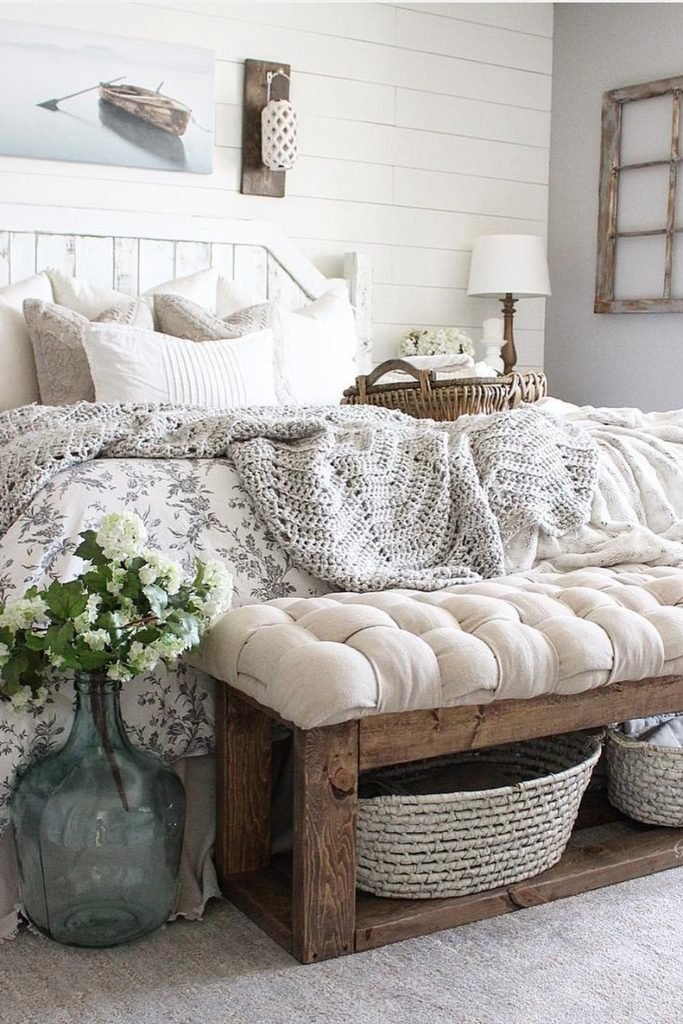
Give an old wooden bedroom bench a fresh look by creating a chunky woven cushion using padded fabric strips.
Sew long fabric tubes, fill them evenly with polyester batting, and weave them together to form a textured seating surface.
Secure the woven ends beneath a plywood base using upholstery staples, keeping the unfinished edges hidden from every visible angle.
FAQs
How can I make a DIY bench cushion without sewing?
Cut upholstery foam and plywood to match your bench dimensions, then wrap the foam with batting for a smoother finish.
Stretch your chosen fabric over the padding, fold the corners neatly, and secure everything underneath using an upholstery staple gun.
What is the best foam thickness for a DIY bench cushion?
Two to three inches of firm upholstery foam usually works well for dining benches, entryway seating, and everyday use.
For window seats or reading nooks, consider four-inch foam for extra comfort, provided it doesn’t make the seating unnecessarily high.

Hi, my name is Ali Mehmood! I’m a passionate writer and DIY enthusiast who loves turning creative ideas into practical, hands-on projects.
I created this website to share inspiring, budget-friendly ideas that you can do yourself – whether it’s organizing your home, crafting something unique, or creating fun projects for kids and pets.
I believe DIY isn’t just a hobby – it’s a smart way to save money, reduce waste, and enjoy the satisfaction of making things with your own hands.
I’m excited to have you as part of this growing community, and I’ll continue bringing you helpful, realistic, and fun DIY ideas you can actually use.