This post may contain affiliate links: read full affiliate disclosure.
Trying to find a bunny sewing pattern that actually looks cute after sewing can feel more frustrating than expected.
One pattern looks adorable in the photo, but somehow turns into a lumpy bunny with crooked ears or a shape that feels completely off once you finish.
Add confusing instructions, tricky fabric choices, and patterns that secretly expect advanced sewing skills, and it is easy to lose motivation before you even start.
A lot of people simply want a bunny they can actually finish without stress, whether it is for Easter baskets, nursery decor, handmade gifts, or a cozy plush to keep around the house.
Small details like fabric choice, stuffing, and bunny shape can make a huge difference in how the final project turns out.
In this article, I will show you cute bunny sewing pattern ideas that feel realistic to make, along with practical tips to help you choose styles, avoid beginner mistakes.
Let’s jump in!
Pastel Bunnies
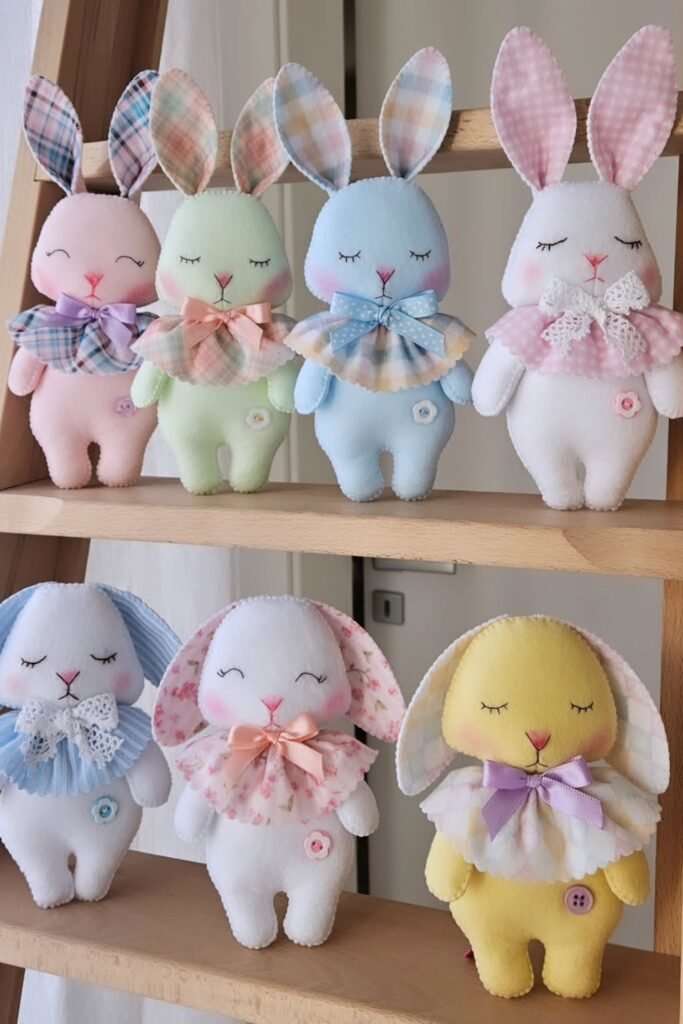
Soft pastel fabric instantly makes a bunny pattern feel sweeter, especially when nursery shelves or Easter baskets need something handmade without looking overly complicated.
Mixing plaid ears, ribbon bows, or ruffle collars works beautifully when you want personality without changing the beginner-friendly bunny shape too much.
Tiny stitched eyes usually feel softer than buttons here, especially if little hands may cuddle these bunnies instead of simply displaying them.
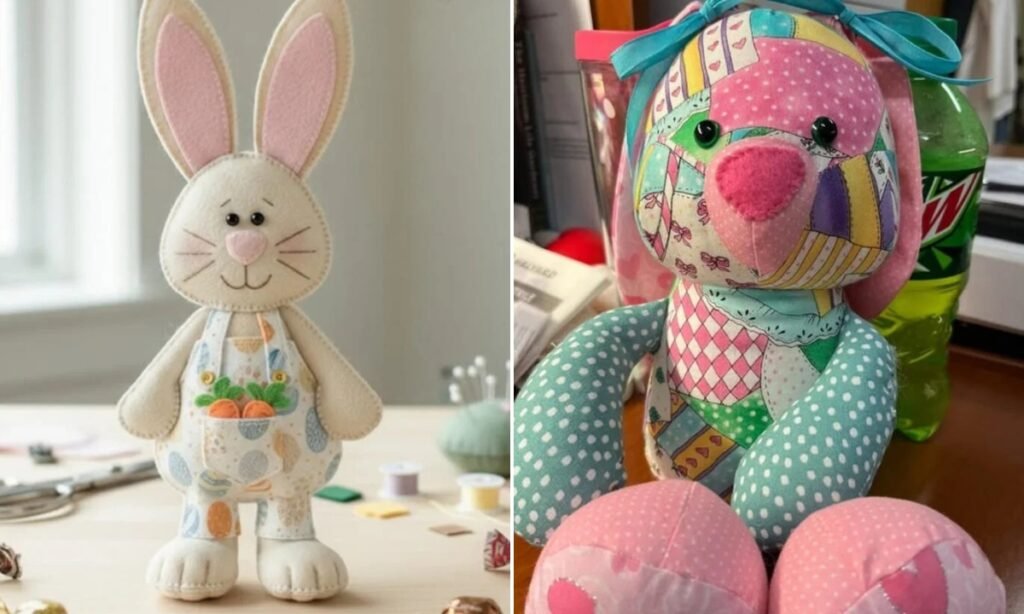
Patchwork Bunny
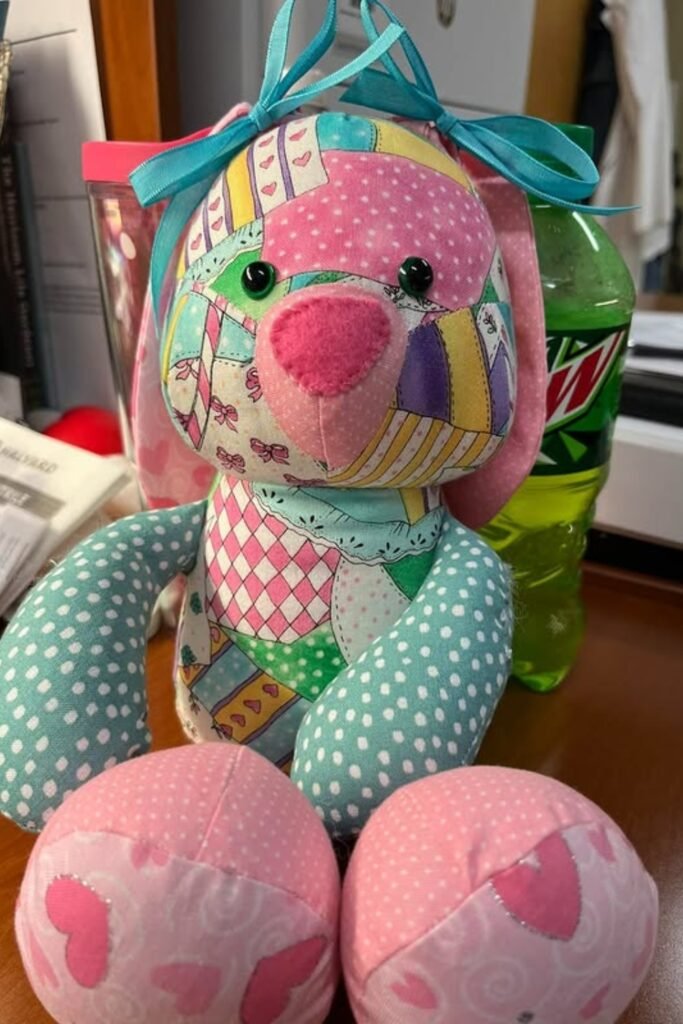
Scrap fabric suddenly feels exciting when patchwork pieces turn into a playful bunny, giving leftover prints a second life without feeling messy together.
Bold noses and oversized feet make this style feel more playful, especially if you want a statement bunny sitting on shelves or beds.
Balancing busy fabrics becomes easier when one color repeats throughout the design, helping everything feel intentional instead of overly crowded or random.
Apron Bunny
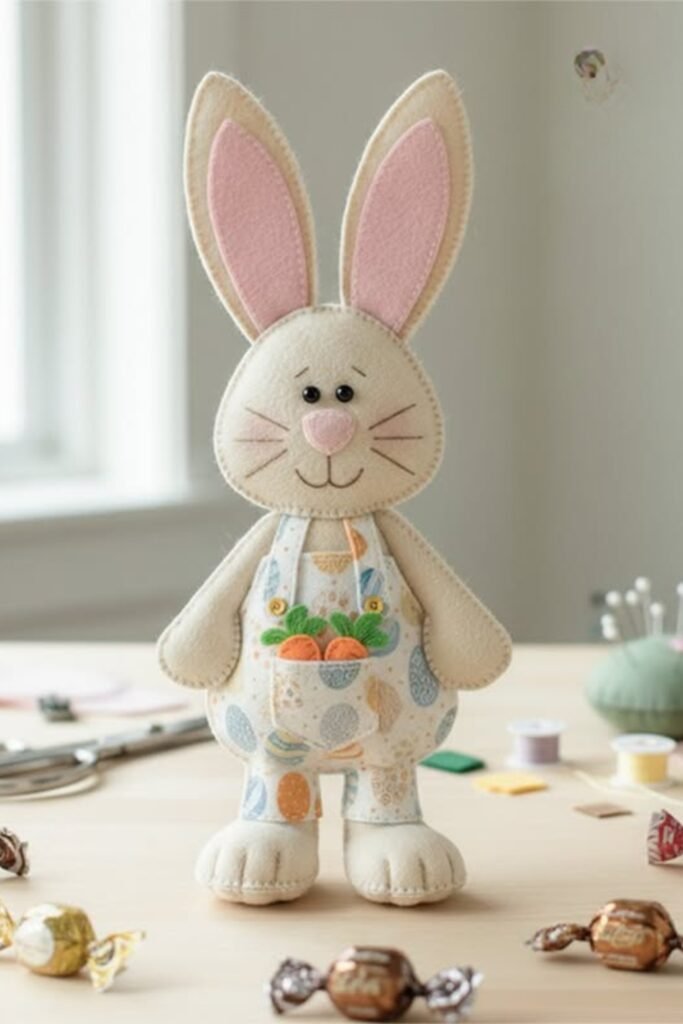
Something about a bunny wearing overalls or a tiny apron instantly adds storybook charm, especially when handmade Easter decorations feel too plain.
Little embroidered vegetables or stitched pockets help this pattern feel more finished without forcing you into advanced sewing details or complicated accessories.
Felt works beautifully for beginners here because edges stay neat, while soft cotton outfits add personality without overwhelming the simple bunny silhouette.
Floppy Bunny
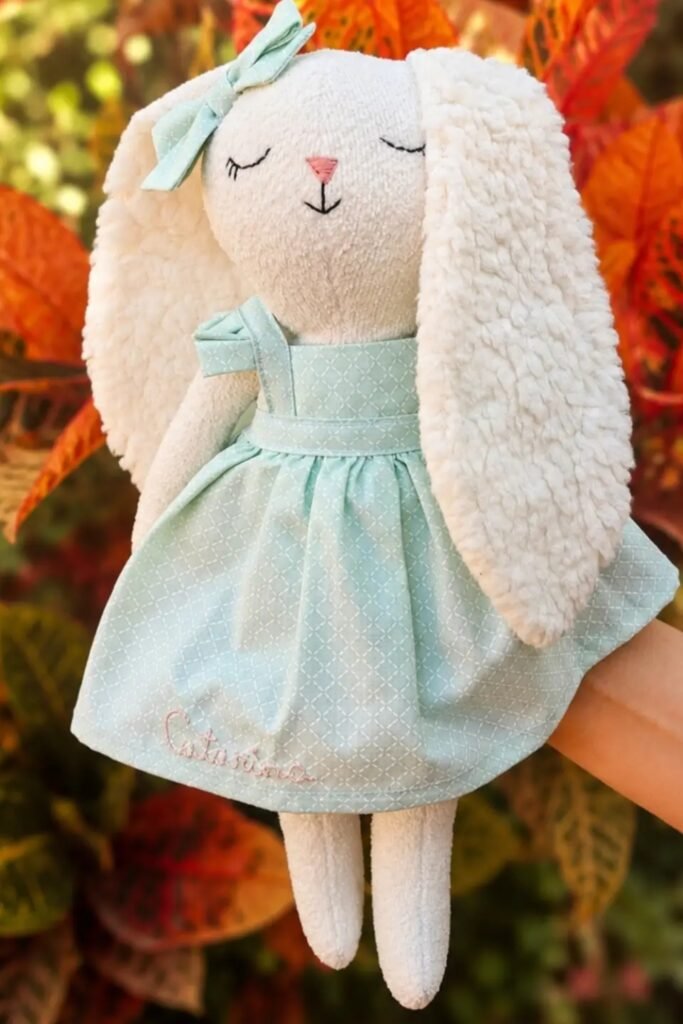
Long floppy ears completely change the mood of a bunny pattern, turning a simple plush into something that feels cozy enough for gifting.
Textured fleece or sherpa fabric makes this style extra cuddly, especially when you want a bunny kids will actually hug instead of display.
Soft dresses and tiny bows help balance oversized ears nicely, though keeping outfit colors simple prevents the finished bunny from feeling too busy.
Cottage Bunny
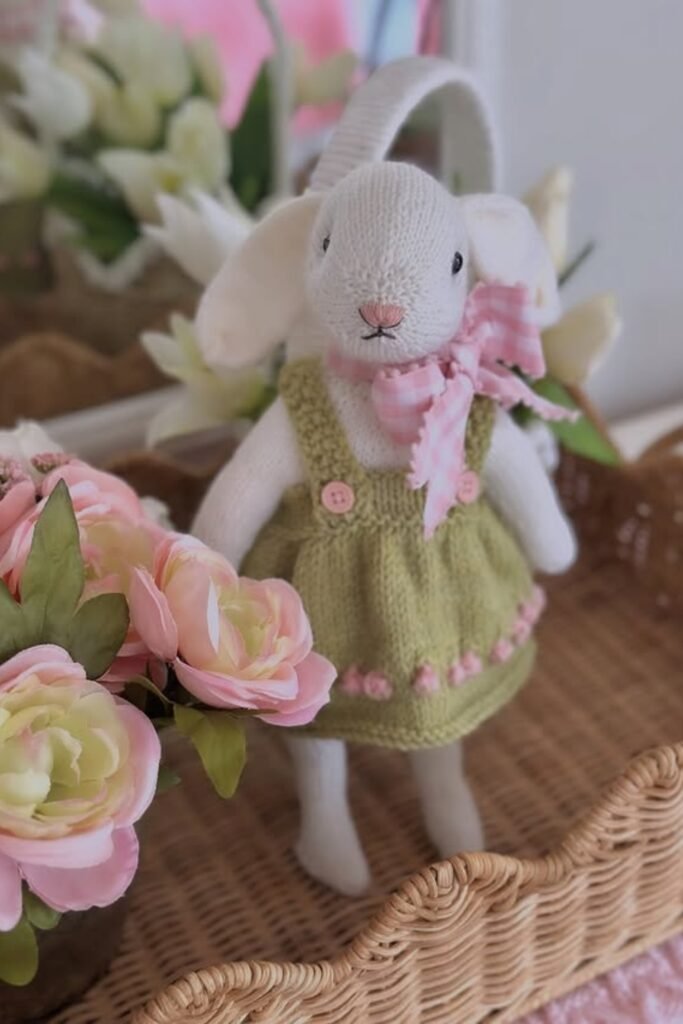
Soft knitted outfits instantly make a bunny pattern feel more collectible, especially when shelves, nurseries, or spring decor need handmade charm without loud colors.
Muted greens and pink scarves pair beautifully for cottagecore looks, though simple embroidery keeps the bunny feeling cozy instead of overly decorated.
Smaller facial details usually work best here because oversized features can overpower the soft vintage mood this bunny style naturally creates.
Carrot Pocket
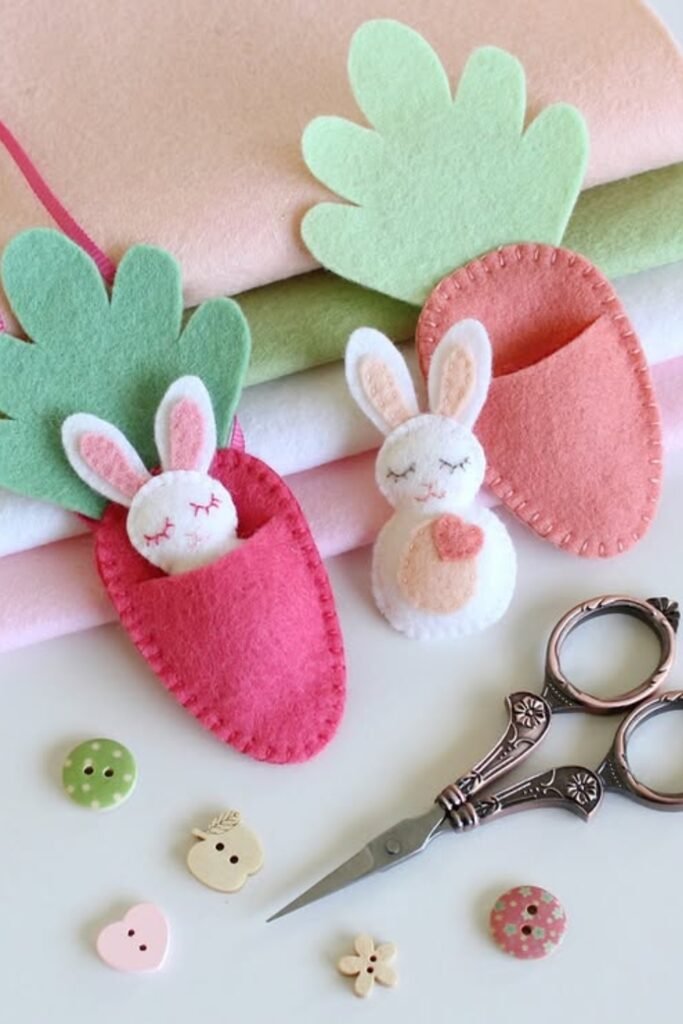
Tiny felt bunnies tucked inside carrots feel surprisingly fun when you want beginner-friendly sewing projects that double as Easter basket fillers.
Felt works especially well because edges stay neat without fraying, making hand stitching feel much easier if sewing machines sound overwhelming right now.
Bright carrot tops and sleepy bunny faces instantly add personality, especially when small gifts or seasonal decorations need something playful yet quick.
Felt Bunny
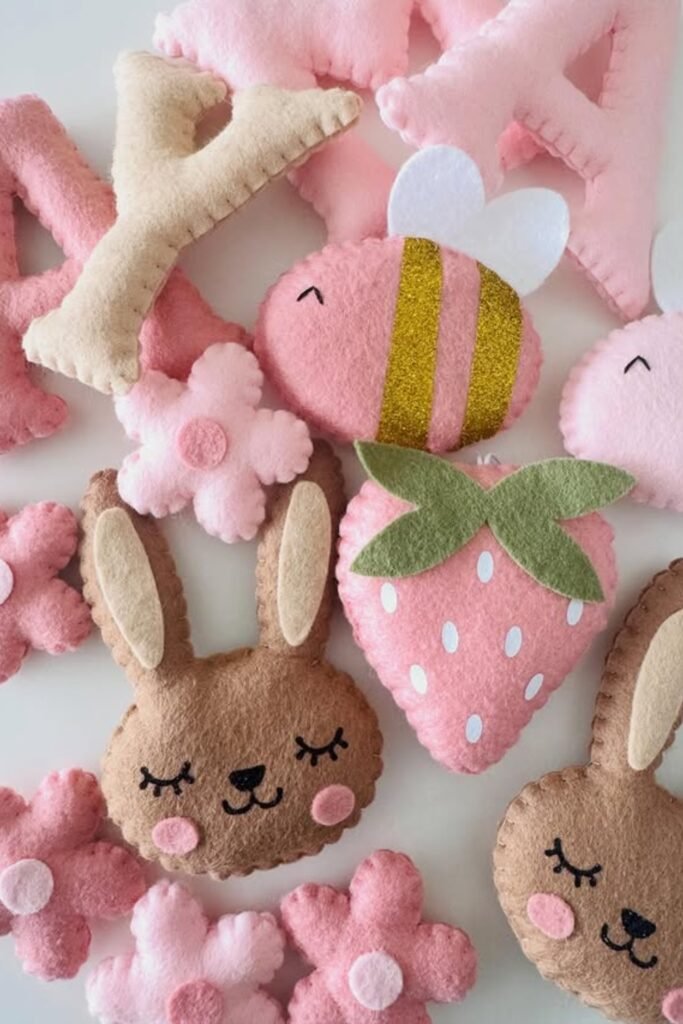
Sometimes the cutest bunny sewing patterns are also the easiest, especially when soft felt shapes help beginners skip complicated seams and stuffing struggles.
Little overalls or tiny stitched details bring extra charm without demanding advanced skills, making this style feel manageable even for weekend sewing.
Neutral fabric colors work nicely here because embroidered faces and pastel clothes already give enough personality without making everything feel too busy.
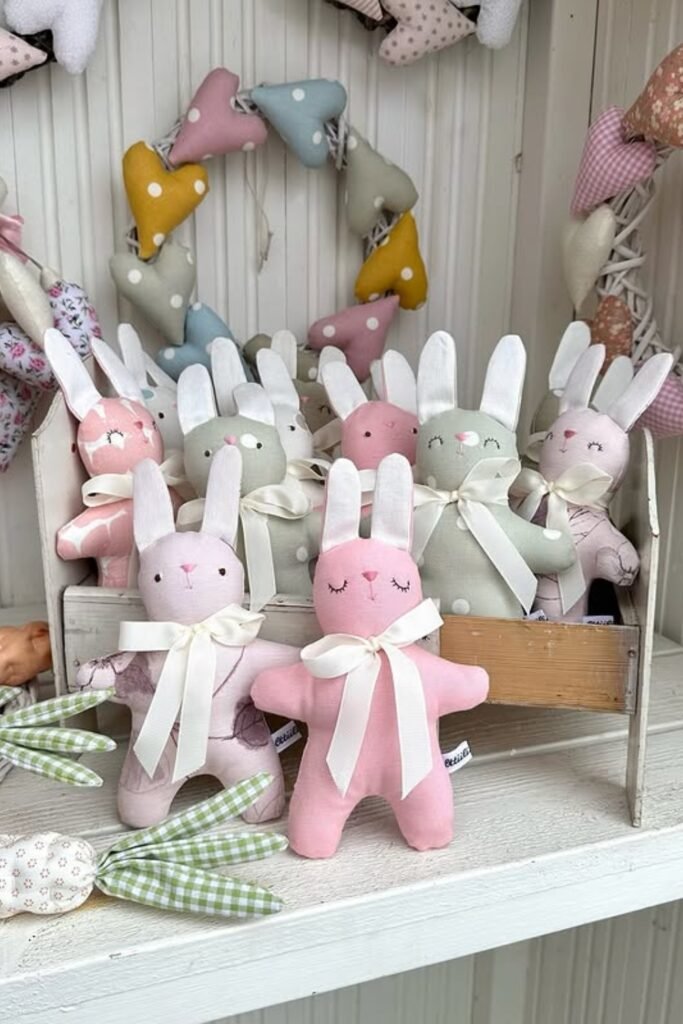
Ribbon Bunny
Simple bunny shapes suddenly feel gift-worthy when oversized ribbons add softness, especially if nursery shelves or spring displays need a cozy handmade touch.
Pastel cotton fabrics create a softer look here, though mixing tiny patterns keeps a group of bunnies feeling playful instead of identical.
Displaying several together works beautifully because matching ribbons help everything feel coordinated, even when bunny colors or sleepy face details stay different.
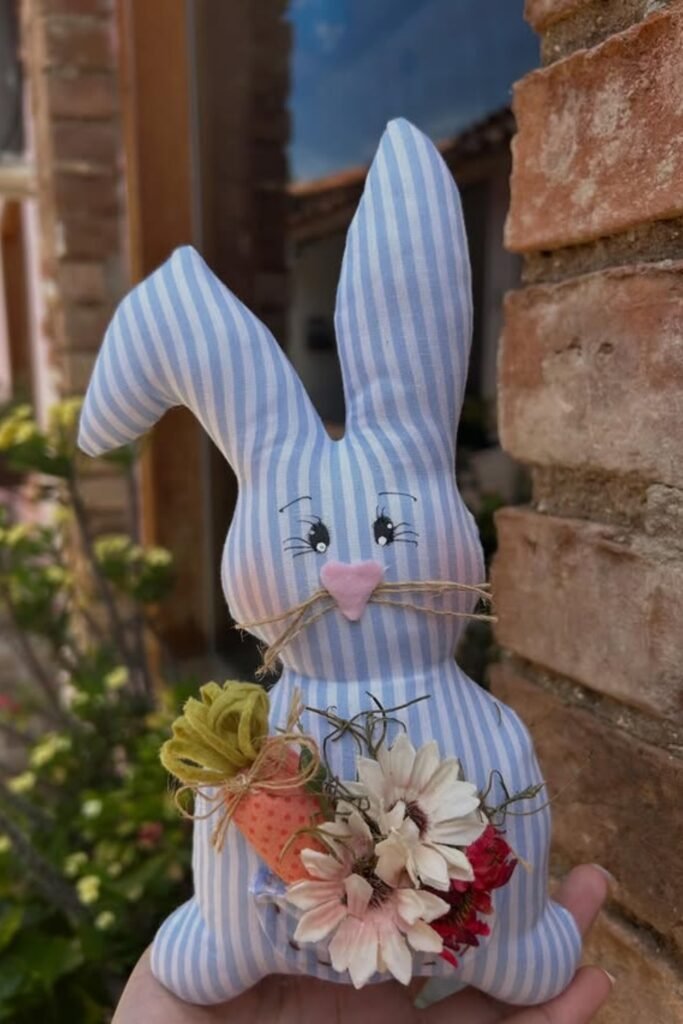
Stripe Bunny
Uneven floppy ears somehow make striped bunny patterns feel more charming, especially when farmhouse shelves or spring corners need a relaxed handmade personality.
Simple cotton fabric works beautifully here because clean stripes already add character, while tiny flowers or carrots keep the bunny feeling seasonal.
Adding stitched whiskers instead of extra accessories helps this style stay playful, especially if you want a quicker project without complicated details.
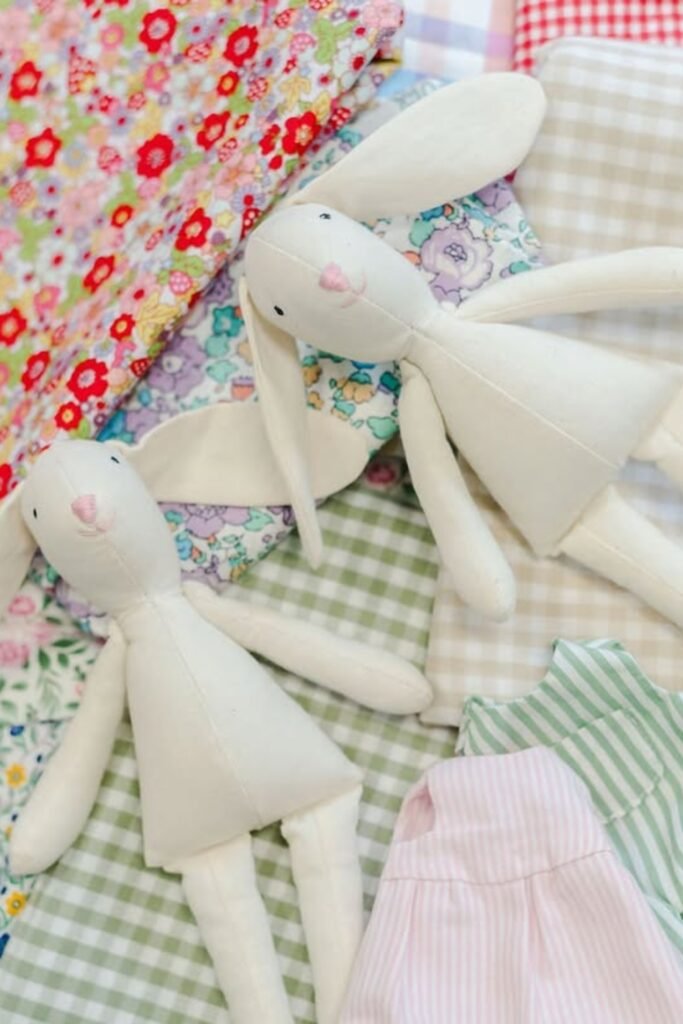
Long Ear
Tall skinny bunnies feel surprisingly elegant when long limbs and soft floral ears create something closer to keepsake decor than toy sewing.
Light cotton fabric keeps this style looking soft and airy, though matching ear lining with tiny outfits instantly makes everything feel intentional.
Extra stuffing around the head usually helps here because slimmer body shapes can easily look floppy without enough structure near the face.
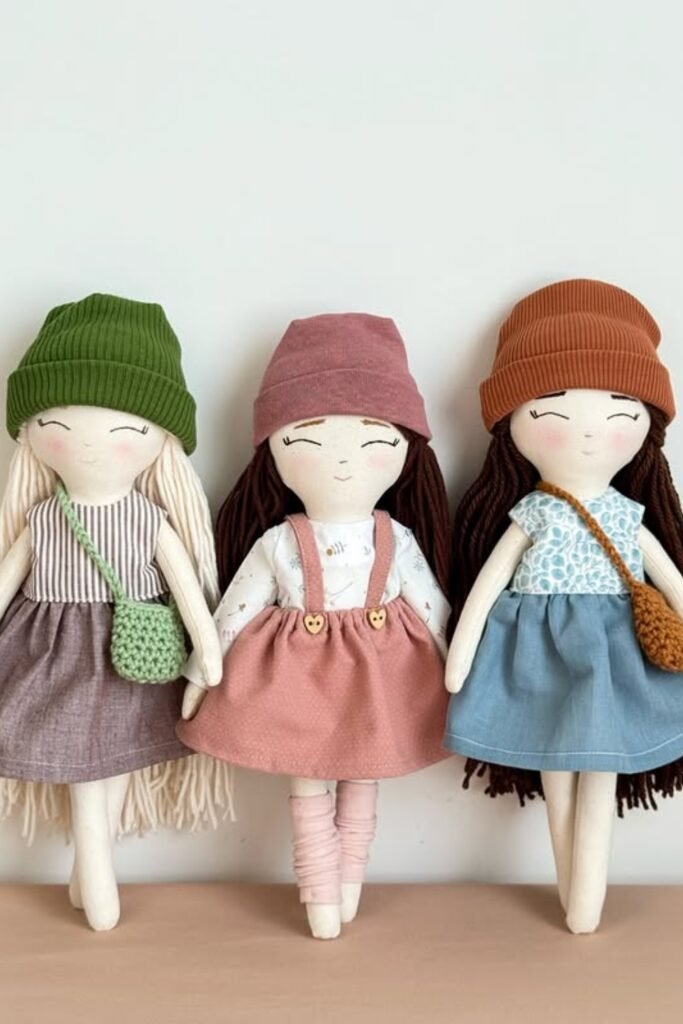
Doll Bunny
Something magical happens when bunny sewing patterns borrow details from fabric dolls, especially if handmade gifts need a little more personality.
Beanie hats, yarn hair, or tiny bags can turn simple shapes into storybook characters without forcing you into difficult sewing techniques.
Muted fabric tones work beautifully together here because soft colors keep details balanced instead of making the bunny feel visually crowded.
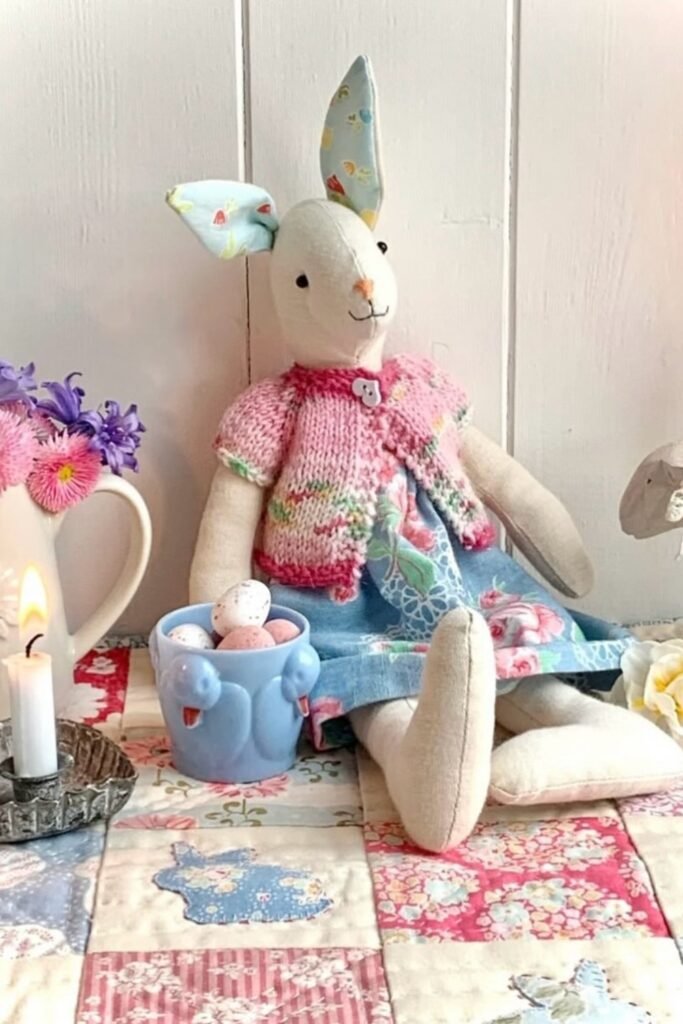
Cozy Bunny
Vintage-looking outfits instantly give bunny sewing patterns a softer personality, especially when cozy corners or seasonal decor need something handmade and warm.
Knitted cardigans pair beautifully with floral skirts, though keeping one fabric pattern simple helps tiny clothing details stand out naturally.
Little accessories feel sweeter when kept minimal, since oversized bows or decorations can easily overpower the calm cottage feel of this bunny.
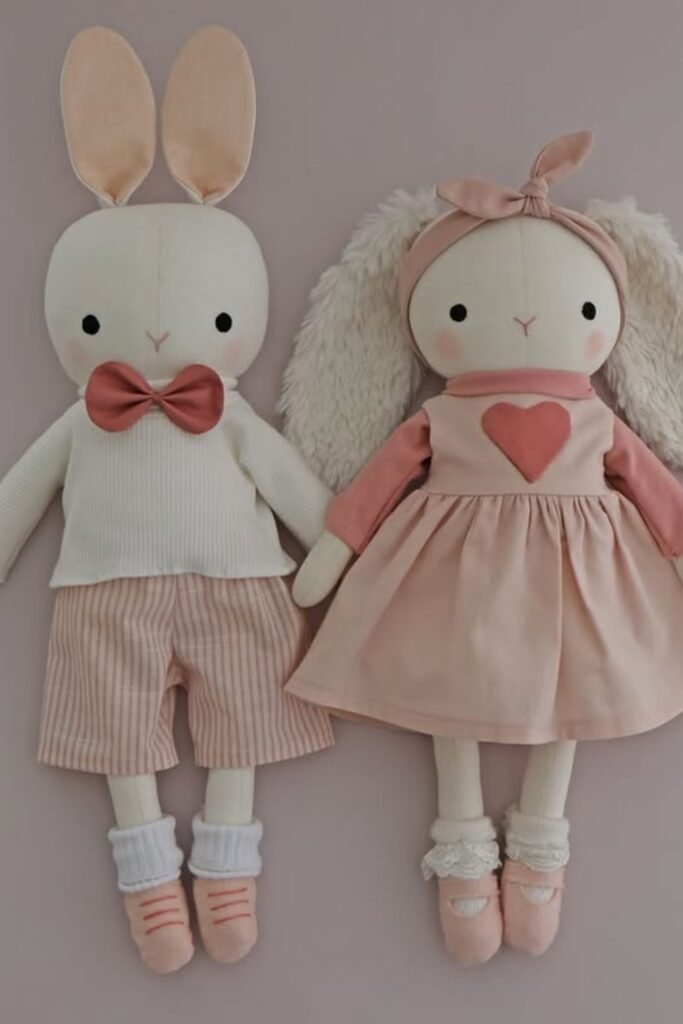
Sweet Pair
Matching bunny outfits instantly make sewing projects feel more thoughtful, especially when handmade gifts or nursery decor need a soft coordinated look.
Simple blush tones work beautifully here because oversized bows and heart details already add enough personality without overwhelming the gentle bunny shape.
Keeping facial features minimal helps this style feel timeless, especially if you want a plush that still looks cute years later.
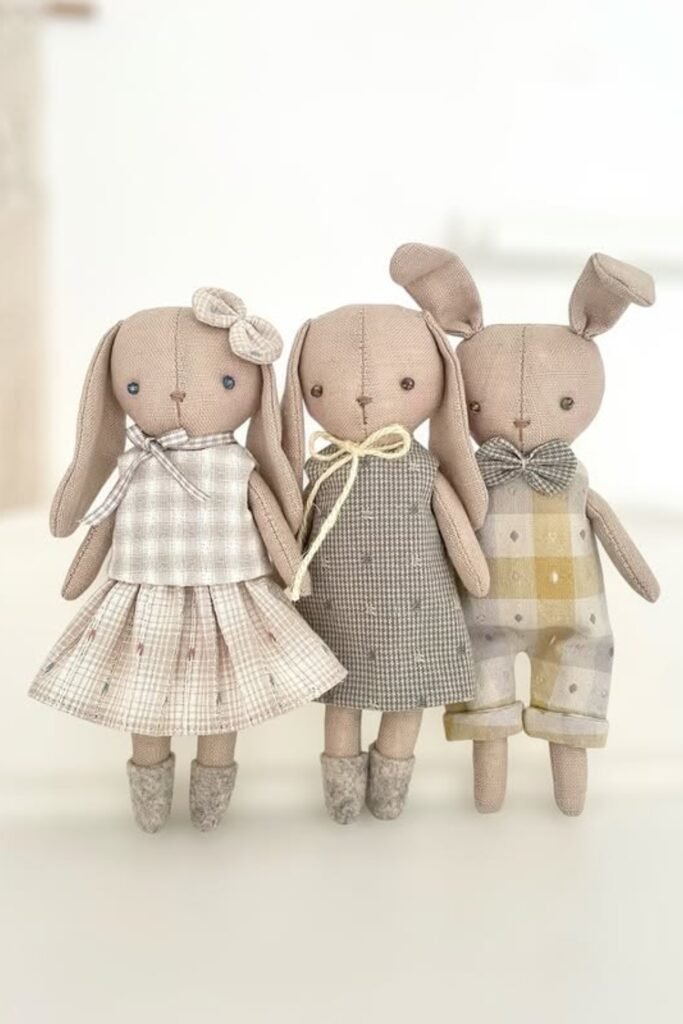
Linen Bunny
Muted fabrics quietly steal attention when bunny sewing patterns lean into soft linen textures instead of bright colors or oversized accessories.
Plaid overalls and neutral dresses make this style feel more heirloom-inspired, especially if farmhouse or cottage decor fits your space naturally.
Simple stitched faces usually suit this bunny best because too many details can easily take away from its quiet vintage charm.
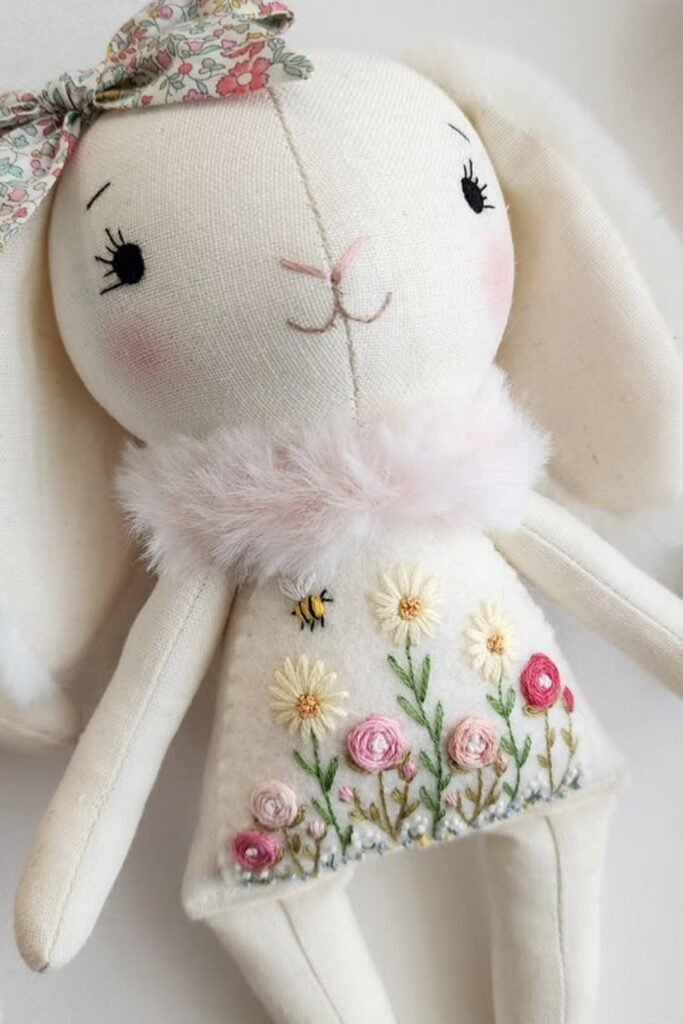
Floral Bunny
Tiny embroidered flowers instantly make a bunny pattern feel extra special, especially when handmade gifts deserve details that feel personal and thoughtful.
Soft cotton fabric works nicely here because delicate stitching shows more clearly, while floral bows gently tie the whole bunny together.
Keeping embroidery close to the outfit instead of everywhere helps the finished bunny feel elegant instead of visually overloaded with details.
Modern Bunny
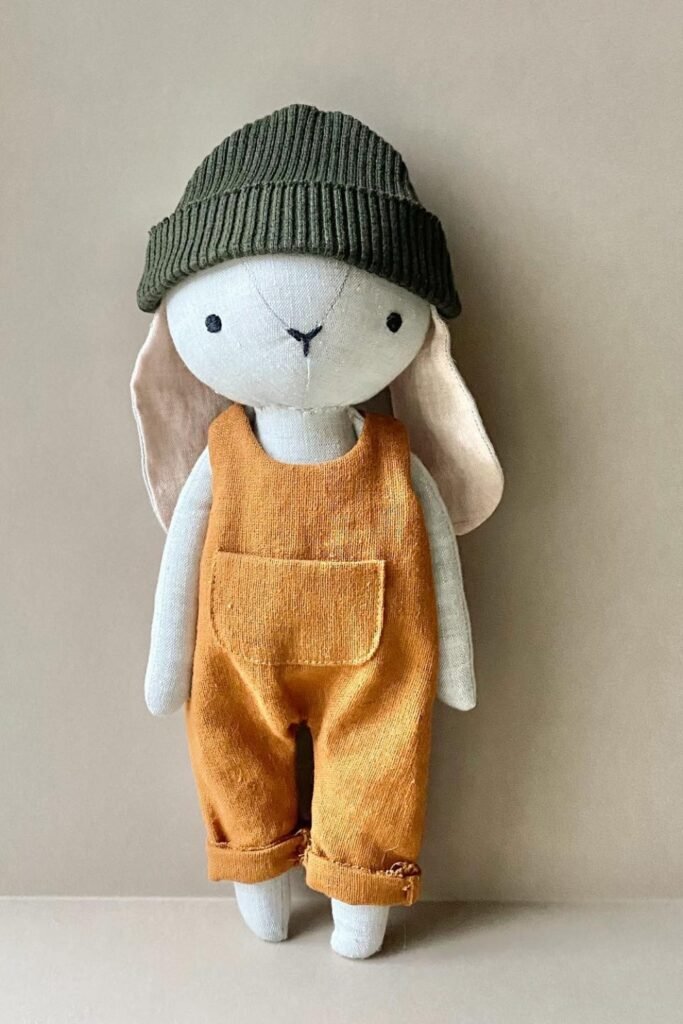
Something about tiny overalls and cozy beanies makes bunny sewing patterns feel more playful, especially when nursery decor needs personality without pastel overload.
Neutral fabric colors work beautifully here because simple outfits already feel stylish, while oversized pockets quietly add extra handmade charm.
Minimal stitched faces suit this bunny best since clean details help modern outfits stand out without making everything feel visually crowded.
Sunny Bunny
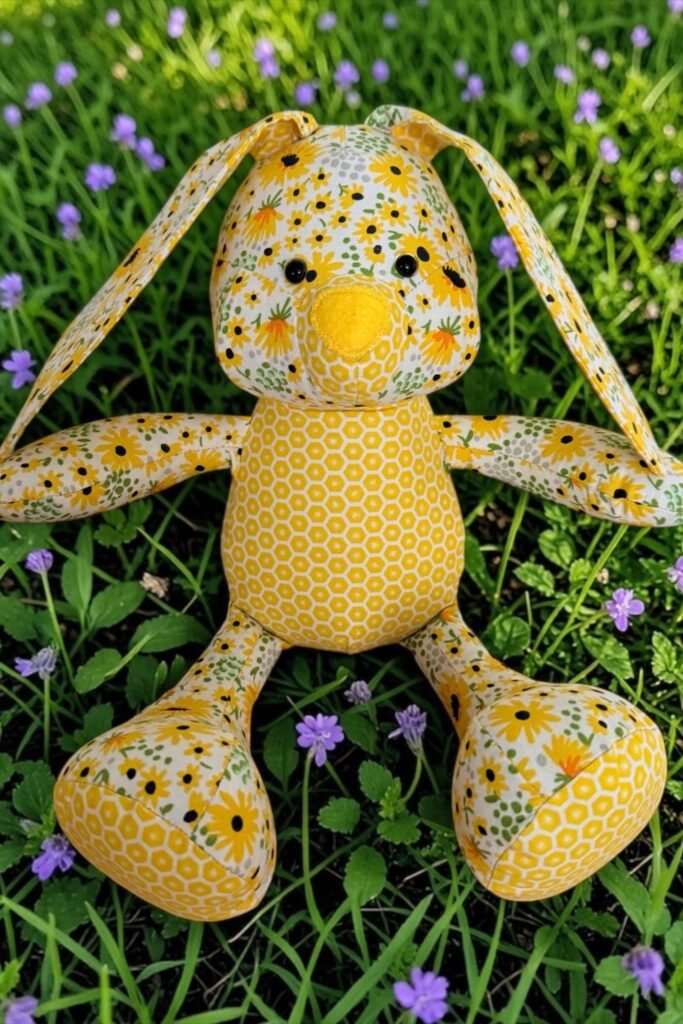
Bold floral fabric suddenly feels less overwhelming when cheerful yellow tones turn a bunny sewing pattern into something bright and gift-worthy.
Long floppy ears balance playful prints nicely, especially when spring decor or Easter baskets need color without looking overly cartoonish.
Mixing one floral print with one simple geometric fabric usually keeps this style feeling coordinated instead of visually too busy or random.
Comfort Bunny
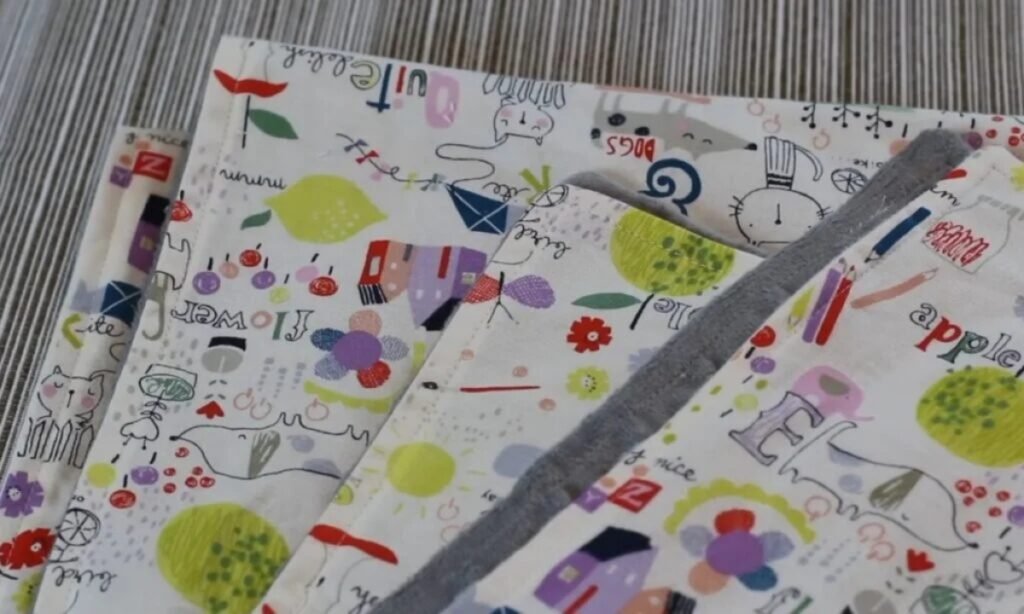
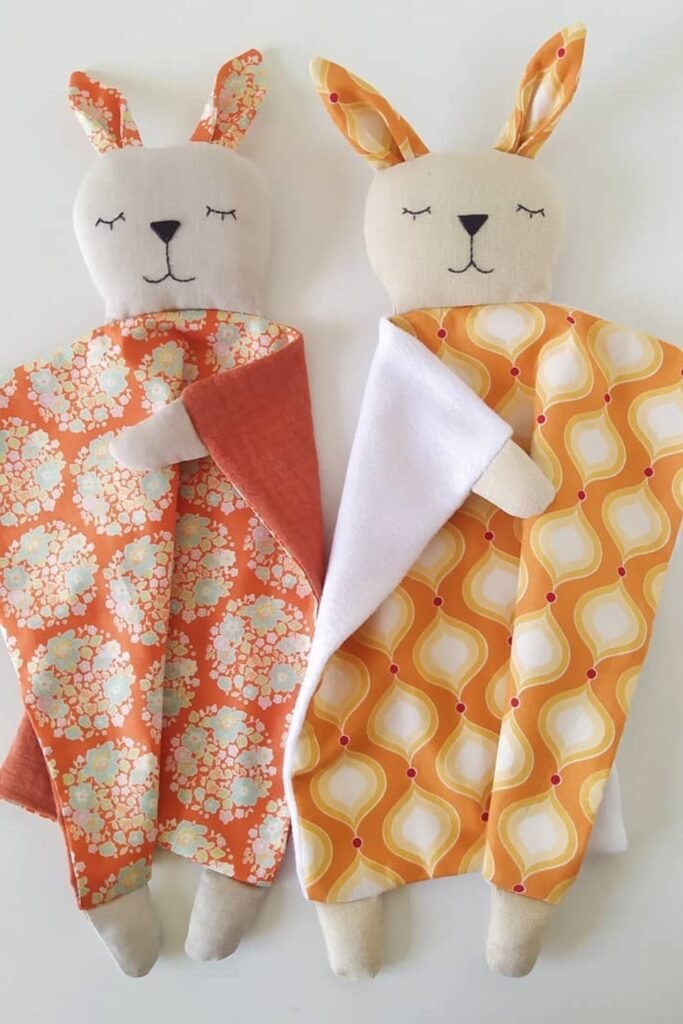
Blanket-style bunny sewing patterns feel extra thoughtful when handmade gifts need comfort, especially for babies, toddlers, or quiet bedtime routines.
Soft cotton on one side and cozy fleece underneath usually makes this style feel warmer, while simple sleepy faces keep everything calming.
Bright vintage prints work beautifully here because playful fabric already adds personality, meaning extra bows or decorations rarely feel necessary.
FAQs
Which Fabric Works Best For A Bunny Sewing Pattern?
Soft fleece or minky works beautifully for cuddly plush bunnies, while cotton feels easier for beginners making decorative or lightweight designs.
Felt can also help if tiny seams feel overwhelming. Try matching fabric choice with how you plan to use the bunny, whether for gifts, nursery decor, or Easter baskets.
How Do I Make My Bunny Sewing Pattern Look Cute Instead Of Lumpy?
Light stuffing usually works better than overfilling, especially around the face and ears where shapes can quickly look uneven.
Paying extra attention to symmetry, gentle stuffing, and simple facial details often makes the biggest difference.
Taking time with tiny finishing touches helps homemade bunnies feel polished instead of rushed.

Hi, my name is Ali Mehmood! I’m a passionate writer and DIY enthusiast who loves turning creative ideas into practical, hands-on projects.
I created this website to share inspiring, budget-friendly ideas that you can do yourself – whether it’s organizing your home, crafting something unique, or creating fun projects for kids and pets.
I believe DIY isn’t just a hobby – it’s a smart way to save money, reduce waste, and enjoy the satisfaction of making things with your own hands.
I’m excited to have you as part of this growing community, and I’ll continue bringing you helpful, realistic, and fun DIY ideas you can actually use.