This post may contain affiliate links: read full affiliate disclosure.
Finding a crochet sweater pattern that looks beautiful is easy, but choosing one that matches your skill level, fits comfortably, and works with your yarn can be tricky.
You might love a sweater design, only to realize the stitches are too complicated, the sizing is confusing, or the finished sweater won’t look how you imagined.
That’s why I’ve gathered 18 crochet sweater pattern inspirations, along with practical tips to help you choose a design you’ll enjoy making and wearing.
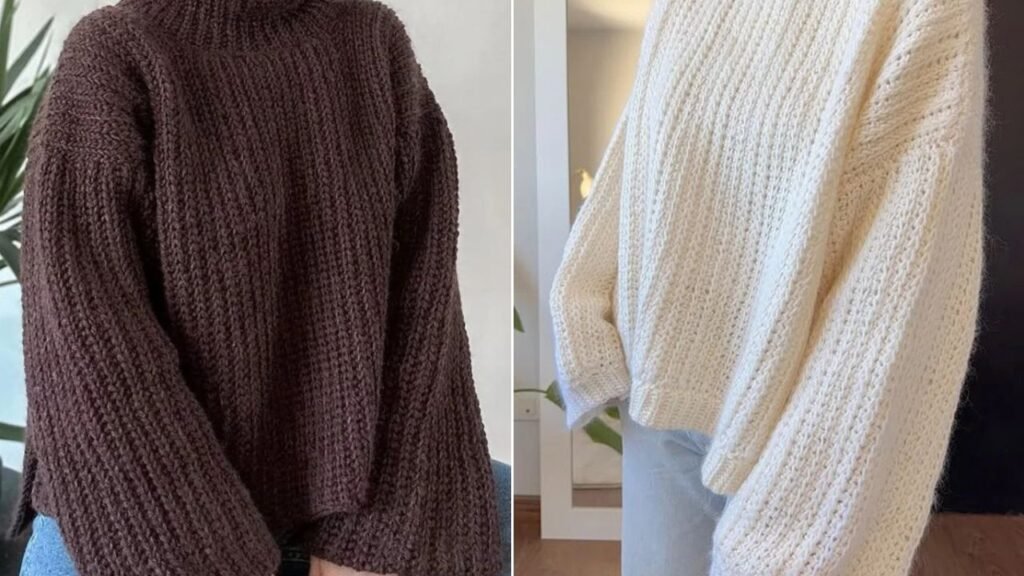
Floral Granny Sleeves
Want to add some color without making your entire sweater busy? Try adding floral granny squares along the sleeves.
Keep the body in a solid neutral shade so those colorful flowers become the main attraction without overwhelming everything.
Before joining the squares, check their measurements against your sleeve pattern to avoid unexpected gaps or uneven shaping later.
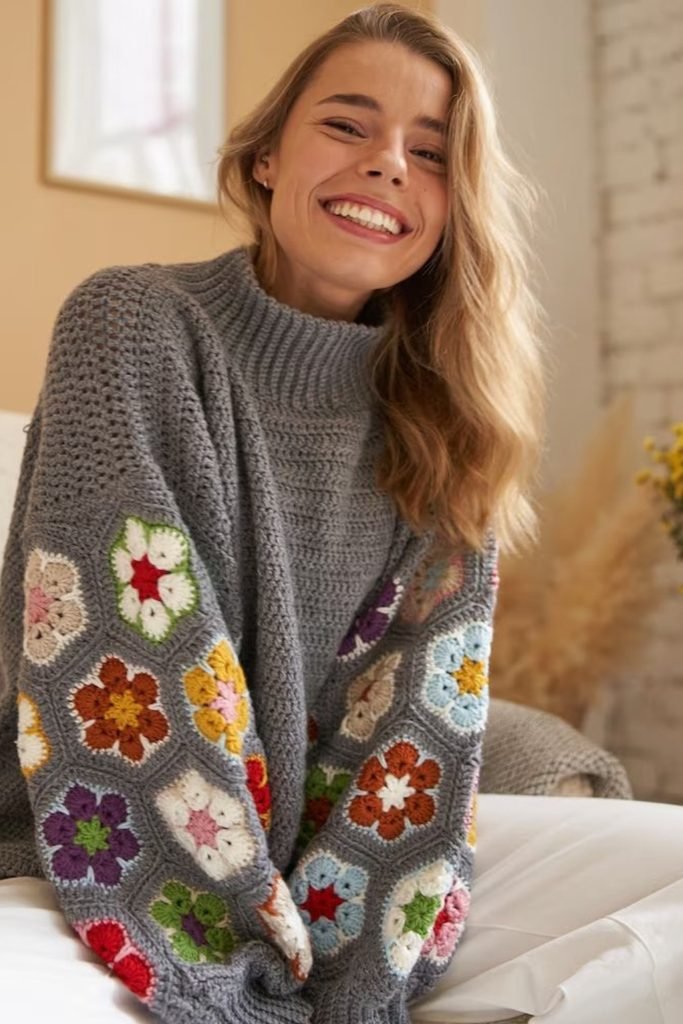
Pink Raglan Sweater
A raglan sweater is worth trying when you want a comfortable fit without sewing separate shoulder seams together afterward.
Choose a textured crochet stitch that creates a flexible fabric, especially around the shoulders where you’ll need comfortable movement.
Don’t skip checking your gauge before starting, because even small stitch differences can affect the neckline and overall fit.
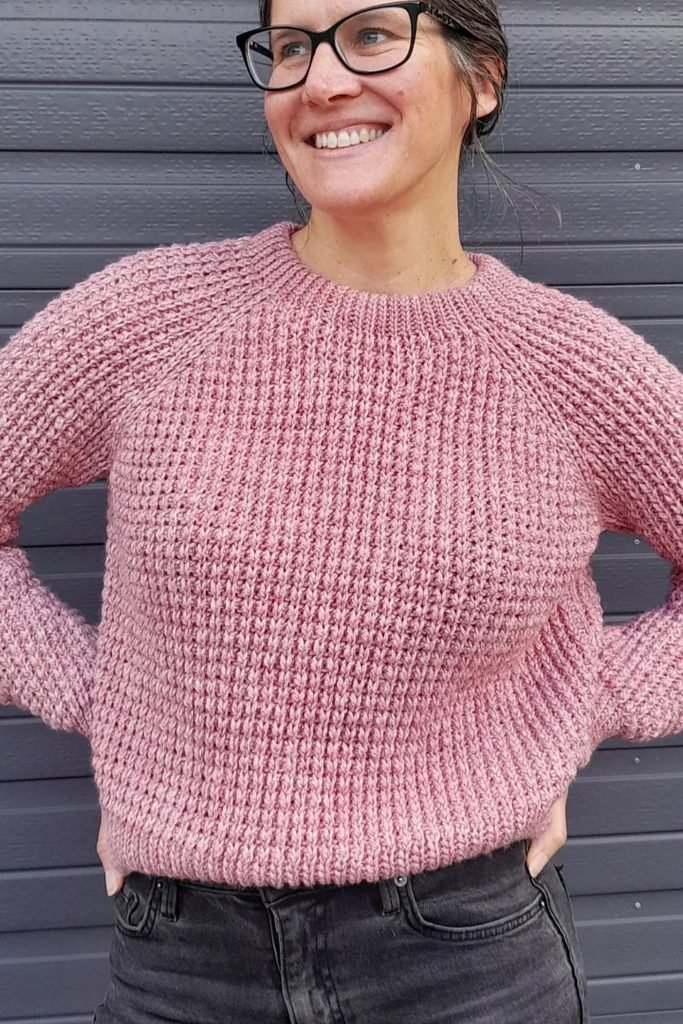
Cream Balloon Sleeves
Those lovely balloon sleeves need extra room, but too much width can make your sweater feel unnecessarily heavy.
For a similar relaxed shape, look for a pattern with dropped shoulders and sleeves that gather gently at the cuffs.
A soft, lightweight yarn can help the sleeves drape comfortably rather than creating stiff, bulky folds around your wrists.
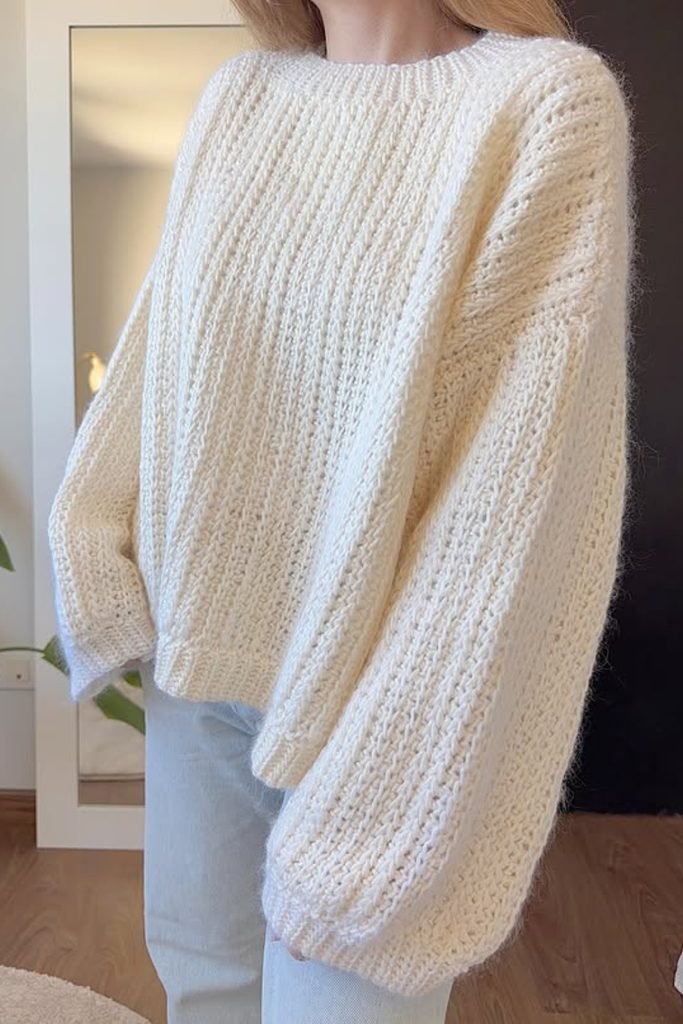
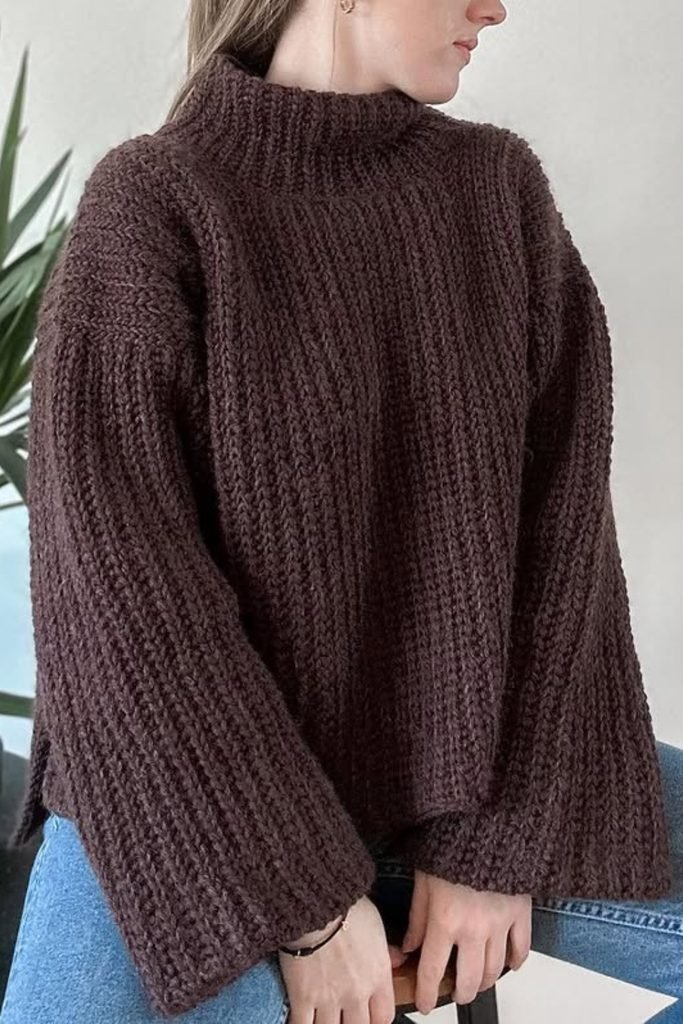
Chocolate Brown Turtleneck
Dark chocolate brown is a lovely choice when you want a cozy crochet sweater that works with everyday outfits.
Try a slightly cropped body with wider sleeves, but keep the neckline comfortably loose so it doesn’t feel restrictive.
If you’re using thick yarn, check the finished fabric’s weight first, since a dense turtleneck can become surprisingly warm.
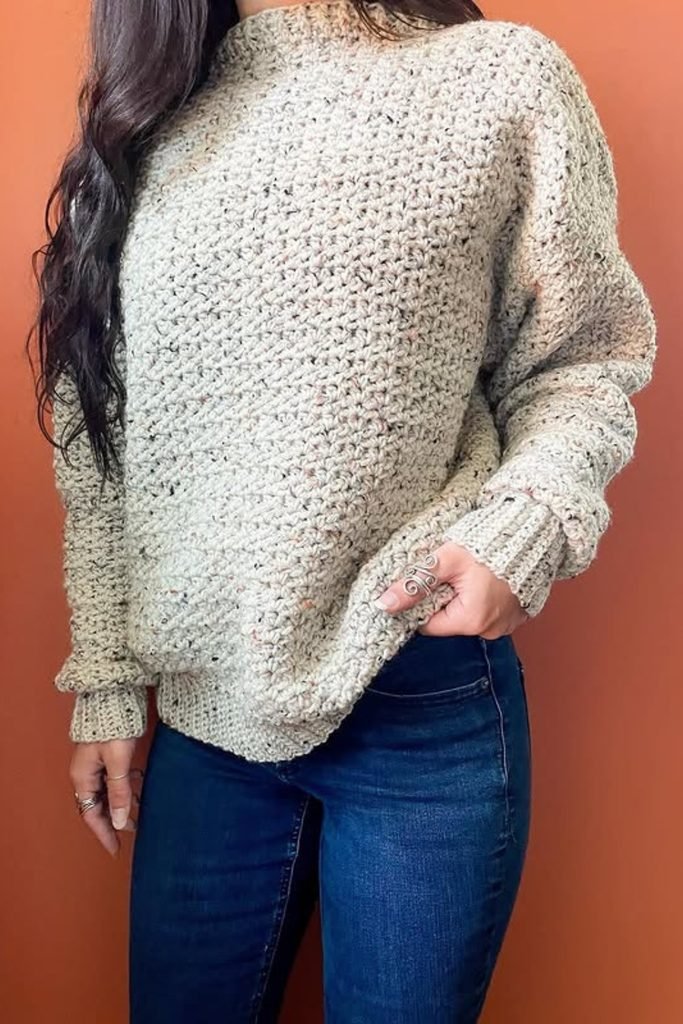
Textured Oatmeal Sweater
A simple oatmeal sweater can look anything but plain when you choose a stitch that creates gentle, consistent texture.
For this relaxed shape, pay attention to the shoulder width before joining your panels, since dropped seams change fit.
Try making the cuffs slightly firmer than the body, so your sleeves stay comfortably in place throughout the day.
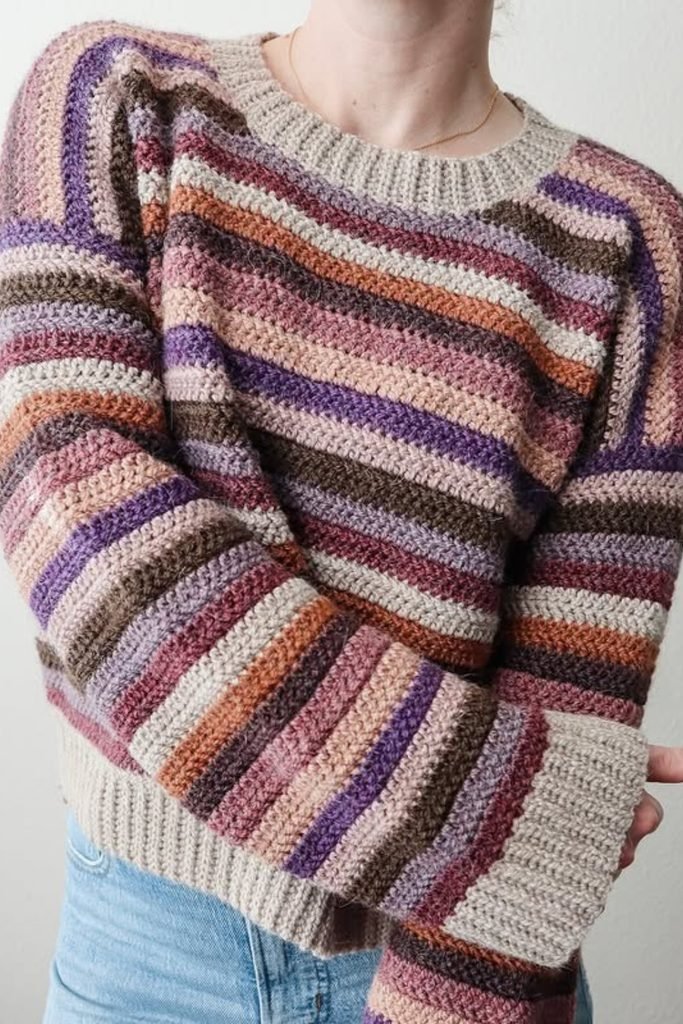
Colorful Striped Sweater
Planning stripes in advance saves you from discovering halfway through that your favorite color barely appears across the sweater.
Lay your yarn shades together first, then alternate narrow and wide bands to give the pattern a playful rhythm.
Keep a quick note of completed rows for each color, especially when you want both sleeves to match neatly.
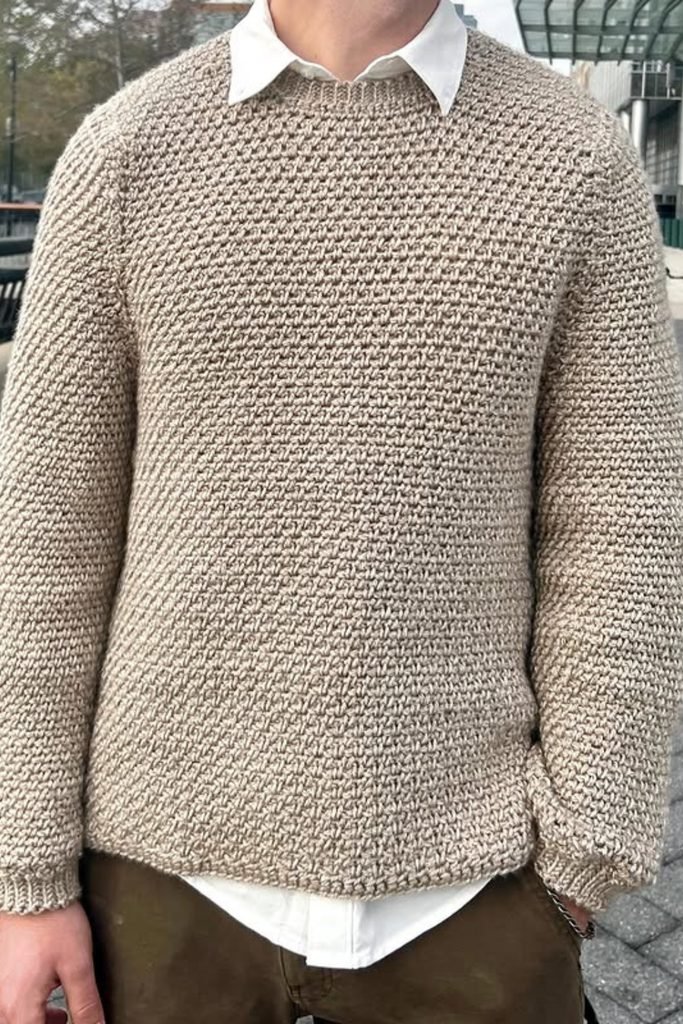
Classic Beige Pullover
A sweater worn over a collared shirt needs enough space around the neckline to let that extra layer sit comfortably.
Instead of choosing a very loose body, focus on shoulder ease and sleeves that allow movement without bunching underneath.
A small swatch in your chosen stitch helps reveal whether the finished fabric feels flexible enough for everyday layering.
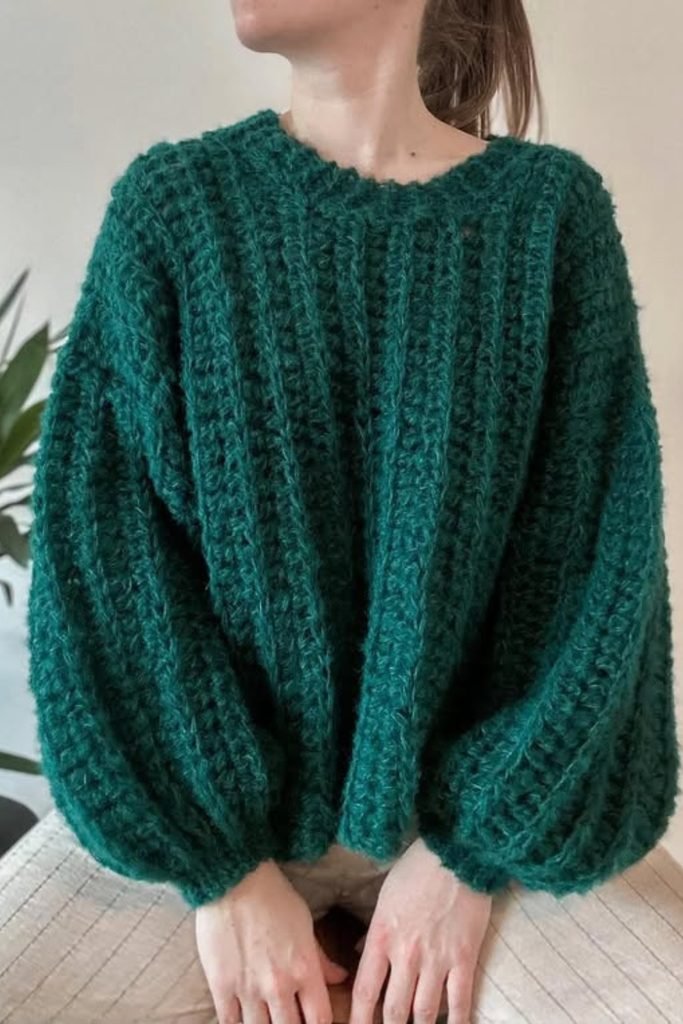
Emerald Green Sweater
Emerald green already brings plenty of character, so textured vertical stitches can give your sweater depth without extra colors.
When working a cropped silhouette, measure the body against a favorite sweater rather than guessing where the hem should end.
Keep the sleeves generous but check their weight as you go, since heavy yarn can pull the shoulders downward.
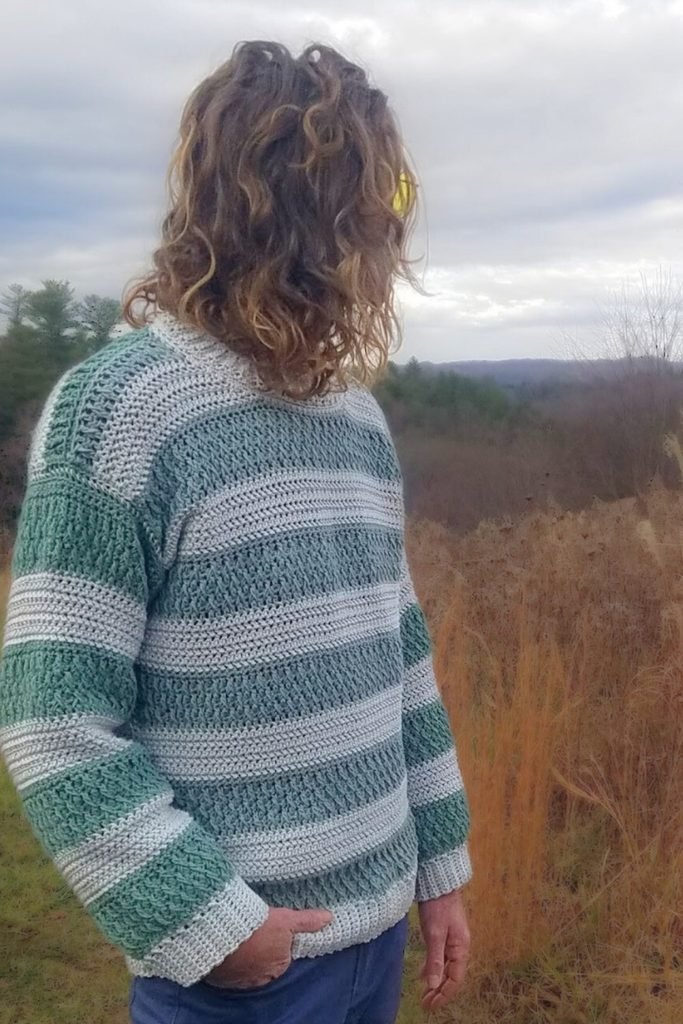
Sage Striped Sweater
Mixing different stitch textures between stripes can make a two-color crochet sweater more interesting without adding complicated color changes.
Try alternating solid and raised stitch sections, but check their gauges first so the sweater maintains an even width.
For a similar relaxed fit, choose a slightly longer body that provides comfortable coverage without making the sleeves unnecessarily bulky.
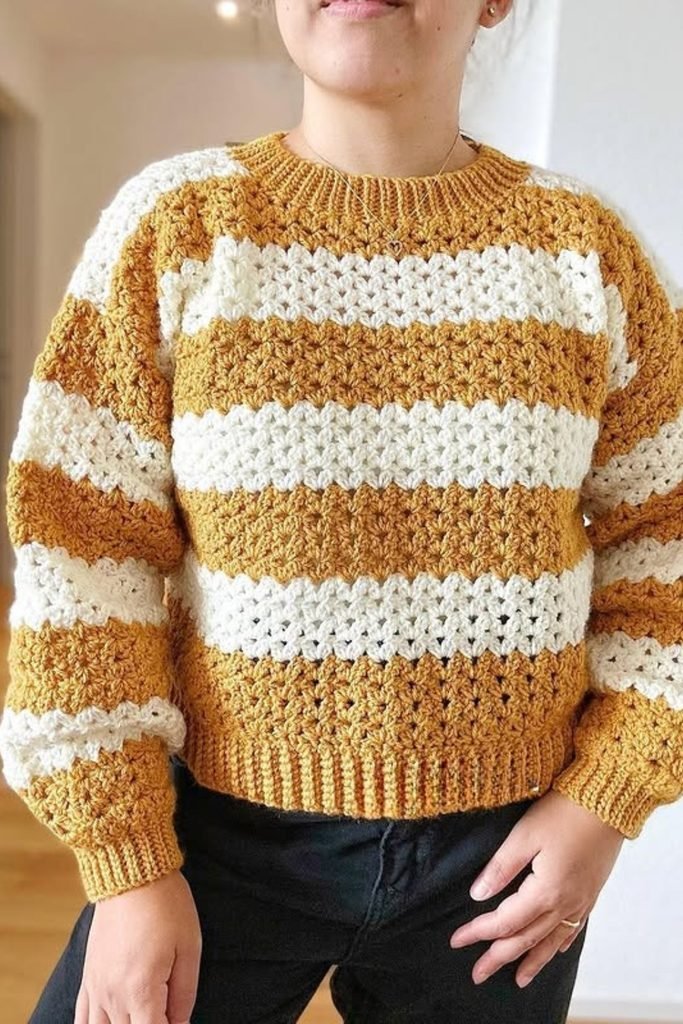
Mustard Striped Sweater
Mustard yellow and cream make a cheerful combination, especially when you alternate chunky textured stripes with lighter stitch patterns.
Keep your color transitions at the beginning of each row whenever possible, so you can hide yarn ends neatly.
A ribbed neckline and matching cuffs can bring the whole design together while keeping those textured stripes visually balanced.
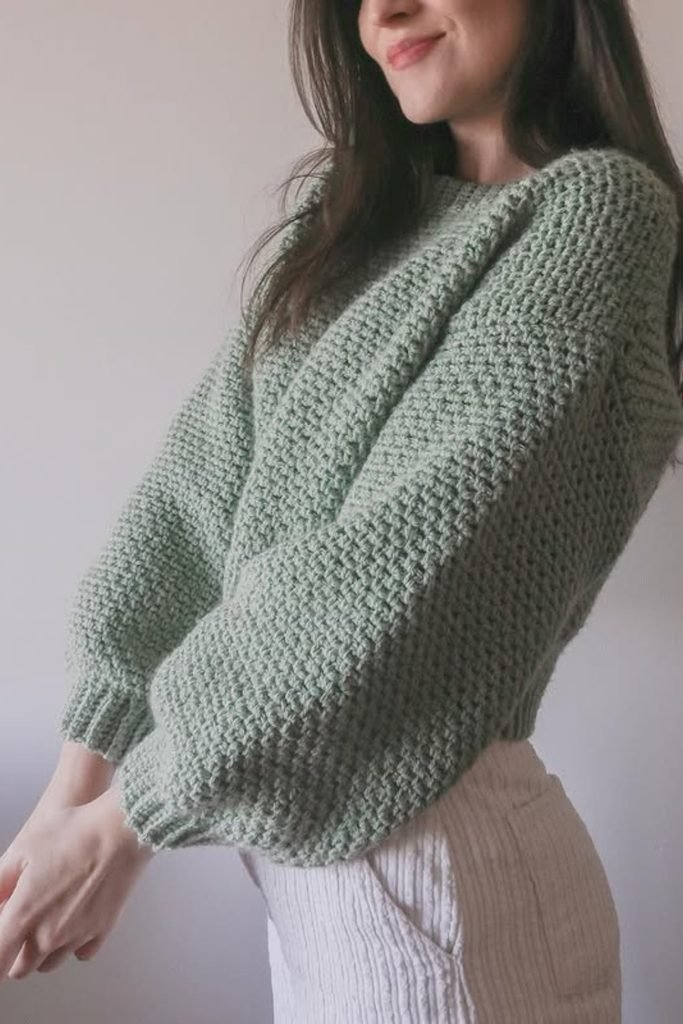
Soft Sage Pullover
Sometimes the nicest crochet sweaters come from repeating one beautiful stitch rather than switching between several complicated patterns.
For this soft sage look, choose a textured stitch that creates small raised details while keeping the fabric flexible.
Finish with narrower ribbed cuffs to control the sleeve volume, particularly if you’re making a relaxed sweater with dropped shoulders.
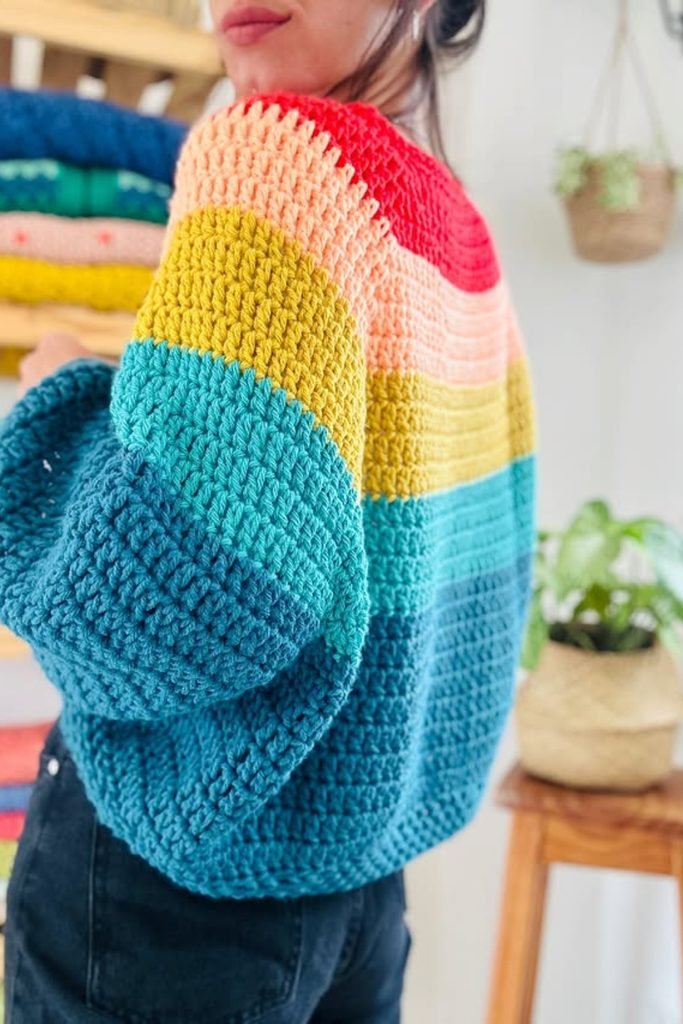
Rainbow Colorblock Sweater
Why settle for two colors when you can turn your crochet sweater into a cheerful mix of bright shades?
Arrange your colors from warm to cool before starting, then plan where each band should fall across the body.
For a smoother transition, keep the stitch pattern consistent throughout and change colors at matching points on both sleeves.
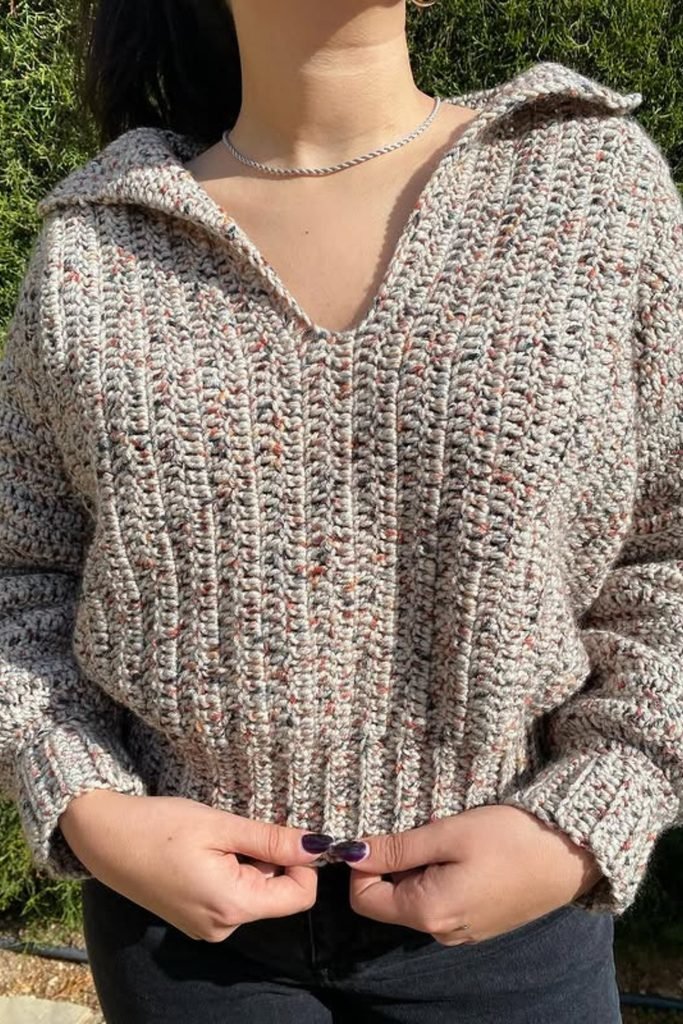
Speckled Collar Sweater
A collared crochet sweater gives you a different neckline option when ordinary crew necks start feeling a little repetitive.
For this relaxed opening, work the collar separately or follow a pattern that includes an open neckline with shaping.
Speckled yarn is especially forgiving with subtle stitch variations, but test your ribbing tension so the collar stays structured.
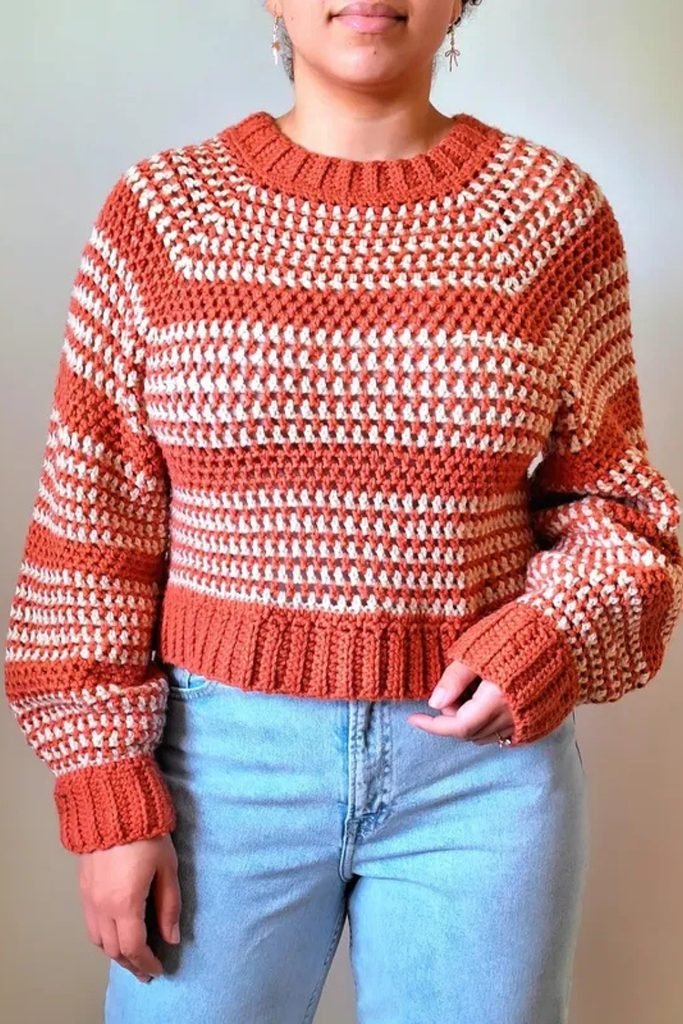
Rust Checkered Sweater
Instead of making traditional wide stripes, alternate rust and cream stitches to create a playful checkered effect across your sweater.
Keep your color changes consistent within each row, and watch your yarn tension where the two shades meet.
A solid rust neckline, hem, and cuffs can frame the patterned body nicely without introducing another distracting design element.
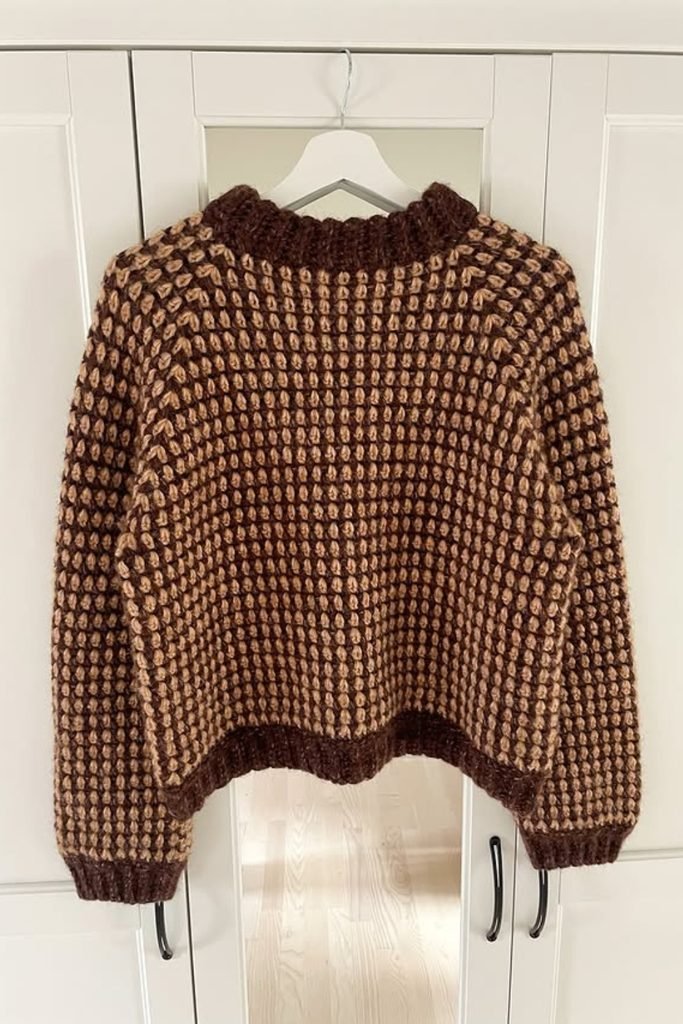
Two Tone Waffle Sweater
Chocolate and caramel shades work beautifully with raised crochet textures because the darker background helps lighter stitches stand out.
If you’re trying a waffle inspired pattern, make a generous swatch to understand how much yarn those raised stitches consume.
Keep the borders simple with dark ribbing, allowing the textured fabric to remain the most interesting part of your sweater.
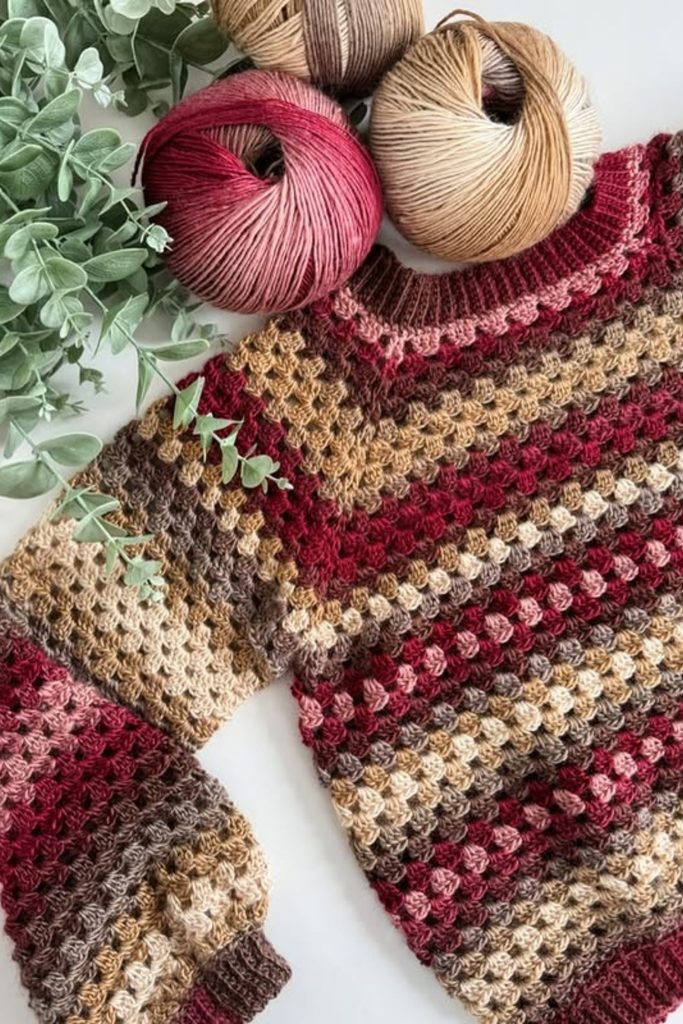
Autumn Granny Sweater
Burgundy, tan, and warm brown are worth pairing when you want a colorful sweater without using overly bright shades.
For a similar granny stitch design, arrange your color changes carefully so the clusters create a pleasing scattered pattern.
Use stitch markers around the neckline when shaping your yoke, since missed increases can affect how comfortably the shoulders fit.
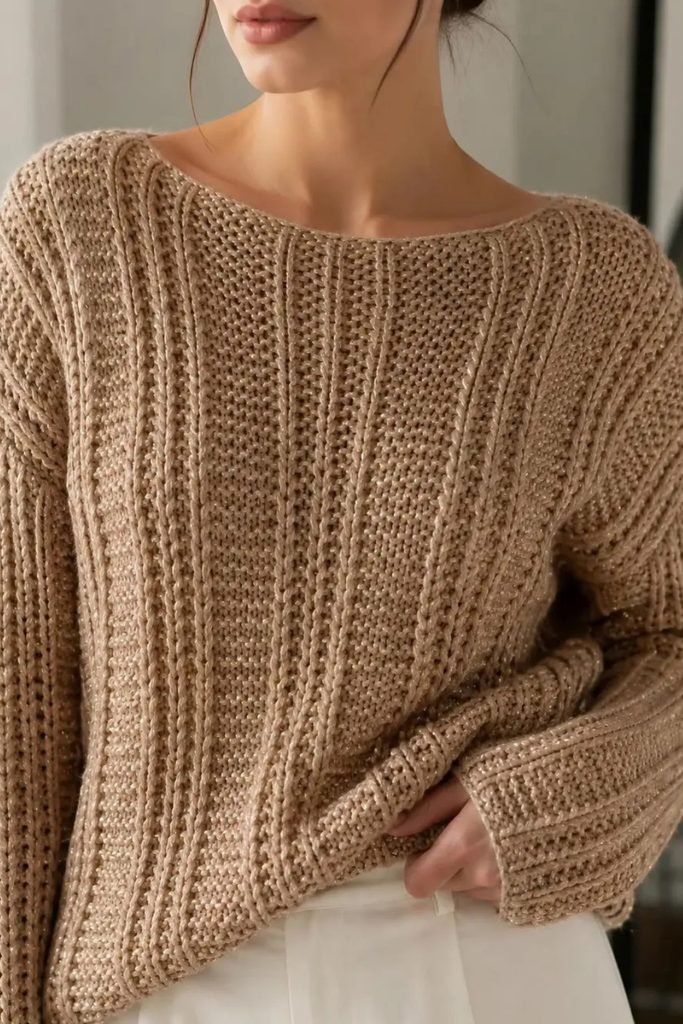
Beige Ribbed Sweater
A wide boat neckline can make your crochet sweater feel less bulky, especially when you’re working with textured stitches.
Try combining raised vertical stitches with flatter sections to create dimension without making the entire fabric too thick.
For a cleaner finish, maintain consistent spacing between the raised columns and avoid tightening your stitches around the neckline.
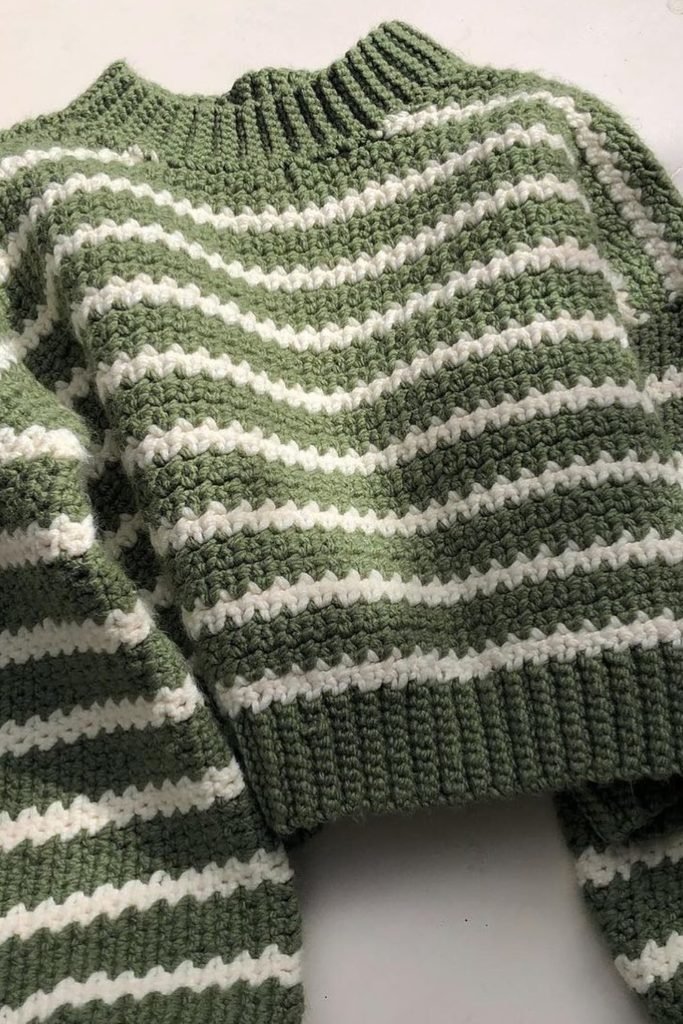
Olive Striped Sweater
Thin cream stripes against an olive green background are perfect when you want subtle contrast instead of bold colorblocking.
Consider working your sweater from the top down so you can check the stripe placement around the shoulders early.
Finish with a deeper ribbed hem and matching neckline to give the relaxed shape a neat, structured edge.
FAQs
What Is the Easiest Crochet Sweater Pattern for Beginners?
If you’re making your first crochet sweater, I’d recommend starting with a simple drop-shoulder pattern made from rectangular panels.
You can practice basic stitches like half double crochet without worrying about complicated shaping.
How Much Yarn Do I Need to Crochet a Sweater?
The amount of yarn you’ll need depends on your sweater size, yarn weight, stitch pattern, and sleeve length.
Many adult sweaters require roughly 1,000–2,000 yards, but some designs need considerably more or less.
Hi, my name is Ali Mehmood! I’m a passionate writer and DIY enthusiast who loves turning creative ideas into practical, hands-on projects.
I created this website to share inspiring, budget-friendly ideas that you can do yourself – whether it’s organizing your home, crafting something unique, or creating fun projects for kids and pets.
I believe DIY isn’t just a hobby – it’s a smart way to save money, reduce waste, and enjoy the satisfaction of making things with your own hands.
I’m excited to have you as part of this growing community, and I’ll continue bringing you helpful, realistic, and fun DIY ideas you can actually use.