This post may contain affiliate links: read full affiliate disclosure.
Finding eggs in random corners of your chicken coop, dealing with cracked shells, or cleaning dirty eggs every morning can get frustrating.
Buying ready-made nesting boxes might solve the problem, but why spend extra money when you can build something useful with materials you already have?
From old wooden crates and plastic buckets to simple plywood designs, DIY nesting boxes can give your hens comfortable.
In this article, you’ll find 21 DIY nesting boxes for chickens that are affordable, easy to recreate, and practical for different coop sizes.
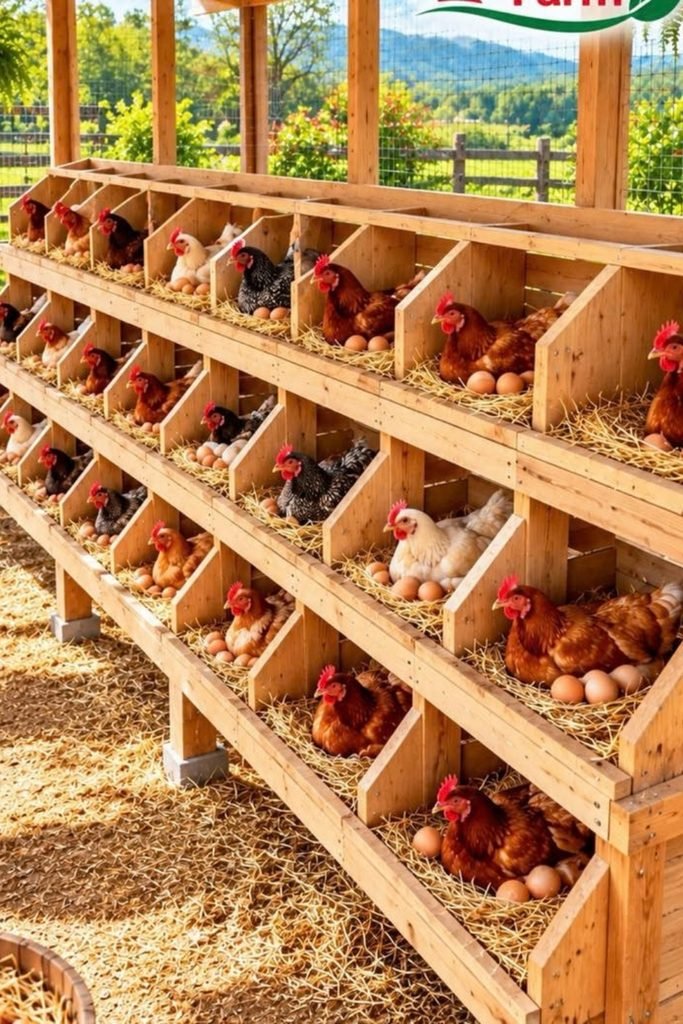
Tiered Wooden Nests
Managing a larger flock becomes easier when you arrange individual wooden nesting compartments across several sturdy, space-saving horizontal tiers.
Build each row with plywood dividers and raised front edges, leaving enough room for hens to enter comfortably.
Fill compartments with dry straw, and provide safe access to upper levels so egg collection stays manageable daily.
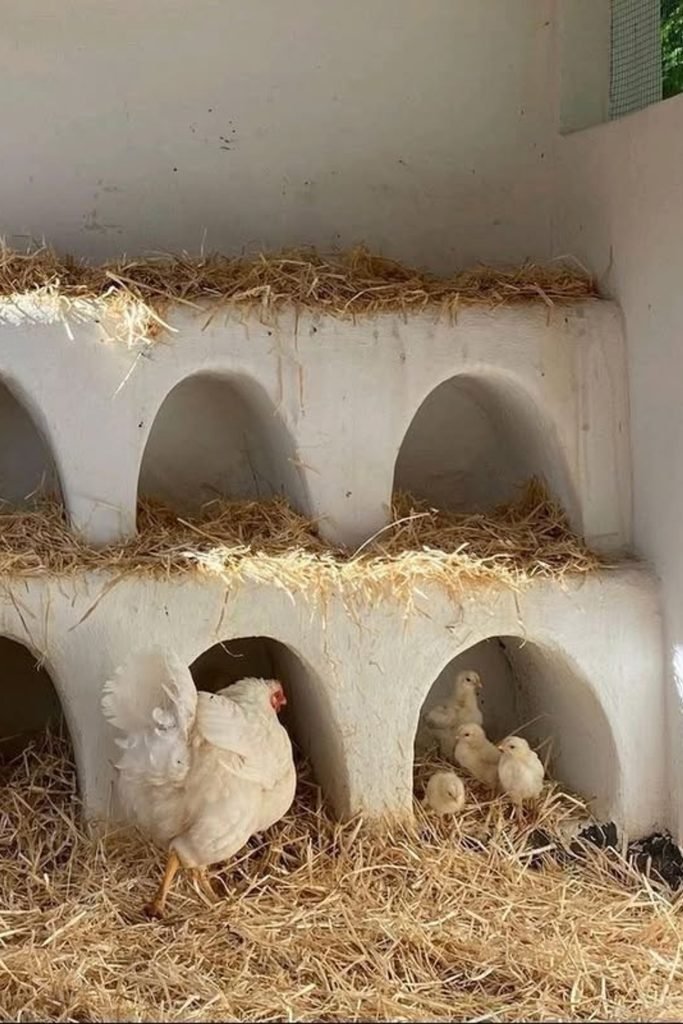
Arched Nesting Cubbies
Give your chicken coop a softer farmhouse touch by creating rounded nesting entrances instead of ordinary square wooden openings.
Shape the arched compartments using suitable masonry or molded materials, ensuring every interior stays smooth, dry, and easy to clean.
Place fresh straw inside each cubby, allowing hens to settle into private corners without disturbing nearby nesting birds.
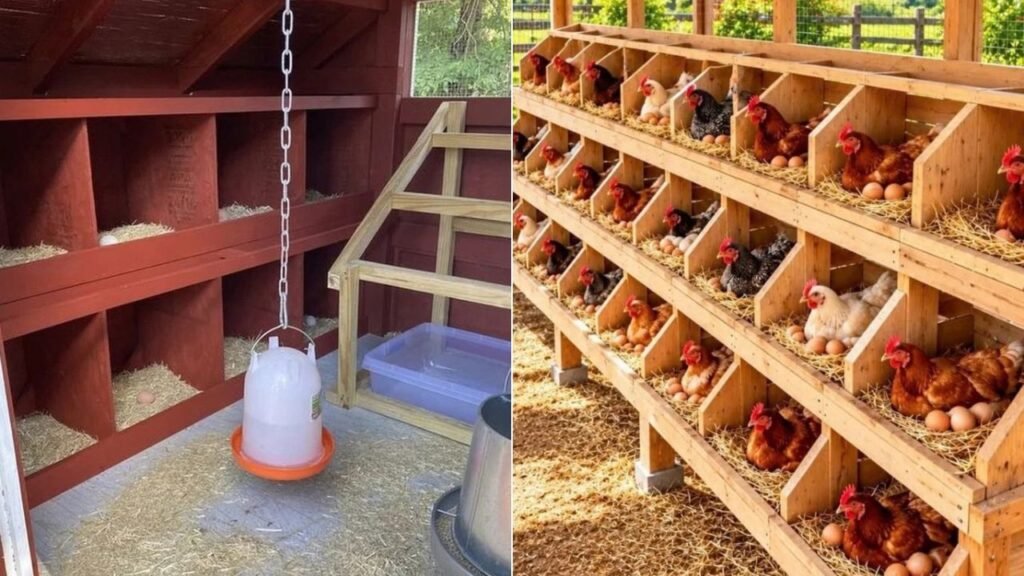
Built-In Coop Nests
Planning your nesting boxes directly into the coop wall saves valuable floor space while creating organized laying areas.
Use plywood partitions to form two horizontal rows, then add retaining boards that prevent bedding from spilling onto the floor.
Paint or seal the wooden surfaces with a poultry-safe finish, and position accessible roosts higher than the nesting compartments.
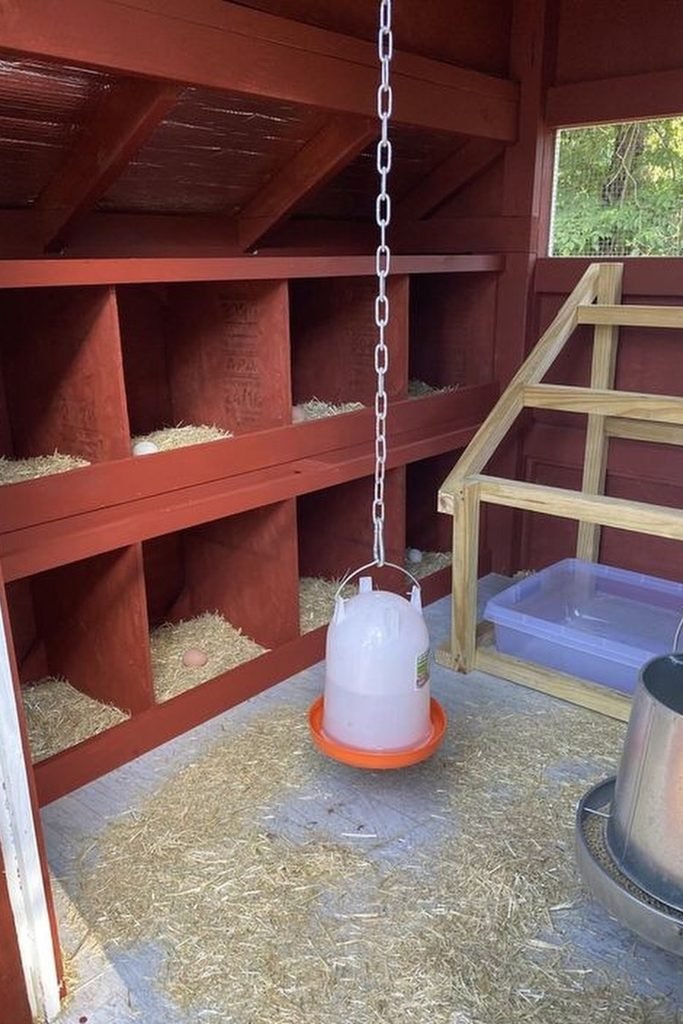
Slanted Nesting Shelves
For a flock needing plenty of laying spots, angled wooden compartments can make individual nests easier to reach.
Construct a sturdy freestanding frame with slanted dividers, raised front rails, and enough depth for comfortable nesting positions.
Support the structure securely, add dry straw to each compartment, and provide safe access without forcing hens to jump excessively.
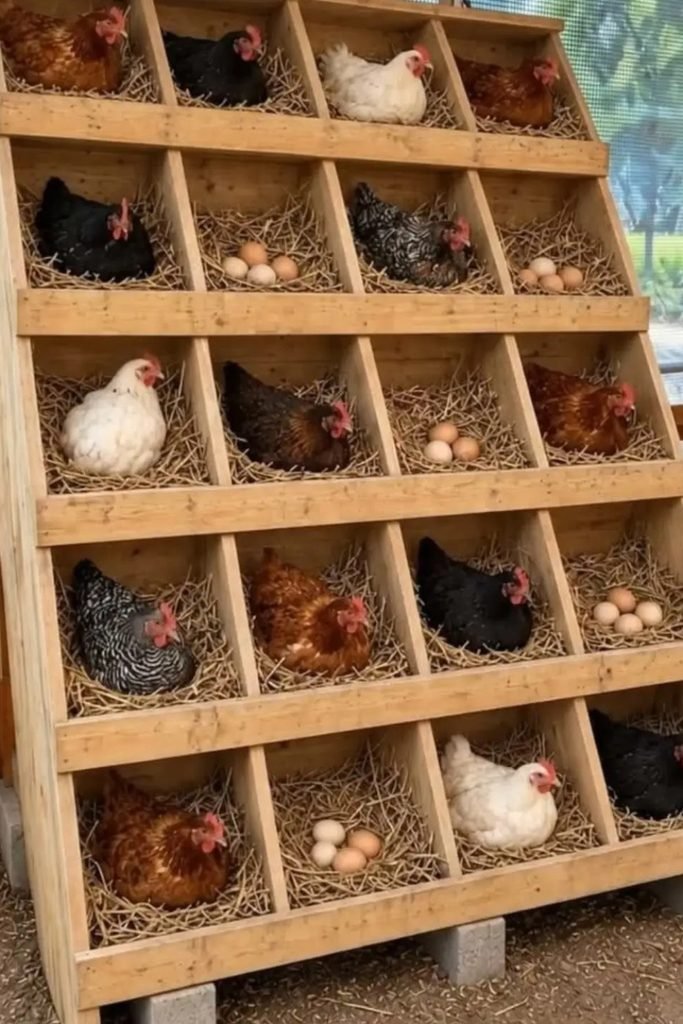
Repurposed Container Nests
Empty plastic jugs can become budget-friendly nesting boxes when you cut wide openings and smooth every exposed edge carefully.
Mount the containers sideways against a sturdy coop wall, checking that each one offers enough room for comfortable laying.
Add dry straw inside, and secure every container firmly so hens can enter without tipping or shifting their nests.
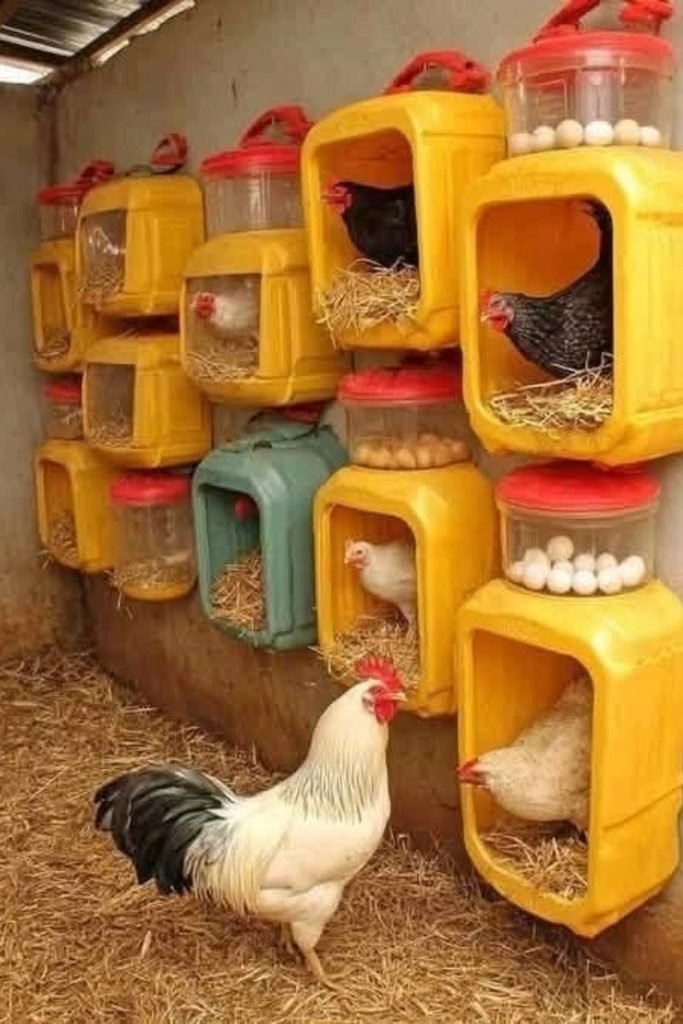
Rounded Wooden Nests
Want a more finished farmhouse coop? Rounded wooden entrances give ordinary nesting compartments a charming look while offering privacy.
Cut smooth circular openings into plywood panels, then build spacious compartments behind them with enough depth for bedding.
Arrange the boxes in two accessible rows, leaving clear floor space for chickens to move around without crowding entrances.
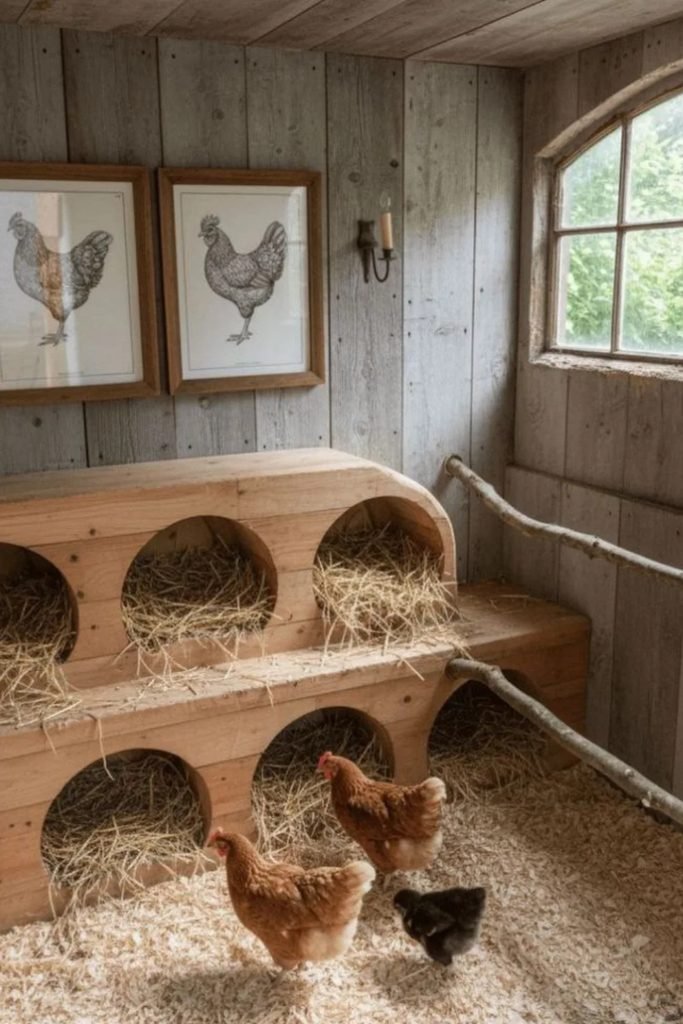
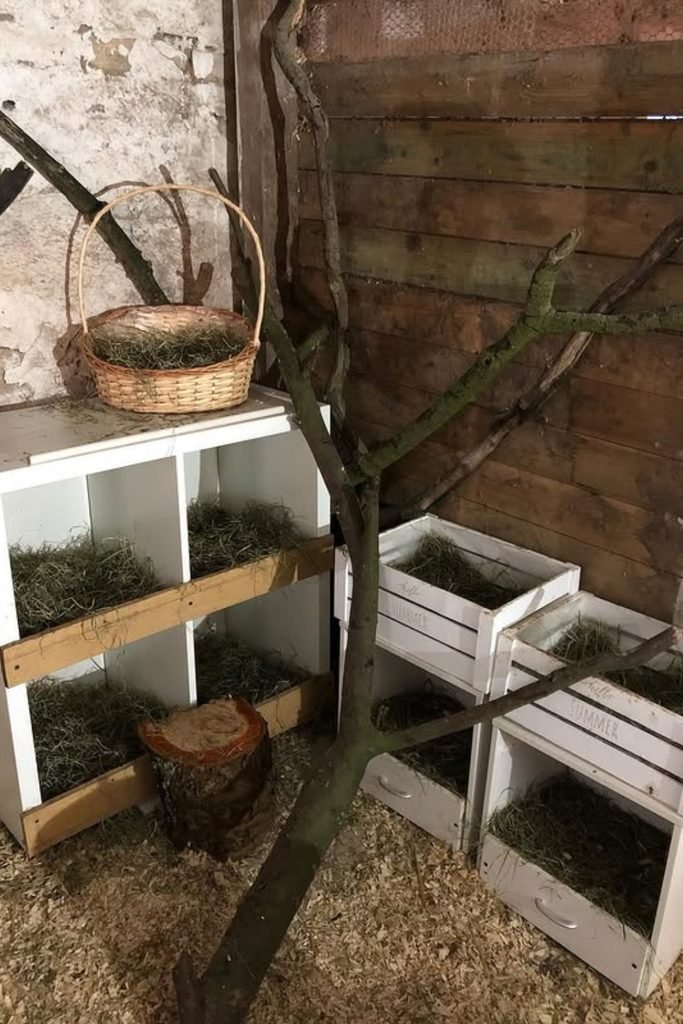
Recycled Crate Nests
Unused wooden crates and old shelving can save you money while creating several comfortable nesting spots inside your coop.
Paint the wooden pieces with a poultry-safe finish, secure them against a wall, and add dividers where needed.
Fill each section with clean nesting material, using removable liners to make regular cleaning much easier during egg collection.
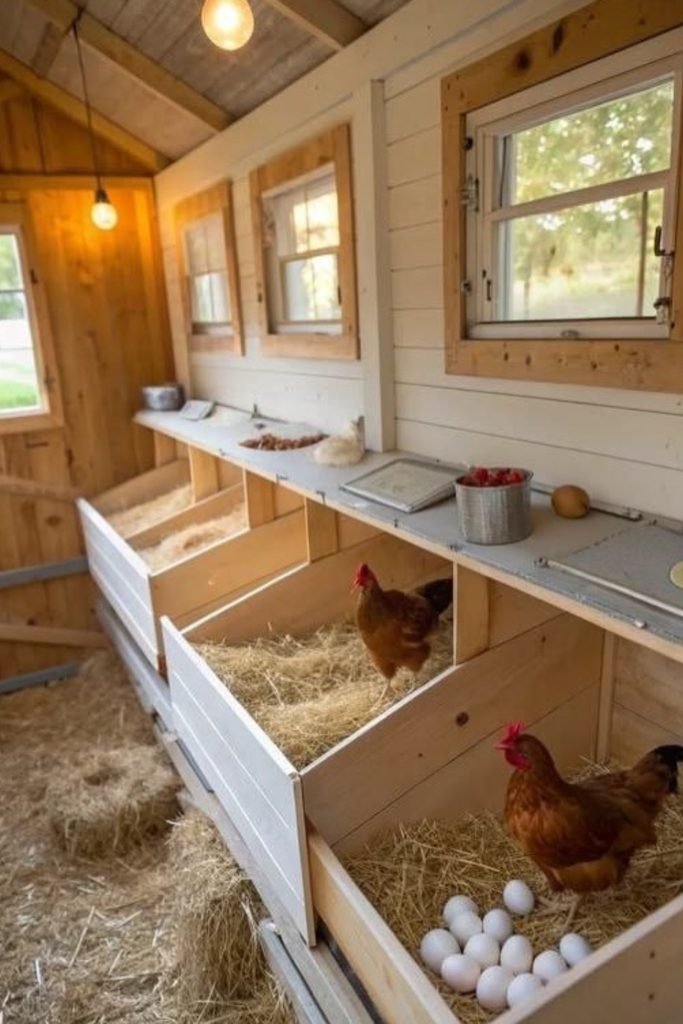
Pullout Nesting Drawers
Collecting eggs becomes much more convenient when your nesting compartments have pullout drawers that allow easy access for cleaning.
Build rectangular wooden boxes beneath a sturdy countertop, adding smooth runners and raised fronts to hold bedding securely.
Leave enough clearance for each drawer to slide without disturbing neighboring nests, and secure them against accidental opening.
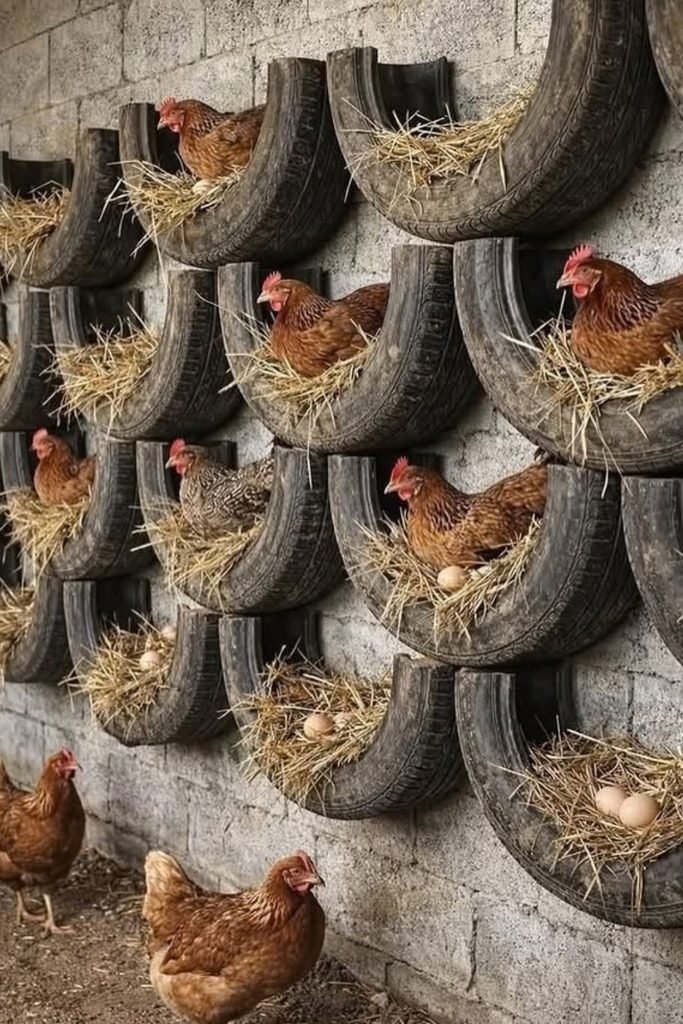
Wall-Mounted Tire Nests
Old tires can become unusual wall-mounted nesting spots, but choose clean, undamaged ones without exposed wires or sharp edges.
Cut suitable openings, secure each tire firmly against masonry, and add a washable liner beneath the nesting material inside.
Arrange them at accessible heights with stable landing supports, making sure hens can enter comfortably without jumping between crowded compartments.
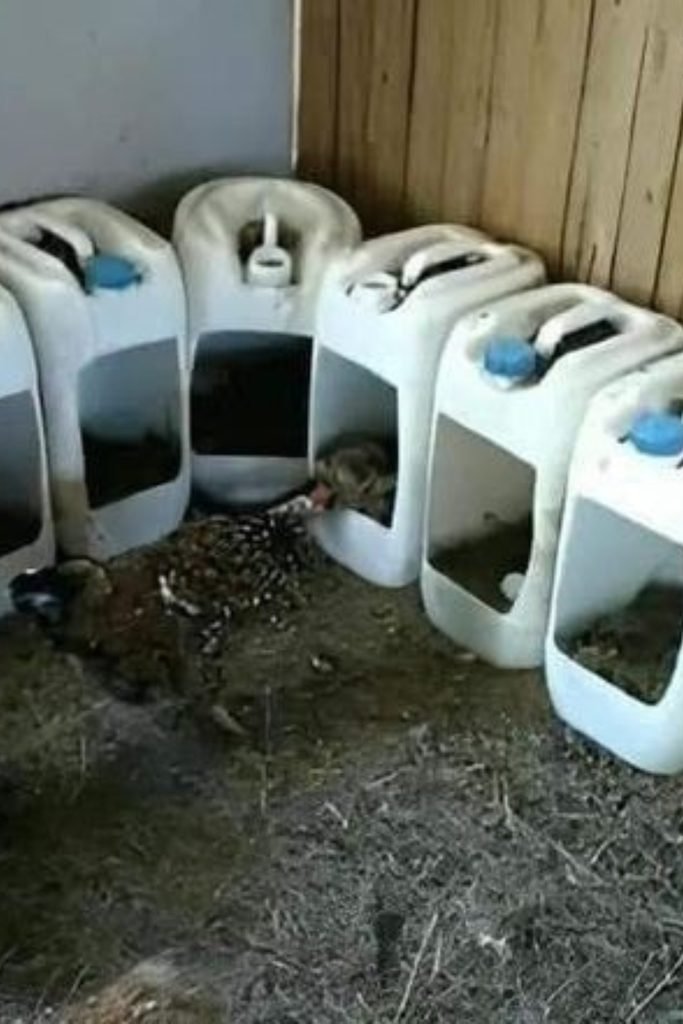
Plastic Jug Nests
Running short on building supplies? Large empty plastic jugs offer an inexpensive alternative for creating individual chicken nesting spaces.
Cut generous side openings, smooth the edges, and arrange the cleaned containers along a sheltered corner of your coop.
Check that each jug accommodates your hens comfortably, then add dry bedding and secure the containers against accidental tipping.
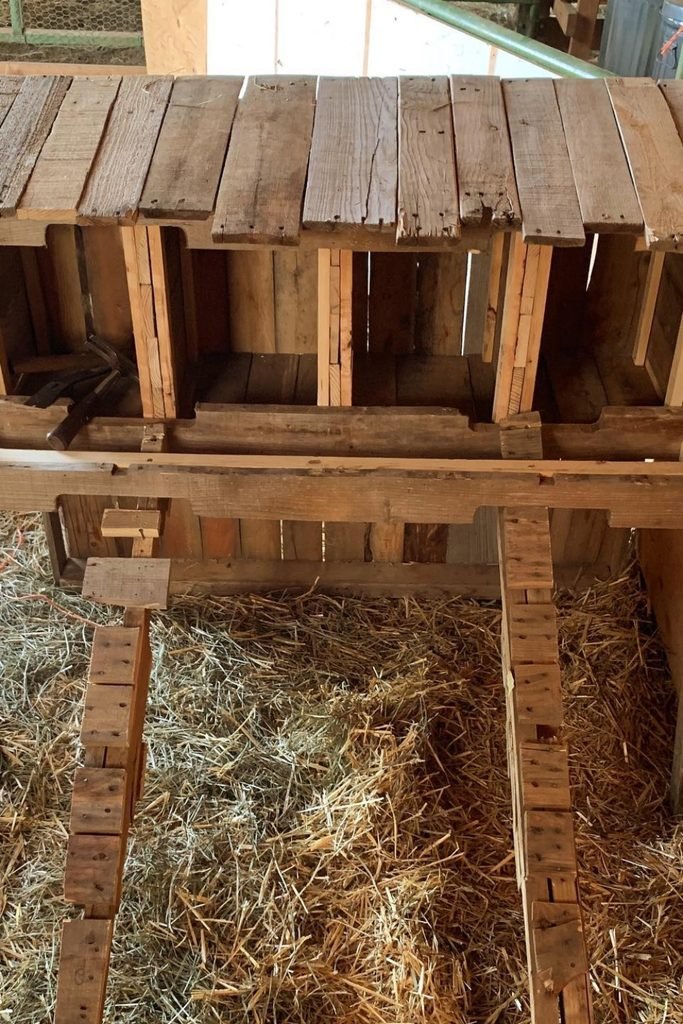
Elevated Pallet Nests
Scrap pallet boards can form a practical raised nesting station without requiring expensive lumber or complicated woodworking equipment.
Build separate compartments beneath a shared wooden roof, then attach narrow ramps with closely spaced footholds for easier access.
Inspect every board for splinters and protruding nails, and add front retaining strips before filling the compartments with bedding.
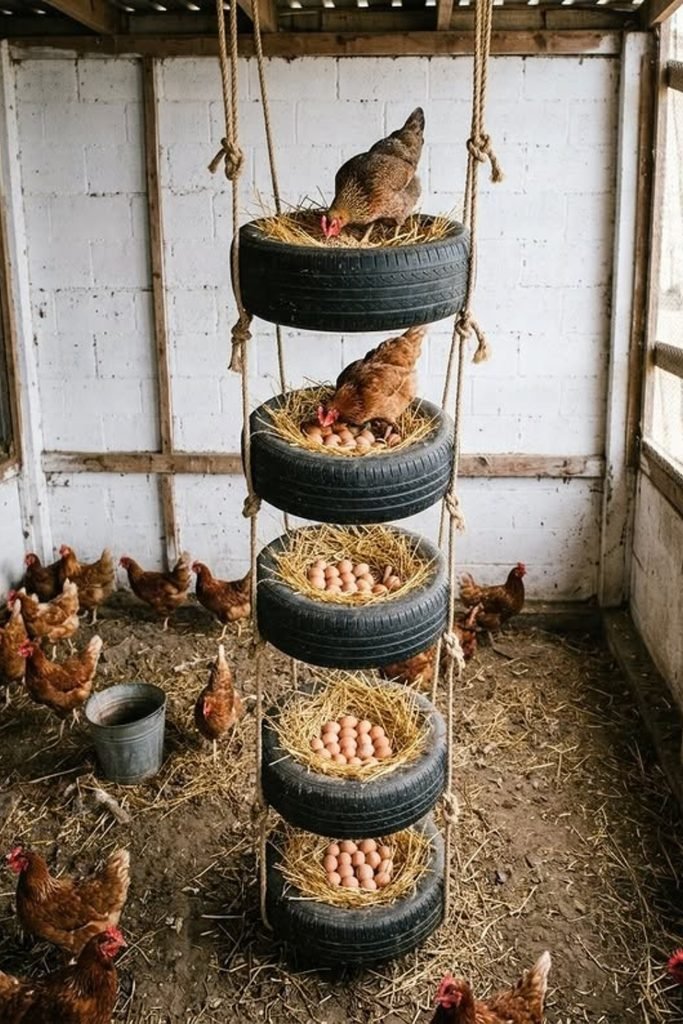
Hanging Tire Nests
Limited wall space might tempt you to suspend old tires vertically, creating separate nesting areas without using additional shelving.
Thread strong ropes through secure attachment points, but prevent every tire from swinging or rotating when chickens climb inside.
Provide stable access platforms and washable bedding liners, since unsecured hanging nests can frighten hens or cause accidental injuries.
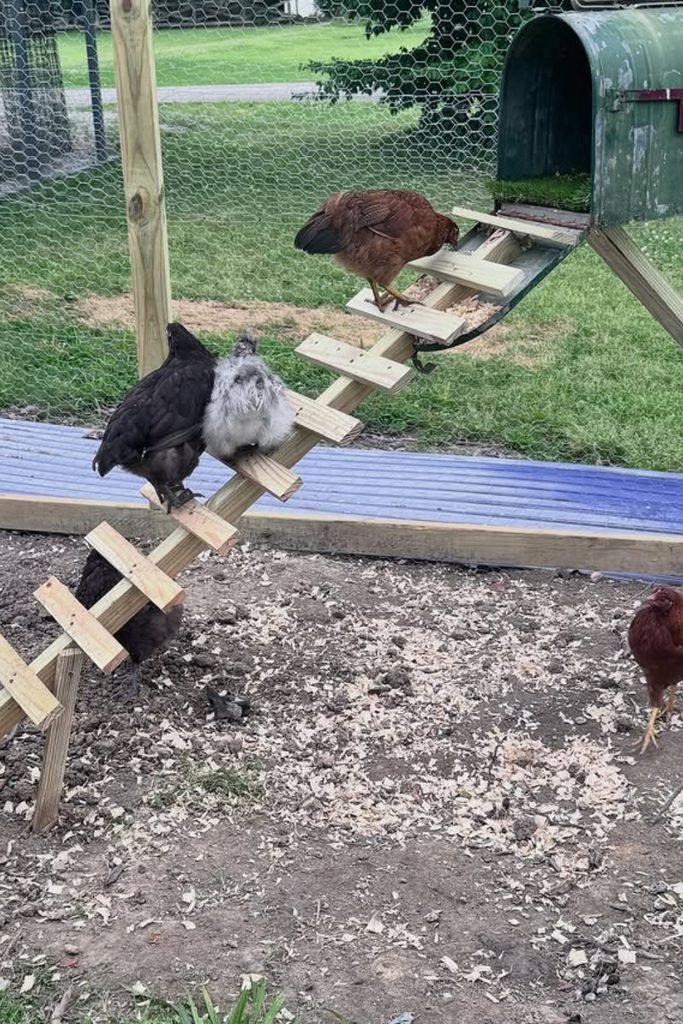
Mailbox Nesting Box
An old metal mailbox can make a clever nesting spot when you want something different from traditional wooden compartments.
Mount it securely at an accessible height, add a stable ramp with wooden footholds, and line the bottom with straw.
Choose a shaded location to prevent overheating, and check that the mailbox offers enough ventilation and comfortable interior space.
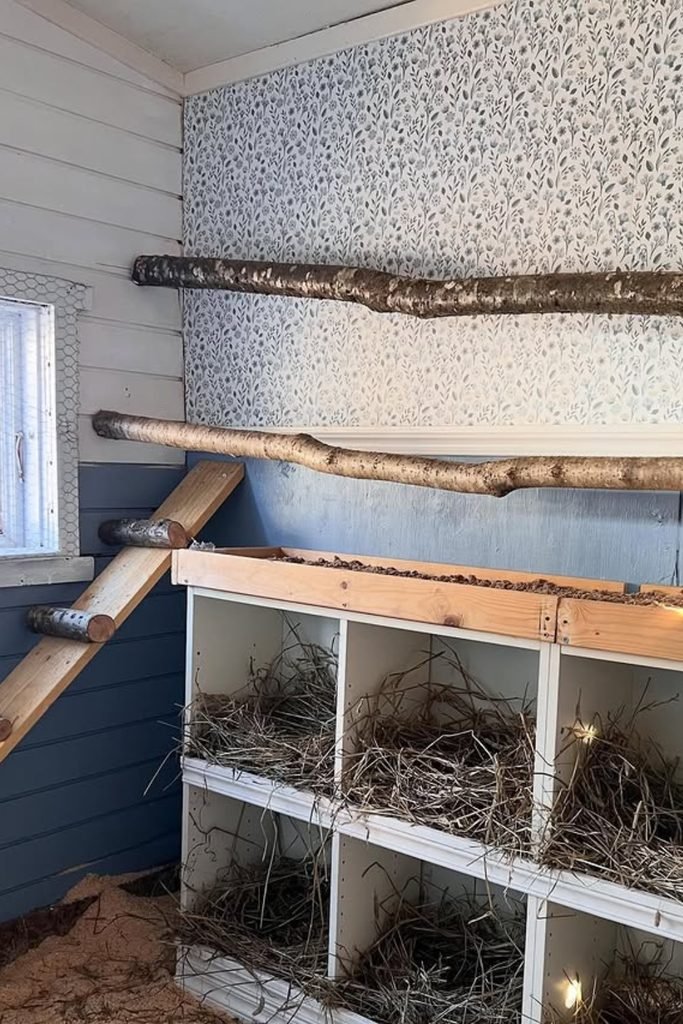
Shelved Nesting Cubbies
Combining nesting compartments with natural branch roosts gives your coop an organized layout without sacrificing valuable floor space.
Build two rows of wooden cubbies beneath a sturdy shelf, using dividers to create separate laying spaces for hens.
Position roosts away from nesting entrances and droppings, then add removable bedding so cleaning remains manageable throughout the week.
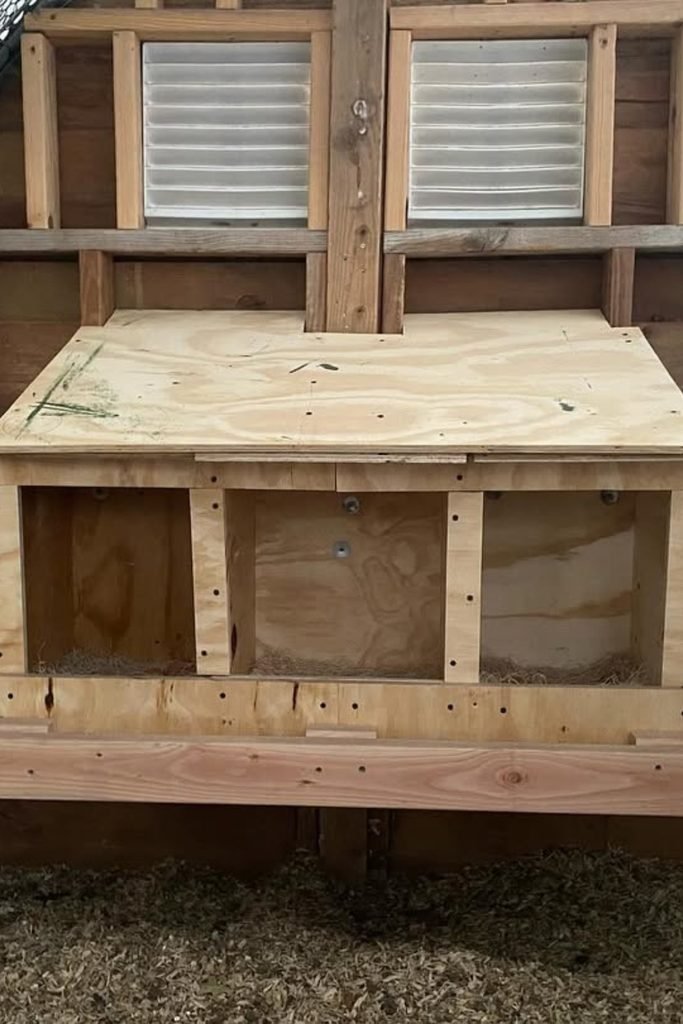
Covered Wooden Nests
Sometimes a simple sloped roof makes all the difference when chickens constantly perch above their nesting compartments instead.
Build three wooden compartments beneath a shared angled plywood roof, adding a front landing rail for easier entry.
Secure the structure against the coop wall, and leave enough interior room for fresh bedding and comfortable egg laying.
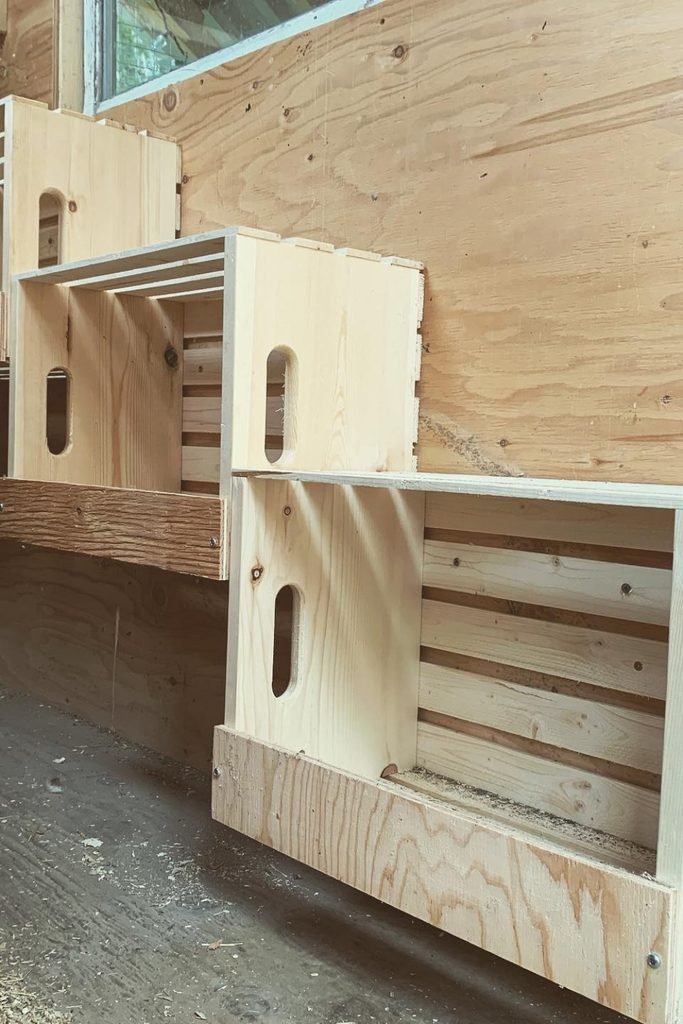
Staggered Wooden Boxes
Instead of building one large nesting cabinet, try arranging individual wooden boxes at different heights along your coop wall.
Use plywood panels with narrow oval handholds, sturdy bottom boards, and raised front strips to prevent bedding from spilling.
Mount each box securely with accessible landing supports, allowing hens to reach their preferred nesting spots without difficult jumps.
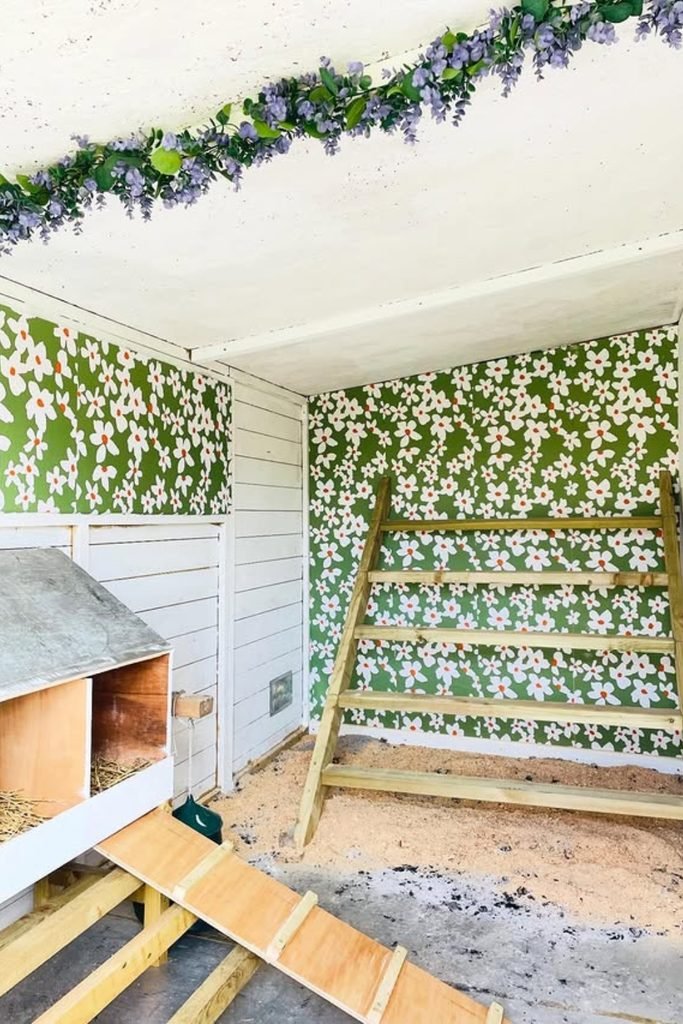
Farmhouse Nesting Station
Give your chicken coop a cheerful farmhouse makeover by pairing simple wooden nesting compartments with colorful floral wallpaper.
Build a raised nesting station with a sloped roof, then attach a sturdy wooden ramp for comfortable access.
Choose washable wall coverings away from pecking areas, and position roosts separately so droppings don’t dirty the nesting boxes.
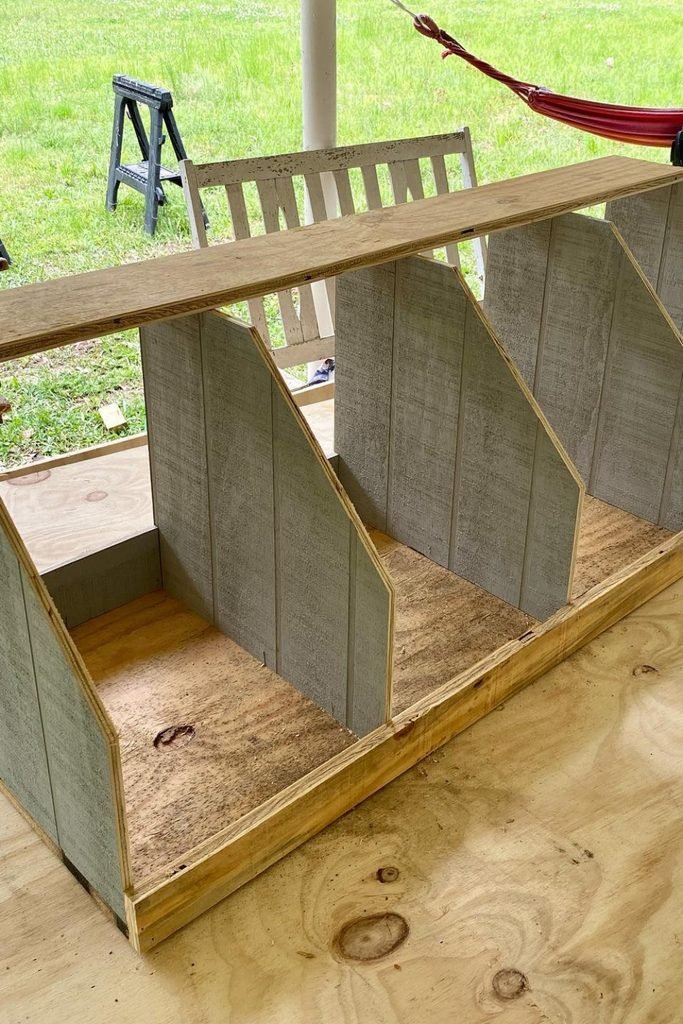
Divided Wooden Nests
Building several nesting compartments together can save lumber when you use shared walls instead of separate wooden boxes.
Cut plywood dividers with angled front corners, then attach them between a long base and a shared top board.
Add a retaining strip across the front, fill each section with dry bedding, and secure the unit inside your coop.
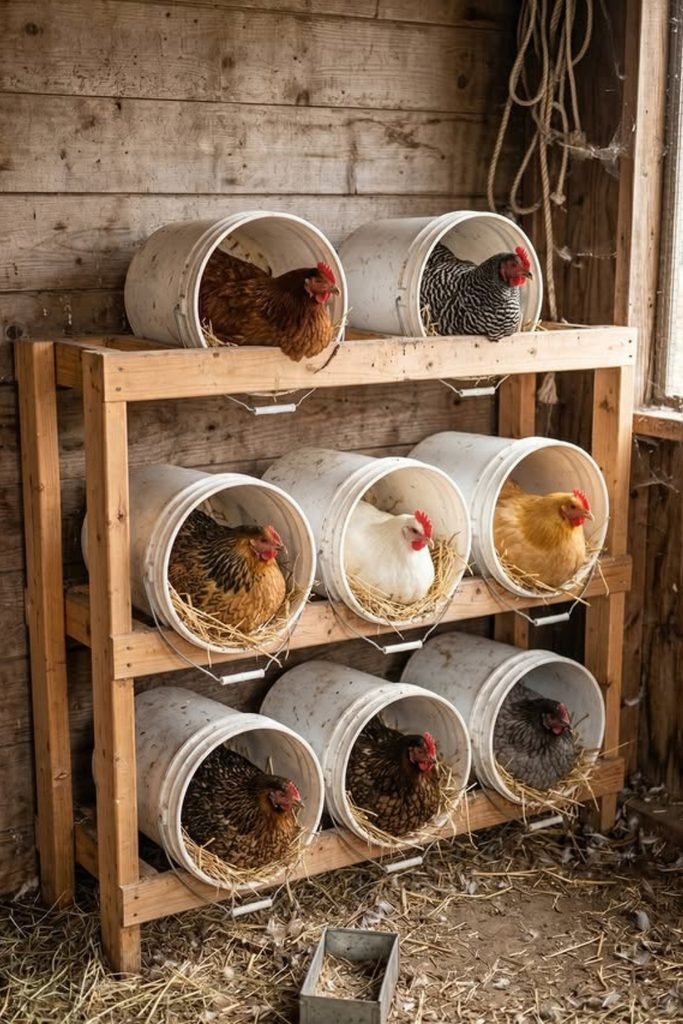
Stacked Bucket Nests
Plastic buckets offer an affordable nesting solution when you need several laying spots without purchasing expensive wooden compartments.
Arrange large buckets horizontally across sturdy wooden shelves, using supports to prevent rolling whenever chickens climb inside them.
Line each bucket with fresh straw, and leave enough clearance between rows for hens to enter without crowding.
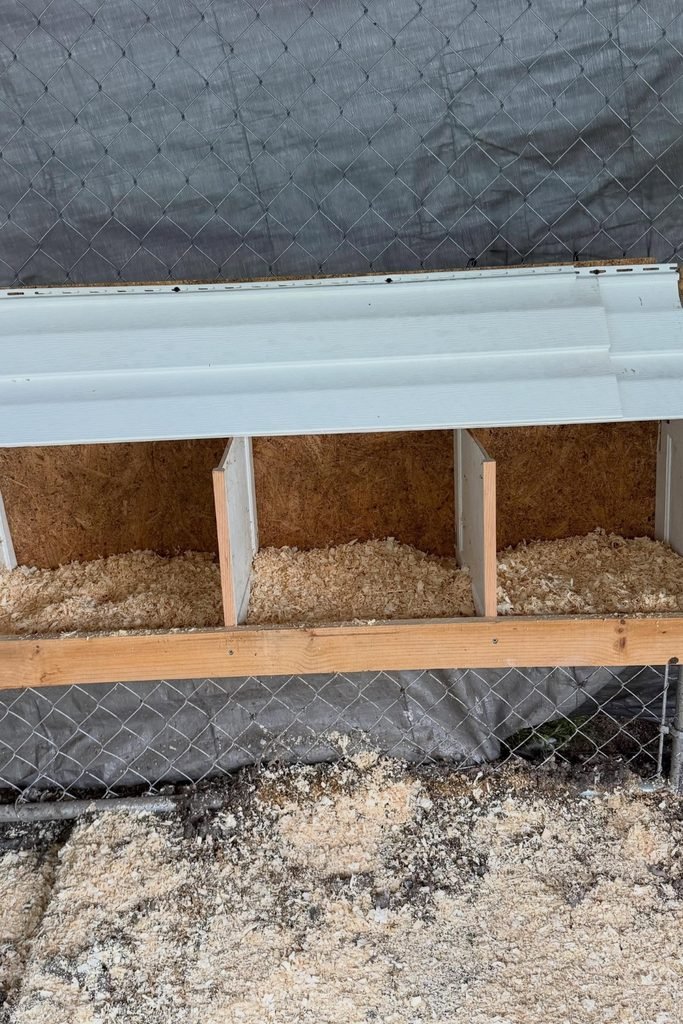
Roofed Wooden Nests
If your chickens need a sheltered laying area, a shared sloped roof can protect several nesting compartments from overhead mess.
Build three sections using plywood dividers, then attach a lightweight roof panel with enough overhang to cover the entrances.
Raise the structure on sturdy supports, add soft wood shavings, and secure everything firmly before allowing hens inside.
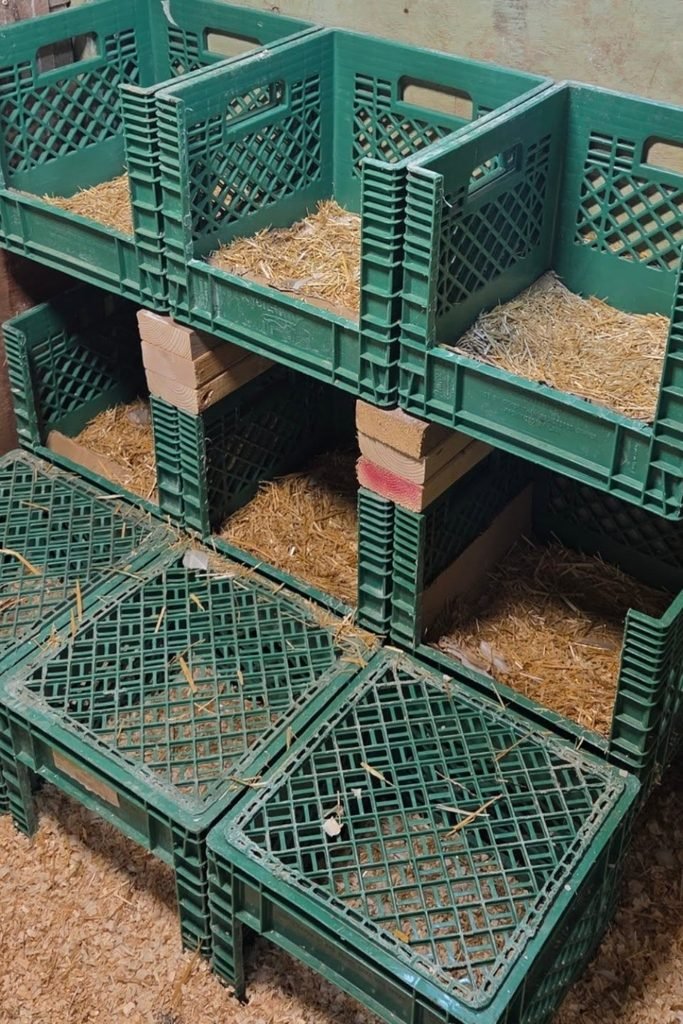
Stacked Milk Crates
Milk crates make an affordable nesting solution when you want several compartments without spending much money on new lumber.
Arrange sturdy plastic crates in two tiers, adding wooden supports between rows and solid liners beneath the bedding.
Secure the entire stack against tipping, then fill each compartment with straw and leave enough space for comfortable entry.
FAQs
How Many Nesting Boxes Do You Need for Your Chickens?
You don’t need a separate nesting box for every hen. Generally, one box for every four to five chickens works well because hens usually take turns laying eggs.
For example, a flock of 12 chickens can comfortably start with three nesting boxes.
How Can You Encourage Chickens to Use DIY Nesting Boxes?
Chickens sometimes ignore new nesting boxes, even when you’ve built comfortable spaces for them.
Try placing the boxes in a quiet, slightly dark area and filling them with clean, dry straw or pine shavings.

Hi, my name is Ali Mehmood! I’m a passionate writer and DIY enthusiast who loves turning creative ideas into practical, hands-on projects.
I created this website to share inspiring, budget-friendly ideas that you can do yourself – whether it’s organizing your home, crafting something unique, or creating fun projects for kids and pets.
I believe DIY isn’t just a hobby – it’s a smart way to save money, reduce waste, and enjoy the satisfaction of making things with your own hands.
I’m excited to have you as part of this growing community, and I’ll continue bringing you helpful, realistic, and fun DIY ideas you can actually use.